Tag: grab

  • Grab Soars Past Quarterly Revenue Projections, Fueled by Consumer Adoption of ‘Superapp’ Services

    Grab Soars Past Quarterly Revenue Projections, Fueled by Consumer Adoption of ‘Superapp’ Services

    Grab Holdings Inc. surpassed projected revenues for the third quarter, thanks to strong consumer spending on its ride-hailing and food delivery services. The increase in user numbers can be linked to the company’s efforts in expanding its platform.

    Grab’s Superapp Transformation

    Grab’s initiative to transform into a “superapp” by integrating food and grocery delivery, ride-hailing, and financial services has proven successful. These integrated services offer consumers a comprehensive solution for their daily mobility and lifestyle requirements amidst an unpredictable economic climate. The concept’s popularity has surged, especially in regions where tariffs have reshaped the economy.

    In addition to offering standard services, Grab has been emphasizing more cost-effective options in ride-hailing and food delivery. This strategy aims to appeal to budget-minded consumers and provide a safety net against potential declines in consumer spending.

    According to CFO Peter Oey, approximately one-third of new monthly users in the deliveries segment are drawn from these affordable channels. Furthermore, about 40% of these users have subsequently upgraded to standard products. Oey noted, “We’re observing increased engagement from these saver platforms or these affordable products, and simultaneously, users are spending more frequently as we successfully upsell them.”

    Expansion into Autonomous Vehicles

    As the service sector in Southeast Asia becomes increasingly competitive, Grab is exploring new avenues for growth. One such venture involves leveraging its ride-hailing platform to penetrate the autonomous robotaxis market. Industry analysts predict that this sector will witness considerable growth in the near future.

    The company has also raised the lower limit of its annual revenue forecast from $3.33 billion to $3.38 billion, while the upper limit remains at $3.40 billion. Grab’s revenue for the period stood at $873 million, marginally beating analysts’ average estimate of $872.9 million.

    Additionally, the company has updated its yearly adjusted earnings before interest, taxes, depreciation, and amortisation (EBITDA) forecast. The new range is set between $490 million and $500 million, up from the previous projection of $460 million to $480 million.

    The third-quarter revenue for Grab’s deliveries segment stood at $465 million, slightly under the estimated $470 million.

    Questions & Answers

    What is Grab’s strategy for attracting cost-conscious consumers?
    Answer: Grab has introduced more affordable options in its ride-hailing and food delivery services to attract budget-minded consumers.

    How is Grab planning to expand amidst increasing competition in Southeast Asia’s service sector?
    Answer: Grab is planning to leverage its ride-hailing platform to expand into the autonomous robotaxis market.

    What has been the impact of Grab’s transformation into a “superapp”?
    Answer: The transformation has been successful, as it provides consumers with a one-stop solution for their daily mobility and lifestyle needs in the midst of an unpredictable economic landscape.
  • Ho Chi Minh City’s Ambitious Plan: Complete Transition To Electric Motorcycles By 2029 Amidst Infrastructure Challenges

    Ho Chi Minh City’s Ambitious Plan: Complete Transition To Electric Motorcycles By 2029 Amidst Infrastructure Challenges

    In Ho Chi Minh City (HCMC), approximately 14,000 ride-hailing motorbike drivers have transitioned from gasoline-powered vehicles to electric versions. This represents about 3.5% of the total fleet. Ngo Hai Duong, Head of the Road Transport Management Department of the city’s Department of Construction, revealed at a recent forum that HCMC aims to completely transition its 400,000-strong ride-hailing motorbike fleet to electric vehicles (EVs) by 2029.

    Reducing Registrations for Gasoline-Powered Bikes

    The city has plans to decrease the number of registered gasoline-powered motorbikes for ride-hailing platforms starting next year. Duong revealed that out of the city’s 21,300 taxis, over 68% are now electric. He clarified that this transition was primarily driven by the businesses themselves rather than any city ordinances.

    Challenges in the Transition to Electric Vehicles

    However, one of the main obstacles to the successful transition to EVs is the limited availability of charging stations. The growing demand from electric motorbikes, cars, and buses is starkly in contrast to the city’s fewer than 1,000 charging stations with 15,000 ports. Duong acknowledged that the growth of charging infrastructure has not kept up with the rise in electric vehicle numbers.

    Hoang Anh Tuan, Director of the Transport and Traffic Safety Department of the Ministry of Construction, suggested that priority should be given to a city-wide plan for charging stations, akin to the existing network of gasoline stations. This would require setting criteria for locations and technical standards, along with a commitment to universal charging for all vehicles.

    The Vietnam Automobile, Motorcycle and Bicycle Association echoed this sentiment and urged the government to implement “non-monopoly” regulations for charging infrastructure. This means that charging stations should be open to all electric vehicles.

    Recycling Electric Vehicles and Batteries

    Analysts have proposed the establishment of a system for recycling electric vehicles and their batteries. There is also a proposal being considered by the city to give households up to VND20 million (approximately US$800) to trade their gasoline motorbikes for electric ones. This move is part of the city’s concerted efforts to reduce pollution and create low-emission zones.

    Questions & Answers

    What is the percentage of the total fleet that has transitioned to electric vehicles in HCMC?
    Approximately 3.5% of the total fleet in HCMC has transitioned to electric vehicles.

    What obstacles are being faced in the transition to electric vehicles?
    One of the main challenges is the lack of sufficient charging stations to meet the growing demand from electric motorbikes, cars, and buses.

    What initiatives are being considered to encourage the transition to electric vehicles?
    The city is considering a proposal to provide households with up to VND20 million (approximately US$800) to swap their gasoline motorbikes for electric ones. This initiative is part of the city’s broader efforts to reduce pollution and create low-emission zones.

  • Grab Introduces Electric Car Service In Hanoi, Challenging Xanh Sm’s Market Dominance

    Grab Introduces Electric Car Service In Hanoi, Challenging Xanh Sm’s Market Dominance

    Grab, the renowned ride-hailing company, has launched its electric car service in Hanoi, marking a significant entry into the predominantly electric taxi market, primarily controlled by Xanh SM. This move is a strategic approach by Grab to expand their customer base and champion sustainable transportation options.

    Strategies and Goals

    Nguyen Hanh Linh, the director of Grab Vietnam’s mobility division, revealed that the newly introduced service aims to diversify income opportunities for their driver-partners. This strategy is expected to boost their confidence to make a shift toward electric vehicles. After its launch in Hanoi, Grab has ambitious plans to roll out the service in HCMC.

    The current ride-hailing market in Vietnam is mainly controlled by three major players: Grab, Be, and Xanh SM. Xanh SM stands out by exclusively using electric cars constructed by its sister company, VinFast.

    Customer Choices

    It is noteworthy that Grab users do not have the option to specifically request electric cars. Whether the customer gets a VinFast or BYD electric car is a matter of chance. Grab’s decision to launch the electric vehicle service was influenced by the rising number of electric vehicles on its platform, a trend which has been encouraged by driver incentives in recent years.

    Market Trends and Predictions

    A 2024 report estimated Vietnam’s ride-hailing and food delivery market to be valued at US$4 billion, with the potential to reach up to $9 billion by 2030. A survey conducted in May indicated that 55% of users in major cities chose Grab for ride-hailing services, compared to 32% for Xanh SM and 9% for Be.

    A report by Mordor Intelligence stated that Xanh SM took the lead in the ride-hailing market in the last quarter of 2024, holding a 44.68% share in the second quarter of this year. Grab Vietnam, however, disputed these figures, claiming that the research methods used and data sources were unverifiable and misleading.

    Questions & Answers

    What was the strategic aim behind Grab launching its electric car service in Hanoi?
    The launch aimed to expand Grab’s user base and promote environmentally friendly transportation.

    What is the next city where Grab plans to roll out its electric car service?
    After Hanoi, Grab plans to introduce the service in HCMC.

    How did Grab respond to Mordor Intelligence’s report about Xanh SM’s market lead?
    Grab disputed the findings, claiming that the data sources were unverifiable and the research methods were inadequate, leading to misleading conclusions.

  • Two Chinese Companies Debut Cutting-Edge Autonomous Shuttle Services in Singapore

    Two Chinese Companies Debut Cutting-Edge Autonomous Shuttle Services in Singapore

    In a significant move toward the embrace of autonomous mobility, two Chinese robotaxi companies are set to collaborate with local providers to launch shuttle services in Singapore, marking a new chapter in the city-state’s transportation landscape.

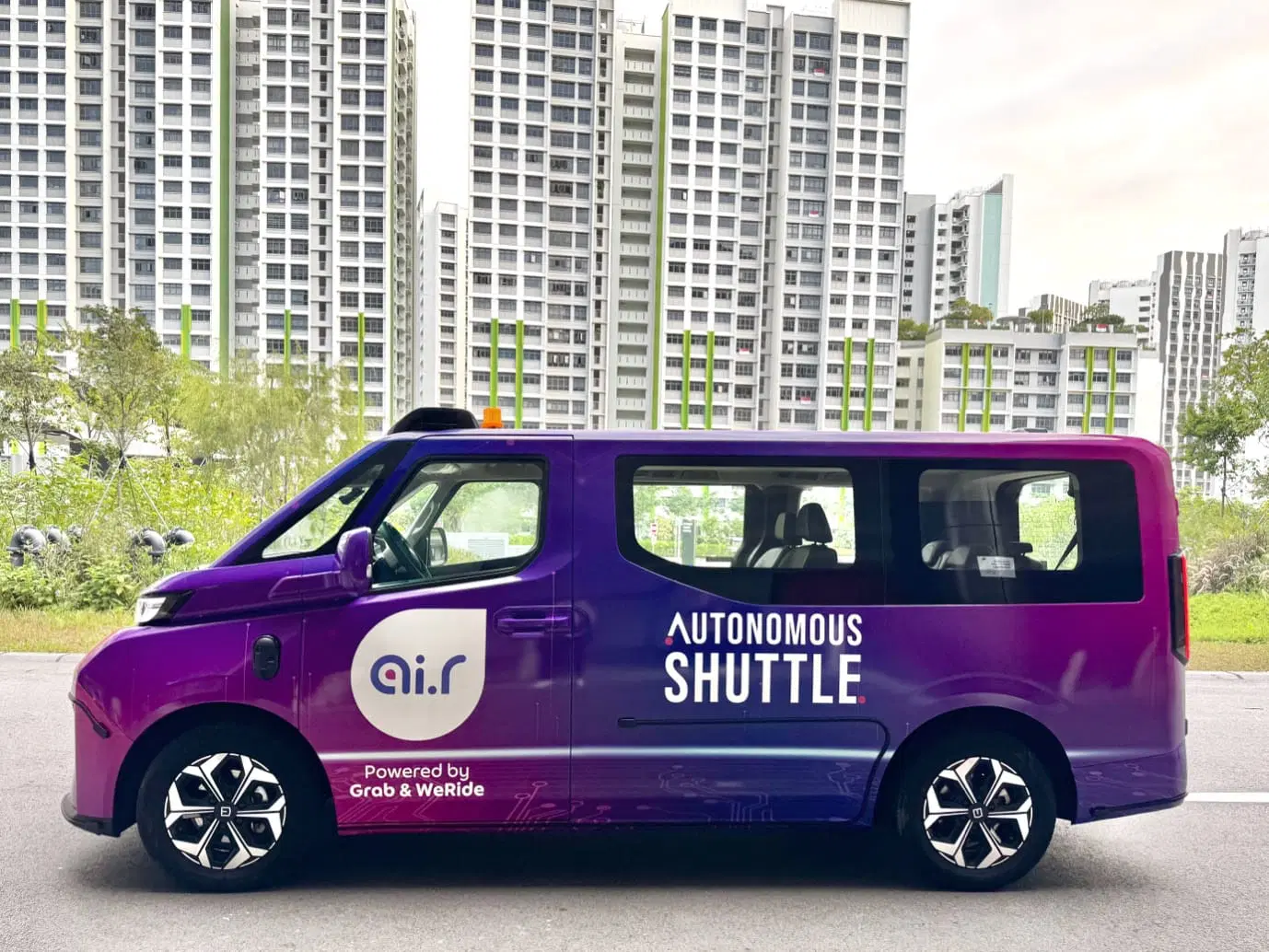
    Ride-hailing giant Grab has partnered with China’s WeRide, aiming to roll out services by early 2026. Meanwhile, Pony.ai is joining forces with Singapore’s ComfortDelGro, planning similar initiatives. The rapid developments signify Singapore’s ambition to become a focal point for autonomous driving technologies.

    Grab confirmed that it has received approval from local authorities to run two autonomous shuttle routes in the Punggol area. Passengers can expect to board WeRide’s five- and eight-seater vehicles following a thorough testing phase designed to fine-tune the service routes.

    WeRide recently secured a permit from the Shanghai municipal government, enhancing its credentials as it prepares to offer autonomous robotaxi services.

    On the other hand, Pony.ai announced its intention to offer services in Punggol with ComfortDelGro, with an ambitious plan to expand to nearby communities as soon as they clear regulatory hurdles. Singapore’s Land Transport Authority has outlined that Pony.ai and ComfortDelGro will service a 12-km (7.5-mile) route in Punggol, capturing the community’s attention with their innovative approach to transport.

    The Land Transport Authority has also recognized the robust capabilities of both WeRide and Pony.ai, noting their successful deployment of automated vehicles in various global markets.

    Currently, Pony.ai operates commercial robotaxis in four of China’s leading cities: Beijing, Shanghai, Guangzhou, and Shenzhen. The company, which has secured backing from Toyota Motor, is also looking to extend its driverless operations to South Korea and parts of Europe, fueled by a $260 million rise in funding following its Nasdaq listing last November. By year-end, Pony.ai aims to elevate its robotaxi fleet to 1,000 vehicles—talk about a drive for growth!

    The Singapore government, actively exploring autonomous technologies, is taking decisive steps in this direction, with Transport Minister Jeffrey Siow visiting Chinese autonomous driving firms in June to gather insights and bolster collaboration.

    Questions & Answers

    What companies are launching autonomous shuttle services in Singapore?
    Grab has partnered with WeRide, while Pony.ai is collaborating with ComfortDelGro to offer similar autonomous shuttle services.

    When will these services begin operations?
    Grab and WeRide plan to start their shuttle services in early 2026, whereas Pony.ai and ComfortDelGro are looking to commence within the coming months, subject to regulatory approval.

    What is the scope of Pony.ai’s operations?
    Pony.ai currently operates commercial robotaxis in major cities across China and is expanding its services globally, highlighting its ambition to grow its fleet significantly by the end of this year.

  • Grab Holdings Surpasses Wall Street Expectations With Multi-service Superapp Strategy Amid Global Economic Uncertainties

    Grab Holdings Surpasses Wall Street Expectations With Multi-service Superapp Strategy Amid Global Economic Uncertainties

    Grab Holdings, a Singapore-based tech company, surpassed Wall Street’s revenue expectations in Q2, with a surge in consumption across its ride-hailing and food delivery services, seemingly unaffected by global economic uncertainties.

    Superapp Drive Pays Off

    The company’s robust growth can be attributed to its strategic efforts to transform its platform into a multi-functional, superapp. This expansive integration of various digital services, including ride-hailing, food, and grocery delivery, continues to entice a growing number of users, who are increasingly investing in the offered subscription plans.

    Despite the unease in global economic stability induced by ongoing US trade negotiations, resulting in worries over tariffs and heightened costs, particularly in Southeast Asia, the Singaporean economy remains robust. In Q2, it witnessed a growth rate of 4.3%, successfully averting a technical recession.

    According to Peter Oey, Grab’s CFO, the company’s growth strategy focuses on affordability, which not only encourages growth but also serves as a protective shield against global macroeconomic factors. In a bid to attract price-conscious consumers, the company has been simultaneously working on expanding its driver base to keep up with the rising user demand.

    Financial Performance

    Grab reported an impressive revenue of US$819 million for Q2, surpassing analyst predictions of $811.3 million. The company attributed a significant portion of this success to its robust performance in Indonesia. Previously identified as a market with potential for deeper penetration, the company is now striving to capitalize on the country’s vast population and expand its market share.

    According to Oey, Indonesia has proved to be a profitable market for the company, prompting increased investment efforts in the region.

    Market Consolidation

    The online service market in Southeast Asia is witnessing a phase of consolidation, with larger entities acquiring smaller firms to diversify their service offerings. Though rumors of Grab’s potential acquisition of smaller Indonesian competitor GoTo were circulating earlier this year, Oey confirmed that no such discussions are underway.

    The company’s Q2 financials indicate a remarkable turnaround, with a profit of $20 million, in stark contrast to a $68 million loss in the same period the previous year.

    Questions & Answers

    How has Grab Holdings managed to exceed Wall Street’s revenue expectations in Q2?
    Grab Holdings has successfully surpassed revenue projections by transforming its platform into a superapp, integrating various digital services and appealing to a growing number of users.

    How is the company responding to global economic uncertainties?
    Grab Holdings is focusing on affordability as a protective shield against global macroeconomic factors. It is also endeavoring to keep up with increasing user demand by expanding its driver base.

    What is Grab Holdings’ strategy for the Indonesian market?
    Considering the robust performance and profitability in Indonesia, Grab Holdings is aiming to capitalize on the country’s vast population and increase its market share by investing more in the region.

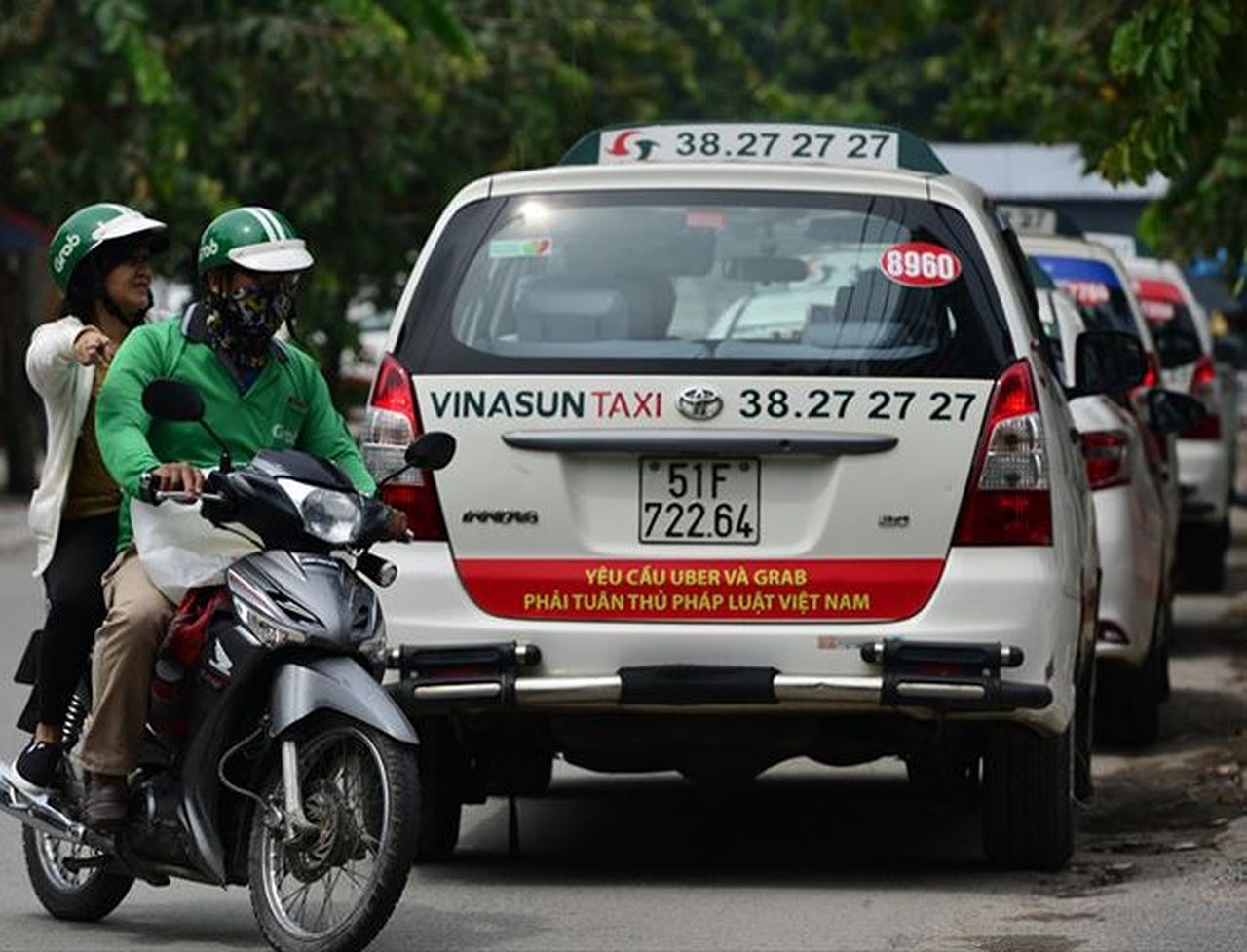
  • Grab, Vinasun to negotiate $1.8 million compensation dispute

    Grab, Vinasun to negotiate $1.8 million compensation dispute

    Top taxi firm Vinasun and ride hailing firm Grab have told the court that they’ll negotiate a compensation dispute. The People’s Court of Ho Chi Minh City on Friday approved the litigants’ wish to ‘sit together,’ and temporarily suspended the trial. The suspension of trial is for no longer than a month, and the reopening date will be announced later, the court said.

    “The lawsuit has dragged on for over a year, but the claimant was not able to prove the damage, as well as the causal relationship with Grab’s influence. The defendant is also very worn out wasting time defending a wrong it did not commit,” said Luu Tien Dung, Grab’s lawyer.

    “This is one of the reasons why both sides have decided to negotiate,” he added.

    Vinasun filed the suit against Grab in June last year, accusing the Malaysia-based firm of abusing the Ministry of Transport’s pilot scheme and committing violations.

    It said Grab’s illegal activities were responsible for nearly VND42 billion (nearly $1.8 million) of the VND76 billion ($3.25 million) in losses that it suffered in 2016 and the first half of 2017.

    The trial began last February, but was adjourned a month later to allow for more evidence to be gathered. Grab protested the valuation of Vinasun’s losses.

    Last October, prosecutors asked the court to accept Vinasun’s petition for compensation of nearly VND42 billion (nearly $1.8 million) in one payment, dismissing Grab’s claim that it was a tech firm and not a taxi company.

    Grab responded by sending a letter to Prime Minister Nguyen Xuan Phuc, saying that identifying Grab as a taxi firm would be “a step backwards from Industry 4.0.”

    Under the latest draft of a decree prepared by the Transport Ministry, transport firms offering services with under 9-seater cars should be registered as taxi firms before they can apply ride-hailing technologies.

    This means that Grab and other ride-hailing firms would have to register their services again as taxi businesses and comply with corresponding legal responsibilities regarding their operating licenses, drivers’ profiles and tax duties.

  • Grab Set to Roll Out Exciting New Taxi Service, GrabCab, in Singapore Next Month

    Grab Set to Roll Out Exciting New Taxi Service, GrabCab, in Singapore Next Month

    GrabCab, a new player in Singapore’s taxi market, is gearing up to launch next month, becoming the sixth taxi operator in the bustling city-state with an initial fleet of 40 electric hybrid vehicles. The move comes from Grab’s subsidiary, GrabRentals, which is poised to challenge existing operators with a focus on sustainability.

    Driving Into a Green Future

    According to reports from The Straits Times, GrabCab’s debut will feature the eco-friendly Toyota Prius, with plans to roll out additional hybrid models, including the Hyundai Kona, starting in August. The company is on a mission to transition to a fully electric fleet within the year, aligning with a growing trend towards greener transportation solutions.

    GrabCab is setting its sights high: it aims to meet the minimum fleet requirement of 800 taxis needed to obtain a street-hail operator license before reaching its third anniversary. Victor Sim, director of GrabRentals, shared exciting news, stating that, as of June 4, the company has received between 700 to 800 registration applications from potential drivers eager to join the GrabCab team. From this pool, around 400 to 500 qualified applicants have been selected for the inaugural fleet.

    Competitive Rates with a Tech Twist

    When it comes to financials, rental rates for GrabCab vehicles can soar up to SGD117 (US$91) per day. However, the first 100 drivers who come aboard will enjoy a slightly reduced rate of SGD112 per day—a welcome incentive. To put that into perspective, other operators like ComfortDelGro offer their Toyota Prius rentals at approximately SGD110 per day, while Prime Taxi sets their rate at SGD109.80.

    Sim has assured that GrabCab’s passenger fare structure will be on par with competitors, and the integration of the taxi meter with the Grab platform allows drivers to conveniently switch between ride-hail and street-hail jobs by simply scanning a QR code via the Grab driver app.

    GrabCab’s edge? Sim highlighted the company’s cutting-edge technology and robust partnerships in the industry, including collaborations with charging point operators and fuel stations. These alliances promise discounts of up to 25% at select charging and fuel providers, making it financially appealing alongside its eco-friendly aspirations.

    While GrabCab is racing onto the scene, one can’t help but think: How many electric cars can a fleet hold before they start competing with online car rentals for the grand title of Asia’s ultimate ride-sharing service?

    Questions & Answers

    What vehicles will GrabCab initially use?
    GrabCab will start with the electric hybrid Toyota Prius and plans to add more hybrid options like the Hyundai Kona later this summer.

    How many applicants have shown interest in becoming GrabCab drivers?
    As of June 4, GrabCab received approximately 700 to 800 applications, with around 400 to 500 chosen for initial onboarding.

    What is the rental rate for GrabCab vehicles compared to other operators?
    Refunding to the competition, GrabCab’s rates can reach SGD117 daily, while ComfortDelGro and Prime Taxi offer similar vehicles at around SGD110 and SGD109.80, respectively.

  • Indonesia’s antitrust body looking into risks from reported Grab-GoTo merger

    Indonesia’s antitrust body looking into risks from reported Grab-GoTo merger

    The Indonesian competition authority has initiated an investigation to identify potential risks associated with a potential merger between tech behemoths Grab and GoTo, according to the head of the agency.

    Muhammad Fanshurullah Asa, the head of the agency, stated that a comprehensive review could be carried out once the merger occurs and both firms officially notify them of their actions.

    Although there is no official confirmation from either company about the speculated merger, recent months have seen an increase in speculation about this potential merger.

    It was suggested by individuals familiar with the situation last week that the two companies were aiming to finalize a deal within the second quarter of this year.

    Questions & Answers

    What is the nature of the investigation being conducted by the Indonesian competition authority?
    The investigation is designed to identify any potential risks that could arise from a possible merger between tech giants Grab and GoTo.

    Have Grab and GoTo confirmed their plans for a merger?
    No, both companies have yet to officially confirm their plans for a merger, though speculation has been rife in recent months.

    When are the two companies expected to finalize their deal?
    Sources familiar with the matter suggested that the companies are aiming to finalize the deal in the second quarter of this year.

  • Grab Aims for Strategic Acquisition of Indonesia’s GoTo by Q2

    Grab Aims for Strategic Acquisition of Indonesia’s GoTo by Q2

    Grab is stepping into the spotlight with plans to acquire GoTo, Indonesia’s dynamic tech giant, in a deal tantalizingly pegged around $7 billion. According to sources, the Singaporean-based company has enlisted advisors to navigate the intricacies of this potentially groundbreaking merger, with financial discussions currently underway with top banks. Both companies, however, have opted for silence amidst the buzz surrounding this significant transaction.

    The market response to GoTo has been notably positive, as its shares surged 20% year-to-date, bringing the company’s market value to approximately $5.8 billion. Meanwhile, Grab, which trades on Nasdaq, is enjoying a recent uptick, with shares climbing 2.4%, resulting in a valuation nearing $20 billion.

    As part of the deal, GoTo plans to divest its international operations in Singapore to Grab, while also transferring its entire Indonesian business to Grab, excluding its finance division. Such a strategic move may reinforce Grab’s position in a competitive landscape.

    Analyst Niko Margaronis from BRI Danareksa Sekuritas, who keeps a close eye on GoTo, hinted that the Indonesian government might take a more lenient stance on this proposed merger. He suggests that regulators could consider the positive implications of strengthening key players, ultimately aiming for long-term economic growth.

    However, potential antitrust concerns loom large against the backdrop of rising living costs stirred by an unpredictable global economy. A recent case that looms in the collective memory was Uber’s aborted $950 million bid for Delivery Hero’s Foodpanda in Taiwan last March, a move quashed by regulatory fears over anti-competitive practices.

    As the market prepares for what could be a transformative shift in the tech landscape of Southeast Asia, all eyes remain fixed on Grab and GoTo. What other surprises might be lurking around the corner?

    Questions & Answers

    **What is Grab looking to acquire from GoTo?**
    Grab is interested in acquiring GoTo’s international unit in Singapore along with its Indonesian operations, excluding its finance arm, for around $7 billion.

    How have GoTo’s shares performed this year?
    GoTo’s shares have risen approximately 20% year-to-date, boosting its market value to about $5.8 billion.

    What might affect the approval of this merger?
    Potential antitrust scrutiny could play a significant role, especially amid increasing concerns over living costs and the impact of market consolidation.

  • Grab acquires Malaysian supermarket chain Everrise

    Grab acquires Malaysian supermarket chain Everrise

    Ride-hailing Grab is acquiring Malaysian supermarket chain Everrise as part of its ongoing efforts to grow its grocery business in a vital market.

    The company is purchasing the supermarkets from Navis Capital Partners but has not revealed the deal’s value, it said in an announcement Monday as reported by Bloomberg.

    Everrise operates 19 high-end grocery in East Malaysia.

    Grab intends to modernize Everrise’s operations with digital tools and introduce on-demand grocery delivery for its customers.

    The move came three years after Grab’s acquisition of Jaya Grocer, a larger Malaysian chain primarily based in the Klang Valley near Kuala Lumpur.

    As Southeast Asia’s leading ride-hailing and food delivery company, Grab is venturing into new sectors like online banking and groceries to stay competitive with rivals such as Indonesia’s GoTo Group.

  • Grab, Gojek to hike fees in Singapore by up to 37 cents

    Grab, Gojek to hike fees in Singapore by up to 37 cents

    Ride-hailing operators Grab, Gojek, TADA and CDG Zig in Singapore will hike their platform fees by up to 50 Singapore cents (37 U.S. cents) starting Jan. 1, 2025.

    Grab, the largest ride-hailing firm, will raise its platform fee from 70 cents to 90 cents per trip. For its food, groceries and parcel delivery services, fees will go up from 40 cents to 60 cents.

    It said the new “platform & partner fee” will support Central Provident Fund contributions, work injury compensation coverage and other welfare initiatives for its platform workers, as well as platform maintenance and service improvements.

    Similarly, Gojek will raise its platform fee from 30 cents to 50 cents per trip, saying these changes are to “protect drivers and their earnings in support of the Bill” on top of improving and maintaining its services.

    ComfortDelGro, the largest taxi operator in Singapore, will follow suit and raise its platform fee from the current rate of 70 cents to S$1-1.2, based on factors such as distance and travel time.

    As for TADA, fees per ride will go up by 50 cents, excluding goods and services tax. It noted that besides maintaining current features and developing new ones to provide a better ride-hailing experience, this adjustment is also essential to support the implementation of the government’s Platform Workers Bill.

  • Singapore man uses fake Grab receipts and timesheets to defraud employers $18,000

    Singapore man uses fake Grab receipts and timesheets to defraud employers $18,000

    A 33-year-old man, Muhammad Fariz Shaik Sha Marican, scammed his employer out of more than SGD24,000 (US$17,950) by forging over 460 Grab receipts and false timesheets.

    On Tuesday, he pleaded guilty to two charges of forgery, with two additional charges to be considered during sentencing. Deputy Public Prosecutor Kelly Ng stated that Fariz was employed by the recruitment agency Persolkelly (PSK), which partnered with Ministry of Health (MOH) to provide staffing.

    In November 2021, PSK assigned Fariz as temporary support staff for MOH’s Covid-19 operations. By April 2023, as MOH considered making him a permanent staff member, they reviewed his annual leave balance.

    Following this review, both PSK and MOH filed police reports, leading to an investigation that revealed Fariz had forged Grab receipts on 228 occasions from July 2022 to April 2023.

    He digitally altered dates and times on existing receipts for rides he never took, submitting them to PSK and obtaining over SGD9,500 in fraudulent reimbursements.

    Additionally, between July 2022 and April 2023, he forged his supervisor’s signature on timesheets, falsely claiming overtime, resulting in SGD7,700 in fraudulent payments.

    The fraud was exposed in April 2023 during MOH’s review of his leave records, which revealed discrepancies between PSK and MOH in timesheets and transport claims. Fariz confessed in a letter and resigned before his arrest in July 2023.

    The prosecutor requested a six to eight-month jail term, highlighting the calculated nature of his actions.

    “Each time the accused forged a receipt or timesheet, he had to put in the deliberate effort of altering it digitally or filling it up with extra days or hours, and each time he did this, he had the opportunity to stop his offending. Instead, he did not do so,” said the prosecutor.

  • Grab posts strong profit, raises revenue forecast as food demand rebounds

    Grab posts strong profit, raises revenue forecast as food demand rebounds

    Singapore’s Grab Holdings raised its forecast for fiscal 2024 revenue on Monday, as the Southeast Asian tech firm anticipates robust growth in its food delivery and ride-hailing businesses during the busy holiday season.

    US-listed shares of the company jumped more than 10 percent in extended trading.

    Grab’s mainstay food delivery business has been recovering from a post-pandemic slump in demand as consumers increase their discretionary spending budgets in a sign of economic easing.

    “We remain bullish on the long-term growth outlook of Southeast Asia, and are firing on all cylinders to capture the strong user demand trends,” Grab CEO Anthony Tan said.

    The company expects revenue in the range of US$2.76 billion to $2.78 billion, compared with its prior projection of between $2.70 billion and $2.75 billion.

    Grab has been attempting to introduce cheaper options for its ride-hailing services to woo price-wary customers. On the other hand, the firm has been trying to promote its premium offerings as well to boost its earnings.

    The margins for the more premium rides are 1.2 times higher than the standard rides offered by the company, CFO Peter Oey told Reuters.

    Grab reported third-quarter revenue of $716 million, exceeding Visible Alpha estimates of $700.8 million.

    Oey said transactions made by customers were up 22 per cent in the third quarter and subscribers of the company’s services spend four times that of non-subscribers.

    The firm also raised its annual core profit forecast to between $308 million and $313 million, from $250 million and $270 million.

    Revenue in the deliveries segment increased 16 per cent to $380 million, surpassing estimates of $374.2 million.

    The company left its annual adjusted free cash flow forecast unchanged and beat estimates in its financial segment.

    On an adjusted basis, the company earned 1 cent per share, compared with estimates of a break-even quarter, as per data compiled by LSEG.

  • Grab Vietnam chief says company ‘stronger than ever’

    Grab Vietnam chief says company ‘stronger than ever’

    Grab is now “stronger than ever” after 10 years of operations in Vietnam, its country chief said in the wake of competitor Gojek’s exit from the market.

    It now has more users and partners than ever, Alejandro Osorio, managing director of Grab Vietnam, said at the company’s recent 10th year celebration.

    They number in the millions, and tens of millions of transactions are conducted each month, he said. The Singaporean company entered Vietnam in 2014 as GrabTaxi, and has since grown to offer 15 services in 50 localities.

    The ride-hailing market has also seen many other competitors like Uber, Tada and Baemin come and go and now only Be and Xanh SM remain.

    Grab remains the predominant player with a two-third market share, according to research firm Q&Me. In the food delivery business, Grab faces competition from Be and ShopeeFood.

    Many competitors entered the market and spent a great deal of resources on discounts, but did not achieve sustainability, Osorio said referring to their exit.

    Grab on the other hand focused on giving users a number of reasons to open its app, not just for booking a ride, he said.

    Food, delivery, shopping, and other services help maintain a loyal group of customers and reduce the cost of acquiring new ones, he said.

    This complicated network of services helps create success and is difficult to duplicate, he said.

    Grab has also changed its discount strategy, and only has promotions when necessary instead of offering many, he said.

    It also works with partners such as restaurants and payment companies, and so the discounts come from them and not its pockets, allowing it to maintain a price advantage, he explained.

    However, it continues to pour “large investments and efforts” into improving tech solutions, he said, pointing to the new features it has been offering such as personalizing users’ experience and allowing them to order as a group as examples of this.

    But what competitors remain are not making things easy.

    ShopeeFood is backed by e-commerce giant Shopee, while Be and Xanh SM are widely supported since they are Vietnamese businesses.

    Xanh SM’s all-electric fleet also aligns with the government’s plans for future development.

    Le Hong Hiep, a fellow at the ISEAS – Yusof Ishak Institute in Singapore, told the Vietnamese media in June that Xanh SM has the potential to threaten the dominance of Grab if it maintains current growth rates.

    But Osorio said Grab believes competition is positive and fosters development.

    The company is considering helping drivers switch to environment-friendly vehicles, and combining food delivery orders to reduce travel for drivers, he added.

    Vietnam’s ride-hailing and food delivery market was estimated at US$3 billion last year and is expected to reach $10 billion by 2030, according to a 2023 report by Google, Temasek and Bain & Co.

  • Philippines probes Grab over alleged sexual assault of Vietnamese passenger

    Philippines probes Grab over alleged sexual assault of Vietnamese passenger

    Philippine regulators have launched an investigation into the alleged robbery and sexual assault of a Vietnamese woman who booked a ride using the Grab ride-hailing app.

    The Philippines’ Land Transportation Franchising and Regulatory Board has requested the firm to explain the incident and given it five days to comply, quoting the agency’s chair Teofilo Guadiz III as saying on Wednesday. If found to be negligent, the firm could be suspended for at least 30 days and face fines.

    The robbery and sexual assault allegedly occurred on Sept. 5 when a Vietnamese woman booked a ride in Parañaque City.

    During the ride, the driver reportedly allowed another passenger to board the car.

    This passenger then reportedly took the woman’s phone and cash, which amounted to 35,000 Philippine pesos (US$623), before raping her inside the vehicle. The driver was arrested by the police on Sept. 7.

    Grab’s Philippine unit said on Thursday that the driver involved in the case has been permanently banned from the platform.

    It has reached out to the victim to offer assistance and will fully cooperate with the Philippine police in the investigation.