Tag: grab

  • Starbucks forges regional partnership with Grab

    Starbucks forges regional partnership with Grab

    Starbucks today announced an integrated partnership with Grab, Southeast Asia’s leading superapp, across six markets, including the Philippines, Thailand, Singapore, Malaysia, Indonesia, and Vietnam. The partnership will provide customers across Southeast Asia with a seamless Starbucks Experience, allowing them to earn Starbucks Rewards benefits on purchases through Grab, have more ways to order and pay in stores, and enjoy their Starbucks orders sooner with last-mile delivery fulfillment through Grab’s delivery network.

    Customers will be able to enjoy more personalized and convenient experiences that deepen their connection to Starbucks through a range of Grab services including GrabPay, GrabRewards, GrabFood, GrabExpress and GrabGifts. Building on Starbucks and Grab’s shared commitment to creating a positive impact, the partnership will also help provide food assistance to communities in need across Southeast Asia, while reducing food waste, through the expansion of Starbucks FoodShare food donation program, starting in the Philippines this March.

    “As one of the most digitally connected regions in the world, Southeast Asia continues to inspire us to elevate the Starbucks Experience,” said Erin Silvoy, vice president, product and marketing, Starbucks Asia Pacific. “Our partnership with Grab allows us to provide more options for customers to create a Starbucks Experience that is right for them, while also helping to deliver positive impact in the communities we serve through FoodShare program.”

    “Consumers like the convenience of food delivery but they also enjoy meeting up with friends in Starbucks over a cup of coffee. We believe the online ordering and in-store dining experience will become more connected, as brands in Southeast Asia look for ways to bridge these channels. We are excited to be working with Starbucks, one of the most iconic and loved coffee retailers, on this wide-ranging partnership to deliver a more personalized, rewarding, and seamless experience to our customers,” added Saad Ahmed, Managing Director, Commercial at Grab.

    A first for Starbucks in Southeast Asia, Starbucks will integrate Starbucks Rewards with the Grab platform so that customers can enjoy more ways to earn rewards on their Starbucks orders. Starbucks Rewards members will be able to link their accounts with GrabRewards to earn both Stars and GrabRewards points for every order made through GrabFood.

    In the future, customers will also have the option to sign up for a Starbucks Rewards membership via the Grab app and redeem free beverages, birthday treats, and exclusive offers* . The company will introduce this new feature in the Philippines in the second half of 2022, with plans to expand to additional Southeast Asia markets by 2024.

    Customers will be able to enjoy the Starbucks experience through expanded options and solutions through Grab including:

    •  Pay with the same e-wallet online and in-store: Customers will have the option to pay for their orders via their GrabPay e-wallets in-store and in-app, giving them more ways to earn GrabRewards as well as Starbucks Rewards Stars.
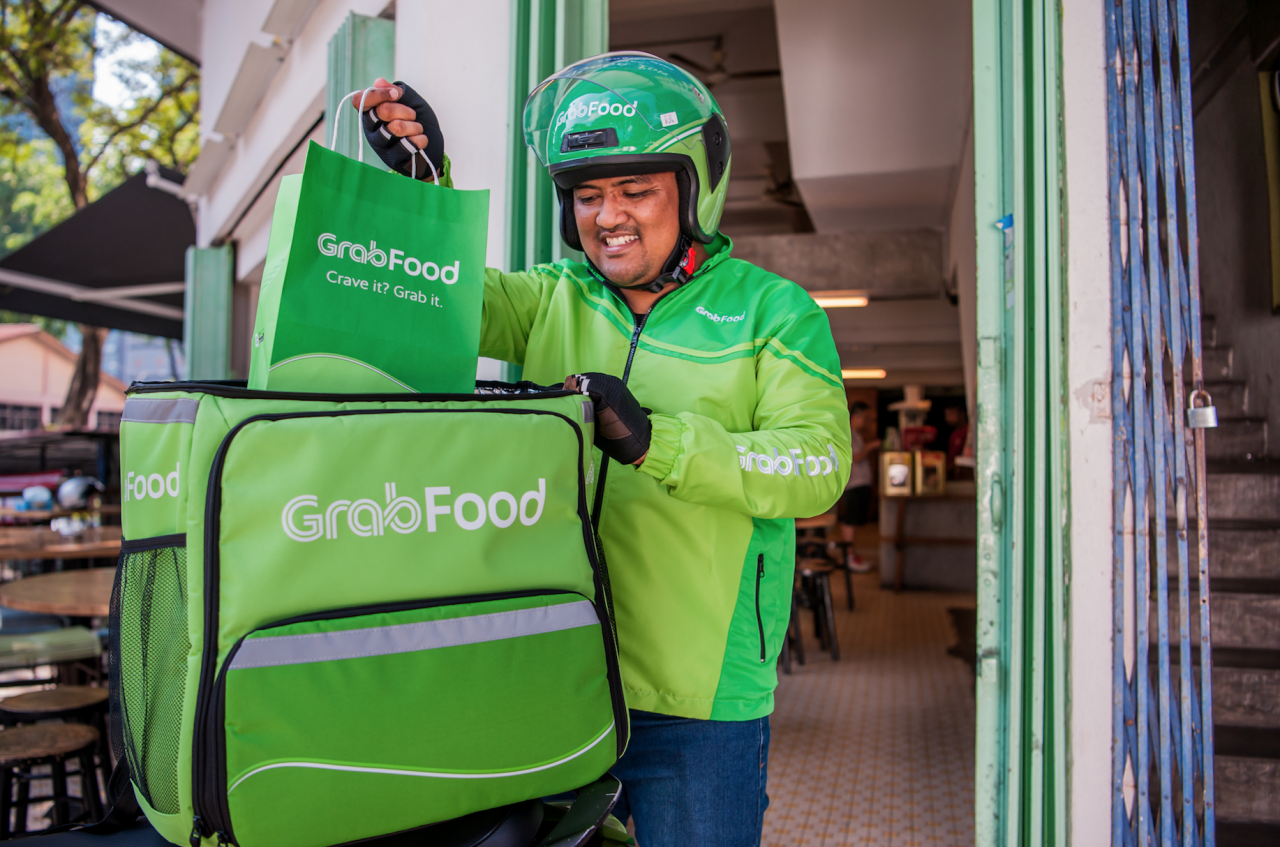
    • Order online for in-store pick-up via GrabFood: Customers can skip the line and order their favorite food and beverage items directly from GrabFood’s self-pick up feature, which will inform them when their orders are ready for pick up.
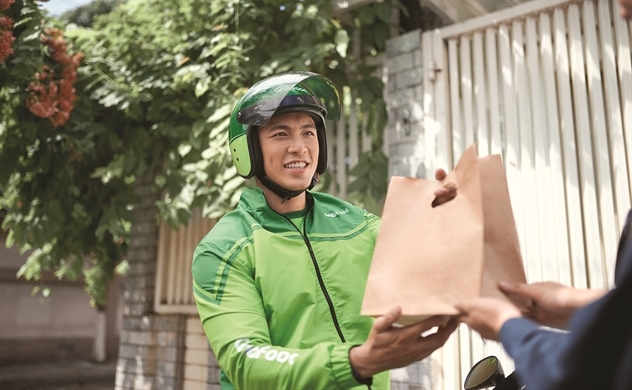
    • Instant delivery via GrabExpress: Customers can get their favorite Starbucks food and beverages delivered to their doorsteps faster than before by GrabExpress, when they order via Starbucks owned channels .
    • Social gifting through GrabGifts: Customers can now purchase and send pre-loaded Starbucks gift cards to friends and family via the Grab app in the Philippines, Thailand, Singapore, Malaysia, Indonesia, and Vietnam.

    Creating positive impact through Starbucks FoodShare program

    As part of Starbucks People Positive aspirations, focused on enhancing the well-being of all who connect with Starbucks, the company will launch its FoodShare food donation program this March in the Philippines, starting with 40 stores in the Metro Manila area. Starbucks regional partnership with Grab will enable participating stores to connect with Grab drivers to pick up food donations from stores daily and deliver them to local non-profit organizations such as the Philippine Food Bank Foundation. Starbucks aims to expand the reach of the program to more communities in the Philippines, as well as additional markets throughout Southeast Asia.

    FoodShare started in 2016 after Starbucks partners (employees) advocated for a program that would allow stores to donate unsold food and distribute it to people facing hunger in communities across the U.S. FoodShare is now available at 100% of US and Canada company-owned stores.

    Since entering the Southeast Asia region over 25 years ago, Starbucks has expanded to more than 1,882 stores across the Philippines, Thailand, Singapore, Malaysia, Indonesia, and Vietnam, with more than 19,853 partners proudly wearing the green apron. The company is committed to driving continued sustainable growth by investing in digital innovations that deliver meaningful value and convenience
    and social impact initiatives that create positive impact in the communities we serve.
  • Grab to increase all service fares

    Grab to increase all service fares

    Ride-hailing giant Grab will raise all fares from March 10, the first tech-based transport firm to do so amid record-high gasoline prices.

    GrabCar’s first two-kilometer fare will be raised by VND2,000 ($0.09) to VND29,000 for four-seater and VND34,000 for seven-seater vehicles in Hanoi and Ho Chi Minh City.

    That of each subsequent kilometer will be VND10,000, up VND500.

    GrabCar fares in other cities and provinces will also be increased by VND2,000-2,500 for the first two kilometers, and VND600 for each subsequent kilometer.

    For its bike ride-hailing and delivery services, the giant’s fares will go up to VND12,500-13,500 for the first two kilometers and VND4,300 for each subsequent kilometer.

    The tech-based transport firm cited surging gasoline prices as a reason for the adjustment.

    Gasoline prices in Vietnam hit the all time high of VND26,830 per liter for popular RON 95 and VND26,070 per liter for biofuel E5 RON 92 last Tuesday, after authorities adjusted them upward for the sixth time in less than three months.

    The last time Grab increased its fares was at the end of 2020, after authorities raised value-added tax for tech-based transport services from 3 percent to 10 percent.

    Taxi firms expect to increase their fares if gasoline prices stay at the current all-time high.

  • Grab to buy Malaysia’s Jaya Grocer grocery chain

    Grab to buy Malaysia’s Jaya Grocer grocery chain

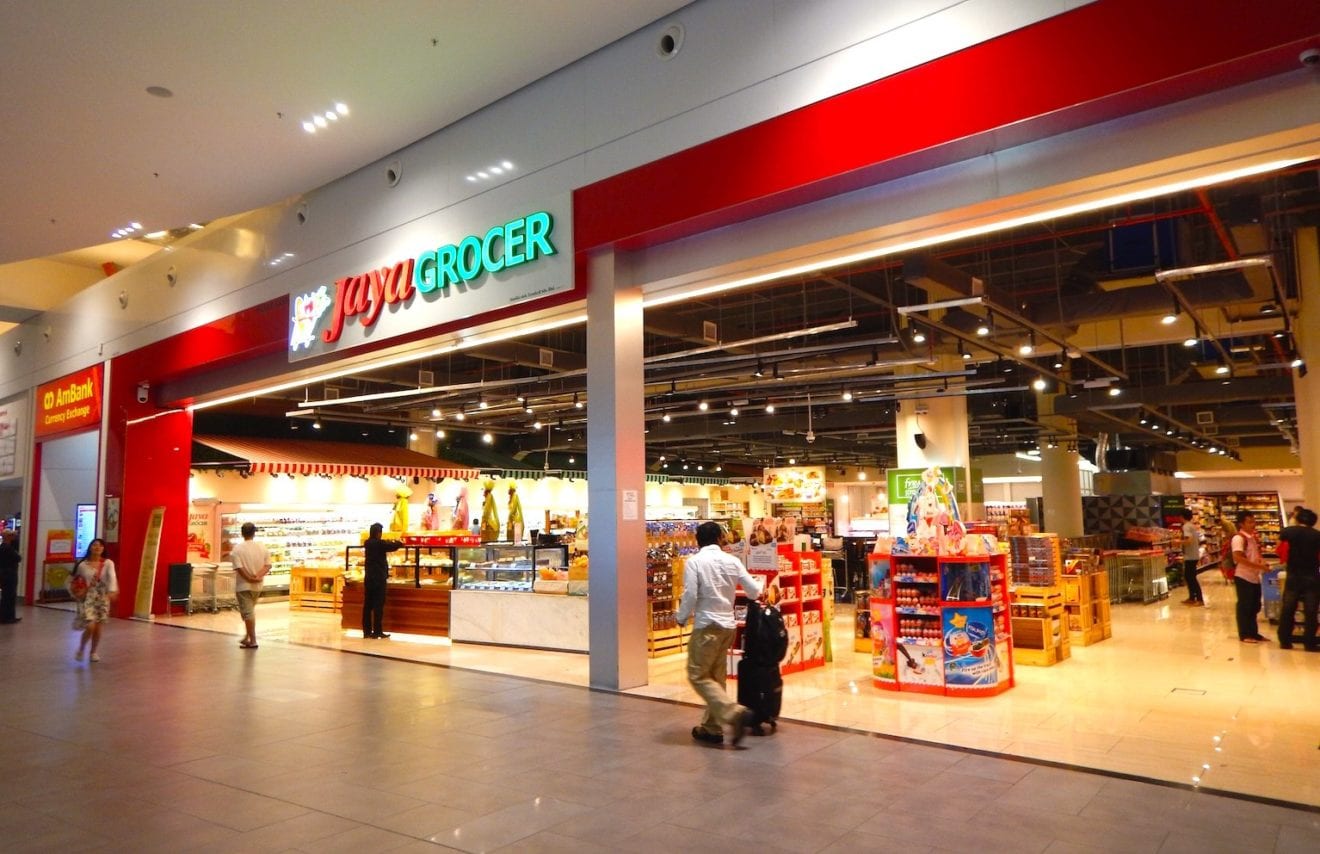
    Southeast Asian ride-hailing and food-delivery giant Grab is to acquire Malaysian grocery chain Jaya Grocer, according to a filing with the US Securities and Exchange Commission.

    Under the agreement, Grab will acquire Jaya Grocer’s ordinary shares and 75 per cent of preference shares. The company also has the option to buy the remaining 25 per cent of the preferred shares of Jaya Grocer after the closing of the transaction.

    In addition, Grab plans to partner with a local investor which will own 50 per cent of the voting shares in Jaya Grocer. The deal, the value of which has not been disclosed, is expected to close in the first quarter of next year.

    “Following closing, Jaya Grocer is expected to become a subsidiary of GHL (Grab Holdings Limited) and its financial results will be consolidated by GHL,” the company said in the filing.

    The acquisition follows Grab’s IPO debut on the Nasdaq earlier this month.

    Jaya Grocer was founded in 2007 by the Teng family with its first outlet opened in Petaling Jaya. It was acquired by the Asean Industrial Growth Fund in 2016. Last month, the private-equity firm sold its stake back to the Teng family.

    Jaya Grocer currently operates 40 stores across Peninsular Malaysia, with the majority being located in the Klang Valley near Kuala Lumpur.

  • Grab’s Ride-Hailing Services Disrupted In Southeast Asian Countries

    Grab’s Ride-Hailing Services Disrupted In Southeast Asian Countries

    Southeast Asia’s Grab on Tuesday said it was experiencing disruption to its services, with customers and drivers in Singapore, Indonesia, and Malaysia complaining that they were having trouble using the app’s ride-hailing functions.

    “Some of our services are not accessible at the moment,” Grab posted on its Facebook page.

    “We are looking into this and we will update when the app is back up and running.”

    Grab operates Southeast Asia’s most popular “super app”, which provides ride-hailing, food, and grocery delivery, and payments in over 400 locations in eight countries.

    “We are experiencing some technical difficulties with the app and our engineers are working to recover the issue,” Grab said.

  • Let shippers deliver food, says Grab

    Let shippers deliver food, says Grab

    Delivery app Grab wants food delivery services resumed in Hanoi since they help reduce the number of people gathering to fulfill various needs.

    “Since Hanoi authorities have been limiting the number of people at supermarkets and retail locations to lower the risk of contagion, services like GrabFood, GrabMart and GrabExpress have provided valuable assistance,” it said in a proposal, referring to its food, retail and parcel delivery services.

    They could help meet the city’s desire to ensure adequate supply of essential goods, it said.

    It assured its delivery people would meet social distancing requirements and it would limit delivery to essential items.

    Hanoi on Saturday ordered five ride-hailing and delivery platforms, Grab, Gojek, Be, MyGo and FastGo, to suspend their services, but still let other delivery platforms operate.

    Grab said the decision was inconsistent with the city’s policies and feared could cause unfair competition.

    Hanoi began a 15-day social distancing order starting 6 a.m. Saturday amid rising coronavirus concerns in both the capital and nationwide.

    It has recorded over 900 cases in the latest wave.

  • Ride-hailing firm Grab to launch electric cars in Vietnam

    Ride-hailing firm Grab to launch electric cars in Vietnam

    Ride-hailing firm Grab plans to launch electric car services in Vietnam and Indonesia after piloting a program in Singapore at the end of this year.

    Grab is partnering with South Korea’s automotive manufacturer Hyundai Motor to encourage the adoption of electric vehicles in Southeast Asia.

    Both parties will test new business models including battery and electric vehicles leasing, thus lowering the entry barrier for its driver as the cost to own an electric car is high.

    Grab had said in an earlier report that some of the concerns that make drivers reluctant to use electric vehicles are their price, lack of charging stations and long waiting time for the battery to be fully charged.

    Russell Cohen, Grab’s managing director of operations, said that the company hopes governments will have incentive policies and essential infrastructure like charging stations so that electric vehicles will have many opportunities to develop.

    Grab and Hyundai have been partners since 2018. In 2019, the ride-hailing firm purchased 200 Hyundai Kona electric cars for its car-hiring service GrabRentals in Singapore.

  • Indonesia Tech Giants Complete Merger

    Indonesia Tech Giants Complete Merger

    Indonesia headquartered on-demand multi-service platform and digital payment technology group Gojek and e-commerce platform Tokopedia have completed Indonesia’s largest-ever deal to create GoTo, Southeast Asia’s largest privately held technology firm.

    Amid growing competition among e-commerce platforms and super-apps, Gojek and Tokopedia giants have merged to form a multi-billion dollar company that will span e-commerce, e-payments, courier services, ride-hailing, food delivery, and other services.

    The merger will increase financial inclusion in an emerging region with untapped growth potential, Gojek co-CEO Andre Soelistyo, who will become CEO of GoTo, said in an announcement on Monday.

    The deal was backed by investors including Alibaba, SoftBank, Singapore sovereign wealth fund GIC, Alphabet’s Google, and Tencent. Gojek’s shareholders will own 58 percent of the holding company with the balance held by Tokopedia’s investors, Reuters reported, citing sources.

    Gojek and Tokopedia plan to remain separate but work together on payments, logistics, and food deliveries, they said in the announcement. Tokopedia president Patrick Cao will become GoTo’s president, while Kevin Aluwi will continue as CEO of Gojek, and William Tanuwijaya will remain CEO of Tokopedia.

    The two sides have considered a potential merger since 2018, but talks accelerated after plans for Gojek to merge with regional rival Grab fell through. The group, which is estimated to have a combined worth of $40 billion, plans to list in Indonesia and the United States later this year.

    The group’s payments arm currently owns 22 percent of Indonesia’s Bank Jago, and acquired mobile payments startup Moka in 2020. The group also has partnership deals with more than 20 banks and financial institutions.

    Indonesia’s digital economy expected to grow to $124 billion by 2025, according to a study by Google, Bain, and Temasek. About half its population of 270 million are currently unbanked.

    However, competition remains the form of Grab, which has also set its sights on the digital economy of the world’s fourth most populous nation.

  • Grab set to announce deal with US SPAC at $40 billion valuation

    Grab set to announce deal with US SPAC at $40 billion valuation

    Grab Holdings is set to announce as early as Tuesday a merger with U.S.-based Altimeter that will value Grab at nearly $40 billion and lead to a public listing.

    The merger will make it the biggest blank-check company deal ever. Southeast Asia’s largest ride-hailing and food delivery firm Grab’s agreement with a special purpose acquisition company (SPAC) backed by Altimeter Capital includes a $4 billion private investment in public equity (PIPE) from a group of Asian and global investors including Fidelity International and Janus Henderson, three people said.

    Grab declined to comment. There was no response from Silicon Valley-based Altimeter to an emailed request for comment.

    The two fund managers also did not respond to an emailed query. The sources declined to be identified due to the sensitivity of the matter.

    The deal for Singapore-based Grab, which sources have previously said was valued at just over $16 billion last year, is a big win for its early backers such as Japan’s SoftBank Group Corp and China’s Didi Chuxing.

    A U.S. listing will give Grab extra firepower in its main market, Indonesia, where local rival Gojek is close to sealing a merger with the country’s leading e-commerce business Tokopedia.

    Grab, whose net revenue surged 70 percent last year, is yet to turn profitable, but it expects its biggest segment – the food delivery business – to break even by end-2021, as more consumers shift to online food delivery after the Covid-19 pandemic.

    The nearly $40 billion valuations is based on a proforma equity value, two of the sources said.

    With operations in eight countries and 398 cities, Grab is already Southeast Asia’s most valuable start-up.

    Leveraging its ride-hailing business started in 2012, the firm has expanded into offering food and grocery deliveries, courier services, digital payments, and is now making a big push into insurance and lending in a region of 650 million people.

    Cash-rich, U.S.-listed Sea is also muscling into food delivery and financial services in Indonesia. Both Grab and Sea won digital bank licences in Singapore last year.

  • Grab agrees to US$40 billion merger, clearing way to list in the US

    Grab agrees to US$40 billion merger, clearing way to list in the US

    Southeast Asia’s biggest ride-hailing and food delivery firm Grab Holdings agreed a merger on Tuesday with US-based Altimeter Growth Corp in a deal that values Grab at an initial proforma equity value of about US$39.6 billion and will lead to a public listing

    The merger, the biggest blank-check company deal ever, underscores the frenzy on Wall Street as shell firms have raised $99 billion in the US so far this year after a record $83 billion fundraising in 2020.

    Singapore-based Grab’s agreement with a special purpose acquisition company backed by Altimeter Capital includes a more than $4 billion private investment in public equity by investors including BlackRock, Fidelity International, Janus Henderson Investors and Temasek Holdings.

    Grab said its decision to become a public company was driven by strong financial performance in 2020, despite the pandemic.

    Reuters earlier reported that Grab would announce the deal on Tuesday.

  • Grab to List in New York Via Blockbuster SPAC

    Grab to List in New York Via Blockbuster SPAC

    The deal – the largest merger between a company and a blank cheque company – will value the SoftBank-backed firm at about $35 billion.

    The Singapore-based technology group could finalize an agreement to list with one of Altimeter Capital’s special purpose acquisition companies (SPACs) as soon as this week. Grab will raise about $2.5 billion through private investment in public equity (Pipe), which typically involves selling shares in a private arrangement with investors. Of that, close to $1.2 billion will be funded by Altimeter, which will also backstop the sale of any shares in the SPAC by public shareholders when the deal is announced, the report said.

    Grab founder Anthony Tan will own 2 percent of the listed entity, the pink paper’s sources said. Softbank, one of the company’s biggest investors, will also be looking at a major payday.

    Founded in 2012, Grab, which started out as a ride-hailing service, now provides food delivery, payments and insurance, among other services on its app, and holds a digital banking license in Singapore. It serves a regional consumer market of 655 million people in countries like Indonesia, Thailand and Vietnam.

    Gojek, Grab’s main regional rival, is in advanced merger talks with local e-commerce marketplace Tokopedia, ahead of a planned initial public offering of the combined entity.

  • Grab Co-Founder Among New Pair of Directors at Wise

    Grab Co-Founder Among New Pair of Directors at Wise

    The London-headquartered online money transfer service plans to expand its product globally over the next few years to lower the cost of international transactions.

    Wise has appointed Tan Hooi Ling, co-founder of super app Grab, and Clare Gilmartin, former CEO of digital rail ticketing platform Trainline, to its board as director designates, the company announced in a blog post on Tuesday.

    The appointments will help the company with its next stage of growth, particularly in Asia Pacific, where the company operates in seven markets, co-founder and CEO Kristo Käärmann said in a the post. They will also help the board create a more inclusive work environment and more diverse and inclusive products, he said.

    The company, which recently rebranded from Transferwise to Wise, opened a new office in Singapore in February 2021, which will be used as a base for regional growth, while announcing major hiring plans.

    Wise was founded in 2011 by Estonians Taavet Hinrikus and Kristo Käärmann. Today, it boasts 10 million users which process over 4.5 billion British pounds ($6.3 billion) in cross-border transactions every month.

  • Grab in Talks to Go Public via SPAC Merger

    Grab in Talks to Go Public via SPAC Merger

    The technology platform and ride-hailing giant is reportedly considering a merger with an SPAC, but a U.S. listing via a traditional IPO is not off the table.

    J.P. Morgan and Morgan Stanley, which are advising Grab on its IPO plans, are in the midst of identifying special purpose acquisition companies (SPACs) for the company to merge with to accelerate its listing process, according to a «Bloomberg» report on Thursday.

    The Softbank-backed company’s listing considerations come after talks to combine with Indonesian rival Gojek collapsed, the report said. The latter is now in advanced discussions to merge with local e-commerce pioneer Tokopedia instead.

    SPACs are shell companies, also known as blank check companies, that go public on a stock exchange in order to then buy private companies, which are then listed virtually through the back door.

    They are also the hottest trend on Wall Street: the proceeds of SPAC IPOs grew from $14.7 billion across 96 issues in 2019, to $79.3 billion across 256 issues in 2020, according to data from Refinitiv. SPAC mergers also grew in value from $34.5 billion across 87 deals in 2019, to $157.5 billion across 163 deals in 2020.

    Asian Bourses Consider Listing

    The Hong Kong Exchange and Clearing is reviewing the possibility of adding SPACs to its offering while the Singapore Exchange could list them as early as this year.

  • GoJek takes stake in e-wallet, ramping up rivalry with Grab

    GoJek takes stake in e-wallet, ramping up rivalry with Grab

    Grab Holdings and Gojek have made substantial progress in working out a deal to combine their businesses in what would be the biggest internet merger in Southeast Asia, according to people with knowledge of the talks.

    The region’s two most valuable startups have narrowed their differences of opinion, though some parts of the agreement still need to be negotiated, said the people, asking not to be named because the talks are private. The final details are being worked out among the most senior leaders of each company with the participation of SoftBank Group Corp.’s Masayoshi Son, a major Grab investor, one of the people said.

    Under one structure with substantial support, Grab co-founder Anthony Tan would become the chief executive officer of the combined entity, while Gojek executives would run the new combined business in Indonesia under the Gojek brand, the people said. The two brands may be run separately for an extended period of time, one of the people said. The combination is ultimately aimed at becoming a publicly listed company.

    Representatives of Grab, Gojek, and SoftBank declined to comment. The talks are still fluid and may not result in a transaction, the people said. The deal would need regulatory approval and governments may have antitrust concerns about the unification of the region’s two leading ride-hailing companies.

    Grab and Gojek have been locked in a fierce, expensive battle for dominance in that business along with food delivery and mobile payments over the last several years. Investors have been pushing for them to combine forces across Southeast Asia in order to reduce cash burn and create one of the most powerful internet companies in the region. Grab, which is present in eight countries, was last valued at more than $14 billion, while Gojek, valued at $10 billion, has a presence in Indonesia, Singapore, the Philippines, Thailand, and Vietnam.

    SoftBank has been pushing for a deal since Son visited Indonesia in January, but he’s grown increasingly frustrated with the lack of progress. The old rivalry and personality clashes between the two companies’ leaders have led to deadlocked negotiations in the past, according to one of the people familiar with the talks.

    Read more: SoftBank’s Son Is Said to Press Grab for Truce With Rival Gojek

    Sea Ltd.’s rise as a formidable force in e-commerce and digital payments has injected fresh impetus to the Grab-Gojek conversation, the people said. The Singapore-based company’s e-wallet, ShopeePay, has been gaining market share at a rapid clip, aided by the growing popularity of Sea’s e-commerce platform Shopee. That, in turn, is challenging market leaders GoPay and Grab-backed Ovo in Indonesia.

    Sea’s surprise journey from a scrappy startup to Southeast Asia’s most valuable company in the past 10 years has been the “biggest inspiration” for local internet companies lately, said Rohit Sipahimalani, chief investment strategist at Temasek Holdings Pte. Sea went public in 2017 after raising more than $720 million from investors and now has a market value approaching $88 billion.

    Read more: World’s Hottest Stock Is a Money-Losing Tech Giant Soaring 880%

    “People are now seeing that the public markets are a viable alternative for internet companies in Southeast Asia,” said Sipahimalani, whose firm is an investor in Gojek. “But they also recognize that they need to get to a certain scale, which is why the IPO route is becoming more attractive. I think that’s leading to some dialogue around combinations and consolidations in the region.”

    He declined to comment on the Grab-Gojek deal, adding that Singapore’s state-owned investment firm isn’t taking part in the negotiations.

  • Gojek-Grab Rivalry Extends to Digital Payments

    Gojek-Grab Rivalry Extends to Digital Payments

    Gojek has joined rival Grab in backing Indonesian state-backed e-wallet company in its Series B funding round.

    Gojek’s joining as a strategic shareholder will provide LinkAja access to the Gojek ecosystem to support LinkAja’s mission in accelerating financial inclusion in Indonesia, LinkAja CEO Haryati Lawidjaja said in a statement.

    As part of the deal, the ride-hailing giant will add LinkAja as a payment option on its app. The strategic investment builds on Gojek’s ongoing collaboration with the e-wallet, which includes payment for transportation and ticket reservation services.

    Formed from a consortium of state-owned enterprises, LinkAja operates an e-wallet and merchant services business focusing on the middle class, and micro, small, and medium-sized enterprise (MSME) segments in Indonesia.

    About 80 percent of its users are from tier 2 and 3 cities, according to LinkAja.

    According to GlobalData, rising Internet penetration, increasing digitalization and the proliferation of websites have been driving the growth of e-wallets in Indonesia, which further rose during the Covid-19 pandemic as customers have turned to alternative payment tools.

    Investments in state-backed entities can be a strategic move to maintain a healthy relationship with the government machinery. Though both Grab and Gojek managed to garner investment positions in LinkAja, Gojek seems to get some home advantage, Aurojyoti Bose, lead analyst at GlobalData, said about the deal.

    Grab, which competes with Gojek for dominance in the digital payments space in Southeast Asia, announced in November 2020 that it had invested $100 million in LinkAja, with participation from Telkomsel, BRI Ventura Investama and Mandiri Capital.

  • StanChart Hires Ex-Grab Wealth Head

    StanChart Hires Ex-Grab Wealth Head

    Standard Chartered will look to expand its funds and discretionary portfolio management business with the hire of an industry veteran in Singapore.

    Chandrima Das joins the bank as its global head of management investments, according to a statement, reporting to global head of wealth management Marc van de Walle.

    Das has over 20 years of banking and asset management experience across Asia and Europe. Previously, she held various senior roles with Bank of Singapore, ING, Prudential and, most recently, Grab where she was its head of wealth management. She is also the co-founder of the digital investment advisor platform Bento.

    Das brings a unique combination of experience in asset management and wealth tech which is especially pertinent today as we seek to meet increasingly sophisticated demand for wealth management advice at scale,» commented van de Walle on the hire which is subject to regulatory approval.