Tag: grab

  • Grab Malaysia sees ‘instant retail’ reducing need for physical stores

    Grab Malaysia sees ‘instant retail’ reducing need for physical stores

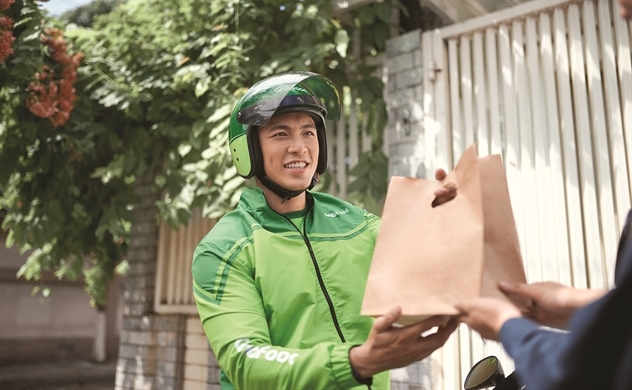
    Grab Malaysia is expanding its instant retail service after studying customer demand for goods during the nation’s Covid-19-related social-distancing initiative.

    According to Grab Malaysia MD Sean Goh, many convenience stores and grocery retailers were able to treble their sales using the GrabMart delivery service during the lockdown restrictions. Now, as the country’s retailers are allowed to open their doors again and normal trading resumes, Grab believes more consumers are seeking safe, reliable ways to shop for daily needs without visiting stores.

    “While we saw a clear uplift to safe, instant deliveries for food, drinks, snacks and other essential goods via GrabFood, GrabMart and especially ‘Pasar’ on GrabMart, we see a new challenge for retailers,” explained Goh.

    “The ‘new normal’ will potentially affect retailers who traditionally rely on high foot traffic and walk-ins – from health and beauty retailers, toys, gifts and stationery shops to florists. This is a gap where we believe GrabMart is able to step in and address while helping to make the government’s upcoming Shop Malaysia Online initiative a success.”

    GrabMart was launched last November, before anyone foresaw the emergence of Covid-19.

    Goh said that after the government’s movement controls were put in place, many retail chains signed up to GrabMart, not just in the grocery and food categories, but pharmacies, health & beauty, eyewear, books, stationery and gift retailers.

    He believes this has caused consumers to evolve into ‘on-demand shoppers’ who are already accustomed to using mobile technology for their daily needs, and increasingly expect faster speed and safety for their retail purchases. Grab is delivering most goods from retailers in less than 30 minutes for a charge as low as US$1.20 (MYR5).

    Goh believes the convenience of services like GrabMart and the rapidly increasing adoption of apps by consumers to order online will substantially reshape retailing.

    “It is no longer sustainable for businesses to keep expanding their retail presence to get closer to their customers’ homes. Together, we can realize our nation’s vision for a more robust digital economy as businesses adjust seamlessly to the new norm,” he said.

    “We are excited to expand and help more businesses transition seamlessly to adopt instant retail.”

    Grab Malaysia operates GrabMart in Kuala Lumpur’s Klang Valley, Johor Bahru, Kota Kinabalu, Kuching, Ipoh, Melaka and Penang.
  • Grab expands grocery-delivery service into eight SE Asian markets

    Grab expands grocery-delivery service into eight SE Asian markets

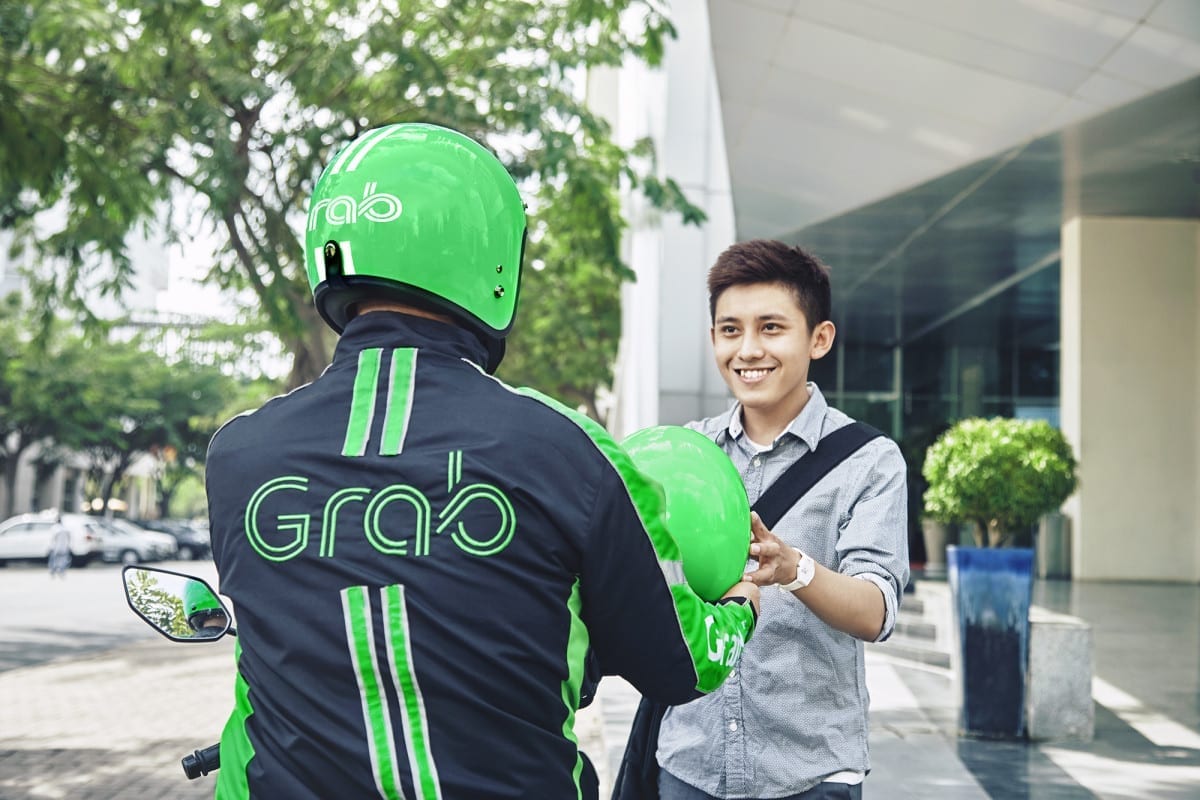
    Grab has expanded its grocery-delivery service GrabMart into eight Southeast Asian markets within the last three months.

    Initially launched in two countries as an on-demand daily essentials delivery service during the Covid-19 pandemic, GrabMart is now available in 50 cities across eight Southeast Asian countries, including Myanmar and Cambodia.

    “Covid-19 has accelerated the adoption of on-demand delivery services across Southeast Asia, and we were able to tap on existing technologies, our extensive delivery network, and operational footprint to quickly scale GrabMart across the region,” said Demi Yu, regional head of GrabFood and GrabMart.

    The delivery company has teamed with more than 3000 stores and supermarkets in the region including FairPrice Xpress in Singapore, Lawson in the Philippines and FamilyMart in other countries.

    In Indonesia and Malaysia, GrabMart partnered with traditional market operators, delivering fresh produce from several market stalls in a single order to customers’ doors.

    “In a post-Covid-19 normal, we anticipate demand for grocery-delivery services to remain elevated. We will continue to double down on expanding our GrabMart service to support consumers’ shopping needs,” she said.

  • Grab Hires Chief Financial Officer

    Grab Hires Chief Financial Officer

    Grab has appointed a chief financial officer with extensive experience in scaling rapidly growing technology companies.

    Based in Singapore, Peter Oey reports to group CEO and co-founder Anthony Tan. He will be responsible forfinance operations, treasury, tax, procurement, and real estate and facilities, the firm said in an announcement on Wednesday.

    He will also work closely with Grab president Ming Maa, who will continue to lead strategic business planning for the company, the statement said.

    Oey brings extensive experience scaling rapidly growing technology companies. He spent two decades of corporate finance and strategic planning, and was previously CFO for legal tech firm Legalzoom and personal information broker Mylife. He also spent 12 years in various roles at gaming firm Activision Blizzard, including vice president, corporate controller.

    The past year has seen Grab growing its food delivery, payments and financial services businesses significantly. According to the firm, Grab Food saw its gross merchandise value grow by over 400 percent across Southeast Asia, led by Indonesia, Thailand and the Philippines, while Grab Pay increased total payments volume by 170 percent.

    Apart from launching e-money, lending and insurance distribution on its platform, the firm has partnered Singtel in its application for a digital bank license in Singapore. It also moved into wealth management with the acquisition of Singapore-based robo-advisor Bento.

    In the coming year, Grab said it expects to expand its financial services offerings, grow its daily essentials delivery and concierge services and develop more business-to-business service offerings.

  • Wirecard Partners Grab for Payments

    Wirecard Partners Grab for Payments

    The firm will process card transactions made via the GrabPay e-wallet and integrate it as a payment method for its merchants.

    Wirecard has entered into a payments partnership with Singapore-based superapp Grab to drive the cashless economy for micro, small and medium enterprises (MSMEs) across Southeast Asia, the Munich-based firm announced in a statement on Wednesday.

    Wirecard said that it will process payments made with the GrabPay e-wallet, starting with the Malaysia, Philippines and Singapore markets.

    Together, we aim to continue disrupting the payment, tech and mobility industries with innovative solutions that can improve the lives of millions, Georg von Waldenfels, Wirecard executive vice president, Group Business Development, said about the partnership.

    Grab operates in eight countries in Southeast Asia, with its app downloaded on over 185 million mobile devices, according to its website.

    GrabPay is among the most popular e-wallets in Southeast Asia, currently accepted by 600,000 merchants.

  • Ex-Citi Singapore Banker To Join Grab-Singtel

    Ex-Citi Singapore Banker To Join Grab-Singtel

    Citibank Singapore’s head of retail banking Charles Wong is set to join the Grab-Singtel entity that is bidding for a digital full bank in Singapore.

    With strong credentials for bringing about a strong turnaround of Citi Singapore’s business, Charles Wong is likely to play a key role in the digital full bank if the Grab-Singtel consortium secures the license, according to a report.

    Wong had resigned from the U.S. bank in February after more than 20 years at Citibank, where he spent nearly five years in his last role as head of retail banking at Citibank Singapore. Under his leadership, the unit delivered consistent double-digit growth.

    Grab Holdings and Singtel have jointly applied for a digital full bank license, with Grab holding a 60 percent stake in the proposed consortium, and Singtel holding the rest.

    Both partners see financial services as a natural extension of their core businesses.

  • Japanese Payment Solutions Firm Invests in Grab

    Japanese Payment Solutions Firm Invests in Grab

    Together with MUFG’s $726 million investment, the super-app has raised $876 million for its financial services push.

    TIS, a Japanese provider of network solutions and system integration services, is investing $150 million in super-app Grab in a strategic partnership that aims at supporting Grab’s regional expansion plans, the firm said in a press release.

    According to the statement, both companies will collaborate on developing emerging payment technologies and enhancing the digital payment infrastructure in the region and in Japan to enable greater adoption of cashless payment options, such as GrabPay.

    Digital payments are taking off in Southeast Asia, as it caters to a largely mobile yet underbanked population. We need to create better experiences to pay for daily transactions, Ming Maa, president, Grab, said about the partnership.

    On Friday, Grab announced that Mitsubishi UFJ Financial Group (MUFG) was making a strategic investment of 80 trillion yen ($726 million) in the company. Grab said MUFG will offer a range of financial services and loans to its user base across Southeast Asia.

    The bank will also tap on Grab’s artificial intelligence systems and data analysis capabilities, as it competes more with online banks and IT startups in its home market.

    Grab, already a leading food delivery and ride-hailing provider in Southeast Asia, has long had ambitions in the financial services space, saying it wants to be the region’s largest merchant network, insurtech policy provider and fintech lender. In the last two years, Grab has built solutions in payments, rewards, lending, and insurance under its GrabPay wallet and Grab Financial.

    Earlier in February, Grab announced the acquisition of Bento Invest, a Singapore-based robo-advisory start-up, through which it will offer retail wealth management solutions.

    The company is also one of the contenders for digital bank licenses in Singapore, to be introduced later this year, as part of a joint bid with Singtel.

    The news of the investments came on the heels of rumors on Tuesday that Grab was in talks with regional rival Gojek over a possible merger. According to a report by U.S. tech media «The Information,» the two sides are split over control of the combined firm

  • Former Grab leader appointed CEO of VinID

    Former Grab leader appointed CEO of VinID

    Former CEO of Grab Financial Group Vietnam, Nguyen Tuan Anh, is the new general director of Vingroup’s loyalty program VinID.

    Tuan Anh, who had left the ride-hailing firm last month, confirmed his new appointment with VnExpress, saying he had taken over last Friday.

    The VINID Joint Stock Company (VinID) said that it expected Anh would help strengthen its apparatus to compete with other rivals and become an independent service company.

    Anh left Grab Vietnam last month after six years. He is credited being the person who laid the first bricks for the company’s operations in Vietnam in 2014 and paving the way for the successful deployment of its ride-hailing services, especially GrabBike.

    Born in 1982, Anh graduated in Information Technology from the National University of Singapore. Prior to joining Grab, he had worked with American web services provider Yahoo and several other startups.

    VinID JSC was established in July 2018. It has a chartered capital of VND3 trillion ($129.4 million) and is 80 percent owned by Vingroup, Vietnam’s biggest private conglomerate.

  • Grab enters wealth-management space with Bento Invest buy

    Grab enters wealth-management space with Bento Invest buy

    Grab has bought Singapore-based robo-advisory start-up Bento Invest which will be rebranded as GrabInvest, offering wealth management solutions to drivers, merchant partners and consumers through the Grab app.

    Grab’s move adds another business vertical under its financial-services division Grab Financial Group which will now be led by Bento Invest founder and CEO Chandrima Das. The investment app will join Grab’s existing financial services including GrabPay, GrabRewards, GrabInsure and GrabFinance.

    Reuben Lai, senior MD of Grab Financial Group, said there is a lack of access to affordable wealth-management products and retirement planning solutions for most people in Southeast Asia.

    He said Grab’s purchase of Bento Invest aims to “democratize” access to retail wealth-management products, an opportunity traditionally restricted to affluent individuals and institutional investors. The app will provide a low-cost model that is easy for customers to understand by allowing them to transact on a platform they are familiar with.

    “As we face an increasingly volatile and uncertain economic environment, it is imperative for Southeast Asians to acquire the tools and knowledge to protect their future by sustainably building wealth for themselves and their families,” said Lai.

    “The launch of GrabInvest brings us a step closer to democratizing access to affordable financial solutions that will help them achieve the financial stability they need well into their retirement years.”

    Founder Das, a former MD at Bank of Singapore and CEO of ING Investment Management, has more than 20 years of leadership experience with banks and asset managers across Asia and the UK.

  • Grab Moves Into Wealth Management With Acquisition

    Grab Moves Into Wealth Management With Acquisition

    Grab on Tuesday announced the acquisition of Bento Invest, a Singapore-based Robo-advisory start-up for an undisclosed sum. It allows Grab to kickstart the offering of retail wealth management solutions to users, driver-partners, and merchant-partners via its app.

    With the acquisition, Bento will be rebranded as GrabInvest with products launched on the Grab app in the first half of the year in Singapore. GrabInvest will be a new core business vertical under Grab’s financial services arm, Grab Financial Group, led by Chandrima Das, founder, and chief executive of Bento.

    «In Southeast Asia, there is a lack of access to affordable wealth management products and retirement planning solutions for most people. As we face an increasingly volatile and uncertain economic environment, it is imperative for Southeast Asians to acquire the tools and knowledge to protect their future by sustainably building wealth for themselves and their families,» said Reuben Lai, Senior Managing Director of Grab Financial Group in a media statement.

    Bento’s proprietary digital wealth platform includes client onboarding, and portfolio construction and rebalancing supported by robust risk management capabilities. The platform is built and backed by a team of seasoned asset management and banking professionals who will join the GrabInvest team. Bento’s founder, Chandrima Das, has over two decades of leadership experience in banks and asset managers across Asia and the U.K. She was formerly Managing Director at Bank of Singapore and prior to that, CEO of ING Investment Management.

    GrabInvest will operate under a retail wealth management capital markets services license in Singapore, namely the MAS Retail Licensed Fund Management Company (LFMC) license. It hopes to offer cash management and portfolio-based financial solutions to its users, driver-partners, and merchant-partners, with Singapore as the first market to roll-out.

    GrabInvest said its aim is to democratize access to retail wealth management products, by providing people in Southeast Asia with the opportunity to save and invest in financial products traditionally limited to affluent individuals and institutional investors. GrabInvest aims to make wealth management services accessible by adopting a low-cost model, easy to understand by allowing users to transact on a platform they are familiar with, transparent by having full disclosures on fees with zero hidden elements, and trusted by adhering to consumer protection standards outlined by the regulators.

    Grab Financial Group currently offers financial services across Southeast Asia in payments (GrabPay), rewards (GrabRewards), lending (GrabFinance), and insurance (GrabInsure) to micro-entrepreneurs, small business owners, driver-partners and users across Southeast Asia.

  • Singapore Firms Eye Malaysia Digital Bank Licenses

    Singapore Firms Eye Malaysia Digital Bank Licenses

    Five licenses are up for grabs under a new regime announced by Bank Negara Malaysia, the country’s central bank.

    Singapore-based ride-hailing giant Grab and gaming technology firm Razer are exploring the feasibility of applying for a Malaysian digital bank license.

    Local lenders Hong Leong Bank, Maybank, CIMB, as well as Ant Financial, Malaysian telecommunications conglomerate Axiata and BigPay, the financial services arm of low-cost airline AirAsia, are also reportedly interested in the license.

    Grab, together with telecoms giant SingTel, and Razer, as the lead in a six-member consortium, were among the 21 applicants for up to five licenses to be issued under Singapore’s digital bank regime, set to be launched in 2020.

    In December, Malaysia’s central bank announced that it would issue five new digital banking licenses under a proposed framework that will be finalized in the first half of 2020, which will cater to online banks offering both conventional and sharia-compliant services.

    The draft proposal said the new Internet-based lenders could help close the gap in Malaysia’s underserved customers and unbanked individuals. The minimum capital requirement of RM100 million ($24.5 million) for the virtual bank’s foundational phase, which would be increased to RM300 million subsequently, is substantially lower than Singapore’s requirements.

  • Grab installs first female CEO for Vietnam operations

    Grab installs first female CEO for Vietnam operations

    Nguyen Thai Hai Van will commence her role as Vietnam CEO of Singapore-based ride-hailing giant Grab on February 1.

    Van, the first female Grab CEO in Vietnam, will oversee business strategy and operations across the country, Grab stated Monday.

    Van boasts 17 years’ prior marketing experience at the Netherlands-backed personal care products maker Unilever Vietnam ahead of joining Grab on November 1 last year. Besides, she co-chairs Vietnam Mobile Marketing Association.

    She takes over as Grab Vietnam CEO from predecessor Jerry Lim, who will return to Singapore to serve as regional head of customer experience.

    Grab has seen strong development since entering Vietnam in 2014. Payments via Moca, its e-payment partner, grew by 150 percent between January and June last year while its number of active monthly mobile users rose by 70 percent.

  • First Grab Kitchen in Singapore opens

    First Grab Kitchen in Singapore opens

    Grab has launched its first Grab Kitchen in Singapore, which takes its cloud kitchen network in Southeast Asia to 50.

    Located at 63 Hillview Avenue, the shared kitchen is operated for 10 restaurants including PlayMade, Wolf Burgers and Thai Dynasty. Occupying a 6000sqft area, Grab Kitchen also has a dine-in area for small lunch groups.

    “Together with our merchant partners, we hope to bridge cuisine demand and supply gaps, complement and expand the variety of food options at different price points in the area,” said Dilip Roussenaly, head of GrabFood Singapore, at the opening of the Grab Kitchen in Singapore.

    As operations in cloud kitchens cost less than setting up physical outlets, the concept has become popular among food and beverage merchants.

    “Partnering with GrabFood has enabled us to have an expanded reach to more consumers while minimizing the hassle for them to travel to a location for food,” said Ian Lin, founder of Thai Dynasty.

    Grab’s food-delivery business has become a major pillar for growth as it expands beyond its taxi-hailing roots into other areas, including financial services. Grab’s food delivery business witnessed 5.2 times growth in gross merchandise value last year, and nearly tripled its number of active users.

    Rivals Deliveroo and Foodpanda already operate their own shared kitchen spaces, also known as ghost or cloud kitchens, in Singapore. The firm’s regional rival Go-Jek has also been testing cloud kitchens in Indonesia.

  • ‘Grab-and-go’ coffee chain Kopi Kenangan reaches 200 stores

    ‘Grab-and-go’ coffee chain Kopi Kenangan reaches 200 stores

    Southeast Asian “grab-and-go” coffee chain Kopi Kenangan will expand its June Series A funding round with additional investments.

    The funding is being sourced from Roc Nation company Arrive; Serena Ventures; world-renowned basketball player Caris LeVert; and Sweetgreen CEO & co-founder Jonathan Neman, amongst others. Sequoia India, which led the US$20 million Series A round in June last year, also participated in this expansion.

    “We are inspired by Kopi Kenangan’s tenacity, vision, and ability to execute,” said Arrive co-founder and president Neil Sirni. “In just two years, they have expanded to 18 cities, 200 stores, and over 1800 employees. We’re excited to be an investor in and partner to Kopi Kenangan as they introduce Indonesian-style coffee to the world.”

    Kopi Kenangan sells at a price point between the high-priced coffee served at international coffee chains – which are beyond the price range for most Indonesians – and the instant coffee sold at many street stalls.

    Just a year ago, Kopi Kenangan only had 16 stores while serving a few thousand cups a day. Today, Kopi Kenangan it serves more than 3 million cups of beverage each month. On average, the company is opening more than one store per day.

    Kopi Kenangan plans to add more than 1000 new stores over the next two years and expand across Southeast Asia.

    “We want to build a legendary brand, and we’re excited to work with our new investors and advisors who have built global consumer franchises spanning sports, entertainment, F&B, and technology,” said CEO and co-founder Edward Tirtanata.

    “We have come a long way since our humble beginnings two years back and want to continue learning and improving our service and products to meet the expectations of our customers in Indonesia and other markets.”

  • Grab Launches Physical Cards to Complement E-Wallets

    Grab Launches Physical Cards to Complement E-Wallets

    The move brings greater financial inclusion while promising greater security, an expanded rewards ecosystem and Grab payments integration.

    Grab has announced it is rolling out the GrabPay Card to users of its super app and e-wallet, the firm announced in a statement on Thursday. Part of the firm’s ongoing collaboration with Mastercard, a digital version of the GrabPay Card is available to users in Singapore from 5 December, with physical cards to be issued in the first half of 2020, the statement said.

    The move is a significant one as it allows users, even the unbanked, to transact at anywhere in the world that accepts Mastercard payments, whether online or offline while extending Mastercard’s reach across Southeast Asia.

    The GrabPay Card «represents an important step for GrabPay in becoming a truly Asean wallet,» GrabPay managing director Huey Tyng Ooi said.

    As the card is numberless, it promises greater security. There will also be options for additional benefits, including mobile protection insurance, e-commerce protection, and flight delay passes.

    Physical cards will be first issued in the Philippines in Q1/2020, with the rest of Southeast Asia to follow.


  • Grab Rolling Out Low-Cost Wealth Products

    Grab Rolling Out Low-Cost Wealth Products

    Grab is looking to tap the trillion-dollar wealth market across South-east Asia by offering low-cost investment products.

    Armed with a huge ambition of seizing South-east Asia’s wealth management market, Grab will first offer simple cash products offering a yield above the small interest derived from cash sitting in banks, said Reuben Lai, senior managing director of Grab Financial Group.

    What we don’t want to do is what typical financial institutions do where they charge 3 percent to 5 percent upfront – it’s a huge put-off. We are going to do away with all these upfront fees and have a pay-as-you-go model in a very transparent way,” said Lai, who was quoted.

    Grab will work with various asset managers and banks to offer cash products by the first half of next year, followed by more complex products later. It will study whether the products are relevant for mass consumers in both pricing and liquidity, he added.

    The firm could also partner or invest in a platform, which could be a regional or global player. As local banks have not been aggressive in pushing exchange-traded funds (ETFs) despite their low-cost nature, Lai believes therein lies opportunities for Grab Financial.

    I don’t think fees (out there) are low, said Lai, even though some banks here have savings plans tied to investments such as ETFs.

    DBS has recently launched ETF products with a flat annual management fee of 0.75 percent without a further sales charge, platform fees and lock-in period.

    To boost the team in its next phase, Grab recently hired Philip Chew, an investment veteran from powerhouse BlackRock, to run Grab’s investment and new business unit.

    It has also hired Leslie Teo, former GIC chief economist, to head up its data science team, with the aim of looking at how to better price financial products, Lai said.

    Grab’s pay-as-you-use models for its consumer finance push gained traction as 70 percent of its drivers in Malaysia have signed on the usage-based insurance sold by Grab’s partner Zhong An Insurance that offers per-day coverage for a daily payment.

    Given the bigger push into wealth and insurance, GrabPay will look to engage the mass affluent in the coming months as well, having become the dominant e-wallet in Singapore, Malaysia and Vietnam, said Ooi Huey Tyng, who manages the GrabPay business in most of Southeast Asia.

    In about 18 months, GrabPay secured e-money licenses in six countries, and now commands the largest total payment value (TPV) in three, she said, while declining to disclose the absolute figures. With the rapid build-out of the GrabPay wallet, the TPV has also more than doubled in the last six months.

    Many people will say: ‘Are you trying to do an Ant Financial?’ And my answer is: ‘China is one country, we are 10 countries’. It’s very, very different. With the one time the partners plug into us, they get access to our 170 million subscriber base in South-east Asia… and the licenses that we’ve acquired,»said Lai.