Retail News CRM

Tag: hanoi

  • Hanoi aims to create 169,000 new jobs in 2025

    Hanoi aims to create 169,000 new jobs in 2025

    Hanoi plans to create 169,000 new jobs, reduce urban unemployment rate to below 3%, and increase the proportion of trained workers to 75% in 2025, its People’s Committee said.

    The city will implement policies and solutions to support the comprehensive recovery and development of the labor market, with a focused and targeted approach.

    Vu Thu Ha, the committe’s vice chair, said to achieve the targets, the city will focus on ensuring social welfare, developing the labor market, and strengthening the workforce.

    At the same time, efforts will be made to promote economic growth, improve the quality of human resources, and raise the efficiency of job-creation loan programs funded by the city budget through the Vietnam Bank for Social Policies’s Hanoi branch, the official added.

    A total of 255 job fairs are planned throughout the year, aiming to create 50,600 job opportunities, including 4,600 positions overseas.

    The People’s Committee has asked the Department of Labour, Invalids, and Social Affairs to take measures to boost the labor market, create jobs, and continue sending workers abroad.

    In 2024, the city generated about 225,000 new jobs, surpassing the set target by 36.3%. The number of participants in mandatory social insurance exceeded 2.1 million, an increase of 4.5% compared to 2023. Meanwhile, 107,000 people joined voluntary social insurance, a rise of 21.2% year-on-year.

  • Nvidia looking to hire engineers and managers in Hanoi

    Nvidia looking to hire engineers and managers in Hanoi

    Chipmaker Nvidia is recruiting engineers and managers for its operations in Hanoi, where it seems set to design and produce graphic processing units.

    It is seeking to fill nine positions, including those of IT, senior production support and system test design engineers and two senior managers, according to job posts on recruitment platform LinkedIn.

    One position is in a factory in Bac Ninh, an industrial province next to Hanoi. The senior manager for manufacturing operations requires the candidate to “spearhead the development of an impactful team in Vietnam from the ground up.”

    Applicants for this position need a bachelor’s or master’s degree in engineering, business or equivalent experience along with 15 years of overall experience and five years of specific management experience.

    Hanoi HR professional Dam Trang said Nvidia’s moves indicate that it is in the process of starting operations in Hanoi.

    As Nvidia is a chip designer and does not own factories, the fact that it is looking for manufacturing personnel shows it wants its own people to supervise suppliers’ production, she said.

    Though most of the requirements for the candidates are typical for a large company, finding individuals with more than 10 years’ experience in semiconductors would be challenging as the industry has only seen significant growth in Vietnam in the last few years, she said.

    During his visit to Vietnam on Dec. 5, Nvidia CEO Jensen Huang signed an agreement with the government to establish an AI research and development center and an AI data center.

    He praised Vietnam’s strengths in STEM and its potential to produce AI talent.

    He also vowed to promote the local AI industry through infrastructure development, training and fostering an AI startup ecosystem.

  • Hanoi retail space rents forecast to surge 18% this year

    Hanoi retail space rents forecast to surge 18% this year

    Rents for retail space could rise by 17-18% this year in downtown Hanoi and by 8-9% on the city’s outskirts, property consultancy CBRE has forecast.

    They might grow by 10% and 3% annually in the next three years, it added.

    CBRE said the average monthly rent in the downtown area in the first half was US$180 per square meter after rising by 11% from a year earlier.

    According to real estate agency Avison Young, in the second quarter the average retail rent rose by 15% in outlying districts. Ground-floor rents saw the highest average hike of nearly 15%.

    Reports from multiple real estate agencies and consultancies suggested that retail rents in the capital are on the rise due to low supply and growing demand from large international brands.

    In the first half it only saw one new project in Ha Dong District, which added 10,000 square meters of space to the market.

    Savills, another property consultancy, said the retail segment saw many transactions in the food and beverage sector in the second quarter.

    Japanese restaurant chain Pizza 4P, for instance, leased additional space to double the size of its current store in the Lotte Center Hanoi skyscraper.

    Gyu Shige, another Japanese restaurant, rented a property in Dong Da District to open its first store in Hanoi.

    As rents increase, the retail space occupancy rate in the city is inching down. According to Savills, it fell by two points year-on-year to 84% in the second quarter.

    David Jackson, CEO of Avison Young Vietnam, said tenants are shifting away from the downtown area to find cheaper and bigger places in the outskirts.

    Savills said six shopping malls and 11 ground-floor retail spaces would be launched in the next two years, mostly in Tay Ho, Dong Da and Hoang Mai districts.

  • Hanoi apartment prices up 38% in 5 years

    Hanoi apartment prices up 38% in 5 years

    Hanoi apartment prices have risen by 38% from 2019 and prices have shot up even in buildings that are 5-10 years old, according to the Ministry of Construction.

    Many projects sell at over VND60 million ($2,367.80) per square meter, rising to even VND150 million in some places, it said in a recent report.

    The smallest apartment (40 sq.m) at Heritage West Lake to the northwest of West Lake is priced at VND3.8 billion.

    A 30-square-meter unit at Masterise West Height in the southwest of the city starts at VND1.8 billion.

    “Apartments continue to attract interest from buyers with residential needs and medium- and long-term investors,” the ministry said.

    Prices have been rising rapidly since the end of last year due to a widening gap between supply and demand. In the last six months, many projects have seen prices rise by 20-25%.

    According to property consultancy CBRE, prices on the secondary market jumped by 17% year-on-year in the first quarter, the highest increase ever recorded.

    The average price of old apartments is VND36 million per square meter. But no new apartment projects were launched during the first quarter.

    The Ministry of Construction wants the city People’s Committee to identify and punish speculators who have been driving up property prices.

    But analysts called it a futile quest and suggested it should be tackled with policies such as imposing taxes for ownership of multiple properties.

  • Siemens offers locomotives for Vietnam’s highspeed railway By Viet Tua

    Siemens offers locomotives for Vietnam’s highspeed railway By Viet Tua

    Siemens has expressed interest in Vietnam’s North-South highspeed railway and offered to provide vehicles for the project.

    Siemens president and CEO Roland Busch told Prime Minister Pham Minh Chinh at a meeting in Hanoi Monday that the company can transfer the technology of building carriages and can provide the trailway signal system for the project.

    The North-South highspeed railway is among the largest transport projects that Vietnam plans for the upcoming decades.

    It should be approved in policy by next year and construction is scheduled to begin before 2030.

    Two sections of the railway, one from Hanoi to Vinh and the other from HCMC to Nha Trang, will begin construction before 2030 and the whole route should be finished by 2045.

    Busch made the offers after PM Chinh proposed that Siemens consider participating in the construction of the railway as well as the second metro line in HCMC, a 11-kilometer that mostly runs underground with a price tag of VND47.8 trillion.

    The PM asked Siemens to partner with Vietnam in the fields of high technology and innovation, green transformation, renewable energy, transportation and digital transformation.

    He also asked about potential for Siemens to build a research and development center built in Vietnam and urged the company to cooperate with the National Innovation Center. He also wants the group to expand cooperation with Vietnamese technology enterprises.

    Vietnam would create favorable conditions for businesses like Siemens to invest long-term, Chinh said.

    In Vietnam, Siemens established a representative office in 1993 and now has three representative offices in Hanoi, Da Nang, and Ho Chi Minh City. It also has a manufacturing factory in the southern province of Binh Duong.

    Siemens cooperates with Vietnam in many fields, especially renewable energy and transport. Its participation in one solar power project is estimated to contribute one billion kilowatt-hours of electricity to the country’s electricity system each year.

    The company has also designed and supplied 16 diesel locomotives for Vietnam Railway Corporation.

  • Parking an expensive headache for Hanoi apartment owners

    Parking an expensive headache for Hanoi apartment owners

    Hanoi apartment owners are spending up to hundreds of million dong (VND100 million = $4,200) on parking spots in their building due to insufficient space to accommodate increasing car ownership.

    For the first time in two years, Phuong Linh in Hanoi’s Ha Dong District was able to park her car in the basement of her own apartment building after paying VND20 million to a neighbor who just moved away.

    Due to the limited space in the basement, Linh has been parking her car in other parking lots around her neighborhood ever since she moved to the building.

    Only car owners who registered early can park their vehicles in the basement, and once they move, other residents like Linh rush to purchase the right to park in the spaces they leave vacant.

    This means that on top of the VND20 million, she still has to pay monthly parking fees.

    “I have to pay a lot, but I consider myself lucky. There are 30 other residents like me waiting for the next empty parking slot.”

    Stories like Linh’s have become increasingly popular in Hanoi, a city of 8.4 million where the number of both condominiums and cars has been surging in recent years.

    Manh Dung in Nam Tu Liem District last month bought an SUV, but he only found out after the purchase that there were no car parking spots left in his building.

    Nearly 100 residents have queued for the next empty slot, he said.

    Using connections, Dung managed to contact one of the building managers and secured a parking slot for VND40 million. The deal was unofficial.

    The manager said that if he moves away in the future, he can sell the slot for almost the same price, as there will always be demand for parking slots in the building.

    “I paid right away. A basement parking space is valuable, especially when it rains.”

    Many developers have set aside auto parking areas in the basement of their buildings, but the increasing number of cars in the city has made the limited number of parking slots a treasured real estate.

    By February this year Hanoi had over one million cars, up 36% from around the same period in 2019. This means that one in every eight Hanoi residents owns a car.

    Some developers, therefore, charge big bucks for parking slots.

    A developer of a 40-floor condominium in Ha Dong District earlier this year charged VND220 million for a 20-year parking space rental contract.

    It also offered to sell a parking slot permanently at VND400 million for a sedan, and nearly VND500 million for an SUV.

    Due to the high price tag, some residents at the building have no choice but to find outdoor neighborhood parking lots and pay around VND1.2 million a month per vehicle.

    In July, a developer of a 30-floor building in Thanh Xuan District charged VND60 million upfront for a five-year car parking slot. Residents protested the policy, saying that they did not want to pay such a hefty sum all at once.

    The developer also offered to lease a parking slot for VND200 million over 40 years. This means that a resident of a 70-square-meter apartment in the building would have to pay 10% of their apartment price for parking.

    Nguyen Viet Huy, a lecturer at Hanoi University of Construction, said that the competition for car parking space at condominiums has become more popular in Hanoi in recent years.

    There are legal requirements on how much parking space is needed at every condo project, but the figures are not backed by any scientific study, he added.

    Dao Ngoc Nghiem, deputy chairman of Hanoi Urban Development Planning Association, said that many developers who built their projects 10 years ago did not expect the number of immigrants in Hanoi would rise as fast at around 1.4% annually.

    “Parking space therefore have become one of the top criteria in apartment purchasing these days.”

    The lack of public parking spaces also contributes to the issue, as only 10% of parking demand in Hanoi has been met, he said, adding that more elevated and underground parking lots should be built.

  • Hundreds queue to buy social housing in Hanoi

    Hundreds queue to buy social housing in Hanoi

    At a building in Hanoi’s Cau Giay District on Wednesday evening, many queued up outside to register to buy an apartment at NHS Trung Van, a new social housing project that has been available since the end of March.

    The project is being built on a 2,700-square-meter area in Nam Tu Liem. When completed it will have 32 floors and two underground levels, with 275 apartments, in which 225 are social housing units

    The developer of the project, NHS, has received over 1,000 registrations since March 28. It had been accepting only 40 registrations each day, with the figure rising to 70 in the last few days due to high demand.

    Nguyen Tuan Long from Ha Dong District said: “I have been waiting for four days but still I have not been called to submit documents. I don’t know if I will be on the buyers’ list.”

    A NHS employee calls out the names of the people who register once every three hours to check if anyone has left. If someone does not respond after three calls they are removed from the list.

    Some people came to register after finishing their work day. Lien in Hoang Mai District said: “I have been coming here every day for the last four days. Some days I was not quick enough to be in the queue and had to leave.”

    A social housing apartment is legally required to only be sold to those on low incomes, though there have been reports of the middle-classes buying them.

    At NHS Trung Van, apartments are sold from VND19.5 million ($831) per square meter, substantially lower than an average project in Hanoi. The smallest apartment is priced at VND1.39 billion (nearly US$60,000).

  • Hanoi Metro posts first profit

    Hanoi Metro posts first profit

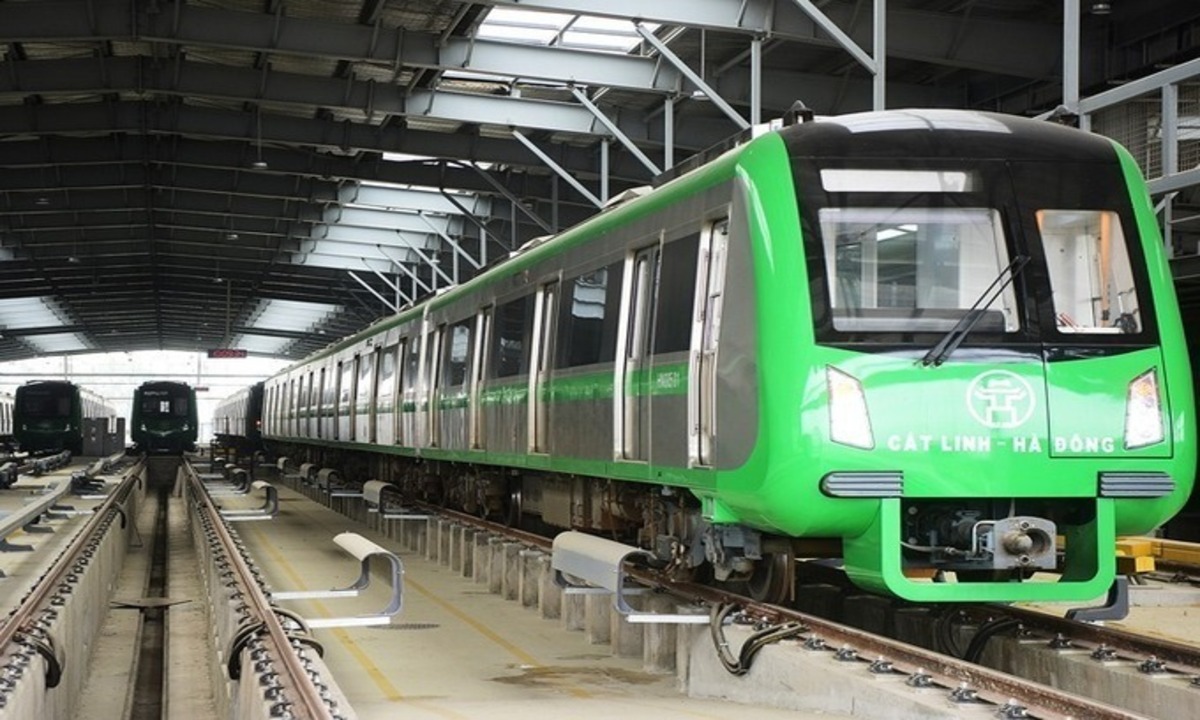
    Hanoi Metro, the operator of the capital’s first metro line, posted its first profit last year at nearly VND97 billion ($4.14 million).

    The profit was a turnaround from the VND37 billion loss recorded in 2021.

    The company saw revenues surge sevenfold to VND483 billion.

    The Cat Linh – Ha Dong Metro Line began commercial operation in June 2021.

    By the end of last year, it posted an accumulated loss of nearly VND37 billion, one-fifth of the losses in 2021.

    Hanoi Metro also received city subsidies in ticket sales last year, which it said would help improve its financial report.

    The company sells a ticket for VND8,000-15,000 depending on the trip length. A monthly ticket costs VND200,000, with students and industrial workers paying half.

    It now has nine trains operating, with a train running every six minutes during peak hours.

    The Cat Linh – Ha Dong Metro Line, which took 10 years to complete, runs 13 kilometers on elevated tracks through 12 stations.

    Each train can carry a maximum of 960 passengers. A complete trip takes 23 minutes.

    Hanoi Metro plans to serve over 10.6 million passengers this year.

  • Hanoi speculative villa prices down 40%

    Hanoi speculative villa prices down 40%

    Amid rising interest rates, Hanoi’s cash-strapped villa investors are slashing prices by up to 40% to lure customers.

    Loi spent VND32.5 billion (nearly $1.4 million) on a 180-square meter villa near Ring Road No. 3.5 in mid-2022.

    He paid for the house with a bank loan and VND11 billion of his own money hoping his investment’s price would double in two years.

    Two months later, the real estate market went silent. He put the villa for sale at a discount of 15%, but found no buyers. Early this year, he finally sold the villa for only VND23 billion.

    But despite all this, Loi is still considered a lucky investor, according to Tien, a local real estate broker in the urban area surrounding the villa project Loi bought into.

    “Many other investors of villas at the same project haven’t found any buyers at all even after lowering their prices 15-30%.”

    According to Tien, since late last year, many investors in the project, most of whom took out bank mortgages to pay for the villas, have slashed their prices 20-30% to cut losses.

    One investor has recently sold a 150-square meter villa for only VND17 billion, incurring a loss of VND8 billion.

    Brokers at the Hinode Royal Park urban area are trying to sell villas at prices of VND6-7.5 billion, down 40% against last year.

    Tu, also a broker, said she sold two villas at the Nam An Khanh urban area in Hoai Duc District for VND23.5 billion each early last year, but the price of the same properties has dropped over 30% to VND16 billion now.

    Villa offering prices at many other large-scale projects, including the Ha Do Charm Villas and An Lac Green Symphony, have decreased 25-30% over the past year.

    Most of the villas are being bought and sold by speculators, and many of them have been abandoned.

    According to real estate consultancy Savills Vietnam, the average villa price on the secondary (resale) market was VND22 billion in the first quarter of this year, 17% lower than the properties’ primary market (original) prices.

    As a result, some investors have leaned deeper into the secondary market and many have become speculators.
    Experts have also asserted that this is one major reason that the primary market has been so stagnant, with the absorption rate falling to the lowest level in the past seven years.

    Do Thu Hang, senior director of advisory services at Savills Vietnam, has predicted that liquidity in the villa market is likely to improve, but only for villas bought as homes, not investments.

    After construction of Ring Road No. 3.5 and Ring Road No. 4 is completes, over 80 property projects along the major new arteries will attract more buyers, she said.

  • Housing liquidity in 2022 lowest in 5 years

    Housing liquidity in 2022 lowest in 5 years

    The number of house and apartment transactions in the north and the south in 2022 fell to the lowest level in 5 years, according to report by real estate agencies.

    The report said that the apartment market in Ho Chi Minh City and in some southern provinces has been on the decline throughout the year.

    In the first two quarters, nearly 14,000 new apartments were put up for sale, and some 75% were sold. In the third quarter, 1,250 apartments went on the market, and the absorption rate dropped to about 52%.

    In the fourth quarter, 100 new apartments were sold, the lowest number for the year. Furthermore, the number of units sold during the peak sales season at the end of this year was far below the expectations of investors.

    According to Batdongsan, this is an unprecedented situation in the pre-Tet period over the past 5 years. The period before Tet (Lunar New Year holidays)is the peak time for yearly real estate transactions. Many businesses have already increased discount rates to 40-50%, but the liquidity has not shown any improvement. Tet falls in late January 2023.

    According to a market report by real estate services provider DKRA Vietnam, the apartment market showed that 1,385 units were sold in HCMC in the first quarter of this year, down 68% compared to the previous quarter. The liquidity improved in the second quarter, but weakened in the third quarter.

    In August, in the primary market, only 177 apartments in the city were sold, the lowest number in three years, and down 4.6 times against July. The absorption rate in December was around 20%, the lowest in three years.

    Over 200 apartments were sold in November in HCMC and southern provinces, dropping nearly 90% against the same period last year.

    In the south, just four houses were sold in August, down 23 times against July, and down over 70 times compared to April.

    In the secondary market in the south, many apartment and house investors have offered high discount rates to cut their losses, but liquidity has remained low in the second half of this year, according to VnExpress’ observation. The housing market remained quiet in December.

    In the north, housing liquidity has also decreased sharply this year.

    According to Savills Vietnam, in Hanoi, some 4,000 apartments were sold in the first quarter, while sales dropped 45% in the second quarter against the previous one, and decreased 10% in the third quarter.

    In the third quarter, 299 semi-detached houses and villas in Hanoi were sold, down from 666 units in the first quarter.

    Nguyen Van Dinh, president of the Vietnam Association of Realtors, said since the second quarter, the real estate market in the north has decelerated due to the impact of the credit tightening policy.

    The market’s absorption rate in the third quarter decreased 66.5% against the first half of the year, and the number of transactions dropped over 50% against the same period last year.

    The cash flow has slowed down in the real estate market, causing a marked decrease in liquidity, Dinh said.

    Batdongsan’s southern regional manager Dinh Minh Tuan explained that transactions were frozen because some investors and buyers had difficulty accessing bank loans, while others were shocked at increasing interest rates. This situation has caused people to delay purchases in the short term while they assess the market.

    Many well-off people are hesitant to disburse money, expecting housing prices to fall further and discount rates to increase in the coming time, Tuan said.

  • Hanoi’s first metro line gets $38M capital hike

    Hanoi’s first metro line gets $38M capital hike

    The Cat Linh – Ha Dong Metro Line in Hanoi has received an additional VND911 billion ($38.6 million) capital increase.

    The money will come from state coffers, with 24.4% of it from domestic funds and the rest foreign funds, according to a decision signed by Deputy Prime Minister Le Minh Khai.

    The Ministry of Planning and Investment and the Ministry of Finance are responsible for reporting the disbursement of this capital to the Prime Minister’s Office.

    The 13-kilometer Cat Linh – Ha Dong Metro Line earlier saw its cost increase from VND8.77 trillion in 2008 to VND18 trillion in 2017.

    It is one of five metro lines nationwide that has seen cost increases.

    The Cat Linh – Ha Dong Metro Line started operating commercially at the end of last year and so far it has served 7.3 million passengers, among them 10,000 monthly subscribers.

    The line has recorded a revenue of around $53 billion so far with a monthly growth of 20%.

  • Hanoi considers year-long trial of public bike service

    Hanoi considers year-long trial of public bike service

    The Hanoi Department of Transportation has proposed to the municipal People’s Committee that a public bike service be launched in the capital city for a 12-month trial period.

    Under the proposal, private firm Tri Nam will provide 1,000 bikes, 50% of them electric, at 94 locations in the city.

    The pilot project is set to cost over VND30.3 billion ($1.22 million).

    The company will charge VND10,000 for a 30-minute trip on electric bikes and VND5,000 for the same duration on normal bicycles.

    Full-day rent for the electric bike will be VND120,000 and half that for pedal bicycles. Monthly tickets will also be available for commuters, who will make payments with e-wallets.

    Six downtown districts will be prioritized for the pilot project, including Ba Dinh, Dong Da, Tay Ho and Hai Ba Trung.

    The project is part of the department’s initiatives to diversify public means of transport and to reduce emissions.

  • First made-in-Vietnam flying car to hit market in 2024

    First made-in-Vietnam flying car to hit market in 2024

    Hanoi company Airlios has demonstrated a flying electric car which it plans to sell commercially in 2024.

    The single seater, also called Airlios, could fly vertically to reach 10 meters within 10 seconds and then fly at speeds of 100 kilometers per hour, the company said at a recent exhibition.

    It can rise to as high as 120 meters, the same height as a 44-story building. It has eight batteries that are fully charged in seven to nine minutes at 30-kilowatt charging stations.

    It is mostly made of aluminum alloy and carbon fiber, and can fly both automatically and manually.

    A prototype has successfully flown 33 kilometers in 20 minutes at a height of below 120 meters. It has been tested for 100 hours and 1,000 kilometers.

    “The project is now 70-80% complete,” Mai Thien Vu, the company’s chief technology officer, told VnExpress.

    “We plan to launch the maiden flight of the commercial version of Airlios by the end of 2023.”

    Managers and engineers at Airlios began thinking about making flying cars five years ago, he added.

    If it is launched as scheduled, Airlios could become the first flying car in Southeast Asia.

    The standard version will cost around $81,000 compared to, for instance, $92,000 for Swedish brand Jetson.

    Airlios will also offer other models costing up to $99,000.

    Many startups in a number of countries have started working on flying cars though there have been few commercial launches yet.

    Singapore, Malaysia and Indonesia plan to launch flying taxi services in future.

  • Hanoi police seize 100 rice wine jars containing wild animals

    Hanoi police seize 100 rice wine jars containing wild animals

    More than 100 jars of rice wine distilled with pythons, large lizards, cobras and deer have been found at two condo apartments in Hanoi.

    The wine had been put up for sale at the two apartments in La Khe Ward of Hanoi’s Ha Dong District.

    The owners of the wine could not provide legal papers proving the origins of the product.

    One of them, Vu Quang Hien, said “these are just craft products and this whole thing shouldn’t be treated too seriously.”

    Hien sells the wine for VND350,000 ($15) to more than VND3 million per jar.

    The other owner, Dao Quang Manh, said the distributors told him the animals had been bred by them and that the products aim at treating several health issues, including joint and muscle pains.

    “Distributors also told me that the products are legal, and I just buy them for retail. I do not know for sure if I have permission to sell them.”

    Lieutenant Colonel Nguyen Thanh Trung from Hanoi’s environment police division said it would have to work with the city’s Market Management Department and ranger authorities on this case as there are many wild animals that have been killed for rice wine production.

  • Northern power output rises to new peak

    Northern power output rises to new peak

    Power output in the northern region topped 22,800 megawatts at noon on Monday, 9 percent higher than last year’s peak, amid an ongoing heatwave.

    Hanoi and 14 provinces in the northern and central regions have been recording temperatures of up to 38 degrees Celsius (100 degrees Fahrenheit), and the heatwave is likely to continue for another day or two, according to the National Center for Hydro – Meteorological Forecasting.

    Some thermal power plants that have a combined output of 1,555 MW are reporting technical issues with turbines, according to national utility Vietnam Electricity (EVN).

    Hanoi and some other localities recorded a power outage for around two hours on July 4 due to high demand.

    EVN estimated earlier that the northern region would face a shortage of 1,500-2,400 MW during peak hours or extreme weather conditions this year.

    The state utility has called on people to reduce power usage from 11 a.m. to 2.30 p.m. and form 8 p.m. to 10 p.m.

    It also encouraged people to set their air-conditioner temperature at 27 degrees Celsius or higher and use it in combination with a fan.