Tag: hermes

  • Le petit h by Hermès launched in HK

    Le petit h by Hermès launched in HK

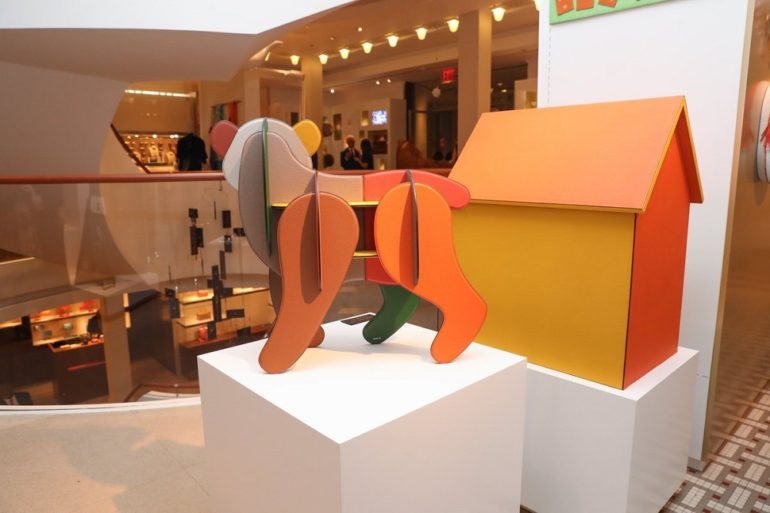
    Hermès presents a workshop of metamorphosis for materials and the invention of forms themed from now on till 9th December in Hong Kong. From a giant elephant pouffe to a target mirror, the Landmark Price’s store is transformed with scenography designed by Hong Kong artist Kevin Cheung. Once upon a time, there was a meeting of materials, their inimitable mix, their singular hybridisation. Petit h shares with upcycling product designer Kevin Cheung a passion for slumbering materials, from bamboo to silk, cashmere and many more.

    The staging is inspired by daily life and everyday objects. A tree and its bubble-like buds unfurl across the three levels of the store where new petit h inventions appear, paying homage to the diversity of Hermès materials and know-how, and to the dreams that take shape during our daily lives.

    Petit h was founded in 2010 by Pascal Mussard, who had the idea of bringing leftover materials from all over the house under one roof and giving them new life through Hermès craftsmanship and know-how.

    Godfroy de Virieu, creative director since January 2018, is now leading the dialogue between artisans, designers and artists from all backgrounds.

    Together, they create dreamlike, playful, poetic and surprising objects from noble materials as either unique pieces or limited editions.

    Petit h permanent home remains in Paris, in the Hermès store at 17 rue de Sèvres, as well as Hermes.com.

    Petit h will be traveling Asia in 2019.

  • The Longines Masters of Hong Kong is back

    The Longines Masters of Hong Kong is back

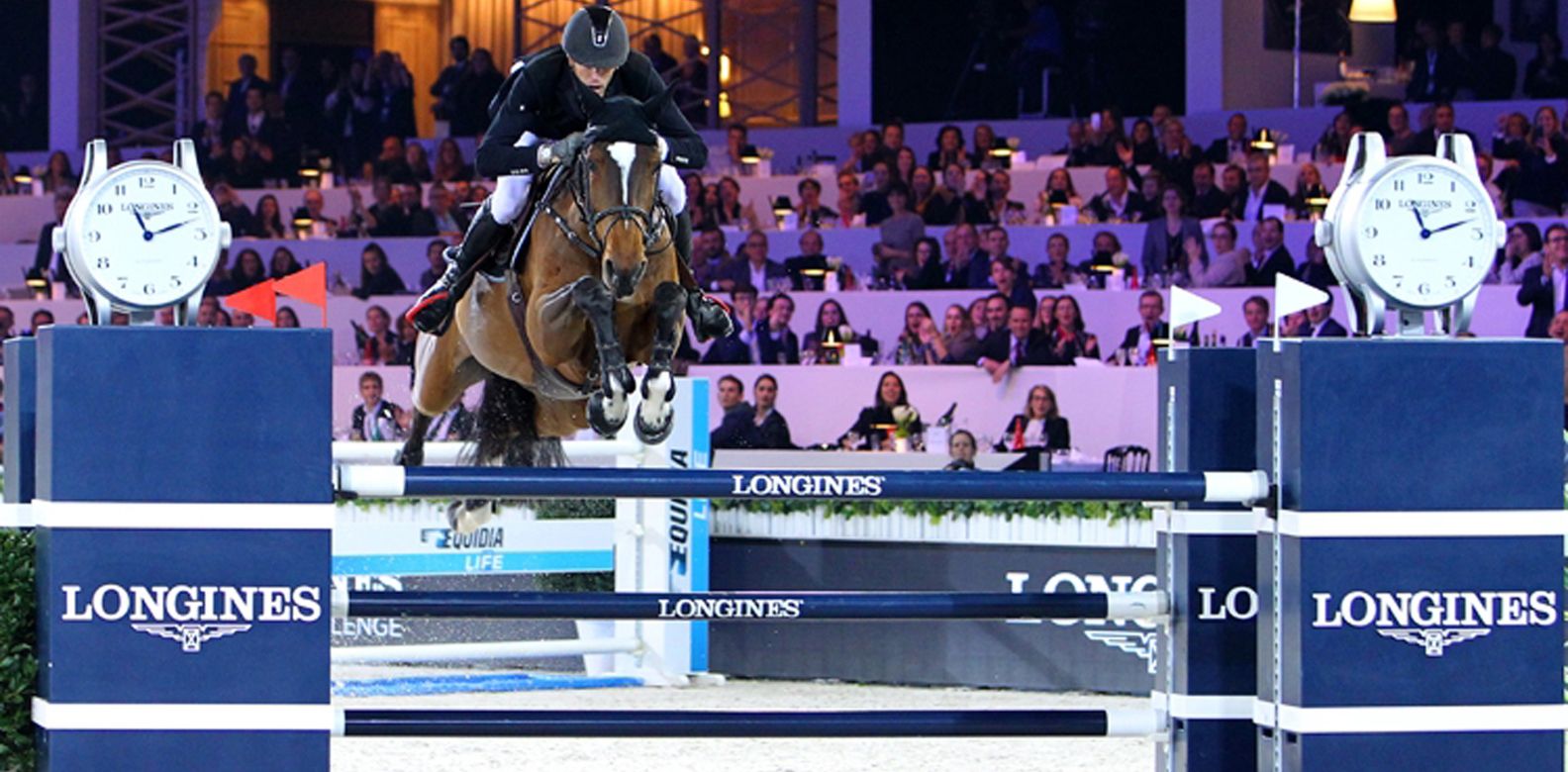
    Anticipation is building as the countdown to the new Season of the Longines Masters Series enters its final stage. The new season of the international Show Jumping Series will start in Paris, home to the European leg of the Grand Slam Indoor of Show Jumping, on November 29 – December 2, 2018 before it continues its journey across continents to Hong Kong on February 15 – 17, 2019, at AsiaWorld Expo and New York on April 25 – 28, 2019.

    Together with Title Partner and Official Timekeeper Longines and hosted by Founding Partner the Hong Kong Jockey Club, EEM held a Press Conference in Hong Kong this week to kick off the seventh edition of the Longines Masters of Hong Kong, alongside its official partners.

    The Longines Masters of Hong Kong attracts each year the best Show Jumping horses and riders on the planet for three days in six competitions, created course designed by Frank Rothenberger, for a total prize money of US$ 680,620.

    For the first time, show jumping riders from Asia will compete in a world class event alongside the international stars of the sport.

    An array of exhibitors will be present from the likes of Longines who will present time pieces at their boutique.

    A dedicated equestrian corner will bring together the likes of Kingsland, Fieldstone, Horse Pilot and Equict.

    Hermès Sellier will invite visitors to experience the brands historic equestrian goods.

    Technology and art will also be featured with the Maserati Simulation Driving Experience

  • Hermes sales growth boosted by Asia

    Hermes sales growth boosted by Asia

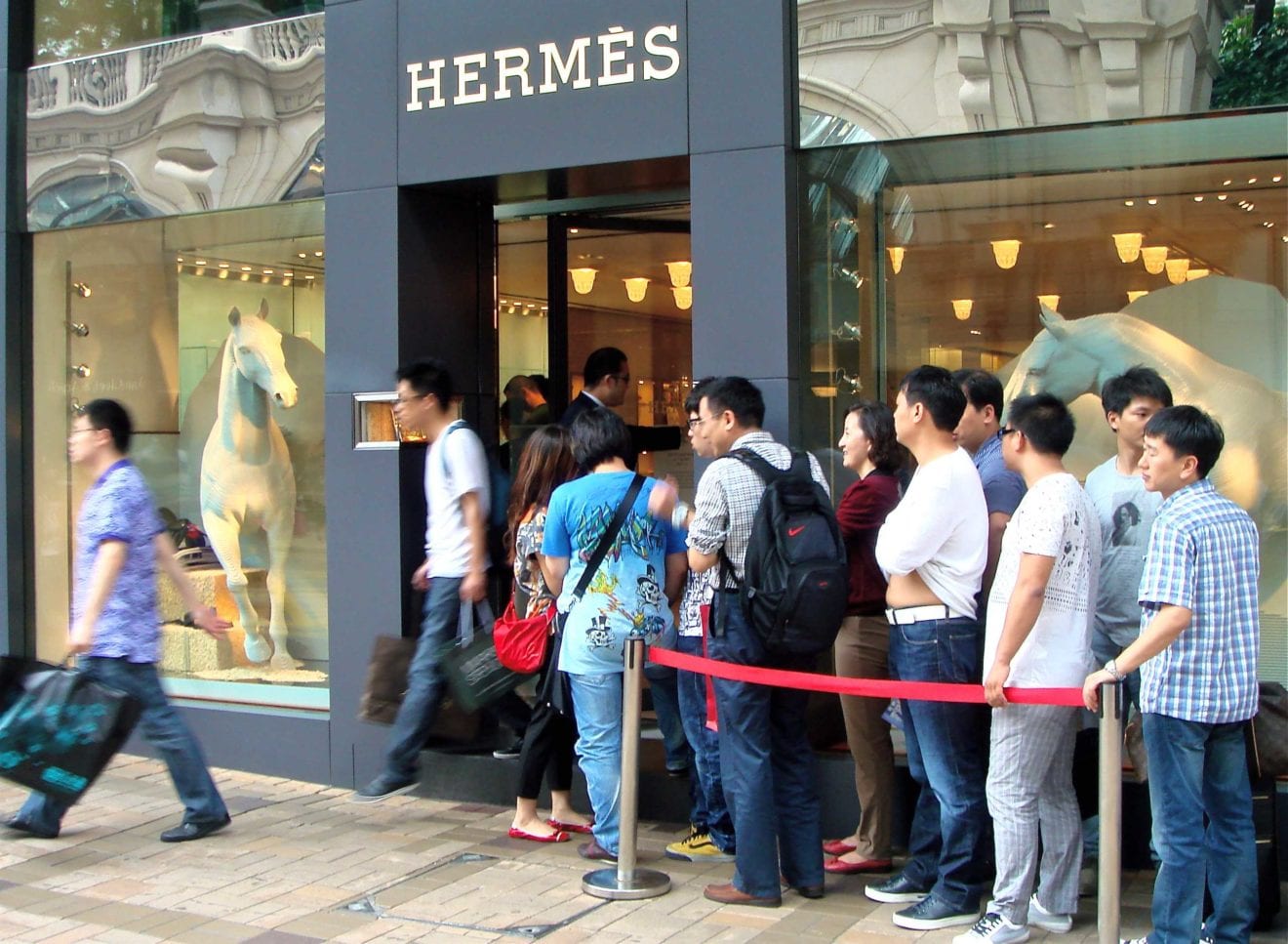
    Hermes sales surged 11 per cent in the quarter to September, with all geographical regions performing well. Asia – excluding Japan – led the way, with sales up 14 per cent. The company reported a “significant increase” in Mainland China with new stores in Xi’an (which opened in September) and Changsha (in May) along with the Landmark Prince’s store in Hong Kong in January helping underpin growth.

    A new commercial website hermes.cn, launched on October 17 and a massive duplex flagship opens tomorrow at Bangkok’s new IconSiam development. In Japan, sales rose 7 per cent.

    Group-wide revenue reached  €4.316 billion at the end of September, with sales through company-owned stores up 11 per cent as well, confirming the trend evident during the first half of the year.

    “Hermes realised a very strong growth over the first nine months of the year, in all regions,” said executive chairman Axel Dumas. “We keep our optimism for the future, but we are also thankful for the past.”

    By product category, Hermes’ ready-to-wear division achieved growth of 15 per cent, aided by the successful launch of the women’s Spring-Summer 2019 collection, presented at the Hippodrome Paris Longchamp. Demand was also high for fashion accessories and shoes.

    Growth in leather goods and saddlery reached 9 per cent, while the silk and textiles business grew by 4 per cent. Perfume sales rose by 9 per cent, watches by 8 per cent and other business lines, encompassing jewellery, Art of Living and Hermes Table Arts, by 23 per cent.

  • Hermès’ marketing strategy revealed

    Hermès’ marketing strategy revealed

    On a sticky autumn day in Manhattan’s Meatpacking District, pedestrians walking down 10th Avenue and turning left on 14th Street might have clocked a velvet rope, bathed in glowing red light emanating from a gallery space.

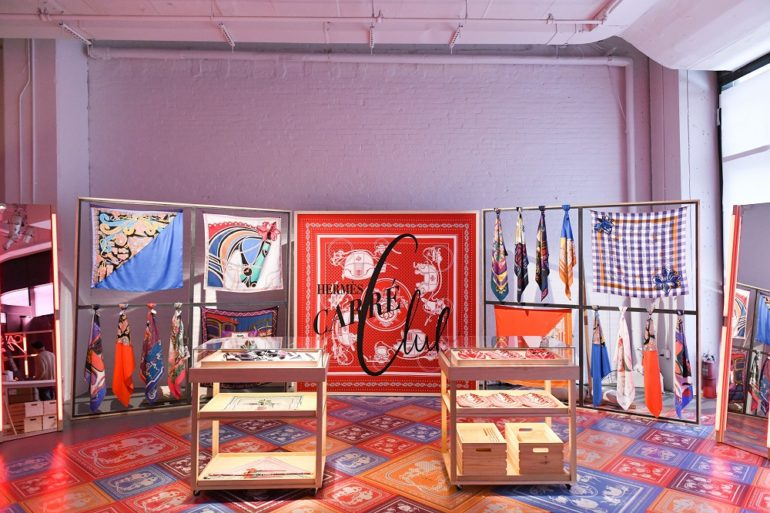
    Inside, the curious were greeted by a smiling concierge welcoming them to the Hermès Carré Club, a magical makeshift pop-up dedicated to one of the French luxury brand’s more accessibly priced, high-volume products: silk scarves.

    After submitting their personal “membership details” on an iPad, including name and email, visitors were encouraged to peruse stations where a handful of the artists who create the prints that cover Hermès scarves were on-hand, sketching out new creations in a demonstration of the craftsmanship that is a key pillar of the company’s approach. A gentleman painted portraits rendered in signature Hermès orange, while two handsome Central Saint Martins graduates swirled designs onto their hand-made, wrought-iron “drawing machine.”

    On the walls were vintage Hermès colour swatches, which guests were prompted to name. (Suggestions included “Bill Cunningham Blue,” “First Husband” — for a muted taupe — and “Gin,” a silvery grey.) There was a “Carré-oke booth” — get it? — and a café that served free coffee and staged jazzy concerts each evening. And yes, should you want to buy something, there was a capsule collection of scarves designed especially for the event.

    This open-to-the-public, four-day experience — which is also traveling to Toronto, Singapore, Los Angeles and Milan — was designed to help position Hermès not as stiff, snobby, or exclusive, but playful, engaging and inclusive. Sure, the company sells five-figure Birkin bags, but it also sells “Twilly” tie-neck scarves for $160, underscoring one of the company’s core skills: conjuring a halo of perceived exclusivity over a wide range of products, while balancing an image rooted in both high luxury status symbols and a young-at-heart whimsy.

    Category segregation is critical to the company’s strategy. Hermès confines iconic, core-category products like bags to high-end price ranges, while offering other categories, like scarves, at lower price points to aspirational consumers. But so is brand storytelling. And yet, curiously, the 181-year-old house, majority-owned by the Hermès family and run by sixth generation heir Axel Dumas, does not have a marketing department. Instead, it employs a communications team to manage press and media buying and a creative team to conceive seasonal campaigns. (This year’s theme is “Let’s Play.”)

    “You know, we don’t do marketing,” explains Bali Barret, artistic director of the women’s universe at Hermès, who oversees ready-to-wear, shoes, accessories and scarves. Both Pierre Hardy and Nadège Vanhee-Cybulski — who shows her latest ready-to-wear collection in Paris on Saturday — report to her. Barret also serves as the liaison between the company and the hundreds of artists that design its scarves.

    “The scarf represents the fantasy and humour of Hermès; it’s an affordable object compared to most of the things we’re doing and that makes it younger,” she adds. “There’s a lot of freedom in it. Sometimes, the image can feel conservative, so we have to keep updating, telling again and again that it’s still creative, contemporary.”

    The company sold its first scarf in 1937. In the first half of the 2018 fiscal year, sales in the silk and textiles category were €249 million ($292 million), up from €246 million ($289 million) in the first half of 2017. Across the board, sales were €2.9 billion ($3.4 billion), up from €2.7 billion ($3 billion), with jewellery and home, ready-to-wear and perfume enjoying double-digit growth. And last year, the company posted record profitability.

    It was Barret who oversaw the conception of the Carré Club, recruiting several of her star scarf makers to join the travelling band in each city. Sitting at one of the on-site cafe’s tiny tables, the floor of the space skinned with a scarf print, Barret is wearing one-of-a-kind Hermès merch — a grey sweatshirt embroidered with “Hermès Club” in cursive — with a navy blue and red-striped scarf wrapped securely around her neck like a choker. In today’s streetwear-fuelled fashion cycle, customers would pay a good price for one of those sweatshirts. But it’s not for sale. “We have lots of requests,” Barret says, noting that she did have one made for Vanhee-Cybulski.

    The Manhattan leg of the Carré Club tour was also a testing ground. Next spring, Hermès plans to open a flagship in the neighbourhood, which is flooded with tourists thanks to The High Line — an elevated park on old freight railway tracks — the Whitney Museum of American Art and an impressive mix of restaurants and retail stores and close enough to the West Village to attract a local clientele too. The bits of data collected at the “membership desk” will help sales associates begin to forge relationships early on.

    “It creates a one-to-one, personal relationship,” said Florian Craen, Hermès’ executive vice president of sales and distribution. “We want to re-engage people.”

    In many ways, Hermes’ “anti-marketing marketing” approach checks many of the boxes of a traditional marketing strategy. Hermès still wants to engage customers and find new ones through communication. And it’s certainly a major investment. In 2017, the company spent €275 million ($323 million) on “communication expenditure.” (The company declined to clarify exactly what that encompasses.) But its approach is less clinical than most: there’s a sense of humanity and humour.

    At Hermès, the structure of the organisation adds another layer of employee accountability. The heads of each region choose whether or not they want to host one of these projects, instead of Paris dictating where it will be staged. (It mirrors the way in which the company merchandises its stores: buyers from each outpost attend an event twice per year in Paris, where they place orders customised to their clientele.) “We want people to experience something different in every store,” Craen said.

    “It’s about emotions and sensitivity, but not being too serious,” Barret added. “It’s just scarves.”

  • Record profitability for Hermes after China-driven boom

    Record profitability for Hermes after China-driven boom

    A Hong Kong property windfall and the Hermes Asia business helped the luxury label set a record profit margin during the first half of this year.

    Hermes says recurring operating profitability reached 34.5 per cent of sales, with net profit rising 17 per cent to €708 million (US$824 million).

    And after including a capital gain of €53 million from the sale of the former Galleria store in Hong Kong, operating income reached €1.037 billion, up 11 per cent to reach 36.3 of sales.

    Hermes Asia sales – excluding Japan – rose 15 per cent, the strongest performing market internationally, continuing what the company described in a statement as “an outstanding performance, with positive momentum in continental China and the whole region”.

    During the half year, Hermes Asia benefitted from the opening of the Landmark Prince’s store in Hong Kong in January. Another new store opened in Changsha in May.

    Sales in Japan rose by 7 per cent.

    The Hermes Asia performance better that of the Americas (up 12 per cent), Europe excluding France (up 7 per cent), and France (up 8 per cent).

    Hermes global sales reached €2.853 billion, up 11 per cent at constant exchange rates and by 5 per cent at current exchange rates.

    “Hermes achieved an exceptional performance in the first half of the year,” said Axel Dumas, executive chairman. “Our commitment to the quality of know-how, the spirit of innovation as well as the creativity, always renewed, and the dedication of the women and men of Hermes, base the singularity and the integrity of our economic model; a strong model in a worldwide context that remains uncertain and unstable.”

    By product category, ready-to-wear led the way rising 17 per cent, thanks to broad acceptance of its “pertinent and bold” designs, the company said. Fragrance sales rose 15 per cent, watches by 9 per cent, leather goods and saddlery sales rose 8 per cent and silk and textile sales by 7 per cent.

    Other Hermes business lines, which include jewellery, art of living and Hermes Table Arts, grew by 24 per cent.

  • China helps Hermes sales blooms in Asia

    China helps Hermes sales blooms in Asia

    The company has reported strong sales growth for the first half of this year with all business lines and all geographical areas all ahead of last year, and especially positive momentum in greater China and the whole Asian region. The group benefited from the opening of its Landmark Prince’s store in Hong Kong in January, and a Changsha store which opened in May.

    According to the report, figures for Asian sales (excluding Japan) showed a 15 per cent growth as opposed to an average growth across all sectors of 11 per cent.

    The group’s consolidated revenue amounted to €2.853 billion (US$3.347 billion) in the first half of 2018.

    Hermes’ final half-year results, which will be published on September 12, will include a net capital gain for the Asian region of €50 million (US$58.65 million) resulting from the sale of the former Hong Kong flagship store.

  • Sales remains steady for Hermes

    Sales remains steady for Hermes

    Despite currency fluctuations knocking out €104 million (US$124.5 million) of revenue, Hermes International reports solid first-quarter sales with China again a hero.

    Excluding Japan, Asia achieved 16 per cent growth. Japan continued with outstanding growth of 8 per cent. In January, the group opened a Landmark Prince’s flagship store in Hong Kong.

    The French luxury fashion group’s consolidated revenue for the period amounted to € 1.3 billion, up 11 per cent at constant exchange rates and 3 per cent at current exchange rates with the strengthening of the euro.

    “This solid performance is the result of the well-balanced sales growth,” says executive chairman Axel Dumas. “It is particularly healthy as it is mainly based on an increase in volumes in the group’s stores.”

    Performance was driven by sound growth across all business lines, led by a 17 per cent jump in the ready-to-wear and accessories division. Perfumes also performed with 16 per cent growth.

    Meanwhile, Hermes Group finalised the sale of its former Galleria store on April 12, expected to generate a net capital gain of about €50 million.

  • Hermes’ New H5 Version Goes Live at Hanoi Airport

    Hermes’ New H5 Version Goes Live at Hanoi Airport

    Hermes Logistics Technologies (HLT) has gone live with its new Cargo Management System (CMS) version, called Hermes 5 (H5), at ALS Cargo Terminal Co., Ltd (ALSC), Noi Bai International Airport in Hanoi, Vietnam.

    H5, which will be rolled out globally, future proofs Hermes’ CMS application by modernising its framework to allow for simpler integration with new technologies and opening up Hermes through APIs and new messaging channels.

    Additionally, the ability to run within any Cloud, private or public, makes H5 simpler to implement for Cloud ready customers.

    ALSC and its customers benefit from a faster and more controlled service, with hand-held device functionality, intelligent warehouse task steering and real-time Service Level Agreement (SLA) monitoring.

    “Our new version offers ALSC bespoke, pre-advice messaging between its hub and satellite warehouses to gain key task visibility and efficiencies in cargo transfer times,” said Yuval Baruch, Chief Executive Officer (CEO), Hermes Logistics Technologies.

    “In driving the ALSC implementation, the HLT team of cargo and technical experts provided on-site support to ALSC contributing to successfully getting the system live with a number of its customers.

    “The preparation and training towards this go-live, as well as working together shoulder to shoulder with the ALSC team during the go-live week, enabled ALSC to independently roll out its remaining airlines efficiently and on schedule, with remote support from Hermes.

    “We provided best-in-practice process framework for the handling of sensitive and special cargo, in addition to a wealth of Big Data that is used to effectively analyse and demonstrate the quality of service provision.”

    H5 is the latest version in a suite of Hermes’ applications and includes HERMES Cargo Management System (CMS), HERMES Hub Management System (HMS) and HERMES Business Intelligence (HBI).

    “With the vision of becoming the pioneering cargo handling terminal in the region, ALSC chose H5, the newest version of Hermes’ CMS,” said Le Thanh Binh, Deputy Director, ALS Cargo Terminal Co., Ltd.

    “Thanks to the support from Hermes, from business study to on-site and remote support, we have successfully implemented the new system for all of our customers.

    “The innovative design of H5 brings us a new experience in terms of service provision, performance control and user interaction.

    “We strongly believe that under the customer-oriented leadership of Mr. Yuval Baruch, HLT and Hermes 5 shall continuously be upgraded to offer a competitive advantage to our Terminal and bring more value to our Airline, Consignee and Shipper customers.”

    Hermes recently appointed Alexis Labonne as its new Chief Technology Officer to lead the Hermes team in rolling out H5.

  • Nike is world’s most valuable apparel brand, says Brand Finance Top 50

    Nike is world’s most valuable apparel brand, says Brand Finance Top 50

    Despite losing popularity with American teenagers and a drop in brand value of 41 per cent, Nike is still way out in front in the Brand Finance Top 50 list of the most valuable apparel brands in the world.

    In the list, just been release by the independent brand valuation and strategy consultancy, Nike’s main competitor Adidas was fourth behind H&M and Zara with an increase in brand value of 41 per cent.

    In the realm of luxury brands, Hermes overtook Louis Vuitton, jumping two spots from 7th to 5th from last year. Luxury brands including Cartier, Gucci, Hermes and LV had strong growth in value as more consumers in emerging markets buy into the market.

    Japan’s Uniqlo was the only Asian brand in the top 10, with Hong Kong jeweller Chow Tai Fook and China’s Anta Sports taking up the 13th and 33rd spots respectively.

    These are the top 50 most-valuable apparel brands in the world this year:

      1. Nike (brand value, US$2.8 billion)
      2. H&M ($1.8 billion)
      3. Zara ($1.7 billion)
      4. Adidas ($1.4 billion)
      5. Hermes ($11.3 billion)
      6. Louis Vuitton ($10.4 billion)
      7. Cartier ($9.8 billion)
      8. Gucci ($8.5 billion
      9. Uniqlo ($8 billion)
      10. Rolex ($6.3 billion)
      11. Coach ($6.1 billion); 12. Victoria’s Secret ($6.1 billion); 13. Chow Tai Fook ($5 billion); 14. Tiffany & Co ($4.6 billion); 15. Burberry ($4.5 billion);16. Christian Dior ($4 billion); 17. Polo Ralph Lauren ($4 billion); 18. Prada ($3.8 billion); 19. Under Armour ($3.7 billion); 20. Armani ($3.5 billion)
      12. Puma ($3.3 billion); 22. Ray-Ban ($3.2 billion); 23. Omega ($3.1 billion); 24. The North Face ($3.1 billion); 25. Pandora ($3 billion); 26. Michael Kors ($2.7 billion); 27. Tommy Hilfiger ($2.6 billion); 28. Anta ($2.6 billion); 29. Old Navy ($2.3 billion); 30. Bulgari ($2.2 billion)
      13. Bershka ($2.2 billion); 32. Calvin Klein ($2.2 billion); 33. Levi’s ($2.2 billion); 34. Primark/Penneys ($2.1 billion); 35. Moncler ($2 billion); 36. Boss ($2 billion) 37. Gap ($2 billion); 38. Ferragamo ($1.9 billion); 39. Saint Laurent ($1.8 billion); 40. Bottega Veneta ($1.8 billion)
      14. Valentino ($1.8 billion); 42. Skechers ($1.6 billion); 43. Swatch ($1.6 billion); 44. Tag Heuer ($1.5 billion); 45. Timberland ($1.4 billion); 46. Massimo Dutti ($1.3 billion); 47. Reebok ($1.3 billion); 48. Woolworths ($1.2 billion); 49. Stradivarius ($1.2 billion); 50. Pull and Bear ($1.2 billion).
  • Strong sales growth posted by Hermès Asia

    Strong sales growth posted by Hermès Asia

    Hermes Asia sales grew 11.3 per cent last year to €1.946 billion (US$2.4 billion) as the luxury retailer set a new record for gross retail margin.

    The company said the retail market was improving in Hong Kong and Macau, with the Asian market “pursuing its upward curve” and positive outlooks in Mainland China and South Asian countries.

    Growth was aided by store revamps at Sogo Fuxing in Taiwan, Elements mall in Hong Kong and at Kuala Lumpur.

    Sales in Japan (separated from Asia results) rose 4 per cent to €724.1 million, despite a high comparison figure from last year, which the company described as “a sustained increase” in what is a mature market, citing a selective distribution network.

    Group sales totalled €5.549 billion (US$6.863 billion), up 9 per cent at constant exchange rates. Operating income rose 13 per cent, to €1.922 billion, representing a record 34.6 per cent gross margin, while net profit rose 11 per cent to €1.221 billion.

    “Hermes achieved a new year of historic results, thanks to the quality of our know-how, the success of our creations and especially the incredible commitment of the women and men of Hermes,” said executive chairman Axel Dumas.

    Hermes will ramp up its online offer in the region this year, with a new website scheduled to go live in China at the end of this year.

    Meanwhile, the company said the sale of the Galleria building in Hong Kong’s Central district, which previously housed its flagship store, would likely generate a net capital gain of €50 million this year.

    Leather drives growth

    By category, Hermes’ leather goods proved the strongest performer last year, sales rising 10 per cent globally, reflecting increased production capacity as demand rose for its handbags.

    The ready-to-wear and accessories division grew 9 per cent, driven by the success of new collections, fashion accessories and particularly shoes.

    Sales of silk and textile products grew 6 per cent and of perfumes by 10 per cent, largely due to the successful launch of Twilly d’Hermes.

    Watch sales grew just 1 per cent with what Hermes described as “good sales” in company-owned stores. Other Hermes business lines- jewellery, Art of Living and Hermes Table Arts, grew sales by 11 per cent.

  • Here’s Why Pre-Owned Luxury Fashion Are Growing In Asia

    Here’s Why Pre-Owned Luxury Fashion Are Growing In Asia

    Asia’s pre-owned luxury fashion market is continuing to grow, with shoes and t-shirts gaining ground, according to multichannel retailer Reebonz.

    Although bags continued to dominate, with an average of 77 per cent of total transactions in 2016 and 2017, both shoes and apparel achieved steep sales growth throughout the region, according to Reebonz’s now annual Asia Luxury Index.

    In Hong Kong, for example, sales of used branded sneakers rose 48 per cent last year, while “luxury t-shirt” sales soared six-fold.

    The report is based on Reebonz’s own trading data across Australia, China, Hong Kong, Indonesia, Malaysia, New Zealand and Singapore, along with unspecified “industry reports”.

    Reebonz says millennials are driving the sector’s growth, “tilting the scales in favour of a pre-owned luxury market that continues its growth trajectory”.

    Chanel, the most-purchased pre-owned brand by millennials, recorded more than double the total sales value on Reebonz last year over 2016.

    The report said the changing perceptions towards pre-owned luxury have altered the state of resale and how consumers shop today, contributing to 40 per cent sales growth in the pre-owned category at Reebonz.

    “The growing demands of buying from the resale market cleverly gives rise to a community of individual sellers, injecting the luxury ecosystem with products that meet these needs,” said Reebonz cofounder Daniel Lim.

    Louis Vuitton, Hermes and Chanel were the three top-selling brands on Reebonz last year, fetching resale values as high as 125 per cent of their original retail price in the secondary market. Gucci, Celine and Dior were also among the top 10.

  • Asia boosts Hermes international sales

    Asia boosts Hermes international sales

    Hermes international sales showed strong growth last year, pushed by an upward curve in Asia.

    Sales for the French fashion brand were up 9 per cent at constant exchange rates, with consolidated revenues reaching €5.5 billion (US$6.7 billion). After adjustment for the negative currency effect resulting from the year-end strengthening of the euro, the increase was 7 per cent.

    In the final quarter growth was sustained at 5 per cent at constant exchange rates.

    During the year Hermes continued to improve its distribution network, renovating and extending almost 20 stores. It launched websites in Canada and the US, to be followed by China at the end of this year.

    Asia, excluding Japan, saw sales rise 11 per cent with a positive outlook in Mainland China and South Asia.

    Hermes says the context is improving in Hong Kong and Macau. Regional stores were extended and renovated – the Sogo Fuxing store in Taiwan, Kowloon Elements in Hong Kong and the Kuala Lumpur store.

    Despite a high comparison basis, Japan recorded a sustained increase of 4 per cent thanks to its selective distribution network.

    All sectors recorded growth, with a “remarkable” performance by the ready-to-wear and accessories, perfumes and other sectors.

    Leather goods and saddlery sales grew 10 per cent to meet demand for such bags as Constance, Halzan, Lindy and Verrou. Shoes particularly boosted sales in the ready-to-wear and accessories division, up 9 per cent, silk and textiles had a  6 per cent rise, while the perfumes division posted 10 per cent growth with the launch of Twilly d’Hermes.

    There was a 1 per cent rise in watch sales, while other Hermes business lines ‒ encompassing jewellery, Art of Living and Hermes Table Arts ‒ rose 11 per cent.

    Currency fluctuations had a negative impact of €100 million on revenues.

    The company will publish its annual results next month.

  • John Lobb expands into Philippines market

    John Lobb expands into Philippines market

    Historic British footwear brand John Lobb Bootmaker has stepped into the Philippines with a store beside Hermes at Greenbelt 3 in Makati City, Manila.

    Founded in Basingstoke in 1849 and opening a store on London’s Regent Street in 1866, the brand is known for its bespoke services and patronage from the aristocracy as well as the social, political and business elite.

    John Lobb branched out being solely bespoke to enter the ready-to-wear world in the 1980s.

    “Going into retail was a natural progression for the brand,” says regional director Nicholas Holt. “The stores have grown organically; we have 24 all over the world, targeting key cities such as Manila.

    “We open stores only in strategic locations – it is not all a matter of how many doors we can open.”

    While it makes shoes and boots mainly for men, John Lobb also caters for women. The store also sells leather goods such as wallets and belts.

    John Lobb, now owned by Hermes, has stores in China, Japan, South Korea and Taiwan.

  • Hermes to receive HK$900 million from selling its space

    Hermes to receive HK$900 million from selling its space

    British property developer Chelsfield has bought the ground floor of The Galleria shopping centre in Central from French luxury brand Hermes for HK$900 million (US$115 million).

    Comprising four retail shop units and a basement, the floor has a combined area of 7100sqft (660sqm).

    Hermes makes a profit of $710 million through the sale of its former flagship space, after buying up the component units in succession since 2000 for a total of $190 million.

    After deciding in 2016 to relocate its flagship to Prince’s Building, just a five-minute walk away, Hermes put the floor on the market.

    For Chelsfield, the deal is its second acquisition of a commercial property in Hong Kong within a month. It partnered with Hong Kong real-estate investment firm Pamfleet to buy a shopping centre in North Point last month for $2 billion from Fortune Reit.

    Chelsfield expanded to Asia in 2016, when it took over the real-estate division of the Dymon Asia Group. The Asia arm of the UK firm is now run by Dymon’s former management team led by former Grosvenor executive Nick Loup, who joined Chelsfield in 2015 as part of the takeover.

  • Hermès opens the door of its Orange Box in Hong Kong

    Hermès opens the door of its Orange Box in Hong Kong

    On 11 January 2018, Hermès opened the door of its new store in Hong Kong, the original and first home in Greater China.

    Located in Landmark Prince’s, within the dynamic Central district on the corner of Ice House Street and Des Voeux Road, this new destination marks a significant milestone for Hermès and is a delightful occasion to celebrate the long-standing relationship
    between Hong Kong and our house.

    The relationship between Hermès and Hong Kong started with the first store in the city
    in 1975, followed by a dynamic expansion with a current network of seven shops in key locations. The Hermès homes host outstanding events and exhibitions, whilst encouraging a constant dialogue between  craftsmanship and the effervescent local culture.

    For the opening, Axel Dumas, CEO of Hermès, welcomed the guests and walked them through the three-floor majestic Orange Box.

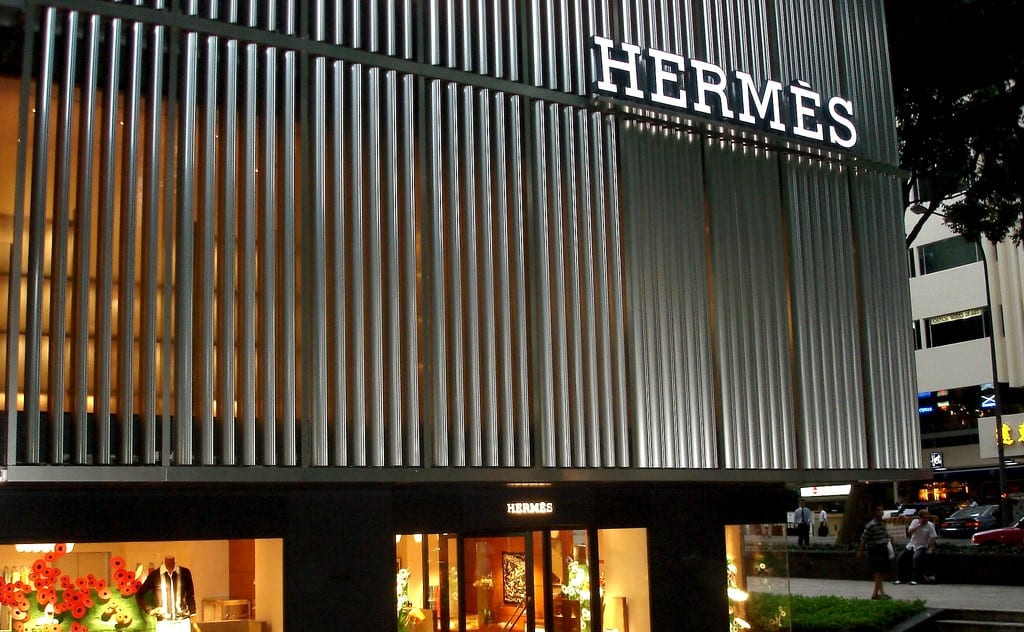
    Designed and built by the Parisian architecture agency RDAI under the artistic direction of Denis Montel, the edifice draws its stylistic influences from local architecture.

    The design is inspired by bamboo scaffolding construction techniques, the copper-coloured anodised aluminum facade asserts the rhythm and verticality of bamboo.

    Eight kilometres of rectangular tubes align to form a mantle with kinetic effects. This storefront of a thousand reflections allows glimpses of a ground floor, a mezzanine level and an upper floor – three levels totalling 9,167 square feet of retail and reception space.

    The aluminium facade rises a further two storeys, accentuating the presence
    of Hermès at this strategic crossroads in the city. The building’s pre-existing structure – comprising numerous pillars and a low ceiling height – required the architects to draw upon their constructive prowess.

    The building benefits from natural light enabled to penetrate throughout. Staircases and daylight cascade down the openings. The three floor areas have been subdivided using openwork screens and mobile partitions to create small lounges and private salons.

    On the upper level, it gives way to a balcony from which the city, its skyscrapers and its double-decker tram can be admired.

    The store has two entrances. The main door, located on Ice House Street, opens onto spaces dedicated to women’s silk, fragrances, and jewellery accessories.

    Source : Hermès

    The second entrance, on Des Voeux Road, leads to the men’s universe, with silk, shoes, leather goods, ready-to-wear and a private lounge for made-to measure. The mezzanine is formed of a succession of alcoves on either side of the central space, offering an exclusive setting for jewellery. It is home to the women’s universe, with ready-to-wear, gloves, hats, watches, leather goods, and even a powder lounge, a precious and private boudoir.

    The upper floor accommodates the home universe: furniture, lighting, furnishing fabrics and wallpapers, tableware, and offers guests a lounge where to enjoy the comfort of Hermès home.

    Source : Hermès

    The floor, in mosaic on the ground floor and bamboo parquet elsewhere, is in places covered with rugs that incorporate the pattern of bamboo fibres.

    Source : Hermès

    The interior design features lacquered wood, leather, stucco, marble, and woven metal. A palette of warm colours ranging from the sandy hue of the women’s universe to the burnt wood shade of the men’s universe. Elements in champagne-coloured woven metal subdivide the spaces.

    The extensive use of glass on both façades suffuses the store with golden light. Filtered by a forest of bamboo in the heart of the urban jungle, it allows a sophisticated nature to regain its rights and powers. In an ultimate act of celebration, Hermès has invited the French duo of artists ZIM & ZOU to transform the store windows with delicate humour into enchanted paper castles.

    The opening was followed by a party in the West Kowloon Cultural District of Hong Kong to link Hermès to the local artistic culture.

    The Orange Box of Hermès is an interwoven space of the brand heritage. It is a celebration of art and craftsmaship, which stands out for its delicate and warm colours. While walking through the three floor, the retail space resembles an art gallery and the products are showcased as if they were artworks to be appreciated more than purchased.

    Isn’t it the image of luxury we all have depicted in our mind and that today seems to be lost?