Retail News CRM

Tag: hermes

  • Sales drops for Louis Vuitton Korea

    Sales drops for Louis Vuitton Korea

    Louis Vuitton Korea has fallen behind its rivals, with sales dipping into minus territory this year, industry data shows.

    Sales at a leading department store for the international fashion house for the January-October period backtracked 5.3 per cent. Demand for Louis Vuitton products were down 2.1 per cent at another department store during the same period.

    Meanwhile, rivals Chanel and Hermes achieved double-digit sales during the same period. Chanel added 11.2 per cent and 13.7 per cent at the two department stores, while Hermes managed 16.5 per cent and 17.1 per cent growth, respectively.

    “The vast popularity of Louis Vuitton in the past and consequent sales have made the brand too common, taking away much of its cachet,” an unidentified retailer said. “The popularity of its monogram series fizzled out, and there was no succeeding product, which is another reason for the slump,” he said.

    Exact sales figures are not available for Louis Vuitton, after its local operator was turned into a privately-held company from a limited company in 2012 when its lack of social contribution compared to its dividend propensity became controversial. Privately-held firms do not have to disclose detailed corporate information, such as donations.

    A law was revised recently, however, requiring private companies to undergo external inspections and to disclose financial information, including sales, dividend rates and contributions.

  • Hermes grows in China

    Hermes grows in China

    Sales momentum in Mainland China helped boost growth for French luxury retailer Hermes in its third quarter.

    Overall sales grew 11 per cent at constant exchange rates, and at the end of September revenues were up 10 per cent to €4 billion (US$4.6 billion).

    Despite a strong comparison basis, sales in Asia (excluding Japan) rose 14 per cent, while Japan achieved a solid performance with a 5 per cent increase in the face of a strengthening yen.

    Hermes says all sectors recorded growth, with a “remarkable” 11 per cent performance by ready-to-wear and accessories.

    The 11 per cent growth in leather goods and saddlery was in line with the annual target of around 10 per cent, says the company, thanks to the success of its collections and diversity of models, particularly the Constance, Halzan, Lindy and Verrou bags, alongside Birkin and Kelly.

    With 9 per cent growth, the silk and textiles business line benefited from sustained demand, the diversity of the collections and the wealth of the creations, says Hermes.

    Strong growth of 13 per cent was posted by the perfumes division, driven notably by the launch of Twilly d’Hermes.

    There was a slight 1 per cent improvement for watches, while other lines grew by 11 per cent, including jewellery, art of living, and table arts.

  • Hermès enhances China digital game with first WeChat pop-up store

    Hermès enhances China digital game with first WeChat pop-up store

    French luxury brand Hermès launched its very first WeChat pop-up store, a strategic move signaling the brand’s ambition to step up its digital innovation in China. But it also raises the question of just how aggressive it can be in the digital space.

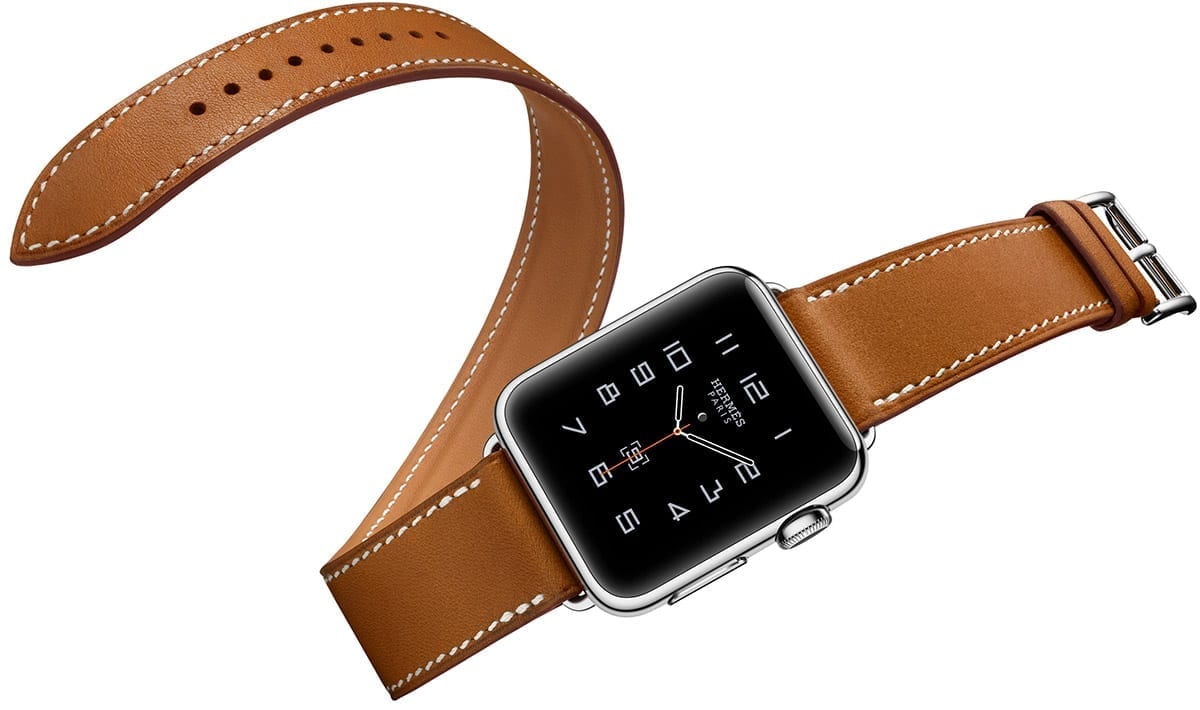
    The WeChat post by the brand to introduce the pop-up store has a 13-second promotional video about the new Éperon d’Or Hermès x Apple Watch.

    The product, in collaboration with Apple, features the classic pattern of Hermès scarf on the wristband. The pop-up store will last for two weeks.

    When clicking on “read more” at the bottom of the post, readers are taken directly to Hermes’ watch collection page which offers a detailed view of six models.

    The prices range from 8,988 yuan ($1354) to 10,988 yuan ($1655). Buyers need to register an account with the site—leaving their phone number and other relevant information—to track the order, and they must use WeChat Pay to complete the deals.

    Chinese consumers have shown high interest in Hermès’ WeChat offering: by the time of this publication, the post had attracted 15,986 pageviews.

    According to Hermès’ earnings results of the first six months of 2017, China led the growth in the Asia-Pacific region, contributing 14 percent to the region’s total revenues.

    The brand continues to see rising interest among Chinese customers in purchasing its signature handbags, namely the Birkin Kelly, Constance, and Lindy models.

    “We have really seen a recovery of China,” the global chief executive of Hermès International Group Axel Dumas said in an interview with Financial Times, “and the beginning of growth again in Hong Kong and Macau.”

    For Hermès, the rebound of luxury consumption in China posed the question of how it can best capture the demand in the market for digital shopping.

    Compared to many other luxury powerhouses, Hermès is a latecomer to the digital shopping game in China.

    Hermès set a textbook example for hunger marketing, a strategy often deployed by brands to make consumers feel hungry for certain type products through a limited number of offers. Hermes has used this strategy before to promote the Birkin bag. With limited time and quantity, the offer of Apple Watch in the WeChat store has employed a similar technique.

    However, this strategy of utilizing a sense of urgency is certainly not a new approach. Many brands, namely Dior, Longchamp, and Bulgari, were early adopters of WeChat flash sales, making headlines with impressive sales numbers from the flash sales. For example, during last year’s Chinese Valentine’s Day, Dior offered a Lady Dior handbag for 28,000RMB ($4,210) for four days; the media reported that all 200 models were sold out by 2 August 2017.

    As the brand’s key rivals like Louis Vuitton and Gucci are selling online in China, there is a possibility for Hermès to open an exclusive e-commerce site for the country’s consumers, too.

    There might be reasons why Hermès has been slow to adopt this digital trend; it is a reflection of a general attitude of the luxury industry to digital change.

    They face many questions such as whether going digital can deliver the same luxury experience to consumers, or if it can become a steady purchase channel for high-priced goods. Luckily, the past experiences of early adopters show that the value of luxury can still be held if the brands approach it appropriately.

    For Hermès, it is going to be a task to balance exclusivity and availability on the digital channel in China and their answer to it will set up an example for many luxury brands.

  • Balenciaga is the hottest fashion label

    Balenciaga is the hottest fashion label

    Balenciaga has overtaken Gucci as the hottest fashion label, according to the latest Lyst Index.

    The index draws on data analysis by fashion-search platform Lyst in conjunction with the Business of Fashion website. The 4.5 million data points analysed include sales, searches and consumer perceptions of 5 million products and 12,000 brands.

    Its result is despite Louis Vuitton, Hermes and Gucci being named best fashion brands globally just last month by Interbrand consultancy.

    Ranking the world’s hottest brands and top-selling products, the Lyst Index ranked Gucci first in this year’s second quarter, followed by Kanye West’s Yeezy and Balenciaga. However, the Spanish fashion brand continued to rise, displacing Gucci in the third quarter, with Virgil Abloh’s Off-White rising to third – a jump of 31 places in three months.

    Lyst says Balenciaga’s rise was because of a new logo and the Colette residency in Paris keeping the brand top of mind “while Demna Gvasalia continues to design products that drive the fashion narrative online”.

    Additionally, the platform praised Gucci for being a “consistent performer”, reports High Snobiety.
    Rounding out the top 10 are Vetements, Givenchy, Valentino then Saint Laurent, while Stone Island leaped from 41st to eighth, followed by Moncler (previously 20th) and finally Raf Simons (previously 21st).

    Lyst Index also looked at the most influential rappers in fashion for the quarter, listing (in order) Kanye West, Nicki Minaj, Pharrell Williams, Cardi B, Drake and A$AP Rocky.

  • Hermes pop-up on WeChat introduces smartwatch

    Hermes pop-up on WeChat introduces smartwatch

    A Hermes pop-up store, its first on WeChat, features a 13-second promotional video for its new Eperon d’Or Hermes x Apple smartwatch.

    The French luxury brand is offering six options of wristband, each based on a classic Hermes scarf pattern.

    When clicking on “read more” at the bottom of the post, readers are taken directly to Hermes’ watch collection page which offers a detailed view of six models. The prices range from RMB8988 (US$1354) to RMB10,988.

    Buyers need to register an account on the site to track the order, and use WeChat Pay to complete deals.

    The pop-up ends on November 5.

    Meanwhile, Hermes sales in Asia Pacific, excluding Japan, have grown by 14.3 per cent year on year. Its WeChat experiment indicates the brand has taken a significant step toward digital marketing, reports CIF News.

    CEO Axel Dumas says Hermes has excellent sales track records in China, and has expanded from major cities, gradually developing in  growing centres such as Chengdu and Hangzhou.

  • Hermes Singapore transforms artfully into ‘home’

    Hermes Singapore transforms artfully into ‘home’

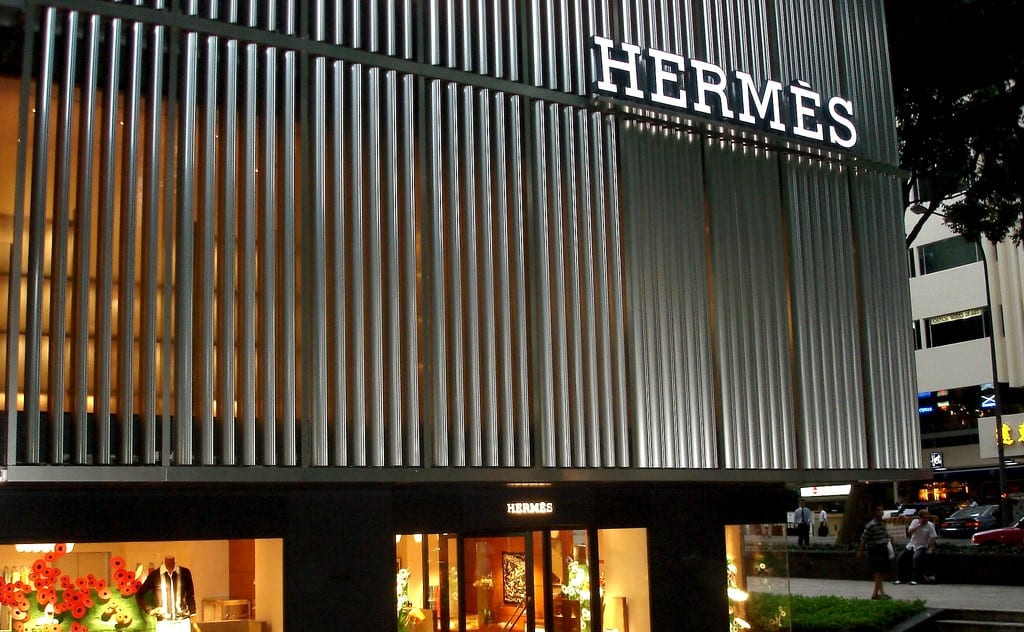
    In a special exhibition, the Hermes Singapore flagship store at Liat Towers has been transformed to spotlight the luxury French brand’s collection of home furnishings and bespoke creations.

    Described as a “gallery of whimsy and surprise”, the Through The Walls exhibit was crafted by set designers Jean-Christophe Vaillant and Herve Sauvage. It shifts the focus from the brand’s iconic scarves and Birkin handbags to tableware, lighting, wallpaper and furniture.

    Leather, a reminder of Hermes’ start as a saddlemaker, is used imaginatively, as is bamboo crafted with carbon fibre and steel to form seats. The centrepiece of the installation is a closet for scarves that resembles a leather wallet from the outside and stores up to 130 pieces.

    Hermes co-deputy artistic director Charlotte Macaux Perelman says Singapore is an ideal location for the exhibition given the brand’s presence in the city since the 1970s. “We have never had a home-furnishings event here or really highlighted our home collection,” she says.

    It took two weeks to transform the top two levels of the store to showcase more than 120 objects from the Hermes home universe, including the brand’s new Lien d’Hermes collection.

    The retail space has been reworked as a “home” to give an appropriate setting for the objects.

    A feature is the stairwells of the store where wallpaper from the collection has been ripped and layered decoupage-style. In one corner, a dining table looks as though it had been pushed through a wall while elsewhere a coffee table appears to have fallen through the roof.

    There are even such whimsical touches as sounds: a cat meowing, a door closing, birds’ wings flapping. But the deconstructed world starts in the store windows, where neon signs for the event are framed by plates broken in half.
    “As a brand, our pieces are undoubtedly quite traditional and rigorous, but we like to introduce fantasy as well, especially in things like our textiles, wallpaper and tableware,” says Perelman.

    Through The Walls runs until October 29.

  • Hermes operating margin reaches record level

    Hermes operating margin reaches record level

    Luxury retailer Hermes’ operating margin rose to 34.3 per cent of sales in the first half of this year – a new company record.

    And operating income from recurring activities rose 13 per cent, with Asia (excluding Japan) driving most of the growth.

    Hermes has reported consolidated revenue of €2.713 billion in the first half, up 11 per cent at current exchange rates and 10 per cent at constant exchange rates.

    Hermes’ Asian sales grew by 14 per cent, a figure the company described as “great progress, driven particularly by continental China”. Japan sales rose a more modest 3 per cent, despite the strengthening of the yen, with European sales up 7 per cent and US sales by 9 per cent.

    “The performance in the first half confirmed the positive momentum of the ready-to-wear and accessories and the silk and textiles business lines,” the company said in a statement. “Growth in leather goods and saddlery (12 per cent) was sustained thanks to the success of the collections and the diversity of models. The ready-to-wear and accessories division (up 10 per cent) performed well, driven by the success of [new] collections as well as jewellery accessories and shoes. The silk and textiles business (up 6 per cent) pursued its positive momentum, with sustained demand and creative diversity.”

    Perfumes sales rose 8 per cent, benefiting from the launches of Galop d’Hermès, Eau de Néroli Doré and Eau de Rhubarbe Ecarlate in the second quarter of last year, while the watches business slipped 1 per cent, “penalised by a still challenging market,” which nevertheless  showed a slight upturn in the second quarter.

    Sales in Hermes other business areas – essentially jewellery and homewares – rose 13 per cent.

    Hermes says its consolidated net profit increased by 11 per cent to €605 million, representing 22.3 per cent of sales.

  • Luxury goods group Hermes sales growth slows in Q2

    Luxury goods group Hermes sales growth slows in Q2

    French luxury goods group Hermes said on Friday (July 22) it expected first-half 2017 operating profitability to be close to the peak level of 33.9 per cent of sales achieved in the first half of 2016, thanks to foreign exchange gains.

    Hermes, known for its US$10,000 (S$13,679) Birkin bags and US$400 printed silk scarves, made the forecast after sales growth slowed in the second quarter, broadly in line with expectations, and reflecting mostly challenging year-ago comparables.

    Chief executive Axel Dumas told a conference call that sales momentum remained “quite good” with sustained demand for Hermes’ Birkin, Kelly, Constance and Lindy bags, robust demand for shoes, while the silk business continued to rebound.

    In China, Hermes sales were still growing in double digits in the quarter, while Europe benefited from a rebound in tourist flows, which was particularly strong in Italy and in London thanks to a weaker pound, he said.

    France was broadly flat, while growth in America also slowed due to high year-ago comparisons

    Hermes reported an 8.3 per cent rise in revenue at constant exchange rates to 1.361 billion euros (S$2.16 billion), compared with 11.2 per cent growth in the first quarter. Analysts had forecast about 9 per cent growth on average.

    Sales growth at its leather goods division, which makes up 50 per cent of group sales, slowed to 9.7 per cent from the 15 per cent rise achieved in the first quarter.

    The luxury industry has suffered in the past couple of years as demand in China slowed and attacks in France deterred some tourists from travelling to Europe.

    A recovery in tourism in Europe and stronger Chinese consumption are expected to lead a rebound in the luxury sector this year, the Bain consultancy predicted in May.

  • Hermes’s to Debut Store in Second-Tier Chinese City to Meet Surging Demand

    Hermes’s to Debut Store in Second-Tier Chinese City to Meet Surging Demand

    French luxury house Hermès is set to open a new store in the city of Changsha by summer. The move marks the debut of an Hermès store in a second-tier city in China.

    Chinese cities are divided into four tiers according to their GDP and other factors. First tier cities, like Bejing, Shanghai, and Chengdu, have a GDP of over $300 billion, while second tier cities generally have a GDP ranging between $68 billion and $299 billion.

    International luxury brands have typically chosen to set up physical stores in the country’s metropolitan areas and first-tier cities. But recent studies have shown that lower-tier cities like Changsha will have more “high-income” residents and consumers than Beijing by 2030.

    Hermès has become the latest player in the sector—following the success stories of Gucci and Louis Vuitton—to benefit from the recovery of the luxury retail sector in China. According to the company’s first quarter financial report for 2017, it scored to a double-digit growth rate of 11.2 percent, growing to 1.35 billion euros. This increase was mainly driven by the strong demand of Chinese consumers for its silk scarves and Birkin bags.

    “All geographical areas have grown and we saw an acceleration of sales in mainland China, Hong Kong and Macau, which we have not seen for a while,” global chief executive of Hermès International Group Axel Dumas told.

    Dumas said that the strong China market helped to offset the downward trend in the home market of France and helped the brand re-emerge from its latest wave of doldrums.

    Hermès expanded its distribution networks in the Greater China region throughout 2016. It opened a store in the MixC Shopping Mall in Chongqing—which is one of the most popular tourist destinations in China and has garnered the nickname “Mountain City”—as the brand expected to cash in on the influx of travelers there. Hermès also launched a pop-up store in the China World Shopping Mall in Beijing, according to the annual report, and renovated its store inside the Beijing Peninsula Hotel.

    The French luxury label further stepped up its game in Hong Kong and Macau over the past year despite the fact that the retail environment in the region suffered from a “tourism winter” from mainland China. According to the firm’s annual report, in July, it re-opened the store in Hong Kong International Airport and, in August, launched a new store inside the Wynn Palace Hotel in Macau.

    The aggressive expansion into the Greater China region stands in stark contrast to Hermès’ European markets. The annual report indicated that it closed down stores in several mid-size cities in France. Another benefit to the brand, as per Dumas, is the evolving fashion taste in China, including Chinese consumers’ waning interest in showing off big logos.

  • Hermes promises year of ‘digital change’

    Hermes promises year of ‘digital change’

    French luxury retailer Hermes plans to update its digital strategy this year with an initial test run “in a small country”, according to chief executive Axel Dumas.

    He says 2017 will be “a year of digital change for us”, with the company’s e-commerce sales showing “significantly higher” growth rate than overall turnover.

    Dumas says he is proud of the result considering the company’s website “sort of stumbles along”.
    During the Christmas season, the Hermes e-shop was the group’s best-performing outlet for global neck-tie sales.

    “Hermes was the first luxury brand to launch e-commerce, in 2001, especially in the US,” says Dumas. “We are primarily retailers and wanted to handle our own online sales directly rather than hand over this business to an external corporate site.”

    However, he admits the website has aged while new technologies have forged ahead.

    “In wanting to maintain great image quality, we lagged behind in getting a mobile app,” says Dumas, also acknowledging a lack of clear organisation for the website.

    “To recreate the magic of Hermes, we decided to make a site where people could lose themselves. The result: people were really lost,” he says.

    “We hope to launch the new site this year. We will first run a test in a small country.”

  • Record US$1.1 billion profit for Hermes

    Record US$1.1 billion profit for Hermes

    French luxury goods brand Hermes made a record net profit last year of €1.1 billion (US$1.19 billion), doing “better than we expected”, according to CEO Axel Dumas.

    “We are entering this year on a solid base, but remain cautious in view of an uncertain environment.”
    Known for its $10,000 Birkin bags and $400 printed silk scarves, Hermes says its net profits rose by 13 per cent while its operating margin hit an historic high of 32.6 per cent of sales against 31.8 per cent in 2015.

    Its sales growth mainly stemmed from the strong performance of its leather goods, which accounts for half of group sales. Other divisions also performed well with the exception of its watches unit.

    Hermes joined other luxury companies such as Kering and LVMH in reporting an improvement in the luxury goods sector, which has been hit by slowing demand in China as well as terrorist attacks in France deterring tourism in Europe.

  • Retail woes a boost for Hong Kong indie fashion

    Retail woes a boost for Hong Kong indie fashion

    High-end international brands have long held court alongside local Hong Kong indie fashion designers – who are now enjoying greater visibility in the city’s vibrant retail market.

    The city’s deep-rooted love of luxury has seen names like Gucci and Hermes open multiple stores in the city – stores that have co-existed with a stable of local apparel brands, such as Giordano, Baleno, Bossini and Esprit.

    By 2014, consumers’ tastes had diversified and fast-fashion overseas brands began descending on Hong Kong. The arrival of names like Topshop, American Eagle, H&M, Zara and Mango added yet more to the mix in Asia’s favourite shopping destination. Now that shop rents are finally becoming more affordable, independent fashion retailers are increasingly making their presence felt.

    Structural change

    In a report by commercial real estate firm CBRE, Joe Lin, executive director, retail services at CBRE Hong Kong, said that the city is undergoing a period of structural change.

    “Over the previous decade, high-street shop landlords have reaped the benefits of strong demand from luxury retailers and massive rental growth.”

    Lin noted that in the past 12 months, luxury retailers have adjusted their leasing strategies to save costs. “Landlords have become more realistic on rental negotiations, enabling more mid-range brands to tap into prime locations at relatively affordable rental levels.”

    The trend has opened the door for mid-market brands to expand, and for the rise of independent labels.

    “More independent stores are coming back to the market, streets, malls, and even some up-and-coming revitalised buildings in the traditional industrial districts, such as Lai Chi Kok and Kwun Tong,” said Lin. “They modernise the decoration and with the decent F&B outlets that draw good foot-traffic to these areas, independent retailers also benefit from this new trend.”

    Refined taste

    British fashion designer Elizabeth Lau established The Refinery in 2014 after moving to Hong Kong with her husband. Lau said she saw an opportunity to “curate for individuals” in Hong Kong by introducing unique fashion, accessories and lifestyle brands from around the world.

    Her first store, at the creative and design hub PMQ in Central, found a steady following, and in January 2016, The Refinery opened a second retail outlet in Tai Koo.

    Fashion edit

    Partners in fashion Genevieve Chew and Jacqueline Chak, an accountant and architect respectively, launched Edit in Central in 2012 as a concept store stocking emerging brands. They later created their own in-house label, which is described as “one part eclectic femininity and the other relaxed ease.” Their collections are worn by fashion personalities such as Yasmin Sewell, Margaret Zhang and Amanda Strang. The partners have also designed uniforms for Hong Kong’s new boutique Tribute Hotel in Kowloon.

    Fé Valvekens is another career-change entrepreneur who found her fashion foothold in Hong Kong. German-born Valvekens is a qualified engineer who founded fashion label A Day with Fé, blending daywear with yoga wear. Her PMQ store in Central also holds yoga and fashion styling workshops

    Quality indie labels

    Building on her established career in fashion, US expat Jamie Dredge co-founded Polkadot Boutique on Hollywood Road, Central, in 2011. After moving to Hong Kong two years earlier, Dredge spotted a gap between high-end luxury designers and mass-market clothing in Hong Kong.

    Her idea was to offer quality, well-designed womenswear and accessories from indie labels in the US, as well as supporting upcoming local designers.

    “We still have our local-based designers, but are also working with hot new labels out of Los Angeles and New York,” she said. Examples include Yumi Kim and Blank NYC Denim from New York, Veronica M from Los Angeles, and Hong Kong’s What the Frock?!.

    Being an independent retailer in Hong Kong has its challenges, said Dredge. Rents remain high, especially for smaller operators who don’t have the negotiating leverage of a famous brand. The demise of free print lifestyle magazine HK Magazine, which folded last year after 25 years, closed one door for independents to build a profile – and paid advertising is expensive.

    “We now have to work harder on our social media channels – and be more creative in our promotions,” Dredge said.

    On the other hand, word-of-mouth networking is an advantage in a city as close knit as Hong Kong.

    Pop-ups and collaborations

    One of Polkadot’s strategies is to host events where customers can meet the designers for a social night out, which might involve hair and makeup as well as fashion. One of the “biggest perks of Hong Kong” is the willingness of businesses to collaborate with each other, Dredge said.

    “Hong Kong is great for doing pop-up events and collaborations, which get the customers involved,” she said.

    It also illustrates how a physical boutique can still be successful, despite the challenges of online shopping.

    “People still like to feel the clothes, to try them on, to talk to the designer,” she said.

    “A lot of our garments are unique, and many of them exclusive. Our customers aren’t walking around seeing other people dressed the same, and that’s why they come to us.”

    -HKTDC
  • Hermes sales rise 7 per cent in Asia

    Hermes sales rise 7 per cent in Asia

    Hermes sales rose 8 per cent last year for French high-fashion goods manufacturer Hermes International.

    In what it describes as a “difficult context”, the group’s consolidated revenue reached €5202 million (US$5.5 billion).

    Sales growth was sustained in the fourth quarter (up 8 per cent at current exchange rates, and 7 per cent at constant exchange rates), with all geographies progressing.

    Hermes continued to improve the quality of its distribution network, with four store openings and renovation and extension works.

    Japan (up 9 per cent) performed well thanks to its selective distribution network, despite the strengthening of the yen and a high comparison basis.

    Asia excluding Japan (up 7 per cent) pursued growth, particularly with extensions of the Liat Towers and Takashimaya stores in Singapore and store openings in Macau, at Hong Kong Airport and in Chongqing in China.

    In Mainland China, the group says it continued to develop even though the context remains challenging in Hong Kong and Macau.

    Growth over the year was driven by leather goods and saddlery products, which continue to be the mainstay of the group. Otherwise, sales benefitted from a positive momentum at year end in such sectors as silk and the ready-to-wear and accessories division.

    Growth “remarkable”

    Hermes says the 14 per cent growth in leather goods and saddlery was remarkable, thanks to the success of the collections and the diversity of models, particularly the Constance, Halzan and Lindy bags alongside the Birkin and Kelly.

    The ready-to-wear and accessories division was stable over the year, posting a 4 per cent increase in the fourth quarter driven by the latest women’s collections, particularly shoes.

    While sales eased 1 per cent for the silk and textiles business line in the fourth quarter, Hermes says it was a good result in the face of being penalised by events in Europe and slowing sales in Greater China during the first half of the year.

    A 9 per cent growth in sales of perfumes was driven by the success of Terre d’Hermes, the launch of Galop d’Hermes and the latest creations such as colognes Eau de Neroli Dore and Eau de Rhubarbe Ecarlate.

    Down 3 per cent, the watches division was penalised by a still challenging market and a high comparison basis at year end. Sales rose 2 per cent for other Hermes business lines, encompassing jewellery, Art of Living and Hermes Table Arts.

    Meanwhile, Hermes is pursuing its long-term development strategy based on creativity. This year it is celebrating the “Meaning of Objects”.

  • Hermes results show luxury rebound

    Hermes results show luxury rebound

    Rebounding luxury goods sales in Mainland China and improvements in Hong Kong have boosted third-quarter Hermes results.

    Analysts are pointing to these and last week’s strong Kering numbers in tipping the worst may now be over for both luxury markets.

    Hermes reported overnight that sales climbed to 1.26 billion euros (US$1.4 billion) in the last quarter, ahead of estimates.  Sales growth was strongest in Asia-Pacific, up 14 per cent and fuelling a global increase of 8.8 per cent excluding currency fluctuations. That’s the fastest growth rate in two years in the region.

    “The driving trend is that the Chinese customer is slowly coming back,” Makiko Zuercher, who manages the Dynapartners Luxury Brands Fund, told Reuters.

    Chinese customers are the most prolific buyers of luxury goods globally, accounting for about one third of demand. Luxury brands say their return to stores has been driven by government policies encouraging domestic consumption.

    “China is growing at a better pace, mainly because the economy is strengthening and because of domestic consumption,” Hermes CEO Axel Dumas told journalists in a conference call. “In our case, I’m not talking about a rebound, because we always had growth.”

    Hermes’ sales of leather goods rose 16 per cent, with the $9000 Constance purse and $5000 Halzan shoulder bag leading the way.

    After reporting growth of 7.7 per cent for the first nine months of the year, Hermes is predicting full-year growth of just under 8 per cent, a target analysts expect it will exceed.

    LVMH and Richemont have also reported improvements in Asian sales in recent weeks.

  • Oysho lingerie arrives in Indonesia

    Oysho lingerie arrives in Indonesia

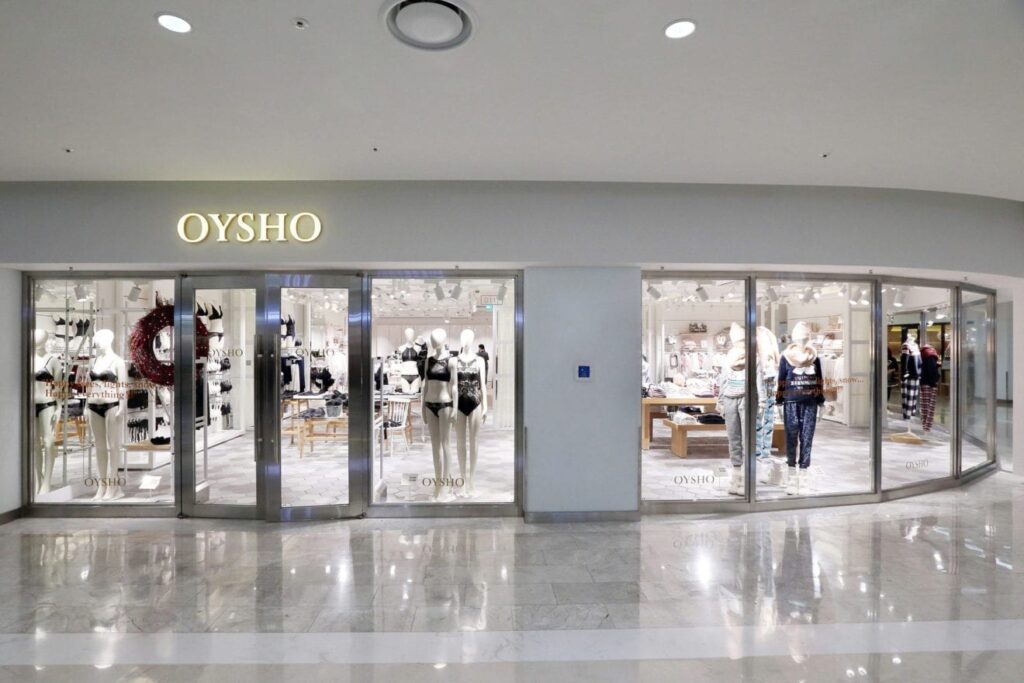
    Spanish lingerie brand Oysho, owned by Inditex, continues its international expansion with the opening of its first store in Indonesia.

    In Jakarta’s centre, the 300 sqm shop is in Plaza Indonesia, a shopping centre that is also home to other Inditex brands such as Zara, as well as luxury labels including Burberry, Chanel, Hermes and Louis Vuitton.

    oysho-store

    Since launching in 2001, Oysho has expanded its presence to 44 countries with more than 600 stores. The brand specialises in lingerie, sleepwear, loungewear and footwear. It generated 229 million euros (about US$252 million) in the first quarter of this year, representing an 8 per cent increase year-on-year.