Tag: Holiday

  • The Walt Disney Company appoints new Head of Consumer Products Commercialization

    The Walt Disney Company appoints new Head of Consumer Products Commercialization

    The Walt Disney Company has announced the appointment of Mahesh Samat, Executive Vice President, Disney Consumer Products Commercialization for the Asia Pacific region. Reporting into Ken Potrock, President, Disney Consumer Products Commercialization, he takes on responsibility for the commercialization of Disney franchises across merchandise, publishing and licensed games throughout India, Southeast Asia, Greater China, Korea, Japan, Australia and New Zealand.

    Samat rejoined The Walt Disney Company in India in November 2016 and went on to integrate the Southeast Asia and India businesses to form The Walt Disney Company’s South Asia regional hub in September 2017. He led most of Disney’s integrated business units driving new strategies that are providing tremendous growth for global franchises and unilaterally creating new business opportunities for all Disney businesses. He previously led The Walt Disney Company’s India operations from 2008-2012.

    “The Asia Pacific region continues to provide immense opportunity for Disney products and experiences,” said Potrock. “I am confident that Mahesh’s proven leadership and steadfast focus on innovation and entrepreneurship will deliver dynamic growth across our brands and product categories.”

    “Disney products and experiences bring our stories and characters closer to fans every day. I am pleased to have the opportunity to lead this exceptional team to delight kids and families across these high growth Asian markets,” said Samat.

    With more than twenty-five years of experience in FMCG, Media and Healthcare across India, Asia-Pacific and Europe, Samat previously worked with Johnson & Johnson, Kellogg’s, Warner-Lambert/Parke-Davis and Boots India Limited. Between 2012 and 2016, he established the Epic Television Networks and its popular Hindi-language, The Epic Channel in India.

  • Vingroup to open casino in Pho Quoc Island

    Vingroup to open casino in Pho Quoc Island

    A Vingroup-invested firm has been allowed to include a casino in a hotel-amusement complex on Vietnam’s largest island Phu Quoc. The People’s Committee of Kien Giang Province announced that the Prime Minister has approved in principle the casino’s inclusion in a hotel-amusement being built on the southern province’s island. With the casino business, total investment in the complex will increase to VND50 trillion ($2.14 billion).

    The complex, which is under construction, is scheduled to start operating in 2021. Its main investor is the Phu Quoc Tourism Investment and Development Jsc, a company in which Vingroup, Vietnam’s largest private conglomerate, holds a 50 percent stake.

    The casino project is part of a pilot program that would allow Vietnamese citizens to gamble in casinos in the country for the first time.

    For decades, Vietnam has banned gambling as a social evil. Vietnamese were also prohibited from gambling in the few casinos that have been built in the country.

    Shifting its stance, the government has allowed citizens over 21 years old with a monthly income of at least VND10 million ($445) to gamble in local casinos from last March under a three-year pilot program. However, the casinos have to obtain approval from the government on a case-by-case basis to allow Vietnamese citizens to use their services.

    Vietnam’s average annual income was around $2,200 last year.

    There are fewer than 10 casinos in Vietnam, mostly smaller ones outside major cities. Their services are reserved exclusively for foreign passport holders.

  • Thailand: fourth-most-profitable global tourism destination

    Thailand: fourth-most-profitable global tourism destination

    According to the UN World Tourism Organization, Thailand outranks every other nation in Asia when it comes to tourism spend. Last year, it collected $57 billion in international tourism receipts, nearly doubling Macao ($36 billion), Japan ($34 billion), Hong Kong ($33 billion), and China ($33 billion).

    Globally, the only countries that out-earn Thailand in terms of tourism dollars are France ($61 billion), Spain ($68 billion), and the United States—which handily takes the gold medal, at $211 billion.

    It all comes down to volume. Foreign arrivals could hit 40 million next year, which is more than half the country’s population.

    “In Thailand, you’ve got something for everybody,” says Rebecca Mazzaro, a specialist for bespoke outfitter ATJ. “From the private island with the private villa to amazing street food meals that only cost a couple bucks, it has a diversity and variety that exists in few other markets. It’s no surprise lots of people are going—and spending,” she says.

    A Coming Luxury Boom

    Though gaps in the WTO’s data make it difficult to ascertain the per-visitor spend in each of these countries, given recent and forthcoming developments, that number is likely to be rising.

    “There’s no question that historically Bangkok—and Thailand in general—has always been perceived as a value destination,” says John Blanco, general manager of the forthcoming five-star Capella Bangkok. “But there has been a real effort to shift that perception.”

    Mastercard’s annual Global Destination Cities Index recently ranked Bangkok as the most-visited city in 2017 for the third year in a row.

    The study, based on undisclosed public data sources, rather than cardholder transactions, indicates that travelers shell out $173 for a day in the Thai capital, compared to $537 in Dubai or $286 in Singapore.

    This year, it forecasts travelers will spend an additional 14 percent more.

    By next year, the city will have gained even more opportunities to spend, such as superlative new resorts from Four Seasons, Rosewood, Mandarin Oriental, and Waldorf Astoria, plus a $1.6 billion Bal Harbour-esque mixed-use retail development called Icon Siam.

    “There’s a lot more meat on the bone now,” Blanco says of luxury offerings in the capital.

    Dino Michael, global head of Waldorf Astoria Hotels and Resorts, agrees. “We’ve been noticing the upscaling of Bangkok for a few years,” he tells Bloomberg. “The consumer has become more sophisticated; the dining scene has become more sophisticated.”

    Among Bangkok’s selling points, he says, are strong infrastructure and airlift, a “depth and breadth of tourists,” and an ingrained culture of hospitality. For tourists and brands thinking about charting the region, Michael adds, “It’s world renown—and an obvious starting point.”

    The Pitfalls of Popularity

    There may be a price to pay for popularity, particularly on Thailand’s beaches and islands.

    Already, throngs of partygoers on commercial yachts have done so much damage to the pristine marine ecosystem of Maya Bay—the picturesque backdrop to Leonardo DiCaprio’s 2000 film The Beach—that the area closed for four months earlier this year to recover.

    Unable to bounce back fast enough, it’s now being closed indefinitely. That follows similar measures in nearby Koh Khai and Koh Tachai islands, where coral was being destroyed at devastating rates.

    In Phuket, Mastercard’s 12th-most-visited destination in the world, there’s been a sharp decline in the local turtle population, correlated with the rise in beachside pollution. It’s led 70 hoteliers to band together to promote sustainability and encourage better etiquette among travelers.

    And in Thailand’s north, the dramatic growth of tourism has led to a sobering spike in unethical wildlife tourism, often centering around elephants and tigers.

    The capital, meanwhile, has stayed largely out of the way of these visitor-related troubles—perhaps because it’s hard(er) to justify bad behavior in a city with 40,000 Buddhist temples.

    “Of course, red light tourism is alive and well—like it or not,” says Catherine Heald, founder and chief executive of Asia outfitter Remote Lands. “But ultimately, tourism has really lifted the local economy.”

    At $57 billion a year, there’s no denying that.

  • Toys R Us reopened in Brunei

    Toys R Us reopened in Brunei

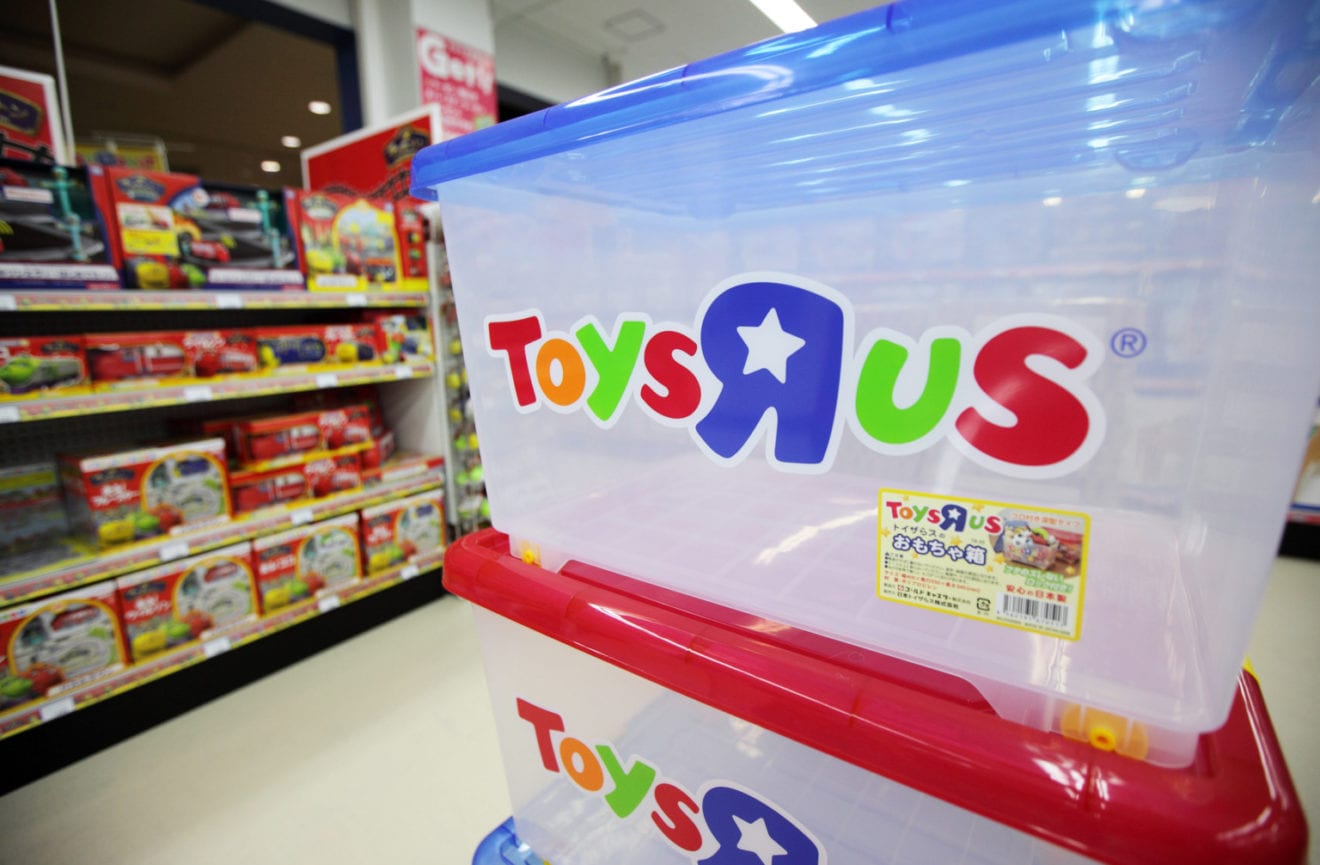
    Toys R Us Brunei has relaunched its Mabohai Shopping Complex store. The reopening, after extensive redesign and renovation works, attracted long queues of shoppers hoping to pick up special deals promoting the event. Along with the reopening, the store has expanded its product range by 70 per cent.

    Toys R Us (Singapore) group country director Raymond Burt reassured customers the brand is “here to stay”.

    “We have been in Brunei for around six years and we have re-signed our lease here at Mabohai Shopping Complex. We have also reinvested in the store and spent quite a bit of money to bring the latest design of the market to the store. We have renovated the store with a layout that is segmented by age for children, to make it easier for customers to shop.

    “We have updated the design and signage as well as added elements of interactive play that we didn’t have before.”

    Toys R Us operates 67 stores in Asia and has 18 new stores planned for launch by the end of the year, the majority in China. It is part-owned by Fung Retailing and not affected – as yet – by the collapse of the company in the US.

  • Time for travel agents to embrace “true retail”

    Time for travel agents to embrace “true retail”

    A recent report by eMarketer predicts that by 2021, Asia Pacific consumers will spend $3.001 trillion online, and ecommerce will make up 25.4% of total retail sales. Whilst this hasn’t been the death knell for bricks and mortar, it has forced retailers to re-think how to use their physical stores.

    Apple was one of the first to pioneer using their real estate as a way to drive brand ‘experience’ as much as sales.

    With their open-plan design, army of knowledgeable staff and regular, in-store seminars, Apple’s stores inspire and educate customers, helping the company achieve long-term loyalty.

    The fashion sector has been quick to follow suit too, adopting a range of technologies to transform how their stores are used by customers – recent innovations include ‘live’ mirrors that suggest matching items as the customer enters the dressing room and geo-targeted apps that alert shoppers to discounts and in-store promotions when they walk past.

    By comparison, APAC’s travel agents have been slower to spruce up their bricks and mortar models.

    However, with mobile travel sales accounting for 50% of online travel sales, and the number of online travel sales is only set to rise as more digital natives reach adulthood, now is the time for them to start.

    Rather than being a burden, when done right this is an opportunity for travel retailers to diversify; improve their success in cross- and up-selling; and engage the next generation of travelers who want very different things from the booking experience than their parents and grandparents.

    A good example is global travel group, TUI Travel.

    With a third of their sales still taking place in their physical stores, the company noticed that their customers’ purchase journey was becoming increasingly non-linear and multi-channel.

    In response, they piloted the use of in-store touch screens in the UK to enhance their customers’ store experience and invested in integrating their physical and digital channels for seamless shopping.

    By doing so, they were able to optimize interaction at every touchpoint, resulting in an overall increase in sales and average spend tripling in the stores that introduced interactive technologies.

    On the back of this success, they have since rolled these changes out in a number of their other physical stores too.

    Welcome to ‘true retail’

    ‘True retail’ is the notion of taking a 360-degree view of the customer, thinking beyond just the point of sale to consider all other brand touchpoints – from early inspiration to aftercare – and channels, whether they are in-store, on mobile, online or, as is increasingly the case, a combination of all three.

    ‘Inspiration’ is one of the biggest, and as yet largely untapped, opportunities for travel retailers to differentiate themselves by setting up their physical stores differently.

    Following the Apple model, store design is a good place to start – iPads loaded with relevant travel content, interactive displays and AI technologies can all be used to create a fun environment where customers can browse without sales pressure.

    The key is for travel agents to focus on the customer experience first and foremost – to create a space where people actively want to visit as part of their holiday planning.

    Automate the predictable to invest in the exceptional

    Another big, in-store asset for ‘inspiration’ is a travel agent’s staff.

    The more time that they can spend talking to customers, and the more knowledgeable and passionate they are about travel, the better.

    Historically in-store staff at travel agents were stuck behind their screens due to cumbersome systems and back-end processes.

    However, with the right technology, a lot of this can now be automated, giving staff the information they need at the touch of a button and in turn freeing up their time to walk the floor and focus entirely on customer service.

    Make it multi-channel

    Embracing ‘true retail’ also means acknowledging that there is no longer a single, linear purchase journey for travel bookings.

    Just as some customers will come into store to make a purchase having already done a lot of research online, others may prefer to get in-store inspiration then buy at a later date, through another channel.

    Retail travel agents need to ensure that they don’t lose this second group of shoppers to their competitors by continuing to follow-up with highly-tailored content, to whatever channels the customer prefers, after they’ve left the store.

    ‘Personalization’ and ‘relevance’ are essential to doing this successfully, so travel agents should use data capture across all of their touchpoints to build up a detailed, single-customer-view that is drawn from real behavioral insights rather than demographic assumptions.

    Applied in the right way, this intelligence can also be used to inform more tailored cross- and up-selling, with a much higher chance of conversion.

    Aftercare

    Finally, taking a truly 360 view of customer needs means keeping channels of communication open long after the sale itself.

    Successful fashion retailers do this well through convenient returns processes on online orders and hyper-relevant ‘you might also be interested in…’ content, designed to inspire the next purchase.

    This is an equally important opportunity that travel retailers shouldn’t ignore.

    In short, travel agents should have a post-purchase strategy for every customer, the more tailored the better.

    For best results, this should go way beyond the immediate post-sale window and should incorporate practical on- and even post-trip value-add services too, such as delay notifications, visa information, and discounts on services at the destination.

    Ultimately, traveler expectations are changing, which means retail travel agents today need to think beyond the booking.

    This will require a significant mindset shift for some, but also promises big rewards, and future-proofed customer loyalty, for those that get it right.


  • Holiday boosts South Korean retail sales

    Holiday boosts South Korean retail sales

    A government report has shown a rise in South Korean retail sales of food during the Chuseok holiday. The holiday, likened to the Korean version of Thanksgiving, is thought to have sparked a 6.9 per cent spike in combined revenue for major online and offline retailers during September, compared with last year’s figures for the same period.

    Total online sales grew 8.6 per cent, with 6 per cent growth in offline sales during the holiday period.

    Ahead of the holiday, discount chain food sales increased by 8.1 per cent; department store food sales rose 4.7 per cent, and convenience stores saw 5.1 per cent increases in demand for imported beers and lunch boxes.

  • AirAsia Philippines Passes Massive Safety Audit

    AirAsia Philippines Passes Massive Safety Audit

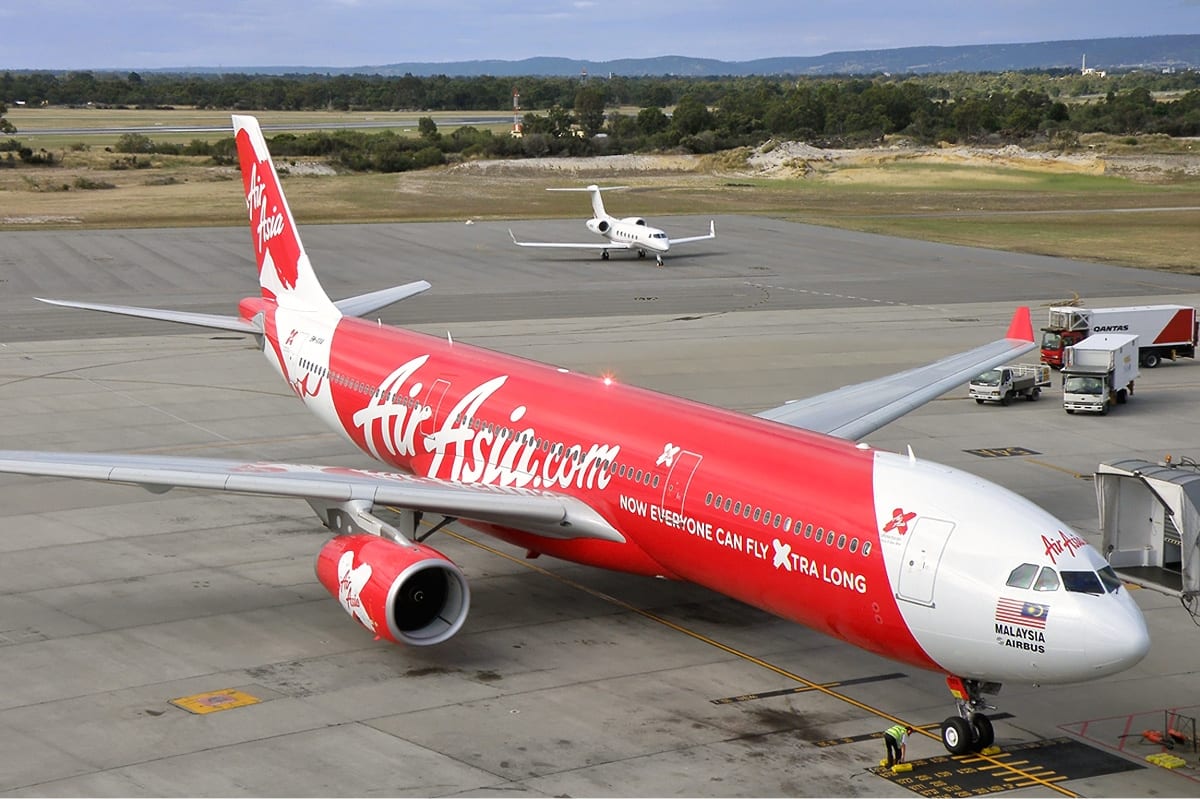
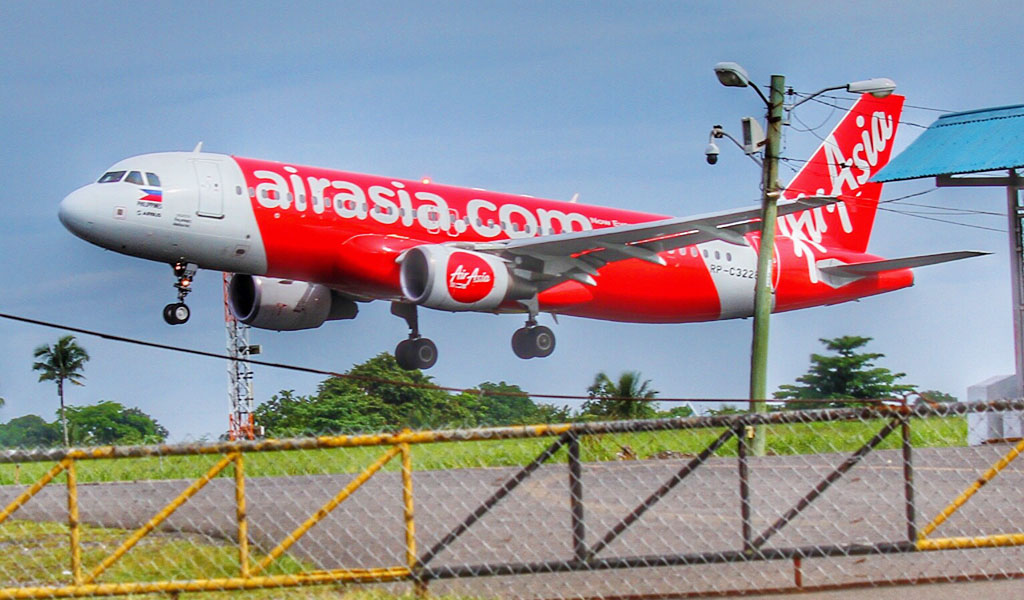
    Manila-based AirAsia Philippines has passed a major international safety audit, the International Air Transport Association Operation Safety Audit (IOSA), that covers more than 1060 separate parameters. The operational safety audit is compulsory for IATA members and airlines that have completed the audit have a safety record almost four times better than those that have not. AirAsia Philippines CEO Captain Dexter Comendador said, “We are pleased to announce that we have successfully completed IOSA accreditation. This achievement is a recognition of everyone at AirAsia’s dedication to safety and security.”

    Earlier this year, AirAsia Philippines received its ISO Certificate which gives world class specification for products, services, and systems to ensure quality, safety, and efficiency. ISO 9001:2015 helps ensure passengers get consistent, good quality products, and services. This international standard is based on quality management principles including a strong customer focus, the motivation and implication of top management, the process approach and continuous improvement.

    “We are closing this year with two important achievements from IOSA and ISO and it is but fitting to dedicate an aircraft to our hardworking team who we proudly call, Allstars. We are officially launching this month a special Allstars livery bearing faces of more than one thousand Filipino Allstars including AirAsia Group’s management team,” Comendador added

    Now 426 airlines have completed the audit, which is renewed every two years. The awarding of the IOSA accreditation is expected to be a major boost for the airline. The IOSA certification audit is an internationally recognized and accepted evaluation system designed to assess the operational management and control systems of an airline. The audit covers eight functional and operational areas: organization and management system, flight operations, operational control, and flight dispatch, aircraft engineering and maintenance, cabin operations, ground handling operations, cargo operations, and security management.

    IOSA was introduced to stem the increasing number of crashes in the late 1990s and into the beginning of the last decade. The AirAsia Group airlines now fly to 165 destinations in 25 countries. It has just ordered or reconfirmed orders for 100 A330s for its AirAsia X operation. Separately long-haul, low-cost, operator AirAsia X is evaluating Airbus’ long-range version of the  A321neo as it moves to target more destinations within a range of seven hours.

    Powered by CFM International’s LAEP-1A engines, the A321neo LR,  is due to enter service in the fourth quarter of 2018 and is designed to carry up to 240 passengers 4000 nautical miles. The airline confirmed last month it was evaluating “the potential introduction” of the 321neo LR for developing routes.

  • AirAsia Big Loyalty launches ‘BIG Big Giveaway’ Finale

    AirAsia Big Loyalty launches ‘BIG Big Giveaway’ Finale

    AirAsia Bhd’s loyalty programme, AirAsia BIG Loyalty has launched its “The BIG Big Giveaway” year-end finale with over 90 irresistible offers to BIG members beginning today until December 31. Big Loyalty Sdn Bhd, the owner and operator of the loyalty programme, said the offer would be filled with fantastic discounts, free hotel stays, return flights and 50 per cent bonus BIG points for all of shopping sprees during this regional mega sale.

    BIG members in Malaysia, Thailand, Indonesia, Singapore, the Philippines and beyond can enjoy deals by BIG Loyalty’s entire group of partners ― among them are ZALORA, Agoda, Rebate Mango, Grab, Petron, Maybank and Citibank ― that range from travel, lifestyle, airline to financial services.

    Members who convert their credit card points to BIG points during this period could also enjoy 50 per cent more points on top of the everyday conversion rate, so they can accelerate their way to redeeming free flights, hotel stays and tickets to popular attractions to make their holidays free.

    An additional prize to the 50 per cent bonus BIG points reward for shopping from a variety of travel and lifestyle deals, including some 2,000 rooms at First World Hotel, Genting Highlands, will be given away weekly to lucky members.

    The sale is also doubling up the rewards for members who redeem flights from November 11-18 by sending them on a return trip to Siem Reap, Phuket, Langkawi and more.

    In a statement today, AirAsia BIG Loyalty Acting Chief Executive Officer Sereen Teoh said 2018 was a year of big milestones for BIG Loyalty, which included achieving 20 million BIG members and the launch of the world’s first airline points exchange platform called BIG Xchange.

    BIG members in Malaysia who are Visa cardholders also stand a chance to win a share of over 40 million BIG Points, which is equivalent to nearly 600 return flights to Melbourne, Tokyo, Seoul and many more destinations.

    For every RM50 spend on flight bookings via airasia.com or the AirAsia app members will earn one automatic entry, while those who spend RM50 by using Tap to Pay will earn five entries, and the same amount spent overseas with only physical swipes will double their entries to 10.

  • Airasia To Launch Colombo-Bangkok Direct Flights Soon

    Airasia To Launch Colombo-Bangkok Direct Flights Soon

    AirAsia will launch four-time weekly direct flights between Colombo and Bangkok from December 14, with a special promotional fare, an airline press release said. Operated by Thai AirAsia (flight code FD), this direct route to Bangkok in Thailand will be the airline group’s second connection from Colombo’s Bandaranaike International Airport which includes direct route to Kuala Lumpur, Malaysia (flight code AK).

    Santisuk Klongchaiya, Chief Executive Officer of Thai AirAsia said, “Sri Lanka has always been a promising destination for AirAsia as we have connected the country to a wider network via Kuala Lumpur for nearly a decade. To This time we are relaunching the flight from Colombo to Bangkok to provide the people of Sri Lanka with even greater connectivity that comes with attractive low fares to create more demand. We are strongly confident that our return to the market will stimulate travel appetite and demonstrate our commitment to generating more traffic to Sri Lanka to fuel tourism and economic growth for the country. Sri Lanka is such a hidden gem in South Asia with undiscovered potential. We therefore have high expectation for a healthy market reception for this new route.”

    Thai AirAsia operates the widest network in domestic Thailand and offers several international connections to other prominent cities in Asia. Travellers from Sri Lanka who wish to explore beyond Bangkok can enjoy a convenient Fly-Thru service with just a single-time baggage check-in from Colombo and make a brief transit in Bangkok to continue seamlessly to other destinations in Thailand and beyond. Sri Lankan travellers can take advantage of the convenient flight schedule that gives them more time to spend abroad by arriving in Bangkok in the early morning and depart in the evening.

  • AirAsia to launch start Manila-Shenzhen direct flights in December

    AirAsia to launch start Manila-Shenzhen direct flights in December

    AirAsia said Monday it would fly direct between Manila and the Chinese city of Shenzhen, dubbed Asia’s answer to Silicon Valley, starting December 1.

    The low cost carrier started its Cebu-Shenzhen flights last April. Without direct flights, travelers had to travel to Hong Kong or Beijing before reaching Shenzhen.

    “China is an important market for us and we are looking to expand our network further and connect Filipino travelers to new and exciting business and leisure cities,” said AirAsia Philippines CEO Dexter Comendador.

    Telecommunications companies Huawei and ZTE are headquartered in the southern Chinese city.

    AirAsia will fly direct to Shenzhen every Tuesday, Thursday, Friday and Saturday. Direct flights from Cebu to Shenzhen are also on Tuesday, Thursday, Friday and Saturday.

  • AirAsia probe may ground Vistara international flights

    AirAsia probe may ground Vistara international flights

    Vistara, the joint venture airline of Tata Sons Ltd and Singapore Airlines Ltd (SIA), may face the cascading effect of an ongoing probe into AirAsia India’s operations. The Central Bureau of Investigation (CBI)-led probe into AirAsia India, in which Tata Sons own a 49% stake, may be forcing the government to withhold permission sought by Vistara to start international flights, two people familiar with the matter said.

    AirAsia India is being investigated by the central agency for allegedly lobbying the government for international flight permits and violating rules that prevent foreign airlines from controlling an Indian operator.

    According to the people cited above, Vistara had applied in June for rights to start international flights, after it took the delivery of its 20th aircraft, and was hoping to fly out from October. The deadline has now been moved to December, Vistara chief executive Leslie Thng said in July.

    “With the general elections coming up next year, bureaucrats may be wary of granting Vistara overseas flight permits in the backdrop of CBI investigating another airline,” one of the two people mentioned above said.

    CBI had in May raided the offices of AirAsia India and filed a complaint against Tony Fernandes, chief executive of the company’s Malaysian parent. Fernandes has rebutted the charges.

    Airlines were earlier required to fly for at least five years on domestic routes, and have a fleet of 20 aircraft before being allowed to fly international. Now, they can fly just by having 20 aircraft in its fleet or 20% of total capacity (in term of average number of seats on all departures put together), whichever is higher for domestic operations, according to the new civil aviation policy.

    Vistara became eligible to fly international in June when it added its 20th plane. The same month, it submitted a list of potential overseas destinations to the government.

    However, the civil aviation ministry is yet to clear Vistara’s proposal. “Once cleared, the Directorate General of Civil Aviation will also have to clear the airline to fly international. But, the file hasn’t moved from the ministry yet,” one of the two people mentioned above said.

    Civil aviation secretary R.N. Choubey did not respond to an email.

    A Vistara spokesperson said, “We await necessary approvals from the authorities and aim to start our international operations by end of this year. Vistara’s expansion plans are on course at present.”

    Vistara, which started operations in 2015, has a fleet of 22 Airbus A320s. The airline, which had listed out a plan to fly to destinations like Sri Lanka, Maldives, Thailand and other neighbouring countries, according to reports, may have seen rivals grab some of these routes in recent days.

    For instance, GoAir recently launched flights on Delhi-Phuket route, while Jet Airways will start flights on Pune-Singapore route from 1 December. Yet, Vistara is willing to wait it out to begin its international operations, the first person quoted in the story said.

    Vistara, in July, announced its decision to order 19 planes worth $3.1 billion from Airbus SE and Boeing Co. It plans to lease 37 new A320neo planes.

    The letter of intent with Airbus includes a firm order for 13 A320neo and A321neo jets, as well as options for seven more aircraft from the A320neo family. Another 37 new A320neo-family planes will be added from leasing companies.

    The Boeing order includes six firm-ordered 787-9 Dreamliner and purchase rights for four more from the 787 Dreamliner family.

    “The aircraft purchase will help Vistara expand both within and outside India and on all routes that this aircraft could support us on,” Vistara’s chief executive Leslie Thng said at that time.

    “For medium to long-haul destinations, we decided that Boeing 787-900 (Dreamliner) would be best for us and would allow us to start medium-haul operations from 2020,” Thng had said.

    “When India’s third FSC (full service carrier) launched, it did so with its eye on the opportunity in the international market. More than three years later Vistara remains a solely domestic carrier, thanks to Indian regulations,” said CAPA India’s Mid-Year Outlook for FY19. “Although the airline technically qualified to operate international services earlier this year when it inducted its 21st aircraft, it is experiencing delays in securing an international flying permit, which is surprising.”

  • Philippine Airlines to fly new A350 to Los Angeles

    Philippine Airlines to fly new A350 to Los Angeles

    Philippine Airlines’ new Airbus A350-900 is set to make a temporary appearance on the carrier’s Manila-Los Angeles route starting September 28, with the aircraft taking on one flight per week for a period of approximately one month. The short-term deployment comes as the airline prepares to permanently fly its latest aircraft on its non-stop flights to New York starting October 30.

    According to Philippine Airlines’ current schedule, the A350 will take over flights PR112 and PR113 every Friday until October 19, with its Boeing 777-300ER operating the flights on all other days. PR112 and PR113 operate four times a week on Wednesdays, Fridays, Saturdays and Sundays.

    Philippine Airlines Manila-Los Angeles A350 schedule:

    Flight No. From To Departs Arrives Days
    PR112 Manila (MNL) Los Angeles (LAX) 1125 1000 Sept 28, Oct 5, 12, 19
    PR113 Los Angeles (LAX) Manila (MNL) 1230 1825+1

    The airline’s other daily flight on the route, PR102/PR103, also will continue to be flown by the 777-300ER throughout this period.

    The temporary deployment gives passengers a small window during which they can experience the aircraft when flying to the US ahead of its deployment to New York at the end of next month.

    Philippine Airlines’ A350 notably features the airline’s new long-haul business class seat product, a variant of Thompson Aero’s Vantage XL seat. Along with reclining to a fully flat position, these seats are also notably laid out in a 1-2-1 configuration that offers direct aisle access to all passengers, a benefit not offered with the airline’s 2-3-2 business class layout on board its 777-300ER.

    A total of 30 seats are offered in the business class cabin, with each offering 24 inches of width, 44 inches of pitch (legroom) when in a seated position and reclining to provide a 78-inch-long flat bed.

    Philippine Airlines took delivery of its first A350 back in July and earlier this month began flying the aircraft on its first long-haul service to London.

  • AirAsia offers up to 70% discount on Almost All Flights

    AirAsia offers up to 70% discount on Almost All Flights

    AirAsia has come up with a new offer to woo flyers in this festive season. AirAsia is offering up to 70% off on all its destinations. AirAsia’s latest offer started on 15 October and will continue till 28 October 2018, the carrier has mentioned on its website. This offer is valid for immediate travel until 30 June 2019. Bookings for this offer can be made on airasia.com or through the AirAsia mobile app.

    Air passengers can book tickets to over 130 destinations across the airline’s network under the new offer. There are some extra perks for AirAsia Big members, such as instant discounts on bookings through the mobile app.

    In order to enjoy the benefits of the discount, passengers are required to book their flight tickets in advance. The discount is applicable on the base fare of the flight ticket and is available only on select fare classes, during non-peak periods, the airline says.

    AirAsia, a low-cost air carrier, will introduce flight services from Visakhapatnam to Bangkok four times a week from 8 December 2018, with a one-way promotional fare of Rs 2,999. Passengers can book tickets up to 21 October to avail the offer.

    AirAsia Group operates scheduled domestic and international flights to more than 165 destinations spanning 25 countries.

    AirAsia is a joint venture between Tata Sons Ltd and low-cost Malaysian airline AirAsia Berhad

  • 40 travel agents join Garuda Indonesia Travel Fair 2018

    40 travel agents join Garuda Indonesia Travel Fair 2018

    More than 40 travel agencies, including five pilgrimage agencies, are joining the second phase of the Garuda Indonesia Travel Fair (GATF) 2018. The event, held by the flag carrier in partnership with Bank Mandiri, is held at the Jakarta Convention Center (JCC) in Senayan, South Jakarta, from Friday to Sunday. Various travel packages are offered by the agencies, including for the umrah as well as for cruise and winter vacations. Garuda Indonesia promises competitive prices for international as well as domestic routes. The South Korean capital city of Seoul, for instance, can be visited with round trip fares starting at Rp 2.7 million (US$177), while a return ticket to Raja Ampat in West Papua can be bought for Rp 2.1 million.

    Other programs available throughout the biannual event are Happy Hour, which offers up to 80 percent discounts from 10 a.m. to 2 p.m. and from 4 p.m. to 8 p.m., Best Deal with up to 50 percent discounts, an additional 1,000 miles for GarudaMiles customers and 30 percent discounts on prepaid baggage.

    Pikri Ilham Kurniansyah, Garuda Indonesia’s commercial director, speaks at the opening ceremony of the second phase of the Garuda Indonesia Travel Fair (GATF) 2018 at the Jakarta Convention Center (JCC) in Senayan, South Jakarta, on Friday.

    Having joined the GATF in 2017, Bank Mandiri also presents numerous special offers, including a 50 percent discount with fiestapoin, zero percent installments for up to 12 months using their credit card and up to Rp 2 million cashback using their credit or debit cards.

    One of the visitors, Citra, 27, from Bekasi, West Java, praised the variety of travel agencies there. “It’s worth it [coming to the travel fair], especially if you’re on a budget,” said Citra, who plans to fly to Labuan Bajo in East Nusa Tenggara. “The place is also comfortable.”

    The GATF has been held in 30 cities since last September. It targets total transactions of Rp 448 billion, including Rp 218 billion in Jakarta.

    Collaborating with the Tourism Ministry, Garuda Indonesia has also conducted the Wonderful Indonesia – Garuda Indonesia Travel Fair (WI-GATF) abroad to lure foreign travelers to Indonesia.

    Pikri Ilham Kurniansyah, the airline’s commercial director, said its WI-GATF event in Shanghai, which ended in early September, had generated 8.5 million yuan ($1.3 million) in sales, and the airline was focusing on the WI-GATF this year by adding Singapore and Australia as forthcoming venues.

  • AirAsia to push discounted airfares via digital platforms

    AirAsia to push discounted airfares via digital platforms

    In line with the upcoming year end holidays and early 2019 travels, AirAsia is offering up to 70% off on all its destinations until 28 October 2018. These include Changsha, Tokyo, Kolkata, Bali, Phuket, Siem Reap, Yangon, Manila, Singapore and Kota Kinabalu, among others. In a statement, AirAsia group marketing head Amanda Woo said the move to offer discounted airfares is based on understanding the different travel and route behaviours of its consumers. For this campaign, AirAsia is focused on a combination of content marketing and digital platforms. It also looked into offline platforms for certain key regions, Woo said.

    “In line with our company direction of going digital, our marketing strategy relies heavily on data and digital analytics as part of the deciding factors on the channels we use,” she added.

    Besides encouraging more travels during the period, Woo said the airline also hopes to boost more member sign-ups so consumers can enjoy more exclusive deals.

    “The year end is always an exciting time and we can think of no better way to welcome the holiday season than to offer more discounts on our already low fares,” Woo said. AirAsia BIG members will enjoy more perks including instant discounts when booking directly via the website and mobile app.