Tag: Hong Kong

  • Drone maker DJI to shut Hong Kong flagship within a week

    Drone maker DJI to shut Hong Kong flagship within a week

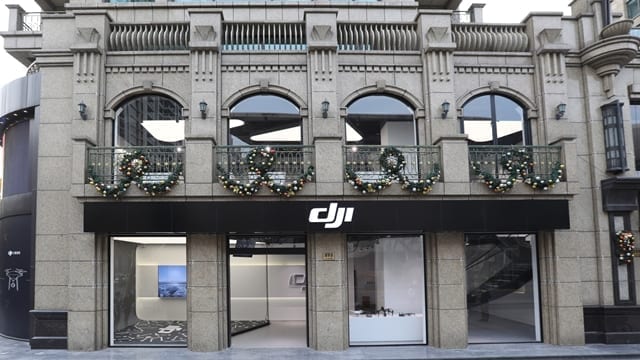
    Shenzhen-headquartered drone maker DJI is to close its Hong Kong flagship store in Causeway Bay – but the company says the move is unrelated to strict new laws restricting drone use in the territory.

    The three-story, 930sqm store, which displays the brand’s range of aerial and handheld devices and includes a space where people can carry out test flights, will close from next Monday.

    A sign affixed to the storefront says DJI remains committed to its customers and partners in Hong Kong and elsewhere in the world and that the company would continue to develop the industry’s most advanced drones and creative camera technology.

    Responding to an inquiry from the South China Morning Post, a DJI spokesperson said the flagship’s closure reflected the company’s evolving needs and had “no connection” with the new regulations requiring drone operators to be trained and licensed to fly the devices. That law takes effect next June.

    After the store’s closure, the company’s drones will remain on sale online and through authorized dealers.

    DJI opened the store in September 2016. At the time it was the brand’s third retail store, following one in Shenzhen and another in Seoul.

    A flight cage on the ground floor showcases drones in action and a SkyPixel Gallery on the first floor features international aerial photography. A technical support center and space for workshops, seminars, and special events are located on the second floor.

    Under the new Hong Kong law, drones weighing between 250gm and 7kg must be registered, and pilots must undertake online training. Insurance will become mandatory.


  • Binance Shuts Futures Accounts in Hong Kong

    Binance Shuts Futures Accounts in Hong Kong

    The world’s largest crypto exchange Binance said it would no longer allow new users to open futures accounts in Hong Kong, following warnings issued by the city’s regulators.

    Existing users will have a 90-day period to close their positions, Binance said, and no new positions thereafter can be opened.

    As the market leader, Binance constantly evaluates its product and service offerings,» the firm said in an announcement, adding that it was the first major firm to proactively restrict access to crypto-linked derivatives. We will be restricting Hong Kong users in respect of derivatives products (including all futures, options, margin products and leveraged tokens) in line with our commitment to compliance.

    The latest move follows a warning issued by the Securities and Futures Commission in July stating that the cryptocurrency exchange was not licensed or registered to offer securities.

  • Singapore and Hong Kong Named as Unicorn Incubators

    Singapore and Hong Kong Named as Unicorn Incubators

    The city-state’s unicorn businesses take an average of 6 years and 11 months to reach the valuation of $1 billion.

    Singapore is the joint fourth best country in the world for unicorn start-ups, according to a recent study by credit broker Money.co.uk, with six businesses currently valued at over $1 billion.

    The top country for unicorns is China, with 155 such companies, which take an average of 5 years 10 months to reach this status. Hong Kong, which has five unicorns, is the second-fastest country for businesses to reach $1 billion, which take an average of 6 years and 1 month, followed by Japan unicorns, which take average of 6 years and 3 months.

    According to the study, which cited data by private equity firm CB Insights, there are only 750 unicorns – defined as independently owned and valued at over $1 billion – globally. The U.S., also in joint fourth position, has the most, at 378.

    Globally, there are 131 fintech unicorns, which took an average of 7 years 1 month to reach $1 billion.

  • Carousell names new Hong Kong MD

    Carousell names new Hong Kong MD

    Carousell Hong Kong has appointed Hong Kong digital industry veteran Kevin Huang (pictured) as managing director. Huang, who was last CEO of Birdie for about two years, will now oversee the development of overall business strategy, managing the daily operations, marketing, branding and community engagement for Carousell Hong Kong and will report to Bryan Teo, chief operations officer. He takes over the role from William Ip, who left the role in March this year after close to two years in the role.

    Huang’s appointment comes as Carousell Hong Kong steadily builds up its presence in the market with one in seven Hong Kongers now being a Carousell user, the company confirmed. With Huang leading the charge, the company looks to grow Hong Kong as a key market to inspire more selling and buying to nurture a vibrant community for all types of users.

    Currently the team is about 40 strong in Hong Kong, and 700 strong across the region. In Hong Kong, it is also looking to fill roles such as business development and category management, amongst others.

    “What attracted me to join Carousell is the mission of inspiring everyone in the world to start selling and buying to make more possible for one another. I am passionate about helping small businesses in Hong Kong, and Carousell is a platform where anyone can find selling success. Whether you are a casual user selling preloved items, a budding entrepreneur or even a merchant running a physical shop for decades, you can find your own community and niche on Carousel,” Huang said.

    One of its key focus for this year is on CarouBiz (Carousell for Business) and supporting SMEs. In an interview, Huang and the team at Carousell explained that merchants who took their businesses online last year, were the few who managed to weather the storm but many merchants who are unfamiliar with the digital business ecosystem are struggling. As such the brand launched a premium seller tool last year to help SMEs digitalise and grow their businesses. CarouBiz includes tools such as video listings to increase clicks, premium seller badges to increase credibility, and bump scheduler for regular product promotion. It also launched the CarouBiz Booster Fund to help SMEs and aspiring entrepreneurs to kickstart their online expansion.

    Recently the company also forged a strategic partnership with Livi Bank to enable merchants to apply for a 12-month installment payment plan for their CarouBiz subscription with no extra interest or handling fees being charged throughout the period.

    Moving forward, the team will look to expand on its Home Services categories. In 2020, the number of active users who used home services through Carousell has increased by two-fold year-on-year, said the firm. This grew organically in part due to the pandemic, as movement restrictions pushed Hong Kong-ers online to search for needed services. The most popular service categories include household services, electronics and accessories repairs, beauty services and tutoring services.

    Meanwhile, with the launch of Carousell Auto Group in April 2021, the group aims to bring its experience and expertise in operating Southeast Asia’s automotive business to Hong Kong, and further expand Carousell Autos’ business to become the number one autos classifieds player in Hong Kong in the next three years.

  • 7-Eleven Hong Kong opens its 1000th store

    7-Eleven Hong Kong opens its 1000th store

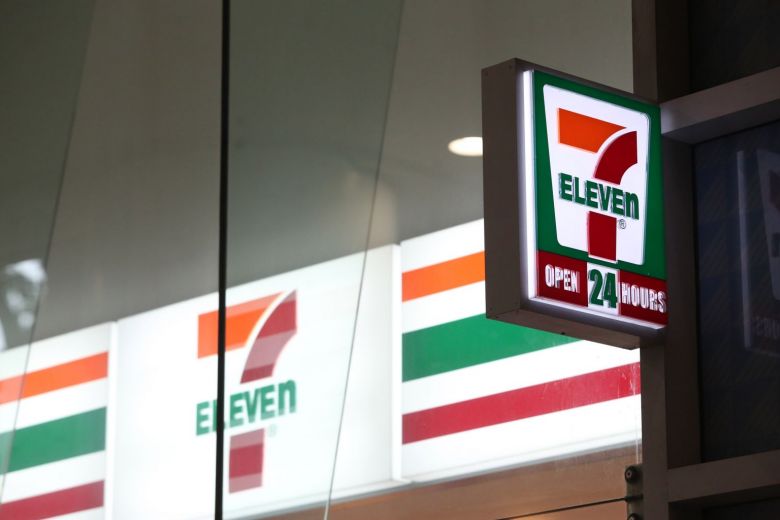
    7-Eleven has officially opened its 1000th store in Hong Kong – a milestone moment for both the brand and its customers. 7-Eleven launched its very first store in Happy Valley back in 1981 and, 40 years later, has opened its 1000th store on Des Voeux Road in Central. An integral part of the community and a true neighborhood store, 7-Eleven is committed to bringing convenience closer to its customers wherever they are, whenever they need.

    Evolving alongside the people of Hong Kong, the brand has constantly innovated to live up to changing consumer expectations. To mark this landmark achievement, a series of promotions and offers are being rolled out to thank customers for their loyal support.

    A Journey of 1000 Stores: the story of 7-Eleven in Hong Kong

    The Journey of 1000 Stores, a retrospective showcase outlining the story of 7-Eleven in Hong Kong, was held today in Central on 8 July. The exhibition charted 7-Eleven’s journey from its very first store right up to the opening of its 1000th store highlighting the brand’s milestones over the years, which many Hongkongers may still fondly remember from childhood.

    These include the immensely popular Hello Kitty badge collectible program, from 2004 and the launch of HOTSHOT, its ready-to-eat range of authentic Hong Kong-style treats beloved by students of all ages!

    Serving the community for 40 years

    7-Eleven has always been committed to giving back. Since 2013, it has worked with Caritas to offer training and job opportunities to over 40 people with special needs. In 2017, it teamed up with Pei Ho Counterparts to donate and distribute food to the homeless, the elderly, and low-income families. It also hands out small gifts every Christmas to children in need to spread festive cheer.

    In 2020, 7-Eleven launched the Charity Meal Voucher Programme: 553,787 vouchers were collected within eight days and then distributed in local neighborhoods hardest hit by the pandemic in collaboration with Food Angel, St. James’ Settlement, Foodlink, Hong Kong Christian Service, and Pei Ho Counterparts.

    Fun and exciting offers to say a big thank you to all its customers!

    7-Eleven’s continuing success is down to its team members, business partners, and, most importantly, its customers. To thank customers for their ongoing support, several tempting promotions and offers are taking place throughout July. For example, 7-Eleven launched an Instant Win Game, a first-of-its-kind Augmented Reality lucky draw with over $10 million worth of prizes to be won including 2,000 free cups of 7CAFÉ, 1,000 $100 cash vouchers, and a whole host of product discounts. To mark 7-Eleven Day on 11 July, 7-Eleven will be running unmissable offers such as $7 cups of 7CAFÉ, $7 and $11 discounts on a wide range of products and more. There will also be “1000-themed” promotions exclusively for you Rewards members such as product redemptions for 1,000 yuu points and 1,000 yuu point giveaways. 7-Eleven deeply appreciates the continuous support of its customers and looks forward to sharing this milestone moment with everyone!

    #7ElevenHK #7ElevenConvenienceStore #7Eleven1000thstore

  • TamJai SamGor concept to open in Lan Kwai Fong

    TamJai SamGor concept to open in Lan Kwai Fong

    Hong Kong noodle chain TamJai SamGor Mixian is expanding its presence in its home market with a flagship concept launch in the nightlife hub of Lan Kwai Fong this week.

    The TamJai SamGor store will also unveil the brand’s new international image, featuring its signature red and black colors together with Hong Kong-style neon light signs.

    “The design demonstrates TamJai SamGor’s ambition of infusing overseas elements into a Hong Kong brand, showcasing the idea of a mix of cultures and growing business in international markets,” the company said in a statement.

    The store facade features a large rectangular window with a neon light frame and a  three-dimensional sign saying ‘TamJai SamGor’ in Chinese characters on one side and ‘TJSG’ on the other side.

    Alcohol and pairing snacks, not available in other outlets, will be rolled out at the restaurant. TamJai SamGor in Lan Kwai Fong is scheduled to open this Friday (July 9).

    Since opening its first store in Hong Kong in 2008, TamJai SamGor Mixian has grown its network to more than 70 restaurants across the city. The noodle chain made its overseas debut in Singapore last year.

  • Facebook, Google, Twitter considering quiting Hong Kong

    Facebook, Google, Twitter considering quiting Hong Kong

    US tech giants Facebook, Google, and Twitter have privately warned the Hong Kong government that they could stop offering their services in the city if authorities proceed with planned changes to data protection laws, the Wall Street Journal reported on Monday, citing a letter.

    The laws could make the tech companies liable for the malicious sharing of individuals’ information online, the newspaper added.

    A letter sent by an industry group that includes the internet firms said companies are concerned that the planned rules to address “doxing” could put their staff at risk of criminal investigations or prosecutions related to what the firms’ users post online, Journal reported.

    Doxing is an act of revealing people’s personal information such as real name, home address or workplace online without the user’s permission.

    Facebook, Google, and Twitter did not immediately respond to Reuters’ requests for comment.

    Hong Kong’s Constitutional and Mainland Affairs Bureau in May proposed amendments to the city’s data-protection laws that it said were needed to combat doxing, a practice that was prevalent during 2019 protests in the city, the newspaper said.

    According to the newspaper, the letter dated June 25 was sent by the Singapore-based Asia Internet Coalition.

    “The only way to avoid these sanctions for technology companies would be to refrain from investing and offering the services in Hong Kong,” the Journal reported, quoting the letter.

  • Deutsche Bank Hit by Expired Hong Kong IPO License

    Deutsche Bank Hit by Expired Hong Kong IPO License

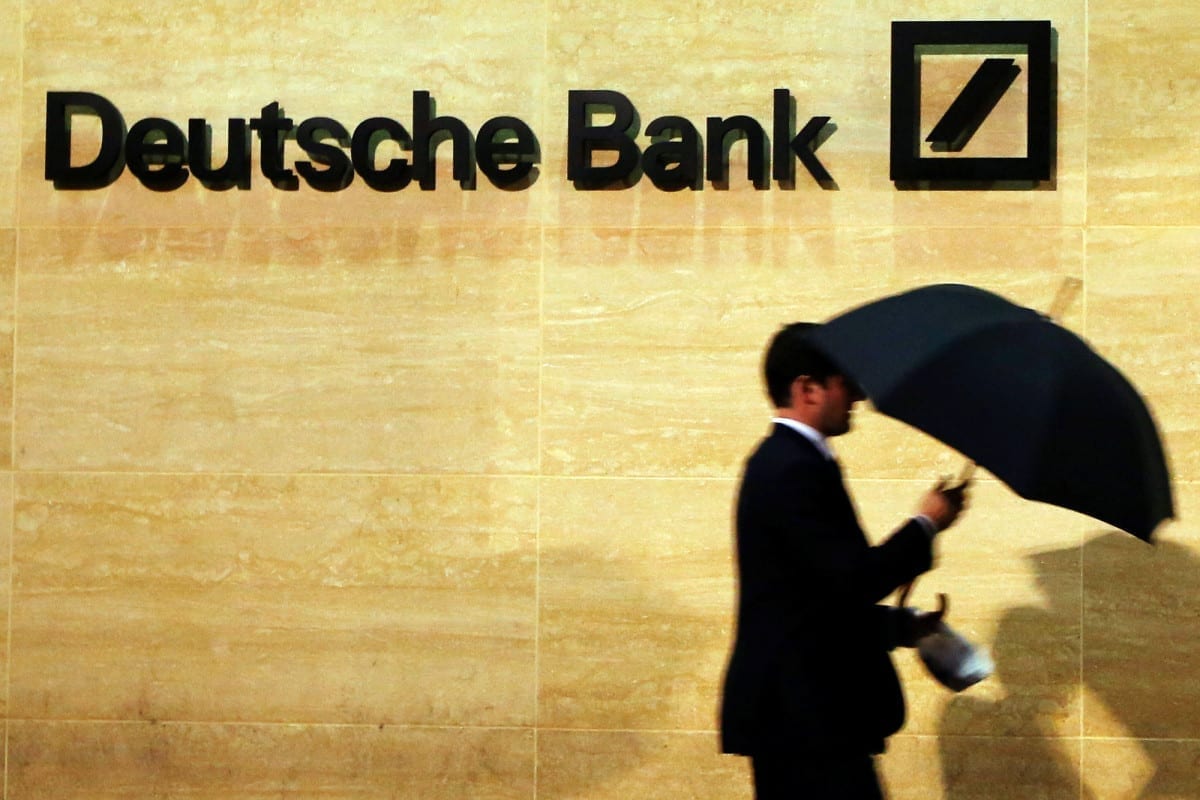
    A staffing error reportedly bypassed internal controls at Deutsche Bank which led to the expiration of its Hong Kong license to sponsor initial public offerings, marking a setback to the relaunch of its Asia equities business.

    Deutsche Bank failed to replace to regulated staff on time which will cause its IPO sponsor license to lapse from next month, citing unnamed sources.

    Deutsche’s IPO principals until June were investment bankers Poon Tsz Yuen and Rowena Wang, as per the Securities and Futures Commission’s (SFC) register. According to the report, Poon left the bank on June 16 and Wang is set to be removed from the register of authorized principals in early July.

    A spokesperson for the bank confirmed the license expiration and staff departures.

    The license expiration marks a setback to the relaunch of Deutsche Bank’s Asia equity capital markets (ECM) business after a restructuring in 2019 that saw Hong Kong shed alms all its ECM teams.

    According to another unnamed source close to the SFC, the issue suggests that there were «poor internal controls» at the bank and that process hereafter is expected to be slow.

    Separately, the SFC fined Deutsche Securities Asia last week for issuing incorrect statements to its prime brokerage clients and delaying the reporting of the failures to the regulator. And earlier today, the German lender’s Greater China investment banking vice-chair Rowena Chu reportedly retired.

  • Online marketplace YesAsia launching Hong Kong IPO

    Online marketplace YesAsia launching Hong Kong IPO

    Online marketplace YesAsia is set to raise US$17 million in an IPO launch in Hong Kong.

    The company aims to offer 39,540,00 new shares, 90 percent of which will be available for placing with institutional and professional investors while 10 percent will be available for subscription by the public in Hong Kong.

    Founded in 1988, YesAsia offers Asian fashion & lifestyle, beauty, and entertainment products to global customers. The company launched its key opinion leader initiative in 2018, and subsequently its YesStyle Influencer Program in 2019.

    Revenues generated from its influencer marketing initiatives accounted for 1.2 percent, 7.9 percent, and 17.4 percent of the total revenue of YesStyle for the three years ended last December, respectively.

    “We had been able to achieve above-industry revenue growth during the Track Record Period even in the midst of the Covid-19 pandemic, mainly due to our continuous effort in strengthening our marketing strategy to support customer retention and acquisition as well as long-term ecosystem development,” said Lau Kwok Chu, founder and executive director and CEO at YesAsia.

  • L’Occitane posts record profit as China becomes its largest market

    L’Occitane posts record profit as China becomes its largest market

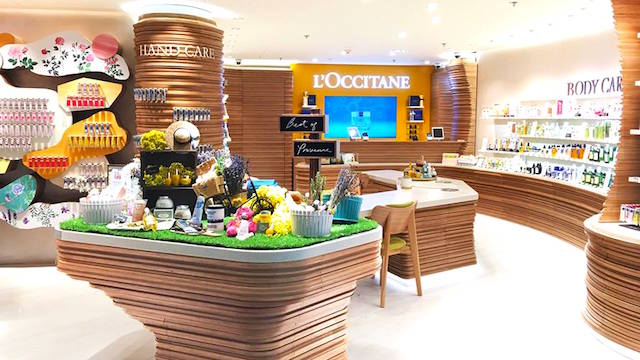
    Beauty products retailer L’Occitane International has reported sales and profit beyond expectation after successfully adapting to the challenges of selling products during a global pandemic.

    Despite the Covid crisis, like-for-like net sales of US$1.83 billion were down just 1.1 percent against the previous year, but net profit grew by 36.3 percent to a record $187 million, representing 10.2 percent of net sales.

    China is now the company’s largest market, with year-on-year growth of 36 percent.

    The overall performance was largely driven by a strong focus on online sales in the absence of travel retail business and long periods of physical store closures – more than 75 percent of the company’s outlets were closed at the peak of the pandemic. Global e-commerce turnover soared 69.2 percent and accounted for more than one-third of overall sales.

    Social selling was a key component of the online push, with 68 projects in Europe alone, including personal shopping concierge services, live streaming, and online consultation services.

    “Thanks to the group’s agility and adaptability in a socially distant world, the strong sales recovery in the second half of the year helped recover most of the ground lost earlier in the year, resulting in only a slight sales decline,” said chairman Reinold Geiger in a Hong Kong stock exchange filing.

    “Importantly, the group made tremendous progress in expanding its bottom line – recording an operating margin of 14.3 percent with contribution from its online channels, excellent performance in key markets in Asia, strong results from its newer brands, as well as greater operational efficiency.”

    He put the strong performance down to the group adhering to five pillars of its strategy to build trust, sustainable growth and profitability: empowering teams; executing fundamentals, especially in a retail context; adopting an omnichannel, mobile and digital approach; engaging customers; and strengthening brand commitments.

    Geiger said China was undisputedly the group’s best-performing market, coinciding with it being among the first to emerge from Covid-19. During the fourth quarter, L’Occitane International’s China sales grew by more than 50 percent, boosted by successful Chinese New Year and Women’s Day promotional campaigns, as well as a low base the previous year. Physical roadshows during Chinese New Year encouraged product sampling and conversion.

    Meanwhile, Geiger says two major restructuring activities will help the business achieve greater efficiency in future years.

    Last October, the company announced a reorganization that led to the loss of some 300 positions globally from its 9000-strong workforce, mostly at corporate offices. And in January, its US subsidiary, L’Occitane, Inc, commenced voluntary Chapter 11 bankruptcy protection in order to accelerate its store rationalization process. By the end of March, 25 underperforming US stores were closed. The Chapter 11 process is expected to achieve savings of up to $12 million annually for the next four to five years.

  • Hong Kong retail sales rise 10.5 percent in May

    Hong Kong retail sales rise 10.5 percent in May

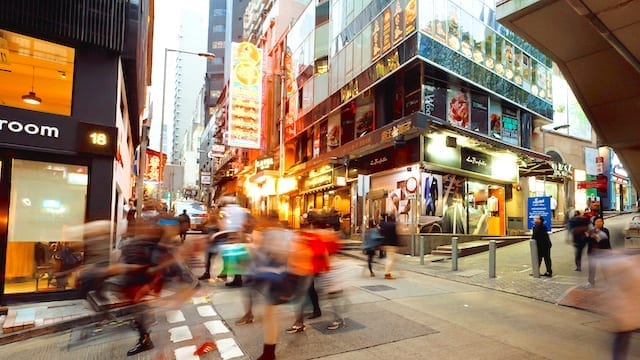
    Hong Kong retail sales rose 10.5 percent in May from a year earlier, the fourth consecutive monthly gain, boosted by an easing Covid-19 threat. But the growth lagged pre-pandemic levels as inbound tourism is at a halt and global travel restrictions linger.

    Sales climbed to HK$29.6 billion (US$3.81 billion), government data showed on Wednesday. That compares with a 12.1 percent rise in April, a 20.21 percent rise in March, and 30 percent growth in February.

    “The near-term operating environment of the retail sector will remain challenging given the lack of visitor spending,” a government spokesman said.

    In volume terms, retail sales in May jumped 7.8 percent year-on-year, compared with a revised 11-per-cent surge the previous month.

    Online retail sales in May soared 53.1 percent in value year-on-year, compared to revised 26.9-per-cent growth in April and a 44-per-cent rise in March.

    Sales of jewelry, watches, clocks, and valuable gifts, which depend heavily on mainland tourists, surged 54.8 percent in May versus a revised 93.9 percent rise in April, the data showed.

    Clothing, footwear, and allied products rose 12.1 percent in May, compared to a revised 61.2 percent in April.

    Tourist arrivals fell 34.8 percent year-on-year in May to 5305, after posting a 38.3-per-cent jump in April in the city’s first growth in arrivals after 21 consecutive months of declines.

    Hong Kong’s seasonally adjusted unemployment was 6 percent in the March-May period, against 6.4 percent in February-April, as the labor market was boosted by economic recovery and as the novel coronavirus outbreak receded.

    The government saw some sectors to take longer to return to pre-pandemic levels because of an uneven pace of recovery.

    The city’s economy grew by a revised 7.9 percent in the first quarter from a year earlier, snapping six consecutive quarters of annual contractions. Official forecasts are for the economy to grow between 3.5 percent and 5.5 percent in 2021, after a 6.1-per-cent contraction last year.

  • Hong Kong Dethroned as Most Expensive City for Expats

    Hong Kong Dethroned as Most Expensive City for Expats

    Hong Kong was dethroned as the costliest city for expatriates, according to a recent survey by Mercer, after holding the top rank for three years in a row.

    Ashgabat, the capital of Turkmenistan, was ranked as the costliest place for expat living, according to «Mercer’s 2021 Cost of Living City Ranking», unseating Hong Kong from the top spot.

    The report is based on the examination of over 400 cities and price evaluation of 200 categories of goods and services across essential needs like housing and utilities to personal spending like footwear and tobacco.

    Despite a shuffle at the top, the broader Asia Pacific region still dominated the ranks as home to the costliest cities.

    In addition to Ashgabat, another five Asian cities were also ranked within top ten including Hong Kong (2), Tokyo (4), Shanghai (6), Singapore (7) and Beijing (9).

    Switzerland was also particularly prominent in the rankings with three cities from the country occupying positions in the top 10.

    They include Zurich (5), Geneva (8) and Bern (10).

    But regardless of the region, all employees and employers were impacted by the coronavirus pandemic especially with regards to international mobility.

    According to Mercer, organizations are already implementing alternatives forms of international assignments and cross-border working arrangements to sustain their overseas operations and workforces.

    Cost of living has always been a factor for international mobility planning, but the pandemic has added a whole new layer of complexity, as well as long-term implications related to health and safety of employees, remote working and flexibility policies, among other considerations, said career president and head of Mercer strategy Ilya Bonic.

  • California Pizza Kitchen expanding in Hong Kong

    California Pizza Kitchen expanding in Hong Kong

    California Pizza Kitchen (CPK) – creator of California-style pizza – today announced the grand opening of its new restaurant in Hong Kong in partnership with Chun Fat Enterprise Limited. With over 27 years of serving guests in the Hong Kong market, the new restaurant, located within the Tuen Mun Town Plaza, the largest mall in Hong Kong’s Northwest New Territories, allows CPK to bring its diverse and innovative California-style menu to new diners within the popular mall location.

    The Tuen Mun Town Plaza location captures CPK’s warm California brand-style throughout the space with sunny tones, wood decor accents, and large windows that pour in plenty of natural light. CPK’s signature hearth pizza oven and open kitchen layout give a welcoming feeling and invites guests to sit, enjoy and watch their meals being prepped for a more engaging dining experience.

    “We are thrilled to expand our CPK Hong Kong presence with CS Lee and the Chun Fat team,” said Giorgio Minardi, Executive Vice President of Global Development & Franchise Operations at CPK. “We have strong momentum in our business and Hong Kong is a critical priority for our long term growth plans. We look forward to bringing ‘California Creativity’ and our diverse menu to local guests in this beautiful new restaurant in the Tuen Mun Town Plaza.”

    CPK continues to aggressively expand its presence in Asia with a focus on Hong Kong, South Korea, Singapore, Japan, and Malaysia. Through its partnership with Chun Fat Enterprise Limited, CPK projects to have four locations in the Hong Kong market by the end of 2022.

    “We’re excited to expand our relationship with CPK to bring its creative California-inspired cuisine to the local community,” said CS Lee, Managing Director of Chun Fat Enterprise Limited. “The new Tuen Mun Town Plaza location is the ideal place to bring CPK’s food and beverage innovations and globally inspired ingredients to the thousands of hungry guests that visit the mall every day.”

    The new location will feature several of the brand’s classic American menu offerings including the iconic BBQ Chicken Pizza, Cali Club Pizza, BBQ Chicken Salad, and Cedar Plank Salmon, among others.

    CPK’s global presence includes more than 200 locations in 8 countries and U.S. territories, which includes 40 international franchise locations in addition to 16 domestic franchise locations in airports, casinos and stadiums across the United States. While Hong Kong is no longer under COVID-19 lockdown restrictions, all CPK locations remain committed to providing a safe and secure dining experience with rigorous cleaning and safety protocols.

  • SaSa International Closing 20 Hong Kong stores

    SaSa International Closing 20 Hong Kong stores

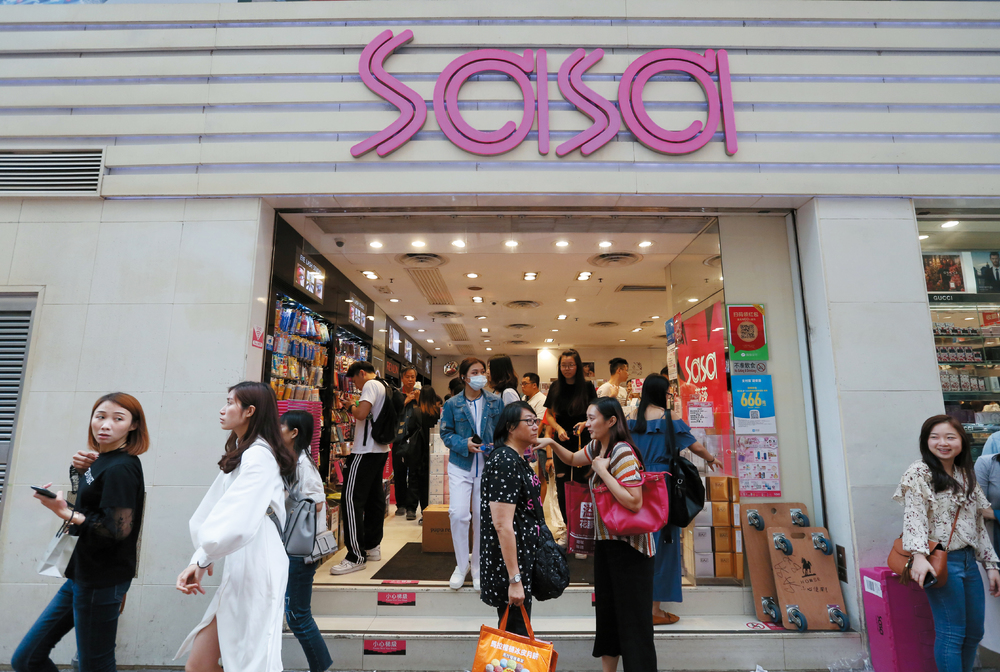
    Sa Sa International (0178) projects to close 15 to 20 shops in Hong Kong by the end of March 2022, but will add 30 stores in the mainland after recording a net loss of more than HK$350 million for the fiscal year ending March.

    Sa Sa said that it will close some physical stores in Hong Kong, especially in tourist areas, to cut down on rental costs.

    The group stated that the leases of 38 of their Hong Kong shops expired this year. Last year, the renewal rent in tourist areas was reduced by about 70 percent and in non-tourist areas by about 26 percent.

    So far this year, the rent renewal in tourist areas was reduced by 65 percent and in non-tourist areas by about 30 percent.

    As of the end of March, Hong Kong and Macau stores were reduced from 112 stores to 100 stores, Malaysian stores were reduced from 79 to 75, and mainland stores increased from 44 to 57.

    The group will focus more resources on its online business.

    This came after its net loss narrowed by 32 percent year-on-year to HK$351.4 million.

    Basic loss per share amounted to 11.3 HK cents. The board does not recommend the payment of a final dividend.

    Turnover for the continuing operations decreased by 46.8 percent to HK$3.04 billion. Sales of retail and wholesale in Hong Kong and Macau reduced by 57.8 percent to HK$1.99 billion. Mainland revenue rose 15.9 percent in yuan to HK$289.85 million. From April 1 to June 9, sales rose 55.1 percent. Hong Kong and Macau sales rose 53.5 percent and mainland sales rose 30.7 percent due to low base effect.