Tag: Hong Kong

  • L’Occitane sales down in Hong Kong

    L’Occitane sales down in Hong Kong

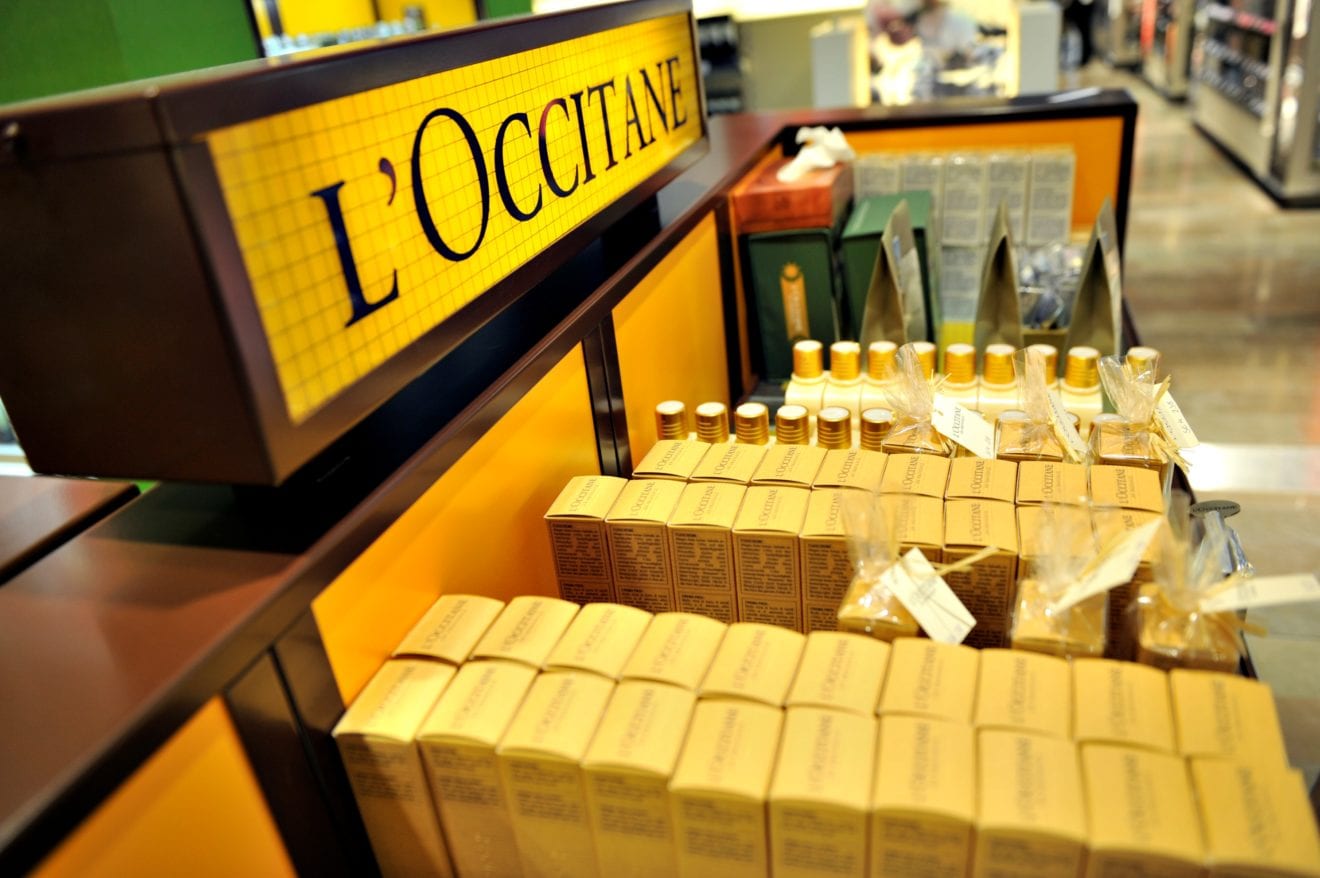
    L’Occitane sales plunged by nearly one fifth in Hong Kong and Macau during the June quarter.

    According to a stock exchange filing, the Hong Kong-listed retailer’s sales in the two territories, which includes Asian travel retail wholesale business, fell by 18.8 per cent on a currency-neutral basis. That contrasts with 9.3 per cent growth in the same quarter last year.

    On the mainland, L’Occitane sales rose by 8.3 per cent which, given the higher store count of 190 versus just 36 in Hong Kong and Macau, somewhat compensated. Sales in Japan were up by 6 per cent with sales stable in Taiwan, the other Asian market the company breaks out.

    Globally, group sales rose 18.8 per cent at reported rates and by 16.2 per cent at constant exchange rates.

    The company’s standout market was the UK which recorded a massive 253 per cent increase in sales, driven by the inclusion of the Elemis business in the quarter-on-quarter data, and recovery of the core L’Occitane en Provence brand there.

    L’Occitane sales globally reached €352.5 million. Elemis became a subsidiary of the group in March and its sales are consolidated from April.

    Globally, L’Occitane finished the quarter with 1575 stores, up a net three during the quarter.

  • Hong Kong protests affect Richemont sales

    Hong Kong protests affect Richemont sales

    Protests in Hong Kong have likely contributed to an unexpected drop in revenues for Richemont sales in a key luxury market.

    The Cartier timepiece brand owner saw a 2-per-cent drop in sales in the last quarter and experienced a 3.9-per-cent fall in its stock price.

    The effect has not been across the board within the luxury sector: competitors Burberry and Swatch announced positive results for the period, although Swatch did also note the impact on sales following the highly publicized protests.

    Part of the difference in results lies in a recent inventory glut for Richemont over the past two-to-three years, compelling the firm to buy back unsold products from the market. According to the firm, the measured distribution tactics are intended to make its products scarcer, and that its new watches will be released in the next quarter.

    Shipments of Swiss watches to Hong Kong dropped 27 percent in June, averaging 6.6 percent for the first half. The decline corresponds with a general drop in Swiss watch exports, which fell 11 percent in June, partially set off by a boom in the mainland Chinese luxury industry, shifting sales away from Hong Kong where margins are typically higher due to lower taxes.

    Boosted sales on the mainland did help Richemont post a 9-per-cent rise in comparable revenue for the quarter to June 30, offsetting the effect of the Hong Kong protests.

  • Luk Fook sales drop 10 per cent as trade war bites

    Luk Fook sales drop 10 per cent as trade war bites

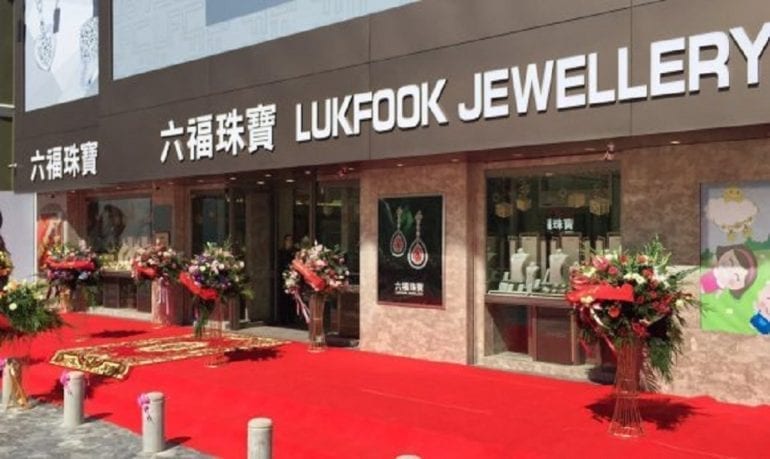
    The trade war between the US and China has been partially blamed for a 10 per cent fall in Luk Fook sales.

    In a quarterly sales update, the Hong Kong-listed jewellery retailer said a relatively higher base in the comparable period also contributed to the decline.

    First-quarter same-store Luk Fook sales were down 10 per cent with the overall same-store sales of gold products down 19 per cent. Gem-set jewellery sales rose 4 per cent.

    In Hong Kong and Macau, sales of gold products fell by 20 per cent while gem-set jewellery sales rose 6 per cent.

    “The favourable sales performance of lower-value items resulted in a double-digit drop in the average selling price of gem-set jewellery products,” said chairman and CEO Wai Sheung Wong. “However, due to the remarkable increase in sales volume, the same-store sales of gem-set jewellery products still recorded positive growth given a high base.”

    Sales on the mainland fell 7 per cent, with gold products down by 4 per cent and gem-set jewellery down by 7 per cent. However, mainland licensed shops recorded a low single-digit same store sales growth.

    Luk Fook added a net 35 new Lukfook stores in the mainland during the quarter. As at June 30, the company operated 1861 worldwide, 1790 of those on the mainland.

  • KFC Hong Kong tests new concept store format

    KFC Hong Kong tests new concept store format

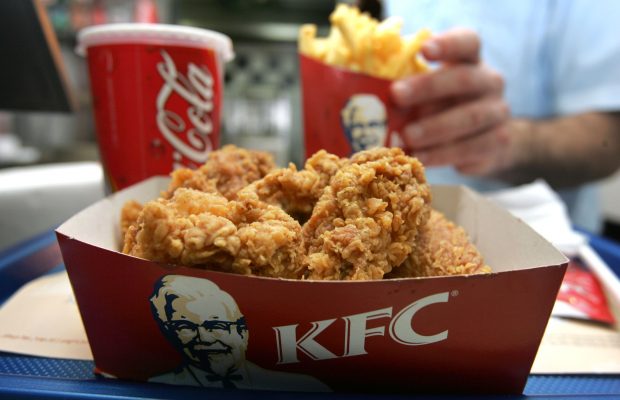
    Fast-food chain KFC Hong Kong has opened a new concept store format in Causeway Bay.

    The new three-storey store, which seats 150, aims to enhance the traditional fast-food dining experience with a chic style. It features a street-level kiosk offering desserts and ice creams, while the first floor has self-ordering kiosks with modern bar stools.

    The second floor is a dining area where the walls are decorated with murals. Three-dimensional art installations have been installed at each stairway, allowing customers to take instagrammable photos.

    “KFC is evolving,” said KFC Hong Kong and Macau CEO Janet Yuen. “We uplift the traditional fast-food experience and maintain brand authenticity with a more relaxed and chic cafe style.

    “The concept store is to create a trendy socialising hub, enabling our customers to enjoy valuable moments with friends.”

    The outlet has also introduced freshly cooked-to-order food items as the restaurant chain aims to uplift its fast-food dining experience in a more comfortable, trendy setting.

    Local franchisee Jardine Restaurant Group operates more than 810 outlets for KFC owner Yum! Brands, with operations under Pizza Hut in Taiwan, Hong Kong, Macau, Vietnam and Myanmar together with KFC in Hong Kong, Macau, Taiwan and Vietnam.

  • Hong Kong protests may drive retail-sales slump

    Hong Kong protests may drive retail-sales slump

    The ongoing Hong Kong protests are eroding the sales of the territory’s retailers according to the HKRMA.

    “Depending on the performance of different retail categories, most member companies said the turnover in the first week of June recorded an average [decline] of double digits,” said the Hong Kong Retail Management Association in a statement we have translated from Chinese.

    “Activities are spreading across districts, and members expect business to be greatly affected,” said the HKRMA, noting that July and August mark the traditional summer-holiday sales season, but recent large-scale demonstrations, including one in a Sha Tin shopping mall last Sunday, may deter manilanders from visiting the city.

    “Large-scale parade activities have caused individual stores to suspend business. Not only are the retail companies under pressure, so is the income of store employees.”

    The HKRMA said the industry is worried that the ongoing protests will impact on Hong Kong’s reputation as a safe city, a food capital, and a great place to shop.

    “These large-scale parades have an impact on the life of the people and the business environment. If the situation persists, the association anticipates an annual decline of retail sales in the double digits.

    “The association appeals to the government to solve the problem peacefully at an early date and bring social order back on track.”

    The HKRMA called on employers and employees to maintain close communication during Hong Kong protests.

    “In the face of special circumstances, employee safety should be the most important consideration.

  • Don Quijote Hong Kong opens first store

    Don Quijote Hong Kong opens first store

    Don Quijote Hong Kong has opened its first store, in Mira Mall at Tsim Sha Tsui.

    The Japanese bargain retailer will sell a full range of discount merchandise as in Japan, as well as ready-to-eat meals and Japanese specialty products.

    Regional operator Pan Pacific International Holdings, which has three stores in Singapore and also plans to make its Thai debut in Bangkok this year, has leased a 15,000sqft space at the mall. The store is the sixth in its regional network, which also trade under the Don Don Donki brand. It has operated in Singapore since 2017, and has close to 40 stores in the US.

    The company is hoping to target Mainland Chinese tourists with its distinctively Japanese product range.

    “Don Quijote’s Tsim Sha Tsui location can attract mainland tourists who travel via the high-speed rail and mega bridge,” said senior director and head of retail services at Knight Frank Helen Mak. “Instead of shopping for luxury items, these same-day visitors usually spend money on cosmetics, health care items and food, products that are most celebrated at [Don Quijote].”

    Besides its general merchandise and fresh food offer, the Don Quijote Hong Kong store features a cafe.

  • Hong Kong Customs smash two counterfeit cosmetics rings

    Hong Kong Customs smash two counterfeit cosmetics rings

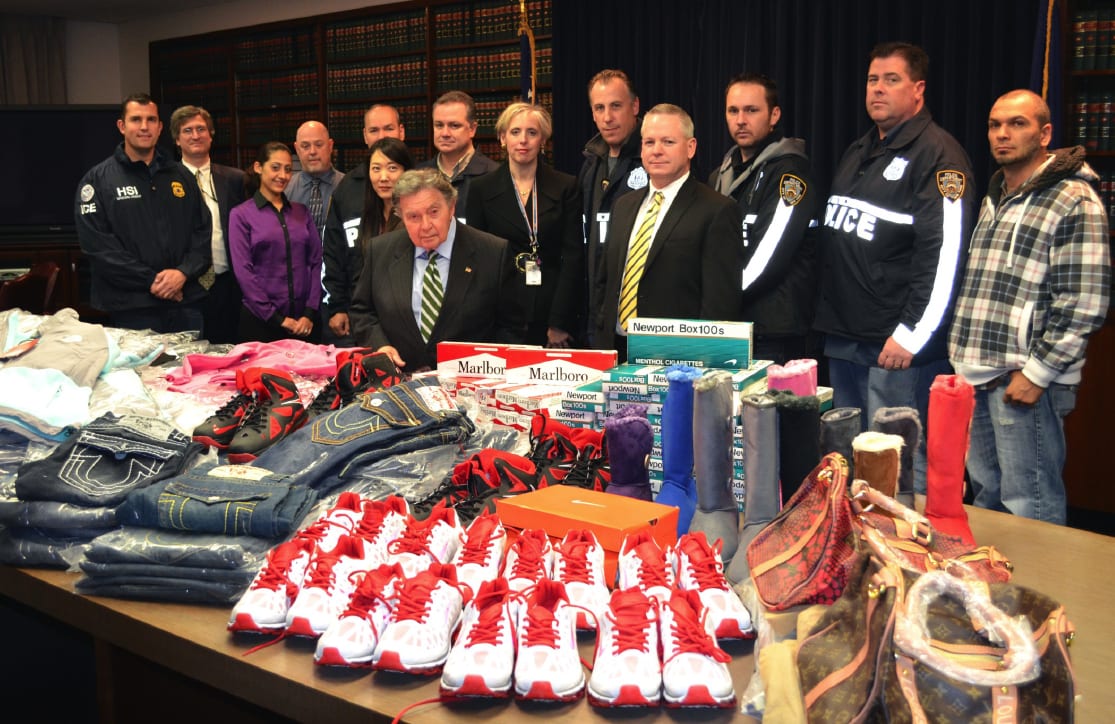
    Hong Kong Customs officers have smashed two counterfeit-cosmetics rings selling makeup and skincare products.

    In a five-day-long anti-counterfeiting operation last week, 12 people were arrested after seven retail stores and three warehouses were raided across the territory. Some 6400 items of suspected counterfeit cosmetics were seized with a market value estimated at HK$590,000.

    The raids followed routine patrols where Customs officers discovered shops selling suspected counterfeit goods.

    “After an in-depth investigation with the assistance of trademark owners, Customs officers took enforcement action in various districts during the above-mentioned period,” a Customs spokesperson said.

    Six retail shops in Causeway Bay, Yau Ma Tei and Sheung Shui were raided first resulting in the seizure of about 1400 counterfeit items. After further investigation, Customs then focused on two suppliers distributing suspected counterfeit cosmetics and skin care products. A retail shop in Sheung Shui and three storage facilities of the two suppliers located in Yuen Long and Fanling were raided. About 5000 items were seized across those locations.

    The products seized included toner, lotion, moisturising gel and sunscreen. Seven of the people arrested were men and five were women. They comprised five directors, one shop owner and six salespersons, all aged between 23 and 46.

    “Investigation is ongoing and all arrested persons have been released on bail pending further investigation,” the spokesperson said.

    Divisional Commander (IP general investigation) of Customs, Peggy Tam, said Customs has been taking stringent enforcement actions against the sale of counterfeit goods. She warned traders to be cautious and prudent in merchandising since the sale of counterfeit goods is a serious crime and offenders are liable to criminal sanctions. She also appealed to consumers to procure goods at reputable shops and to check with the trademark owners or their authorised agents if the authenticity of a product is in doubt.

    Under the Trade Descriptions Ordinance, any person who sells or possesses for sale any goods with a forged trademark commits an offence. The maximum penalty upon conviction is a fine of $500,000 and imprisonment for five years.

  • Hong Kong’s retail leasing market easing

    Hong Kong’s retail leasing market easing

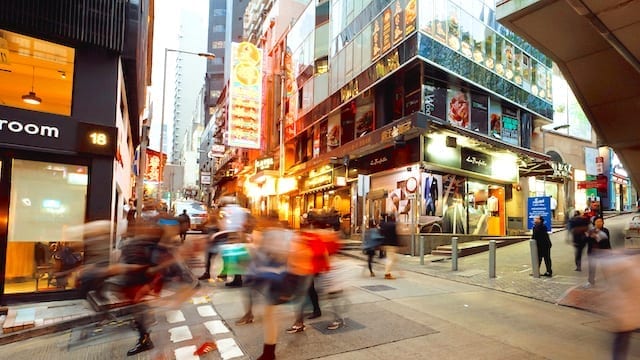
    Hong Kong’s retail leasing market is showing signs of slowing in tandem with easing retail sales.

    According to real estate advisor Savills says shopping-mall rents changed little in the second quarter, while prime streetfront retail rents fell by 1.9 per cent.

    Savills does not expect any “big headline deals” in retail rentals during the second half of this year.

    “The market lacks the momentum for active growth with unstable external factors having a powerful effect,” said Nick Bradstreet, MD and head of leasing.

    Hong Kong retail sales are down 1.8 per cent during the first five months of this year. Over a similar time frame, prime shopping street rents fell by 1.2 per cent quarter on quarter, with Central district dropping the most, by 3.8 per cent.

    In the major shopping-mall segment, base rents remained generally steady. This was helped by deals with major food-and-beverage tenancies at the newly opened OP Mall in Tsuen Wan:  Ruby Tuesday taking 5000sqft of space and Hadilao Hotpot 8000sqft at HK$400,000 per month.

    The lull in Hong Kong’s retail leasing market comes at a time shopping-centre landlords and retailers are reviewing their offer to shoppers.

    Savills says new market trends are emerging rapidly in Hong Kong and Southeast Asia: brands are turning to augmented reality (AR) to enhance the customer experience and retailers are thinking of new green initiatives with consumers responding positively.

    “Despite the slowdown in retail figures, we see that new technologies are being adapted to upgrade the customer experience, changing the retail landscape,” said Bradstreet.

    AR examples include an Ikea app which allows users to ‘place’ 3D furniture in their homes to scale, Benefit Cosmetics is encouraging customers to try on different eyebrow shapes before they shape their real ones; and MAC has launched an AR Beauty Try-On campaign.

    On the green front, the use of banana leaves for packaging vegetables and other fresh produce was initiated by Rimping Supermarket in Thailand, and then adapted by major supermarkets in Vietnam and Indonesia (including Big C, Lotte Mart and Bintang). Although still in its testing phase, the idea is being well received by shoppers and retailers have reported a boost in sales for products packaged this way.

    Simon Smith, senior director, research & consultancy at Savills, said trade tensions are hitting businesses across southern China and consumers are spending less on big ticket items as a result.

    “Landlords today seem to be more flexible when renewing existing tenants and are open to reducing rents if necessary.”

  • Hong Kong retail sales declined again in May

    Hong Kong retail sales declined again in May

    Hong Kong retail sales fell again in May, but the rate of decline was significantly less than in April.

    According to the Census and Statistics Department the value of retail sales in May, provisionally estimated at HK$40 billion (US$5.1 billion), decreased by 1.3 percent year on year, well below April’s 4.5 percent decline.

    For the first five months of this year, Hong Kong retail sales were down 1.8 per cent compared with the same period last year. After netting out the effect of price changes over the same period, sales for the five months were down 2.2 per cent.

    For the three months to May, sales fell by 0.8 per cent.

    For once, the jewelry, watches and valuable gifts category – which traditionally has the greatest effect on overall retail sales fluctuations – registered one of the lowest falls in May, down 2.7 percent.  Apparel sales fell 4.6 per cent, electrical goods by 14.8 per cent, optical shops by 11.3 per cent, furniture by 1.3 per cent and supermarket sales by 0.8 per cent.

    In contrast, sales of medicines and cosmetics rose 1 per cent, of food, drinks, alcohol and tobacco by 3.1 per cent, footwear and accessories by 1.6 per cent, Chinese medicines by 0.7 per cent and books, newspapers, stationery, and gifts by 0.1 per cent.

    A government spokesman said narrower decline of Hong Kong retail sales in May was partly due to the late timing of the Labour Day holidays in Mainland China this year, which had led to a visibly larger year-on-year rise in visitor arrivals during the month.

    “Overall, the performance of retail sales remained subdued in recent months.”

    Retailers will be waiting for the June figures, the month when the protests over the extradition bill stepped up, disrupting access to stores on Hong Kong Island at certain times and possibly dissuading overseas visitors.

    The spokesman said that in the near term, the outlook for retail sales will likely be clouded by the still-cautious consumption sentiment amid an uncertain global economic environment. “Nevertheless, the sustained expansion in inbound tourism and the largely stable local labor market should continue to provide some support.”

  • Bleak reaching for Hong Kong luxury goods market

    Bleak reaching for Hong Kong luxury goods market

    Analysts are warning of challenging times ahead for the Hong Kong luxury goods market.

    In a research note, Kathryn Parker and Flavio Cereda, equity analysts at Jefferies, say sentiment within Hong Kong has almost unanimously worsened since March due to the lingering effects of the trade war reducing high-quality tourism traffic into the territory, the rebalancing of prices after Mainland China’s VAT cut, ongoing Hong Kong protests and closer monitoring of the daigou by the central government.

    “We are concerned that there is an elevated reliance on mainland Chinese consumers within luxury stores in Hong Kong,” the pair said.

    Luxury-goods stores in Hong Kong commonly receive as much as 60 percent of their sales from mainland visitors – yet more and more mainlanders are choosing to shop at home where tax cuts have seen prices ease.

    “We were concerned to see further investment such as the opening of the new K11 Musea mall [in Kowloon], rather than a contraction of the retail footprint,” the analysts said.

    “Discussions with mainland Chinese consumers, particularly those in Shanghai, showed continued optimism in terms of both sales data and wider sentiment, which is despite the record-breaking first half.

    “An abundance of new malls within Hong Kong, Shanghai and Beijing means rents are not going up, but it is imperative that brands keep their store footprints dynamic and have a presence in the lux malls with the most traffic,” said Parker and Cereda.

    “All malls are increasing the proportion of food and beverage and experiences, such as cinemas and wellness, to drive footfall so there is relatively less space for retail.”

    While the Hong Kong luxury goods market suffered a downturn in the second half of last year, official retail sales figures for the first five months of this year show a modest 1.8 per cent decline against a higher base last year. But the latest figures are from May, prior to the acceleration of street protests in June and reflecting the later timing of the Mainland China Labour Day holiday period.

  • Hong Kong airport Retail revamp Finalised

    Hong Kong airport Retail revamp Finalised

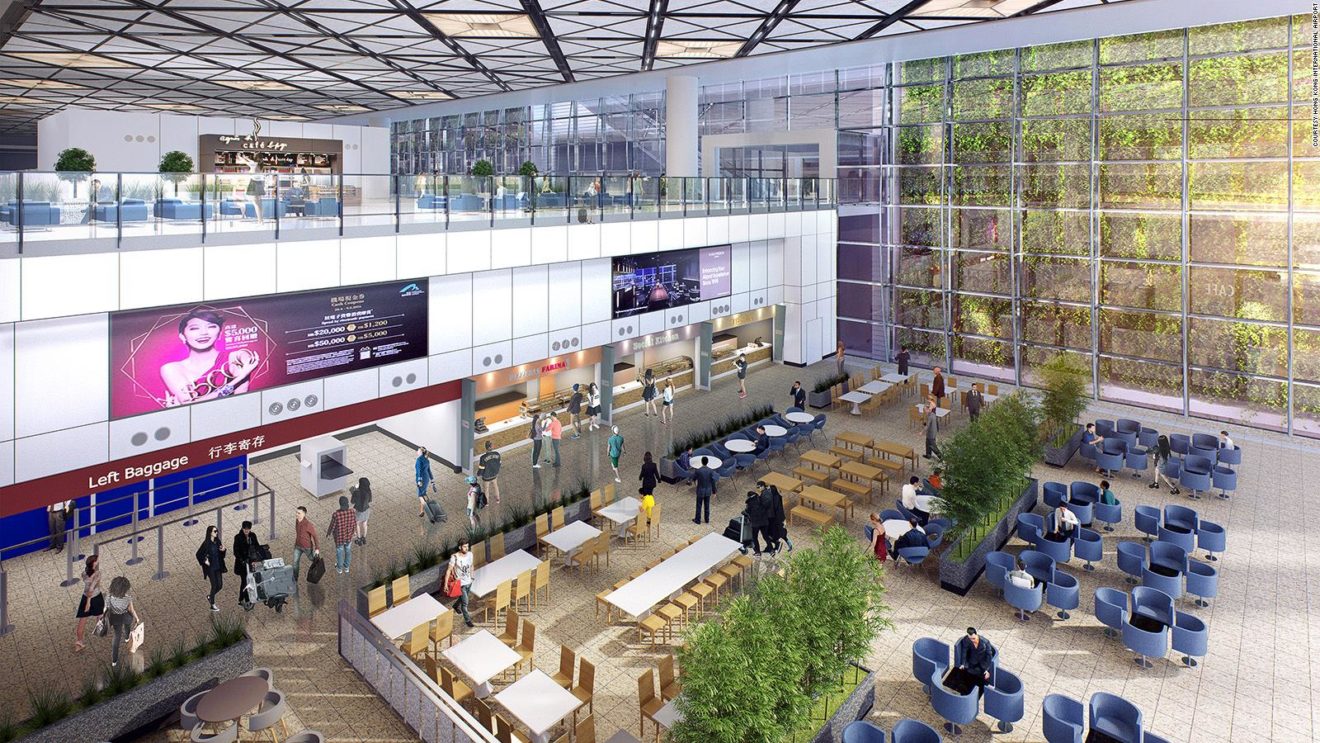
    A major Hong Kong airport revamp is planned spanning passenger facilities and retail spaces.

    Architectural firm Lead8 has been appointed lead designer for the planned Hong Kong International Airport (HKIA) Terminal 1 renovation.

    Working with Airport Authority Hong Kong, Lead8 will spearhead a collaboration of international consultants to deliver a “transformative upgrade” to the passenger halls of the 21-year-old aviation hub.

    The Boarding Gate Transformation project is expected to be completed in 2021. Lead8’s design scope includes a total overhaul and upgrade of the 49 boarding gates and adjacent areas of the Level 6 departure concourses.

    The renovation work will include upgraded technologies at all boarding gates, along with new and refreshed beam seating across all departure waiting areas. Retail and service cabins will be upgraded with more convenience for passenger access, all aimed at delivering “a more fluid experience for travelers”.

    “The refreshed look of the terminal will bring an inviting ambiance that combines new technological features to convey convenience and comfort to the terminal’s local and international travelers when transiting to and from Hong Kong,” said Lead8’s co-founder & executive director Chris Lohan.

    Contemporary seating designs with upgraded charging facilities will provide passengers with convenient and comfortable waiting experiences. The retail and service cabin facilities will also be upgraded to offer a rejuvenating environment for waiting passengers.

    Lead8 have also curated a number of entirely new experiential zones that will provide places of entertainment, relaxation, on-the-go work and general down-time spaces for passengers awaiting flights.

    “The combined enhancements of the transformed facilities at Hong Kong International Airport’s signature Terminal 1 building will further solidify our city’s status as a key international and regional aviation hub,” added Lohan.

  • HSBC Private Banking Boosts Philippines Coverage

    HSBC Private Banking Boosts Philippines Coverage

    HSBC Private Banking continues its hiring drive in Asia with the addition of three relationship managers focusing on the Philippines high-net-worth segment, both in on and offshore locations.

    In its onshore private bank in Manilla, HSBC has hired Valerie See-Tang and Janice Marie Laurel as relationship managers. See-Tang was previously a branch head of HSBC’s Quezon City branch and Laurel was a premier team leader of HSBC’s Ortigas branch.

    In its offshore center in Hong Kong, the bank is adding Carmen Wong, most recently with J.P. Morgan in the same role and market. Previously, Wong held other roles with Deutsche Bank and Citi.

    The Philippines market teams in Manila and Hong Kong report to Bala Balagopalan, market head for Philippines and Japan, North Asia, HSBC Private Banking.

    We are delighted to welcome new talent to our team to serve the increasing wealth needs of our Philippines’ clients, said Kevin Herbert, co-head for North Asia, HSBC Private Banking.

    Not only do we have one of the largest private banking teams supporting the Philippines market, we believe our strong business heritage, global network, and experience working with families across generations, all give us a competitive edge.

    According to the bank, the increased Philippines coverage occurs amid continued market uncertainty and increasingly sophisticated needs. This has sparked a range of demand that the bank is confident it can fill.

    We’re seeing more demand for alternatives, particularly in private equity and private credit, as well for managed solutions,» Herbert continued.

    In addition, a number of successful family businesses are on the cusp of inter-generational wealth and business transfer. So our knowledge and experience of legacy planning and family governance, are key elements of our offering that Philippines clients value.

  • HSBC Private Banking Raises Over $500M in Asia for PE

    HSBC Private Banking Raises Over $500M in Asia for PE

    In half a year, HSBC Private Banking has already raised over $500 million from Asia clients into private market investments including its Vision Private Equity 2019 fund.

    In addition to various other private equity and debt funds, Vision Private Equity 2019 (Vision 2019), the first of a new program, raised $250 million globally, of which more than half was sourced from clients in the region.

    Vision 2019’s portfolio includes a blend of primary investments and «selectively sourced secondary investment and co-investments» designed in joint partnership with HSBC Alternative Investments Limited (HAIL), a unit of HSBC Global Asset Management.

    The increased client adoption of alternatives within their strategic asset allocation is a response to volatile market conditions and the late cycle investment stage, according to Edward Moon, HSBC Private Banking’s regional head of alternative investments, Asia.

    In addition to Vision 2019, the bank has also successfully received in Asia $142 million of investor commitment for a Baring Private Equity Asia VII fund and $230 million placement for a Blackstone PREP IX (PE real estate fund).

    In recent years, the overall number of publicly listed companies on US stock exchanges has been declining, or conversely, more companies are choosing to stay private and for longer periods than ever before, Moon said.

    Against this general backdrop, clients with the appropriate risk profiles and who have a long-term investment horizon are increasingly looking to investment opportunities within private markets (both equity and debt) as a way to diversify their portfolios,» he added

  • Pirata Group to launch new Japanese concept Honjo

    Pirata Group to launch new Japanese concept Honjo

    Hong Kong dining concepts business Pirata Group is opening Honjo, a modern Japanese restaurant, in Sheung Wan district late next month.

    As Pirata’s second Japanese concept, Honjo will be a 120-seat venue independent from its cosy street-inspired neighbour, TMK, set to launch a few days prior. Realised by interior designer Ben McCarthy of Charlie & Rose, Honjo is designed to remind diners of a modern restaurant set in the 1950s with a retro futuristic vibe, vibrant colours and intricate details from stained glass windows to hanging light fixtures.

    “The interior of Honjo will be demurely and appropriately extravagant, a dream eclectic and quirky home complete with an expansive collection of New and Old World wines,” read press material put out by the firm. “It will be the imaginary backdrop of a typical Japanese person’s dream world, a communal aspiration shared by many. A short reprieve from reality, one enters a fantastical world where he or she lives lavishly in a home resembling a British manor from the 1950’s. Finding joy in traveling the world and being influenced by each vibrant culture visited, the dreamer will craft Honjo’s interior, philosophy and cuisine based on his or her fantasies.”

    The restaurant celebrates the ability of Japanese cuisine to absorb inspiration and concepts from other countries, with a menu that will pay homage to a combination of Japanese people’s passion for exploring new flavours as well as their Japanese origin.

    Pirata Group’s existing restaurants include The Optimist, Pici, Tokyo Lima, Meats, Chifa, Madame Ching, Chaiwala, The Loft and Hugger Mugger.

  • Black forecast for Hong Kong retail sales

    Black forecast for Hong Kong retail sales

    Hong Kong retail sales will shrink by 5 per cent this year according to projections by PWC.

    Citing uncertainty clouding consumer markets across Mainland China and Hong Kong, PWC also says macroeconomic uncertainty has prompted Chinese retailers to refocus on customer experience.

    “Hong Kong retail sales is estimated to fall by 5 per cent to approximately HK$460 billion this year, as the ongoing Sino-US trade dispute, equity market turbulence and volatility of Renminbi continue to cast a long shadow on consumers sentiment and actual spending”, says Michael Cheng, PWC’s Asia Pacific and Hong Kong/China consumer markets leader.

    PWC had earlier forecast a 3-per-cent decline in Hong Kong retail sales and says its downgrade reflects a weaker outlook for the second half of the year, due to a combination of factors including external headwinds, economic instability, as well as the projected decrease in tourist arrivals and spending.

    The projections are included in the consultancy’s report Back to the Core: Reinvigorate Experience-driven Retail at a Time of Uncertainty.

    Government data shows Hong Kong retail sales for the first four months of this year fell by 2 per cent, with electrical and luxury goods among the sectors suffering the biggest decline, against the backdrop of a weak Renminbi and waning consumer confidence. On the back of the completion of major infrastructures such as the Hong Kong–Zhuhai–Macau Bridge and the Guangzhou–Shenzhen–Hong Kong Express Rail Link, mainland tourist arrivals grew steadily in the last quarter of last year, reaching a record high in January, aided by the Chinese New Year holiday-shopping season. However, mainland tourist arrivals started to drop from the peak three months in a row since February.

    “Local retail sales and mainland tourist arrivals are expected to continue on a downward trend through the rest of this year, indicating a slowing consumer market in Hong Kong,” says Cheng.

    “Electrical and luxury goods are set to shrink further, while consumer goods like health-and-beauty products will hold well with a modest growth. The recent political and social unrest, temporary closure of the Peak Tram due to renovations, coupled with a lack of new tourist attractions might lower mainland tourists’ appetite to visit Hong Kong in the short term. Meanwhile, a weakening economy as well as uncertainty surrounding the trade dispute present risks to the outlook in the medium to longer run,” he says.

    Adapt or suffer

    Cheng says this year’s tough Hong Kong retail climate underlines the importance for retailers to adapt to changing consumer preferences and spending patterns in order to maintain competitiveness and profitability.

    “As shoppers nowadays have put a bigger focus on consumer experience, more and more retailers are moving to create a more engaging and experience-driven shopping journey with innovative and unconventional retail strategies such as ‘retailtainment’ and ‘coopetition’. Moreover, brands are increasingly tapping the power of emerging technologies like AR and VR to appeal to a new generation of tech-savvy shoppers who value personalised experience.”

    The report, which builds on the survey findings of PWC’s Global Consumer Insights Survey 2019, also points to an increasing emphasis on customer experience among retailers in China, who are refocusing on business fundamentals such as profitability and cost management in the light of growing economic headwinds.

    He says this year continues to be challenging for mainland Chinese retailers amid uncertain outcome of trade negotiations with the US and a slowdown in the economy. Mainland retail sales growth fell to a 15-year low at 9 per cent last year, signalling sluggish demand among Chinese consumers. As part of its wider efforts to transition towards a consumption-driven economy, the Chinese government has rolled out a range of stimulus policies including tax cuts, reduction in social insurance costs and incentives for high-tech consumption, with a view to building a more resilient domestic economy to mitigate external risks.

    “In the face of a slowing economy and consumer market, retailers are going back to basics by pursuing a more defensive strategy, characterised by profitability focus, consumer-centricity and operational excellence,” says Phil Lai, PWC China consulting partner. “The story of New Retail continues, as retailers strengthen digitisation along the retail value chain through smart supply chain management enabled by technology and big data, with a laser focus on experience.”

    Thanks to extensive mobile connectivity and established technology infrastructure, digital-savvy Chinese consumers tend to accept and embrace emerging technologies to a greater extent than their global counterparts. Sixty-eight per cent of Chinese consumers surveyed purchase products online at least once a week.

    Technology enablement consequently fuels the hunt for new experiences that integrate digital into the offline environment. Close to 40 per cent of Chinese respondents said their in-store experience would be enhanced by the use of technology including IoT scanners, tablet and mobile checkout, and self-service kiosks.

    As Chinese shoppers seek to redefine their experience with a frictionless purchase journey and a blend of both physical and digital interactions, retailers are thinking beyond the traditional return on investment (ROI) metrics to adopt a consumer-centred return on experience (ROX) strategy.

    “Specifically, retailers need to map out their consumers’ purchase journey, isolate key customer touch points and factors that drive experiential moments, and invest more in aspects which directly impact those interactions and yield measurable results,” said the report.

    Lai concludes: “From end-to-end digitisation to the rise of experience-based business models, the New Retail evolution in China has come a long way. To thrive in the world’s largest consumer market, we see retailers and brands becoming more digitally-agile and data-driven, using new technologies to fuse customer experience across the entire value chain, while monetising discrete moments and building communities with a purpose to ensure long term profitability and sustainability.”