Tag: Hong Kong

  • Gome Retail Holdings satisfying result

    Gome Retail Holdings satisfying result

    Both online and offline business showed strong growth for electrical appliance retailer Gome Retail Holdings during the nine months to the end of September.

    Total gross merchandise volume (GMV) of the group for both online and offline grew by 20.04 per cent, while GMV of online e-commerce business grew by 58.13 per cent.

    Sales revenue was about RMB57.4 billion (US$8.6 billion), up 3.68 per cent on the same period last year.

    Consolidated gross profit margin was about 17.05 per cent, up 1.03 points, while profit attributable to the owners of the parent was about RMB220.1 million, a decrease of 10.71 per cent.

  • “Hong Kong International Boat Show 2017”  Top World Models on display

    “Hong Kong International Boat Show 2017” Top World Models on display

    The three-day Hong Kong International Boat Show 2017’, organized by Club Marina Cove, run until December 3. Now in its 23rd year, the Show is the most established platform in Southeast Asia for the international boating industry. Visitors are admitted free to explore a prize collection of designer exhibits from France, Italy, USA, Britain, Greece, Germany, Poland and Taiwan. A wide array of watersports equipment and accessories will also be displayed at the hardstand booths.

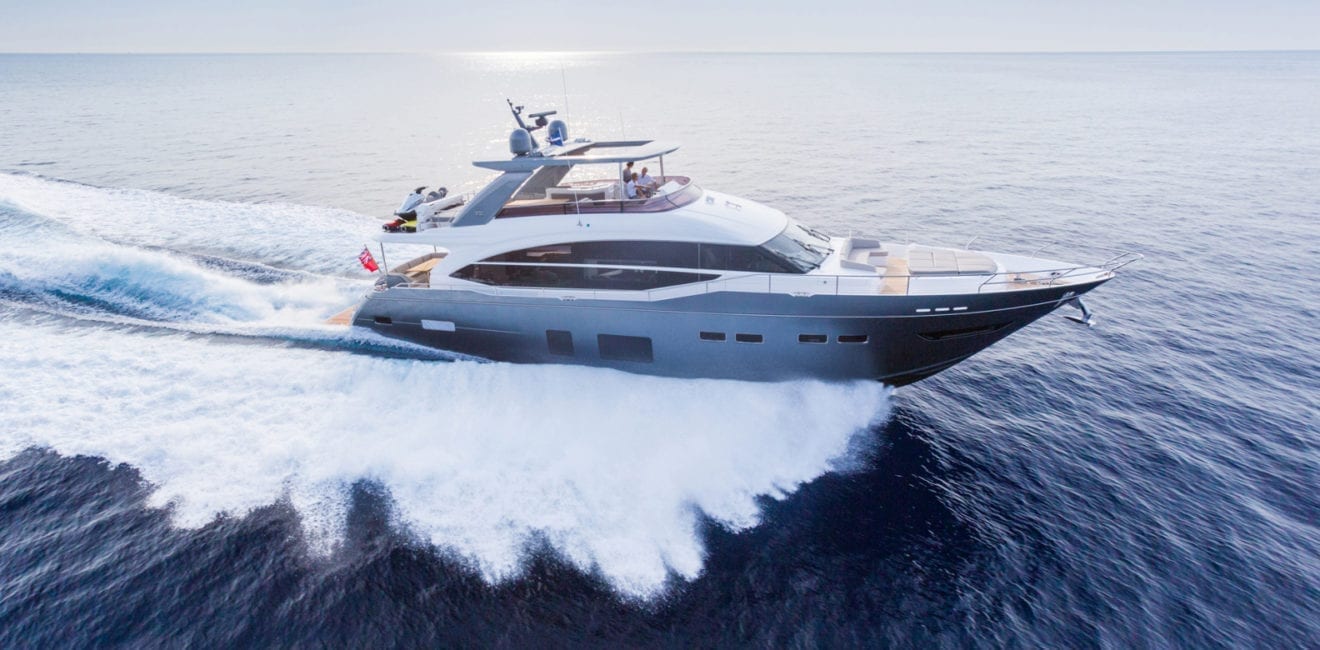
    This year’s Show will feature a spectacular display of yachts and boats, in which many of them will be presented for their first time in Hong Kong. A massive showing of award-winning boat models will also join the Show’s array of ships this year. One of the star exhibits is the 105ft Monte Carlo Yachts 105 from Italy, which is designed by Carlo Nuvolari and Dan Lenard and priced over HK$100 million.

    Ms. Winnie Ng, General Manager of Club Marina Cove, said “With the rapid expansion of the yacht industry in the Asia-Pacific region, boating and watersports enthusiasts are on the rise. As the Hong Kong market is relatively mature, industry practitioners are looking to expand into China, with the aim of promoting the long-term development of the industry in Asia. We also believe the Show will help promote an understanding of the global yacht industry, thereby encouraging youths to pursue their careers in the fast-growing pleasure craft sector.”

    Star exhibits include:-

    Yachts

    • Monte Carlo Yachts 105 (105ft) from Italy (HK$106,000,000), which is the work of Carlo Nuvolari and Dan Lenard

    https://drive.google.com/drive/folders/1FqBjIe05Y7cbvap3X0MzP1nx2uk0P58y?usp=sharing

    • Galeon 500 Fly (53ft) from Poland (HK$7,360,000), which was named the European Powerboat of the Year 2016 and recipient of several other accolades including the IBI Boat Builders Award

    https://drive.google.com/drive/folders/1zpBrZX4mhRwAns7FkmtOp_AluHdeZtwP?usp=sharing

    • Azimut Grande 27 Metri (88ft) from Italy (HK$50,500,000), which was the winner of the “Most Achieved Yacht Trophy” in the 80’-125’ category at the World Yacht Trophies 2017

    https://drive.google.com/drive/folders/1NWl9efTW4eyBLBVE0JIUW2UEKI4m4rvi?usp=sharing

    • Beneteau Swift Trawler 44 from France, a speedy trawler which is presented for its first time in Asia

    https://drive.google.com/drive/folders/19LUsw-zqEqexPIhWF-RLAuq7iJaqsNRa?usp=sharing

    • Princess 75 Motor Yacht (80ft) from UK, which won an Asia Boating Award (Best Production Motor Yacht (15m to 24m) in 2016 and Motor Boat & Yachting Award in 2017

    https://drive.google.com/drive/folders/1-R58kz_9oao_Pt4_ctWQc2JwyRDFw2YB?usp=sharing

    • Riva 100’ Corsaro (98ft) from Italy, which has many features that immediately remain impressed in one’s mind

    https://drive.google.com/drive/folders/1tfVxNRZCVRdxtJSumwYNkiBKhUK3tHuu?usp=sharing

    • Monte Carlo 6 from France, which is designed by Nuvolari Lenard and was awarded Motor Boat Award 2016 for its Monte Carlo DNA

    https://drive.google.com/drive/folders/1fLREF8HOSqzwKwYOQ5cppBZHpKwP2Qa_?usp=sharing

    • Ferretti Yachts 850 from Italy, triumphed in the category “Best Flybridge Yacht (above 80 feet)” at the Asia Pacific Boating Awards 2017

    https://drive.google.com/drive/folders/14Jn6EUfpKuoTm1x6WLtx-MiAF226aOc-?usp=sharing


    Sailboats

    • Fountaine Pajot Saba 50 catamaran sailboat from France (HK$7,450,000)

    https://drive.google.com/drive/folders/10vlSal10Ku698Yg7yqWtC3QJ2_p5lLHe?usp=sharing

    • Beneteau Sense 51 from France, which is designed to sail close to the water, while offering excellent

    comfort and safety while underway

    https://drive.google.com/drive/folders/1cStNt7RZT3dRqDuNIb1jDNqOZ22M9_9T?usp=sharing

    • Lagoon 560 (56ft) from France, which calls upon its French builder’s long expertise

    https://drive.google.com/drive/folders/1lxM3cod1dSnNHzbBGNt1Ur1Zt-nReZCu?usp=sharing


  • Kerry Logistics Garners Two Wins at Directors of the Year Awards 2017

    Kerry Logistics Garners Two Wins at Directors of the Year Awards 2017

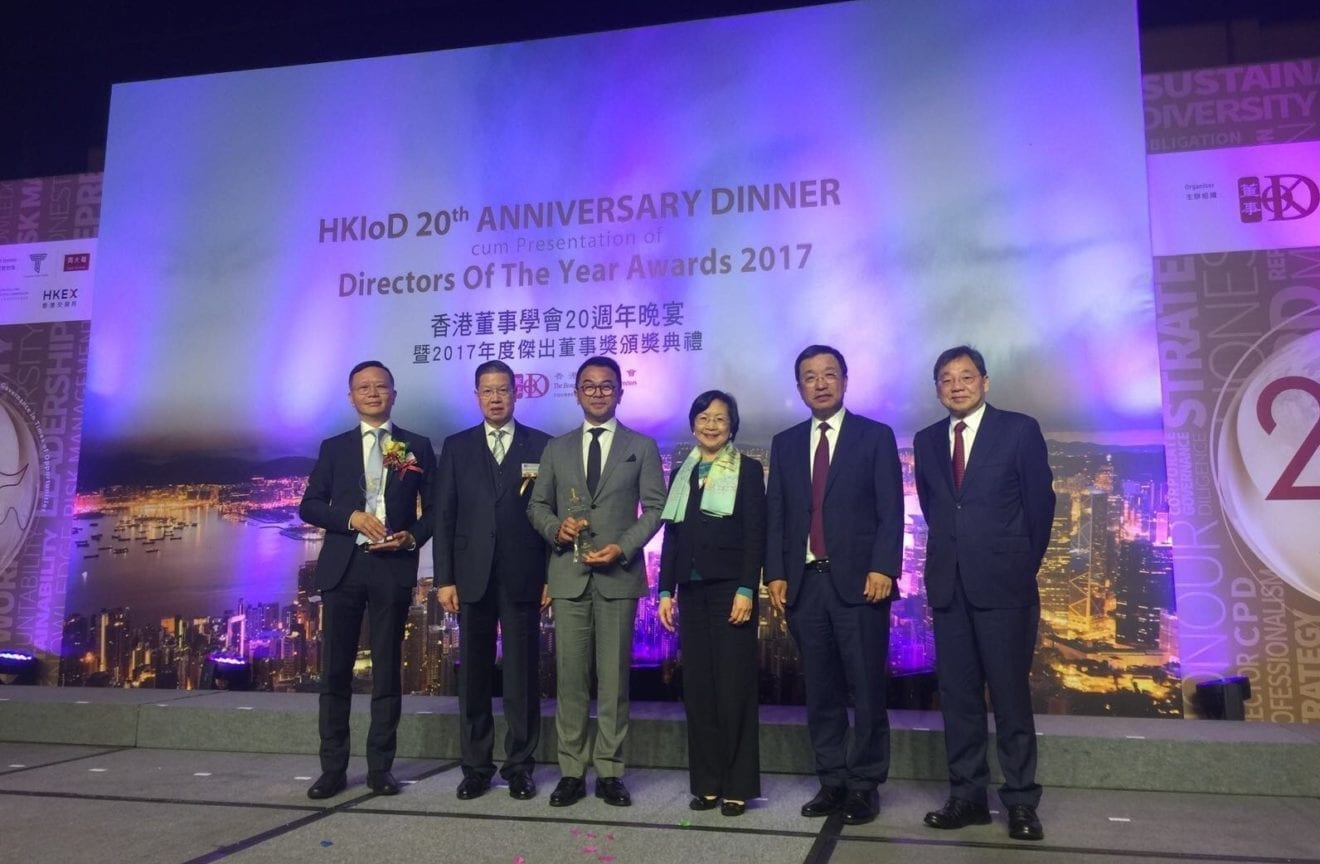
    Kerry Logistics Network Limited (‘Kerry Logistics’; Stock Code 0636.HK) is pleased to announce that the Group has garnered two wins at the Directors of the Year Awards 2017 (the ‘Awards’) organised by The Hong Kong Institute of Directors (‘HKIoD’). The Board of Directors and Group Managing Director William Ma were selected as the winner in the Boards category and the Executive Directors category of the Listed Companies (SEHK – Hang Seng Indexes Constituents), respectively. The Awards presentation ceremony was held on 30 November 2017 at the Hong Kong Convention and Exhibition Centre, with Chief Executive of HKSAR Mrs Carrie Lam Cheng Yuet-ngor as the guest of honour.


    Organised annually by the HKIoD and co-organised by the Financial Services and the Treasury Bureau of HKSAR Government, Securities and Futures Commission, and Hong Kong Exchanges and Clearing Limited, the Awards aim to recognise outstanding boards and directors, and to promote good corporate governance and director professionalism. The Awards this year have set as its theme ‘Belt and Road: Corporate Governance in Times of Opportunities’, which highlights the importance of good director practices for companies to cope with the new opportunities and challenges derived from the Belt and Road initiative.


    The Board Award recognised the collective exemplary performance of the board of directors. The HKIoD judges commented that the Board of Kerry Logistics has been guiding the company to operate with integrity, transparency, and accountability. Its establishment and maintenance of risk management, internal control, and whistleblowing policies and systems were also commended.


    The Executive Director Award was conferred in appreciation of the effectiveness, contribution, leadership, and business ethics of the individual winner. William Ma attached great importance to those by applying his deep knowledge about the industry to set up strategy and manage risk from enterprise-wide perspective, the HKIoD judges remarked. His adherence to transparency when communicating with the Board and management team was likewise praised.


    “We are deeply honoured to receive the two prestigious awards from the HKIoD,” said William Ma. “These awards acknowledge the dedicated efforts of the Board and staff. The team has toiled over many years in places of different languages, cultures, religious beliefs, and political systems. Our journey has challenged us to move out of our comfort zones, and in the process, strengthened our core belief: quality governance is twinned with operational excellence, ensuring sustainable value to customers and shareholders.”


    “We are grateful to the awards committee for this encouragement. We remain committed in upholding our best practices in corporate governance. This will continue to drive Kerry Logistics’ vision to become Asia’s leading logistics service provider, enabling us to maintain our competitive advantage to capture opportunities in different markets globally and along the new Silk Road, as well as to create long-term value to our shareholders and stakeholders,” William Ma added.

  • Tourism kicks up Hong Kong retail sales

    Tourism kicks up Hong Kong retail sales

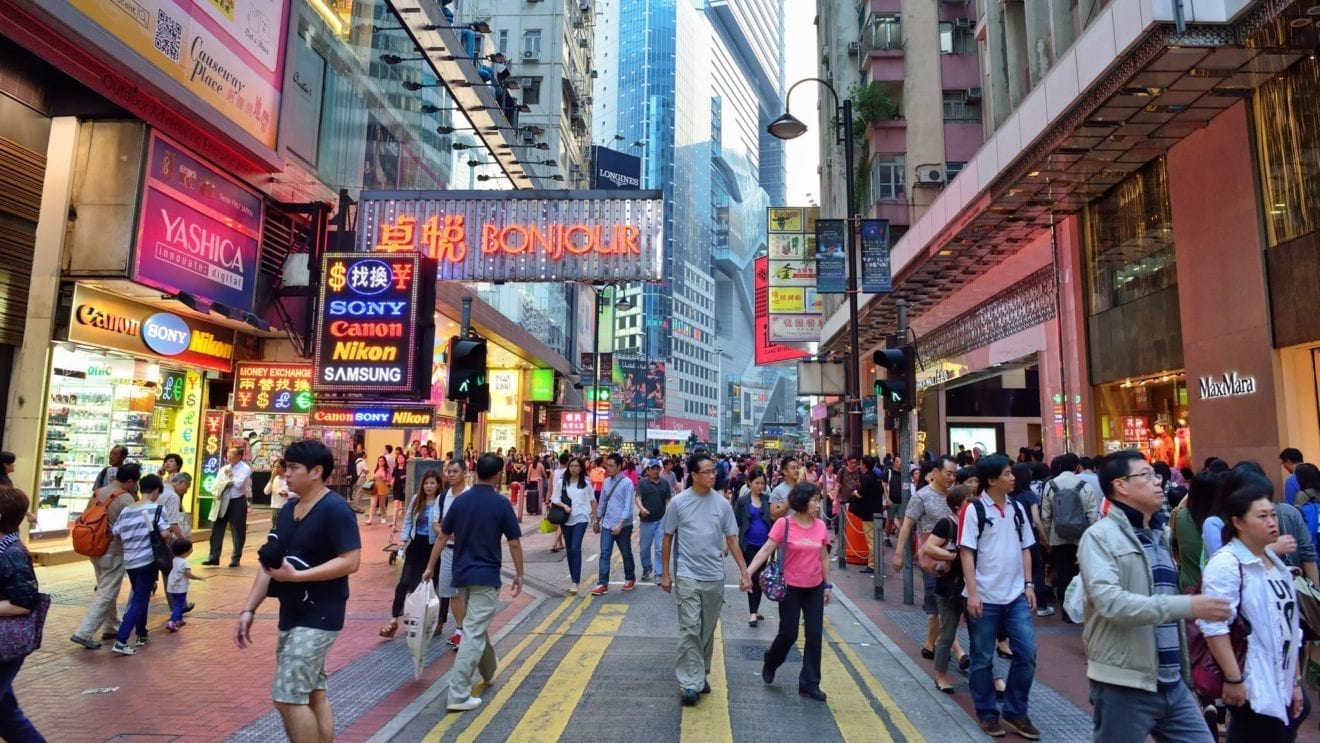
    Continuing revival of inbound tourism and optimistic consumer sentiment drove a 3.9 per cent increase in Hong Kong retail sales in October.

    And two consecutive months of solid increases has lifted the year-to-date increase to 1.2 per cent.

    Official Census and Statistics Department figures estimate the total value of retail sales in October at $37.5 billion. The month’s rise followed a revised 5.7 per cent figure for September.

    C&SD said that after netting out the effect of price changes over the same period, the volume of retail sales in October increased by 3.6 per cent year-on-year and by 5.7 per cent in September.

    As expected, sales of jewellery, watches and luxury gifts drove the revival, rising 8.4 per cent year-on-year. Sales of medicines and cosmetics rose 9.9 per cent, of food, alcoholic drinks and tobacco by 8.5 per cent, apparel sales by 7 per cent and department store sales by 6.2 per cent.

    Sales of electrical goods and photographic equipment fell 2.2 per cent and of books, newspapers, stationery and gifts by 2.4 per cent.

    A government spokesman indicated that the favourable income and employment situation, together with the ongoing recovery of inbound tourism, should continue to render support to retail business in the near term.

  • Swiss watch exports rise 9% on strong Japan, China and Hong Kong

    Swiss watch exports rise 9% on strong Japan, China and Hong Kong

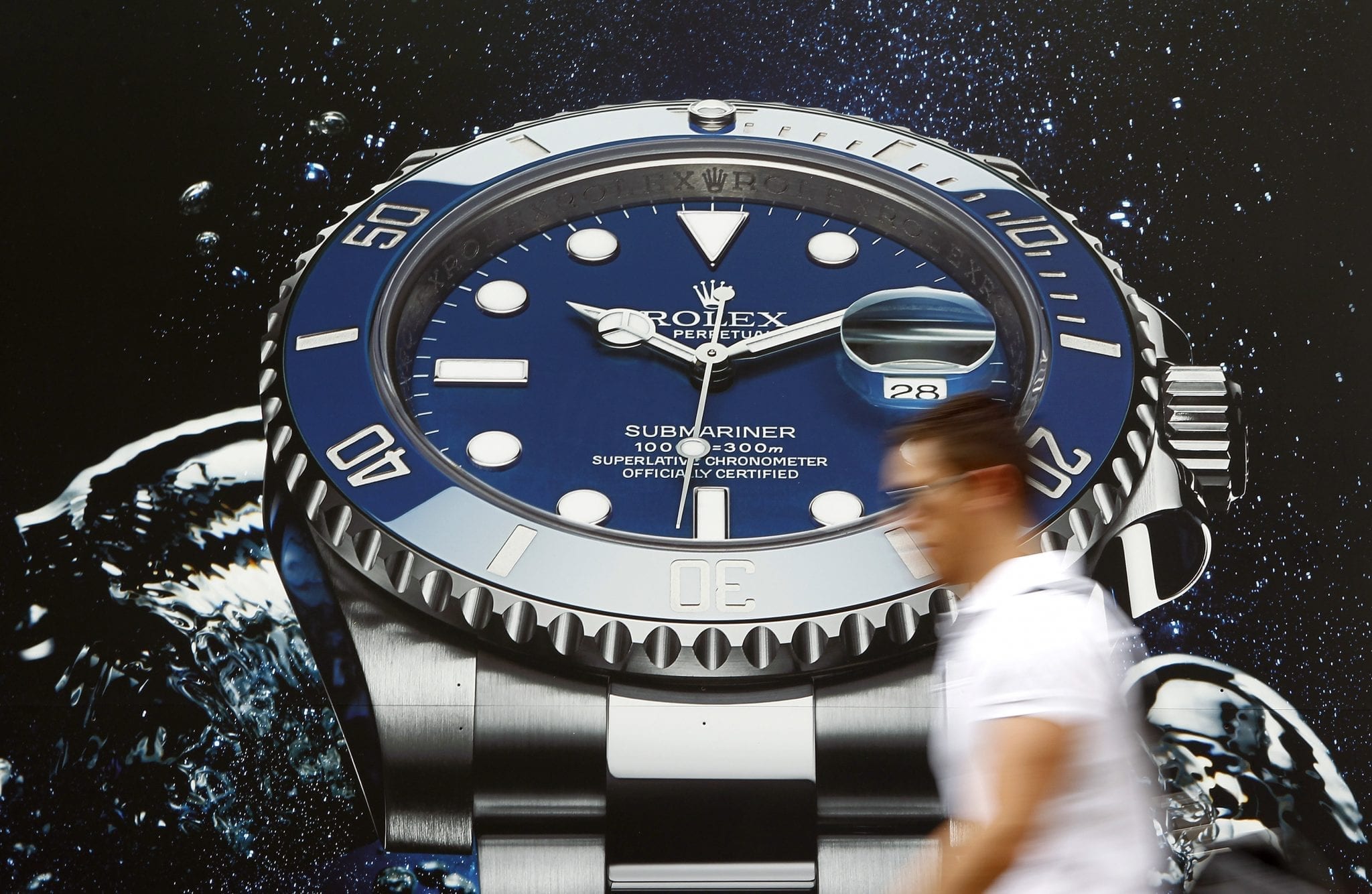
    Swiss watch exports jumped 9.3 percent in October 2017, on strong sales in Hong Kong and China, despite a lag in U.S. imports, according to the Federation of Swiss Watches.

    For the month-period, sales of Swiss watches totalled 1.85 billion Swiss francs, or $1.86 billion. The federation said that the monthly result confirms a solid improvement in the watch industry, with consolidated growth for the past ten months sitting at 2.4 percent.

    In September 2017, sales rose 3.7 percent and 4.2 percent in August.

    In October 2017, Japan recorded the fastest growth, where exports leapt 21.7 percent. Exports to China were up 18.2 percent, while Hong Kong, which is also the industry’s largest market, rose 15.8 percent.

    Outside Asia, the U.S. market remained dire, down 7.3 percent. Growth in Europe was a placid 5.9 percent, hurt by a 0.7 percent decline in Italy. Big player Britain inched forward 1.2 percent, showing signs of a slow down in October, said the federation.

    By watch category, exports of watches worth between 500 Swiss francs and 3,000 Swiss francs grew the fastest, up 20.3 percent in value terms, while watches priced between 200 Swiss francs and 500 Swiss francs rose 10.4 percent.

    The most expensive range, above 3,000 Swiss francs, rose 6.3 percent. Meanwhile, timepieces priced at below 200 Swiss francs dropped 3.4 percent, said the federation.

    Looking forward, the federation noted a “declining medium-term trend” in Japan.

    Analysts also fear that the ongoing weakness in exports of cheaper watches could prompt the resurgence of smartwatch domination over the longer term.

  • Foreign Investment Hotspots In Asia Pacific

    Foreign Investment Hotspots In Asia Pacific

    Cross-border real estate investment in the Asia Pacific region could achieve a record high this year as foreign investors shore up interest and seek assets in greener pastures beyond borders.

    As it stands, year-to-date intra-regional cross-border transaction volumes have already exceeded the previous 10-year record high in 2015 (1Q15-3Q15) by 30 per cent, and is currently a 21.8 per cent step up from its 10-year average (2007-2016).

    Singapore the main source of intra-regional capital

    Chinese would be the largest group of foreign investors if inter-regional flows were part of the picture. But in the context of intra-regional capital flows (which only considers deployment within Asia Pacific), Singapore continues to dominate with year-to-date foreign investments currently standing at US$5.6 billion.

    China (US$2.1 billion) and Hong Kong (US$2.9 billion) were ranked second and third respectively given a significant portion of capital are recycled between the two closely-integrated countries.

    These three countries make up 85 per cent of total source of foreign capital within the region.

    Much of the capital from these countries is allocated to office assets. From the standpoint of Singapore investors, most are seeking to plough capital in gateway cities such as Melbourne and Sydney, which offer steady and attractive income streams.

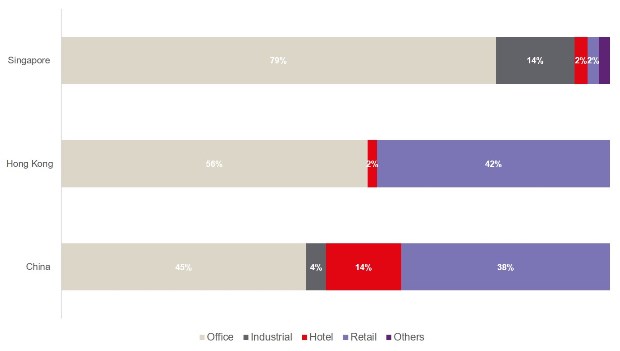
    79 per cent of Singapore capital has been allocated into outbound office assets, with 11 out of 18 of the office assets acquired based in Australia.  One such cross-border deal is the acquisition of 206 million Telstra Plaza building by Singapore’s ARA Asset Management and co-investment vehicle Straits Real Estate.

    While 45 per cent of China capital is allocated to office assets, most are flowing into Hong Kong strata-titled opportunistic assets, with a focus on capital growth.

    Figure 1: Allocation of intra-regional cross border capital outflow by asset classSource: JLL

    Australia and China most popular for foreign investors

    Australia and China draw the most foreign investments given assets in those markets generally offer more attractive yields. But relative to domestic purchasers, (Figure 3) India stands out with 65 per cent of its total transactions coming from foreign investors (all of which were Singapore based institutional funds investors).

    One notable example was Singapore sovereign wealth fund GIC’s US$1.4 billion joint venture with DLF Cyber City Developers, which also happened to be the largest cross border deal year-to-date.

    These investors are looking to ride the investment wave via debt deals and joint ventures with local partners, as the market continues to grow in depth and demonstrates their willingness to shift from traditional markets if the opportunity presents itself.


  • Coupang opens Korea’s largest toy store

    Coupang opens Korea’s largest toy store

    Brash English chef Gordon Ramsay is to open a chain of airport restaurants around the world in partnership with SSP, a specialist in food and beverage brands in travel locations.

    The company describes the planned Gordon Ramsay airport network – called Plane Food To Go – as a “premium grab-and-go concept”.

    “Gordon pioneered the idea of quality take-on-board meals with his Plane Food picnics eight years ago,” said Mark Angela, chief commercial officer with SSP. “He’s got lots of ideas about creating high quality, healthy food to take on the plane in easy to eat formats, and together we’re going to take that to the next level.

    “Our customers will have a unique opportunity to experience stand-out dishes, all given the Gordon Ramsay Plane Food To Go twist as the team re-create them specifically for the grab & go market.”

    Angela said the Gordon Ramsay airport concept will give customers around the globe the chance to experience “interesting and innovative dishes with a twist” from Ramsay’s extensive portfolio of recipes.

    “Plane Food To Go is a truly revolutionary concept that will roll out worldwide and build upon the massive success of the original Plane Food dining experience from London Heathrow’s Terminal 5,” added Ramsay.

    “As someone who is always in a different airport terminal every week, I know first-hand how much Plane Food To Go will enhance every on-the go travellers dining experience.”

    Ramsay is best known in Asia for his Bread Street Kitchen restaurants in Hong Kong and Singapore and his London House in Hong Kong’s Tsim Sha Tsui.

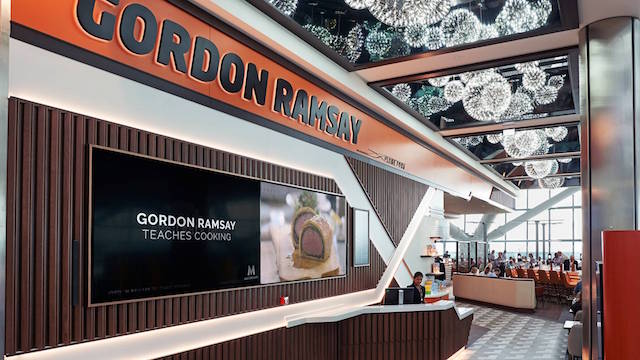
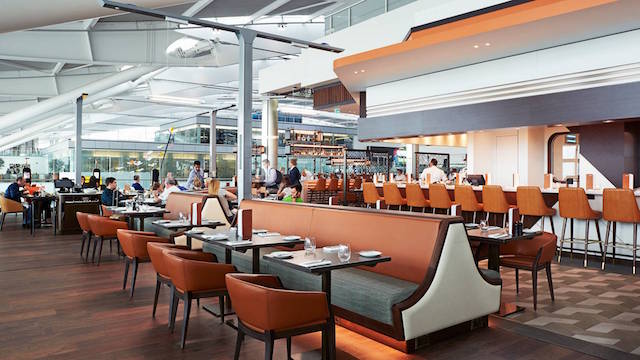
    The images are from the existing Heathrow Airport restaurant.

  • Gaw Capital, Consortium Partners To Acquire 17 Shopping Centers in Hong Kong

    Gaw Capital, Consortium Partners To Acquire 17 Shopping Centers in Hong Kong

    Hong Kong-based real estate private equity firm Gaw Capital Partners and a consortium of partners including Goldman Sachs have won a bid to acquire a retail portfolio comprising 17 shopping centers in Hong Kong from Link Asset Management Ltd for HK$23 billion (US$3 billion).

    The portfolio is comprised of a number of strategically-located properties across Kowloon and the New Territories districts that sit in the heart of densely-populated communities and in close proximity to metro stations. The gross floor area of the portfolio totals 2.2 million square feet of prime retail space and comes with over 8,000 parking spaces that are connected to transport links. The properties were priced at an average of around HK$7,922 per square feet, excluding parking.

    “We are delighted to have won the bid together with our consortium partners to acquire and manage these assets,” said Kenneth Gaw, president and managing principal of Gaw Capital, in a company announcement. “Despite the rise in e-commerce, we believe retail facilities such as these continue to be highly important foundations of community life, and we recognize their strong potential to thrive in the years ahead. We look forward to applying our deep experience in repositioning commercial property to add significant strategic value to these shopping centers.”

    The shopping center portfolio include Cheung Hang Shopping Centre, Kai Yip Commercial Centre, Kam Tai Shopping Centre, Lei Cheng Uk Shopping Centre, On Ting Commercial Complex, Shek Lei Shopping Centre I & II, Tai Wo Hau Commercial Centre, Tsz Ching Shopping Centre, Yau Oi Commercial Centre and Yung Shing Shopping Centre, Kwai Fong Plaza, Kwai Shing East Shopping Centre, Lai Kok Shopping Centre, Lee On Shopping Centre, Retail and Car Park within Shun Tin Estate, Tsing Yi Commercial Complex and Lions Rise Mall.

    Gaw Capital, with US$13 billion asset under management, has over 12 years of experience investing in commercial properties in Greater China, and has raised five commingled funds targeting the Greater China and Asia Pacific region since its inception.

    Last week, ERES APAC II – China Outlet Mall Fund, a China outlet mall investment fund backed by Gaw Capital, Allianz and German asset management firm TIAA General Account, reached the first close of US$550 million.

    This October, it entered into a framework agreement to acquire SKY SOHO, a group of Class A office buildings in Shanghai’s Linkong Economic Park district, from SOHO China through one of the funds under its management.

  • “Shine Bright” Like Cafe de Coral

    “Shine Bright” Like Cafe de Coral

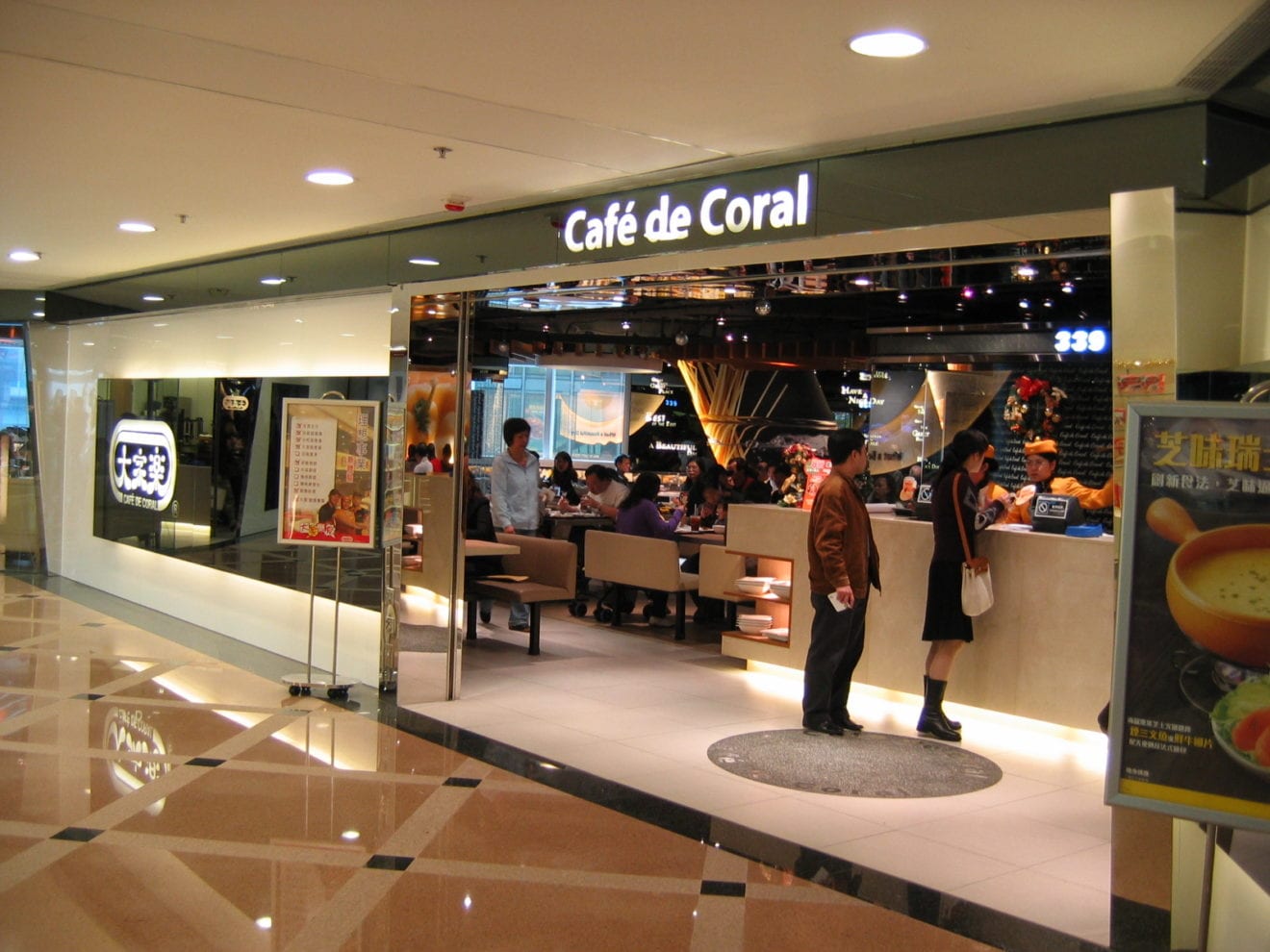
    With expansion in Hong Kong and “outstanding” growth in China, restaurant/catering group Cafe de Coral Holdings says it has had six months of key achievements.

    Its first-half revenue grew by 6.2 per cent to HK$4.1 billion (US$525 million), but profits were hit as rising staff costs exceeded the group’s pace of revenue growth. The profit attributable to shareholders, $205.7 million, was down 11.3 per cent on last year’s first half, while gross profit margin fell to 11.9 per cent from 13.3 per cent.

    This decline, in Hong Kong, was largely because of the group’s investment in people for its core quick-service restaurant (QSR) business. “This was necessary for attracting and retaining talent in a highly competitive labour market,” says Cafe de Coral, which continued its network expansion by opening more outlets than in previous years.

    However, the drop was partially offset by business growth in Mainland China. “Following our previous efforts to consolidate our branch network there, our product and promotion strategies began to pay off with strong growth in same-store sales and profit.”

    QSR and institutional catering brands continued to dominate in Hong Kong, contributing to 74.6 per cent of the group’s total revenue for the period. Revenue from this division rose 5.7 per cent to $3 billion.

    At September 30, the group’s QSR and institutional catering business had 306 units, up from 295 at the end of March.

    Positive market

    The market for fast-food service in Hong Kong was positive, with customers still price sensitive and value-driven. Cafe de Coral fast food achieved same-store sales growth of 3 per cent, and 10 branches were opened for the group to finish the period with 170 outlets.

    Its other QSR brand Super Super Congee and Noodles had 51 stores at the end of September, with two new outlets since March 31. Same-store sales growth was maintained at 1 per cent.

    Overall, the performance for institutional catering was steady, with both Asia Pacific Catering and Luncheon Star gaining new contracts. The total number of business units at the end of the review period was 85, up from 79 six months earlier.

    After brand renovations and consolidation, casual-dining revenue grew 9.2 per cent to reach $422 million, and the first half ended with 72 shops, up from 64 at the end of March. Underperforming outlets of The Spaghetti House were closed, while Oliver’s Super Sandwiches had a rebranding program. The two restaurant chains had 10 and 18 shops respectively at the end of September, compared with 12 and 19 six months earlier.

    Cafe de Coral’s homegrown brands established a stronger foothold through expansion. Three Shanghai Lao Lao outlets were added during the half-year, as well as six Mixian Sense restaurants.

    China strategy

    After a period of store consolidation, the company’s focus for the mainland was on developing a local management team and menus catering to local tastes. This strategy began to pay off with same-store sales growth of 15 per cent and “substantial profit growth” in southern China.

    During the six months, the China division saw revenue rise 7.3 per cent to $548.3 million, while the total number of restaurants was consolidated at 96, down three from March 31. O2O delivery services were also launched, which the group says have been growing faster than the in-store market.

    Late last month, the group closed its final two stores in eastern China as part of a short-term strategic adjustment while it focuses on developing the southern China market where the potential for growth is higher.

    Meanwhile, the group set up six shops at the refurbished JP Plaza in Causeway Bay to demonstrate the synergy it can achieve across all its fast-food and casual-dining brands. These were set up in one 16,000sqft (1490sqm) complex, anchored by Cafe de Coral and including Mixian Sense, Shanghai Lao Lao and The Spaghetti House.

    At the end of September, the Cafe de Coral network had 474 stores in Hong Kong and China, up from 45 six months earlier.

  • Christmas Fiesta at Landmark Hong Kong

    Christmas Fiesta at Landmark Hong Kong

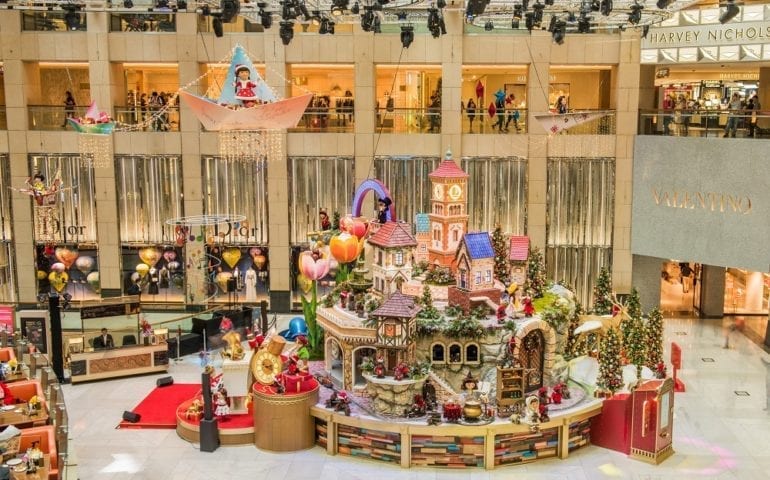
    A whimsical ideal world of the imagination begins at LANDMARK with the return of ‘Santa Paws’ and a cast of creative children and their inspired ideas to make our planet a better place this Christmas.

    In ‘Dream Square’ kids gather to share their Christmas hopes and wishes; ‘Aqua Island’ brings unlimited clean water to wherever it’s needed most; in the ‘Great Fruit Garden’ giant fruit blooms from the smallest seeds to feed the world; reindeers take flight amongst ‘Wishes in the Clouds’ bringing the message of Christmas joy to all; in the Recycle Depot, Robo, the recyclo-bot is given life from the old and unwanted; and in ‘Homegrown City’ there is a roof to spare for everyone.

    The imaginative installations of charming animated characters, in 10 amazing displays set across LANDMARK’s four buildings, showcase an idealised world of child-like wonders that celebrate the power of the imagination as the source of unlimited creativity, to imagine and build a better world.

    This year the festive magic also goes mobile and features in the “LANDMARK HONGKONG” app, which, from 24 November 2017 to 1 January 2018, enables shoppers to contribute to a better world by enjoying LANDMARK reward privileges.

    A wide variety of Christmas entertainment and shopping give rewards across LANDMARK’s iconic buildings.

    The app also reveals a special hidden scene within the ‘Harvest for the World’ display at LANDMARK ALEXANDRA.

  • A unique festive extravaganza at Pacific Place

    A unique festive extravaganza at Pacific Place

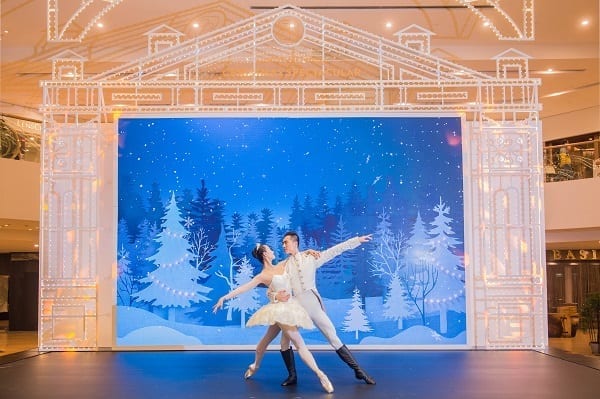
    Pacific Place has just put on an enchanting experience for the whole family. From 23 November 2017 until 1 January 2018, Pacific Place exhibits the spirit of “Christmas Spectacular” with festive surprises around every corner.

    Pacific Place becomes the season’s must-see destination, re-imagined as a bright and magical Christmas theater.

    Outstanding performances on the dramatic Garden Court stage, and a curated selection of seasonal pop-ups populate Pacific Place.

    Pacific Place is pulling out all the stops this year, hosting over 60 performances from world-class companies, including
    Asia’s foremost classical orchestra, Hong Kong Ballet, who will be performing excerpts from the quintessential Christmas ballet, ‘The Nutcracker’, the Hong Kong Philharmonic Orchestra, Opera Hong Kong, the City Chamber Orchestra of Hong Kong and the Hong Kong Bach Choir.

    The stage is set for truly magical performances from the likes of Elia Astorino as well as children’s choirs from across Hong Kong. Feast your eyes on the dreamlike scenery of the fairy-lit Christmas Theatre located in Garden Court, where the glorious sounds of Christmas music will fill your heart with joy and excitement.

    Christmas installations and programmes are only one part of the numerous initiatives that Pacific Place has planned to delight its aficionados.

    Pacific Place is aware of the changes in the retail industry and together with its tenants is unveiling a series of activities aimed to engage the demanding customers in Hong Kong.

    The programme is characterized by an interactive platforms which brings together art, craftsmaship (i.e. DIY workshops), music, and Christmas atmosphere, but more importantly tries to engage different demographics.

  • Oriental Watch Holdings sales back up

    Oriental Watch Holdings sales back up

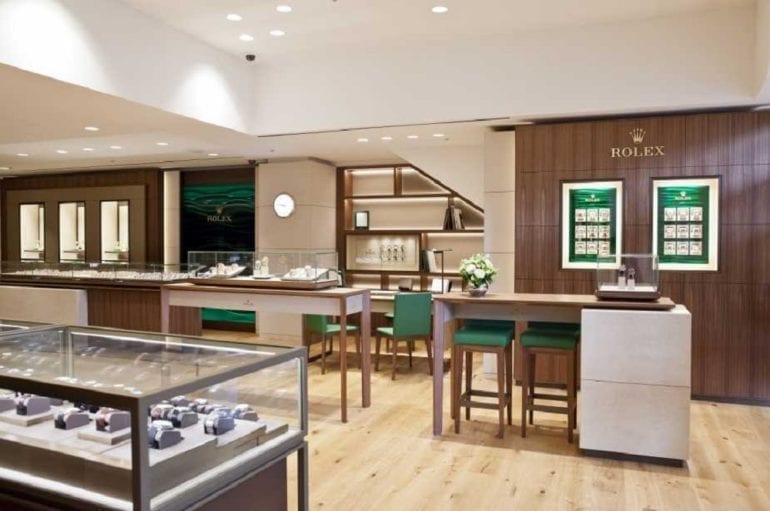
    Easing rents, the closure of unprofitable stores and a trimmed-down inventory all helped Oriental Watch Holdings record a 10-fold increase in profit in its latest quarter.

    In the six months to September 30, Oriental Watch increased its post-tax profit from HK$4.12 million last year to $45.93 million, on sales down marginally from $1.545 billion to 1.508 billion. Same-store sales rose 14 per cent year on year.

    At the end of the period the luxury watch retailer operated 63 retail and wholesale points (including associate retail stores) in greater China: 47 in Mainland China, 12 in Hong Kong, three in Taiwan and one in Macau.

    Chairman Yeung Ming Biu said the return of mainland tourists and improving business confidence.

    “Most importantly, the stabilising sales performance along with rent adjustment has also become one of the key drivers for the group this year, which provided greater improvement in profitability with less rent burden suffered compared to the past few years.”

    During the quarter, the company’s rent costs fell by 26 per cent to $84 million, now accounting for 36 per cent of overall operating expenses, compared with 45 per cent in the same period last year.

    “The group has successfully negotiated better rental rates and more flexible leasing terms for the lease renewal,” he said. “In addition, regular internal assessment on the performance of all retail stores and closedown of high-rent yet non-performing stores are also the group’s strategy for better resources allocation.

    “The group will continue to closely monitor the store performance and its efficiency and hope the above measures together with the rent adjustments can improve profitability of each store in the forthcoming years.”

    Inventory management

    Yeung Ming Biu said careful monitoring of inventory of high-ticket items and reordering only when predetermined stock levels were reached had seen inventory cut by 10 per cent over six months.

    Meanwhile, Swiss watch exports by value increased by 4.1 per cent into Hong Kong and by 17.2 per cent into Mainland China between January and September, indicating that demand for luxury watches has rebounded.

    “Looking ahead, the group remains cautiously optimistic on the business outlook of the luxury goods market and expects retail sales in Hong Kong will hold stable amidst the sustained recovery in visitor arrivals and the resilience of local consumption demand,” he said.

    Same-store sales growth in China rose 14 per cent increase during the quarter.

    “On the other hand, the retail market in Hong Kong has begun to turn up after having bottomed out and these have provided good preconditions for the group’s development in Hong Kong,” he concluded.

  • Digital wallet WeChat Pay launches in UK

    Digital wallet WeChat Pay launches in UK

    In the middle of London’s Camden Market, a trader from China hands red-bean cakes to a group of tourists from Sweden, as tattooed locals dressed in black leather weave their way between food stalls cooking up dishes including barbecued meat and fish and chips.

    The market, which has been at the heart of London’s punk scene since the 1970s, has evolved into one of the capital’s busiest tourist attractions. It draws hundreds of thousands of people every week to its maze of clothing shops, tattoo and piercing parlors, and food stands.

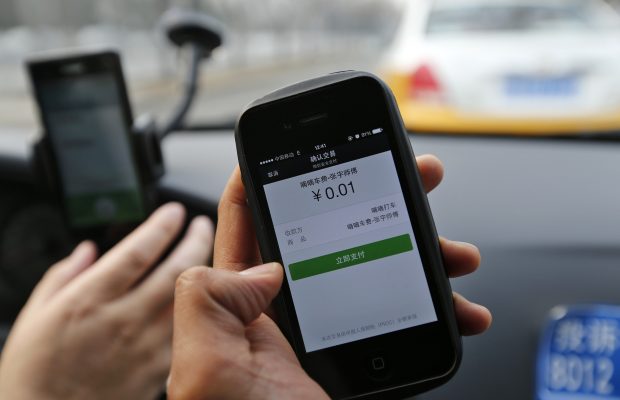
    And starting this month, Chinese visitors will be able to buy goods with the help of mobile payment platform WeChat Pay.

    Camden Market is a sharp contrast to luxury shopping hotspots such as Bicester Village and Oxford Street where Chinese tourists spend millions of pounds each year and might not seem the obvious choice for the United Kingdom launch of WeChat’s hugely popular digital wallet, which accounts for 40 percent of the Chinese mobile payment market.

    However, the number of Chinese visitors to Camden is climbing. In September 2016, 5 percent of visitors were Chinese. The proportion doubled to 10 percent in March.

    “In terms of demographics, the number of Chinese tourists in Camden is certainly growing, and in terms of a brand, Camden was an obvious choice. It’s iconic in London,” said Craig Jacoby, head of retail payments at SafeCharge.

    WeChat has worked with SafeCharge, a British payment technology company, to make WeChat Pay available at point-of-sale locations in the UK for the first time.

    During the next four months, SafeCharge will provide more than one thousand Camden Market vendors with a software update that enables in-store payment terminals to generate QR codes and perform transactions.

    Chinese tourists spent 513 million pounds ($681 million) in the UK last year, according to tourism authority VisitBritain. Camden Market’s management wants to better accommodate those bigspenders.

    Jacoby said WeChat Pay will soon be available at other shopping destinations in London, and it is also launching at six large retailers in Paris as WeChat moves forward with its international expansion.

    WeChat Pay rival Alipay has also made recent moves in Europe. In October, Alipay expanded its partnership with Dutch payment company Adyen to facilitate in-store mobile payments at retail partners in the UK.

    In Camden, merchants and customers were upbeat about the development. Yi-yin Wei, a shopkeeper from Taiwan who sells red-bean cakes at Wheel Cake Island, thought the update will be useful.

    “Chinese people are used to paying for things with their phones, so it will be like home for them,” Wei said.

    And Angel Chow, a tourist from Hong Kong, said Chinese shoppers will likely spend more now they have WeChat Pay as an option.

    “They will find it convenient if they can use their phones and will buy more. I think they will be excited to be able to use it in England,” Chow said.

    Other Camden merchants were not sure there would be enough demand. Vari McGeachy, manager of Books Iconica, said fewer than 5 percent of her customers are from Asia.

    “We don’t have many Chinese people coming through the doors, and when they do they don’t have a problem paying with cash or card,” McGeachy said. “It wouldn’t be worth having to train my staff about a new system.”

    SafeCharge Chief Executive David Avgi said in general there is great motivation to accommodate Chinese consumers in Europe, where 50 percent of luxury purchases are made by Asian tourists.

    And he said it is a matter of time before the mobile payment systems that are ubiquitous in China catch on in the West.

    “This innovative payment method is seen as the next big payment phenomenon in Europe,” Avgi said.
  • Sa Sa to open more stores after getting confidence

    Sa Sa to open more stores after getting confidence

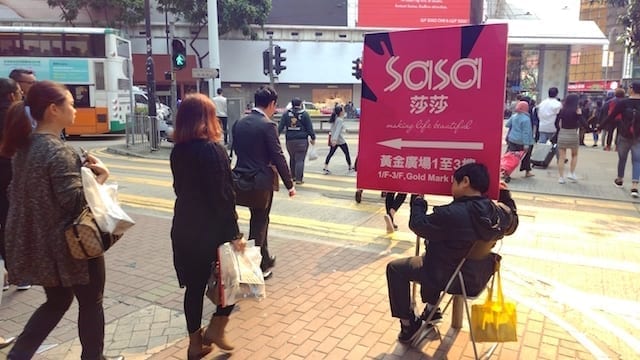
    Skincare and cosmetics retailer Sa Sa International Holdings Ltd on Thursday posted a 14.5 percent rise in first-half net profit as consumer sentiment and mainland tourist arrivals improved.

    The Hong Kong-based retail chain operator’s net profit rose to HK$109.9 million ($14.1 million) for the six months ended in September from HK$96 million a year earlier. Analysts were expecting HK$118 million, according to Thomson Reuters SmartEstimate.

    Revenue climbed to HK$3.66 billion from HK$3.60 billion a year earlier.

    “We aim to capitalise on weakness in the rental cycle to establish more strategic locations to improve our brand exposure and stimulate sales,” Chairman Simon Kwok said in a filing to the Hong Kong bourse.

    Retail sales in Hong Kong and Macau rose 2.2 percent, while gross profit margin improved to 42.2 percent from 41.4 percent. The company operated a network of 283 stores and counters as of end-September, unchanged from the year-ago period.

    Sa Sa had earlier said that for the July-September quarter its retail and wholesale turnover rose 1.1 percent year-on-year, narrowing from a 2.1 percent growth in the previous quarter.

    In its home base of Hong Kong, retail sales grew in September at the fastest year-on-year pace in more than 30 months, government data showed, as increasing numbers of mainland visitors helped boost spending, particularly on watches and jewellery.

    Benefiting from improved consumer sentiment, China’s top jeweller Chow Tai Fook Jewellery on Tuesday posted a 46 percent profit rise in the first half and said it aimed to continue expanding in mainland China in the second.

    Sa Sa shares rose 2.5 percent on Thursday prior to the results announcement, outpacing a 0.1 percent gain in the benchmark index.

  • It Is All About Tencent In China

    It Is All About Tencent In China

    Asia has been the best performing region globally this year as China 2.0 kicked in as a theme with China (at the MSCI level) being the best performing market and tech being the best performing sector. As Mark Tinker, responsable de AXA IM Framlington Equities Asia, comments: “In Hong Kong the story has all been about Tencent, while in Korea it has been about Samsung.”

    In fact, in Hong Kong in particular the impact of Tencent has been extra-ordinary as the largest stock in the market with a current weighting of almost 12% has effectively doubled over the last 12 months, while the second biggest, HSBC, is up a mere 17% – albeit with a significant dividend to yield a total return of 23%. In South Korea, where Samsung Electronics is more than 20% of the index, it has risen by 83%. Probably not since Apple became the biggest stock in the US market back in 2011/2 and then doubled has the index effect had such a big impact on so many active institutional investors.

    “Of course the argument threatens to become circular” says Tinker.  Therefore, he wonders if Tencent or Samsung are up so much because people are buying the index or vice versa?

    For Tencent there may well be some influence from the fact that mainland Chinese investors can buy it through the Southbound Stock Connect, which continues to expand its influence on Hong Kong markets. Tencent is affecting the real economy in China as well as here in Hong Kong.

    As previously noted by Will Chuang in Hong Kong, “it is not only possible but actually significantly easier to spend a weekend in Shanghai without using either cash or a credit card, simply using WeChat pay by Tencent. Tinker adds that “all you have to do is click on your phone to call up a quick response (QR) code that the merchant scans and you are done.”

    It is now said that you can always spot the tourists in Shanghai as they are the ones using credit cards, or if they are really old fashioned, cash.The fact that the largest note in China is RMB100, which is the equivalent of around EUR15 is probably a factor in using WePay to replace cash, but even here in Hong Kong it is increasingly being used.

    Tencent is mainly Chinese but it is also having something of a wealth effect here in Hong Kong as the number of people trading the stock and several of the connected spin-offs that have recently IPO’d here are clearly celebrating their ‘success’ in the bars and restaurants in Central. The expert of AXA IM in Asia explains:

    The retail offering of Tencent spin-off China Literature for example was 625 times oversubscribed and effectively doubled on opening, having caused a huge spike in interbank rates as money was locked up in anticipation.

    Former Hong Kong Chief Executive Chun-ying Leung used to refer to Hong Kong as “where the rest of the country meets the rest of the world” and as well as offering an outbound conduit for mainland investors through its H share listing, the company itself is, like a number of others, investing overseas, most notably when it picked up around 12% of SNAP as that particular stock continued to slide. Many have noticed the contrast between the performance of US tech IPOs and their Chinese equivalents.