Retail News CRM

Tag: hub

  • Paytech Pioneer Opens APAC Hub in Singapore

    Paytech Pioneer Opens APAC Hub in Singapore

    The firm is looking to replicate the European success of its Apex platform – which powers fintech unicorns including Revolut, Monzo and Starling Bank – in the region.

    Global Processing Services (GPS) has opened its new regional headquarters in Singapore, which will enable the firm to better support its existing clients and regional banking providers, the payments processor announced at the Singapore Fintech Festival.

    The APAC hub will support existing client expansion and regional client needs as fintechs look for a platform partner to help them scale internationally, the firm said in a statement.

    It currently works with digital bank Revolut, which is expanding across the region, and Singapore’s own Railsbank through its Apex platform.

    Singapore was an easy choice – it means not only that we can support our clients as they grow, but that we can take an active part in the current fintech revolution going on there, Joanne Dewar, CEO at GPS, said about the new office.

    GPS works with over 40 issuing banks globally and operates programs for more than 100 clients in 60 countries with more than 150 currencies. Its Apex platform caters to fintechs, digital banks, e-wallets and other service providers to enable both virtual and physical card payments.

  • Cebu Pacific to expand its hubs in Clark, Cebu

    Cebu Pacific to expand its hubs in Clark, Cebu

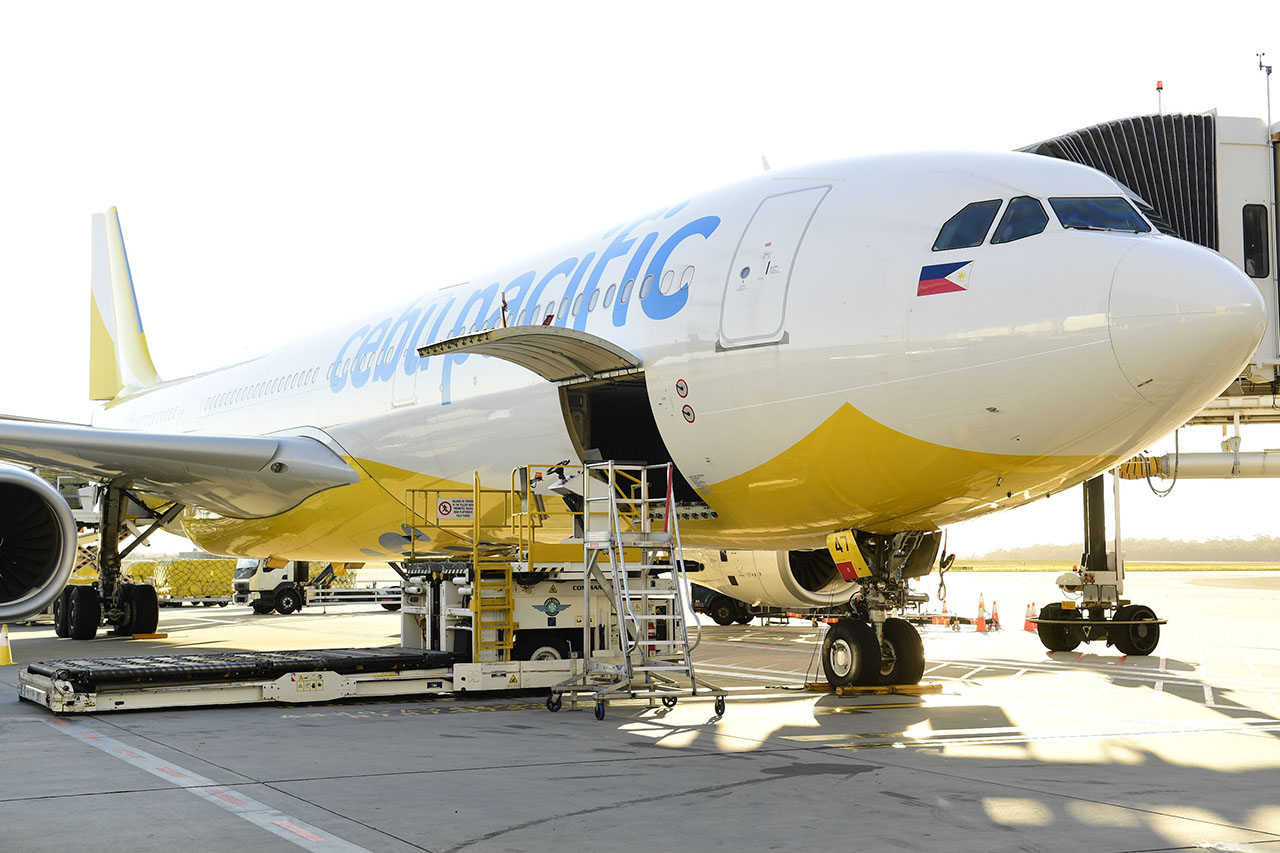
    Cebu Pacific said it is eyeing to expand its hubs in Clark and Cebu as it continues to boost its fleet with a target of 83 aircraft by end-2022.

    Lance Y. Gokongwei, president of Cebu Pacific operator Cebu Air, Inc., said the budget carrier will be adding “a lot of frequency” in its hubs in Cebu and Clark.

    “In Clark, we’re going to try to connect the dots so that a lot of North Asia will be able to fly into the south without having to connect through Manila… I think in the next two to three years, you’ll see a lot of flights into Japan, (South) Korea and China from Clark,” he told BusinessWorld on the sidelines of the JG Summit Holdings, Inc. stockholders’ meeting last week.

    For Cebu, Mr. Gokongwei said they will ramp up the frequencies of its existing routes, which currently connect the city to both Japan and South Korea. Cebu is a popular destination for Japanese and Korean tourists.

    “The (Airbus A321neos), we put them into Manila. Then we pull out the (Airbus A320s) and put them to Clark or to Cebu,” he said.

    The carrier is currently on fleet expansion mode and expects the delivery of 12 new aircraft this year, namely six Airbus A321neos (new engine option), five A320neos and one ATR 72-600.

    Mr. Gokongwei said in the long term, what Cebu Pacific wants is to make its Clark operations as big as its Manila operations. “We have to complete the Bacolods, the Iloilos, the Taclobans, the CDOs. Whatever we have in Manila, we’ll replicate in Clark,” he said, but noted it may take about 15 years from now.

    Cebu Pacific said its hubs in Clark and Cebu have already seen rapid growth since the start of the year, both in terms of new routes and frequency of flights.

    For the Clark hub, the carrier already increased its capacity to and from Caticlan by 231% after shifting to use the bigger Airbus A320 starting March 31 from the 78-seater ATR 72-600.

    It also noted it will be opening daily from its Clark hub going to and from Iloilo, Bacolod and Narita by Aug. 9, and daily flights to and from Puerto Princesa by Oct. 9.

    For its Cebu hub, the airline noted it already added frequency to its flights going to Cagayan de Oro, Dumaguete, Siargao, Iloilo, Caticlan, Ozamiz and Zamboanga by an average of 63% since April 15.

    “Flights between Manila and Cebu had likewise increased 24%. The increase in flights from its Cebu hub is on top of its six-times weekly Cebu-Shanghai and Shanghai-Cebu routes which began on April 15, 2019,” it added.

    Cebu Pacific currently has flights from Clark to Cebu, Caticlan, Tagbilaran, Davao, Singapore, Macau and Hong Kong.

    In its Cebu hub, the carrier flies to and from Bacolod, Caticlan, Butuan, Cagayan de Oro, Calbayog, Camiguin, Clark, Davao, Dumaguete, General Santos, Iloilo, Kalibo, Legazpi, Ozamis, Pagadian, Puerto Princesa, Siargao, Surigao, Tacloban, Zamboanga, Hong Kong, Macau, Tokyo (Narita), Singapore and Incheon.

    Listed Cebu Air posted a net income of P3.43 billion in the first quarter, up 138.4% from the same period last year due to a growth in passenger volume and average fares
  • Procter & Gamble Starts S$12m Innovation Hub in Singapore

    Procter & Gamble Starts S$12m Innovation Hub in Singapore

    Procter & Gamble Singapore has announced a S$12 million innovation investment to create the next billion-dollar corporate concept for Singapore. GrowthWorks was announced on the 5th anniversary of P&G’s Singapore Innovation Center (SgIC). The intrapreneurship hub will focus on new brands, new technologies and new business models. Working in cooperation with P&G Singapore’s $250 million R&D division, P&G hopes that the next big idea in international business will crop up in Singapore.

    Procter & Gamble is a consumer goods company. Their famous brands like Max Factor, Old Spice and Gillette make them sought after by investors, as these brands have reach well outside the US market. Investing in Procter & Gamble takes investors into multi-national economies: the P&G stock was trading at US$108 on the eToro site on May 17, and their expansion into international markets like Singapore has much to do with this. Do we anticipate this news to precipitate further P&G stock price growth?

    Why Singapore?

    So why is American company Procter & Gamble putting so much emphasis on geographically tiny Singapore? For more than a decade, Singapore has topped the World Bank’s list of easiest countries in which to do business. Whether it is starting a business, paying taxes, receiving construction permits, or enforcing contracts, Singapore is generally faster, cheaper, and more efficient than anywhere else.

    According to the World Bank, it takes only 150 days, on average, to resolve a commercial dispute in Singapore. In the United States (7th place on the World Bank’s list), this would take 420 days. In Myanmar (167th place), a similar conflict would drag on for at least three years.

    P&G correctly identifies Singapore as the most fertile ground for new businesses to flourish. If P&G can convince their “intrapreneurs” to innovate on the scale they desire, GrowthWorks really could bring the next international billion-dollar business idea into fruition via Singapore.

    What Will the New GrowthWorks Innovation Center Bring to the Table?

    GrowthWorks won’t be concerned with the full product pipeline like the SgIC. Instead, GrowthWorks is focusing on “home run” ideas, concepts that can be developed elsewhere into innovative products or businesses, without burdening the GrowthWorks team with the difficulties of taking the concepts all the way through the multi-year development cycle.

    GrowthWorks puts an emphasis on “intrapreneurship” – a word referring to employees who act with all the inspiration and drive of entrepreneurs, but for Procter & Gamble, not their own private interests. S$8 million of the initial S$12 million P&G investment will go directly to the intrapreneurs, who will use their funding to conduct lean experiments for early concept development. They will work with relevant Singaporean companies and agencies to establish feasibility and other early conceptual design, with the aim of creating business ideas that are tailor made for the Singaporean marketplace. P&G hopes to see a minimum of S$3 billion-dollar ideas grow out of GrowthWorks.

    GrowthWorks represents one of the first dedicated corporate attempts to incubate new major businesses specifically for the Singaporean market, and it’s P&G’s most significant R&D investment outside of the United States.

    In the big scheme of things, S$12 million isn’t very much money for a multinational to invest in innovation. From our perspective, P&G is simply testing the waters in Singapore, seeing if the small nation can serve as a meaningful strategic outpost for expansion in the wider region.

    If the investment brings returns, P&G will have greater expansion opportunities in Asia than in the US, where it faces relative market saturation. Asia numbers its consumers in the billions, while America numbers them in the tens of millions. America may be the larger and more stable economy, but we can see the value of this strategic play in Singapore.


  • Vietnam, Ericsson open IoT Innovation Hub

    Vietnam, Ericsson open IoT Innovation Hub

    The Vietnamese government has launched the first IoT Innovation Hub in the nation, in collaboration with Ericsson.

    The new center aims to provide a platform for IoT research and development, as well as commercial startups and IoT-related education.

    It will allow mobile operators, businesses, students, researchers and startups to develop and test IoT applications, and support the commercialization of IoT-based products.

    At an opening ceremony for the new Innovation hub, Vietnam’s Ministry of Science and Technology signed collaboration agreements with state-owned operators Viettel and VNPT, as well as a number of local universities, to support the operation and development of the center.

    Also at the event, Ericsson president of Vietnam, Myanmar Cambodia and Laos Denis Brunetti said the establishment of the center will help promote collaboration with Vietnam and Sweden in building initial platforms for innovation activities in Vietnam.

  • Macpac expands more with Adventure Hubs

    Macpac expands more with Adventure Hubs

    Super Retail Group’s outdoor retail chain Macpac has opened nine new ‘Adventure Hub’ stores, further expanding the brand’s reach across Australia to 34 locations.

    Five of the new format stores are located in Victoria, and are buoyed by a new store in NSW, South Australia, Queensland and the ACT.

    The Adventure Hub format combines Macpac’s full range with a curated selection of apparel, equipment and accessories from brands such as Patagonia, Yeti and Merrell.

    Macpac chief executive Alex Brandon said the business was excited about the potential the Adventure Hubs format offers.

    “We set out to create Australia’s premium destination for outdoor product and adventure advice, and I think we’ve achieved that aim in these first nine stores,” Brandon said.

    “The Adventure Hubs offer the full range of Macpac gear alongside other world-class outdoor brands…supported by a friendly, knowledgeable team ready to give everyone adventure advice.”

    Macpac’s Adventure Hubs also feature services to make preparing for a trip easier on customers, such as providing packing lists to ensure they don’t forget anything they might need, expert pack-fitting by Macpac team members, world maps to help envision the next big trip, as well as a mini-library providing further travel inspiration.

    Former Super Retail Group chief executive Peter Birtles previously said there was potential for the Macpac brand to grow to 75 locations across Australia and New Zealand, with an additional 20 larger format locations.

    However, Birtles also noted there was a significant future for the business online, rather than through constant store roll-outs.

    “We certainly see that this is a market that has strong opportunity in terms of digital, and so we’d anticipate a high component of the business coming from a digital channel,” Birtles said.

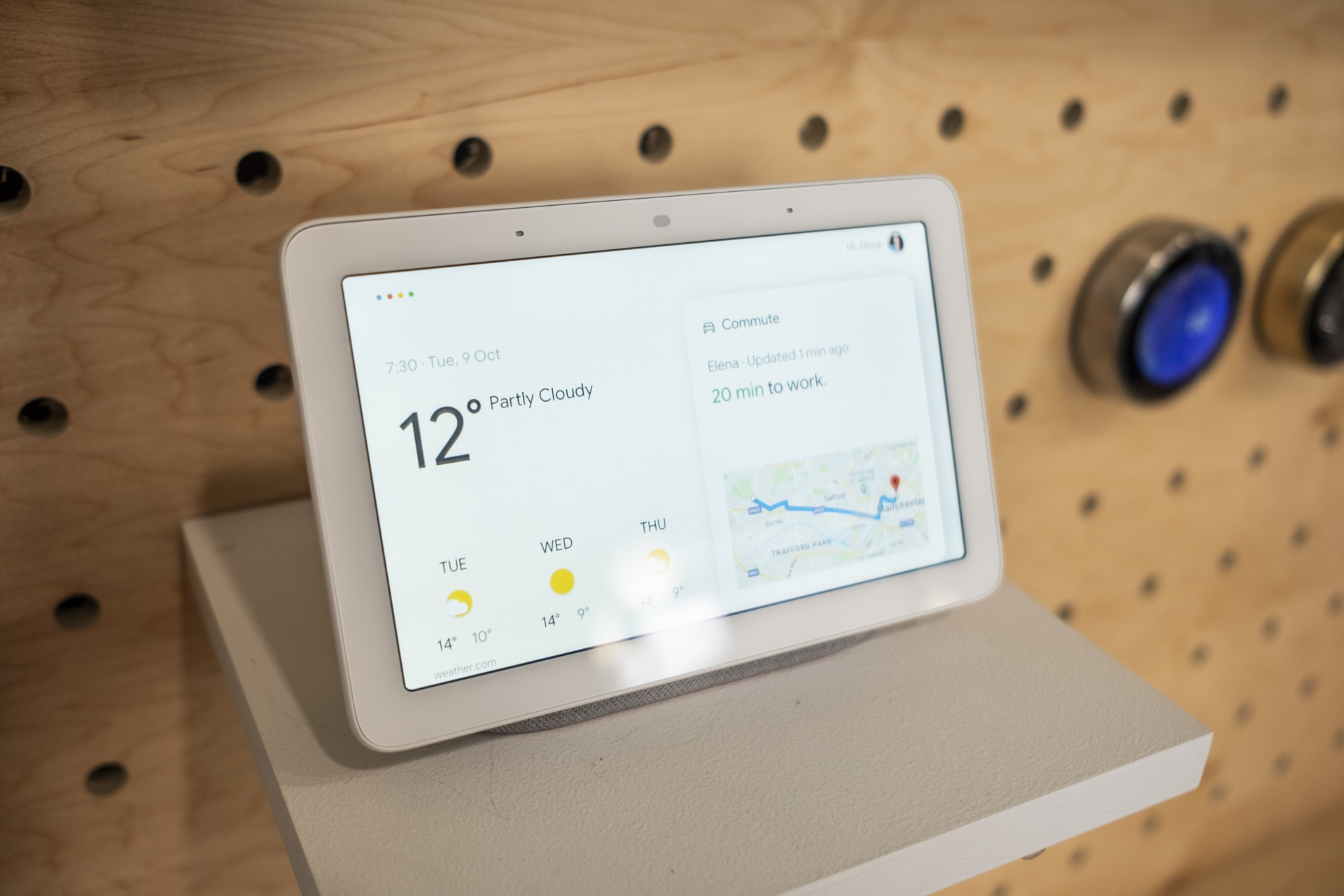
  • Get incredible Google Home Hub discounts

    Get incredible Google Home Hub discounts

    Even though it earned pretty good reviews after seeing daylight just six months ago and presumably contributed to Google’s thriving smart speaker sales numbers during the final quarter of 2018, the Home Hub has been massively discounted lately more times than we can count on the fingers of one hand.

    Right now, the Google Assistant-powered smart display is back up to its $149 list price at both its manufacturer’s official US e-store and third-party retailers like Best Buy, but one self-described “social shopping marketplace” has this extremely versatile and convenient product on sale at a big markdown yet again.

    The “catch” is you need to purchase two units to save a frankly unbelievable amount of money. Basically, you’re looking at a two-for-one or buy-one-get-one-free type of deal, as this heavily discounted Google Home Hub two-pack in black currently costs $153.95, or a hair over the aforementioned regular price of a single device. You’ll want to hurry, though, as the promotion, also known as a power deal in MassGenie user lingo, is set to expire within just four hours of the time of this writing.

    If you’d like to get something nice for yourself and a friend, a family member, or a special someone, today’s super-limited offer effectively brings the price of a Google Home Hub down to $77. Meanwhile, for only three extra bucks, you can purchase just the one smart display in your choice of Chalk or Charcoal paint jobs, although you have even less time to jump on that particular deal.

    For those unfamiliar with what this bad boy can do, suffice to say it’s essentially a smart speaker with a touchscreen… and smart home hub capabilities. You can watch YouTube videos, stream music, control various smart home accessories, and get answers to your most burning questions, all without ever lifting a finger.

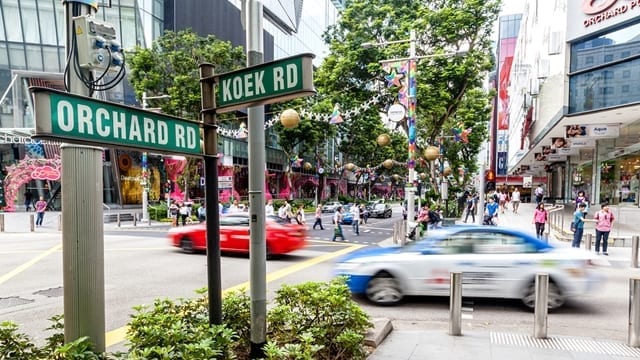
  • New Head of Swiss Business Hub in Singapore

    New Head of Swiss Business Hub in Singapore

    The Swiss Embassy in Singapore appointed a new Head of the Swiss Business Hub for the ASEAN region.

    Renee Koh joined the Swiss Embassy already in November 2018 as the new Head of the Swiss Business Hub for the ASEAN region, according to a news release on Thursday.

    The Swiss Business Hub ASEAN is part of the Embassy of Switzerland in Singapore with antenna offices in the Embassies of Switzerland in Malaysia (Kuala Lumpur), Vietnam (Hanoi) and at the Consulate General of Switzerland in Ho Chi Minh City.

    The Swiss Business Hub facilitates commercial relations between Switzerland and ASEAN. Its activities are supported by Switzerland Global Enterprise (S-GE), which has been officially commissioned by the Swiss government to promote exports and investments.

  • DHL Express Opens €93 Million Hub in Spain

    DHL Express Opens €93 Million Hub in Spain

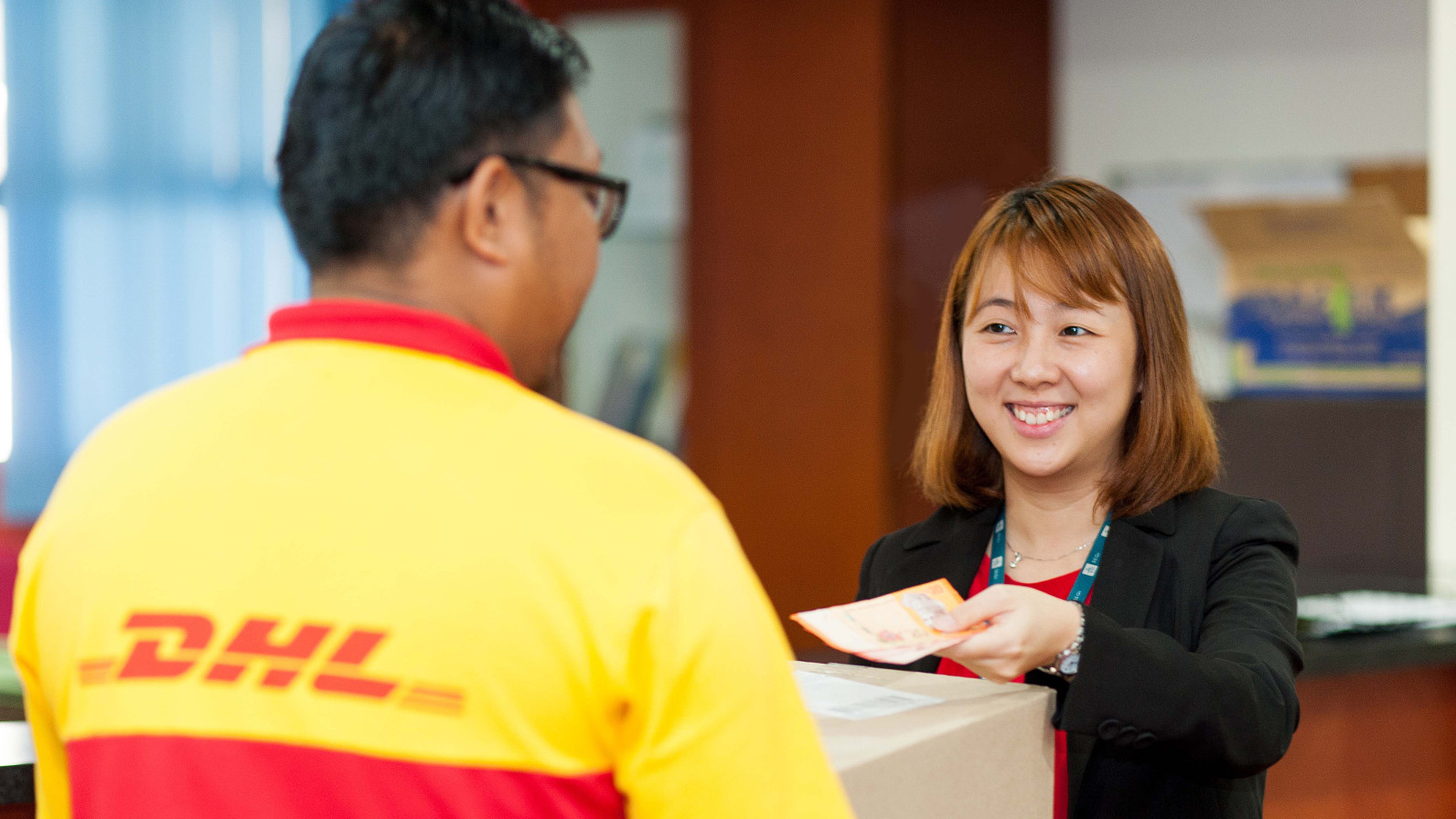
    DHL Express has opened a new hub at Barajas Adolfo Suarez Airport in Madrid, creating 200 new jobs and strengthening the position of Madrid as a hub for international commerce, particularly between Europe and Latin America.

    By investing in high-quality infrastructure and the newest technologies, DHL Express will quadruple its capacity in Madrid. The 14,500 m2 building, which includes offices, will facilitate the sorting of 24,500 packages per hour.

    John Pearson, CEO of DHL Express said:  “With this latest investment in our infrastructure, we are further expanding the capabilities of our European and global network, enabling continued growth supported by a platform of quality. Customers from our traditional sectors as well as e-commerce customers in both private b2c as well as businesses who are driving their own b2b growth agendas through e-commerce will benefit from the investment. With this new hub in Madrid, we are connecting sellers and consumers around the world with even greater speed and efficiency.”

    The new hub has a total of 176 loading docks enabling 160 road movements each day, as well as 10 daily flights operated by DHL’s own aircraft, and 30 daily commercial flights servicing 20 international destinations, mostly in Latin America.

    “We are investing in infrastructures to increase efficiency and to improve our delivery capability. This will allow us to provide an even better service to our customers,” adds Miguel Borrás, Managing Director, DHL Express Spain and Portugal. “This new hub is a critical nexus between Europe and the LatAm countries. Thanks to this, we could connect businesses from all industries and private consumers alike, and enable them to leverage from the increasingly growing e-commerce worldwide”.

    In accordance with DHL’s GoGreen Program the new hub will help to reduce the company’s carbon footprint thanks to the use of new and more efficient sorting technology, improved building insulation, and more efficient energy systems to manage the consumption of electricity, water and cooling systems.

  • AirAsia opens technology centre in India’s Silicon Valley

    AirAsia opens technology centre in India’s Silicon Valley

    AirAsia has unveiled a new technology centre in Bengaluru, India’s Silicon Valley, housing 35 software engineering and technology experts each tasked to design and create custom-built solutions for AirAsia’s airline and digital businesses.

    The new centre affirms its mission to transform into a travel technology company, AirAsia said in a statement. The team will work to streamline the airline’s digital assets such as airasia.com and the AirAsia mobile app, alongside the creation and implementation of new products and enhancements such as the new AI-powered chatbot, AVA, to provide frictionless journeys for the airline’s guests.

    The opening of the new technology centre is one of many global initiatives AirAsia is exploring to drive its digital transformation. In recent times, AirAsia has implemented a number of new digital features including flight search mapping and voice assistance which provides guests with a more seamless, user-friendly experience on its mobile app. Last October, it also collaborated with Google Cloud to integrate machine learning and artificial intelligence into every aspect of the airline’s business and culture.

    Aireen Omar, AirAsia deputy group CEO (technology and digital) said: ““India is a source for innovation and cutting-edge technology, and offers us tremendous growth potential when it comes to our mission to develop an all-encompassing travel technology ecosystem. This is why we are so excited to expand our footprint in India with the opening of a new technology centre.”

    AirAsia India MD and CEO Sunil Bhaskaran added that India’s skilled manpower can address the requirements of the global market, at the same time adding value to the Indian ICT industry and helping to strengthen the industry ecosystem.

  • Google plans a representative office in Vietnam

    Google plans a representative office in Vietnam

    A senior Google official says the tech behemoth is studying the process of opening a representative office in Vietnam. Google senior vice president Kent Walker told Deputy Prime Minister Vuong Dinh Hue at a meeting Tuesday that the opening of a rep office in the country would follow the principle of ensuring that host country regulations do not contradict the firm’s international commitments.

    A report on the government website chinhphu.vn also quoted Walker as saying that he agreed with the Vietnamese government on the need for cyber-security to ensure a stable society. Google will cooperate with authorities in achieving this goal, he said.

    The rep office announcement came as Vietnam’s cybersecurity law is set to take effect next month. The law requires digital businesses like Facebook and Google to open a representative office in Vietnam.

    Deputy PM Hue said that he appreciated Google’s contribution to a draft decree on guidelines to implement the law and ensure cyber-safety and security.

    “Vietnam’s market advantages and the adaptability of its young workforce will be attractive factors for Google to open a representative office in Vietnam,” he said.

    Meanwhile, a Google spokesperson said on Wednesday: “We remain very excited to see how technology is being used by businesses and people in Vietnam. There are a number of different factors we look at before opening an office, but we have nothing to announce at this time.”

    Vietnam’s Cybersecurity Law, which was passed in June, requires tech businesses to store the data of Vietnamese users in Vietnam, and to provide this data to the Ministry of Public Security upon receipt of requests in writing, in cases where any infringement of the cybersecurity law is being investigated.

    Seventeen U.S. lawmakers in July urged the CEOs of tech giants Facebook and Google to resist changes stipulated by the law.

    However, Vietnam’s Ministry of Foreign Affairs reasserted that the cybersecurity law is designed to protect rights of organizations and individuals.

  • Alibaba to open e-commerce hub in Belgium

    Alibaba to open e-commerce hub in Belgium

    Alibaba Group Holding Ltd has signed an agreement with the Belgium government to launch an e-commerce trade hub, which will include investments in logistics infrastructure. The project is part of Alibaba’s Electronic World Trade Platform (eWTP), and Belgium is the first European country to join the project following similar agreements in Malaysia and Rwanda.

    Alibaba’s logistics arm, Cainiao, will lease a 220,000 square meter logistics port at Belgium’s Liege airport as part of the deal and invest an initial 75 million euros ($85 million) in the project set to begin operations in 2021, it said.

    “We strongly believe that under the eWTP, we will open up the huge potential for European businesses to reap the benefits of global cross-border trade, especially into the China market,” Alibaba CEO Daniel Zhang said in a statement.

    Alibaba’s eWTP is designed to help countries reduce trade barriers for e-commerce trade, including lowering or eliminating tariffs and speeding up customs clearance.

    The company has previously said the project is designed to “compliment” the World Trade Organization (WTO).

    Alibaba is expanding the project to Europe amid wider trade tensions, which have forced the firm to back down from efforts to tap U.S. sellers.

    Recently, Alibaba Chairman Jack Ma said previous plans to create a million jobs in the United States had been put on ice due to trade tensions, according to Chinese state media.

  • Philippines AirAsia to develop more regional Filipino hubs

    Philippines AirAsia to develop more regional Filipino hubs

    Philippines AirAsia will skirt future growth at Manila Ninoy Aquino Int’ldue to serious capacity constraints and instead will focus its development at regional hubs in Clark, Cebu, Kalibo, Puerto Princesa, and Panglao, an airport set to replace Tagbilaran by the end of 2018, CEO Dexter M. Comendador has told the Business Mirror.

    “These will be opened up as hubs because we are lacking space in Manila, and in the next 10 years, we should have 70 planes. So we need to distribute the planes to the countryside. It will spread; then development will follow,” Comendador has said.

    The Filipino unit of AirAsia Group currently operates 399 weekly departures, 38% of all its flights, out of the capital airport in the country. Cebu, its second-largest base, is served with 160 weekly departures. However, these proportions may soon change.

    According to the ch-aviation fleets module, Philippines AirAsia currently operates twenty-one A320 aircraft. It is set to receive around fifty more A320 Family jets, possibly including A320neo, in the next 10 years.

    In line with a government directive, Philippine Airlines (PR, Manila Ninoy Aquino Int’l) has also announced that it, too, will focus on regional airports as the capital gateway lacks space for growth.

    Comendador has also reaffirmed Philippines AirAsia’s plan to launch an Initial Public Offering (IPO) in the fourth quarter of 2018. Philippines AirAsia intends to raise around USD200 million and float up to 30% of its shares.

  • SAP expands innovation footprint in APJ with the launch of SAP Leonardo Center Singapore

    SAP expands innovation footprint in APJ with the launch of SAP Leonardo Center Singapore

    SAP  today announced the launch of the SAP Leonardo Center Singapore, established to help customers, partners and the broader ecosystem of universities and start-ups across the Asia Pacific Japan (APJ) region to deliver faster innovation with less risk. This launch expands SAP’s innovation footprint in the region, adding to the three Innovation Centers and four SAP Labs in APJ. Globally, SAP spent €3,352 M on Research and Development in 2017.

    According to World Economic Forum, Singapore is the most competitive economy in Asia Pacific and third globally. The SAP Leonardo Center Singapore is the fifth in the global network of SAP Leonardo Centers. It is designed to serve as the “front-end” for APJ customers and partners to accelerate their digital innovation journeys using the capabilities of SAP Leonardo and Design Thinking. SAP Leonardo brings together Internet of Things (IoT), Machine Learning, Blockchain, Big Data, Analytics and Data Intelligence on SAP Cloud Platform. It also applies SAP’s leading technology capabilities and deep knowledge of 25 industries, in a live technology-delivery environment to deliver the Intelligent Enterprise for every customer.

    “The SAP Leonardo Center in Singapore will showcase the art of the possible in digital innovation and help our customers scale quickly, easily and effectively,” said Scott Russell, President, SAP APJ. “Together with our customers and partners, we aim to leverage the SAP Leonardo Center Singapore as a think tank to drive purpose-led innovation that will ultimately improve the lives of one billion people and deliver the Intelligent Enterprise for over 70,000 customers in APJ by 2022. The SAP Leonardo Center in Singapore will play a key role in realizing our growth strategy and drive customer success in the new Intelligence era.”

    Collaborative business environment

    The SAP Leonardo Center Singapore aims to foster a collaborative environment for businesses, start-ups, small and medium-sized enterprises to experiment and innovate. One of SAP APJ’s first SAP Leonardo customers in Korea is Hanon Systems. Headquartered in South Korea, Hanon Systems is a global leader in automotive thermal and energy management solutions, and an early-adopter of SAP Leonardo in APJ. With insight into the benefits of digital manufacturing, the company identified manufacturing performance and equipment health as areas of measurement to pilot the Leonardo platform at one of its plants in Europe. Robert Oh, Chief Information Officer and Business Transformation Executive at Hanon Systems, believes a supplier’s ability to compete in today’s automotive market is no longer measured by just its product offering. “At Hanon Systems, we believe our digital transformation can change the way we manufacture in a positive way to improve our productivity, increase our overall efficiency and further strengthen our customer relationships.”

    Hub for Ecosystem

    The SAP Leonardo Center Singapore also serves as a hub for SAP’s broader digital technology ecosystem including universities, startups, tech communities and accelerators. SAP APJ prepares the next-generation innovators with knowledge and skills for the digital future through the SAP University Alliances program, which exposes 1.7M students in educational institutions in APJ to innovative technologies. SAP APJ has established 13 Next-Gen labs in APJ with plans to open more in the future. SAP India designed a modular offering called i360 forAjeenkya DY Patil University, which includes SAP Leonardo IoT, SAP Leonardo Machine Learning and SAP Open SAP Learning. India has seen an increase in the uptake of modular offerings that focus on Industry 4.0 and Smart Cities. Demand for talent in India with skills in IoT, Machine Learning, Artificial Intelligence, Blockchain and Big Data and Analytics is high. Educational institutions have found merit in collaborating with technology firms to close this gap.

  • Digi adds Sage solutions to Digi Business Hub

    Digi adds Sage solutions to Digi Business Hub

    Malaysia’s Digi Telecommunications has teamed up with cloud management business solutions provider Sage to add a number of new services to the operator’s newly-launched Digi Business Hub.

    Under the agreement, Sage will offer solutions including its Sage Accounting, Sage UBS accounting and billing software and Sage Easy Pay payment software at a 20% discount to Digi customers.

    The Digi Business Hub B2B platform, which soft-launched earlier this month, provides one-stop access to exclusive offers covering a range of point of sale, human resources, marketing, accounting, payroll and office supply services from Digi’s own digital solutions and those of partner companies.

    Solutions include internet leased lines, fixed telephone and mobile roaming services, a guest Wi-Fi system, e-commerce store building solutions and procurement and web hosting solutions.

    The hub also offers access to a range of IoT based services, including a device accepting credit and deibt card payments, a fleet management solution and M2M services.

    The Digi Business Hub is exclusively available for Digi business customers. Digi has revealed plans to add new solutions partners every quarter.

  • FedEx Opens Shanghai Hub, Prepares for A Surge On eCommerce in Asia

    FedEx Opens Shanghai Hub, Prepares for A Surge On eCommerce in Asia

    FedEx recently opened its 1.4 million square foot Shanghai Pudong International Airport hub on January 8. FedEx’s new hub is now considered as the largest of its kind, installed with the latest sortation technology temperature-controlled storage.

    FedEx Corp. anticipates a growth in online transactions in China as the company opens its new hub in the country. Air cargo volume in China has grown steadily together with the demand of cross-border eCommerce market.

    It is approximate that the value of goods to increase to at least 43 percent to $117 billion this year. China’s air cargo volume is projected to increase to at least 6.2 percent in 2018, which is now considered as the biggest gain in the past 7 years, according to China’s Civil Aviation Administration.

    “There’s an opportunity to bring a lot of products and a lot of convenience to the Chinese consumers… With the wealth of Chinese consumers and the worldliness of Chinese consumers, they’re going to demand goods from the U.S. and Europe and parts all over the world,” David Cunningham Jr. Chief Executive Officer of FedEx Express

    China’s growing demand for cross-border eCommerce

    FedEx says that their latest facility can send real-time information such as shipment and flight status to its customers’ mobile smartphone devices. The hub also has dedicated areas for entry-exit inspection and quarantine to speed the customs clearance process.

    China’s growing demand for cross-border eCommerce has generally increased for the past 10 years, urging carriers to reorient their operations to mainly focus on the Chinese Market.

    United Parcel Service Inc. has now set up at least $10 million venture with SF Holding Co. in Hong Kong in May to cater to the growing demand of the Chinese Market. FedEx currently operates 66 flights in and out of the Shanghai hub each week.