Tag: Hyundai

  • Hyundai Duty Free Unveils AI-Driven Personalized Beauty Hub in Seoul: A New Era of Cosmetics Shopping

    Hyundai Duty Free Unveils AI-Driven Personalized Beauty Hub in Seoul: A New Era of Cosmetics Shopping

    Hyundai Duty Free recently announced the launch of an artificial intelligence (AI) powered beauty analysis zone at its Trade Centre location in Seoul, South Korea. The innovative space, known as ‘AI Beauty Trip’, offers customers unique, personalized skincare and makeup advice through cutting-edge digital tools.

    AI Beauty Trip: A Personalized Beauty Experience

    Situated on the ninth floor of the Trade Centre, the AI Beauty Trip will be operational until April 15th. The zone features two AI-powered devices that provide a sophisticated level of personalization for customers.

    The ‘Makeup AI’ device, a standing unit, uses photo imaging technology to analyze a patron’s facial structure, proportions, and individual color tones. Its counterpart, the ‘Skin Pro AI’, is a mirror-style device designed to evaluate skin conditions. It assesses factors such as pore size, oil levels, wrinkles, and signs of skin aging.

    After customers have undergone these detailed assessments, they can access a comprehensive diagnostic report and tailored product suggestions by scanning a QR code displayed on the screen.

    Participating Brands and Incentives

    Hyundai Duty Free has confirmed that 36 beauty brands participating in the store are integrated with this system. This means that customers have access to information on approximately 800 distinct products, helping to generate highly personalized product suggestions.

    In addition, customers spending at least US$50 on beauty products from participating brands at the Trade Centre store will receive a prepaid gift card worth 10,000 won. This gift card can be used immediately, offering an extra incentive for customers to engage with the AI Beauty Trip experience.

    Technology and Retail: A Perfect Blend

    This latest initiative from Hyundai Duty Free highlights the retailer’s commitment to integrating advanced technology with traditional in-store shopping experiences. As competition within the duty-free retail sector intensifies, and consumer preferences continue to evolve, such innovative approaches aim to boost customer engagement and satisfaction levels.

    Questions & Answers

    What is the ‘AI Beauty Trip’ initiative?
    The ‘AI Beauty Trip’ is an AI-powered beauty analysis zone at Hyundai Duty Free’s Trade Centre store in Seoul. It offers customers personalized skincare and makeup advice through innovative digital tools.

    What are the ‘Makeup AI’ and ‘Skin Pro AI’ devices?
    The ‘Makeup AI’ is a stand-type device that uses photo imaging technology to analyze facial structure, proportions, and color tones. The ‘Skin Pro AI’ is a mirror-style device that evaluates skin conditions such as pore size, oil levels, wrinkles, and signs of aging.

    What incentive does Hyundai Duty Free offer customers who engage with the AI Beauty Trip experience?
    Customers spending at least US$50 on beauty products from participating brands at the Trade Centre store will receive a prepaid gift card worth 10,000 won. This gift card can be used immediately.

  • Vietnamese Automaker Thaco Joins Forces with Hyundai Rotem for Advanced Rail Tech Transfer

    Vietnamese Automaker Thaco Joins Forces with Hyundai Rotem for Advanced Rail Tech Transfer

    South Korean company Hyundai Rotem, a subsidiary of the Hyundai Motor Group, has entered into a technology transfer agreement with Thaco, a Vietnamese automaker. The deal will enable Thaco to manufacture rolling stock for metros and high-speed railway systems under its own brand, by using Hyundai Rotem’s advanced technologies.

    Integrated System Development

    In addition to the technology transfer, Hyundai Rotem will aid Thaco in the development of an integrated system encompassing signaling and communications, as well as mechanical and electrical components.

    Thaco’s Railway Industrial Complex

    As part of its expansion plans, Thaco aims to construct a railway industrial complex sprawling across 786 hectares in Ho Chi Minh City. The complex will include a manufacturing zone for rolling stock, a closed-loop test track system, and a repair center.

    Thaco’s agreement with Hyundai Rotem aligns with Vietnam’s current contemplation of strategies to advance its railway industry. Earlier this year, Prime Minister Pham Minh Chinh encouraged Thaco to be actively involved in research, technology transfer, and the production of carriages and locomotives for high-speed rail projects.

    Thaco’s Investment in High-Speed Rail Projects

    In May, Thaco proposed to construct the North-South high-speed rail link, with an estimated projected cost of US$61.35 billion. Thaco proposes to contribute 20% of the total cost, with the remaining funds to be borrowed from banks, with the backing of government interest subsidies.

    Thaco also revealed interest in developing the 47-kilometer Ben Thanh-Long Thanh rail line, which would connect downtown Ho Chi Minh City with the soon-to-be-completed Long Thanh International Airport.

    Established in 1997, Thaco has a diversified portfolio that includes the auto, agriculture, construction, and logistics sectors. The company assembles Kia, Mazda, and Peugeot cars and also manufactures trucks and buses under its own brand.

    Questions & Answers

    What is the significance of the technology transfer agreement between Hyundai Rotem and Thaco?
    The agreement will enable Thaco to use Hyundai Rotem’s cutting-edge technologies to manufacture rolling stock for metro and high-speed rail under its own brand.

    What is Thaco’s plan for the development of the railway industry in Vietnam?
    Thaco plans to construct a railway industrial complex in Ho Chi Minh City, which will include a manufacturing zone for rolling stock. They have also shown interest in developing high-speed rail projects, including the North-South rail link and the Ben Thanh-Long Thanh rail line.

    What sectors does Thaco operate in?
    Thaco has a diversified business portfolio, with interests in the auto, agriculture, construction, and logistics sectors. They assemble Kia, Mazda, and Peugeot cars and manufacture trucks and buses under its own brand.

  • Hyundai Appoints First Indian Ceo In Landmark Move For Global Auto Industry

    Hyundai Appoints First Indian Ceo In Landmark Move For Global Auto Industry

    Hyundai Motor India Limited (HMIL) made the exciting announcement today that Mr. Tarun Garg will assume the role of Managing Director and Chief Executive Officer. Subject to shareholder approval, his tenure will commence on January 1, 2026. This appointment marks a significant landmark for HMIL; for the first time since its inception 29 years ago, an Indian national will lead the company. Mr. Garg currently holds the position of Whole-time Director & COO at HMIL. As he assumes his new role, the present Managing Director, Mr. Unsoo Kim, will be transitioning into a strategic position at Hyundai Motor Company (HMC) in South Korea.

    A Milestone for Hyundai and India

    Mr. Garg’s appointment is a testament to Hyundai’s faith in Indian leadership and the nation’s burgeoning importance in the global automotive industry. HMC singled out his capabilities for this position. Over the past two years, Mr. Garg diligently worked alongside global management in anticipation of this promotion.

    HMC President and CEO, Mr. Jose Munoz, celebrated Mr. Garg’s appointment, recognizing it as a momentous occasion in HMIL’s nearly three-decade history. He commended Mr. Garg’s transformative and innovative leadership style, remarking on his in-depth understanding of the Indian market, and attributing HMIL’s record-breaking sales for three consecutive years, record profits, and India’s largest IPO in 2024 to his guidance. He also acknowledged Mr. Garg’s focus on customers, teams, and long-term investment. Mr. Munoz ended his remarks by thanking Mr. Kim for his immense contributions to HMIL’s success.

    A Vision for the Future

    Mr. Garg expressed deep gratitude for the faith and trust placed in him by the Hyundai Motor Group. He acknowledged the transformative phase of India’s automotive sector and expressed his eagerness to contribute to HMIL’s continued growth. He emphasized the importance of excellence in all aspects, from design and engineering to sales and service, and expressed his gratitude to Hyundai’s talented employees, dealer partners, and suppliers.

    Mr. Garg affirmed that he and his team would remain committed to enhancing HMIL’s 29-year legacy of customer satisfaction and loyalty, shaping the future of mobility, and building enduring relationships in India.

    Questions & Answers

    What does Mr. Garg’s appointment mean for Hyundai Motor India Limited (HMIL)?
    Mr. Garg’s appointment marks a significant milestone in HMIL’s history. He is the first Indian national to lead the company since it was established 29 years ago, reflecting Hyundai’s strong confidence in India’s leadership capabilities and its growing strategic importance in the global automotive landscape.

    What are Mr. Garg’s achievements as COO at HMIL?
    Under Mr. Garg’s guidance as COO, HMIL achieved record sales for three consecutive years, record-breaking profits, and completed India’s largest IPO in 2024.

    What is Mr. Garg’s vision for HMIL?
    Mr. Garg aims to continue HMIL’s growth in the Indian market, maintaining a strong focus on excellence across all areas, from design and engineering to sales and service. He is committed to strengthening HMIL’s legacy of customer satisfaction and loyalty and to shaping the future of mobility in India.

  • Hyundai Motor India drops 6% in debut after country’s biggest IPO

    Hyundai Motor India drops 6% in debut after country’s biggest IPO

    Shares of Hyundai Motor India dropped as much as 6% in their market debut on Tuesday, after a tepid response from retail investors to the pricing of the country’s largest initial public offering.

    The stock listed at 1,934 rupees on the National Stock Exchange, below its offer price of 1,960 rupees, and traded down 4% at 1,882.10 rupees by 12.48 p.m. (Hanoi time), giving the company a valuation of 1.53 trillion rupees ($18.2 billion).

    Hyundai, India’s No. 2 carmaker with a market share of 15%, was targeting a valuation of $19 billion through the IPO.

    Its record $3.3-billion IPO was oversubscribed more than two-fold last week, led largely by institutional investors, but pricing concerns deterred retail investors who worried they would not be able to make gains on the listing.

    Shares of Indian rivals have also slipped in recent weeks as car sales slow after two years of record highs, with customers delaying purchases on worries about stubborn inflation.

    “Hyundai’s issue has been stiffly priced and that seems to be weighing down on its listing as well,” said Arun Kejriwal, founder of Kejriwal Research.

    “Besides, the volumes seen so far are driven only by institutional investors, and is rather poor for an IPO of Hyundai’s size.”

    Tuesday’s listing in Mumbai is Hyundai Motor’s first debut outside its home market of South Korea and comes at a time when India’s equity markets have risen sharply.

    With competition from domestic rivals Tata Motors and Mahindra & Mahindra, Hyundai Motor plans to use proceeds from its sale of a stake of 17.5% in the Indian unit to invest in research and launch new products.

    “Hyundai Motor will play a crucial role in Hyundai Motor India’s long-term growth through our collaboration in R&D, design, manufacturing,” the Korean automaker’s CEO, Jaehoon Chang, said at a listing ceremony in Mumbai.

    Seven of India’s 10 largest IPOs, including Hyundai India, reported listing day losses ranging from 5% to 27%, according to data from Dealogic.

    While Hyundai’s market valuation is much smaller than Indian market leader Maruti Suzuki’s $45 billion, analysts have expressed concerns over the narrower gap in their price-to-earnings (P/E) ratios.

    The issue had valued Hyundai at 26 times its fiscal 2024 earnings, not far off the multiple of 29 for Maruti.

    Some major brokerages, however, see long-term value in the stock.

    Nomura started coverage of Hyundai with a “buy” rating and price target of 2,472 rupees. The brokerage said it liked Hyundai’s high concentration of SUVs in the portfolio, which accounted for 67% of sales in the April-to-June 2024 quarter.

    Similarly, Macquarie analysts began coverage with an “outperform” rating and price target of 2,235 rupees, saying Hyundai’s SUV-centric portfolio commanded a P/E premium.

    “We shall leverage our deep understanding of consumer preferences to successfully expand our passenger vehicle portfolio,” Hyundai India’s chief operating officer Tarun Garg said at the listing ceremony.

    Shares of Maruti and Tata Motors were down 1%, in line with the Nifty Auto index.

  • Hyundai automobile sales in Vietnam increased by 5.5% in March

    Hyundai automobile sales in Vietnam increased by 5.5% in March

    Thanh Cong Group (TC Group) on April 11 announced its sales results for March with over 5,770 Hyundai automobiles sold in Vietnam last month, up 5.5% over February.

    Hyundai Accent continues to be the best-seller model in March with 1,355 units delivered to customers, followed by Hyundai Creta with 1,035 units – equal to the level a month earlier, and Hyundai Grand i10 with 664 units.

    Over 640 Hyundai Stargazer were sold last month, 2.5 times higher than February’s. The TC Group recorded sales of 514 Hyundai Santa Fe units, equivalent to the previous month Hyundai Tucson of 307, up 54.2% compared to February.

    Hyundai commercial models achieved sales of 1,016 vehicles in March, an increase of 42.1% compared to February 2023.

    In the first quarter of 2023, Hyundai-branded models achieved sales of 14,736 units, down 21.1% compared to the same period last year.

    TC Group expects higher sales in the second quarter of this year, explaining that the demand will increase thanks to the peak tourism season with greater travel demand.

  • Hyundai distributor reports revenue of $5B

    Hyundai distributor reports revenue of $5B

    Thanh Cong, distributor of South Korea’s Hyundai automobiles in Vietnam, recorded a revenue of VND118 trillion ($5 billion) last year, an increase of 15.6% over 2021.

    The Thanh Cong Group sold more than 81,500 Hyundai automobiles of all kinds during the year, accounting for some 16% of the country’s total automobile sales in 2022.

    Late last year Thanh Cong inaugurated its second Hyundai automobile plant in Vietnam in the northern province of Ninh Binh, with a designed capacity of 100,000 vehicles per year. It is expected to only assemble the Hyundai Ionic 5 electric vehicle at the plant this year.

    Established in 1999 as a manufacturer, Thanh Cong has now become a multi-industry firm, mainly operating in the spheres of automobiles, services and real estate.

    Other automobile distributors in Vietnam also reported big revenues or profits last year.

    Selling some 130,000 vehicles of all kinds, Truong Hai Auto Corporation (THACO), the local assembler and distributor of brands such as Kia, Mazda and Peugeot achieved a consolidated revenue of more than VND100 trillion, nearly doubling its revenues for 2021.

    Haxaco, the distributor of Mercedes cars, posted a record after-tax profit of some VND245 billion, up 1.5 times over 2021.

  • Hyundai conquers Vietnam’s city car market

    Hyundai conquers Vietnam’s city car market

    South Korea’s Hyundai dominated Vietnam’s small urban car market last year after Vietnamese and Japanese manufacturers stopped selling A-segment models.

    The European Commission defines the A-segment as city cars, the smallest category of passenger cars.

    Last year in Vietnam, Hyundai sold 10,752 units of its i10 model, while local Vietnamese manufacturer VinFast sold 10,661 Fadils, its most popular model.

    The Fadil was Vietnam’s best-selling car in 2021. And it was 2022’s best-selling car through the first half of the year as well, before VinFast took it off the market in mid-July as part of the company’s transition towards manufacturing only electric vehicles. VinFast no longer makes fossil-fuel cars.

    The 2022 car market in Vietnam also saw Kia sell 3,979 of its Morning models, while 1,953 Honda Brios and 488 Toyota Wigos were also sold in the country.

    The two Japanese models on the list, Brio and Wigo, were also taken off the market in the second half of last year because their engines did not meet the Euro 5 emission standards required by the Vietnamese government.

    Brio had been on the Vietnamese market for more than 3 years, but the model hadn’t changed since a facelift in 2020. It is scheduled to go on sale in Vietnam again later this year.

    VinFast plans to replace the Fadil with a small electric CUV model called the VF 5. It will cost VND458 million ($19,407), excluding the battery, and deliveries will begin in April.

    Imported Japanese models such as Wigo and Brio have a brand advantage, but their prices are higher than South Korean models assembled in Vietnam.

    In the A-segment, customers are often interested in low initial investment costs and various new version options. Both the Hyundai i10 and Kia Morning meet both of those expectations.

  • Hyundai, SK To Build New Battery Plant In Georgia

    Hyundai, SK To Build New Battery Plant In Georgia

    Hyundai Motor Group and SK On said Thursday they will build a new battery manufacturing plant in the U.S. state of Georgia to supply the Korean automaker’s U.S. assembly plants.

    Hyundai Motor Group and SK On, the lithium-ion battery subsidiary branch of SK Innovation, recently signed a memorandum of understanding (MOU) for a new EV battery manufacturing facility with details of the partnership still in development, the companies said.

    The companies aim to begin operations in 2025 and said “stakeholders estimate it will create more than 3,500 new jobs through approximately $4-5 billion of investment” in Georgia’s Bartow County. Hyundai separately broke ground in October on a $5.54 billion electric vehicle (EV) and battery plant in Georgia’s Bryan County.

    SK Innovation opened a $2.6-billion battery plant in Commerce, Georgia, in January that is producing batteries for the Ford F-150 EV.

    Hyundai and SK did not immediately say how much they plan to invest in the battery plant. Automakers and battery companies are building battery assembly plants across the United States as the industry shifts to electric vehicles.

    Hyundai, Kia and the South Korean government are heavily lobbying the Biden administration to ease new rules that in August immediately made all EVs assembled outside North America ineligible for $7,500 tax credits — including the Korean automakers’ EVs.

    The South Korean government on Tuesday urged Treasury “interpret ‘commercial clean vehicles’ broadly” to include rental cars, leased vehicles and vehicles purchased for use in Uber or Lyft rideshare fleets.

    Georgia Governor Brian Kemp told Reuters in October the EV tax credit rules should be changed to ensure Hyundai and Kia vehicles can qualify for the credit as it works to complete its EV assembly plant in the state.

    Kemp criticized the $430 billion climate bill approved in August that rewrote the tax credit rules.

    “It was targeted to help a lot of union-based suppliers that are in the United States,” Kemp said.

  • Hyundai inaugurates 100,000-car plant in Vietnam

    Hyundai inaugurates 100,000-car plant in Vietnam

    Hyundai Motor has inaugurated its second plant in Vietnam with a capacity of 100,000 automobiles per year.

    Covering an area of over 50 hectares in the northern Ninh Binh Province, the new plant will turn out eco-friendly and fuel-saving vehicles, said Thanh Cong chairman Nguyen Anh Tuan.

    Hyundai entered the Vietnamese market in 2009 through a joint venture with local conglomerate Thanh Cong Group. It imports parts for local assembly in what are known as knock-down kits.

    The plant will increase Hyundai’s Vietnamese production capacity to 170,000 vehicles a year when it becomes fully operational, likely in 2025.

    The South Korean automaker has invested nearly VND12.3 trillion (roughly $496 million) in Ninh Binh province.

    In the first 10 months, 397,457 cars were sold and auto sales could exceed 400,000 for the first time in eight years, according to the Vietnam Automobile Manufacturers Association (VAMA).

  • Singtel and Hyundai to develop advanced manufacturing facility for 5G future

    Singtel and Hyundai to develop advanced manufacturing facility for 5G future

    Singtel has signed an agreement with Hyundai Motor Group (HMG) to deploy Singtel’s 5G infrastructure network solutions at its Hyundai Motor Group Innovation Centre in Singapore (HMGICS) which includes an electric vehicle production facility. The HMGICS, the first of its kind in the world, will leverage Singtel’s leading-edge 5G campus network with mobile edge core solutions that will provide uninterrupted high-speed connectivity and massive bandwidth to enhance HMGICS’s high-precision quality control in manufacturing operations.

    HMGICS is the HMG’s open innovation hub for research and development in advanced mobility ecosystems with the aim of revolutionising the future mobility value chain. Apart from introducing smart mobility solutions in areas such as electric vehicles (EV), autonomous vehicles, and new forms of mobility products and services in Singapore, the HMGICS will also serve as a testbed for human-centred intelligent manufacturing and verification of Industry 4.0 technologies. Augmented by Singtel’s capabilities in 5G, artificial intelligence (AI) and Internet of Things (IoT), and Hyundai’s deep expertise in smart automotive manufacturing solutions as well as robotics, HMGICS will be the leading facility for the development of a metaverse for the manufacturing industry.

    Lim Seng Kong, Managing Director, Singtel Enterprise Business, said, “Singtel’s 5G network and MEC solutions will overcome the performance limitations of WiFi to deliver the promise of digital twins and eventually metaverse for advanced manufacturing operations. With innovation from Hyundai and enablement from our 5G solutions, we are looking at a new concept of manufacturing where the station comes to the cell, unlocking opportunities for hyper-customisation and other novel applications. Together, we are paving the way for Singapore to be the centre for Smart Manufacturing in the region.”

    Singtel’s Paragon, an all-in-one platform for 5G networks, edge computing management and services orchestration, will enable the factory to manage and analyse the manufacturing process and performance of the networks, thus allowing real-time monitoring and feedback. Paragon will also support Hyundai’s new capability that allows customers to personalise their chosen vehicles and watch their cars being manufactured live via their smart devices. Once ready, the vehicles will be transported by specially designed autonomous guided vehicles to the Centre’s 620-metre-long Sky Track where customers can test drive them.

    Hong Bum Jung, Chief Executive Officer of HMGICS, said, “Through this partnership, HMGICS will feature the Hyundai Motor Group’s first deployment of a 5G network in vehicle manufacturing, leveraging 5G for a cloud-based centralised mobile robot management solution. We believe that Singtel’s 5G solution will not only redefine the manufacturing process, but the partnership will realise Hyundai’s vision of becoming the first mobility innovator to build a Meta-Factory concept, a digital-twin of an actual factory, supported by a metaverse platform. The game-changing Meta-Factory will enable us to test-run a factory virtually, in order to calculate the optimised plant operation and enable plant managers to solve problems without having to physically visit the plant.”

    Singtel’s 5G mobility network enables Hyundai to deliver on its “metamobility” concept, which refers to going beyond physical movements through robotics and into the metaverse to affect change in the real world – expanding the use of robots as a medium between the real and virtual worlds. Deployment of these solutions is currently underway and expected to be completed by Q4 2022. The partnership also includes continued support for another five years thereafter.

  • Hyundai Opening An EV Factory In Georgia

    Hyundai Opening An EV Factory In Georgia

    Hyundai has been outlined as one of the greatest threats to Tesla’s dominance in EVs. Its Ioniq 5 not only won the world car of the year award this year but it also forms the basis for cars like the Kia EV6 and the Genesis GV60. The Kia EV6 is even coming to India as Tesla is shelving its plans on entering the market. Now, doubling down on its focus on electric vehicles, Hyundai is committing to a new EV first factory in the US which the rumour mill points towards being in the state of Georgia.

    Already, the South Korean giant has started production of the GV70 by Genesis in its factory in Alabama. Genesis is its premium luxury brand. Overall, Hyundai has announced an investment of $7.4 billion with a focus on electrification. A new EV factory has been on the cards for a while.

    Hyundai was negotiating incentive packages with the various governments of states. Georgia was already mentioned to be one of these states as Hyundai and Kia both have manufacturing facilities in the state.

    “We are excited to announce a new EV plant plan in the United States soon, but we do not have details to share at this stage,” said a Hyundai spokesperson confirming the new facility.

    Hyundai is said to be in an advanced stage of discussions with officials in Georgia for the dedicated electric car factory. So far in the case of the Ioniq 5, it is only being produced in South Korea and Indonesia. It will also be manufacturing the Ioniq 5 in India. Localizing the car in the US will make it more competitive with Tesla.

    Already the car has received a great response in the US. It is sold out for up to a year in some regions of North America. There are plans for bringing more cars under the Ioniq brand and even the Kia EV6 is doing quite well.

  • Vietnamese customers continue to love Korean cars

    Vietnamese customers continue to love Korean cars

    The market share of Korean auto brands Hyundai and its subsidiary Kia increased from 18 percent in 2017 to over 30 percent last year.

    Hyundai continued to lead the market with sales of 70,518 units, though down 13.3 percent from the previous year.

    Japan’s Toyota followed with 67,339 units, down 4.7 percent, and Kia was third with 45,532 units, up 16.2 percent.

    For a third consecutive year the two Korean brands were among the top three, and they had a combined 30.2 percent share, almost the same as in 2020.

    With sales of 116,110 units, Vietnam was far and away the most important market for Korean automakers in Southeast Asia.

    To put numbers in perspective, their sales in Vietnam was four times higher than the combined sales in five other markets in the region: Thailand, Indonesia, Malaysia, the Philippines, and Singapore.

    Competitive pricing compared to Japanese brands and a wide of options have helped Korean become popular in Vietnam.

    Hyundai and Kia cars are assembled by Thaco and TC Motors respectively in the northern province of Ninh Binh and central province of Quang Nam.

  • Apple To Expand CarKey With Hyundai Partnership

    Apple To Expand CarKey With Hyundai Partnership

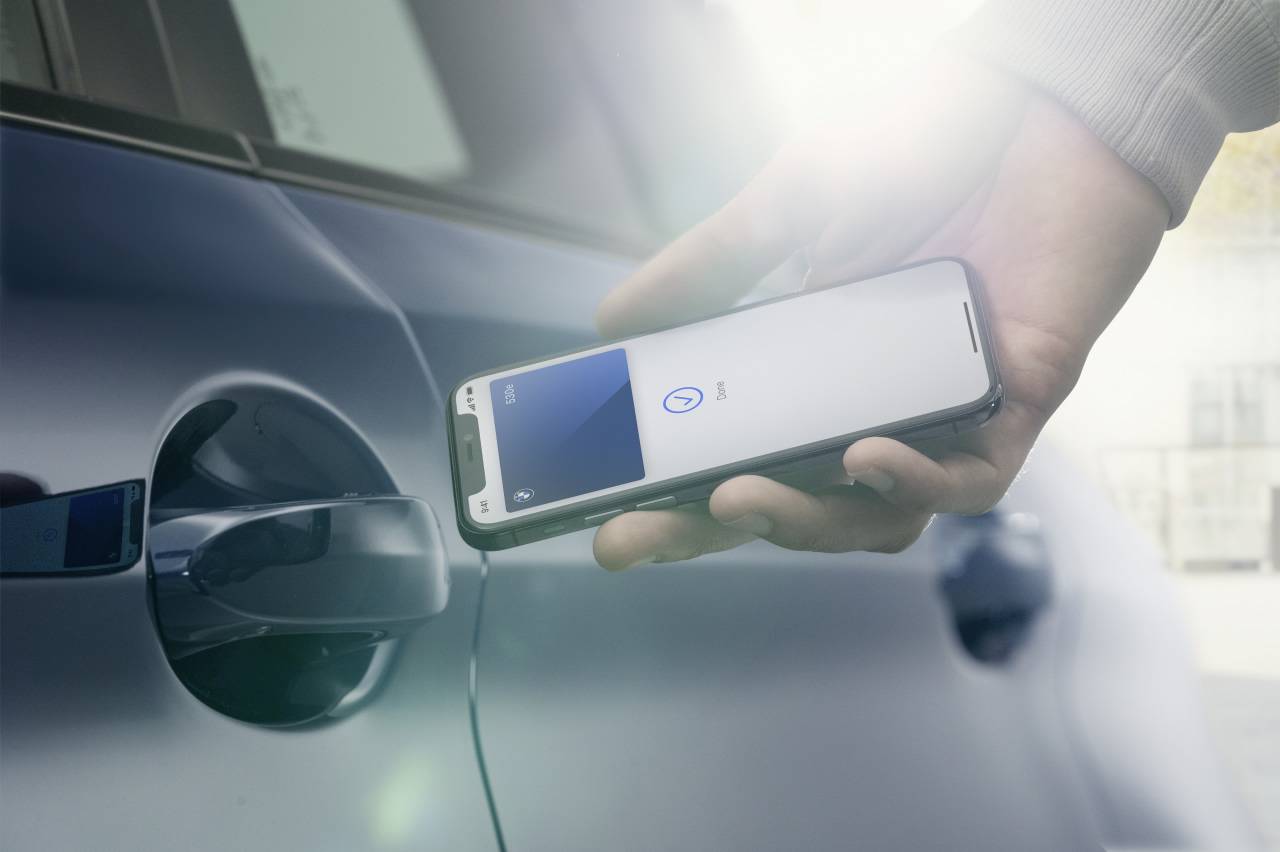
    Apple is preparing to expand its CarKey feature which was first announced at WWDC 2020. The feature, two years into its unveil, has been relegated to select BMW models in limited countries but now according to famed Apple watcher Mark Gurman, the feature could be coming to Hyundai vehicles and cars from its premium luxury brand Genesis. The feature is expected to roll out by summer 2022, and likely will be announced at Apple’s 2022 WWDC conference which could happen in June.

    This is interesting as Apple and Hyundai have become strange bedfellows after Hyundai revealed that it was in talks with the Cupertino-based gadget maker for the manufacturing of the Apple Car project which has been in limbo for a long time. Apple is said to have pulled back from any engagement after Hyundai made unsolicited disclosures.

    But this expansion of CarKey is crucial as Google has made more headway with Android Auto and a similar feature that was announced last year at Google I/O. On top of this Google has also managed to onboard several key manufacturers for Android Automotive – like Volvo and Ford – which is its operating system for the car infotainment system. Google of course is also the pioneer of self-driving technology as Waymo spawned out of its skunkworks Google X unit and has since been the flag bearer of autonomous cars.

    Google, Apple’s prime rival in the modern computing rival has had the leg up on the in-car experience and Apple has to make moves to catch up. Luckily, Apple has been building towards an expanded CarKey rollout as codebase leaks in iOS 15 have also suggested the same, though this could happen with iOS 16 which is around the corner.

  • Hyundai Motor Aims To Develop Chips

    Hyundai Motor Aims To Develop Chips

    Hyundai Motor’s global chief operating officer said on Wednesday the South Korean automaker wants to develop its own chips to reduce reliance on chipmakers. A global shortage of semiconductors, triggered partly by surging demand for laptops and other electronic products during the pandemic, has shuttered some auto production lines globally this year. Hyundai temporarily suspended some factories, but the company’s global COO Jose Munoz told reporters the worst has passed for the industry chip shortage, adding Hyundai had the “toughest months” in August and September.

    “The (chip) industry is reacting very, very fast,” Munoz said, adding Intel is investing a lot of money to expand capacity. “But also in our case, we want to be able to develop our own chips within the group, so we are a little bit less dependent in a potential situation like this,” he said. “This takes a lot of investment and time, but this is something we’re working on.”

    He said the company’s parts affiliate Hyundai Mobis would play a key role in the in-house development plan. He also said Hyundai Motor aims to deliver vehicles at the level of its original business plan in the fourth quarter, and offset some of its production losses next year.

    Along with Toyota and Tesla, Hyundai is among a handful of automakers that increased global sales despite the chip shortage. Hyundai decided not to cut orders during the pandemic, after seeing the Asian markets recover more strongly than expected, Munoz said. Munoz, president of Hyundai Motor North America, said the company is on track to produce electric cars in the United States in 2022, and is looking into both enhancing its existing factory in Alabama and increasing its production capacity.

    He said the U.S. government needs to extend a proposed $4,500 tax credit incentive to U.S. electric vehicles made at non-union factories as well as union ones. “American workers are the same,” he said. “We would like this to be equal for all.” U.S. factories of Tesla and foreign automakers such as Hyundai and Toyota Motor are not unionized.

  • Hyundai’s Global Sales Down By 7.6 Percent In August 2021

    Hyundai’s Global Sales Down By 7.6 Percent In August 2021

    Hyundai Motor Company has announced its global sales for the month of August 2021. Compared to 318,700 units sold in August 2020, the automaker recorded a decline in sales of 7.6 percent as it sold 294,591 units in the last month. On a month-on-month (MoM) basis, Hyundai recorded a de-growth of 6 percent selling 313,451 units in August 2021. The automaker expects the sales could drop further for the rest of this year amid adverse business conditions caused by issues like global chip shortage and COVID-19 resurgence.

    Sales at Hyundai’s home market, Korea, slipped by 6.5 per cent year on year to 51,034 units. Compared to 59,856 units sold in July 2021, the carmaker has registered a Month-on-Month (M-o-M) de-growth of over 14 per cent. The carmaker says the sales were mainly affected due to the COVID-19 resurgence and the disruption of the semiconductor supply chain.

    For markets other than Korea, sales declined 7.8 percent to 243,557 units compared with 264,110 units a year earlier. On a month-on-month (MoM) basis, the automaker witnessed a drop of 4 per cent selling 253,595 units in July 2021.

    Last month, Hyundai has recorded a 2.3 percent growth in India.

    However, there was good news emerging out of India as the carmaker saw a growth of 2.3 percent last month. The South Korean automaker sold 46,866 units last month compared to 45,809 units sold in the corresponding month in 2020.