Retail News CRM

Tag: Hyundai

  • Starbucks and Hyundai launching its own credit card

    Starbucks and Hyundai launching its own credit card

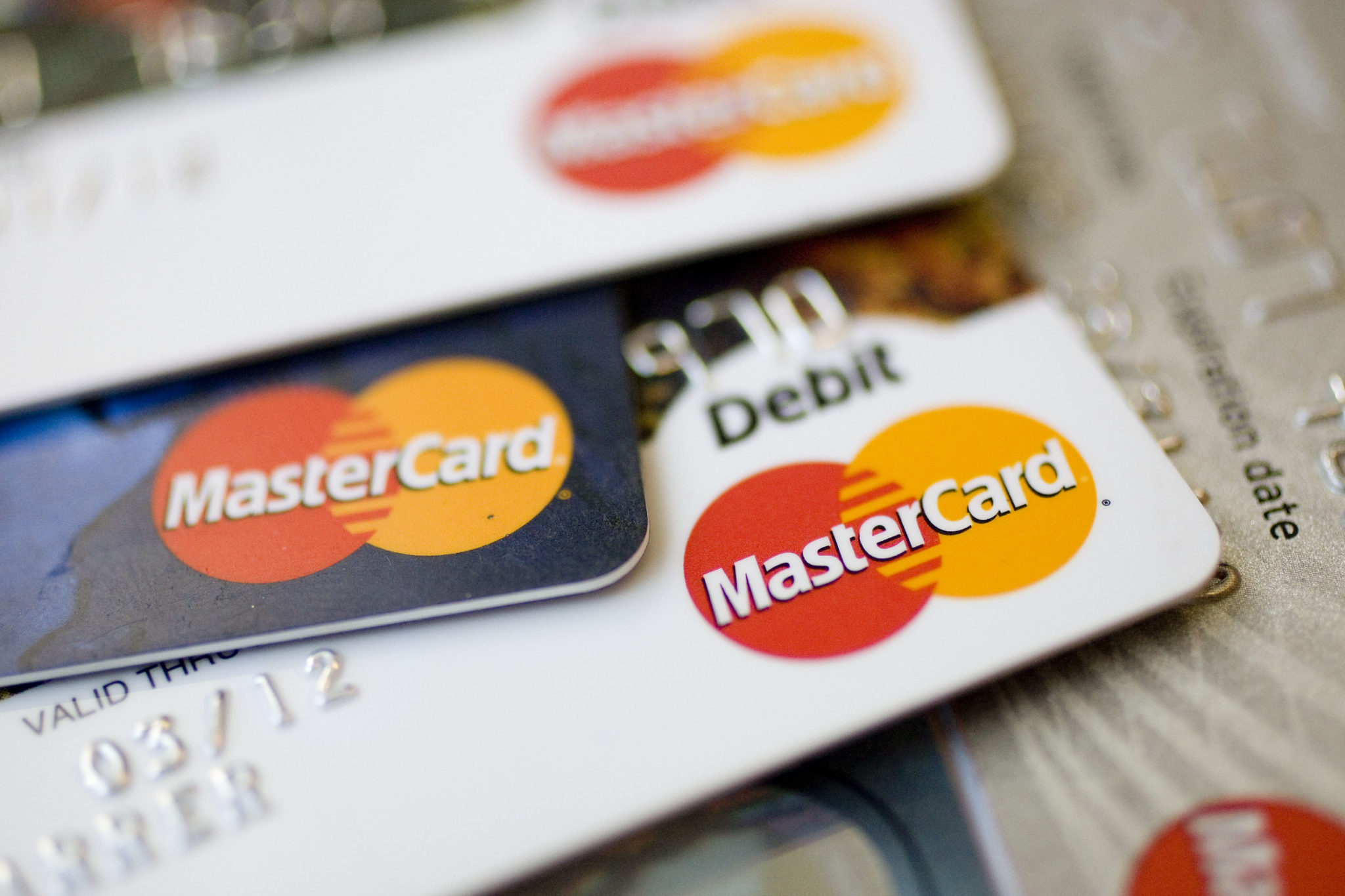
    South Korean conglomerate Hyundai’s credit-card subsidiary Hyundai Card is collaborating with Starbucks to launch a private-label credit card.

    The card will be made available later this year with marketing and operations are taken care of by the local issuer. Customers bearing the card will be eligible for all rewards offered by Starbucks on top of regular credit functions and will enjoy optimized benefits from both firms.

    “Along with the private-label credit-card product, we will spur the development of customized services based on our big data,” company officials said.

    The partnership marks Starbucks’ first such private-label alliance within the territory, while Hyundai has previously set up such agreements with E-mart, eBay, Costco, GS Caltex and Korean Air, among others.

  • Three Hyundai India Workers Test Positive For Coronavirus

    Three Hyundai India Workers Test Positive For Coronavirus

    Three employees at Hyundai Motor Co’s Indian plant have tested positive for the coronavirus, the company said on Sunday, days after the South Korean automaker resumed operations after a near two-month lockdown. Test results of sixteen more workers who possibly came into contact with the infected employees are expected over the next two days, a senior government official told Reuters.

    “The state’s policy is to not let the industry stall,” said P Ponniah, the top bureaucrat in the Kancheepuram district of southern India where Hyundai’s plant is located. “We will ensure the areas inside the plant visited by the COVID positive employees are sanitized,” he said, adding that until such time workers would be barred from working in those areas.

    Hyundai, which restarted operations at the plant on May 8, said the three employees started showing mild symptoms of coughs and colds in the first week of restarting and were tested positive. They are being treated, Hyundai’s India spokesman said in a statement.

    “All the necessary measures are being taken for contact tracing, self-isolation, and complete sanitation,” he said, adding the well-being of employees was a priority.

    The cases at Hyundai, India’s second-largest carmaker by market share, come as bigger rival Maruti Suzuki India said late on Saturday that one employee at its plant in the northern city of Manesar tested positive and there may be the possibility of a second case.

    0Comments

    The cases expose the risks and challenge Prime Minister Narendra Modi’s government faces in restarting automobile production in an effort to kickstart the economy after a near two-month lockdown to fight the spread of the novel coronavirus.

  • Hyundai’s Global Sales Drops By 21% In March As Coronavirus Hits Demand

    Hyundai’s Global Sales Drops By 21% In March As Coronavirus Hits Demand

    Global sales for Hyundai Motor Co tumbled 21% in March to an 11 year-low for the month as the coronavirus pandemic batters demand and forced several of its overseas plants to suspend production.

    The South Korean automaker reported provisional global sales of 308,503 vehicles for March.

    The top automotive news of the day – Hyundai has launched the 2020 Verna in India. Royal Enfield Meteor 350 spied. Mahindra to manufacture face shield for medical personnel.

    Hyundai Motor closed its Montgomery, Alabama, assembly plant last month after an employee there tested positive for the disease, and also suspended production at plants in the Czech Republic and India over the virus.

    Plants in South Korea are, however, running at close to full capacity.

    Credit ratings agency Moody’s Investors Service said in a report last month it expects global sales for the auto industry to slide 14% this year. It placed the ratings of Hyundai and its affiliate Kia Motors Corp on review for a possible downgrade.

  • Hyundai Motor India Suspends Operations At Its Chennai Plant

    Hyundai Motor India Suspends Operations At Its Chennai Plant

    The life-threatening Coronavirus pandemic has put the world on stand by and the story is no different in our country. Many automakers across the globe have already stopped production and even automakers in India are suspending operations as the number of Corona cases cross 350 in the country today. After Maruti Suzuki, Honda Cars India, Mahindra and Fiat Chrysler Automobiles (FCA), even Hyundai Motor India has announced shutting down its Chennai plant March 23 onwards till any further notice.

    The step comes after the lockdown announcement by the State government as a precautionary measure against the outbreak of COVID-19. In succession to the ‘Janta-Curfew’ implemented nationwide today, over 80 cities in the country including the national capital are going on a lockdown tomorrow 6:00 AM onwards. Even Tata Motors that had announced to excessively scale-down productions at its Pune plant March 23 onwards is likely to go on a complete shutdown. Tata Motors had earlier affirmed through a statement that the company will preferably stop operation March 24 onwards after observing the situation in the country.

    Hyundai has taken several initiatives for the welfare of its customers as well amidst the Coronavirus scare. The carmaker will be providing round the clock roadside assistance to its customers in case of any emergency. It will offer two months extended warranty to those customers who are not able to avail the standard or extended warranty and free services due to any health emergency or shutdown of dealerships and workshops during the lockdown. Hyundai has deployed 1000 doorstep bikes and cars to provide road assistance services to its customers.

  • 2020 Hyundai Verna Facelift Launch Details Out

    2020 Hyundai Verna Facelift Launch Details Out

    The new Hyundai Verna Facelift will be launched with the 1.0-liter, three-cylinder, GDI turbo petrol engine that made its debut in the Venue last year and is also offered in the Grand i10 Nios and Aura. Like the Venue, even in the Verna this engine will be paired with a seven-speed dual-clutch transmission (DCT) while a six-speed manual gearbox will be standard. The new Verna will also share part of its engine line-up with the new Hyundai Creta. So the 1.5-liter, four-cylinder, naturally aspirated petrol engine and the 1.5-liter, four-cylinder diesel engine will also be on offer. While the six-speed manual gearbox will be standard on both engine options, the petrol will also come with a six-speed intelligent variable transmission (IVT) and the diesel will have a 6-speed automatic transmission.

    Hyundai has also dropped a teaser image of the Verna ahead of its launch. Though the silhouette of the car remains unchanged, the face has been heavily updated and is in-line with Hyundai’s latest family face. It gets an all-new cascade grille finished in chrome and is flanked by new LED headlamps. At the rear too it gets new LED taillights and the bumpers have been revised as well.

  • New-Gen Hyundai Creta To Come With Blue Link Connected Car Tech

    New-Gen Hyundai Creta To Come With Blue Link Connected Car Tech

    The soon-to-be-launched Hyundai Creta will now come with the company’s Blue Link connected car technology. Slated to be launched on March 17, the second-gen Creta will be the third Hyundai car to get the Blue Link system, after the Venue and Elantra facelift. And while the other two only got up to 34 connectivity features, the Creta will come with over 50 connectivity features. Furthermore, in addition to the natural language-based voice recognition program, and Smartwatch integrated Blue Link application, the system now also comes with the ‘Hello Blue Link’ – a wake-up word for activating in-car controls with a voice command.

    Tarun Garg, Director – Sales, Marketing & Service, Hyundai Motor India, said, “With the All-New Creta, Hyundai aims to offer customers the Ultimate Technology Experience. All New Creta will feature Blue Link Connectivity, bringing in ‘Hello Blue Link’ – a wake-up word to activate voice recognition service at ease for in-car control and assistance alongside New Smart Watch Integrated Blue Link application. With Smart and Intuitive solutions offered on the All-New Creta, Hyundai aims to give customers a Quality Time on the go, enhancing the driving experience and providing a Happy Life to its customers.”

    With the new Blue Link system, Hyundai offers connectivity features across a wide range of spectrum like – safety, security, remote access, vehicle relationship management, location-based services (live-tracking), and alert services (theft alert). These, of course, are in addition to the new voice recognition system that understands Indian accent, and Hey Blue Link command. By just saying ‘Hello Blue Link’ you can now control several functions like – Sunroof Open/Close, Seat Ventilation Control, Climate Control -Temperature, Fan Speed control, Wind Direction and Air-intake type control (Fresh/ Circulation)

    The New-Gen Hyundai Creta’s smartwatch connectivity offers remote access to several in-car controls

    Similarly, the smartwatch connectivity feature also offers you remote access to several in-car controls like – engine start/stop, remote door lock/unlock, and remote horn+lights. You can also turn on the in-car air purifier along and check your in-car air quality information with the smartwatch. It also shows vehicle status via the Blue Link app, along with vehicle alerts like stolen vehicle alert, Geo-Fence Alert, Speed Alert, Time Fence Alert, Valet alert, Idle Alert.
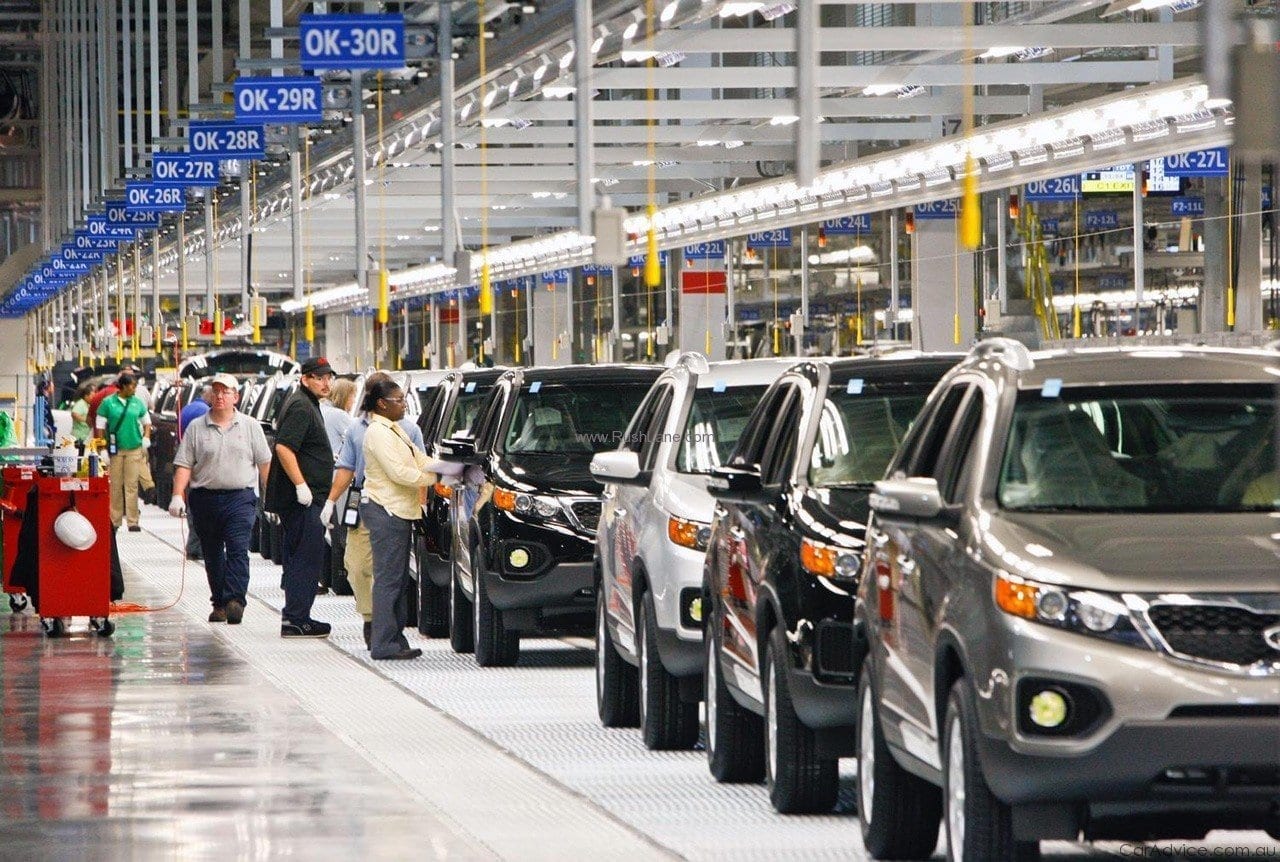
  • Hyundai Shuts Down Factory In Korea After Worker Tests Positive For Coronavirus

    Hyundai Shuts Down Factory In Korea After Worker Tests Positive For Coronavirus

    “The company has also placed colleagues who came in close contact with the infected employee in self-quarantine and taken steps to have them tested for possible infection,” Hyundai Motor said in a news release. The company added that it was disinfecting the factory.

    Ulsan is less than an hour from Daegu, the epicenter of the outbreak in Korea.

    Hyundai operates five car factories in Ulsan, which has an annual production capacity of 1.4 million vehicles, or nearly 30% of Hyundai’s global production. Hyundai employs 34,000 workers there in the world’s biggest car complex.

    The factory that was shut down produces sport utility vehicles such as Palisade, Tucson, Santa Fe and Genesis GV80.

    A factory run by Hyundai supplier Seojin Industrial had been closed after the death of a virus-infected worker there. It reopened Wednesday.

    Meanwhile, South Korea’s top carrier, Korean Air Lines Co Ltd, said on Friday it would cut the number of flights to the United States in March.

    It plans to check temperatures of passengers traveling to the United States before boarding and said it would not allow anyone with a temperature higher than 37.5 Celsius to fly.

    It said it would expand these procedures to other routes.

    One of its flight attendants who served the Incheon to LA route has tested positive for virus.

  • Hyundai India Postpones Investment Plans In New Plant

    Hyundai India Postpones Investment Plans In New Plant

    The slowdown in the Indian auto market has also dented long term plans of automakers in India. Hyundai which was gearing up to set up a new plant in India has now postponed its plans by two or three years. Hyundai Motor India Managing Director (MD) & CEO, S.S. Kim told Times Of India in an interview that the company has sufficient production capacity to meet its domestic and global demand.

    Kim also added that buyer sentiments in India are not very positive at present and it may take around three years to restore the volumes and meet the sales performance targets like 2018. For the time being, the Korean carmaker will continue to focus on new launches that have already started with the launch of the Grand i10 Nios and Aura subcompact sedan.

    Hyundai Motor India has registered 37,953 units in the domestic market in December 2019, as compared to 42,093 units which is a de-growth of 9.8 percent. It’s domestic sales in the calendar year 2019 declined by 7.2 percent at 510,260 units as compared to 550,002 units which were sold in the calendar year 2018.

  • New Generation Hyundai i10 Commences Production For EU

    New Generation Hyundai i10 Commences Production For EU

    The new generation Hyundai Grand i10 Nios was launched last year in India and now its European sibling, the 2020 Hyundai i10 is all set to be made available in the continent. Hyundai has commenced series production of the new i10 for Europe with sales to begin by early February 2020. The popular hatchback is produced at the Hyundai Assan Otomotiv Sanayi (HAOS) plant located in Izmit, Turkey. The plant has been operational since 1997 as the company’s oldest-running overseas facility and has a production capacity of 230,000 nits per annum.

    The new generation Hyundai i10 for Europe is identical to the India-spec model but gets a host of changes. This includes a more smartly styled front grille with circular LED daytime running lights in place of the boomerang-shaped ones on the Indian model. The fog lamp housing is different as well and the overall design looks sharper for a sporty look. Other changes include 15-inch alloys with optional 16-inch units; dual-tone paint scheme with a contrast roof and a new tail lamp design that looks sharp.

    The Euro-spec 2020 Hyundai i10 also gets smaller proportions and is about 135 mm smaller, 160 mm shorter with a 25 mm shorter wheelbase. The cabin is loaded with features including the 8-inch touchscreen infotainment system with Apple CarPlay and Android Auto, wireless charging, and BlueLink technology for connected tech. The European version also gets collision avoidance assist, high beam assist, lane-keeping assist, driver attention warning and speed limit warning as standard.

    The new i10 will be sold in over 45 markets across Europe with the Turkey plant catering to the demand. The Hyundai Assan plant employs around 2500 personnel and will also be producing the third generation i20 that is expected to be revealed at the upcoming Auto Expo 2020 in New Delhi. The new i20 will go on sale in India first, followed by other markets later in the year.

  • Hyundai Department Store aims to eliminate paper receipts

    Hyundai Department Store aims to eliminate paper receipts

    Hyundai Department Store says it will launch an electronic receipt issuance service with the aim of “zero” paper receipts within three years.

    Electronic receipts will be issued in the form of the automatic issuance of receipts through mobile applications instead of paper receipts when purchasing goods.

    Last year, about 160 million paper receipts were issued by Hyundai Department Store and Hyundai outlets.

    If an average length of paper receipt is 25cm, the total length of issued paper receipt would be able to circle the earth once – about 40,000km.

    Even if one is not a member of the department store’s loyalty program, the company will introduce a “mobile receipt” service that sends receipts by text message if a mobile phone number is entered in the process of product payment, which will also eliminate paper receipts.

    The issuance of electronic receipts is a measure under the “paper receipt elimination” agreement signed with the Ministry of Environment and other government ministries last August.

    The department store expects that the issuance of electronic receipts will have the effect of eliminating paper waste and waste disposal issues as well as minimizing concerns over personal information leaks.

  • Hyundai Announces A Price Hike Across All Models From January 2020

    Hyundai Announces A Price Hike Across All Models From January 2020

    South Korean auto giant, Hyundai Motor has announced that the company will be increasing prices across all its cars from January 2020. With the announcement, the manufacturer joins the list of other carmakers including Maruti Suzuki, Kia and Hero MotoCorp that have announced price hikes for the new year. Hyundai has not revealed details of the price hike at the moment but did say that the decision has been made due to the rise in the input and material costs. The extent of the price increase will vary depending on the model and the fuel type, it said further in a statement.

    Both Maruti Suzuki and Kia will increase prices across product line-up but are yet to announce the sum of the hike in question. Meanwhile, Hero has said that its two-wheeler range will see an increase in prices by up to ₹ 2000, depending on the model.

    While these manufacturers are the first to announce hikes, more companies are expected to follow suit. That being said, certain companies may refrain from announcing price increases on its models for now and roll out the BS6 ready versions that are set to get a price increase at a premium over the current asking price. Tata Motors will increase prices from January next year and did say that its passenger vehicles will see a rise by ₹ 10,000-15,000 on the BS6 versions.

  • Hyundai Begins Feasibility Study For Fuel Cell Electric Vehicle in India

    Hyundai Begins Feasibility Study For Fuel Cell Electric Vehicle in India

    Hyundai Motor India today announced that it plans to expand its green mobility portfolio in India which currently only has the Kona EV. Hyundai has had its share of success with the Kona EV in the country and even managed to bag a small order from EESL. But now the company is taking another step in bringing in more green cars to the country. Hyundai today announced that it is evaluating the feasibility of bringing fuel cell electric vehicles for India.

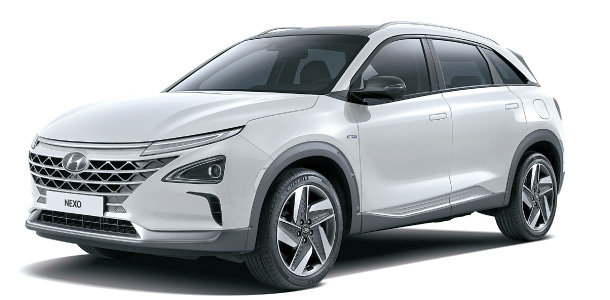
    We told you back in September 2018, that Hyundai was planning to launch a fuel cell vehicle in the country and the Nexo will very much be part of the company’s portfolio soon and this news only cements what we had said back then. While a timeline for the launch for the Nexo has not been charted out yet, we wait to see, when these plans reach fruition. We have brought you the exclusive review of the Nexo though. The Nexo SUV is Hyundai’s important step to develop low emission models globally. The company has had a record sales for Nexo in its home market in November 2019 where it sold 699 units.

    The Nexo gets a fuel cell drivetrain, which is lighter than a regular electric powertrain. Hyundai says that the Nexo makes about 161 bhp of max power and peak torque of 395 Nm. Also, the Nexo SUV can do the 0-100 kmph sprint in 9.2 seconds and has a top speed of 177 kmph. The car has a range of 609 kilometres on a single charge according to Korean test standards. In typical SUV way, the Nexo is designed to handle cold starts even when the outside temperature is -30 degree Celsius.

    Mr S S Kim, MD and CEO, Hyundai Motor India Ltd, said, “Progress for Humanity with Zero Emission Mobility is our responsibility and vision to make a long-term positive transformation for our future generations. We have initiated the feasibility study for Fuel Cell Electric Vehicle in India and promise to bring the ultimate solution in zero emission mobility”

  • Hyundai Motor Unveils Plan To Invest $52 Billion Over Six Years

    Hyundai Motor Unveils Plan To Invest $52 Billion Over Six Years

    Hyundai Motor plans to invest about 61.1 trillion won between 2020 and 2025, about one-third of the expenditure focused on electric and autonomous vehicles, the company said on Wednesday. The South Korean carmaker unveiled a “Strategy 2025” roadmap that envisaged annual average spending of 10 trillion won, higher than previous years, and up from a 2018 figure of 6.1 trillion won.

    Hyundai will devote about 20 trillion won of the total investment, spread across six years, to future technologies, it added.

    It also set an ambitious deadline of 2025 to place itself among the world’s top three makers of battery and fuel cell vehicles, with annual sales of 670,000 electric vehicles, including 560,000 battery-based cars.

    Hyundai shares were up 2% by 0136 GMT after the announcement, which included a plan to buy back 259.6 billion won worth of common shares.

  • Hyundai Motor Replaces Head Of Premium Genesis Brand

    Hyundai Motor Replaces Head Of Premium Genesis Brand

    Hyundai Motor on Tuesday named its former North American chief, William Lee, to oversee its premium Genesis brand following the departure of Manfred Fitzgerald to pursue new opportunities. Lee faces the challenge of rejuvenating Genesis sales in the U.S. market and making headway in Europe and China, both tough markets to crack for luxury car sales.

    “The company expects Mr. Lee, in his new capacity, to lead the brand’s further global expansion by leveraging his overseas business operations expertise,” Hyundai said in a statement. “North America is an imperative market for the Genesis brand,” it added.

    The news follows the appointment this month of Mark Del Rosso, a former president of Audi America, to oversee Genesis operations in North America. Genesis U.S. sales halved to 10,312 last year, although sales have picked up this year. The United States is the biggest overseas market for Genesis, which generated 72% of its sales in South Korea last year.

    Before his stint at Hyundai Motor North America, Lee oversaw Hyundai’s Brazil operations and the U.S. unit of advertising arm Innocean Worldwide.

    Hyundai said in a recent earnings conference call that it has set up Genesis sales operations for China and Europe. Hyundai Motor Group’s heir apparent Euisun Chung introduced the Genesis brand in November 2015, bringing in Fitzgerald, a former Lamborghini executive, a few months later to help the automaker shed its value for money image.

  • Hyundai Motor May Raise Stake In China Joint Venture

    Hyundai Motor May Raise Stake In China Joint Venture

    Hyundai Motor said on Tuesday it was considering raising its stake in its underperforming truck joint venture in China, potentially joining other foreign automakers in boosting ownership in the world’s biggest car market. Sichuan Hyundai Motor is Hyundai’s only commercial car venture in China that makes cargo trucks and buses.

    Beijing relaxed rules last year on foreign firms controlling any Chinese automakers or joint venture, removing caps on those making fully electric and plug-in hybrid vehicles. Limits on commercial vehicle makers ease in 2020, and by 2022 for the wider car market.

    Hyundai is reviewing various plans to strengthen the joint venture’s competitiveness in changing market conditions in China, the firm said in an emailed statement, without elaborating. Volkswagen AG is exploring the prospect of buying a big stake in its Chinese electric vehicle joint venture partner, sources have told Reuters, while BMW has agreed to buy control of its main joint venture in China.

    Sichuan Hyundai Motor is jointly owned by Hyundai and China’s Sichuan Nanjun Automotive Group, with a stake of 50 per cent each. The Sichuan joint venture, which started operations in 2013, produced 12,228 commercial vehicles last year, down by more than half from 28,786.

    That means that their production facilities are heavily underutilised given that they have a capacity of making 160,000 trucks and 10,000 buses a year.