Retail News CRM

Tag: Hyundai

  • Hyundai Group To Invest $35 Billion In Mobility And Auto Technologies By 2025

    Hyundai Group To Invest $35 Billion In Mobility And Auto Technologies By 2025

    Hyundai Motor Group said it plans to invest 41 trillion won ($35 billion) in mobility and other auto technologies by 2025, part of which will be directed to an ambitious effort to become more competitive in self-driving cars that has also received government backing.

    The plan, which Hyundai said encompasses autonomous, connected and electric cars as well as technology for ride-sharing, comes after the automaker and two of its affiliates announced an investment of $1.6 billion in a venture with U.S. self-driving tech firm Aptiv.

    South Korea’s government is also onboard, unveiling more funding for autonomous vehicle technology with President Moon Jae-in declaring on Tuesday that he expected self-driving cars to account for half of new cars on the country’s roads by 2030.

    “The self-driving market is a golden market to revitalize the economy and create new jobs,” Moon said in a speech at Hyundai Motor’s research centre near Seoul.

    The government intends to spend 1.7 trillion won between 2021 and 2027 on self-driving technology. It expects Hyundai to launch level 4, or fully autonomous, cars for fleet customers in 2024 and for the general public by 2027, an industry ministry official told Reuters.

    But some experts question whether targets set by the government and the automotive group, which also includes Kia Motors Corp, are realistic given the technological and cost challenges and the lack of home-grown technology.

    In a 45-page report on future automotive technology, the government acknowledged South Korea lags in some key areas necessary for self-driving cars such artificial intelligence, sensors and logic chips.

    Other analysts noted that the prospects for self-driving cars are quite murky.

    General Motors Co’s self-driving unit, Cruise, said in July it was delaying the commercial deployment of cars past its target of 2019 as tech firms and automakers acknowledge it will take more time and money than they had expected to make autonomous vehicles safe for unrestricted use on public roads.

    South Korea’s government said it would prepare a regulatory and legal framework for autonomous cars and the safety questions they pose by 2024.

    It is also aiming to lay the technological and legal groundwork for demonstrations of flying cars by 2025. Hyundai Motor’s executive vice-chairman Euisun Chung said last month that the company is looking at developing flying cars.

    Hyundai has also received much government backing for hydrogen fuel cell cars, with Moon calling hydrogen power the “future bread and butter” of Asia’s No. 4 economy and declaring himself an ambassador for the technology.
  • Hyundai Invests In Netradyne To Develop Advanced Driver Assistance Systems

    Hyundai Invests In Netradyne To Develop Advanced Driver Assistance Systems

    Hyundai Motor Company’s corporate venturing and open innovation business, Cradle, has announced that it is investing in Netradyne, an intelligent technology company specializing in fleet safety management software. The partnership supports further development of Level 3+ Advanced Driver Assistance Systems (L3+ ADAS) and Autonomous Driving (AD) features that may launch over the next few years. Netradyne uses artificial intelligence vision-based dashcam devices to monitor safety performance of fleet vehicles. The system may also help crowdsource road and driving behavior metadata.

    Hyundai and Netradyne will collaborate to utilize the road and driving behavior data collected by Netradyne to support HD mapping and map updates for Hyundai’s development of future L3+ ADAS and AD features. The costs associated with outfitting traditional mobile mapping system (MMS) vehicles, which are currently employed for HD mapping, make it challenging for many OEMs to place enough MMS vehicles on the road to provide the necessary frequency of HD mapping updates. Netradyne says that its devices are more cost-efficient and are currently equipped to numerous vehicle fleets.

    Netradyne has already captured and analyzed over 1 million unique miles of the 2.7 million total miles of paved roads in the United States. This data includes numerous passes over the same roads to provide deeper insights into how driving and road different conditions may change throughout the year. In total, Netradyne has analyzed more than 350 million miles of road data. Each of these 350+ million miles has been analyzed with AI and collected by professional drivers.

  • US Fines Hyundai $47 Million Over Dirty Diesel Engines

    US Fines Hyundai $47 Million Over Dirty Diesel Engines

    South Korean automaker Hyundai will pay a $47 million fine for illegally importing and selling dirty diesel engines in violation of American environmental rules, US authorities announced Thursday.

    Between 2012 and 2015, the company imported nearly 2,300 diesel-powered heavy construction vehicles with engines that did not meet US emissions standards, the US Justice Department said in a statement.

    “Hyundai put profits above the public’s health and the requirements of the law,” Jeffrey Bossert Clark, head of the department’s environment and natural resources division, said in a statement.

    “We will not tolerate such schemes that skirt the Clean Air Act, designed by Congress to improve air quality.”

    The case began with a whistleblower tip submitted in 2015 to the US Environmental Protection Agency, which launched criminal and civil proceedings.

    A US court earlier imposed a $2 million fine on the company for the clean air violations.

    US officials say the Hyundai diesel engines were not certified to meet emissions standards for particulate matter and nitrogen oxide, both of which contribute to disease and premature death.

  • Hyundai Motor Group Develops New Centre Side Airbag

    Hyundai Motor Group Develops New Centre Side Airbag

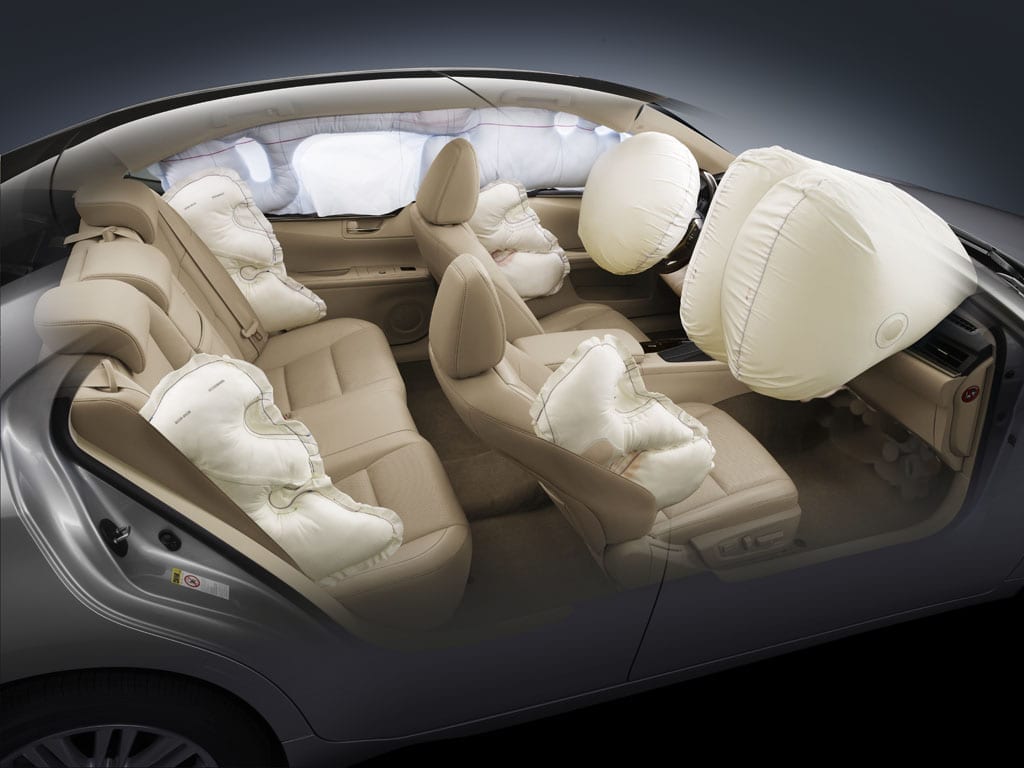
    Hyundai Motor Group has developed a new center side airbag, which works to separate the space between driver and passenger. The Group will roll out the technology in upcoming vehicles. This new, additional airbag expands into the space between driver and passenger seats to prevent head injuries of passengers in the front row. If there is no one in the front passenger seat, the airbag will protect the driver from side collision coming from the right side. The center side airbag is installed inside the driver’s seat and will deploy once the impact is sensed.

    The new center side airbag is expected to diminish head injuries caused by passengers colliding with each other by 80 percent. The Group has applied newly patented technology to maintain reliability but reduce the weight and size of the airbag.

    Hyundai Motor Group has developed a new technology to simplify the design and reduce the weight of component produce an airbag which is about 500g lighter than the competing products. Thanks to the smaller size of the airbag, the company’s design teams will have more flexibility in the type of seat design they envision for future products.

    The additional airbag expands into the space between driver and passenger seats to prevent head injuries

    Upcoming Euro NCAP is expected to include side-impact into its consideration beginning year 2020 and Hyundai Motor Group’s airbag will certainly help in addressing this.

  • Hyundai Motor Joins European Electric Car Charging Venture Ionity

    Hyundai Motor Joins European Electric Car Charging Venture Ionity

    Ionity, the European electric vehicle charging joint venture of Volkswagen, BMW, Daimler and Ford, said on Monday that South Korea’s Hyundai Motor had joined as a shareholder.

    Ionity aims to install 400 high-speed charging stations across Europe by the end of next year in a bid to combat concerns about the range of electric vehicles, which is still considered a key factor limiting demand.

    So far, the venture has installed 140 stations in 14 European countries, while a further 50 are under construction.

    “The participation of new investors in Ionity is a clear signal of trust indicating that the work of our young company is already bearing fruit,” Chief Executive Michael Hajesch said in a statement.

    The announcement comes days before the Frankfurt Auto Show IAA, where sustainable driving and electric cars will take centre stage. Volkswagen will display its ID 3 electric vehicle, Porsche its Taycan electric sports car, and Mercedes-Benz its fully electric van.

    Carmakers are pouring much of their cash into developing electric vehicles, while energy providers hesitate to take on responsibility for the rollout, as long as electric car sales remain too low to provide a profitable customer base.

    Reporting by Christoph Steitz; Editing by Edmund Blair

  • Retro-Themed Hyundai 45 Concept Teased Ahead Of Frankfurt Motor Show Debut

    Retro-Themed Hyundai 45 Concept Teased Ahead Of Frankfurt Motor Show Debut

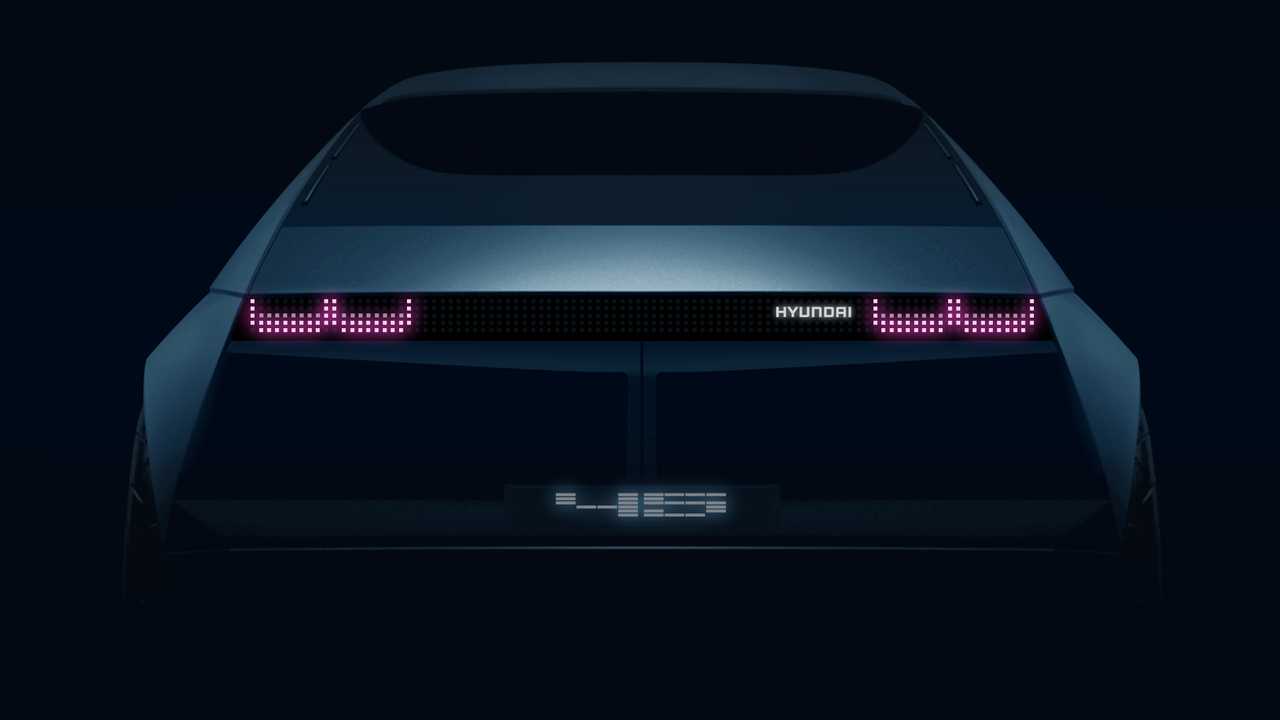
    The future is 8-bit. At least that’s what Hyundai’s new ’45’ concept suggests that was recently teased, ahead of its debut at the upcoming Frankfurt Motor Show on September 10, 2019. Inspired by the automaker’s first model in the 1970s, the 45 fully-electric concept car will act as a symbolic milestone for Hyundai’s future EV design, according to the company. The car that the automaker speaks of is the Hyundai Pony that was introduced in 1975 and was the first mass market car in South Korea. The Hyundai 45 concept not only pays homage to the Pony but also takes a retro design cue or two for its EVs.

    While the teaser does not give out any major details about the Hyundai 45 concept, we do get a clearer look at the silhouette of the car that is more angular and boxy than we thought. The dot-matrix taillights though do standout and certainly something we wouldn’t mind seeing on the production EV cars of the future too. It also sits well with the neo retro theme fo the car, something Honda too explored successfully with its new E, electric compact car.

    Hyundai is known for making some bold styling choices and while its current cars get that ‘Sensuous Sportiness’ design language, this would be a welcome change. We will, of course, get the complete look at the new 45 in a few days from now at Frankfurt and we do expect something radical from the Korean carmaker.

  • More Jobs In Auto Lost, Toyota And Hyundai Cut Production

    More Jobs In Auto Lost, Toyota And Hyundai Cut Production

    With India’s auto sales declining for the ninth straight month in July, more automotive manufacturers are laying off workers and temporarily halting production to keep costs in check, according to sources and documents seen by Reuters.

    Japanese carmaker Toyota Motor and South Korea’s Hyundai Motor are the latest in a string of companies to briefly halt some parts of production at plants to combat slumping sales, according to company memos to employees, reviewed by Reuters.Passenger vehicle sales in July fell at the fastest pace in nearly two decades.

    The sales declines have triggered major job cuts in India’s auto sector, with many companies forced to shut down factories for days and axe shifts.

    Sources have told Reuters that even more companies have now begun to lay off temporary workers as the slowdown worsens.

    Denso Corp’s India unit, which makes powertrain and air-conditioning systems for cars, has cut some temporary workers at its Manesar plant in north India, four sources familiar with the matter told Reuters.

    A spokeswoman for Denso said the information was incorrect and declined to elaborate further.

    In a separate email, another company official disputed that the firm employed temporary workers at its Manesar plant.

    Bellsonica, which is part-owned by India’s biggest carmaker Maruti Suzuki and makes auto framework parts, has also let more than 350 workers go in Manesar, two sources said.In an email, Bellsonica said the workers that had been let go were temporary workers, and most had been let go earlier in the year.Reuters earlier this month reported automakers, component manufacturers and dealers had already cut 350,000 jobs

    In a meeting with India’s finance ministry on Aug 7, industry executives asked for tax cuts, and easier access to finance for dealers and buyers, in an effort to revive sales.Toyota, in a notice dated Aug 13, told its workers the company would halt production at its plants in Bengaluru in southern India on Aug 16 and 17 “due to low market demand of vehicles” and high stock of about 7,000 vehicles. N Raja, deputy managing director, at Toyota’s India unit, told Reuters that while the company had a flexible production system it had to resort to five no-production days in August to prevent the build up of stock.”The industry is deeply concerned with the reality of poor customer sentiment faced by the sector,” said Raja, adding he hoped the government would step in to support the industry

    Hyundai, in a memo on Aug 9, also said it would halt production for several days in August across various departments including the body shop and paint shop as well as its engine and transmission plants. A Hyundai Motor India spokesman said the company expected sales to pick up in the festive season starting next month and added that the company had not laid off any workers.

  • Hyundai Group Unveils New Integrated E-Scooter For Last Mile Mobility On Future Vehicles

    Hyundai Group Unveils New Integrated E-Scooter For Last Mile Mobility On Future Vehicles

    Speaking on the new concept, DongJin Hyun, head of Hyundai Motor Group Robotics Team said, “This is the vehicle-mounted personal scooter which could be featured in future Hyundai Motor Group vehicles. We want to make our customers’ lives as easy and enjoyable as possible. Our personal electric scooter makes first- and last-mile commuting a joy while helping to reduce congestion and emissions in city centers.”

    Research data by global consultancy McKinsey & Company has released data suggesting that the last mile mobility market is expected to grow to $500 billion by 2030. The new integrated e-scooter is another step in that direction. The e-scooter is mounted on a vehicle and is automatically charged using the electricity generated when driving. A key change since the 2017’s concept has been the shift from front-wheel drive to rear-wheel drive that was essential for enhancing safety and stability as it positions weight near the rear. In addition, the engineers have added a suspension set-up to the front wheel for a smoother ride on rough surfaces.

    Hyundai’s integrated e-scooter features a 10.5 Ah lithium-ion battery, which enables a top speed of 20 kmph and can travel up to 20 km in a single charge. The scooter is light with a weight of 7.7 kg that makes it highly portable, while its tri-folding design makes it light and compact. The scooter also features a digital display that puts out a host of information including the speed and battery status. The e-scooter is also equipped with LED headlights and two taillights for enhanced visibility at night. Hyundai is also looking to introduce regenerative braking on the scooter to increase the range by seven percent.

  • Hyundai Teases Electric Concept For The 2019 Frankfurt Motor Show

    Hyundai Teases Electric Concept For The 2019 Frankfurt Motor Show

    We’ve already told you what Hyundai is bringing to the 2019 Frankfurt Motor show but the company has now teased a new model, and from the looks of it, it is another electric vehicle. The company says that this EV will focus on the future direction of the company’s car design and the inspiration from the past while also stepping into the future. The looks of the electric car in question is inspired by the brand’s first model in the 1970s. It’s called the 45 concept and yes, it’s an all-electric model. The company says that the 45 electric car concept will act as a milestone for Hyundai’s future EV design.

    The second electric vehicle will be the company’s first-ever electric racing car, which the carmaker claims will tease the future of motorsport. The new electric race car has been designed and built at the company’s headquarters in Alzenau, Germany by Hyundai Motorsport (HMSG). The company says that the car “will underline the company’s high-performance capabilities, green technology credentials and unwavering passion for motorsport.”

    The car will be unveiled on September 10, 2019 and will bring out the sensous and sporty design language that the company has been bringing in their cars lately. There are no technical details that have been released yet, but from the looks of it we’ll get a digital fascia. In addition to this showcase, Hyundai will debut the next-generation Hyundai Grand i10 (known as just i10 in Europe), and one more electric car.

  • Hyundai India Market Share Hits All Time High

    Hyundai India Market Share Hits All Time High

    Amidst all the gloom in the automobile sector, Hyundai Motor India has found some cheer. The country’s second-largest car manufacturer has been able to increase its market share in July to 19.4 percent. This is the largest share of India’s car market that Hyundai has ever been able to command. That it comes at a time the market is depressed means that overall volumes are of course lower than previous year levels for the sector.

    Yet if you make simplistic percentage correlations, Hyundai lost only 3.8 percent sales in July 2019 at 57,310 units over the same month in the previous year; while market leader Maruti Suzuki saw a much more drastic 35.1 percent year-on-year drop in sales. Hyundai has traditionally held on to between 17 and 18 percent of the market for the past several years. It’s the first time it’s share has crossed 19 percent.

    SS Kim, MD, Hyundai Motor India said, “We have maintained the sales momentum and grew to 1.7% in FY 18-19 vis-a-vis FY 17-18. We sold 5,45,243 units in the domestic market and exported 1,62,105 units in FY 18-19. In July 2019, with the tremendous response for Venue, we sold close to 39000 units, out of which 9585 units sold were of Venue. Despite current market challenges, Hyundai has been the only brand to maintain its leadership position and has increased its market share by 3% registering 19.4% market share in July 2019.”

    H1 data released by Jato Dynamics suggests that Maruti saw its market share erode marginally to settle at 51.07 percent in the first half of 2019 when compared to H1 2018 when it held 51.57 percent of India’s car bazaar. Others who also saw their share drop are Tata Motors (down from 6.49 to 5.90 percent) and Ford (down from 3.07 to 2.66 percent).

    The Tata Tigor and Zest, and Ford EcoSport have been draggers for the respective manufacturers as competition has driven customers elsewhere. Ironically the drag for Maruti off late is coming from the Vitara Brezza – a Diesel-only best selling model that’s been hurt by Maruti’s apparent stance to drop smaller displacement diesels from April 1 2020. Hyundai meanwhile has benefitted at its expense as it’s new Venue subcompact SUV that rivals the Vitara Brezza has two petrol engine options and has now emerged as the market leader in its segment. The Mahindra XUV300 also offers petrol and has therefore benefitted.

    Hyundai is also expected to see a small surge in compact hatchback sales as its new generation Grand i10 Nios drives in alongside the outgoing model which will stay on in the market for some months. It’s Creta continues to perform well and while it may take a slight hit as the Kia Seltos comes to market, Hyundai will pad up for the second generation Creta launch in 2020.

  • Hyundai Names Its New Hatchback Grand i10 Nios

    Hyundai Names Its New Hatchback Grand i10 Nios

    Hyundai has named the new-gen Grand i10 as the Grand i10 Nios. The car is set to be launched in India on August 20, 2019. The Grand i10 Nios name is only for India though, worldwide this car will be called the i10. The Grand i10 Nios is the 3rd Generation of the legendary brand ‘i10’ and will co-exist with Grand i10. Hyundai has kick-started bookings for the car in India across its dealerships in the country and the booking amount is set at ₹ 11,000.

    The new Grand i10 Nios gets Hyundai’s Signature ‘cascading grille’ which gives it a wider and stronger appeal to the front while rear gets a low and wide proportioned bumper gives it a sportier look. The compact yet spacious interiors with upper C pad appearing to be floating on the lower C Pad and the door trim character line flowing into the C pad gives a wider and spacious interior feel.The cabin gets a dual-tone treatment with black and beige. The steering wheel too gets a bit of chrome element on it making it looks a bit more sporty. But right in the centre of it all sits the touchscreen infotainment system. It’s likely to get Apple Carplay and Android Auto. The instrument cluster will be part analogue and part digital as well, giving the Hyundai Grand i10 Nios a sporty appeal. It will also get automatic climate control. From what we can see, the car will come with ABS and dual airbags as standard.

    SS Kim, MD & CEO- Hyundai Motor India Ltd said, “Hyundai Motor India has created benchmarks in Indian automobile industry by introducing Cutting-edge technologies and Best-in-segment world-class products for past 21 years. We are glad to present the All New 3rd Generation Grand i10 Nios, that blends the intrinsic and intuitive beauty of the car with unique design sense constantly changing and fulfilling our customers’ expectations. With the new Grand i10 Nios, we have created a new paradigm ensuring to maximize our customers’ emotional values in the perfect harmony with the four elements of Hyundai Design Identity: ‘Sensuous Sportiness’, such as Proportion, Architecture, Styling and Technology.”

    The Hyundai Grand i10 Nios is likely to come with a petrol and diesel powertrain but the company has not yet confirmed the engine line up and we’ll know more closer to the launch of the car

  • Hyundai Venue Bags 50,000 Bookings In Two Months

    Hyundai Venue Bags 50,000 Bookings In Two Months

    The Hyundai Venue has stood out to be a blockbuster hit for the Korean carmaker. The subcompact SUV has bagged 50,000 bookings in just two months since its launch and has helped Hyundai achieve 21 percent market share in the Indian SUV market. According to latest reports, the Venue became the second bestselling subcompact SUV India in June 2019, outperforming the Mahindra XUV300 by 3,994 units, which is quite a margin. In fact, at 8,763 units, the Venue is just 108 units behind the segment leader- Maruti Suzuki Vitara Brezza.

    Commenting on the record-breaking booking number, Vikas Jain, National Sales Head- Hyundai Motor India Ltd. said, “The Hyundai Venue has been able to strike a chord with the iGen customers who seek future technology, space, comfort, safety and ergonomics with new-age style. We are extremely overwhelmed by the enthusiastic response and milestone created by Venue with 50,000 bookings within sixty days of launch. We are glad that Indian customers have shown their faith in the Blue Link Connected Technology as out of the total Venue delivered so far, over 55 percent of the cars are Blue Link-enabled variant. Out of the 50,000 bookings, over 35 percent of customers have preferred the Hyundai’s in house best-in-segment -DCT (Dual Clutch Transmission) technology.”

    The figures make it clear that buyers prefer the top variants of the Venue which are equipped with the Bluelink connected car technology. The Hyundai Venue is offered in India with three engine and gearbox options – a 1.4-liter diesel engine mated to a six-speed manual gearbox, a 1.2-liter petrol engine mated to a five-speed manual gearbox and the 1-litre GDI Turbo engine which is mated to a seven-speed DCT automatic gearbox or a six-speed manual gearbox. The Hyundai Venue was launched in India on May 21 and the company has delivered 18,000 units since its launch.

  • Hyundai Mobis Builds Camera System To Replace Vehicle Side Mirrors

    Hyundai Mobis Builds Camera System To Replace Vehicle Side Mirrors

    South Korea’s largest auto parts maker Hyundai Mobis on Sunday said it has developed a camera monitoring system that will replace side-view mirrors in next-generation vehicles. With the advanced sensor technology, Hyundai Mobis has joined a couple of global future mobility developers and it aims to export the technology to carmakers, Yonhap news agency reported.

    Three high-performance camera sensors inside the vehicle will not only increase driving safety by significantly reducing blind spots, and but also improve fuel efficiency as side-view mirrors will be hidden inside the car, Hyundai Mobis said in a statement.

    “The paradigm shift to the future car is demanding both functional and design upgrades of all core components, which have been taken for granted until today,” Vice President Gregory Baratoff in charge of autonomous vehicle development at Hyundai Mobis said in the statement.

    The company will not only develop element technologies, like sensors and solutions based on them, but also the core parts portfolio that it has already secured in accordance with the future car era, he said.

  • Hyundai And Kia To Invest In Self-Driving Start-Up Aurora

    Hyundai And Kia To Invest In Self-Driving Start-Up Aurora

    Hyundai Motor Co said on Thursday it would invest in self-driving car software startup Aurora along with Kia Motors Corp to speed up development of autonomous vehicle technologies.

    “With the new investment, the companies have agreed to expand research to a wide range of models and to build an optimal platform for Hyundai and Kia’s autonomous vehicles,” Hyundai said

    Aurora said in a blog post that Hyundai and Kia’s investment is part of a series B financing round, which has now raised more than $600 million.

    Aurora, which just announced a partnership with Fiat Chrysler Automobiles, competes with Alphabet’s Waymo and General Motors’ majority-owned Cruise, among others.

  • Hyundai Registers 5.6 Per Cent Sales Decline In May 2019

    Hyundai Registers 5.6 Per Cent Sales Decline In May 2019

    Affected by the slump in the Indian auto market, Hyundai Motor India’s domestic volumes witnessed a decline in May 2019 at 42,502 units, dropping by 5.6 per cent as against 45,008 units sold in May 2018. Exports, however, saw a major increase in volumes by 50.8 per cent with the company shipping 16,600 units last month, as against 11,008 units in May last year. Despite the poor domestic performance, the automaker’s overall volumes for the previous month still over the red line. Hyundai sold a cumulative (domestic+exports) 59,102 units last month, growing by 5.5 per cent over 56,016 units sold during the same period last year.

    The drop in domestic volumes isn’t too different from other manufacturers that have reported a steeper decline in sales for the last month. Both Maruti Suzuki and Tata Motors registered double-digit de-growth, while Mahindra sales dropped by just one per cent. Meanwhile, sales for Hyundai are expected to improve in the coming months, backed by the strong demand for the newly launched Venue subcompact SUV. With booking numbers at 20,000 and counting, the new offering is off to a good start and will help stabilise the Korean auto giant’s falling numbers.

    With the elections have come to a close and the new government in power, the buyer sentiment is also expected to see a favourable change towards the purchase of new vehicles. The auto industry is also looking forward to a normal monsoon this year to boost growth in rural areas. Hyundai also has a few new products lined up for a launch this fiscal that will include the Kona Electric SUV and the Tucson facelift. The automaker has also repositioned itself as the country’s first smart mobility solutions company, diversifying its presence in other vehicle categories.