Tag: Hyundai

  • Hyundai To Take Stake In German Hydrogen Fuelling Group H2 Mobility

    Hyundai Motor will invest in Germany’s H2 Mobility network of hydrogen fuelling station operators, it said on Thursday, as it looks to support infrastructure for fuel cell-powered vehicles.

    A partner in the project since 2017, Hyundai Motor’s German subsidiary will become a seventh shareholder shortly, it said, having received approval from Germany’s cartel office.

    The South Korean company did not disclose financial details.

    It joins investors including France’s Total, Shell, OMV, industrial gas makers Linde and Air Liquide, and carmaker Daimler.

    “In Germany, a lot of money is flowing into the topic of hydrogen through the European Union Green Deal and national funding, and we believe that we are at the forefront,” said Ronald Grasman, vice president of fuel cell business development at Hyundai Motor Company.

    Hyundai, the biggest-selling Asian carmaker in Germany, had a 3.7% share of the market in January-July 2021 supplying a mix of conventional, electric and fuel-cell vehicles.

    Fuel cell cars are far from mass market production.

    But Hyundai, which is introducing fuel cell trucks in Switzerland, believes hydrogen technology could also play a bigger role in small vehicles further down the road.

    H2 Mobility operates 91 hydrogen filling stations and is expanding.

    H2 Mobility Managing Director Nikolas Iwan said the group was looking for anchor customers to bring big volumes to the stations, hoping this will allow them to reach break even within two to three years.

    “This is why Hyundai is so important. They have the lead when it comes to scaling effects, especially in the area of commercial vehicles,” he said.

    Hyundai, the biggest-selling Asian carmaker in Germany, had a 3.7% share of the market in January-July 2021 supplying a mix of conventional, electric and fuel-cell vehicles.

  • Hyundai Pitches For Import Duty Cut On Electric Vehicles

    Hyundai Pitches For Import Duty Cut On Electric Vehicles

    Any duty rate cut by the government on imported electric vehicles would be very beneficial as it would help automakers generate much-needed volumes and reach some viable scale, South Korean auto major Hyundai said on Tuesday. The automaker, which inaugurated its new corporate headquarters here, supported the demand of the American electric car major Tesla which has sought to lower of duties on imported EVs. Hyundai noted that support from the government in terms of taxation and the creation of country-wide charging infrastructure were the two most critical factors to grow the EV segment in India.

    “We have heard that Tesla is seeking some duty cuts on imports of CBUs. So, that would be very helpful for the OEMs to reach some economy of scale in this very price competitive segment,” Hyundai Motor India MD and CEO S S Kim told reporters here. Till the time companies are able to localize EV components and other infrastructure, EV imports could help generate some market in the country, he added.

    “It will take OEMs time to localize EVs by 100 pc. We are developing Made in India affordable mass-market EV but at the same time if the government allows some reduction in the duty on imported CBUs that would be very helpful for all of us to create some market demand and reach some scale,” Kim noted.

    At present, cars imported as completely built units (CBUs) attract customs duty ranging from 60 percent to 100 percent, depending on engine size and cost, insurance and freight (CIF) value less or above USD 40,000. Last week Tesla Chief Executive Officer Elon Musk had said that the company may set up a manufacturing unit in India if it first succeeds with imported vehicles in the country. He, however, said at present import duties in India are ”the highest in the world” and is hoping for ”at least a temporary tariff relief for electric vehicles”.

    Interacting on Twitter with followers who asked him to launch Tesla cars in India, Musk said, “We want to do so, but import duties are the highest in the world by far of any large country!” Musk further said, “Clean energy vehicles are treated the same as diesel or petrol, which does not seem entirely consistent with the climate goals of India.” He, however, said, “We are hopeful that there will be at least a temporary tariff relief for electric vehicles. That would be much appreciated.”

    Asked by a follower if Tesla could start with local assembly in India, Musk said, “If Tesla is able to succeed with imported vehicles, then a factory in India is quite likely.” Kim noted that the domestic market is ready for electric two- and three-wheelers but it may take some time before four-wheelers gain a foothold. “We need some more support from the government in terms of tax and some incentives. From our experience in various global markets, such as South Korea, China and some European countries, we know that in India there still remains the anxiety related to charging infrastructure and the pricing of EVs,” he stated.

    Range anxiety is a very serious matter from a customer viewpoint, he said. Kim noted that in order to make EVs affordable, the government can offer subsidies under the FAME scheme to private customers as well. He added that with government support the industry can reach some level of scale in two years.

    “If we have some meaningful support, even for the private customer, that would be very helpful. Also the tax reduction will be great for the customer. If the demand is there and the market is starting to grow, I think that in two years we can reach a meaningful point in terms of scale and from that point we can manage,” Kim noted. “Until we reach that point we need support from the government and that would be very critical for the segment,” he added. He said that the company can look at two options for rolling out EVs in India.

    “Either we can find some local partner here or we can bring some global partner here. When we entered India 25 years ago we brought 50 tier 1 vendors with us. Now they operate on a global basis from here. We want to set up this kind of ecosystem here. So we are studying various options,” Kim said.

    On developing charging infrastructure in the country, he noted that the company could take some measures but it would be very limited in scale. “Not only reduction in duties but more investment on charging infrastructure from the government would be critical for the future of EV market in the country. The customer is most concerned about the range and charging options. In this regard we need some very strong support from the government,” he added. On introducing the EV model Ioniq in the country, Kim said, “Ioniq is a great looking and performance vehicle. We are studying the feasibility of the model. If the market and the customer want that vehicle we can try to bring it.”

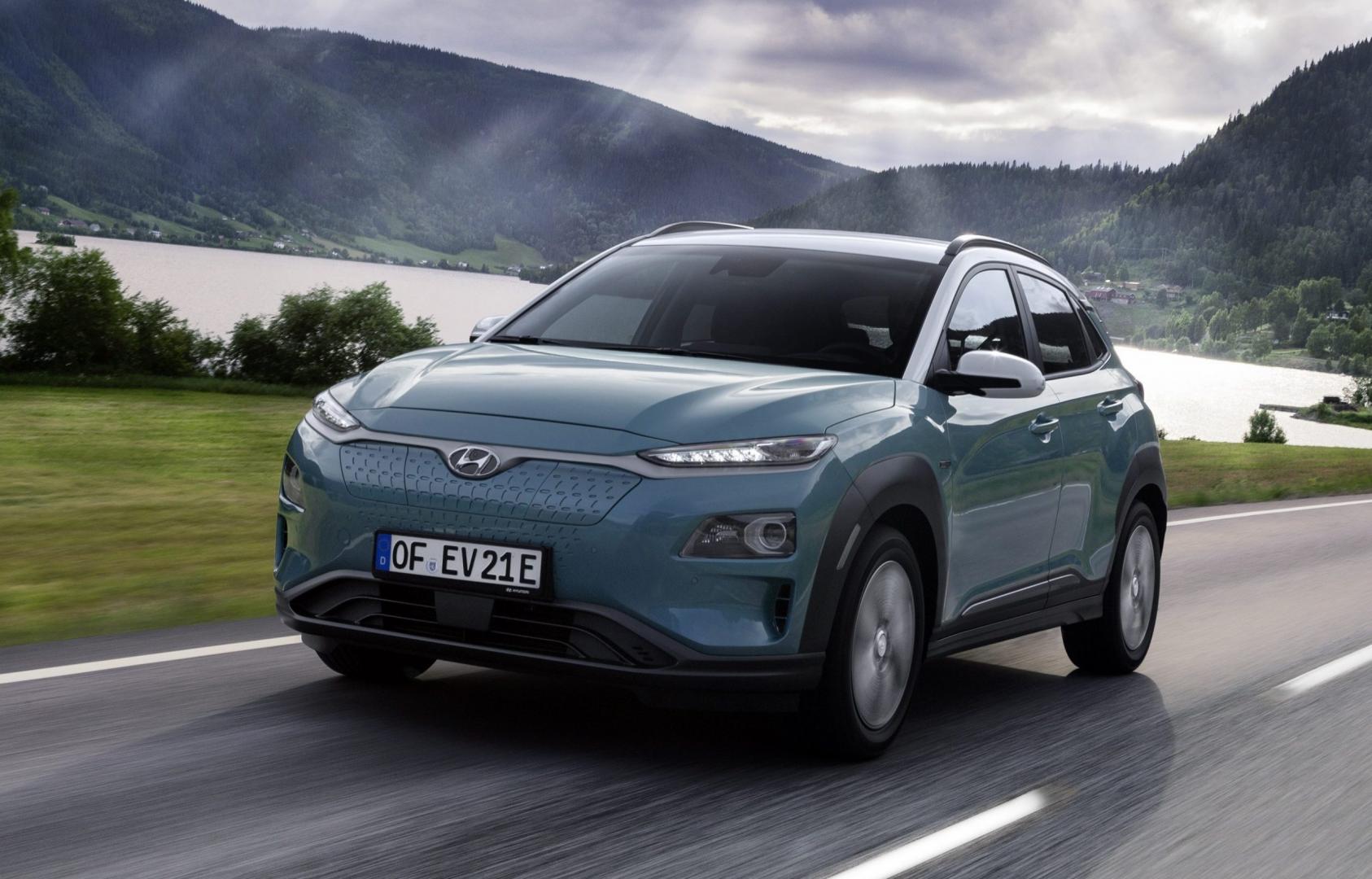
    The company currently sells only Kona Electric SUV in the country. It is said to be working to locally develop its second EV model which would be on the affordable side. On new corporate headquarters, Kim said the company has invested over Rs 1,000 crore on the project till date. “This new building stands as a symbol of the company”s journey of togetherness with the people of India,” he noted.

    When asked if the company would also consider Haryana to set up its next factory in the country, Kim said: “In the coming two years we have no issues in meeting the demand (from Chennai plant) so after that, if we need some more capacity we will work out some strategy at that time. Any place could be a good candidate but it would be based on things like procurement, supplier chain and availability of labor force etc.”

    The new corporate office, with a built-up area of over 28,000 square meters, was inaugurated by Haryana Chief Minister Manohar Lal. Interestingly, Maruti Suzuki India Managing director Kenichi Ayukawa, who is also the SIAM President currently, also attended the inauguration ceremony. Speaking at the occasion, the chief minister said the state government is providing all kinds of support to corporates willing to invest in the state.

    Hyundai Motor India Director (Sales, Marketing and Service) Tarun Garg noted that there has been a shift towards personal mobility due to the ongoing pandemic. “We are witnessing good traction right now…it seems that July this year probably the industry would be somewhere around July 2018 which is a positive sign. At the same time there are concerns like fuel prices, a third wave of COVID, there are issues regarding supply chain. There are still various challenges. So we are taking it month by month and let”s see how it goes,”he noted when asked about the demand scenario in the domestic market.

    Since its entry into Indian market in 1998, Hyundai has invested over Rs USD 4 billion in the country. From selling one model in 1998, it now sells 12 models in the country with a market share of 17 percent in the passenger vehicle segment.

    0Comments
  • Hyundai To Slash Combustion Engine Line-Up, Invest In EVs

    Hyundai To Slash Combustion Engine Line-Up, Invest In EVs

    Hyundai Motor Group will slash the number of combustion engine models in its line-up to free up resources to invest in electric vehicles (EVs), two people close to the South Korean automaker told Reuters. The move will result in a 50% reduction in models powered by fossil fuels, one of the people said, adding the strategy was approved by top management in March. “It is an important business move, which first and foremost allows the release of R&D resources to focus on the rest: electric motors, batteries, fuel cells,” the person said, without giving a timeframe for the plan.

    While Hyundai did not specifically address a Reuters query on its plans for combustion engine models, it said in an email on Thursday that it was accelerating the adoption of eco-friendly vehicles such as hydrogen fuel cell vehicles and battery EVs. The automaker added that it aims to gradually expand battery EV offerings in key markets such as the United States, Europe, and China with a goal for full electrification by 2040.

    Hyundai Motor Group, which houses Hyundai Motor Co and Kia Corp and Genesis, aims to sell about one million EVs per year by 2025 to achieve a 10% share of the global EV market. Facing tightening CO2 emission targets in Europe and China, all major automakers are accelerating their shift to EVs. The huge cost of developing electric motors and increasing the driving range of car batteries has already led some to say their days of investing in conventional engines are over. “Hyundai has stopped developing new powertrains for internal combustion engine cars,” one of the people said.

    PSA Group said in November, shortly before merging with Fiat Chrysler to form Stellantis, that it was no longer investing in combustion engines. Daimler has recently revamped its combustion engines and executives say the new generation will see it through the electrification process. Some carmakers have already announced plans to go fully electric, with Sweden’s Volvo, which is owned by China’s Geely, saying it would do that by 2030. Ford Motor Co says its line-up in Europe will be fully electric by the same date.

    For Hyundai, which together with Kia is one of the world’s top ten auto groups, the move is particularly important because it has one of the broadest ranges of engine and transmission technologies in the industry. The group will finalize its strategy to switch to all-electric models within the next six months, one source said. In April, Hyundai said it would cut the number of its gasoline models in China to 14 from 21 by 2025, while launching new electric models every year starting in 2022. In February, the group said it was no longer in talks with Apple to develop an autonomous vehicle. Sources familiar with the matter said the idea of the group becoming a contract manufacturer for Apple encountered strong internal opposition.

  • Hyundai To Suspend Production At South Korea Plant Due To Chip Shortage

    Hyundai To Suspend Production At South Korea Plant Due To Chip Shortage

    It was earlier this week when Hyundai Motor suspended production at its Asan plant because of a chip shortage. The South Korean carmaker has announced that it will again halt production at its Sonata-producing plant for two days next week due to an electric parts shortage. According to a report from IANS, the automaker will stop operation at its Asan plant on Monday and Tuesday. This Hyundai plant is located around 100 km south of Seoul that produces the Grandeur and Sonata sedans.

    Hyundai has seven plants in South Korea, of which five are located in Ulsan whereas the other two facilities are located in Asan and Jeonju. Moreover, the company has ten overseas plants wherein four facilities are in China and one each in India, Brazil, Czech Republic, Turkey, Russia, and the US. The combined capacity of these plants is around 5.5 million units.

    The carmaker expects the four-day suspension will result in over 4,000 vehicles in production losses. Moreover, the company had also suspended operations at its Ulsan plant, situated 414 km southeast of Seoul, from April 7 to April 14 due to a parts shortage. Moreover, Hyundai produces Ioniq 5 and Kona EV cars at its Ulsan plant.

    The suspension comes because of a shortage of semiconductor parts used in Kona’s front vehicle camera system, along with an issue in Hyundai Mobis Company’s production line, which rolls out the traction motor for the Ioniq 5. The carmaker expects production losses of 6,000 units of the Kona and 6,500 units of the Ioniq 5.

  • Hyundai Staria Minivan Technical Specifications Unveiled

    Hyundai Staria Minivan Technical Specifications Unveiled

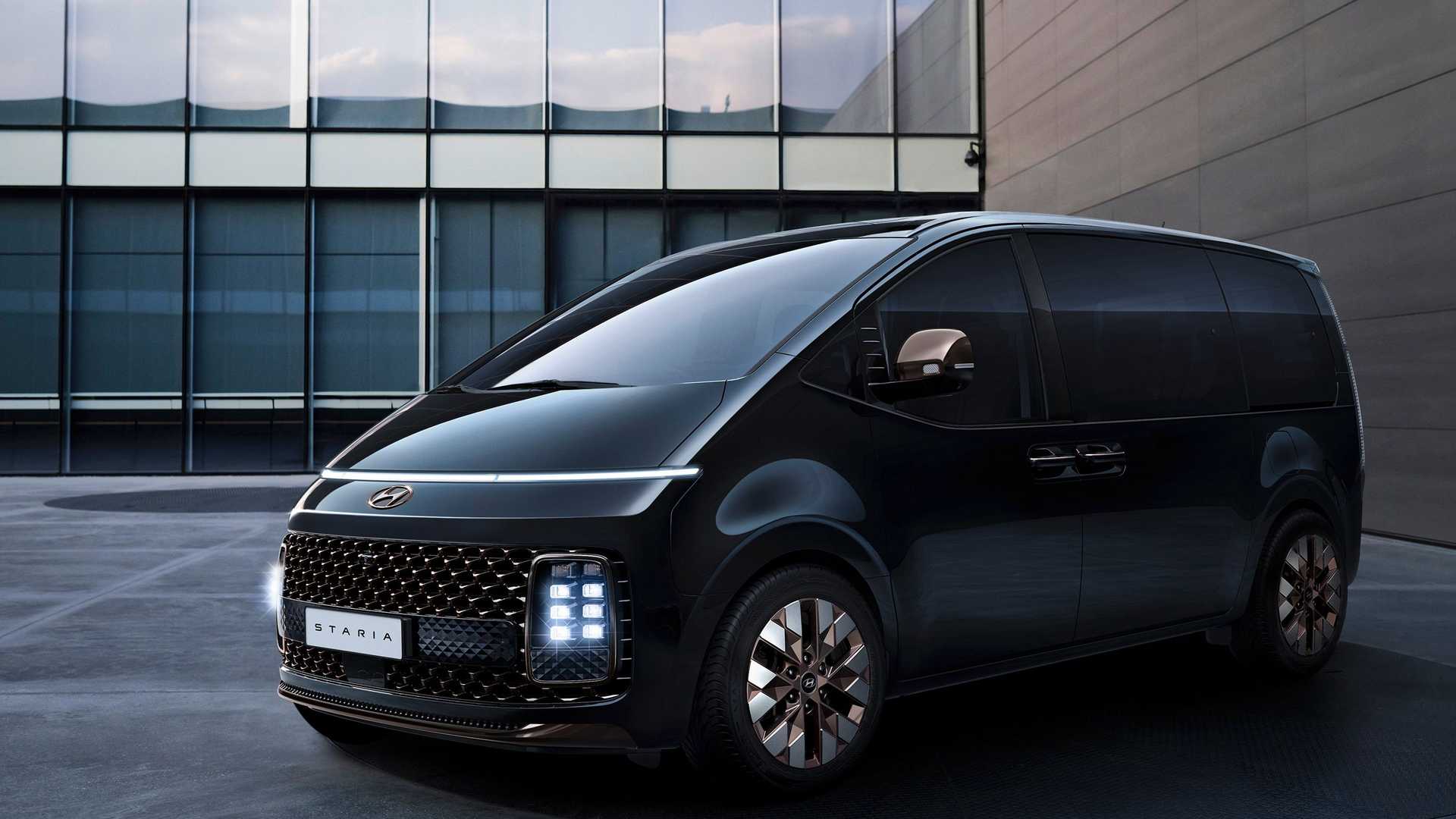
    Almost a month after Hyundai showcased the upcoming Staria minivan, it has now revealed its technical specifications. Now under the skin, the Hyundai Staria is very similar to the new Kia Carnival. It measures 5,253 mm in length, 1,997 mm in width, and has a massive wheelbase of 3,273 mm. Then, it stands 1,990 mm tall for the passenger version and 2,000 mm for the commercial van. The Hyundai Staria will be offered in 2 to 11 seating configuration where the two or three-seat version is designed for business use and the total cargo capacity nearly measures at a whopping 5,000 litres.

    In Europe, the Hyundai Staria will be sold exclusively with a 2.2-liter, four-cylinder, diesel engine that will belt out around 172 bhp and 431 Nm of peak torque. Gearbox options include a six-speed manual transmission or an eight-speed automatic transmission. In other markets, the Staria will likely get a 3.5-liter naturally aspirated petrol engine that will put out around 265 bhp and 331 Nm of peak torque. Going forward, the Hyundai Staria range will also see the addition of an eco-friendly fuel-cell variant.

    Hyundai says that the new Staria will be a sophisticated minivan. It is equipped with a multi-link independent rear suspension and it has tuned the powertrains for lower noise, vibration, and harshness (NVH) levels. Even though it’s boxy to maximize available space inside, the upper part of the body has been aerodynamically optimized to lower the drag coefficient and improve efficiency, further boosted by tinkering with the underbody. It will be available in eight exterior colours and five interior themes, including two-tone finishes. The regular versions of the minivan are scheduled to go on sale in the second half of 2021 in Europe but we have no confirmation from the Korean brand on its India arrival.

  • Hyundai And Shell Expand Collaborations On Clean Energy Solutions

    Hyundai And Shell Expand Collaborations On Clean Energy Solutions

    Hyundai Motor Company has signed a new five-year Global Business Cooperation Agreement with Shell. The signing ceremony was held online at Hyundai Motorstudio Goyang, Korea. The agreement, which runs through 2026, marks the fourth extension of the partnership, but this time with a new focus on clean energy and carbon reduction in proactive response to market changes.

    The partnership will undertake cooperative projects that reflect this new direction, including a plan to establish new type of service channels specialized for mobility service providers, primarily in Asia. Both companies will also discuss cooperation schemes for energy supply business, such as EV and FCEV charging services.

    Un Soo Kim, Senior Vice President and Head of Global Operations Division of Hyundai Motor Company, said, “With Shell, we will be securing our competitiveness within the automotive industry, continuing our transition as a smart mobility solution provider.”

    The global cooperation agreement also maintains Hyundai’s recommendation for Shell lubricants across its global aftermarket network. The two companies run joint R&D programs including for the first-fill lubricants to meet Hyundai’s specific engine requirements, which could extend for collaboration on e-Fluids development for EVs.

  • Hyundai No Longer In Talks With Apple On Autonomous Electric Cars

    Hyundai No Longer In Talks With Apple On Autonomous Electric Cars

    South Korea’s Hyundai Motor Co said on Monday it is not now in talks with Apple Inc on autonomous electric cars, just a month after it confirmed early-stage talks with the tech giant, sending the automaker’s shares skidding. Wiping $2.1 billion off its market value, Hyundai’s stock slumped 4.2% by 0330 GMT. Shares in its affiliate Kia Corp, which had been tipped in local media reports as the likely operational partner for Apple, tumbled 12% – a $4.3 billion hit.

    The announcement brings the curtain down on weeks of internal divisions within Hyundai Motor Co Group – parent to both automakers – about the potential tie-up, with some executives raising concerns about becoming a contract manufacturer for the U.S. tech giant.

    “We are receiving requests for cooperation in the joint development of autonomous electric vehicles from various companies, but they are at an early stage and nothing has been decided,” the automakers said on Monday, in compliance with stock market rules requiring regular updates to investors regarding market rumors.

    Apple, known to keep product plans under tight wraps, has never acknowledged talks with the automaker about building vehicles
    “We are not having talks with Apple on developing autonomous vehicles.”

    Kia shares had jumped 61% after Hyundai appeared to confirm a local media report early in January that Apple and Hyundai were in discussions to develop self-driving electric vehicles by 2027 and develop batteries at U.S. factories operated by either Hyundai or Kia.

    “Apple and Hyundai are in discussion, but as it is at an early stage, nothing has been decided,” Hyundai said, before releasing subsequent statements that removed all mentions of Apple but said Hyundai was receiving electric car cooperation requests from parties it didn’t identify.

    Reuters reported in December that Apple was moving forward with autonomous car technology and aimed to produce a passenger vehicle that could include its own breakthrough battery technology as early as 2024.

    Apple, known to keep product plans under tight wraps, has never acknowledged talks with the automaker about building vehicles and wasn’t immediately available for comment outside business hours in the United States.

    Analysts said talks might have collapsed over leaks of the partnership plan to media, or over possible insistence by Apple that Hyundai’s role in any tieup would be that of an equipment manufacturer, rather than a strategic partner.

    “With numerous news reports over discussions between the two companies, which should have been held to non-disclosure agreements, it would have been uncomfortable,” said Kwon Soon-woo, an analyst at SK Securities.

    Kevin Yoo, an analyst at eBEST Investment & Securities, said, “It seems clear that Hyundai Motor Group has not been too happy with dealing with Apple. They made it clear that they do not want to be treated just as Apple’s supplier or manufacturer.”

  • Hyundai Motor To Launch Dedicated EV Platform In Major Push Into Electric Cars

    Hyundai Motor To Launch Dedicated EV Platform In Major Push Into Electric Cars

    South Korea’s Hyundai Motor Group said on Wednesday it will introduce an electric vehicle-only platform early next year that will use its own battery technology to cut production time and costs.

    The plan underscores efforts by the world’s No.5 auto group to become a major player in the global EV market, as car makers around the world are pouring billions of dollars of investment to improve battery technology, which keeps EV prices high compared with combustion engine models.

    Market leader Tesla said in September it aims to halve the cost of its EV batteries and bring more production of the key auto component in-house to lower EV prices to $25,000 each.

    Hyundai expects its dedicated Electric Global Modular Platform (E-GMP) will allow it to use its own battery module technology across various EV models and cut the number of components by 60%.

    “E-GMP will be highly effective in expanding the Group’s EV leadership position as it will enable the company to enlarge its EV line-up over a relatively short period through modularisation and standardisation,” it said in a statement.

    An electric vehicle based on E-GMP will offer driving range of 500 kms (310 miles) or more on a single charge, an improvement of at least 23% from the Kona EV, the longest driving range model among Hyundai’s EV lineups.

    Hyundai Motor and its sister company Kia Motors together aim to sell 1 million EVs in 2025 to become the world’s third-largest seller of EVs.

    It has promised 23 new EVs including 11 all-electric models by 2025 and plans to introduce a family of EVs under the Ioniq brand from early next year to spearhead its near-term transition toward EV production.

  • Hyundai To Pay $ 54 Million Penalty In US For Defective Engines

    Hyundai To Pay $ 54 Million Penalty In US For Defective Engines

    The Hyundai Group had issued one of its biggest recalls three years back in the United States, Canada and South Korea. The recall included 1.19 million cars in the US and over 1.14 lakh units in Canada. The vehicles were recalled because of machining errors during vehicle manufacturing that could have led to “premature bearing wear within the engine,” as pointed out by the National Highway Safety Traffic Administration.

    The Hyundai Sonata and Santa Fe models which were manufactured between 2011 and 2014 were impacted and in a service campaign, engines of these units had to be replaced, free of charge. But the matter hasn’t ended here. The Korean carmaker is now paying a penalty and will have to overhaul its manufacturing plants.

    The company has said that it will be paying a cash penalty of $54 million and will be making a further investment of $40 million to improve the safety standards in its operations. The investment will be used to develop a safety field test and inspection laboratory in the US along with setting up the new IT system for batter safety data procurement and analysis and potential safety issue identification.

    Brian Latouf, chief safety officer, Hyundai Motor North America said, “Customer safety is our highest priority and we are taking immediate action to enhance our response to potential safety concerns. We value a collaborative and cooperative relationship with the U.S. Department of Transportation and NHTSA, and will continue to work closely with the agency to proactively identify and address potential safety issues.” Along with Hyundai, some models of Kia Motors were impacted as well and both carmakers agreed to pay a civil penalty of $ 210 million.

  • Hyundai Looks Ahead To New SUVs In 2021 And Urban Air Taxis By 2028

    Hyundai Looks Ahead To New SUVs In 2021 And Urban Air Taxis By 2028

    South Korean automaker Hyundai Motor Co is supercharging its product portfolio next year with the introduction of several new SUVs, while looking even farther out to the launch of its first urban air taxis toward the end of the decade, the company’s top U.S. executive said on Monday.

    “We are all-in on autonomous vehicles,” as well as electric vehicles, said Jose Munoz, president and CEO and Hyundai Motor North America, at an Automotive Press Association teleconference.

    His remarks come at a time when investment in robo-taxis has slowed, even as the global pandemic has spurred interest in personally-owned vehicles, especially trucks and SUVs. Hyundai hopes to tap that interest next year with the all-new Santa Cruz, a compact utility vehicle with a pickup bed, and the Ioniq 5 crossover, the first in a series of new all-electric models.

    Early next year, the redesigned Tucson compact crossover goes into production at Hyundai’s Montgomery, Alabama plant, which also will begin building the Santa Cruz in late spring as part of a $410 million expansion. Munoz said Hyundai will work with the new Biden administration to develop infrastructure to support battery-electric and hydrogen-electric vehicles.

    He seemed most excited by Hyundai’s work with Motional – its $4 billion (£3 billion) self-driving technology joint venture with Aptiv PLC and its partnership with Uber Technologies on urban air taxis, which Munoz predicted would be in operation at such major U.S. airports as LAX in Los Angeles and JFK in New York “by 2028, maybe earlier.”

    Hyundai already is developing “flying devices” powered by electric motors and batteries that can transport five to six passengers from highly congested urban and suburban centers to those airports, Munoz said. “We see a lot of opportunities ahead of us in autonomous vehicles,” including air taxis, he said.

  • New-Generation Hyundai i20 Sketches Revealed

    New-Generation Hyundai i20 Sketches Revealed

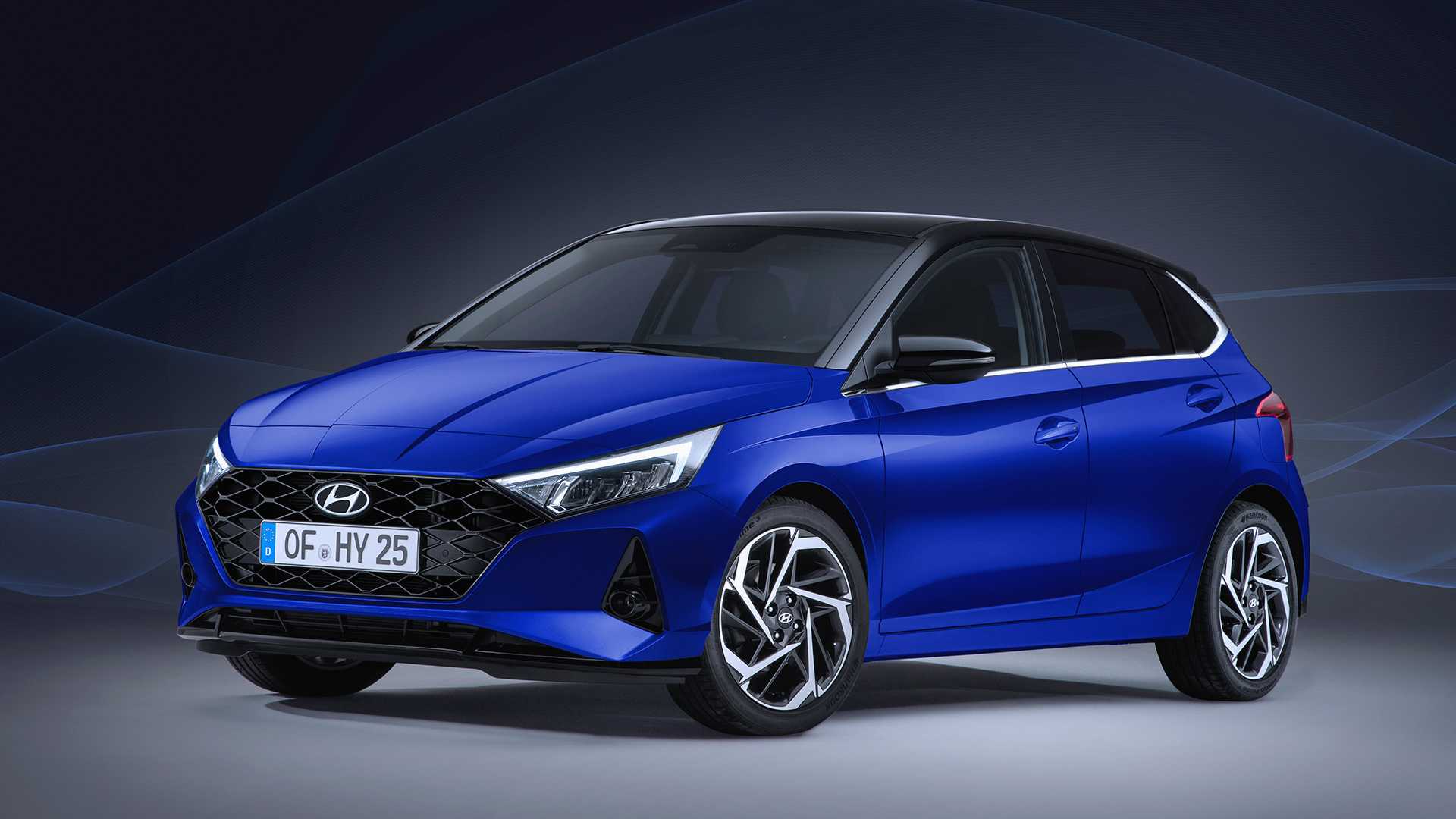
    Hyundai Motor India Limited (HMIL) has revealed the design renderings of the new-generation Hyundai i20, which will be launched in India next month. This will be the third-generation model of the i20, with the current generation model having debuted in 2014. The new i20 is designed around the company’s theme of sensuous sportiness. Needless to say, the new-gen i20 gets a complete overhaul including a new design. The look of the car is bolder now and the stance is sportier too, with a sloping hood upfront. The cascading grille and the headlight cluster are completely new and add to the bold look. The rear too sees a complete change of design, with new boot lid and sharp looking taillights which form a ‘Z’.

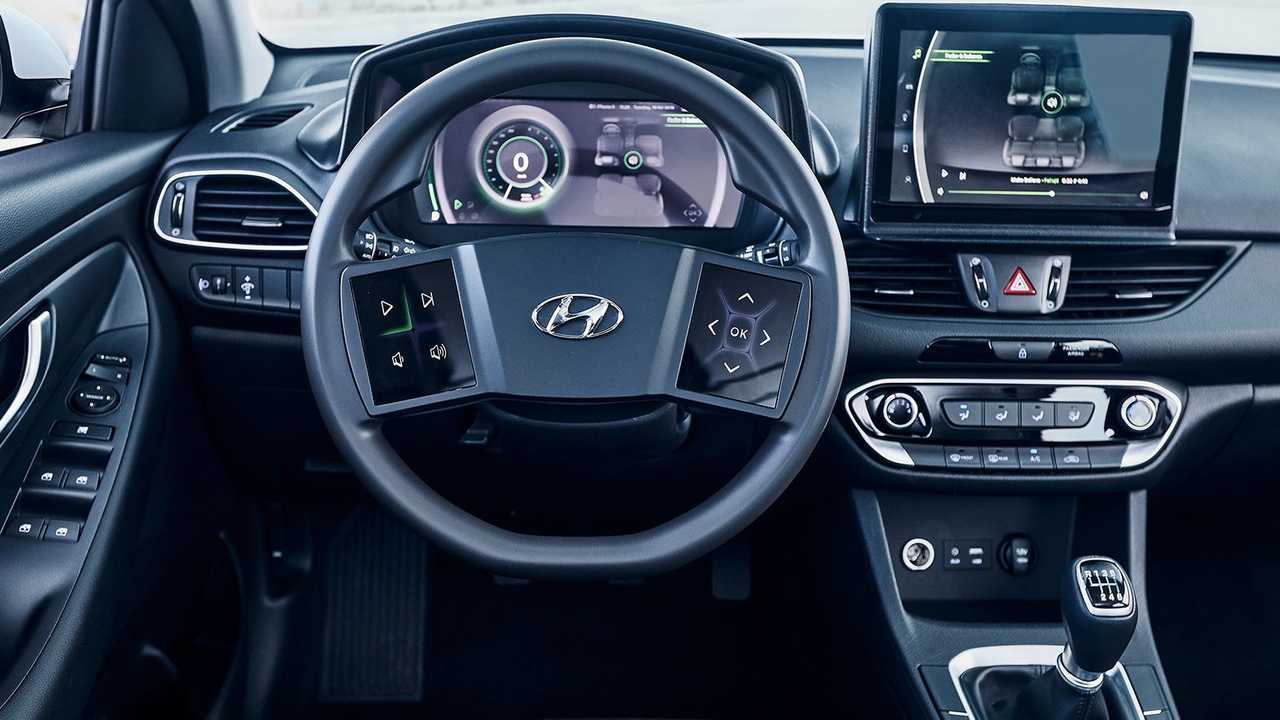
    Hyundai says that the new i20 has been designed keeping four elements in mind which are proportion, architecture, design, technology. The cabin of the new i20 has been completely re-done. It is likely to be an all-black affair and get features like a digital instrument cluster, 10.25-inch touchscreen infotainment unit, flat-bottom steering with mounted controls, dual airbags, rear AC vents, charging sockets, Hyundai’s BlueLink connected car technology, and other more

    The new i20 is expected to get three engine options which include the 1.2-liter petrol, the 1.5-liter diesel and the 1.0-liter turbocharged petrol engines, similar to the ones found on other Hyundai cars. Transmission options will include both manual and automatic gearboxes. The car has already started making its way to Hyundai dealerships across the country and as we said earlier, we expect the new-generation i20 to be launched in November 2020. It will continue to go up against rivals such as the Maruti Suzuki Baleno, Tata Altroz, and the Volkswagen Polo.

  • Carmaker Hyundai launches fashion collection from up-cycled waste

    Carmaker Hyundai launches fashion collection from up-cycled waste

    Hyundai Motor has announced the launch of its sustainable fashion collection – Re:Style 2020 – created by upcycling discarded automotive waste materials from manufacturing and scrapping processes.

    The company says it has taken a creative approach to sustainable fashion by converting auto waste into marketable products in collaboration with artists – Alighieri, E.L.V. DENIM, Public School, pushBUTTON, Richard Quinn, and Rosie Assoulin.

    The eco-friendly fashion collection features a variety of products such as jewelry, jumpsuits, working vests, bags, and various other clothing. For example, Alighieri created a collection of necklaces, chokers, and bracelets with repurposed car seatbelts, car glass, and foam materials. A work vest with pockets has been made using airbag materials by pushBUTTON. The collection also includes a tote bag made of seatbelt webbings, carpet fabrics, and foam, designed by Rosie Assoulin.

    The idea behind Hyundai’s ‘Re:Style 2020’ has been to make use of waste materials from the auto scrapping process that ultimately ends up in landfills. Though materials such as iron and nonferrous metals are currently recycled as part of the scrapping process, some other materials such as leather, glass, and airbags cannot be. It was these leftovers that were sent to the collaborative partners of the fashion collection.

    The sales of sustainable fashion products will begin on October 13 at London’s Selfridges pop-up store and Selfridges online store. Proceeds from the sales will go towards the British Fashion Council’s Institute of Positive Fashion.

    Hyundai says that by demonstrating that discarded resources can be reimagined into valuable products, the company aims to encourage other industries to see waste as a recreative opportunity. “(And) work collaboratively toward an environmentally accountable and economically efficient future,” says Wonhong Cho, Executive Vice President and Global Chief Marketing Officer of Hyundai Motor Company.

  • Hyundai Brazil’s New Employee Of The Year Is A Dog That’s Winning Hearts All Over The Internet

    Hyundai Brazil’s New Employee Of The Year Is A Dog That’s Winning Hearts All Over The Internet

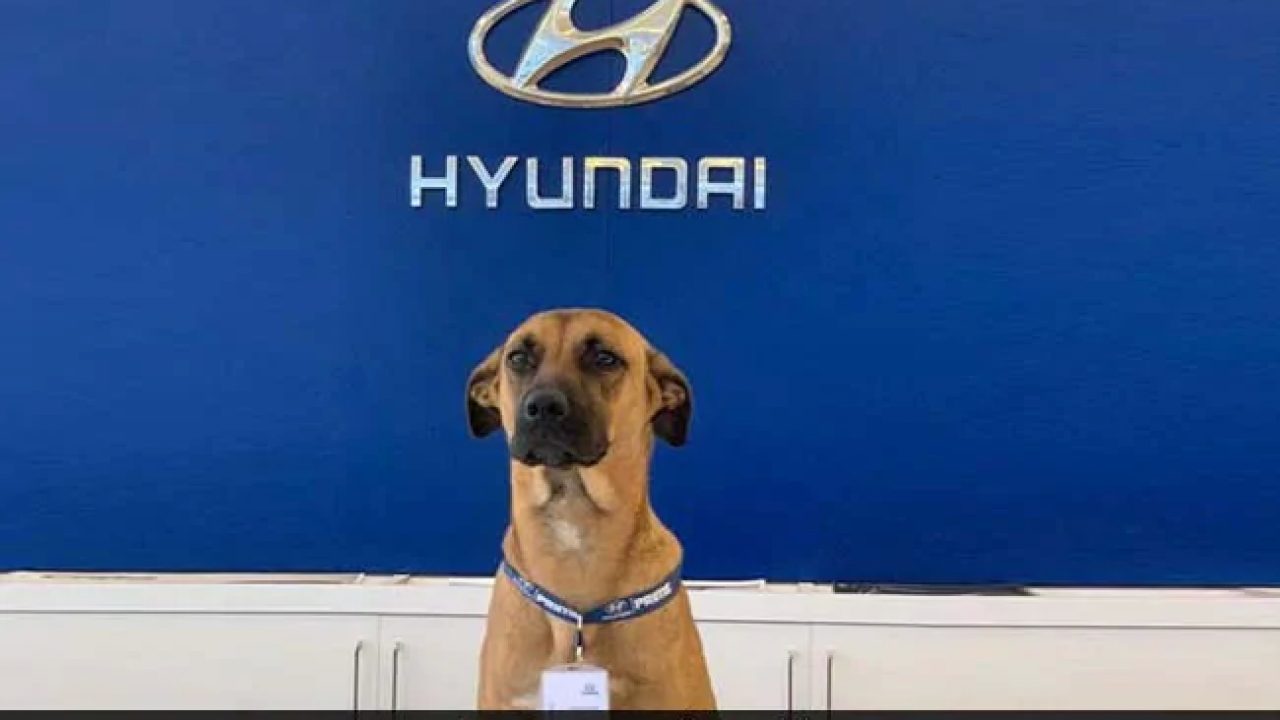
    Hyundai’s new ‘four-legged’ Tucson might be one of the most adorable things you would have seen on the internet at a time when we are mostly getting to read all kinds of negative news. Just imagine walking into a car showroom and being welcomed by a dog! It’s nothing less than a treat for animal lovers. In fact, the dog we are talking about is Hyundai’s employee of the year and works at a Hyundai Showroom in Brazil. Tucson Prime was a street dog that a Hyundai showroom in ES, Brazil adopted and its story is indeed heart-warming.

    Tucson was often found hanging around a Hyundai car showroom in Brazil. No marks for guessing! He soon befriended almost everyone at the showroom and their bond grew so strong that he was soon adopted by the showroom and was made an honorable employee who has his own ID card as well. Just like any other dog, Tucson used to guard the Hyundai showroom and now has been promoted to a salesman by the company. Hyundai took to Instagram to introduce its new employee and said, “The new member is about a year old, was welcomed by the Hyundai family and has already won over co-workers and customers.”

    Hyundai Prime has his own Instagram handle as well with over 28,000 followers already and counting. According to a news report published by World of Buzz, Tuscan Prime was adopted on May 21, this year by Hyundai Serra, ES, Brazil outlet.

  • Hyundai Races To Electric As Tesla Takes Off

    Hyundai Races To Electric As Tesla Takes Off

    Hyundai Motor, an early backer of hydrogen cars, has watched the electric rise of Tesla, including on its home turf. Now’s it’s going on the offensive in the battery-powered market led by its U.S. rival. The South Korean company plans to introduce two production lines dedicated to electric vehicles (EVs), one next year and another in 2024, according to an internal union newsletter seen by Reuters.

    Euisun Chung, leader of the Hyundai Motor Group conglomerate that also includes Kia Motors, has also held a series of meetings since May with his counterparts at Samsung, LG, and SK Group, which make batteries and electronic parts.

    The purpose of the talks, which were publicly announced, was for Hyundai to try to secure batteries at a time of tight supply as the race for EVs intensifies, according to several industry sources. Those manufacturers also supply the likes of Tesla, Volkswagen, and GM.

    Hyundai told Reuters it was collaborating with Korean battery suppliers “to scale up” its electric car production efficiently. It declined to comment on any plans to introduce dedicated production lines.

    The moves indicate the carmaker is moving aggressively to expand its electric capacity, days after Chung announced on July 14 that Hyundai Motor Group aimed to sell 1 million battery EVs a year and grab a global market share of over 10% by 2025.

    There’s some way to go; Hyundai Motor Group sold 86,434 battery EVs last year, according to data from industry consultant LMC Automotive. That was above the 73,278 sold by Volkswagen Group but behind the 367,500 delivered by Tesla.

    Hyundai, the world’s No.5 automaker together with Kia Motors, said its agility allowed it to lead the charge into EVs. “We are certain Hyundai is never going to fall behind,” it added.

    A senior Hyundai insider, who declined to be identified because of the sensitivity of the issue, said the company had not been concerned about Tesla when the Silicon Valley company was producing high-end cars.

    But it became more worried when Tesla brought out a cheaper Model 3 in 2017, according to the insider who described it as a “strategic victory”. No traditional automaker has been successful yet in catching up with Tesla, which retains an edge in battery and software technology.

    Hyundai could also face a roadblock from its powerful union, which is worried about job security as EVs require fewer components and workers than gasoline vehicles; at Hyundai, this is partly because the automaker makes a number of key components for conventional cars in-house, while many EV parts are outsourced at present.

    The union is pushing for the company to assemble key EV components, like battery packs and motors, in-house to offset any reduction in the workforce.

    “We are not opposed to EV business. Kodak went bankrupt because it stuck to film even as the industry was shifting to digital photography,” union spokesman Kwon Oh-kook said.

    “We just want to protect the jobs of our members,” he said. Hyundai said automakers and unions needed to accelerate change to remain viable in the long term.

    Back in 2010, Hyundai Motor Co made 230 electric cars for the government, but they ended up being mothballed at a research center outside Seoul due to a lack of charging infrastructure, according to Lee Hyun-soon, R&D chief at the time.

    In a 2014 book Lee, who developed South Korea’s first gasoline engines, said such electric vehicles were “not realistic”, also citing high battery costs, and that hydrogen cars – a rival clean technology – offered a “bright” future.

    Along with Toyota and Nikola, Hyundai was one of a few automakers to have backed hydrogen cars. It launched the industry’s first mass-produced hydrogen car, Tucson Fuel Cell, in 2013 and the NEXO in 2018.

    However the technology has not taken off; 7,707 hydrogen fuel cell cars were sold globally last year, compared with 1.68 million battery EVs, according to LMC Automotive.

    In Hyundai’s home market, Tesla had its best month in June, with its Model 3 beating Hyundai’s Kona EV, as well as premium models from BMW and Audi.

    “Hyundai did not expect Tesla to dominate the EV market so quickly,” another person familiar with the company’s thinking told Reuters.

    Hyundai Motor has a market capitalization of about 25.3 trillion won ($21.2 billion) – less than a tenth of that of Tesla, now the world’s most valuable automaker.

    While Hyundai promotes its hydrogen cars with K-pop boyband BTS, it only plans to introduce up to two hydrogen models by 2025, and 23 battery-powered models.

    Peter Hasenkamp, vice president at electric startup Lucid, who previously worked at Tesla and Ford, said established carmakers faced historical “inertia” to make the EV transition.

    “Part of the reason we’re based in Silicon Valley is to leverage both software and electrical engineering expertise,” Hasenkamp said.

    “You’ve got a couple of generations for the big car companies to learn really how to do t

  • Hyundai Verna Fuel Economy Figures Out

    Hyundai Verna Fuel Economy Figures Out

    The 2020 Hyundai Verna Facelift was launched in India last month and while the company had shared the specifications and details at the time of the launch, its fuel economy figures were still unknown. Finally, we have managed to get our hands on the fuel efficiency figures of all variants of the Verna across its engine line-up. The new Hyundai Verna Facelift is offered in India in four variants- S, S+, SX, SX(O), and SX(O) Turbo and it’s the first fully connected compact sedan on sale in India.

    The Hyundai Verna is offered in India with three engine options and five engine and gearbox combinations. First up is the 1.5-liter, naturally aspirated four-cylinder motor that delivers 17.7 kmpl when mated to a six-speed manual transmission and 18.45 kmpl when it is offered with the CVT automatic gearbox. The 1.0-liter, the three-cylinder turbo engine is offered with the seven-speed automatic dual-clutch transmission (DCT) as standard and delivers a fuel economy of 19.2 kmpl. The 1.5-liter, four-cylinder diesel mill when offered with the torque converter automatic transmission delivers a fuel economy of 21.3 kmpl while the diesel manual transmission variant delivers the highest fuel economy in the range at 25 kmpl.

    The 1.5-liter, four-cylinder MPi petrol engine belts out 113 bhp and 144 Nm of peak torque and comes mated to a six-speed manual transmission as standard while an iVT (CVT) gearbox is optional. Then there is the 1.5-liter, four-cylinder diesel engine that puts out 113 bhp and 250 Nm of peak torque. This engine is also mated to a six-speed manual transmission as standard while a six-speed torque-converter transmission is optional. The most powerful of all is the 1.0-liter, three-cylinder Turbo GDi petrol engine that churns out 118 bhp and 172Nm of peak torque which is mated to a seven-speed dual-clutch transmission (DCT) which is a segment-first.