Tag: ict

  • Globe to ramp up network expansion program

    Globe to ramp up network expansion program

    The Philippines’ Globe Telecom has pledged to ramp up its network expansion and modernization program to cater to soaring demand for mobile data.

    The operator revealed that mobile data traffic on its network grew to 370 petabytes during the first three months of 2019.

    This represents a 105% increase from the 180 petabytes recorded a year earlier, and a 421% increase from the first three months of 2016.

    Data traffic growth is also driving revenue growth, with Globe Telecom reporting consolidated service revenues of the quarter of 36 billion pesos – up 13% year-on-year – and mobile data traffic accounting for 16.5 billion pesos of this total.

    “With the explosion of data traffic consumption, building more cell towers and modernizing our network infrastructure will continue to play a fundamental role in delivering superior quality of experience to our customers,” Globe CEO Ernest Cu said.

    “This is why we will continue ramping up our network rollout and utilizing next-generation technologies to enhance the way our customers experience mobile data.”

    Around 68% of Globe’s total capex budget for the first quarter of 8.8 billion pesos was allocated towards enhancing data-related services. During the quarter the company escalated its cell site deployment and invested in improving its network capacity.

  • Globe digitally transforms Semirara Island

    Globe digitally transforms Semirara Island

    The Philippines’ Globe Telecom worked with the nation’s largest coal producer Semirara Mining and Power Corporation (SMPC) to digitally transform Semirara Island in Antique.

    The 55 square kilometer island is home to the Philippines’ richest coal reserves, and is home to a number of coal workers and their families who rely on mobile connectivity a digital applications in their daily life.

    As part of the project, Globe, SMPC and the local government collaborated to upgrade all mobile towers in the island with LTE technology.

    The partners are also adopting a modern payroll solution for the mining company in collaboration with Ant Financial subsidiary Mynt and Ayala that takes advantage of Globe’s GCash mobile money service.

    In addition, Globe will work with public and private high schools in the island on digitally-enabled education initiatives.

    The Digital Thumbprint Program, developed by Globe in conjunction with Singtel and its Australian subsidiary Optus, has already been used to aid the education of 1.9 million students across the Philippines.

  • Philippines publishes common tower rules

    Philippines publishes common tower rules

    The Philippines’ Department of ICT has published the rules and regulations for the new common tower provider regime with the goal of building or converting at least 2,500 common towers across the nation.

    The rules will pave the way for deployments in properties owned by the departments, other government agencies, and hard-to-access areas identified by the market’s mobile operators.

    With the rules, the DICT has committed to streamlining the issue of licenses for the deployment of telecommunications equipment in towers not built by the independent tower companies participating in the scheme.

    They also seek to encourage voluntary sharing of towers by incumbent mobile operators by offering incentives in the form of allowing companies to build passive infrastructure in government properties and to enable operators to offer, transfer and convey existing tower resources to tower sharing entities.

    Independent tower companies participating in the scheme will need to be at least 20% owned or in a consortium with companies with at least five years of experience constructing, owning, operating and/or maintaining towers.

    They must also be wholly independent of mobile operators to ensure they offer non-discriminatory access and have reached agreements with the DICT and secured the required permits.

    The DICT said that to date 22 tower companies have signed memoranda of understanding with the department over the common tower initiative.

    “This is the starting point of more comprehensive policy for our initiative on passive infrastructure sharing. This will help tower firms to acquaint themselves in our telco industry,” DICT acting secretary Eliseo M. Rio Jr. said.

  • HKT wins smart parking system contracts

    HKT wins smart parking system contracts

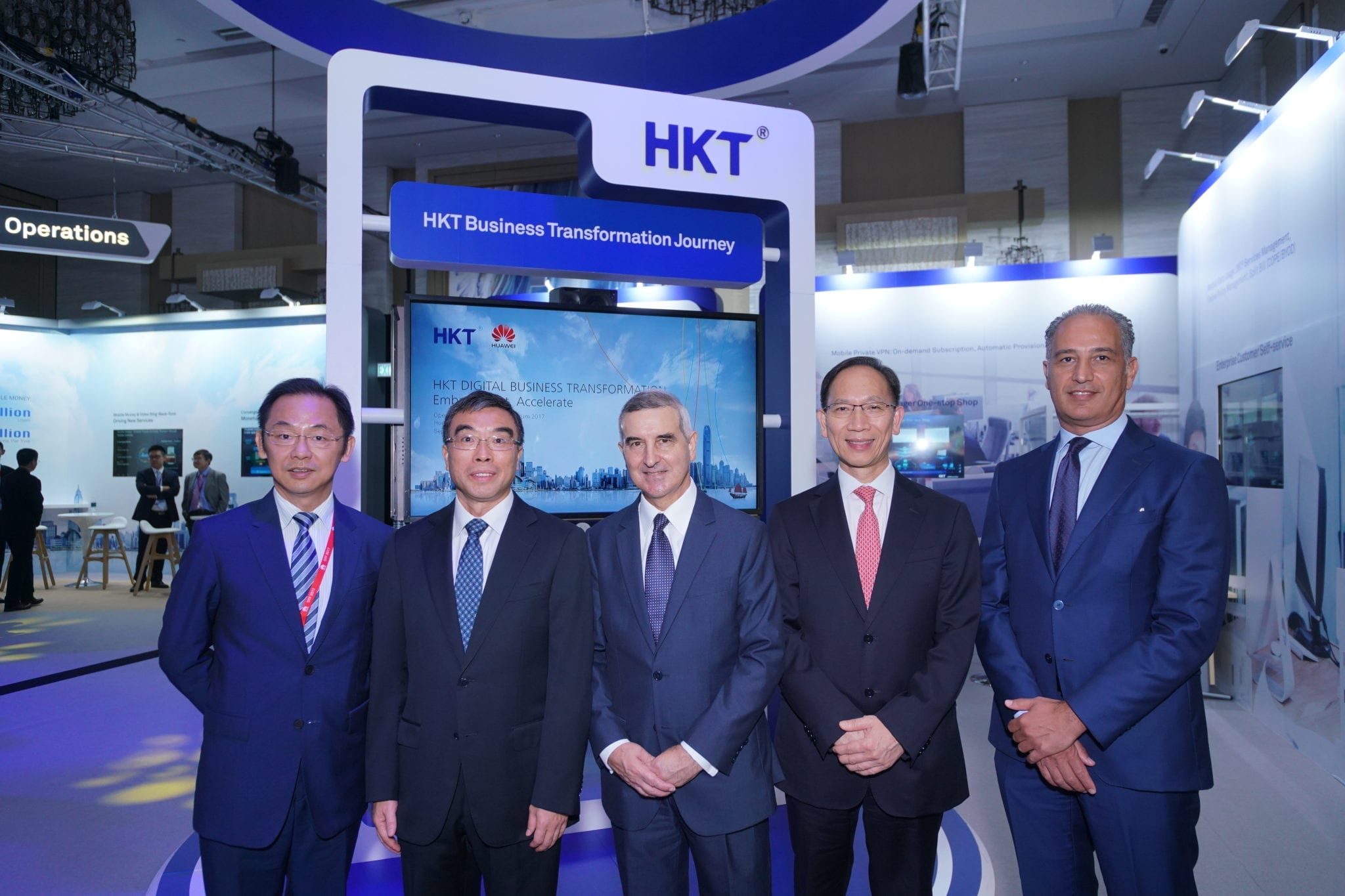
    Hong Kong operator HKT has secured HK$680 million ($86.6 million) worth of contracts to design, deploy and manage a new-generation smart parking meter system in Hong Kong.

    The two contracts with the HKSAR government’s Transport Department will see HKT deploy a mobile app-enabled parking meter system as part of the government’s Smart Mobility initiative.

    The system will use vehicle sensors to detect the occupancy of parking spaces and provide real-time information on parking vacancy for motorists. It will also allow users to pay parking fees with multiple payment methods, including credit that can be topped up to the app remotely.

    In addition, data from the system will be collected ad provided to the Transport Department to conduct parking analysis. The new parking meters will gradually replace existing meters in Hong Kong Island, Kowloon and the New Territories by early 2022.

    HKT’s contract includes the design, development and implementation of the new parking meters, as well as management, operation and maintenance of the system.

    “At HKT, we are very committed to helping accelerate Hong Kong to become a smarter city and empowering digital transformation for enterprises,” HKT Commercial Group managing director Tom Chan said.

    “We have been investing on advanced ICT and digital solutions in the last five years. We will continue with our dedication to develop innovations with latest technologies to empower the development of Hong Kong.”

  • Telstra to launch HTC 5G Hub next week

    Telstra to launch HTC 5G Hub next week

    Australian operator Telstra has is taking pre-orders for what it is calling the country’s first 5G mobile device. The HTC 5G Hub will be available in Telstra stores from next Tuesday.

    The HTC 5G hub is a 5G and 4GX (LTE-Advanced) media hotspot designed for both enterprise and consumer use.

    The hotspot can support up to 20 Wi-Fi enabled devices as well as a gigabit Ethernet connection and provides an all-day battery life.

    For corporate customers, the device offers corporate VPN authentication and remote wipe capability. For the consumer segment, the device offers a voice-activated remote control for other home smart devices and media hub capabilities.

    Telstra CEO Andy Penn said the launch of the device was an important milestone in the operator’s transition to 5G.

    “Our launch of the HTC 5G Hub is the moment 5G becomes a reality for Australian consumers. Since 2016, we have been working with some of the world’s leading technology brands to ensure Australians are among the first in the world to be able to access 5G,” he said.

    “HTC has been a key partner for Telstra, innovating new technologies and driving greater connectivity for our customers. This launch of Australia’s first 5G mobile device is a testament to that partnership and we are proud to be launching it today”.

    At launch, customers will be able to access 5G in selected areas of Adelaide, Brisbane, Canberra, the Gold Coast, Hobart, Launceston, Melbourne, Perth, Sydney and Towoomba, he said.

    “This is just the start. The roll out of 5G coverage is ongoing and, as 5G develops, there will be more devices and more technologies to come. But this is an important step we take today, as the first Australian network to offer mobile 5G”.

  • Ooredoo Myanmar signs 5G agreement with ZTE

    Ooredoo Myanmar signs 5G agreement with ZTE

    Ooredoo Myanmar has signed an agreement with ZTE to collaborate on 5G network deployment as part of the operator’s network modernization program.

    The two companies have signed a memorandum of understanding that will cover Ooredoo Myanmar’s 5G evolution from trials through to commercial deployment.

    During the first stage of the partnership, Ooredoo Myanmar and ZTE will evaluate potential test environments for Ooredoo’s 5G network. The network tests will be used to evaluate the performance of the 5G network ahead of commercial deployments.

    “It is a great pleasure to announce our MOU with ZTE Corporation, one of the leaders in advanced telecommunications technology,” Ooredoo Myanmar acting CEO Alok Verma said.

    “Ooredoo is the first telecom operator in Myanmar to launch initiatives towards 5G development, recognizing the potential of 5G, which will unlock the next generation of wireless technology with high speeds, ultra-low latency and greater capacities, unleashing new possibilities in mobility, manufacturing, healthcare, transportation and several other industries.”

    Ooredoo Myanmar’s parent company Ooredoo launched what it claims as the first live 5G network in Qatar during May last year. The company plans to arrange more 5G trials and commercial launches across its operating companies around the world over the next few months.

  • Spectrum cash grabs could hinder 5G’s potential

    Spectrum cash grabs could hinder 5G’s potential

    Poorly designed 5G spectrum auctions could seriously hamper the potential of the 5G era before it even begins in earnest, the GSMA has warned.

    A new Auction Best Practice by the industry body highlights some key concerns from recent 4G and 5G spectrum allocations, including a trend towards governments artificially inflating spectrum prices.

    This could have the effect of limiting subsequent network investment, thus harming consumers and delaying the potential of 5G from materializing.

    The GSMA has also outlined policy recommendations for governments including ensuring that the top priority for spectrum auctions is supporting affordable, quality mobile services for consumers.

    According to the regulator, spectrum auctions are not always suitable and should not be the only award process considered.

    Where an auction model is used, the auction design should not create unnecessary risk and uncertainty for bidders and should include adequate lot sizes with flexible packages of the spectrum.

    GSMA Intelligence estimates that the socio-economic impact of 5G will be $2.2 trillion over the next 15 years. But these benefits will depend on a favorable regulatory and policy environment for 5G.

    “Auctions can and do fail when poorly designed. We’re seeing a worrying trend of badly run spectrum awards that could seriously impact the potential of 5G before we get started. It’s time for policymakers to work more closely with stakeholders to enable more timely, fair and effective awards,” GSMA head of spectrum Brett Tarnutzer said.

    “This is a crucial time in the development of 5G. Spectrum is an essential to fuel for mobile networks and its ineffective use will only lead to bad consequences for consumers. The most important objective of awarding frequencies should not be about making the most money, but rather about ensuring consumers benefit from the best mobile connectivity.”

  • China Mobile USA’s license application denied

    China Mobile USA’s license application denied

    As expected, the US Federal Communications Commission today voted to deny China Mobile’s application to provide telecom services between the US and foreign destinations. The vote was unanimous.

    China Mobile USA filed an application back in 2011 requesting authority to provide international facilities-based and resale services in the US, but it wasn’t until last year that the government made a recommendation on behalf of the executive branch to deny the application due to national security and law enforcement concerns.

    In the order adopted today, the FCC said it found that China Mobile USA did not demonstrate that its application was in the public interest. In fact, the FCC found that due to several factors related to China Mobile USA’s ownership and control by the Chinese government, granting such an application would raise substantial and serious national security risks.

    Several commissioners also called on the agency to do more in terms of protecting the nation’s telecom security, especially in light of 5G coming down the pike.

    Commissioner Brendan Carr said the Chinese government owns a number of other carriers that already are operating in the US, including China Unicom and China Telecom, and those companies hold the same Section 214 authorization that China Mobile sought. “Our national security agencies should examine whether the FCC should revoke those existing Section 214 authorizations, and the FCC should open a proceeding on those matters,” he said.

    Commissioner Geoffrey Starks said the need for strong FCC action to address security vulnerabilities has never been greater. “As we move into a world of 5G and the Internet of Things, and our network grows larger and more interconnected than ever, real risks and the potential harm of telecom network vulnerabilities will grow exponentially,” he said, before raising a number of questions he said need to be answered, including how to address the continued operation of 2G and 3G networks with known cybersecurity flaws.

    Commissioner Jessica Rosenworcel also made a call to action. “We are at an inflection point as the world races to deploy next-generation wireless networks,” she said. “With 5G service, we will have wireless capability built into the world around us. This will provide a whole new range of opportunities for civic and commercial life. But as they multiply, this will vastly expand our surface exposure to attack.”

    Chairman Ajit Pai was part of a US delegation that last week attended an international conference on 5G network security hosted by the Czech Republic. There was a broad consensus at that meeting that network security is not only a priority but a necessity, he said. The conference produced a set of 5G security principles that reflect a common understanding of the importance of security in 5G.

    Pai also joined several other Administration officials yesterday in a detailed briefing of members of the Senate Select Committee on Intelligence, and while he said he can’t discuss what transpired in the meeting, “I can say that at the intersection of national security and communications lies a strong bipartisan consensus in favor of proactive measure to protect our networks at the front end, not as an afterthought,” he said.

    Separately, the commission adopted a Notice of Proposed Rulemaking (NPRM) that proposes to reallocate the 1675-1680 MHz band for terrestrial fixed and mobile (except aeronautical mobile) use on a shared basis with existing federal users. The NPRM also seeks comment on appropriate service and technical rules for the band.


  • APJxC to produce 33.8 zettabytes of data by 2025

    APJxC to produce 33.8 zettabytes of data by 2025

    Seagate Technology recently released a white paper with IDC on the growing datasphere in Asia Pacific including Japan, but excluding China (APJxC).

    This is following the launch of IDC’s global White Paper, The Digitization of the World – From Edge to Core, sponsored by Seagate Technology, which examines how much new data is created and replicated each year and the impending shifts to the global data model by 2025.

    Top findings from the regional paper include:

    • Data created in the APJxC regions will increase from 5.9ZB in 2018 to 33.8ZB in 2025.
    • The APJxC Datasphere is one of the fastest growing Datasphere regions, growing at a 2018–2025 CAGR of 28.3% compared with a gloabl rate of 27.2% and a U.S. growth rate of 23.6% over the same time period.
    • Entertainment-related data is growing at a faster pace than most other regions, expanding at a rate of 23% compared with a global average of 20% for 2018–2025.
    • The number of online users in the region participating in entertainment-related activities is growing faster than the global rate — 7.2% compared with 4.6% for 2017–2022, which will increasingly happen on the go on mobile devices.
    • Storage utilization in APJxC will grow from 0.5ZB in 2018 to 2.3ZB in 2025, even though not all data created will require permanent storage.
    • By 2025, 58% of data storage will take place in the public cloud compared with 22% in 2018 – largely driven by the growing number of internet users in the region, which drives use of the cloud not only by users but also by enterprises as they race to keep up with user demands.

    As such, the percentage of data in the APJxC Datasphere emanating from or replicated in the edge will increase from 12% to 20% of the region’s total Datasphere — as data is delivered to endpoints and as IoT devices increasingly drive processing and analytics closer to the point of origin of the data itself.

    This unprecedented data growth combined with the pressures of deriving value from data for digital transformation will create imperatives for IT and business organizations across all regions over the next decade. Enterprises must develop a fitting data storage and management and capitalization strategy and drive a new level of engagement with consumers using data-informed services and products.

  • 32 countries agree on 5G security guidelines

    32 countries agree on 5G security guidelines

    Participants from 32 countries from Europe, North America and Asia-Pacific have agreed on a set of proposals for security guidelines in 5G networks, in a move that could spell further trouble for Huawei.

    As part of a non-binding agreement known as the Prague Proposals released during the Prague 5G Security Conference, representatives agreed on an outline of a potential coordinated approach to securing 5G networks.

    Officials from South Korea, Japan, Australia, New Zealand, the US, Israel, the UK and a number of European markets signed the non-binding agreement.

    The proposals state that security of 5G networks is “crucial for national security, economic security and other national interests and global stability,” and stresses the importance of the development of “adequate national strategies, sound policies, a comprehensive legal framework and dedicated personnel, who are trained and educated appropriately.”

    Notably, one of the policy proposals involves ensuring that the “overall risk of influence on a supplier by a third country [is] taken into account.”

    While no vendors were mentioned, the US, one of the signatories to the proposals, has been pressuring its allies to restrict Chinese vendors including Huawei from participating in national 5G rollouts due to unproven concerns that the Chinese government could use the equipment to facilitate cyberspying. Huawei has vigorously denied the allegations.

    The Prague Proposals also include recommendations such as the development of international, open, consensus-based standards for 5G security, a call for regular vulnerability assessments for all components and network systems, and active collaboration and threat information sharing by the participating countries.

  • Vietnam, Cuba to strengthen ICT collaboration

    Vietnam, Cuba to strengthen ICT collaboration

    The governments of Vietnam and Cuba have agreed to strengthen cooperation on communications, IT and cybersecurity.

    During a meeting with Cuba’s minister of communications Jorge Luis Perdomo Di-Lella, Vietnam’s minister of information and communications Nguyen Manh Hung pledged its continuing support for Cuba’s goal of developing the nation’s ICT capabilities, the ministry revealed.

    Vietnam’s telecoms ministry plans to share experience in areas including network security, 4G development, and ICT legislative frameworks.

    The Cuban government is planning to soon issue a decree governing security within the ICT industry and is seeking input on its contents.

    During the Cuban delegation’s visit, Vietnam’s prime minister Nguyen Xuan Phuc also tasked the ministry with directing enterprises to study the possibility of boosting ICT trade in Cuba.

    Vietnam and Cuba have been collaborating on telecommunications and IT development for several years. Last year, the two governments signed an agreement to expand this cooperation to cover areas including the sharing of information on policies, legal frameworks, and vocational training.

  • Vietnam gets its first MVNO Provider

    Vietnam gets its first MVNO Provider

    Indochina Telecom has become the first MVNO in Vietnam, operating on the VinaPhone network. The operator is initially introducing services for workers in industrial parks in nine provinces and cities.

    Indochina Telecom has been attempting for over a decade to launch MVNO services in Vietnam, the report states. The company had initially failed to negotiate an MVNE deal with Viettel, but has secured one with VinaPhone, the mobile subsidiary of VNPT.

    The company plans to introduce a variety of packages tailored to different groups and user segments, and will cooperate with Vietnam’s mobile network operators to negotiate the best deals.

    Indochina Telecom’s introductory package provides unlimited under 20 minute within network and 30 minute out of network calls for 77,000 dong ($3.31) per month.

  • Mobitel to invest $50m in 5G this year

    Mobitel to invest $50m in 5G this year

    Sri Lankan national mobile service provider Mobitel has revealed plans to invest $50 million this year to deploy a 5G network and upgrade its network infrastructure.

    The operator, a wholly-owned subsidiary of Sri Lanka Telecom, has commenced 5G trials ahead of a planned rollout.

    While Sri Lanka was the first country in South Asia to introduce 3G and 3.5G technology, Mobitel does not expect it to be the first to introduce 5G, the report states.

    Meanwhile Mobitel has been investing heavily to upgrade its 3G network to 4G, having spent around $100 million to convert around 100 3G base stations. The operator plans to continue the 4G upgrade, with plans to soon switch off its 3G network.

    Mobitel has now invested around $600 million over its 25 year history. But despite heavy investments and foreign exchange losses, the company managed to increase its revenue by around 10% last year.

    Mobitel is the second largest mobile operator in Sri Lanka after Dialog Axiata, with around 22.6% market share.

  • Philippines’ House to hold common tower hearing

    Philippines’ House to hold common tower hearing

    A Philippines’ House of Representatives committee will next week hold a hearing on the government’s common tower policy to address the industry opposition and potential legal hurdles of the proposal.

    The House Committee on ICT will look into the status of the Department of ICT’s common tower policy during a hearing scheduled for Monday, committee chairman Victor Yap told.

    Representatives of Globe Telecom and PLDT, the National Telecommunications Commission, the Department of ICT and the Philippines Competition Commission are all expected to attend.

    Under the proposed policy, tower companies will be allowed to build and operate common telecom towers that can be leased to operators. The DICT has signed agreements with a number of tower companies ahead of the introduction of the policy.

    As well as helping to improve the Philippines’ telecommunications infrastructure, the common tower policy is aimed at allowing the market’s upcoming third operator Mislatel more quickly deploy a mobile network.

    But Globe and PLDT have objected to the draft terms, which had proposed that the number of cell site builders be restricted to two registered tower providers.

    According to the operators, this could lead to an infringement of the rights to own and establish cell sites that is stipulated in their legislative franchises.

  • Huawei profit grows 25.1% Last Year

    Huawei profit grows 25.1% Last Year

    Huawei has reported a solid 25.1% increase in net profit for 2018 despite the continuing political challenges the vendor has been facing in the US and other markets.

    The Chinese vendor reported a net profit for the year of 59.3 billion yuan ($8.83 billion), on the back of a 19.5% increase in revenue to 721.2 billion yuan.

    Sales in the vendors’ core carrier business declined slightly to 294 billion yuan, but consumer business revenue surged 45.1% from 2017 to reach 348.9 billion yuan as Huawei carved out a higher share of the global smartphone market.

    Enterprise revenue also grew 23.8% to 74.4 billion yuan, due to demand for the company’s cloud, big data, AI and IoT solutions.

    Commenting on the results, Huawei rotating chairman Guo Ping appeared confident that the company can weather the impact of decisions by regulators in markets including the US, Australia and New Zealand  to restrict the vendor from providing equipment to segments of their respective markets over national security concerns.

    “Through heavy, consistent investment in 5G innovation, alongside large-scale commercial deployment, Huawei is committed to building the world’s best network connections,” he said.

    “Throughout this process, Huawei will continue to strictly comply with all relevant standards to build secure, trustworthy, and high-quality products. As we work towards this goal, we have been explicitly clear: Cyber security and user privacy protection are at the absolute top of our agenda.”

    He added that the company is “confident that the companies that choose to work with Huawei will be the most competitive in the 5G era, and countries that choose to work with Huawei will gain an advantage for the next wave of growth in the digital economy.”