Tag: ict

  • Once again, ZTE is in trouble with the U.S.

    Once again, ZTE is in trouble with the U.S.

    Before Huawei was banned from its U.S. supply chain last May, fellow Chinese manufacturer ZTE was blocked from its state-side supply chain in 2018. While Huawei was able to thrive despite its placement on the U.S. Commerce Department’s entity list, ZTE almost went out of business. Surprisingly, a tweet from President Donald Trump set the wheels in motion for a settlement that ultimately saved the company.
    But ZTE is once again in the Trump administration’s crosshairs. The smartphone and networking equipment manufacturer is being investigated for allegedly bribing foreign officials to help its global operations. The Justice Department has not revealed any information about the investigation. In 2016, the Commerce Department fined ZTE $1.19 billion for selling goods and services to Iran and North Korea despite U.S. trade sanctions against both countries.
    As part of the punishment, ZTE was banned from its U.S. supply chain for seven years; the Commerce Department suspended the ban as long as the manufacturer was following all of the penalties placed on it by the U.S. government. But once the Trump administration realized that ZTE was paying bonuses to some employees in violation of that agreement, the supply chain ban was initiated in April 2018 running through March 2025.
    Unlike Huawei, which rode a wave of Chinese patriotism and still managed to deliver approximately 240 million handsets last year (second behind Samsung and ahead of Apple), ZTE does not design its own chips and did not prepare for a ban as Huawei had done by stockpiling chips. ZTE, which was the fourth-largest smartphone manufacturer in the U.S. prior to the 2018 ban, was running into trouble. But out of nowhere, President Trump disseminated a tweet expressing concern for the jobs being lost in China because of the supply chain ban. Trump wrote that he had instructed the Commerce Department to reach a deal with ZTE. Weeks later, a deal was made. ZTE paid the U.S. $1 billion and put $400 million into an escrow account in case it committed any illegal acts in the future (like the new charges). The Chinese manufacturer also agreed to overhaul its Board of Directors and replace its executive team. A compliance team from the U.S. was placed inside the company.
    ZTE was never able to regain its position as a top smartphone vendor in the states. Motorola took over its spot as the fourth most popular brand in the U.S. and that continues. The U.S. still considers ZTE to be a national security threat. Back in November, the FCC voted to block the Universal Service Fund (USF) from purchasing networking equipment from ZTE and Huawei. The $8.5 billion fund is managed by the regulatory agency and is funded through a fee tacked on to consumers’ wireless bills. The USF is charged with helping rural carriers provide internet service to rural Americans. Many of these operators used Huawei and ZTE gear for their 3G and 4G networks.
    The FCC and the U.S. government want these rural operators to remove any Huawei and ZTE equipment that is embedded in their networks. The FCC has already estimated that this will cost nearly $2 billion to accomplish over a two-year period. Congress has approved a resolution offering rural carriers $1 billion to remove this gear from their networks. Both Huawei and ZTE are considered national security threats because of their ties to the communist Chinese government. U.S. lawmakers are concerned that the two companies place backdoors in their equipment that gather intelligence and send it to Beijing. ZTE and Huawei have repeatedly denied these allegations.
  • Shocking AGR debts could spell doom for Vodafone Idea

    Shocking AGR debts could spell doom for Vodafone Idea

    Following a Supreme Court ruling made last week, India’s Vodafone Idea could be facing potential bankruptcy for failing to pay billions in outstanding government fees in the next few days.

    Vodafone Idea, the brainchild of a collaboration between Britain’s Vodafone Group Plc and India’s Idea Cellular has been hit the hardest by the court’s order that telcos would need to clear their AGR fees; a ruling made last October which resulted in unpaid debts for operators going back a few years.

    Vodafone Idea has stated that it is unable to pay the $3.9 billion owed but is assessing the amount and is hoping for a timeline extension to keep their business afloat.

    Additionally, the multi-billion-dollar debt incurred by the telco could put a dampener on India’s economy and reputation as an investment hub for multinationals, unless business continuation was secured.

    The company announced, “As disclosed in the company’s financial statements for the quarter ending December 31, 2019, the company’s ability to continue as a going the concern is essentially dependent on a positive outcome of the application for modification of the Supplementary Order.”

    An anonymous spokesperson for Vodafone Idea said, “”They have been beaten down by the environment here. We’re sending investors a very negative signal – it says the trust factor between the government and the industry doesn’t exist.”

    Since news of the ailing telco broke, analysts have already begun to predict the growth of Bharti Airtel’s and Reliance Jio’s opex and capex levels if Vodafone Idea were to shut down permanently.

  • Vodafone is the latest partner to bail from Facebook’s Libra project

    Vodafone is the latest partner to bail from Facebook’s Libra project

    Facebook’s digital currency initiative Libra continues to fall apart as British telco Vodafone becomes the latest partner to bail from the project.

    In a statement, Vodafone said: “Vodafone Group has decided to withdraw from the Libra Association. We have said from the outset that Vodafone’s desire is to make a genuine contribution to extending financial inclusion.

    “We remain fully committed to that goal and feel that we can make the most contribution by focusing our efforts on M-Pesa. We will continue to monitor the development of the Libra Association and do not rule out the possibility of future cooperation.”

    Digital currencies are beginning to gain traction following the success of Bitcoin. The king of cryptocurrencies is quickly becoming a modern store of value but it’s looking unlikely to be adopted by many average consumers for daily purchases.

    Part of the reason for the lack of day-to-day use of Bitcoin is its slow transaction times and poor scalability. Advancements, particularly off-chain “layer two” solutions like Lightning Network, are helping to fix these problems but at the cost of decentralization and security.

    Behind most digital currencies is a blockchain. The so-called “trilemma” with blockchains is that, in order to achieve scalability, you must sacrifice decentralization or security. Bitcoin is seen as a reliable store of value because it’s secure and its decentralization properties also make it appealing in a world of global uncertainties, censorship, and currency manipulation.

    Your average consumer only cares that a transaction is fast and cheap while also adequately secure, especially when dealing with predominantly smaller transactions like buying a coffee. Currencies like Ripple are criticized by cryptocurrency enthusiasts as being “centralized” but they fulfill the needs of your typical person.

    Facebook’s Libra intends to be a centralized currency along the lines of Ripple. Taking advantage of Facebook’s massive global userbase, Libra could potentially scale very quickly.

    Many partners initially jumped on the Libra project including Visa, PayPal, Mastercard, and eBay. Not long after Facebook released its whitepaper for Libra did it come under intense regulatory scrutiny. All the aforementioned partners decided to leave the project.

    Several central banks are looking to issue their own digital currencies for their advantages like fast international payments and lower fees. And, of course, they’ll persuade most people to adopt centralized alternatives to cryptocurrencies.

    China looks set to be the first major country to issue its own digital currency. The country already uses mobile payments extensively, with the ability to pay for pretty much everything through apps such as WeChat and Alipay. If China goes ahead with a digital yuan, you can bet the US won’t be far behind with a digital dollar.

    On Tuesday, the Bank of England announced it too is exploring central digital currencies alongside the Bank of Canada, Bank of Japan, the European Central Bank, the Sveriges Riksbank, and the Swiss National Bank.

    While digital currencies are pretty much inevitable, Libra is looking more uncertain by the day.

  • ZTE commissions 5G networks in Chinese hospital amid coronavirus outbreak

    ZTE commissions 5G networks in Chinese hospital amid coronavirus outbreak

    ZTE Corporation, a major international provider of telecommunications, enterprise and consumer technology solutions for the Mobile Internet, today announced that it has assisted China Mobile, China Telecom, China Unicom and China Tower deploy telecommunications networks, including 5G networks, in Dabie Mountain Medical Center in Huanggang, to cope with the outbreak of new coronavirus pneumonia in Wuhan.

    On January 25th, ZTE’s technical personnel performed an on-site investigation and developed a solution. On January 26th, ZTE retrieved devices from operator warehouses and local ZTE warehouse. Some devices were in short supply and sent from ZTE headquarters in Shenzhen. ZTE actively coordinated with the local government to apply for a pass for goods transfer from Wuhan. All the devices arrived at the operators’ offices in Huanggang before 12 am on January 26th. The devices were commissioned on January 27th and put into use together with the hospital.ZTE assisted operators in commissioning wireless macro-station equipment, wireless indoor coverage equipment, and IPTV networks, and achieved good cell phone signal coverage and TV signal transmission in the building, thereby fully meeting the requirements of medical staff for communication, video transmission, and radio and TV broadcasting.The Huanggang Municipal Government of Hubei Province has decided to transform the unfinished Dabie Mountain Medical Center into a hospital and set up more than 1,000 beds to treat fever patients in a centralized manner. The hospital will be built within 48 hours and put into use on January 27.

    Huanggang City is adjacent to Wuhan, but its medical conditions and resources are far inferior to that of Wuhan. The epidemic control situation in Huanggang is very serious. Moreover, the medical center is in a remote location. To ensure smooth information transmission, the telecommunication networks need to be built immediately.

    ZTE will continue to pay close attention to the epidemic situation, respond to the temporary construction requirements of communications networks in various places in real-time, and make every effort in the production, distribution, construction, and commissioning, to ensure smooth communication in responsible areas and help contain the new coronavirus pneumonia as soon as possible.

  • Telenor Group welcomes new leadership for Asian divisions

    Telenor Group welcomes new leadership for Asian divisions

    Sharad Mehrotra, CEO of Telenor Myanmar, has been appointed the new CEO of dtac, Telenor Group’s mobile operator in Thailand. He replaces Alexandra Reich, who is seeking new leadership opportunities. Hans Martin Hoegh Henrichsen, currently Chief Corporate Affairs Officer in Telenor Myanmar, will become acting CEO after Mehrotra. Grameenphone’s Deputy CEO and CMO, Yasir Azman has been appointed the new CEO of the Bangladeshi operation, with current CEO Michael Foley relocating to Africa, where his family is based.

    “After leading our Thai mobile operator through a challenging transition including new spectrum and network rollout and a renewed focus on customer satisfaction and distribution excellence, Alexandra Reich has delivered solid results according to the back-to-growth strategy outlined in dtac’s Capital Markets Day in June 2019. We are grateful to Reich for her willingness to step in and support dtac in the very important transformational phase, and we wish her all the best in her next leadership role. With Reich seeking new opportunities, we are pleased that Sharad Mehrotra will join dtac and bring valuable insights and knowledge to Thailand from Myanmar and India, where he has managed a strong commercial turnaround,” says Sigve Brekke, President and CEO of Telenor Group.

    “I am also pleased Yasir Azman has accepted the challenge to lead our operations in Bangladesh. While also serving as deputy CEO, he has run one of our best performing sales and distribution organizations in Telenor Group. Having risen through the ranks, it’s extra special to welcome Azman as the first home-grown CEO of Grameenphone. I’d like to take this opportunity to thank Michael Foley for leading the company through an impressive digital transformation as well as his valuable contributions also in Pakistan and Bulgaria,” adds Brekke.

    The changes are effective as of 1st February 2020.

  • Vietnam eyes 5G equipment sale to US

    Vietnam eyes 5G equipment sale to US

    Vietnam hopes to sell locally-made 5G equipment to the U.S. as it prepares the commercial launch of the telecom technology this year.

    Information and Communications Minister Nguyen Manh Hung proposed to a delegation of the U.S. House of Representatives Monday that they initiate discussions of 5G technical standards to see if made-in-Vietnam equipment could enter the U.S. market.

    Vietnam plans to commence commercial operations of 5G this year, becoming among the first countries in ASEAN to do so, he said.

    The minister had set the stage for launching the new telecommunications technology by making the first 5G phone call on January 17, using equipment manufactured by Vietnamese telecom giant Viettel.

    The military-run Viettel is set to become the sixth firm in the world to launch its own 5G equipment after Ericsson, Nokia, Huawei, Samsung, and ZTE.

    Viettel plans to commercially launch 5G services this June. It has been testing and installing equipment since last year.

    Hung, a former Viettel CEO, has been pushing 5G research in Vietnam since taking over as communications minister towards the end of 2018. He asked local firms to produce their own equipment so that Vietnam is among the first countries in the world to launch 5G technology.

    The number of 5G subscriptions in Vietnam could hit 6.3 million by 2025 or 6 percent of total mobile subscriptions, technology conglomerate Cisco has forecast.

    In ASEAN, Singapore is expected to lead the way in launching 5G in 2020, followed by Vietnam, the Philippines, Malaysia, and Thailand, according to U.S. consulting firm AT Kearney.

    5G is said to offer speeds 100 times faster than 4G and support new applications like remote medical procedures and autonomous driving.

  • One-Third of Chinese Tourist Payments Made Through Mobile

    One-Third of Chinese Tourist Payments Made Through Mobile

    The mobile payment’s penetration of the Chinese tourist market continues to grow with 3.4 times out of 10 transactions made through the channel in 2019.

    Whilst the user base remained stable, usage increased compared to 2018 when 3.2 out of 10 transactions were made through a mobile payment platform, according to a report jointly released by Nielsen and Alipay. This was in spite of the fact that Chinese tourist was increasingly shifting travel destinations from popular East Asian countries in favor of more distant locations where cash is more prominent.

    «In contrast to Asian tourism markets where Chinese mobile payment solutions were adopted earlier, some European countries are witnessing an acceleration of the acceptance of Chinese mobile payment solutions,» the report explained.

    In the U.K. and France, for example, the percentage of Chinese tourists who used mobile payments increased to 65 percent in 2019 while per capita mobile-based spending rose about 10 percent.

    Despite only being ranked as the sixth most popular travel destination for the Chinese in 2019 (9 percent), Singapore was a leader in mobile payments (77 percent).

    Unsurprisingly, the city-state is reaping the rewards from its early and collective efforts including the government’s decision to name e-payments as a national priority in its 10-year plan for a «Smart Nation». And 66 percent of the surveyed merchants in Singapore hopes to run more digital retail operations and improve marketing through mobile payments platforms, the report added.

    Rounding out the remaining top five Chinese tourist mobile payment leaders are South Korea, Japan, Australia and Thailand.

  • Qualcomm has started a price war that will impact prices of 5G phones

    Qualcomm has started a price war that will impact prices of 5G phones

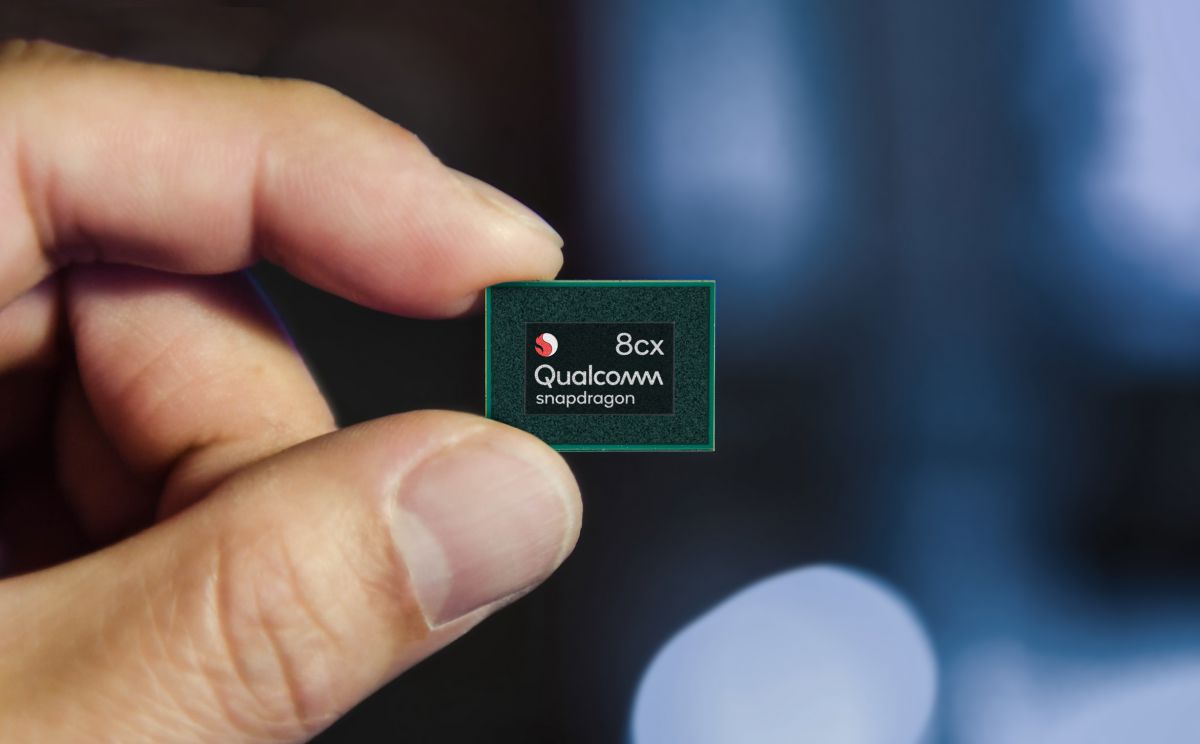
    A report issued by reliable analyst Ming-Chi Kuo says that a price war has begun in the 5G chip industry. Kuo’s note to clients, says that Qualcomm has cut pricing for its mid-range 5G Snapdragon 765 chipset after sales of high-end 5G smartphones fell short of expectations. By cutting the cost of its mid-range 5G chips to manufacturers, Qualcomm is trying to get these firms to produce more affordable 5G handsets to entice the public. The price cuts will also extend to Qualcomm’s low-end chips as well.
    As a result of the price cut, Kuo sees MediaTek facing pricing pressure for its Dimesnity line of 5G chips three to six months earlier than expected. Instead of achieving gross margins of 40% to 50% for its chips as the consensus expects, the analyst sees MediaTek’s margins dropping to less than 30%-35%.
    Qualcomm has reportedly cut the price of the 5G Snapdragon 765 chipset (SD7250) by $25-$30 to $40. MediaTek’s Dimensity 1000 5G chipset costs the company $45-$50 to make and it sells for $60-$70 per chip. As a comparison, Qualcomm’s top-of-the-line Snapdragon 865 Mobile Platform with the Snapdragon X55 5G modem costs $120-$130 and has not had its price cut. The company’s flagship chip outperforms the MediaTek Dimensity 1000 and Qualcomm sees no need to drop the price of its high-end chipset.
    The recently announced MediaTek Dimensity 800 chipset, which supports only the slower sub-6GHz 5G signals, is due to be released in May. This chip, developed for lower-priced 5G handsets, is expected to be sold at a price of $40-$45 per chip and costs MediaTek $30-$35 to make. There might not be that much room for MediaTek to maneuver in response to Qualcomm’s pricing actions.
    The pricing shakeup could cost MediaTek some business. The company’s major 5G chip customers like Oppo, Vivo, and Xiaomi are said to be switching orders for 20 million to 25 million chips from MediaTek to Qualcomm. These components are scheduled to be shipped next month.
    The Snapdragon 765 SoC is equipped with eight Kryo 475 CPU cores running at a clock speed as fast as 2.4GHz. It features an integrated Snapdragon X52 5G modem that supports both mmWave and sub-6GHz 5G signals, and sports the Adreno 620 graphics processor. There is also a Snapdragon 765G for gaming phones that is equipped with an enhanced version of the GPU offering 10% faster graphics rendering compared to the standard Snapdragon 765 chipset.
    The Dimensity 1000 also has an integrated 5G modem and is packed with four performance Cortex-A77 CPU cores running at a clock speed of up to 2.6GHz. Four efficiency Cortex-A55 CPU cores are also included. This SoC is equipped with the ARM Mali-G77 MC9
    Qualcomm’s salvo would have less of an impact on the market if MediaTek’s margins were a little wider. A larger margin would allow the company to take a hit and still thrive. But the Dimensity 1000 brings $10-$25 per chip to MediaTek’s bottom line and the Dimensity 800 garners profits of $5-$15 per chip.
    MediaTek’s Dimensity 1000 and Dimensity are manufactured by TSMC using its 7nm process. The Snapdragon 765/765G will be manufactured by Samsung using its 7nm process. The flagship Snapdragon 865 Mobile Platform is also a 7nm chip, and it also will be produced by TSMC. Qualcomm originally planned to have Samsung’s foundry roll out the Snapdragon 865, but the chipmaker was concerned about allowing Samsung to get a peek under the hood of its top chipset for 2020.
    Chip prices might also run into pressure halfway through this year when TSMC starts producing more powerful and energy-efficient 5nm chips. Among the first to be manufactured will be Apple’s A14 Bionic and Huawei’s next high-end IC expected to be named the Kirin 1020.
  • Malware costs Vietnam $900 mln

    Malware costs Vietnam $900 mln

    Malware caused Vietnamese users damage worth VND20.89 trillion ($900.8 million) last year, up 40 percent year-on-year.

    The surge came with the rising number of computers contaminated with malware from advanced persistent threats (APT), according to a report released Thursday by Vietnam’s cybersecurity firm BKAV.

    The number of computers infected with malware rose 3.5 percent year-on-year to 85.2 million in 2019. This means 57.7 percent of computers nationwide were infected.

    Increasing virus infections occurred via email, from 4 percent of the 2018 total to 20 percent last year.

    Another reason for the high contamination is Vietnamese users’ habit of downloading files without checking the authenticity. Eight out of 10 computers were infected with malware because of this behavior, the report stated.

    Rising threats resulted in 1.8 million computers losing data last year, up 12 percent from 2018.

    A large-scale foreign attack last year saw the hack of devices via manipulation of weak passwords.

    The attack caused 420,000 computers to be infected with dangerous W32. Fileless malware, which BKAV experts say have “invisibility” as it does not leave behind traces on hardware like other malware.

    BKAV forecast malware would become increasingly dangerous this year as hackers use them for financial benefits, like accessing bank accounts.

  • Apple reportedly has plans to bypass carriers and deliver data itself to the iPhone

    Apple reportedly has plans to bypass carriers and deliver data itself to the iPhone

    In five years, Apple iPhone and iPad users might be able to receive online content on their phone directly via satellite and bypass their wireless carrier. According to Bloomberg, the company has a secret team involving 12 engineers currently working on such a project. Sources cited by Bloomberg caution that the project is in its early stages and could still be dropped. But with company CEO Tim Cook taking an interest in the project, it is clear that satellite delivery of online content is high on Apple’s to-do list.

    Besides using satellites to beam the internet directly to iPhone units, Apple could be looking into the use of satellite technology to provide iPhone owners with improved navigation and mapping capabilities. It is unclear whether the company plans on developing its own satellites, which would be a rather costly endeavor, or will use the equipment on the ground to send data obtained by a satellite and send it to iPhones and iPads.

    The project might not be limited to Apple’s mobile devices and could actually be a workaround allowing Apple to become a wireless operator. This would allow the company to take on the carriers worldwide. While this was something that the late Steve Jobs was hoping to accomplish, back in 2016 Tim Cook said that the company didn’t have the expertise on a network level. But using satellites might be a different story. However, this won’t be easy. “The lessons of prior failures like Iridium, Globalstar and Teledesic are that it’s really hard to find a viable business plan for multibillion-dollar satellite communications projects,” said satellite expert Tim Farrar, a principal at TMF associates. But Apple must feel confident that it can turn a buck with this technology. Apple isn’t the only tech company looking at the sky; Amazon plans on deploying more than 3,000 satellites that will first be sent into space in 2021. In a regulatory filing, Amazon said that it hoped to connect “tens of millions of unserved and underserved consumers and businesses in the United States and around the globe.”

    Some have noticed that Apple is looking for software and hardware engineers that have worked on designing components for communications equipment. Pair that with recent hires made by Apple of people with experience in the aerospace and wireless data delivery industries and it all starts to become a little clearer. The team working on the project is led by aerospace engineers Michael Trela and John Fenwick. The pair worked on a satellite imaging firm that was eventually sold to Google five years ago and they ended up running Google’s satellite and spacecraft operations before leaving for Apple in 2017. After spending 18 months examining whether Apple could benefit from satellite technology, the team has started work on making this a reality. Both Trela and Fenwick report to Apple’s iPhone engineering group.

    Apple’s work on the use of satellites to deliver content to mobile devices is one of several special projects that the company is reportedly working on. Virtual reality and augmented reality headsets are said to be in the works with launches expected in 2021 and 2022 respectively. Bloomberg also mentions that Apple continues to work on technology for the Apple Watch that will allow the timepiece to provide non-invasive blood glucose readings for diabetics. This is a project that we have mentioned from time-to-time. And the company is also planning to design its own modem chips which will allow it to replace Qualcomm. Even though Apple spent $1 billion to purchase Intel’s smartphone modem business earlier this year, it will still be several years before an Apple-designed modem chip is found inside the iPhone.

  • Vodafone named ‘national retailer of the year’

    Vodafone named ‘national retailer of the year’

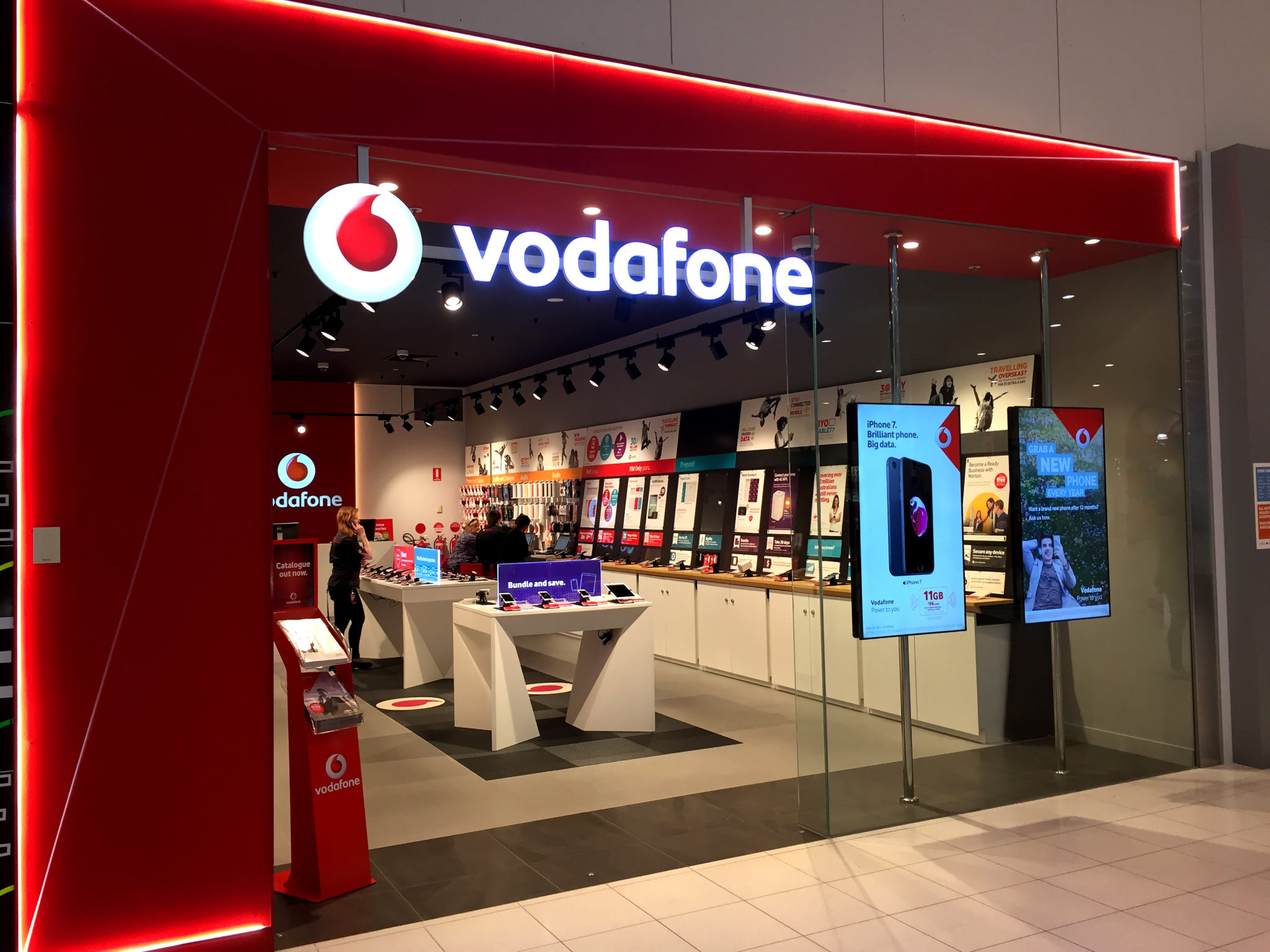
    Vodafone was crowned ‘national retailer of the year’ at the Australian Retailers’ Association’s annual awards in Melbourne on Thursday.

    The telecommunications company said it had made significant improvements to its business and customer experience since a low point a few years ago by making common sense decisions and backing its people.

    This was a fitting result, given this year’s theme, ‘Retail Morphosis’, which is all about how retailers adapt to change in order to succeed.

    “Although the retail landscape will continue to be disrupted by emerging technology and international competitors, it is truly gratifying to see the industry filled with hardworking retailers who continue to power retail through innovation and adaption,” Russell Zimmerman, executive director of the ARA, said.

    Retailers including Petstock, Bakers Delight, Birdsnest, Coles Group and Biome were recognised for their achievements in innovation, marketing, customer experience and more. The winners in all 12 categories are listed below.

    The awards took place at Myer Mural Hall on Thursday morning, and featured fashion parade capturing the history of Australian retail from the 1920s to the 1990s, with outfits curated by Myer and hair and make-up created by Chiseled Hair.

    Consumer futurist Amanda Stevens delivered a keynote speech on what the latest consumer research insights reveal about the opportunities for growth in the sector, and host Steve Plarre, CEO of Ferguson Plarre Bakehouses, entertained the audience with a rendition of ‘Uptown Funk’.

  • AT&T launches 5G service in New York City

    AT&T launches 5G service in New York City

    After Sprint and Verizon, it’s AT&T’s turn to bring 5G to another US city. The carrier has just announced that starting today, customers in New York City will be able to use its 5G service if they own a compatible device.

    However, AT&T’s 5G network won’t cover the entire city and it will be available in limited areas initially. Sadly, unlike other US carriers, AT&T wouldn’t list areas in New York City where customers will be able to access its so-called 5G+ network.

    For the time being, select customers in NYC can access AT&T’s 5G+ network using the Samsung Galaxy S10 5G on the carrier’s AT&T Business Unlimited Preferred plan. As such, the AT&T 5G service is only for business customers, at list initially.

    NYC is the 21st city in the US with AT&T 5G, but the carrier announced plans to offer nationwide 5G in the first half of 2020, so there’s more to come.

  • JD takes stake in Beijing Digital Telecom

    JD takes stake in Beijing Digital Telecom

    Chinese online retail platform JD is acquiring 9 percent of Beijing Digital Telecom.

    The consumer electronics retailer, which operates from around 3000 physical stores throughout China selling predominantly phones and computers, will expand JD’s offline presence within the market, including lower-tier cities.

    The transaction value has not been disclosed, as it falls below the amount that requires public notification under US Securities and Exchanges Commission regulations.

    At the same time, Beijing Digital Telecom is entering a joint venture with a network-technologies developer and provider Suqian Jiashi, which is wholly owned by JD. The firm is investing RMB191 million (US$28.5 million) for a 49 percent stake, while Suqian Jiashi is putting in RMB 204 million ($29.6 million).

  • Judge’s ruling is bad for Qualcomm

    Judge’s ruling is bad for Qualcomm

    Back in May, Judge Lucy Koh ruled that Qualcomm’s business practices are anti-competitive. The judge, already known for presiding over the iconic Apple v. Samsung patent trial sat through the FTC v. Qualcomm non-jury trial held earlier this year. Judge Koh found that the chipmaker’s business practices violated antitrust laws. These included Qualcomm’s “no license, no chips” policy and its failure to license standard-essential patents to competitors at a fair, reasonable and non-discriminatory (FRAND) manner. These are patents that companies need to license so that their products can meet technical standards. Qualcomm was also called out by Judge Koh for charging royalties based on the retail price of a phone instead of just the cost of its chips.

    Of course, Qualcomm says that it will appeal the decision since it requires the company to renegotiate its contracts and licensing agreements with manufacturers. Qualcomm is also complaining that all of these negotiations can make it difficult for it to complete talks with phone producers who want to purchase Qualcomm’s 5G modem chips. And the ruling would force the company to work out deals with its rivals over licensing of its standard-essential patents.

    Qualcomm also is seeking a stay of the decision until it exhausts the appeals process. This way it doesn’t have to go through the whole exhaustive renegotiation process and then reverse the new deals if it wins on appeal. Even though that might make sense to some, Judge Koh has denied Qualcomm’s request. A spokesman for the chipmaker says that it will immediately request a stay from the 9th U.S. Circuit Court of Appeals.

    The FTC v. Qualcomm trial was held in January and featured testimony from employees of several phone manufacturers. Many testified about Qualcomm’s onerous terms for licensing its IP and how it bases the royalties it charges manufacturers on the entire retail price tag of a phone. So instead of paying a percentage of a $20-$40 part for each unit sold, phone manufacturers were charged a percentage of retail prices amounting to $400 and up for each phone rung up with a Qualcomm part. This is the difference between the chipmaker receiving dollars per phone or pennies per phone.

    One of those who took the stand was Apple supply chain executive Tony Blevins. At the time, Apple and Qualcomm were not on speaking terms and both companies had filed multiple suits against each other. But that all changed in April after closing arguments were heard in a trial that pitted Apple against Qualcomm. A settlement was announced that resulted in Apple paying Qualcomm an undisclosed amount (believed to be as much as $4.5 billion) and in return, Apple received a licensing agreement for six years (with a two-year option) and a multi-year chip supply agreement. In addition, both sides dropped all lawsuits filed against each other.

    One phone manufacturer happy with Tuesday’s decision is LG. It doesn’t want to see Koh’s decision stayed because it is currently negotiating a licensing and chip supply deal with Qualcomm and is worried that it might be forced to sign another “unfair” deal with the company. And needless to say, the FTC was also against a ruling that would stay the decision.

    Unless the decision has stayed, LG and other phone manufacturers will probably be working out new deals with Qualcomm while the appeals process goes on. It could take more than a year before a final decision is rendered by an appellate court. Wall Street weighed in with its decision and in after-hours trading on Wednesday (the market closed regular trading early for the July 4th holiday), the stock dropped by $2.49 or 3.25% to $76.63.

  • Ooredoo Myanmar and friends launch digital literacy campaign

    Ooredoo Myanmar and friends launch digital literacy campaign

    Ooredoo Myanmar, Facebook and the GSMA have jointly launched a digital literacy campaign to raise awareness and increase adoption of mobile internet in Myanmar. The “Internet 1O1” (Internet One on One) campaign aims to inform and educate first time and new internet users, through one-on-one training at Ooredoo retail points and exclusive stores across the country, particularly in rural areas.

    According to GSMA Intelligence, around 21 Million people are using mobile internet in Myanmar out of a population of 54.1Million people.

    One of the biggest barriers to connectivity is a lack of digital literacy. This initiative aims to guide users through the multiple uses and benefits of the Internet and help them to do so responsibly. Ooredoo Myanmar, Facebook and the GSMA believe that digital literacy initiatives across the countrywill support internet users in Myanmar to use the internet responsibly and be empowered by it.

    Internet 1O1 will be available to consumers in Ooredoo retail stores where in-store promoters will walk consumers through internet education materials including: an easy-to-understand video explaining: Whatthe internet is, how to access it and how to stay safe online as well as showing the type of useful information consumers might need.

    Ooredoo Myanmar’s CEO Mr. Rajeev Sethi said “We are very proud to partner with industry leaders like Facebook and the GSMA in this initiative to educate the people of Myanmar on how to safely be connected, well informed and benefit from the internet. This is the first step of our “Learn with Internet to enrich your digital lives” CSR program. This initiative will enhance Myanmar citizen’s digital lives.”