Tag: ict

  • ZTE receives 2021 Global Server Product Innovation Award by Frost & Sullivan

    ZTE receives 2021 Global Server Product Innovation Award by Frost & Sullivan

    ZTE Corporation has been presented with 2021 Global Server Product Innovation Award by Frost & Sullivan, based on the investigation and analysis of 2021 global server product market, as well as the research and evaluation on mainstream server competitors within the industry.

    This award is to honor ZTE Corporation’s continuous innovation and progress in the global server product market, its technology leadership position in the industry, and its contribution to the overall development of the server industry.The reform of IT infrastructure is the engine of the digital transformation of enterprises. Regarding the rapid increase in data traffic in the era of the digital economy, enterprises’ IT infrastructure requires stronger computing power to deal with the massive data. Meanwhile, due to differences in products and services and different application scenarios, each type of industry has also formed diversified and customized needs.

    Under this background, the opportunities and challenges coexist for the server vendors. In terms of computing power, simply expanding data centers might help in dealing with data, but it also makes the data centers’ structure more complicated and harder to conduct operations and maintenance. Regarding this difficulty, companies and organizations require not only powerful data processing capabilities, but they also want more intelligent operations and maintenance, and simpler deployment methods of IT equipment.

    In terms of differentiated demands, servers, the infrastructure platform for enterprises’ IT systems, are required to respond to a large number of service requests and process services. In addition, companies and organizations in related industries have also proposed more differentiated requirements on performance, reliability, adaptability, and flexibility of servers.

    For instance, the financial enterprises rely on servers, storage and cloud operating systems to build a stable and reliable financial cloud platform; the telecom enterprises need to effectively assist customers in the reform of “network moving with the cloud” and “cloud and network integration”. The power enterprises require to ensure the power market safety and under control, and provide a stable and smooth operation environment for the national grid information system, etc. Products or services that can better meet the differentiated needs of various industries will stand out under the change.

    In the new era of servers becoming high performance, high reliability and diverse computing power, coupled with companies in related industries put forward higher requirements on the server performance, reliability, adaptability and flexibility. ZTE keeps up with the trends, constantly innovating technology and launching new products to meet new requirements:

    In the aspect of data processing, The G4X server newly introduced by ZTE uses 2 Intel Xeon third-generation extensible processors (Ice Lake) with a single processor up to 40 cores. Its performance is at the top level of the industry, providing an efficient engine for enterprises in the process of digital transformation.

    In the aspect of meeting the needs of multiple industries, ZTE G4X server boasts four to eight built-in heterogeneous and intelligent computing acceleration engines, which can satisfy the requirements of various scenarios of artificial intelligence, image processing and industrial control, etc.

    In the aspect of server reliability, ZTE G4X server can effectively meet the server reliability requirements of government, finance, railway, power grid and other enterprises. For instance, all ZTE servers are designed and produced based on telecom equipment standards. The reliability of the products is also verified by telecom product requirements, and can be efficiently adapted to the business environment of enterprises.

    In the aspect of environmental adaptation, ZTE adopts stringent standards for verification from R&D and design to producing and manufacturing. For example, to verify and improve ZTE G4X server’s reliability under high-stress environmental conditions, the server is tested at high and low temperatures ranging from 0 to 50 degrees. Moreover, to improve the protection capability of ZTE’s products in complex environments, ZTE uses a higher level of 6-8kV test standards. Furthermore, to identify extreme working conditions of products and continuously improve the product design, ZTE also conducts a HALT (High Accelerated Life Test) test.

    In the aspect of flexibility, ZTE G4X server realizes a flexible combination of “1 product, 2 chassis and 7 models” through modular design, effectively reducing O&M costs and deployment time for enterprise customers. It even refreshes world records of SPEC CPU performance tests, setting new world records in floating-point calculation and integer calculation performance tests.

    Overall, ZTE G4X server features ultimate performance, flexible expansion, high reliability and efficient O&M, providing new momentum for the digital transformation of various industries.

    Frost & Sullivan Best Practices awards recognize companies in a variety of regional and global markets for demonstrating outstanding achievement and superior performance in areas such as product revenue, technological innovation, customer service and strategic product development. Industry analysts compare market participants and measure performance through in-depth interviews, analysis, and extensive secondary research to identify best practices in the industry.

    Frost & Sullivan’s analysts and consultants continuously research a wide range of markets across multiple sectors and geographies. As part of this ongoing research, it identifies companies that have successfully introduced new and innovative products into their markets, with emphasis on product innovation and customer value. This involves extensive primary and secondary research across the entire value chain of specific products. Against the backdrop of this research, Frost & Sullivan is pleased to recognize ZTE Corporation for 2021 Global Server Product Innovation Award.

  • Nokia secures first 5G contract in China

    Nokia secures first 5G contract in China

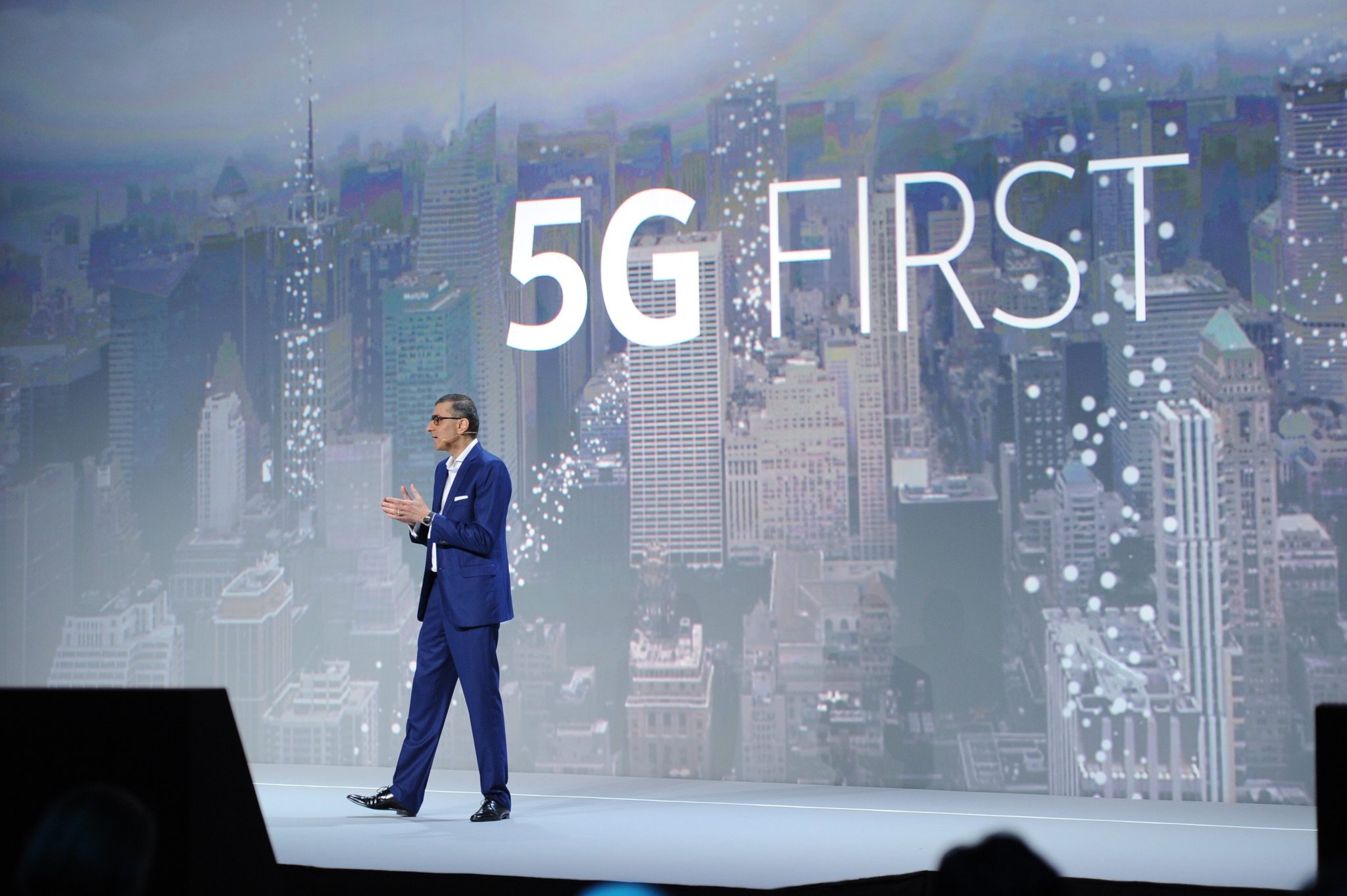
    Nokia secured a 5G RAN contract for China Mobile on Monday, making this the company’s first 5G contract in the country.

    Nokia was awarded a 10% share in one of three contracts tendered by China Mobile, while Ericsson obtained 9.6% of another contract. The total tender for all three contracts reached about $6 billion, with Nokia being awarded 4% of the overall tender. Comparatively, Ericsson was awarded 2%, dropping from about 11% last year.

    Together, Huawei and ZTE won the majority share in all three contracts to build 5G 700 MHz base stations for China Mobile and China Broadcasting Network. This is followed by a smaller local company Datang Corporation.

    China Telecom and China Unicom will also be disclosing awards of their respective 5G contracts.

    Currently, China is ahead of other countries in 5G deployments. According to data from the Ministry of Industry and Information Technology, China had deployed 820,000 5G base stations by the end of March.

  • Comviva’s customer value management platform drives breakthrough growth for Indosat Ooredoo

    Comviva’s customer value management platform drives breakthrough growth for Indosat Ooredoo

    Fueled by an intensely competitive operating environment in Indonesia’s mobile sector, Indosat Ooredoo partnered with Comviva in delivering a front-to-end real-time marketing management platform, as well as subscribers’ loyalty and rewards program to yield increased customer retention and revenue within months from implementation.

    In a country where 98% of mobile phone users fall back on prepaid subscriptions, telecommunications operators in Indonesia’s competitive mobile market face the gargantuan challenge of retaining customers. In a heterogeneous market already characterized by low loyalty and high churn rates, matters are made worst when high costs deter telecommunications operators from reaching out to and acquiring new subscribers in under-served populations in far-flung areas.Indosat Ooredoo taps on Comviva’s expertise in innovation-driven growth marketing

    It is costlier to replace churned customers than retaining them. Amid intense competition and dismal financials, Indosat Ooredoo recognized that the path to profitable growth is an improved customer value management (CVM) platform that manages customer lifecycle holistically to uncover customer insights and drive meaningful engagements.

    Having collaborated on other deployments with much success, Indosat appointed Comviva, a global leader in mobile solutions for telecommunication operators, as a strategic partner to spearhead its Big Data CVM 2.0 program in April 2019.

    Aimed at improving customer lifetime value to achieve incremental revenue, Comviva developed a three year digital roadmap with front-to-end digital strategies. The suite of solutions spans different stages from implementing, operating, optimizing and providing timely, in-depth post-implementation analysis to transforming customer experiences critical to the success of the program.

    Overcoming key challenges with technology

    Before partnering with Comviva, Indosat Ooredoo was missing out on opportunities to influence customers’ micro-moments at critical junctures in the customer journey. To maximize the value of individual customers and micro-moments of interactions, Comviva’s first step was adding real-time capabilities to the operator’s CVM platform.

    A machine learning (ML), real-time interaction management platform, Comviva’s MobiLytixTM Real Time Marketing capitalizes on actionable analytics to steer CVM excellence. It integrates data across multiple sources to build intelligence and act on real-time events to orchestrate engagements with customers.

    Adding complexity to critical decision-making was the lack of federated data across Indosat Ooredoo’s various departments. To get to the root of this problem, Comviva developed a big data Hadoop-based centralized management system that effectively captures over 800 attributes about Indosat Ooredoo’s prepaid and post-paid subscribers to create a single view of its subscribers. This system brings focus to descriptive, predictive and prescriptive attributes of subscribers to serve as a unified customer data system accessible to the operator’s campaign management, business and applications teams.

    Comviva also identified the absence of a pervasive artificial intelligence (AI) technology to measure campaign effectiveness as another shortfall. To this end, Comviva developed models founded on AI and ML to accurately predict customers’ behaviors.

    Finally, Indosat introduced imPoin, a loyalty and rewards program to extend instant gratification to loyal customers and reward loyal customers preferentially. Powered by Comiva’s MobiLytixTM Loyalty and Rewards Platform, this program allows Indosat Ooredoo to predict customer engagement activities and positively influence customer behavior through reward-based engagements. To yield the best outcomes, a framework was developed to measure, monitor, and optimize the program.

    Comprising a 4-tier membership model – namely Red, Silver, Gold and Platinum, with Platinum being the highest tier – better benefits are rolled out for higher tiers. Members are motivated to earn benefits for all their engagements, which can be accumulated and redeemed via the myIM3 mobile app. Members can look forward to receiving a mix of lifestyle and experiential rewards such as fuel, shopping, dining as well as gaming vouchers.  

  • Singapore to increase ICT spending to accelerate Government digitalisation

    Singapore to increase ICT spending to accelerate Government digitalisation

    Singapore’s Government Technology Agency (GovTech) will spend up to an estimated S$3.8 billion on info-communications technology (ICT) procurement this year, an almost 10 percent increase from FY20’s procurement value of S$3.5 billion.

    This spending will go towards transforming government digital services used by both citizens and businesses and re-engineering government digital infrastructure to support modern application development. It will build on the momentum generated by past years’ investments and serve to lock in the digitalization gains brought about by the COVID-19 pandemic. Small and Medium Enterprises (SMEs) will be able to participate in close to 83 percent of the total potential procurement opportunities.Transforming government digital services for the future

    An estimated S$2.7 billion (70 percent out of S$3.8 billion) will be spent on 250 projects to transform, integrate and streamline digital services across different sectors to create a more digitally empowered nation.

    Of the S$2.7 billion expected to be spent on digital application services, 44 percent will be developed on the cloud in FY21. Developing applications on the cloud increases agility and innovation, resulting in faster delivery of new public services for citizens and businesses. In addition, leveraging on cloud infrastructure increases resiliency and scalability, leading to better performance during periods of high demand. To date, the government has close to 600 systems on cloud and is on track to have 70 per cent of eligible systems on the cloud by FY2023.

    Number of Artificial Intelligence projects to increase

    Over S$500 million (13 percent out of S$3.8 billion) will be spent to accelerate the adoption and deployment of Artificial Intelligence (AI) for the public sector. AI can help the Government to deliver better services, make better decisions based on data-driven insights, and optimise operations to increase productivity. To support government agencies in deploying AI, GovTech has built various central platforms to support common use cases in the area of video analytics, natural language processing, fraud analytics and personalization to help agencies reduce the cost of onboarding AI solutions. The central platforms also enable agencies to access common features and enjoy lower cost of management, maintenance and updating of systems.

    More projects for SMEs to participate in Govt ICT procurement

    The increase in ICT procurement spending will create more opportunities for SMEs, with more than 80 percent of ICT contracts to be made available through streamlined procurement methods. These procurement methods will improve SMEs’ access to Government ICT procurement opportunities. For instance, the government has incorporated dynamic contracting in bulk tenders to allow new suppliers and requirements to be introduced throughout a contract period. Barriers of entry for SMEs are also lowered as government agencies put out more cloud-based services and smaller system projects that allow suppliers with a lower financial grading to bid.

    Mr Kok Ping Soon, Chief Executive, GovTech, said: “We are heartened by the results of the G2C and G2B annual survey on Government Digital Services, which are an affirmation of the Government’s commitment to invest heavily in ICT and digital transformation. Providing more opportunities for SMEs to take on government projects is also important, as SMEs have always been the lifeblood of Singapore, and form a key pillar of our Smart Nation efforts. GovTech will continue to innovate to provide seamless and easy-to-use services and improve the resilience and security of our digital platforms for citizens, businesses and public officers.”

  • Nepal to debut Internet and telecom services on international airlines

    Nepal to debut Internet and telecom services on international airlines

    The Nepal Telecommunications Authority (NTA), an autonomous telecommunications regulatory body, together with the Civil Aviation Authority of Nepal has approved international airlines to use Nepal’s Internet and telecom services for its passengers.

    Airlines would need to apply to NTA, on top of obtaining permission from the International Civil Aviation  Organisation to tap into internet and telecom services above 10,000 feet in Nepal.

    Nepal is the latest country in South Asia to allow such services to passengers, following the footsteps of India and Afghanistan. Last September, Vistara was India’s first airline to offer in-flight Wi-Fi Internet connectivity onboard international flights.

  • Nokia demonstrates record Optus’ 5G mmWave capabilities

    Nokia demonstrates record Optus’ 5G mmWave capabilities

    Nokia and Optus announced that they achieved a record-breaking aggregate site throughput of 10 Gbps during a downlink speed demonstration using 800 MHz of millimeter Wave (mmWave) spectrum at a live 5G site in Brisbane. Powered by Nokia AirScale Radio, the site demonstrates the huge potential of 5G as it is introduced across future spectrum bands. Once deployed, the speed and a capacity boost from the 5G mmWave layer will unleash lightning-fast speeds for consumers and enterprises alike to support a range of new low-latency, high-bandwidth services.

    The recent demonstration showcased the capabilities of Nokia’s 5G mmWave technology and the benefits of adding it on top of an existing 5G/4G site. The demonstration showed how Nokia’s 5G mmWave technology delivers on the promise of super-fast data rates by boosting the site capacity to 10 Gbps and beyond.

    Nokia’s 5G mmWave technology will allow Optus to focus on scalability, automation, and performance by supporting services that utilize the full capability of 5G. Leveraging Nokia’s solutions, Optus can also harness 5G mmWave to serve the enterprise market and explore new use cases in healthcare, mining, port operations, and smart manufacturing, among other industries.

    The decision to select this mixed commercial and industrial area of Brisbane was made keeping these new use cases in mind as they sought to showcase the many real-world benefits of mmWave to the enterprise; thereby gaining early insights into this new exciting technology before wider rollout in the future.

    This achievement further strengthens the long-standing and collaborative partnership between Nokia and Optus. In early 2019, Optus became the first operator globally to deploy Nokia’s FastMile 5G indoor gateway in a live 5G network. Recently, the two companies also successfully launched 5G services at the Optus Stadium in Perth, Australia.

    Lambo Kanagaratnam, Managing Director of Networks at Optus, said: “We’re committed to keeping Australia connected and at the forefront of 5G. By partnering with global technology leaders like Nokia, we’ve taken an exciting step towards unlocking the massive potential that 5G mmWave will bring to the consumers, enterprises and industries in Australia. Reaching 10 Gbps per site is a crucial step in our 5G development and validates the progress we’ve made with the technology together with Nokia.”

    Anna Wills, Head of Oceania at Nokia, said: “This is another milestone in the development of 5G services and demonstrates the confidence operators have in our 5G solutions. Today’s achievement with Optus shows the potential of mmWave deployments, particularly at a time when connectivity and capacity are so crucial. We’re proud of our long-standing relationship with Optus and the great strides we continue to make together in this new era of connectivity.”

  • Ooredoo Group Announces USD750 million Deal for Sale of More Than 4,200 Telecoms Towers in Indonesia

    Ooredoo Group Announces USD750 million Deal for Sale of More Than 4,200 Telecoms Towers in Indonesia

    Ooredoo  today announced that its Indonesian operating company, PT Indosat Tbk. (“Indosat Ooredoo”), has signed a sale and leaseback agreement with PT EPID Menara AssetCo (“Edge Point Indonesia”) for more than 4,200 telecommunications towers.

    PT EPID Menara AssetCo is an Indonesian subsidiary of Edge Point Singapore, which is wholly owned by Digital Colony, a leading global digital infrastructure investor with extensive experience owning and operating cellular towers.

    Indosat Ooredoo has agreed to sell this portfolio of towers in a transaction valued at USD 750 million, including a supplementary offer, making it one of the largest deals of its kind in Asia. The sale will unlock capital to create value for shareholders and continue to build Indosat Ooredoo’s strong growth momentum through improvements to network performance and the launch of innovative new digital solutions to enhance the customer experience.

    The sale is part of Ooredoo Group’s strategy to move to a more efficient and flexible asset light model and unlock the trapped value of its infrastructure portfolio. Prior to this deal, Ooredoo had a global portfolio of approximately 27,000 owned towers, representing an infrastructure portfolio of significant value for the Group. Monetising these assets to create more value for both shareholders and customers is a key focus of Ooredoo’s current strategy.

    Aziz Aluthman Fakhroo, Managing Director of Ooredoo Group, said: “Congratulations to Indosat Ooredoo on this sale and leaseback agreement with Edge Point Indonesia, which aligns perfectly with our new strategy and its focus on creating more value for shareholders and customers. This strategy incorporates a shift towards an asset-light model that will help us unlock significant capital and enable us to focus on our core mission of delivering outstanding digital and enterprise services to our customer base. I extend our gratitude to the Government of Indonesia for its progressive policies that leave a positive impact on the industry, its operators and its people.”

    Edge Point Indonesia was declared the winning bidder of a competitive tender process conducted by Indosat Ooredoo. The transaction is expected to close in Q2 2021 subject to customary conditions, including shareholder approval by Indosat Ooredoo at an EGM, which is planned to be held on May 6th. Indosat Ooredoo will lease back space on the towers for a period of 10-years to meet its ongoing requirements.

    President Director and Chief Executive Officer of Indosat Ooredoo, Ahmad Al Neama, added: “I am delighted that Indosat Ooredoo has agreed this deal, which furthers our strategy to create more value from our infrastructure assets. The deal marks the third and final sale of assets from our high-quality tower portfolio and continues our transition into a leading digital telecoms company. We are confident the leaseback agreement, with its attractive terms, will continue to meet our ongoing tower needs, while the capital that we have unlocked will provide further fuel to power our growth momentum. Indosat Ooredoo and Edge Point Indonesia will work closely together going forward and build a strong and long-lasting strategic partnership.”

  • Singtel and Hyundai Motor to develop Singapore’s smart manufacturing and mobility technologies

    Singtel and Hyundai Motor to develop Singapore’s smart manufacturing and mobility technologies

    Hyundai Motor Company and Singtel today signed a Memorandum of Understanding (MOU) to collaborate on a range of ventures to support smart manufacturing, connectivity for electric vehicle battery subscription service. The MOU follows Hyundai Motor Group’s announcement in October 2020 that it is setting up a new state-of-the-art Hyundai Motor Group Innovation Centre Singapore (HMGICS) to conduct studies on future mobility and explore innovative solutions, services and disruptive technologies to revolutionize commuters’ transport experience.

    Hyundai Motor will combine its expertise in developing innovative automotive and manufacturing solutions with Singtel’s capabilities in 5G, Internet of Things (IoT), and next-generation info-communications technologies and solutions to develop Industry 4.0 advanced digital solutions to   transform the way vehicles are currently manufactured. The parties will develop and pilot a 5G-enabled smart factory use case for HMGICS’ intelligent manufacturing platform, and potentially scaling it up for deployment across Hyundai’s manufacturing plants globally.

    “Hyundai is delighted to work with Singtel, implementing next-generation communication solutions that will enhance mobility experiences for our customers,” said Hong Bum Jung, Senior Vice President of HMGICS at Hyundai Motor Company. “We also hope to explore future innovative solutions and business opportunities with Singtel to help realise Singapore’s Smart Nation vision.”

    Hyundai and Singtel will also work together on an IoT communications solution for the batteries powering Hyundai’s electric vehicles (EVs) in Singapore. The IoT system enables Hyundai to monitor the telemetry, or automatic data transmission, of the batteries’ real-time status and performance.

    The data-driven insights can enhance the EVs’ reliability, advancing Singapore’s EV ecosystem and Smart Nation vision of connected and sustainable mobility solutions.

    Andrew Lim, Managing Director, Government and Large Enterprise, Group Enterprise at Singtel said, “Our collaboration with Hyundai Motor is timely given the Singapore Government’s decision to phase out internal combustion engine vehicles by 2040 and the recent Budget announcement on new policies to encourage more Singaporeans to switch to driving electric vehicles. By pushing the boundaries of what is possible with 5G, IoT and other advanced technologies, we also want to build up Singapore’s smart manufacturing and Industry 4.0 capabilities and strengthen its innovation ecosystem.”

  • IT engineers’ salaries soar as supply cannot meet demand

    IT engineers’ salaries soar as supply cannot meet demand

    IT engineers with five years’ experience are getting paid salaries of VND120 million ($5,200) a month amid rising demand for their skills.

    A software/solutions architect in Ho Chi Minh City earns up to VND160 million while a software engineer gets VND120 million, according to recruitment company Adecco Vietnam.

    A DevOps engineer, who is responsible for software development and IT operations, can get VND90 million and a data engineer, VND80 million.

    As corporations focus on digital transformation, demand for IT personnel is rising, but Vietnam’s pool of qualified candidates is small, it said.

    “With the huge rise in demand for digital media, cloud and security solutions, IT infrastructure roles are highly sought after.”

    IT professionals with good communication skills who adapt quickly to new technology trends have huge opportunities, especially with the rise of artificial intelligence and big data, it said.

    For senior positions such as chief information officer and chief technology officer, the salary could go up to VND400 million.

  • Indosat Ooredoo launches iAds based on augmented reality

    Indosat Ooredoo launches iAds based on augmented reality

    As an experienced trusted digital partner, Indosat Ooredoo Business presents an innovative service “iAds” at the 4th Connex Webinar to answer the promotional needs of these enterprises. iAds is a digital ad platform that is designed by utilizing Augmented Reality (AR), interactive messaging, and mobile video. iAds offers the excitement of advertising and the convenience of using innovative telecommunication media.

    Chief Business Officer of Indosat Ooredoo, Bayu Hanantasena said, “Indosat Ooredoo Business is committed to supporting the growth of Indonesia’s business sector by utilizing digital technology. Today, we launched iAds to support the promotional needs of enterprises to be more innovative through social media and relevant to the current situation. We hope that through the 3 iAds services that we launched today, it will help enterprise not only survive, but also growing rapidly so that they can compete in both local and global markets, as well as supports Indonesia’s digital economy.”

    Through iAds, promotional activities can be more varied and attractive because Indosat Ooredoo Business offers several choices of digital promotion mediums, namely iAds, iAds Biz, and iAds MGram.

    • iAds: Augmented Reality (AR) technology.
    • iAds Biz: A broadcast and interactive SMS service solution that responds more precisely to promotional needs for target customers and is easily controlled through a dashboard by enterprise. Regular SMS, Premium SMS, and Interactive SMS are all promotional options provided by iAds Biz.
    • Ads MGram: Consumers can engage with interactive promotion and digital transformation solutions through images and videos that can be viewed on a variety of mobile phones, feature phone or smartphone. The other benefit of iAds MGram is that it does not require a specific application and can be accessed without internet connection or data packages. Thus, it unlocks vast reach, customer engagement and business possibilities.

    iAds can target more than hundreds of thousands of large and medium-sized companies in Indonesia to inform their products to millions of mobile users as potential targeted consumers. This service is also in line with Indosat Ooredoo’s vision as the Indonesia’s leading digital telecommunication company that encourages a more rapid and effective growth of the digital economy.

  • Huawei launches “Make any room a data center” products

    Huawei launches “Make any room a data center” products

    In his opening remarks, Brandon Wu, Chief Technology Officer (CTO) of Huawei’s Asia Pacific Enterprise Business Unit, emphasized the need to ensure enhanced resiliency across all industries, given the impact of the global pandemic.

    Wu explored the key trends emerging in edge computing, namely: better-connected infrastructure, increased resiliency through the use of edge computing, and enhanced reliability through the use of Artificial Intelligence (AI).

    According to the estimation by Gartner, within four years, 75% of data generated by enterprises will be processed at the edge. Demand for real-time interaction is driving businesses to bring computing power closer to end-users.

    • Small and edge data center are therefore making an appearance in several industries and scenarios:Retail: Small and edge data centers can exist within retail outlets as retailers close the gap between online and offline sales.
    • Manufacturing: Edge data centers deployed in distribution warehouses are capable of managing growing volumes of inventory and shipping data; in factories, such data centers manage data generated from sensors as well as communications between equipment, contributing to a growing IIoT.
    • Telecoms: Central offices of telco companies are being converted to computing rooms and used as edge data centers to make networks more dynamic.

    Mahesh Choudhary, Solution Architect for the Huawei Digital Power Line, launched the new solution directly from the Huawei Digital Power Innovation Experience Center, offering a real-life demonstration for event attendees. Changing the game with SmartLi inside —Huawei’s smart lithium battery Uninterruptible Power Supply (UPS) —now any room can be made into a data center.

    With far lower requirements placed on ceiling height, the Huawei Modular Data Center Solution has no need for a traditional raised floor design. Instead, air conditioner pipes and strong-and weak-current cables are routed from top-down, meaning that equipment can be accommodated in ceiling heights as low as 2.6 m, far below the 3 m minimum height required for a traditional data center.

    At the Smart Modular Data Center Product Launch, Huawei’s partner — NetCraft Information Technology (Macau) Co., Ltd. — shared its experiences cooperating with Huawei. Benjiman Wong, the company’s Sales Director, said: “With the Huawei Modular Data Center Solution, all required components are modular. An easy way for customers to understand this solution is to consider that each component is like a building block: you can build up your castle by adding different blocks together, so you can add more blocks in the future when needed.”

  • Singapore offers best mobile experience in South East Asia

    Singapore offers best mobile experience in South East Asia

    At a country-level, Singapore won in all metrics tested, with the most important win being the highest Excellent Consistent Quality in South East Asia, with 84.5% of connections having a network experience suitable for use-cases like 1080p video streaming, real-time mobile gaming and HD video calling. Singapore also had the highest Core Consistent Quality in the region at 94.4%.

    Consistent Quality is a set of metrics that Tutela has developed to objectively evaluate when connections are (or are not) enabling users to do the things they want to on their mobile devices. There are two sets of thresholds, Excellent and Core. A connection that hits the Excellent threshold is sufficient for use-cases like 1080p video streaming, HD video calling, and multiplayer gaming, while a Core connection should be sufficient to stream standard-definition video or handle day-to-day activities like web browsing or uploading photos to social media. The percentages seen in this report represent the percentage of tests for subscribers on a given operator that was above the Excellent or Core thresholds.

    Singapore also had the fastest download speed at 26.2 Mbps, the fastest upload speed at 14.7 Mbps, and the most responsive network with a latency result of 9.0 ms. However, Vietnam was always very close behind, with second-place winnings for both Excellent Consistent Quality (72.3%) and Core Consistent Quality (86.1%).

    The report was released by Tutela Technologies, a global crowdsourced mobile data company, and evaluated over 55 million speed and latency tests, conducted on the smartphones of real-world users of national mobile operators within Common Coverage Areas, between August 1st and January 31st, 2021.

    Per country findings were as follows:

    Singapore:

    • By operator in Singapore, StarHub dominated in four of the seven metrics tested, including the highest Excellent Consistent Quality with 87.3% of users having a network experience suitable for 1080p video streaming or HD group video calling.
    • StarHub also had the highest Core Consistent Quality, Tutela’s measure of whether a connection is good enough for everyday uses, like email, social media, and SD video streaming, the fastest download speeds, and the most responsive network in the country.

    Indonesia:

    • Telkomsel won six out of the seven metrics tested, with Indosat Ooredoo being the only other operator to make it onto the leaderboard in Indonesia with the fastest median upload speed.
    • Telkomsel was in first place for Excellent Consistent Quality with 65.0%, and also in first for Core Consistent Quality with 83.5%. However, there was only a 3% difference between the operator and second-place Indosat Ooredoo.

    Malaysia:

    • In Malaysia, the leaderboard was shared by at least four operators, with U Mobile offering its users the best mobile experience in the country. The operator won the highest Excellent and Core Consistent Quality, and fastest upload speed.
    • Digi had the fastest median download speed in Common Coverage Areas across Malaysia with 10.6 Mbps but came third in the upload speed test with 6.2 Mbps. Maxis had the most responsive network in the country, while Celcom had both the best 5G/4G coverage and total coverage.

    Thailand:

    • By operator in Thailand, AIS won in four of the seven categories tested, including the highest Excellent Consistent Quality and most responsive network. However, TrueMove was also on the leaderboard in three of the seven categories including the highest Core Consistent Quality and both the fastest download and upload speeds.
    • With only two operators in the Philippines to compare, Smart outperformed Globe in six out of the seven categories tested, with Globe taking out one category with the best total coverage.

    Vietnam:

    • Viettel Mobile in Vietnam offered the best mobile experience to its users, winning in five categories and tying for first place with Vinaphone for fastest median download speeds.
    • MobiFone was on the leaderboard in one category with the highest Core Consistent Quality.
  • Reliance Jio increases spectrum footprint by 55% in India

    Reliance Jio increases spectrum footprint by 55% in India

    Through this acquisition, RJIL’s total owned spectrum footprint has increased significantly, by 55%, to 1,717 MHz (uplink+ downlink). RJIL has the highest amount of sub-GHz spectrum with 2X10 MHz contiguous spectrum in most circles. It also has at least 2X10 MHz in 1800 MHz band and 40 MHz in 2300 MHz band in each of the 22 circles. RJIL has achieved complete spectrum derisking, with an average life of owned spectrum of 15.5 years. RJIL’s spectrum has been acquired in the most cost-efficient manner with an effective cost of Rs 60.8 crore per MHz.

    With the enhanced spectrum footprint, especially contiguous spectrum, and pan-India infrastructure deployed, RJIL has enhanced network capacity to service its existing users as well as hundreds of millions of more subscribers on its network.

    The acquired spectrum can be utilized for the transition to 5G services at the appropriate time, where Jio has developed its own 5G stack.

    Sh. Mukesh D Ambani, Chairman, Reliance Industries, said, “Jio has revolutionized the digital landscape of India with the country becoming the fastest adopter of Digital Life. We want to ensure that we keep on enhancing experiences, not only for our existing customers, but also for the next 300 million users that will move to digital services. With our increased spectrum footprint, we are ready to further expand the digital footprint in India as well as get ourselves ready for the imminent 5G rollout.”

  • Vodafone Idea acquires spectrums in five telecom circles to enhance 4G capacity

    Vodafone Idea acquires spectrums in five telecom circles to enhance 4G capacity

    Being India’s third-largest telecom operator in the 4G spectrum auctions, Vodafone Idea entered with the largest quantum of spectrum with a very small fraction. “This was administratively allocated and used for GSM services, coming up for renewal,” the company said.

    With the telecom industry gearing up for the 5G revolution, VI hopes that a large quantum of spectrum would be made available for all operators in the future at fair prices. The operator had reportedly submitted an earnest money deposit of Rs 475 crore. Yet, the company did not disclose the exact quantity of spectrum bought.

    In line with the government’s effort to innovate the country’s telecom sector, Vodafone Idea claimed that the Indian telecom segment is well-positioned to drive the Digital India agenda, as long as sufficient spectrum availability and an adequate number of market players are involved.

    Broadly speaking, India has 22 telecom circles. All major telecom operators — Reliance Jio Infocomm Ltd, Bharti Airtel Ltd, and Vodafone Idea — participated in the auction. According to the department of telecommunication (DoT), they put on the block 2,308.8MHz of spectrum at a base price of ₹3.92 trillion in the auction. Moreover, spectrum in the 700MHz, 800MHz, 900MHz, 1,800MHz, 2,100MHz, 2,300MHz, and 2,500MHz bands were put up for sale.

  • Indosat Ooredoo earns 11.6% cellular revenue growth in 2020

    Indosat Ooredoo earns 11.6% cellular revenue growth in 2020

    President Director and CEO Indosat Ooredoo, Ahmad Al-Neama said: “Despite the challenges created by the COVID-19 pandemic and pricing pressure, Indosat Ooredoo has continued to deliver on our three-year strategy and maintained growth momentum. We are grateful for the on-going support of our loyal subscribers that have encourage us to continue to invest in our 4G network and launch innovative new digital offerings to ensure that our customers have the best mobile experience possible.

    Our commitment to our customers and to provide simple and relevant products has contributed to an increase in our subscriber base and data traffic volume. This growth has translated into an above market increase in cellular revenue and a significant and accelerating gain in market share.”

    “Looking ahead, we anticipate that the shift to online lifestyles and remote working and learning, which have increased sharply by the pandemic, are here to stay. Indosat Ooredoo is fully committed to supporting our cellular and business customers adapt to the new normal by continuing to improve network performance to meet growing demand for data. We believe our new digital solutions will enrich and enable our customer’s digital lives. Through these initiatives we will support Indonesia’s digital transformation agenda and create value for all our stakeholders.”

    Indosat Ooredoo has recorded solid performance for the full year ended 31 December 2020, with total revenue increasing by 6.9% YoY to IDR 27.9 trillion, cellular revenue increasing by 11.6% YoY to IDR 23.1 trillion.

    EBITDA reaching IDR 11.4 trillion, an increase of 16% YoY due to resilient revenue growth and a focus on operational efficiencies. EBITDA margin increased by 3.2 ppt to 40.9%.

    Cellular subscriber numbers grew by 1.7% to 60.3 million by end of 2020, and Average Revenue per User (ARPU) increased to IDR 31.9 thousand from previously IDR 27.9 thousand, driven mainly by a substantial data traffic increase of 52.8% YoY.

    Indosat Ooredoo also delivered strong operational performance, including improving our video experienced by 55.8% YoY, doubling our 4G download speed, and significantly improving our upload speed by 88.4% YoY.

    During the year Indosat Ooredoo has successfully partnered with global digital players like Facebook, Google, Cisco and Ericsson to bring advanced technologies and capabilities to fast-track digitalization of the customer experience and deliver network improvements to Indonesia.

    We have continued to introduce new innovative products to help customers stay connected as well as business and education to continue to operate during the pandemic. Through IM3 Ooredoo we launched a new IMPreneur package, a business package specially designed for SMEs and through Indosat Ooredoo Business, we recently introduced the “iDo Voice” solution, which consists of 3 new voice services for corporate customers.

    Indosat Ooredoo’s investment in 4G network infrastructure and commitment to our customers continued to be recognized by prestigious international business awards. At the Opensignal Global Mobile Network Experience Awards 2020, we received the “Global Rising Star” award in Video Experience. We have also recently won the Corporate Excellence category in Telecommunications & ICT Industry at the Asia Pacific Enterprise Awards (APEA) 2020 Regional Edition.

    In 2021, Indosat Ooredoo will continue the upgrade and expansion of our network, focusing on 4G/LTE and the Video Grade Network capable of providing improved internet services to customers. Our networks enhancement is part of our effort to enable digital transformation of Indonesia, in-line with the digital economy plan of Indonesian government and to accelerate national economy recovery.

    “We are confident for our growth momentum to continue in 2021. However, due to uncertainties associated with the economic recovery from the pandemic, we are cautiously optimistic in guiding revenue growth to be in-line with the industry, EBITDA margin to be in the low 40s, and Capex at approximately IDR 8 trillion.”