Retail News CRM

Tag: ict

  • ZTE Launches Industry’s Smallest 5GC Product

    ZTE Launches Industry’s Smallest 5GC Product

    ZTE Corporation has unveiled the industry’s smallest 5GC product, dubbed the Mini5GC.

    ZTE’s new Mini5GC features miniaturization, lightweight, simple networking, and ultra-high integration. The company states that it can well facilitate safe production, flexible adjustment of work sites, and efficient and accurate emergency rescue in mining areas.

    This is part of its continued innovations in 5G core network products to boost the in-depth development of 5G private networks.

    For Mini5GC, the number of general network functions is customized from more than 10 to just four, and the network communication and resource occupation are optimized. Thus, a lightweight 5GC can be deployed on one 1U server.

    Moreover, the size of the server is reduced to A3 paper, and its weight is reduced to less than 5kg. With high integration, the 5GC product has 5Gbps forwarding capability and excellent performance for the same size in the industry.

    With simple deployment, the Mini5GC can adapt to any rack, and its power consumption is about 100 watts. Also, through pre-installation of software and hardware upon delivery, on-site one-click modification, and plug-and-play the required services can be quickly launched in several hours.

    To date, ZTE’s Mini5GC has carried out pilot verification in five typical fields, including mining, transportation, manufacturing and government affairs. ZTE and SHAANXI ZHIN TECHNOLOGY CO., LTD. have jointly built a mine-use 5GC based on the Mini5GC to provide in-place data distribution for underground mining, so as to improve mining service efficiency and provide a high-availability network to ensure safe production in the mining area.

    Moving forward, ZTE says it will work with more industry partners to integrate product innovation and business model innovation to help operators explore intelligent digital development and boost the prosperity of the 5G industries.

  • Converge ICT Now Offers Data Center Service Connectivity Solution

    Converge ICT Now Offers Data Center Service Connectivity Solution

    Philippines’ fiber broadband provider Converge ICT Solutions, Inc. announced it is now offering its Data Center Express (DC Express) to address high-capacity requirements of its customers from the residential and business sectors.

    DC Express delivers clear channel, dedicated connectivity between data centers, such as those used in BPOs, banks and multinational companies, through Converge’s Data Center Interconnect Network. This product leverages the latest DWDM (Dense wavelength division multiplexing) technology for high-capacity requirements to reach data transfers of up to 100 Gbps to data centers in the Philippines and, in the future, key international data centers as well.

    DC Express is complemented by the Optical Transport Network, for customers who want to use their own network terminals for their high-capacity requirements.

    Aside from supporting Ethernet connectivity, this service also supports different protocols to interconnect customer equipment housed in the data centers. For the subscriber’s Storage Area Networking requirements, Fiber Channel is the best solution as DC Express supports FC800 (20G) and FC3200 (40G) for business-critical applications.

    DC Express aims to cater to the connectivity needs of enterprises whose equipment is based in data centers. The service can be provisioned quickly, has enterprise-grade SLAs, and has a 24-hour support and restoration team.

    Converge Chief Operations Officer, Jesus Romero, said in a statement, “DC Express is yet another expansion of our services, leveraging on our inter-data center connections, to ensure faster, better, and more secure data transfer for our enterprise subscribers.”

  • Elevating Customer Experience in the Telecom Sector

    Elevating Customer Experience in the Telecom Sector

    Communication service providers (CSPs) understand the value of elevating customer experience and digital engagements to stand out from competition. This shift to an increased focus on digital customer experiences is essential to CSPs’ transformational journeys.

    Customer experience is a critical aspect in every service business and a main differentiator in a competitive telecom landscape. Instead of merely being focused on upgrading network capabilities, CSPs are increasingly challenged to prioritize intuitive, seamless designs that simplify customer engagement in order to provide what they want and need. For instance, a single mobile app can serve as a  one-stop platform for myriad services, even billing.

    As CSPs reinvent their relationships with customers, cloud capabilities and features such as virtual assistants or chatbots are also becoming commonplace to streamline customer service processes. Looking ahead, customer experiences can be enhanced with augmented reality to support user functions across markets.

    In a report specific to the Indian market, KPMG cited that improving customer experiences can help companies, including telcos, raise their valuation by 125% to 400%. Enhanced customer experience is key to building long-term customer relationships and creating sustained value to help companies grow.

    Personalization Key to Evolving Customer Experiences

    Personalization in services is important in elevating customer experiences. Big data and analytics are instrumental in creating tailored and specific experiences based on the characteristics of customers. They provide useful metrics that allow operators to track customer satisfaction and more.

    Round-the-clock and consistent, reliable services add value to an omnichannel customer journey that facilitates meaningful touch points. Building from past behaviours and patterns, customer engagement is advanced to a new level that allows customers to access a multitude of services across multiple channels whenever desired, ensuring that an end-to-end experience is created for customers.

    Multi-Faceted service assurance is key, as customers expect more from their voice, text and mobile services. With pay TV growing, operators need to have a unified view of customers wants and needs, leveraging real time analytics to achieve relevant breakthroughs.

    In order to capture more subscribers, billing and payment is another area to target improvements. In one such example, countries such as Indonesia and the Philippines have implemented staggered mobile data plans so that subscribers who tend to spend in small amounts are not bound by long-term data plans. This includes giving postpaid pay-as-you-go subscribers the option to switch to volume-based plans should their data limit be exceeded, or a “pay-to-boost” option where needed.

    SaaS to Gain Competitive Advantage

    Traditional legacy models are giving way to engagement-centric SaaS models for customer engagement functions as one way to achieve scalability and quicker . Another benefit is lower set cost and increased IT cost savings, estimated by Analysys Mason to amount to as much as approximately 25% IT cost savings over the course of five years. The value of the global SaaS market for OSS and BSS is estimated to be at $10.7 billion by 2023, representing a 29.5% compound annual growth rate since 2018.

    As CSPs continue to digitally transform, SaaS spending has been growing. In 2019, SaaS accounted for 5% of CSP’s operational expenditure. This figure is expected to reach at least 11% by 2023.

    In Singapore, Circle Global recently completed the acquisition of the mobile virtual network enabler (MVNE) business, a US-based cloud software, communications platform company. With this strategic move, Circle Global aims to expand its SaaS and 5G capabilities.

    Service providers are also capturing growth opportunities in this market, as they roll out more SaaS in their service portfolios targeting CSPs that will need to update processes in the 5G era. As a cloud-first strategy takes root in the industry, CSPs step forward with a suite of easy-to-adopt solutions to take customer experience to the next level.

    Since “one” makes a “w” sound, the article is “a”

    Not sure about this: “turnaround” is a more natural process of services or fulfillment whereas “turnabout” is a more sudden move in a different direction. A turnaround is smoother and a turnabout is a sudden reaction

  • Why A Team Of IT Consultants Is Important For Your Business?

    Why A Team Of IT Consultants Is Important For Your Business?

    If you are not very familiar with the field of the internet and technology, it can be difficult to keep up with the latest trends and developments in the world of technology. Having a knowledgeable expert on your side can help your team stay ahead of the competition. By having an IT consultant team on your team, your team can gain access to all the important information that can help to beat the competition.

    An expert IT team that has a broad knowledge of various platforms and technologies in your field will provide your team with solutions that will help your business succeed. If you are getting double-minded about whether to hire an IT consultant team or not then these reasons might help you refine your decision:

    Integration Of Technologies

    A major benefit or reason for having an IT consulting team on your side is they can help with the integration of new and old technologies. Technology is becoming more and more complex due to which it is becoming difficult for many businesses to handle, integrate, and coordinate everything on their own.

    A team of IT consultants can help with the integration, upgradation, and usage of existing applications and systems. They can provide solutions to all of the compatibility and integration problems that may arise with new technologies. The team will most likely consist of IT experts who are familiar with the technologies and applications that are being used in the industry, so integrating new and existing technologies won’t be a problem for your company anymore.

    Cost-Savings

    Hiring a team of IT consultants also helps with cost savings. To stay up with the competition, an investment in new technologies and applications is required after every few years. Upgrading technologies and implementing new applications required specialized knowledge of different types of software and hardware along with familiarity with how these applications and technology work.

    An expert IT consultant team who has knowledge about the latest technologies being used in the industry will be able to help with everything, right from upgrading the technologies to training the staff members. There also won’t be any need to hire additional IT staff or hire an IT consulting firm as you will already have an expert IT team on your side.

    Prevention Of Loss In Employee Productivity

    You can also prevent a loss in employee productivity by having a team of IT experts on your team. If there isn’t a team of IT experts on your team then it can take only a computer crash or a network disruption to cause a major dip in the productivity of the entire office and these issues can happen at any time, sometimes in the mornings resulting in loss of productivity throughout the day.

    Even a problem with a PC program like Excel to PDF editor can cause a huge dip in the productivity of employees who have to work with digital documents. Without an IT firm, these problems can take hours to be resolved where you will need to call an IT consulting firm, ask them to come over, and resolve the problems, whereas, with an in-house team of IT consultants, these problems will be fixed in a few minutes. Whether it is a computer crash, a network issue, or a problem with the JPG to PDF Converter, these issues will be resolved quickly by an in-house team of IT consultants preventing a decrease in workplace productivity.

    Customer Satisfaction

    Having a team of IT experts on your side can also help with customer satisfaction. Often it is seen that when customers encounter a problem and no one in the company knows the fix to it or resolves it then they can get very frustrated. Customers don’t like doing business with companies that can’t even resolve their problems.

    By having an IT consulting firm on your side, all your technological needs will be taken care of and the problems that your customers will face will be taken care of. The reason why you will be hiring a team of consultants is to provide solutions for different technological problems and in this way, if your customers ever face any problem with technology at your company then it will be taken care of which will result in happy customers.

    New Business Strategies

    A team of IT consultants will also help with the growth of your business. Since they will be familiar with the technologies being used in the market, they will give suggestions to implement new technologies into your business operations. They will come up with new marketing strategies and how you can beat your competitors by using technology. Just having a team of IT consultants on your side, you gain a clear-cut advantage over your competitors. 


  • Huawei reports record-high net profit, solid growth in digital power, cloud and carrier businesses

    Huawei reports record-high net profit, solid growth in digital power, cloud and carrier businesses

    Huawei’s net profit recorded an all-time high in 2021, increasing 75.9% year-on-year to reach 113.7 billion yuan. However, revenue declined by 28.6% from the preceding year, totaling 636.8 billion yuan. The company’s R&D expenditure reached 142.7 billion yuan, accounting for 22.4% of total revenue, and the highest R&D amount the tech giant recorded in the past decade.

    Despite a decline in revenue, Huawei reported an increased cash flow totaling 59.7 billion yuan, while the liability ratio dropped to 57.8%.

    Speaking at Huawei’s 2021 annual report press conference, Meng Wanzhou, Huawei’s chief financial officer noted that Huawei has a sound financial standing, where higher profitability and operating cash flow can be attributed to improved management and product portfolios.

    “The value of a company is not reflected in its financial performance, especially for a high-tech company like Huawei. Future-oriented, long-term investments can better reflect the real value of a company,” said Meng. “The real value of Huawei lies in the capabilities of the teams and platforms built with our long-term R&D investments. They are key to Huawei’s long-term sustainability and competitiveness.”

    In 2021, Huawei’s carrier business generated 281.5 billion yuan in revenue, accounting for 44.2% of total revenue. Of which, more than half of its carrier business took place outside of China. Notable growth in Huawei’s carrier business can be attributed to 5G networks deployed for carriers in 13 countries, including Switzerland, Germany, Finland, the Netherlands, South Korea, and Saudi Arabia.

    In terms of industrial 5G applications, Huawei has signed more than 3,000 commercial contracts, with many large-scale commercial deployments across industries including manufacturing, mining, steel, port, chemical, cement, power grid, and healthcare. Leveraging its simplified site solution, renewable energy, and intelligent technologies, Huawei has helped carriers in more than 100 countries, including the Netherlands, Indonesia, Poland, and the UAE, deploy green sites.

    “Major trends such as digitalization, intelligence and carbon neutrality are the directions that will define our ongoing development,” said Guo Ping, Huawei’s rotating chairman. Citing Huawei’s recent wins for its innovative products and solutions at the MWC Barcelona, Guo added that Huawei’s digital innovations are recognized by carriers and industry peers.

    Owing to accelerated digital and intelligent transformation across industries, Huawei’s enterprise business also witnessed rapid growth. Revenue for enterprise business reached 102.4 billion yuan, accounting for 16.1% of total revenue. Specifically, new businesses including cloud services, digital power, and intelligent automotive components experienced robust growth of more than 30% in 2021.

    According to Gartner’s report on the global IaaS public cloud services market in 2020, Huawei ascended to the second spot in China, and successfully ranked 5 among the top global IaaS vendors ­– therein becoming the fastest-growing of all major vendors in Asia Pacifc and globally.

    At present, Huawei cloud spans 61 availability zones within 27 geographical regions, covering more than 170 countries. A platform used widely by both the public and private sectors, Huawei cloud reaches more than 2.3 million developers, 14,000 consulting partners, and 6,000  technological partners, serving over 4,500 cloud products in the market.

    As one of the most populous and diverse regions in the world, Asia Pacific presents huge prospects for digital transformation and digital economy growth. With more countries embracing digitalization as a national agenda, Jun Zhang, director of Huawei Asia Pacific public relations reiterated Huawei’s ambition to ramp up on delivering connectivity and intelligence, and advancing low carbon and digital inclusion initiatives.

    Addressing Huawei’s commitments to the region, Jun noted that a key priority is expanding network coverage to bridge the region’s digital divide. For instance, Huawei has deployed a new system in the Philippines, leveraging mobile devices and AI to protect rainforests from illegal logging and animal poaching. In the high-altitude and isolated Papua region, Huawei has also successfully delivered 4G connectivity to a million residents.

    In terms of providing low carbon solutions, Huawei Digital Power has helped customers in the region reduce up to 17 million tons of carbon emissions. In Singapore, for instance, Huawei supported Sunseap Group with industry-leading solar inverters to build one of the world’s largest offshore floating farms.

    To address an ICT talent shortage, Huawei will invest $50 million over the next five years to train 500,000 ICT talent in the region. In Malaysia, Huawei will establish the Women’s Leadership Foundation (WLF) to impart skills in business analytics, AI, big data and blockchain to 2,500 women. In the next three years, Huawei will also commit about $100 million to its Spark program to grow the region’s start-up ecosystem.

    Recognizing that innovation is key to maintaining Huawei’s competitiveness, about 10% to 20% of total revenue goes into R&D each year. In the past decade, Huawei has since amassed over 845 billion yuan in R&D investments. To date, Huawei has built three research centers and five labs and innovation centers in the region.

    “We will keep investing heavily in R&D to stimulate innovation and cultivate Asia Pacific talents to continuously provide the most advanced and high-quality products and services for our clients,” Jun said. “We will continue to deliver industry-leading 5G solutions and work with our customers to build high-quality 5G networks.”

    Especially in Southeast Asia, where digital economies have been forecasted in the e-Conomy SDEA 2021 report to reach $1 trillion by 2030, Guo expressed that Huawei will invest heavily in technologies including 5G, AI, cloud, deepening cooperation with more governments and stakeholders to accelerate countries’ digital transformation journeys.

    Elaborating on Huawei’s partnership with Indonesia, the largest economy in ASEAN, Guo said, “In spite of the ongoing pandemic, Indonesia’s Coordinating Minister for Maritime and Investment Affairs Luhut Binsar Pandjaitan took the time to visit Huawei in person at the end of last year. During our meeting, we discussed areas in which Huawei can work with Indonesia, like ICT infrastructure and digital transformation, particularly 5G, cloud infrastructure, and the construction of its new capital city.”

    Elsewhere, Huawei has invested approximately $15 million to develop a 5G ecosystem innovation center in Thailand. More notably, Huawei jointly launched Thailand’s Siriraj World Class 5G Smart Hospital, ASEAN’s first 5G smart hospital. This year, Huawei and Siriraj Hospital will establish a joint innovation lab to incubate over 30 innovative 5G applications.

    Huawei will channel investments in three key areas, namely system architecture, architecture optimization and software performance improvement, and theoretical exploration. Establishing a highly trustworthy and reliable supply chain is also important in today’s challenging climate.

    For its global carriers and enterprise customers, Huawei will work toward building green, simplified, and intelligent ICT infrastructure and facilitate digital transformation in all industries. ICT technologies will be integrated across industry scenarios to meet differentiated customer requirements.

    Moving forward, Guo stressed that “Huawei will advance its journey of digitalization, intelligent transformation, and low carbon.
  • ZTE partners with Converge ICT to deliver XGS-PON services in the Philippines

    ZTE partners with Converge ICT to deliver XGS-PON services in the Philippines

    ZTE, together with Converge ICT, is about to launch commercial 10-Gigabit-capable symmetric passive optical network (XGS-PON) infrastructure in South Luzon and the Visayas in the Philippines by May 2022.

    Converge is the first operator to provide residential XGS-PON services in the Philippines. ZTE will cooperate with Converge to expand the commercial range of XGS-PON in the coming years, effectively boosting the evolution of the local network. Currently, ZTE ranks first globally in terms of market share in the customer premises equipment (CPE) segment, according to IHS.

    In this XGS-PON project, Converge selected ZTE to further strengthen their cooperation. ZTE employs multiple XGS-PON devices with ultra-high bandwidth, such as F8648P and Flex PON technologies, for a smooth evolution from GPON to XGS-PON.

    In addition, ZTE has begun its tests on its WiFi 6 ONT and Mesh WiFi products and will provide high-quality and comprehensive XGS PON solutions and products. ZTE’s ONT has a 10 GE downlink port to satisfy users’ high-speed access requirements.

    “In the future, we will continue to work with ZTE to build a stable and efficient network in the Philippines,” said Ronald G. Brusola, chief technology officer at Converge. “The next few years will be a window period for 10GPON development. We hope to work with ZTE to build a fixed broadband network that everyone can afford.”

    “With our 10GPON connectivity up and running, we expect faster and greater things for businesses that utilize this technology,” Jesus Romero, chief operations officer at Converge said. “With our continued partnership with ZTE, we are confident in providing our clients that competitive advantage.”

    “Converge and ZTE have maintained a good long-term partnership. ZTE has been providing Converge with stable and high-speed broadband access products and services. With 20 years of experience in the multimedia field, ZTE has built a professional R&D team of nearly 1,000 engineers,” said Wan Min, managing director of the ZTE Philippines. “With engineering delivery experts across the globe and rich experience in industrial cooperation, ZTE will continue to focus on technological evolution and service innovation in the big video sector, helping Converge develop ultra-high definition video services and set an excellent example for operators in Southeast Asia.”

  • China Telecom reports record double-digit growth in 2021

    China Telecom reports record double-digit growth in 2021

    China Telecom’s “Cloudification and digital transformation” strategy has paid off. In 2021, China Telecom’s net profit reached RMB25,948 million, representing an increase of 24.5% year-on-year. Operating revenues amounted to RMB439.6 billion, growing by 11.7% over the preceding year.

    In 2021, the company implemented its “Cloudification and digital transformation” strategy, developed integrated intelligent information services with a customer-oriented approach, and built core sci-tech innovation capabilities and the new information infrastructure. The company also established industrial and capital ecologies featuring strong alliances and open cooperation, while carrying out system and mechanism reforms, achieving new results in high-quality development.

    China Telecom continued to enhance its 5G coverage and network quality, innovated e-surfing cloud handset device ecology, enriched the 5G application and privilege portfolio, and launched 5G cloud packages. The company optimized the service experience for users through ultimate convergence, facilitated the upgrade of individuals’ demands for emerging information consumption, continued to unleash the new round of data traffic benefits, and propelled the scale and value enhancement of its mobile subscribers.

    In 2021, mobile communication service revenues reached RMB184.2 billion, representing an increase of 4.9% from the previous year. The total number of subscribers reached 372 million, with subscribers’ net addition maintaining the industry-leading position for four consecutive years. Meanwhile, the penetration rate of 5G package subscribers reached 50.4%, maintaining the industry-leading position.

    Combining cloud, security, 5G, data, and intelligence, China Telecom developed scene-based integrated intelligent solutions and proactively empowered the transformation and upgrades of traditional industries. In 2021, revenue from industrial digitalization reached RMB98.9 billion, representing year-on-year growth of 19.4%.

    On 20 August 2021, the company successfully listed on the Shanghai Stock Exchange, leveraging wider financing channels to expand ecological cooperation and implement more flexible incentive measures.

    Chairman Ke noted that China Telecom has had a promising start under the “14th Five-Year Plan” in 2021. In 2022, the company will seize opportunities arising from the development of the digital economy, putting all efforts into promoting high-quality development and jointly creating a new pattern for the information and communications industry.

  • Ooredoo Group Returns to Mobile World Congress 2022 as Telecoms Industry Continues Progress in Post-Pandemic New Normal

    Ooredoo Group Returns to Mobile World Congress 2022 as Telecoms Industry Continues Progress in Post-Pandemic New Normal

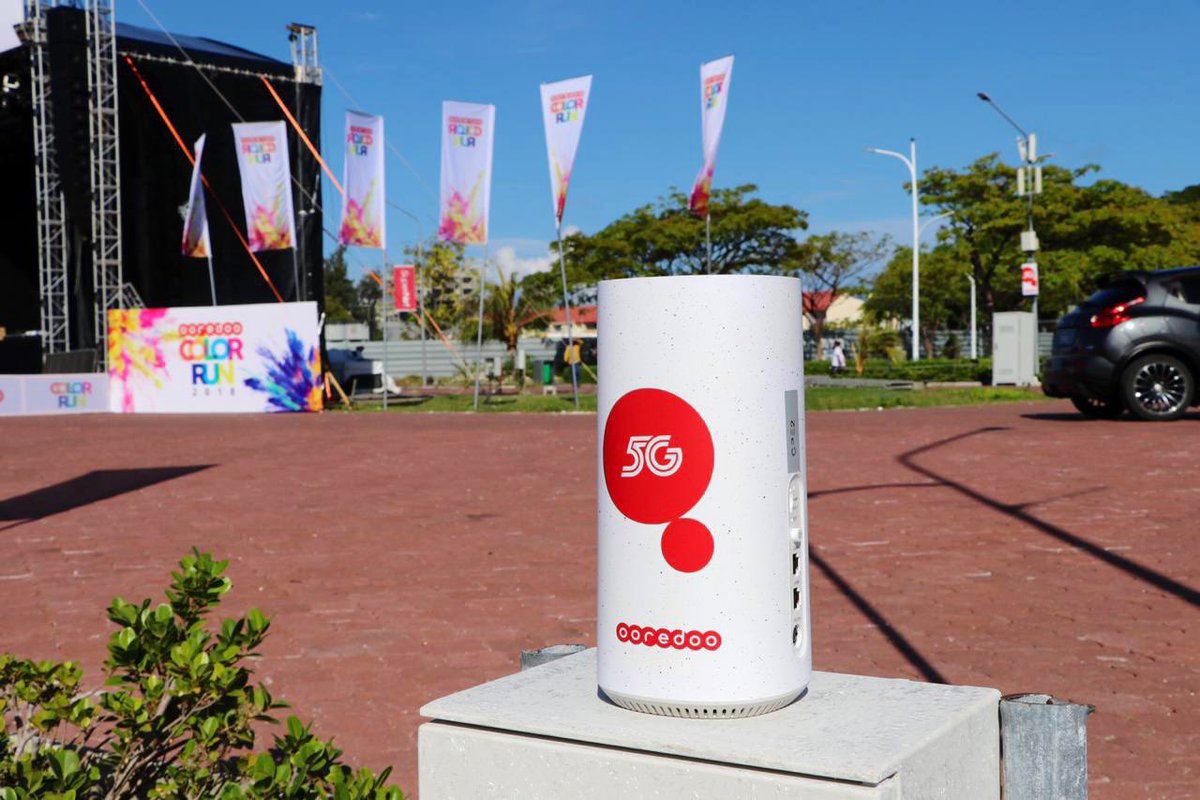
    Ooredoo, one of the world’s leading providers of ICT and a 5G pioneer, is to return to Mobile World Congress 2022 as the event resumes at the end of February.

    The key themes for this year’s event are 5G Connect, Advancing AI, Cloud Net, FinTech, Internet of Everything and Tech Horizon. In line with these themes, Ooredoo will update the industry on the many exciting developments it has been working on since the last edition of MWC, and will share exciting news of its latest partnerships, products and solutions.

    One such partnership is with FIFA, with Ooredoo Qatar being selected by the sports giant and the Supreme Committee for Delivery and Legacy to provide a global network connecting Doha with various points of presence in Europe and Asia. The telco leader will explain how it is to build a dedicated multi-100Gig network that will offer broadcasters the quality and resiliency required for broadcast-grade video production, with media rights licensees being offered optimised resilient media solutions.

    Ooredoo Qatar will also share details of a groundbreaking solution, developed in partnership with technology giants Ericsson and Nokia, that will revolutionise connectivity for customers in the oil and gas industry. Having identified that such customers needed to replace older technology with a solution that facilitated connectivity in remote, challenging locations such as those offshore, Ooredoo and its partners developed a dedicated LTE network that would provide high-availability voice and data services to support oil and gas applications and operations in such remote locations beyond the normal fixed and mobile network footprint.

    In addition, the company will update the telecoms industry on its exciting venture into eSports, sharing details on its own eSports brand, Ooredoo Nation – Gamers’ Land. Recent developments include the launch of gaming Add-ons for postpaid plans; the launch of Channel 0, a dedicated gaming channel on Ooredoo tv; the latest Ooredoo Arena tournaments; and the signing of a partnership with Dell Technologies to provide sponsorship that will contribute to the eSports scene in Qatar and the region.

    Aziz Aluthman Fakhroo, Managing Director and CEO, Ooredoo Group, said: “We are delighted to once again be participating in Mobile World Congress, the most important international event in our industry. As a pioneer in 5G, with a strategic commitment to investment in innovation and technology, we have several exciting developments to announce at the event, in line with the key themes. We look forward to sharing our experience and expertise, and to discovering news from our peers and the industry.”

  • Fourth radio interface technology added to 5G standards

    Fourth radio interface technology added to 5G standards

    Members of the International Telecommunication Union (ITU) have approved the fourth technology as part of ongoing standards development for 5G mobile services.

    Known as “DECT 5G-SRIT”, the new technology supports a range of uses, from wireless telephony and audio streaming to the industrial Internet of Things (IoT) applications, particularly in smart cities. It was added in the first revision to ITU’s key recommendation IMT-2020, which broadly encompasses fifth-generation, or 5G, networks, services, and devices.

    This ITU Radiocommunication Sector (ITU-R) Recommendation – providing a set of global technical 5G standards – reflects continual consultation and discussion among governments, companies, regulators, and other stakeholders dealing with radiocommunication worldwide.

    Along with fostering connectivity across borders, ITU promotes the global rollout of 5G as a key driver to achieve the UN’s 17 Sustainable Development Goals.

    “New and emerging technologies like 5G will be essential to build an inclusive, sustainable future for all people, communities, and countries,” said ITU’s secretary-general, Houlin Zhao. “Under the ongoing International Mobile Telecommunications or IMT program, our diverse global membership continues its long-standing contribution to advance broadband mobile communications, furthering our mission to leave no one behind in connecting the world.”

    ITU – the United Nations agency entrusted with coordinating radio-frequency spectrum worldwide – has published the specifications for the new technology as RecommendationITU-R M.2150-1.

    The technology is designed to provide a slim but strong technical foundation for wireless applications deployed in a range of use cases, from cordless telephony to audio streaming, and from professional audio applications to the industrial Internet of Things (IoT) applications, such as building automation and monitoring.
    The European Telecommunications Standards Institute (ETSI) laid the essential groundwork jointly with the DECT Forum, a worldwide association of the digital enhanced cordless telecommunications (DECT) or wireless technology industry.

    ITU’s radiocommunication director, Mario Maniewicz, said: “The highly collaborative process involves substantial input from and coordination with the ITU Member States, equipment manufacturers, network operators, standards development organizations, and the academic community. ITU provides a unique global framework to discuss the capabilities of new radio technologies.”

    Andreas Zipp, chairman of the DECT Forum, welcomed the addition of the new technology to IMT-2020. “Inclusion as part of ITU’s global 5G standards affirms the significance of this technology moving forward,” he said

    Other candidate radio interface technologies underwent the international mobile telecommunication (IMT) evaluation process over the past year, although only one qualified to be added at this stage.

    The revised IMT-2020 recommendation now includes the new standard, which European standards developers recognized could support 5G uptake everywhere.
    “The ETSI DECT standard received IMT-2000 approval more than twenty years ago,” noted ETSI’s chief technical officer, Adrian Scrase. “5G therefore presented an ideal opportunity to develop this new, non-cellular, radio standard, which is particularly suited for smart meters, Industry 4.0, building management systems, logistics and smart cities.”

    Based on the requirements set out in ITU’s evaluation process, the radio interface technology demonstrates worldwide compatibility in terms of operation, equipment, and roaming. Italso addresses the ultra-reliable low latency (URLLC) capability stipulated by IMT-2020 – the underlying global coordination framework for so-called 5G services.

  • Telenor sale could endanger Myanmar activists

    Telenor sale could endanger Myanmar activists

    The sale of Telenor’s Myanmar subsidiary could place the personal data of its 18 million customers in the junta’s hands. As Telenor finalizes the sale of its Myanmar business to a military-linked group, concerns have been raised that sensitive data will be infringed and that families of activists in hiding will be put in harm’s way.

    According to sources, the sale will be completed by 15 February. Last July, Telenor announced that its Myanmar subsidiary would be sold to Lebanon’s financial firm, M1 Group. Military-linked Shwe Byain Phyu was later known to be a co-investor in the sale approved by the junta.

    Justice for Myanmar has since urged the Norwegian government to intervene in the sale. There had been reports that the Ministry of Transport and Communications (MOTC), ruled by the junta, had made more than 200 requests to Telenor for information including records of calls, over the past year.

    Telenor has since said that customers in Myanmar are handled by Telenor Myanmar and that Norwegian or EU data protection regulations do not apply to its subsidiary.

  • SpaceDC to build largest hyperscale data center in the Philippines

    SpaceDC to build largest hyperscale data center in the Philippines

    SpaceDC, a Singapore-based visionary data center provider, is working with JLL, a global real estate services firm, to build a secure, resilient, network-rich, data center called <MNL1, which will be situated in Cainta, part of Greater Manila. The green data center will be fully powered with renewable energy – wind, geothermal – and is slated to open in 2022. 

    At 43,000 square meters, MNL1 will be the largest hyperscale data center campus in the Philippines, and will deliver 72 megawatt of critical power. With an outstanding PUE of 1.3, MNL1 will also lead in terms of energy efficiency and design, to minimize carbon footprint.

    SpaceDC CEO, Darren Hawkins said, “The Philippines ranks second in terms of data center growth in Southeast Asia. With only 47 megawatts of available capacity in the country it is a dramatically underserved market. We are excited to be a first mover in a new market where we see our customers are investing heavily in.”

    “SpaceDC is in the right place at the right time to take advantage of the strong customer interest we are seeing in the Philippines. MNL1’s design is setting new standards in terms of technology, quality and operational excellence in the Philippines.” commented Ralph Davidvon, executive director, data center services for JLL, the appointed project construction manager.

  • StarHub and Chubb partner to safeguard customers against online risks

    StarHub and Chubb partner to safeguard customers against online risks

    Digital service provider to help customers mitigate the impact of online risks, StarHub and Chubb Insurance Singapore Limited (Chubb) have introduced CyberCover, a cyber protection policy designed to provide financial support for StarHub mobile and broadband customers affected by cyber-bullying, identity theft, unauthorized transactions, and undelivered or discrepancies in online purchases.

    With CyberCover, cyber protection, traditionally offered to only enterprises, has now become accessible and affordable for all consumers, providing individuals and families with financial support in the event of cyber threats.

    “Boldly embarking on DARE+ to be the digital service provider with the most enriching experiences for our customers, we are taking a leap towards offering much-needed services that complement our mobile and broadband subscriptions as well as our best-in-class network,” said Johan Buse, chief, consumer business group, StarHub. “Cybercrimes are on the rise, and as the cases strike closer to home, we want to give our customers peace of mind, knowing that StarHub will be there to help them get back on their feet during difficult times. Following the recent launch of our CyberSecure Business Solution to safeguard enterprises, we are now pleased to work with Chubb to extend a safety net to our customers, empowering them to do more of what they love without feeling threatened by dangers online.”

    Chubb’s country president for Singapore, Kevin Bogardus said, “The COVID-19 pandemic has prompted an increase in digital consumption – users are spending more time on social media platforms and consumers are engaging more in digital payments. As digital footprint goes up, so does the likelihood of cyber risk exposure. We are very excited about our partnership with StarHub to offer CyberCover. It is through this personal protection solution that we want to provide StarHub’s customers and their family members with practical support in the face of cybercrimes.“

  • Google VPN now available on iPhone

    Google VPN now available on iPhone

    Google’s VPN feature, part of the Google One service, just received three new features on Android. The new features are:

    • Safe Disconnect enables you to use the internet only when the VPN is active.
    • App Bypass allows you to choose specific apps to use a standard connection rather than the VPN.
    • Snooze allows you to disable your VPN temporarily.

    In addition to these new features, Google has also made its VPN service available on iOS, which means that users can now use Google’s VPN on an iPhone as well. But sadly, the new features mentioned above may not be accessible on an iPhone at this time.

    According to Google’s blog post, privacy and security are ‘always core to everything’ Google makes. In this regard, Google’s VPN utilizes ‘advanced’ built-in security, which prevents anybody from linking you to your browsing activity.

    Google also stated that its VPN service has a ‘full certification’ from the Internet of Secure Things Alliance, and because it is an open-source service, it has been audited by an independent party. So, if you have any doubts about whether you can trust Google with your “private” internet browsing, you can even see the report from the audit.

    Google’s VPN service is available only in 18 countries. Some of them are the US, Canada, the UK, Germany, Spain, Italy, France.

    You can use Google’s VPN on your Android phone or your iPhone by subscribing to Google One’s Premium subscription plan, which costs $9.99 per month or $99.99 per year.

  • Huawei CFO Freed After U.S. Deal

    Huawei CFO Freed After U.S. Deal

    Huawei’s chief financial officer Meng Wanzhou has been released by Canadian courts and flew home to China last week after reaching an agreement with U.S. prosecutors to end their bank fraud case against her.

    Last Friday, Meng, who is also the elder daughter of Huawei founder Ren Zhengfei, and the U.S. Justice Department reached a deferred prosecution agreement.

    Meng has taken responsibility for her principal role in perpetrating a scheme to defraud a global financial institution,» according to a report citing Brooklyn-based acting U.S. attorney Nicole Boeckmann.

    The current agreement only pertains to Meng and the U.S. Justice Department said it is preparing for trial against Huawei.

    For the financial sector, one issue that remains unresolved is the legitimacy of Meng’s claim that HSBC had knowledge of Huawei’s relationship with Skycom – a Hong Kong-registered entity and alleged business partner that violated U.S. trade sanctions – and, in fact, knowingly placed the firm within Washington’s radar before misleading Canadian authorities on the matter.

    China has been accused of engaging in hostage diplomacy as a response to Meng’s 2018 arrest with the over 1,000-day jailing of two Canadians – businessman Michael Spavor and ex-diplomat Michael Kovrig.

    Beijing has repeatedly denied that the detainment of Spavor and Kovrig was retaliation for Meng’s arrest.

    Within hours of the news of Meng’s deal with the U.S., the two were released from Chinese jails and on their way back home to Canada.

  • Tata Communications posts 14.9% YoY PAT

    Tata Communications posts 14.9% YoY PAT

    Tata Communications has announced its financial results for the quarter ended 30 June 2021. Consolidated revenue came in at INR 4,103 Crore (USD 556 Mn), growing 0.7% quarter-on-quarter (QoQ), and decreasing 6.8% year-on-year (YoY). This YoY contraction is primarily due to reduction in Voice business and moderation of Collaboration traffic in the Data segment.

    Consolidated EBITDA stood at INR 986 Crore (USD 134 Mn); a reduction of 5.3% YoY. This quarter, EBITDA has been impacted by a provision of INR 33 Crore on account of license fee on revenue from pure internet services which was allowed as deduction in the definition of Adjusted Gross Revenue (AGR) earlier. Despite this impact EBITDA margin has expanded by 40 BPs YoY. CAPEX for this quarter grew to INR 381 Crore as compared to INR 372 Crore in Q1 FY21.

    Data business revenue came in at INR 3,104 Crore witnessing a growth of 0.6% QoQ and a 2.2% YoY reduction. Data business continues to be affected by COVID related slowdown. Enterprise decisions have been slow due to macroeconomic headwinds leading to longer lead time for deal wins. Service delivery was affected by lockdowns during the 2nd Wave of COVID-19 pandemic. EBITDA for the segment stood at INR 932 Crore; up 0.4% QoQ and decline of 2.4% YoY. EBITDA was affected by provision of license fee made during the quarter and despite this impact EBITDA margin is maintained at 30%.

    In Core Connectivity, there is healthy growth in revenue by 1.7% YoY, and EBITDA increased by 0.3% YoY with margins at 42.6%. Digital Platforms and Services were affected by the moderation of Collaboration traffic which was at its peak in Q1 FY21. Revenue strengthened by 2.9% QoQ but reduced by 12.8% YoY. There are early signs of recovery and an uptake of usage-based services in geographies where economies have opened.

    “In a challenging quarter impacted by the second wave of COVID-19, we have delivered a robust performance,” said A S Lakshminarayanan, Managing Director and CEO, Tata Communications. “The global markets are slowly opening up and we are witnessing greenshoots of demand recovery.”

    He added, “Our focus is to continue investing in developing innovative digital ecosystem solutions driven by customers’ needs. Early demand for our recent launches for live sports on our Media Edge Cloud and IZO™ Financial Cloud is testament that we are moving in the right direction.”

    Commenting on the results, Kabir Ahmed Shakir, Chief Financial Officer, Tata Communications, said, “Our focus on growth and profitability continues to deliver results. A healthy profit and free cash flow is empowering us to innovate and accelerate growth while streamlining processes and bringing in further efficiencies. We are well-poised to enable enterprises make the shift with digitalization playing a pivotal role enabling businesses derive positive growth.”