Tag: ict

  • PLDT Strengthens Digital Growth with Data Center Expansion

    PLDT Strengthens Digital Growth with Data Center Expansion

    PLDT Chief Operating Officer, Menardo Butch G. Jimenez, emphasized the increasing potential of tech-focused telcos in the region’s changing digital landscape. He mentioned, “We have already built 10 data centers and are finishing our 11th and biggest facility, which shows how strongly we believe that data centers are an important part of PLDT’s revenue growth.” He also said that PLDT has experienced strong growth rates in its data center business over the past five years.

    Through its subsidiary, ePLDT, PLDT has become a leader in the Philippines data center industry. The company operates a network of VITRO data centers, providing solutions for customers’ increasing IT outsourcing needs. The VITRO Sta. Rosa Data Center, the largest and most advanced in the country, is positioned to be the Philippines’ artificial intelligence (AI) hub, forming the first AI ecosystem in the nation.

    Jimenez also highlighted that data sovereignty laws represent a significant upcoming development, noting that localized data storage regulations enforced by the government will drive the demand for domestic data centers. Looking forward, PLDT is preparing for an AI-powered future by offering GPU-as-a-Service (GPUaaS) to meet the growing need for high-performance computing (HPC) due to AI and machine learning (ML) adoption.

    Through investments in data centers, AI infrastructure, and green energy, PLDT is solidifying its position as a leader in digital transformation and shaping the future of the telecommunications industry.

  • Telcovas Expands into LATAM and Southeast Asia, Betting Big on AI and 5G

    Telcovas Expands into LATAM and Southeast Asia, Betting Big on AI and 5G

    When asked about Telcovas’s focus for the year, Singh emphasized their dedication to addressing critical pain points for mobile network operators (MNOs).

    He highlighted their innovative approach to integrating artificial intelligence (AI) into their solutions to enhance MNO operations. “One of our solutions is Automated Roaming Assist, which is an AI-enabled troubleshooting application that can be embedded in the selfcare app for any MNO and integrated into the chatbot to solve roaming solutions for subscribers.” Singh elaborated. “This enables troubleshooting, reporting, and analysis of the problems from subscribers’ handsets and destination MNO’s, in addition to the whole roaming journey.”

    Mehaidly also introduced their AI Spam Call Controller, designed to pre-emptively identify and manage spam calls. “This solution uses AI to analyze calls before setup, alerting customers and allowing MNOs to blacklist or whitelist calls as per their preference,” he added.

    Reflecting on their achievements in 2024, Singh expressed satisfaction with Telcovas’s growth trajectory. “We have been able to grow our business over the past year, enjoying great growth in revenue, profit, people, footprint, and customer reference.”

    Singh emphasized the key products driving this growth, including private 5G networks tailored for industries like mining, manufacturing, and defense, along with robust roaming VAS (value added services) and cybersecurity solutions. “We’ve also made significant strides in mobility solutions and regulatory compliance across Africa and the Middle East,” Singh noted.

    Looking ahead, Mehaidly revealed Telcovas’s strategic expansion into Latin America and Southeast Asia in early 2025. Singh concluded:

    Overall, the company’s success is a testimony to Telcovas’s commitment to innovation and customer-centric growth.

  • Maxis Partners with Nokia to Modernize Data Center Infrastructure

    Maxis Partners with Nokia to Modernize Data Center Infrastructure

    The deployment will support Maxis’s business growth by providing a scalable, secure, and efficient data center architecture.

    The modernization of Maxis’s data center connectivity technology will help the company simplify its network operations, solve issues faster, and automate workloads, all on a robust and secure infrastructure.

    Nokia will deploy its cutting-edge 7220 Interconnect Router (IXR) data center switches and EDA technology across Maxis’s multiple data centers. This upgrade will enable Maxis to provision infrastructure resources without delay, will reduce complexity, and will ensure that Maxis’s current applications running on the network can scale gracefully.

    “This expansion of our longstanding collaboration with Nokia will drive next-generation connectivity in anticipation of customers’ growing needs. It reflects Malaysia’s emergence as a hub for data centers and hyperscalers in line with greater adoption of AI-enabled cloud infrastructure. This initiative will enhance our network capabilities, ensuring we are able to continue providing best-in-class, connectivity-adjacent solutions powered by fast, secure, and reliable connectivity,” said Goh Seow Eng, Chief Executive Officer at Maxis.

    “Data center networks are critical infrastructure and need to be extremely reliable while also being simple to deploy and operate. We are pleased to work with Maxis to modernize their data center infrastructure with our advanced data center switches and EDA technology to provide Maxis with a future-proof architecture that is scalable, resilient, and easy to deploy. This collaboration is a testament to the strength of our technology and our commitment to supporting our customer’s growth in the booming data center market in Southeast Asia,” added Ming Kin Ngiam, Head of Southeast Asia South for Network Infrastructure at Nokia.

    Nokia is helping cloud builders worldwide to construct modern data center networks that are highly reliable, secure, and easy to operate, which is essential to meet the growing demands of artificial intelligence (AI) workloads globally. Nokia’s EDA ensures faster response times, reduces manual effort, minimizes errors, consumes less compute resources, and handles network-wide operations at-scale with consistent performance. By proactively resolving issues, it boosts reliability and reduces operational costs.

    The Nokia 7220 IXR, a key component of Nokia’s Data Center Fabric solution, provides fixed-configuration, high-capacity platforms that offers unmatched scale, flexibility, and operational simplicity within data center and cloud environments. These scalable, next-generation platforms are designed to meet the high connectivity and density demands of webscale companies, service providers, and enterprises.

  • Alibaba Cloud Expands Thai Presence with New Data Center

    Alibaba Cloud Expands Thai Presence with New Data Center

    Sean Yuan, Vice President of International Business and General Manager of Thailand, Indonesia, Japan, the Philippines, and the South Pacific Region at Alibaba Cloud Intelligence, stated, “Our latest data center strengthens our commitment to providing reliable, secure, and high-performance cloud services tailored to the needs of local businesses. With enhanced local infrastructure, we aim to empower enterprises to leverage the full potential of cloud technology, especially in generative AI applications.”

    With the addition of this new data center, Alibaba Cloud now operates 86 availability zones across 28 regions globally, solidifying its position as a leading cloud service provider in Southeast Asia. The first data center in Thailand was launched in 2022. Alibaba Cloud has over 140 security and compliance accreditations worldwide, ensuring top-tier protection and resilience for its cloud services. With two data centers in Thailand, Alibaba Cloud can provide scalable, elastic, and highly available cloud computing products with enhanced disaster recovery capabilities, all while adhering to strict security and regulatory standards.

    Alibaba Cloud is expanding its range of services to support businesses in Thailand, including elastic computing, storage, database, security, network products, data analytics, and artificial intelligence (AI) services. These services are designed to address specific challenges faced by different industries. By leveraging AnalyticDB’s cloud-native vector engine, businesses in Thailand, especially in the fintech and retail sectors, can create solutions that enhance customer interactions through customized large language model (LLM) applications. This allows companies to efficiently manage structured and unstructured data, develop chatbots, and provide personalized product recommendations, ultimately improving the customer experience.

    Alibaba Cloud’s Container Compute Service (ACS) simplifies workload deployment using Kubernetes, offering a serverless container environment that helps businesses scale their operations efficiently and focus on innovation while managing costs effectively. Alibaba Cloud offers industry-specific solutions tailored to digital-native clients in sectors such as fintech, retail, and public services. These solutions include the Elastic Desktop Service (EDS), eKYC solutions, a SuperApp equipped with development capabilities, and AI-driven sustainability solutions.

    Through partnerships with local companies like True Digital Group, Yell Group, and Codium, Alibaba Cloud has helped enhance operations and services using cloud computing products. These collaborations aim to improve efficiency, scalability, and innovation in various industries. Alibaba Cloud is actively working with local partners and universities in Thailand to support the digital transformation of businesses and foster digital talent. Initiatives include workshops, certified courses, and collaborations with universities to provide training in cloud computing and generative AI, as well as the launch of a global skills center at Chulalongkorn University to offer free training courses, boot camps, AI competitions, and leadership development programs. These efforts aim to enhance educational resources and promote a thriving digital landscape in Thailand.

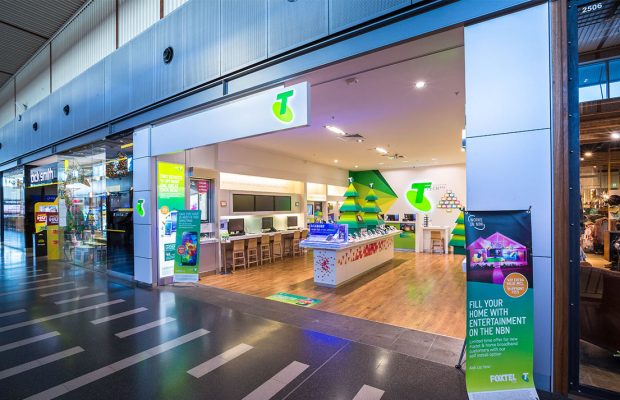
  • Stasko Drives Telstra’s AI-Optimized Infrastructure and Partnerships

    Stasko Drives Telstra’s AI-Optimized Infrastructure and Partnerships

    In a recent interview with Telecom Review Asia, conducted at ITW Asia 2024, in Singapore, Stasko discussed Telstra’s role in enhancing international connectivity through its submarine cable network by leveraging artificial intelligence (AI) to optimize infrastructure and foster key partnerships with hyperscalers and other industry leaders. His vision for Telstra International focuses on expanding its presence in the Asia Pacific by continuing to innovate and serve as a critical enabler of the digital economy. Through strategic partnerships and cutting-edge technological integration, Stasko is guiding Telstra to new heights in the global telecommunications landscape.

    How does Telstra’s submarine cable network contribute to enhancing international connectivity, and what role does it play in supporting the digital economy globally?

    Telstra’s submarine cable network significantly enhances international connectivity by operating at-scale and providing a comprehensive range of services. With over 50 years of experience in the subsea market, Telstra strengthened its position in 2016 by acquiring Pacnet, making it the largest commercial digital infrastructure provider for trans-pacific integration. Currently, it manages about 20% of the internet traffic between the U.S. and Asia, and a third of intra-Asia traffic.

    Telstra manages 400,000 kilometers of subsea fiber. This extensive network allows Telstra to offer not only point-to-point connectivity but also broader solutions that include diversity, resilience, and terrestrial backhaul integration, from cable landing stations to data centers. This comprehensive approach supports customers by handling their capacity end-to-end rather than providing isolated segments.

    Globally, Telstra’s digital infrastructure, which includes Telstra International and Australia-based InfraCo, connects markets and supports the digital economy by ensuring reliable and scalable connectivity solutions across multiple regions.

    As AI becomes more integral, how is Telstra leveraging artificial intelligence to optimize its global infrastructure and improve service offerings?

    As AI becomes more integral, Telstra is leveraging artificial intelligence in two main areas: optimizing internal operations and enhancing its international network infrastructure.

    Within Telstra, including its international business, AI is being used extensively to improve efficiency and support employees. For example, Telstra boasts the largest deployment of Microsoft’s Copilot in Australia, which is integrated with Microsoft 365 tools and allows employees to use AI for tasks like writing emails, preparing documents, and managing data. This foundational deployment helps employees understand and adopt AI in their daily workflows.

    Additionally, Al and automation are used to optimize internal processes, particularly in the consumer business segment. Leveraging the capabilities of Microsoft Azure OpenAl Service and Azure Al Search, Ask Telstra provides Al-driven answers to employee inquiries through a simple search interface. Another tool. ‘One Sentence Summary, condenses customer issues into clear, actionable summaries, improving the speed and accuracy of responses. The focus is not on replacing human interaction but on empowering agents to provide fast, accurate, and effective support.

    On the international side, Telstra is applying AI to achieve automation and an autonomous network. AI-driven tools are being used to digitize data such as inventory, capacity, locations, and sensor inputs. This enables Telstra to build a virtual model of its network to test, predict, and automate operations. For instance, AI helps reroute traffic dynamically, optimizing the network and ensuring reliable connectivity. These AI applications enhance both Telstra’s operational efficiency and its ability to deliver high-quality service globally.

    Can you share key AI-driven initiatives or innovations that Telstra is working on, and elaborate on some of the partnerships that have been forged?

    Telstra is advancing several key AI-driven initiatives and forging strategic partnerships to enhance its capabilities. One of our largest partnerships is with Microsoft, which spans AI tools, digital infrastructure investment, and connectivity across both the international and Australian components. This collaboration underscores Telstra’s commitment to integrating advanced AI capabilities with robust infrastructure solutions.

    In Australia, Telstra has created a joint venture with Quantium, an AI-driven company; the result of which is Quantium Telstra. This partnership focuses on developing AI tools, building skill sets, and fostering innovation in an AI-first framework. Additionally, Telstra collaborates with traditional infrastructure vendors, working closely with them to embed AI into tools and systems that optimize operations.

    On the international front, Telstra is partnering with customers to address the evolving network needs being driven by AI. This involves rethinking network topology to better accommodate AI traffic, which differs significantly from the demands of traditional cloud traffic. Telstra’s approach includes both enabling partner solutions and collaborating with customers to anticipate the future connectivity requirements being shaped by AI.

    Telstra also maintains strong ties with the Australian government. While AI-specific collaborations are less prominent, past initiatives, such as our acquisition of Digicel Pacific, highlights our successful public-private partnerships. This endeavor involved funding from the Australian, U.S., and Japanese governments and demonstrated how commercial and government interests can align effectively.

    In the cybersecurity sector, Telstra is working closely with security agencies in Australia and globally, employing both AI-driven and traditional approaches to ensure its network remains secure, sovereign, and reliable. These initiatives illustrate Telstra’s comprehensive strategy, which prioritizes leveraging AI and partnerships across various domains.

    What is Telstra International’s vision? And what strategies are you employing to grow its presence in the region?

    Telstra International’s vision is to remain the leading digital infrastructure provider in the Asia Pacific. To achieve this, Telstra is focusing on three strategies: offering layer-zero services, including cable landing stations and network operations; partnering with hyperscalers and other investment partners to operate and enable new systems; and becoming the ‘carrier of carriers’ by creating CapEx-light models to support telcos’ subsea and connectivity needs.

    Partnerships are key to success. Hyperscalers, once skeptical about working with Telstra, now see value in these collaborations, recognizing that, in some markets, they benefit from a partner’s expertise. As Telstra adapts, the focus shifts from doing everything in-house to being a good partner, leveraging engineering strengths and operational excellence. This approach ensures continued growth and scalability.

  • Indonesia’s Enterprise ICT Revenue to Grow by 16.3% through 2028

    Indonesia’s Enterprise ICT Revenue to Grow by 16.3% through 2028

    According to research by GlobalData, this growth is attributed to significant revenue contributions from cloud computing, the Internet of Things (IoT), and artificial intelligence (AI), alongside robust demand from the manufacturing, retail, banking, financial services, and insurance (BFSI) sectors.

    The company’s recent ICT Customer Insight Survey highlights a robust spending trend, with 92.1% of enterprises reporting increased ICT budgets for 2024 compared to the previous year.

    Driving this growth is the IT services segment, which is anticipated to play a pivotal role in Indonesia’s enterprise ICT market. The segment is forecast to grow at a CAGR of 15.3%, reaching USD 48.1 billion by 2028. Notably, 53.2% of surveyed enterprises plan to allocate higher budgets to IT services in 2024 than in 2023, underscoring the segment’s critical role in the country’s digital transformation.

    The manufacturing industry is poised to remain the largest revenue-generating, end-use vertical for Indonesia’s ICT market throughout the forecast period. GlobalData projects that manufacturing will account for 12.5% of the cumulative revenue from 2023 to 2028.

    The IoT will dominate IT solution revenues, driven by increasing demand for sensor technologies and connected systems across manufacturing, defense, and agriculture. These technologies enable real-time monitoring, improving operational efficiency and security.

    Meanwhile, artificial intelligence (AI) is set to be the fastest-growing IT solution segment, with revenues projected to expand at a remarkable CAGR of 49.2% from 2023 to 2028. Rising demand for AI-powered applications in logistics, HR, education, cybersecurity, and customer service is fueling this rapid growth.

  • Nokia to Equip Viettel with Optical Transport Solution

    Nokia to Equip Viettel with Optical Transport Solution

    This initiative aims to meet the increasing demand for 5G, Data Center Interconnect (DCI), and cross-border connectivity. The collaboration follows a successful trial during which Nokia’s PSE-6s achieved a record transmission speed of 1.2 Tbps per wavelength in real-world conditions. The deployment, expected to be completed by 2025, will enhance connectivity between Viettel’s data centers in major cities, including Hanoi, Ho Chi Minh City, and Da Nang, improving capacity and energy efficiency.

    Nokia’s new optical solution, utilizing the PSE-6s technology, will enable Viettel to scale its network while maintaining high performance efficiently. The solution supports three 800GE or six 400GE services on a single line card, allowing Viettel to increase its total network capacity to 38.4 Tbps over the C-band. Additionally, this technology is expected to help Viettel reduce network power consumption by as much as 60%.

    Nguyen Van Yen, Head of Viettel Regional Transmission, said, “The smooth execution of the record-breaking trial convinced us that Nokia was the right partner for this crucial initiative. Now, we are delighted with the seamless deployment of Nokia’s innovative PSE-6 super-coherent optical engine, which will provide the required capacity for our existing and growing needs while making us ready for 5G and cloud-based use cases.”

    Vito Di Maria, Head of Optical Networks at Nokia Asia Pacific, emphasized the challenges service providers face due to rising data traffic, highlighting the importance of scalable optical networks. He noted that Nokia’s PSE-6s technology will enable Viettel to effectively meet increasing data demands while improving network reliability and energy efficiency.

  • Nvidia aims to set up a base in Vietnam

    Nvidia aims to set up a base in Vietnam

    Nvidia wishes to establish a base in Vietnam to develop the country’s semiconductor industry as it considers the Vietnamese market an important one, the Vietnamese government said, citing the U.S. chipmaker’s chief executive.

    In his first visit to the Southeast Asian country, Nvidia’s CEO, Jensen Huang, said the company viewed Vietnam as its home and affirmed its plans to set up a center in the country.

    “The base will be for attracting talent from around the world to contribute to the development of Vietnam’s semiconductor ecosystem and digitalization,” the Vietnamese government statement cited Huang after his meeting with Prime Minister Pham Minh Chinh.

    Nvidia, which has already invested $250 million in Vietnam, is set to discuss cooperation deals on semiconductors with Vietnamese tech companies and authorities in a meeting on Monday, Reuters reported on Friday.

    Vietnam, which is home to large chip assembling factories including Intel’s biggest globally, is trying to expand into chip designing and possibly chip-making.

    The chipmaker has already partnered with Vietnam’s leading tech companies to deploy AI in the cloud, automotive and healthcare industries, a document published by the White House in September showed when Washington upgraded diplomatic relations with Vietnam.

  • IT workers surplus to plans for many companies

    IT workers surplus to plans for many companies

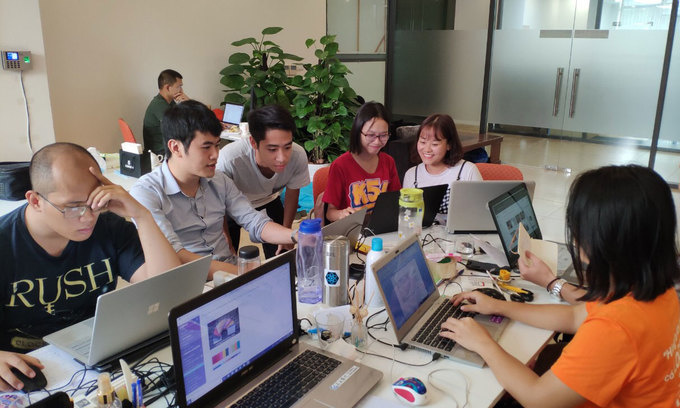
    Many IT employees are being laid off or forced to quit and struggling to find new jobs due to a decline in demand due to the economic downturn.

    After a payment project was unexpectedly canceled in July as the company, a big tech brand in HCMC, no longer had the cash to keep it running, IT manager Quang Vu had no choice but to start looking for a new job, just many of his peers in the industry.

    “Many people I know in e-commerce, e-wallet and delivery companies are being affected by a wave of restructuring,” he said, adding that the layoffs are often not publicly announced.

    Dinh Ngo, who works at an IT job, said his German employer has stopped looking to hire for certain positions and is not extending contracts with people in those jobs.

    “Projects that are not profitable will be suspended.”

    A recent report by recruitment platform VietnamWorks said most companies have reduced their recruitment budget for IT employees this year.

    It surveyed non-tech companies that need IT staff and tech and IT businesses.

    It said only 61.3% of employees in tech companies believe they have stable jobs.

    At non-tech companies, 21.6% of IT workers have quit this year.

    Around 22.2% of companies in HCMC have reduced IT staff recruitment and 14.7% in Hanoi have reduced their salaries and bonuses.

    IT is among the three sectors with the biggest drop in recruitment in the last three years — at 23% — according to a report by consulting firms Talentnet and Mercer.

    Industry insiders attributed this to the impact of global economic challenges.

    Cai Dang Son, director of products and engineering at recruitment company Navigos Group, said businesses are focused on coping with the current difficulties.

    The biggest decline in hiring is seen at e-commerce and ride-hailing companies.

    Investment in Vietnamese tech startups dropped by 82% to US$66 million in the first half of this year.

    Tung Lam, a former product manager who has been jobless for six months, said “Compared to before Covid-19, the number and diversity of jobs have plummeted.”

    The VietnamWorks report also pointed out that more than 25% of IT staff have difficulty finding jobs, with new graduates all but ignored.

  • Poor training makes up to 200,000 IT engineers unemployable

    Poor training makes up to 200,000 IT engineers unemployable

    A gap between IT engineers’ skill levels and market requirements is making 150,000-200,000 of them unemployable every year, a report by IT jobs platform TopDev warns.

    The recently published “Vietnamese IT market report in 2023” on TopDev says most recruiters look for three types of developers: back end, full-stack (who will build the interface), and front end.

    The top five skills that are sought are java script, Java, PHP, C# or .NET, and Python.

    TopDev says by 2025 Vietnam will need close to 700,000 IT engineers. The country has around 530,000 now. The number of new IT graduates is increasing steadily, but do not meet the job market’s demands.

    Of more than 57,000 graduating annually only 30% have the required skills and expertise required by companies, and the rest need additional training by employers for three to six months.

    A long-term supervisor at a company based in the Quang Trung Software City in HCMC said recently that the market has few experienced developers and an excess of “freshers.”

    Between inadequate training in schools and a shortage of experienced people, quality candidates are always scarce and desirable.

    Nguyen Thi Thu Phuong, the Hanoi director of recruitment for Adecco Vietnam, said firms intensified their search for experts in the year’s first half. Vietnam saw a 35% decrease in the number of vacancies in IT jobs in the same period in 2022.

    Despite the economic downturn, the average salary of IT personnel has increased since 2022, albeit marginally, according to TopDev.

    More than 70% of new hires earn US$600-1,000 a month, and the salaries go up to $1,100-1,500 for mid-level jobs and $1,100-2,000 at the top level, with 10% getting around $2,500.

    Information and communication technology is one of the fastest-growing industries in Vietnam. Its revenues have risen from less than $103 billion in 2018 to $136.15 billion in 2021.

    In the 2021 Global Innovation Index, Vietnam ranked 44th out of 132 economies.

    According to Tran Thi Nguyet Oanh, HSBC Vietnam’s head of human resources, plenty of future jobs are linked to IT fields like artificial intelligence (AI) and machine learning, information security and financial technology.

    TopDev recommends that developers should improve their understanding of new technologies such as cybersecurity, DevOps, AI, and machine learning, and cloud computing and soft skills such as critical thinking, communication, time management, and foreign languages.

  • Google Fi reportedly drops US Cellullar service from main supported network to extended roaming

    Google Fi reportedly drops US Cellullar service from main supported network to extended roaming

    Although not officially confirmed, it appears that Google Fi has dropped US Cellular as main network partner, leaving T-Mobile as the sole provider to choose from when using the MVNO. However, US Cellular is still supported as part of Google Fi’s extended network.

    This was discovered by users of the service when reaching out to Google Fi’s customer service and was then promptly posted on Reddit where other users have chimed in confirming that they are receiving the same information. Chat representatives have responded to each query with somewhat conflicting information, but the one thing they agree on is that T-Mobile appears to now be the only main supported network that doesn’t involve roaming.
    This has been cause for concern for Google Fi customers who live in areas where the US Cellular towers are more prominent. In one chat conversation, Google Fi customer support assured that although US Cellular is not longer an official network for Google Fi, users may still be able to access it through roaming on the company’s Extended Network without incurring roaming charges while using it in the United States. Additionally, the MVNO has removed its dialer code, which was required for manual switching to the carrier.
    What this means for users is that they will no longer be able to manually choose a network as there is no other choice besides T-Mobile. Previously, although the setting wasn’t permanent, Google Fi would allow users to manually select their preferred network. Additionally, it would automatically switch between T-Mobile and US Cellular in locations where both networks were available but one had better coverage than the other. This latest change takes both of these options away.
    Now, T-Mobile will take precedence over US Cellular when both networks are available, despite the fact that US Cellular may have a stronger signal in some areas. This is a big change from when Google Fi started offering its MVNO services in 2015 by utilizing T-Mobile and Sprint, and then subsequently added US Cellular as a third partner a year later. However, options began to shrink once T-Mobile acquired Sprint in 2020, effectively combining those two options into one.
  • IT services fetch FPT $1B in 2022

    IT services fetch FPT $1B in 2022

    At over VND25.5 trillion (US$1.09 billion), information and technology accounted for 58% of tech giant FPT’s revenues last year. Pre-tax profits were up 22.2% at VND3.42 trillion, or 45% of total profits.

    Revenues shot up by 23.4% to VND44 trillion and profits by 20.8% to VND7.6 trillion.

    Sales in key global markets soared, including 50% in the U.S. 36.4% in the Asia Pacific and 16% in Japan.

    FPT signed 31 large foreign contracts worth $5 million or more.

    Its revenues from telecommunications were up 16% at VND14.73 trillion, and from education, up 53% at VND4.71 trillion.

    Last year the company became a strategic shareholder in Japanese business consultancy LTS Inc, which is expected to bolster its digital transformation consultancy capabilities in the Japanese and Asia-Pacific markets.

    Established in 2005, FPT Japan has 2,000 employees and expects to double the headcount by 2025.

    It also targets becoming one of Japan’s top 20 IT services companies by 2025 and revenues of $1 billion by 2027.

  • FPT Telecom Int’l, ViewQwest to offer one-stop DX services in Asia-Pacific

    FPT Telecom Int’l, ViewQwest to offer one-stop DX services in Asia-Pacific

    FPT Telecom International partnered with ViewQwest on Nov. 30 to elevate their capabilities in providing ICT and digital transformation (DX) services in Asia-Pacific, especially for large regional retailers.

    Known as one of the leading providers of telecommunications services and technology solutions in Vietnam, FPT Telecom International (FTI) has formed a strategic partnership with ViewQwest, an award-winning Singapore telecommunications, network and security solutions provider.

    ViewQwest will work with FTI in deploying digital transformation services in Vietnam and Singapore. Both companies will be establishing colocation facilities in FTI’s data center, providing on-ground technical and engineering support to ViewQwest’s customers in the two countries, including for software and hardware installation and troubleshooting services.

    “Businesses globally are being swept up by the digital transformation wave, none more pronounced than in the retail sector, especially enterprises with extensive multi-market coverage. Our partnership with FTI leverages their deep knowledge and experience in the Vietnam and Singapore market. The collaboration with FPT International Telecom will enable us to better serve our customers with regional operations,” said Vignesa Moorthy, Chief Executive Officer of ViewQwest

    Moorthy also affirmed that the cooperation had marked an important milestone in the Viewqwest’s journey of helping customers build and transform their network and security architecture with confidence, streamlining operations, driving cost-savings, and enabling business agility

    Tran Hai Duong, Chairman of FPT International Telecom expressed his desire to see positive results from the strategic partnership, stating that the two sides are ready to implement the commitments based on the agreement of FTI and ViewQwest.

    “The signing ceremony comes at an important juncture, where we use this agreement to further advance our partnership and support. I would like to emphasize FTI’s commitment to deliver the best values to customers and express our desire to focus on strategic engagement. We consider this partnership as an important part of a long and promising relationship,” said Tran Hai Duong.

    Established in 2001, ViewQwest is an award-winning telecommunications service provider in global and local connectivity, SASE and SD-WAN management, and managed security solutions. Consistently recognized as Singapore’s fastest fixed network from 2018 to 2022 by Ookla Speedtest Intelligence, ViewQwest is a partner of global multinational companies and leading enterprises in SEA in terms of building, transforming infrastructure and security.

    Headquartered in Singapore, ViewQwest expanded into Malaysia in 2016 as a fully-licensed operator serving the enterprise and residential market with its full suite of connectivity and managed network and security services. In 2019, ViewQwest commenced commercial operations in the Philippines. In 2022, the company expanded its market coverage to Hong Kong with Managed SASE, SD-WAN, and cybersecurity solutions.

    Established on May 22, 2008, FPT Telecom International is a member of FPT Telecom. Inheriting the experience and infrastructure of the mother company, one of the leading telecommunication services providers in Vietnam, FPT Telecom International has been operating independently since the beginning of 2008 and is now considered to be one of the top reliable services providers in Vietnam.

    FTI is one of Vietnam’s most comprehensive and broadly adopted Cloud and IT services providers, offering a full spectrum of services nationwide. Customers, including the fastest-growing startups, largest enterprises, and leading government agencies, use FTI to optimize their costs, as well as to promote the digital transformation process in the most effective way.

    The combination of FTI’s comprehensive digital solutions and ViewQwest’s regional network promises to bring many economic benefits and contribute to improving the competitiveness of businesses in the Asia-Pacific region.

  • US tech giant Hewlett Packard plans up to 6,000 job cuts

    US tech giant Hewlett Packard plans up to 6,000 job cuts

    PC-maker Hewlett Packard on Tuesday said it would layoff as many as 6,000 employees over the next three years as the slumping world economy continues to embroil the US tech sector.

    HP, which has a payroll of about 61,000 people, said it aimed to secure $1.4 billion in annual savings through 2025 as it followed the cost-cutting path of other tech giants such as Facebook-owner Meta, Amazon and Twitter.

    The plan “will enable us to serve our customers better and drive long-term value creation by reducing our costs and reinvesting in key growth initiatives to position our business for the future,” HP CEO Enrique Lores said in a statement.

    Meta said earlier this month it will lay off more than 11,000 of its staff and Twitter saw half of its 7,500-strong employees culled just days after billionaire Elon Musk took over the company in late October.

    “These are the toughest decisions we have to make, because they impact colleagues we care deeply about. We are committed to treating people with care and respect…” an HP spokesperson said in an email to AFP.

    HP, which makes computer hardware and printers, announced the layoff plan as it announced an 11.2 percent fall in revenues to $14.8 billion for the final fiscal quarter of 2022.