Tag: ikea

  • Community park to be settled in MyTown Kuala Lumpur

    Community park to be settled in MyTown Kuala Lumpur

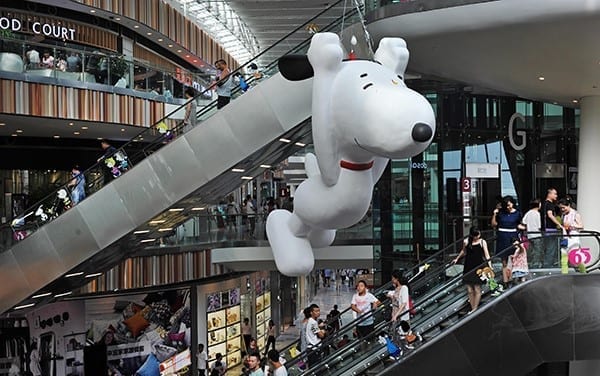
    MyTown Shopping Centre has opened in the Kuala Lumpur CBD as a joint development by Boustead Holdings and retail banker Ikano.

    It features 1.6 million sqft (148,644 sqm) of retail space (more than 400 stores), an alfresco dining area and a park.

    Anchor tenants include the biggest Ikea and Zara stores in Malaysia, Malaysia’s first Best flagship, Food Empire, Golden Screen Cinemas, H&M, Parkson Department Store and Village Grocer.

    Biggest ZARA in Malaysia @ MyTOWN

    Its two-acre (0.8ha) Town Park has been set aside for community events. It includes ramps and tracks for rollerblading and skateboarding. A Sunken Garden features amphitheater-style.

    MyTown is the first shopping centre in Malaysia to feature Soundscapes – special compositions and custom designed sounds to offer an immersive environment in key locations.

    MyTOWN Launch

    Mr Christian Rojkjaer – Managing Director of Ikea Southeast Asia & Director of Boustead Ikano Sdn Bhd (3rd from left) & Tan Sri Dato’ Seri Lodin Wok Kamaruddin – Deputy Chairman / Group Managing Director, Boustead Holdings Berhad (4th from left) flanked by Directors from Boustead Ikano Sdn Bhd, Boustead Holdings Bhd & Ikano Ptd Ltd including (from left to right), Mr Lee Hartigan, Dato Sri’ Ghazali Mohd Ali, Datuk Koo Hock Fee, Ms. Cheah Swee Choo, Mr Sebastian Hylving, Mr Joakim Hogsander – General Manager of MyTOWN Shopping Centre & Mr Thomas Malmberg.

    GM Joakim Hogsander describes the centre as a lifestyle mall. “We have created a special customer journey through our choice of tenants, design and experience.”

    MyTown has been awarded green building status by the US Green Building Council (USGBC) and Malaysian Green Building Index.

  • Ikea Hong Kong plans fourth store

    Ikea Hong Kong plans fourth store

    Ikea Hong Kong will open its fourth store in the second half of this year, parent Dairy Farm International has revealed.

    The new store will be located in Tsuen Wan.

    News of the new store was included in Dairy Farm International’s annual results released at the end of last week. A precise location was not revealed.

    The Hong Kong-listed multi-format retailer owns the Ikea franchises in Hong Kong, Indonesia and Taiwan. It will also open the Swedish furniture and homewares brand’s second store in Jakarta later this year.

    The expansion follows the opening of three new pick-up points in Hong Kong, Macau and Taiwan last year to provide more convenient options for its customers closer to home.

    “In parallel, e-commerce initiatives are being pursued by most of our formats to deliver a multi-channel shopping experience for our customers,” said CEO Graham Allan.

    Last year, Ikea launched its online offering in Hong Kong, Macau and Indonesia, and this was expanded to Taiwan in February 2017.

    Dairy Farm’s home furnishings division achieved record sales and operating profit during 2016. In constant currency terms, operating profit rose by 12 per cent to US$71 million driven by increased sales of $597 million, 6 per cent up on 2015. Sales and operating profit were higher than last year in all three markets. Like-for-like sales growth was particularly strong in Taiwan and Indonesia.

    “We continued to strengthen our low price image through ongoing price investment, and increased our focus on market specific products to enhance our local consumer appeal,” said Allan.

    “In the coming year, home furnishings plans both to continue its push in consumer accessibility.”

  • Solid year for revitalised Dairy Farm International

    Solid year for revitalised Dairy Farm International

    Hong Kong-headquartered multi-format retailer Dairy Farm International has celebrated its 130th anniversary with a strong set of results, with food, home furnishings and restaurants delivering higher profits.

    Total sales, including those of associates and joint ventures, rose 14 per cent in US dollar terms and 17 per cent on a constant-currency basis to US$20.4 billion. Sales of wholly-owned subsidiaries rose 1 per cent to $11.2 billion.

    Underlying net profit rose by 7 per cent to $460 million, partly due to a 13 basis point net improvement in operating margins as well as increased contributions from Yonghui and Maxim’s. Operating profit rose 6 per cent.

    Supermarkets & hypermarkets solid

    Total food division sales, which include Wellcome and Giant, were flat in US dollar terms, although up 1 per cent on a constant currency basis.

    “In an environment of severe pressure on pricing, sales growth in Hong Kong supermarkets and in the convenience store businesses in Hong Kong, Mainland China and Singapore helped to offset declines in the group’s supermarkets and hypermarkets in Singapore and Indonesia and largely flat sales elsewhere,” explained CEO Graham Allan.

    “The closure of a number of unprofitable stores in Singapore and Indonesia also weighed on sales performance. However, specific actions, including strategic store closures, prudent management of costs and more targeted promotional activity, delivered improved operating margins.’

    Operating profit from the food division rose 13 per cent to $267 million, with the largest gains coming from Singapore and Indonesia.

    Sales of $6.2 billion from supermarkets and hypermarkets (excluding Yonghui) were in line with last year in constant currency while operating profit increased by 13 per cent to $194 million.

    Wellcome in Hong Kong drove higher sales through strengthening its fresh offer and an enhanced merchandise assortment. Operating profit was lower, principally due to a continued rise in rental costs and competitor promotional activities. In Macau, San Miu achieved sales and operating profit growth in its first full year in the group with range enhancement and increased fresh participation.

    In Taiwan, sales and operating profit were ahead of last year. A new ‘superstore’ concept was introduced for Wellcome with two net new stores opening during the year, while Jason’s continued its store expansion.

    “The retail landscape in Indonesia was challenging with limited recovery in consumer confidence and significant competition from the continued rollout of mini-market stores across the country, which impacted sales growth at supermarkets and hypermarkets,” said Allan.

    “Nevertheless, improved margins, from pricing and promotional activities, the closure of a number of underperforming stores and tighter cost control boosted profitability. Improving the fresh assortment and revitalising the upscale Hero brand remain key focus areas for the business.”

    In Malaysia, sales and operating profit were behind 2015 due to persistent low consumer confidence together with ongoing price controls following the introduction of GST, which continued to weigh on performance.

    The Philippines recorded a strong year with all banners reporting like-for-like sales growth and improved profitability. “A more appealing fresh assortment coupled with tactical pricing and successful marketing activities underpinned an encouraging increase in footfall,” said Allan.

    “Rustan’s benefited from increased sales of its imported and exclusive brands, while measures to improve cost efficiency were also implemented.”

    In Singapore, sales were down year-on-year due to poor consumer sentiment and the impact of store rationalisation. “Cold Storage achieved an encouraging operating profit increase, despite reduced sales following the closure of underperforming stores. Giant saw steady sales and positive profit growth, driven by increased margins and lower operating costs.

    “In the coming year, we aim to invest in the renewal of customer facing and back office technologies to improve our customer experience and internal efficiency whilst optimising ranges and supply chain productivity.”

    In Vietnam, Giant posted sound sales growth, from its single store, with increased customer traffic being the main driver and in Cambodia, the group saw “encouraging increases” in like-for-like sales and operating profit.

    Convenience sales reach $2 billion

    Convenience stores reported $2 billion in sales, an increase of 5 per cent year-on-year in constant-currency terms. Operating profit increased by 15 per cent to $73 million.

    In Hong Kong, 7-Eleven outpaced the competition and grew sales and operating profit despite soft consumer sentiment and difficult market conditions. Like-for-like sales strengthened during the year supported by promotions, range improvements and new products. A slight gross margin improvement led to a higher operating profit despite cost increases from labour and rent. In Macau, sales were flat and operating profit was lower due to slowing tourist numbers and a substantial cigarette tax increase in 2015.

    In Mainland China, 7-Eleven continued its solid growth and passed its 800th store milestone. During the year, sales and operating profit increased, with store network expansion and like- for-like sales growth. This was driven in part by an expanded ready-to-eat (RTE) product range.

    In Singapore, 7-Eleven achieved positive like-for-like sales growth arising from a store re-ranging project with a strong focus on RTE, including the successful introduction of new private label products sourced from 7-Eleven Japan.

    “Operating profit was significantly ahead of 2015 due to these initiatives and the rationalisation of loss-making stores,” said CEO Graham Allan. “The RTE range will be further expanded in 2017 and there will be increased focus on acquiring new profitable sites.”

    Health & beauty sales rise

    Dairy Farm’s health & beauty division achieved $2.6 billion in sales, up 4 per cent on a constant currency basis, however profit declined 5 per cent to $175 million due to margin pressure and higher rents in Hong Kong.

    “Gains in Hong Kong, Mainland China, Singapore, Indonesia and the Philippines, offset disappointing sales in Malaysia,” said Allan.

    In Hong Kong, Mannings’ sales increased in 2016 despite a smaller store network. “As mainland Chinese tourist arrivals continued to decline, promotional campaigns and loyalty programmes were launched throughout the year targeting local consumers,” said Allan. “Sales were flat in Macau as mainland Chinese tourist arrivals remained soft.

    On the mainland, Mannings “showed gradual improvement” with solid sales growth, particularly in baby care, beauty care and personal care, while the contribution from corporate brands increased.

    In Singapore, Guardian reported growth in sales, while operating profit also increased with higher gross margins and greater focus on cost and shrinkage management, partially offset by higher rental costs, but in Malaysia, Guardian experienced “a challenging year” with lower sales and operating profit due to subdued consumer sentiment, increased competition and weakness of the ringgit.

    In Indonesia, Guardian posted double-digit sales growth for the fifth year in a row, despite the net closure of 73 stores. Operating profit was higher than in 2015 with higher gross margins.

    In Vietnam, Guardian recorded another strong year of double-digit sales growth and improvement in gross margin. Corporate brand penetration increased significantly as brands such as Botaneco Garden proved popular with local consumers and in the new market of Cambodia, progress was made through range expansion and increased corporate brand penetration supporting strong like-for-like sales.

    In its second year in the group, Rose Pharmacy in the Philippines delivered performance improvement through sales growth, gross margin enhancement, better cost efficiency and the closure of a number of underperforming stores. Guardian brand products were launched with encouraging early signs of customer acceptance.

    Home furnishings solid

    Home Furnishings, essentially the Ikea business in Hong Kong, Taiwan and Indonesia, recorded a 12 per cent rise in operating profit to $71 million driven by increased sales of $597 million, 6 per cent ahead of 2015.

    “Sales and operating profit were higher than last year in all three markets. Like-for-like sales growth was particularly strong in Taiwan and Indonesia.”

    Hong Kong led the group in introducing new concepts to increase consumer access, launching online shopping in April 2016 and opening two pick-up points in Macau and on Hong Kong Island. Indonesia introduced online shopping in July. Taiwan opened a pick-up point in Hsinchu and launched online shopping in February 2017.

    “We continued to strengthen our low price image through ongoing price investment, and increased our focus on market specific products to enhance our local consumer appeal.

    “In the coming year, Home Furnishings plans both to continue its push in consumer accessibility and to drive forward its expansion plans, having identified a second Indonesia store location and opening a fourth store in Hong Kong in the second half of 2017,” said Allan.

    Solid growth for Starbucks, Maxim’s

    Sales in Dairy Farm International’s restaurants division rose 7 per cent year-on-year to $2 billion and profit rose 4 per cent.

    “The business delivered another year of record earnings in a difficult market environment while continuing to expand outside Hong Kong,” said Allan.

    The division expanded its reach by acquiring Cova, a premium chain of cake shops and restaurants, and by opening its first Treats food hall.

    In China, Maxim’s added 16 new stores across its brands, including the first Cheesecake Factory franchise at Shanghai Disney Town.

    The company now operates 20 Starbucks cafes in Vietnam and Cambodia and describes their performance as “encouraging”. The group launched its first Thai franchise in September – MX Cakes and Bakery, a joint venture with ThaiBev, which has opened three outlets in Bangkok.

    “Looking ahead, the group continues to see various exciting opportunities, including entry into the Beijing market with the opening of Jade Garden, Cafe Landmark and The Cheesecake Factory planned in 2017. Maxim’s will also continue to explore franchise and acquisition opportunities across the region.”

    Dairy Farm will “compete aggressively”

    Chairman Ben Keswick said Dairy Farm International is “transforming itself to compete aggressively in a changing retail landscape”.

    “Central to this are a strong focus on understanding changing consumer behaviour, growing market share, building digital engagement with customers and sharing know-how across the group. Investment is being sustained in supply chain, IT infrastructure and systems, and the skills and expertise of our people to support this transformation. Each business is committed to optimising the shopping experience of its customers and to serving their evolving needs as efficiently as possible.”

    Keswick said increasing convenience through expansion and enhancement of the store network remains a high priority, although when necessary, underperforming stores will be closed. Last year the entire group added a net 114 stores, despite a number of closures across its divisions.

    At December 31, Dairy Farm International had 6548 stores in operation in 11 countries and territories, including its interest in 487 Yonghui stores in Mainland China.

    “Despite the uncertain economic outlook for 2017, the group continues to strengthen its businesses,” said Keswick. “Investments are being made to enhance its competitive position, increase customer convenience and adapt to emerging consumer trends. These investments, coupled with the exposure of its market-leading retail brands to Asia’s growth markets, will support Dairy Farm’s long-term success.”

  • Ikea Japan launching online store

    Ikea Japan launching online store

    Ikea Japan will make a full-fledged entry into internet sales, offering nearly all store items through a dedicated website to launch in late April.

    Plans call for selling 9000-odd products, excluding food and plants. They will initially be shipped from the nation’s nine Ikea stores. When coverage expands there will be direct shipping from warehouses.

    While customers in certain regions have been able to order items via e-mail, the company has not had an official online store.

    The local unit of the Swedish furniture retailer has tested the online service in southwestern Japan’s Kyushu and Yamaguchi prefectures since January, charging a minimum of ¥3990 (US$35.40) for shipping and handling. This may be reduced, depending on the delivery destination and items bought.

    Ikea Japan has a logistics centre in Yatomi, Aichi prefecture. Spanning 54,000 sqm, it opened in 2008. A 31,000 sqm section dedicated to online shopping will be added and launch next year.

    Ikea Japan aims to have online sales account for half of its revenue in 10 years. Its sales shrank 2 per cent to ¥76.7 billion for the year ended August. The company will add the online push to an ongoing initiative of increasing smaller stores to gain momentum toward a sales target of ¥140 billion in 2020.

  • Burberry Korea price cut is needed

    Burberry Korea price cut is needed

    Burberry Korea is under fire for cutting prices “too little, too late”.

    It’s not the first time Burberry has been criticised for its Asian pricing strategy. Last May,

    Jack Chuang, a partner with Hong Kong-headquartered OC&C Strategy Consultants, said that of all the luxury brands, Burberry is the one with the most significant price gap between Asian and European markets.

    “Prices in Mainland China are almost 40 per cent higher than in UK, while in Hong Kong, it is 20 per cent higher.”

    The South Korean office of Burberry recently marked down the price of some of its products to reflect the fallen value of the British pound, but only by a small margin compared with the currency’s depreciation, fashion industry officials said Wednesday.

    Burberry Korea dropped the local price by an average 9 per cent as the pound fell after Britain’s decision to leave the European Union in June last year. Industry officials say the markdown, however, falls far short of the 17 per cent fall of the British currency against the US dollar. The pound’s exchange rate against the South Korean won dropped 17 per cent from 1765.90 won in February last year to 1468.13 won as of January 9.

    The price adjustment in Korea also falls behind Burberry’s decision for Hong Kong, where the fashion brand’s product prices were taken down 10-15 per cent in September. Some of the products were down by 20 per cent. The markdown rate was more than the 9.75 per cent fall of the pound against the Hong Kong dollar at the time.

    Burberry Korea declined to talk on the matter despite repeated calls by news agency Yonhap.

    Consumer groups have long complained that foreign brands often take advantage of their popularity in South Korea to push demands they do not make in other countries or exclude South Korea from their market action.

    Swedish furniture maker Ikea caused ire last year when it kept selling dressers in South Korea that were recalled in the US and Canada after reported accidents involving children that resulted in deaths. The company had argued that the dressers meet local safety regulations. Volkswagen, who already settled on compensation to its consumers in the US from faked emissions tests, has yet to carry out full recalls or offer compensation steps in South Korea.

    US credit card company Visa in May came under fire for deciding to raise the processing fee by 10 per cent for overseas transactions, effective in South Korea but not in Japan or China.

    Such discriminatory actions are more stark at duty-free shops, industry officials say, who fiercely compete to host highly sought brands.

    “In case of popular brands, they often insist on excessive requirements, such as the cost of interior decorations when deciding to open their store,” an official at a Seoul duty-free shop said. “The retailers have to be compliant because of the brand power and because they have to attract customers, and they end up having to accommodate the demands.”

  • Ikea Centres to increase megamalls in China

    Ikea Centres to increase megamalls in China

    Centres China, Ikea Group’s megamalls unit that entered the country in 2009, is firming up plans to replicate its success in three Chinese cities across the country.

    Beginning 2020, it will open one megamall per year.

    Typically, a megamall is a shopping mall with an Ikea store, and the future ones may also have apartments, hotel or offices.

    The megamalls developed by Ikea Centres China are also known as Livat shopping centers.

    In China, its megamalls are located in Beijing, Wuxi in Jiangsu province and Wuhan in Hubei province. They involved investment of 10 billion yuan ($1.44 billion).

    Ding Hui, president of Ikea Centres China, said the three centers have been like tests, and produced encouraging results. Hence, Ikea has decided to expand across China.

    New shopping centers may come up in major cities such as Beijing, Shanghai, Shenzhen and Guangzhou, as well as in second-tier cities such as Chongqing, Xi’an, Wuhan, Hangzhou, Nanjing and Qingdao.

    The fourth in the country, which will entail an investment of about 4 billion yuan, will be a commercial complex in Changsha of Hunan province, Central China, according to Ding.

    “It’ll have a shopping mall, Ikea store, apartments, a hotel as well as offices. It will be the first of its kind as other centers don’t house apartments, hotel or offices,” Ding said.

    The Wuxi center, the first Livat venture in the Chinese mainland, opened in June 2014. According to Ding, over the past two fiscal years, it saw a 32 percent growth in revenue and 27 percent growth in guest flow to 14.1 million.

    The three shopping centers registered 52.6 million visits in Ikea’s fiscal year between September 2015 and August 2016. Combined sales were up 36 percent at 7 billion yuan.

    “Through the last year’s budget, Ikea Centres China funneled 25 billion yuan into the development of shopping centers. This will continue until 2025, to ensure one new project comes up per year from 2020,” said Ding.

    “Land deals and project sales can no longer generate sustainable profits. So, the competition between shopping malls will become even fiercer in the foreseeable future. This will be a good opportunity for companies such as Ikea Centres China,” said Ding.

    Furniture giant Ikea’s malls foray signifies how iconic companies are diversifying for long-term sustainability.

    The Nikkei Asian Review recently reported that railway and hospitality group Odakyu Electric Railway is joining forces with the operator of Muji stores to open a hotel next year in China.

    “In the past few years, Chinese conglomerates diversified successfully in China. Now, international brands like Ikea and Muji are trying to do the same for better localization,” said Chen Sheng, president of the China Real Estate Data Academy.

    Livat shopping centers in China will house companies and brands like Ikea Retail, Auchan Hypermarket, Suning Electronics, Jinyi Cinema, Decathlon, Zara, Mango, H&M, C&A, Gap, Uniqlo. Besides, there will be food and beverage facilities, and entertainment areas for children.

    “Ikea Centres China is in talks with leading international hotel brands, including Marriot, InterContinental and Hilton for the hotel space,” said Ding.

    According to him, the hotels will be of three-star variety, but will provide four-star hotel experience to customers like middle-income families and business travelers.

    Tastefully done up flats complete in all respects will target young working professionals and newly-weds.

    Offices will offer shared spaces like pantry, meeting rooms and conference chambers to tenant companies.

  • 2nd anniversary for IKEA Korea and how it grows

    2nd anniversary for IKEA Korea and how it grows

    December 18 will mark the second anniversary of Ikea Korea’s launch.

    According to Ikea’s Swedish head office, its Korean operations have been a success so far. Annual turnover for the 2016 fiscal year to August 2016 was 345 billion won (US$292.3 million), while this year’s sales from January to August, saw a 17 per cent year-on-year increase.

    Although the furniture giant was faced with a few setbacks, namely the controversial recall of its Malm dresser that was blamed in the deaths of at least six children (although none in Korea), Ikea has successfully established itself as a key player in the local market.

    “We’ve made fast progress since the launch of our first outlet here in Gwangmyeong on December 18, 2014,” a spokesman said.

    Ikea’s arrival brought about some positive changes too, particularly for medium to higher-priced furniture businesses.

    The store helped reignite consumer interest in what had been a stagnant Korean furniture market, helping to revitalise the industry, and considering the fact that Ikea targets consumers mainly with budget-friendly items, existing key players selling mid-priced or premium products didn’t have to compete so much with the Swedish giant.

    In fact, local furniture makers Hanssem and Iloom both saw positive growth, with sales for Hanssem, in particular, increasing by roughly 10 per cent as of the third quarter of 2016 to over $1.16 billion, compared to the first three quarters in 2015.

    “The target consumer group for Hanssem, which provides assembled furniture, differs from that of Ikea,” said a Hanssem spokesman, who admitted the company “did benefit a great deal from Ikea’s launch.”

    The Korean retail furniture market was worth $4.24 billion in 2015, a 7 per cent increase from the previous year, and the biggest jump since 2006. The unprecedented growth was viewed as exceptional by industry watchers, who pointed out that the industry appeared to reach its maturity after the 1990s.

    However, Ikea was bad news for furniture merchants at local markets and smaller businesses, who have now lost their biggest competitive advantage – low pricing.

    Over the past five years, the number of furniture companies operating in Korea – the majority of which are smaller enterprises – dropped by almost half, from 21,000 in February 2011 to 13,000 in February 2016.

    Retailers selling kitchen utensils and soft furnishings were also affected by Ikea’s entry, especially for stores in Gwangmyeong, 55 per cent of which said they experienced negative growth since December 2014.

    “There needs to be a way for smaller businesses to coexist alongside bigger players like Ikea and Hanssem,” said an industry official.

    “Given that non-branded furniture businesses make up about 70 per cent of the total Korean industry, small retailers are more than capable of making decent profits. But it seems necessary to implement some kind of official measures in order to help them differentiate themselves and  to better target consumers.”

    Ikea plans to establish five more outlets across the country by 2020, investing 1.2 trillion won ($1 billion).

  • Pop-ups as a warm up for IKEA India

    Pop-ups as a warm up for IKEA India

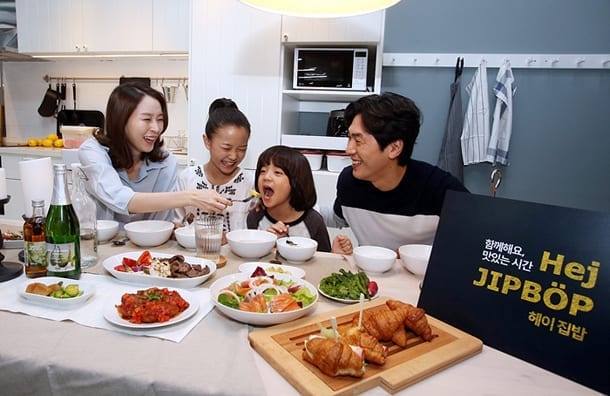
    Ikea India is launching its pop-up store format Hej Homes in cities where it plans to open brand stores.

    The local branch of the Swedish home furnishings and furniture retailer plans to have 50 of the outlets by 2025, with a typical Hej House store being between 4000 and 7000 sqft (650 sqm), housing a cafe and usually in malls.

    The idea of the stores is to give consumers a taste of the Ikea brand, says country marketing manager Ulf Smedberg.

    The first pop-up will be unveiled in Hyderabad, where construction has started on the brand’s first store. Its second store is expected to be in Navi Mumbai, with plans to start 25 Ikea stores by 2025. Also launching in the first phase will be stores in Bengaluru, Delhi and Mumbai.

    Smedberg says the retailer will be introducing catalogues as part of its branding strategy.

  • China drives Ikea growth

    China drives Ikea growth

    China has been cited as one of the major contributors to a year in which Ikea’s profits surged 19.6 per cent.

    Ikea growth was strongest in China, while the company’s largest markets were Germany, the US, France, Britain and Sweden.

    The Stockholm-headquartered furniture and homewares retailer reported a profit of 4.2 billion euros ($US4.5 billion). Total sales rose 7.1 per cent to 34.2 billion euros for the 2016 financial year ending in August, the company said.

    In the past year Ikea has opened 12 new stores and 19 pick-up and order points worldwide, and in the coming year planned to open its first stores in Serbia and in Hyderabad, India.

    “Growth and profitability give us freedom to choose our own way, the flexibility to move fast and the independence to think and invest long term,” Peter Agnefjall, Ikea Group CEO, said in a statement.

    The retailer registered 783 million visits to its 340 stores in 28 countries during the 12-month period but was also expanding its online offers. In addition, 49 stores are operated by other franchises.

    As part of its efforts to reduce its environmental footprint, the company said it was to invest 1 billion euros in sustainable materials. This included forestry and firms involved in recycling, renewable energy and developing biomaterials.

    It said 71 per cent of the energy it used in 2016 came from renewable energy sources such as solar and wind farms. Ikea plans to be energy independent by 2020.

  • Ikea introduces line of kitchenware in Korea

    Ikea introduces line of kitchenware in Korea

    Swedish home furnishing company Ikea is launching kitchen products for the first time in Korea.

    “We have 700 articles in the cooking and eating area, completely new for the Korean market,” Andre Schmidtgall, country retail manager at Ikea Korea, said Thursday during a press briefing at the Times Square shopping mall in Yeongdeungpo District, southwestern Seoul.

    Although Ikea entered the Korean market in 2014, sales of kitchenware such as dishes and cups from the Swedish home decor maker were not permitted due to legal restrictions related to product labeling. After the Korea Food and Drug Administration eased up on the restrictions this year, the company was able to bring in the full set of its items to Korea.

    Ikea’s store in Gwangmyeong, Gyeonggi, includes a 1,000-square-meter (10, 764 square foot) space devoted to kitchen products and began sales on Sept. 9. The new promotional campaign for the product line begins next Tuesday and runs through Nov. 12 at Times Square. The mall will include a venue set up with an Ikea kitchen and allow visitors to cook food there.

    Even as the company rolls out its new products here, Ikea is still working on cleaning up its stained image in Korea after delaying a recall of drawer chests that killed several children after tipping over.

    “We have tested drawer chest products and suspended another 15 models a day before yesterday,” Schmidtgall said.

    The company already halted sales of 15 drawers including the MALM drawer on Sept. 9, following recall orders from the Korean Agency for Technology and Standards under the Ministry of Trade, Industry and Energy.

    “We put safety and security as the utmost priority,” Schmidtgall said. “Tipping risk is an industry-wide problem.”

    According to Ikea, particular models of its drawer chests are banned from sale only in three countries – the United States, Canada and Korea – and in other markets, the article is sold with recommendations that the drawer be anchored to the wall for safety.

    Ikea Korea in the latest financial year from Sept. 2015 to Aug. 2016 recorded 345 billion won ($309.4 million) in revenue. From January to August 2016 compared to the same period last year, revenue rose 17 percent.

    The company is working on a second Korea branch in Goyang, Gyeonggi, set to open by the latter half of next year. It plans to build up to six stores in Korea by 2020. Likely locations include the Seoul metropolitan area, Daejeon and Chungcheong in the country’s central region, and Busan in the southern region.

  • Ikea Asia banks on China and India

    Ikea Asia banks on China and India

    Ikea Asia is banking on a rapid store rollout in India and ongoing China expansion to sustain its global growth.

    The Swedish homewares and furniture specialist will open its first store in India next year and plans to have 25 stores trading there by 2025.

    And in China, where it has 21 stores currently, it will speed up its rollout from the current three to four or five every year.

    In an interview with Bloomberg, Ikea CEO Peter Agnefjaell, the two markets are core pillars of  a plan to boost total group sales by up to 50 per cent by 2020, to 50 billion euros (US$56 billion). In the year to August the company’s sales were 34.2 billion euros.

    “India is one of the biggest growth markets we see going forward,” Agnefjaell told Bloomberg. “But it of course hinges on a continued good economic development.”

    The first Ikea India store is under construction in Hyderabad. The company has already invested in a site in Mumbai and plans stores for Bangalore and Delhi.

    Ikea’s global same-store sales rose 4.8 per cent in the last financial year. Total sales rose 7.9 per cent, excluding exchange rate impact.

  • IKEA to Recall Unsafe Furniture in China

    IKEA to Recall Unsafe Furniture in China

    Swedish furniture giant IKEA will recall their unstable Malm furniture line of chests and drawers in China.

    The decision came after many vocal Chinese consumers complained that IKEA was discriminating them. The Malm line was still in Chinese stores amidst recalling over 29 million pieces of chests and drawers in Canada and the United States.

    The product recall in North America transpired two weeks ago, after being linked to the death of six children.

    When IKEA refused to recall their product from their Chinese outlets, consumers complained online and through government controlled media. Government controlled newspaper Xinhua accused IKEA of committing “blatant bullying.”

    The government-run General Administration of Quality Supervision, Inspection and Quarantine claimed that after meeting IKEA, the company decided to change their minds.

    Last Tuesday, the furniture company decided to recall about 1.7 million pieces from their stores. IKEA offered free home installation and an optional refund.

    IKEA’s spokeswoman, Xian Jiaxin, said, “IKEA is a very responsible company. Consumer protection is very important to us, which is how we came to this decision.”

    Many Chinese shoppers go to IKEA for their furniture needs. As a result, the Swedish company incurred a large amount of sales. By September 2015, total revenue totaled to $1.55 billion.

    The furniture company is determined to firm its hold in the vast Chinese retail market. Total retail sales annually is worth $4.5 trillion in China, which will soon exceed sales from the United States.

    Jeff Walters, managing director of the Boston Consulting Group said, “If you look across the world and you look where there is still significant growth in consumer spending, the answer is very much China. Of course any company is going to make sure it’s standing on the right side of regulation to have access to a market that size.”

    Many Chinese consumers are becoming more discriminating due to violation of rights in the past. Since then, government inspectors have been more stringent in regulation and inspection of goods and products.


  • New Indian ruling appears to finally give Apple go-ahead to open retail stores

    New Indian ruling appears to finally give Apple go-ahead to open retail stores

    Amended foreign investment rules clear the way for Apple India stores, and the possibility for the US technology giant to start manufacturing there.

    Under the new rules, foreign retailers are exempted for three years from a requirement to locally source 30 per cent of the goods sold in company-owned stores.

    This means Apple, which now sells its hardware through resellers and first applied for store licences in January, can set up its own shops in India, the world’s fastest-growing major smartphone market with sales expected to rise more than 25 per cent this year.

    Apple, which has a less than 2 per cent share in India’s smartphone market, can resubmit its application for store licences.

    India has been lobbying Apple and its partner Foxconn to start manufacturing in India as part of Prime Minister Narendra Modi’s agenda to bring in foreign manufacturers to create millions of jobs. The rule-change announcement comes a month after Apple boss Tim Cook met Modi to discuss the company’s plans for retail and manufacturing in India.

    Meanwhile, India’s new look at retail rules may also help with expansion for Swedish furniture-retailer Ikea, which is setting up stores in Hyderabad and Mumbai.

  • Indonesia shines for retail investment

    Indonesia shines for retail investment

    Southeast Asia’s largest economy, Indonesia, is ranked the world’s fifth most-attractive market for retail investment in AT Kearney’s 2016 Global Retail Development Index.

    In previous years it has ranked in the top 20.

    It is an exciting time to be investing in Indonesia’s retail sector, the index says. The country scores 64.3 in market size (out of a 0-100 scale) and low in country risk (38.9) – lower than the top three markets, China, India and Malaysia. Urgency to enter the market is rated at 68.9, and the overall score of 55.6 is just one point behind Kazakhstan.

    “Despite its relatively low retail sales per capita and currency volatility, Indonesia’s huge population and cities make it quite attractive to foreign retailers, which see untapped potential in the country and are investing heavily in new development,” says the report, which covers 30 developing countries that represent more than half of total global retail sales.

    This is reflected by burgeoning foreign retail investments in the country, reports the Jakarta Post. It cites Dubai-based Lulu, which opened its first hypermarket in Indonesia this month with an investment plan of US$500 million covering nine hypermarkets and a warehouse. Meanwhile, Singapore’s Courts, South Korea’s Lotte, and Ikea and H&M from Sweden all have a presence and expansion plans in Indonesia. Courts plans to open four stores by next March to add to its existing five, and has seen its sales growth double since opening in 2014.

    Indonesian convenience stores Alfamart and Indomaret have also been expanding. Indomaret plans to add 1600 outlets this year to its 12,210 stores, while Alfamart is aiming for six-fold sales growth this year driven by its upgraded online presence.

    The government has opened up eCommerce to foreign ownership where the business value is more than Rp100 billion (US$7.49 million). According to the Indonesian eCommerce Association (Idea), eCommerce transactions are expected to reach $24.6 billion this year, three times more than in 2013.

    Indonesian retailers Matahari and Mitra Adi Perkasa have launched online shopping, while grocers Alfamart and Happy Fresh are extending their online offering.

  • The moment to tap the Philippine furniture market is now

    The moment to tap the Philippine furniture market is now

    The Philippine economy is a thundering train and it is about time for the Nordic design and furniture companies to get on board, Joni Koro, project manager at Nordic Business Council Philippines and founder of GRØN Design Solutions, says.

    “The sheer amount of new office, retail and residential developments is staggering. Although I have lived in Malaysia, Mainland China and Taiwan in the past, this is something I haven’t seen anywhere before”, the Finnish Manila-resident says.

    With an annual growth of around 6 percent, the island state is one of the world’s fastest growing economies.

    The construction boom is huge and in 2015 Metro Manila recorded the highest premium office space take-up in history on 459,000 square meters. Similar take-up of premium office space is expected also for 2016.

    Naturally this creates a great demand for furniture and design companies to furnish the office spaces.

    A lot of multinational offices are opening in Manila, and they are looking for sustainable quality furniture and are ready to pay the price for it, so the time to tap into the market is now, Joni Koro tells.

    But why just now?

    “Well if you ask me, actually we’re already late. It’s like when talking about China, the best time to get into the market was 5 years ago, but the second best is now and this also goes for the Philippines”, the Finnish entrepreneur says.

    “Unfortunately Philippines has really been flying under the radar in the Nordic region. There’s a huge potential here, especially since the last six years have been the best in the Philippine history.”

    Battling the US and European design

    When Joni Koro says, that the Scandinavian engagement on the furniture market is already late, it’s partly because more American and some European furniture companies have already jumped the gun and invested heavily in the Philippine market.

    As the market is now American contract furniture companies like Steelcase, are the biggest competitors on the market for quality Scandinavian offering, but more European companies has penetrated or are to penetrate the furniture market as well.

    Another reason why it is a good idea for the Scandinavians to tap into the market, is that the name of the cold north is already hot in the Philippines.

    “The concept of Scandinavian design and quality is fairly well known in the Philippines, but the offering is mostly limited to local mockups which rarely live up to the Nordic standards”, Joni Koro says.

    Why is Scandinavia and the Philippines a match

    If you ask Joni Koro there are several reasons why Scandinavian furniture and the Filipino market should be a successful match.

    The most significant reason is a rising interest for green awareness and thereby a demand for sustainable and environmentally friendly furniture, especially at the multinational offices, which represents the most likely buyers for Scandinavian furniture. This demand fits like a glove with what Scandinavian furniture is famous for.

    “The green movement is definitely getting stronger in the Philippines. Looking at the new office building developers, more and more of them are applying for the US Green Building Council’s LEED certification for their new buildings, he says.

    “The certificate works like a seal of approval that your office is environmentally friendly and of course gives the company a good name and a chance to price the square meters higher in a country where electricity price is one of the highest in Asia”. Joni Koro tells.

    The certifications have become highly popular. “I think out of the 80 upcoming high-end office buildings, roughly 30 have already applied for the certificate. These are the buildings the multinationals also want to be located in”.

    One way to achieve higher level in certification is choosing a green furniture supplier, as this will grant the company points when the application is rated and most Scandinavian furniture manufacturers have the green profile, that grants these points.

    Processed with VSCO with b1 preset

    According to Joni Koro, Scandinavian design has advantages in the Philippines.

    Another reason why Scandinavian furnitures fits the Philippine market are the traditions of Scandinavian furniture.

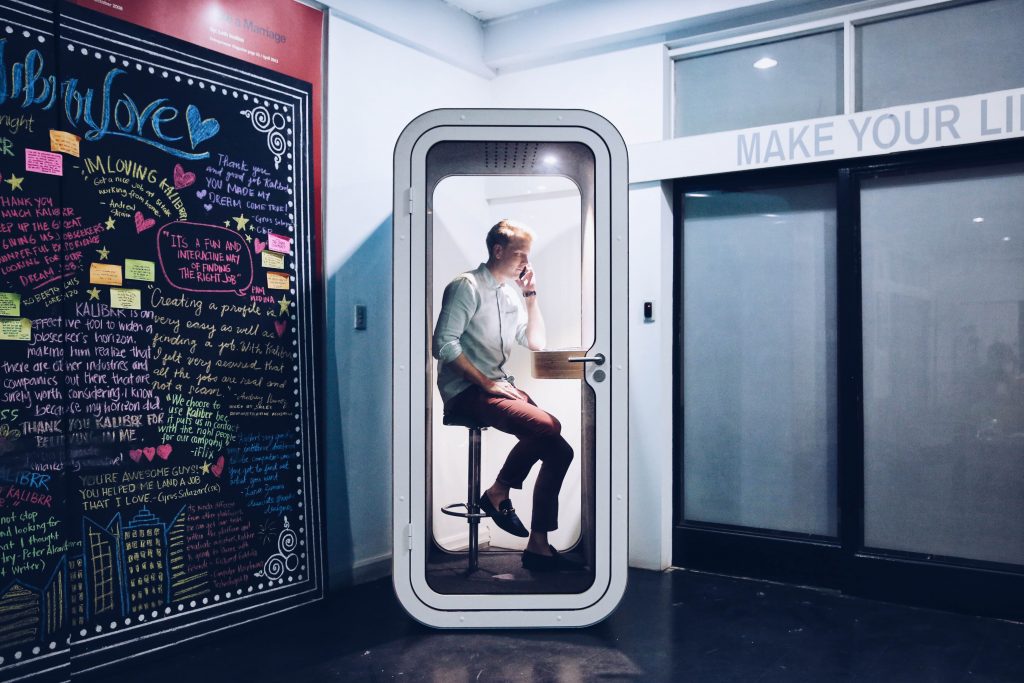
    Joni Koro’s own enterprise, GRØN Design Solutions, is the local partner for Denmark’s largest office furniture manufacturer, Duba-B8 as well as for Finland-based silent space manufacturer Framery acoustics. For Joni Koro these brands are good examples on what Nordic furniture has to offer in the Philippines.

    “Duba-B8 products are highly ergonomic which starts to be a hot topic also in Asia. In this regard Scandinavians are the world leaders”, Joni Koro explains.

    “At the moment, the demand for ergonomic, sustainable high-end furniture, that Nordic brands often represent still comes mostly from the multinational companies. But this is to change”.

    “Another very interesting product is a movable silent space from Finland. Framery silent spaces address the noise issues at open plan and activity based offices. This company is growing four fold this year – the demand around the globe for their solutions is huge and we also see the potential and need here in the Philippines”.

    Any challenges?

    As there might be many reasons and conditions to tap into the market now, there are on the counterpoint challenges to be aware of.

    “Unfortunately the local demand for high-end sustainable office furniture is still fairly limited and we can talk about niche market here. The price matters”, Joni Koro admits.

    “Even though the Philippines is closer to the western cultures compared to many, or any, other Asian country, most of the local companies still rely on cheap Chinese furniture and on layout design support individual work in cubicles instead of collaboration and activity based working”, he says.

    The Philippines elected a new president the 9th of May 2016. The new man in charge turned out to be Rodrigo Duterte, who is seen as a highly controversial figure in Western media, mainly because of his outspoken quotes on justice policy. But the new political situation shouldn’t be a challenges for the market, Joni Koro says:

    “Despite we a new President in the country the fundamentals are there. The growth of the consumption driven economy is further fed by expanding Business Process Outsourcing sector as well as Overseas Filipino Workers’ remittances, which last year were the third largest in the world, USD 26 billion. The Gross Domestic Product (GDP) is set to grow by 5 to 7 percent in the coming years. If Duterte does well with building the confidence towards foreign investors and can accelerate the infrastructure project the country could grow up to 8 to 10 percent, so the economical situation is still fertile”.

    The Scandinavian situation

    When overviewing the state of Scandinavian design in the Philippines in general, one senses that there’s a taste for it. Some well-known brands are responding to that and have already entered scene.

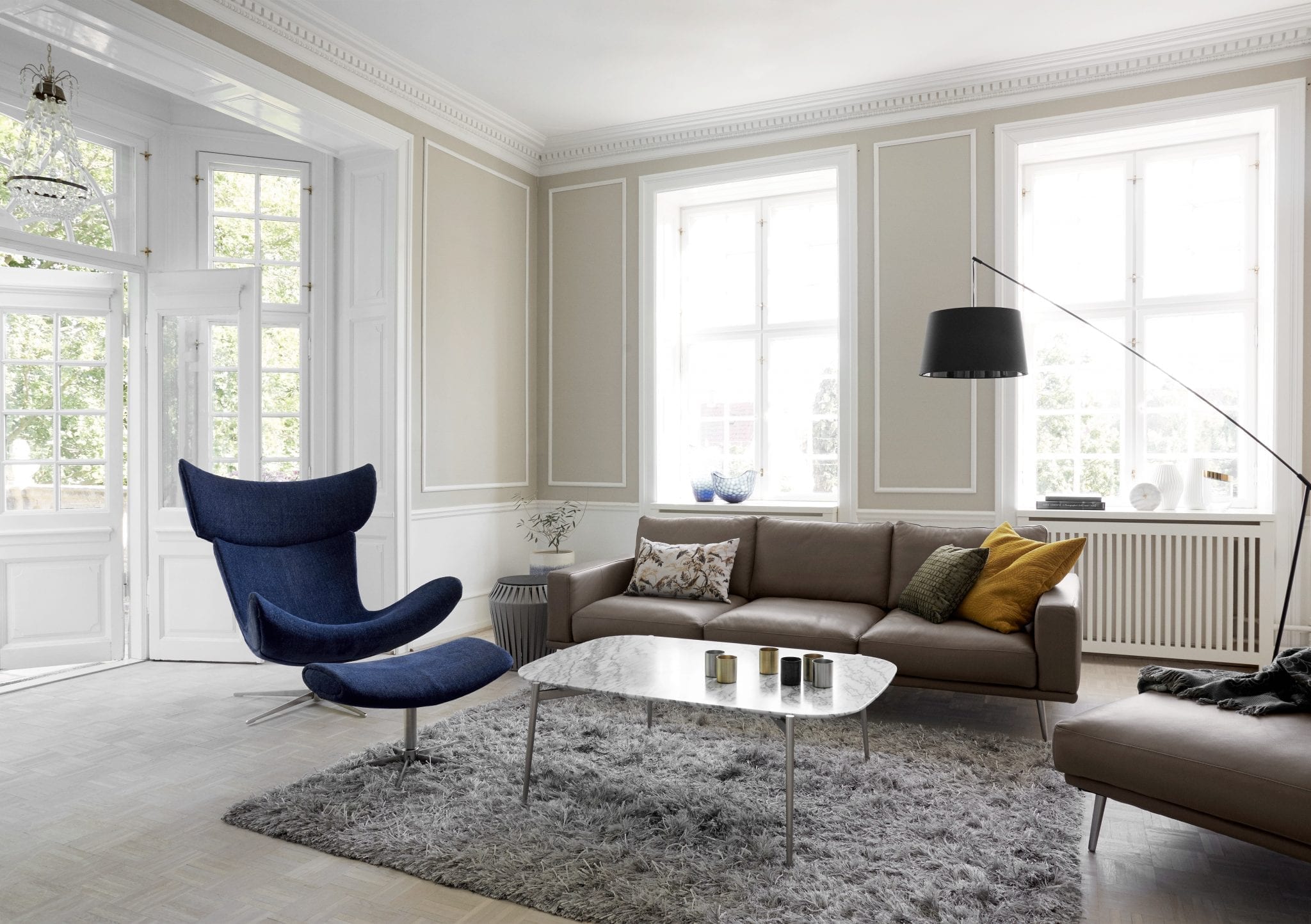
    Popular companies like BoConcept and Hay have opened retail stores with a help of local partners. Republic of Fritz Hansen and some other household names can also be found in multi-brand design stores.

    Joni Koro does his to open the market for Scandinavian furniture through NBCP and GRØN Solutions.

    “I want to bring authentic Nordic design and especially quality to the Philippines – first to the office market and soon after to the consumer market as well. I want to build a gateway for Nordic furniture and decor companies to enter the Philippine market”.

    Even though the Scandinavian design and furniture mark in the Philippines is still fairly unseen, things are developing, Joni Koro says and hopes.

    A big leap would be to get IKEA to the market, he says. “That would really create awareness of Scandinavia”.

    Do you have any advices to give if one were to get into the Philippine market with Scandinavian design?

    “The demand for high-end products in the consumer market is strong, but if you want to play it safe and build the awareness of your brand slowly you should start with fast-moving items like decorations. If I should give any recommendations you should of course do you research as always, be committed to the market, and find a trustworthy local partner to work with to deal with retail restrictions”.

    Processed with VSCO with a5 preset

    Joni Koro in the Framery’s O booth – a single person phone booth, he distributes in the Philippines as a demo unit.