Tag: ikea

  • Ikea to ramp up SEA expansion

    Ikea to ramp up SEA expansion

    Swedish furniture and homewares retailer Ikea wants to ramp up its Southeast Asian store rollout.

    The next two markets in its sights are the Philippines and Vietnam.

    But in some key markets, finding suitable locations for its large format stores is proving a challenge, especially in Vietnam where it wants to launch in Ho Chi Minh City, the country’s commercial capital with a catchment of 8 million consumers.

    Speaking to The Nation newspaper after opening its first pickup point (PUP) in the Thai resort city of Phuket, Mike King, retail manager of Ikea Singapore, Malaysia and Thailand, said the company wants to have three large format stores in Bangkok and five or six PUPs in Thailand within five years.

    In July, the company announced it had located site for its second Bangkok store – adjacent to the new CentralPlaza Westgate shopping mall under construction in Bangyai, in Nonthaburi province in Bangkok’s west. Another site has been earmarked in the city’s north, near the recently expandedFuture Park Rangsit shopping centre.

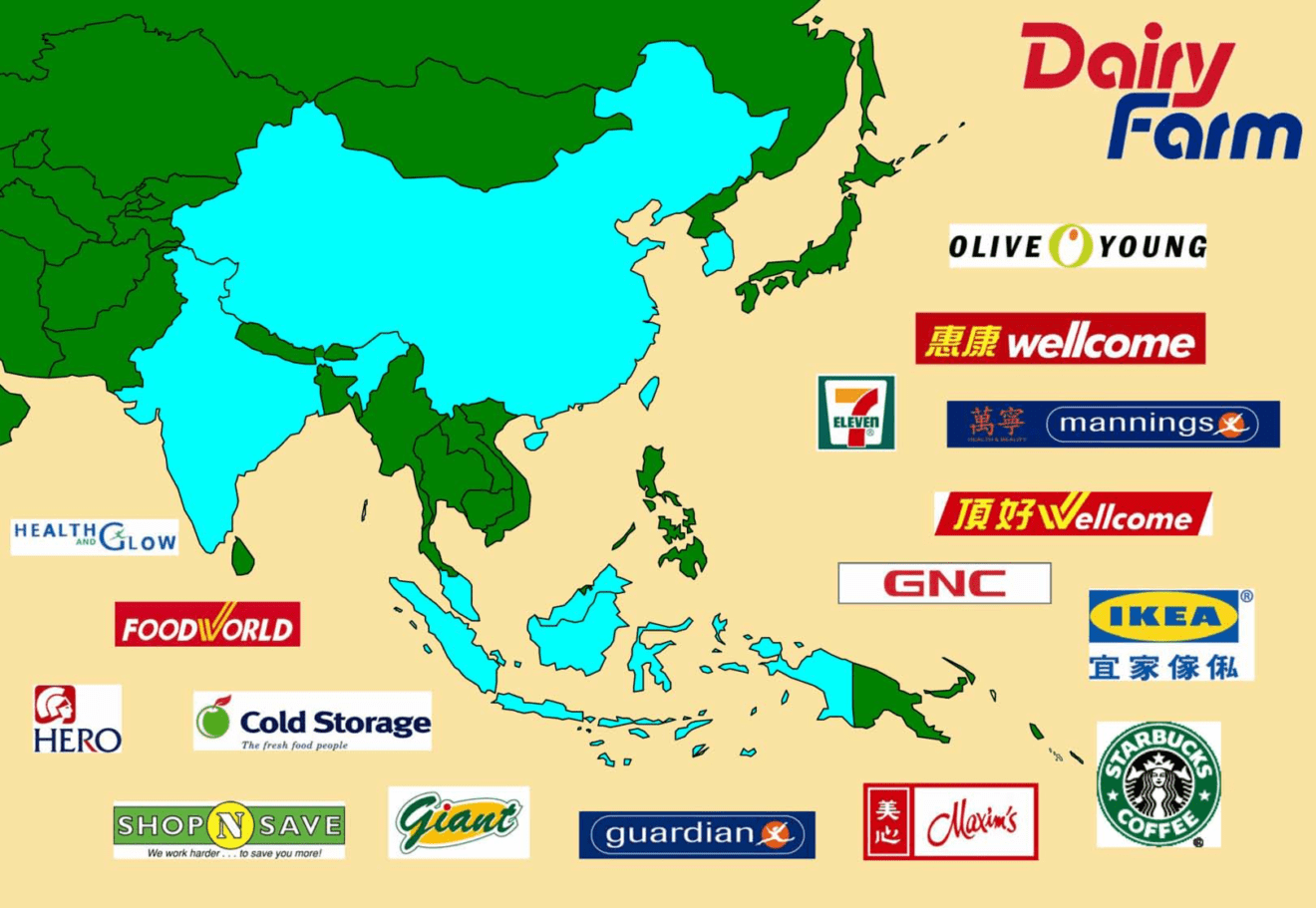
    Ikea is already actively seeking local partners in Vietnam and the Philippines. Typically when Ikea enters a new market, it locates its initial stores in the most populated cities – for example in Indonesia where it has a joint venture with Hong Kong’s Dairy Farm International, it has opened its first store in Jakarta, and in Malaysia it has two in greater Kuala Lumpur. In the Philippines it will focus on Manila with a population catchment of about 24 million.

    “The two new branches [in Ho Chi Minh City and Manila] will possibly be erected within five years,” King told The Nation.

    Ikea plans to open at least one store a year in Southeast Asia from now on – typically about 40,00 sqm in size.

    Meanwhile, the 2651 sqm Phuket PUP is expected to increase the Bangkok store’s sales by 10 per cent annually. Customers can order online, or in the store and have the products shipped to the PUP for collection.

    It is the first PUP store in Asia, although others operate in Spain, the UAE, Turkey, Norway, Finland and Greece, among other places.

  • Carrefour has opened its biggest store in Asia

    Carrefour has opened its biggest store in Asia

    Carrefour SA, a French retailer, as of late opened its biggest store in Asia in the Chinese capital, Beijing. The divulging comes as the firm plans to capitalize on the expanding interest for imported sustenance from medium-and top of the line customers.

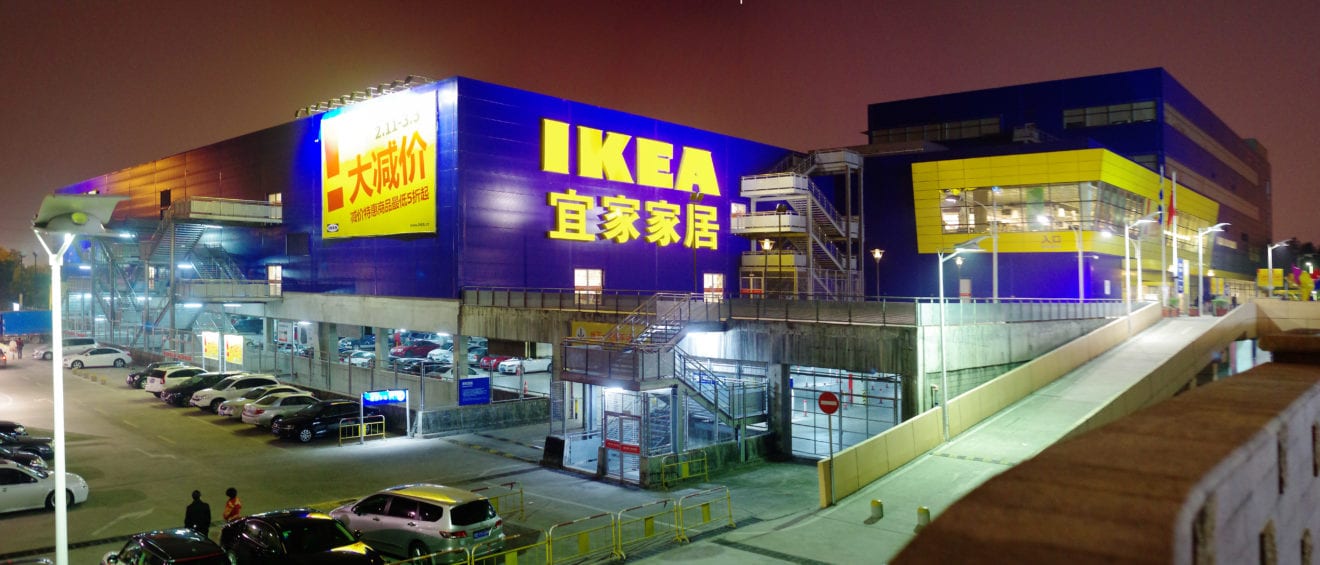
    The two-story hypermarket is situated on the North Fourth Ring Road, adjoining the sprawling office of Swedish outfitting retailer Ikea. It houses more than 80 stores, including Uniqlo, Decathlon and the first-ever Baidu Concept Store.

    The Carrefour Beijing outlet, which is spread over a territory of 71,380 square meters, offers more than 40,000 items, 15 percent of which are foreign things.

    Serving as the French retailer’s twentieth store in the city, the hypermarket likewise has 800 free parking spots, 15 electric charging stations for transport transports, and five underground charging stations for electric autos.

    “We are concentrating on imported nourishment items as there has been an ocean change in the sustenance inclinations of Chinese purchaser,” Laurent Olszewski, local chief for the North-West China district at Carrefour, said. “It is very unique in relation to what I saw when I first came to China in 1995.”

    “Chinese buyers need to take a stab at everything,” he included, refering to imported French salt and Australian meat as samples. Olszewski additionally shared that Carrefour is growing its e-trade business in 2016. The firm will concentrate on its Web-based administrations by January one year from now in the wake of completing their work on their Tianjin-based logistics focus.

    As per specialists, this move of Carrefour is an approach to acquire shoppers fitting in with the high-pay class.

  • Dairy Farm struggles in SE Asia

    Dairy Farm struggles in SE Asia

    Dairy Farm International Holdings says softer sales growth and steep cost increases led to weakened margins in the third quarter.

    In an interim management statement, which does not include financial data, the Hong Kong-based pan-Asian retailer says the group faced more difficult economic conditions, and focused on building market share and investing for the long-term health of its businesses.

    Tighter margins and unfavourable exchange rate movements continued to affect the group’s US dollar reported results and led to lower underlying earnings for the period.

    “The group expects similar trading conditions to prevail for the remainder of the year.”

    Dairy Farm says profitability of its Singapore food business – where it owns the 7-Eleven franchise and Cold Storage supermarket chain – fell, principally due to weak performances from newly opened supermarkets and the impact on 7-Eleven of government restrictions on alcohol sales.

    In Malaysia, the introduction of GST and softer consumer confidence dampened spending at itsGiantstores.

    “In Indonesia, despite good sales momentum in July and August, higher labour costs and price investments to attract customers have reduced margins,” the company said.

    The Health and Beauty Division – led by the Guardian and Mannings brands – continued to perform well in Hong Kong, despite the slowdown in Mainland Chinese tourist arrivals, and has seen improvements in profitability in Singapore. The overall results were, however, held back by poorer performances in Malaysia and Indonesia.

    Both the Home Furnishings and Restaurants Divisions have increased sales and profits. Ikea performed well in both Hong Kong and Taiwan, and the new Ikea store in Indonesia continues to trade ahead of expectations.

    Restaurant group Maxim’s, which operates Starbucks amongst other brands,  maintained its consistent performance.

    The group is to invest a further US$210 million in Yonghui Superstores in early 2016 so as to maintain its 19.99 per cent stake following a placement by Yonghui of a 10 per cent shareholding to internet retailer, JD.com. The investment by JD.com will provide Yonghui with additional opportunities for expansion into eCommerce.

    “With respect to recent investments, there have been positive contributions from [supermarket chain] San Miu in Macau and from Yonghui in China, despite the challenging trading environment. Meanwhile, progress continues on the integration and repositioning of the Rose Pharmacy business in the Philippines,” the company said.

    “Notwithstanding the challenging conditions, Dairy Farm was able to maintain its cashflow from operating activities through better working capital management.

    Dairy Farm operates over 6400 outlets – including supermarkets, hypermarkets, convenience stores, health and beauty stores, home furnishings stores, cafes and restaurants – employing over 170,000 people, and had total annual sales in 2014 exceeding US$13 billion.

  • E-commerce startups: a wild card for the industrial market?

    E-commerce startups: a wild card for the industrial market?

    THE bulls and bears of Singapore’s industrial property market often reflect the pace of economic growth and the composition of the manufacturing sector. Since its post-independence days, the manufacturing sector in Singapore has evolved to be a key contributor to gross domestic product (GDP) at approximately 20 per cent with strong support stemming from the chemicals, electronics and precision engineering clusters in 2014.

    In recent times, however, the Republic’s manufacturing activities have slowed down due to the external and internal headwinds which this export-reliant nation is highly susceptible to.

    The government has long recognised the need to boost the island’s overall productivity and export competitiveness in the region to maintain economic growth. To this end, Singapore’s manufacturing sector has been undergoing economic restructuring to shift the value-chain upwards to focus on higher value-added industries. More emphasis is placed on higher automation and less labour-intensive manufacturing activities as firms grapple with rising labour costs and lean manpower.

    Post-Global Financial Crisis, the rapid recovery in GDP in 2010 was accompanied by a spike in manufacturing output. As one of the underlying demand drivers for industrial space, the increase in manufacturing activities propelled the demand for industrial space, as indicated by the positive net absorption islandwide. On the back of limited net supply, this translated to occupancy rates hovering above the range of 93 per cent until 2011.

    Subsequently, demand for space began to soften from 2012. The softening is primarily attributed to three key factors – the hike in labour costs, rising competition from neighbouring countries that offer an alternative cheaper manufacturing base and weakening external demand from Asian economies, especially China. Cost containment became a top priority, which led to existing demand being mainly driven by renewals and consolidations.

    On the back of rental and capital value escalations in 2011, the government introduced a slew of industrial property measures such as tighter occupation requirements for industrial space, seller’s stamp duty, shortened land tenures, and ramped up supply through the Industrial Government Land Sales (IGLS) Programme to cool the market. This eventually resulted in a surge of supply which far surpassed demand from 2013 onwards.

    Furthermore, a strong supply of industrial space is expected to be completed in 2015 and 2016. In the face of decelerating economic growth and contracting industrial output, it is likely that demand for industrial space will remain subdued in the near term, as the surge in supply corresponds to twice the amount of the 10-year average demand of 10.42 million square feet (see chart).

    Given this supply overhang situation and less favourable economic conditions, it is imperative to explore other complementary uses for industrial space while adhering to existing JTC Corporation and Urban Redevelopment Authority (URA) guidelines.

    ANCILLARY USE

    Under URA guidelines, industrial properties are segregated for use by a 60 per cent-40 per cent quantum, where 60 per cent is predominantly used for core industrial activities and 40 per cent for ancillary uses. To obtain Written Permission for the 40 per cent ancillary use such as industrial canteens, showrooms and selected commercial uses, occupiers have to comply with the following requirements:

    • Capping industrial canteens at 5 per cent of total proposed gross floor area (GFA) or 700 square metres, whichever is lower.
    • Showrooms are only allowed to display products which are typically not transacted over the counter and are predominately delivered and installed off-site.
    • Selected commercial uses include clinics, banking hall/ATMs, minimarts and fitness centres and are capped at 10 per cent of total proposed GFA per development or 200 sq metres, whichever is lower, on the first storey of the building only.

    As long as the proposed ancillary uses conform to the above guidelines, it provides landlords with the flexibility to revamp the use of existing industrial space and widen the pool of potential occupiers.

    In the past, industrial spaces were primarily used for core industrial activities namely, manufacturing and warehousing. However in 2004, the Economic Development Board (EDB) introduced the Warehouse Retail Scheme – an initiative which ended in 2007 – which led to megastores such as Ikea, Giant, Courts and Big Box operating in industrial locations.

    Notwithstanding the short-lived three-year tenure of this initiative, in 2015, Gain City and NTUC FairPrice incorporated retail components into their industrial developments under the 40 per cent ancillary use.

    While adhering to the 60 per cent allocation for warehousing, Gain City’s Sungei Kadut development, for instance, sets aside 20 per cent for retail, and incorporates other uses such as offices, café, sky terraces, a children’s play area and a diesel pump area. Consolidation of uses into one location enables industrialists to enjoy cost-saving benefits, which have been passed on to consumers. Gain City, in fact, reported 20 per cent in cost savings with its consolidation exercise.

    Through a similar re-adaptation of industrial spaces, it is plausible to extend the same cost-saving benefits to entrepreneurs. For one, e-retailers could potentially benefit from a re-think on warehouse space usage. By designating 60 per cent to store e-retailers’ inventories in self-storage, the remaining 40 per cent can be further proportioned to develop an all-encompassing pro-business environment with courier services, serviced offices, Wi-Fi-equipped cafés and showrooms.

    A development that has adopted a similar concept is the Entrepreneur Business Centre, a self-storage and serviced office facility with ancillary uses, namely baby-care retail and delicatessen.

    The purpose of incorporating Wi-Fi-equipped cafes and showrooms in industrial developments is to transform industrial estates into a one- stop e-commerce hub for startups.

    Firstly, business operations and logistics are supported through having 24/7 wireless access, storing inventories in self-storage and having shared in-built courier services. Secondly, it attracts clientele as displaying products in showrooms creates an experiential retailing concept for consumers to touch and feel e-retailers’ products prior to purchasing them online.

    One retailer that offers this omni- channel retailing experience through the online-to-offline (O-2-O) concept is Decathlon, a sporting goods firm which only had an online presence in Singapore. The introduction of the Decathlon eXperience showroom has encouraged customers to have more hands-on interaction with the products before proceeding to purchase them online. Undeniably, this creates a cost-friendly working environment as it promotes the growth of e-commerce by compressing e-retailers’ risks through reduction of overhead costs and lock-in periods.

    GATEWAY FOR E-COMMERCE

    There is strong support for Singapore to grow as an entrepreneurial hub. Firstly, more industrial spaces are being slated for entrepreneurial activities such as at JTC Launchpad @ one-north, and secondly, there is rising investment interest in Singapore’s startups, especially in the e-commerce sector.

    According to Techlist, 80 per cent of venture funds raised by Internet companies are being invested in Singapore where the beneficiaries are predominantly e-commerce players such as Lazada, Zalora and Reebonz.

    This is not surprising as Singapore is ranked 14th on the 2015 Global Retail E-commerce Index, indicating the strong fundamentals which have established Singapore as the gateway for e-commerce.

    According to Euromonitor International’s June 2015 study on retailing in Singapore, Internet retail sales grew 12.5 per cent year-on-year to S$1.08 billion, while mobile Internet retail sales expanded even more significantly by 53.9 per cent to S$280.9 million.

    All these indicate that Singapore’s e-commerce sector is poised to expand further, which could potentially be the next underlying demand driver for the industrial market.

    Leveraging on the aforementioned opportunities, the pool of end-users for industrial space may be extended further to include e-commerce startups. Previously, this group of users was hindered by barriers of entry such as high occupancy costs and inability to occupy the minimum GFA requirement in industrial developments. However, by consolidating uses and re-adapting the 40 per cent ancillary use, this creates a win-win situation for landlords, consumers and entrepreneurs.

    In addition to injecting fresh demand for a muted industrial market, it creates a viable operating business environment for startups, thus promoting the development of the e-commerce scene.

    Instead of depending on external trade and manufacturing to propel demand for the industrial market, widening the list of potential occupiers to startups may potentially inject life into industrial estates. That may be the solution to cost containment which businesses are seeking.

  • Biggest Ikea in Malaysia to open in Cheras in November

    Biggest Ikea in Malaysia to open in Cheras in November

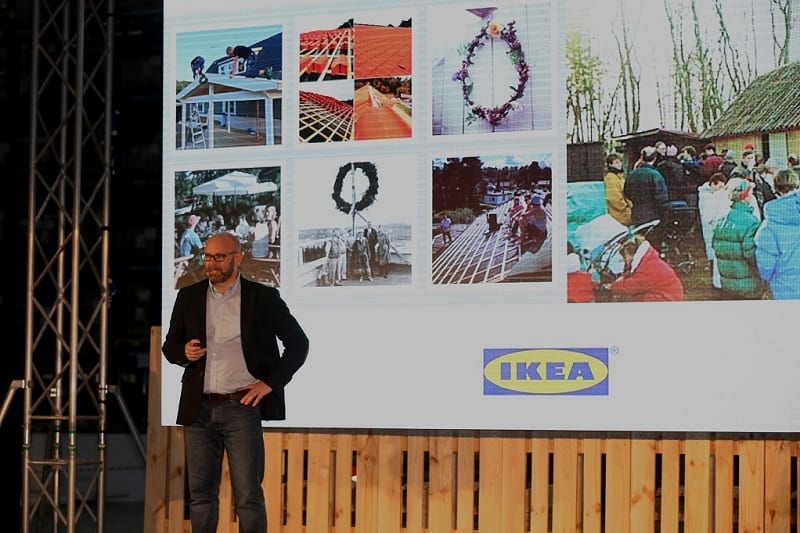
    An artist’s impression of the Ikea store in Cheras. – Pic supplied, September 29, 2015.Ikea Cheras is one step closer to opening its doors as they celebrated the completion of the building with a traditional Swedish thanksgiving event, Roof Capping, yesterday.

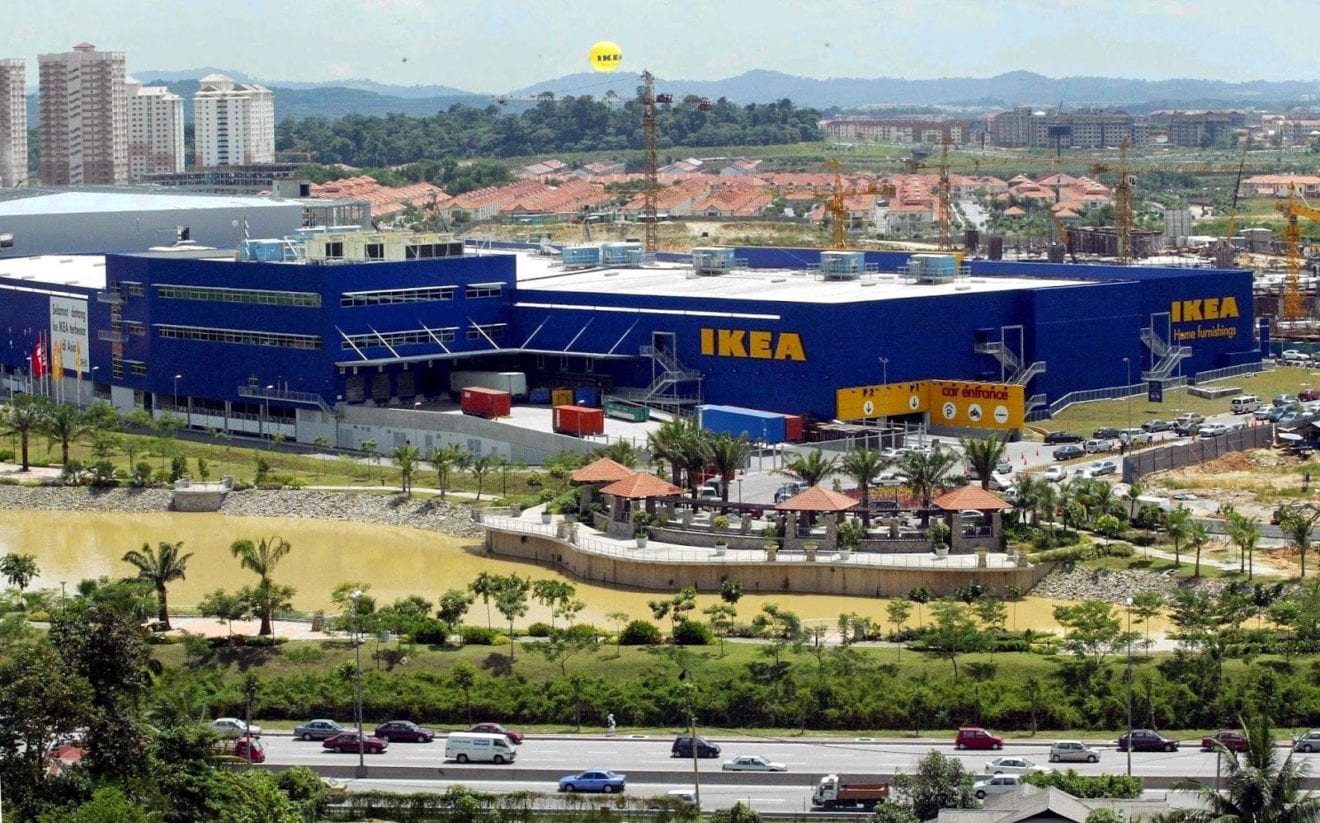
    Located in Jalan Cochrane, customers will be able to enjoy Ikea’s distinctive brand of Scandinavian design in a much larger space. Spanning 42,000 square metres, Ikea Cheras is 20% bigger than its Mutiara Damansara store.

    Its location near the city centre as well as major highways and the future Cochrane MRT station also makes it very accessible.

    “Come end November 2015, Ikea Cheras will provide more Malaysians with Swedish home furnishings that are well-designed, functional, affordable and good quality,” said Ikea Malaysia, Singapore and Thailand retail director Mike King at the Roof Capping event.

    The Ikea team is currently in the process of fitting interiors, operational setup and staff training in preparation for its opening.

    To support the project, a recent nationwide recruitment exercise was carried out and met with overwhelming response.

    “With the passionate and committed co-workers we have on-board, this new store ensures more Malaysians will get a chance to enjoy the unique Ikea store experience many have come to know and love,” King said.

    Meanwhile, Bernama reported that the Swedish homefurnishing giant plans to expand further and set up operations in Johor and Penang.

    Ikea Malaysia, Singapore and Thailand retail director Mike King says there are plans to open Ikea stores in Penang and Johor. – Pic supplied, September 29, 2015.Ikea Malaysia, Singapore and Thailand retail director Mike King says there are plans to open Ikea stores in Penang and Johor. – Pic supplied, September 29, 2015.King said the company was currently searching for locations to set up the stores in Johor and Penang.

    “We are working on possible sites for the stores in both states. It is likely to be Johor first and then Penang. I would say that the stores will be opened within this decade,” he said.

    Asked if Ikea also planned to open stores in Sabah and Sarawak, King said the company was always looking at expanding its business but has not made any decisions yet.

    With the opening of Ikea Cheras, Ikea would have five stores in Southeast Asia, with two in Malaysia, two in Singapore and one in Thailand. – September 29, 2015.

  • Ikea Malaysia sets Cheras opening date

    Ikea Malaysia sets Cheras opening date

    Ikea Malaysia says its second store located at Jalan Cochrane, Cheras. is on track to open at the end of November.

    The timing was revealed at the store’s roof capping ceremony, a Swedish tradition to celebrate the end of construction and thank neighbours who helped out in the building phase.

    “Come November, Ikea Cheras will provide more Malaysians with Swedish home furnishings that are well-designed, functional, affordable and good quality,” said Mike King, retail director, Ikea Malaysia, Singapore and Thailand.

    “The new Ikea store is part our overall ambition to expand in Southeast Asia. Our entry into Cheras neighbourhood reflects our vision to create a better everyday life for the many people.”

    Ikea Cheras will provide Malaysians with greater convenience and a wide selection of home furnishing inspiration and solutions at incredibly low prices. The store has 41,000 sqm of shopping space, 20 per cent more than the Damansara store. Ikea Cheras is also located a five minute drive from the city centre, accessible from MAJU Expressway and Smart highways, and connects to the Cochrane MRT station (to be completed in 2017).

    As the opening fast approaches, the team is now in the midst of interior fittings, operational setup and co-workers’ training. To support its overall operation, a nationwide recruitment exercise was carried out recently.

    “We had an overwhelming response of which we hired a great mix of over 300 co-workers of various talent and expertise. With the passionate and committed co-workers we have on-board, this new store ensures more Malaysians will get a chance to enjoy the unique Ikea store experience many have come to know and love,” added King.

    Ikea Cheras will be one of the first few retail developments to be ready in the booming township. The new iconic landmark spots the potential in transforming Cheras into a vibrant retail destination, drawing upon the liveliness Ikea brings to Mutiara Damansara with its standalone store since 2003.

  • IKEA positive on China despite economic slowdown, CEO says

    IKEA positive on China despite economic slowdown, CEO says

    IKEA does not expect a slowdown in demand for its products in its fastest-growing market, China, despite a sluggish economy, and the world’s biggest furniture retailer is sticking to investment plans for the country, its chief executive said.

    A faltering economy has prompted several international retailers to rethink their China strategies, with Britain’s Marks & Spencer saying this week that its expansion drive there could be slower than hoped.

    Sweden’s IKEA Group, which owns most of the IKEA stores worldwide that are best known for their budget self-assembly furniture, is however not reappraising its growth plans for China, Chief Executive Peter Agnefjall said.

    Having opened three stores in China in the fiscal year to Aug. 31, it plans another three this year, and expects to expand at at least the same pace also in the following three, he told Reuters in an interview.

    “We are very, very small still in China,” he said.

    “What we see is that many people in China appreciate the IKEA offer and we are making it more accessible to them through new stores. And the middle class will continue to grow, I’m pretty confident about that, so we have a positive view on China.”

    IKEA entered China in 1998 and has stepped up expansion in recent years, making the country a priority growth market.

    The China business, which still accounts for a small share of group turnover, saw “solid double-digit growth,” above 15 per cent, last year with its 18 stores, with very strong growth also in comparable stores, Agnefjall said.

    An online store in China is however not on the immediate agenda but will open only once the group has in place new e-commerce platforms that are in the works.

    “It all depends on how well we succeed with that,” Agnefjall said.

    ONLINE PLANS

    IKEA’s website had 1.9 billion visitors in the 2014/15 year, up from 1.5 billion the year before. Online sales were however still just a fraction of group turnover, although they exceeded €1-billion for the first time, Agnefjall said.

    Companies across the retail sector have rushed to step up e-commerce in the past few years to keep up with rapidly changing consumer patterns, but IKEA has been taking it slower.

    IKEA certainly aims longer-term to be a full multichannel retailer, Agnefjall said, but will first finish developing the necessary IT-solutions, and work out how to manage the logistics of large-scale online furniture trade.

    “You have to have a reasonable service level. I have respect for doing this with quality rather than with speed, and that’s the way we are driving it,” Agnefjall said.

    IKEA sells online in 13 of its 28 markets, having added no online markets last year, Agnefjall said.

    “We are investing heavily to make all IKEA markets e-commerce markets. The front end is one thing, to make a new web and e-commerce capabilities online. But the big work lies in the underlying distribution flow.”

    IKEA has begun piloting a new web platform in Ireland that it hopes to roll out to all markets in coming years, and is developing an e-commerce platform to connect to it.

    On the distribution side, IKEA is trying out a handful of pickup points and Agnefjall expected several more to open in the coming years.

    “You have to organize the e-commerce in a thorough way in order to create the right conditions for serving your customers in a good way. We are also investing a lot of energy to convert IKEA to a multi-channel retailer.”

    IKEA Group, which runs 328 stores and is controlled by the Stichting INGKA Foundation in the Netherlands, reported on Tuesday an 11 per cent rise in group sales for the fiscal year, with comparable stores accounting for 5 per cent, to a record €31.9-billion ($35.7-billion U.S.).

    Sales rose in nearly all its markets, with China the fastest-growing followed by Russia. Agnefjall said the United States was now roughly neck-and-neck with Germany as IKEA’s single biggest market.

    IKEA is targeting group sales of €50-billion by 2020.

  • Ikea sets new records

    Ikea sets new records

    Ikea has set new records in sales and store visits in its latest financial year, to August 31.

    The Swedish furniture and homewares chain now has 328 stores in 28 countries and says it served 771 million customers in the last year.

    Total sales reached US$35.5 billion.

    “We are growing in almost all our markets and we are happy about last year’s sales development,” said president and CEO Pete Agnefjall.

    The chain’s two fastest growing markets are China and Russia.

    “The Chinese middle class continues developing and in pace with its growth an interest for our product rises too,” said Agnefjall.

    “We have more visitors in our department stores now and we have opened three new stores in China during the year. We are going to open three new stores the next year too…”

    Sales were also strong in Germany, North America and Southern Europe.

  • Ikea’s impressive year: sales rising for furniture giant

    Ikea’s impressive year: sales rising for furniture giant

    Ikea has announced impressive growth in sales across the globe, achieving £23bn in the year at the end of August. Sales were up by 5% on the previous year in comparable sales.

    The furniture giant has 328 stores across 28 countries, and estimates that they enjoyed 771m visits in its most recent financial year.

    Ikea’s President and Chief Executive Pete Agnefjall said: “We are growing in almost all our markets and we are happy about last year’s sales development.”

    At the forefront of the company’s growth is its China market. Increased mass migration to the major cities in the world’s most populous country has created a stable and huge customer base. China is home to eight of Ikea’s ten largest stores, including two in the city of Beijing: a city of 10m people.

    “The Chinese middleclass continues developing and in pace with its growth an interest for our product rises too. We have more visitors in our department stores now and we have opened three new stores in China during the year (2015). We are going to open three new stores the next year too…”

    Russia, the Swedish retailer’s second fastest growing market, enjoys 14 ‘Mega shopping centres’: a chain of 14 complexes from St Petersburg to Novosibirsk. Russia, like China, has proved a problem for many other retailers.

    Sales in Germany and North America were also positive, and the company also enjoyed “positive progress” in Southern Europe.

    Andy Street, MD at John Lewis, announced last month that the department store chain is gunning for Ikea’s position as the UK’s largest furniture retailer, with aims to surpass the company in the next four years. Retail consultancy firm Conlumino estimates that Ikea will have 6% of the UK market for homeware, furniture and flooring sales in 2015, whilst John Lewis will have 5.8%.

    Ikea can certainly enjoy its success for now, however. Unlike its rival, John Lewis’s most recent financial report was decidedly negative.

    A more detailed financial report for Ikea will be released in December 2015.

  • Dairy Farm reports modest growth

    Dairy Farm reports modest growth

    Dairy Farm says it achieved “modest” like-for-like sales growth in most of its major markets in the first half of this year.

    However, underlying profit fell 14 per cent to US$193 million, largely due to margin pressures in the food businesses and a disappointing half for its Guardian health & beauty group in Malaysia.

    With the early completion of the acquisitions of the San Miu supermarket business in Macau and the Yonghui stake (20 per cent) in China, both in April, sales for the period rose 27 per cent to US$8 billion. But like for like sales rose a more modest three per cent to $6.5 billion, or by seven per cent on a constant exchange rate basis.

    Dairy Farm International says that despite solid sales growth, cost pressures and food price deflation on certain commodities combined to squeeze margins in the first six months for the group’s Food businesses.

    “In Hong Kong, there were higher rental and labour costs. In Singapore profits were significantly lower due to competitive pressures, higher rents and a weaker Singapore dollar. Sales were buoyant in Malaysia, but there was continued margin investment to attract customers,” said chairman Ben Keswick in his half yearly report.

    “There was good like for like sales growth in Indonesia, but profitability declined materially due to higher labour costs following a further increase in the minimum wage, a rise in shrinkage costs associated with greater fresh sales and more rigorous stock management, and store rationalisation.

    “In the Philippines, the upscale and community supermarkets enjoyed sales growth, but the hypermarkets struggled.”

    Dairy Farm’s convenience store businesses in Hong Kong and Macau performed satisfactorily. Sales in Singapore, however, were weaker due to a reduction in the number of stores and the impact of recently introduced regulations restricting late night sale of alcohol.

    The Health & Beauty division produced higher sales. Hong Kong and Macau performed well despite some impact from a decline in tourist arrivals. In mainland China, there was further growth in the store base and an improvement in results. In Malaysia, profitability was lower following the introduction of GST on 1st April. In Indonesia, the results were impacted by wage and rent increases, while sales growth remained good. In the Philippines progress was made on the integration of Rose Pharmacy.

    In Home Furnishings, the IKEA stores in both Hong Kong and Taiwan traded well, and the new IKEA store in Indonesia continues to perform in line with expectations.

    In the Restaurant division, Maxim’s maintained its consistent performance with increased sales and profits in Hong Kong and mainland China. The group is growing its presence in Mainland China and continuing to expand its Starbucks network in Vietnam.

    At the end of June, Dairy Farm operated over 6400 outlets across all formats, including the newly added San Miu and Yonghui stores, and employed in excess of 170,000 colleagues.

  • H&M may open 30 stores in India by early 2016

    H&M may open 30 stores in India by early 2016

    Following IKEA announcing the purchase of 13 acres in Hyderabad for its first store in India on Friday, it’s the turn of another Swedish chain, Hennes & Mauritz (H&M), to go for a big rollout in the country. H&M, rival to another European fast fashion brand, Zara, is likely to open as many as 30 stores in India by early next year, sources say.

    The Swedish fashion chain, in the middle of major global expansion, is learnt to have already closed about 15 real estate lease deals in India, and is in the process of raising this count. The group, with $22 billion in global sales and 3,600 outlets across 59 markets, recently announced it would launch its first India store in the national capital. The store, of about 25,000 sq ft, would be located at a popular mall.

    At the time of making its application for investing about Rs 750 crore into the country, H&M had said it planned to open 50 outlets across India through the next few years. Zara, in a joint venture with Tata group’s Trent, has 16 stores across the country; it posted $114 million in sales for the year ended March this year.

    H&M did not reply to a Business Standard questionnaire on store openings and lease deals.

    According to H&M’s latest quarterly report, the company plans to open as many as 400 stores across the world this year. Besides India, the group’s expansion thrust is on the US and China. In fact, in North America, both H&M and Inditex’s Zara are giving stiff competition to the US-based Gap. Recently, Gap announced its plan to shut 175 stores in the US.

    Besides international expansion, H&M is also focused on going online. Of late, the group has gone online in Poland, Portugal, Romania, the Czech Republic, Bulgaria, Slovakia, Hungary and Belgium, among others.

    Though the company secured the government’s approval to invest in India early last year, it has delayed its launch partly due to a slow retail environment in its home market, pressure on margins and focus on some other key markets. Analysts said general elections in India, as well as political uncertainties, might also have added to the delay.

    H&M’s big India play at this point is significant because there has been no action in the international brick-and-mortar retail scene for about a year, except Gap launching its store recently.

    The National Democratic Alliance government at the Centre is opposed to foreign direct investment (FDI) in multi-brand retail. The UK’s Tesco, in partnership with the Tata group, is the only entity in multi-brand retail to have invested in India (Maharashtra and Karnataka). In 2013, American major Walmart parted ways with its partner, Bharti group.

    While limiting its business to wholesale, Walmart has not shown any interest in entering India’s multi-brand sector. French chain Carrefour, which also had wholesale stores in the country, made an exit last year, in the absence of a favourable multi-brand policy.

    In multi-brand retail, FDI is capped at 51 per cent, while 100 per cent foreign investment is allowed in single-brand retail. However, despite the fact that there’s no cap on FDI in single brand retail, companies such as IKEA and H&M are believed to have been worried over a clause pertaining to mandatory 30 per cent sourcing from India.

  • Hero to open more stores  to boost revenues

    Hero to open more stores to boost revenues

    Retail company PT Hero Supermarket (Hero) will spend up to Rp 640 billion (US$48 million) this year for business expansion with retail plans to open stores in several cities across the country.

    The move will be made to restore the company’s disappointing financial performance earlier this year.

    Hero, which operates hypermarkets, supermarkets, convenience stores, drug stores and furniture stores, plans to open four Giant Ekstra hypermarkets and six mid-sized Giant Ekspres supermarkets in several regions, including Bangka and Lombok. Arief Istanto, a director with Hero, said each Giant Ekstra would cost between Rp 100 billion and Rp 150 billion while the Giant Ekspres would cost about Rp 20 billion. It means the company will allocate between Rp 440 billion and Rp 640 billion in capital expenditure to build the stores this year.

    Arif said the company aimed to improve its financial performance and hoped to book profits like it did in previous years. The company will use its internal funds for the expansion.

    “We would like to expand our network so that it can attract more customers. Thus, our top line will also increase,” he said after an extraordinary shareholders’ meeting on Tuesday. At the meeting, they agreed not to disburse the Rp 43.75 billion in dividends to shareholders and instead spend it on the company’s business expansion plan.

    Hero Supermarket previously suffered Rp 33.19 billion in net losses during the first quarter of this year amid a 14 percent increase in net revenues of Rp 3.57 trillion, making it the worst performer in the country’s retail industry.

    Last year, the company saw its net profit dive to Rp 43.75 billion from Rp 671.13 billion in 2013. A 13.94 percent increase in revenues, which stood at Rp 13.56 trillion at that time, could not ease the ballooning operating expenses, which hit Rp 3.31 trillion.

    “Our 2014 financial results were disappointing with weak sales growth and a significant increase in operating costs across all businesses as well as higher overhead and store pre-opening costs,” Stephane Deutsch, Hero’s president director, said in a statement.

    In 2014, the company launched a flagship furniture store under Swedish brand IKEA in Alam Sutera, Tangerang, Banten, some 25 kilometers west of Jakarta’s city center.

    Arief confirmed Hero has planned to build five more IKEA stores in the future as the company was upbeat about the prospects of the franchise furniture store.

    “At the moment, we are looking for land for the second store. It is supposed to be done this year,” Arief said, adding that the second store would be located in Greater Jakarta.

    According to him, IKEA has contributed around Rp 200 billion to Hero’s revenues in the first quarter of this year,

    Hero says it hopes to book 30 to 40 percent growth in revenues during the fasting month of Ramadhan this year. The company currently operates 33 Hero supermarket stores, 341 Guardian healthcare stores, 98 Starmart convenience stores, 53 Giant Ekstra stores, 121 Giant Ekspres stores, two Jason supermarket stores and one IKEA store.

  • Dairy Farm Indonesia reviews struggling Starmart

    Dairy Farm Indonesia reviews struggling Starmart

    Dairy Farm Indonesia is reviewing the future of its Starmart convenience store chain after closing nearly a third of its stores in the latest half year.

    The chain has been hit hard by the Indonesian government’s moves to limit the sale of alcohol, banning liquor sales in c-stores in April.

    Since then, Hong Kong headquartered Dairy Farm Indonesia subsidiary PT Hero Supermarket group has closed 39 stores leaving just 95.

    “A detailed strategic review of this business is currently being undertaken,” the company said in its earnings statement released Tuesday.

    The company said the closures would improve the profitability of the banner, but its prospects do not appear bright.

    PT Hero operates 641 stores in all, including 53 Giant Ekstra hypermarkets, 155 Hero Supermarkets and Giant Ekspres stores, 337 Guardian health and beauty stores and one Ikea.

    Overall, the group experienced a 15 per cent increase in revenue in the first half year, with gross profit up nine per cent, but it still posted a net loss of Rp 32 billion (HK$18.4 million).

    Food and health & beauty sales, showed strong like for like growth in the half year, despite a soft trading environment, and Ikea showed “very promising” early trading figures, the company said.

    “Despite the sales momentum, profitability was negatively impacted by outpacing costs resulting from minimum wage increases, stocktake improvements and store rationalisations. Strong actions on energy saving and productivity are being taken to mitigate the impact of increasing costs. In Food, investment in price has led to a reduction in the gross profit margin.”Besides the Starmart closures, PT Hero shuttered another 24 stores across its brands.

    Stephane Deutsch, president director, said in food, the company was concentrating on increasing fresh produce sales.

    “This has helped to increase like for like sales, especially in Giant where progress is being made on growing its market share. Action is also being taken to improve the efficiency of the supply chain.”

    The hypermarket operation, Giant Ekstra, and the supermarket operation, Giant Ekspres, are both taking steps to improve the customer shopping experience in selected stores prior to rolling out the initiative more broadly across the country, he said.

    “The upscale format, Hero Supermarket, is continuing to enhance its offer across the fresh, imported and exclusive ranges to provide a more distinctive choice for customers.”

    In Health and Beauty, Guardian’s store expansion program is “progressing well” alongside the introduction of refreshed branding and increasing private label development, leading to further improvements in like for like sales.

    “The strategic partnership with the local pharmacy operator Apotik Melawai, which combines their local pharmacy strengths with the broader health and beauty offering of Guardian, is showing encouraging results.”

  • Ikea India buys site for first store

    Ikea India buys site for first store

    Ikea India has acquired the land for the first of 25 stores planned for the country.

    The Swedish home furnishings company says the 13 acre site is located close to the IT hub Hitec City and is close to public transport, including a metro line under construction.

    Further details were scant, except that the land was acquired from the Telangana government. Ikea India plans 24 more stores in the long term and is currently evaluating sites in Mumbai, Bengaluru and Delhi NCR.

    Each Ikea store will cost about $100 million to establish, including land and construction costs.

    Part of the arrangement allowing Ikea to open single brand stores in India is that it has to source product from within the country. The company already has about 50 suppliers in India employing some 45,000 people. Now it is actively searching for more suppliers to boost the proportion of locally-sourced stock.

    IKEA India CEO Juvencio Maeztu described India as a promising market because it offers the company the opportunity to source, retail, conduct CSR initiatives through Ikea charitable foundation and empower social entrepreneurs through next generation projects.

    “Our focus now is to bring all of it together in Hyderabad as we have bought our first land to build an Ikea store. We will bring a unique shopping experience through our inspiring stores offering affordable home furnishing products,” he said.

  • ‘Midnight Insanity’ at Ikea Hong Kong

    ‘Midnight Insanity’ at Ikea Hong Kong

    Ikea Hong Kong is opening till 2am this Saturday morning in a promotion dubbed Midnight Insanity.

    The enormous retailer, famend for its crowded flooring and lengthy checkout queues hopes the exceptionally late buying and selling hours will appeal to new clients.

    The ‘Midnight Insanity Sale’ will supply clients reductions of as much as 90 per cent on house and backyard merchandise – and there will probably be a 15 per cent flat price low cost on meals gadgets. However solely between 11pm Friday (June 26) and 2am Saturday.

    The shop is situated within the Mega Field buying centre in Hong Kong Bay.

    As a part of the promotion, supply, meeting and storage providers can be suspended for the three hour lengthy sale.