Tag: import

  • Vietnam to navigate rough trade war waters

    Vietnam to navigate rough trade war waters

    Parliament members say the ongoing US-China trade war has had visible impacts, and Vietnam needs to reduce dependence on both nations. At the ongoing National Assembly session, several National Assembly deputies Saturday stressed the need for Vietnam to make policy changes and diversify markets.

    Ha Sy Dong, a deputy from Quang Tri Province, said that the escalating tension between the U.S. and China is not confined to trade.

    It is also a long-term political conflict that has had visible impacts on Vietnam’s economy, he said.

    “The obvious impacts are higher risks in trade, and fluctuating currency and capital flows,” Dong said.

    A report by the National Center for Socio-Economic Information and Forecast (NCIF) released in August said that Vietnam’s GDP could drop 0.03 percent this year, 0.09 percent next year and 0.12 percent in 2020 and 2021 due to impacts of the US-China trade war.

    This equals a GDP drop of VND1.65 trillion ($71 million) this year and VND5.3 trillion ($228 million) next year. The decline will climax at VND8 trillion ($344 million) in 2021.

    The Vietnam Institute for Economic and Policy Research (VEPR) had previously cautioned that the trade war could prompt large corporations to send their capital back to the developed countries as developing countries lose their attraction.

    Technology giants like Foxconn are investing more in manufacturing in the U.S. as a result of the trade war, the VEPR noted.

    “We need to diversify our markets and trade partners to reduce dependence on China and the U.S.,” Dong stressed.

    In the first nine months this year, the U.S. was Vietnam’s largest export market, accounting for 19.5 percent of Vietnam’s total exports, a growth of 13.2 year-on-year, according to Vietnam Customs.

    China was the third largest export market, with the highest growth rate of 29.9 percent. It was also Vietnam’s largest import market, accounting for 27.3 percent of Vietnam’s total imports.

    Tran Tuan Anh, Minister of Industry and Trade, said that as geographical and political tensions between the U.S. and China escalate, the Vietnamese government needs to limit risks for the country.

    He told the National Assembly that he would report in more detail on this issue.

    Taking advantage

    Dong said that Vietnam could also benefit from the tensions, exporting more to the U.S. and welcoming more foreign direct investment as companies leave China.

    U.S. sports apparel company Brooks Running has recently announced that it is considering shifting its manufacturing operations from China to Vietnam to avoid the trade war tariffs of 45 percent.

    Adidas CEO Kasper Rorsted also said in May that his company was shifting footwear sourcing from China to Vietnam, and data from Nike showed that Vietnam produced 46 percent of its footwear last year, against 27 percent in China.

    The U.S.-China trade war escalated last month as the U.S. levied new tariffs of 10 percent on about $200 billion worth of Chinese products, with the tariffs to go up to 25 percent by the end of this year.

    China retaliated immediately with 5 and 10 percent tariffs on $60 billion worth of U.S. products.
  • Vietnam agriculture export shows progress

    Vietnam agriculture export shows progress

    Vietnam’s coffee exports grew 21.5 percent and rice exports 3.4 percent year-on-year in the first ten months, government data showed on Monday.

    Coffee 

    Coffee exports from Vietnam will rise an estimated 21.5 percent between January and October from a year ago to 1.58 million tons, equal to 26.3 million 60-kg bags, the General Statistics Office said in a report on Monday.

    Coffee export revenue for Vietnam, the world’s biggest producer of the robusta bean, rose 1.1 percent to $2.98 billion in the 10-month period, the report said.

    October coffee exports were estimated at 130,000 tons, worth $230 million.

    Rice

    Rice exports in January-October from Vietnam were forecast to rise 3.4 percent from a year ago to 5.24 million tons. Revenue from rice exports in the period was forecast to grow 16.1 percent year-on-year to $2.64 billion.

    October rice exports from Vietnam, the world’s third-largest shipper of the grain, were recorded at 350,000 tons, worth $180 million.

    Energy

    Vietnam’s January-October crude oil exports plunged 45.4 percent year-on-year to an estimated 3.22 million tons.

    Crude oil export revenue in the first 10 months of 2018 fell 24.8 percent to $1.82 billion.

    Oil product imports in the 10-month period were estimated at 10 million tonnes, falling 5.1 percent from the same period last year, while the value of product imports rose 20 percent to $6.77 billion.

    Vietnam’s January-to-October liquefied petroleum gas imports increased 5.7 percent from a year earlier to 1.2 million tons.

  • For Vietnamese exporters, ASEAN market remains bridge too far

    For Vietnamese exporters, ASEAN market remains bridge too far

    Vietnamese companies are struggling to sell their products to ASEAN member countries despite the abolition of tariffs within the bloc. Analysts blame this on their lack of market information and poor understanding of consumer needs among other factors.

    With the formation of the ASEAN Economic Community (AEC) three years ago, members had to reduce over 90 percent of their tariff lines to zero percent, though Vietnam, Laos, Cambodia, and Myanmar were allowed until 2018 to do so.

    Yet Vietnam’s intra-ASEAN exports accounted for only 11 percent last year while this number for other members averaged 24 percent even in 2016, Nguyen Thi Tue Anh, deputy head of the Central Institute of Economic Management (CIEM), said at a recent conference.

    Anh said besides Vietnamese enterprises’ lack of market information, they have also failed to adequately differentiate their products from those of competitors within the bloc.

    A spokesperson for a business based in southern Soc Trang Province said his company, which produces dried fish and other fisheries products, wants to take its products to the ASEAN market but does not know how.

    He said that there are many factors such as package design, marketing and market research, and it does not know where to begin since all are equally important.

    Ha Xuan Anh, chairman of HCMC-based textile maker Son Viet, said his company’s products – undergarments – are sold at many modern retail outlets. But for the last 10 years it has sought to sell to Singapore, Thailand and Malaysia, and has been unable to do so.

    He explained that though the quality of his company’s products is competitive, Vietnamese brands remain unknown in these markets.

    It only sells in markets with less competitive products such as Laos, Cambodia and Myanmar.

    Pham Thiet Hoa, director of the HCMC Investment and Trade Promotion Centre (ITPC), also blamed the weaknesses of Vietnamese enterprises for their inability to export, listing lack of product diversification, failure to closely liaise with authorities responsible for foreign affairs, and poor marketing.

    ITPC said small companies entering a new market alone would find it very difficult to identify foreign business partners and distribution chains.

    Hoa said it is therefore necessary for trade envoys to work with their counterparts in foreign markets to bridge this gap.

    Participating in fairs, exhibitions and trade promotion programmes in target markets enables companies to assess the competitiveness of local rivals, he said.

    Despite the free trade environment, each country in the bloc has differences in culture, religion and consumer preferences, and businesses need to understand them before venturing into those countries, he said. “Enterprises should also carefully study the technical barriers and legal regulations to avoid losses.”

  • Vinalines to build 2 terminals at $299 mln in Lach Huyen Port

    Vinalines to build 2 terminals at $299 mln in Lach Huyen Port

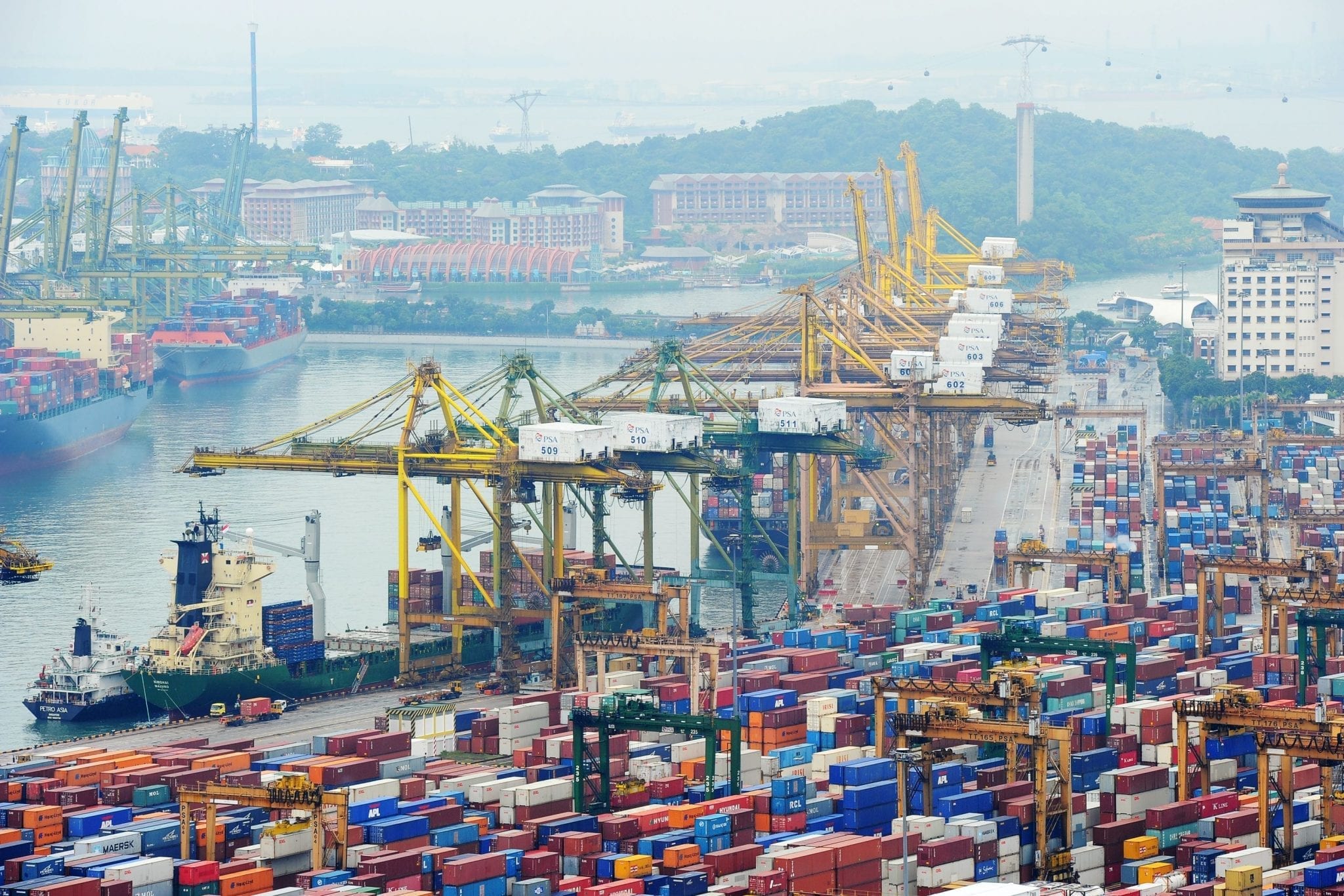
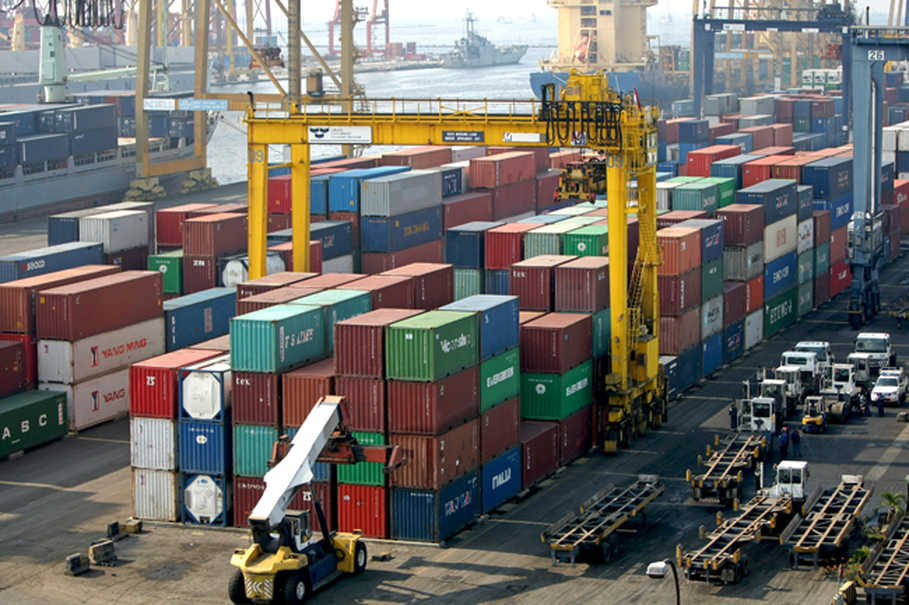
    Vinalines is seeking approval from the government for building two container terminals at Lach Huyen Port in northern Hai Phong City.

    Nguyen Canh Tinh, director of the state-run Vietnam National Shipping Lines (Vinalines), said its subsidiary, Haiphong Port JSC, would build terminals No.3 and No.4 at the port.

    He said the Haiphong Port JSC used to work mainly at Hoang Dieu terminal, which has now been taken over for the construction of an urban area, and so new terminals are needed in its place.

    The two proposed terminals would have a total length of 750 meters and the capacity to handle vessels of up to 100,000 DWT (8,000 TEU), and cost around VND7 trillion ($299 million), he said.

    Vinalines and Hai Phong Port JSC, in which Vinalines owns a 65 per cent stake, also plan to develop a logistics center of around 250ha in the area to optimize the handling, storage, processing, and distribution of cereals.

    Tinh said the investment in the terminals would be a strategic step in the company achieving its plan to handle around 30 percent of cargo at ports nationwide by 2020.

    Lach Huyen is set to become a modern port complex and the only one in the north that can berth ships of up to 150,000 tons.

    It is expected to have nine terminals with a combined length of 3,000 meters by 2020.

  • Indonesia Raises Import Taxes on 1,000-Plus Goods to Support Rupiah

    Indonesia Raises Import Taxes on 1,000-Plus Goods to Support Rupiah

    Indonesia will raise import taxes on more than 1,000 goods, ranging from cosmetics to cars, as part of measures aimed at cutting imports and supporting a weak rupiah, Finance Minister Sri Mulyani Indrawati said on Wednesday (03/09).

    The import tax will be raised to up to 10 percent on 1,147 mostly consumer goods, from an existing 2.5 percent to 7.5 percent, effective next week, Sri Mulyani said in a news briefing.

    “We want to be alert, but we also want to be selective. These are unusual times, so we are carrying out measures that we wouldn’t do during normal times,” Sri Mulyani said.

    The rupiah dropped to its weakest level since the 1998 Asian financial crisis this week, closing at 14,930 per dollar on Wednesday. Stocks tumbled the most in nearly two years and bond prices also fell.

    The battered currency has been one of emerging Asia’s worst performers as investors dump assets as US rates rise and amid fear of contagion from crises in Argentina and Turkey.

    Tariffs will be kept at 2.5 percent for raw materials used by the manufacturing industry because of the important role in domestic production, Indrawati said.

    Consumer goods such as ceramics, audio speakers and swimwear will have a 7.5 percent import tax applied. Products that can be made domestically ranging from soap and shampoo to kitchen appliances will be taxed at 10 percent.

    Luxury cars will also be taxed at 10 percent, while Industry Minister Airlangga Hartarto said the import of cars with engine capacity of 3,000 cc and above will be stopped.

    “This is a good chance for local producers to penetrate our own domestic market that is usually filled with imported goods,” Sri Mulyani said.

    Trade Minister Enggartiasto Lukita said the higher taxes did not breach free trade rules set by the World Trade Organization because importers can offset the tariffs on their tax liabilities.

    Government data showed goods covered by the taxes were worth $5 billion in the first eight months of this year and $6.6 billion throughout 2017.

    The government will also relax rules on coal, palm oil and rattan exports, Enggartiasto said, without providing details.

    It is unclear whether importers would pass on the higher tariffs to consumers, though Enggartiasto predicted the impact on inflation would be minimal.

    Some manufacturers relying on imported raw materials are already feeling the impact from the rupiah’s slump.

    Unilever Indonesia director Sancoyo Antarikso said his company had adjusted some prices in August and was reviewing costs to preserve profitability, growth and support brands.

    Agus Nurudin, managing director of market researcher Nielsen Indonesia, expects the price of food containing dairy, soy, beef and wheat to rise if the rupiah falls further.

  • Vietnam posts $3.1-billion trade surplus in Jan-July

    Vietnam posts $3.1-billion trade surplus in Jan-July

    Vietnam’s trade surplus in the first seven months was $3.1 billion as exports rose 15.3 percent year-on-year to $133.7 billion.

    Domestic companies accounted for $39 billion of the exports, up 18.7 percent, while foreign firms registered $94.7 billion, up 14 percent, according to the General Statistics Office (GSO).

    Cell phones and components topped the list of exports at $26.1 billion, followed by textile and garment at $16.5 billion and electronics and computers and components at $15.7 billion.

    The U.S. was the biggest importer, with shipments rising by 8.9 percent to $25.5 billion.

    The EU was second with $24.2 billion, up 12.9 percent, followed by China with $19.5 billion, up 24.7 percent.

    Imports rose by 10.2 percent to $130.6 billion, with domestic companies accounting for $54.16 billion spent by firms, up 12.7 percent.

    Imports by foreign companies were up 8.5 percent.

    The GSO has however warned exporters and importers to be prepared for any eventuality given the ongoing trade war between the U.S. and China.

    The U.S. imposed 25 percent tariffs on an initial $34 billion of imports from China on July 6, which then led China to respond with similar sized tariffs on U.S. products.

    The Donald Trump administration claims the tariffs are necessary to protect national security and U.S. businesses’ intellectual property, and to reduce the country’s trade deficit with China.

    The administration said Wednesday that Trump has sought to ratchet up pressure on China for trade concessions by proposing a higher 25 percent tariff on $200 billion (152.33 billion pounds) worth of Chinese imports.

  • Indonesia Needs ‘Dollars Now,’ President Says, Urging Greater Biodiesel Use

    Indonesia Needs ‘Dollars Now,’ President Says, Urging Greater Biodiesel Use

    Indonesia’s President Joko “Jokowi” Widodo on Tuesday (31/07) urged his ministers to make “serious” efforts to strengthen foreign exchange reserves by widening biodiesel use to combat pressures caused by a global trade war.

    Indonesia requires foreign inflows to finance its current account deficit and the central bank has spent about $12 billion of its forex reserves in recent months to defend the rupiah, which has lost about 6 percent this year.

    “The country needs dollars now,” Jokowi told a cabinet meeting. “I don’t want to keep doing meetings without good implementations.”

    The cabinet has met at least six times since the start of July to tackle concerns over trade and the rupiah currency, and Jokowi called for swifter action to prop up the currency.

    He sought immediate implementation of a government’s plan to widen the mandatory use of B20 biodiesel to all diesel vehicles, including locomotive engines and heavy equipment.

    Expansion of the B20 programme could be launched as soon as Thursday, Industry Minister Airlangga Hartarto said this week. He estimated the measure could save Indonesia $5 billion in diesel imports each year.

    Replacing imports could benefit Indonesia, one analyst said.

    “In the short term, this would be a faster solution, compared to trying to boost exports,” said Josua Pardede, an economist with Bank Permata in Jakarta.

    “Replacing imports would be one alternative to maintain the current account deficit at a healthy level,” he added. “The oil and gas deficit has been continuously expanding in the last year due to the rising oil price.”

    Biodiesel can cut fuel costs and reduce emissions, but some varieties need special handling and equipment as the fuel has a solvent effect, corroding engine seals and gasket materials, and it can solidify in the cold.

    Indonesia’s auto industries group, Gaikindo, has said stepping up biodiesel blends can increase fuel consumption and could cause engines to overheat.

  • China Probes Stainless Steel Imports From Indonesia, EU, Japan and Korea

    China Probes Stainless Steel Imports From Indonesia, EU, Japan and Korea

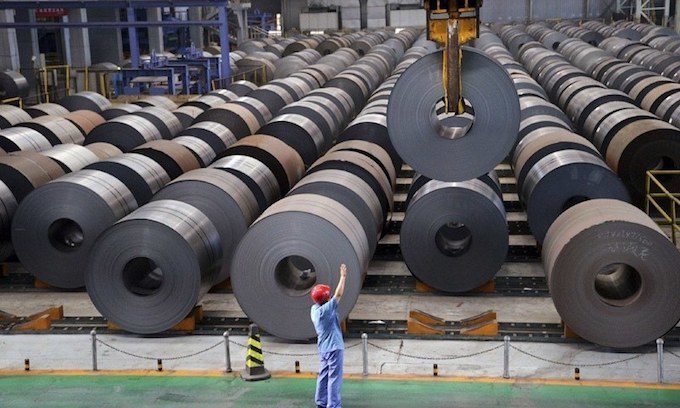
    China on Monday (23/07) launched an anti-dumping probe into stainless steel imports worth $1.3 billion, including from a privately owned Chinese mill with operations offshore, after complaints that a flood of product has damaged the local industry.

    The Commerce Ministry said on Monday the investigation will target imports of stainless steel billet and hot-rolled stainless steel sheet and plate from the European Union, Japan, South Korea and Indonesia, which nearly tripled last year.

    The move follows a complaint by Shanxi Taigang Stainless Steel, with backing from four other state-owned mills including Baosteel’s stainless steel division, which blamed cheap imports on falling prices, it said.

    China makes and consumes around half of the world’s stainless steel, which is used to protect against corrosion in buildings, transportation and packaging.

    While the complaint targets eight foreign producers, it also lists a number Chinese companies, including the Indonesian unit of one of the world’s top producers, Tsingshan Stainless Steel, and 19 traders who import product.

    Some private Chinese companies have opened or started building plants in Indonesia in recent years, drawing on its plentiful nickel resources and lower-cost of production.

    A significant portion of the new production has been sold in China, analysts say.

    The rapid increase in imports damaged the Chinese market, according to the complaint filed by Shanxi Taigang and released with the commerce ministry document.

    Almost two-thirds of China’s stainless imports came from Indonesia last year, up from 5 percent in 2016 and zero in 2015, the complaint said. That rose to as high as 86 percent in the first quarter, it said.

    Imported prices of the stainless steel products fell 23 percent to $1,867 a ton in 2017 from $2,436 a year earlier.

    “If we allow these products to continue to enter the Chinese market with low prices and take more market share, sales of China’s domestic products will continue to decrease,” the complaint said.

    Peter Peng, senior consultant at CRU in Beijing, said the investigation was “totally driven by an industrial dispute between SOEs [state-owned enterprises] and the fast-growing private mills.”

    “Due to their cheap production costs, it’s more competitive than Chinese products,” he said.

    Tsingshan opened a mill there last year with annual capacity of 3 million tons while Delong Holdings plans to start production there next year.

    Anti-dumping duties would force mills to find new markets for their product, adding to a global glut, Peng said.

    The European companies targeted by the probe include Spain’s Acerinox, Finland’s Outokumpu Oyj and Luxembourg-based Aperam.

    Among the Japanese companies are Nisshin Steel, Nippon Steel & Sumitomo Metal Corp and JFE Steel Corp. Indonesia’s Jindal Stainless and South Korean steelmaker Posco are also listed.

    China imported 703,000 tons of those products in 2017, up almost 200 percent from a year earlier, with 98 percent coming from the regions targeted by the investigation.

    Shanxi Taigang accounts for 25-35 percent of China’s stainless production.

  • Volkswagen, Toyota lead a surge in imports

    Volkswagen, Toyota lead a surge in imports

    Audi and Volkswagen have roared back to the Korean imported car market after a two-year absence.

    After launching in May, Volkswagen’s flagship midsize Tiguan SUV became the best-selling imported car model in Korea in June.

    The Tiguan 2.0 TDI sold 1,076 units in June, according to the Korea Automobile Importers & Distributors Association on Thursday. It was the only imported model that sold over 1,000 units last month.

    In its launch month, Volkswagen Korea sold 1,561 Tiguans.

    “Although Volkswagen’s brand image was dented due to the emissions scandal, the Tiguan SUV is widely known to be well-made and it seems like Korean consumers have been waiting specifically for the model,” said Kim Pil-soo, an automotive engineering professor at Daelim University.

    “At the moment, there are no substitutes for the Tiguan SUV that satisfy those who want to buy an imported car in a medium price range. Due to its relatively low price, Tiguan is able to appeal to consumers who were thinking about buying domestic brands.”

    On the back of those strong sales, Volkswagen Korea was ranked third in sales of imported cars in June with only two models on offer, the Tiguan and the Passat sedan.

    As for specific imported models, BMW’s 5-series sedan 520d came in second in June sales with 963 units, followed by Audi’s A6 35 TDI with 891 units.

    Korea’s imported car sales continued to grow in the first half of this year.

    According to KAIDA statistics, a total of 140,109 imports were sold between January and June, which was an 18.6 percent year-on-year jump.

    Mercedes-Benz Korea managed to maintain its top spot for six consecutive months. It sold 41,069 units in the Jan.-June period, an 8.9 percent year-on-year increase. BMW Korea followed, selling 34,568 units, a 19.2 percent year-on-year jump.

    Japanese brands are expanding their presence in Korea. In the past, Japanese brands were largely neglected here because they were considered overly expensive.

    Toyota Korea came in third spot in the Jan.-June period. It sold 8,350 units, recording a whopping 60.8 percent year-on-year increase. A hybrid version of its new Camry sold 3,051 units in the first half, followed by the gasoline-powered Camry, which sold 2,104 units.

    Toyota’s luxury arm Lexus tumbled two steps from last year’s third spot to fifth, but its sales still recorded solid growth. It sold 6,276 units in the first half, a 7.2 percent year-on-year jump.

    “With the rising interest in imported cars, people who would have bought domestic brands are now turning to import brands. Japanese brands are benefiting from that shift in consumption patterns,” Kim added.

  • US-China Trade War Will Affect Indonesia Regional Economies

    US-China Trade War Will Affect Indonesia Regional Economies

    Regional economies in Indonesia will be affected if the United States suspends its special tariffs for some of the country’s exports, a minister said on Tuesday (10/07).

    The US is currently reviewing Indonesian products on its Generalized System of Preferences (GSP) list — a trade incentive that gives duty-free entry to 129 poor and developing countries and territories.

    Last year, Indonesia ran a $9.7 billion trade surplus out of its total $17 billion exports to the US.

    It is the fourth biggest GSP beneficiary, after India, Thailand and Brazil.

    “If the exports of [the listed] products or commodities are disrupted, we are worried that our regional economies, where the goods come from, will also be affected,” National Development Planning Minister Bambang Brodjonegoro said on Tuesday.

    Indonesia’s exports, not only to the US, come mostly from the manufacturing sector, especially in Java.

    Last year, they made up 76 percent of the country’s total exports and were worth $125 billion, nearly $15 billion more than in the previous year.

    West Java and East Java together were the main contributors ($44 billion) to the country’s total experts, followed by East Kalimantan, Riau, Riau Islands and North Sumatra.

    “We can divert our exports to other countries and this should not be a problem. But we need to prepare ourselves,” Bambang said.

    Indonesia has been trying to enter markets in Africa and South America to lessen dependence on its traditional importers such as China, the US and Japan.

    However, exports to Africa (mainly South Africa and Egypt) amounted to only $264.7 million last year, Ministry of Trade data show.

    A team consisting of Ministry of Trade, Ministry of Foreign Affairs and Ministry of Agriculture officials is set to visit the US at the end of July, with a lobby mission to keep the special tariffs for Indonesia unchanged.

  • Vietnam can import beef from Brazil again, says Deputy PM

    Vietnam can import beef from Brazil again, says Deputy PM

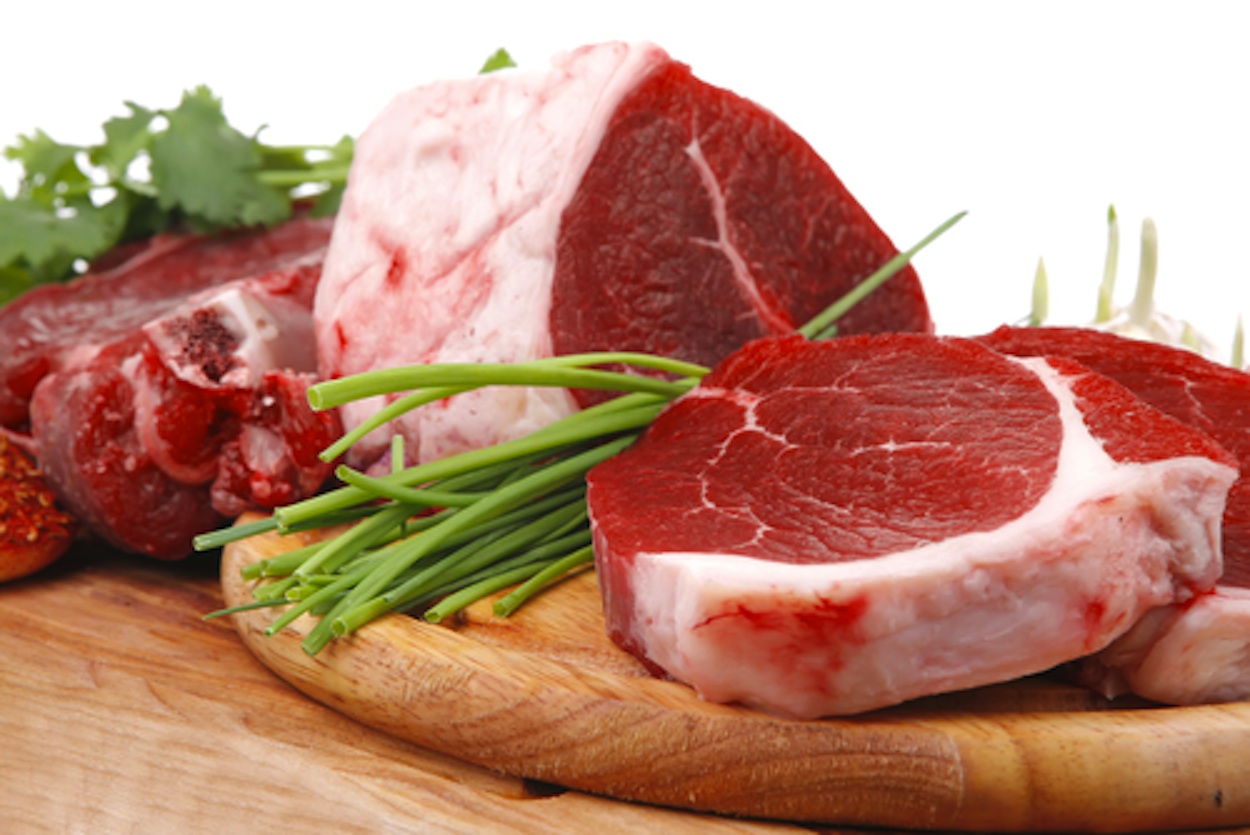
    Vietnam will consider importing beef from Brazil again if food safety conditions are ensured, Deputy Prime Minister Vuong Dinh Hue has said.

    At the recent Vietnam-Brazil Trade and Investment Forum attended by around 100 enterprises in Sao Paulo, Brazil, he also said Vietnam could become the top importer of corn and soybeans.

    A quality control scandal in Brazil early last year led to 20 countries, including Vietnam, suspending the import of Brazilian meat. Many countries have since resumed imports after receiving explanations and commitments from the Brazilian government.

    It was said the forum that Brazil will also increase import of coffee, catfish and shrimp from Vietnam.

    Hue noted that in 10 years of trading and investment relations, import-export turnover of Vietnam and Brazil has reached $4 billion, most of it from agricultural products.

    Vietnam’s imports from Brazil in 2017 reached $1.8 billion, according to the General Statistics Office of Vietnam.

  • Vietnam government urged to limit petrol imports

    Vietnam government urged to limit petrol imports

    The Nghi Son Refinery, which is now in its trial phase, is burdened by unsold inventories, Chairman of Thanh Hoa Provincial People’s Committee Nguyen Dinh Xung said at a recent government meeting.

    The unsold inventories signal challenges in product sale when the oil refinery commercially operates this August/September. If the current situation continues, it will cause difficulties for enterprises and negatively affect the province’s budget, says Xung.

    Thanh Hoa’s authorities suggested that the Government and the Ministry of Industry and Trade set up a mechanism to consume all products from the refinery.

    “We suggest that the government issues policies to limit petrol imports and prioritize products from Nghi Son refinery,” Xung said.

    A month ago, the $9 billion refinery produced its first commercial gasoline product – more than 5,000 cubic meters of RON92 gasoline.

    According to Thanh Hoa authorities, during the trial period, Nghi Son oil refinery has produced 14 percent of the province’s total industrial production value. With a planned production of 4-4.3 million tons of gasoline when commercial operations officially begin in August or September 2018, the plant is expected to contribute more than 15 percent to the province’s growth.

    The Nghi Son Refinery, located in the Nghi Son Open Economic zone in Thanh Hoa province, will have a capacity of 200,000 barrels of crude oil per day in the first operational phase, equaling 10 million tons of crude oil per year. This is almost double that of the Dung Quat oil refinery in Quang Ngai Province.

    This project has been invested in by 4 domestic and international investors: Vietnam National Oil and Gas Group (PetroVietnam), Kuwait Petroleum International (Kuwait), Idemitsu Kosan and Mitsui Chemicals (Japan). Total investment for the project is $9 billion.

    It is expected that the Nghi Son and Dung Quat refineries will together meet 80 percent of Vietnam’s fuel demand.

  • Queensland strawberries shine in Asia

    Queensland strawberries shine in Asia

    A delegation of Queensland strawberry growers and industry representatives recently returned from Hong Kong and Indonesia.

    The delegation visited 17 different retail outlets, from high-end supermarket chains such as Great Food Hall in Hong Kong and Ranch Market in Jakarta, right through to suburban wet markets and local street stores.

    While encouraged by the opportunity they saw to ship fruit into these markets, the delegates also gained an impression of the competitive environment they are entering.

    “Hong Kong is a very competitive market with strawberries from the US available in every market type,” said Luigi Coco, chairman of the Queensland Strawberry Growers Association and a strawberry grower from Elimbah. “US strawberries are also available in Jakarta with locally-grown Indonesia strawberries also available.”

    The delegation coincided with a number of trials involving Queensland strawberry exports.

    Coco, from A&E Coco and Sons, Charmaine Davey from Berry Patch Marketing, and Brendon and Ashleigh Hoyle from Ashbern Farms all collaborated to trial shipments to both Hong Kong and Jakarta.

    “Within 24 hours of picking the strawberries on our farm, they can arrive at the importer’s distribution centre in Hong Kong” said Brendon Hoyle. “The Hong Kong cold chain is very sophisticated and strong relationships between these businesses and the retail and food service industry has been established”.

    The supply chain to Jakarta is slightly more complex than Hong Kong, with no direct flights from Brisbane currently available. There is also a requirement for pest treatment.

    Despite these challenges, Queensland strawberries were exported and available for purchase by consumers.

    “It was a highlight seeing strawberries from our farm being sold and purchased in Ranch Market in Jakarta,” said Davey. “The colour and size of the Queensland-bred strawberry varieties, including Red Rhapsody, are very attractive to the consumer.”

    Jennifer Rowling, the development officer for Queensland Strawberry Growers, and Clinton McGrath and Bronwyn Ford, both from the Queensland Department of Agriculture and Fisheries, were also part of the delegation.

    The travel was part of a project funded by the Queensland government’s Growing Queensland Food Exports programme, which was also supported by the Queensland Strawberry Growers Association.

  • Lift non-tariff barriers on car imports, Thailand tells Vietnam

    Lift non-tariff barriers on car imports, Thailand tells Vietnam

    Thailand wants Vietnam to lift non-tariff barriers on its completely built-up car units (CBU).

    Earlier this year, the Vietnamese government had stiffened inspections on all CBUs, which are completely assembled units ready to export.

    The new restriction requires CBUs to pass environmental and emissions tests done by a Vietnamese laboratory.

    However, Vietnam lacks the laboratory facilities to handle a large number of cars, and the move could be a new measure to block car imports.

    Vietnam Register is currently the only car testing facility. The agency will test select a car from a shipment at random. The whole process will take about two months, a long time for a shipment to be passed.

    Somchai Harnhiran, Thailand’s deputy minister of industry, said the country’s automotive industry has lost 80 percent of its car exports to Vietnam. He said both governments will discuss this topic further in the future and hopes “for a good sign from both countries.”

    It is also reported that shipments of cars to Vietnam have been stalling for over six months.

    Thailand’s auto makers have reported that around 4,590 units were exported to Vietnam in the first quarter of this year, while the country’s annual target is 65,000 units.

    Auramon Supthaweethum, director-general of the Trade Negotiation Department, said that the country will continue to revisit this issue at every upcoming meeting with Vietnam and will propose mutual recognition arrangements (MRAs) at the Joint Trade Committee meeting in August.

    She explained that MRAs will allow Thailand to inspect its cars before shipping them to Vietnam.

    Vietnam has yet to agree on the MRAs.

    Among 922 imported cars since the beginning of June, 564 cars were from Thailand, according to General Department of Vietnam Customs.

    Beside Thailand, Vietnam has this year imported cars several other countries including China, Germany, Slovakia, Hungary, Spain.

  • China agrees to import more from US, no sign of $200 billion figure

    China agrees to import more from US, no sign of $200 billion figure

    China has agreed to significantly increase its purchases of U.S. goods and services, the two countries said on Saturday, but made no mention of a $200 billion target the White House had touted earlier.

    Beijing and Washington agreed they would keep talking about measures under which China would import more energy and agricultural commodities from the United States to close the $335 billion annual U.S. goods and services trade deficit with China.

    A joint statement issued at the conclusion of intensive trade talks in Washington did not indicate whether the two countries would delay or drop their tariff threats on billions of dollars worth of each country’s goods, which has sparked fears of a wider trade war and roiled financial markets.

    “There was a consensus on taking effective measures to substantially reduce the United States’ trade deficit in goods with China,” the joint statement said.

    “To meet the growing consumption needs of the Chinese people and the need for high-quality economic development, China will significantly increase purchases of United States goods and services.”

    U.S. President Donald Trump has threatened to impose tariffs on up to $150 billion on Chinese goods to combat what his administration says is Beijing’s misappropriation of U.S. intellectual property through joint venture requirements and other policies that force technology transfers.

    Beijing denies such coercion and has threatened equal retaliation, including tariffs on some of its largest U.S. imports – among them aircraft, soybeans and autos.

    A report described the statement from the two governments as “vowing not to launch a trade war against each other.”

    While the statement said the two sides would engage at high levels and “seek to resolve their economic and trade concerns in a proactive manner,” it made no mention of tariffs.

    It said there was consensus between Washington and Beijing on the need to create “favorable conditions to increase trade” in manufactured goods and services. This could be a reference to China’s previous pledges to open up more economic sectors to services.

    U.S. LNG EXPORTS

    The United States will also send a team to China to work out the details of increased agricultural and energy exports, the countries said, without specifying timing.

    A senior U.S. official said that during discussions with a member of President Xi Jinping’s office, China was considering a package that relied on major purchases of U.S. liquefied natural gas, including a contract for a U.S. firm to build LNG receiving and processing facilities in China.

    The package, which also would include new commitments on intellectual property protections, could be agreed by a potential mid-year visit to Washington by China’s Vice President Wang Qishan, the official said.

    Trump made cutting the U.S. trade deficit with China a promise in his presidential campaign.

    During an initial round of talks earlier this month in Beijing, Washington demanded that China reduce its trade surplus by $200 billion – a figure most economists say is impossible to achieve because it would require a massive change in the composition of commerce between the two countries.

    IP VAGUENESS

    The statement was vague on the Trump administration’s core intellectual property complaints, saying that both countries “attach paramount importance to intellectual property protections … China will advance relevant amendments to its laws and regulations, including the Patent Law.”

    There are concerns among some legislators and trade experts that Trump could give priority to a narrower trade deficit over tackling what they say is China’s abuse of intellectual property rights. Any deal under which China would import more goods could easily be reversed, economists say.

    The statement made no mention of whether there would be a relaxation of paralyzing restrictions on Chinese telecommunications equipment maker ZTE Corp (000063.SZ) (0763.HK) imposed last month by the U.S. Commerce Department.

    The action, related to violation of U.S. sanctions on Iran, banned American companies from selling semiconductors and other components to ZTE, causing the Shenzhen-based company to cease operations.

    Earlier this week, Trump tweeted that he directed the Commerce Department to put ZTE back in business and said the company’s situation was part of an overall trade deal with China.