Tag: india

  • Estee Lauder Seals the Deal: Full Ownership of India’s Luxury Beauty Brand, Forest Essentials

    Estee Lauder Seals the Deal: Full Ownership of India’s Luxury Beauty Brand, Forest Essentials

    Estee Lauder, a renowned global manufacturer and marketer of skincare, makeup, and beauty products, has acquired the remaining shares of the luxury Indian beauty brand, Forest Essentials. This move finalizes an 18-year partnership between the two entities, pending regulatory approval.

    Increase in Commitment and Position

    Stéphane de La Faverie, the president and CEO of Estee Lauder, emphasized that this acquisition underscores the company’s commitment to enhancing the growth of Forest Essentials. It also solidifies its standing in India’s high-end beauty market. De La Faverie expressed deep admiration for the vision and perseverance needed to create a brand of Forest Essentials’ stature. The shared objective is to further solidify the brand’s leadership domestically, while prudently introducing it to a global market.

    A Brand Rooted in Tradition

    Forest Essentials, established in 2000 by Mira Kulkarni, draws its inspiration from Ayurveda. This age-old Indian wellness system, with a history spanning approximately 3000 years, concentrates on creating harmony between the mind, body, and spirit. Forest Essentials has successfully transformed these traditional rituals into contemporary formulations and immersive retail experiences, placing Ayurveda in the luxury beauty segment. Today, Forest Essentials is a leading brand with about 200 stores spread across India.

    Future Direction

    Despite the acquisition, Forest Essentials will retain its headquarters in New Delhi under the leadership of Mira Kulkarni and her son, Samrath Bedi, who is the executive director. The brand will continue its operations in India, including infusing research and development with Ayurveda principles, sourcing botanicals locally, and manufacturing in-house.

    The collaboration with Estee Lauder will allow Forest Essentials to tap into the latter’s worldwide brand-building capabilities, distribution network, and operational proficiency. This will foster long-term growth while preserving the brand’s heritage.

    Kulkarni expressed that the next phase of the company’s evolution will concentrate on international expansion while preserving its Indian roots. She reiterated that Ayurveda is not simply a belief system, but a refined combination of science, ritual, and holistic wellbeing. She added that this new phase signifies both continuity and growth.

    Questions & Answers

    What is the significance of Estee Lauder’s acquisition of Forest Essentials?
    This acquisition reinforces Estee Lauder’s commitment to the growth of Forest Essentials and strengthens its position in the Indian luxury beauty market.

    What impact will the acquisition have on the operations of Forest Essentials?
    Forest Essentials will remain headquartered in New Delhi and continue its operations in India. It will also leverage Estee Lauder’s global brand-building capabilities, distribution network, and operational expertise to support long-term growth.

    What will be the focus of Forest Essentials’ next stage of development?
    Forest Essentials will focus on international expansion while maintaining its Indian roots and preserving the brand’s heritage.

  • Amazon India Drops Referral Fees to Accelerate Seller Growth Amidst Fierce E-commerce Competition

    Amazon India Drops Referral Fees to Accelerate Seller Growth Amidst Fierce E-commerce Competition

    Amazon has announced that it will abolish the referral fee for sellers in India on items priced under 1000 rupees (approximately US$10.98). This decision aims to encourage more retailers to use their platform and gain a stronger hold on India’s competitive e-commerce market.

    Expanding ‘Zero-Referral Fee’ Policy

    Amazon’s initiative builds upon its ‘zero-referral fee’ policy, introduced last year, which encompassed about 12 million items priced below 300 rupees. This program played a significant role in a 50% increase in new sellers joining Amazon’s Indian platform. The referral fee is a commission that sellers pay Amazon for each item sold.

    Starting March 16, this new policy now covers more than 125 million items. In addition to scrapping the referral fee, Amazon has decided to reduce some shipping costs.

    Targeting Small Businesses and Entrepreneurs

    “This step is intended to make selling on Amazon more profitable and simpler, particularly for small businesses and entrepreneurs in tier-2 and tier-3 cities,” said Amit Nanda, Director of Selling Partner Services for Amazon India.

    India is a vital market for Amazon, given the rapid growth of the internet user base in the world’s second-most populous country, driving e-commerce growth.

    However, Amazon is up against stiff competition from Walmart-backed Flipkart and Reliance Industries’ retail arm, owned by billionaire Mukesh Ambani. Quick-commerce entities such as Eternal’s Blinkit and Swiggy’s Instamart are also making significant inroads into market share.

    In December, Amazon announced plans to invest over $35 billion in India by 2030. While this investment will help expand its AI infrastructure, the focus will primarily be on growing retail logistics and stimulating small-business growth.

    Questions & Answers

    What is Amazon’s new initiative regarding referral fees in India?

    Amazon has decided to eliminate the referral fee for products under 1000 rupees, aiming to attract more retailers to their platform.

    How will this affect small businesses and entrepreneurs in India?

    By removing the referral fee and reducing some shipping costs, Amazon is making selling on its platform more lucrative and easier, particularly for small businesses and entrepreneurs in smaller cities in India.

    What are Amazon’s future investment plans for India?

    Amazon plans to invest over $35 billion in India by 2030, with a focus on expanding its AI infrastructure, enhancing retail logistics, and promoting small-business growth.

  • Lawson’s Bold Expansion: 10,000 Stores Unveiled for India by 2050

    Lawson’s Bold Expansion: 10,000 Stores Unveiled for India by 2050

    Lawson, a convenience store chain co-owned by Mitsubishi Corp and KDDI, has announced its ambitious expansion plan into India. The company aims to establish a network of 10,000 stores across the country by 2050. This strategic shift towards India is driven by the saturation of Lawson’s domestic market and the desire for additional growth avenues.

    Initial Steps in India

    Lawson plans to establish its presence in India by initially launching five directly operated stores in Mumbai in the coming year. This is set to be followed by a more extensive roll-out through franchise and licensing agreements. With a goal of 100 stores by 2030, Lawson is keen to position India as a major contributor to its earnings, similar to its operations in China.

    Subsidiary Establishment and Product Localization

    To manage the site selection, supply chain development, and merchandising for its India operations, Lawson intends to set up a wholly-owned subsidiary in India this year. The company will outsource production and distribution to local partners in a bid to streamline operations.

    In response to local consumer preferences, Lawson will offer a specially curated product range. The retailer plans to accommodate dietary and religious practices with an expanded selection of meat-free and egg-free products. The stores will feature Lawson’s signature Japanese convenience items like onigiri rice balls and ready meals, along with locally popular items such as freshly brewed coffee and hot dishes.

    Global Expansion Plan

    Currently, Lawson operates over 7,000 stores in five countries including China, the Philippines, Thailand, and Indonesia. The company is set on doubling its international footprint to around 14,000 stores by as early as 2030.

    Entering the Indian market is a natural progression after Lawson’s efforts to speed up its expansion in Southeast Asia last year. This included signing franchise agreements with local retail partners and increasing the number of directly managed stores.

    Questions & Answers

    What is Lawson’s expansion plan in India?
    Lawson aims to establish a 10,000-store network across India by 2050, with the first five outlets launching in Mumbai in the coming year.

    How will Lawson cater to the Indian market?
    Lawson plans to tailor its product range to local tastes, offering an expanded selection of meat-free and egg-free products in line with dietary and religious practices.

    What is Lawson’s global expansion strategy?
    Lawson is planning to double its number of overseas stores to around 14,000 by 2030. This includes its recent expansion into Southeast Asia and the upcoming foray into the Indian market.

  • India Ascends to Second Spot Globally with Over 400 Million 5G Users: A Story of Rapid Digital Transformation

    India Ascends to Second Spot Globally with Over 400 Million 5G Users: A Story of Rapid Digital Transformation

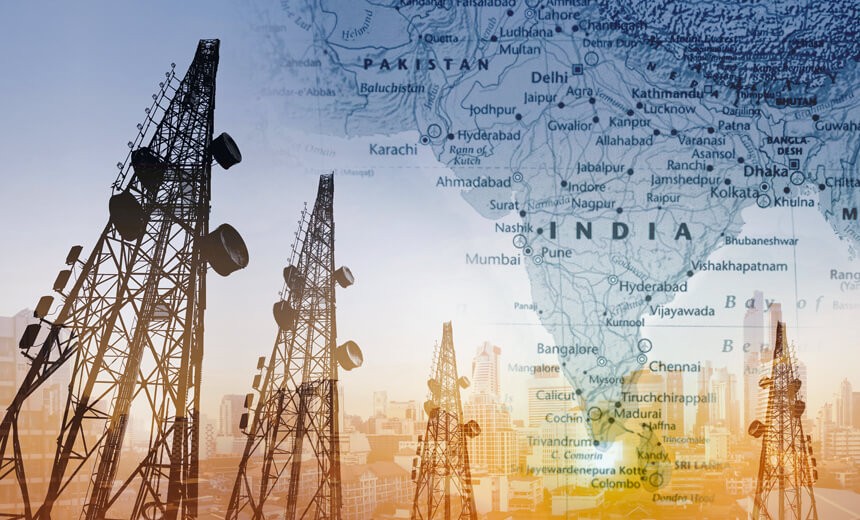
    India has solidified its position as the world’s second-largest 5G subscriber market, just after China. This achievement highlights the nation’s speedy embrace of next-generation connectivity and one of the fastest global network rollouts, as stated by the Union Minister of Communications, Jyotiraditya M. Scindia.

    Impressive Numbers in 5G Adoption

    Currently, India boasts of more than 400 million 5G users, making it home to the world’s second-largest 5G subscriber population. Data presented by the Ministry of Communications indicates that telecom service providers have installed approximately 4.69 lakh 5G base transceiver stations nationwide as of March 2025. This reflects the swift pace of 5G deployment in India, which started in October 2022 and is among the fastest rollouts globally.

    Today, 5G services encompass over 99% of India’s districts, with an estimated population coverage of around 85%. Since the initial launch, 25 crore users have migrated to 5G services, and the total subscriber base has surged past 400 million as network accessibility and device adoption have grown.

    Notable Strides in Rural Connectivity

    The Ministry also pointed out significant improvements in rural connectivity. There has been a 42.9% increase in rural telephone connections, almost twice the rate of urban growth. The number of connections has risen from 377.78 million in March 2014 to 539.83 million by September 2025.

    Digital Expansion and Internet Usage

    The digital expansion in India is further mirrored in internet usage. Total internet connections have crossed the one billion mark, reaching 1.0029 billion, compared to 251.5 million in March 2014. This represents a growth of nearly 299%.

    Progress in Telecom Self-Reliance

    In line with the Atmanirbhar Bharat vision, India has made substantial progress in telecom self-reliance. It has joined the select group of nations that have developed an end-to-end 4G stack which is upgradable to 5G. While it took other countries decades to mature similar technologies, India achieved this milestone in just two years. Additionally, there is growing momentum in indigenous 6G research and development under the ambitious Bharat 6G Mission.

    Collectively, these developments firmly establish India as a primary global player in 5G adoption and digital infrastructure. This has implications for enterprise connectivity, innovation, and long-term economic growth across the region.

    Questions & Answers

    What is India’s current rank in the global 5G subscriber market?
    India has emerged as the second-largest 5G subscriber market in the world.

    How many 5G users does India currently have?
    India currently has over 400 million 5G users.

    What has been the growth in rural telephone connections in India?
    Rural telephone connections in India have grown by 42.9%, nearly double the urban growth rate.

  • Ikea Eyes Massive Expansion in India: Aims for over $2.2 Billion Investment and Online Presence Boost

    Ikea Eyes Massive Expansion in India: Aims for over $2.2 Billion Investment and Online Presence Boost

    Swedish furniture behemoth Ikea is set to intensify its commitment to India, with plans to double its current investment to over 200 billion rupees, or approximately US$2.2 billion, within the next five years.

    Expanding Physical and Online Footprint

    In order to make the most of this investment, Ikea has aspirations to significantly increase its in-person retail locations, from six to 30 stores. Additionally, the company has plans to boost its annual sales in India, aiming to quadruple the current figure, which stood at $204 million as of August in the previous year.

    As an integral part of its expansion strategy, Ikea will prioritize the establishment of an online presence before it launches new brick-and-mortar stores in untapped cities. The firm is also striving to increase the proportion of online sales from the existing 30% of total sales to 40%.

    The company is set to begin accepting online orders in four cities where it currently does not have a physical presence, including Chennai and Coimbatore in the state of Tamil Nadu.

    Previous Successes and Future Plans

    Ikea’s inaugural Indian store was launched in 2018 in the city of Hyderabad. Since then, the company has opened three outlets in Navi Mumbai and Bengaluru and has added two small-format locations in Mumbai and New Delhi.

    Looking ahead, Ikea is planning to double its production for domestic stores and its exports, with the aim of reaching a value of around $930 million.

    Patrik Antoni, CEO of Ikea India, expresses strong faith in the potential of the Indian market, despite it not being a large Ikea market yet. He views India as a future central player in Ikea’s global market.

    Despite the decision by the former US President Donald Trump to double tariffs on imports from India up to 50%, Antoni maintains that this move has had minimal impact on Ikea’s Indian suppliers, as the brand primarily exports to other markets.

    Questions & Answers

    What is Ikea’s investment plan for India over the next five years?
    Ikea plans to double its current investment in India to over 200 billion rupees, or approximately US$2.2 billion, within the next five years.

    What is Ikea’s strategy for expanding in India?
    Ikea is planning to increase its number of physical stores from six to 30 and aims to quadruple its annual sales. The company also plans to boost its online presence before launching brick-and-mortar stores in new cities.

    What effect has the increase in tariffs on imports from India had on Ikea?
    According to Ikea India’s CEO, Patrik Antoni, the doubling of tariffs on imports from India to 50% has had little effect on Ikea’s Indian suppliers, as the company primarily exports to other markets.

  • Everstone Capital Sells $57M Stake in Burger King’s India, Indonesia Franchisee, Ajanta Pharma Founders to Invest

    Everstone Capital Sells $57M Stake in Burger King’s India, Indonesia Franchisee, Ajanta Pharma Founders to Invest

    Private equity firm Everstone is set to sell its entire stake, amounting to 11.26 per cent, in Restaurant Brands Asia, a franchisee operating in India and Indonesia for fast-food giant Burger King. Those familiar with the matter have confirmed that the deal will be announced soon.

    Equity Stake Valuation

    Everstone Capital’s stake, held via its investment arm QSR Asia Pte Ltd, is presently valued at USD 57 million, based on Refinitiv data. Meanwhile, the market capitalisation of Restaurant Brands Asia stands at USD 437 million in Mumbai.

    New Strategic Investor

    As part of the agreement, a new strategic investor will be introduced to Restaurant Brands Asia. The identity of this investor remains confidential at this point.

    Despite repeated attempts, both Everstone and Restaurant Brands Asia have opted to not comment on the matter.

    Pharma Founders as Potential Investors

    The family office of the founding members of Ajanta Pharma, an Indian pharmaceutical company, is reportedly taking a keen interest in this deal. The family office, which also operates in the restaurant business, is projected to invest up to INR 8 billion (equivalent to USD 88 million) into the company.

    No comment could be obtained from the representatives of the family office either.

    Although it’s unclear what percentage of the company Ajanta would acquire, it’s speculated that they may become the majority stakeholder over time as other shareholders divest their stakes.

    In a recent communication with Indian stock exchanges, Restaurant Brands Asia announced upcoming board meeting plans to discuss and evaluate possible fundraising options, although no further information was provided.

    Questions & Answers

    What is the current stake of Everstone in Restaurant Brands Asia?
    Everstone presently holds an 11.26 per cent stake in Restaurant Brands Asia.

    Who is speculated to be the new strategic investor?
    The family office of the founders of Ajanta Pharma is speculated to be the new strategic investor.

    How much is the family office of Ajanta Pharma expected to invest?
    They are expected to invest up to INR 8 billion (USD 88 million) into the company.

  • HSBC Private Bank Revamps Asian Leadership: Key Appointments in India, China, and Thailand

    HSBC Private Bank Revamps Asian Leadership: Key Appointments in India, China, and Thailand

    HSBC Private Bank, the private banking division of HSBC, has recently announced several significant leadership appointments across its Asian operations, with a particular focus on the India and China markets.

    Focus on India

    The global India team has welcomed Phaneendar Bhavaraju and Rangan Krishnan as senior relationship managers. Both report to Manoj Ramarao, who is the Senior Desk Head for global India, Singapore, and Hong Kong.

    Bhavaraju brings to the table more than 28 years of experience across several financial sectors, including foreign exchange, rates, derivatives, precious metals, private banking, and structured finance. He previously held the role of Chief Investment Officer at various asset management companies in the Dubai International Financial Centre. Bhavaraju’s past experience also includes nine years of serving in private banking roles at both RBS and Credit Suisse.

    Krishnan, on the other hand, has over 31 years of wealth management experience. He was previously at the Bank of Singapore where he spent nine years leading a team that managed ultra-high net worth clients, family offices, and institutional portfolios. His resume also includes roles at ANZ, Credit Suisse, ABN AMRO Bank, and DSP BlackRock Mutual Fund.

    China & Other Markets

    In China, Alex Liu has been appointed as the Market Head of Offshore China. His coverage now extends from Hong Kong to Singapore. Liu reports to Kanas Chan, the head of North Asia and Hong Kong.

    In addition to the appointments in India and China, Dawn Fung has assumed the role of Head of Wealth Planning for Southeast Asia. With over 25 years of experience in banking and trust, Fung reports to Ann Ling, the Regional Head of Wealth Planning and Advisory for Asia Pacific, and Tommy Leung, the Head of Private Bank for South Asia.

    Onshore Thailand

    In Thailand, William Fok has been named the Country Head of Private Bank. Fok, who is based in Bangkok, reports to Benjamin Wang, the Desk Head for Thailand and Vietnam. Fok has more than 20 years of experience in structured products and investment advisory. Before taking on this role, he was a Senior Investment Counsellor at LGT. Fok is returning to HSBC Private Bank after having worked there for almost five years earlier in his career. His past employers also include Julius Baer and Morgan Stanley.

    Questions & Answers

    Who are the new senior relationship managers for HSBC Private Bank’s global India team?
    Phaneendar Bhavaraju and Rangan Krishnan have been appointed as the senior relationship managers for the global India team at HSBC Private Bank.

    Who has been appointed as the Market Head of Offshore China for HSBC Private Bank?
    Alex Liu has been appointed as the Market Head of Offshore China, expanding his coverage from Hong Kong to Singapore.

    Who is the new Country Head of Private Bank for HSBC in Thailand?
    William Fok has been named the Country Head of Private Bank for HSBC in Thailand.

  • Indian Fast Food Titans Merge: KFC and Pizza Hut Unite under $933M Deal

    Indian Fast Food Titans Merge: KFC and Pizza Hut Unite under $933M Deal

    In a significant move within India’s quick-service restaurant (QSR) industry, Devyani International and Sapphire Foods India, two of the nation’s largest franchise operators for KFC and Pizza Hut, have agreed to join forces. The merger, approved by parent company Yum! Brands, is a $933 million deal that consolidates the operations of the two QSR chains under a singular operator in India.

    Details of the Deal

    The merger process is expected to be completed within 12 to 15 months, subject to regulatory and shareholder approval. Stock exchange filings reveal that Devyani will acquire exclusive franchise rights for the entire Indian market as part of the agreement. Moreover, Devyani will assume control of 19 KFC outlets in Hyderabad, currently directly managed by Yum! India.

    In recent times, Yum! Brands’ Indian operations have been divided between Devyani and Sapphire Foods. While Devyani, a part of Ravi Jaipuria’s RJ Corp, runs several outlets, Sapphire Foods, backed by Samara Capital, operates its own distinct territories.

    Objective of the Merger

    The primary aim of this consolidation is to generate efficiencies driven by scale in the face of increasing costs, escalating competition, and fluctuating consumer demand.

    Ravi Jaipuria, non-executive chairman of Devyani International, expressed confidence that the merger would “allow us to realize meaningful economies of scale, leverage a unified technology platform, and strengthen our supply-chain capabilities.” He added that these advantages would “unlock sustained value creation and long-term growth for our shareholders, customers, employees, and partners.”

    About the Companies

    Devyani International, one of India’s largest QSR operators, manages over 2,000 outlets across India and international markets. It operates several other renowned global food and beverage brands, including Costa Coffee, Tea Live, New York Fries, and Sanook Kitchen.

    On the other hand, Sapphire Foods India, which was established in 2015, operates more than 1,000 KFC, Pizza Hut, and Taco Bell restaurants across India and Sri Lanka in dine-in, takeaway, and delivery formats.

    Questions & Answers

    What is the value of the merger deal between Devyani International and Sapphire Foods India?
    The merger deal is valued at $933 million.

    What is the expected timeline for the completion of the merger?
    The merger is expected to be completed within 12 to 15 months, pending regulatory and shareholder approvals.

    What is the primary goal of the merger?
    The merger aims to achieve efficiencies driven by scale amid rising costs, intensifying competition, and uneven consumer demand.

  • India’s Fast-Food Titans, KFC and Pizza Hut, Fuse in Billion-Dollar Powerhouse Merger

    India’s Fast-Food Titans, KFC and Pizza Hut, Fuse in Billion-Dollar Powerhouse Merger

    Sapphire Foods and Devyani International, the operators for KFC and Pizza Hut in India, announced plans to merge in a transaction valued at $934 million. This move will create a major fast-food enterprise in India, the world’s most populated nation. The merger is a strategic decision amidst rising operational costs, slowing sales growth, and squeezed margins, coupled with tough competition from the likes of McDonald’s and Domino’s Pizza in a market where consumers are limiting non-essential purchases.

    Deal Details

    As part of the merger, Devyani will issue 177 shares for every 100 shares of Sapphire. The companies expect annual synergies between 2.1 billion and 2.25 billion rupees ($23.34 million to $25.01 million) from the second year of operations of the merged entity. Both companies, which are partners with Yum Brands, operate over 3,000 outlets throughout India and abroad. Their businesses encompass KFC and Pizza Hut dine-in restaurants and they compete directly with the Indian operators of McDonald’s and Domino’s Pizza – Westlife Foodworld and Jubilant Foodworks.

    Challenges and Opportunities

    Despite their presence in the market, both KFC and Pizza Hut franchises operate at a net loss in India, presenting scalability issues, according to Akshay D’Souza, an independent consumer goods consultant. He suggests that if the merged entity can tap into even half of the expected synergies, it could potentially create a profitable operation with improved cost control. In the quarter that ended in September, Sapphire’s consolidated total costs increased by 10% year-on-year to 7.68 billion rupees, while Devyani’s expenses rose by 14.4% to 14.08 billion rupees.

    Financial Performance

    Devyani reported a net loss of 219 million rupees for the quarter ending September 30, a significant downturn from the previous year’s profit of 170,000 rupees. Similarly, Sapphire posted a larger consolidated net loss of 127.7 million rupees, compared to a loss of 30.4 million rupees the year prior.

    Questions & Answers

    What are the expected benefits of the merger between Sapphire Foods and Devyani International?
    The companies anticipate synergies between 2.1 billion and 2.25 billion rupees ($23.34 million to $25.01 million) from the second year of the combined operations.

    What challenges are the KFC and Pizza Hut franchises facing in India?
    Both franchises are currently operating at a net loss amid rising operational costs, slowing sales growth, and squeezed margins. They also face stiff competition from other fast-food chains like McDonald’s and Domino’s Pizza.

    What is the financial impact of the merger on the two companies?
    In the short term, both companies have reported losses. However, the merger is expected to lead to improved cost control and potential profitability.

  • Indian Telecom Giants Challenge New Spectrum Plan, Push for Greater 5G and 6G Allocation

    Indian Telecom Giants Challenge New Spectrum Plan, Push for Greater 5G and 6G Allocation

    The Department of Telecommunications (DoT) in India has formally introduced its National Frequency Allocation Plan 2025 (NFAP-2025), though it has encountered opposition from mobile operators who opine it does not sufficiently address the nation’s future connectivity requirements.

    The NFAP-2025 Policy

    The NFAP-2025, operational since December 30, 2025, outlines the management and allocation of the radio frequency spectrum throughout India. The DoT states that the policy’s objective is to synchronize the national spectrum policy with international standards, while also fostering emerging technologies and next-generation connectivity.

    In line with this plan, the spectrum ranging from 8.3 kHz to 3000 GHz is designated for assorted radio communication services. The government asserts this will facilitate the deployment of 5G, 5G-Advanced, prospective 6G networks, satellite broadband services, and vehicle-to-everything (V2X) communications.

    Contention Around the Upper 6 GHz Band

    Dissent, however, has surfaced over the earmarking of the upper 6 GHz band, particularly the 6425–7125 MHz range for International Mobile Telecommunications (IMT). While increasing the mid-band spectrum availability for mobile services, the Cellular Operators Association of India (COAI) contends it’s insufficient. The COAI has reasserted its established demand that the entire 6 GHz band, spanning 5925-7125 MHz, should be allocated for IMT usage.

    This disagreement partly arises from the government’s previous decision, declared in May 2025, to deregulate 500 MHz of spectrum in the lower 6 GHz band for indoor Wi-Fi use with low power. While expected to hasten the launch of Wi-Fi 6E and Wi-Fi 7, operators maintain it diminishes the spectrum available for wide-area mobile networks.

    Future Data Demand & Spectrum Allocation

    COAI’s Director-General, Dr. SP Kochhar, has cautioned that catering to future data demand will necessitate considerably larger, continuous blocks of mid-band spectrum. He projected that every operator will require a minimum of 400 MHz of such spectrum to provide affordable, high-quality 5G and future 6G services.

    In Dr. Kochhar’s view, next-generation networks will increasingly depend on large, uninterrupted spectrum blocks to support ultra-high data throughput, low latency, immersive digital services, applications driven by artificial intelligence, smart manufacturing, and intelligent mobility.

    As India propels its digital transformation, the debate on the optimal way to balance spectrum allocation between mobile networks, Wi-Fi services, and emerging technologies in the 6 GHz band is projected to escalate.

    Questions & Answers

    What is the main aim of India’s National Frequency Allocation Plan 2025 (NFAP-2025)?
    The primary objective of NFAP-2025 is to align national spectrum policy with global standards while supporting emerging technologies and next-generation connectivity across India.

    What is the contention within the Cellular Operators Association of India (COAI) regarding the NFAP-2025?
    The COAI argues that the allocation of the upper 6 GHz band for International Mobile Telecommunications (IMT) is insufficient. They demand that the entire 6 GHz band should be allocated for IMT usage.

    What future requirements of mobile operators does Dr. SP Kochhar highlight?
    Dr. Kochhar emphasizes the need for considerably large, uninterrupted blocks of mid-band spectrum to cater to future data demand, projecting a minimum requirement of 400 MHz per operator to deliver high-quality 5G and future 6G services.

  • Microsoft Commits $17.5B to Boost India’s AI and Cloud Infrastructure: A Game-changer for Asia’s Tech Landscape

    Microsoft Commits $17.5B to Boost India’s AI and Cloud Infrastructure: A Game-changer for Asia’s Tech Landscape

    Microsoft has pledged to invest a staggering USD 17.5 billion in India’s cloud and artificial intelligence (AI) infrastructure, which is its most significant financial commitment in Asia thus far. The investment, scheduled across four years from 2026 to 2029, plans to boost hyperscale cloud capacity, extend data centers, support AI adoption, and introduce sovereign cloud solutions for industries regulated by the government.

    CEO Visit and Plans

    This landmark investment was unveiled during Satya Nadella’s visit to New Delhi, the CEO of Microsoft. Indian Prime Minister Narendra Modi, who met with Nadella, lauded the initiative as a powerful endorsement of India’s technology ecosystem and its proficient workforce.

    Microsoft aims to establish a new cloud region, called India South Central, in Hyderabad. The expected launch date is in mid-2026. Additionally, the tech giant plans to broaden its operations in Chennai, Hyderabad, and Pune. Microsoft also intends to provide sovereign public cloud and sovereign private cloud solutions to support secure, locally hosted workloads for enterprises and government institutions.

    Investment in Skills and Training

    Another part of Microsoft’s ambitious plan is to train 20 million individuals in AI and digital skills by 2030. This project will involve collaboration with educational institutions, startups, and government programs, aiming to cultivate a workforce ready for the future. The company also plans to integrate AI into public platforms, such as e-Shram and the National Career Service (NCS), to deliver predictive analytics, job-matching services, and multilingual access for millions of workers in the informal sector.

    This USD 17.5 billion commitment overshadows Microsoft’s previous announcement in 2025 to invest USD 3 billion to develop cloud and AI infrastructure, new data centers, and workforce skilling over the following two years. Industry experts believe the expanded investment highlights India’s strategic role in the global AI ecosystem and underscores the country’s appeal as a hub for next-generation technology.

    Questions & Answers

    What is the purpose of Microsoft’s investment in India?
    The investment aims to enhance India’s cloud and AI infrastructure, expand data centers, support AI adoption, and introduce sovereign cloud solutions for regulated industries.

    What is meant by ‘sovereign cloud solutions’?
    Sovereign cloud solutions refer to cloud computing services that are hosted within a country’s borders, providing improved security and data sovereignty for enterprises and government institutions.

    How will Microsoft’s investment impact India’s workforce?
    Microsoft plans to train 20 million people in AI and digital skills by 2030, preparing them for the future job market. They will also integrate AI into public platforms to provide job-matching services and multilingual access for millions of workers in the informal sector.

  • Revolutionizing Road Safety: Jio and NHAI Unveil Real-Time Mobile Alerts on Indian Highways

    Revolutionizing Road Safety: Jio and NHAI Unveil Real-Time Mobile Alerts on Indian Highways

    In a collaborative effort to enhance safety and enrich the travel experience along National Highways, the National Highways Authority of India (NHAI) has partnered with Reliance Jio to launch a telecom-based alert system. This system will provide motorists with real-time alerts as they approach high-risk zones such as accident-prone areas, sectors with stray animals, fog-affected strips, or regions with temporary traffic alterations.

    How the Safety Alert System Works

    The alert system will tap into Jio’s comprehensive 4G and 5G coverage, delivering notifications through various channels such as SMS, WhatsApp, and high-priority automated calls. The system will automatically cater to all Jio users traveling on or near the National Highways without any need for extra equipment.

    Future plans involve integrating this system with NHAI’s digital services like the ‘Rajmargyatra’ app and the 1033 emergency helpline, creating a unified digital safety network. Given Jio’s vast user base of over 500 million, the telecom giant’s far-reaching network will be instrumental in extending this initiative nationwide.

    Official Statements

    The Chairman of NHAI, Shri Santosh Kumar Yadav, highlighted the significance of this initiative, stating it as a significant advancement in offering timely and trustworthy information to commuters. He believes that this will allow motorists to make informed decisions and adopt safer driving habits well ahead of time, setting a new standard in tech-enabled road safety management on National Highways.

    Jio’s President, Mr. Jyotindra Thacker, further stressed the abilities of telecom networks in efficiently disseminating alerts, which can significantly contribute to reducing the number of road accidents. The initial phase of the project will concentrate on identifying high-risk areas and setting up real-time alert systems in selected NHAI regional centers, all while complying with regulatory and data protection requirements.

    Future Prospects

    In addition to the partnership with Jio, NHAI also envisions collaborating with other telecom operators to expand the alert system’s reach across the nation. This initiative exemplifies NHAI’s commitment to embracing advanced, scalable solutions aimed at improving safety, intelligence, and efficiency on India’s highways.

    Questions & Answers

    What is the purpose of the telecom-based alert system introduced by NHAI and Jio?
    The system aims to enhance safety and enrich the travel experience on National Highways by providing real-time alerts to motorists as they approach high-risk areas.

    How will the alerts be delivered to the users?
    The alerts will be disseminated through various channels such as SMS, WhatsApp, and high-priority automated calls using Jio’s comprehensive 4G and 5G coverage.

    What is the future plan for this safety alert system?
    The plan involves integrating this system with NHAI’s existing digital services and collaborating with other telecom operators to expand the system’s reach nationwide.

  • Former Flipkart Executive, Jeyandran Venugopal, Named New CEO of India’s Reliance Retail

    Former Flipkart Executive, Jeyandran Venugopal, Named New CEO of India’s Reliance Retail

    Reliance Retail Ventures (RRVL), the parent company of Reliance Retail, has just announced the appointment of Jeyandran Venugopal as its new President and CEO. Venugopal is a former executive of Flipkart, bringing with him over 25 years of global leadership experience in retail, e-commerce, and technology.

    A New Era with Venugopal

    Venugopal’s previous roles include serving as the Chief Product and Technology Officer at Flipkart. He has also assumed senior positions at Myntra and Jabong, where he supervised product, engineering, and data functions. These positions allowed him to gain invaluable experience during periods of rapid growth and profitability enhancement.

    In his new role, Venugopal is set to collaborate closely with RRVL’s Director, Isha Ambani. Together, they aim to enhance the company’s retail strategy, expand its capabilities across all channels, and fortify both operational and technology functions throughout RRVL’s value chain.

    Ambani expressed confidence in Venugopal’s expertise and anticipates it to be significant in the company’s next growth stage. “Venugopal’s deep understanding of consumer behaviour, commercial acumen, and technology-led retail transformation will be pivotal as we shape the next phase of RRVL’s growth journey,” Ambani added.

    Questions & Answers

    Who is Reliance Retail Ventures’ new CEO and President?
    Jeyandran Venugopal, a former executive of Flipkart, has been appointed as the new CEO and President of Reliance Retail Ventures.

    What experience does Venugopal bring to RRVL?
    Venugopal carries with him over 25 years of global leadership experience in retail, e-commerce, and technology. He has previously served as the Chief Product and Technology Officer at Flipkart and held senior roles at Myntra and Jabong.

    What role will Venugopal play in RRVL’s growth?
    Venugopal is expected to play a central role in the next phase of RRVL’s growth. His deep understanding of consumer behavior, commercial acumen, and experience in technology-led retail transformation will be a critical asset as RRVL shapes its future growth strategy.

  • India Boosts Cybersecurity: Enforces New Compliance Rules on OTT Platforms and Smartphone Manufacturers

    India Boosts Cybersecurity: Enforces New Compliance Rules on OTT Platforms and Smartphone Manufacturers

    In a bid to enhance digital security due to increasing episodes of online fraud and mobile-related cybercrime, India has released two key directives. These new rules demand compliance from Over The Top (OTT) communication platforms and smartphone manufacturers.

    Ensuring Secure Communication

    The Department of Telecommunications (DoT) in India has instructed messaging platforms such as WhatsApp, Telegram, Snapchat, Signal, and Arattai to enable SIM binding within a 90-day timeframe. According to the Telecommunications (Telecom Cyber Security) Rules, 2024, these applications must remain connected to the mobile number and active SIM card of a user’s device. Moreover, web and desktop versions must log users out every six hours, requiring them to reauthenticate via QR code pairing. Non-compliance will result in penalties as stipulated by the Telecommunications Act.

    This decision has been made in response to the increasing number of cyber fraud cases involving OTT apps accessed without the corresponding SIM or from foreign locations. Such situations allow for identity spoofing and misuse. This order has been issued following nearly a year of discussions between government officials and OTT companies.

    Representatives of the industry have expressed concerns about the impacts on user experience and technical feasibility. They emphasized that not all platforms, particularly iOS, can consistently carry out SIM checks. They also warned about potential disruptions for legitimate uses, including eSIM and dual-SIM devices, international travel, small businesses relying on persistent desktop sessions, and elderly user accessibility. Companies are also unsure if SIM binding will effectively decrease fraud involving Indian SIM cards obtained through intermediaries.

    Demand for Preloaded Cyber Safety App

    On the same day, the telecom ministry of India issued another mandate for leading smartphone manufacturers including Apple, Samsung, Vivo, Oppo, and Xiaomi. They are required to preload the government’s Sanchar Saathi cyber safety app on all new devices sold in the country. Users will not have the option to delete or disable this app. Devices that are already in the supply chain must receive the app via software updates.

    Sanchar Saathi, launched in January, allows users to block and track lost or stolen phones, verify device authenticity, and detect fraudulent mobile connections. Government data reveals that the app has assisted in the recovery of over 700,000 phones, including 50,000 in October alone, and has facilitated the blocking of over 3.7 million lost or stolen devices. Additionally, more than 30 million fraudulent mobile connections have been disconnected using its systems.

    Questions & Answers

    What is the purpose of the new directives issued by India’s Department of Telecommunications (DoT)?
    The new directives aim to tighten digital security due to rising incidents of online fraud and cybercrime related to mobile devices. They introduce new compliance requirements for Over The Top (OTT) communication platforms and smartphone manufacturers.

    What measures are messaging platforms expected to implement under these directives?
    Messaging platforms such as WhatsApp, Telegram, Snapchat, Signal, and Arattai are required to implement SIM binding, which means these apps must remain linked to the user’s mobile number and active SIM card. Web and desktop versions of these apps must also log out users every six hours and require reauthentication through QR code pairing.

    What is the Sanchar Saathi app and why are smartphone manufacturers required to preload it on new devices?
    The Sanchar Saathi app is a cyber safety application launched by the Indian government. It allows users to block and track lost or stolen phones, check device authenticity, and identify fraudulent mobile connections. Smartphone manufacturers are required to preload this app on all new devices sold in India to enhance digital security.

  • Amazon and Flipkart Set to Disrupt India’s Banking Sector with Innovative Consumer Loan Products

    Amazon and Flipkart Set to Disrupt India’s Banking Sector with Innovative Consumer Loan Products

    E-commerce heavyweights, Amazon and Flipkart, are planning to venture into the financial services sector in India, by offering loans and buy-now, pay-later (BNPL) options. This strategic move is poised to challenge the traditional banking sector.

    Amazon’s Plans

    Earlier this year, Amazon purchased Axio, a non-bank lender based in Bengaluru. The company primarily focuses on BNPL and personal loans. However, with Amazon’s acquisition, Axio is expected to recommence providing credit facilities for small businesses and initiate cash management services.

    Mahendra Nerurkar, VP for payments for emerging markets at Amazon, emphasized the potential for expanding credit growth, especially among digitally engaged customers and small businesses operating outside of major cities. He further revealed that the company has plans to develop specialized lending propositions to enhance cash flow management efficiency and unlock capital for merchants and small businesses.

    Flipkart’s Interest

    Flipkart, which boasts a significant stake by Walmart, has registered Flipkart Finance, its non-bank lending branch. The company is awaiting final approval from the Reserve Bank of India (RBI) for its business strategy. The plans feature two types of pay-later offerings:

    1. No-cost monthly installment loans for online shoppers ranging from 3 to 24 months.
    2. Loans for consumer durables at an interest rate of 18 per cent–26 per cent per annum.

    Typically, interest rates on loans for consumer durables from traditional lenders oscillate between 12 per cent and 22 per cent. A confidential source revealed that Flipkart aims to launch these financial products in the coming year.

    Growth of the Consumer Loan Market

    Data from credit bureau CRIF High Mark shows that India’s consumer loan market has expanded from nearly US$80 billion in March 2020 to approximately US$212 billion by March 2025. However, there are indications of a slowdown in recent quarters. Consumer loans encompass unsecured personal loans, credit cards, and loans for consumer durables.

    Both Amazon and Flipkart operate apps ranking in the top 10 platforms for payments via India’s Unified Payments Interface. Earlier this year, the RBI granted them the ability to lend directly to customers, marking a significant step towards opening India’s financial services market to foreign-backed tech firms.

    Rohan Lakhiyar, partner at consultancy Grant Thornton Bharat’s financial services risk division, stated that given their access to both supply-side and demand-side customer data, both Amazon and Flipkart have immense potential to disrupt the sector. However, he stressed that execution would be crucial as they expand beyond core retail.

    Amazon has also partnered with several local lenders to offer fixed deposit savings products with minimum amounts of 1000 rupees (US$11) to customers on its Amazon Pay platform, according to Nerurkar.

    Questions & Answers

    What are Amazon’s plans in the financial services sector in India?
    Amazon plans to offer credit to small businesses and provide cash management services through Bengaluru-based non-bank lender Axio. They also aim to develop specialized lending propositions to help improve cash flow management efficiency and release capital for merchants and small businesses.

    What types of financial products is Flipkart planning to offer?
    Flipkart intends to offer two types of pay-later offerings – no-cost monthly installment loans for online shoppers, and loans for consumer durables at an interest rate of 18 per cent–26 per cent per annum.

    What is the current status of the consumer loan market in India?
    The consumer loan market in India has grown from nearly US$80 billion in March 2020 to around US$212 billion by March 2025, according to data from credit bureau CRIF High Mark. However, recent quarters have shown signs of a slowdown in growth.