Tag: india

  • Kia To Start Second Shift At Anantapur Plant To Reduce Waiting Period

    Kia To Start Second Shift At Anantapur Plant To Reduce Waiting Period

    Kia Motor India has finally introduced the Seltos compact SUV in India and the all-new offering has been launched at a disruptive pricing of ₹ 9.69 lakh (ex-showroom). The company has already garnered over 32,000 bookings for the Kia Seltos in five weeks and the pricing, which undercuts all its rivals, is only going to fill the order books faster. The automaker has confirmed that the current waiting period stands at about six to eight weeks for the Seltos, and Kia plans to add a second shift at the Anantapur plant to meet the growing demand.

    Manohar Bhat, VP – Marketing and Sales, Kia Motor India confirmed the details on the growing demand for the Seltos SUV. The carmaker has about 5,000 models ready that have been dispatched to dealers, while the new shift is expected to churn out consistent volumes to meet the overwhelming number of bookings. Bhat also confirmed that it won’t stop bookings for the Seltos, taking a slight dig at MG, which has stopped accepting bookings for the Hector owing to the current demand.

    The Kia facility in Andhra Pradesh is spread over 536 acres and has an installed capacity of three lakh units per annum across three shifts. The Seltos is currently the only car to be produced at the facility and will largely cater to the domestic demand, while exports are also being planned from here to markets like South America, Africa and neighbouring countries.

    The Kia Seltos is a made-in-India, made-for-India model and has witnesses heavy localisation, which has prompted the competitive pricing on the SUV. The model is offered in a total of 16 variants across two petrol and one diesel engine options. There are two key trims – Tech Line and GT Line with four sub variants in each. Clearly, the manufacturer has put in a lot of thought of packaging different variants to meet the different customer requirements.

    Kia is currently operating out of 192 outlets spread across 160 cities in India. At least one out of five bookings for the Seltos was received online, and the manufacturer is anticipating consistent demand via the online booking platform, despite it being a novel form of booking vehicles in India. Kia’s online booking platform also helps prospective customers with financing options. Deliveries for the Kia Seltos start from today.

  • 45% People Killed Due To Road Accidents In 2018 In Delhi Were Pedestrians

    45% People Killed Due To Road Accidents In 2018 In Delhi Were Pedestrians

    The Delhi Traffic Police released data of accidents in the capital city in 2018 and it shows that the fatalities in road accidents have gone up from 1584 deaths in 2017 to 1690 deaths in 2018. The report states that in 2018, 6515 road accidents occurred in Delhi in which 6086 people were injured while 1690 people lost their life.

    The fatality rate has increased by 6.69 percent though there has been a total decline in road accidents by 2.36 percent. Pedestrians were the most vulnerable victims. In 2018, 45.86 percent of the total persons killed in road accidents were pedestrians while scooter or motorcycle riders were second-most vulnerable with 33.72 percent killed in an accident.

    The fatalities have been showing a downward trend since 2009 but last year this trend reversed. The data also suggested that vehicles registered in Haryana were responsible for the highest number of fatal accidents in Delhi among other state vehicles. Out of the total 1657 fatal accidents, 150 were caused by vehicles registered in Haryana in 2018. The report also suggests that 743 accidents occurred during the day while 914 occurred during the night. The Traffic Department also identified 110 cluster points as accident-prone zones in Delhi and among the most dangerous stretches are on the Ring Road, Outer Ring Road, GTK Road, Rohtak Road and Grand Trunk Road.

    In 2018, cars/taxis caused 253 fatal accidents accounting for 15.26 percent of total fatal accidents which was the maximum number for a vehicle type.


  • India Has Not Set Deadline To Launch Electric Vehicles

    India Has Not Set Deadline To Launch Electric Vehicles

    The Indian government has not set a deadline to launch electric vehicles or to ban manufacturing of petrol and diesel cars, a government official said on Wednesday.

    The Indian auto industry has been caught in the middle of slowing economic growth that has led to a slump in demand for vehicles, forced plant shutdowns and large layoffs.

    Prime Minister Narendra Modi has been working to push electric vehicles in an effort to cut India’s fuel import bill and curb pollution.

    In June, a government think-tank that plays a key role in policy making had recommended that only electric models of scooters and motorbikes with engine capacity of more than 150 cc must be sold from 2025.

  • AirAsia India to start direct Delhi-Chennai flight from September

    AirAsia India to start direct Delhi-Chennai flight from September

    Budget carrier AirAsia announced a new direct Delhi to Chennai flight. The new flight will be introduced from September 2019. The sale of tickets will begin on 20 September. The tickets can be booked through airasia.com or the AirAsia mobile app.

    “The new daily direct flight between Chennai and New Delhi will help boost our operations in Chennai. We have also increased the frequency between Chennai and various other destinations like Bangalore, Hyderabad and Kolkata,” the airline said in a statement.

    AirAsia will also operate a third daily flight between New Delhi and Kolkata.

    The Bengaluru-headquartered airline is also set to launch additional flights on New Delhi-Kolkata route from 20 September.

    The airline has also increased the frequency and introduced a fourth service on the Delhi-Bengaluru route.

    AirAsia India currently flies to 19 destinations with a fleet of 22 aircraft.

    Air Asia India, which started operations in June 2014, is a joint venture between Tata and AirAsia Berhad. It currently operates 164 flights a day, covering 19 destinations and carrying over 25,000 passengers.

    The budget carrier has already started daily direct flight on the Delhi-Chandigarh route from 1 August onwards. The launch fare on Delhi-Chandigarh route is ₹1,365, the airline mentioned. The flight would leave from Delhi at 10.40 am every day and would reach Chandigarh at 11.50 am.

    The return flight would depart from Chandigarh every day at 12.50 pm and arrive at the Delhi airport at 1.55 pm, the low-cost carrier said.

  • DBS Inks India Startup Partnership

    DBS Inks India Startup Partnership

    DBS has established a partnership with tech business incubator Social Alpha to mentor enterprises that focus on socially impactful deliverables such as inclusion, healthcare or environmental solutions.

    As part of the partnership, DBS will mentor and support three firms focused on the aforementioned areas over the next 18 months in addition to an annual grant of one crore rupee ($141,000).

    The three firms include women-focused e-commerce firm Even Cargo; mental healthcare startup Trust Circle, which leverages mobile AI tech for emotional resilience; and affordable medical device startup Incredible Devices.

    We have been working with social enterprises for several years. But our experience showed that some of these entrepreneurs could not scale their businesses or remained somewhat sub-optimal in their ability to grow, said Surojit Shome, CEO of DBS Bank India.

    So, we want to encourage social entrepreneurs who are sustainable by generating enough returns to build scale, and we decided to look for a partnership with somebody who was working with scaled or scaleable social entrepreneurs.

  • Reliance-Tiffany partnership in India wins the right approval

    Reliance-Tiffany partnership in India wins the right approval

    The Reliance-Tiffany partnership in India will allow Tiffany & Co to offset subdued demand in US and Europe, says data and analytics company GlobalData.

    The US-based luxury jeweler Tiffany & Co formally announced last week it was forming a joint venture with India’s Reliance Brands Limited (RBL), a part of the Reliance Industries Limited (RIL), to open a line of stores in India. That move was widely predicted earlier.

    Shagun Sachdeva, consumer insights analyst at GlobalData, says India is the fastest-growing luxury market in the Asia-Pacific region, expected to grow at a compound annual rate of 14.2 percent between 2017 and 2022, to reach US$7billion by then.

    “The projected healthy growth can be attributed to the positive economic outlook, growing younger upper-middle-class population coupled with growing brand-consciousness, and the increasing popularity of the online channel for luxury shopping.”

    Sachdeva said Tiffany & Co, famous for its diamond engagement rings and famous blue boxes, has been trying to enter the Indian market for a long time.

    “By leveraging Reliance’s long-standing brand presence and product positioning, it will be able to expand globally and offset the subdued demand in the US and Europe.

    “After the deployment of omni-channel model and the introduction of the iconic British toy retailer Hamleys in India earlier this year, the latest move by Reliance to open Tiffany stores in Delhi later this year and in Mumbai in 2020 through a joint venture is in line with its strategy to bring the best-in-class products to the emerging Indian luxury market,” she said.

    “It provides a unique opportunity for Reliance to bolster its consumer-focused units, retail, and telecoms, to match the strength of its leading oil and gas business.”

  • Starbucks India Speeding up store rollouts

    Starbucks India Speeding up store rollouts

    Starbucks India plans to ramp up its store rollout. The global coffee chain opened 25 new stores in the last financial year and 30 new stores this year with local partner Tata Global Beverages – but plans to open a far greater number of new stores in the near future, according to Tata Starbucks CEO Navin Gurnaney, with an investment of more than US$6.4 – 7.1 million.

    “We spend anywhere between $213,000 and $284,000 to build a store,” said Gurnaney in an interview with the Business Standard. “We would not be being aggressive with our store growth if we didn’t see potential. We think the market is very strong. Excellence is always well received and we believe we have an excellent experience, partners and products. We are extremely bullish on India. India is one of the top five growing markets for Starbucks internationally.”

    Starbucks India stores serve an average of 270,000 customers per week, with 90 percent of their chosen beverages being coffee.

    “People don’t come to us just to buy a sandwich,” added Gurnaney. “It is always an accompaniment with a beverage. The coffee category has been growing with all groups of people and the millennials are certainly gravitating towards coffee. But not just millennials, it is also the 30 years something upwardly mobile, better traveled and better-educated people which are growing in India.”

    While there has been some speculation that Starbucks Tata is considering an acquisition of a rival brand, Gurnaney insisted that Starbucks India outlook is extremely optimistic, and that future plans are to be “thoughtfully aggressive”.

    Starbucks entered India with its first store in Mumbai launching in 2012.

  • Tens Of Thousands Losing Jobs As India’s Auto Crisis

    Tens Of Thousands Losing Jobs As India’s Auto Crisis

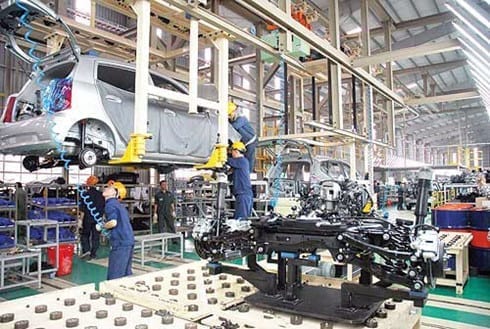
    Slumping sales of cars and motorcycles are triggering massive job cuts in India’s auto sector, with many companies forced to shut down factories for days and axe shifts, multiple sources said. The cull has been so extensive that one senior industry source told Reuters that initial estimates suggest that automakers, parts manufacturers and dealers have laid off about 350,000 workers since April.

    Within this previously unreported figure, car and motorcycle makers have laid off 15,000 and component manufacturers 100,000, with the remaining job losses at dealers, many of which have closed, the industry source said.

    Reuters was able to identify at least five companies that have recently cut or plan to cut hundreds of jobs, mainly from their temporary labor force.

    The downturn – regarded by industry executives as the worst suffered by the Indian auto industry – is posing a big challenge for Prime Minister Narendra Modi’s government as it begins its second term at a time when India’s jobless numbers are climbing.

    To revive the sector, auto executives plan to demand tax cuts and easier access to financing for both dealers and consumers at a meeting with officials from India’s finance ministry scheduled for Wednesday, the senior industry source said. The industry’s plight was highlighted by the Automotive Component Manufactures Association of India (ACMA), with the trade body’s director-general, Vinnie Mehta, saying the sector was experiencing a “recessionary phase”.

    The malaise has been spreading across much of the industry, both in terms of vehicle type and components as well as geographically in India’s manufacturing hubs.

    For example, Japanese motorcycle maker Yamaha Motor and auto components makers including France’s Valeo and Subros have laid off about 1,700 temporary workers in India after a slump in sales, sources told Reuters.

    Subros, which is part-owned by Japan’s Denso Corp and Suzuki Motor Corp, has laid off 800 workers. Indian parts maker Vee Gee Kaushiko has cut 500 people while Yamaha and Valeo last month reduced their workforces by 200 each, said several sources aware of the cuts.

    Meanwhile, automotive supplier Wheels India could cut its temporary workforce by as much as 800 and has started realigning its shifts, two of the sources said. The layoffs come as carmakers including Honda Motor Co, Tata Motors and Mahindra & Mahindra have implemented brief suspensions to production in recent weeks in the face of slow demand, separate sources said.

    The auto sector, which contributes more than 7% of India’s GDP, is facing one of its worst downturns.

    Passenger vehicle sales have dropped for nine straight months through July, with some automakers suffering year-on-year declines of more than 30 percent in recent months.

    Manpower is the only variable factor for companies and more workers will face the axe, said ACMA’s Mehta.

    Yamaha, Subros, Vee Gee Kaushiko and Wheels India did not respond to requests for comment.

    Valeo India said it is realigning for changing conditions and has trimmed its temporary workforce.

    The fallout from the auto slump could be huge. The sector employs more than 35 million people, directly and indirectly, accounting for nearly half of India’s manufacturing output.

    India’s jobless rate rose to 7.51% in July 2019 from 5.66% a year earlier, according to private data group CMIE. The CMIE data is more up-to-date than government figures and regarded in financial markets as more credible.

    At least 7% of temporary workers employed by 15 automakers in India have lost their jobs in recent months, said Vishnu Mathur, director-general at the Society of Indian Automobile Manufacturers (SIAM).

    “It is a conservative estimate based on our initial analysis,” he said.

    Maruti Suzuki, India’s biggest carmaker, cut its temporary workforce by 6% over the past six months.

    There is little sign of a revival.

    Tata Motors has had week-long shutdowns at four of its plants in the past two weeks, while Mahindra has said it had 5-13 days without production at various plants between April and June.

    A statement from Tata Motors said it has aligned production with demand and adjusted the shifts and temporary workers.

    Honda has stopped production of some car models at its plant in the northwestern state of Rajasthan since July 16 and is halting manufacturing entirely at its second plant in Greater Noida on the outskirts of Delhi for 15 days from July 26, two sources said.

    The company’s Indian business said that production management will be critical throughout the year and it is seeking to avoid stock build-up.
  • Decathlon India opens largest store today

    Decathlon India opens largest store today

    Decathlon India has opened its largest store yet at the DLF Mall of India.

    The French sports retailer’s new 3000sqft experiential retail outlet features dedicated activity and community zones for fitness and sports enthusiasts, as well as offering digital services such as self-checkout counter scan and a pay app for billing to improve the purchasing experience.

    The store has dedicated sections for women, men, children and teenagers, as well as a space for fitness aficionados and a community space featuring augmented reality golf, a simulator zone and skating rink.

    “Our aim to build a new experience for all people involved in fitness gets enhanced, with the support and environment of DLF Mall of India, one of the premier shopping destinations in Delhi NCR,” said Decathlon Noida Mall of India city sports leader Sylvain Deschamps.

    “We are excited about this new store and hope that the goodwill keeps thriving for years to come.”

    Decathlon India operates 70 outlets, including 12 in the national capital and its nearby regions.

  • Tata Motors To Introduce Its Next Electric Car By End Of FY2020

    Tata Motors To Introduce Its Next Electric Car By End Of FY2020

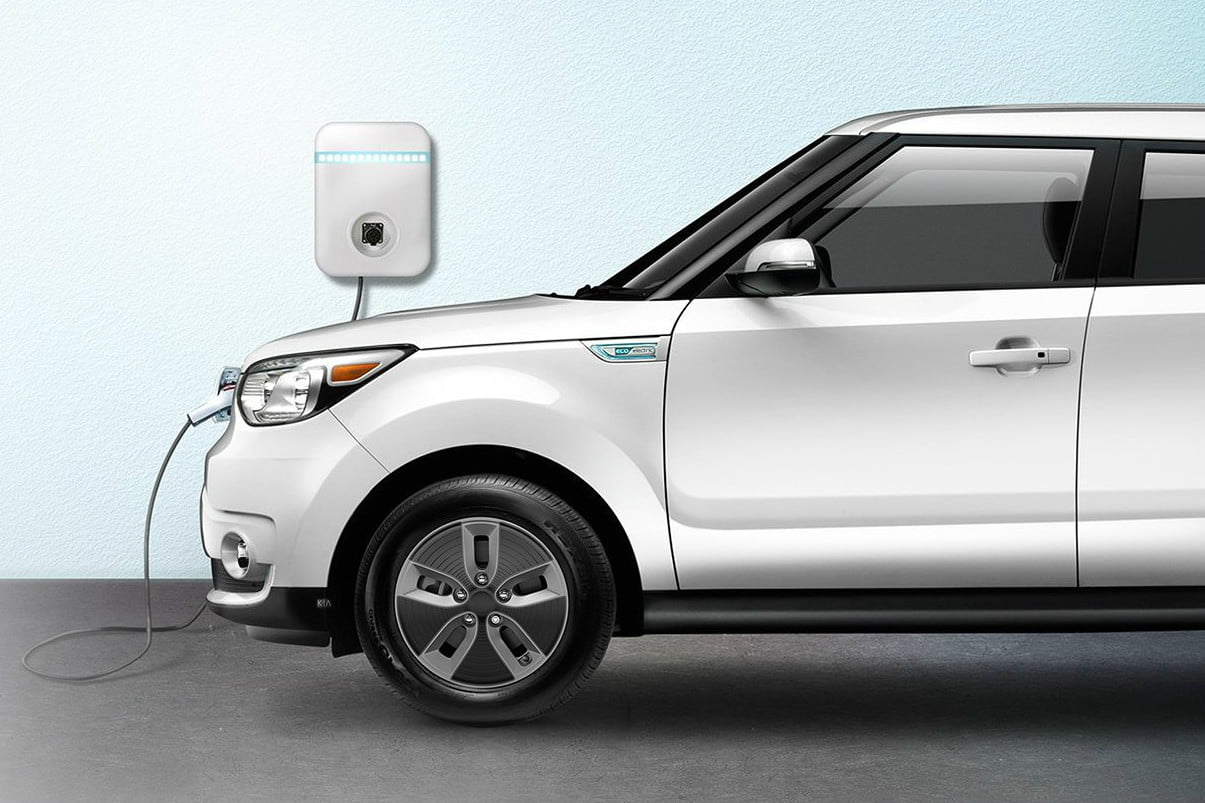
    Tata Motors will be introducing its next electric vehicle for the Indian market by the end of the financial year 2019-20. The carmaker recently announced its partnership with Tata Power to set up 300 fast chargers across 5 metros in India. Speaking to carandbike.com on the sidelines, Shailesh Chandra, President Electric Mobility Business & Corporate Strategy, Tata Motors, said that the company is currently working on electric vehicles focused towards private buyers, and will introduce a higher range Tigor EV a new model by end of this fiscal year.

    Talking about the upcoming electric vehicle, Chandra said, “We will come out with a very private focused product within this financial year, and we are doing a host of activities around it. That is the reason why we have started the charging infrastructure work now so that when we have to launch that product, in a certain number of cities that we have targeting, charging infrastructure should be visible.” Chandra further added, “We are also planning to come with a higher range version for Tigor which we will be bringing out in the market very shortly. That is the time when we intend to open it to the private buyers also.”

    Recently at the company Annual General Meeting, N Chandrasekaran, Chairman Tata Motors announced that the company aims to launch four electric models in India in the next 18 months. Chandrasekaran also confirmed that the electric version of the Tata Nexon will be one of the four new electric models. The other three will be – the Tata Altroz EV showcased at the Geneva Motor Show, the more powerful Tigor EV for private buyers, and a fourth undisclosed model.

    Talking about these upcoming electric cars, Shailesh Chandra said, “These are the products which are focused towards the private segment and there might be some more products which might come, but we are gearing up towards their development and we’ll see what the right time to launch them is. So, these two (Nexon EV and Altroz EV) special products are definitely the private buyer-focused products,” When asked whether the upcoming EV could either be the Nexon EV or the Altroz EV, he said, “Hopefully, yes”.

  • Amazon in talks over Reliance Retail

    Amazon in talks over Reliance Retail

    Amazon is in talks with Reliance Industries Ltd’s retail unit to buy a stake in India’s biggest brick-and-mortar retailer, two sources with knowledge of the talks told Reuters.

    Amazon’s massive online presence could help bolster Reliance’s consumer and private labels business. More importantly, a partnership would help the duo counter Walmart, which last year invested US$16 billion in India’s Flipkart, in the battle for a bigger share of India’s fast-growing e-commerce market.

    In late December, India modified rules around foreign direct investment (FDI) in e-commerce, creating additional hurdles for companies such as Amazon and Flipkart, and giving companies such as Reliance an edge.

    Amazon had made the proposal to Reliance – controlled by Mukesh Ambani, India’s richest man – for the partnership, but it was not clear whether a deal would materialize, said one of the sources.

    The second source said Amazon had been pondering a proposal to purchase an up to 26 percent stake in the Reliance unit since at least February.

    “For Amazon, it is about neutralizing a major rival and allowing itself to grow,” said the second source, who added the company envisions helping Reliance’s roughly 40 brands and grocery products go online.

    Further details of the possible deal, first reported by India’s Economic Times newspaper last week, were not immediately clear.

    Amazon did not immediately respond to request for comment while Reliance said it would make any disclosures to stock exchanges as and when necessary.

    Reliance could potentially leverage Amazon’s global experience in technology, supply chain and logistics as it aims to connect grocery stores across the country digitally through its Jio telecoms network – the biggest in India by subscribers.

    For Amazon, picking up a stake in a Reliance unit could mean getting access to the Jio telecoms platform and its vast retail footprint of more than 10,600 stores across India. It might also add more firepower to their lobbying efforts, as the Ambani family is viewed as being well-connected politically.

    Seattle-based Amazon is keen to get a bigger share of India’s e-commerce market, which Deloitte expects to more than treble to $84 billion between 2017 and 2021.

    Reliance was previously in talks with China’s Alibaba to sell a stake in Reliance Retail, but a deal could not be sealed due to differences in valuation, according to a person familiar with the matter.

  • Superdry India to launch E-commerce initiative

    Superdry India to launch E-commerce initiative

    A dedicated Superdry India website is set to launch later this month.

    The British fashion retailer already trades in the territory online via Myntra, Ajio and Amazon via a deal with Reliance Brands. The new direct-to-consumer platform, launching mid-August, serves as the next step in the firm’s expansion plans.

    Superdry India, which has recently achieved double-digit growth, expects to generate 7 to 10 per cent of its revenues through the new site within the next year as it also moves to expand its physical footprint within the country.

  • Sumo Sushi & Bento launches in India

    Sumo Sushi & Bento launches in India

    Dubai Japanese restaurant chain Sumo Sushi & Bento is entering the Indian market.

    The firm has partnered with local operator FranGlobal to open up to 25 outlets within five years, with the first location launching in either Delhi or Mumbai within six months.

    “India is a vibrant and exciting country and people are demanding new cuisines and we will hit the mark on it,” said Sumo Sushi & Bento CEO Julianne Holt Kailihiwa. “There’s already awareness, interest and curiosity among Indians around Japanese cuisine, especially fusion oriented food. Sumo has been successfully running its chain of restaurants for 20 years catering to Middle East customers who have a very cosmopolitan taste. There’s also a big Indian customer base in Dubai hence we feel that India reasonably should be a scalable market for the brand.”

    The firm has been operating in the Middle East for almost 20 years, catering to a cosmopolitan customer base with a strong vegetarian menu segment. It will be targeting a similar clientele in India’s major urban hubs.

    “Our biggest challenge is to provide good quality product at a competitive price because the raw material used in Japanese cuisine is expensive,” said Franglobal CEO Venus Barak. “Our quality matches the ones offered in a five-star hotel. We also plan to introduce beer and wine in the menu.”

  • Walmart-owned Flipkart opens experience centre

    Walmart-owned Flipkart opens experience centre

    Indian e-commerce platform Flipkart has opened a physical furniture experience centre in Bengaluru.

    The Walmart-owned firm’s 1800sqft store will retail around nine furniture brands, and is likely to be followed by two more similar outlets in the country.

    “The furniture category has traditionally had a strong presence offline,” said VP of furniture, electronics and private labels Adarsh Menon, “because customers like to see and touch the products they are buying. We understand the requirements of customers and hence ‘FurniSure’”.

    Industry competitor Ikea launched in India last year, attracting extensive queues.

    Flipkart is also seeking to launch an offline supermarket.

  • Groupe PSA Opens New Technical Centre In Chennai

    Groupe PSA Opens New Technical Centre In Chennai

    PCA Motors India, part of Groupe PSA today announced opening its new India Technical Centre (ITC) in Chennai, Tamil Nadu. The company says that the new technical centre will play a key role in the smoother and more efficient working of the employees of PSA India, in addition to boosting the capacity of the group to accelerate further in India. The new technical centre has come up in a specific building area, Chennai One, which is part of one of the Chennai Special Economic Zones (SEZ). Groupe PSA says the new facility has been designed and built in a frugal and efficient way, consistent with the spirit of scalability corresponding to the India project.

    Commenting on the launch, Emmanuel Delay, Executive Vice President & Head of India-Pacific, Groupe PSA, said, “The new India Technical Center [ITC] is an important step for the development of Groupe PSA in India, and is definitely an asset to grow the Group’s business in the India & Pacific region. This is part of our strategy to develop a global network of state-of-the-art technical centre, strategically positioned in India, to support a customer-oriented agenda. With the new centre, we’re focusing our investment in creating a cohesive work environment to accelerate our growth. This unified approach will improve the speed, efficiency and effectiveness of our employees while enabling us to address evolving consumer needs more quickly in the future. Our investment in ITC further emphasizes the importance of India to our global business.”

    Groupe PSA’s new technical centre will house departments of Research & Development, Programs and Projects, Global Purchasing Hub, Supply Chain, Process and Manufacturing Engineering, Quality, KD Excellence Centre and Product. In fact, going forward, the state-of-the-art centre will also house a workshop for styling, architecture and assembly of prototypes.

    Commenting on the launch, Eric Apode, Senior Vice President, PCA Motors India, said, “The new India Technical Centre is the next strategic step for Groupe PSA in India. It will allow the group to accelerate quickly its growth in India, through the development of new products and deployment of our strategy in and outside India. The area around our new centre is popular for housing dozens of international and Indian companies this gives the Groupe strong confidence of attracting Indian talent to the new ITC. The Monozukuri philosophy, the art of creating objects in an efficient and effective way is now taking shape with our new India Technical Centre, which will benefit group operations domestically and globally.”