Tag: india

  • Huawei, ZTE consider local manufacturing in India

    Huawei, ZTE consider local manufacturing in India

    Both Huawei and ZTE are evaluating plans to establish local manufacturing facilities in India to avoid the 20% tariff imposed on the import of telecommunications equipment.

    ZTE is carefully evaluating the feasibility of local manufacturing in India, including of mobile devices, the company’s president of global sales Xiao Ming told.

    If the government offers enough incentives to support a cost advantage, ZTE would love to shift many of its manufacturing factories in India.

    Meanwhile Huawei is progressing a plan to resume Indian manufacturing of telecom equipment and enterprise products, the report states.

    Huawei ceased production from its Indian facilities last year due in part to low demand, but the company is evaluating establishing a new plant for its carrier business and enterprise as a result of the tariffs.

    Meanwhile Ericsson, which already has manufacturing facilities in India, plans to expand these capabilities to commence exports of locally-manufactured equipment to more countries.

    Nokia also manufactures equipment in India, and has developed a local supply chain for components to minimize the 10% duty on imports of components to be manufactured locally.

  • Skoda’s electric-car push includes low-cost EV

    Skoda’s electric-car push includes low-cost EV

    Skoda plans to build three electric cars based on the Volkswagen Group’s MEB platform in the Czech Republic within the next four years, including a small, affordable model. Skoda’s flagship MEB electric car will be based on the Vision IV coupe crossover concept revealed at the Geneva auto show earlier this month.

    It will be joined by a second car based on the same concept, Skoda CEO Bernhard Maier told journalists at the brand’s annual results conference here on Wednesday.  The second vehicle is expected to be a more conventional SUV and will be built at Skoda’s Mlada Boleslav plant alongside the flagship model, which starts production in the second half of 2020 ahead of its market launch in early 2021. Both vehicles will be built on the same line as the Skoda Octavia compact car.

    “That gives us a lot of flexibility. We can scale and adjust to some extent if customer demand changes,” Maier said.

    A third, more affordable electric car will be built at Skoda’s Kvasiny plant and will form part of a new “MEB entry family” of cars announced by the VW Group at its annual press conference earlier this month. The model is still in the planning stage, Maier told journalists. “We are looking for a lower specced car and once we have a positive business case we will come up with a clear solution,” the CEO said.

    Cars in the MEB entry family will be smaller than VW’s Golf compact car, while offering similar interior space. They will arrive about 2023, VW CEO Herbert Diess told earlier this month.

    Skoda will launch a full-electric version of its Citigo minicar, based on the VW e-UP, later this year. The model will be built in VW’s plant in Bratislava, Slovakia, and will have an electric range of 300 km (186 miles), Maier said.

    Skoda has said 25 percent of all its cars sold by 2025 will be electrified and the brand plans to launch more than 10 electrified cars by the end of 2022, including plug-in and mild-hybrid models. Its first plug-in hybrid will be a version of the Superb midsize and will go on sale later this year. By 2025 Skoda will sell five separate pure electric cars, the company has said.

    Maier said Skoda remains unsure of the demand for its electric models.

    “I don’t know how the customers will reflect on our offer,” he said. “If our reference was those customers who have driven our electric cars in focus groups, then we can easily achieve 25 percent, but it is quite obvious the demand will be different if you talk to customers living in urban areas than those living in rural areas.”

    Customers in rural areas have concerns about charging and range, he said.

    Volkswagen Group is turning its Zwickau, Germany, factory into a specialist plant for MEB models for the VW, Audi and Seat brands but Skoda has placed great importance on building its MEB-based electric cars in in its Czech Republic home.

    “Electromobility is being developed in the heart of Skoda in the Czech Republic. That ensures the future of jobs here,” Maier said.

    The first MEB EV, based on the Vision IV concept, is likely to cost about the same as the brand’s Kodiaq or Superb models, Skoda sales chief Alain Favey told. The average selling price of the Kodiaq SUV is around 40,000-45,000 euros. For the Superb it is about 40,000 euros.

    Favey said Skoda aims to offer a package that will entice customers to want to spend that amount. He said the car would also adhere to the same philosophy of “smart understatement” shown by other models in Skoda’s range. “It’s an extremely modern way of thinking,” he said.

    Maier said replacing today’s internal combustion engine cars with electrified versions to meet the tough European targets on CO2 will drive up the price of all cars. “Individual mobility will be more expensive, there’s no doubt about that,” he said.

  • All-New BMW 1 Series Launch on The Agenda for this Year

    All-New BMW 1 Series Launch on The Agenda for this Year

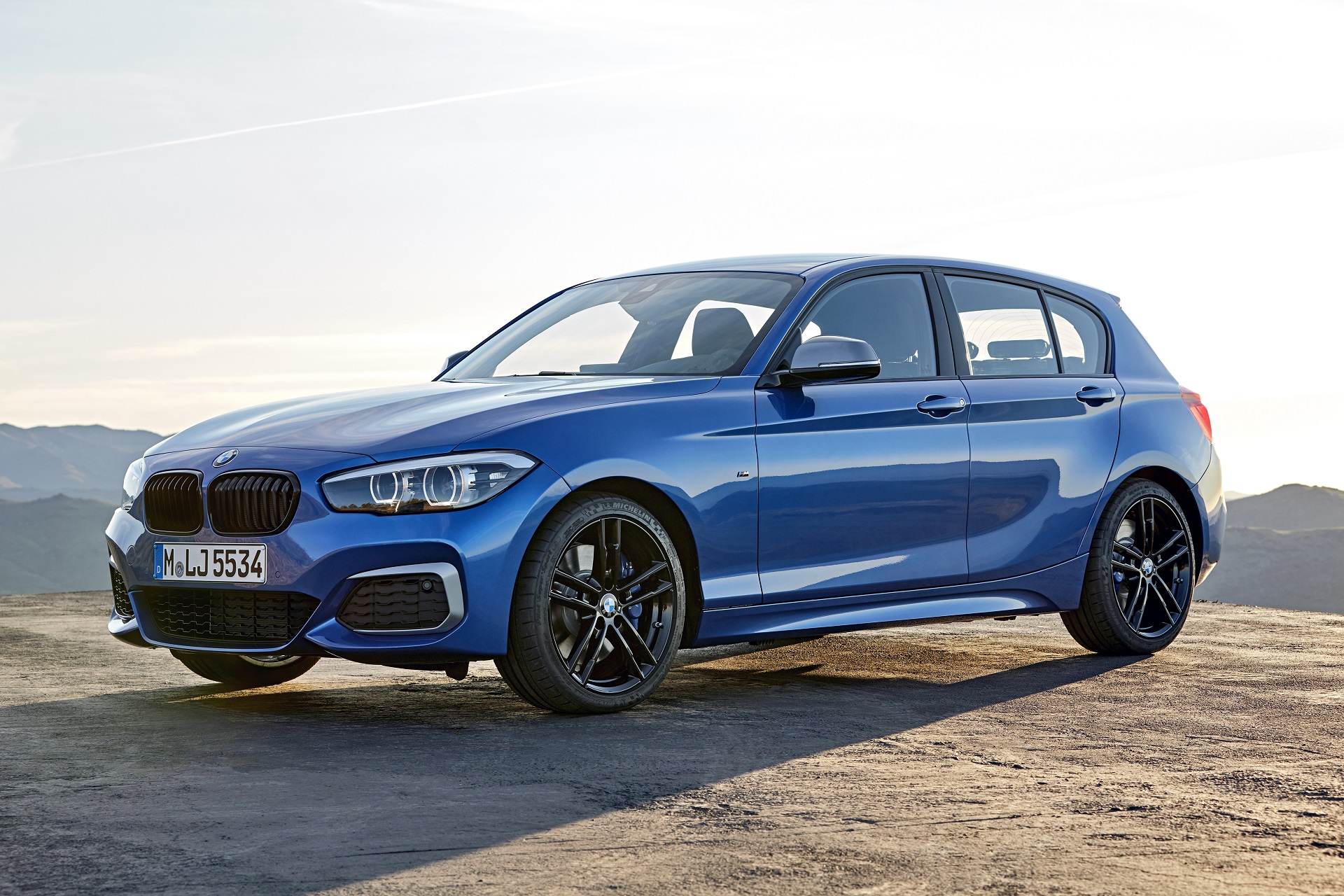
    The 2019 BMW 1 Series has been one of the long-awaited launches not only for the Indian market but also globally. The 1 Series is BMW’s most affordable offering and has been around since 2011 globally. The hatchback also made its way to India in 2012, however, it was soon taken off the production line in India pertaining to its low demand. That said, BMW has heavily updated the next-generation BMW 1-Series and it will make its first public appearance at the 2019 Frankfurt Motor Show in September. The company has also confirmed that the all-new BMW 1 Series will be launched in Europe in 2019 and will make its way to the other global markets in 2020. The all-new BMW 1 Series will have a similar interior design to the latest 3-Series.

    The new BMW 1 Series has been developed on the FAAR platform and will embody BMW groups latest design language with its face picking up cues from the 8-Series Coupe. The cabin of the new BMW 1 Series is also inspired by the bigger models of the family and the dash will be quite similar to what we have seen on the latest 3 Series sedan. However, the size of the infotainment screen and instrument panel is still uncertain. The key highlight, however, is that the new 1 Series will be front-wheel driven like the BMW X1 and, unlike its predecessor which was rear-wheel driven.

    At the 2019 Frankfurt Motor Show, the next-generation 1 Series will be showcased alongside the BMW 2 Series Gran Coupe. While the latter is unlikely to be considered for the Indian market, we still hope the BMW 1 Series could return given the fact that BMW is planning to launch 12 new models in India in the 2019 Fiscal year. The new 1 Series will also be a feature loaded model, unlike the previous one which lost its sheen being bare basic for a luxury car brand. Moreover, being a front-wheel-drive model, it’s likely to be cheaper than its predecessor.

  • Kawasaki India To Increase Prices From April Onwards

    Kawasaki India To Increase Prices From April Onwards

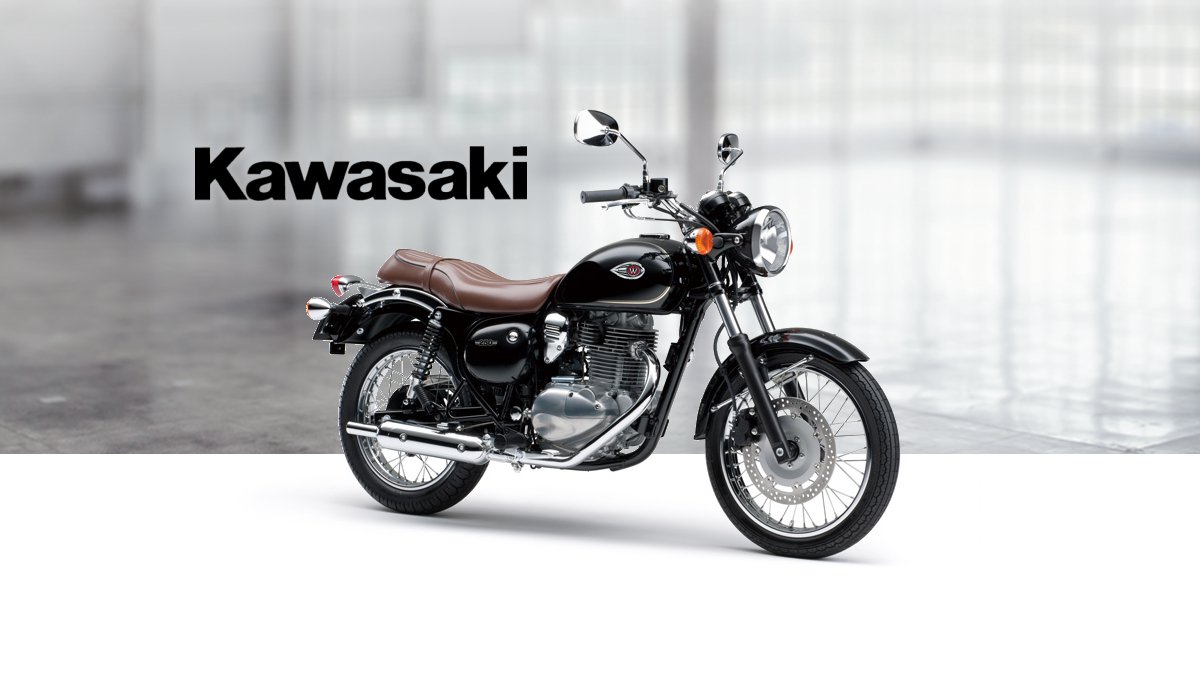
    India Kawasaki Motors (IKM) today announced that it will be increasing the prices of select models in India by up to 7 per cent. The revised prices for the motorcycles will come into effect from April 1, 2019, onwards and the new prices will be disclosed on the Kawasaki India’s official website. Stating the reason for the price hike, Kawasaki India says, “IKM strives hard to keep the price of its models very competitive in the India market. However, due to the increasing costs of raw materials and fluctuations in foreign exchange rates, IKM is compelled to change the price of our models.”

    Kawasaki hasn’t mentioned which all model will be receiving the price hike, however, we expect the India-made Kawasaki Ninja 300 to be a part of it. Mainly considering the fact that the motorcycle was launched at quite a competitive price and the company recently even slashed the prices of its spare parts by a considerable amount. Much recently, Kawasaki India also launched two models, namely Ninja ZX-6R and Versys 1000, at very competitive prices.

    In India, Kawasaki currently offers the Z250, Ninja 300, Versys-X 300, Ninja 400, Ninja 650, Z650, Versys 650, Vulcan S, Versys 1000, Ninja 1000, Ninja ZX-6R, Ninja ZX-10R and Ninja ZX-10RR, all of which are assembled at the Chakan plant. In total, however, Kawasaki offers a total of offers 29 products which include super-sports, naked, sports-tourer, cruiser and off-road variants.

  • Ducati India Announces DIY Discoveries Program

    Ducati India Announces DIY Discoveries Program

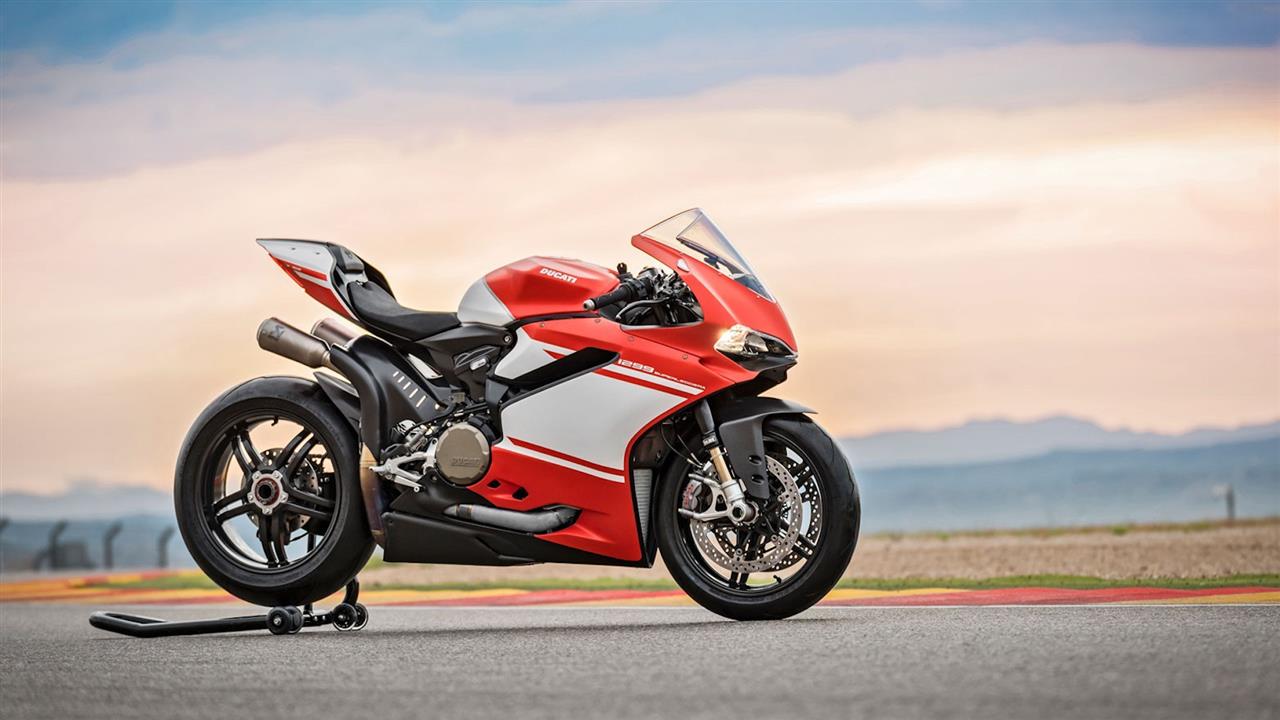
    Ducati India has announced its Do-It-Yourself Ducati Discoveries program in India and is partnering with Infinity Resorts for the same. What this means is that a Ducati owner in India will be able to make their own trips and travel plans with Ducati without any barrier on dates and timing, which they can choose to do either solo or with fellow Ducatisti. The first leg of this program takes you to Jim Corbett, one of the most famous national parks and tiger reserves in India.

    Ducati and Infinity will also extend the Ducati Discoveries program to other national parks such as Kanha, Bandhavgarh, Kaziranga and so on. Infinity Resorts suggests an itinerary of 5 Days or 4-nights which includes Jeep safaris, riding trails and bird-watching tours along with stay in fine hotels and resorts according to participants’ choice of dates. The best part is that riders get to choose how many days they wish to travel and what they want to do on their very own adventure.

    Sergi Canovas, Managing Director of Ducati India said, “We have been listening to our customers keenly and are taking their feedback. One of the first insights for us was that even though a lot of people want to go on Ducati Dream Tours, it somehow becomes a challenge with set dates which might not work for everyone. Keeping the same in mind, we created this unique property, exclusively for India, by tying up with luxury resort partners Infinity resorts. Ducati riders can just visit the DIY website, check out the suggested itinerary and download the travel maps.

    Basis their convenient dates and the time available, all they need to do is call the resort on their exclusive Ducati riders booking line and make reservations for this unique experience for themselves and their family. Currently, the first route map is live on the Ducati Discoveries website and we will be adding 4 more trips for our riders to avail within this year.”

    Ducati India has already completed its Dream Tours to Ladakh, Himachal Pradesh and Rajasthan and this is the company’s latest initiative to engage riders and also encourage them to take their Ducatis and go out exploring India.

  • Shelby Mustang GT500 Could Be Launched Soon In India

    Shelby Mustang GT500 Could Be Launched Soon In India

    Pune-based AJP Group is likely to launch the much-loved Shelby Mustang GT500 in India this year. The multi-brand enterprise, which recently appointed Manas Dewan as its Chief Operating Officer (COO), said that the company has partnered with performance auto brands like Scomadi Scooters and Shelby. And we have reasons to believe that the first car to come from the latter will be the new 2020 Shelby Mustang GT500. It was just early this year in January that Ford performance-oriented pony car made its official debut at the 2019 Detroit Motor Show, and it’s possible that the car could come to India by the end of this year.

    At the moment neither Dewan nor any other company spokesperson was available to provide us with an official confirmation about the Shelby GT500’s arrival. However, it’s clear that AJP is likely to serve as the technical partner for Shelby in India, handling modifications and upgrades, and as is the case globally sales, services and warranty bits could be handled by Shelby and Ford India.

    Although based on the regular Mustang, this particular GT500 tuned by Shelby is the most powerful Ford car. The Shelby GT500 is powered by a hand-built supercharged 5.2-litre aluminium alloy engine with inverted a 2.65-litre roots-type supercharger and air-to-liquid intercooler tucked neatly in the V8 engine valley and is tuned to churn out around 700 bhp. The Shelby GT500 gets a 7-speed dual-clutch transmission, which can shift smoothly in less than 100 milliseconds. This dual-clutch transmission is designed for a number of drive modes, including normal, slippery, sport, drag and track, and features line-lock and rpm-selectable launch control through selectable Track Apps.

    Visually, the car carries the signature Shelby character merged with the Ford Mustang’s design, like the large grille with the Cobra at the centre, sporty front bumper with a lip spoiler, 20-inch carbon fibre wheels. The car also comes with 0.5-inch-wider rear wheels (11.5-inch), custom Michelin Pilot Sport Cup 2 tyres, adjustable exposed carbon fibre GT4 track wing and splitter wickers with integrated dive plane. Then we also have the signature twin racing strips running from front to back.

    The car also gets a race car-inspired cabin with premium materials and unique finishes with fibre instrument panel applique and new door panel inserts in Dark Slate Miko suede with accent stitching. The dashboard features an 8-inch SYNC 3 touch screen featuring SiriusXM and FordPass Connect, along with a 12-inch full-colour LCD instrument cluster as well. The car also gets a high-performance custom-tuned 12-speaker B&O play premium audio system.

  • Royal Enfield Classic & Thunderbird Range Get Optional Alloy Wheels

    Royal Enfield Classic & Thunderbird Range Get Optional Alloy Wheels

    Chennai-based motorcycle maker, Royal Enfield has added alloy wheels as an optional accessory for the Classic and Thunderbird range of motorcycles. The alloy wheels are priced at ₹ 10,000 for a pair and can be purchased at any of the brand’s 800+ dealerships across the country. The black with chrome finished nine-spoke alloy wheels are the same ones that are already offered on the Thunderbird X series, and will seamlessly integrate with the original tyres, tubes and brakes, replacing the stock spoked wheels that are offered with all Royal Enfield offerings.

    The alloys are compatible with any of the Royal Enfield Classic and Thunderbird range of motorcycles

    Compatible with the Royal Enfield Classic 350 and 500, as well as the Thunderbird 350 and 500, the front alloy wheel measures at 19-inch while the rear is an 18-inch unit. The alloys come with a warranty period of two years, and the bike maker’s lists the installation time at 105 minutes. The new alloy wheels not only add to the visual appeal of the motorcycle but also bring the convenience of tubeless tyres, which are easier to repair, in case of a puncture.

    Given the fact that Royal Enfield motorcycles tend to be one of the most customisable motorcycles out there, offering factory-backed accessories is a smart move from the manufacturer. This should also help reduce the use of substandard alloys that are available in the market that tend to break easily with a simple bump or thud. It’s a safety risk afterall, putting the rider and pillion’s life in danger.

    In addition, Royal Enfield is expected to roll out alloy wheel options for the Interceptor 650 as well in the coming weeks. The alloy could sport a different design while prices are likely to be in the same vicinity. Both the front and rear wheels are 18-inch spoked-units on the Interceptor 650 and Continental GT 650, and come shod with Pirelli tyres.

  • RCom chief spared jail over debt to Ericsson

    RCom chief spared jail over debt to Ericsson

    Reliance Communications (RCom) has terminated a deal to sell its telecom assets to Reliance Jio Infocomm after failing to receive regulatory approval.

    But RCom’s founder Anil Ambani has been granted a last-minute reprieve from being imprisoned for failing to meet the company’s court-ordered repayment obligations to major creditor Ericsson after support from his older brother and founder of Reliance Jio Mukesh.

    In a stock exchange filing, RCom blamed its decision to terminate its asset sale plan to factors including a failure to receive the required permissions from the Department of Telecom.

    RCom also has not received notice of consent or objection from more than 40 of its foreign an Indian lenders regarding the proposed sale, despite holding over 45 meetings over a 15 month period, the company said.

    RCom has also decided to attempt fast track resolution of its overall debt through the National Company Law Tribunal, and the Tribunal has restrained the company from selling or transferring ay assets while the case is ongoing.

    But due to last minute intervention from Mukesh Ambani, RCom revealed in a second statement that the company has managed to make the required 5.5 billion rupee ($80.1 million) payment to Ericsson before the deadline for him to be jailed.

    Ambani was last month found to be in contempt of court over a failure to make the 5.5 billion rupee payment RCom had promised to make to Ericsson in September. He was given four weeks to make the payment or face being jailed for three months.

    “My sincere and heartfelt thanks to my respected elder brother, Mukesh, and Nita, for standing by me during these trying times, and demonstrating the importance of staying true to our strong family values by extending this timely support,” Anil Ambani said in a statement.

    “I and my family are grateful we have moved beyond the past, and are deeply grateful and touched with this gesture.”

    Ambani was referring to the fallout the two brothers had over the inheritance of Reliance Industries from their father Dhirubhai Ambani following his death in 2002. The brothers have since reconciled.

  • Vodafone Idea contracts Nokia for LTE expansion

    Vodafone Idea contracts Nokia for LTE expansion

    India’s Vodafone Idea has awarded Nokia a contract to improve the operator’s LTE coverage and capacity.

    Under the contract, Nokia will provide Single RAN Advanced, massive MIMO and small cell technology across multiple Indian telecoms circles to support the operator’s network consolidation and modernization program.

    The small cell deployment will help improve both indoor and outdoor coverage and capacity in the circles. Vodafone Idea will also adopt dynamic spectrum sharing technology to make the most productive use of the converged company’s spectrum.

    “Vodafone Idea is undertaking the world’s biggest telecom network integration in India [following the merger between Vodafone India and Idea Cellular], and creating India’s most advanced, secure and cost-efficient network,” Vodafone Idea CTO Vishant Vora said.

    “Extensive use of UBRs, dynamic spectrum sharing, massive MIMO and HetNets are key to our plan in this integration exercise, and we are very happy to partner with Nokia to deploy these futuristic, next generation technologies to prepare a future-proof network for the digital era.”

    Last month Vodafone Idea also contracted Ericsson to deploy LTE equipment for the network integration program, including radio systems and transport equipment from Ericsson’s 5G-ready Ericsson Radio System portfolio.

  • Data-sharing Algorithm launched for Indian rural store owners

    Data-sharing Algorithm launched for Indian rural store owners

    Data platform Next Billion is collaborating with data exchange service Ocean Protocol to pilot a new data-sharing model that gives Indian rural store owners an extra income stream.

    Next Billion, which creates insights to enable companies to expand in high-growth emerging markets, provides free point-of-sale platforms to rural store owners to record real-time inventory and sales data. It is building a data marketplace and piloting a new data sharing model based on Ocean Protocol, the first general platform for borderless data sharing that marries blockchain, data and AI.

    Through the pilot, Indian rural store owners will capture real-time transactions via the POS platform and are incentivised to consistently use this platform to submit verified data. When companies buy their syndicated data, transactions can be traced back to the source via Ocean Protocol, enabling Next Billion to reward these rural store owners with royalties.

    “We believe global companies’ needs for commercial data can unlock sustainable and inclusive business models that empower local data providers to share fair value from their data,” said Next Billion MD Oliver Gilbert. “Ocean Protocol enables Next Billion to monetise data and share it with companies in a safe and secure manner.”

    Despite the lack of digitisation in retail practice in rural Asia, sales are climbing. Driven by the rise of the middle class, the consumption of fast moving consumer goods (FMCG) in rural areas is growing across Asia. From 2009 to 2012, spending by India’s 800+ million rural residents reached $69 billion, some 25 per cent more than their urban counterparts over the same period.

    According to recent estimates, consumption in rural areas is growing at 1.5 times the rate in urban areas. The current $12 billion consumer goods market in rural India is expected to reach $100 billion by 2025.

    FMCG companies are eyeing this new opportunity and have revved up their distribution channels in rural areas.

    This has been reflected by a significant rise in demand for rural market-research data. However, traditional market-research firms lack rural reach, maintain outdated platforms premised on different environments, and their costs remain prohibitively expensive.

    Ocean Protocol is a blockchain-based platform for the safe sharing of data that enables companies and data services to build on top. Its technology allows organisations to put a value on, own and control their data while addressing many frictions around data sharing today – including privacy concerns, trust, and auditability. Ocean also allows algorithms and models to come to the data, get trained and then leave without exposing the data or taking a copy, thereby retaining privacy and freeing up data to advance the economy and society.

    “A lot of data is generated today, yet they are locked up in silos because people are scared of losing control and not getting rewarded. Ocean helps to solve this by giving the tools for people to own and control their data and develop new data-driven business models,” said Ocean Protocol founder Bruce Pon. “Data owners can program the conditions of access which are then executed precisely. In addition, data can be traced back to its source, enabling incentives to be spread across all stakeholders in the data sharing process.”

    “Being incentivised, along with transparency on how data is being used, increases the willingness of people to share data,” Gilbert added. “We hope to provide high quality and agile retail insights at a fraction of what the traditional market research firms would charge while targeting an increase in sustainable livelihoods by 30-50 per cent.”

  • Global Sportswear brand Lotto to accelerate omnichannel presence in India

    Global Sportswear brand Lotto to accelerate omnichannel presence in India

    With the aim towards consolidating its presence in India’s growing athleisure market, Global Sportswear brand Lotto’s Indian association, SSIPL Lifestyle Pvt. Ltd. has partnered with Ace Turtle, Asia’s leading omnichannel platform company. Ace Turtle’s omnichannel technology platform will play a pivotal role in accelerating Lotto’s digital presence in India. Along with expanding its physical presence in India through exclusive stores, Lotto is aggressively looking to be truly omnichannel by expanding its digital presence.

    In India, Lotto has an exclusive license agreement with SSIPL, one of the leading companies in the footwear manufacturing and retailing industry. Its portfolio includes renowned sportswear brands like Nike, Asics, Adidas, Reebok, Puma, Converse to name a few. Speaking on the partnership, Amit Pahuja, BRAND HEAD, LOTTO said “The athleisure market is poised to grow 15-20 percent year on year in India. Seeing the immense scope in the category going ahead, Lotto aims to scale its omnichannel presence to expand its reach to customers who do not have access to our physical stores. Ace Turtle, in the last few years has grown rapidly to become market leader in omnichannel enablement, and we are confident that their technology platform will play a significant role in accelerating our omnichannel strategy”.

    The flourishing online retail market is a catalyst that has been successful in bolstering the growth of sportswear market in India. Ecommerce has especially been instrumental in aiding brands reach smaller cities and towns where they are not physically present of yet. Speaking on the partnership, Nitin Chhabra, CEO, Ace Turtle said “With customers increasingly switching between various sales channels (offline and online), it only makes sense for brands to adopt a robust omnichannel strategy. This will go a long way in increasing the reach of the brand and in building a strong customer base. Our omnichannel platform plays a pivotal role in helping brands build a truly omnichannel presence. We are excited to partner with Lotto, who have witnessed tremendous growth over the last few years. Our platform would play a critical role in enabling a unified brand experience for Lotto’s customers across various channels”.

    Lotto has around 40 stores and plans to add another 60 stores every year. The brand has created a niche in the Indian sportswear market targeting value segment customers. It has grown significantly over the last two or three years at a healthy CAGR of 50 per cent. Over the years, it has invested significantly in strengthening its in-house design capability and operational processes.


  • AirAsia to launch Mumbai-Kolkata daily flight from Mid-April

    AirAsia to launch Mumbai-Kolkata daily flight from Mid-April

    Low cost carrier, AirAsia India Friday announced the launch of its flight services to Kolkata from the city next month. This would be airline’s second destination from Mumbai after it started operating daily services to Bengaluru from the country’s financial capital.  AirAsia India will now fly connecting Kolkata and Mumbai, with one daily flight, effective April 15, the airline said in a release Friday.

    The introduction of Mumbai-Kolkata route comes close on the heels of AirAsia India adding eighth additional flights to its network of 19 destinations.

    “We recently introduced the first connection between Bengaluru and Mumbai and are now adding a new connection between Mumbai and Kolkata. It’s a key market for AirAsia and this flight will strengthen our operations in East. This new route is a manifestation of our future growth plan in these key and important business markets, said Sunil Bhaskaran, managing director and chief executive officer, AirAsia India.

    AirAsia India, a joint venture between Tata Sons and Malaysian airlines’ group AirAsia, currently operates to 19 domestic destinations with a fleet of 20 Airbus A320 planes. The group made its first entry in the Mumbai market with the launch of AirAsia Berhad services to here from Kuala Lumpur in May 2010.

    However, in 2012 it withdrew the route citing high airport charges. But came back again with its subsidiary Indonesian AirAsia X in May 2017, which was again discontinued in April last year.

  • Elon Musk Says Tesla Likely To Come To India This Year

    Elon Musk Says Tesla Likely To Come To India This Year

    It was at the end of last year that Elon Musk told the world that India is on the company’s radar for introducing models from the Tesla brand. In fact, the company even slated India to be one of the countries where the Model 3 would be available for booking. Sadly though, Tesla has not yet come to India. It was in 2015 that PM Modi tweeted how he was impressed by the power wall technology of Tesla Motors which stores electricity in a battery for long term. Musk gave a presentation to PM Modi on the revolutionary technologies being developed by Tesla, which is likely to change the face of the motor industry and have wider implications on developing countries like India on renewable energy.

    We were quite certain that the electric carmaker would make it to India by 2017 and now those plans have been pushed forward. However, there’s no denying that the company wants to make an entry into the Indian market. A tweet from Elon Musk now suggests that he would love to bring Tesla to India this year. If not this then definitely in 2020. We had earlier reported that Musk is likely to come to India this year and it’s probably then that the plans will see fruition.

    While we can’t wait for Tesla to come to India, we certainly hope to hear a concrete plan from the company for India.

  • XYXX Innerwear received seed funding of 20 million from Sauce.vc, appoints Govind Shrikhande as Senior Advisor

    XYXX Innerwear received seed funding of 20 million from Sauce.vc, appoints Govind Shrikhande as Senior Advisor

    XYXX Apparels Pvt Ltd, the parent company of XYXX Innerwear brand, announced the first round of seed funding of 20 million from Sauce.vc. Sauce.vc is founded by private equity veteran and consumer angel investor Manu Chandra. Govind Shrikhande, ex-MD of Shoppers Stop has joined XYXX as a senior advisor.

    XYXX Innerwear is a premium men’s innerwear and loungewear brand which is rapidly gaining traction with the Indian consumer. It offers a wide range of comfortable and fashionable products using superior fabric such as MicroModal and Supima cotton at affordable prices. XYXX products are widely available online and have recently started retailing in multi-brand outlets in some regions. XYXX observed a monthly sale of one crore and is expected to double sales before July 2019.

    Manu Chandra, Managing Partner, Sauce.vc said, “We are proud to back XYXX and Yogesh. We believe there is tremendous potential for a premium innerwear brand that can offer better quality at affordable prices in the growing mass premium segment. Omnichannel distribution presence and supply chain management will be the key strengths this team will build on.”

    Yogesh Kabra, Founder & CEO, XYXX Apparels Pvt Ltd said, “XYXX offers a wide portfolio of inner and loungewear products made from luxury fabrics in a variety of appealing designs and prints. I am thrilled to have partnered with industry stalwarts Mr. Govind Shrikhande and Manu Chandra whose deep understanding and experience will help us make XYXX as a successful premium brand in the inner wear and loungewear category, with a sharp focus on premium quality and affordability.”

    Govind Shrikhande, ex-MD, Shoppers Stop and Advisor, Sauce.vc said, “I am very happy to partner with a young challenger brand like XYXX. The innerwear category is ripe for disruption by new home-grown brands. Yogesh and team are building a sound and scalable business with a deep understanding of textile and apparel manufacturing and supply chain. I look forward to contributing in this journey.”

  • Vodafone Idea doubles 4G speeds in Mumbai

    Vodafone Idea doubles 4G speeds in Mumbai

    India’s Vodafone Idea has announced it has doubled 4G download speeds in the Mumbai metro area as part of a major network modernization program in the city.

    The operator is deploying new technologies in the metro area including Massive MIMO, small cells and more TD-LTE cell sites, and has so far deployed more than 5,000 such sites across several regions.

    As part of the network upgrade, Vodafone Idea has also installed over 1,900 pieces of dedicated indoor coverage equipment at high rises and commercial buildings.

    Vodafone Idea’s capacity and coverage in Mumbai has also benefited from 4G spectrum refarming conducted as part of the network consolidation between the former Vodafone India and Idea Cellular, which combined to become Vodafone Idea last year in a $23 billion merger.

    “I am happy to announce that ‘Mumbai just got two times faster’ which means that our customers will now experience two times the download speeds on the 4G network,” Vodafone Idea business head Sunil Tolani said.

    This is based on statistics from Valu Connex Telecom Services indicating that average download speeds in Mumbai have improved by 2.16 times compared to prior to the modernization program.

    “We will be utilizing multiple [advertising] media like OOH [out-of home], radio and digital to reach out to our audience and hope they will enjoy the benefits of our focused network initiatives in Mumbai,” Tolani concluded.