Tag: india

  • Tata Comm, Syniverse enter managed IPX tie-up

    Tata Comm, Syniverse enter managed IPX tie-up

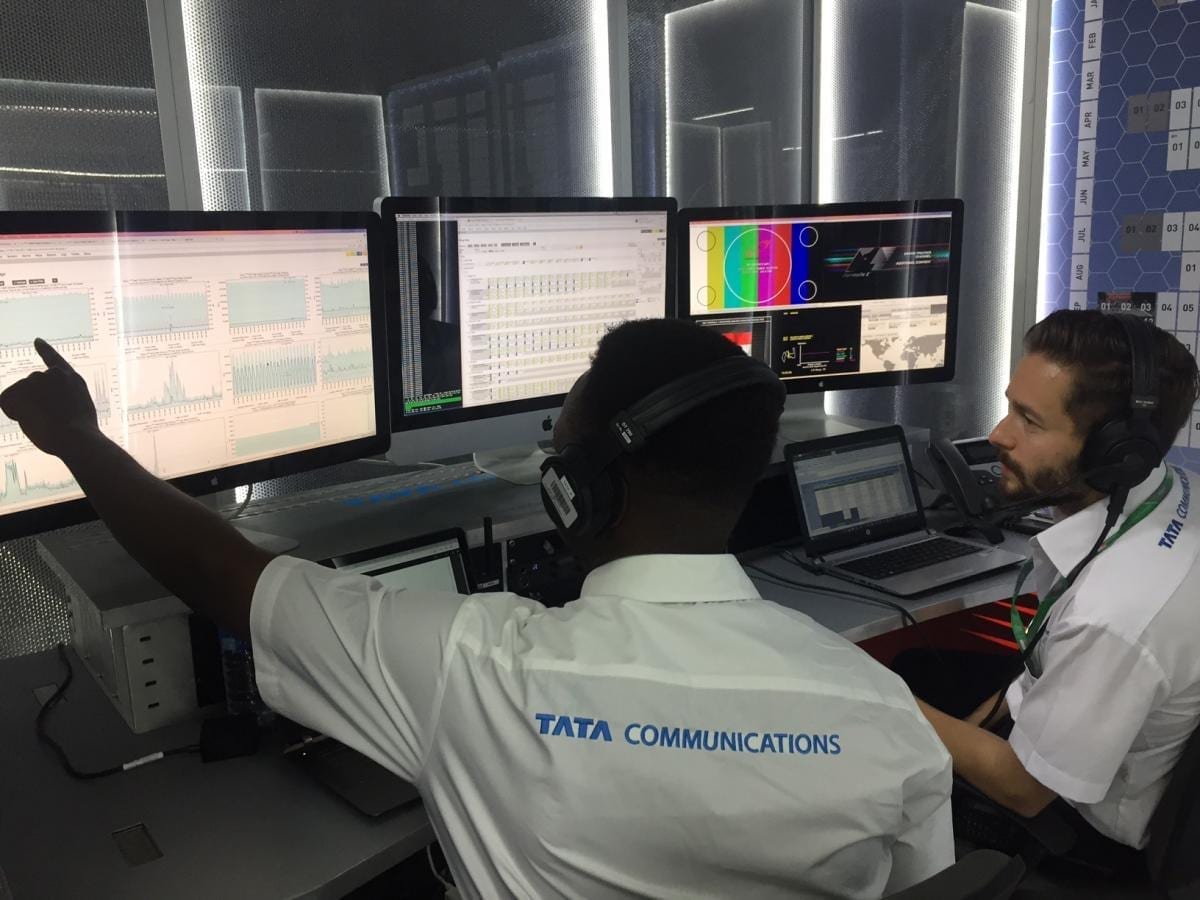
    India’s Tata Communications and US-based technology and business services provider Syniverse have teamed up to create what they are billing as the first fully-managed, end-to-end IPX network interconnection partnership for operators.

    The IPX network partnership will combine platforms that support 5G and IoT to create a comprehensive foundation for global mobility services.

    Under the IPX network partnership, Syniverse and Tata Communications will collaborate to manage traffic traveling via interconnection between the two companies’ networks to enhance quality of service and improve capacity and connectivity.

    The two operators will leverage each other’s IPX network to expand the reach of global mobile service provider customers. Both companies will have access to nearly 300 directly connected IPX/GRX customers, for a total reach of nearly 800 mobile operators.

    Customers will also be provided with enhanced monitoring, reporting, redundancy and quality of service, according to Tata Communications chief product officer Anthony Bartolo.

    “By joining forces with Syniverse, we’re one step closer to our goal of creating an environment where everything and everyone can become seamlessly connected, anywhere in the world,” he said.

    “As our customers leverage next-generation IoT and mobility services to drive their digital transformation, they need a solid foundation to ensure that they are able to capture, move and manage information seamlessly and securely worldwide. The powerful combination of Tata Communications’ and Syniverse’s capabilities and global reach will enable them to do just that.”

  • Hyperlocal Start-up, Mapprr Brings Innovation & Ease To The Customers

    Hyperlocal Start-up, Mapprr Brings Innovation & Ease To The Customers

    To provide comfort to the customers, Mapprr – a pioneer in Hyperlocal delivery concept has launched live availability of the products on-board for the first time in India along with quick 60 minutes delivery. With this, Mapprr has taken a step forward towards enhancing the quality of customer experience.  Moreover, on one hand, users experience difficulties in finding products one may need, and on the other hand roaming store to store is a big disadvantage! So, with Mapprr, users can get real time product availability updates along with quick delivery service. Moreover, users can either order from Web or Mobile Application from Mapprr!

    In the words of Aruna Subhakar, Founder & CEO – Mapprr, “Innovation in Hyperlocal market along with specialized services is making all the right noises. It works towards empowering small and local retailers to think smart and tie up their business to serve customers in their locality smartly adhering to the technological advancements. 

    He further added that the people are embracing this new dynamic marketplace, as it provides them a perfect amalgamation of the traditional and modern shopping experience.

    Mapprr has stationed out 10+ number of delivery champions in every area summing up to 100 champions. These delivery champions would receive the orders within certain distance from the store assigned to them. The company has tied up with stores like Apollo, Medplus, Ratnadeep, The Body Shop, Nykaa, HealthKart, NewU, Sangeeta Mobiles, Big C & LOT Mobiles, etc. who readily pack the products once the order is received. The delivery champions go and pick up the orders and deliver at the doorsteps. The fastest delivery in a busy city like Hyderabad is 17 Minutes!

    Currently available in Hyderabad, Mapprr delivers Groceries, Medicines, Electronics, Beauty care, Fitness Supplements, Pet Supplies, and plans to introduce Flowers, Watches, Gifting items, Mouth Sweetener like Paan, etc. This year, the company plans to hire 2,000 delivery fleet and 200 employees across Hyderabad and Bangalore. This year, Mapprr plans to expand to Pune and Gurugram.

  • LuLu Group opens first Build-A-Bear store in India

    LuLu Group opens first Build-A-Bear store in India

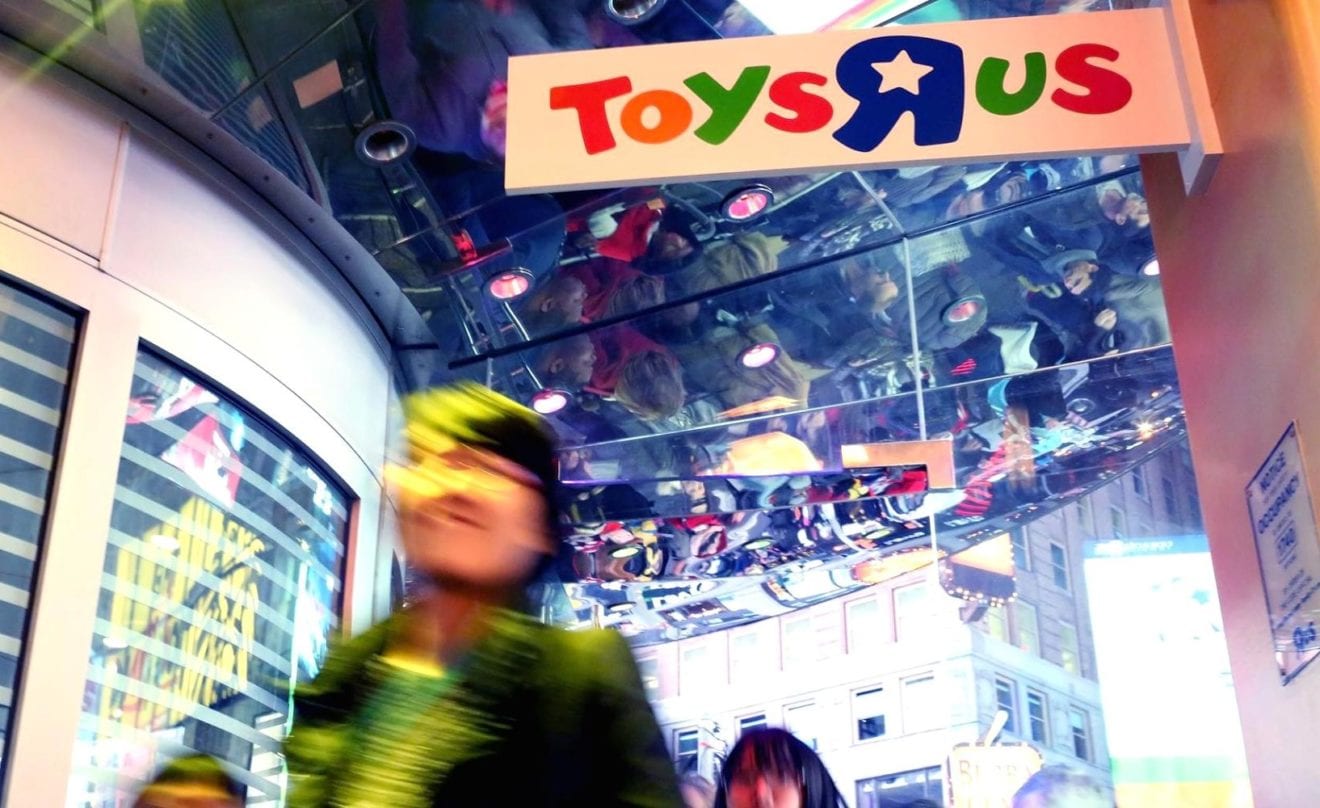
    LuLu Group International’s retail arm Tablez has launched the first Build-A-Bear store in India. The American personalised, experiential toy-retail brand is now available at Toys R Us in Phoenix Marketcity, Bangalore. Selling customised stuffed toys, the firm aims to reach 9 million sales in the top 15 cities in India within five years out of standalone stores and Toys R Us shop-in-shop formats.

    “The Build-A-Bear concept is a one-of-a-kind retail experience, and we are thrilled to open the first store in Bangalore,” said Tablez MD Adeeb Ahamed. “Build-A-Bear is synonymous with creativity and novelty for children. I am sure that each child that enters our store will cherish their experience and leave with an indelible memory.

    “From standalone stores to shop-in-shop formats, Build-A-Bear is ready to reach out to families and kids in India and help loved ones create memories and spend more time together. We plan to open 20 standalone stores of Build-A-Bear across key cities in India over the next 10 years, along with shop-in-shop formats across all our Toys R Us stores as well,” he said.

    The Build-A-Bear brand is best known for its “Choose Me” wall, from which each guest can choose an unstuffed animal to bring to life. It has close to 500 stores globally.

  • Airtel taps Ciena for high-speed backbone network

    Airtel taps Ciena for high-speed backbone network

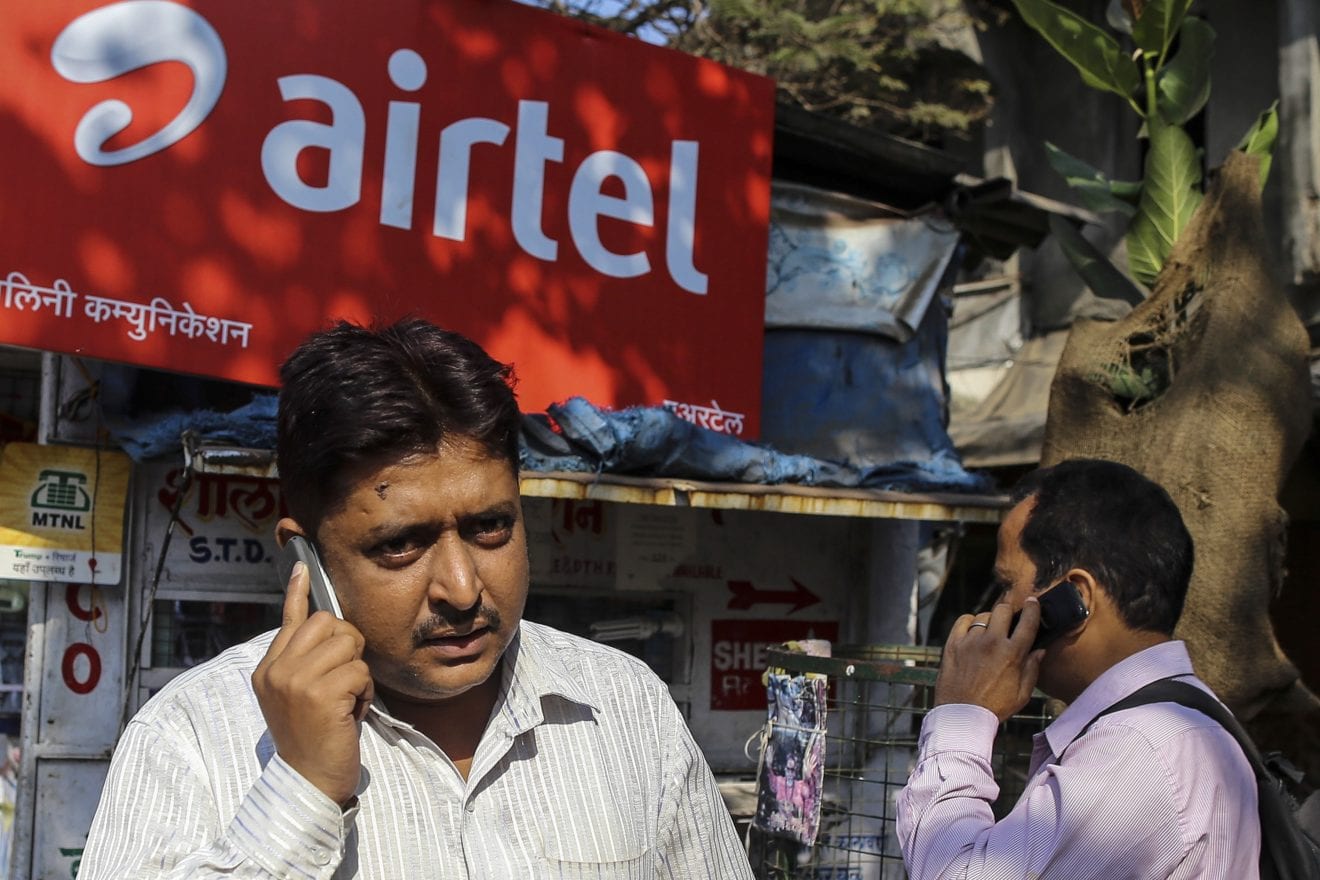
    India’s Bharti Airtel has contracted Ciena to deploy a large-scale photonic control plane backbone network that will connect more than 4,000 towns across the nation.

    Under the agreement, announced at Mobile World Congress in Barcelona, the companies will collaborate to deploy a network spanning 130,000km.

    The network deployment, which the companies said will be one of the world’s largest photonic control plane deployments, forms part of Airtel’s Project Leap network transformation program.

    Airtel plans to use the network to serve exploding demand for high-speed data services, and to enable the delivery of high-speed broadband to end users over 4G/5G/FTTH architectures.

    For retail and enterprise customers, the network will also support bandwidth on demand, optical VPNs, latency based routing and dynamic data center interconnection.

    Airtel CTO Randeep Sekhon said the backbone architecture will be capable of working with data rates of 400Gbps and higher, and delivering low-latency software-controlled connectivity for cloud infrastructure.

    “Airtel has always pioneered the introduction of cutting-edge network technologies to serve its customers. We are pleased to work with Ciena to build one of world’s largest optical spine and leaf networks, which is also a big step towards 5G readiness by leveraging our huge fiber assets,” he said.

    “This will not only scale our network for massive capacity but also protect traffic and enhance service delivery to all our customers. It will also help Airtel further strengthen its position as a key enabler of digital experiences in an increasingly connected world.”

  • First Under Armour India store’s a Fact

    First Under Armour India store’s a Fact

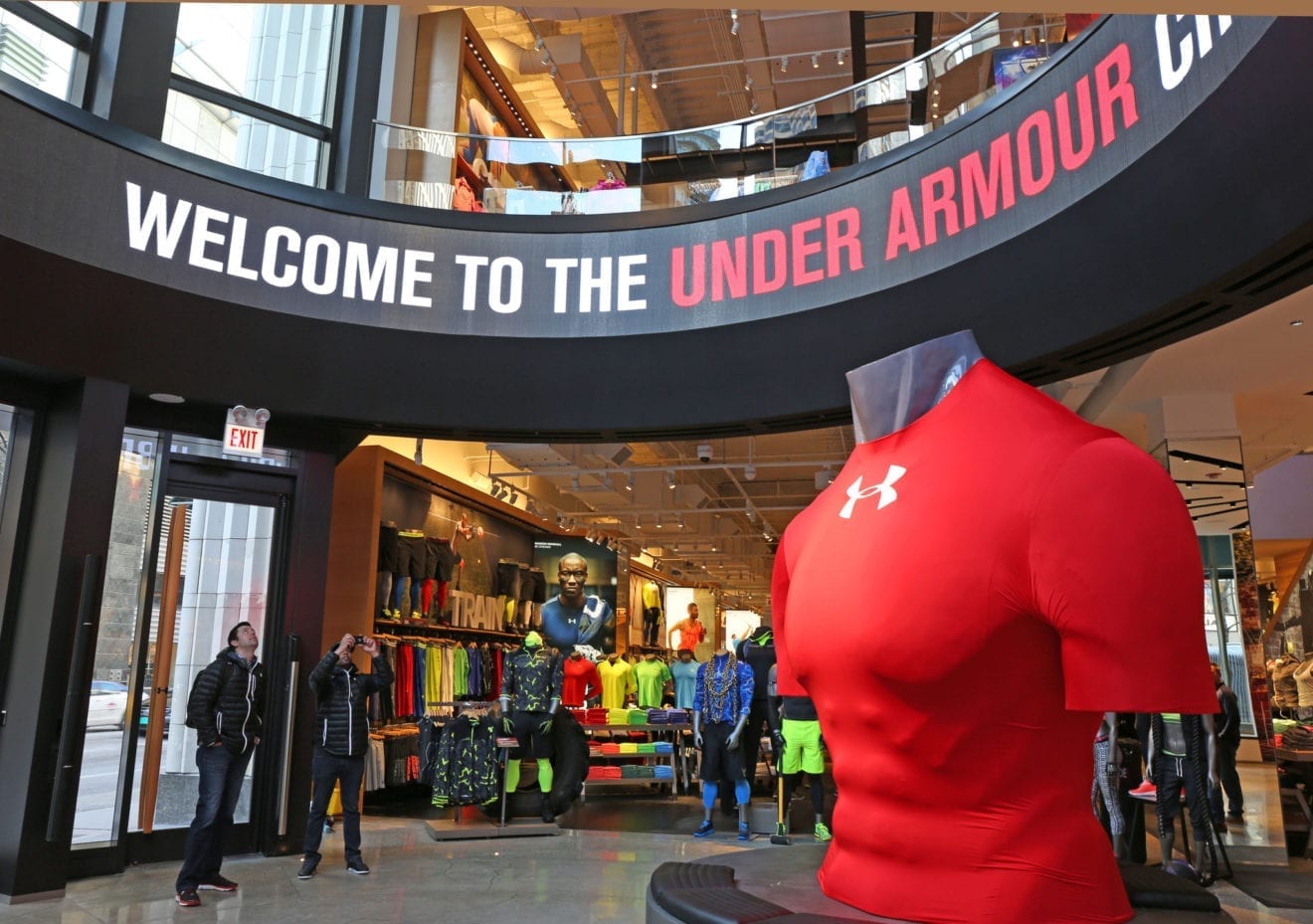
    Under Armour India is about to open its first store after testing the market online. According to Jason Archer, MD at Under Armour’s Asia-Pacific region, the company has set up a wholly owned Indian subsidiary. It will be led by former Adidas veteran Tushar Goculdas as MD.

    “We are investing in Asia Pacific as there are long-term growth opportunities. We have been concentrating in China over the last few years. Over the next couple of weeks, we will be establishing our retail presence in India,” Archer told.

    Under Armour India will start operations by opening stores in metro locations after assessing the market potential online through partnerships with Amazon and Flipkart-owned Myntra.

    “We will start operations by selling our global portfolio of training and running products,” said Archer.

  • Starbucks India caught profiteering from tax cut

    Starbucks India caught profiteering from tax cut

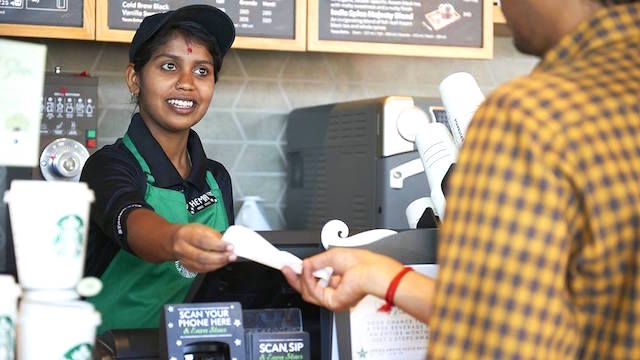
    Starbucks India could be fined after failing to pass on a hefty GST cut to its customers. India’s director general of anti-profiteering (DGAP) has found that Tata Starbucks profiteered by not reducing its prices when the government reduced the GST from 18 per cent to 5 per cent in November 2017. Starbucks India is a joint venture between Tata Group and Seattle-based Starbucks.

    The DGAP submitted its report to National Anti-Profiteering Authority (NAA) recently.

    “The company is found to have profiteered Rs 4-5 crore (US$564,000 to $705,000) as it did not pass on the benefit of GST rate cuts to its customers,” a source told the online publication. “The case is now being heard by the NAA for a final decision.”

    Last year, a regular latte at Starbucks India cost Rs 205, equivalent to US$2.89 plus 5 per cent GST. An overcharge of 13 per cent is equivalent to 38 cents on every cup sold. Starbucks may argue it increased its prices at the time coinciding with the cut to offset increased overheads.

    The probe was sparked by a customer complaint who was unhappy that the company did not reduce its prices when the tax rate fell by such a large margin.

    says that under India’s GST system, businesses have an obligation to compute and pass on the benefit of tax-rate cuts to consumers.

    “Any reduction in rate of tax on any supply of goods or services or the benefit of input tax credit (ITC) shall be passed on to the recipient by way of a commensurate reduction in prices,” rule 171 of the Central GST (CGST) Act, 2017, reads.

    A spokesman for Tata Starbucks emailed the publication saying the company “conducts its business ethically and complies with all the local laws and regulations”.

    A decision on the case will take up to three months. If the NAA rules against Starbucks India, the company can be forced to reimburse affected patrons. In the case of a coffee chain, it would be impossible to identify all the affected customers, in which case the NAA may order the overcharged sum to be deposited into a government-operated Consumer Welfare Fund. The authority may also impose a fine.

  • Indian telcos call for fiber deployment fund

    Indian telcos call for fiber deployment fund

    Indian operators are calling for the establishment of a fund to help incentivize deployments of fiber across the country ahead of the introduction of 5G.

    The Cellular Operators Association of India (COAI) has urged the government to offer incentives including tax relief, rationalization and reduced red tape on investments in order to encourage the deployment of more fiber.

    The industry body believes a national policy should be established that would include the introduction of uniform and reasonable approval processes and right of way policies.

    As part of the government’s National Digital Communications Policy, the government is considering introducing incentives, and establishing a special purpose vehicle to grant low-interest loans to operators to fund network expansion.

    The policy also calls for the introduction of a new National Fibre Authority to help meet operators’ needs for fiber backhaul. The government aims to increase India’s fiber footprint fivefold by 2022 to around 7.5 million route kilometers. According to the policy, less than a quarter of current telecom towers are connected to a fiber backbone.

  • Build-A-Bear to open more stores in next 10 years in India

    Build-A-Bear to open more stores in next 10 years in India

    For more than 21 years, U.S. based personalized experiential toy retail brand Build-A-Bear has been sharing hearts and bear hugs globally, and after a long wait, Tablez – the retail arm of LuLu Group International, has launched the first Build-A-Bear store in India, at Toys”R”Us, Phoenix Marketcity in Bangalore. Build-A-Bear is a global customized stuffed-animal retail entertainment brand that aims to reach as many as 9 million households in the top 15 cities in India by 2025. Besides standalone stores, shop-in-shop formats of Build-A-Bear would be launched within Toys“R”Us.

    On this special occasion, Adeeb Ahamed, MD, Tablez said: “The Build-A-Bear concept is a one-of-a-kind retail experience, and we are thrilled to open the first store in Bangalore. Build-A-Bear is synonymous with creativity and novelty for children. I am sure that each child that enters our store will cherish their experience and leave with an indelible memory.

    “From standalone stores to shop-in-shop formats, Build-A-Bear is ready to reach out to families and kids in India and help loved ones create memories and spend more time together. We plan to open 20 standalone stores of Build-A-Bear across key cities in India over the next 10 years, along with shop-in-shop formats across all our Toys”R”Us stores as well.”

    Dorrie Krueger, Build-A-Bear Workshop Chief Strategy Officer, said, “Together with Tablez India, we are excited to open the first Build-A-Bear store in India and continue to expand into this important global market. We look forward to introducing the Build-A-Bear brand and sharing the joy of making a new furry friend with millions of families.”

    Build-A-Bear is a global brand that kids love and parents trust for fantastic family experiences. The ‘Choose Me’ wall at every Build-A-Bear store is where the empowerment journey begins as each guest chooses an unstuffed animal to bring to life. Accessories give customers the freedom to customize their creation. The heart ceremony is where one can add special wishes to their friend. During the stuffing process, a heart is placed in the bear along with special wishes, and the guest promises to care for their new furry friend once they are given the birth certificate. This signature ceremony brings each stuffed animal to life in a personal way, further ensuring a greater attachment.

    Established in 1997, Build-A-Bear has helped millions find their own meaning in a new furry friend. The brand has nearly 500 stores worldwide and more than 180 million furry friends have been made globally in its 21-year history. Build-A-Bear helps guests mark special occasions, start friendships, and inspires people to make their own adventures. At Build-A-Bear, one is empowered to feel that anything is possible.

    Further, a Build-A-Bear shop-in-shop format will follow in Vega City Mall, Bangalore; City Centre Mall, Mangalore and Phoenix Marketcity, Pune. Build-A-Bear plans to expand to as many as 65 shop-in-shop format stores and 20 standalone stores in India over the next 10 years.

  • India’s V-Bazaar opens 1st outlet in Lalitpur

    India’s V-Bazaar opens 1st outlet in Lalitpur

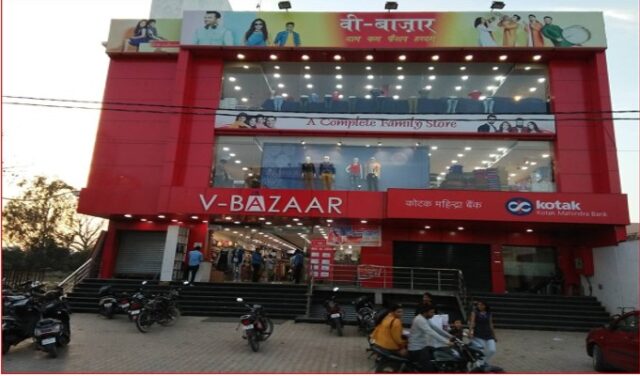
    V-Bazaar has announced the launch of its 1st store in Lalitpur and 30th in Uttar Pradesh. V- Bazaar is a complete family fashion store which brings trendy and fashionable merchandise to every category of people, at reasonable prices by eliminating the middleman between manufacturers and customers. The store is spread over 8,856 sq.ft. area.

    Announcing the launch, Hemant Agarwal, CMD of V-Bazaar said, “It is a very happy and proud moment for us to open our 1st store in Lalitpur. Looking at the overwhelming response of our other store, we thought of providing the convenient shopping experience to the customers of the city. It has been our attempt to provide our customers the superior merchandise, service and the overall international shopping experience. This 1st new store in Lalitpur is a significant achievement for us. Our new store is fashionable and individualistic, showcasing a collection of the finest quality merchandise at unbelievably pocket-friendly prices.”

    The new showroom has been spread over large area with spacious interiors. The new store offers a vibrant trendy line for the youth which includes shirts, pants, sherwanis, kurta pyjama, jackets for men and fancy wedding sarees, wedding designer suits, cotton suits, pants, half sleeve and full sleeve t-shirts for women. There is large variety of dresses for your young ones too.

    The range offers funky, stylish, and incredibly comfortable garments that are a must in every teenagers and young adult’s wardrobe. Created while keeping current international trends in mind, the collection is trendy, fashionable and is available at unbelievably low prices. Customers can make their shopping fun with special opening offers at V-Bazaar as on every purchase they get assured gifts.

    V-Bazaar primarily operates in Tier II and III cities. It is chain of value retail fashion stores offering apparels for men, women, kids, home furnishing, footwear and accessories catering to the entire family.

  • India’s Tanishq brings its first Augmented Reality experience for its customers

    India’s Tanishq brings its first Augmented Reality experience for its customers

    From social media filters, to reshape the concept of traditional retail, Augmented Reality (AR) is rapidly growing in popularity because it brings elements of the virtual world, into the reality, thus enhancing the things we see, hear, and feel. AR has made retail engagement all the more experiential, fascinating and personal and it’s often considered to be in the middle of a mixed reality spectrum; between the real world and the virtual world.

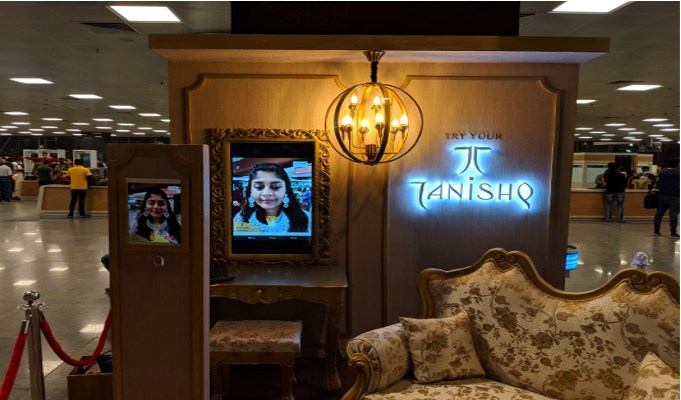
    Tanishq has taken one step further to be more accessible to its customers by launching into the Augmented Reality experience at the Bangalore and Delhi airports. For the first time in India, a jewellery brand is doing an Augmented Reality/ hybrid reality (combination of physical space Augmented Reality) campaign at an airport to engage with a large audience at a completely new level. Tanishq is leaving no stone unturned to keep their customers happy by adopting innovative ways to display their product range.

    With this technological advancement, customers will have the option of ‘Try and Buy’; trying out the jewellery virtually looking at the AR screen. Customers can benefit from this advanced jewellery experience for a month starting from February 06, 2019 at Delhi airport and February 08, 2019 at Bangalore airport.

    Tanishq is implementing MirrAR, an Augmented Reality software platform in collaboration with StyleDotMe, a startup focused in innovative application of Augmented Reality (AR) and Artificial Intelligence (AI) for providing the next generation experience to consumers who are interested in the Gems and Jewellery industry. Using the platform users can virtually try on the jewellery in real time, without actually having to wear them.

    Sharing her thoughts on the launch of AR experience, Deepika Tewari, Associate Vice President, Marketing, Jewellery Division at Titan Company Limited said, “Tanishq has always aimed at providing the best for our customers and this fascinating initiative is one such approach in achieving the objective. Consumers have the option of browsing through multiple jewellery pieces virtually with just one click. The real-time customer experience will definitely strengthen the retail connection between the brand and our esteemed consumers; a transformative step on how India will shop and purchase jewellery in the near future.”

  • Puma pips rivals, becomes top sportswear brand in India

    Puma pips rivals, becomes top sportswear brand in India

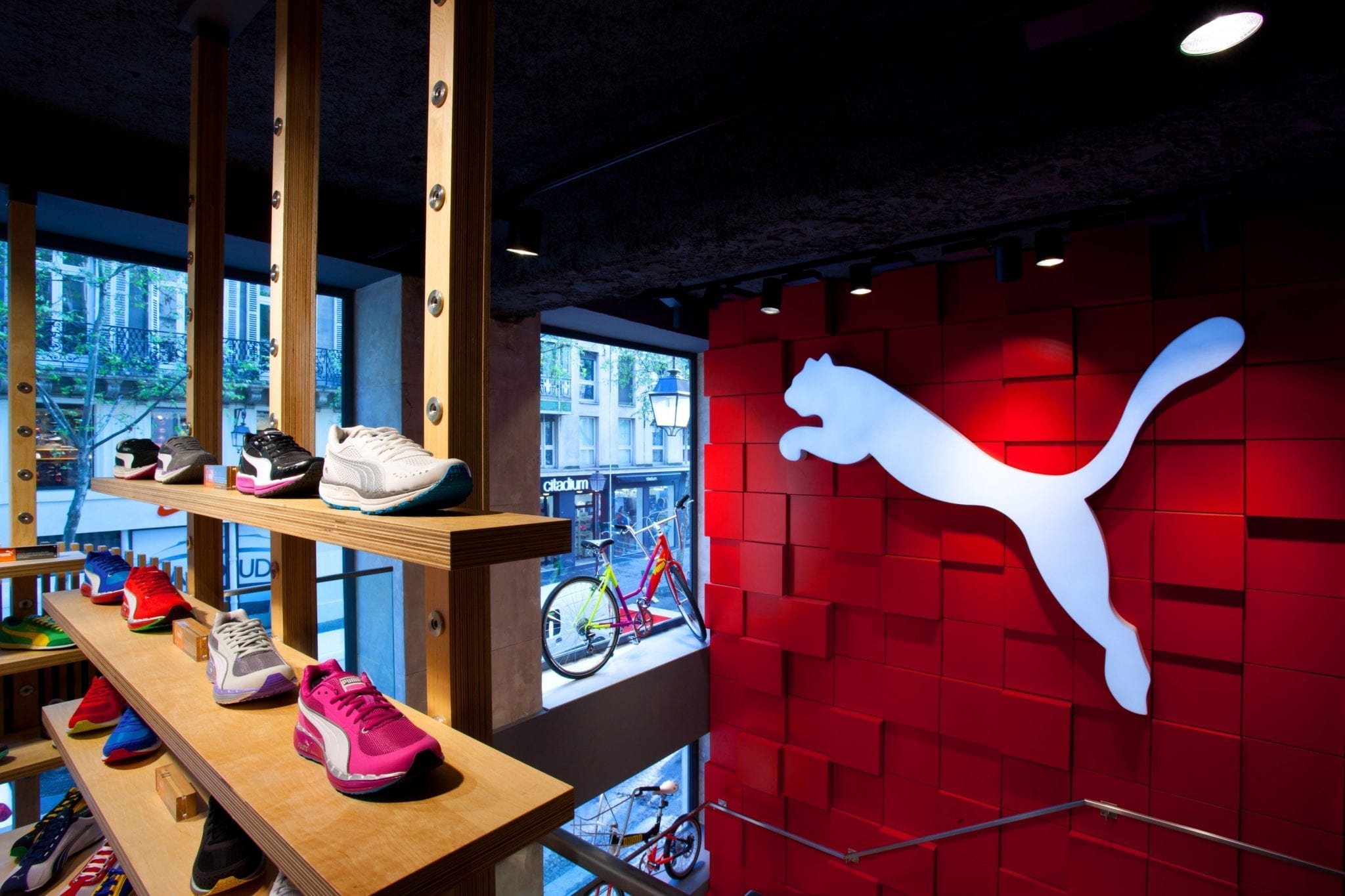
    German sportswear major Puma on Monday claimed that it has become the top sportswear retailer in India, surpassing rivals such as Nike, Adidas, Skechers and Reebok in terms of yearly sales. Puma, the third-largest sportswear manufacturer in the world, has reported sales of Rs 1,157 crore for the 12-month period ending December 2018 against Rs 958 crore reported in the year ago period.

    The company follows the January-December calendar year, while its Nike, Adidas, Skechers and Reebok go by the April-March financial year (FY) cycle.

    In FY 2017-18, Puma’s compatriot Adidas had registered sales of Rs 1,132 crore, up from Rs 1,100 crore reported in FY 2016-17.

    During the same period, American sportswear giant Nike reported sales of Rs 828 crore against Rs 807 crore reported in the previous fiscal.

    Reebok, which is owned by Adidas, saw its sales drop from Rs 416 crore in FY 2016-17 to Rs 391 crore in FY 2017-18.

    Another American brand Skechers, which is relatively new in the Indian market, reported sales of Rs 440 crore in FY 2018-19, up from Rs 282 crore reported in FY2016-17.

    “We are making strong progress in both sports performance and sport style categories,” Puma India Managing Director Abhishek Ganguly was quoted as saying.

    Interestingly, India is the only country where Puma’s sales have crossed the sales of other sportswear giants such as Adidas and Nike.

    Over the past few years, India has rapidly caught up with the wider global fitness trends. From 2015 to 2016, the Indian sportswear market grew 22 per cent, outpacing the segment’s global increase of 7 per cent, according to Euromonitor International. By 2020, it is expected to grow an additional 12 per cent CAGR (compound annual growth rate) with sales expected to reach $8 billion.

    The bitter rivalry between Puma and Adidas goes beyond mere corporate competition. It was in fact a sibling fallout that created two of the world’s biggest sportswear brands.

    In the 1920s, German brothers Adolf and Rudolf Dassler launched a shoe company together. Their business picked up after Dassler shoes were used by medal-winning Olympians through out the 1930s.

    But along with sales, tension also spiked between the Dassler brothers, which reached a boiling point during World War II. While it was not clear what exactly caused the rift, it was said to be a result of miscommunication.

    The brothers eventually split in 1947 with Rudolf forming a new firm that he called Ruda – from Rudolf Dassler – later rebranded Puma, while Adolf, who preferred to be called Adi, named his business Adidas.

  • CaratLane: 10 years of transforming jewellery in India

    CaratLane: 10 years of transforming jewellery in India

    When Mithun Sacheti founded CaratLane 10 years ago, e-commerce was at its infancy in India and no one could have imagined that Indian consumers would be ready to buy jewellery online. CaratLane was founded with a mission to democratise jewellery – to make beautiful jewellery accessible and affordable and with designs that are modern and wearable. A refreshing and courageous objective at the time, especially since the avenues for an online business weren’t as wide open then as they are today.

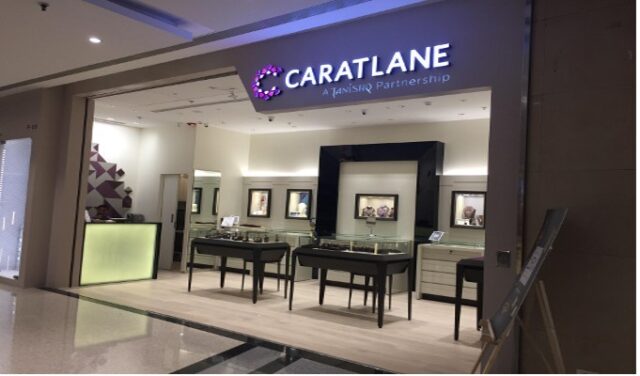
    CaratLane hasn’t looked back since then. It has grown from being one of India’s first online jewellery brands to being one of India’s largest new age jewellery brands now with 50 stores across the country.

    On the special occasion of CaratLane’s 10th birthday, Mithun said “The world has indeed changed in the past ten years. And while e-commerce has now become widely accepted in India, it has taken steady and sustained focus to democratise jewellery-buying online. From a website for easy shopping to allowing women to explore jewellery through apps to discovering interactive mirrors and providing a no-barrier access to precious jewellery in stores, CaratLane has transformed jewellery-buying in India.”

    “Our strong online footprint is now complemented by our growing store presence. With 50 stores across the country, we are now perhaps the world’s first truly omni-channel jewellery brand. It wouldn’t have been possible without our extremely valuable and loyal customers and an extremely dedicated team who would stop at nothing,” he added.

    As a part of the celebrations, CaratLane has added limited edition jewellery to three of its bestselling collections – Butterfly, Aaranya and Gold Lace. It has also launched its biggest sale ever with flat 20 percent off on all diamond jewellery but that’s not all, there are many more exciting offers for CaratLane customers.

    CaratLane, has also launched an upbeat film to create buzz around its 10th birthday celebrations. The campaign rolled out nationally with a combination of TV, digital and CaratLane’s social media channels. The film is targeted towards creating FOMO (fear of missing out) on its celebrations, among its audience.

    Talking about the campaign Atul Sinha, Senior Vice President Marketing, CaratLane said, “We’ve come a long way since our inception and we wanted to celebrate this milestone with the people who made it all possible – Our customers. The ‘10th birthday’ campaign film beautifully captures our excitement as well as the cheerful emotion that we’re trying to build around the occasion through our biggest sale ever.”

  • Foreign e-tailers must have registered entity in India: Draft policy

    Foreign e-tailers must have registered entity in India: Draft policy

    E-commerce sites or apps available for download in India must have a registered business entity in the country, according to latest draft e-commerce policy, which also proposes regulation of cross-border flow of data collected by sector players in India.

    According to analysts, the move to make it mandatory for foreign online retailers to register entities in India follows the relatively recent spread and expansion in the country of Chinese e-commerce platforms which do not have an Indian presence.

    These include Chinese portals such as Shein, Romwe and AliExpress and the proposed registration norms come after complaints made to the government by traders’ bodies like the All India Online Vendor Association about Chinese online operators shipping cheaper products to Indian customers as gifts in order to avoid customs duty.

    As per the proposed norms, all foreign e-commerce sites must have a registered business entity in India as the importer on record or as the entity through which all sales in India are transacted.

    The draft policy has also proposed a ban on all parcels designated as gifts, with the exception of life-saving drugs.

    Moreover, as per the draft policy, all data collected by e-tailers in India and stored abroad should not be made available to other business entities outside the country, for any purpose, even with customer consent.

    However, the government will have the right to access the data of Indian consumers stored abroad.

    Restrictions on cross-border flows of data would not apply to data which is not collected in India, business-to-business (B2B) data sent to India as part of a commercial contract between a business entity located outside India and an Indian business entity.

    Software and cloud computing services involving technology-related data flows, which have no personal or community implications and multi-national companies, moving data across borders, which is largely internal to the company and its ecosystem, would not have to follow the regulations.

    New foreign direct investment (FDI) norms, which prohibit the e-tailers from selling products of companies in which they have stakes, came into effect on February 1 despite both Amazon and Walmart seeking a six-month delay in their implementation.

    The second e-commerce draft policy has been welcomed by sector players like Snapdeal and trader associations such as the Confederation of All India Traders (CAIT).

    Snapdeal said the draft policy’s rejection of inventory based e-commerce must be followed by effective implementation of FDI norms to ensure marketplaces do not own or control inventory, directly or indirectly.

    “The recognition of data as a strategic national asset is well-timed and will lead to the development of required regulation in this regard,” a Snapdeal spokesperson said.

    US giants Amazon and Walmart, which recently acquired a 77 percent majority stake in the Indian e-retail major Flipkart, said they are reviewing the draft e-commerce policy and will share their inputs on the proposals in course of time.

    Amazon has been forced to remove an array of products from its India website in order to comply with the new FDI regulations in e-commerce.

  • India’s yogi to open clothing stores

    India’s yogi to open clothing stores

    Indian yoga guru Baba Ramdev is making moves into fashion through his firm Patanjali. The brand plans to launch 100 exclusive clothing stores with e-commerce support across India by next year. It is also seeking to open small venues in metropolitan areas. Twenty stores are expected to be operational by the end of this year in cities such as Jaipur, Agra, Patna and Nasik.

    A recent ad campaign for the Baba Ramdev brand sought to “create a movement towards embracing and embodying Indian fashion,” according to a report.

    The firm’s flagship in New Delhi sells around 3000 items under three distinct sub-brands, which will be made available on Amazon, Flipkart and Paytm under the new expansion drive.

  • PepsiCo franchise rights to be acquired in South, West India

    PepsiCo franchise rights to be acquired in South, West India

    PepsiCo India’s bottling partner Varun Beverages Monday said its board has approved plans to acquire franchise rights of the beverages and snacks major in South and West regions. The board has approved the company’s intent to enter into a binding agreement with PepsiCo India Holdings to acquire franchise rights in the two regions for a national bottling, sales and distribution footprint in seven states and five UTs, Varun Beverages Ltd (VBL) said in a regulatory filing.

    According to a report, upon completion of these acquisitions, VBL will be a franchise of PepsiCo beverages business across 27 states and seven Union Territories (UTs), it added.

    “The proposed acquisitions are in line with the company’s strategy to expand into contiguous territories and will help to acquire greater scale, operational productivity and efficiency leading to higher revenues and profitable growth,” it said.

    VBL, however, did not disclose financial details of the proposed acquisitions.

    The company further said its board will meet on February 26 to consider raising of capital through Qualified Institutions Placement (QIP).

    Last year in January, VBL had entered into a pact with PepsiCo to sell and distribute the latter’s entire Tropicana range of juices along with Gatorade and Quaker Value-Added Dairy in North and East India.

    VBL already held manufacturing, sales and distribution rights for Tropicana Slice and Tropicana Frutz in the two regions.

    PepsiCo had then stated that North and East regions together accounted for 80 percent of the juice market in India and VBL’s contiguous reach would help it more than double the distribution reach in these states.