Tag: india

  • Leather brand Kompanero to expand in Europe

    Leather brand Kompanero to expand in Europe

    India’s premium leather bag brand Kompanero plans to open 100 outlets by 2025. The company will open four stores, raising its network to 34, this year. “With four new stores in the pipeline, we are expanding our presence in existing cities with Express Avenue Mall in Chennai and Sarath City Mall in Hyderabad,” said Indranath Sengupta, Kompanero CEO. “In addition, the brand’s airport presence is being strengthened with our newly launched store at Guwahati Airport and Chandigarh Airport, and an upcoming one at Chennai Domestic Airport.”

    The brand is also entering Europe this year with its exclusive stores; however, the exact location of the first store has yet to be revealed.

    The company’s turnover has grown by 60 per cent within the last year.

    Kompanero products are available in Australia, the UK, Japan, and Korea via distribution networks as well as e-commerce portals including Amazon, Myntra and Jabong.

  • 7-Eleven may make India foray with Future Group

    7-Eleven may make India foray with Future Group

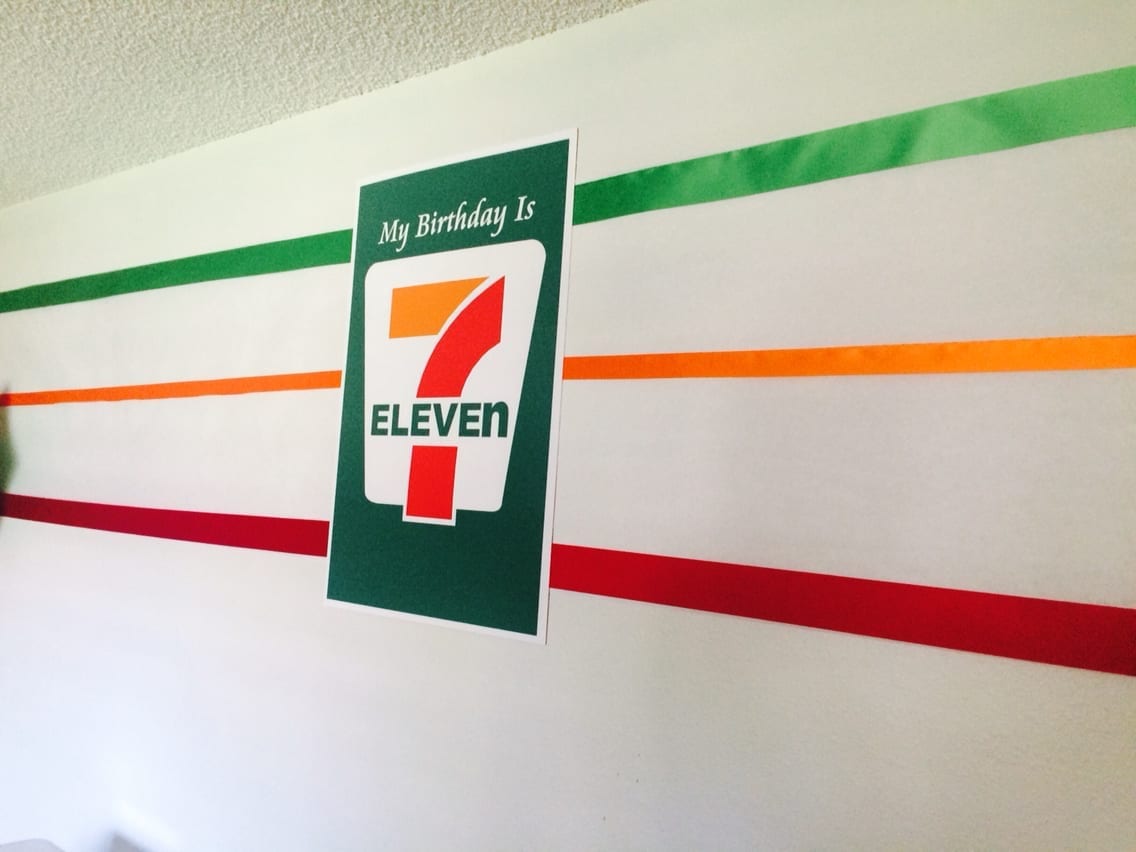
    Convenience store chain 7-Eleven is holding advanced talks with India’s Future Group to enter the territory. The parties may announce an agreement to launch a network of 7-Eleven India stores next month, according to inside reports. Future Group would operate small format stores as a master franchisee, with a focus on food retailing. The partnership is expected to help Future extend its reach to buyers beyond its own existing store network.

    “Future Group has a number of neighbourhood stores through their own format launches and through acquisitions”, observed Devangshu Dutta, CEO at consultancy firm Third Eyesight. “Some of them could surely be repurposed to 7-Eleven convenience stores, while there could be other franchisees appointed for specific sites or territories,” he said.

    “However, becoming a franchisee entails costs and restrictions. The question is whether there is enough margin available in the business to allow for so many tiers of stakeholders.”

    7-Eleven India potential partner Future Group runs 1,444 stores in 409 cities, specialising in food and grocery retailing.

  • Lifestyle deploys new retail technologies

    Lifestyle deploys new retail technologies

    A part of Dubai-based retail and hospitality conglomerate Landmark Group, Lifestyle has been enhancing its Omnichannel experience for its customers at a very fast pace in the recent years. With 75 stores at present, Lifestyle is now also available online through www.lifestylestores.com where customers can shop from the convenience of their home.

    Offering men’s, women’s and kids’ apparel, footwear, handbags, fashion accessories, beauty products and much more, all under the same roof, the fashion retailer has added features such as ‘Self-Checkout Kiosk’, ‘Mobile POS’, Fitting Room Assistance’, etc., to augment its in-store experience.

    “Lifestyle has always endeavored to provide its customers the best-in-class shopping experience. With technological advancements, the shopping experience has evolved and we, as a progressive retailer, have embraced many of these technological advancements to further enhance the shopping experience we off er our customers,” says Vasanth Kumar, Managing Director, Lifestyle International.

    New Tech-Advancements

    Lifestyle has introduced ‘Self- Checkout Kiosk’ in a few key stores, a facility that allows customers to bill their merchandise and complete the payment transaction in a few simple steps on their own with no or very little intervention from the staff thereby greatly solving the long queue by enabling quicker checkouts. Another initiative to further ease checkouts is the ‘Mobile POS’, which was introduced for billing products such as watches, fragrances or cosmetics.

    Using insights from customer shopping behavior, the retailer has also launched ‘Fitting Room Assistance’ program that allows for size retrieval with the help of technology where the store assistants are alerted on the size and style required in the fitting room. “This initiative has helped in enhancing our conversions and is now being scaled up across key stores,” Kumar says.

    “Several of our initiatives are technological solutions to real customer problems which we discovered through our interaction with customers as well as staff . Using this feedback, we have created simple yet impactful solutions leveraging technology. These have led to positive impact on our overall customer experience and helped increase engagement with the brand,” he further adds.

    At the same time, with features like ‘Click & Collect’ and ‘In-store Endless Aisle’, Lifestyle is offering a true Omnichannel experience to its customers. An Omnichannel initiative, ‘Click & Collect’ allows customers to order online and collect merchandise from a Lifestyle store of their choice. ‘In-store Endless Aisle’ helps customers find missing in-store sizes on the e-commerce channel. Also, the retailer has introduced visual search and enabled voice-based search for its mobile applications which has helped in creating a more personalised and convenient shopping experience. Lifestyle has also implemented the ‘Put-to-Light’ system for effective storing and distribution at its warehouses. It has enabled single view of inventory for its e-commerce portal, www.lifestylestores.com, making the entire inventory across all warehouses accessible to the online customers thereby enhancing the merchandise availability and online conversion.

    “We are continuously evolving our stores with new technologies. To fully enable our customers to enjoy these new introductions, it is important for our sales personnel to understand, communicate and comfortably operate all new innovations. Before implementing any new technology or introducing product innovation, our entire store team goes through an extensive knowledge session, which enables them to understand the product/technology being introduced,” says Kumar.

    Lifestyle regularly tracks consumer satisfaction through NPS (Net Promoter Score) in store, by the virtue of offering, staff interactions, store ambience and consistently deliver an overall delightful shopping experience thereby winning customer trust and loyalty.

  • Bigbasket India expands its offerings to include beauty products

    Bigbasket India expands its offerings to include beauty products

    Bigbasket has made its foray into the beauty and cosmetics category. The company is already a leader in FMCG sales, staples, and fruits and vegetables, has about 10 million subscribers, and is clocking over 1 lakh orders per day. With this new category, bigbasket has cemented its place as the one-stop-shop for all customer needs in groceries.

    The vast range of cosmetic products on the beauty store by bigbasket includes eyeliners, kajal, face creams, nail colors, lipsticks, hair colors, perfumes, deodorants, etc. which can be purchased on the website or through the app. Some of the prominent labels featured include Lakme, L’Oreal, Garnier, Elle18, Lotus Herbals, and Maybelline, among others.

    Customers can make choices based on their skin type, preferred brand, benefits, formulation, etc. There are also exciting discounts of about 25 percent to 40 percent on selected brands and products.

    Speaking about this, Seshu Tirumala, National Head, Buying and Merchandising, bigbasket, said, “bigbasket’s customers can now look forward to far larger variety in our offering with our most recent addition of beauty products. The foray into beauty and cosmetics category comes at a time when we are already growing at a frenetic pace in the market. With this category, we aim to transcend our existing customer base and take the venture a notch higher – both in terms of the customer base and revenue. We will be providing the widest range of affordable and regularly used beauty products to our customers.

    With a dominant share in the market space, bigbasket now aims to raise additional investments up to US$ 200 million over the next few months. The FMCG sales overall (food and non-food) contribute to over 50 percent of its business, another 30 percent comes from staples (including 14.5 percent from private labels) and 18 percent is from fruits and vegetables. The Alibaba-backed company expects to break even in the 10 large cities by next June and aims at becoming a billion-dollar company by the next fiscal year. The company has a presence in 25 cities and plans to launch its operations in Kochi soon.

    Recently, bigbasket acquired Pune-based RainCan and Bengaluru-based Morning Cart to deliver milk to 20,000 customers. The service has been launched in 7 cities and is expected to roll out to another three cities among the top 10 metros. The milk delivery business is expected to clock Rs 10 billion by next year.

  • India’s WoodenStreet eyes 15 stores by end of 2019

    India’s WoodenStreet eyes 15 stores by end of 2019

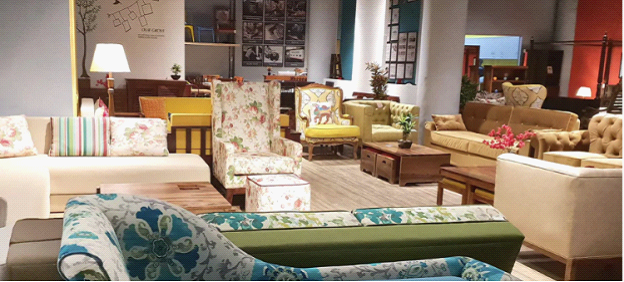
    In 2016, WoodenStreet entered the retail market with its first brick-and-mortar experience store in Bangalore. Established in 2015 as an online platform for quality custom furniture, WoodenStreet expanded its reach by opening 2 stores in 2017 and 9 stores in 2018, totalling to 12 experience stores. What’s next? 15 new experience stores by the end of 2019.

    Lokendra Ranawat, CEO, WoodenStreet expressed his aim to bring customization and quality a step closer to everyone’s home. “It’s not just about an online presence”, he elaborates, “but getting down there and interacting with our customers makes buying furniture a more personal experience, as it should be. We want people to not just visualize, but also feel the quality of furniture that we offer. We want them to see the limitless configurations, combinations and customization possibilities that they can actually get for themselves.”

    2018 was a long but fruitful year for WoodenStreet. Mumbai and Jaipur stores have been established in the last quarters of 2017, and the overwhelming response from these two stores, combined with a financial push from US$ 1 million Series A funding from RVCF, hardened the resolve to expand into further cities. Hence came the first stores of Ahmedabad, Hyderabad, Chennai, Pune, Noida, Gurgaon and Indore, with two more stores in Bangalore and Jaipur. This set up a large Omnichannel network, enabling greater penetration into the furniture market with a promise of quality and flexibility.

    “Last year was challenging but fun.”, says Virendra Ranawat, COO of WoodenStreet.com, commenting on the rocking journey. “But this hasn’t stopped us. We want to ensure that 2019 sees the addition of 15 more stores to our ever-growing roster. Which means that by the end of this year, we’ll have 27 brick-and-mortar stores in total.”

    WoodenStreet.com is a custom furniture store, with more than 30 delivery hubs and 12 experience stores spread across India, bringing quality solid wood furniture and the flexibility of customization closer to people and their dream of setting up a home flavoured to their tastes.

  • Swiggy India now opens Stores to deliver everyday needs

    Swiggy India now opens Stores to deliver everyday needs

    India’s food ordering and delivery platform Swiggy Tuesday said it has launched ‘Swiggy Stores’ moving beyond its core food delivery segment to provide access to consumers items across multiple categories. The company will deliver from these stores “in categories such as fruits and vegetables, kiranas and supermarkets, florists, baby care, health and supplements among others,” Swiggy said in a statement.

    With the launch of these stores, Swiggy wants to become the one-stop delivery app that enables access to every store in the city, it added.

    “Today’s announcement takes Swiggy to categories beyond food, where we hope to deliver the same level of delightful experiences to consumers for their everyday needs,” Sriharsha Majety, CEO, Swiggy said.

    It is the first milestone in Swiggy’s vision to elevate the quality of life for the urban consumer by offering unparalleled convenience, he added.

    Swiggy Stores will give its merchant-partners unmatched access to a combination of core assets to reach more existing and new customers, the statement said.

    For the delivery partners this will give them access to an additional avenue for income, it added.

    Founded in 2014, Swiggy currently connects consumers to over 60,000 restaurant partners across more than 80 cities.

  • Skechers Takes Control of India Business

    Skechers Takes Control of India Business

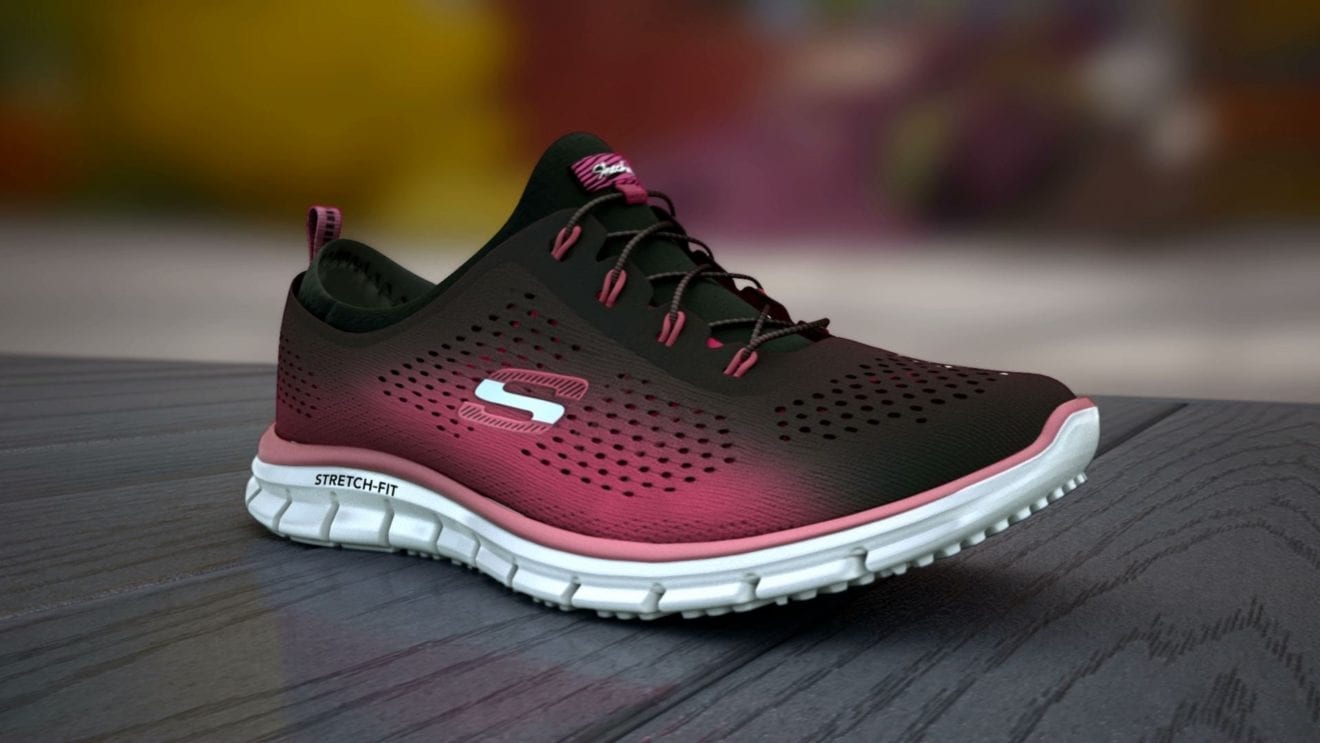
    Skechers has bought its joint venture partner in Skechers India, taking the business inhouse. Skechers India has 223 retail locations across the country, 61 of which are company owned and operated, with the remainder franchised. Last year, Skechers saw double-digit increases in wholesale and retail sales and an 80 per cent increase in pairs sold, reaching 2.7 million.

    An additional 80 to 100 stores are planned for this year – of which about 20 will be company-owned.

    The dual-ownership model is expected to allow Skechers India to grow and expand its presence faster, the parent company said in a statement.

    “Skechers is still a relatively young brand in this country, having been in India for less than a decade, yet in the last five years, we have seen significant growth through our joint venture,” said Michael Greenberg, president of Skechers.

    “The substantial existing retail network of over 200 stores, a strong wholesale business and a recently launched e-commerce site is a solid foundation that we can build upon. These accomplishments, as well as opportunities we see to increase the brand’s exposure and drive sales, give us great optimism and confidence for the growth of Skechers in India.”

    Rahul Vira, CEO at Skechers South Asia, said the company was delighted to become a wholly-owned subsidiary of Skechers.

    “This development will enable us to amplify our growth plans, accelerate expansion of our operations and build a stronger network to further gain market share in India,” he said.

    Skechers India will continue operating under its existing structure and from its existing headquarters in Mumbai.

  • India’s Zomato to convert 40 pc of delivery fleet into power-assisted bikes in 2 years

    India’s Zomato to convert 40 pc of delivery fleet into power-assisted bikes in 2 years

    Online restaurant guide and food ordering firm Zomato Monday said it is planning to convert 40 percent of its delivery fleet into power-assisted bikes in two years. Currently, the company has over 5,000 cyclists operating across 12 cities in India, with the majority of the fleet being in Delhi-NCR, Zomato said in a statement. The company provides food delivery services in 150 cities across the country with a last-mile delivery fleet of 1.5 lakh partners, it added.

    “We are working closely with our vendor partners to raise the scale of e-cycle adoption and aim to convert 40 percent of our fleet to power-assisted bikes within the next two years,” Mohit Gupta, CEO – Food Delivery Business, Zomato said.

    The company aims to build a future that creates more tangible value and leaves a lesser carbon footprint, he added.

  • Today’s demanding consumers need tech-savvy food retailers: Walmart India CEO

    Today’s demanding consumers need tech-savvy food retailers: Walmart India CEO

    Food is the largest retail consumption category in India, accounting for 33 percent of the overall consumption expenditure. It is also the largest opportunity area, especially in times when market dynamics are changing dramatically, and consumer behaviour is no longer generic.

    Indian consumers are becoming more and more indulgent with food (and vegetables), and they are experimenting with new and foreign cuisines; they are seeking variety and are open to international brands. They profess to enjoy foreign food and are ready to pay more for premium or organic food items. This is a huge shift from the last decade.

    The changes to Indian consumer behaviour are being driven by increasing incomes, younger profiles of consumers and growing access to the Internet.

    According to Krish Iyer, President & CEO, Walmart India and Chairman of India Food Forum, the key trend certainly is for on-demand food.

    “There are a lot of pressures on the disposable income of the consumer. Factors like rising costs of real estate and the need to invest in health – important today because of the awareness and education on health are taking away good chunk of consumer’s disposable income and the expectation of value is increasing,” Iyer said on the sidelines of India Food Forum 2019.

    Expectations, he said, have built up because the consumer has a lot of options, making him more demanding of quality and other conveniences. “Today’s consumer is time-starved. Working couples want ready-to-eat, on-the-go and on-demand food, and this is driving a lot of consumption,” he added.

    To meet the shift in consumer demands, FMCG players are gearing up make the changes in their retail stores.

    Share of E-Commerce in The Retail Pie

    Iyer stated that the share of e-commerce is set to rise over the next 10 years aided by a rise in the Omnichannel format. This, despite the growth in brick-and-mortar retail from 2 percent to 12 percent.

    “What works for today’s FMCG players is a ‘go-to market (GTM) strategy’. This is particularly true for small and medium enterprises who want to launch products. Since GTM is more about digital first, they use the opportunity to connect with consumers in today’s highly connected phygital environment,” he said, talking about the big change which the FMCG sector is witnessing today.

    He stressed on the fact that it is extremely important to bridge the gap between physical and digital retail, especially since the consumer is going digital in terms of experience as also his touchpoints.

    Tech-Savvy CX At Walmart

    Sharing his insights gleaned from years at being at the helm of Walmart India, Iyer explained that that by enriching customer experience, Walmart has observed that the consumer has started purchasing more using the Omnichannel format – Rs 180 over Omnichannel versus Rs 100 spent at the physical store.

    While citing technology adoption as the key to retail growth, Iyer also talked about the four key challenges that retailers need to face head on: food security, safety and nutrition, food wastage and sustainability.

    “Feeding a rising world population of 10 billion, amid rising deaths of infants due to malnutrition and changing climatic conditions are key challenges. In India, phenomenal efforts are made on the regulatory front for safety and nutrition that will follow with awareness, compliance and enforcement of law. Significant investment amounting to Rs 92,000 crore in food processing in catchment areas is needed to overcome the wastage of 30 percent of all food and 40 percent of fruits and vegetables in the country,” he concluded.

  • India’s January retail inflation more than halved to 2.05 pc

    India’s January retail inflation more than halved to 2.05 pc

    India’s annual rate of retail inflation more than halved to 2.05 percent in January from a high of 5.07 percent during the corresponding period last year, official data showed on Tuesday. The downward trend in CPI, is due to food inflation which has further widened its negative trend. Fruits, vegetables and eggs continued to witness deflationary trend during January this year, with their prices declining 4.18 percent, 13.32 percent and 2.44 percent, respectively, according to the data.

    Industrial production jumped to 2.4 percent in December, 2018 from 0.5 percent in November, 2018 driven mainly by a sharp spike in manufacturing index which rose to 2.7 percent vs -0.4 percent month-on-month.

  • World’s first digital mall launched in India by Digital Mall of Asia

    World’s first digital mall launched in India by Digital Mall of Asia

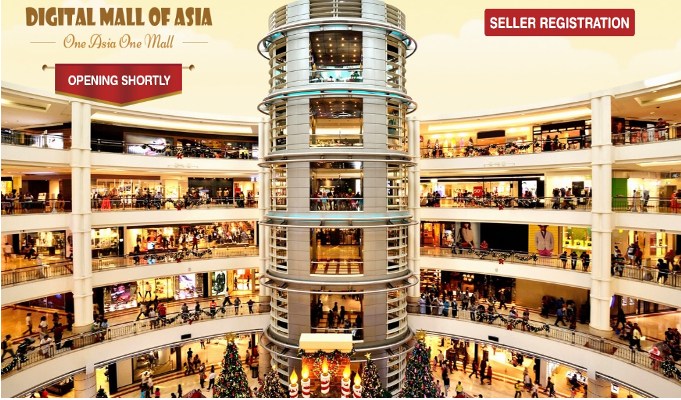
    In a revolutionary development that could potentially redefine the global retail and e-commerce industries, Digital Mall of Asia (DMA), a first-of-its-kind digital e-commerce platform merging the real estate and the digital spaces, has announced the launch of its Noida mall. The launch took place at the company’s registered office in the Film City, Noida, setting an unprecedented example of how online portals and brick-and-mortar retailers can transcend the digital-physical divide to optimize their consumer outreach and revenue generation.

    An initiative by Yokeasia Malls Pvt. Ltd., DMA is a disruptive innovation by an Indian organization recreating the experience of a physical mall in the digital space. In an industry where most of the key names are being run or backed by foreign players, this unique and disruptively innovative initiative by Yokeasia Malls has the potential to put the novelties of Digital India on the world map.

    The Need

    The launch of DMA Noida addresses the challenges that retailers often face and empowers them to maximize their business footprint with innovative digital offerings and an unmatched value proposition. DMA operates on a zero commission model; retailers at DMA don’t have to pay anything apart from the rent, a major revolution in a space where all the major E-commerce players charge somewhere between 5-35 percent of the revenue. Moreover, the organization will provide an immediate settlement of all payments received, ensuring complete transparency and reliability. It is also working towards completely eradicating the issue of the sale of counterfeit or fake merchandise. These unique features, apart from its focus on digital innovation, makes DMA a powerful and pioneering presence in the e-commerce space, both in India and on a global level.

    The Solution

    Going beyond the concept of a typical e-commerce portal, DMA’s Noida mall will have 11 towers with 10 floors each, adding up to a total of more than 5,000 shops and an available inventory currently worth approximately Rs 500 crore. The mall will incorporate visual and sensory elements to offer an immersive, stimulating environment and will have dedicated towers for different categories such as men, women, kids, electronics, home and kitchen, education, financial services, food court, hypermarket, digiplex, and online nightclub. Fundamentally, DMA Noida has all the elements that make up a physical mall, albeit virtually.

    The Value Addition

    By creating a new ‘digital asset’ class providing attractive returns, DMA also envisions to transform the general perception towards the term ‘investment’ while ensuring security, profit, and convenience for investors. The shops in the Noida mall are available for both sale (to investors) and rental (to retailers), whereas the shops in the rest of the 20 cities are available only to rent at present.

    Commenting on the launch and the idea behind, Rishabh Mehra, Managing Director and CEO – Digital Mall of Asia, remarked, “We, at Digital Mall of Asia, are beyond ecstatic to launch our Noida mall and we are certain of its potential to bring about a revolution in the digital and retail space worldwide. This project is aimed at serving many purposes, from an industry-wide transformation to retailer empowerment through our zero-commission model. But most importantly, DMA is our effort against data colonization. I wholeheartedly agree with Mr Mukesh Ambani’s stance on how India’s data must be owned by Indians, and not controlled by global corporations. In this era of data-driven revolution, we hope that DMA’s disruptive innovation sets an example for our contemporaries to follow through and bring the ownership of Indian data back to where it belongs – in our own hands.”

    The launch in Noida also marks DMA’s first step towards a pan-India launch in 20 cities including New Delhi, Mumbai, Bengaluru, Pune, Chandigarh, Jaipur, Lucknow, Coimbatore etc. After a pan-India expansion, DMA plans to expand its operations across the Asian market and has already begun the process of seller registration in China, Japan, South Korea, Malaysia, Thailand, Indonesia, and Singapore.

  • Marks & Spencer India to open six more stores in next 60 days

    Marks & Spencer India to open six more stores in next 60 days

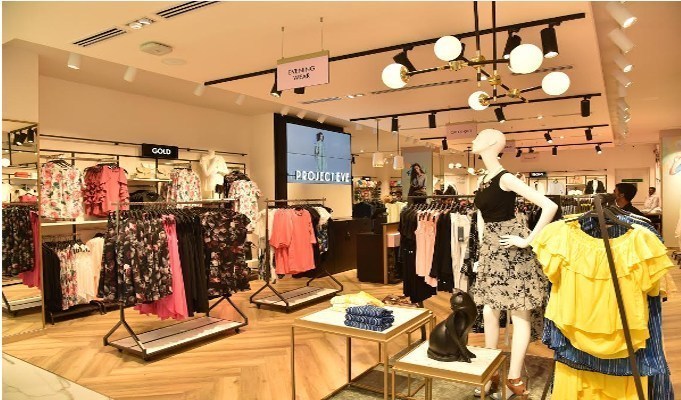
    British multinational retailer Marks & Spencer (M&S) is on an aggressive pace here and is opening six more stores in the next two months alone, a top company official has said.

    According to a report, Marks & Spencer has opened its first store here way back in 2001 and in April 2008 signed a joint venture agreement with Reliance Retail to form Marks & Spencer Reliance India.

    It now has 71 stores across 30 cities like New Delhi, Amritsar, Mumbai, Pune, Kolkata, Bangalore, Chennai, Kochi, Bhopal, Kanpur, Hyderabad and Chandigarh among others.

    “India has become increasingly an important market for us. We are now the largest market for M&S outside of our home market. We are 71 stores today and we continue to invest in this market. We opened nine stores in the last six months and it is our intention to open six more in the next 60 days,” James Munson, managing Director, Marks & Spencer Reliance India said in an interview.

    Internationally, Marks & Spencer hawks its products in 57 markets across 400 stores and an online presence in 33 markets.

    Munson further said they would look to maintain that expansion pace in the next year as well and said, “there are no other markets which are expanding the way we are expanding here”.

    Of the 71 stores here, 10 are standalone beauty and lingerie stores , including two it opened in the last nine months and said half of the stores it plans to open in the next 60 days would also be for the same.

    The company clocked a revenue of Rs 908 crore last year and has been growing at a CAGR of 24 percent over the last five years, Munson said.

    It had clocked a 9 percent growth in the same store sales last year.

    A fifth of the turnover comes from outside the major metros, he said.

    It sources 30 percent of its products from locally and India is a sourcing base for the wider British market as well.

    M&S has partnered with other e-commerce players like Amazon and Flipkart over the last few years and he said its a strong area of growth and this year they are expecting 75 percent growth in online sales.

    However, the contribution from online to its revenues is still quite small here, unlike in Britain where it’s targeting 30 percent online sales.

    M&S has developed a rethink campaign specifically for this market, a first globally where a campaign has been designed for the local market.

    In Britain, food is a popular segment for the company but Munson said there are no plans at present to introduce food here.

  • Walmart bets on India despite change in FDI norms

    Walmart bets on India despite change in FDI norms

    American retail giant Walmart and its Indian e-tail major Flipkart are betting big on India despite the revised norms for Foreign Direct Investment (FDI) in e-commerce, the companies said. “Walmart’s and Flipkart’s commitment to India is deep and long term. Despite the recent changes in regulations, we remain optimistic about the country,” the regional Chief Executive Officer of Walmart Asia and Canada Dirk Van den Berghe told IANS in a statement in New Delhi.

    The companies will continue to focus on creating “sustained economic growth and bringing sustainable benefits to India, including employment generation, supporting small businesses and farmers, and growing Indian exports to Walmart’s global markets”, added Berghe, who is also the retail giant’s Executive Vice President.

    Walmart’s assertion on the company’s commitment to India came after American investment bank Morgan Stanley in a report on Monday said the former might exit the country after the new FDI norms in e-commerce came into force on February 1.

    “An exit is likely, not completely out of the question, with the Indian e-commerce market becoming more complicated,” the New York-based financial services firm said in its report titled “Assessing Flipkart Risk to Walmart EPS (earnings per share)”.

    In May last year, Walmart bought 77 percent equity stake in Flipkart for a whopping US$ 16 billion (Rs 1,16,256 crore).

    The revised FDI norms in e-commerce, however, have tightened the noose around the businesses of the country’s leading e-tailers – Walmart-owned Flipkart and Indian arm of American e-commerce giant Amazon.

    The policy revisions, issued by the Ministry of Commerce and Industry on December 26, 2018, barred e-commerce platforms providing a marketplace from exercising control or ownership over the inventory and forbids any company to sell its products exclusively on an e-commerce platforms alone.

    The e-tail companies are now working towards changing the ownership of their inventory, so as to comply with the norms.

  • Reliance India buys additional stake in Future101, Genesis Colors

    Reliance India buys additional stake in Future101, Genesis Colors

    Billionaire Mukesh Ambani-led Reliance Industries has raised its stake in luxury apparel firms Future101 Design and Genesis Colors to strengthen its foothold in retail industry. Reliance Brands Ltd (RBL), a unit of RIL, “has acquired a further stake of 2.5 percent in Future101 Design Pvt Ltd on February 7, 2019, for a consideration of Rs 1.99 crore, taking its total stake in Future101 to 15 percent,” the company said in a regulatory filing.

    According to a report, also, Reliance Retail Ventures Ltd (RRVL), a separate subsidiary of the company, acquired a further stake of 9.44 percent in Genesis Colors Ltd (GCL), for Rs 45 crore taking its total stake in GCL to 29.07 percent on the enhanced capital.

    “Consequently, the stake of RBL in GCL shall be 43.66 percent and the aggregate equity shareholding of RRVL and RBL in GCL stands at 72.73 percent,” it said.

    Reliance said the acquisitions will help it to strengthen its foothold in the retail industry and support its long-term strategy to enhance its value in the industry.

    No regulatory approvals were required for the acquisition of shares and the investment does not fall within related party transaction, it added.

    The company had in July last year bought 12.5 percent stake in Future101, which is engaged in manufacturing, distribution, and sale of luxury apparels in India, for Rs 9.50 crore.

    Future101 reported an annual turnover of Rs 22.18 crore in 2017-18.

    In September 2018, RRVL had acquired a 16.31 percent stake in GCL, which owns fashion label Satya Paul, for Rs 34.80 crore. RRVL, through unit RBL, already held a 49.46 percent stake in GCL.

    That month, RRVL invested a total of Rs 57.03 crore in five other companies that sell branded readymade garments, bags, footwear, cosmetics and accessories.

    It bought a 2.07 percent stake in Genesis Luxury Fashion Pvt Ltd for Rs 3.37 crore, taking its holding in the company to 49.37 percent. Genesis Luxury Fashion distributes premium brands such as Jimmy Choo, Armani, Paul Smith and Bottega Veneta.

    It also bought 50 percent stake each in GLF Lifestyle Brands Pvt Ltd and Genesis La Mode Pvt Ltd for Rs 38.45 crore and Rs 10.57 crore, respectively.

    Besides, it acquired 50 percent each of GML India Fashion Pvt Ltd and GLB Body Care Pvt Ltd for Rs 4.48 crore and Rs 16 lakh, respectively.

  • How technology shape the future of retail in India

    How technology shape the future of retail in India

    The Indian Retail Industry is considered one of the fastest growing industries in the world and technology has emerged as a helping hand to the industry. The world has seen a transition in retail planning –with the industry going from being product-centric to being customer-centric – and retailers are leveraging technologies to reach the modern shoppers.

    Over time, retail technology has transcended from an aspiration to an expectation and has wedged itself securely between consumer and experience to create an everyday interface. While it has definitely made life easier for consumers, retailers in India have spent a better part of the last decade on their heels, reacting to profound changes throughout the sectors of the industry.

    Retailers today are not fighting with retailers anymore; instead they’re fighting with different technological interventions in order to be the most competitive in the world. With growing competition, it has become extremely vital for retailers to innovate continuously and implement cutting-edge technologies to fulfil today’s demanding customers’ need.

    In order to stay relevant in a highly competitive market, every retailer needs to stay on top of technological advances and also learn how to exploit these technical innovations to forward their business goals.

    Over the past few years, a number of technology trends have evolved and dramatically altered the retail industry. The emergence and the transformational growth of the new economy has unleashed powerful forces which are eventually and successfully reshaping the retail industry at a transformational speed. In order to succeed, today’s retailers have to offer a seamless shopping experience across all channels – and should not lose track of their customers.

    Today, the entire retail ecosystem has smartened with technology. There are so many things one can experiment with if a retailer uses technology, for example: smart displays, in-store services, smart shelves, home delivery, brand optimization options, supply chain optimization, logistics automation to name just a few.

    Then there are wallets, point of sale data, social networking – where you can home in on complaints as well as get appreciated. All this is driven by the retailer into applications where the consumer sees, feels, asks the retailer questions and eventually buys the product.

    Giant players of the retail industry have accepted technology with arms wide open to captivate and secure customers and have made optimum use of technology to optimize their business. Whereas small retailers, most of them belonging to the unorganized sector, are yet to adopt technology to be adept with the changes and technological innovations taking place in the retail market. If the entire unorganized retail trade, which is 80 percent of the entire retail trade, adopts technology, the retail industry will usher in a new era providing a much-needed thrust to the Indian economy. Technology is the knight on the white horse that will ride the retail market towards prosperity and triumph.

    What took the year 2018 by storm is phrase ‘Experiential Retail’. It became the code of the moment; delivered through convenient accessibility, in-store features, customer engagement through ATL and BTL animation or out-of-the-box blends of the physical and digital shopping universe.

    Some other trends that impacted the retail industry in a big way in 2018 are:

    IoT (Internet of Things)

    IoT has big implications for in-store marketing efforts of retailers and brands. Connected devices aren’t just changing the way consumers live, work and play – they’re dramatically reshaping the entire industry. The IoT movement offers retailers opportunities in three critical areas: customer experience, supply chain and new channels-revenue streams.

    Leading retailers across the globe are already investing heavily in IoT. They are beginning to transform their business practices and recognize that, in time, IoT will touch nearly every area of retail operations and customer engagement. In the IoT of today, everything has the potential of coming under the IOT umbrella. From the lighting system in the store, the PoS (Point of Sales) system, to the electric switches and even garbage disposal units…IOT is at the heart of retail transformation. It connects people, machines, items, and services to streamline the flow of information, enable real-time decisions, and heighten consumer experiences.

    While the IoT may still seem like science fiction, it is becoming reality faster than most of us can comprehend. Retailers that hesitate to develop and execute an IoT strategy will open the door for competitors – old and new alike – to swoop in and capture early IOT mind and market share.

    SMAC (Social, Mobile, Analytics & Cloud)

    The relationship between consumers and enterprises has never been as intrigued as in the 21st century. As digital technologies augmented by SMAC are creating new touch points for enterprises to awe their consumers, there has been an evolution in consumer experiences. Social, mobile, analytics and cloud or SMAC are the nexus of forces, which are reshaping how consumers experience a brand.

    SMAC are currently driving business innovation. It creates an ecosystem that allows a business to improve its operations and get closer to the customer with minimal overhead and maximum reach. Digital is now an essential part of the whole shopping experience and the entire business of retail, inside as well as outside the store. You don’t need to leave a physical store to get your digital fix. Instead, retailers are leveraging a wide array of in-store technologies meant to draw consumers in the door. As the impact continues to increase, the way retailers think of digital and invest in it, besides addressing the digital wants and needs of their customers is changing dramatically.

    Big Data

    Today, retailers are constantly finding innovative ways to draw insights from the ever-increasing amount of structured and unstructured information available about their customers’ behaviour.

    Data gathering, and analytics are playing a key role in evolving business models in retail. Usage of data and analytics to better understand consumers in the form of branding, product management, leveraging loyalty card information to tracking customer buying behaviour and making better pricing decisions are the key factors. Collecting and leveraging customer information to provide personalized recommendations is the norm going forward.

    Retailers – large and small – have been reaping the benefits of analysing structured data for years but are only just starting to get to grips with unstructured data. There is undoubtedly still a great deal of untapped potential in social media, customer feedback comments, video footage, recorded telephone conversations and locational GPS data. Great benefits have come to those who put it to best work, and the best solutions have more likely come from innovative thinking and approaches to analytics, rather than those who simply try to collect as much data as possible and then see what it does.

    Omnichannel Retail Adaptation

    Omnichannel is a term that extends and supersedes multi-channel. Multi-channel (or cross-channel) refers to delivering content and considering consumer experience on more than one channel. Omnichannel is about understanding and optimizing for the entire journey across all channels.

    Omnichannel today is a necessity. Brick-and-mortar retailers have been left with no option but to add online channel to their offline operations in a bid to reach as many customers as possible, and quickly. Omnichannel retailing creates benefits for consumers and opportunities for retailers. For consumers, it empowers connected consumers by making it easier for them to access information and compare product details; by increasing choice; and by increasing convenience and the range of options for shopping. For retailers Omnichannel creates opportunities, ranging from potential extension of sales and increasing brand awareness and loyalty.

    A poorly executed Omnichannel or personalization strategy, however, can do more harm than good. Handling one or two channels discretely but satisfying expectations is better than disappointing your consumers when you fail to deliver added value — or worse still, confuse or frustrate — while tackling all channels. Personalization can be even more dangerous because of very real risks that your brand can be given the dreaded creepy label.

    To be successful at delivering a personalized experience in Omnichannel marketplace, adaptive content is a requirement. It is content that is designed for both personalization and delivery across many channels.