Tag: Inditex

  • Inditex, Parent Company of Zara, Leverages In-Store Strategy to Drive Continuous Growth

    Inditex, Parent Company of Zara, Leverages In-Store Strategy to Drive Continuous Growth

    Inditex, the multinational retailer that owns fashion brands like Zara, Bershka, and Stradivarius, has reported continued growth in its sales, a result attributed to its store-centric strategy.

    As the largest fashion retailer globally and headquartered in Spain, Inditex initiated its fiscal year with an impressive $10.1 billion in first-quarter sales. This resulted in a net profit of $1.6 billion. These figures represent a growth rate of 5.75 percent and 5.36 percent, respectively.

    By the end of the quarter, Inditex owned a total of 5456 stores worldwide. This included 1495 Zara stores, a decrease from the 5562 stores it held at the same time the previous year.

    Investment and Innovation Drive Growth

    Inditex has attributed its growth to continuous investments in its store network, developments in online sales channels, and improvements in logistics platforms, all with a keen focus on innovation and technology.

    The company’s Asia-based store network prominently features its Zara, Massimo Dutti, and Zara Home brands. Online, the company has a significant presence in the region with brands such as Pull and Bear, Bershka, Stradivarius, and Oysho.

    Inditex operates across 215 markets and, despite its relatively low share in a highly fragmented sector, the group sees robust growth opportunities. “The optimisation of stores is ongoing, and we expect this to drive further gains in store productivity,” they remarked.

    The group aims to grow its retail floorspace by approximately 5 percent by 2026. It has earmarked capital expenditure of $2.7 billion over the next three quarters to achieve this.

    Questions & Answers

    What is the reason behind Inditex’s continued growth in sales?
    The company says that its growth is due to ongoing investment in its store network, advancements in its online sales channels, and improvements to its logistics platforms, with a focus on innovation and technology.

    How many stores does Inditex own worldwide, and what is the breakdown of these stores?
    Inditex owns a total of 5456 stores worldwide. Of these, 1495 are Zara stores.

    What are Inditex’s future growth plans?
    Inditex plans to increase its retail floorspace by about 5 percent by 2026. It has allocated capital expenditure of $2.7 billion over the next three quarters to achieve this goal.
  • Inditex, Zara’s Parent Company, Reports Stellar Sales Boost Across All Brands in Annual Profit Surge

    Inditex, Zara’s Parent Company, Reports Stellar Sales Boost Across All Brands in Annual Profit Surge

    Inditex, the parent company of Zara, has seen considerable increases in its gross and net profits, fueled by robust sales across all its brands.

    The company’s total net revenue for the fiscal year ending January 31, 2025, climbed 3.2 per cent to €39.9 billion (US$46 billion). Taking into account the currency exchange, sales experienced a 7 per cent rise. Over the past three years, Inditex’s sales have surged by 22 per cent, with a concurrent decrease in the number of retail outlets by 6 per cent. This demonstrates the firm’s constant growth despite a decrease in physical retail presence.

    All brands within the Inditex group enjoyed sales growth throughout the fiscal year. The primary Zara enterprise, inclusive of Zara, Zara Home, and Lefties brands, saw a 1 per cent sales increase, reaching €28 billion.

    Profitable Performance By Other Brands

    Among other Inditex brands, Oysho topped the growth chart with a 15 per cent surge, closely trailed by Stradivarius and Bershka, each boasting over a 12 per cent rise. Additionally, Pull&Bear and Massimo Dutti each reported growth rates of 3.1 per cent and 3 per cent respectively.

    Inditex’s gross profit saw a 3.9 per cent increase to €23.2 billion, while the gross margin improved by 42 bps, bringing it to 58.3 per cent. Net income for the same period rose by 6 per cent to €6.2 billion.

    CEO of Inditex, Óscar García Maceiras, praised the company’s teams for their ability to maintain the trust of their customers across their eight commercial formats. He emphasized the importance of connecting with customers, understanding their needs, and providing top-tier products and services in driving long-term growth expectations.

    Positive Outlook

    At the conclusion of FY2025, Inditex managed 5460 stores across 214 markets. The company has continued to perform well into the new fiscal year, recording a 9 per cent increase in store and online sales between February 1 and March 8, after adjusting for the constant currency.

    Questions & Answers

    What was Inditex’s total net revenue for FY25?
    Inditex’s total net revenue for FY25 was €39.9 billion (US$46 billion).

    Which brand under Inditex reported the highest sales growth?
    Oysho, an Inditex brand, reported the highest sales growth with a 15 per cent increase.

    What was the net income for Inditex for the fiscal year ending January 31, 2025?
    Inditex’s net income for the fiscal year ending January 31, 2025, increased 6 per cent to €6.2 billion.

  • Inditex’s Oysho Debuts In Philippines With Innovative Retail Concept At Mall Of Asia

    Inditex’s Oysho Debuts In Philippines With Innovative Retail Concept At Mall Of Asia

    Oysho, an activewear brand under the umbrella of Inditex, the same company that owns Zara, has recently made its grand entrance into the Philippine market with a store opening at the Mall of Asia in Manila.

    A Fresh Concept for Retail Space

    The newly launched 659 square meter, single-level Oysho store is innovatively partitioned into several distinct areas, each offering a unique shopping experience. To begin with, customers are greeted by the Welcome Zone, featuring a ceramic block wall which proudly displays the Athleisure range.

    Following this, there’s the Club Zone, characterized by its oak wood finishes, and the Basics Zone featuring zipper rails for product display. To ensure privacy and comfort during the product trial phase, oak-paneled fitting rooms have also been incorporated into the design.

    The store’s Wow Zone, positioned strategically at the entrance, showcases seasonal collections bolstered by immersive, branded light imagery to captivate and draw in shoppers.

    Consistent Aesthetics and Expanded Presence

    The store’s external facade is adorned with natural stone, giving it a rustic and earthy appeal. Inside, a continuous linear lighting system illuminates the space, delivering a uniform aesthetic throughout the store.

    Oysho’s brand introduction to the Philippines is part of Inditex’s ongoing retail strategy. The company operates eight retail concepts, including Zara, Pull&Bear, and Massimo Dutti. The expansion into the Philippines strengthens Oysho’s presence in Asia, adding to their existing markets in countries such as China and South Korea.

    Questions & Answers

    What makes Oysho’s new store in the Philippines unique?
    The store is uniquely designed with distinct zones, each offering a different shopping experience. It also features branded light imagery and a continuous linear lighting system for a consistent look throughout the space.

    Who owns Oysho?
    Oysho is owned by Inditex, the same company that owns Zara, Pull&Bear, and Massimo Dutti.

    What is the significance of Oysho’s expansion into the Philippines?
    The expansion into the Philippines strengthens Oysho’s presence in Asia, adding to their existing markets in countries such as China and South Korea. It’s an indication of the brand’s growth and success in the Asian market.

  • Inditex’s Budget Brand Lefties Makes A Comeback In France Amid Rising Online Competition

    Inditex’s Budget Brand Lefties Makes A Comeback In France Amid Rising Online Competition

    In a recent announcement, the CEO of Inditex, the parent company of renowned fashion brand Zara, revealed plans to expand the company’s budget brand, Lefties, into France. The move is seen as an attempt to appeal to younger consumers and increase competition with low-cost rivals, including the popular online retailer Shein.

    Lefties Returns to France

    This new development signifies Lefties’ re-entry into the French market after a previous launch in 2009 that saw the closure of all its French outlets by 2012. Lefties, which was established a quarter of a century ago, began as an outlet for Zara’s leftover items. It has since blossomed into a significant player in the industry with a presence in 18 countries. The brand’s growth comes amidst increasing competition from online-only retailers such as Shein, known for their ultra-low prices.

    As part of its recent rebranding efforts, Lefties unveiled a new, all-capital letters logo in May alongside the slogan, “Lefties everywhere, on everyone.” While the brand’s main focus remains Spain and Portugal, Inditex CEO Oscar Garcia Maceiras recently stated that Inditex is currently “testing Lefties in new markets.”

    Pricing Competitive to Market Rivals

    Lefties offers competitively priced items, with dresses costing as low as 9.9 euros (US$11.55) and jeans at 12.99 euros. These prices are on par with those of Shein and Primark, and offer a more affordable alternative to Zara, which has seen price hikes in recent years.

    Expansion of Inditex’s Other Brands

    In addition to the expansion of Lefties, Inditex is also extending its range of other brands, as announced by Garcia Maceiras at the firm’s annual shareholder meeting. Bershka is slated to open its first stores in Denmark, Stradivarius in Austria, Oysho in the Netherlands, and Massimo Dutti in Brazil. In the United States, the Zara Man label is set to launch with a store in Costa Mesa, Los Angeles.

    The planned store openings, including Lefties’ expansion into France, are scheduled to occur this year and next, according to an Inditex spokesperson.

    Questions & Answers

    What are the expansion plans of Inditex for its budget brand Lefties?
    Lefties, the budget brand of Inditex, is set to expand into France as part of a strategy to attract younger consumers and compete with low-cost rivals.

    When did Lefties first launch in France and what happened?
    Lefties initially launched in France in 2009, but by 2012 all its French outlets were closed. The current plan signifies a re-entry of the brand into the French market.

    What other brands are Inditex planning to expand and where?
    Inditex is also planning to expand other brands, including Bershka in Denmark, Stradivarius in Austria, Oysho in the Netherlands, and Massimo Dutti in Brazil. Furthermore, the Zara Man label is set to make its U.S. debut with a store in Costa Mesa, Los Angeles.

  • Inditex posts solid nine-month revenue growth

    Inditex posts solid nine-month revenue growth

    Apparel giant Inditex says its net revenue grew by 7.1 per cent, reaching US$29.04 billion (€27.4 billion) for its first nine months.

    The company says the results reflect strong growth for its physical stores and online channels.

    Inditex’s gross profit increased by 7.2 per cent, totalling $17.33 billion (€16.3 billion), while its EBITDA jumped by 9.3 per cent, reaching $6.09 billion (€5.7 billion).

    The company continued its expansion, with 45 new store openings across multiple markets. By the end of the period, Inditex operated 5659 stores globally.

    Looking ahead, Inditex said it’s focused on its long-term growth, with an investment of $951 million (€900 million) annually in logistics for this year and the next. This investment aims to improve the company’s logistics capacity and enhance its integrated business model.

    Zara, Inditex’s flagship brand, continues to lead the portfolio, along with other brands such as Bershka, Massimo Dutti, Oysho, Pull&Bear, Stradivarius, Uterqüe, and Lefties.

  • Inditex books higher sales across all brands during first half

    Zara’s parent, Inditex, booked higher net income and sales across all of its brands during the fiscal first half year.

    The fashion group’s net income surged 10.1 percent to €5.0 billion (US$5.54 billion) as net sales rose 7.2 percent to €18.1 billion, thanks to the spring and summer collections being well received by customers.

    Zara’s net sales increased 5.4 percent to €13.0 billion, while Pull&Bear climbed 7.9 percent to €1.1 billion.

    Massimo Dutti jumped 7.4 percent to €904 million, while Bershka soared 16.7 percent to €1.4 billion.

    Stradivarius surged 16.7 percent to €1.3 billion, and Oysho stood at €368 million, up 6.4 percent.

    The company ended the first half with 5667 stores, with openings in 34 markets.

  • Inditex sees higher sales, profit across all brands

    Inditex sees higher sales, profit across all brands

    Zara owner Inditex on Wednesday beat expectations with a 40% jump in half-year net profit despite the world’s biggest fast fashion company slowing the pace of its price increases.

    Inditex has widened its lead over Swedish rival H&M this year by delivering fashion trends faster from nearby suppliers at prices that allow it to cope with inflationary pressures. The company posted a net profit of 2.5 billion euros ($2.7 billion) for the six months to July 31, outpacing a 2.38 billion euro market forecast, according to data from LSEG.

    However, its shares fell 1.5% in early trading in Madrid as investors booked profits following a 58% rise over the past year.

    “Given recent performance, many investors just question how long the strength can go on for,” said Bernstein analyst William Woods.

    Most analysts expect Inditex’s strong financial position will allow it to keep prices stable or even cut them in the face of weakening demand and lower inflation

    The retailer’s flagship brand Zara plans further store expansion in the United States, a market that two years ago became Inditex’s biggest after Spain.

    Inditex sales rose 13.5% to 16.9 billion euros and a gross margin of 58.2%.

    The group, which also owns Bershka, Pull & Bear, and other brands, said sales at constant currencies between Aug. 1 and Sept. 11 were 14% higher than a year earlier, showing that the pace of summer sales continues as autumn collections start to arrive.

    “I expect pricing increases to moderate now through the course of the next year,” said RBC analyst Richard Chamberlain, adding that the results beat his expectations.

    With a big share of its costs in euros, Inditex said it expects currencies to have a -3.5% impact on sales this year, worse than the -2.5% impact it expected previously.

    The company kept its outlook unchanged, saying it “continues to see strong growth opportunities” as it currently has low market share in the 213 countries where it has a presence.

    Inditex was among the first fashion retailers to raise prices in response to surging inflation early last year. Its higher and more diverse pricing strategy outside its home market of Spain helped it post record margins.

    With inflation easing, analysts at Bank of America and the Royal Bank of Canada are betting that Inditex is better placed than its peers to compete by offering stable prices and even lowering them next year to continue growing globally.

    Worldwide Inditex reduced its stores to 5,745 from 5,801 in the second quarter, showing how the retailer has managed to increase sales while reducing space.

    Zara has sought to attract more aspirational shoppers by associating its brand with luxury instead of fast fashion. Last week it launched a collection with celebrated fashion photographer Steven Meisel, with a campaign featuring supermodels, including Linda Evangelista.

    Since July, Inditex has been renewing anti-shoplifting devices at its stores, replacing tags with chips sewn into garments in the autumn and winter collections, the company said.

    The switch to a soft-alarm system aims to reduce checkout times by up to 50%, though only a few items have them now.

  • H&M closes Shanghai flagship after Covid lockdowns

    H&M closes Shanghai flagship after Covid lockdowns

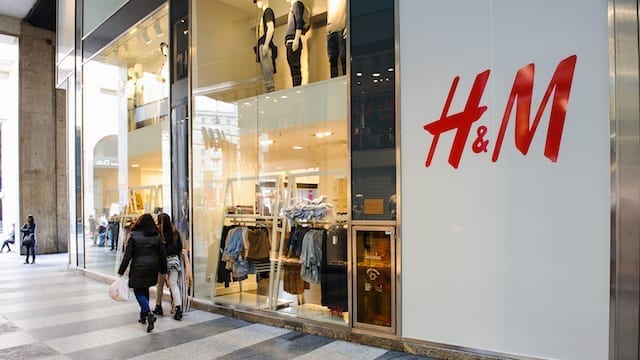
    H&M has shut its flagship Shanghai store, its latest closure in China where consumer demand has slumped amid COVID-19 lockdowns and the fast-fashion retailer has borne the brunt of a backlash against companies that refuse to use Xinjiang cotton.

    Although it was open earlier this month, the three-storey building in downtown Shanghai was on Friday boarded up with its H&M signage gone.

    The world’s second-biggest fast-fashion retailer entered China in 2007 with the opening of the Shanghai flagship store and rapidly expanded. It had more than 500 stores in mainland China early last year but its website currently only lists 376, including the flagship Shanghai store.

    The company declined to comment, citing a blackout period prior to its first-half earnings report on June 29.

    Although nearly a month has passed since Shanghai lifted a strict two-month lockdown, consumers have yet to return to malls in significant numbers.

    Chinese consumers have also beat a retreat from its products after a letter in which H&M expressed concerns about allegations of forced labour in the Xinjiang region came to light in 2021.

    Other brands that publicly disavowed Xinjiang cotton such as Inditex’s, Zara, Nike and Adidas have also suffered with Chinese netizens calling for boycotts and Chinese celebrities refusing to work with them.

    But the backlash against H&M, the first foreign retailer to express concerns, has been particularly harsh. Unlike other brands, its products remain unavailable on major Chinese e-commerce sites such as Tmall and JD.com.

    UN experts and rights groups estimate over a million people, mainly Uyghurs and other Muslim minorities, have been detained in recent years in a vast system of camps in China’s western Xinjiang region.

    Many former inmates have said they were subject to ideological training and abuse in the camps. China denies all accusations of abuse.

  • Inditex eyes online presense and about to close 1200 smaller stores

    Inditex eyes online presense and about to close 1200 smaller stores

    Inditex plans to close up to 1200 smaller stores globally as it invests more than €2.7 billion in expanding its online capacity and focusing on an integrated network of large-format stores.

    Unveiling a strategic plan for the next two years, Inditex executive chairman Pablo Isla said the company expects online sales to account for 25 percent of total revenue by 2022, compared with just 14 percent last year.

    Most of the stores set for closure are older shops carrying banners other than Zara. They collectively account for 5 to 6 percent of total sales.

    Ultimately, Inditex will have a network of between 6700 and 6900 stores, down from the 7412 it operates today. About 450 new stores will be opened fitted with “all the latest sales integration technology” and effectively replacing the smaller-sized stores, which Isla says are less well-positioned to offer new-generation customer experiences.

    “This strategy is a culmination of the project the company has been investing in steadily and significantly since 2012, a project that will transform its profile notably,” said Isla. “The overriding goal between now and 2022 is to speed up full implementation of our integrated-store concept, driven by the notion of being able to offer our customers uninterrupted service no matter where they find themselves, on any device and at any time of the day.”

    The company believes that boosting online sales, underpinned by an integrated online-store network, with larger, higher-quality stores, will help generate 4 to 6 percent like-for-like sales growth annually.

    Part of the plan will see a boost to Inditex’s Bershka, Pull&Bear and Stradivarius brands in China and Japan.

    Inditex’s two-year strategy was revealed alongside the company’s first-quarter results announcement where it said it had limited the overall decline in sales to 44 percent in the wake of the Covid-19 crisis, despite 88 percent of its store network being shuttered at some point. Online sales surged 50 percent during the quarter and by 95 percent year on year in April.

    Global sales totaled €3.3 billion in the three months to April 30, gross margin remained at 58.4 percent of sales and inventories reduced by 10 percent during the past year.

    A net loss of €175 million was recorded and the company has made a provision of €308 million related to its restructuring plan.

    Inditex closed the year with a cash position of €5.8 billion, compared to €6.7 billion a year earlier.

  • Inditex closing down 800 outlets worldwide

    Inditex closing down 800 outlets worldwide

    Spanish apparel retailer Inditex has temporarily shuttered almost 3800 stores in 39 markets internationally in the midst of the coronavirus outbreak.

    All Inditex locations in its home territory are currently closed for business.

    Affected stores include Zara, Pull & Bear, Massimo Dutti and Bershka-branded outlets, sales at all of which have been strongly affected by the virus.

    Retail takings for the group dropped 24.1 percent in the first fortnight of March.

    While the firm stated it is too early to predict the ultimate impact of the outbreak on its business, Inditex expressed confidence in its business model to weather the crisis, even as European countries begin to enforce government-mandated lockdowns.

    The firm has set up remote working systems at its Spanish head office and closed gym and bus services.

  • Inditex profit growing faster than sales

    Inditex profit growing faster than sales

    Zara parent Inditex profit grew by 12 percent in the first nine months of this year, a rate significantly ahead of sales growth.

    Sales across its brands, which also include Massimo Dutti, Stradavarius, Bershka and Zara Home, rose 7.5 percent to €19.8 billion. The company says it expects its full-year like-for-like sales to increase by between 4 percent and 6 percent.

    The Spanish-headquartered company said its success is due to a focus on “enriching its customers’ unique experience” with inventory management and “tight coordination of every step in the value chain: design, production, logistics, and distribution”.

    During the first half of this year, sales reached €12.8 billion, the highest level to date, and net profit set a new record of €1.6 billion, up 10 percent year on year.

  • Inditex achieves record first-half sales

    Inditex achieves record first-half sales

    Zara parent Inditex achieved record revenue and profits during the first half of this year.

    Net sales rose 7 per cent year on year to €12.82 billion, while net profit rose 10 per cent to €1.55 billion.

    According to Inditex executive chairman Pablo Isla, the results reflected strong first-half performance, with like-for-like growth across all brands and geographies.

    “The investments we have made in the stores as well as in logistics and technology have been key elements in the development of our customer focused integrated online and offline store platform,” Isla said.

    However, gross margin stayed steady at 56.8 per cent, up from 56.7 per cent. According to Isla, the business works to maintain gross margin, rather than maximise it.

    “We are always thinking about the medium and the long-term evolution of the company,” Isla told analysts.

    “Gross margin is a combination of many different things. You have, of course, the like-for-likes as growth. You have the product mix. You have the fashion trends. You have currencies. You have raw material costs. There are many, many elements involved.”

    Inditex said it opened, enlarged and refurbished stores across all regions during the half year, and continued to expand its online platform into new markets – seeing 7420 stores open across 96 markets, with 62 sporting the group’s online platform.

    During the beginning of its second half, Inditex has seen sales in local currencies increased 8 per cent for the period between August 1 and September 8.

    The business expects like-for-like sales growth of between 4 and 6 per cent for the full year.

  • Zara owner Inditex’s omnichannel strategy helps boost sales

    Zara owner Inditex’s omnichannel strategy helps boost sales

    Clothing retailer Inditex has posted record first-quarter sales and a rise in profits helped by the retailer’s push of stitching together its online and physical businesses.

    The fashion retailer’s online business, which accounts for 12 per cent of its net sales, and expansion plans have contributed to its robust first quarter sales of €5.927 billion ($10.18 billion), up 5 per cent from last year’s €5.654 billion ($9.56 billion).

    Net profit amounted to €734 million ($1.26 billion), up more than 10 per cent in the first quarter of 2018. The company’s net cash position increased by 9 per cent to €6.66 billion ($11.44 billion).

    The retailer, which owns the brands Zara and Pull & Bear, said its in-store and online sales showed a 9.5 per cent increase in local currencies between May 1 and June 7 – up from the 6.5 per cent in the previous corresponding period.

    “The figures demonstrate the solidarity of the company’s model, whose profitability and cash flow generation continues to grow owing to the group’s commitment to customer-driven quality fashion,” said Pablo Isla, Inditex’s chairman and outgoing CEO.

    Isla underscored the strong momentum in the digital transformation of the integrated store and online sales platform and sustainability as key pillars of the company’s strategy.

    Last month, the retailer has named chief operating officer Carlos Crespo as its new chief executive to spearhead a bigger push into e-commerce.

    Crespo will continue in his existing position until his appointment as CEO becomes effective in July, when he will begin taking some of the responsibilities currently held by executive chairman and current CEO Pablo Isla, the company announced.

    The appointment of Crespo, who oversaw the integration of Inditex’s online and bricks-and-mortar stores, puts an emphasis on the retail giant’s digital efforts amid changing consumer habits.

    Last year, Isla announced all products from all Inditex’s brands will be made available online by 2020, including markets where it does not have any stores.

    Other than Zara and Pull & Bear, the world’s largest clothing retailer also sells the brands, Massimo Dutti, Bershka, Stradivarius, Oysho and Uterque across its network of almost 7,500 physical shops. It also operates online in 49 markets.

    Isla also said all of the group’s brands will be adopting an integrated stock management system by 2020 in all the countries where there is a physical store presence.

  • New CEO For Zara Owned Inditex

    New CEO For Zara Owned Inditex

    Zara owner Inditex has named chief operating officer Carlos Crespo as its new chief executive to spearhead a bigger push into e-commerce.

    Crespo will continue in his existing position until his appointment as CEO becomes effective in July, when he will begin taking some of the responsibilities currently held by executive chairman and current CEO Pablo Isla, the company announced.

    The appointment of Crespo, who oversaw the integration of Inditex’s online and bricks-and-mortar stores, puts an emphasis on the retail giant’s digital efforts amid changing consumer habits.

    Isla said Crespo’s contribution to the company in this new role will be vital “at a time marked by Inditex’s strategic digital transformation and far-reaching commitment to sustainability”.

    Isla, who until now has held the positions of both chairman and CEO, will continue to lead the apparel company as executive chair. Crespo will work with Isla to define the overall company strategy, Inditex said.

    The new chief joined Inditex in 2001 as the head of accounting policies in the finance department. Going forward, he will be responsible for technology, procurement and sustainability.

    “I am very excited to play a role at this important time for the company in which digital transformation and sustainability in all its manifestations represent exciting challenges,” Crespo said.

    Last year, Isla announced all products from all Inditex’s brands will be made available online by 2020, including markets where it does not have any stores.

    Other than Zara, the world’s largest clothing retailer also sells the brands Pull & Bear, Massimo Dutti, Bershka, Stradivarius, Oysho and Uterque across its network of almost 7,500 physical shops. It also operates online in 49 markets.

    Isla also said all of the group’s brands will be adopting an integrated stock management system by 2020 in all the countries where there is a physical store presence.

  • Massimo Dutti Singapore opens at Jewel Changi

    Massimo Dutti Singapore opens at Jewel Changi

    Massimo Dutti Singapore has launched its sixth store, at Jewel Changi. The Inditex-owned fashion label’s almost 600sqm retail space features the brand’s newest design concept for the first time in Southeast Asia and following the opening of a similar outlet in Munich, Germany.

    Designed to look like a New York apartment, the new interior design layout expresses the natural evolution of the brand. The store concept is focused on lifestyle, offering a more enticing setting via the use of warm, high-quality materials such as wooden furniture and finishes and the use of plants – a blending of contemporary designer furniture that greatly reinforces this updated identity.

    As Massimo Dutti Singapore’s second largest store after Liat Tower, the new venue is in line with the Inditex Group’s latest approach to eco-efficiency.

    Electricity consumption has been reduced by some 30 per cent and water consumption by 40 per cent in comparison with its conventional stores. The eco-efficiency measures implemented include a store lighting system that optimises the lighting for the furnishings, and the exclusive use of LED bulbs. The lighting system also enables partial lighting of store spaces.

    The Changi store also features a Travel Collection, with easy-iron shirts and lightweight crease-resistant suits.