Tag: Inditex

  • Fashion brands targeted in Cambodian minimum wage push

    Fashion brands targeted in Cambodian minimum wage push

    Lobby group the Clean Clothes Campaign aims to shame the world’s large fashion brands into supporting a Cambodian minimum wage rise.

    The CCC says it is lobbying on behalf of a coalition of Cambodian unions that the multinational brands must ensure a minimum wage of US $177. Thousands of women and men in Cambodia and around the world, have worn stickers saying “brands must provide a living wage for workers!” in factories which produce apparel for major global brands such as H&M, Inditex, Levi’s and Gap.

    The campaign is co-ordinating ongoing action in Asia, the US and Europe.

    In October, the Labour Advisory Council (LAC), a tripartite wage-setting body, voted to approve a new minimum wage of $140, to be implemented in January 2016 for Cambodia’s 700,000 garment workers, despite objections from a number of unions.

    “This insufficient $12 wage increase is a slap in the face to workers who have been organising for over a year to demand a fair minimum wage of $177,” said the CCC.

    A coalition of Cambodian unions are joining together to demand that the brands immediately ensure a minimum wage of US $177 is paid in their Cambodian suppliers and negotiate directly with Cambodian unions a binding agreement to achieve living wages, decent purchasing practices, stable employment, and union rights for the long-term.

    “Some brands, such as H&M and Adidas, have made public statements that they support a living wage for workers in their supply chains. However, these assertions ring hollow to workers who often work excessive overtime and still cannot provide for the basic needs of themselves and their families.”

    Athit Kong, VP of C.CAWDU, an independent union in Cambodia, says the $12 increase does not reflect the real basic needs of the workers, “especially in light of the enormous profits of multinational brands”.

    “It is clear that the only solution to poverty wages in the garment industry is genuine collective bargaining between brands, as the principal employers, and the garment unions.”

    A Global Action Day is planned for December 10, International Human Rights Day. Workers and campaigners from all over the world will show support to the Cambodian workers with workplace actions, fashion mobs, catwalks, and other store actions.

    Mirjam van Heugten from CCC, says brands sourcing from Cambodia cannot expect the women and men working in their factories to accept “these bread crumbs”.

    “The workers effectively slave themselves at factories, only for the brands to make huge profits. The targeted brands such as H&M and Inditex must put their leadership claims into practice by making sure all garment workers receive a living wage.”
  • Stradivarius China launches on Tmall

    Stradivarius China launches on Tmall

    Inditex has launched another of its brands in China online.

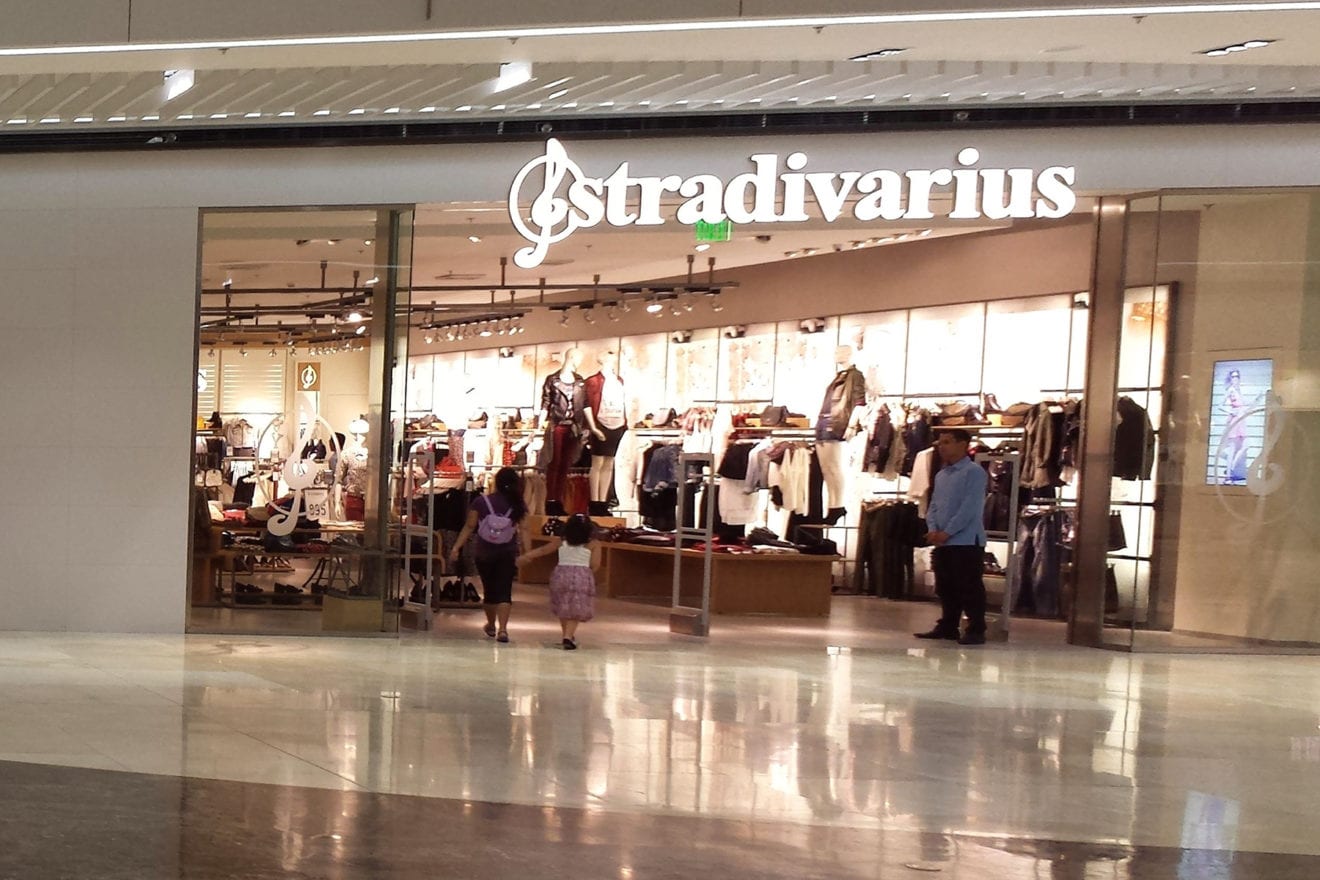
    The Spanish apparel maker has opened a Stradivarius China storefront on Tmall, the largest online sale platform in China.

    After launching in China in 2010, the junior cousin of Zara has built a network of 68 physical stores in more than 40 cities.

    The broader Inditex Group has 501 stores there.

    Inditex says at stradivarius.tmall.com, customers can find the entire fashion and accessories collection from the group’s feminine fashion brand.

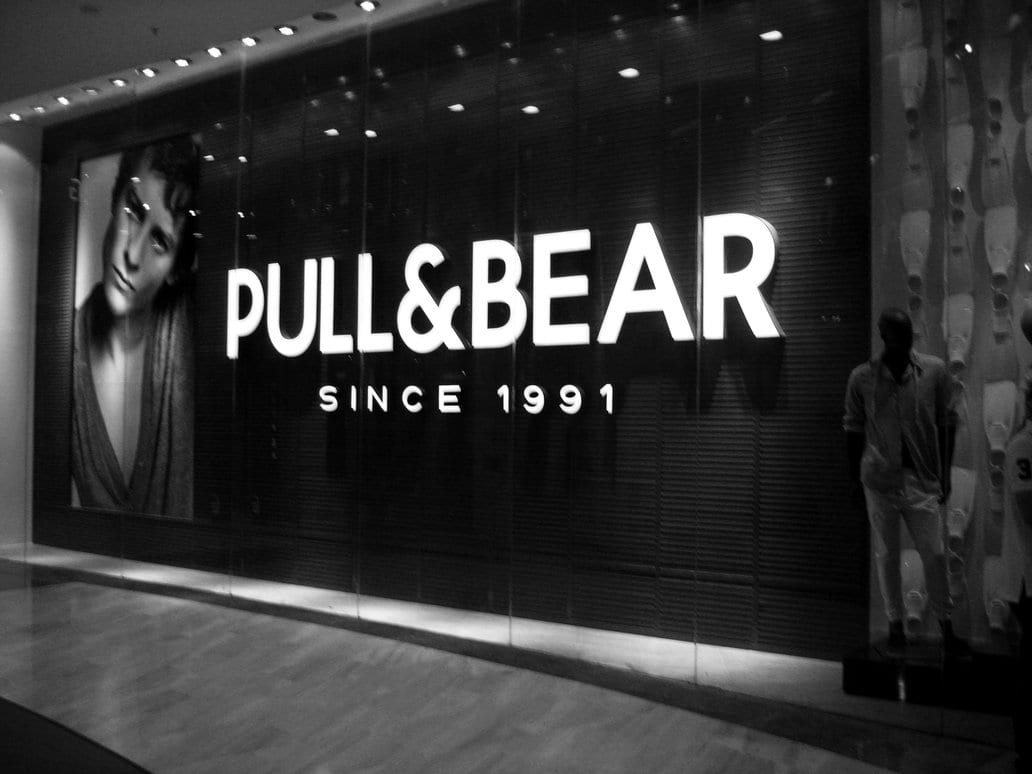
  • Pull&Bear Shanghai opens new flagship

    Pull&Bear Shanghai opens new flagship

    Inditex Group-owned youth fashion brand Pull&Bear opened its new two-storey East Nanjing Rd flagship this week.

    Pull&Bear features in 70 markets worldwide with a network of over 900 stores. The new Shanghai store is the first in the city to present the brand’s new image, which draws inspiration from the Californian atmosphere of Palm Springs.

    The 700 sqm store displays Pull&Bear’s collections on two floors. The ground floor, which can be entered either from the street or from the Mosaic Plaza shopping centre, sells womenswear and the first floor is devoted to menswear.

    The striking facade uses traditional glass bricks and LED lighting to project the brand anfd welcome customers with an air of light and transparency. Instead of a traditional display windows, the facade features visual projections, inviting passersby to come into the shop and discover the new space.

    Once inside, materials typical of DIY or building projects, such as painted concrete, OSB, pine wood and textured paint combine to create a richly varied setting of colours, materials and textures.

    This opening enhances Pull&Bear’s presence in China, the brand’s third market by number of stores (only behind Spain and Russia), with 63 points of sales open throughout the country’s major cities. It is the fourth Shanghai store for the brand.

  • Inditex sales, profit rise

    Inditex sales, profit rise

    Same store sales and group profit both increased by five per cent at Spanish apparel giant Inditex in 2014.

    In financial statements just released, Inditex said its key same store sales growth indicator stands at 23 per cent over the past five years. Net profit totalled €2.5 billion. Group sales revenue rose by eight per cent in the year to January 31, to €18.12 billion.

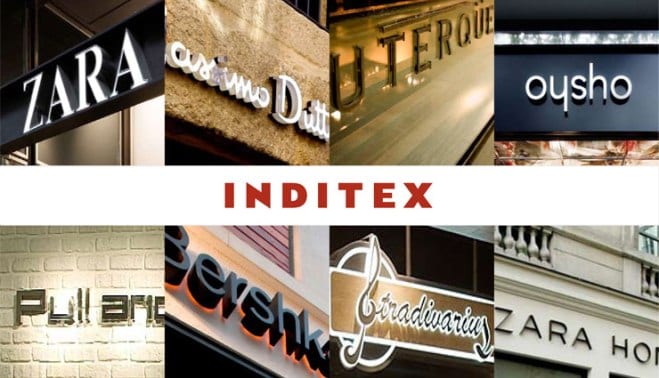
    Inditex owns Zara, Zara Home, Pull&Bear, Bershka, Oysho, Stradivarius, Massimo Dutti and Uterque.

    The group has announced a profit sharing plan under which employees will participate in earnings growth in the next two years, benefitting workers in stores, manufacturing, logistics, concepts and subsidiaries all over the world, so long as they have been working for Inditex for at least two years. That adds up to about 70,000 beneficiaries in 54 markets.

    In 2014 the group generated 8741 new jobs worldwide, 1800 of them in Spain. Inditex’s headcount totalled 137,054 at January 31.

    In 2014 Inditex opened 343 stores in 54 markets, taking its network total to 6683 in 88 markets. It debuted in just one new market last year – Albania.

    In total it opened new establishments in 54 markets worldwide. Some of the most noteworthy openings included flagship Zara stores in Zurich (Bahnhofstrasse), Miami (Lincoln Rd), Madrid (Serrano), Krakow (Rynek Glowny), Hong Kong (Queens Rd) and Shanghai (East Nanjing Rd) to take its total number of stores in China to over 500 across 60 cities.

    The group’s other chains also opened high-profile stores such as the Pull&Bear stores in Milan (Vittorio Emanuelle II) and Amsterdam (Kalverstraat); the Massimo Dutti stores in Vienna (Kholmarkt) and Palma de Mallorca (Born); the Bershka store in Turin (Via Roma); the Uterqüe store in Madrid’s airport; the Stradivarius store in Osaka (Shinsaibashi); the new image Uterqüe store in Barcelona’s airport; the Oysho store in Barcelona (Pelai); and the Zara Home flagship in London (Kensington High St). In 2015, Zara Home has opened its first stores in Australia, making it the second chain in the group to boast a presence in the market, after Zara.

    New stores planned for 2015 include prominent openings on Oxford St 61 (London), in Plaza Cataluña (Barcelona) and a number of openings in various US cities, including three in New York: one on Fifth Avenue and 42nd street, inaugurated last week, another in the new World Trade Centre, in the heart of the New York’s financial district, and a third in SoHo, in a building recently acquired by the group.

  • Inditex ends Angora lines

    Inditex ends Angora lines

    Spanish fashion giant Inditex has announced a complete and permanent ban on the use of angora wool across all its brands.

    The ban follows discussions with animal rights group PETA US and a media expose of the cruel practice where live rabbits’ fur is ripped from their skin to produce the soft thread.

    Inditex, the world’s largest clothing retailer, says it will no longer stock products using angora wool in Zara, Pull&Bear, Massimo Dutti and Bershka stores.

    It went further to donate 20,000 brand-new angora wool garments manufactured in previous seasons (with a retail value of approximately US$878,000) to Syrian refugees in Lebanon through the charity Life for Relief and Development.

    “Thanks to Inditex’s massive donation, PETA is able to send a vital message about compassion for animals this winter – that only people desperately lacking basic necessities have any excuse for wearing fur that is ripped out of live animals’ bodies”, says PETA MD Ingrid E Newkirk.

    “We’re calling on all remaining retailers – such as Benetton – that are still touting these products of rabbit torture to follow quickly in the footsteps of Inditex and others, or else they’ll watch their customers, wallet in hand, walk out the door.”

    A PETA Asia investigation found some rabbits used for angora scream in pain as their fur is ripped out, while others are cut or sheared and invariably wounded by the sharp tools as they struggle desperately to escape. In addition, the angora farming industry condemns these intelligent, social animals to years of isolation in small, filthy wire cages.

    Inditex join more than 70 top brands and retailers – including Asos, Calvin Klein, Stella McCartney and Tommy Hilfiger – which have permanently banned angora wool as a result of PETA Asia’s investigation.