Retail News CRM

Tag: Inditex

  • Zara growth slows down

    Zara growth slows down

    Zara growth is slowing substantially and analysts fear worse is to come.

    The fast-fashion brand’s Spanish parent Inditex says the slowing growth is due to a stronger euro, flat margins, less-frequent discounting and a store optimisation strategy that focuses on larger stores in prime locations and online growth at the expense of smaller stores.

    While the retail giant reported a 7 per cent sales increase at constant currency rates year on year to 26.1 billion, this was less than half the rate of growth the company reported a few years ago, Morgan Stanley said in a note.

    “[W]e believe it is evidence that the group’s growth profile is slowing sharply,” Morgan Stanley said.

    Like-for-like sales grew 4 per cent in last financial year, compared to 5 per cent in 2017. Online sales grew 27 per cent to 3.2 billion, or 12 per cent of net sales. This is on the low end for an apparel company, where online penetration tends to be higher.

    Inditex opened 370 stores during the year, and closed 355, which was nearly twice as many as the 200 stores it said it was planning to close last year. This may have had an impact on sales growth , an investor told, but could prove to be the right strategy long term.

    The group increased gross new space in prime locations by 8 per cent and is continuing to roll out its omnichannel store format, which integrates bricks-and-mortar and online channels. The group said it sees strong opportunities for growth in this space going forward.

    Inditex said global online sales are on track. Zara launched online in Australia and New Zealand last March and entered an additional 106 markets online in November, bringing the total number of markets it sells online in to 202.

    The company has reported a profit of 3.44 billion for the year, up 2 per cent on the previous year.

    In its first five weeks of the new fiscal year, the group lifted store and online sales 7 per cent at constant-currency rates. The company said it expects like-for-like sales to grow between 4 and 6 per cent this fiscal year, and gross space in prime locations to grow between 5 and 6 per cent.

    The fashion giant expects to open around 300 stores and close around 250 in the year ahead. As at  January 31, Inditex had 7490 stores worldwide across the Zara, Pull & Bear, Massimo Dutti, Bershka, Stradivarius, Oysho and Uterque brands.
  • Inditex suffers from late coming winter

    Inditex suffers from late coming winter

    Zara owner Inditex has posted slow like-for-like sales growth due to the unusually warm autumn and adverse currency moves. Inditex, which also owns upmarket label Massimo Dutti and teen label Bershka, posted a 3 per cent rise in like-for-like sales in the six months to the end of November after an “extraordinarily warm September”. Sales bounced back somewhat to 5 per cent in October and November.

    The fashion giant reported an increase in earnings before interest and tax of €3.07 billion from the previous corresponding period.

    In the first nine months of the year, the world’s largest fashion retailer reported a 3 per cent increase in sales to €18.4 billion and a 4 per cent rise in net profits to €2.4 billion.

    According to Inditex, the company didn’t have to cut clothing prices from September like its rivals, which resulted in margin growth of 108 basis points during the third quarter.

    The clothing retailer maintained sales and margin guidance for the rest of the year.

    Pablo Isla, Inditex chair and CEO, said the group’s strong business model, which continues to deliver solid structural growth in all markets, and its constant focus on developing the integrated store and online platform through continued enhancement of technology and systems, have contributed to its performance.

    The company announced last September that all products from all its brands will be made available online by 2020, including in markets where it does not have any stores.

    Isla had said that Inditex wants to make all fashion collections available to all customers wherever they are in the world.

    “Even in those markets which do not currently have our bricks-and-mortar stores,” Isla added.

    Other than Zara, Massimo Dutti and Bershka, Inditex also sells the brands Pull & Bear, Stradivarius, Oysho and Uterque across its network of almost 7500 physical shops. It operates online in 49 markets.

  • Inditex to sell all its brands online by 2020

    Inditex to sell all its brands online by 2020

    Zara owner Inditex announced all products from all its brands will be made available online by 2020, including in markets where it does not have any stores.

    Pablo Isla, Inditex chairman and CEO, announced they want to make all their fashion collections available to all their customers wherever they are in the world.

    “Even in those markets which do not currently have our bricks-and-mortar stores,” Isla added.

    Other than Zara, the world’s largest clothing retailer also sells the brands Pull & Bear, Massimo Dutti, Bershka, Stradivarius, Oysho and Uterque across its network of almost 7,500 physical shops. It also operates online in 49 markets.

    In FY2017, Inditex’s online sales saw a 41-per cent increase to reach 10 per cent of group net sales, although it fell short compared to rival Swedish retailer H&M’s which made close to 12 per cent on online sales.

    Isla said all of the Group’s brands will also be adopting the integrated stock management system by 2020 in all the countries in which there is a physical store presence.

    He said the system would make it possible to fulfil online customer orders with store inventory. To date, integrated stock management is in place in Zara stores in 25 markets including Spain, France, Italy, China, the US, the UK and Mexico. Inditex currently has stores in 96 markets. The technology will be completely adopted across the whole group by 2020.

  • Zara Stratford flagship store pioneers new approach to integrating stores and online

    Zara Stratford flagship store pioneers new approach to integrating stores and online

    A new Zara flagship unveiled in London this week gives an insight into its new global direction.

    High in technology, compact in footprint, Zara believes the new Westfield Stratford store concept will “transform the customer shopping experience at its heart”, integrating online and in-store shopping.

    It is the Spanish fast-fashion retailer’s first store in the world to introduce a fourth section after women’s, men’s and kid’s: online. A separate area has been designed to house two automated order collection points.

    The system’s optical barcode reader scans QR or Pin codes that customers receive when they place orders online. Behind the pick-up point, a robotic arm collects trays and organises the packages optimally according to their size, delivering orders for customers to collect in seconds. The system can handle 2400 orders simultaneously, enabling shoppers to collect purchases made through Zara’s e-commerce platforms. Online orders are available in store on the same day if made before 2pm, or the next day if made in the afternoon.

    Gallery of New Zara Stratford flagship can be viewed below :

    Zara says the customer service features go beyond integrating online and offline shopping. The new store aims to create a “seamless, convenient and enjoyable shopping experience”. Interactive mirrors equipped with RFID readers can detect the garment a customer is holding, enabling customers to see what a complete outfit will look like in the mirror.

    Zara staff will use iPads to advise customers and accept payments on the shop floor. Customers can pay using their mobile phones via the Zara app or the Inditex Group app, InWallet.

    And to complement the regular cashier desks, there is a self-checkout area with a system that automatically identifies garments being purchased. Customers can simply confirm their items on a screen at the self-checkout before paying with their cards or mobile phones.

    The 4500sqm store has been under renovation since January and was temporarily replaced with the brand’s first pop-up store for the purchase and collection of online orders only, some of the features of which are replicated in the Zara flagship.

    Inditex chairman and CEO Pablo Isla described the reopening of the Zara flagship as an important moment for the company.

    “We are in a unique position as we enjoy a global sales platform that fully integrates stores and online. In recent years we have invested in the most advanced technology and optimised our stores for this aim. Our business model combines stores and digital seamlessly, and we are ready for the opportunities that this brings with current and new customers,” he said.

    From a design perspective, the store has a two-storey facade without shop windows on the first floor, providing a transparent view of the store’s interior architectural features and collections.

    The refurbishment of the Zara flagship follows the brand’s introduction of an augmented reality experience at 120 flagship stores worldwide for a fortnight earlier this year.

  • Online sales surge boosts Zara owner Inditex

    Online sales surge boosts Zara owner Inditex

    Surging online sales have boosted Zara parent’s Inditex’s net profit in the past fiscal year by 7 per cent.

    Inditex, which also owns brands including Pull & Bear, Bershka and Massimo Dutti, reported an increase in net profit for the 12 months ending January 31 to €3.37 billion (A$5.27 billion) from €3.16 billion a year earlier.

    Sales rose 9 per cent to 25.34 billion euros in the fiscal year, with revenue for online sales growing by 41 per cent.

    In FY17, Inditex invested €1.8 billion in further developing its integrated stores and online model and upgrading its technology. Specifically, the rollout of RFID technology has improved flexibility and response times by integrating stores and online inventories, the company said.

    Pablo Isla, chairman and CEO of Inditex, described it as a year of “solid growth”, and highlighted, “the unique strength” of their integrated stores and online model and its significant growth potential.

    He added that “the prescient investments made in technology and logistics in recent years,” coupled with space optimisation, had positioned the company for continued growth across all its markets.

    The group, which during 2017 opened its first stores in Belarus and launched its online sales platform in India, Vietnam, Singapore, Thailand and Malaysia, was founded in 1975 by Amancio Ortega and has become the world’s largest clothes retailer with eight brands.

    Inditex owns 7,475 shops worldwide, an increase of 183 stores from the previous year when factoring in shop closures, but 29 less than three months earlier.

    Florence Allday, beauty and fashion associate at Euromonitor International, said Inditex faces a period of uncertainty as the changing retail environment and globally volatile currencies make this rapidly evolving market sector even more competitive.

    The fashion conglomerate may be one of the most dynamic players in the industry, Allday said, but the past few months have seen Zara and its direct global competitors vie to remain in favour with their female, millennial demographic in a market that is fast-maturing and reaching saturation.

    Currently, Zara has the fourth largest global market share in the apparel and footwear category, behind Hennes & Mauritz (H&M), Adidas and Nike. Other significant competitors include Asos, Boohoo and Primark.

    Allday said rankings and shares in the global apparel and footwear market remained static in 2016, with sportswear giants taking the top two spots.

    Inditex ranked fourth, maintaining its positioning as one of the leading non-sportswear companies in the world. Inditex’s key rival is H&M, which slightly outperformed Inditex due to more dynamic store expansion and an aggressive pricing strategy. H&M also utilises far more visible marketing, including collaborations with high-profile designers that attract widespread fashion press.

    “Although Inditex does rank higher than H&M in the global footwear market the company will need to utilise its vertical operations and exploit its widespread geographic coverage, to overtake H&M in apparel, capitalising on the narrowing gap between the two rivals,” Allday said.

    “Further still, players such as Fast Retailing [Uniqlo parent] continue to move up the ranks, capturing consumers’ demand for value-orientated product offerings, threatening the dominance of Inditex and H&M.”

    Allday said despite Zara’s status as the world’s largest fast fashion retailer, its sales slowed last year due to a lack of distinction between seasonal collections, and general market saturation.

    “To continue to be a key player in the fast fashion arena, Zara needs to ensure that its constant, uninterrupted flow of new designs and products is matched by a digital retail experience that is equally seamless,” she said.

    “With competitors like Asos, Amazon and Missguided enjoying enormous sales and growth, thanks to their sleek online platforms, Zara must streamline its payment and delivery options to ensure that its online shoppers remain loyal. Consumer attitudes are shifting, preferring to pay more for quality over quantity.”

    “To ensure that it remains relevant, Zara must emphasise the quality and longevity of its garments and justify its low price points to ethically-conscious consumers.”

  • Turnover soars 94 per cent for H&M India

    Turnover soars 94 per cent for H&M India

    With store openings and competitive pricing, H&M India has upped its turnover 94.5 per cent in India for the year to the end of November.

    The Swedish fast-fashion retailer’s turnover reached INR955 crore (US$148 million) for the 12 months.

    Its growth follows it opening more stores in India, taking the count from 15 to 27. It entered small markets such as Coimbatore, Indore and Raipur, as well as adding outlets in Mumbai and the Delhi-National Capital Region, where it has had a presence since 2015.

    In its earning release, H&M says it plans to launch an e-store later in India this year.

    Meanwhile, Inditex-owned Zara crossed INR1000 crore in sales last year, seven years after arriving in India, and last year opened an e-commerce portal.

    But H&M is confident its low-priced apparel and wide variety will help it win in India. “I think our business concept is working,” says country manager Janne Einola.

  • Uniqlo to expand to Sweden

    Uniqlo to expand to Sweden

    Japan’s Fast Retailing plans to launch its Uniqlo clothing brand in Sweden with an initial store in Stockholm this year.

    Taking on its rival H&M in its home market, it marks the cut-price brand’s debut in the Nordic region.

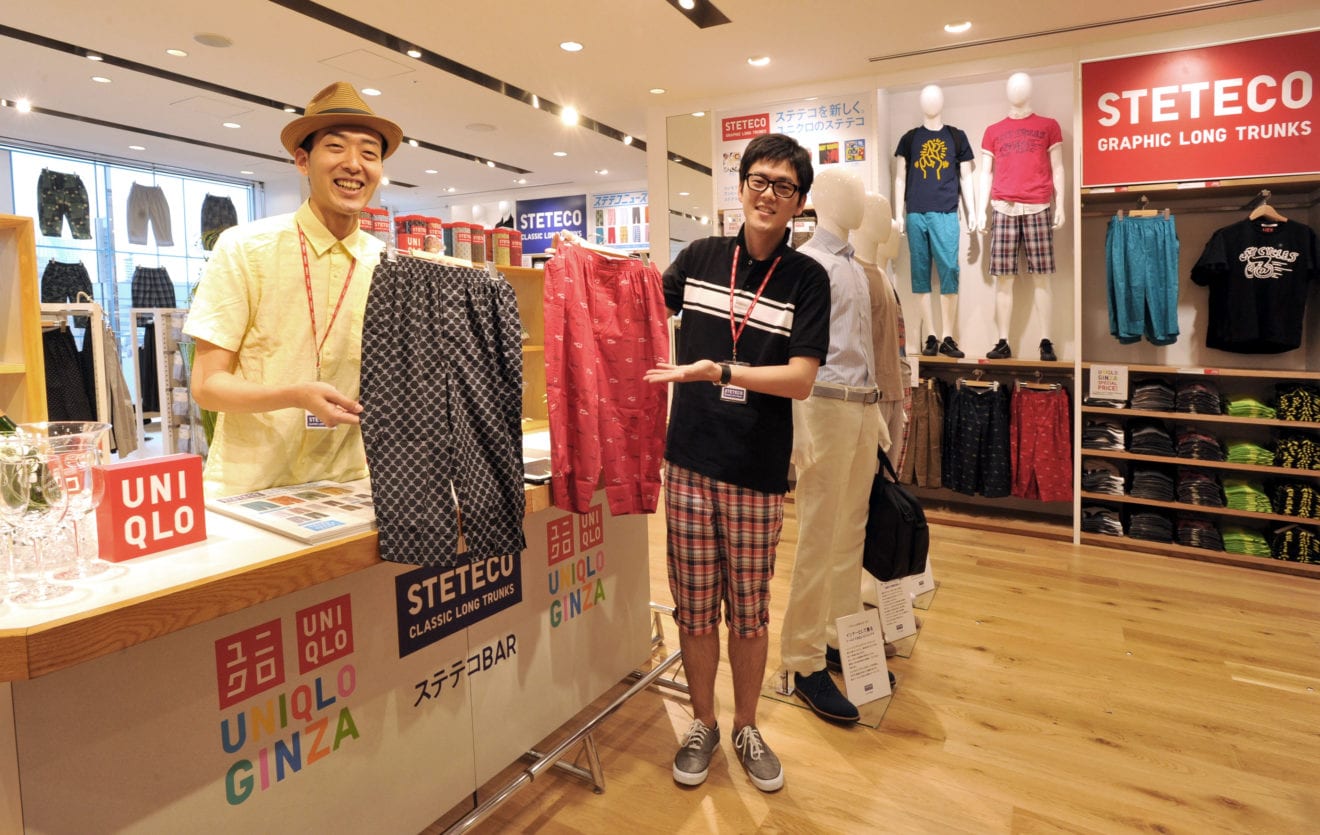
    Uniqlo has fewer than 70 stores in all of Europe, and Fast Retailing CEO Tadashi Yanai says he wants to overtake H&M and Zara parent Inditex of Spain as the world’s top apparel retailer.

  • Inditex Rises as Global Expansion Continues

    Inditex Rises as Global Expansion Continues

    Clothing company Inditex international, which owns Bershka and Zara, reports a strong performance for its latest nine months.

    Continuing to roll out its global fully integrated store and online platform, the Spanish group opened outlets in 52 markets during the period. Its store count reached 7504 in 94 markets at the end of October.

    It says like-for-like sales growth remains strong, while global online sales launches are on track. It launched online sales for Zara in India in October.

    Net sales for the nine months reached €17.96 billion (US$21.2 billion), up 10 per cent.

    Gross profit reached €10.3 billion, 9 per cent higher, while gross margin reached 57.4 per cent and EBIT was up 6 per cent to €2.99 billion. Net income was also up 6 per cent to reach €2.3 billion.

    During the nine months, Inditex opened 212 stores including 60 for Zara, 30 for Stradivarius and 13 for Pull & Bear.

  • Fast Retailing to launch in India

    Fast Retailing to launch in India

    Uniqlo parent Fast Retailing has applied to open stores in India.

    The Japanese fast-fashion giant has filed an application with India’s Department of Industrial Policy & Promotion to do business in the country under the Uniqlo brand.

    “India is a market with great potential,” says Fast Retailing spokeswoman Pei-Chi Tung. The company has long been interested in entering India, but has been beaten by H&M and Zara which are already established in the apparel market Euromonitor International has predicted will grow 29 per cent to INR3.76 trillion (US$58 billion) by 2021.

    Zara owner Inditex opened a flagship in Mumbai in May, which CEO Pablo Isla says has had a strong reception. It has just started online sales as well in India.

    Fast Retailing last month reported its biggest jump in annual earnings in more than a decade, driven by a near doubling of operating profit at Uniqlo stores outside of Japan. Operating profit for the brand in China jumped 37 per cent for the year ended August 31, compared with a 6.4 per cent slump in Japan.

  • Inditex Group first-half revenue hits US$13 billion

    Inditex Group first-half revenue hits US$13 billion

    Zara parent Inditex Group’s growth in sales and profit increased in the first half of this year as the Spanish company reaped the benefits of opening a new store nearly every day.

    First-half revenue rose by 11.5 per cent to €11.7 billion (US$13.8 billion) for the multinational fashion retailer.

    Like-for-like sales growth was 6 per cent, with positive figures across all geographies

    Net profit for the group was €1.37 billion, up 9 per cent.

    Inditex opened stores in 35 markets during the six months to reach a total of 7405 – 113 more than at the start of the year.

    Notably, Zara opened a flagship store in Mumbai during the second quarter with a sales floor of 4800sqm. For the inauguration of its first street-level store in India, Zara refurbished and restored the Ismail Building in Hutatma Chowk Square, in the heart of the city’s shopping and historic districts.

    Zara Home opened a flagship store on West Nanjing Road in Shanghai in May, and last month the Zara flagship store in Nagoya was renovated and expanded. It now covers 2300sqm over three floors and is known for its glass façade.

    Other landmark stores reopened this month, including Bershka’s biggest store in Japan, covering 690sqm over four floors in Tokyo’s Shibuya district. It offers the complete collections from its three lines: Bershka, BSK and Man.

    Rolling out its seamlessly integrated model, Inditex entered four markets in the first quarter of the year with its flagship Zara brand initially: Malaysia, Singapore, Thailand and Vietnam. An online store will launch in India on October 4.

    Meanwhile, lingerie brand Oysho inaugurated its online platform in South Korea, with Bershka also going live in Japan.

    The group has a presence now in 94 markets, 46 of which also have an online presence.

  • Inditex sales soar 14 per cent

    Inditex sales soar 14 per cent

    Inditex sales grew 14 per cent in the quarter to April 30, to €5.6 billion, underpinned by a solid business performance in all markets.

    Sales growth in constant-currency terms was 12.5 per cent and net profit amounted to €654 million, up 18 per cent year-on-year.

    Growth was achieved across all regions and all of the group’s brands – Zara, Stradivarius, Pull & Bear, Massimo Dutti, Oysho, Uterqüe and Zara Home – increased their international presence, expanding their integrated physical and online store platforms.

    Four new e-commerce markets were added during the quarter, with Zara launching online in Thailand, Malaysia, Singapore and Vietnam. In parallel, the group continued to expand and refine its presence in its 93 operating markets, ending the period with 7385 stores.

    Zara is due to launch online in India during the second half of the year.

    Highlights of the group’s physical store openings included a Zara Home flagship store on Shanghai’s West Nanjing Road and a new 4800 sqm Zara flagship in the Ismail Building in Mumbai, India.

    Inditex said it was committed to continuing to invest in growth through the constant modernisation and renewal of its stores and facilities.

  • Emerging markets like Vietnam help Inditex outpace H&M

    Emerging markets like Vietnam help Inditex outpace H&M

    Fashion retailer H&M’s sales fell unexpectedly in February while Inditex, which owns Zara, pulled further ahead of its Swedish rival, helped by its expansion online and a bigger emerging market presence.

    Inditex, the world’s biggest clothing retailer, has consistently outperformed H&M in the past few years as a result of online growth and its push into new markets. The Spanish company has also diversified more quickly into higher-priced brands, reducing exposure to the rise of discount chains like Primark.

    H&M has embarked on plans to roll out ecommerce in more markets this year and speed up expansion of newer brands such as the mid-market COS and & Other Stories.

    But on Wednesday H&M revealed that local-currency sales fell in February for the first time in four years, slipping 1 percent year-on-year, against a forecast in a poll of analysts for a 6 percent rise. H&M’s shares fell 5 percent.

    In contrast, Inditex’s local currency sales rose 13 percent from February 1 to March 12, as customers snapped up items from spring collections like double-breasted jackets, palazzo trousers and embroidered tulle tops.

    This was adjusted for an extra trading day in February 2016. H&M sales were up 3 percent in February, taking that calendar effect into account.

    Inditex results highlight the success of its strategy, with like-for-like sales up 10 percent in the year to end-January, helped by a shift towards opening bigger stores in prime locations that are then integrated with online operations.

    emerging-markets-like-vietnam-help-zara-owner-inditex-outpace-hm

    Inditex opened stores in 56 countries during the year, including its first opening in Ho Chi Minh City, Vietnam.

    Forex pressure

    Inditex’s gross profit margin missed analyst expectations, falling to 57.0 percent in its 2016 financial year from 57.8 percent in 2015. This weighed on the company’s shares which were down 1.4 percent by 1014 GMT.

    Inditex, known for speeding the latest trends from runway to stores in a matter of days, reports in euros but makes more than half its sales in other currencies, exposing it to falls in the likes of the Mexican peso and the Russian rouble.

    Chairman and Chief Executive Pablo Isla said this margin metric would have increased on the year had it not been for the negative currency effects.

    Analysts expect this effect to swing in Inditex’s favor over the next 12 months with a consequent boost to profit margins.

    “We are very keen buyers of Inditex for 2017,” Anne Critchlow, analyst at Societe Generale, said. She said Inditex trades on 26 times forward earnings, compared to H&M on 21 times.

    Inditex opened stores in 56 countries during the year, including first openings in New Zealand, Vietnam and Paraguay, bringing its total store count to over 7,200. It launched online sales across its stable of brands in Turkey and said on Wednesday it would start online sales in India in 2017.

    H&M is more reliant on Europe than Inditex. In Germany, for example, which is H&M’s biggest market, apparel sales fell 9 percent in February, according to trade journal Textilwirtschaft.

    “Market conditions are the main driver of the weak February number,” UBS analyst Adam Cochrane said. “There’s a fear that they are losing market share on a like-for-like basis.” UBS has a “buy” recommendation on H&M.

    H&M reported that sales in local currencies rose 4 percent in its fiscal first quarter to February 28. That compares with a new target for annual sales growth of 10-15 percent. H&M is due to publish its full fiscal first-quarter report on March 30

  • Zara Thailand launches online

    Zara Thailand launches online

    Zara Thailand is launching online sales in Thailand this month.

    Vietnam will follow, with the service already introduced in Malaysia and Singapore this month.

    Also this year, the brand will start selling online in India, where the Spanish fast-fashion chain is expected to reach sales of US$200 billion by 2025, according to a study by consulting firm Wazir Advisors.

    Additionally, Zara parent Inditex has said it will open a 5000 sqm flagship Zara store in Mumbai, which will be the largest of its 21 outlets in India.

    Inditex says its bottom-line profit rose by 10 per cent to €3.16 billion (US$3.3 billion) last year, beating out its main rival, Sweden’s H&M, which had a net profit of about US$2.1 billion.

    Opening 279 stores in its latest fiscal year, to the end of January, it has nearly 7300 outlets in 93 countries, with five new markets including New Zealand and Vietnam.

  • Uniqlo targets Zara in faster fashion move

    Uniqlo targets Zara in faster fashion move

    From fast fashion to faster fashion: speed is seen as the key by Uniqlo owner Fast Retailing in its bid to outrace apparel powerhouse Zara.

    Uniqlo founder Tadashi Yanai says Fast Retailing plans to shorten the time it takes from design to delivery to about 13 days, roughly the same as Zara, owned by clothes retailer Inditex.

    He says the company’s new design and delivery centre in Tokyo will also help Uniqlo expand direct-to-consumer, custom-clothing sales and improve the efficiency of its same-day delivery in the city.
    “We need to be fast,” he says. “We need to deliver products customers want quickly.”

    Japan’s biggest clothing retailer aims to increase total revenue by nearly 70 per cent to ¥3 trillion (US$26 billion) in the fiscal year ending August 2021. While that may still not be enough to overtake Inditex, which reported sales of $25 billion last year, Yanai says Fast Retailing’s focus on clothes that meet consumers’ daily needs will help propel its growth.

    “Zara sells fashion rather than catering to customers’ needs,” he says. “We will sell products that are rooted in people’s day-to-day lives, and we do so based on what we hear from customers.”

    Overseas markets, notably in Asia, will grow to contribute about two-thirds of Fast Retailing’s revenue in the next four years, up from about half currently. Uniqlo will open 100 stores in China and another 100 in Southeast Asia annually, says Yanai.

    Concentration for speed

    The company’s new complex, in the Ariake district along Tokyo’s waterfront, houses more than 1000 employees, including designers and marketing teams, and also has a warehouse and delivery department. Yanai says that concentrating resources into one location will help speed processes.

    “The ability to provide anybody, anywhere, anytime with the ultimate, high-quality day-to-day clothing will set us apart,” he says. “We want to deliver products that customers want quickly. That’s why it’s Fast Retailing.”

    After revenue growth of more than 20 per cent for three straight years, Uniqlo sales took a hit in the latest fiscal year. The growth rate slowed to 6 per cent after the brand raised prices because of higher raw-material costs.

    Following the slowdown, the company did a U-turn on its pricing strategy, saying it was committed to delivering the lowest price possible. However, it had to roll back its 2021 revenue target to ¥3 trillion from ¥5 trillion.