Tag: Indonesia

  • Matahari Putra Prima’s Q1 Revenue Rises 60% on Larger Gross sales

    Matahari Putra Prima’s Q1 Revenue Rises 60% on Larger Gross sales

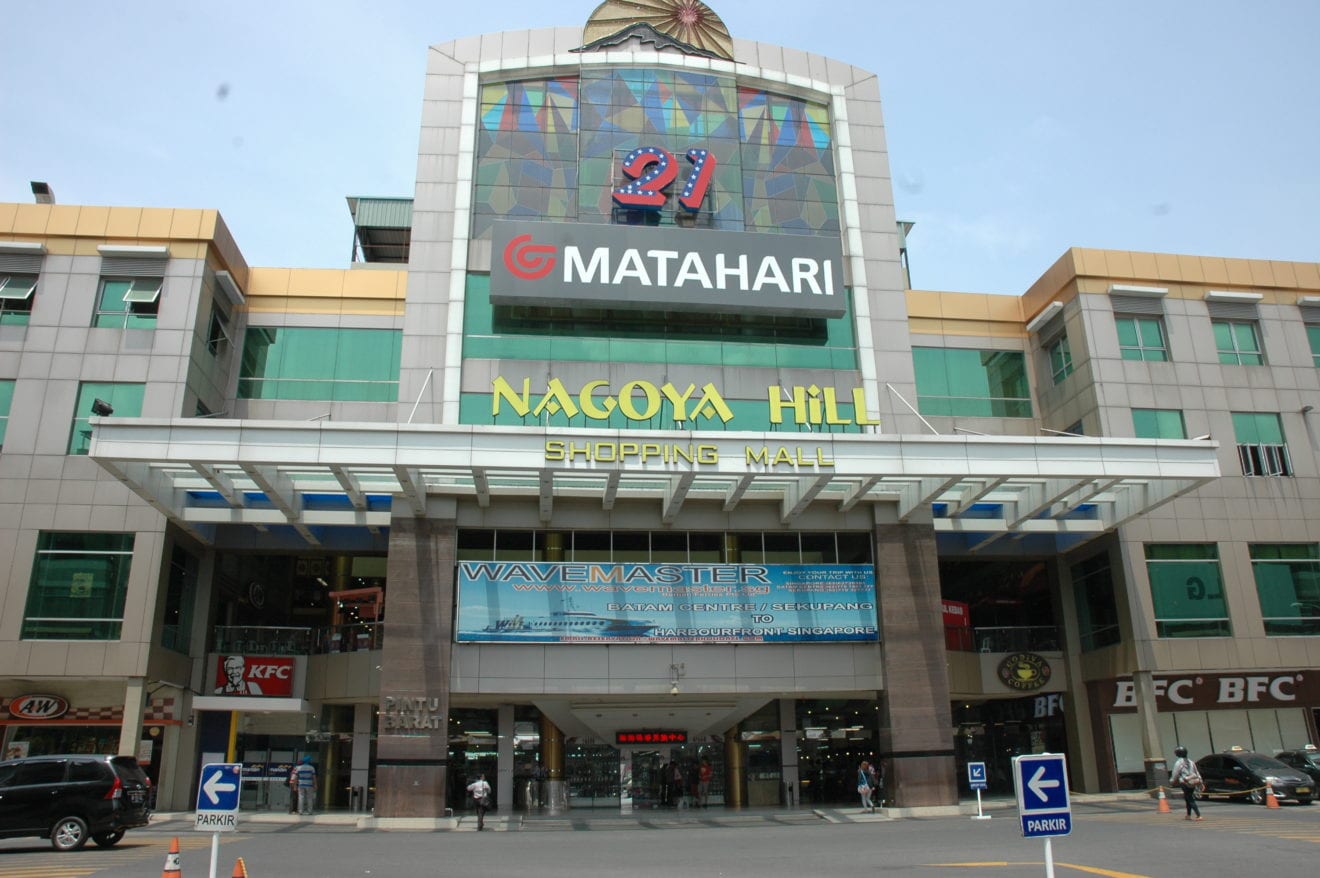
    Matahari Putra Prima — the operator of Hypermart, Foodmart and the Boston Well being & Magnificence retail chain — posted 60 % achieve in revenue within the first quarter, because of regular progress in gross sales.

    Internet revenue rose to Rp 81.6 billion ($6.three million) within the January-March interval from Rp 51.zero billion in the identical quarter final yr, the corporate stated in a press release final week. Internet gross sales rose 7.1 % to Rp three.35 trillion.

    “We’re happy with our internet revenue leads to the primary quarter regardless of a really difficult gross sales surroundings. our enterprise benefited from the productiveness measures taken and realization of expense saving packages initiated in mid-2015 by the administration staff,” stated MPP chief government officer Noel Trinder.

    MPP’s same-store gross sales progress, nevertheless, was 1.eight % decrease because of weak financial progress and aggressive setting amongst present shops in operation, the corporate stated.

    In the course of the quarter, MPP opened 14 new shops together with two for Hypermart, one Foodmart grocery store, 9 Foodmart Categorical and two Boston shops.

    These added to MPP’s 267 shops (107 Hypermart, 58 Foodmart and 102 Boston) in 67 cities throughout Indonesia as of Dec. 31 2014.


  • Indonesia’s Unemployment Fee Will increase as Financial system Slows

    Indonesia’s Unemployment Fee Will increase as Financial system Slows

    Indonesia’s unemployment price elevated in February, in response to the newest knowledge from the Central Statistics Company, or BPS, amid slower financial progress.

    BPS’s February 2015 knowledge, launched on Tuesday, confirmed there have been 7.45 million unemployed individuals out of the full workforce of 128.three million within the nation. Because of this the unemployment price stands at 5.81 %.

    As compared, in February final yr the variety of unemployed individuals stood at 7.15 million, representing 5.7 % of the whole 125.32 million workforce.

    Nevertheless, in comparison with the earlier knowledge acquired in August 2014, the unemployment fee declined, though the actual numbers have been nonetheless on the rise.

    In August 2014, 7.24 million individuals have been recognized as unemployed, representing a 5.94 % of the whole 121.87 million individuals.

    BPS additionally launched knowledge that confirmed Indonesia’s financial progress slowed to four.71 %, the weakest it has been in additional than 5 years.

    “Therefore, within the absence of forthright stimulus from each financial and monetary fronts, for Indonesia to regain some progress mojo, there isn’t a different approach than for it to imbibe the bitter drugs of reforms,” stated Wellian Wiranto, an economist at OCBC Financial institution in Singapore.

    “From slicing bureaucratic purple tape to liberating up of land for infrastructure tasks in addition to boosting labor productiveness, there are a lot on the record of issues the Jokowi administration should do to inch nearer to the 7 % goal it has in thoughts,” he stated.

    Franky Sibarani, the chief of the Funding Coordinating Board (BKPM), stated the federal government would keep on with its weapons with a goal to create as much as two million new jobs this yr. “We’ll push for extra job availability,” he stated.

    Nonetheless, knowledge from BKPM confirmed that though complete funding elevated by 16.9 % year-on-year to Rp 124.6 trillion ($9.55 billion) within the first quarter, job absorption declined. Direct funding within the nation absorbed 315,229 staff within the first three months of this yr, a decline from 470,510 within the fourth quarter of final yr.

  • Alfaria to Raise Rp 2.5t From Bonds, Private Placement

    Alfaria to Raise Rp 2.5t From Bonds, Private Placement

    Sumber Alfaria Trijaya — the operator of Alfamart, Alfamidi, Alfa Express, and Lawson minimarkets — plans to raise Rp 2.5 trillion ($193 million) from selling bonds to the public and from the sale of new shares to affiliated companies, in order to pay back bank loans.

    The company will sell 3-year and 5-year bonds on May 4 and May 5, eying to raise Rp 1 trillion from the proceeds, Alfa said in a statement on Thursday. BCA Sekuritas, HSBC Securities Indonesia, and Mandiri Sekuritas act as the underwriter for the bonds, which rated AA- by global rating agency Fitch Ratings.

    Alfaria will also sell 2.91 billion new shares, or 7.5 percent of paid-up capital, at Rp 510 apiece to Sigmantara Alfindo, currently the largest Alfaria shareholder, and to an affiliate Amanda Cipta Persada.

    The company will use proceeds from the bond sales and private placement to pay back loans, including those from private lender Bank Central Asia and state-owned lender Bank Mandiri, Indonesia’s largest lender. Alfaria has Rp 1.45 trillion in debt outstanding to BCA, and Rp 1 trillion debt to Bank Mandiri, according to the company’s latest financial statement. Both loans have a 10 percent annual interest.

    “[The proceeds are] expected to reduce the company’s liability and risks against third-party creditors. In turn, the company can expand its business,” Alfaria said.


  • Lenders’ Struggle for Funding to Continue: S&P

    Lenders’ Struggle for Funding to Continue: S&P

    Funding strains among Indonesian banks is likely to persist this year, undermining the industry’s profitability and growth ahead, according to credit rating agency Standard & Poor’s.

    In a report released last Thursday, S&P estimates lending growth in Indonesia to reach between 13 percent and 15 percent in 2015, higher than last year’s pace of 11.4 percent. That level of growth is projected to keep funding costs high, despite the regulatory caps implemented by the Financial Services Authority (OJK) last October.

    “Indonesian banks that struggle to attract sufficient deposits will face a tough choice of reining in credit growth or paying the penalty for breaching regulatory liquidity ratios,” said Standard & Poor’s credit analyst Ivan Tan, referring to Bank Indonesia’s mandate that maintained loan-to-deposit ratio (LDR), an indicator for liquidity, at 92 percent.

    LDR among commercial banks in Indonesia stood at 88.26 percent in February, an improvement from 90.47 percent in the same period last year, OJK data showed. That lower ratio indicated more money available for lending.

    Tan added that tighter competition for funding will eat into banks’ profitability in the next 12 to 18 months, forecasting net interest margin ­— a measure of a bank’s profitability — to reach around 4 percent this year. This would be a 20 basis-point decline from 4.2 percent last year.

    Under the current conditions, S&P expects Indonesian lenders will see “a new normal” in lending growth as banks work on preserving their liquidity instead. This could mean slower lending growth, greater efforts to expand branch networks for new sources of funding and regulatory changes for short-term relief. Before 2014, lending growth was above 20 percent for several years.

    Tan noted that the impact will likely be “asymmetric,” depending on each bank’s financial performance and operational presence, saying: “Banks with a strong domestic deposit franchises and extensive branch networks should weather the conditions better than peers with less-robust deposit franchises.”


  • L’Oréal ‘Brandstorm’ national award goes to Indonesia’s ‘Absolute Jetset’ concept

    L’Oréal ‘Brandstorm’ national award goes to Indonesia’s ‘Absolute Jetset’ concept

    L’Oréal has named ‘Bisnis.com’, a team from the University of Indonesia as the national winner of its’ Brandstorm competition for their ‘Absolute Jetset’ concept for the Lancôme brand.

    Brandstorm is L’Oréal’s business competition for students to unleash their creativity and apply ground-breaking ideas to one of the cosmetics giant’s international brands and distribution channels.

    This Indonesia team consists of three students in their twenties; Daviantri Apsariputri, Rangga Husnaprawira and Nabila Izza Dhia whose concept is a new service for Lancôme’s travel retail stores that replicates first class treatment on planes.

    The goal is to increase the brand’s sales by 60 per cent by developing the travel retail market business unit for travelers at every stage of their journey – from the airport, to duty free stores and aboard the plane.

    The group will represent Indonesia at the international level of the competition in Paris in June, where 45 winning teams will compete for the top three prizes.

    Searching for new talent in the beauty arena..

    L’Oréal’s program has been running over 23 years and was introduced in Indonesia in 2009. 

    Coached by top executives, competing teams also get to work with global advertising agencies in designing a marketing strategy in the area of travel retail.

    According to Restu Widiati, director of human resources, L’Oréal Indonesia; “It is the company’s strategy to identify the best talent to become actively involved in promoting the company and to contribute to the beauty industry in Indonesia. “

    In 2011, Widiati says the national winner of the competition in Indonesia went on to win third place in the international competition in Paris, beating teams from more than 40 countries.

    The HR director says the competition has been unique this year in that students were not given the task of creating new products, but to promote the travel retail business unit.

    “The students were challenged to act as international marketing director for L’Oréal travel retail to design a new experience for one of the iconic beauty brands, namely Lancôme,” he reveals.

  • Lippo Cikarang Holds Fourth Sakura Matsuri Festival

    Lippo Cikarang Holds Fourth Sakura Matsuri Festival

    Lippo Cikarang, an industrial estate developer, held the fourth annual Japanese culture festival Sakura Matsuri, in Maxx Boxx Orange County, an integrated area of commercial and residential development in Cikarang
    industrial park in West Java.

    The two-day event, held on April 25 and 26, was attended by Kenichi Tomiyoshi, the president director of Japan External Trade Organization (Jetro), Yukio Takebe, chairman of Jakarta Japan Club, and Katsuhisa Ishizaki, executive director of Japan’s National Trade Organization.

    Lippo Cikarang’s president director Meow Chong Low attended the event.

    “We present the Sakura Matsuri to the Japanese community in Cikarang industrial estate as part of our appreciation to them, so they can celebrate the ‘Golden Time’ when they usually welcome the flourishing of the Sakura flower [in Japan],” said Low.

    The event was held in conjunction with the Community of Japanese Alumni (KAJI).

  • Five Firms Seek to Buy Thiess’s Cinere-Serpong Toll Road Concession

    Five Firms Seek to Buy Thiess’s Cinere-Serpong Toll Road Concession

    Five investors are interested in acquiring an 80 percent stake in the Jakarta Outer Ring Road (JORR) II project from Thiess Contractors Indonesia after the company was unable to work on the concession due to financial difficulty.

    State-controlled toll-road operator Jasa Marga is among the interested bidders, said its president director Adityawarman over the weekend. The company competes with Astratel Nusantara, an infrastructure unit of Astra International, and Indonesian integrated infrastructure company Nusantara Infrastruktur.

    Jasa Marga set aside Rp 2 trillion ($153 million) to acquire the toll road concession and officially proposed a bid to Thiess — a private contractor working in the resource, infrastructure and energy sectors. Jasa Marga offered to take a 55 percent stake, while Waskita Karya would own 35 percent, and Jakarta Propertindo, another construction firm, would take 5 percent.

    Based on data by the Toll Road Regulatory Agency (BPJT), Thiess owns 80 percent of the Cinere-Serpong toll road and Waskita Karya owns the remaining 20 percent.

  • Indonesia’s Manufacturing Activity Shrinks for 7th Straight Month in April

    Indonesia’s Manufacturing Activity Shrinks for 7th Straight Month in April

    Indonesia’s manufacturing activity shrank for the seventh straight month in April as export orders continued to decline and domestic demand remained weak, an HSBC Markit survey showed on Monday.

    The purchasing manager’s index (PMI) rose slightly to 46.7 in April from 46.4 in March — the lowest reading since surveys began in April 2011 — but remained well below 50, the level separating contraction from expansion.

    “April’s PMI survey highlights the current fragility of the Indonesian manufacturing sector, with both the domestic and export markets sources of weakness,” said Pollyanna De Lima, economist at Markit.

    “Despite the weaker rupiah, businesses struggled to price competitively at a global level as the cost of imported raw materials increased.”

    Output continued to fall as incoming new work slowed, and poor weather hampered activity. As a result, employers shed staff for the ninth straight month.

    “Companies continued to trim employment, buying levels and pre-production inventories, highlighting an expectation that conditions will remain tough in the near future,” De Lima added.

    Producers also reported increasing inventories in April. The seasonally adjusted stocks of finished goods index rose to the highest reading since the first month of data collection.

  • Internux Sues Shop for Unlocking Bolt! Modems

    Internux Sues Shop for Unlocking Bolt! Modems

    Internux, the company behind Bolt! 4G mobile broadband service, is suing Cumi Laut Software Development, a local shop, for allegedly providing unlocking services for the company’s modem devices.

    Bolt!, which is the first 4G mobile broadband provider in Indonesia, has been offering its broadband service with modem and smartphones since its introduction last year — attracting more than 1 million customers.

    The company, however, found out that several parties including Cumi Laut, has been unlocking the modem to make it compatible with other operators’ broadband services.

    “[This] is an illegal practice that breaches patents and costs our clients,” said Ignatius Supriyadi, Internux’s lawyer in a statement on Wednesday.

    Dicky Moechtar, Bolt!’s chief executive, said that the company would also take legal actions against other parties besides Cumi Laut.

  • Matahari Department Store Profit Rises on Robust Sales

    Matahari Department Store Profit Rises on Robust Sales

    Net income at Matahari Department Store, Indonesia’s biggest department store chain, rose by half in the first quarter, on the back of  robust sales growth.

    The company booked Rp 185 billion in profit in the January-March period, up 50 percent from Rp 123 billion in the same quarter last year, the company said in a statement on Wednesday.

    Matahari’s same-store sales rose 5.4 percent, reflecting “the resilience of the company’s target middle income segment despite a broader slowdown in consumer activities” in the first quarter.

    Matahari’s gross sales reached Rp 2.9 trillion, up 7.6 percent from Rp 2.7 trillion.

    The company opened four new stores since the start of this year, bringing the total to 134.

    “We are cautiously optimistic in terms of our sales outlook for the balance of the year and are  particularly encouraged by the faster pace of the store openings we are seeing in 2015,” said Michael Remsen, chief executive and vice presidentdirector of the company, said.

  • TELIN: Indonesia As A Global Hub For Worldwide Telecommunications

    TELIN: Indonesia As A Global Hub For Worldwide Telecommunications

    The consortium of submarine cable communication system by the Southeast Asia-United States (SEA-US), which consist of global telecommunications company, announced the commencement of construction of the submarine cable projects that directly connects Indonesia to the United States. The construction project undertaken by the NEC Corporation and NEC Corporation of America with an investment of 250 million dollars is expected to be completed in the fourth quarter of 2016.

    The SEA-US consortium consist of PT. Telekomunikasi Indonesia International (Telin), Globe Telecom, RAM Telecom International (RTI), Hawaiian Telcom, Teleguam Holdings (GTA), GTI Corporation (a member of the Globe Telecom group), and Telkom USA.

    Director of Telin, Syarial Sharif Ahmad said, the construction of submarine cable communication system has become one of the important steps to meet the needs of rapid communication in Indonesia as well as proving Telin’s commitment in bringing high-tech telecommunications infrastructure.

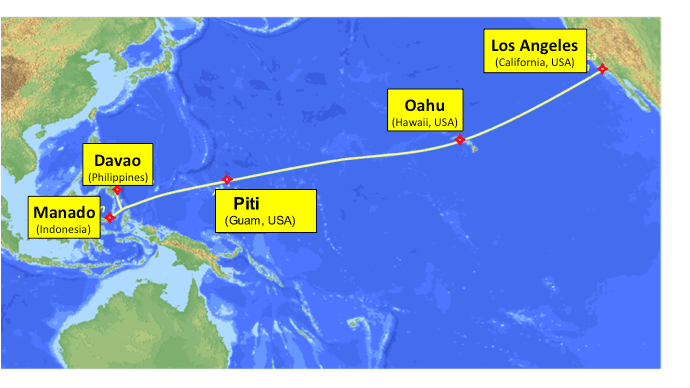
    This submarine cable system will connect five regions of Manado (Indonesia), South Davao (Philippines), Piti in Guam, Honolulu of the island of Oahu Hawaii, and Los Angeles, California in the united states.

    The long submarine cable construction is estimated to reach 15,0000 km and has been designed to avoid areas prone to natural disasters, so as to provide a different route than the existing cable system and ensure a more stable reliability service.

    The cable system provides an additional capacity of terabyte per second (Tb/s) by using technology of 100 gigabyte per second (Gb/s). With this capacity, SEA-US will be able to provide the bandwidth needs of Southeast Asia and North America, which are always increasing with unmatched performance, especially for the two ASEAN countries. The construction of the system will also benefit other countries such as Singapore, Malaysia, Brunei, Papua New Guinea, and Australia.

    The construction of the SEA-US project will later be connected with the SEA-ME-WE 5 (South East Asia – Middle East – West Europe) project by connecting Manado and Dumai via submarine cable communication system “Indonesia Global Gateway” (IGG). The overall submarine cable communication system by Telin is the reflection of Indonesia Global Networks (IGN) that highlights the real role of Indonesia as a global hub for worldwide telecommunications.

  • Japan convenience stores eat into supermarkets

    Japan convenience stores eat into supermarkets

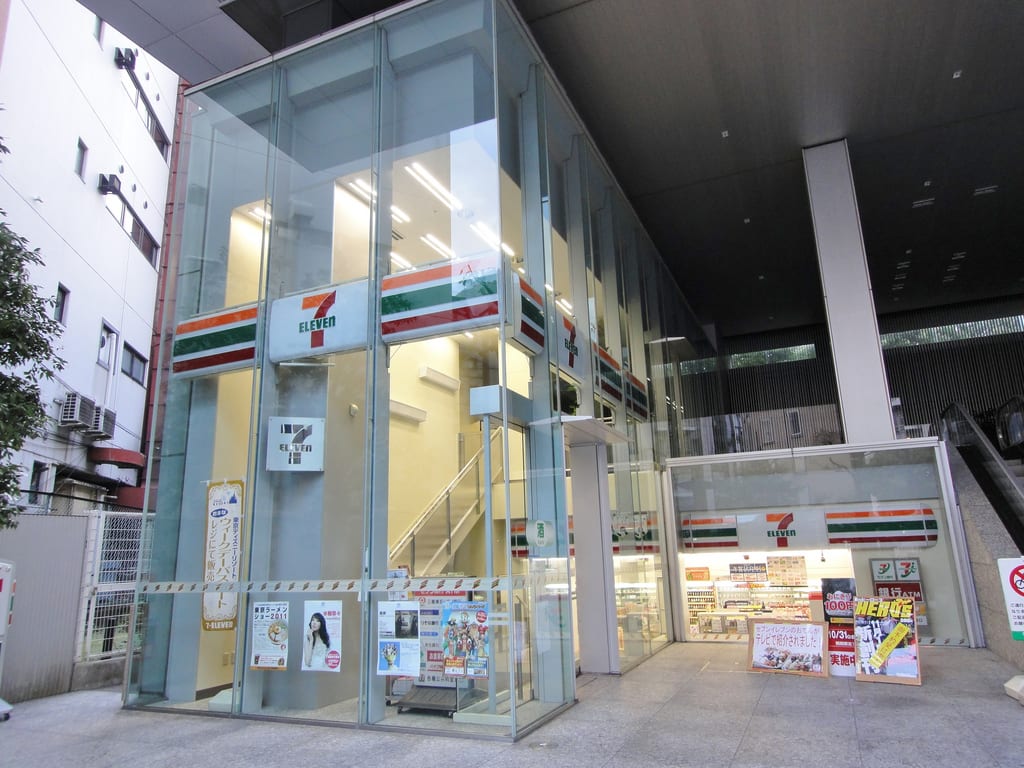
    Established supermarket chains across Japan are feeling the pinch as consumers opt instead for smaller shops at more conveniently located Japan convenience stores.

    A feature in The Japan News, an English language version of The Yomiuri Shimbun, says business performance is deteriorating at Ito-Yokado (not at all ironically part of the Seven & I group, which owns 7-Eleven as well) and Aeon.

    Aeon is actively building its shopping centre and retail reach in other Asian countries, such as Thailand, Malaysia, Vietnam – and most recently Indonesia, as it shores up its growth prospects in the wake of a declining Japanese population and stagnant economy.

    As The Japan News reports, while the supermarkets are reporting almost embarrassing results, sales and profits are booming for the convenience store chain giants, especially 7-Eleven, according to financial statements for the year to February 28.

    “This illustrates how the retail chain sector has been split into two contrasting segments. Such checkered business results are mainly attributed to ever-diversifying consumer preferences, which analysts say major supermarkets – have been struggling to keep up with.”

    The report says Aeon president Motoya Okada had “a grim look on his face” during a news conference last week when he announced his company’s business results for the year were “well below our expectations.”

    The largest supermarket chain operator under Aeon’s umbrella, Aeon Retail, saw its operating profits plunge 90.8 per cent from the previous year. Its supermarket business, including Daiei, posted a loss for the first time since 2008.

    Ito-Yokado’s profit slumped 83.4 per cent year-on-year.

    Seven & i Holdings president Noritoshi Murata told a press briefing earlier this month the Japanese market was “in the process of what you might call an increasingly conspicuous split into two disparate trends in consumer behavior”.

    Murata argued that consumer preferences can now be divided into two basic patterns: opting for big-ticket items or prioritising daily necessities.

  • Matahari Indonesia makes it 110

    Matahari Indonesia makes it 110

    Matahari Indonesia has opened its 110th Hypermart in Tanjung Uncang, Batam.

    The new store has an area of about 6200 sqm stocked with a variety of household goods. It is Matahari’s third hypermart in Batam province.

    Director of communications and PR with Matahari, Danny Kojongian, said that given its developed infrastructure, Batam city has become an attractive destination for investors.

    “This new hypermart strategically strengthens the presence of Matahari in Batam. Two previous hypermart stores are located in downtown and this new outlet is located in the south of Batam which has a huge potential in the future.”

    Kojongian said Hypermart Tanjung Uncang has adopted some of the latest features of Hypermart G7 concept which is expected to strengthen the hypermart brand’s modern concept, with convenient shopping and excellent service.

    Matahari Putra Prima operates Hypermart, Foodmart and Boston Health & Beauty stores in more than 60 cities across Indonesia.

  • Heineken in talks with Indonesia on beer ban, underage drinking

    Heineken in talks with Indonesia on beer ban, underage drinking

    Brewing companies and Indonesia’s Trade Ministry will form a joint working group to discuss alternative solutions and programs to prevent underage drinking, Dutch brewer Heineken says.

    Heineken, the largest shareholder in Multi Bintang Indonesia, met with Trade Minister Rachmat Gobel on Sunday just days after the government banned alcohol sales at convenience stores and small shops across the country.

    In a press release obtained by GlobeAsia, Heineken said that the company applies very strict rules about how to market and sell its beer products that include prevention of underage drinking. It also said that Multi Bintang has worked with a large number of minimart operators to train their staff to make sure they do not sell to people below the legal drinking age of 21 years old.