Tag: Indonesia

  • Alfamart to add 200 PHL stores

    Alfamart to add 200 PHL stores

    Mini-mart chain Alfamart will open 200 new stores in the Philippines next year, according to a Fitch Ratings report. It said Alfamart Philippines stores already has 400 stores in the country, of which 180 were opened this year in partnership with local operator and majority stakeholder SM Group. The 200 new stores will take its total network to 600 locations in the Philippines by the end of next year.

    “Alfamart’s investment risk for its Philippine expansion is mitigated by the strong presence of SM Group in the country … Fitch expects Alfamart to have access to SM Group’s large business network and tap its widely known brand”.

    SM Retail operates 1729 stores nationwide. Alfamart’s Indonesian parent has a 35 per cent stake in the Alfamart Philippines business.

    According to the report, “Both Indonesia and the Philippines are consumer-driven markets with young populations and expanding middle classes. Both economies have similar income levels of GDP per capita of US$3000-$4000. Consumers in both markets also prefer to buy small amounts of bundled products rather than filling grocery carts”.

    It described the mini-mart sector in the Philippines “as untapped and having limited competition … the existing players mostly operate convenience stores that carry more limited products. Alfamart’s stores offer additional products, such as fresh and frozen food, personal care and small household appliances, giving the company some competitive advantage in grabbing market share.

    “Alfamart chose to expand in the Philippines as it believes it has more potential than other Southeast Asian markets, such as Thailand and Vietnam.”

  • Google Launches New Products and Services for Indonesia

    Google Launches New Products and Services for Indonesia

    American technology giant Google announced a slew of new products and services that promise to benefit Indonesia’s rapidly growing digital economy.

    WizPhone 

    What surprised the audience most during the third annual “Google for Indonesia” event in Jakarta on Tuesday was the announcement of the WizPhone. The device, with styling reminiscent of the 1990’s, is the first Indonesian-made mobile phone equipped with Google Assistant, the tech giant’s artificial intelligence-powered virtual assistant.

    The WizPhone, which runs a lightweight mobile operating system known as KaiOS, will be sold at Alfamart convenience stores across Indonesia for only Rp 99,000 ($6.80).

    AI for Indonesian Translations 

    “More than half of online content is available in English, but only 1 percent of web content is available in Bahasa Indonesia,” said Ken Tokusei, director of international search at Google. This means that most internet content may not be accessible to some Indonesians.Tokusei said Google was working with Wikimedia to deploy a neural machine translation system that uses artificial intelligence to translate Wikipedia content from English to Bahasa Indonesia. Relevant search items that only used to be available in English will now also be available in Bahasa Indonesia, he said.

    Google Go

    With the use of artificial intelligence, the Google Go application can now be used to narrate articles on your favorite news websites, which is particularly handy if you are on the go. Just press “play” on any website and Google Go will read the text out loud to you in real time.This feature even works with a slower 2G connection as it is designed to use less data. The app is already available in Google Play and will also come preinstalled with all Android Oreo Go edition devices.

    “Our applications, such as YouTube-Go, Google-Go and Assistant-Go, have been designed to only use 50 percent of the phone memory compared with traditional applications,” Google Indonesia managing director Randy Mandrawan Jusuf said.

    New Features

    Bahasa Indonesia was added as an option in Google Assistant on all Android and iOS devices last April, which allows locals to set alarms or call people in their mother tongue. Scott Huffman, engineering lead for Google Assistant, said many people ask the application to tell them a joke to brighten up their day.One of the new features available in Google Assistant helps you book online transportation. You can tell it where you want to go and the digital assistant will open the Go-Jek or Grab app for you.

    This feature is currently only available in English, but Bahasa Indonesia will be added soon. Go-Jek Indonesia chief executive Nadiem Makarim said his company is looking forward to enabling Google Assistant to directly book rides without the need on to open the Go-Jek app.

    Another new future is a partnership with Indosat, Indonesia’s second-largest telecommunications service provider. Through Google Assistant, Indosat customers can now access their monthly bills and manage and monitor their quotas.

    A third new feature is the accessibility of news update, anywhere, anytime. All you need to do, is say, “listen to the news today,” and your digital assistant will do the rest.

    Advanced Google Maps Features

    Krish Vitaldevara, director of product management at Google Maps, said the navigation feature now has new options to make your daily commute easier. It allows you to follow public bus locations in real time. It also allows you to share the progress of your journey in real time, so if your bus is running late, you can keep your friends or family in the loop about your expected time of arrival. Google Assistant will even be there to remind you when to get off the bus.

    Business Application

    Google My Business is designed to help business owners connect with and attract more customers. Think of it as a social media platform for your business. Business entities now can make posts that will appear on their business profiles on Google Search and Maps, and share updates about products, offers and even events.It also allows customers to follow and interact with businesses.

    According to a Deloitte study, businesses can experience revenue growth of up to 80 percent by having an online presence. Based on this, Google has made it its mission to help Indonesian companies grow their online presence.

    “This country is full of determined and enthusiastic people; people who are ready to take over the world,” Randy said.

  • Indonesia’s Tokopedia Secures $1.1b From Alibaba, SoftBank

    Indonesia’s Tokopedia Secures $1.1b From Alibaba, SoftBank

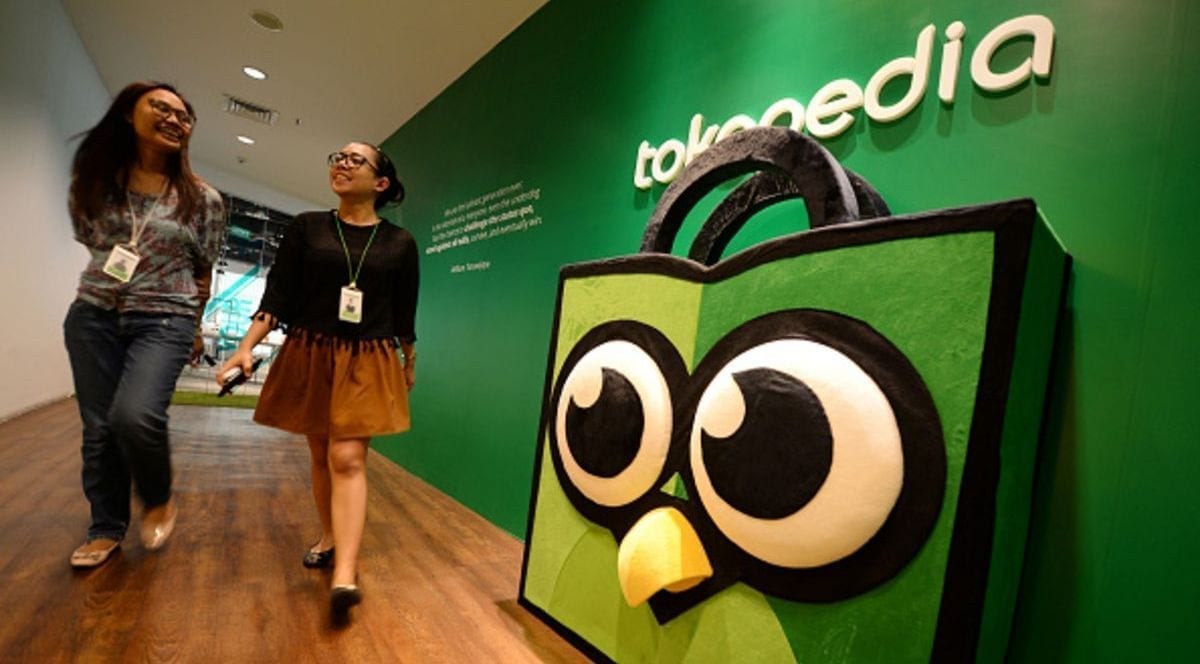
    Indonesian e-commerce company Tokopedia said on Wednesday that it had secured $1.1 billion in its latest funding round led by Chinese e-commerce giant Alibaba Group Holding and Japan’s SoftBank Group. This follows a similar investment in 2017, also led by Alibaba, which has been expanding rapidly into Southeast Asia amid slowing growth in China’s e-commerce market.

    Tokopedia said it planned to use the funds to invest in technology and infrastructure, adding that the firm would continue to focus on the Indonesian market and drive economic development and financial inclusion in the country.

    The investment would help “broaden Tokopedia’s scale and reach” besides improving its operational efficiency, chief executive and co-founder William Tanuwijaya said in a statement.

    Tokopedia did not confirm a valuation following the round. However, news website TechCrunch citing an unnamed source said the company was valued at around $7 billion.

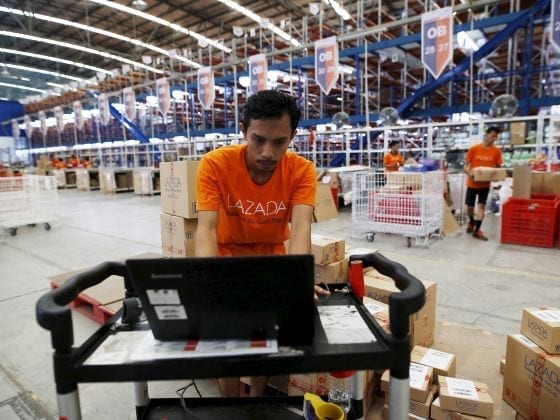
    The latest funding boosts Alibaba’s share of the fast-growing Indonesian e-commerce market. The Chinese company is also the majority owner of Lazada, which is the Tokopedia’s top competitor in the market.

    Indonesia is also increasingly becoming a proxy battleground for Alibaba and JD.com, China’s second-largest e-commerce company, which has invested heavily in building a logistics network in the archipelago.

    Founded in 2009, Tokopedia is currently Indonesia’s largest online marketplace, drawing comparisons to Alibaba’s Taobao.

    The latest round includes investments from Softbank’s Vision Fund as well as Softbank Ventures Korea and Sequoia Capital.

    The company, which delivers to around 93 percent of Indonesian districts, says it has quadrupled its sales in the past year.

  • Lumine makes debut in Jakarta

    Lumine makes debut in Jakarta

    Japanese retailer Lumine has opened its second overseas location with a launch at Jakarta’s Plaza Indonesia. The opening was timed to coincide with the 60th anniversary of diplomatic relations between Indonesia and Japan, offering a “Tokyo Mood” retail concept where consumers can experience a retail atmosphere that recalls the shopping environment of the Japanese capital.

    As a multi-brand lifestyle venue, Lumine Jakarta targets internationally-minded independent women, offering Japanese fashions as well as general lifestyle merchandise and men’s fashion brands. The store introduces 20 brands to Jakarta for the first time. It also features a cafe serving health-conscious Japanese cuisine.

    View the gallery below (5 images) :

  • Lazada Group appointed new CEO

    Lazada Group appointed new CEO

    Lazada Group has announced its second new CEO this year, with group executive president Pierre Poignant taking the role immediately. Incumbent Lucy Peng, who took over the role nine months ago after moving from major investor Alibaba, will remain with the business, assuming the title executive chairwoman.

    In a media statement, Lazada described the change as “succession planning”.

    Poignant, who was appointed president in August, will lead the company’s strategic development into new growth pillars, while continuing to manage Lazada’s operations in Indonesia, Malaysia, the Philippines, Singapore, Thailand and Vietnam, working closely with country CEOs and regional functional team leaders.

    “Pierre is a well-respected Lazada co-founder, who has contributed tirelessly to the company for the past six years,” said Peng. “He and the team of other co-founders had the vision to build our logistics network from the ground up back in the days when no one in Southeast Asia believed in e-commerce – this valuable asset has now set us apart from the competition. Over the years, Pierre has consistently delivered beyond his call of duty and excelled in every role he has taken up.”

    Poignant said Lazada has benefitted from the Alibaba ecosystem, from the technological prowess to the logistics network.

    “This year is a turning point for Lazada. We have improved and evolved and now come out stronger, more efficient, and more agile than the start of the year. Our transformation has just begun and I am confident next year will be another watershed year,” said Poignant.

  • Shopee wraps up a record-breaking 2018 on 12.12 Birthday Sale

    Shopee wraps up a record-breaking 2018 on 12.12 Birthday Sale

    Shopee, the leading e-commerce platform in Southeast Asia and Taiwan, wraps up a record-breaking year with its highly successful Shopee 12.12 Birthday Sale. On 12 December, Shopee saw ​over 12 million orders across the region, surpassing all past records including the recent Shopee 11.11 Big Sale.

    Supported by ​more than 450,000 brands and merchants​​, Shopee recorded ​48million visits as users shopped ​60 million deals across all categories, and the highest number of items sold in 1 minute was ​73,519​​. Shopee’s highly popular in-app game Shopee Shake was played 46 million times​​ throughout the campaign.

    In Singapore, Beauty & Personal Care, Home & Living and Mobile & Gadgets were the top three most popular categories. Leading brands including Laneige, Kao and JBL emerged as favourites amongst users.

    Zhou Junjie, Chief Commercial Officer, Shopee​​, said, “Shopee 12.12 Birthday Sale marks another significant milestone as Shopee celebrate a year of exponential growth. Following the success of Shopee 11.11 Big Sale in November and Shopee 9.9 Super Shopping Day in September, it has been an exciting and fulfilling quarter as past records are surpassed and set new benchmarks to reach next year.

    Since launching in 2015, Shopee has seen tremendous growth across its seven markets, achieving over 195 million downloads across Southeast Asia and Taiwan.

  • Pezzo Pizza debuts in Brunei

    Pezzo Pizza debuts in Brunei

    International pizza franchise Pezzo has launched in Brunei Darussalam. The brand, operating under Satami Group of Companies, features a “Grab & Go” kiosk serving pizza by the slice for immediate purchase, and a “mix and match” pizza purchase option, whereby customers can collate their own pizza out of 12 different flavours. The brand stakes its reputation on generous toppings with shredded mozzarella cheese.

    Pezzo, best-known for its circus-themed design, is exclusively using ingredients certified under the Brunei Halal procedure in the store.

    In May of this year, Pezzo launched in Cambodia. The company now boasts more than 120 kiosk outlets, mainly in China, Indonesia, Malaysia, Myanmar, Philippines, Singapore and Thailand.

  • Indonesia’s Traveloka Co-Founder Resigns

    Indonesia’s Traveloka Co-Founder Resigns

    Indonesian unicorn startup Traveloka announced the resignation of its co-founder, Derianto Kusuma, from his position as chief technology officer on Tuesday. Derianto was one of three persons involved in the establishment in February 2012 of the online ticketing and hotel booking service, which has since become one of the leading tech companies in Southeast Asia.

    “Deri has played an unparalleled role in Traveloka’s development and success by building, scaling, and making not only sustainable technology capability and systems but also a sustainable organization,” said Ferry Unardi, chief executive and co-founder of Traveloka.

    Following his exit from the company, Derianto took to online publishing platform Medium to write about his journey. In his post, he wrote about what drove him to start the company and the actual implementation of different business models throughout the nearly seven years since Traveloka was founded.

    He also touched on why he decided it was best for him to leave.

    “A few years ago, the battle started to show trends towards being more commercially than innovation-driven, predatory than productive, perception-oriented than fundamentals-oriented,” Derianto wrote.

    With these new trends, Derianto felt that his duty – building the technological foundation – had been fulfilled.

    “Two years ago, I ensured Traveloka had strong technological, organizational foundations built for scale and sustainability, and put in place a solid senior team that can take them forward,” Derianto wrote.

    Though Derianto wrote that he would be spending more time with family and friends after resigning, he said he “yearns” to develop a new venture in a noncompeting category, a technology that would “fundamentally transform society.”

    “I’m glad that we have finally reached this milestone where I believe it’s a win-win for everyone involved,” Derianto wrote.

  • Indonesia’s November Inflation Rate Surprisingly Picks Up

    Indonesia’s November Inflation Rate Surprisingly Picks Up

    Indonesia’s annual inflation rate accelerated for a second straight month in November, the statistics office said on Monday, against an expectation for price pressures to ease. The consumer price index rose 3.23 percent in November from a year earlier, Central Statistics Agency (BPS) chief Suhariyanto said, attributing the increase to rising prices of some food products and airfares. On a monthly basis, it rose 0.27 percent.

    October’s rate was 3.16 percent, while a Reuters poll had expected a November annual inflation rate of 3.15 percent.

    The November rate was still well within the central bank’s target range of 2.5 percent to 4.5 percent for 2018.

    The annual core inflation rate, which excludes government-controlled and volatile prices, also picked up more than expected in November to 3.03 percent, from 2.94 percent in October. The poll had expected a core inflation rate of 2.97 percent.

    Bank Indonesia has hiked interest rates six times this year by a total of 175 basis points since May to support the rupiah, despite benign inflation. The currency plumbed levels not seen since 1998 earlier this year but has sharply strengthened last month due to improving global investor sentiment.

  • Millennials Dominate Indonesia’s Online Shopping Scene

    Millennials Dominate Indonesia’s Online Shopping Scene

    Millennials are driving growth in Indonesia’s e-commerce industry as they buy a wide range of items, from clothes and gadgets to phone credit and electricity tokens, from online outlets with increasing frequency, according to a recent report from market research and consulting firm Ipsos Indonesia. The E-Commerce Outlook 2018 report released on Monday looked at the profiles of 32 million online shoppers in the country.

    The study drew results from an online survey in August. Ipsos Indonesia said the study served as an exploratory stage to be followed up by a more extensive survey planned for next year.

    The study found that 64 percent of online shopping is dominated and driven by millennials, both in terms of product categories and revenue, Ipsos research director Andi Sukma said, referring to the 25-30 age group.

    “They are made up of young families that have a minimum income of Rp 4 million [$280] per month,” said Indah Tanip, an associate director at Ipsos Observer.

    Most millennials are drawn to e-commerce for its convenience and competitive prices, the rise of financial technology and online payment platforms, such as OVO and Go-Pay, which have also encouraged more millennials to purchase their phone credit and pay bills through e-commerce apps, the Ipsos report said.

    The report also identified the five most-visited e-commerce sites: Tokopedia, Shopee, Lazada, Bukalapak and Blibli.com.

    Citing data from the Indonesian Internet Service Providers Association (APJII), Ipsos said the wider availability of broadband internet in the country has helped fuel e-commerce growth. About 72 percent of Indonesians living in urban areas and nearly 50 percent in rural-urban areas have internet access.

    The E-Commerce Outlook 2018 report also looked at community habits, online service accessibility, popular e-commerce sites and consumers’ preferred payment methods.

  • Indonesia’s Go-Jek Starts Trial Launch in Singapore, Challenges Grab

    Indonesia’s Go-Jek Starts Trial Launch in Singapore, Challenges Grab

    Indonesian ride-hailing firm Go-Jek kicked off a trial launch in parts of Singapore on Thursday and plans to roll out an array of services through its app in early 2019, challenging dominant player Grab in the small city-state. Both Go-Jek and Grab are raising billions of dollars and investing aggressively in the race to corner a bigger share of Southeast Asia, as more of the region’s 640 million consumers go online and use smartphones to shop, commute and make payments.

    Go-Jek, backed by the likes of Tencent Holdings, Alphabet Inc’s Google and Singapore state investor Temasek Holdings, is initially launching ride-hailing service in parts of Singapore after forming a partnership with DBS Group Holdings, the region’s biggest bank.

    “As this is a new product, we will obviously give promotions, but at the end of the day, it shouldn’t only be pricing that differentiates our services,” Go-Jek’s president, Andre Soelistyo said on Thursday.

    Grab, backed by Japan’s SoftBank and Chinese ride-hailing firm Didi Chuxing, bought Uber Technologies’ loss-making Southeast Asian business this year, marking the first big consolidation in the region.

    Following this, Singapore’s anti-trust watchdog slapped Grab and Uber with fines and imposed measures to open up the local market to competitors after concluding that their merger had driven up prices.

    Go-Jek’s executives declined to give any details on how many drivers it had signed up or a target for market share in Singapore but said payment services would be launched later.

    Started in 2011 in Jakarta, Go-Jek has evolved from a ride-hailing service to a one-stop app through which its customers can make online payments and order everything from food, groceries to massages.

  • Bukalapak Joins Hands With Tanamduit to Sell Mutual Funds Online

    Bukalapak Joins Hands With Tanamduit to Sell Mutual Funds Online

    E-commerce platform Bukalapak has partnered with online investment platform Tanamduit to introduce mutual fund products to first-time retail investors. The partnership will see local asset management firms Bahana TCW Investment Management, Batavia Prosperindo Asset Management and Sucorinvest Asset Management offer five new investment products, ranging from equity to fixed-income funds, on Bukalapak’s mutual funds platform BukaReksa.

    At its launch in January 2017, BukaReksa only featured money market fund products offered by CIMB Principal Asset Management and Mandiri Manajemen Investasi.

    But to capture a larger market, Bukalapak joined hands with finance marketplace Bareksa in December 2017, adding four more asset management firms, Kresna Asset Management, Syailendra Capital, Ciptadana Asset Management and BNP Paribas Investment Partners, to the platform

    BukaReksa now features nine asset management firms offering 21 investment products, compared with Bareksa, which has 31 asset management firms offering 160 investment products.

    “We hope our partnership with Tanamduit can boost financial literacy and investment in the country,” said Destya Danang Pradityo, head of payment and financial services at Bukalapak.

    Through the BukaReksa platform, customers can invest from as little as Rp 100,000 to Rp 1.5 million ($7-$104) in mutual funds.

    Destya said BukaReksa has at least 120,000 registered customers, with around half of them active investors from across the archipelago.

    “We believe online investment will become part of our lifestyles. Our collaboration with Bukalapak forms part of our mission to educate people on the benefits of investing,” said Muhammad Hanif, business development director at Tanamduit.

    With rapid technological development and the growth in online transactions, e-commerce players see opportunities to provide various services, including financial and investment products. This has seen the emergence of fintech startups offering mutual fund investment has been a trend over the past three years.

    Aside from Bukalapak, other online marketplaces also joined hands with Bareksa, such as Tokopedia, which in April this year launched Tokopedia Reksadana, offering mutual funds through local asset management firm Syailendra Capital.

    Another fintech startup, Invisee, has also been offering mutual fund products online in partnership with various asset management firms since last year.

    According to Halim Haryono, deputy director of investment supervision and development at the Financial Services Authority (OJK), the number of people investing in mutual funds increased 16.25 percent year-on-year to about 930,000 by October this year, due to the rise of online mutual fund marketplaces.

    Only about 400,000 people invested in mutual funds in 2016, Halim said.

  • Vietnam Jan-Nov coffee exports up 23 pct, rice 4.8 pct

    Vietnam Jan-Nov coffee exports up 23 pct, rice 4.8 pct

    Vietnam’s coffee export volumes from January to November have grown 23 percent year-on-year and rice exports have risen by 4.8 percent, official data shows.

    Coffee

    Coffee exports from Vietnam will climb an estimated 23 percent between January and November from a year ago to 1.725 million tonnes, equal to 28.75 million 60-kg bags, the General Statistics Office said in a report on Thursday.

    Coffee export revenue for Vietnam, the world’s biggest producer of the robusta bean, will edge up 2.9 percent to $3.3 billion in the 11-month period, the report said.

    November coffee exports were estimated at 140,000 tonnes, worth $264 million.

    Rice

    Rice exports in January-November from Vietnam were forecast to rise 4.8 percent from a year ago to 5.7 million tonnes. Revenue from rice exports in the period was expected to grow 16.8 percent year-on-year to $2.86 billion.

    November rice exports from Vietnam, the world’s third-largest shipper of the grain, were estimated at 450,000 tonnes, worth $218 million.

    Energy

    Vietnam’s January-November crude oil exports were seen plunging 42.5 percent year-on-year to an estimated 3.6 million tonnes.

    Crude oil export revenue in the first 11 months of 2018 were expected to decline 20.4 percent to $2.1 billion.

    Oil product imports in the 11-month period were estimated at 10.7 million tonnes, falling 8.1 percent from the same period last year, while the value of product imports rose 15.4 percent to $7.3 billion.

    Vietnam’s January-to-November liquefied petroleum gas imports were seen increasing 1.5 percent from a year earlier to 1.3 million tonnes.

  • US, China trade war finally (temporary) stops

    US, China trade war finally (temporary) stops

    China and the United States agreed to a ceasefire in their bitter trade war on Saturday after high-stakes talks in Argentina between US President Donald Trump and Chinese President Xi Jinping, including no escalated tariffs on Jan 1. Trump will leave tariffs on US$200 billion (RM835.8 billion) worth of Chinese imports at 10% at the beginning of the new year, agreeing to not raise them to 25% “at this time”, the White House said in a statement.

    “China will agree to purchase a not yet agreed upon, but very substantial, amount of agricultural, energy, industrial, and other product from the United States to reduce the trade imbalance between our two countries,“ it said.

    “China has agreed to start purchasing agricultural product from our farmers immediately.”

    The two leaders also agreed to immediately start talks on structural changes with respect to forced technology transfers, intellectual property protection, non-tariff barriers, cyber intrusions and cyber theft, services and agriculture, the White House said.

    Both countries agreed they will try to have this “transaction” completed within the next 90 days, but if this does not happen then the 10% tariffs will be raised to 25%, it added.

    The Chinese government’s top diplomat, state councillor Wang Yi, said the negotiations were conducted in a “friendly and candid atmosphere”.

    “The two presidents agreed that the two sides can and must get bilateral relations right,“ Wang said adding they agreed to further exchanges at appropriate times.

    “Discussion on economic and trade issues was very positive and constructive. The two heads of state reached consensus to halt the mutual increase of new tariffs,“ Wang said.

    “China is willing to increase imports in accordance with the needs of its domestic market and the people’s needs, including marketable products from the United States, to gradually ease the imbalance in two-way trade.”

    “The two sides agreed to mutually open their markets, and as China advances a new round of reforms, the United States’ legitimate concerns can be progressively resolved.”

    The two sides would “step up negotiations” toward full elimination of all additional tariffs, Wang said.

    The announcements came after Trump and Xi sat down with their aides for a working dinner at the end of a two-day gathering of world leaders in Buenos Aires, their dispute having unnerved global financial markets and weighed on the world economy.

    After the 2½ hour meeting, White House chief economist Larry Kudlow said the talks went “very well,“ but offered no specifics as he boarded Air Force One headed home to Washington with Trump.

    China’s goal was to persuade Trump to abandon plans to raise tariffs on US$200 billion of Chinese goods to 25% in January, from 10% at present. Trump had threatened to do that, and possibly add tariffs on US$267 billion of imports, if there was no progress in the talks.

    With the United States and China clashing over commerce, financial markets will take their lead from the results of the talks, widely seen as the most important meeting of US and Chinese leaders in years.

    The encounter came shortly after the Group of 20 industrialised nations backed an overhaul of the World Trade Organisation, which regulates international trade disputes, marking a victory for Trump, a sharp critic of the organisation.

    Trump told Xi at the start of their meeting he hoped they would achieve “something great” on trade for both countries. He struck a positive note as he sat across from Xi, despite the US president’s earlier threats to impose new tariffs on Chinese imports as early as the next year.

    He suggested that the “incredible relationship” he and Xi had established would be “the very primary reason” they could make progress on trade.

  • Rivalry heats up in Vietnam’s food delivery market

    Rivalry heats up in Vietnam’s food delivery market

    Last week, a sea of red filled the inside of a milk tea shop in Ho Chi Minh City instead of regular young customers usually found in such places. GoViet drivers were queuing up to purchase food ordered by customers over its online delivery app Go Food, which was running a 50-percent discount program along with free delivery within 5 kilometers.

    The very next morning, the shop was filled with green shirts of Grab drivers. Grab had launched a free delivery promotion for the first 999 cups of milk tea ordered.

    Gradually, the green shirt – red shirt war is becoming visible on the streets.

    Despite being new entrants in the online food delivery market, both Go Viet and Grab are using various measures to attract and capture customer habits. Everyday, these two tech companies spend big on promotions across a wide range of food and drinks.

    They are also recruiting stars from the entertainment industry to endorse their service.

    From the get go, Go Viet had announced a partnership with singer Son Tung M-TP, who broke the record of Asia’s most viewed music video in 24 hours last May, as the company’s brand ambassador.

    Similarly, Grab’s start-studded ads feature diva My Tam, goalkeeper Bui Tien Dung and striker Nguyen Quang Hai of the national football team.

    While having large financial and technological capabilities, both Grab and Go Viet face many challenges after entering the market later than competitors like Delivery Now by Foody, Vietnammm, and Lala, which are apps well known to many customers.

    Delivery Now offers a wider range of food on its menu than Grab and Go Viet, had has a dense network of partners from large restaurants to small pavement stalls, industry insiders say.

    Delivery Now is a product of Foody Corporation, a Vietnamese food service startup that was acquired by Singapore-based internet firm Sea LTD last year; Vietnammm.com is a subsidiary of Takeaway.com, one of the world’s largest online food ordering websites based in the Netherlands; and Lala is invested by Ho Chi Minh City-based Scommerce Group, an information technology and services firm.

    Many experts believe that the race for market share between Go Viet and Grab will resemble that of Grab and Uber when they first entered Vietnam.

    Both Grab and Go Viet are aspiring to become super apps, for which food delivery is an indispensable keystone. In addition to attracting users with incentives and advertising, the two companies are spending a lot of money on reward policies to incentive drivers and expand their network of partner restaurants.

    Grab Vietnam CEO Jerry Lim claimed GrabFood’s growth has been very impressive, with the number of its contractors increasing eight-fold in just a month of testing in Hanoi. GrabFood was released in the city early last month, after a period of testing.

    In Vietnam, Grab is reaching delivery speeds of under 25 minutes and aims for a further reduction to 20 minutes per order, the fastest in regional markets.

    Grab Food is available in both Hanoi and Ho Chi Minh City, while Go Food is only present in the latter.

    Go Viet, however, remains confident that it will meet the needs of customers, aiming to partner up with thousands more restaurants nationwide in casual dining, fast food or luxury dining.

    “Food delivery and e-wallets are promising market segments,” GO Viet CEO Nguyen Vu Duc said after a few months of competing against Grab.

    However, these delivery apps also have certain limitations. For some items on their menu, drivers have to pay up front when ordering for customers in non-partner restaurants.

    Not all drivers are happy to buy food this way as waiting is time consuming, they have to make advance payments and risk the customer not accepting delivery.

    Do Xuan Quang, deputy head of Vietnam Logistics Business Association, said Vietnam was the fastest growing e-commerce market in Southeast Asia, and along with the strong growth of the logistics industry at 15-20 percent, a similar movement in the delivery market was not surprising.

    In 5-10 years, the delivery market in Vietnam will be valued at around $10 billion, he said.

    U.K.-based market research firm EuroMonitor International values the food delivery market in Vietnam at around $33 million this year and at more than $38 million in 2020. It also puts the annual growth rate of the market at 11 percent.