Tag: #internet

  • StarHub TV features short-form content, telemovies

    StarHub TV features short-form content, telemovies

    Singaporean audiences can soon look forward to more exciting “Made in Singapore” content from as early as the third quarter of this year.

    StarHub’s new wave of Public Service Broadcast (PSB) lineup includes of travelogues shot in “the most exotic” corners of the world, kids infotainment shows and sports programs that shine the spotlight on the everyday superhuman athletes.

    For the first time, viewers who enjoy consuming content on the go, will also be able to view short-form content―each ranging from five to 15 minutes in duration.

    Local movie fans will also be treated to an array of locally produced telemovies centered on the kaleidoscopic facets of Singaporeans’ lives.

    PSB content is produced under the Media Development Authority of Singapore’s (MDA) Public Service Broadcast Contestable Funds Scheme (PCFS). The PCFS aims to extend the reach of PSB content to multiple broadcast platforms, as well as to bring more opportunities to local production houses to deliver creative, high-quality PSB content.

    Viewers will be able to catch StarHub’s exciting lineup of PSB content on its self-packaged channels, E City (StarHub TV Channel 111/825) and SuperSports Arena (StarHub TV Channel 112/205), as well as via its online streaming service, StarHub Go.

    In total, StarHub will be commissioning about 110 hours of original productions. These productions will incorporate PSB values, such as celebration of the Singapore’s culture and heritage, and promotion of the Singaporean identity, through innovative storytelling.

  • M1 launches 1Gbps fiber bundle for SOHOs

    M1 launches 1Gbps fiber bundle for SOHOs

    Singapore’s M1 has launched a range of bundled fiber and business communications plans tailored for small and home offices.

    The company’s new SOHO Fibre Broadband plan includes a symmetrical 1Gbps fiber connection as well as business services including web and e-mail hosting, unified communications and fixed voice services.

    M1 is marketing the service towards Singaporean entrepreneurs seeking to start and grow a business from home. SOHO stands for small office/home office.

    The service is priced at S$59 ($43.75) per month on a 24 month contract. This price also includes a 300Mbps mobile broadband service.

    In Malaysia meanwhile, Telekom Malaysia has added a 100Mbps connection option for its Unifi broadband services.

    The company is offering a 100Mbps downlink 50Mbps uplink plan bundled with IPTV, OTT video subscriptions and 600 minutes of free calls. The operator has also introduced a 100Mbps business broadband option.

    But the plans come at a hefty price of 299 ringgit ($77.37) per month for the consumer option and 379 ringgit per month for the business plan. This is a promotional price which will rise to 329 ringgit and 399 ringgit respectively after June 30.

    By comparison, rival Time charges 299 ringgit for a 500Mbps plan, but also has a far smaller coverage area.

  • New Rule for Foreign Internet Data and Content Providers

    New Rule for Foreign Internet Data and Content Providers

    The rapid development of the digital world has encouraged internet data and content providers to expand their business to developing countries like Indonesia. The problem is that Indonesia is not prepared for this development. Although there are almost 100 million internet users in Indonesia, this business is not adequately regulated.

    Today, internet data and content providers can run their businesses in Indonesia without having to establish a legal business entity in the country. Telecom operators, meanwhile, have to invest significant amounts developing the network infrastructure used by these ‘over the top’ (OTT) companies.

    Minister of communications and informatics, Rudiantara, said that regulations are to be put in force to govern the presence of foreign OTTs in Indonesia. “They will have to be permanent legal entities in Indonesia,” said Rudiantara, Jakarta, Friday (11/3).

    The government believes that consumer protection, equality before the law in tax matters, and properly handling of customer complaints are three reasons that these companies need to have a presence in Indonesia.

    Under current rules, collecting taxes from foreign OTT companies, which are not registered in Indonesia, is difficult. Meanwhile, the telecom firms that provide internet services that are vital to the running of the OTT business in Indonesia, pay substantial amounts of tax to the government.

    Data from the Ministry of Communications and Informatics revealed that the value of digital advertising, a major source of revenue for OTT firms in Indonesia, was more than US$ 800 million a year ago. “Two major global firms account for seventy percent of digital ads,” he added.

    While Rudiantara admitted that setting up a permanent business entity in Indonesia is not easy, the government will make it easier by offering three options: setting up a business entity individually, entering into a joint venture with other companies, or partnering with a mobile operator in the country.

    The new rules, which are expected to be passed early next month, aim to benefit the Indonesian people as users of OTT services. “Indonesia is not just a market; the people of Indonesia should benefit from this, too,” said Rudiantara.

  • Indonesia could block internet services

    Indonesia could block internet services

    Indonesia is the latest country to question the tax arrangements of the world’s internet giants, issuing a threat to block their services if they fail to comply with local set-up requirements and pay tax.

    “All have to create a permanent establishment, like the contractors for the oil sector, so they can be taxed,” stated Bambang Brodjonegoro, the finance minister, although the Jakarta Globe reported that he did not name any particular businesses.

    According to Communications Ministry estimates, digital advertising was worth around $800m last year but was untaxed because of the loopholes in regulations.

    A spokesman for the Ministry said that imminent new regulations would address this issue and would apply to streaming and messaging providers as well as social media websites.

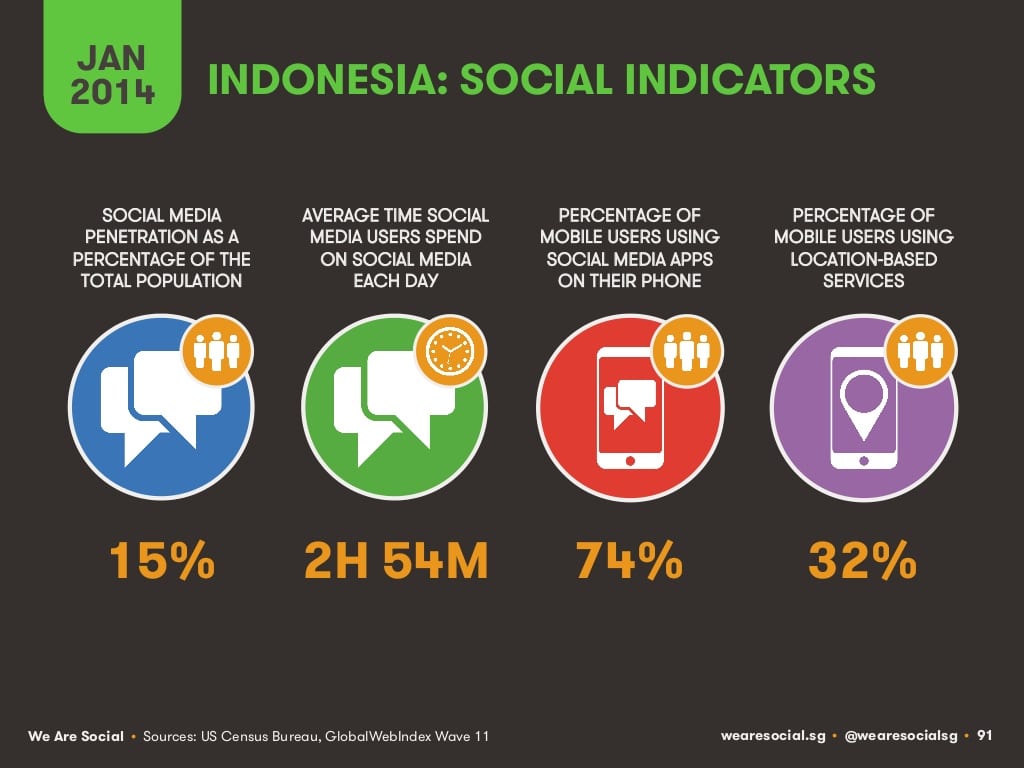
    Indonesia is one of the most social media-connected countries in the world. It is Facebook’s fourth-largest market target, while Jakarta is the most active city for Twitter – Jakartans account for 2.4% of all tweets worldwide.

    Accordingly, major brands are looking to tap into this high level of digital social engagement while local entrepreneurs have been able to use social networks as an inexpensive platform to build their brands and do business.

    But these activities could be at risk if the government carries out its threats: the Communications Ministry spokesman, Ismail Cawidu, indicated that those internet businesses that did not comply with the new regulations faced a reduction in bandwidth or, in extremis, being blocked completely.

    While some of the businesses potentially affected have already set up legal entities in Indonesia, others only have representative offices.

    And even those, such as Google, that do have a properly constituted business may not be immune from government scrutiny.

    “Google has an office in Indonesia, but digital age transactions do not go through that office,” Communication Minister Rudiantara told Metro TV. “That is what we’re looking to straighten out,” he added.

  • Peruri expands operation to digital security business area

    Peruri expands operation to digital security business area

    The Indonesia state-owned money printing company Peruri has expanded operation to digital security business area in preparation to enter the era of integrated smart security to be competitive and able to keep pace with the modernization.

    “In order to have greater competitiveness in digital era we are expanding our wings to digital security that we could provide an integrated smart security service,” President Director of Peruri, Prasetio, said here, Thursday.

    The expansion is prompted by the rapid advancing technology that necessitated change in the world economic system that forces Peruri to continue to expand from service to business model, he said.

    “We are not only strengthening our core business of money printing , but we are also expanding operation to digital security business area through our subsidiary Peruri Digital Security by providing solution such as Certificate Authentication and Smart Card,” he said.

    Peruri also has a strategy in entering the era of integrated smart security, which is centered in transformation of company including transformation of human resources, business , structure and system as well as culture, according to him.

    “With the transformation we hope Peruri could continue to chalk up positive growth in the coming years,” he said.

    In a bid to achieve the positive growth, this year Peruri will be focused on market expansion, promoting reputation and strengthening competitiveness, he added.

    The strategic steps include reorientation of market from formerly focused only on domestic market to global market, and restructuring parent and subsidiaries to be more effective in marketing, he said.

    “Another strategic step is reorganization to be in line with the 2016 company budget working plan and long term business road map,” Prasetio said.

    With the strategic steps and preparation made ahead of the era of integrated smart security, the company is set to contribute significantly to the countrys economic development, he said.

    Peruri chalked up around Rp3.051 trillion in income in 2015 or more than doubling income of Rp1.39 trillion in the previous year.

    Its net profit rose to Rp284 billion or an increase of more than ten times from Rp23.49 billion in 2014.

    The company signed a memorandum of understanding to improve synergy with a number of state construction companies including construction companies — Adhi Karya, Amarta Karya, Brantas Abipraya, Hutama Karya, Istaka Karya, Pembangunan Perumahan, Nindya Karya, Perum Perumnas, Waskita Karya and Wijaya Karya.

    It also signed MoU with state-owned telecommunication company to develop digital business.

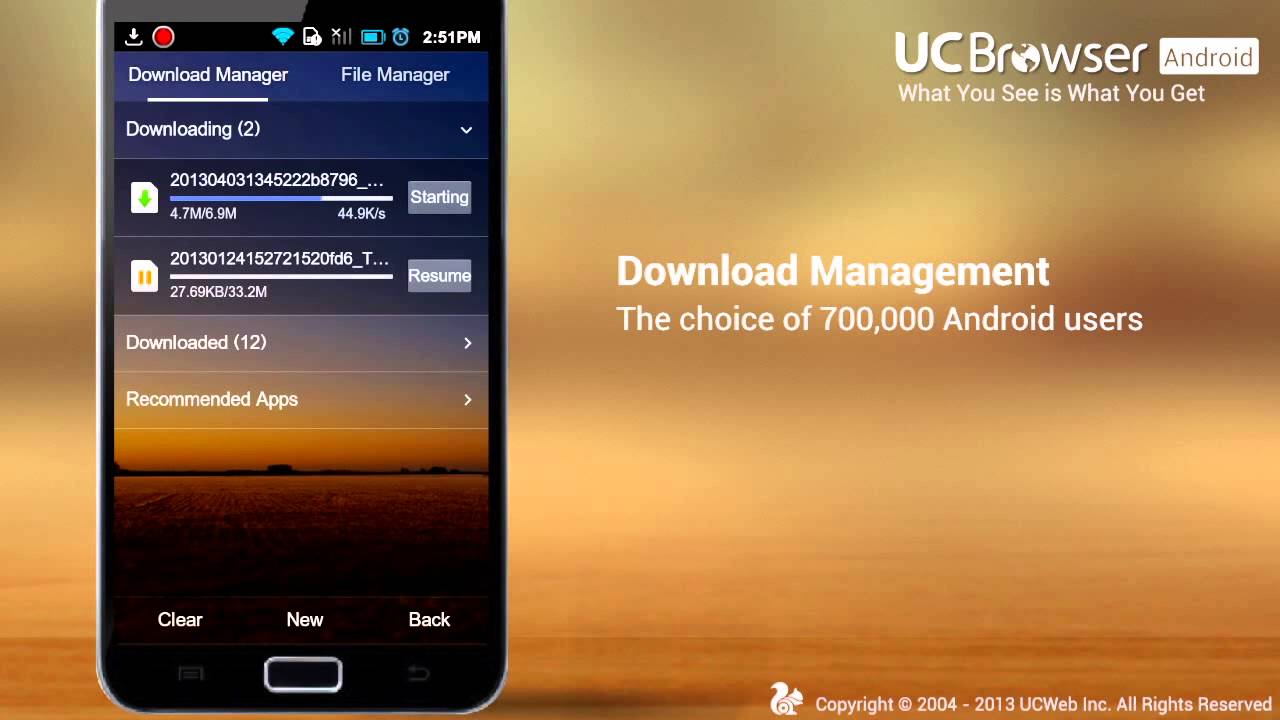
  • UC browser grabs over 50 percent market share in Indonesia

    UC browser grabs over 50 percent market share in Indonesia

    Coinciding with its consistent rise in overseas markets, UCWebInc, the global leading provider of mobile Internet software and services and maker behind UC Browser, has hit a new milestone in Indonesia.

    The browser has clocked in 55.27 percent monthly page-view market share as of 2015 year-end, as per StatCounter. The announcement comes on the heels of another feat, where UC Browser became the world’s second most popular mobile browser with 18.6 percent monthly page-view market share in December 2015. UC Browser is already the undisputed leader in the Indian market with over 55 percent market share, according to StatCounter.

    Looking ahead, Kenny Ye, Director of UCWeb International Business, said: “We’re going to sustain our development by enlarging our network of local partners besides keeping innovating our product. All those learnings from partnerships with e-tailers, content providers, etc. last year have made us remain steadfast in increasing our commitment to the local community.”

    As of today, one of every two mobile pages viewed in Indonesia is processed by UC Browser, and it has become the crucial artery in the country’s mobile traffic. The achievement comes about half year after UC Browser secured first place in the local industry.

    Looking back at Indonesia’s mobile browser market in 2015, StatCounter shows that only UC Browser continued a growth trajectory to climb 3 percentage points per month on an average throughout the year. The browser closed out the year 2015 by doubling its market share compared with its share in early 2015 when it took the championship.

    UCWeb Inc. (UCWeb) is a business within Alibaba Group’s mobile business division and a leading provider of mobile internet software and services. Since its inception in 2004, UCWeb’s mission has been to provide better mobile internet experience to people around the world.

  • Indonesia’s Low Internet Penetration Rate Curbs Economic Growth

    Indonesia’s Low Internet Penetration Rate Curbs Economic Growth

    Each day the world’s Internet users watch an average of 8.8 billion YouTube videos, share 186 million photos on Instagram, make 152 million Skype calls, purchase 36 million products through Amazon, send 207 billion emails, post 803 million Tweets, and make 4.2 billion searches on Google.

    Although digital technologies have spread rapidly across the globe, the World Bank says digital dividends have lagged behind for part of the global population. The Washington-based financial institution defines digital dividends as “the broader development benefits from using these technologies”. For example, the business community can use digital technologies to expand their business, people can use these technologies to find jobs and the government can use it to enhance services. In other words, digital technologies support financial inclusion, job creation, and overall economic growth.

    However, the fruits of these dividends are unevenly distributed. One of the key solutions in order to let all people enjoy the benefit of digital technologies is to enhance Internet connectivity. But the World Bank also states that well developed Internet access alone is not enough. “Countries also need to work on the ‘analog complements’ by strengthening regulations that ensure competition among businesses, by adapting workers’ skills to the demands of the new economy, and by ensuring that institutions are accountable.

    In essence, two factors are the cause that digital dividends cannot be enjoyed by part of the world population. Firstly, almost 60 percent of the world population still lacks Internet access, hence cannot participate in the digital economy in a meaningful way. Secondly, some of the perceived benefits of digital technologies are offset by emerging risks.

    The first factor should be combated by governments by encouraging (affordable) access to the Internet (and other digital technologies) for its citizens, while creating conducive regulations for the Internet and mobile operators.

    After India and China, Indonesia has the highest amount of people who are not connected to the Internet. The World Bank report stated that the Indonesian government is on the right track to address these aforementioned issues. For example, the Indonesian government is currently finalizing an e-commerce road-map that aims to improve and develop the country’s e-commerce industry. Previously, the Indonesian government said it may allow foreign investors to own a 100 percent stake in Indonesian e-commerce companies in this road-map.

    According to the Association of Internet Service Providers in Indonesia (APJII), Indonesia had around 88.1 million Internet users in 2014, up 22 percent (y/y) from 71.9 million in the preceding year. Given that the total population of Indonesia numbers more than 250 million individuals, Indonesia’s Internet penetration ratio stood at around 35 percent in 2014. This low rate implies there is still ample room for growth in the online business industry.

  • Telecoms, internet come up strong

    Telecoms, internet come up strong

    A mascot promoting the spectrum auctions for fourth generation (4G) service is seen at the headquarters of the National Broadcasting and Telecommunications Commission. Winning bidders for the 1800- and 900-megahertz spectrums are set to launch commercial 4G service early next year. Outlook for next year even rosier.

    Mobile firms ready to start 4G network

    The mobile sector is one of the big winners this year, escaping the country’s sluggish economy as mobile communications are expected to have an effect on nearly every aspect of life and business.

    Major mobile operators project a slight increase in revenue this year.

    Thailand has 110 million mobile subscribers, expected to rise to 150 million in 2016, says the National Broadcasting and Telecommunications Commission (NBTC).

    This gain will be fuelled by the continued growth of mobile data users and the arrival of machine-to-machine communications or the Internet of Things.

    Thailand has more than 40 million mobile internet users and only 35 million desktop internet users. It is a mobile-first country.

    Pete Bodharamik, chief executive of Jasmine International, the parent firm of JAS Mobile Broadband, said its average fixed-line broadband household owned up to five internet-enabled devices, with at least three of the devices mobile.

    JAS will launch its commercial fourth-generation (4G) service early next year.

    Thailand’s mobile market is valued at 300 billion baht annually.

    Somchai Lertsutiwong, chief executive of Advanced Info Service Plc, the country’s largest mobile operator, said his company’s 2015 data revenue surged thanks to mobile traffic, which is driven primarily by the proliferation of data-hungry mobile devices.

    “The mobile data market is going to explode in 2016 thanks to the arrival of full commercial nationwide 4G service,” he said.

    An Ericsson ConsumerLab report shows 89% of Thai consumers use social media on a weekly basis.

    Traffic on mobile networks will continue to grow at an impressive rate, driven by the uptake of smart devices and apps. This rapid growth is having a significant impact on networks.

    Global research firm IDC said average mobile internet usage in Thailand would increase to 192,265 Mbps per number per month over the next five years, up by 165% from this year.

    Mobile internet service could also generate new revenue streams for other ICT-related businesses, particularly e-commerce. Thailand has more than 500,000 e-commerce merchants via many channels including social media, websites and online marketplaces. The country’s e-commerce sector has grown by 20% annually.

    The value of Thailand’s e-commerce market is expected to reach 2.1 trillion baht this year, up by 3.65% from last year, which surged 165% from 700 billion in 2013 thanks to intense discount promotions and greater availability of high-speed wireless broadband networks.

    Studies suggest doubling internet broadband speeds can add 0.3% to GDP.

    Tech start-ups ready to ring in innovation

    Thailand’s tech start-up industry is one of the three most attractive in Southeast Asia thanks to a proliferation of mobile internet users and capable world-class tech talent.

    The development of tech start-ups is part of the government’s policy of promoting innovation among small and medium-sized enterprises.

    According to Thailand’s “Tech Startup Report 2015” compiled by TechSauce.co, as of last month Thai tech start-ups had raised US$84.5 million from 53 projects compared with three projects worth $2.1 million in 2012.

    The biggest tech start-up investment in Thailand in 2015 was worth $10.7 million, while the biggest in 2012 was worth $2 million.

    The number of venture capital funds in Thailand jumped to 12 worth $79 million in 2015 from three in 2012 worth $7 million.

    Nattawut Pungjarernpong, fund manager at Bangkok venture capital firm 500 Tuktuk, said the early stage of the local start-up market was just blossoming.

    Indonesia and Malaysia are other attractive destinations for global venture capital in Southeast Asia, given their large populations and strong start-up ecosystems.

    Mr Nattawut urged policymakers in Thailand to provide more attractive incentives for tech start-ups and ease regulations to promote investment.

    The government provides tax exemptions for capital gains when companies invest in tech start-ups, but the country needs more incentives to reduce the risk of investment losses, he said. Thai tech start-ups can continue to grow for another few years as capital pours into Southeast Asia.

    E-commerce continues to bloom

    E-commerce saw strong growth this year thanks to the proliferation of smartphone and mobile internet users.

    Thailand has 40 million mobile internet users, with the smartphone penetration rate exceeding half the population.

    The e-commerce market will continue to blossom next year, with a host of key regional players jumping on the bandwagon.

    The local e-commerce market increased at a double-digit rate this year, overtaking GDP, thanks to aggressive marketing and attractive discount campaigns among e-commerce companies.

    There are an estimated 14 million online shoppers in Thailand and more than 500,000 online merchants.

    The advent of full commercial fourth-generation (4G) wireless broadband service next year will transform the local mobile commerce and mobile payment markets.

    “Thailand’s retail e-commerce [business-to-consumer or B2C] market was Southeast Asia’s largest in 2014, worth US$11.7 billion,” said Surangkana Wayuparb, chief executive of the Electronic Transactions Development Agency (ETDA).

    Malaysia’s B2C market was valued at $9.6 billion, followed by Singapore ($3.4 billion), Vietnam ($2.9 billion), Indonesia ($2.6 billion) and the Philippines ($2.3 billion).

    However, compared to developed countries, Thailand trailed the US ($359 billion), China ($322 billion), Japan ($118 billion) and South Korea ($25.4 billion).

    Mrs Surangkana said Thailand’s B2C market was expected to grow by 15.2% to 475 billion baht in 2015.

    An ETDA survey of 502,676 e-commerce operators countrywide from April-October showed electronics, cosmetics and fashion were the three best-selling products in retail e-commerce.

    The survey found the top three payment channels were e-banking, credit or debit cards and mobile payment.

    Mrs Surangkana expects mobile payment will surpass other channels in 2016 thanks to the proliferation of smartphones.

    Pawoot Pongvitayapanu, president of the Thai e-Commerce Association, said operators must expand abroad, particularly to other Asean members, instead of focusing only on the domestic market.

    Paul Srivorakul, chief executive of aCommerce Group, said next year’s launch of commercial 4G service would further cement Thailand’s leading position in mobile internet and accelerate the growth of mobile commerce.

    Thailand is already one of the most mobile-enabled countries in the world, with the average Thai user having 1.4 mobile devices, he said.

    The country’s mobile internet penetration of 56% already exceeds that of the US and China, at 40% and 34%, respectively.

    However, e-commerce accounts for only 1% of Thailand’s total retail market. Local e-commerce is expected to reach double-digit figures within the next four or five years.

    Local e-commerce has grown by 20-25% year-on-year despite the stuttering economy, Mr Paul said.

    Meanwhile, a number of retailers and manufacturers have been tapping opportunities from the online channel.

    Among them are major retailers such as Central, The Mall and Tesco Lotus as well as furniture chain Index Living Mall and Mc Jeans, which already have online shopping platforms.

    Their online sales have grown in the range of 10-100% this year, depending on product category.

    Popular items are cosmetics, apparel and electrical appliances.

    Next year, these operators hope to boost online sales and attract more young-generation customers.

    An increasing number of companies plan to expand via the online channel, as they can access customers not only in the domestic market but also abroad.

    When they have succeeded in providing online shopping platforms on their own, some operators such as Central plan to serve as a marketplace, selling products for other producers, Mr Paul said.

    High hopes pinned on tourism rebound

    Tourism has been singled out as the economy’s biggest hope and a powerhouse this year amid the export slump.

    The sector has strongly recovered from the last year’s political instability and passed through the economic storm and the deadly Erawan Shrine bombing.

    Foreign tourist arrivals are expected to reach almost 30 million in 2015, exceeding the official target of 28.8 million.

    The Erawan bombing on Aug 17 caused a brief hiccup in tourism’s recovery, and the industry bounced back in a couple of months.

    The sector’s resilience led Tourism and Sports Minister Kobkarn Wattanavrangkul to declare her ministry was confident total international tourist arrivals would hit 29.5 million by year-end.

    As of last Wednesday, Thailand had welcomed 29 million foreign visitors.

    The tourism revenue target of 2.2 trillion baht is being maintained.

    Of that total, 1.4 trillion baht will come from foreign tourists and 800 billion from local travellers.

    Tourism’s strong recovery has benefited the hotel business, with many chains reporting healthy performances this year.

    Thai hotel chain Onyx Hospitality saw its operating profit rise 36% year-on-year in the first nine months, with properties in Thailand contributing 70% of revenue, president and chief executive Peter Henley said.

    He expects the strong performance will continue next year.

    For next year’s first quarter, Onyx forecast an 8.1% increase in room revenue for properties in Thailand.

    Patrick Basset, AccorHotels’ chief operating officer for East and upper Southeast Asia, called Thailand an attractive destination for tourists from around the world.

    The country’s tourism has a strong reputation, boasting natural beauty and a rich cultural heritage.

    It also offers a variety of attractions that appeal to a wide range of visitors from business travellers to eco-tourists.

    Mr Basset remains concerned about political uncertainty, which could emerge as a major risk for Thailand and tourism in the future. Tourism has been very sensitive to political problems.

    Meanwhile, the Association of Thai Travel Agents (ATTA) is satisfied with tourism’s recovery this year and projects the sector will continue to outperform next year even though Thailand will face many negative factors such as the global economic slowdown and risks of terrorism.

    “Thailand remains a popular destination, with many main feeder markets within three hours’ flying time,” ATTA president Charoen Wangananont said.

    Prior experience of dealing with crises provides proof that Thailand can sail through many negative situations and recover in a short period.

    As of Dec 20, ATTA reported the number of international tourist arrivals via its member agents had grown by 63% to 5.06 million.

    ATTA said 2015 was another good year for tourism after several years of stagnation due to political conflict.

    However, the government must boost all industries next year, not just rely on tourism revenue, Mr Chareon said.

    Tourism and sports permanent secretary Pongpanu Svetarundra said the weaker baht following the interest rate hike by the US Federal Reserve would benefit both the export and the tourism sectors.

    Budget carriers seize the helm in air wars

    Low-cost carriers (LCCs) have continued to evolve and flourish in 2015 to outshine other business sectors against the backdrop of economic doldrums.

    Having opened the skies over Thailand and other parts of the world for millions of travellers, budget airlines are now a force to be reckoned with in the aviation industry.

    Growth has been particularly dramatic in Thailand, where LCCs continue to raise their passenger share and spur traffic in a way that full-service carriers (FSCs) are unable to mimic.

    Several LCCs in Thailand continue to stimulate air travel by lowering fares and opening new routes and destinations — the primary drivers of their proliferation.

    Higher growth in Thailand’s tourism industry due largely to political stability has sent traffic soaring for LCCs, a popular transport mode for leisure travellers.

    Passengers travelling on budget airlines through the six major Thai airports run by SET-listed Airports of Thailand Plc (AoT) surged 34.1% in the first nine months of 2015 to a record 33.4 million from 24.9 million in the year-earlier period.

    That pushed LCCs’ share of the overall passengers passing through those airports during the same period including Suvarnabhumi and Don Mueang to 41.3%, up from 38.5% in the year-ago before period.

    LCC aircraft movements — take-offs and landings — rose in tandem to 229,921, up by 28.9% year-on-year, according to AoT statistics.

    Tassapon Bijleveld, chief executive of Thai AirAsia (TAA), Thailand’s biggest LCC, said the foregone conclusion was LCCs in places such as Thailand in particular and Southeast Asia in general would continue to consolidate their profiles in air transport.

    “What we see taking place in Southeast Asia is similar to Europe, where LCCs account for up to 75% of intra-European air travel,” he told the Bangkok Post.

    In Thailand, the share of LCCs in the overall passenger market is set to rise by 3-4% annually over the next several years to reach the high levels seen in Europe.

    Given the trend apparent in the first 10 months of this year, indications are the LCC passenger tally for the whole of 2015 will reach 45.5 million, according to industry executives.

    Next year, the LCC share of passenger totals will grow to 46%, Mr Tassapon said.

    Several LCCs have seen improvement in their balance sheets due to enhanced business performance.

    For instance, TAA posted a record net profit of 1.47 billion baht in the first nine months of 2015 compared with a net loss of 265 million in the same period last year.

    AOT shares closed yesterday on the SET at 344 baht, down three baht, in trade worth 427 million baht.
  • Internet Retailing Expo Indonesia

    Internet Retailing Expo Indonesia

    The 2-day conference and exhibition focuses on both learning and the evaluation of technologies, products and services to help retailers in establishing and growing their online strategies.

    Ever wonder why many would consider Indonesia as a good prospect to do business especially in online retailing? Interestingly, Indonesia has one of the highest number of Internet users. The number is expected to hit 3 billion users in 2015 and may possibly overtake Japan to be in the top five.

    In the retail business, the sales had amounted to USD $114.29 billion in which 0.6% (USD $2.6 billion) are online sales. It is predicted that in 2015, it will reach USD$3.56 billion. With that, Rudiantara, the Minister of Communications and Information, has expected for e-commerce to account for 8% of the country’s total retail business in the next 10 years.

    This is where Internet Retailing Expo (IRX) comes in. IRX is the leading multichannel event in the retail calendar and takes place every March in the UK. It welcomes retailers and technology providers from across multichannel landscape. In addition, it allows retailers to learn from the best on how to connect profitably with their customers and take lessons from case studies.

    startup_ecommerce_pixabayStartupStockPhotos

    Following the success of IRX in the UK, it will be launching its first edition in Asia; IRX Indonesia in 2016. The 2-day conference and exhibition focuses on both learning and the evaluation of technologies, products and services to help retailers in establishing and growing their online strategies.

    With an expected attendance of 500 delegates, retailers can look forward to meeting with many senior-level decision makers from various companies, and expanding their networking contacts. Also, there are 40+ confirmed speakers for the event, such as from Lazada Indonesia, GO-JEK, Indosat, PT Garuda Indonesia and The Body Shop, who will cover a range of topics during the event.

    A start-up pavilion will be set up which is dedicated to companies at the forefront of innovation. This allows companies to showcase their new products or services that may interest retailers; an excellent chance to meet with potential buyers. This platform is ideal for technical managers to explain how their products work to an audience of buyers and influencers. Technology categories include payment technologies, security, apps, LBS, embedded & in-store technologies.

    If you are a retailer, you can join our retailer partnership programme and attend the conference (+ expo) for free inclusive of networking breaks and lunch.  Or if you wish to be a sponsor/exhibitor, you can download our sponsorship prospectus to learn more about the business opportunities.

  • M1 launches M2M platform and solutions

    M1 launches M2M platform and solutions

    Strategic partnerships with multiple technology providers to deliver a wide range of smart M2M solutions for transport, retail, healthcare and security sectors.

    Singapore – M1 Limited (M1) today announced the launch of its advanced M2M (machine-to-machine) platform, M1 M2M Connect. Through M1 M2M Connect, corporate customers will be able to access, track and manage all their connected devices conveniently, from any authorised computer or mobile phone. They will also be able to set and change business rules, perform device troubleshooting and obtain detailed reporting of all M2M activities.

    Additionally, M1 has partnered multiple technology providers, including Aerolion Technologies, Napier Healthcare Solutions, Quantum Inventions, and Parametric Technology to introduce customised solutions to meet the needs of Singapore’s transport, retail, healthcare, and security industries, and enable more customers to enjoy the benefits of a M2M rollout on Singapore’s fastest 4G network¹.

    According to a recent Forbes² article, connected devices are expected to grow from 10 billion today to as many as 30 billion devices by 2020, deployed across homes, offices, and public spaces worldwide. At the M2M platform launch event today at the St. Regis Hotel for corporate customers, M1 and its partners demonstrated several innovative solutions, including smart healthcare monitoring solutions, and how security firms can deploy drones to stream real-time surveillance video over protected premises.

    Mr Willis Sim, Chief Product Development & Corporate Solutions Officer, M1, said:

    “Much has been made of the benefits of M2M and the Internet of Things. To make it even easier for our customers to leverage on M2M technology, we engaged them to understand their needs, and worked with our partners to develop and offer effective solutions that improve our customers’ productivity, lower their costs and help them tap on new market opportunities.”

    “M1 is a leader in communications infrastructure and we are excited to be their strategic partner. Our relationship has been proven to be successful during the lab trials for the Smart Nation program. Consequently M1’s leading edge connectivity solutions form the backbone of our Home Care solution making it really affordable for our elderly population. Taking preventive healthcare one step forward, this solution provides the chronically ill with on-demand access to healthcare service providers who can help monitor and maintain their health,” said Mr Tirupathi Karthik, Chief Executive Officer, Napier Healthcare Solutions.

    M1 is Singapore’s most vibrant and dynamic communications company, providing mobile and fixed services to over 2 million customers. Since the launch of commercial services in 1997, M1 has achieved many firsts, including the first operator to offer nationwide 4G service, as well as ultra high-speed fixed broadband, fixed voice and other services on the Next Generation Nationwide Broadband Network (NGNBN). With a continual focus on network quality, customer service, value and innovation, M1 links anyone and anything; anytime, anywhere. For more information, visit www.m1.com.sg.
  • M1 rolls out machine-to-machine platform for corporate customers

    M1 rolls out machine-to-machine platform for corporate customers

    Users can manage connected devices from their phones. The member of Singapore’s telco triumvirate boosted convenience and ease of access for its corporate customer-base as it launches its advanced M2M platform, M1 Connect.

    According to a statement by M1, the platform will enable customers to access, track, and manage all their connected devices from any authorised computer or mobile phone.

    Through the platform, M1 also says the users will be able to set and change business rules, perform device troubleshooting and obtain detailed reporting of all M2M activities.

    M1 said they have also partnered with technology providers for this project.

    “M1 has partnered multiple technology providers, including Aerolion Technologies, Napier Healthcare Solutions, Quantum Inventions, and Parametric Technology to introduce customised solutions to meet the needs of Singapore’s transport, retail, healthcare, and security industries,” the statement said.

  • Dyn Evolves Internet Performance Space with Launch of Internet Intelligence

    Dyn Evolves Internet Performance Space with Launch of Internet Intelligence

    As Singapore gears up to become the world’s first Smart Nation, keeping communities and businesses connected to the Internet is crucial to support better living and working. Likewise, companies are beginning to realise that the performance of the Internet has an impact on their website, app or service and eventually, customer experience, reputation, and revenue. Dyn, the worldwide leader in Internet Performance, announced today availability of Internet Intelligence (II), a SaaS-based product that provides companies with a new and unique view of the Internet by looking at performance between a company’s customers and its Internet assets.

    “The variabilty of the Internet is both good and bad. Every path will eventually have problems, but there are many paths to choose from. Companies need to monitor their options constantly and play the optimisation game. The belief that Internet performance is uncontrollable is a myth. Although the Internet is an unpredictable and complex space, Internet Intelligence allows companies for the first time to monitor, alert and plan for their complex Internet Infrastructure from a single platform,” said Martin Ryan, Vice President and Managing Director Asia Pacific at Dyn.

    As an increasing number of companies migrate to the cloud, the ability to mitigate risk and control cloud becoming a business imperative.

    Almost 40% of organisations in Singapore are using cloud computing; while more than 35% are planning or implementing cloud strategies.

    II enhances availability, reachability, and performance

    Internet Intelligence is a vendor-agnostic SaaS offering that shows a company’s full global cloud provider, Content Delivery Network (CDN) and data centres on one dashboard, allowing IT executives to see how real-time availability, reachability, and performance issues impact their own customers. By alerting issues directly in the dashboard or via email, companies of all sizes and IT sophistication can quickly isolate and fix small issues before they become costly problems.

    “Distil Networks blocks malicious bots from disrupting many of the world’s top websites. To keep companies safe, we need visibility and continuous monitoring of key peering relationships and providers that our customers use,” said Engin Akyol, CTO of Distil Networks. “Dyn’s Internet Intelligence goes beyond anything else on the market because it pinpoints the exact location of an external network issue and allows us to mitigate the situations before they become larger problems.”

    For example:

    • Availability — An hour of downtime costs the average business US$163,000. For a large enterprise, like a consumer streaming movie service, it’s estimated that a recent 42-minute outage cost in excess of US$500,000. Internet Intelligence detects outages and performance problems and directs how to reroute traffic so the effect is minimised or unnoticed for customers.

    Through a consolidated single view across all Internet assets, II allows companies to accurately manage and deploy to their cloud providers, identify issues in real-time while performing root cause analysis of problems and effects and create plans for how to improve and expand their Internet infrastructure – all of which benefit the end-user experience with Managed DNS is increasing focus on cloud computing in Asia Pacific, with 58.6% of organisation decision-makers

    A study conducted by Frost & Sullivan has found identifying it as their #1 priority in the next 12 months.

    • Reachability — Just because a company’s infrastructure is reporting that it is available, this doesn’t mean that customers can reach it. Reachability – whether customers can actually reach your Internet assets – needs to be monitored. In cases where a business is using a single cloud instance, an outage or failure will have a detrimental impact on reachability – and unless businesses are monitoring their reachability and mitigating for failures, they have little choices for rerouting if a disruptive event occurs.
    • Performance — Many businesses use CDNs to accelerate web page load. Amazon calculated that a slowdown of just one second can cost US$1.6 billion in sales per year, 7 percent of annual revenue. Businesses need to quickly recognise Internet inefficiencies and outages to avoid accumulating latencies. II’s real-time dashboard alerts companies when routes rise above expected traffic thresholds for cloud providers, CDNs and data centres to find the root cause of the issue. For CDNs, II also ranks a company’s selected CDN against others so they can choose a better option if available.

    “The recent outages at AWS East and Skype remind us that all Internet assets are vulnerable to variability, and downtime and poor performance can be very costly,” said Robert Mahowald, IDC VP Cloud and SaaS. “Dyn’s Internet Intelligence offerings allow companies to have constant vigilance and employ self-healing Internet Performance strategies that can mitigate the risk of the dynamic Internet.”

    When Internet Intelligence is combined with Dyn’s Traffic Management product for load balancing and geographic routing, companies can make changes to the routes of their traffic, allowing them to provide their customers with the best experience possible.

    II is the newest product within Dyn’s Internet Intelligence product suite, which has been heavily adopted by service providers and some of the largest enterprises, like Visa, TripAdvisor and Ancestry.com.

  • XL Axiata launches LTE in Lombok; Indosat to accelerate 4G rollout

    XL Axiata launches LTE in Lombok; Indosat to accelerate 4G rollout

    Indonesian mobile operator XL Axiata today launched a commercial 4G Long Term Evolution (LTE) service in the 1800MHz band in Mataram, Lombok. The firm’s director of service management Ongki Kurniawan explained that the decision to choose Lombok was based on its ‘special relationship’ with the area. ‘Since entering this region, we [have built an] affinity [with the people living here]. People accept and have confidence in XL when it comes to their telecommunication needs, and [that relationship is] now evolving into data and internet services. Our market share currently stands at more than 85% in Lombok,’ he said, ahead of the official launch of the service in the area.

    XL Axiata has deployed 14 4G base transceiver stations (BTS) in the Capital NTB area, as well as covering centres of government and business, and some shopping centres such as Mataram Mall. The cellco claims it can offer peak download speeds of 100Mbps on the new network which is supported by a range of affordable 4G handsets and devices from the likes of LG, Sony, Huawei, Sharp, Siemens and Lenovo. Its new service also supports Voice-over-LTE (VoLTE) it says and, having launched in Mataram, XL Axiata is now looking to roll out 1800MHz BTS in Bandung, Surabaya, Denpasar and Jakarta later this year. Additionally, the operator notes that cities that already have 4G LTE service capability in the 900MHz band – namely Medan, Bogor, and Yogyakarta – will also benefit from 1800MHz services in the near future. To date, it claims to have deployed more than 200 LTE-900 BTS in these cities and has amassed a total of 200,000 4G subscribers.

    In a separate development, XL Axiata rival PT Indosat claims that it is ready to accelerate its own 4G rollout throughout Indonesia. The cellco says its readiness to speed up its LTE deployment is thanks to its nationwide Indosat Network Modernisation programme which is designed ultimately to upgrade its entire infrastructure to support LTE with peak speeds of 185Mbps/41Mbps (down/uplink). The national programme kicked off two years ago, initially with the aim of boosting coverage, improving internet access speeds and providing clearer voice call quality (i.e. high definition voice) services. By the end of this year Indosat aims to have upgraded 42 cities and their environs (equivalent to districts/municipalities across Indonesia), under the expansion plan. IndoTelko quotes Indosat head of corporate communications, Fuad Fachroeddin, as saying that in April it launched its Super 4G-LTEservice in Jakarta, Bandung, Yogyakarta and Bali, and aims to add other cities throughout Indonesia in the near future. ‘We are optimistic we will soon be able to accelerate the deployment of 4G LTE throughout Indonesia under the ongoing Network Modernisation programme,’ he said.

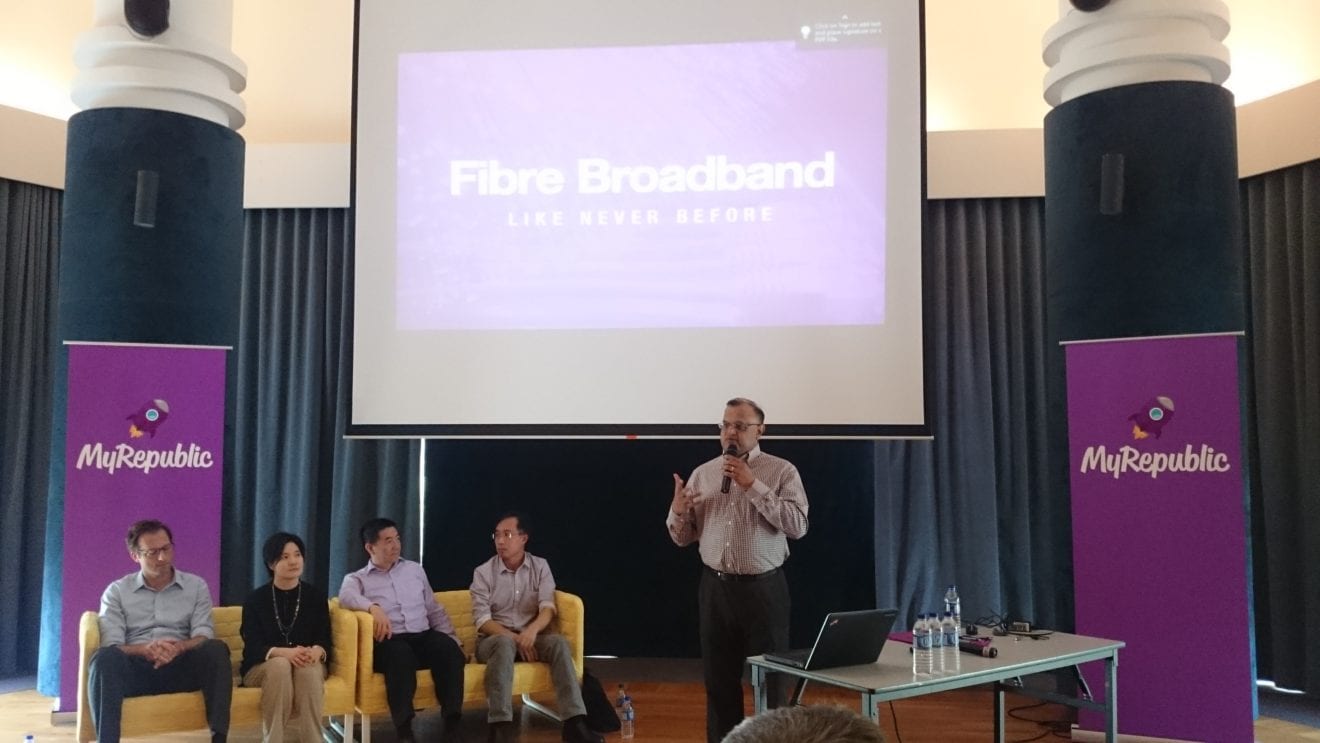
  • Singapore’s MyRepublic enters Indonesia with fiber Internet services

    Singapore’s MyRepublic enters Indonesia with fiber Internet services

    It would seem that Singapore-based startup Internet provider MyRepublic has just launched operations in a new market: Indonesia.

    A quick look at MyRepublic’s Singapore website now shows Indonesia listed as one of the countries of operation along with Singapore and New Zealand. The New Zealand operation launched in October last year.

    MyRepublic’s Indonesian site is also live in Bahasa Indonesia and lists nine retail locations in areas such as Palembang and Surabaya.

    MyRepublic plans

    The site lists prices for all. The cheapest fiber optic plan is the Basic, which retails at US$15, while the most expensive plan Supernova retails at about US$70.

    It should be noted that the Supernova plan has a maximum download speed of 300Mbps, as opposed to the 1Gbps maximum speed MyRepublic customers in Singapore enjoy.

    This move into Indonesia, however, does not come as a surprise as one of the company’s investors, the Sinar Mas Group (who in May of 2014 invested US$3.5 million) is based in Indonesia.

  • China’s Internet focus lifts online spending

    China’s Internet focus lifts online spending

    In a strategy known as ‘Internet Plus’, China is integrating the Internet, big data and other technologies with traditional industries, like retail. This is boosting China’s already vast e-commerce market further. As the government looks to use the Internet to create more spending – and jobs.

    Denny Liu returned to Beijing after graduating from Wharton Business School in the United States.

    Last year, he and his wife set up Le Chun – or Le Pur, in English – selling yogurt, using only natural ingredients.

    Before opening a physical store, they shared their story and mission online.

    “That story actually went viral for a little bit and that got us our first 5,000 seed users. Who are all yogurt lovers.We didn’t know any good milk sources around Beijing, so we threw it to our community and said ‘do you guys know any good milk source around’ and about 10 people gave us leads. When we designed our logo and picked out the store location, we asked our followers,” Liu said.

    With 40,000 followers on WeChat, the Internet has played a key part in Le Chun’s success.

    In less than a year, the startup is making a profit.

    Most of their sales are online. Thanks to word of mouth, from social media fans.

    Now, the government is backing them too. With 100,000 yuan or roughly 15,000 dollars in funding. No strings attached.

    China wants consumer spending to be a central part of the economy. But malls like this one don’t exist in every city. So it’s supporting online stores to get more Chinese shopping.

    “Clothes, computer stuff, food. I buy about 80 percent of my things online,” Student Quan Jiujiu said.

    Retail expert, Professor Xiangdong Liu, says official data shows that last year, China’s online sales hit 2.79 trillion yuan. Taking 10 percent of its total spending.  And overtaking America’s.

    He says the government’s Internet focus will encourage e-commerce further.

    “The government will invest more in Internet infrastructure, cutting costs for surfing online. It’s also setting up pilot projects, to make Internet companies better, as well as encouraging companies to open online services, by providing subsidies and lower taxes. The government’s approach is first to let them mature, then unveil more policies to manage them,” Professor Liu said.

    This is changing brick-and-mortar giants, like electronics retailer, GOME. It launched its online store in 2011. Now with a mobile platform and App.

    But while their online options give customers a bargain, it’s been tough business.

    “10 percent of our sales are online. We predict GOME’s online consumers will grow faster, to exceed 20 percent in three years. Online customers pay more attention to price, so goods online have simpler functions and are cheaper. But since prices online are cheaper, many online businesses are making a loss,” Wang Junzhou, president of GOME Electrical Appliances Holding Ltd., said.

    While keeping costs down for niche retailers, like Le Chun. The Internet is proving costly for mainstream players.

    That’s likely to test China’s e-tail industry, in the years ahead.