Tag: #internet

  • Iflix wants to become a social media platform for TV

    Iflix wants to become a social media platform for TV

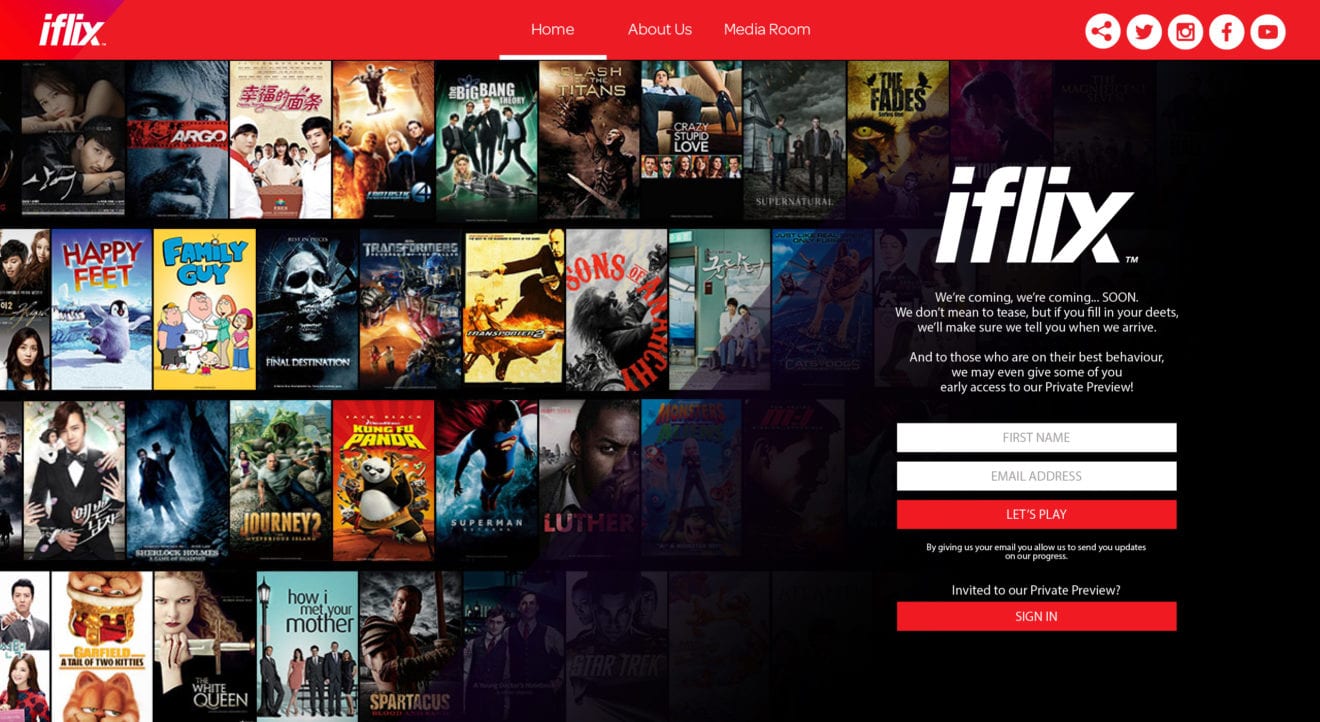
    Emerging subscription-based streaming video service iflix intends to set itself apart from Netflix by becoming a social media platform for television, according to company executive.

    “Netflix is very much into an original production base… they are really focusing their investment on content and user experience and interface,” Cam Walker, chief executive of iflix Indonesia, told telecomasia.net at the sidelines of Communic Indonesia and Broadcast Indonesia 2016, which kicked off Wednesday at the Jakarta International Expo in Kemayoran, Central Jakarta.

    “We have just most recently decided to venture beyond entertainment into becoming a truly social platform for television.”

    To do that, Walker said the company is planning to introduce more social media components and interactive features to the service. For instance, the company will offer a social feature later this year where users can chat with others or interact with local celebrities who have drawn up movie playlists for them.

    Iflix launched its service in Indonesia in mid-June this year and garnered 250,000 activations in about two-and-a-half months.

    Walker said the Indonesian market is relatively new from an OTT perspective and doesn’t see other streaming services as competitive, as they are all heading in different paths.

    “We’re the new kid on the block. We started a couple of years as a cool internet TV concept, with a vision to provide a better service to piracy and a viable alternative at an affordable price point,” he said.

    iflix is now offering 2,000 seasons of 900 programs, 5,000 episodes of 200 kids programs and local content acquired from partners for its Indonesian viewers.

    Walker said iflix will soon produce its first local Indonesian content that will open more opportunities for local actors, producers, directors, scriptwriters and “the new breed of Indonesian talents.”

    “We’re going to be investing heavily in local productions and local acquisitions as well, which I think will differentiate us from the major international players,” he said.


  • Cybercriminals use insiders to attack telcos

    Cybercriminals use insiders to attack telcos

    Cybercriminals are using insiders to gain access to telecommunications networks and subscriber data, recruiting disaffected employees through underground channels or blackmailing staff using compromising information gathered from open sources.

    This is among the findings of a Kaspersky Lab intelligence report into security threats facing the telecommunications industry.

    Telecommunications providers are a top target for cyber-attacks. They operate and manage the world’s networks, voice and data transmissions and store vast amounts of sensitive data. This makes them highly attractive to cybercriminals in search of financial gain, as well as nation-state sponsored actors launching targeted attacks, and even competitors.

    To achieve their goals, cybercriminals often use insiders as part of their malicious ‘toolset’ to help them breach the perimeter of a telecommunications company and perpetrate their crimes.

    New research by Kaspersky Lab and B2B International reveals that 28% of all cyber-attacks and 38% of targeted attacks now involve malicious activity by insiders. The intelligence report examines popular ways of involving insiders in telecoms-related criminal schemes and gives examples of the things insiders are used for.

    Compromising employees

    According to the Kaspersky Lab researchers, attackers engage or entrap telecoms employees in the following ways:

    • Using publicly available or previously stolen data sources to find compromising information on employees of the company who they intend to hack. They then blackmail targeted individuals – forcing them to hand over their corporate credentials, provide information on internal systems or distribute spear-phishing attacks on their behalf.
    • Recruiting willing insiders through underground message boards or through the services of “black recruiters”. These insiders are paid for their services and can also be asked to identify co-workers who could be engaged through blackmail.

    The blackmailing approach has grown in popularity following online data breaches such as the Ashley Madison leak, as these provide attackers with material they can use to threaten or embarrass individuals. In fact, data-leak related extortion has now become so widespread that the FBI issued a Public Service Announcement on June 1, warning consumers of the risk and its potential impact.

    The insiders most in demand

    According to the Kaspersky Lab researchers, if an attack on a cellular service provider is planned, criminals will seek out employees who can provide fast track access to subscriber and company data or SIM card duplication/illegal reissuing. If the target is an internet service provider, the attackers will try to identify those who can enable network mapping and man-in-the-middle attacks.

    However, insider threats can take all forms. The Kaspersky Lab researchers noted two non-typical examples, one of which involved a rogue telecoms employee leaking 70 million prison inmate calls, many of which breached client-attorney privilege. In another example, an SMS center support engineer was spotted on a popular DarkNet forum advertising their ability to intercept messages containing OTP (One-Time Passwords) for the two-step authentication required to login to customer accounts at a popular fintech company.

    “The human factor is often the weakest link in corporate IT security,” Kaspersky Lab security expert Denis Gorchakov said.

    “Technology alone is rarely enough to completely protect the organization in world where attackers don’t hesitate to exploit insider vulnerability. Companies can start by looking at themselves the way an attacker would. If vacancies carrying your company name or some of your data start appearing on underground message boards, then somebody somewhere has you in their sights. And the sooner you know about it, the better you can prepare.”

  • Browser and search engine UCWeb claims 50pc market shares in India and Indonesia

    Browser and search engine UCWeb claims 50pc market shares in India and Indonesia

    UCWeb, the mobile browsing arm of e-commerce giant Alibaba Group which is behind the UC Browser, is claiming more than 50 per cent shares of both the Indian and Indonesian mobile browser and search engine markets, six years after entering the countries for the first time.

    The company also revealed it has reached the milestone of recording more than 400 million monthly active users globally, including 88 million in India.

    Amid stagnant growth in mobile internet usage and cutthroat competition in its home market, the Chinese company said the successes have been built on its relentless effort to adapt to both media environments, spearheaded by local sales teams, and a lack of any strong local competitors.

    “In these markets [UCWeb] has focused on being a big ‘platform’ that enables users to discover content.

    Indian viewers have a much stronger appetite for sport, music and videos, while less interest in social and gossip news, as in China

    He Xiaopeng, UCWeb’s president

    “We don’t care about short-term revenue and profit overseas. And we don’t rely on small apps to acquire traffic,” said He Xiaopeng, UCWeb’s president.

    His comments came as the company officially shortened its name from UCWeb to just “UC”, in an effort to highlight its upgrade from being a simple browser to what officials called a “digital media and entertainment platform”, which along with other operations such as Alibaba Music, and Alibaba Pictures, form the company’s growing culture and entertainment matrix.

    In a separate announcement, it said in partnership with Mumbai entertainment TV station Colors, it is also launching an English language news conglomerate, “UC News”.

    “India is among the few markets that still see traditional media outlets growing,” He explained.

    “This is different from China and Indonesia, where social media and online celebrity culture dominate.

    “Indian viewers have a much stronger appetite for sport, music and videos, while less interest in social and gossip news, as in China,” He said.

    The company employs nearly 100 staff in India, and a few less in Indonesia, mainly business development and marketing staff, who are backed up by much larger technical and products team in Guangzhou, He said, within a total workforce of 500.

    Chen Chao, the company’s general manager, said it is relatively easy building a successful presence in markets like India and Indonesia, where users are happier to accept foreign companies, and there is a lack of competitive local firms.

    UCWeb has far less interest in developed markets such as Japan, he added, for instance.

    The company’s expansion in the emerging markets comes as growth in the number of mobile internet users has plateaued in China, and browser competition has intensified between rivals such as QQ, which is backed by Tencent, and Baidu’s own browser.

    Zhu Dalin, an analyst with Analysys International, said the announcements underlined UCWeb’s ambition to become a major platform, which alll users can access easily.

    “It is also stressing its customised feeds, but its competitors are doing this.

    “China’s mobile internet landscape has changed so fast that it may not necessarily have developed in the way that UC wished,” said Zhu.

    Unlike during the personal computer age, mobile users can now access content through a various of ways, so browsers such as UC have to fight even harder for users, analysts say.

    India and Indonesia have become natural targets for UCWeb, despite having to overcome tough regulatory risks.

    The company has also built a strong presence in Iran, before being blocked by the Iranian government overnight, along with Facebook and Google.

    He Xiaopeng said the biggest challenge in India turned out to be poor infrastructure, on top of a lack of electricity, water and online payment tools.

    UCWeb’s local operating experience could potentially be an asset for its parent Alibaba, which is also exploring opportunities in markets including India.

  • Bukalapak CEO Shows Confidence in Indonesia’s Internet Business

    Bukalapak CEO Shows Confidence in Indonesia’s Internet Business

    Ahmad Zaky, CEO of Indonesian e-commerce company Bukalapak.com, said that the growth of Indonesian internet business has the ability to compete with Japan and ASEAN countries. One of the strong supporting factors of Indonesia’s internet business is demography.

    “Our population mostly consists of young internet users,” Zaky said at the Investor Summit Grand City Expo event in Surabaya, Friday, August 19, 2016.

    Zaky predicted that currently, around 60 percent of the Indonesian population has access to the internet. Combined with the demography factor, Zaky forecasted that all Indonesian citizen will be able to use the internet in the next five years. “In the next five years, people not using the internet will feel alienated,” Zaky said.

    Zaky added that the rapid development of smartphone technology is another factor that supports the growth of internet users. “I can’t imagine, within the next 10 years, everything must have already use digital technology,” Zaky said.

    Zaky also compared the number of Indonesian population, which could reach up to 300 million, with Japan’s population. “Japanese population is not that many. It tends to decrease,” Zaky explained.

    Another driver of Indonesian internet business, according to Zaky, is the increasing sales of smartphones. Zaky said that smartphone sales could reach as high as 3.5 million in just one month. As a result, Zaky asserted that in the next two to three years, there will be 100 to 150 million smartphone users in Indonesia. “This is why I am confident that the internet business in Indonesia could exceed Japan,” Zaky explained.

    Zaky said that in order to overrun ASEAN and Japan internet companies, local internet business players must be able to dominate the domestic market.

    Other supporting factor, as Zaky explained, is the number of potential customers in Indonesia. For example, Zaky said that the largest number of Google PlayStore customers is from Indonesia. Foreign applications such as BlackBerry Messenger, Whatsapp, and games like Clash of Clans or Pokemon Go, are mainly downloaded by Indonesians. “Now imagine if Indonesian people were to create games or applications to be sold at PlayStore,” Zaky said.

    However, Zaky also highlighted the challenges that must be faced in the era of global competition, one of which is price competitiveness. Zaky said that nowadays, people can buy cheaper goods from China rather than Indonesia through e-commerce. “Well this will depend on the President’s discretion in developing the needed infrastructure,” Zaky said.

    Nevertheless, Zaky remains optimistic that the current economic growth can strengthen Indonesia’s position in the Asian region. “If we can conquer Indonesian [market], we can conquer ASEAN,” Zaky concluded.

  • Thailand sets terms for rural broadband project

    Thailand sets terms for rural broadband project

    Thailand’s ICT ministry has finalized the terms of reference for a tender auction for a 15 billion baht ($433.1 million) national broadband project.

    The project’s procurement committee is preparing the auction process and expects to name the winner by September 15, citing comments from ICT minister Uttama Savanayana.

    Whichever company is selected for the project will be a major supplier of fiber or copper broadband networks for the national project. State-owned operator TOT will be in charge of distributing the network to selected areas and hiring private companies to construct it.

    The national project aims to extend broadband infrastructure to the 39,000 villages that still lack broadband internet access. Uttama said the ministry aims to expand the network to at least 10,000 villages by the end of the year and to all 39,000 next year.

    While the ICT ministry first aimed to complete the terms of reference for the project by March, it was delayed by several months due to management issues, the report states. The project forms part of the government’s digital economy and Thailand 4.0 policies.

    TOT was selected to take sole responsibility for the project in April, despite initial plans to have the company jointly oversee the project with fellow state-owned operator CAT.

  • Hawaiki launches marine route survey for trans-Pacific cable

    Hawaiki launches marine route survey for trans-Pacific cable

    Hawaiki Cable and subsea cable provider TE SubCom have launched a marine route survey for the planned cable linking Australia and New Zealand with Hawaii and the mainland US.

    Construction of the 14,000km cable system is currently scheduled for completion in mid-2018. As well as the main route, the system will have options to expand to several South Pacific islands.

    Once complete, the Hawaiki Cable will deliver more than 30Tbps of capacity, making it the highest cross-sectional capacity link between the US and Australia/New Zealand.

    Hawaiki has already signed on AWS, Vodafone, REANZ and American Samoa Telecom as anchor customers for the new carrier-neutral cable system.

    “Each stage of this groundbreaking project is important, but after very carefully planning our trans-pacific route and conducting an extensive survey of each landing site, we are extremely pleased to launch the marine route survey, which will give us data necessary to safely and properly deploy the system in the coming months,” Hawaiki CEO Remi Galasso said.

    “The team is doing a great job; we are on time and on budget. We are confident that with our trusted supplier, TE SubCom, our cable will be delivered as planned in mid-2018, less than two years from now.”

  • Australia regulates retail access to high-speed networks

    Australia regulates retail access to high-speed networks

    Australian competition regulator ACCC has decided to require most operators of high-speed broadband networks to grant wholesale access to rival providers.

    Fiber and VDSL network services with a downstream data rate of over 25Mbps have been declared, meaning network owners must provide wholesale access on request.

    Where commercial terms cannot be agreed upon, the wholesale access must be provided at a regulated rate of between A$22.14 and A$27 per port per month, or A$17.50 to A$29.27 per Mbps per month.

    Exceptions apply for high-speed broadband services in metro areas, where competition is already effective, and for network operators with fewer than 20,000 customers. There is also a moratorium for specific networks in some areas that need to be reconfigured to support wholesale provision.

    “This is an acknowledgment that all superfast broadband networks – regardless of their size – display natural monopoly characteristics. What this access declaration does is provide retailers with the opportunity to enter superfast broadband markets, and in turn increase competition,” ACCC Chairman Rod Sims said.

    “This decision will also help to simplify and clarify the existing regulations that apply to superfast broadband services, allowing all retail providers to compete on their relative merits, regardless of the technology used, when the network was constructed, or who operates it.”

    In practice, the move also means that competing commercial high-speed broadband networks to the wholesale only National Broadband Network (NBN) will have to compete on a similar footing.

    This is in line with regulations designed to prevent retail providers from cherry-picking by concentrating their deployments only on the most profitable areas, in contrast to the NBN which needs to provide universal access.

  • Australia’s Megaport expands to Europe

    Australia’s Megaport expands to Europe

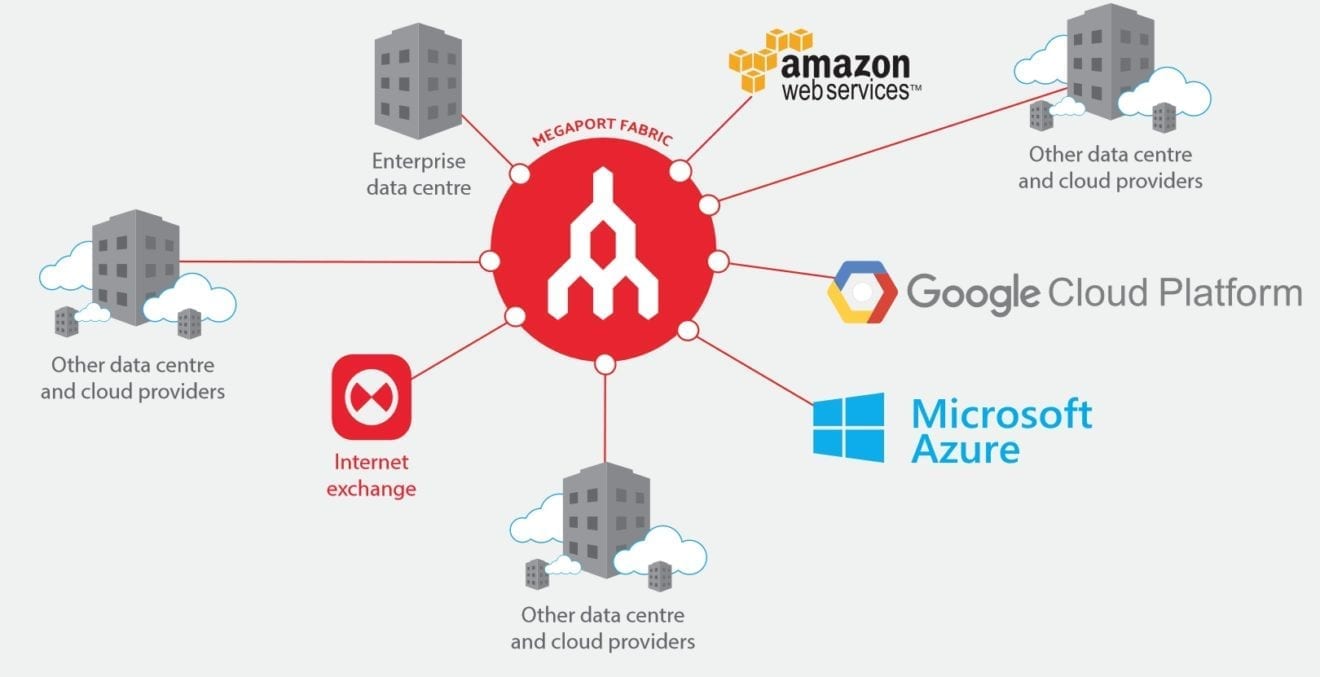
    Australian interconnection upstart Megaport has long been planning to invade Europe this year.  Today they not only formally launched their elastic interconnection platform on the continent, but they revealed two acquisitions that let them hit the ground running in a big way.

    Megaport has signed an agreement to buy Berlin-based Peering GmbH, Germany’s second largest IX provider. ECIX serves some 180 customers across 30 PoPs in Germany, giving Megaport immediate depth in the continent’s biggest market. The deal is expected to close in early August.

    Megaport’s other M&A move gives them an immediate presence in eastern Europe via the acquisition of Bulgarian-based OM-NIX Group AD.

    As one might infer from the IX part of their name, OM-NIX also specializes in interconnection, with extensive reach in Eastern Europe and especially the Balkans. Beyond the ECIX footprint, the deal adds another 18 locations to Megaport’s reach in Europe.

    Put those together with 9 other locations they have been developing organically, and Megaport’s European launch will span 57 locations in 19 cities in 13 countries. The acquisitions cost them some A$3.1 million ($2.3 million) and bring in annualized revenue of A$4.5 million.

    Over the past year, Megaport has expanded its interconnection footprint in markets throughout North America. The buildout has been quite rapid, and the move into Europe accelerates it even further.

    While the next phase is likely more adding revenue on top of the infrastructure they have built out, I have to wonder if they won’t keep going east. It wouldn’t take much to add a PoP or two in the Middle East and India on their way back around the globe to Singapore and Australia.

  • More than half the world is still offline

    More than half the world is still offline

    Despite falling prices for ICT services, more than half of the world’s population is still not connected to the internet, the latest ITU figures show.

    The UN agency estimates that 3.9 billion people remain cut-off from the vast resources available on the internet.

    The newly released report ICT Facts & Figures 2016 shows that developing countries now account for the vast majority of internet users with 2.5 billion users compared with one billion in developed countries. Internet penetration rates, however, tell a different story.

    In developed countries, internet penetration is pegged at 81% of the population, compared with 40% in developing countries and 15% in the least developed countries. It is also higher for men than for women in all regions of the world.

    The report noted that the global internet user gender gap actually grew from 11% in 2013 to 12% in 2016. The regional gender gap is largest in Africa, at 23%, and smallest in the Americas, at 2%.

    By early 2016, international internet bandwidth had reached 185,000 gigabits per second, up from a low of 30,000 gigabits in 2008. However, bandwidth is also unequally distributed globally, and lack of bandwidth remains a major bottleneck to improved Internet connectivity in many developing and least developed countries.

    ITU Secretary-General Houlin Zhao said more needs to be done to bridge the digital divide and bring the more than half of the global population not using the internet into the digital economy.

    “ITU, given the tremendous development of ICTs, has a key role to play in facilitating their attainment,” affirmed Brahima Sanou, the Director of the ITU’s Telecommunication Development Bureau.

  • Philippines to develop national broadband plan

    Philippines to develop national broadband plan

    Philippine president Rodrigo Duterte announced in his first State of the Nation Address (SONA) on Monday that he wants the newly created Department of Information and Communications Technology (DICT) to develop a national broadband plan to accelerate the deployment of fiber and wireless technologies to improve internet speed.

    He also announced that Wi-Fi access shall be provided at no charge in selected public places, including parks, places, public libraries, schools, government hospitals, train stations, airports, and seaports.

    A previous government initiative to establish a National Broadband Network (NBN) was scrapped in 2007 after the $329-million contract awarded to Chinese telecommunications firm ZTE for the project had been investigated in the Senate.

    In 2011, the then Commission on Information Communications Technologies (CICT) had also released a five-year digital roadmap that aimed to craft a vision for ICT use in governance, including the creation of a national broadband policy that would enable the environment for broadband development and use.

    Duterte’s call for a new national broadband plan came on the heels of a wide public clamor for fast and affordable internet. The Philippines had ranked poorly in many global indices for digital readiness.

    The country trails behind its Southeast Asian neighbors, for example, in the latest Network Readiness Index published by the World Economic Forum, which measures how economies use the opportunities offered by ICT for increased competitiveness. At 77th place in a 139-country study, the Philippines was behind Singapore (1st), Malaysia (31st), Thailand (62nd), Indonesia (73rd).

    Duterte’s assumption into office on June 30 came at a favorable time as the law mandating the creation of the DICT as the primary body that would create policies and drive the national ICT agenda was signed by former President Benigno Simeon Aquino III last May.

    The country’s first appointed DICT Secretary Rodolfo A. Salalima affirmed in his first media interview that the government cannot expect the commercial service providers to be in all parts of the country and there would be a need for the government to establish an ‘infostructure’ in the countryside and provide service.

    Shortly before Duterte’s inauguration as the country’s 16th president last June, Globe Telecom had called on the government to help develop broadband access in the Philippines by investing in internet infrastructure in rural and far-flung areas.Globe President and CEO Ernest Cu said in a media statement that telecommunication operators in the country are unable to deploy infrastructure in rural areas due to business viability issues.

    “There are a lot of localities in the country that cannot be reached economically. What we propose is for the government to build the infrastructure, such as submarine cables, and then rent these facilities out to telco operators,” he said, citing the case of Sulu and Basilan provinces in the Autonomous Region for Muslim Mindanao.

  • Aussie ISP takes on NBN with microwave broadband

    Aussie ISP takes on NBN with microwave broadband

    Lightning Broadband is offering fiber connectivity in parts of Melbourne and plans to guide its roll out plans based on demand. Potential customers are able to register for interest on the website.

    The ISP is offering 100Mbps symmetrical plans with unlimited data for A$120 ($90) per month on a 24-month contract. The NBN’s 100Mbps downlink plans offer only 25Mbps uplink.

    Lightning Broadband is also offering 25Mbps, 50Mbps and 75Mbps plans, starting from A$75.

    For business customers, Lighting Broadband will offer dedicated 1000Mbps symmetrical microwave links that will not share equipment with other users.

    Founder Jeremy Rich told that the company believes that many Australians are sick of waiting for the NBN to arrive in their area, and are interested in adopting high-speed broadband today.

    The NBN’s ambitious rollout plans have been delayed repeatedly since the project was announced.

    The project has also been scaled back under the recently re-elected government – the NBN was originally intended to deliver FTTH providing wholesale speeds of up to 100Mbps to 93% of the population, but has since been redesigned to use a mix of access technologies, including FTTN, HFC and fixed wireless.

  • Alibaba introduces IP collaboration platform

    Alibaba introduces IP collaboration platform

    Alibaba Group has launched an online platform designed to streamline IP-related communications between brands and Alibaba.

    The new IP Joint-Force System aims to build greater and more collaborative working relationships with global brands as the company strengthens its efforts against counterfeits and IP infringement.

    “E-commerce has become a way of life for consumers both in China and around the world. As the internet sector continues to evolve, brands and online marketplaces alike face new IP enforcement challenges,” said Jessie Zheng, chief platform governance officer at Alibaba Group.

    With over a billion products listed across Alibaba Group’s marketplaces at any given time, its data analytics and processing technologies enabled the company to proactively remove more than 120 million infringing product listings from its marketplaces in 2015, which it said is eight times the number of counterfeit products removed based on takedown requests from brands.

    Under the new IP Joint-Force System, each participating brand will be assigned a dedicated online portal and Alibaba account manager to enhance collaboration, heighten transparency around IP enforcement efforts, and reinforce mutual understanding and trust.

    The system will also enable Alibaba to directly and efficiently seek information from rights holders regarding suspected counterfeit product listings, which Alibaba, as a third-party marketplace, is unable to authenticate on its own with full certainty.

    Alibaba will then initiate the Good Faith Takedown process and immediately remove the listing without required subsequent correspondence with the brand.

    Alibaba recently held the inaugural Rights Holders Collaboration Summit to engage international brands and the intellectual property enforcement community to enhance collaboration in the collective fight against IP infringement.

    More than 100 domestic Chinese and international brands and trade associations attended the event, including Louis Vuitton, Burberry, Apple, Mars, Hewlett-Packard, the Chinese-British Business Council (CBBC) and the Quality Brand Protection Committee (QBPC), among others.

    “The Rights Holders Collaboration Summit and new IP Joint-Force System are some of the many ways Alibaba is working closely with rights holders in our efforts to eradicate counterfeits both online and offline,” Zheng said.

  • NTT Com launches high-speed broadband in Myanmar

    NTT Com launches high-speed broadband in Myanmar

    Japan’s NTT Communications has launched high-speed internet services for enterprises in Myanmar, starting with the Yangon area.

    The company has secured a network service license from Myanmar’s Ministry of Transport and Communications, and has started offering the new Digi-Path Premier service in the market.

    The service provides dedicated, fully managed circuits from 1Mbps to connect enterprises with NTT Com’s global network, with 24/7 monitoring of circuits. Delivery of circuits can require as little as one month.

    NTT Com is also providing optional services including global IP address, web hosting, mail hosting, rental routers, managed firewalls, internet VPN and file transfers.

    NTT Com, along with NEC and Sumitomo, jointly deployed a 30Gbps core optical network between three major Myanmar cities in 2013, under contract from the Myanmar government. The operator established an office in the nation in October 2012, the first in the country from a foreign operator.

    The operator said it is now providing internet connections to enterprises globally including in seven Southeast Asian countries – Singapore, Malaysia, Indonesia, Thailand, Vietnam and Cambodia, as well as Myanmar.

  • Average internet speeds grow 12% during Q1

    Average internet speeds grow 12% during Q1

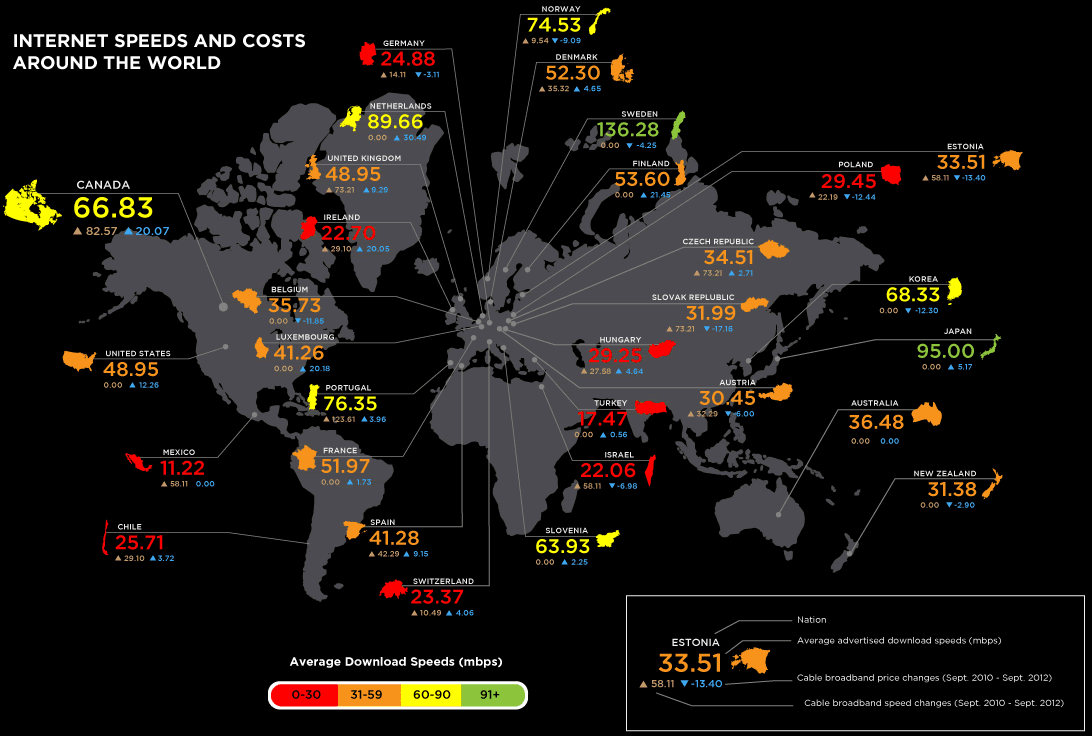
    Global average internet connection speeds grew 12% sequentially during the first quarter to 6.3Mbps, according to Akamai’s latest State of the Internet report.

    The report aslso shows that the global average peak connection speed increased 6.8% to 34.7 Mbps over the same period.

    Global broadband adoption of 10Mbps, 15Mbps, and 25Mbps connections also grew significantly during the quarter, posting year-over-year gains of 10%, 14%, and 19% at each threshold, respectively.

    Meanwhile, average mobile connection speeds ranged from a high of 27.9Mbps in the United Kingdom to a low of 2.2Mbps in Algeria during the period, while average peak mobile connection speeds ranged from 171.6Mbps in Germany to 11.7Mbps in Ghana.

    “What this means,” said Rob Morton, Director of Public Relations, Akamai Technologies, in a video message, “is that more people around the world can take advantage of video streaming with higher bit rates, resulting in a better quality viewing experience.”

    David Belson, editor of the State of the Internet Report, said the expectation is that this summer’s biggest sporting events will be watched by more online viewers than ever.

    “Global connection speeds have more than doubled since the summer of 2012, which can help support higher quality video streaming for bigger audiences across even more connected devices and platforms,” he affirmed.

    The report noted that at the country level, South Korea continued to have the highest average connection speed in the world at 29.0Mbps, an 8.6% gain over the fourth quarter of 2015, while Singapore maintained its position as the country with the highest average peak connection speed at 146.9Mbps, an 8.3% quarterly increase.

    It said South Korea also led the world across the 10Mbps, 15Mbps, and 25Mbps broadband tiers once again, with adoption rates of 84%, 69%, and 42% respectively, after seeing robust quarterly gains across all three metrics.

  • In-flight connectivity wants to be free

    In-flight connectivity wants to be free

    In-flight connectivity (IFC) is in high demand from consumers, but depending on where you are in the value chain, it won’t be easy to monetize that demand, especially when many passengers expect it to be free.

    “Right now the satellite operators are the ones making the profit on in-flight connectivity,” says Todd Hill, senior director of GCS Satellite Services at Panasonic.

    Part of the problem has to do with the cost of aircraft antennas, which are hard to install, “although the technology is improving.” Hill says.

    The other issue is the cost of the actually connectivity itself. While HTS satellites and Ka-band are touted for their ability to bring the cost per megabit down, the problem is that Ka-band isn’t an all-purpose solution that will be available everywhere.

    “We’re building a global network, so one size is not going to fit all,” Hill says. “Ka-band doesn’t fit every need. HTS can bring the cost down, but you also get these spikes in supply whenever a new gigabit satellite goes up that affects pricing.”

    Erwin Hudson, VP/GM at ViaSat, says that everyone in the IFC value chain – satellite players, the service providers and the airlines – can make money, but that for the airlines, it’s as much about value creation as literally earning money from in-flight broadband. “For example, enhancing customer satisfaction – there’s great value there for the airlines.”

    Which is as well, because if airlines have learned anything about IFC, it’s that customers generally aren’t willing to pay for it, especially as they become accustomed to Wi-Fi as a complimentary service in hotels, airports and coffee shops.

    “Customers do expect this for free, which is to say they expect it to be included in the ticket price, and that’s the way we’d rather see it go,” Hudson says. “There are different business models out there, such as pay-as-you-go, freemium or free, and we’ll see all three in play. But when you charge money for it, your take-up rate is around 10% to 15%, whereas when it’s free the take-up rate is as high as 100% or even 105%, because we count devices, not people, and many people have more than one device. So we think free is where it’s ultimately going to go.”

    Hudson adds that IFC is a segmented market – commercial airlines, private jets, military/government, etc – with different requirements and business models for each, “so there’s a substantial opportunity there.”