Tag: Investment

  • Love Bonito seals $50 million funding round expands into multiple countries

    Love Bonito seals $50 million funding round expands into multiple countries

    Love, Bonito today announced the close of its Series C funding round, raising a total of US$50Million. The round was led by Primavera Capital Group, a global investment firm whose previous investments include Alibaba, ByteDance, Yum China and Mead Johnson China. Adastria and Ondine Capital participated in the round too. Love, Bonito’s current investors include Openspace Ventures and Kakaku.com.

    Proceeds from the fundraising will enable the brand to bolster efforts in existing omnichannel markets and supercharge international expansion in markets that collectively are experiencing triple digits year-on-year (YoY) growth. These key markets include Hong Kong, Japan, Philippines and the US. Furthermore, the company is exploring categories outside of fashion as part of its plan to create a female ecosystem.

    Since its launch in 2010, Love, Bonito has achieved impressive growth, expanding into 10 key markets which include those in Southeast Asia, namely Singapore, Malaysia, Indonesia, Philippines, Cambodia, and East Asia markets, namely Taiwan, Hong Kong, Japan as well as Australia and the US.

    To date, Love, Bonito has achieved overall growth of over 120 percent YoY in international markets, and overall growth of 208 percent for its online sales. The company believes the Asian diaspora communities have extremely high potential, especially in the US, where online revenue growth exceeded 1,200 percent YoY as of September 2021.

    With the latest funding, the brand will double down efforts within markets such as Singapore, Indonesia, and Malaysia that have an omnichannel presence, while other markets such as Hong Kong, Japan, the Philippines, and the US will see an expansion in omni-channels, new business verticals, strengthening of local community engagement and key collaborations, as well as the continuous optimization of user experiences.

    “I am more excited than ever for what is to come in the next decade,” said Rachel Lim, Co-Founder of Love, Bonito. “The growth we see today would not have happened without #TeamLB and our #LBCommunity who consistently strive to support women in the different seasons of their lives. Being in the business of women has been our mission since day one, and we are finally venturing outside of fashion to bolster our offerings.”

    In line with the brand’s mission to empower the everyday Asian woman, plans are in place to increase offerings within the fashion line to include active apparel and accessories. The brand is also looking to venture into a content platform (LiBrary) as well as an exploration into new categories (LaB) which will include wellness.

    The category and product expansion strategy is informed and driven by data and community feedback garnered from several platforms, including the brand’s soon-to-be-launched artificial intelligence that delivers personalization at scale for women globally, through data and machine-learning models. Other existing platforms that contribute to the insights and knowledge gathering include:

    “We have built a strong foundation in understanding the everyday Asian woman in order to be pre-emptive in catering to her needs,” said Dione Song, CEO of Love, Bonito. “We are primed to become a true life partner for our community of women, in and beyond fashion. We have yet to see a womenswear brand from the region stand proud on the world stage amongst industry heavyweights and we want to be the first brand to achieve that, by being purpose-driven, community-focused and innovative.

    “We want to extend our heartfelt thanks to our existing and new investors who bring deep consumer investment experience and recognize the potential of the Asian consumer, both within and outside of the region,” added Dione.

    Lead investor Primavera provided a statement: “Love, Bonito has proven itself to be a one-of-a-kind, purpose-driven brand for women across all life-stages. Consumers are drawn by what the brand stands for and its mission to empower women around the world. Primavera is deeply impressed by how much the team has achieved over the last decade and looks forward to tapping into our understanding and experience in the global consumer sector to help elevate Love, Bonito to the next level. We are thrilled to join Dione and the rest of the team on this path-breaking journey.”

    Love, Bonito’s first external institutional investor, Openspace said: “From day one, we believed in what the brand could achieve as a business-led by women, for women. We are thrilled to now work alongside esteemed investors like Primavera to help write the brand’s next chapter.”

    Series B lead investor Kakaku.com added: “We are delighted to be on the global stage with Love, Bonito, and will continue to support the brand’s data and tech strategies, especially on their entry into the Japanese market.”

    In the next phase of its growth, Love, Bonito aims to shake up the fashion industry by creating a more meaningful impact on its community across all life stages. The brand is setting its sights on creating a thoughtful and well-rounded female ecosystem, supporting different facets of women’s needs within Asian countries and reaching further into the Asian diaspora communities across the globe.

  • UBS Creates ESG Role in Investment Bank

    UBS Creates ESG Role in Investment Bank

    The Swiss bank appoints one of its investment bankers to a key sustainability role.

    Zurich-based UBS is naming Laurent Bouvier to front a new team of investment bankers focused on environmental, social, and governance responsibility, according to a memo seen by finews.com. Bouvier, a managing director, is currently co-head of the global industries group, with Charles Otton.

    Bouvier’s promotion is part of a wider push by UBS and other investment banks to increasingly consider so-called ESG criteria in traditional sectors like industry. Wall Street rivals like Goldman Sachs and Deutsche Bank have already set up similar teams, which first reported Bouvier’s appointment.

    A dealmaking veteran, Bouvier will be joined by Armin Peter and Samantha Sutcliffe, who have devoted themselves to sustainable banking and finance efforts at UBS since 2019. Peter is the global head of debt syndicate and the head of sustainable banking in the European, Middle East, and Africa regions. Sutcliffe is the head of green and sustainable finance.

    Bouvier previously spent more than 16 years at Credit Suisse, also as an MD, before joining UBS in 2015. He will be replaced in his current job by Philippe Chryssicopoulos, who will co-lead the industrials group with Otton.

  • Singapore to invest $70 million in research, innovation and enterprise

    Singapore to invest $70 million in research, innovation and enterprise

    Speaking at the opening address of the ATxSummit, Singapore Deputy Prime Minister and Coordinating Minister for Economic Policies, Mr Heng Swee Keat announced that Singapore will be stepping up investments to unlock the full potential of the digital revolution through collective action.

    Investment in research and innovation is key to building solutions for the future and staying at the forefront of the digital economy. Singapore will invest close to S$70 million (US$50 million) under the Research, Innovation and Enterprise (RIE) plan, to launch our first national Future Communications Research & Development Programme (FCP).

    The FCP supports cutting-edge communications and connectivity research, and will in turn grow local capability to translate that into innovative products, services, and companies. This will be accomplished through the setup of new communications testbeds in 5G and beyond-5G, and support technology development, translation and training, while building up the talent pool in the areas of communications and connectivity technologies. As a start, the FCP has established a Memorandum of Understanding (MOU) with the 6G Flagship of Finland.

    As the Global-Asia node for technology and innovation, such digital cooperation with like-minded partners reaffirms Singapore’s role in bolstering growth opportunities in the global digital economy. Singapore Minister for Communications and Information Mrs Josephine Teo also signed a Memorandum of Cooperation (MOC) with Japan and an MOU with Thailand, at the sidelines of the ATxSummit.

    The MOC seeks to strengthen ICT collaboration between Singapore and Japan, enabling closer policy alignment and regulation on businesses. The MOC will facilitate a pilot project on electronic transferable records and the exchange of information on best practices and policies relating to the Digital Economy, Artificial Intelligence, and cybersecurity. It also includes closer collaborations through joint training and programs on AI implementation, AI governance and ethics, as well as cybersecurity capacity building.

    The longstanding Thailand-Singapore relationship will deepen with the signing of this MOU, which has been expanded to include new areas of cooperation in the Digital Economy such as digital connectivity, smart cities and AI governance. Both sides are also exploring interoperability between digital systems and frameworks that enable e-documentation.

    The pandemic has accelerated the overall shift to digital. Building a common “digital infrastructure” to underpin and ease data sharing will enable multiple stakeholders to come together and drive economic transformation. A new common data infrastructure and framework, the Singapore Trade Data Exchange, or SGTraDex was therefore launched to enable this trusted sharing of trade data. Designed as a neutral and open digital infrastructure through a public-private partnership, it was conceptualized by the Alliance for Action (AfA) on Supply Chain Digitalisation. SGTraDex will support ecosystem-wide digital transformation, connecting supply chain ecosystems both locally and globally.

    Three initial use cases were developed to push the boundaries of a trusted data exchange. The use cases demonstrated how SGTraDex can enable participants to strengthen the financing integrity of trade flows, enhance operational efficiency by optimizing logistics functions across partners, and provide visibility on supply chain transactions. The use cases have the potential to unlock more than S$200 million (US$150 million) of value annually when fully developed.

    SGTraDex will continue to build on this initial momentum, develop more use cases, and drive adoption locally and globally. SGTraDex also has the flexibility to be the data infrastructure for many other sectors ranging from construction to aviation, unlocking even more potential value. This is part of a suite of digital infrastructure and utilities being developed, including the SGFinDex for the financial sector, that provides a strong foundation for Singapore’s Digital Economy.

  • Alibaba Co-Founders Pledge Shares for Loans

    Alibaba Co-Founders Pledge Shares for Loans

    Alibaba co-founders Jack Ma and Joseph Tsai are reportedly pledging their shares in the Chinese e-commerce giant in exchange for significant loans from global banks.

    The two tech billionaires have pledged their shares to banks including UBS, Credit Suisse, and Goldman Sachs, according to a «Financial Times» report citing company documents.

    The shares pledged were made by offshore companies controlling more than half of Ma and Tsai’s stake in Alibaba – 5.8 percent as of December valued at $35 billion – through the documents did not disclose the number of shares pledged.

    The share-backed loans mark a stark contrast with Jack Ma’s positioning just nine months ago when he was originally due to be a beneficiary of Ant’s listing before Beijing stepped on the brakes for what would have been the world’s largest IPO in history.

    Since then, regulators have ordered heavy restructuring for Ant while Alibaba saw its share prices drop one-third alongside a $2.8 billion fine in April over monopolistic practices.

    Ma and his affiliates currently do not have any loans outstanding collateralized by the company’s shares. Tsai’s outstanding share-backed loans were easily manageable with prudent loan-to-value ratios to provide a substantial cushion against a potential margin call.

  • Grab enters wealth-management space with Bento Invest buy

    Grab enters wealth-management space with Bento Invest buy

    Grab has bought Singapore-based robo-advisory start-up Bento Invest which will be rebranded as GrabInvest, offering wealth management solutions to drivers, merchant partners and consumers through the Grab app.

    Grab’s move adds another business vertical under its financial-services division Grab Financial Group which will now be led by Bento Invest founder and CEO Chandrima Das. The investment app will join Grab’s existing financial services including GrabPay, GrabRewards, GrabInsure and GrabFinance.

    Reuben Lai, senior MD of Grab Financial Group, said there is a lack of access to affordable wealth-management products and retirement planning solutions for most people in Southeast Asia.

    He said Grab’s purchase of Bento Invest aims to “democratize” access to retail wealth-management products, an opportunity traditionally restricted to affluent individuals and institutional investors. The app will provide a low-cost model that is easy for customers to understand by allowing them to transact on a platform they are familiar with.

    “As we face an increasingly volatile and uncertain economic environment, it is imperative for Southeast Asians to acquire the tools and knowledge to protect their future by sustainably building wealth for themselves and their families,” said Lai.

    “The launch of GrabInvest brings us a step closer to democratizing access to affordable financial solutions that will help them achieve the financial stability they need well into their retirement years.”

    Founder Das, a former MD at Bank of Singapore and CEO of ING Investment Management, has more than 20 years of leadership experience with banks and asset managers across Asia and the UK.

  • UBS to Hire Investment Bankers in Performance Bid

    UBS to Hire Investment Bankers in Performance Bid

    The investment bank of UBS didn’t deliver as much as the bank had hoped it would in 2019. The heads of the unit have reacted to the underperformance by setting new hiring targets.

    UBS wants to sign experienced staff to boost its investment bank in the U.S., according to a report. The move follows after the publication of the unit’s disappointing performance in 2019.

    According to the hiring plan, UBS aims to add 20 managing directors to the ranks of the investment bank over a two-to-three-year period. Switzerland’s largest bank restructured the investment bank, led by Piero Novelli and Rob Karofsky, in the fourth quarter of 2019 to put its focus on a few, global areas. The number of full-time-equivalents fell by about 150 jobs to 5,332 in that period.

    The bid to boost its U.S. business follows a year in which the division’s profit almost halved. Revenues dropped 9.6 percent and fell across all units of the division.

    UBS Chief Executive Sergio Ermotti labeled the performance as unacceptable and told the unit to deliver more. At the same time, he also dropped the performance target of 15 percent previously set for the division.

  • Hyundai India Postpones Investment Plans In New Plant

    Hyundai India Postpones Investment Plans In New Plant

    The slowdown in the Indian auto market has also dented long term plans of automakers in India. Hyundai which was gearing up to set up a new plant in India has now postponed its plans by two or three years. Hyundai Motor India Managing Director (MD) & CEO, S.S. Kim told Times Of India in an interview that the company has sufficient production capacity to meet its domestic and global demand.

    Kim also added that buyer sentiments in India are not very positive at present and it may take around three years to restore the volumes and meet the sales performance targets like 2018. For the time being, the Korean carmaker will continue to focus on new launches that have already started with the launch of the Grand i10 Nios and Aura subcompact sedan.

    Hyundai Motor India has registered 37,953 units in the domestic market in December 2019, as compared to 42,093 units which is a de-growth of 9.8 percent. It’s domestic sales in the calendar year 2019 declined by 7.2 percent at 510,260 units as compared to 550,002 units which were sold in the calendar year 2018.

  • Thailand’s Central Retail Group confirms IPO launch

    Thailand’s Central Retail Group confirms IPO launch

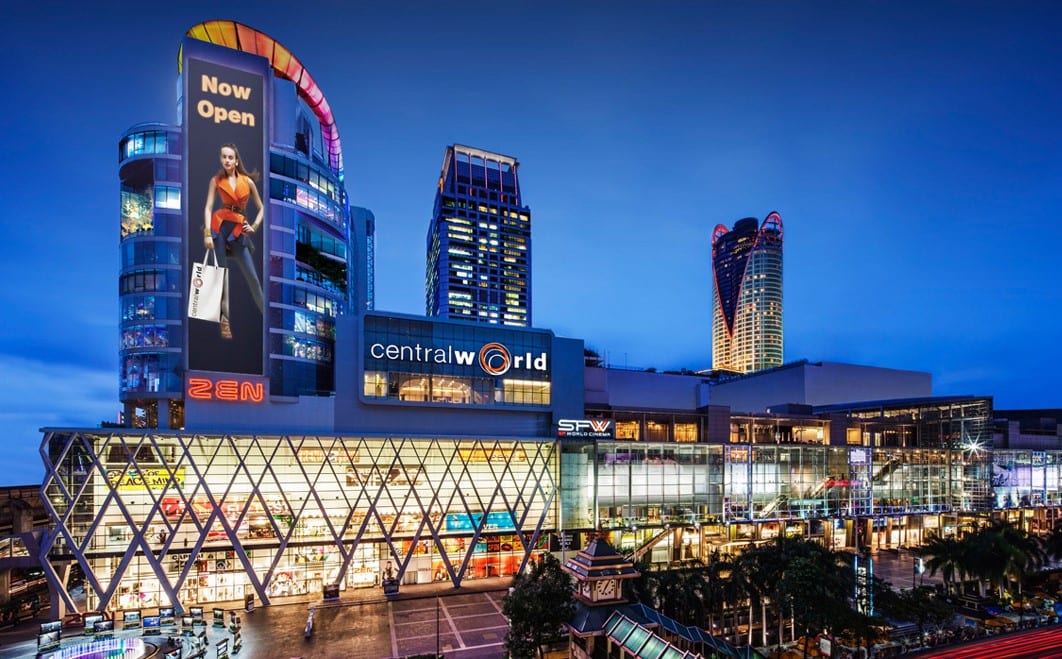
    Central Group subsidiary Central Retail Corporation, aims to raise up to THB81.1 billion (US$2.7 billion) in an initial public offering (IPO), which will be Thailand’s largest yet.

    Central Retail’s IPO price will range between THB40 to 48 per share. The company will sell up to 22.1 per cent of its stock or 1.69 billion shares with an overallotment option of 169 million shares. Investors can subscribe from February 6.

    Central Retail’s planned offering would be Thailand’s largest on record ahead of the BTS Rail Mass Transit Growth Fund, which raised US$2.1 billion in 2013.

    Funds raised will be used to expand its domestic and international businesses and to pay off debt, according to a spokesperson.

    As part of its listing plans, Central Group will delist its retail subsidiary Robinson PCL and offer a share swap to Robinson’s existing shareholders with no cash alternatives. The share swap will start in late January.

    Central Retail achieved sales of $3.46 billion in the six months to June. Some 43 per cent of that came via its food business, 34 per cent from fashion and the remainder from hardware.

  • Vietnam second among ASEAN members in attracting fintech funding

    Vietnam second among ASEAN members in attracting fintech funding

    Vietnam’s fintech firms secured $410 million, or 36 percent of the global capital pouring into Southeast Asia between January and September, behind Singapore.

    The country’s share of regional venture capital funding devoted to fintech soared from just 0.4 percent in 2018, according to a report prepared by the United Overseas Bank (UOB), PwC and the Singapore Fintech Association (SFA).

    Singapore remained the top destination for regional fintech investment, with 51 percent, down from 53 percent in 2018, with Indonesia in third place with 12 percent, down from 37 percent last year.

    ASEAN Fintech Funding 2019PercentageSingaporeVietnamIndonesiaOthersSource: Tracxn

    By the end of the third quarter this year, ASEAN had received $1.14 billion in funding for fintech firms, up sharply from $35 million in 2014, the report said.

    The surge in investments in Vietnam this year is attributable to two large deals, both in digital payments. In July, digital payment firm VNpay received $300 million in investment from Japanese multinational conglomerate SoftBank and Singaporean sovereign wealth fund GIC.

    And in January, e-payment app MOMO Pay landed $100 million from investors led by American private equity firm Warburg Pincus in its Series C funding round. The two deals accounted for 98 percent of Vietnam’s total fintech funding in the first nine months.

    In terms of the number of funding deals in 2019, Vietnam came third in ASEAN at 8 percent of total deals, up from 2 percent in 2018, behind Singapore and Indonesia with 51 percent and 28 percent respectively.

  • Grab Seeks to Merge Digital Payment Firms in Indonesia

    Grab Seeks to Merge Digital Payment Firms in Indonesia

    Grab is looking to gain pole position in Indonesia’s budding digital payment market, reportedly exploring a merger between two major players – a local entity it owns and another one backed by China’s Ant Financial.

    A merger between Grab-backed ONO and Ant-backed DANA would give the ride hailer app an edge over its major Indonesia competitor Gojek, which has been vying for the top spot in digital payments with ONO since 2018.

    The deal would also result in Grab acquiring a majority interest in DANA from Indonesian media conglomerate Elang Mahkota Teknologi (Emtek).

    It’s part of the Grab-Gojek battle, one of the sources said.

    According to the report, SoftBank, Grab’s largest shareholder, supports the proposal with the plan having already been discussed in July during a meeting in Jakarta between SoftBank CEO Masayoshi Son and top Indonesian officials.

    Son is in favor, another source said, adding that negotiation on deal structure with the Indonesian central bank will also be required due to foreign ownership restrictions.

  • UBS to Restructure Investment Bank

    UBS to Restructure Investment Bank

    UBS is going to revamp its investment banking unit along the lines of a wealth management business. The goal is to make the unit leaner and more global.

    Piero Novelli and Rob Karofsky are about to unveil their plans for a revamp of the investment banking business at UBS, according to media reports. The two managers have been in charge of the business for a little less than a year.

    The co-heads are planning to merge certain divisions within the bank in a bid to make the management structure leaner. The advisory service to companies for mergers, acquisitions and IPOs will become the responsibility of Javier Oficialdegui and Ros Stephenson. Currently, the business is led by three regional heads.

    The same brush will be applied to the equity and fixed-income trading, which has been kept separate so far. George Athanasopoulos and Jason Barron will be appointed as co-heads.

    The merger of the units will lead to duplications among managers and hence likely to a reduction of the respective headcount.

    Sergio Ermotti, the CEO of UBS, in 2018 merged North America with the rest of the world in wealth management, a move that helped the bank save $200 million a year, according to an interview with Chairman Axel Weber. By 2021, the sum will reach $600 million. And still, the business hasn’t performed according to expectations.

    Novelli and Karofsky obviously hope to cut costs and boost revenues with the help of a leaner and more efficient structure. Details of their plan will follow later today at an internal event, according to the reports.

  • Vision Fund Makes $110 Million Bet On Renewable Energy Storage

    Vision Fund Makes $110 Million Bet On Renewable Energy Storage

    Softbank Group’s Vision Fund has made its first foray into energy storage technology with a $110 million investment in Switzerland-based Energy Vault.

    While many countries are keen to use renewable energy as part of efforts to cut carbon emissions in the fight against climate change, the challenge has been to find a way to store it for later use, particularly overnight or when demand surges.

    Inspired by the physics and mechanical engineering used in hydro plants, Energy Vault says its technology enables renewable energy to be stored in 35-ton bricks and delivered as baseload power for less than the cost of fossil fuels at any hour of the day.

    Most rival solutions focus on some form of battery storage, be it lithium ion, sodium-sulphur, lead-acid, among others. While costs have been falling – by nearly 40% since 2015 according to Wood Mackenzie – most degrade over time.

    “Energy Vault solves a long-standing and complex problem of how to store renewable energy at scale,” Akshay Naheta, managing partner at SoftBank Investment Advisers, said in a statement on Thursday, announcing Vision Fund’s $110 million investment. “Energy Vault is highly complementary to SoftBank’s existing energy portfolio and we are pleased to further the company’s global development.”

    Energy Vault launched in late 2018 and has already partnered with Mexican materials company CEMEX and India’s The Tata Power Company as it looks to complete a test phase and then build its first commercially functioning site.

    Despite normally investing at a later stage in a company’s development, Softbank believed Energy Vault could scale quickly and potentially not need to do a later funding round, hence the drive to take an early stake, Naheta said.

    The potential rewards are large. The global energy storage market is expected to reach 22.2 GW in 2023, from nearly 5 GW at the end of 2018, according to a report in May by data and analytics company GlobalData.

    Robert Piconi, chief executive and co-founder of Energy Vault, said despite planning to grow the business country by country, the scale of pent-up global demand for a scaleable solution convinced them to move faster.

    “The Vision Fund shares our passion to combat climate change through innovation in energy storage technologies and, with its support as a strategic partner, Energy Vault is well positioned to meet the large and currently unmet demand for sustainable and economical energy storage worldwide,” Piconi said.

  • KFC invests millions in drive-thru-only restaurants

    KFC invests millions in drive-thru-only restaurants

    Quick service restaurant KFC announced last week it is investing $1.5 million in a “completely new concept for the fast-food industry” – a first of its kind drive-thru-only restaurant.

    Located in Newcastle, NSW, the store will feature five lanes and will utilize new technology to improve efficiency and speed in order from the on-site kitchen.

    Customers will be able to order and pay via the KFC app or website before arriving at the restaurant, and they will receive a four digit code to enter on a touchscreen receiver when they pull up to concept store, which sends the order to be prepared.

    Construction started in late June, and the restaurant is set to open in early November. The company said it potentially will roll out more drive-thru-only locations across Australia.

    “Drive-Thru Only is the latest example of KFC’s commitment to innovation, and to giving Aussies the most delicious and fresh chicken possible,” KFC Australia’s chief marketing officer Kristi Woolrych said.

    “We’re dedicated to continually building on our customer offering, that we’re always providing delicious and fresh meals, in the most convenient way to meet their busy lifestyles.”

    The store was conceptualized after KFC saw its e-commerce offering surge in popularity, with online ordering growing 100 per cent year on year for the last five years straight.

  • Shandong Ruyi seeks $500m

    Shandong Ruyi seeks $500m

    Chinese textile and retail investment company Shandong Ruyi will list an IPO for its recently acquired The Lycra Co in the hopes of raising around US$500 million.

    The group is currently exploring a listing in the US as it works with Goldman Sachs, according to those familiar with the prospective deal.

    Progress has been slow for Shandong Ruyi since regulatory delays held up its $2 billion purchase of Lycra for more than a year, which it finally completed in January. Plans for the IPO are now at early stages and are subject to significant changes before listing, which is scheduled for sometime within the next three years.

    Shandong Ruyi has previously been reported as having ambitions to become “the LVMH of China” and has acquired numerous overseas fashion brands. It is now focusing on consolidating its holdings rather than pursuing new deals.

    Shandong Ruyi Investment Holding is the largest textile and apparel company in China, and ranks among the Top 100 Chinese multinational enterprises. It is headquartered in Jining, Shandong and operates 13 domestic industrial parks.

  • English learning app co-founded by Vietnamese raises $7 million

    English learning app co-founded by Vietnamese raises $7 million

    ELSA has raised $7 million in a Series-A round from Google’s AI Fund Gradient Ventures and other U.S. investors. The investment round for ELSA, a mobile app that uses artificial intelligence and speech recognition technology to help language learners improve their English pronunciation, was led by Gradient Ventures, Google’s AI-focused venture fund.

    According to tech news provider Engadget, the Google fund will also offer “technical mentorship” to AI startups. ELSA will gain access to Google itself, including prominent figures such as investor and futurist Ray Kurzweil, design mastermind Matias Duarte and X lab leader Astro Teller.

    U.S. fund SOSV and Singaporean Monk’s Hill Ventures, strategic investment funds from the previous investment round, also invested in the app. In three years after its establishment, ELSA has successfully attracted $12 million through funding rounds in Silicon Valley, the U.S. and Asia.

    CEO and co-founder Van Dinh Hong Vu revealed that this round of funding will help the startup continue to recruit computer engineers and computer scientists in AI, and to explore new markets like Japan, Indonesia and India.

    ELSA currently has 4 million users from 101 countries worldwide, making it one of the top 5 AI applications with the most users. In 2018, the application recorded an increase in student enrolment by 350 percent over the previous year.

    Vietnam has been the fastest growing market for ELSA. ELSA grew its business fourfold in Vietnam in 2018 and expects to grow at a faster pace in 2019.