Retail News CRM

Tag: it

  • VMware launches cross-cloud architecture

    VMware launches cross-cloud architecture

    VMware launched its Cross-Cloud Architecture at VMworld 2016, along with a partnership with IBM Cloud and plans to extend to Google, Microsoft Azure and Amazon Web Services.

    The architecture is designed to let network operators manage, provide uniform policies for and secure applications running across public, private and hybrid clouds.

    Cross-Cloud Architecture is available in two main parts:

    • The VMware Cloud Foundation is designed to allow network operators to launch private clouds and extend them to the public cloud. It is an integration that VMware says will combine some of its existing compute, storage and networking virtualization offerings, helping organizations run and manage existing on-premises applications on both private and public clouds.
    • Cross Cloud Services, announced as a technology preview, runs applications across multiple public clouds, including IBM, AWS, Microsoft Azure and Google, as well as VMware’s vCloud Air hybrid cloud architecture and the vCloud Air Network of 4,000 service providers.

    The new Cross-Cloud strategy sees the company focusing more on selling products that work with existing leaders, rather than trying to establish itself as an alternative to AWS, Google or Azure. It will also provide an essential orchestration layer that helps network operators coordinate cloud applications

    As more companies run applications on rented infrastructure over the internet rather than their own data centers, providing the link to the different technologies customers use is a growing opportunity for VMware and something that it can also provide to partners like IBM.

    Earlier this year, IBM and VMware set out to tackle one of the industry’s most pressing challenges: extending existing VMware workloads from on-premises environments to the cloud without incurring the cost and risk associated with retooling operations, re-architecting applications and re-designing security policies.

    During a presentation, Guido Appenzeller, chief technology strategy officer of networking and security at VMware and Robert LeBlanc, senior vice president, IBM Cloud said that Cloud Foundation will “automatically provision pre-configured” software-defined data centers on IBM Cloud “in hours versus weeks or months.”

  • Cloud infra services up 52% year on year to $9.5b

    Cloud infra services up 52% year on year to $9.5b

    Worldwide cloud infrastructure services expenditure grew 52.3% year on year in Q2 2016, reflecting the ongoing adoption by businesses and expanding use of consumer-centric services, such as social media, gaming and video streaming.

    Amazon’s AWS remained the leading cloud infrastructure services provider, accounting for 30.4% of total spend, according to a new report from Canalys Research.

    Its early mover advantage, aggressive pricing, broad geographic coverage and wide range of service offerings are key factors behind its success. But it is under growing pressure from Microsoft Azure, Google Cloud Platform and IBM SoftLayer.

    Overall, these four providers represented 60.5% of total worldwide cloud infrastructure services spend.

    Daniel Lu, analyst at Canalys Research said, “The need for scalable and on-demand infrastructure is being driven by application testing, development and hosting; content delivery, big data and analytics; machine learning, IoT, disaster recovery and back-up; plus storage.”

    “But not every organization and every workload will migrate to the cloud. Cost is a major issue, but also compliance and regulations, security concerns, and application readiness are determining factors in cloud migration strategies. The adoption of hybrid cloud and on-premises solutions is prevalent as organizations seek to get the best of both worlds,” Lu noted.

    The total value of the cloud infrastructure services market was $9.5 billion in the second quarter of 2016.

    North America remained the largest market, representing 55.3% of the worldwide total, followed by EMEA at 24.7%, Asia Pacific at 15.9% and Latin America at 4.0%. For full-year 2016, Canalys predicts that the worldwide market will grow 50.3% to reach $37.8 billion.

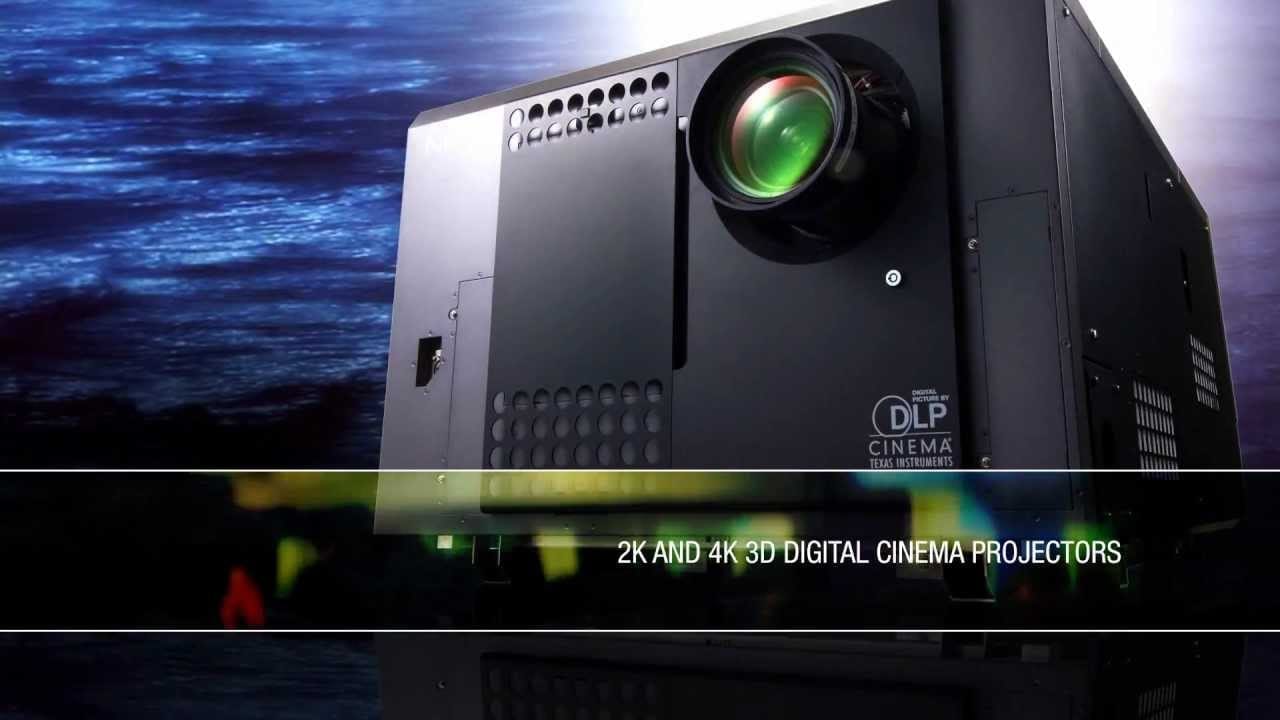
  • A look into the history of NEC Philippines

    A look into the history of NEC Philippines

    NEC Corporation is a Japanese multinational provider of information and communication technology products and services with headquarters in Tokyo.

    The 117-year-old firm started operations in the Philippines some 20 years ago when the local subsidiary NEC Philippines was incorporated in January 11, 1996. Gervacio points out that the global firm has been in the country as far back as the 1960s through a Manila Representative Office. In July, it will be celebrating its 20th anniversary with a conference and exhibition in Manila.

    A technology giant recognized for its cutting-edge innovation, NEC delivers IT and network solutions to business enterprises, government and individual customers in the form of software, hardware and related services. Through a combination of its advanced technologies in ICT, it is providing safety for the public and thereby helping to establish safer cities.

    Under the strategy of “Solutions for Society,” NEC offers product solutions for biometric such as facial and fingerprint recognition technology. The use of it for security and authentication purposes has become increasingly common due to its accuracy and efficiency. An example of use is the e-passport system where it has been implemented in many countries around the world, including Southeast Asia.

    The system incorporates NEC’s world-class biometric technology in facial and fingerprint recognition for secured identity protection and eradicates duplication. Ranked world No.1 by United States’ NIST (National Institute of Standards and Technology), NEC offers facial recognition and fingerprint technologies deployed in solutions such as NeoFace® Watch and NeoFace® Smart ID.

    With terrorism and security threats being a growing concern in public areas and international borders, these solutions have helped law enforcement agencies and security organizations all over the world identify individuals and tighten security measures.

    With cyber attacks on a rising trend in a borderless world, NEC’s powerful advanced cyber security solutions can protect organization’s IT and security systems from various cyber threats even before it occurs.

    It recently opened its Cyber Security Factory in Singapore which complements NEC’s Security Operations Centers located in strategic parts of the world including Japan and Australia, with an aim to provide an inter-connected network to share intelligence on cyber threats and deliver 24/7 security to customers.

    NEC is known mainly to electronic experts, but its platforms and solutions are everywhere from the sky above, on land, and deep in the bottom of the ocean waters.

    Up in the sky, NEC satellites are orbiting the earth and their cloud solutions are a boon to computer and phone interface and exchange. The NEC radio systems are responsible to bounce signals to our cell phones.

    On land, the Private Automatic Branch Exchange (PABX) allows connection to a local number, while the Key Telephone System (KTS) enables multiple users control over multiple telephone lines without the requirement for an operator, system attendant or receptionist.NEC Point of Sales(POS) Solution can also be found at major retail stores nationwide.

    NEC’s presence can also be found in the bottom of the seas because the company’s thousands of kilometer long cables are lying in the ocean depths, which are responsible for transporting through fiber optic the data and communication exchanges from one country to another.


  • Tata Comms to provide MPLS WAN for Air France-KLM

    Tata Comms to provide MPLS WAN for Air France-KLM

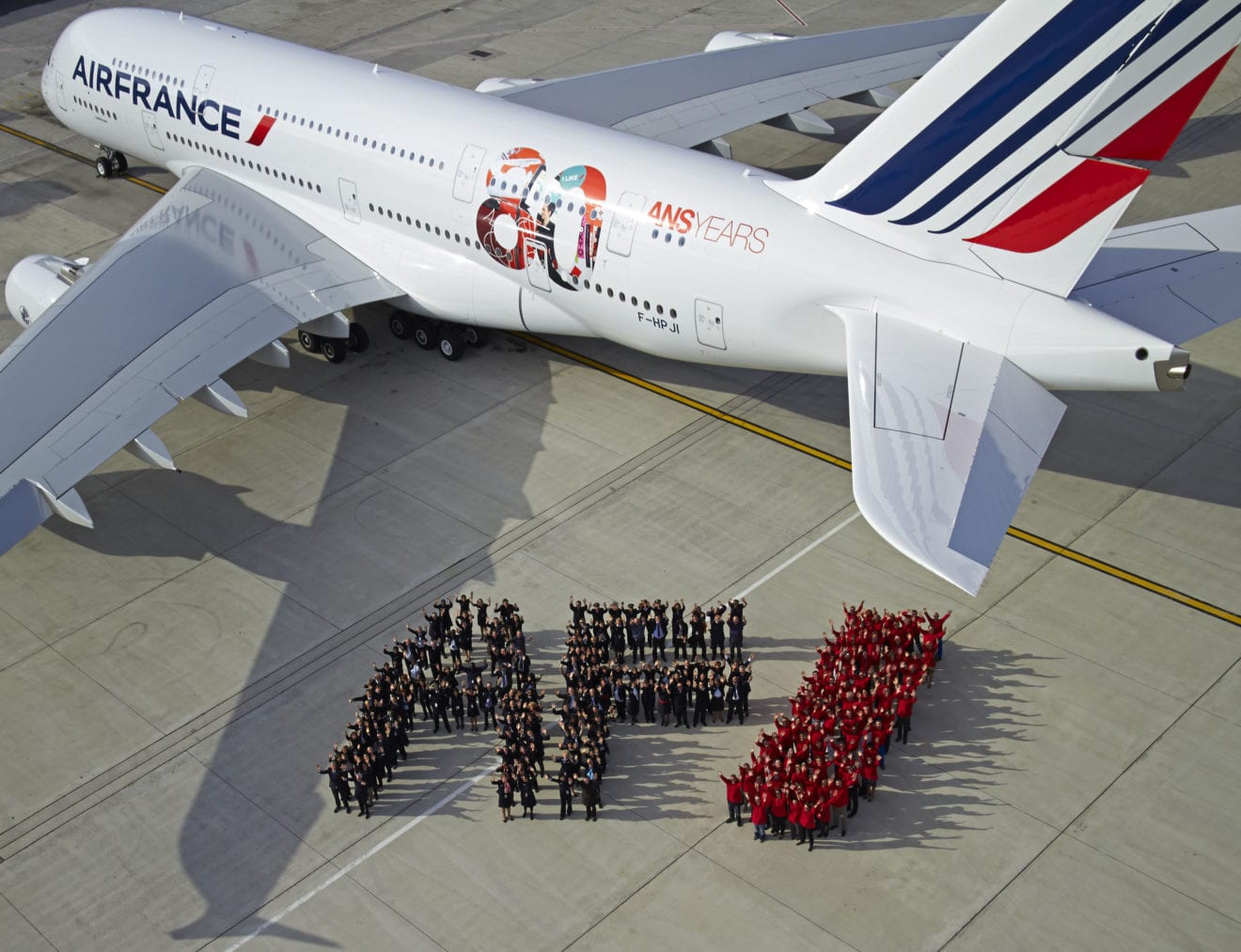
    Europe’s second largest airline Air France-KLM has handed Tata Communications a multi-million dollar deal to provide next-generation network connectivity to 170 sites.

    Tata Communications will provide Air France-KLM with an MPLS WAN in the Middle East, Africa and Asia Pacific, supported by the operator’s global subsea cable network.

    The multi-year contract will see Tata Communications roll out a fast, intelligent network which will power Air France-KLM’s mission-critical systems, including passenger check-in, flight operations and departure control applications, as well as corporate programs in the Middle East, Africa and Asia Pacific.

    Air France-KLM, which carried 87.4 million passengers in 2014, is the first major European airline group to move away from the legacy networks widely used in the airline industry.

    Tata Communications’ global network – which today connects more than 300 locations for leading airlines worldwide – will enable Air France-KLM to offer a range of digital services in regions that have been identified by the International Air Transport Association (IATA) as the future growth drivers of the industry.

    Currently eight of the ten fastest growing airline markets are located in Africa. By 2034, IATA expects 1.3 billion passengers to touch China – up from 850 million at present – and India is set to see an additional 260 million passengers. Europe will act as key transfer hub to these emerging markets, with 1.4 billion passenger journeys in 2034 – nearly 600 million more than today.

    “Investing in emerging markets and cutting-edge digital technologies is at the heart of our growth strategy. We’re introducing a range of innovative services, such as travel apps for smartwatches, to provide a seamless, personalized travel experience for our tech-savvy passengers,” Air France-KLM CIO Jean-Christophe Lalanne said.

    “Tata Communications’ global next-generation network will act as the foundation for these services in the Middle East, Africa and Asia Pacific, empowering us take customer service to the next level and capitalize on the huge growth opportunities that these markets offer.”

  • Indonesia ICT sector assessment

    Indonesia ICT sector assessment

    Information and communications technology (ICT) connectivity in Indonesia as a growing economy faces huge challenges in preparing for the future.

    The world’s largest archipelago consisting of more than 17,500 islands with a population of nearly 250 million requires substantial investments in domestic ICT infrastructure and international connectivity to meet the strong growing demand from the private and public sectors.

    New technologies require an ICT infrastructure with sufficient capacity. Reliable interconnection with other ASEAN member countries to remain competitive in the interconnected world is another aspect of why ICT should be considered a priority sector.

    In October 2014 the Indonesian government unveiled a Rp 278 trillion broadband connectivity plan in order to boost economic growth. The plan defines broadband development in Indonesia and sets the strategy and major milestones for the coming five years.

    The main purposes of broadband development are to encourage economic growth and increase the competitiveness of the nation, to support the improvement of human development and to safeguard the sovereignty of the nation.

    The Networked Readiness Index (NRI) 2015, published by the World Economic Forum, includes 143 countries and measures the propensity for the countries to exploit the opportunities offered by information and communications technology.

    The NRI considers several indicators, such as the political and regulatory environment, the business and innovation environment, infrastructure and digital content, affordability, skills, individual usage, business usage, government usage, economic impacts and social impact.

    In the last assessment in 2014, in which 146 countries were covered, Indonesia dropped 15 places to 79th, while Singapore claimed first, Australia 16th, Malaysia 32nd, China 62nd, Thailand 67th, the Philippines 76th, Vietnam 85th, Lao PDR 97th, Cambodia, Timor-Leste 134th and Myanmar 139th.

    To attract local and foreign investments a more business friendly environment is required in Indonesia. The business society in particular is demanding a fight against corruption, the cutting of red tape, infrastructure development and the improvement of the tax system. The same applies, of course, for the Indonesian ICT sector.

    To meet the requirements and keep pace with international developments, including connectivity to other ASEAN member countries, the broadband connectivity plan, which describes the path to the right direction, should be implemented in the given timeframe. Further considerations, recommendations and implications related to ICT development in Indonesia are pointed out in the following:

    As addressed in the broadband connectivity plan, educational and training skills, including English language skills, should be enhanced by connecting schools to the Internet and implementing e-Education and e-Learning programs. Competence centers consisting of experts from academia and the private sector should be established to boost research and development (R&D) in Indonesia.

    World Bank data shows that Indonesia spent the equivalent of 0.07 percent of its gross domestic product (GDP) on R&D in 2010. Meanwhile, Malaysia spent 0.63 percent, Singapore 2.2 percent and Thailand 0.25 percent in the same period.

    For a modern technology infrastructure, state-of-the-art data centers for public use (e.g. national and international telecommunications operators and companies) are required in major cities and business centers, taking into consideration environmental risks (e.g. earthquakes, floods, landslides and volcanos), redundancy aspects (backups and disaster recovery), security (access, surveillance and stable power) and professional operations.

    Cross-sector infrastructure sharing reduces costs. Ducts, towers, masts, power grids, facilities, etc. can be shared between the telecommunications, the energy and the transportation sectors.

    For public-private partnership (PPP) opportunities identify and classify infrastructure development and new public service provisions that will improve ICT usage and convergence in Indonesia (e.g. increased Internet penetration, improved mobile services, improved opportunities for convergence, content development, etc.).

    Beside manufacturing of ICT products, promoting niche markets or new technologies and trends like mobile applications, IT outsourcing, hosting services, enterprise private clouds, 4G/5G, Internet of Things (IoT), Machine to Machine (M2M) communications, Green ICT, Call Centers, etc. shall be considered.

    International development and trends in the ICT sector should be observed to ensure harmonization of policies and regulations including cross-sector regulation.

    For international connectivity, Indonesia is depending on international submarine cables, most of them currently routed via Singaporean and Malaysian waters. New submarine cables with diverse routes are planned for the coming years. For example, the Southeast Asia-US submarine cable will connect Manado in Indonesia as the new eastern Indonesian gateway and Davao in the southern Philippines via Guam to the United States’ west coast.

    When completed in 2017 at an approximate cost of US$250 million, the approximately 15,000-kilometer cable system will provide an additional 20 terabits per second (tbps) capacity, connecting Indonesia and the Philippines to the US with state-of-the-art 100G technology.

    Redundancy and diverse routing of submarine cables is important to protect connectivity against terrorist attacks, sabotage and cable cuts by natural disasters such as seaquakes or by anchors.

    The announcement of the Indonesian government for the formation of the National Cyber Agency (NCA) is a step in the right direction. With regard to cyber-attacks, Indonesia is ranked as one of the world’s top three targets. The NCA should develop and implement strategies for the defense against rising cyber-attacks to protect Internet users, the government, financial services institutions and other businesses, including sensitive sectors like the transportation and the energy sectors.

    Strengthening the awareness of the public about privacy and cybercrime committed through e-mail scams, SMS or social media should be another focus area of the NCA.

    On behalf of consumers, the government of Indonesia shall ensure that the service quality of telecommunications operators improves and minimum international accepted quality of service (QoS) standards shall be enforced and regular monitored for all segments (fixed, mobile, Internet and broadcasting services). With currently more than 280 million SIM cards issued to users, mobile is the main access to the Internet.

    “Last mile” and campus/in-house cabling are very often bottlenecks for high speed landline data connections. Even if the fiber optic backbones of the telecommunications operators allow high speed data, cable connections between the exchanges of the operators and campuses or buildings (“the last mile”) of the consumers are often old and faulty copper cables that do not allow high speed data transfer. The telecommunications cabling on campuses and in buildings (“in-house cabling”) is mostly the sole responsibility of the landlords.

    With its young population, Indonesia has a market potential of about 250 million consumers. Taking the right measures, considering the actual international development and best practice experiences in the global ICT sector, Indonesia has a realistic chance to strengthen its national ICT sector in the coming years and so play an equal role in the very competitive Asian and global markets.

  • Toshiba leaving Singapore end of May 2015 due to stiff competition

    Toshiba leaving Singapore end of May 2015 due to stiff competition

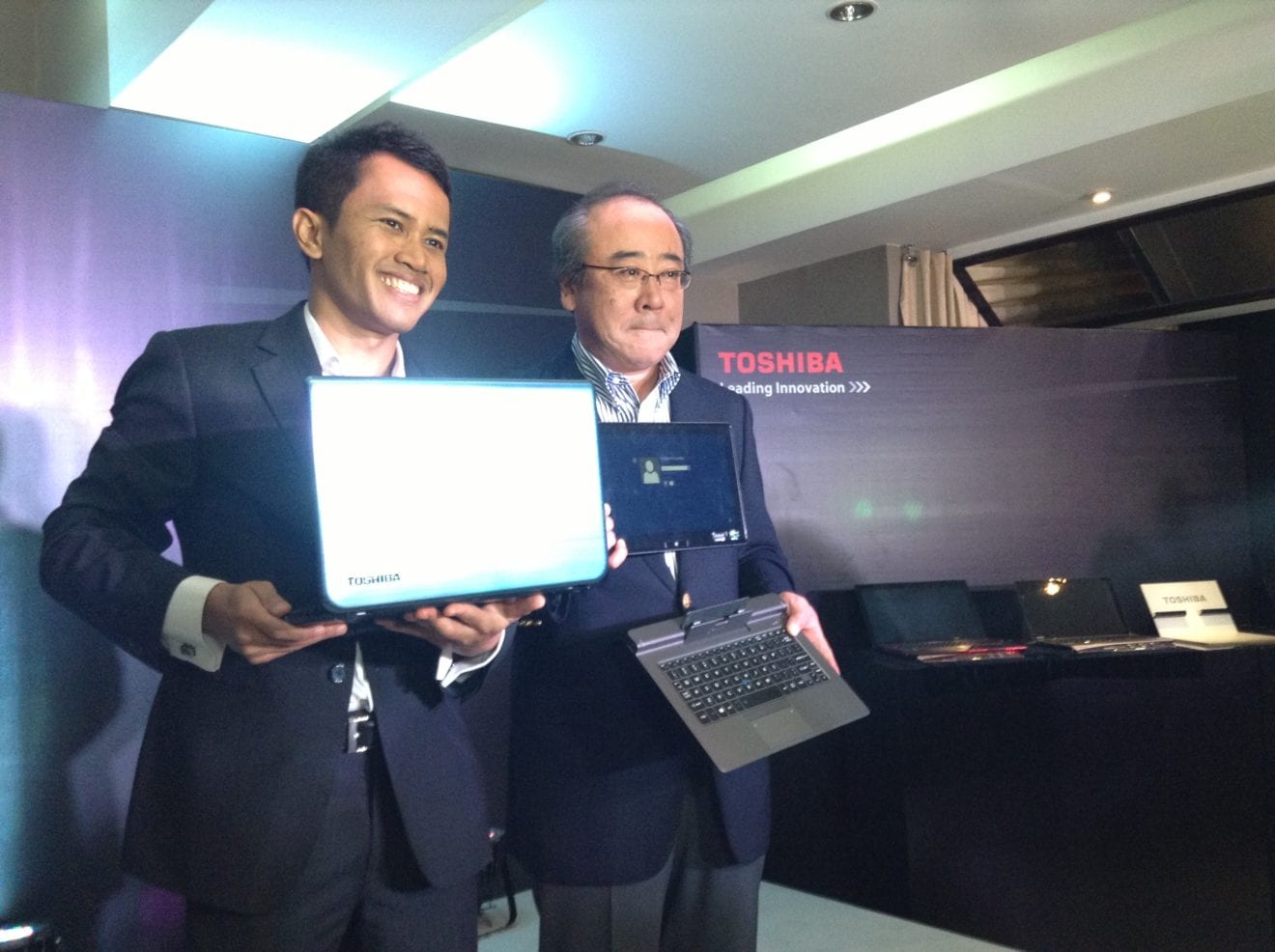
    Chinese evening newspaper Shin Min Daily News reported on Thursday that Toshiba Singapore had recently sent a notice to its retailers, announcing that some products will be withdrawn from the local market.

    Reporters from the Chinese daily checked with several retailers and they understand that the retailers received the notice via e-mails and letters a few weeks ago.

    Toshiba said that due to a highly competitive environment in Singapore, they had to make an “extremely difficult” decision to withdraw from the local television and appliance market.

    In a statement, Toshiba said after-sales customer service will continue until further notice.

    Small retailers have expressed concerns over Toshiba’s exit.

    A retail shopowner said about half of her electrical products are from Toshiba and several of her regular customers are fans of the Japanese brand.

    She also said small retailers are not doing well now and Toshiba’s withdrawal will add to the problem.

    One industry insider said that regardless of technical specifications, South Korean products are slightly better in comparison.

    Shin Min reported that a Toshiba spokesman was unable to provide further information about their withdrawal.