Tag: it

  • Juniper Networks unveils 5G-ready routing platform

    Juniper Networks unveils 5G-ready routing platform

    Juniper Networks has announced plans to launch a 5G and IoT ready routing platform to help operators, cloud providers and enterprise customers manage the growing complexity of next-generation service delivery.

    The MX Series 5G Universal Routing Platform will support extensive feature programmability, as well as hardware accelerated 5G control and user plane separation (CUPS) functionality.

    The 3GPP CUPS standard is designed to allow customers to separate the evolved packet core user plane and control plane to allow operators to scale each independently as needed.

    Juniper’s new Penta Silicon chipset will power the new platform. The company said the new chipset supports both MACsec and an IPsec cryptography engine, and can originate and terminate thousands of IPSec sessions without sacrificing performance.

    According to Juniper Networks chief product officer Manoj Leelanivas, research from the company found that operators consider the cost and complexity of orchestrating a distributed network to be among the top challenges associated with being able to offer 5G and other next-generation network services.

    “Cloud is eating the world, 5G is ramping up, IoT is presenting a host of new challenges and security teams simply can’t keep up with the sheer volume of cyber attacks on today’s network,” Leelanivas said.

    “One thing service providers should not have to worry about among all this is the unknown of what lies ahead. That’s why we’ve continued innovating our flagship MX platform to deliver more speed, flexibility, programmability and security capabilities, giving our customers the peace of mind they need as a variety of demands continue to put pressure on the network.”

    The first router products powered by the new platform are expected to launch during the second half of the year.

  • Vietnam poised to build on IT outsourcing gains

    Vietnam poised to build on IT outsourcing gains

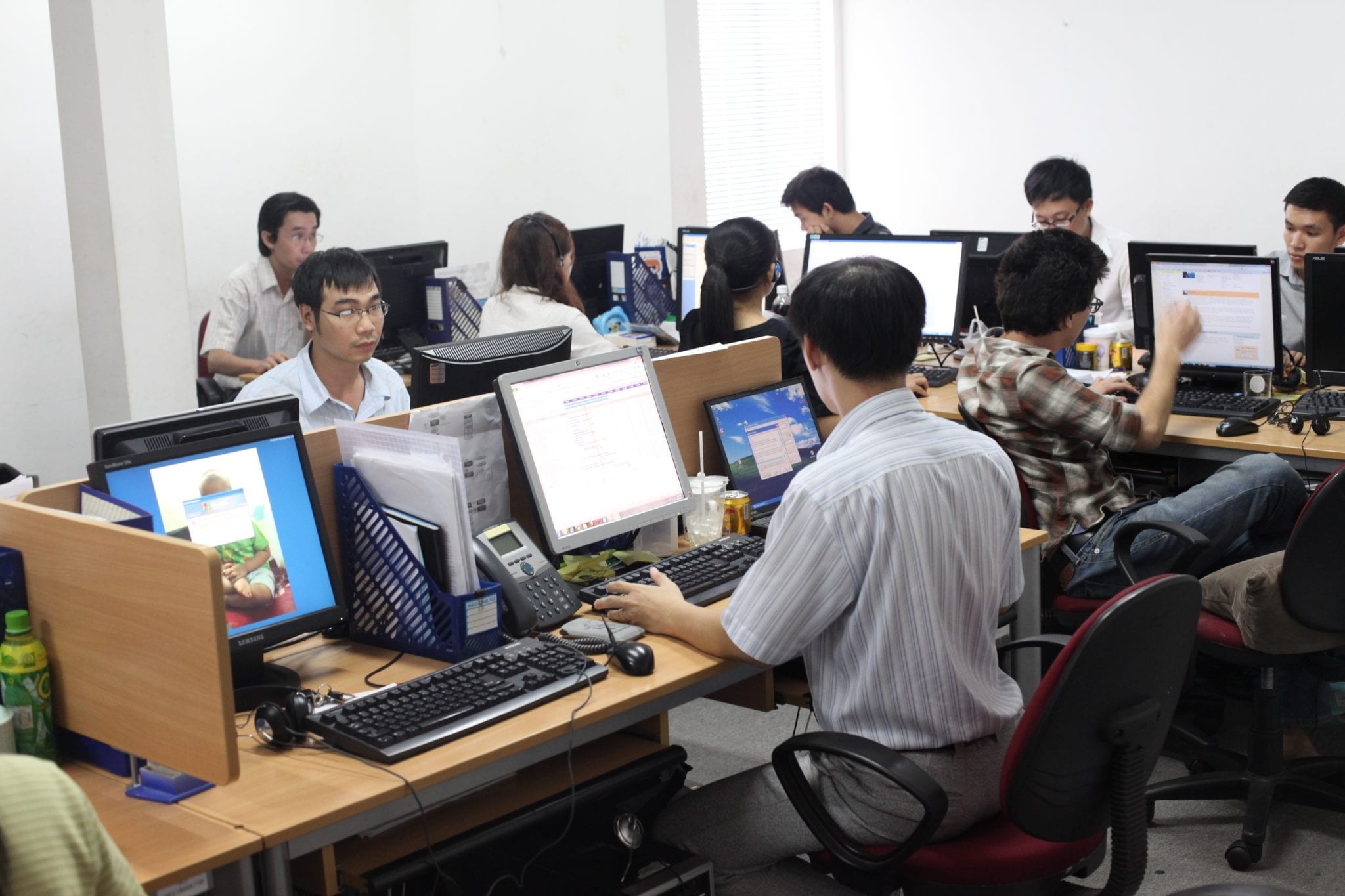
    Apart from skills and adaptability, low staff turnover in the sector makes the country more attractive to tech giants.

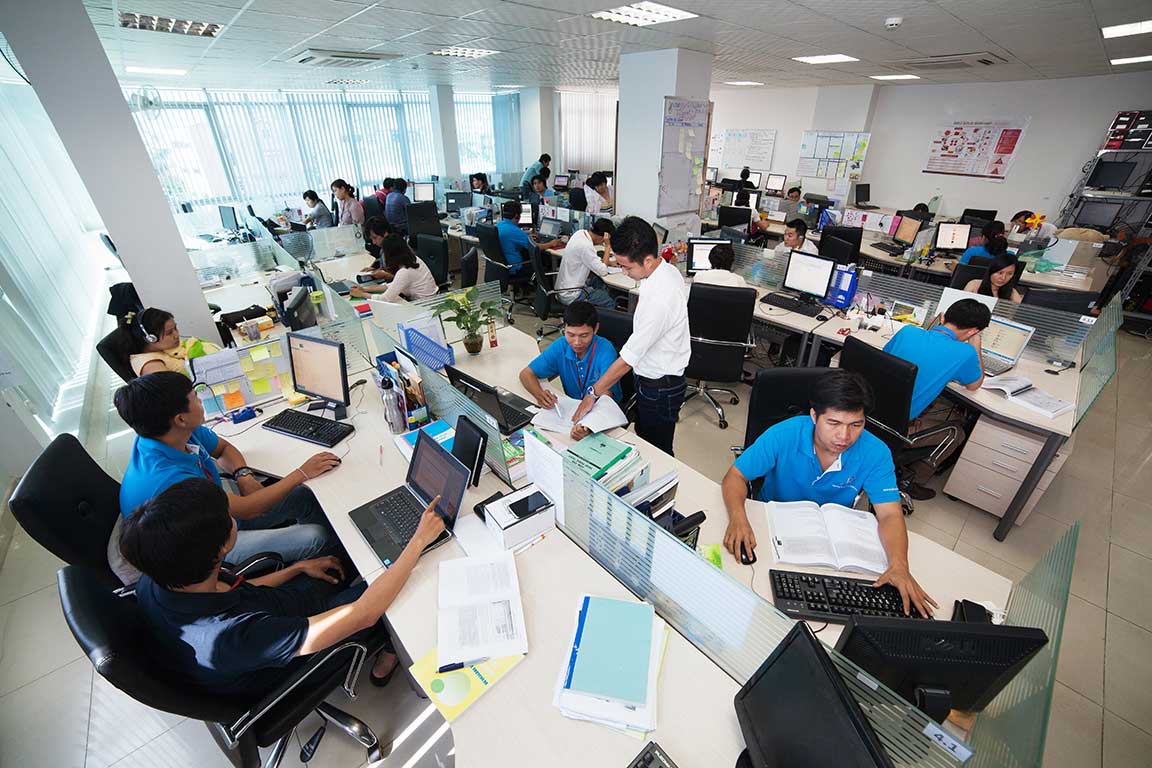
    Vietnam continues to be a favored outsourcing destination for multinational companies even as the current leader, India, experiences some hiccups.

    A recent article in the Forbes magazine said in its title that Vietnam was a “small but mighty powerhouse” for IT outsourcing.

    It said giant technology companies like Intel, IBM, Samsung Display, Nokia, and Microsoft continue to invest in Vietnam’s growing tech workforce.

    The author of the article, Anna Frazzetto, Chief Digital Officer and Senior Vice President at Harvey Nash, which has a decade plus of outsourcing experience in Vietnam, said, “technology specialists in Vietnam are comfortable with quickly becoming a natural extension of global clients, ready to challenge norms and bring innovative ideas to the table.”

    Another major factor that makes Vietnam attractive is the tendency of people to stay on in the country, unlike IT professionals in India, Malaysia and other countries who are ready to move to other countries for jobs that pay well.

    While the relative lack of fluency in English is a growth constraining factor, Vietnam’s investment in education, and the extra attention it pays to nurturing knowledge and talent in science and math is a positive aspect that will help Vietnam build on its outsourcing potential, she said.

    These positive factors have meant that business process outsourcing (BPO) is growing fast in Vietnam. In 2017, consulting firm PricewaterhouseCoopers (PwC)’s “Spotlight on Vietnam” report also indicated that BPO was among the country’s most five promising sectors to invest in.

    Also last year, the Vietnam Software and IT Services Association (VINASA) said the country’s BPO industry has grown 20 to 35 percent annually over a decade.

    A Global Services Location Index report in 2017 by A.T Kearney consulting firm said Vietnam has jumped five places to sixth for countries with great financial attractiveness, availability of highly skilled people and good business environment. The five countries above Vietnam were India, China, Malaysia, Indonesia and Brazil.

    Dinh Thi Quynh Van, general director of PwC Vietnam, said in a Voice of Vietnam report earlier this year that Vietnam’s BPO was following a similar growth trajectory to that of India and the Philippines.

    But she said Vietnam’s BPO workforce should stay innovative to meet ever-increasing demand in the market.

  • KBank teaming with Com7 to expand the BaNanas IT stores

    KBank teaming with Com7 to expand the BaNanas IT stores

    Com7 has teamed with Kasikornbank (KBank) to expand the BaNana store chain, enabling younger consumers to access IT products and services more conveniently.

    Their first joint BaNana pilot branch was in Yasothon, and the two companies plan to have 20 more mini-branches by year’s end offering more diverse retail business and comprehensive financial services in Thailand, says Com7 CEO Sura Khanittaweekul.

    The listed company aims to achieve 600 branches under its management by the end of the year, up from 434 last year. Com7 has set an income-growth target of not less than 15 per cent for this year. Last year’s income came in at THB22.584 billion and net profit at THB608.8 million, both records for the business.

  • Japan’s KDDI sets sights on extended reality

    Japan’s KDDI sets sights on extended reality

    KDDI is branching out into the emerging world of extended reality (XR) – which includes virtual reality, augmented reality and mixed reality – by forging partnership with US-based Osterhout Design Group (ODG) to jointly plan and develop XR-based smartglasses for the Japanese market.

    The Japanese operator is also teaming with various partners to conduct business trials and create XR services as the company moves toward developing new business operations using virtual characters and other XR technologies to create new business models for the coming era of widespread 5G use.

    The partnership with ODG, announced last week, will see KDDI help with the development of domestic Japanese products using the R-9 smartglasses developed by ODG. The operator will help optimize the potential of smartglasses for the Japanese domestic market through practical testing.

    According to KDDI, the R-9 smartglasses to be used in future verification tests are equipped with the Qualcomm’s Snapdragon 835 chipset and compatible with an AR/VR app that enables stand-alone position tracking for users.

    The R-9 smartglasses will feature a wide 50° viewing angle, and will be compatible with wide-screen displays using 22:9 and 16:9 aspect ratios. The R-9 smartglasses will also include dual stereo cameras; front camera with 13-megapixel resolution; and simultaneous Localization and Mapping (SLAM) compatibility.

    KDDI and ODG also plan to work with Qualcomm toward equipping future models with a modem function to bring cellular communications capability to smartglasses in addition to existing Wi-Fi functionality.

    KDDI and various partner companies, such as Japan Airlines, plan to begin practical testing of smartglasses in Japan in June.

    Collaborating with partners to create virtual characters and XR services

    In a separate announcement, KDDI said it is planning to start conducting business trials on the XR technologies with various partner companies beginning this month.

    Through business trials with various partner firms and applications of this technology, KDDI aims to create worlds in which people and virtual characters can communicate interactively.

    So far KDDI has worked with Crypton Future Media for the development of the Miku☆Sampo AR application. Moving forward, the operator plans to expand the AR presentation developed through Miku☆Sampo to enable users to communicate more naturally with the character.

    This will be accomplished through virtual character development capabilities unique to AI, which enable the character to recognize and understand objects and sounds, etc., in the surrounding environment, KDDI said.

    In addition, this project will include a real-time image recognition engine provided by Couger. Couger will also cooperate with virtual character AI-related technology.

    KDDI’s announcements signal the increased interests from telecoms operators in VR/AR. According to GlobalData, telecoms operators – who have a key role in enabling VR/AR services as providers of broadband and mobile network services – are exploring  revenue opportunities in VR/AR that are beyond 5G data and connectivity.

  • Vocus Group scraps plans to sell NZ business

    Vocus Group scraps plans to sell NZ business

    Australian enterprise-focused fixed line operator Vocus Group has abandoned plans to sell its New Zealand business, ending negotiations with all interested parties.

    In a statement, Vocus Group said none of the multiple offers it had received for the New Zealand business appropriately reflected the strategic value of the operation.

    The offers also did not provide the required certainty of funding and execution, according to Vocus Group chairman Bob Mansfield.

    As a result, Vocus Group now plans to “continue to invest in and grow Vocus NZ to enable that business to realise its strategic potential for shareholders.”

    Vocus Group first revealed it was seeking a buyer for its New Zealand operations in October 2017, and had originally planned to complete the sale by June this year.

    The company meanwhile announced that it is in the process of finalizing the appointment of several banks to arrange a full refinancing of its existing debt facilities, which will include an upsizing of the facilities. Vocus expects to complete its debt refinancing by the end of June.

    “The board would like to thank our bank group for their strong support shown to date,” Mansfield said.

    “We are comfortable that the increased financial capacity and covenants that will be sought through the refinancing will provide sufficient financial flexibility for the company to complete its strategic and transformation initiatives over the next few years.”

  • Operators shift IT spend to IT services and software

    Operators shift IT spend to IT services and software

    The 4Q17 Telecom Infrastructure Services Benchmark report by Technology Business Research (TBR) revealed that the spending shift by operators towards offerings from IT services‐ and software‐centric companies may spell bad news for equipment vendors. The spend coincides with an industry that itself is following the global digital transformation movement.

    TBR Telecom senior analyst Chris Antlitz noted that operator spend on digital‐related initiatives will accelerate over the next few years. “IT services companies will continue to garner a disproportionate share of digital‐related, software‐centric business from operators as their competencies and capabilities align with what operators need to pursue digital transformation,” he added.

    Lower RAN (radio access network) volumes globally significantly impacted most RAN vendors’ telecom infrastructure services (TIS) revenue throughout 2017. TBR’s research suggests the global RAN market peaked in 2015 with product-attached services revenue now tapering off as payments are fully recognized. RAN vendors are responding to this headwind by diversifying into other areas, such as the IT domain, and are concurrently restructuring their network deployment businesses to profitably align with the new demand level.

    The global RAN market is likely to bottom out in 2019 and then return to growth in 2020 as 5G deployments ramp up. Until then, operators are likely to continue to shift spend from RAN and RAN‐related services to other business areas.

    A Huawei spokesperson noted this trend towards IT, software and services, which forced the company to also make a course correction. “We have been actively investing in and developing these capabilities for some time. In addition, we have built an active global ecosystem of industry partners to support this industry shift, and count many of the world’s leading IT and software providers among our strategic partners today.”

    It is a similar comment from long time equipment vendor Nokia. Danial Mausoof, head of Strategic Marketing for Asia Pacific and Japan, commented that Nokia has taken steps to help the industry address this.

    “As an example, we are working on a common software foundation (CSF) which allows for a scalable library of common components and this gives us greater speed and flexibility by using pre-integrated blueprints to address the customer’s needs. In addition, we have identified key enterprise verticals such as energy and public sector transportation where we are able to leverage our extensive solution offerings to help industry players accelerate their digital transformation journeys,” he added.

    Not just operators

    “We do see the trend and it is not only happening to operators but many large enterprises as well. Apart from the cloud security and cloud infrastructure are more mature so that buying services on the cloud than the actual equipment on-site is more viable, said Linda Hui, managing director of Ruckus Hong Kong and Taiwan.

    “Secondly, many enterprises find that the technology has moved very fast, hence, before they can amortize the equipment, they need to upgrade their infrastructure to cope with the existing traffic, hence, it will be easier for them to just subscribe the service.”

  • IT leaders aim to “consumerize” cloud access

    IT leaders aim to “consumerize” cloud access

    The proliferation of cloud applications and use of a disparate range of devices within businesses has led nearly two-thirds (64%) of IT leaders and their security teams to consider implementing consumer-grade access to cloud services for employees, finds new research from Gemalto.

    Surveying more than 1,000 IT decision makers globally, Gemalto’s 2018 Identity and Access Management Index revealed that the majority (54%) believe that the authentication methods they implement in their businesses are not as good compared to those found on popular sites including Amazon and Facebook.

    With a growing number of cloud apps in use, more employees working remotely and pressure mounting to make authentication stronger while ensuring ease of use, IT decision makers are keen to ‘consumerize’ the login process. In fact, 70% of IT professionals believe that authentication methods applied in the consumer world can be applied to secure access to enterprise resources.

    Despite this, 92% of IT leaders express concern about employees reusing personal credentials for work. This comes as 61% admit that they are still not implementing two-factor authentication to allow access to their network, potentially leaving themselves vulnerable to cyber criminals.

    At the same time, there seems to be increasing recognition that new approaches to cloud access can contribute to alleviating these issues. 62% of respondents believe that cloud access management tools can help simplify the login process for users, while 72% stated that a strong consideration for implementing a cloud access solution is the desire to reduce the threat of large scale breaches.

    The fact that 61% of respondents also stated that inefficient cloud identity management would be a key factor in adopting a cloud access management solution shows that scalability and management overheads are also of high concern to IT professionals, Gemalto said.

    “These findings clearly show that IT managers are struggling to balance the need for a simple and easy login experience with security,” said Francois Lasnier, SVP Identity and Access Management at Gemalto.

    “While there is a need to make things easier for employees, there is a fine line to be walked. IT and business line managers would do best to figure out the risks and sensitivities associated with the various applications used in their organizations and then use access management policies to manage risk and apply the appropriate authentication method. In this way, they can ensure a convenient login experience for their users, while still maintaining access security.”

    With the growth in remote working, the cloud and secure access to applications have become important for organizations. As a result, almost all (94%) respondents believe that cloud access management is integral to adopting cloud applications.

    In fact, nine in 10 also feel that ineffective cloud access management can lead to issues for their company, such as security (52%), IT staff’s time being used less efficiently (39%) and increased operational overheads and IT costs (38%).

    Despite this focus on protecting cloud applications, just three of the 27 applications used on average by organizations are protected with two-factor authentication.

  • Indonesian banks urged to update their IT systems

    Indonesian banks urged to update their IT systems

    Indonesian banks have been urged to update their system of information technology so that they could protect themselves from possible cyber attacks that have become more and more massive.

    Bank Indonesia Governor Agus Martowardojo said here on Monday hackers or virus attackers continued to innovate and find loopholes in the IT system and so banking industry and other financial sectors must update their security standard.

    His statement came in the midst of increasing alertness following global virus attack by so-called “”Petya” after global system of IT routed by “Ransomware Wannacry”.

    “All who use technology applications must use the latest version. The latest version usually has been given features to prevent possible cyber attacks,” Martowardojo said.

    “We must not be offguard. We must be prepared because there will certsinly be other innovations that could disrupt the system,” he said.

    The general chairman of the State-owned Banks Association, Maryono, said that until Monday there had been no report coming from four state-owned banks – three of them controlling banking markets -being attacked by Peyya virus.

    “Usually if one bank is hit and so will the others but so far we have received no teport about it,” he said.

    The chief of PT. Bank Central Asia Tbk. which is the countrys largest private bank said Petya did not disrupt the banking system. Howevet cyber attack has been rife to give a warning for banks to improve their IT security system.

    “We will keep safeguarding it. Thank God there has been no problem so far,” BCA president director Jahja Setiaatmadja said.

    The ministry of informatics and communication has earlier called on the people and heads of institutions to take anticipatory measures against global Ransonware Petya cyber attack by preparing backup and updating their IT security system.

    Indonesias financial industry including capital market is worth more than Rp16,000 trillion and so security system in the industry is a very important pillar to maintain trust and sustainability of the industry which also serves as a source of development funding.

    Petya was first known after infecting the server in Russias biggest oil company and disrupted the operation of a bank in Ukraine and paralyzed computers in multinational shipping and advertising companies.

    Petya-infected computer will show a message telling that the system has been blocked and its owner must pay a tansom of US$300 in the form of Bitcoin.

  • Wanda Partners With Microsoft Accelerator To Empower Digital Transformation

    Wanda Partners With Microsoft Accelerator To Empower Digital Transformation

    Wanda Group, one of the Fortune Global 500 List companies, is tapping into the resources of Microsoft Accelerator to enable the next wave of digital transformation of the retail industry and commercial properties in China.

    For the past four and a half years, Microsoft Beijing Accelerator has accelerated 140 startups in China with alumni in the areas of hybrid cloud, IoT, big data, artificial intelligence, etc. These startups have strong strengths in technology innovation. Combining Wanda Group’s customer resources and Microsoft Accelerator’s alumni, startups will be empowered to do more for digital transformation in China.

    “As an entrepreneur myself, I’ve seen many technology startups face the same challenges. They focus on technology innovation and product development without much customer insight and user data,” said Hanna Lavy, head of Microsoft Global Accelerator Program. “Partners like Wanda Group can provide in-depth business insights and rich customer data to startups. Microsoft Accelerator looks forward to working with Wanda Group to enable startups to transform retail companies and commercial properties into digital businesses.”

    “Wanda Group and Microsoft share the same views on digital technology and business. Cloud computing, big data, IoT and artificial intelligence are the main drivers of the digital transformation of business,” said Jennifer Feng, Deputy GM of IT Center at Wanda Group.” Wanda Group has rich insights and user data as the leader of commercial property and retail business in China and we will partner with Microsoft to bring startups closer to end customers. Microsoft Accelerator will also provide qualified startups to be enlisted as vendors for Wanda Group. ”

    As the world’s largest commercial property enterprise, Wanda Group has opened 189 Wanda Plaza projects in China and plans to open 50 more in 2017. Three years ago, Wanda Group began its fourth business model transformation from commercial property to modern services with the result of forming four sub business groups including Commercial Properties, Cultural Industry Group, Internet Technology Group and Financial Group. Digital transformation is at the core of Wanda Group.

    Wanda Group IT embarked on enabling digital transformation of Wanda Group three years ago. For the past three years, Wanda Group IT has developed Wanda Building Information Modeling(BIM) System and Wanda Intelligent Building Management System in this endeavor with the adoption of Microsoft Azure and HDInsight big data analysis. Wanda BIM system seamlessly integrates the end-to-end information management process from project bidding to delivery for commercial property developers, designers, builders and supervisors.

  • Vietnam’s high demand for IT professionals shoots up salaries

    Vietnam’s high demand for IT professionals shoots up salaries

    The country could become one of the next outsourcing hubs for software development, industry players said.

    Vietnam’s growing information technology (IT) is seen driving recruitment demand and boost salaries for tech jobs, a recent survey found.

    As many as 81 percent of IT companies said they planned an annual payroll rise of between 6 percent and 20 percent this year, professional recruitment firm VietnamWorks said in the survey conducted late last year with thousands of IT professionals, specialists and companies.

    The industry’s job demand is higher than ever, and the trend will continue over the next years, the survey said.

    The number of tech jobs has doubled over the last three years, VietnamWorks data showed, adding that Vietnam currently has around 250,000 engineers, but will need more than 400,000 by the end of 2018.

    Experienced software developers and managers continue to be in high demand, said the survey.

    Salaries have increased significantly in recent years and many companies have even offered generous bonuses to attract and retain employees.

    Up to 80 percent of the jobs that requires IT professionals with at least two years experience would pay a maximum $1,160 per month, said the survey.

    Vietnam first began offering software development services 15 years ago as global companies started to look outside India for a low-cost technology outsourcing opportunities.

    NeoIT estimated Vietnam’s IT labor costs are 40 percent less expensive than in China and India. A.T. Kearney’s Global Services Location Index and KPMG Advisory forecast Vietnam will be one of the next outsourcing hubs for software development.

    Local technology companies, however, are increasingly diversifying into other services, said the survey, adding this will drive recruitment for specialists in other fields such as business intelligence and information security.

    Currently, software engineers with at least two years of experience are still in highest demand, according to VietnamWorks.

    In terms of high tech development, Ho Chi Minh City is to Hanoi what Silicon Valley is to Seattle. But Hanoi tech scene is growing amid more intense competition in the southern hub.

    Ho Chi Minh City still remains the country’s IT hub with 53 percent of the country’s recruitment demand. Hanoi accounted for 43 percent and the central city of Da Nang took up 4 percent, according to the survey.

    Experts forecast a growing demand for specialist in cloud computing, big data, business intelligence and information security.

    The IT industry’s significant trends in 2017 will drive recruitments for professionals in big data, VietnamPlus cited Vinh Nguyen, an executive from PYCO Group, as saying.

    The survey revealed that 44 percent of the respondents said they would consider changing jobs with a better salary and benefits on offer.

  • Vietnam set for IT hiring boom in 2017

    Vietnam set for IT hiring boom in 2017

    Demand for IT workers has doubled over the past five years, according to the latest VietnamWorks report on salaries, benefits and skills in the sector.

    Another survey conducted by Hanoi Department of Labor, Invalids and Social Affairs in 2016 shows that, on average, each year Vietnam lacks approximately 78,000 IT workers.

    The VietnamWorks report said demand for skilled technical workers would leap from 250,000 in 2016 to 400,000 by 2018 giving employers just a year to nearly double their workforce.

    Eighty percent of the new positions would require at least two years experience, for which recruiters are willing to pay up to $1,160 per month.

    Last year, only one in 10 respondents reported satisfaction with their remuneration, but the vast majority of employers say they’re willing to offer raises to talented employees.

    Big data, cloud computing and cyber security will pave the way for talented Vietnamese developers. By September of 2016, around 330 start-ups had registered to offer web software development, according to data extracted from Geektime, one of the biggest tech blogs focusing on global innovation.

    The number of tech start-ups is expected to mushroom in the next few years, especially as Ho Chi Minh City is chasing its Silicon Valley dream.

    Vietnam has long been known as one of the world’s top software outsourcing hubs for giant tech companies like IBM, Microsoft and Intel. The country now aspires to become one of the top 10 global suppliers of software outsourcing and digital content by the end of the decade, Prime Minister Nguyen Xuan Phuc said during a recent seminar.

    The survey queried 2,400 developers and 73 recruiters regarding over 50,000 IT-related job posts on VietnamWorks within five years.

  • South Korean home appliance and IT giant opens new store in Genting

    South Korean home appliance and IT giant opens new store in Genting

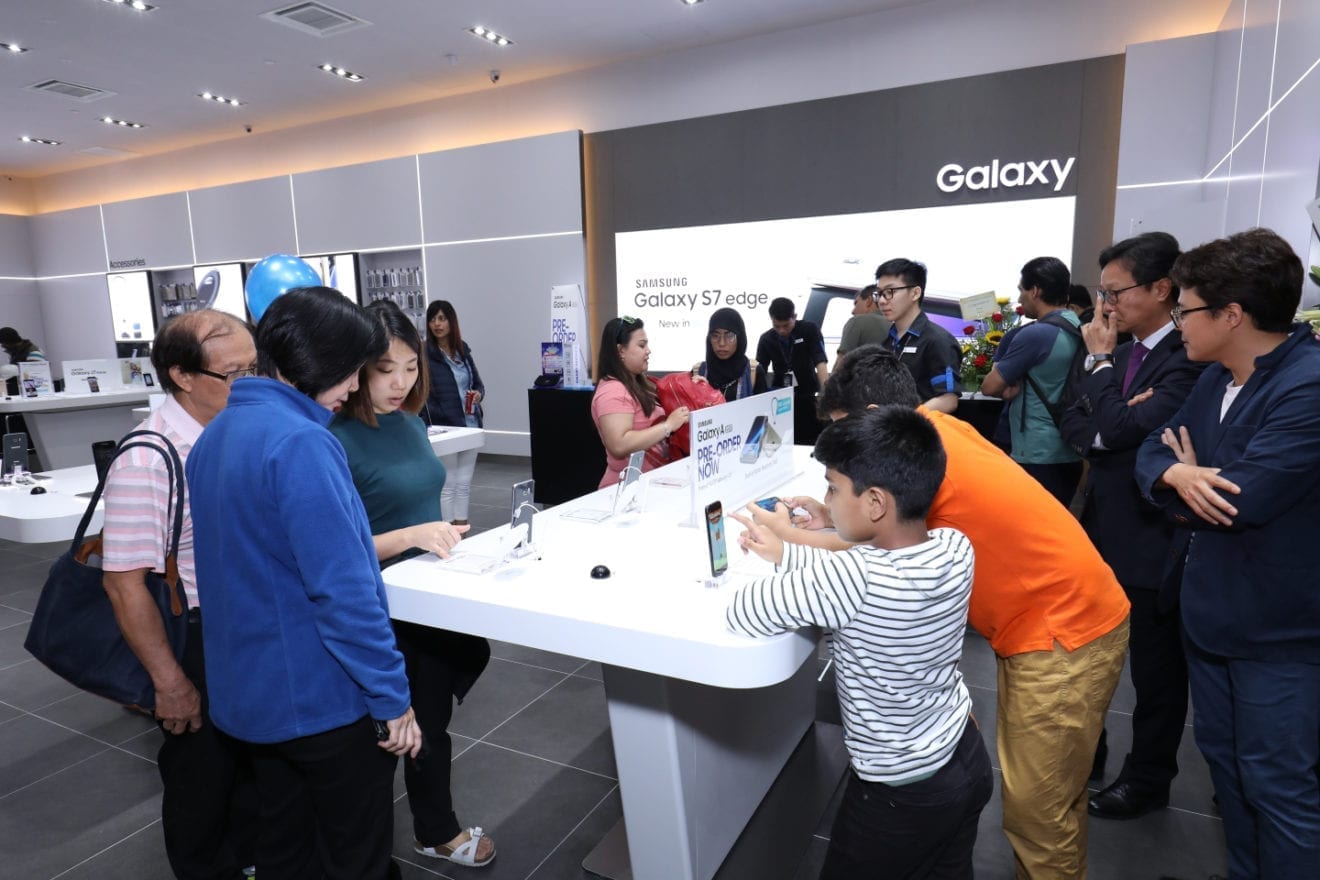
    Samsung Malaysia Electronics has launched its first Samsung Experience Store (SES) in Genting Highlands at the Sky Avenue mall, offering a wide range of the Samsung Galaxy mobile phones as well as a variety of wearables.

    The SES outlet is a one-stop shop that provides customer satisfaction with the best products and services.

    “The opening of the SES is another step forward in our expansion plans to different regions of Malaysia,” said Samsung Malaysia Electronics IT & mobile business unit vice-president Lee Jui Siang.

    “Our aim is to continuously expand our channel coverage, providing consumers a revolutionary digital convergence experience.

    Visitors to Genting Highlands can now experience the full Galaxy ecosystem at the newly opened Samsung Experience Store in the prestigious Sky Avenue mall.

    “With this expansion to Genting Highlands, we want to bring our innovations closer to locals as well as those visiting the country,” he said.

    In celebration of the store’s opening, Samsung offered customers a chance to take home a personalised caricature mug specially drawn using a Galaxy Note5 with purchase of any Samsung product on Jan 14.

    The company also gave away a special edition umbrella for the purchase of any Samsung product.

    Located at Lot T2B-57, Level T2B, Sky Avenue, Genting Highlands Resorts, the SES is now open every day from 10am to 10pm.

    Samsung Malaysia Electronics president Lee Sang Hoon (right) presenting a specially designed caricature mug, drawn using the Galaxy Note5, to Netcom Mobility Sdn Bhd director Elvis Chew as a token of appreciation.

    Samsung Malaysia Electronics president Lee Sang Hoon (right) presenting a specially designed caricature mug, drawn using the Galaxy Note5, to Netcom Mobility Sdn Bhd director Elvis Chew as a token of appreciation.
  • Banana acquires 44 Bangkok outlets

    Banana acquires 44 Bangkok outlets

    A Bangkok IT store in a shopping mall in Bangkok. The stores will complete their transfer to Banana in the first quarter of 2017.

    Com7, the Bangkok-based IT chain store under the Banana brand, has taken over 44 BKK shops from Bangkok Telecom 999 for 184 million baht in a drive to accelerate its expansion into the mid- and entry-level segments.

    “This is our first acquisition for the purpose of pursuing growth,” said Sura Khanittaweekul, chief executive of Com7.

    The move is a reflection of how medium-sized IT retail chain stores in Thailand are trying to survive the hyper-competitive handset sales market.

    Small retail chains are being forced to close their shops because they cannot compete directly with cash-rich large stores.

    The process of transferring BKK’s shops will begin on Dec 1 and is expected to be completed in the first quarter of 2017, Mr Sura said.

    Com7 will operate the acquired 44 stores under the BKK brand, most of which are located in high-density areas. At least 10 BKK shops (out of the 44 acquired stores) compete directly with Com7.

    BKK Telecom 999 sold 44 branches out of its 80 shops.

    Mr Sura said the acquisition will enable Com7’s expansion strategy to grow faster, as the company need not build its own stores, which takes time and planning.

    The average size of a BKK shop is 30-70 square metres, while the average size of a Banana shop is 100 sq m.

    He said the acquisition of the BKK shops will enable Com7 to penetrated untapped mid- and entry-level markets, with handsets priced below 10,000 baht each.

    “Returns on the acquisition can be expected over the next 3-4 years,” Mr Sura said.

    Most Com7 branches are situated in prime locations in department stores serving premium customers with high purchasing power.

    Thailand’s smartphone market is quite mature. There is still an extensive demand in the mid-level handset segment in the replacement market.

    Com7 aims to expand its retail shops to 500 branches by 2017, up from 365.

    In August, Com7 launched bananastore.com to extend its sale channels online to capitalise on new-generation customers who lead the digital lifestyle trend.

    “We aim to have 1 billion baht in total sales revenue in 2017,” Mr Sura said.

    Com7 expects revenue to grow 10% to 17 billion baht this year. Of the total, 35% will come from sales of mobile phones, 30% from computers, 10% from tablets and the rest from accessories.

  • Qlik and Esri Singapore join forces to redefine visual analytics

    Qlik and Esri Singapore join forces to redefine visual analytics

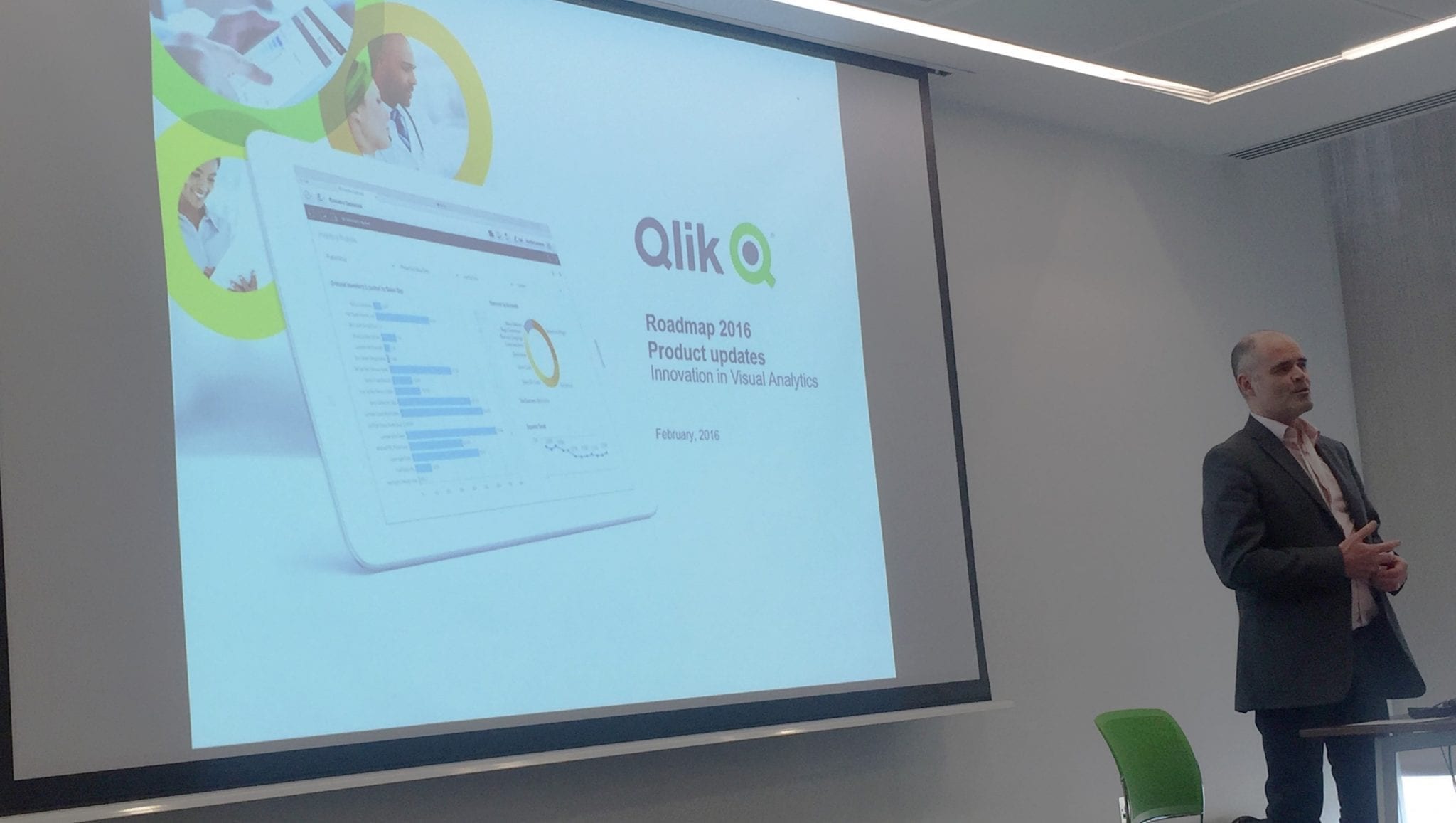
    Qlik, a leader in visual analytics, today announced its technology partnership with Esri Singapore, the country’s leading Geographic Information System (GIS) technology provider.

    The collaboration will see Esri Singapore and Qlik working together to educate industries on the benefits of synergising geographic and spatial analytics.

    Smart mapping: making intelligent decisions with geographic information

    Esri’s ArcGIS Online is a collaborative, cloud-based technology platform that allows users to easily create, share and access content rich maps, applications and data. The technology collects location information contained within an organisation’s data and translates static data into useful, intelligent maps. Different locations have unique characteristics, and organisations need to identify, qualify and understand the connections between people, places and events. When mapping analytics is combined with a powerful visual analytics platform, organisations can add a new dimension to the practice of analysing information by translating complex datasets into the universal language of smart maps.

    Additionally, by integrating location information with data in real-time, businesses can unearth relationships, patterns and trends that would otherwise remain hidden. Esri’s ArcGIS Online maps are compatible with both QlikView and Qlik Sense. The Qlik Sense extension is available on Qlik Branch – a collaborative workspace and open exchange that provides customers, developers and partners simplified access to the open and powerful APIs of Qlik solutions. “More than 80 per cent of our business data is location related. From understanding your customer information and their behaviours to managing chronic illness, pandemic patterns, and even business impact due to accessibility of transport networks – location essentially links different sets of business information together to provide executives with better informed decision making.

    Through our partnership with Qlik, we aim to help organisations understand the value of letting users see their data in new and provoking ways, allowing them to develop actionable plans to address real-world challenges, said Thomas Pramotedham, Chief Executive Officer, Esri Singapore. “From retail sales performance to urban planning, being able to seamlessly merge intelligent mapping with visual analytics is critical to smart, data-driven decision-making. Qlik is proud to partner with Esri Singapore to promote the benefits of combining mapping technology and visual analytics for organisations to drive better decision making. We look forward to pursuing more innovative projects together in the future,” said CK Tan, Product Marketing, Qlik Asia Pacific.

  • IT industry still ripe for growth on Indonesians’ love for gadgets

    IT industry still ripe for growth on Indonesians’ love for gadgets

    The government is intensifying efforts to support the country’s longstagnant pharmaceutical industry after opening up the sector to foreign investment in its latest revision to the negative investment list (DNI).

    The efforts were evident at a dialog on “Expediting the Development of Indonesia’s Pharmaceutical Industry” organized by the Investment Coordinating Board (BKPM) on Thursday that gathered together players in the pharmaceutical industry and its related sectors.

    “Most of the existing companies make medicines, whereas the raw material businesses is small. Roughly 90 percent of raw material for the pharmaceutical industry is imported from India or China. We have to change this,” BKPM investment monitoring and implementation deputy chairman Azhar Lubis said during the event.

    In a bid to encourage the raw material industry, the government has revised the DNI, which lists the sectors restricted to foreign investment. Following the revision, the government now allows 100 percent foreign ownership in pharmaceutical companies, from 85 percent previously.

    Following the issuance of the regulation, no fresh interests on raw material sector have been expressed by foreign investors, Azhar said. However, there have been 18 new licenses for investments in the pharmaceutical industry issued by BKPM from January to September worth Rp 2.1 trillion.

    Apart from campaigning for investment in pharmaceutical factories, the BKPM will also push research and development (R&D) in the sector to encourage new innovations in new medicines that are locally made, Azhar added, citing R&D centers in Singapore and Europe.

    However, industry players said the problem with investment in the pharmaceutical sector lay in the fact that there was a relatively small number of hospitals and doctors for whom the medicines would be distributed.

    “Boosting the industry does not only mean pushing for medicine production and factories. What’s also needed is hospitals, doctors and clinics as the infrastructure to feed the pharmaceutical industry,” said International Pharmaceutical Manufacturers Group (IPMG) executive director Parulian Simanjuntak.

    Investments in the pharmaceutical sector have stagnated in recent years, reaching just Rp 8.9 trillion from January 2011 to September 2016, BKPM data shows. Also, there are only 214 pharmaceutical companies in Indonesia, most of which make medicines. Just a few of them manufacture raw material for pharmaceuticals.

    “If production [of raw material] were to start in Indonesia, it would take around three years to really get going and it would definitely cost more than importing from other countries,” said Arustiyono, the director of supervision and therapeutic product distribution at the Food and Drug Monitoring Agency (BPOM).

    “The research and development phase for the chemical reactions would itself take a year,” he added.

    The pharmaceutical industry is 70 percent dominated by local players, including privately-owned Kalbe Farma and state-owned Kimia Farma, among others.

    “The stimulus package for raw material factory investments will bring about a positive impact for the pharmaceutical industry because the source for materials will shift to local sources. This will inoculate the industry from the rupiah’s fluctuations,” Kalbe Farma corporate secretary Vidjongtius said. “In this way, medicine production costs can be more controlled. This, however, is a medium to long-term project.”