Retail News CRM

Tag: it

  • Dell quits retail in Singapore, Malaysia moving online only

    Dell quits retail in Singapore, Malaysia moving online only

    It appears retail stores in Malaysia and Singapore will not be carrying Dell products in the near future. According to an official statement from the company, Dell will “transition out of the retail market in Singapore and Malaysia,” though that doesn’t mean you cannot buy a Dell laptop anymore in these two markets.

    This news was first shared by Lowyat.NET, which has received an internal memo sent to Dell retailer partners in Malaysia and Singapore. According to the memo, Dell is exiting the retail market in these two countries after the company reviewed its presence in a number of regions. As such, effective immediately, Dell will no longer accept new orders from retail stores.

    Of course, any form of an existing contractual agreement between Dell and its retail partners – as well as customers – will still be honored despite this move.

    Now, it’s worth noting that this does not mean retail stores will immediately cease the sales of Dell products. You can still head to your local retail store and pick up a Dell laptop, but if you want the latest product offerings from the company, you can only get them from Dell’s Malaysian online store.

    Speaking of which, that will be the only channel to get new Dell products – for those in Malaysia and Singapore – moving forward. These include the latest XPS 13 and XPS 13 2-in-1 with Intel’s 11th generation Tiger Lake processors. Basically, retail stores will only be carrying older Dell products from now on.

    In the grand scheme of things, this does not affect the availability of Dell products in Malaysia and Singapore; you can still purchase them directly from the company on its online store. Of course, this does mean you won’t be able to try out new Dell laptops at retail stores in the near future.

  • Why Your IT Infrastructure Can Benefit From Server Racks?

    Why Your IT Infrastructure Can Benefit From Server Racks?

    Servers are an important part of tons of different businesses, but only if they’re done the right way. While you invest hefty amounts for the servers, you must also keep in mind the maintenance and safety aspects related to the infrastructure. If you want to make sure your server is set up optimally, here’s why you should invest in a good server rack.

    What Are Server Racks?

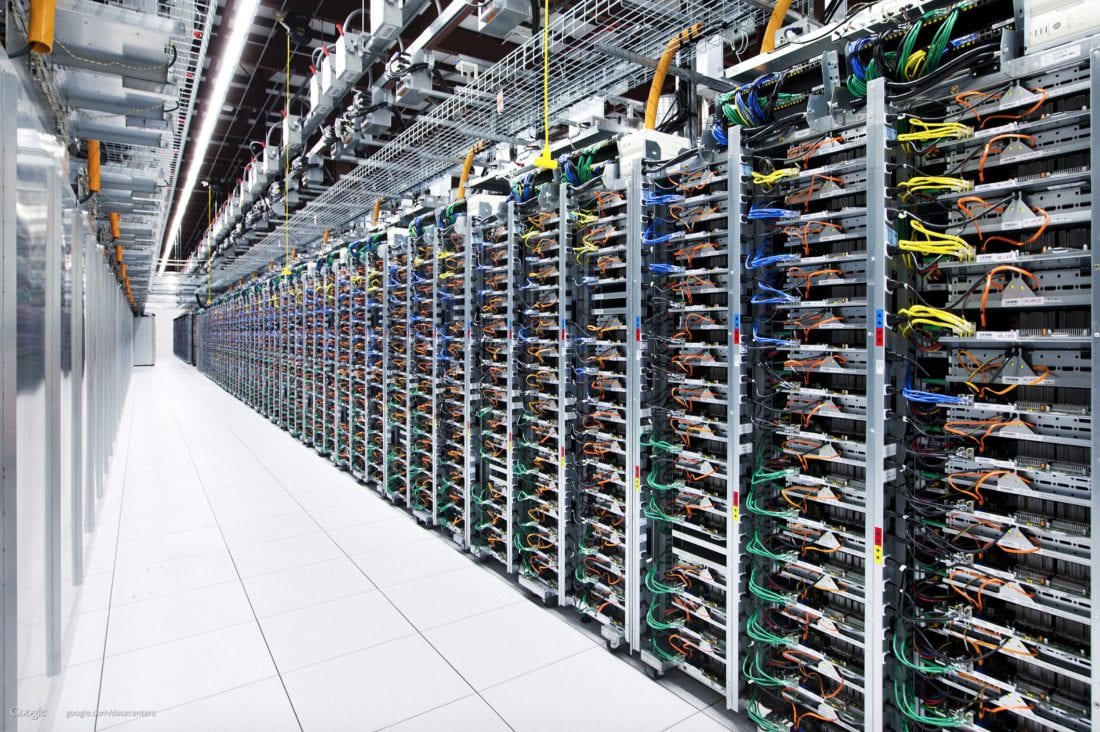
    A server rack is a shelf designed to hold all the different components that make up a server, which includes server computers, routers, switches, and hubs. This rack allows you to keep all of your server components neatly stored in one compact area, which provides many benefits.

    While you don’t essentially need to have a server rack to contain your server, most companies choose to. Without a good rack, it’s easy to end up with scattered components that make life a lot more complicated, which doesn’t have to be the case.

    Make Maintenance Easy

    Probably, one of the most significant benefits of investing in a rack for your server is that maintenance becomes a lot easier. You have all of your components in one space for starters, so you don’t have to go searching around for different routers, switches, and hubs to figure out where the problem lies. In addition to that, a good rack keeps all of your equipment organized, so it’s easier to access cables and other crucial components when working on a server.

    No matter how you look at it, you’re going to end up performing many maintenance activities if you want to keep your server in good shape. Whether you’re simply having software updated or trying to fix a critical problem, it’s important to have an easy server maintenance solution at all times.

    Secure Your Server

    Servers are a hugely important part of most business architecture, but they’re also vulnerable. Not only can people attack servers via the internet, but you also have to consider the possibility of your server being damaged physically. The best way to protect your server is to keep it safely stored in its own room that only authorized personnel has access to.

    If you’re going to store your server in a room, the best way to keep everything secure and neatly organized is to put everything in a server rack. The best part about server racks when it comes to secure storage is the fact that you can find locking racks that are even more secure.

    Leave Room to Grow

    Another great part of server racks is the potential for growing your server over time. While you might need a simple single-computer server at the moment, that might change as your business grows, or you need to take advantage of a larger database.

    There are a lot of server components that you might want to upgrade and having a server rack with plenty of space makes those upgrades simple. Whether you need an extra switch or a second server computer, you’ll already have the rack space to upgrade to something better.

    A Big Upgrade

    Running a business demands a lot of careful considerations, especially regarding the technology side of things. If you want to make sure your servers are set up for a long and successful future, you need a good server rack.

    The best way to make sure you’ve got a solid server setup is to work with a professional to get all the equipment you need. As long as you’ve got the right server components and a good server rack, you’ve got solid infrastructure that’s ready to expand with your business over the years.


  • Vietnam IT recruiting firm raises million dollars from South Korean investor

    Vietnam IT recruiting firm raises million dollars from South Korean investor

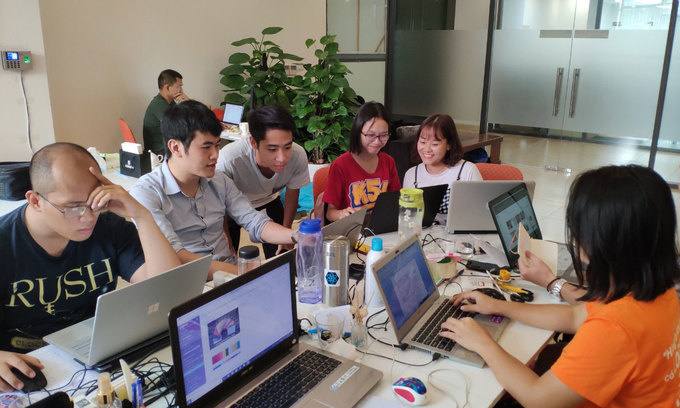
    IT recruitment firm TopDev has secured a million-dollar investment from South Korea’s leading recruitment company Saramin HR.

    The Ho Chi Minh City-based company said in a statement Monday that the deal, whose exact value it did not reveal, would be used to increase the supply of developers through training programs for graduates.

    Saramin HR, which is listed on South Korea’s KOSDAQ, said the investment is part of its global development plan and would support TopDev’s potential expansion in Southeast Asia.

    TopDev said Vietnam has 350,000-400,000 developers now but 500,000 would be needed by 2021 as the country remains a popular outsourcing software destination for multinationals.

    Vietnam is seeing increasing investment in tech startups.

    Last year the total investment in Vietnamese tech startups surged 2.5 times to $741 million, second only to Indonesia in Southeast Asia.

  • Malware costs Vietnam $900 mln

    Malware costs Vietnam $900 mln

    Malware caused Vietnamese users damage worth VND20.89 trillion ($900.8 million) last year, up 40 percent year-on-year.

    The surge came with the rising number of computers contaminated with malware from advanced persistent threats (APT), according to a report released Thursday by Vietnam’s cybersecurity firm BKAV.

    The number of computers infected with malware rose 3.5 percent year-on-year to 85.2 million in 2019. This means 57.7 percent of computers nationwide were infected.

    Increasing virus infections occurred via email, from 4 percent of the 2018 total to 20 percent last year.

    Another reason for the high contamination is Vietnamese users’ habit of downloading files without checking the authenticity. Eight out of 10 computers were infected with malware because of this behavior, the report stated.

    Rising threats resulted in 1.8 million computers losing data last year, up 12 percent from 2018.

    A large-scale foreign attack last year saw the hack of devices via manipulation of weak passwords.

    The attack caused 420,000 computers to be infected with dangerous W32. Fileless malware, which BKAV experts say have “invisibility” as it does not leave behind traces on hardware like other malware.

    BKAV forecast malware would become increasingly dangerous this year as hackers use them for financial benefits, like accessing bank accounts.

  • Hong Kong’s I.T to open new Orange Forest retail concept on Friday

    Hong Kong’s I.T to open new Orange Forest retail concept on Friday

    Hong Kong’s I.T Group will open its new Orange Forest concept in Tsim Sha Tsui on Friday, December 13.

    Located at The One shopping mall, the new store occupies an 18,000sqft area, spanning two floors. I.T’s space is divided into different areas including store-in-store concept, Stylenanda, casual footwear, and fashion accessories zone, Afuri ramen restaurant and Deus Ex Machina & Deus cafe.

    The I.T Orange Forest flagship features store-in-store of brands such as Baby Milo store, Beams Boy, Burton, Deus Ex Machina, and The North Face. The store’s displays are enriched with outdoor elements resembling sports ground or stadium. Pastel tones contrast with bold hues intended to “accentuate an exuberant and youthful vibe”.

    Different from its usual pinky design, the new Stylenanda at I.T Orange Forest embraces the ‘Urban Concrete’ concept of the latest Seoul and Beijing flagships inspired by minimalism.

    Adorned with nets, casual footwear and fashion accessories zone feature more than 100 New Era caps, sneakers, and backpacks.

    I.T Orange Forest also presents Japanses ramen restaurant Afuri which will offer the famous Yuzu Shio Ramen and Yuzu Shoyu Ramen in the chicken broth infused with the yuzu together with homemade dumplings, tsukemen and Japanese sakes.

    Another eatery is Deus cafe, which will serve Australian light meals and hand-brewed organic coffees.

    I.T Orange Forest has partnered with design studio Mighty Jaxx to open its first pop-up store in Hong Kong. To celebrate the grand opening, both brands collaborate with Sesame Street x Jason Freeny to launch a ready-to-wear collection for an immersive return to childhood memories. There are also 1:1 sculptures of Bert and Ernie from Sesame Street, coupled with AR photo booth for customers to take Instagram-worthy selfies this Christmas.

    Since 1988, I.T has introduced local fashionistas to brands from across the world. The venture now has 10 I.T stores in Hong Kong.

  • Volkswagen Opens IT Centre In Dresden

    Volkswagen Opens IT Centre In Dresden

    Volkswagen has opened a new IT Development Centre in its Glaserne Manufaktur in Dresden. In the Software Development Centre Production (SDC Production), up to 80 newly hired IT specialists will be working on the Volkswagen Industrial Cloud. In the future, the Industrial Cloud will link all 122 Group-wide Volkswagen production facilities. The goal is to amalgamate all data, and in doing so consistently digitalize production and logistics.

    One of the main focus points is the use of artificial intelligence, which suitably simulates human eyesight. The SDC developed the software for the visual quality checks of automated priming tasks for the door and side windows – this robot application comes from the Dresden-based start-up Wandelbots.

    Martin Hofmann, Head of IT for the Volkswagen Group, stated: “With the new IT Development Centre in the Glaserne Manufaktur, our expert knowledge will continue to grow; skills in important areas of technology secure our future.”

    The Industrial Cloud brings together data from all factories. For example, the material flow can be organized more efficiently and delivery bottlenecks and process disruptions can be detected at an early stage. It enables smart real-time control – simultaneously in Wolfsburg and Shanghai, Dresden and Uitenhage (South Africa)

    The Industrial Cloud is being established together with Amazon Web Services (AWS). AWS is a leader in the field of the Internet of Things (IoT), machine learning and computer services. In the Industrial Cloud, these technologies are being developed specifically for the automotive production environment. With Siemens, Volkswagen has gained its first major integration partner. Siemens contributes know-how in automation, connectivity of machines and systems, and the industrial IoT world to the collaboration.

  • APJxC to produce 33.8 zettabytes of data by 2025

    APJxC to produce 33.8 zettabytes of data by 2025

    Seagate Technology recently released a white paper with IDC on the growing datasphere in Asia Pacific including Japan, but excluding China (APJxC).

    This is following the launch of IDC’s global White Paper, The Digitization of the World – From Edge to Core, sponsored by Seagate Technology, which examines how much new data is created and replicated each year and the impending shifts to the global data model by 2025.

    Top findings from the regional paper include:

    • Data created in the APJxC regions will increase from 5.9ZB in 2018 to 33.8ZB in 2025.
    • The APJxC Datasphere is one of the fastest growing Datasphere regions, growing at a 2018–2025 CAGR of 28.3% compared with a gloabl rate of 27.2% and a U.S. growth rate of 23.6% over the same time period.
    • Entertainment-related data is growing at a faster pace than most other regions, expanding at a rate of 23% compared with a global average of 20% for 2018–2025.
    • The number of online users in the region participating in entertainment-related activities is growing faster than the global rate — 7.2% compared with 4.6% for 2017–2022, which will increasingly happen on the go on mobile devices.
    • Storage utilization in APJxC will grow from 0.5ZB in 2018 to 2.3ZB in 2025, even though not all data created will require permanent storage.
    • By 2025, 58% of data storage will take place in the public cloud compared with 22% in 2018 – largely driven by the growing number of internet users in the region, which drives use of the cloud not only by users but also by enterprises as they race to keep up with user demands.

    As such, the percentage of data in the APJxC Datasphere emanating from or replicated in the edge will increase from 12% to 20% of the region’s total Datasphere — as data is delivered to endpoints and as IoT devices increasingly drive processing and analytics closer to the point of origin of the data itself.

    This unprecedented data growth combined with the pressures of deriving value from data for digital transformation will create imperatives for IT and business organizations across all regions over the next decade. Enterprises must develop a fitting data storage and management and capitalization strategy and drive a new level of engagement with consumers using data-informed services and products.

  • Global public cloud spend to 17.5% in 2019

    Global public cloud spend to 17.5% in 2019

    Gartner forecasts worldwide public cloud services market will grow 17.5% in 2019 to reach a total of $214.3 billion, up from $182.4 billion in 2018.

    Cloud system infrastructure services, or infrastructure as a service (IaaS) is forecast to grow 27.5% in 2019 and reach $38.9 billion, up from $30.5 billion in 2018 (see Table 1). The second-highest growth rate of 21.8% will be achieved by cloud application infrastructure services, or platform as a service (PaaS).

    Gartner research vice president, Sig Nag, says “we know of no vendor or service provider today whose business model offerings and revenue growth are not influenced by the increasing adoption of cloud-first strategies in organizations. What we see now is only the beginning, though. Through 2022, Gartner projects the market size and growth of the cloud services industry at nearly three time the growth of overall IT services.”

    Gartner expects that by the end of 2019, more than 30% of technology providers’ new software investments will shift from cloud-first to cloud-only. This means that license-based software consumption will further plummet, while SaaS and subscription-based cloud consumption models continue their rise.

    “Organizations need cloud-related services to get onboarded onto public clouds and to transform their operations as they adopt public cloud services,” said Nag. Currently almost 19% of cloud budgets are spent on cloud-related services, such as cloud consulting, implementation, migration and managed services, and Gartner expects that this rate will increase to 28% by 2022.

    “As cloud continues to become mainstream within most organizations, technology product managers for cloud related service offerings will need to focus on delivering solutions that combine experience and execution with hyperscale providers’ offerings,” said Nag.

    He sees the complementary approach as driving both transformation and optimization of an organization’s infrastructure and operations.

  • HPE launches cloud advisory service

    HPE launches cloud advisory service

    Hewlett Packard Enterprise has announced HPE Right Mix Advisor, an offering that aims to help businesses develop their hybrid cloud strategies.

    HPE Right Mix Advisor recommends which workloads and applications are ideal to move to public clouds, or keep in private clouds, and how to migrate those workloads to achieve the right mix of hybrid cloud according to each business’s specific need.

    Many organizations find identifying their right mix to be a significant challenge, due to the complexity of their environment and the rate of change in technology and business. HPE said its new advisor aims to be the systematic approach businesses need to develop their hybrid cloud strategies with confidence.

    “IT executives have noted to us that identifying the optimal fit for their individual workloads is one of their top challenges today,” IDC’s Jed Scaramella said. “Past approaches that relied on best practices and manual analysis are now too costly and time consuming.”

    HPE Right Mix Advisor is built upon experience from over 1,000 hybrid cloud engagements, best practices from Cloud Technology Partners and RedPixie, and automated discovery capabilities from iQuate.

    Millions of data points are quickly collected from the customer’s IT landscape, from CMDBs such as ServiceNow, and from external sources such as cloud vendor pricing models. In a recent engagement, for example, nine million IP addresses across six data centres were examined.

    HPE Pointnext experts work with the client’s IT teams to analyze the data using proprietary tooling and placement algorithms. The result is a data-driven recommendation of the right workload placement strategy, as well as a phased plan to get there.

  • ZTE swings back to black in Q1

    ZTE swings back to black in Q1

    ZTE expects to have swung back to profit in the first quarter, after reporting an annual loss in 2018 as a result of the temporary ban on its import of components from US vendors.

    The Chinese vendor estimates a net profit for the first quarter of 800 million yuan ($118.9 million) to 1.2 billion yuan, which compares to a profit of 1.69 billion yuan in the first quarter of 2018.

    The first quarter results are nevertheless an improvement on the 6.98 billion yuan ($1.04 billion) loss the company recorded for the full year 2018.

    ZTE blamed its performance on the impact of the ban on the import of components from US companies imposed by the US government due to ZTE allegedly violating US sanctions on Iran by conspiring to sell equipment with US components in the market, as well as the $1 billion settlement agreement ZTE reached to have this ban overturned.

    Revenue for the year  meanwhile fell 21.4% to 85.51 billion yuan despite signs of recovery in ZTE’s major businesses of wireless networks, wireline networks and mobile devices.

    ZET has meanwhile announced it has been intensifying its investment in 5G research and development.

    The company has so far submitted more than 7,000 5G standard proposals and 3,000 5G patent applications to international organizations, and has declared over 1,200 standards of 5G standard-essential patents to the European Telecommunications Standards Institute (ETSI).

  • Police smash massive China counterfeiting gang

    Police smash massive China counterfeiting gang

    Police have shut down a huge China counterfeiting ring estimated to have raked in some US$15 million.

    Chinese police have arrested 32 people believed to be part of the operation, which focused on counterfeiting luxury-branded goods.

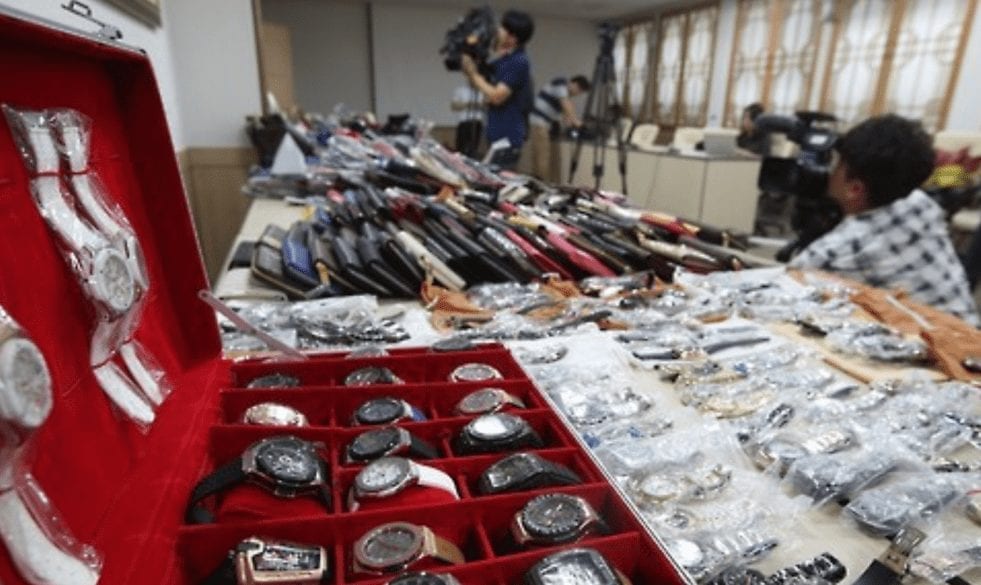
    The Shanghai raid led to the seizure of more than 4000 items of luxury apparel and accessories bearing Louis Vuitton, Kenzo and Loewe labels, among other top brands. Two assembly lines producing the counterfeit items were shut down.

    The raid was in response to a tip-off to the Shanghai Qingpu district public security bureau that fake Louis Vuitton bags were selling on Chinese social media platform, WeChat.

    Estimates held that the ring had sold more than 100,000 fake luxury items at a value of around RMB100 million (US$14.9 million). Each item would have cost around RMB200 ($30) to produce.

    The rise of online markets all over the world has been blamed for a general increase in fake products sold globally. The counterfeit industry is now worth an estimated $590 billion a year, and accounts for around 3.3 per cent of total international trade.

    According to customs officials, the most frequently seized fakes are items of footwear, clothing, leather goods and IT equipment. China is by far the world’s largest source of pirated goods.

  • Kathmandu suffers a data breach, customers potentially exposed

    Kathmandu suffers a data breach, customers potentially exposed

    An unidentified third-party has breached Kathmandu’s website and potentially accessed customers’ personal information and payment details, the outdoor retailer revealed on Wednesday.

    The business was alerted to the breach, which took place between January 8 and February 12, 2019, through bank fraud monitoring.

    A Kathmandu spokesperson told that the business is currently investigating how many customers are affected by the breach, but that it remains an ongoing process.

    “Whilst the independent forensic investigation is ongoing, we are notifying customers and relevant authorities as soon as practicable,” Kathmandu chief executive Xavier Simonet said.

    “As a company, Kathmandu takes the privacy of customer data extremely seriously and we unreservedly apologise to any customers who many have been impacted.”

    The business has enlisted the help of external IT and cyber security experts to assist in investigating the circumstances, and to confirm which customers have been impacted.

    While the financial impact of the incident is still unclear, the dual-listed retailer saw its stock price fall to $2.31 per share after the announcement, though rebounded to $2.37 by the end of trade.

  • Automated frequency coordination at tipping point

    Automated frequency coordination at tipping point

    Automated spectrum management databases and algorithms are an important public policy tool for meeting surging demand for low-cost high speed wireless broadband connectivity, according to a new report from the Dynamic Spectrum Alliance (DSA).

    The report argues that automated frequency coordination (AFC) is critical to allowing more efficient shared use of underutilized spectrum bands, while protecting incumbent services from interference.

    The DSA, which includes members including Amazon, Facebook, Google, Microsoft, Cisco and Hong Kong’s Applied Science and Technology Research Institute (ASTRI), released the report yesterday at an event co-sponsored by the Congressional Spectrum Caucus in the US.

    It argues that automated spectrum management systems have reached a tipping point for adoption worldwide, and that these systems will greatly extend the supply of wireless connectivity in markets that adopt them.

    AFC also has the potential to lower transaction costs and help national regulatory authorities meet the growing and very diverse spectrum needs of both industries and individuals.

    The US FCC is considering the use of AFC systems to manage spectrum capacity across several bands for licensed and unlicensed use. The EU and the UK are also conducting consultations over adopting AFC systems for shared spectrum access.

    “At a time when regulators are under increased pressure to meet wireless connectivity demands, AFC is critical to enable more efficient shared use of underutilized frequency bands while protecting incumbent services from interference,” DSA board chairman Paul Garnett said.

    “Automated spectrum databases are now a proven means of achieving large-scale, low-cost, and virtually real-time access to communications capacity that would otherwise go unused.”

    Other members of the DSA include HPE’s Aruba Networks, Broadcom, Ruckus Wireless, the IEEE and the Taiwan Institute for Information Industry.

  • First Lenovo Legion store in Philippines

    First Lenovo Legion store in Philippines

    The first Lenovo Legion concept store in the Philippines has opened as the tech company strengthens its gaming business.

    The Quezon City outlet, at less than 40sqm on the fourth floor of the Annex Building, showcases the brand’s Legion gaming machines in a setting that allows customers to personally examine and experience the products. Lenovo intends to host mini tournaments at the venue to “engage the local gaming community,” according to its statement on the opening.

    Lenovo Philippines GM Michael Ngan expressed the firm’s intentions to open as many such stores in the territory as possible, depending on available spaces, with a possible four outlets planned for this year. He added that the Philippines is seen as a strong growth space for the company’s Lenovo Legion gaming sub-brand. He hinted that the firm’s Legion of Champions e-sports tournament may be held in the Philippines.

    “We’ve had a lot of customers asking why don’t we host in the Philippines … so I’m lobbying that we can have the opportunity to host the fourth edition here in Manila,” he said.

  • SK Telecom, IT&E to deploy 5G network in Guam and Saipan

    SK Telecom, IT&E to deploy 5G network in Guam and Saipan

    South Korean mobile carrier SK Telecom announced that it is in discussion with Citadel and IT&E to deploy a 5G network in Guam and Saipan. In a statement, SKT and IT&E will work together to commercialize the 5G network with fixed wireless access (FWA) offering in Guam and Saipan in the second half of 2019.

    SKT said IT&E has already secured 1150MHz bandwidth in the 28-GHz frequency band for 5G communications and aims to become the first operator to launch commercial service in the region.

    The 5G network will initially cover dense central areas of cities, local business customers, and areas that lacked fixed broadband infrastructure. This will be expanded gradually to wider areas.

    According to SKT, the decision to deploy 5G FWA initially came as a result of an analysis of the region’s fixed broadband infrastructure, topographic features and the needs of residential and enterprise customers. FWA provides IT&E with a more cost-effective and efficient alternative to offer broadband services in areas with limited access to fixed broadband infrastructure.

    As part of the collaboration, SKT will help IT&E design a 5G network optimized for the local environment, support network deployment and perform field trials and network optimization.

    SKT said the pair have also discussed cooperation in other areas, such as deploying SK Telecom’s security solutions to IT&E’s 5G network, and adopting mobile edge computing and quantum cryptography technologies to enable faster and safer 5G services.