Tag: jakarta

  • Sarinah Celebrates National Batik Day

    Sarinah Celebrates National Batik Day

    Renowned retailer of traditional Indonesian products, Sarinah will celebrate National Batik Day on Sunday, 2nd October 2016 which will commence from 6:30 A.M. – 10 A.M. at its Thamrin department store location. As a leading state-owned enterprise with immense pride in its local heritage, Sarinah has also partnered with the Indonesian Batik Foundation as well as the Indonesian Scout Movement. Furthermore, Sarinah is also working alongside the Ministry of Law and Human Rights and will thus makes available a bazaar showcasing a range of locally-made products.

    During the “Batikmu, Batikku, Batik Kita Beda, Tapi Kita Indonesia” (Your Batik, My Batik, Our Batik is Different, But We are Indonesia) event, Sarinah’s Board of Directors will be joined by 1,000 members from the Indonesian Scout Movement for a wall signing ceremony which reiterates both parties’ dedication to preserving batik as an ancient Indonesian artform. In keeping with its role as a modern retailer, Sarinah will additionally host a fashion show featuring budding Batik fashion designers from Indonesia. This opportunity will enable guests and visitors to gain better understanding of the wide array of batik clothing styles and its position in the country’s increasingly trend-savvy society. To further provide an all encompassing shopping experience, Sarinah is set to further provide live entertainment for visitors.

    Sarinah’s participation in celebrating National Batik Day is an effort that demonstrates the company’s unsurpassed commitment to maintain traditional crafts and heritage as part of its business operations. As such, Sarinah exemplifies its standing as highly-regarded retail of modern and traditional products as well as its role as the Home of Indonesian Heritage.

  • Aceh wins three prizes in halal tourism category

    Aceh wins three prizes in halal tourism category

    Aceh Province has won three prizes in the National Halal Tourism Competition (KPHN) 2016, an official said.

    The three awards were in the categories of Muslim Friendly Airport–given to Sultan Iskandar Muda International Airport in Banda Aceh, as well as best Muslim friendly cultural destination, and best tourist attraction for Baiturrahman Grand Mosque, said Reza Fahlevi, head of the Aceh cultural and tourism office, on Thursday.

    He expressed his gratitude to the people of Aceh for helping develop halal tourism in the province, and to the Central Government for supporting Aceh in its participating in the World Halal Travel Awards 2016 in Abu Dhabi, the United Arab Emirates.

    “Alhamdulillah (Thank God), Aceh won prizes for three categories in competition with 117 nominees in 15 categories,” he remarked.

    The results of the competition were announced in Jakarta on Wednesday.

    The Aceh provincial administration seeks to improve its tourism industry to meet its 3As – Amenity, Accessibility, and Attraction– in order to transform the province into a world-class tourism destination.

  • DBS to offer digibank service in Indonesia

    DBS to offer digibank service in Indonesia

    DBS Bank plans to launch a mobile-only banking service in Indonesia by the end of the year.

    DBS Group chief executive Piyush Gupta told the Sweden-Southeast Asia Business Summit on Wednesday that the bank is targeting Indonesia to capitalise on the young, tech-savvy consumers among its 260 million population.

    “Indonesia is an important market with its size and scale, and the economic reforms taking place in the country,” he said. “There is great potential for business as we see a pickup in the country’s economy under the leadership of President Joko Widodo.”

    DBS’s digibank offering, which includes an e-wallet and a savings account, will be available to customers in addition to its consumer and corporate banking services at its 34 branches in 13 Indonesian cities. DBS opened its first branch in Indonesia – an outlet in Jakarta – in 1989.

    DBS hopes to replicate the success it is seeing in India since it started its digibank service there in April – the first mobile-only banking facility in the sub-continent, said a DBS spokesman.

    The service has attracted more than 250,000 new clients in the first four months of its operation.

    A digibank account can be opened in India with just a 12-digit Aadhaar number, which provides a unique biometric identification for all resident Indian citizens.

    More than a billion Indians have been issued with Aadhaar cards by the government. With over 200 million smartphone users in the country, the market for digibank is huge.

    The service’s e-wallet can be used for making payments, including telephone and electricity bills. Customers can also use a Visa virtual debit card to shop at over 100,000 online merchants.

    “While we continue to invest in growing our existing network in India, we also believe that with the digital revolution, the future of banking will be very different,” said the spokesman.

    “Increasingly, many customers want to be able to do their banking digitally and on the go. A successful digital banking strategy will meet changing customer needs, while enabling us to accelerate our reach in large geographies without the need for a large brick-and-mortar footprint.”

    Indonesian clients will be able to use their biometric national identity card to open digibank accounts.

    DBS said it intends to launch digibank in other markets after its introduction in Indonesia.

  • DHL Express has opened its Jakarta Gateway 530 facility

    DHL Express has opened its Jakarta Gateway 530 facility

    DHL Express has opened its Jakarta Gateway 530 facility at Soekarno-Hatta International Airport to support Indonesian trade.

    According to DHL, the new 1,353-square-metre facility is an addition to the existing Gateway 510, which is at full capacity. Gateway 530 is capable of handling up to 2 million shipments per year and is equipped with dual-view X-ray screening, an explosive trace detector system and 103 CCTV cameras.

    “Our new Jakarta Gateway 530 will enable local businesses to trade seamlessly with customers around the world,” said Ken Lee, CEO of DHL Express Asia Pacific. “SMEs play a vital role in the Indonesian economy, contributing close to 58% of Indonesia’s GDP and Indonesia remains a key pillar in supporting South East Asia’s economic growth. This new facility allows DHL to continue supporting the growing export and import needs in Indonesia by providing greater access to international markets.”

    The facility offers direct airside access and in-house customs. Major trading partners that will benefit from Gateway 530 include mainland China, Germany, Japan, Hong Kong, Singapore and the US, according to DHL.

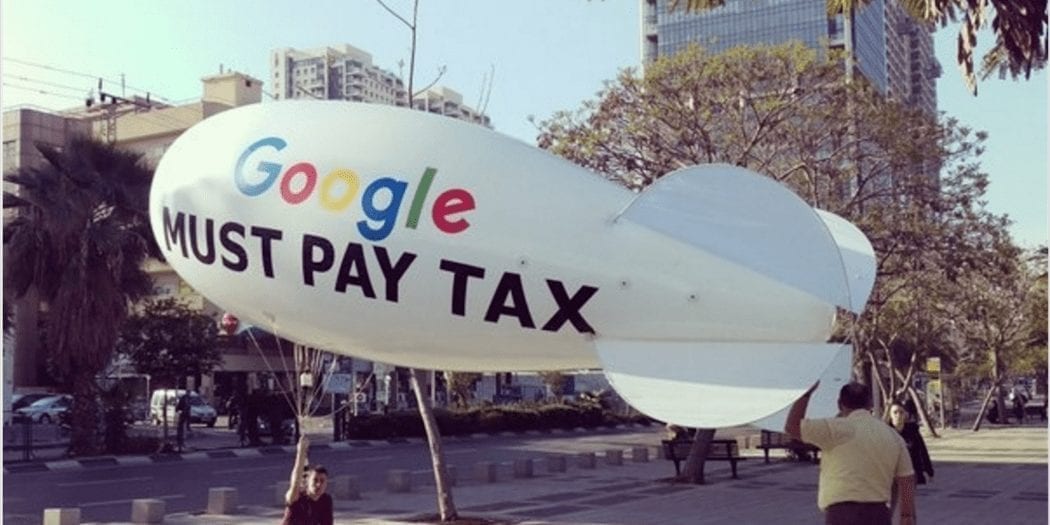
  • Google may face over $400 million Indonesia tax bill for 2015

    Google may face over $400 million Indonesia tax bill for 2015

    Indonesia has really slammed Google this time around. If you can’t pay the fine don’t do the crime. The latest with the two is that Indonesia is arranging to seek after Google for a long time of back charges, and the colossal exploratory giant could be condemned with a bill of more than $400 million for 2015 single-handedly, in the occurrence that it is found to have maintained a strategic distance from installments.

    Muhammad Hanif, leader of the assessment office’s exceptional cases branch, went to Google’s neighborhood office in Indonesia on Monday. The duty office claims Google Indonesia paid under 0.1 percent of the aggregate wage and esteem included expenses it owed a year ago.

    Google Indonesia emphasized an announcement made a week ago in which it said it keeps on participating with neighborhood powers and has paid all pertinent charges.

    On the off chance that discovered blameworthy, Google will need to pay fines of up to four times the sum it owed, conveying the greatest expense bill to 5.5 trillion rupiah ($418 million) for 2015. OUCH!

    The greater part of the income produced in the nation is reserved at Google’s Asia Pacific base camp in Singapore. Google Asia Pacific declined to be reviewed in June, provoking the expense office to heighten the case into a criminal one,

    Google’s contention is that they simply did tax planning. Tax arranging is lawful, however forceful expense arranging – to the degree that the nation where the income is made does not get anything – is not lawful. That’s right, the law will bite you, so make sure you do your homework beforehand.

    Tax avoidance, not at all like tax evasion, is legitimate. Be that as it may, numerous expansive organizations push into legitimate hazy areas with forceful methodologies intended to expand “charge effectiveness”. A typical approach to move benefits seaward is through exchange evaluating, when auxiliaries in various nations charge each other for merchandise or administrations “sold” inside the gathering. This is especially prevalent among innovation and medication organizations that have bunches of licensed innovation, the estimation of which is particularly subjective. These intra-organization eminence exchanges should be arm’s-length, however are regularly evaluated to minimize benefits in high-charge nations and amplify them in low-impose ones.

    The assessment office will summon chiefs from Google Indonesia who additionally hold positions at Google Asia Pacific, including that it is working with the Indonesian police.

    All around, it is uncommon for a state examination of corporate assessment structures to be swelled into a criminal case. It ordinarily takes no less than three years for an Indonesian court to settle on a choice on an assessment criminal case.

    The duty office wants to pursue back assessments from different organizations that convey content through the web (over-the-top administration suppliers) in Indonesia.

    The Indonesian correspondence and data service is chipping away at another direction for OTT suppliers, and the duty office has suggested that an organization with system nearness in Indonesia ought to likewise be liable to tax assessment.

    Lawsuits are a pretty common manner with society and especially businesses. The Law dictionary outlines it significantly. According to the most recently acclaimed statistics, approximately 95 percent of awaiting lawsuits end in a pre-trial settlement. This means that just one in 20 cases are determined in a court of law by a judge or jury. It also means that planning for a pre-trial settlement is a vital factor of any lawful policy. Evidently, many seasoned plaintiffs use the immensity of the pre-trial preparation period to assemble a case that persuades their opponents into resolving for a favorable sum.

    We have to consider that Google is a very, very, very successful business. So despite them possibly being hit with this bill, chances are they can afford to pay for it. But of course who wants to waste money like that? How much does Google make exactly? I’m sure you’re all wondering. Moz indicates that in 2013, Google made $58.8 Billion in revenues. In Q1 of 2014, Google reported making $15.4 billion – on track to beat $60B for the year. For the financial year 2010, Google reported revenues of $29.3 Billion.

  • Indonesia-US economic ties to strongly develop in next five years

    Indonesia-US economic ties to strongly develop in next five years

    The US-Indonesia trade may increase by 46 percent in the next five years, according to the latest report from the US Chamber of Commerce in Indonesia, source from Vietnam News in Jakarta.

    The report appreciates efforts by President Jokowi’s government in carrying out economic reforms and improving the business environment, saying that the reform needs to be stepped up.

    It also urges the Indonesian government to boost the law enforcement and create a more solid and fair legal foundation, especially in respecting commercial contracts, which is very important in creating confidence for businesses who intend to do business in Indonesia.

    The report recommended the Indonesian government continue reforming administrative procedures and investment policy and cut investment licensing time.

    In 2014, two-way trade between the US and Indonesia surpassed 90 billion USD.-

  • Global chocolatiers dwarfed in Indonesia as local champions dictate taste

    Global chocolatiers dwarfed in Indonesia as local champions dictate taste

    Multinational chocolatiers have spent almost 20 years trying to crack Indonesia’s booming confectionary market, only to build a share that pales in comparison with other emerging economies as long-established local producers fend off foreign incursions.

    Nestle, Cadbury’s owner Mondelez International, Mars Inc and Ferrero SpA together hold just one-tenth of a $1 billion market led by homegrown darlings Delfi and PT Mayora Indah. In neighboring Malaysia, the foursome commands almost 60 percent.

    “The market leader is very strong because it was the first to set the taste for chocolate in Indonesia,” Nestle Indonesia confectionary business manager Rully Gumilar told Reuters.

    “It’s like David fighting Goliath,” he said. “It’s very big and has huge power, while we are small even though we are a multinational.”

    Such struggle against a local incumbent is not uncommon among global consumer firms in the world’s fourth most-populous country – a tropical archipelago with complex distribution channels, run-down infrastructure and a retail sector dominated by family stores that lack air conditioning to keep goods cool.

    But the rewards are potentially huge considering consumption accounts for more than half of a steadily expanding economy, while an increasingly affluent middle class promises ample room for growth.

    The chocolate confectionary market is likely to jump 42 percent to 19.5 trillion rupiah ($1.49 billion) in the next three years, data from researcher Mintel showed. That compared with 11.7 percent in the United States where, as in other developed markets, growth has slowed over the past five years.

    LOCAL COCOA

    Nestle entered Indonesia in 1971 and in the 1990s embarked on a major push in chocolate products, expanding to three brands. Mars and Mondelez began selling chocolate in the early 2000s and, with Ferrero, the four’s market share reached 10 percent last year – 1.4 percentage point more than a year prior.

    But Delfi set the benchmark taste in the 1950s with its SilverQueen chocolate bars and Ceres chocolate sprinkles, which still feature in the firm’s broad line-up. Last year, its market share by sales volume reached 52.7 percent from 48.2 percent.

    Such local offerings often cost less to make and so are priced lower. For instance, they tend to contain a greater proportion of cocoa powder, which can be two to three times cheaper than cocoa butter, said Ahmad Zaky Amiruddin, secretary general of the Indonesian Cocoa Industry Association.

    Mayora said buying cocoa beans and making chocolate locally also keep prices competitive. In contrast, production at foreign rivals may be part of a more complex, multi-market strategy. Nestle, for instance, imports from its regional halal factory in Malaysia, which sources ingredients from countries including the Ivory Coast.

    Indonesians are “very price sensitive”, preferring to buy the cheapest of similar products, Amiruddin said.

  • Rich Indonesians snapping up Singapore luxury homes as taxman calls

    Rich Indonesians snapping up Singapore luxury homes as taxman calls

    Never mind that Singapore is experiencing one of the worst property slumps in its history, demand for luxury housing is suddenly coming from an unexpected group: wealthy Indonesians.

    This year’s purchases by Indonesian nationals of homes valued at S$5 million or more have already nearly quadrupled from last year’s total.

    The stepped-up buying coincides with the passage of a law in Jakarta aimed at getting Indonesians to repatriate or pay taxes on an estimated US$300 billion that had fled to Singapore during previous periods of unrest, lest those who took their money out be found out for tax evasion – a reason cited by three property agents as a primary reason behind the purchases.

    Indonesians were the top foreign buyers at the luxury OUE Twin Peaks tower, which went on sale in July.

    “We’re seeing a big increase in Indonesians buying the most expensive property,” said Ang Kok Leong, a senior agent at SLP Realty Pte, who cited Indonesians’ concerns about Singapore’s upcoming move to share financial information as the single biggest motivation for his Indonesian clients. “These people are generally in tune with this kind of situation back home, so if I’m not about to let the Indonesians know what I have, I will buy in Singapore.”

    Indonesia, Singapore and other countries are adopting global tax reporting requirements to tell each other about nationals holding assets abroad. Indonesians moving money into property are counting on only assets held in banks, not in real estate, being shared, agents and brokers say.

    While the numbers in the official data are small, they show surging demand that likely understates the real total. Indonesians bought 30 Singapore properties valued at S$5 million or more between the start of the year and Aug 17, compared with only eight such deals for all of 2015, according to the Urban Redevelopment Authority. Disclosure of nationality is voluntary.

    During the first half of this year, Indonesians bought 189 properties of all values in Singapore, 23 per cent more than in the same period last year, data from Cushman & Wakefield Inc show. While purchases from Chinese and Malaysians declined during the second quarter, transactions by Indonesians rose 19 per cent.

    Not all Indonesians buying real estate are seeking to avoid taxes, of course, and some may see value in a market that bottomed out in prime areas at the end of 2015. Indonesians are drawn to property in Singapore’s center, especially the Orchard Road area where the OUE Twin Peaks towers are located. Apartment prices there have risen 0.6 per cent since their low at the end of 2015, according to Cushman & Wakefield.

    At the OUE Twin Peaks development, where luxury condos in the second tower of the 36-story high rises went on sale in July, the developer sold almost half the first batch of 86 units with price tags of as much as S$4 million, with Indonesians the top foreign buyers, according to Propnex Realty Pte, a company handling sales for the project.

    A Propnex agent who asked not to be identified said the strong demand from Indonesians came as a surprise. It’s a marked change from past sales of downtown luxury homes, such as the Marina One Residences last year, when Indonesian buyers accounted for just three of about 200 units sold, Cushman & Wakefield data show.

    Indonesian President Joko Widodo’s ambitious tax amnesty plan, under discussion since earlier this year and ultimately passed in June, is aimed at repatriating Indonesian cash stashed overseas while giving evaders a way to come clean.

    Under the amnesty, Indonesians are to pay a tax rate starting at 4 per cent on declared property or funds left overseas. It increases in stages to 10 per cent as the amnesty period draws to a close in March. Those who send their money home and keep it in Indonesia for at least three years pay 2 per cent and are offered a wide range of possible investments. Those who don’t declare and are found out face paying 200 percent of the tax owed.

    The tax amnesty deal may attract S$5 billion to S$9 billion of Indonesian funds deposited in Singapore, Sanford C Bernstein & Co analysts Kevin Kwek and Norbert Topouzoglou wrote in a July 21 report. Most of the assets are probably invested in properties, securities or businesses, and are thus less likely to be repatriated quickly, they said.

    Wealthy clients typically allocate about 20 per cent of their assets to property, according to Evrard Bordier, Singapore-based managing partner of Swiss private bank Bordier & Cie. That percentage might increase because of the new tax transparency standards from the Organization for Economic Cooperation and Development that both Singapore and Indonesia have agreed to, he said. They currently don’t include reporting on real estate holdings.

    “This global shift into increased transparency will no doubt result in subtle yet important changes in the portfolio allocation of a typical high-net-worth individual,” said Bordier, noting that the global trend toward sharing information across jurisdictions eventually will make hiding money in property difficult.

    In response to a request for comment, the Monetary Authority of Singapore and the country’s Ministry of Finance said Singapore is ready to help in “any case of suspected cross-border tax evasion.”

    Singapore and Indonesia have yet to agree to the mechanisms needed for the automatic exchanges of information under OECD tax standards, due to come into effect by 2018. Until then, information transfers including information on property ownership take place upon request between the two tax authorities.

    “Expectations of motivating substantial repatriation whilst there are still doubts/lack of clarity may be overly optimistic,” Vishnu Varathan, an economist with Mizuho Bank Ltd., said by e-mail. “Declaring taxable monies to be repatriated could subject their accounts/finances to more scrutiny.”

    Singapore is currently mired in its most prolonged housing slump on record. Home prices in the city-state fell for the 11th straight quarter in the three months ending June 30, posting the longest losing streak since records started in 1975.

    Singapore’s government is holding steadfast on cooling measures it has rolled out since 2009, for fear of inflating a property bubble. The measures, including a stamp duty on foreign buyers, limit the investment appeal of what is still a key high-end housing market in Asia. Wealth advisers and property agents say property is often seen as a conservative investment option and a way to store wealth at a time of economic uncertainty and mediocre returns in financial markets.

    “Indonesians see Singapore as a politically stable safe haven,” said Jasslyn Yeo, Singapore-based global market strategist for JPMorgan Chase & Co’s asset management unit. “This is an important factor, especially at this time when you see so much instability in the region.”

    Indonesian wealth fled the country as far back as the 1960s when violence against ethnic Chinese was part of a campaign by President Sukarno to stamp out Communism. Other periods of instability include 1998, when anti-Chinese riots coincided with the ouster of President Suharto, and thousands of ethnic Chinese took refuge in Singapore and elsewhere.

    Many Indonesians travel to Singapore for medical checkups and procedures, so locations near hospitals are at a premium, agents say. Indonesian citizens bought 42 of 211 apartments in the range of S$1 million to S$4 million earlier this year in the Cairnhill Nine condo development, within walking distance of two hospitals, Cushman & Wakefield data show. The second-largest group of foreign buyers was Malaysians, with 16 units.

    Unlike Singaporeans, who mostly buy to reside in properties and take time to decide, Indonesians often close deals in a matter of days and aren’t picky about details, the agents say. They typically look for amenities such as hot tubs and swimming pools, as well as private elevator entrances, a feature that has become popular in recent years.

    “This kind of buyer, sometimes they will come wearing big sunglasses if they’re famous, so you don’t recognize them, and often they come with their own family agent,” said Kent Tan, an agent with realtor Home Guru Pte, who has seen a recent uptick in the number of queries by Indonesians. “These buyers know Singapore’s market very well and have known it for many years.”


  • Indonesia hosts Asian SMEs event

    Indonesia hosts Asian SMEs event

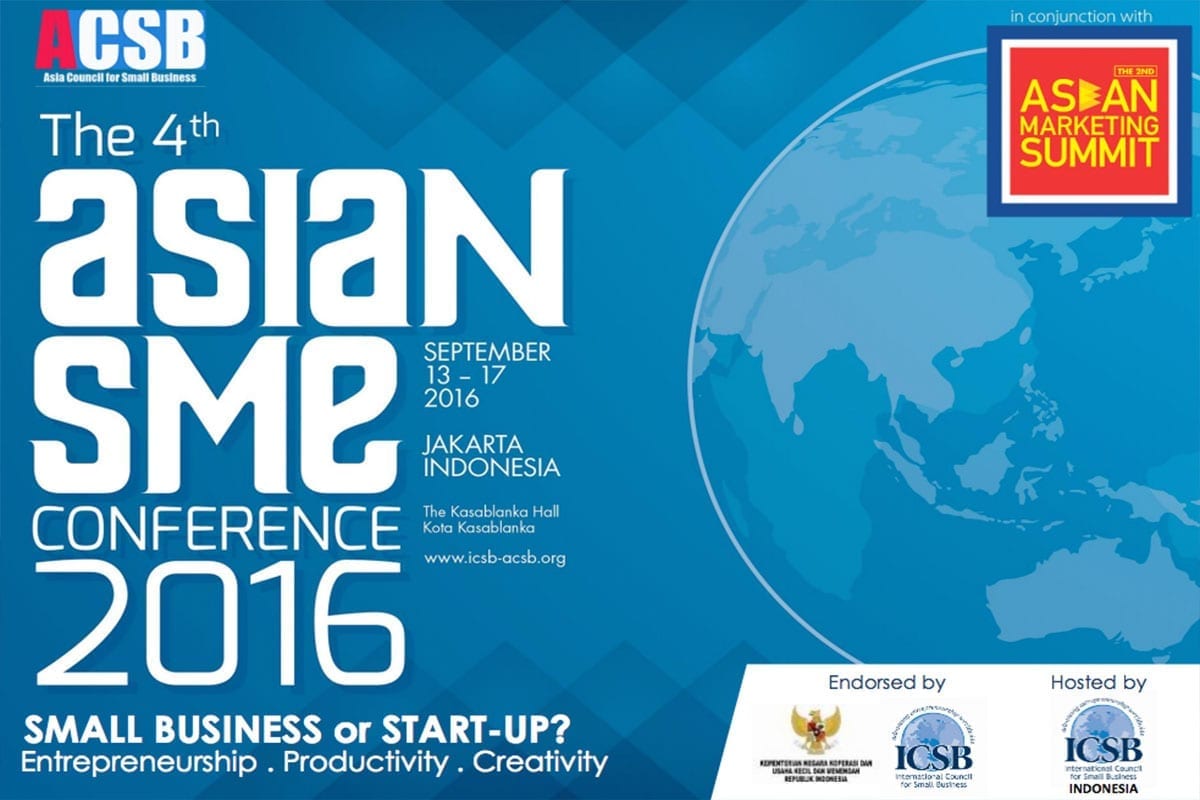
    Indonesia is hosting the fourth Asian SME (small medium enterprise) Conference 2016, from Sept. 13 to 17 in Kota Kasablanka shopping mall in South Jakarta.

    Cooperatives and SMEs Minister Anak Agung Gede Ngurah Puspayoga said the conference should facilitate SME players in strengthening their competence to face the global competition.

    “I hope SME players get optimally empowered,” the minister said in a statement as quoted by tempo.co on Tuesday.

    He said he expected Indonesian SMEs to thrive in the ASEAN Economic Community (AEC). “Good products, good services are not enough to survive the AEC,” he said. Thus, the conference was expected to give SMEs solutions to thrive in the AEC.

    The conference is targeting 700 participants from 15 countries.

    Puspayoga said Asia had become the center of economic growth and the biggest market in the world. Asia is ready to compete with other continents, he said.

    The event is presented by Asian Council for Small Business (ACSB) and endorsed by the ministry and the International Council for Small Business (ICSB). The event will have seminars with speakers from Malaysia, the US, Taiwan, among others and visits to cosmetics company Martha Tilaar Group and to Bandung in West Java.

  • Garuda to Fly to the US in 2017

    Garuda to Fly to the US in 2017

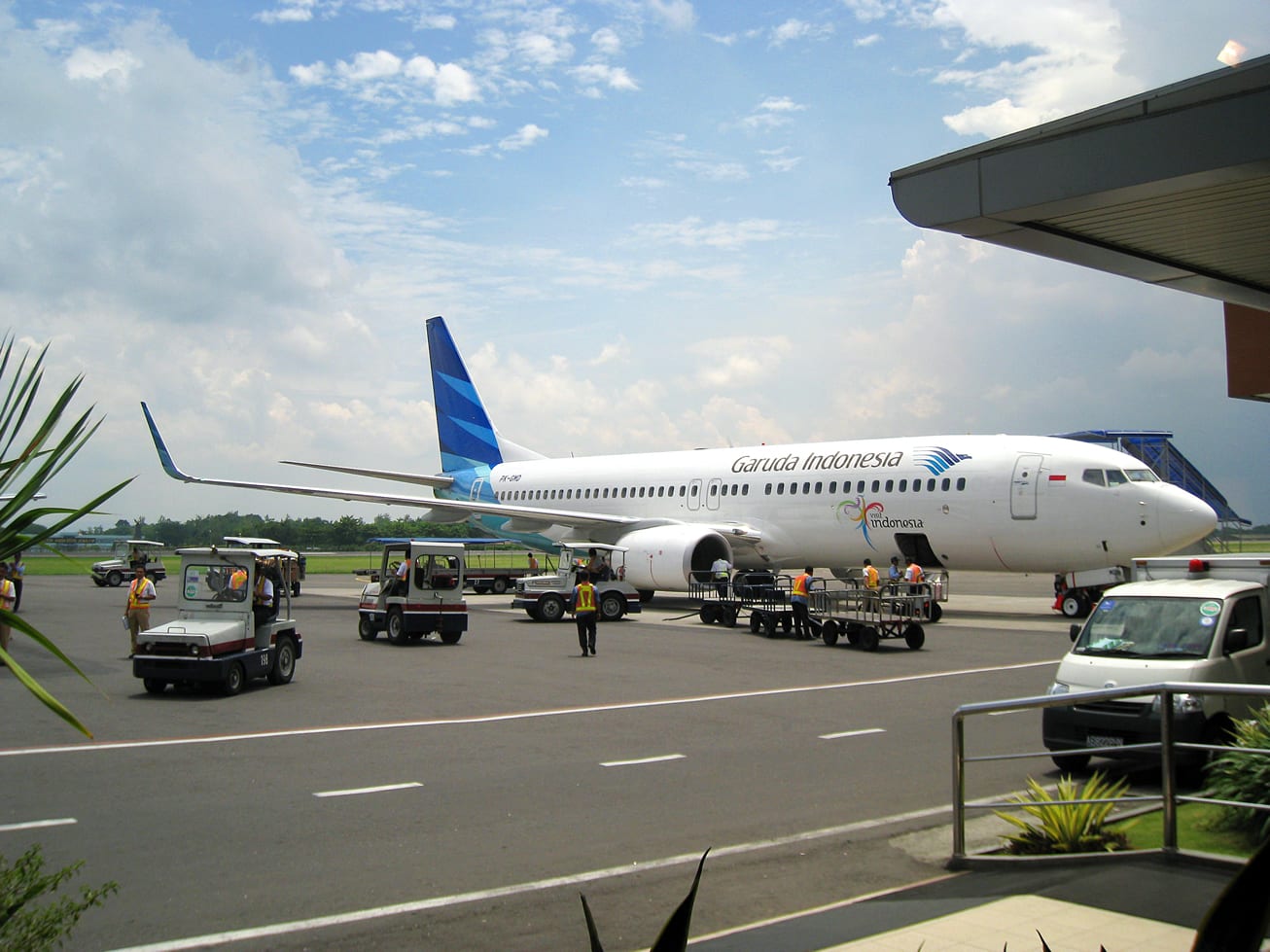
    National carrier Garuda Indonesia plans to serve flights to the United States starting next year.

    Vice President Corporate Communications Garuda Indonesia Benny S. Butarbutar said Garuda’s plan to fly to the United States is one of the measures to strengthen its business expansion.

    “The plan to fly to the United States is business expansion to strengthen the position of Garuda Indonesia as a global player in the aviation industry,” Benny said in a press release on Saturday (10/9).

    Benny said Indonesia’s flight market potentials to the United States is quite high, reaching 400 thousand passengers per year.

    Based on this potential, Garuda Indonesia targets a return flight to Los Angeles will go and New York, as the two cities with the highest market potentials.

    Benny added, in realizing the strategic plan, Garuda Indonesia has initiated various preparations, including a feasibility study of the potential market, profitable routie, and the type of fleet to be utilized optimally, and many others.

    Garuda Indonesia plans to use large-bodied Boeing 777-300ER fleet to fly to America.

  • Millennials to Decide Future of TV in Indonesia

    Millennials to Decide Future of TV in Indonesia

    As of 2016, according to the Central Statistics Agency’s estimations, Indonesian millennials  born between the 1980s and early 2000s  make up about 41 percent of the 258.8 million population.

    “The future will be in OTT and many want to capture this market. The number of millennials is going to be big in Indonesia and infrastructure is now being prepared. The government has rolled out 4G and smartphone prices are getting lower each year,” Greeny said.

    Genflix offers its customers thousands of videos, Japanese cartoons and other exclusive content. Genflix currently has three million subscribers, 60 percent of whom are paying customers. Most of them access the service via their smartphones.

    The catch

    Hendy Lim from the Redemption Entertainment said this is the moment for the local talents and content creators as the content-hungry OTT services will keep on coming to tap into the growing Indonesian middle-class. But there is a catch.

    Hendy, who has just left his position as the vice president of the media company MNC Group, said the OTT services need to compete with the deep-pocketed free-to-air televisions.

    “These free-to-airs can pay up to $30,000 per episode. I can’t tell the exact number, but I think [the OTT] can pay only 5 percent of it,” he said, adding that free-to-air revenues are high because many people still watch television.

    The on-demand services will also have to face uncertain regulations with regard to corporate establishment, taxes and censorship.

    Communications and Information Technology Minister Rudiantara promised that this year the government will produce a regulation governing the OTT services. The regulation will take into account the international tax treaty and censorship measures similar to those applied for televisions.

    Desmond Poon, chief technology officer of the listed internet service provider Link Net, said during the summit that censorship as such is against the idea of the internet.

    Despite the challenges posed by censorship and the not yet fully available broadband connectivity, especially in the easternmost part of the country, Poon remains optimistic the OTT business will continue to grow.

  • Bank Indonesia to launch national payment gateway

    Bank Indonesia to launch national payment gateway

    Bank Indonesia will soon issue a new policy in payment system — “National Payment Gateway” (NPG) — to prevent outflow of fund in the “e-commerce” transactions that will help redress the countrys domestic trade balance .

    “Soon we will issue a policy of national payment gateway. All payment systems in the country from various providers will be connected in what we call inter-connectivity and inter-operability. Jut wait and see,” Deputy Governor of the central bank Perry Warjiyo said here on Friday .

    Perry said with the NPG all domestic transactions would be wrapped up in the country without the use of foreign payment system service.

    “This is important before we start cooperation with other countries that all transactions made in Indonesia could be settled in the country ,” Perry said.

    With the NPG we could increase domestic trade balance in each transaction made in Indonesia without relying on financial service of agency, he added.

    Perry said NPG also would support payment system in tourism industry, which the government actively develops as a potential foreign exchange earner.

    Bank Indonesia encourages the government to develop and modernize the countrys tourism industry to grow to become a new economic growth driver amid the slump that hits the export and mining sector which have lost their most of role as the economic backbone.

    Perry said the tourism industry could help accelerate the economic development in mid term.

  • Jakarta’s tax amnesty gets a rich boost

    Jakarta’s tax amnesty gets a rich boost

    Two of Indonesia’s wealthiest men say they will participate in a government-led tax amnesty to clear their past omissions, boosting the scheme’s credibility.

    Mr James Riady, the son of Lippo Group’s founder, went to the Jakarta tax office yesterday to take part, said his spokesman Danang Kemayan Jati. Mr Tahir, founder of Bank Mayapada, who goes by one name, said by phone that his family would submit documents this month to support the plan.

    “If a big fish like Riady joins the programme in a public way, that lessens the restraint for everybody else to follow suit,” said OCBC Bank economist Wellian Wiranto in Singapore, according to Bloomberg.

    “We have seen the momentum start to build, so things are starting to look up for the tax amnesty.”

    President Joko Widodo has staked his credibility on a programme that the government estimates will generate 165 trillion rupiah (S$17 billion) in revenue.

    He ordered his Cabinet to summon the largest taxpayers, especially those with assets overseas, to ensure they take part. Since the amnesty began in July, the finance ministry has seen 4 trillion rupiah in penalty fees, or 2.4 per cent of the target.

    Tax rates under the amnesty will range from 2 per cent to 10 per cent over three stages, depending on how soon individuals declare their previously untaxed assets and whether the funds are repatriated.

    Indonesia has a population of 250 million, but only 27 million are registered taxpayers. Of these, just a million file tax returns regularly each year – one of the lowest figures among countries in the region.

    Newly minted Finance Minister Sri Mulyani Indrawati has said she is putting trust-building at the top of her agenda as she tries to get more Indonesians to pay taxes, to raise funds for a massive infrastructure plan aimed at stimulating growth in South-east Asia’s largest economy.

    “It’s not acceptable for a country like Indonesia to have a tax ratio that is very low,” she told Bloomberg in an interview last month. “This is… because both sides, the taxpayers as well as the government, have not been able to establish a good relationship based on trust, confidence and credibility.”

    She also pledged to address Indonesia’s complicated procedures and high tax rates compared with neighbouring countries.

    Individuals who sign up for the plan will be allowed to invest in assets such as gold, property and infrastructure projects, according to the finance ministry. Participants can also move funds between approved assets before a three-year holding period ends, the ministry said.

    The scheme has got off to a slow start, but could pick up pace with big businesses getting on board.

    Lippo Group, founded by Mr Mochtiar Riady in the 1950s, has stakes in property developer Lippo Karawaci, healthcare firm Siloam International Hospitals and retailer Matahari Department Store. It also has stakes in Singapore-based First Real Estate Investment Trust and Lippo Malls Indonesia Retail Trust.

  • IBDExpo 2016, a Gateway to the Business Opportunity in Indonesia

    IBDExpo 2016, a Gateway to the Business Opportunity in Indonesia

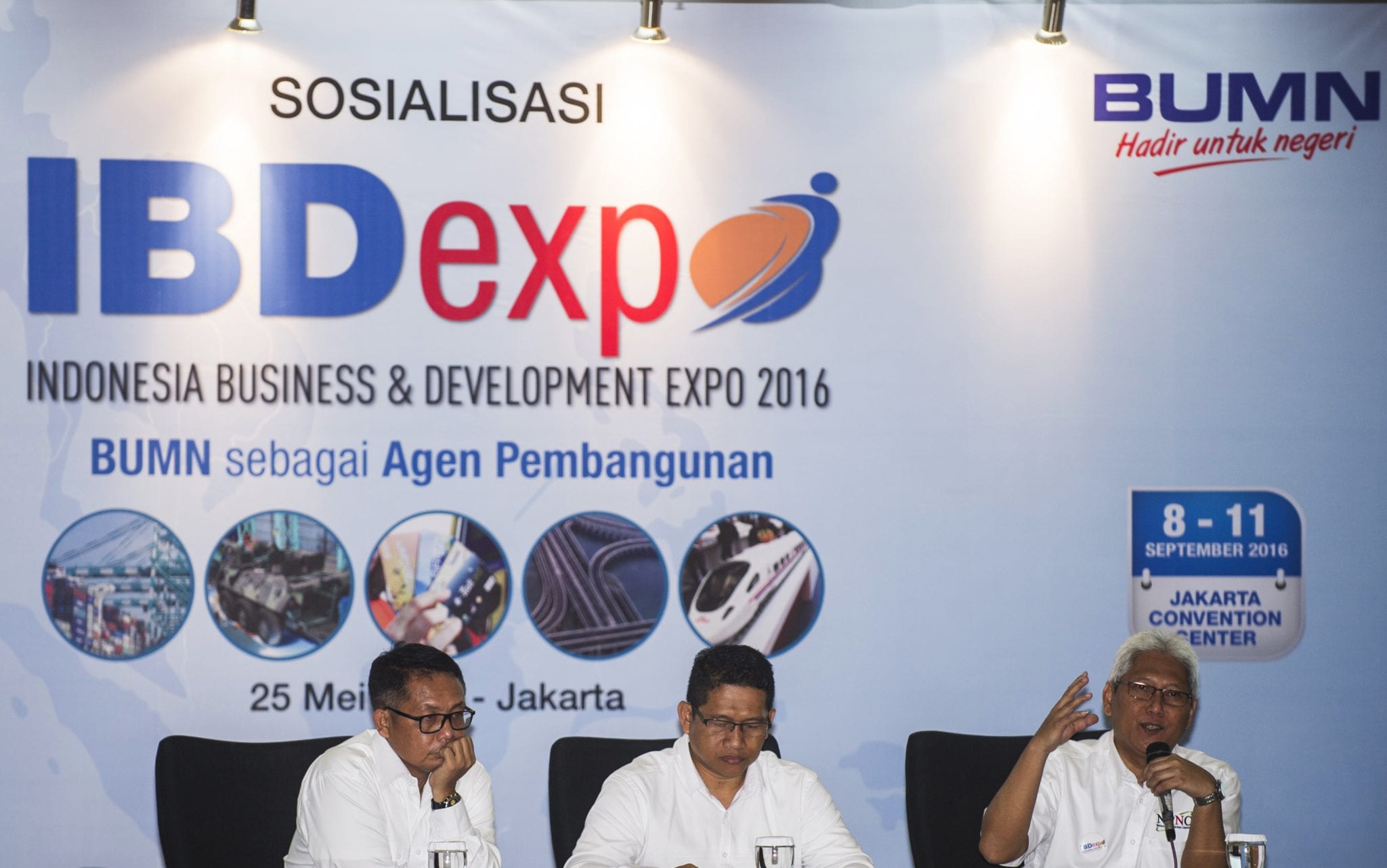
    The Minisitry of State Owned Enterprise of Republic of Indonesia (MSOE), announced on Friday that it will hold Indonesia Business and Development Expo (IBDExpo) 2016 on September 8-11, 2016 in Jakarta Convention Center. This event is organized by National Publishing and News Corporation (NPNC), a consortium of media-focused SOEs consisting of Antara News Agency, Balai Pustaka, National Publishing of Indonesia (PNRI), and PFN.

    Themed “SOE, an Agent of Development,” IBDExpo 2016 will be participated by almost all of 118 Indonesian SOEs and ROEs. The event is designed to promote all of the achievements, innovations, and the role of SOEs to the nation, as well as publicly sharing the commitment of SOEs to develop and empower the underserved and underdeveloped regions which is in accordance with the President Jokowi’s Nawacita vision.

    The event will include a number of side events such as the corporate exhibition, International Conference, Ministerial Lecture by the Minister of SOE, Rini Soemarno, business matching, SOE Career Opportunity, and Partnership and Community Development Program (PKBL) Pitching. This year’s IBDExpo also presents a number of domestic and international keynote speakers, such as Singapore’s Temasek and ICBC China.

    Open to public and free of charge, IBDExpo 2016 will also feature a number of flagship products and innovations of SOEs, such as: the Indonesian military producer, Pindad, that will exhibit firearms and Tank Anoa; PT PAL that will bring their ships; a mock-up of High-speed Train, a project of PT Kereta Cepat Indonesia China; and a flight simulator of PT Dirgantara Indonesia. In addition, the visitors can expect folk art and mini theater playing the films produced by PFN every day during the expo.

    IBDExpo 2016 is scheduled to be inaugurated by President Joko Widodo on September 8 2016 and attended by the Ministers of Republic of Indonesia, the legislators, the ambassadors, and a number of the C-suite invitees.

  • Iflix wants to become a social media platform for TV

    Iflix wants to become a social media platform for TV

    Emerging subscription-based streaming video service iflix intends to set itself apart from Netflix by becoming a social media platform for television, according to company executive.

    “Netflix is very much into an original production base… they are really focusing their investment on content and user experience and interface,” Cam Walker, chief executive of iflix Indonesia, told telecomasia.net at the sidelines of Communic Indonesia and Broadcast Indonesia 2016, which kicked off Wednesday at the Jakarta International Expo in Kemayoran, Central Jakarta.

    “We have just most recently decided to venture beyond entertainment into becoming a truly social platform for television.”

    To do that, Walker said the company is planning to introduce more social media components and interactive features to the service. For instance, the company will offer a social feature later this year where users can chat with others or interact with local celebrities who have drawn up movie playlists for them.

    Iflix launched its service in Indonesia in mid-June this year and garnered 250,000 activations in about two-and-a-half months.

    Walker said the Indonesian market is relatively new from an OTT perspective and doesn’t see other streaming services as competitive, as they are all heading in different paths.

    “We’re the new kid on the block. We started a couple of years as a cool internet TV concept, with a vision to provide a better service to piracy and a viable alternative at an affordable price point,” he said.

    iflix is now offering 2,000 seasons of 900 programs, 5,000 episodes of 200 kids programs and local content acquired from partners for its Indonesian viewers.

    Walker said iflix will soon produce its first local Indonesian content that will open more opportunities for local actors, producers, directors, scriptwriters and “the new breed of Indonesian talents.”

    “We’re going to be investing heavily in local productions and local acquisitions as well, which I think will differentiate us from the major international players,” he said.