Tag: jakarta

  • BNI chalks up Rp2.9 trillion in net profit in first quarter

    BNI chalks up Rp2.9 trillion in net profit in first quarter

    Publicly traded lender PT. Bank Negara Indonesia Persero Tbk reported Rp2.9 trillion in net profit in the first quarter of this year up 5.5 percent year-on-year.

    The profit was attributable mainly to net interest income especially interest on infrastructure credits, Achmad Baiquni, the president director of the state owned bank said here on Tuesday.

    Its net interest income grew 13.3 percent to Rp6.91 trillion in the first three months of 2016 from Rp6.09 trillion in the same period last year.

    “The net interest margin (NIM) of the bank was 6.1 percent in the first quarter of this year,” Baiquni said.

    The NIM of the countrys fourth largest bank in asset, rose with a strong 21.2 percent growth in credits to Rp326.74 trillion in the January-March period of 2016 from Rp269.51 trillion in the same period in 2015.

    Credits for the business and consumption sectors were the largest contributors to its credit expansion, Baiquni said.

    Credits for the business, which grew 22.7 percent (yoy) to Rp234.2 trillion in the first quarter of 2016, accounted for 71.7 percent of the banks total credits.

    Credits for the construction sector surged 127.5 percent to Rp5.99 trillion and credits for the consumption sector rose 9.8 percent to Rp57.56 trillion in the first quarter of 2016.

    The bank also recorded an increase in fee based income , up 16.4 percent to Rp2.22 trillion .

    The third party funds held by the bank rose 21.8 percent (yoy) to Rp371.5 trillion in the first quarter of 2016 .

    Cheap funds accounted for 58.5 percent or around Rp217.5 trillion of the third party funds – or an increase of 12.9 percent (yoy).

    The credit expansion that grew 21.2 percent and the third party funds that increased 21.8 percent resulted in 25 percent rise (yoy) in its assets to Rp509.09 trillion in the first quarter of 2016 .

  • Uber starts motorbike taxi service in Indonesian capital

    Uber starts motorbike taxi service in Indonesian capital

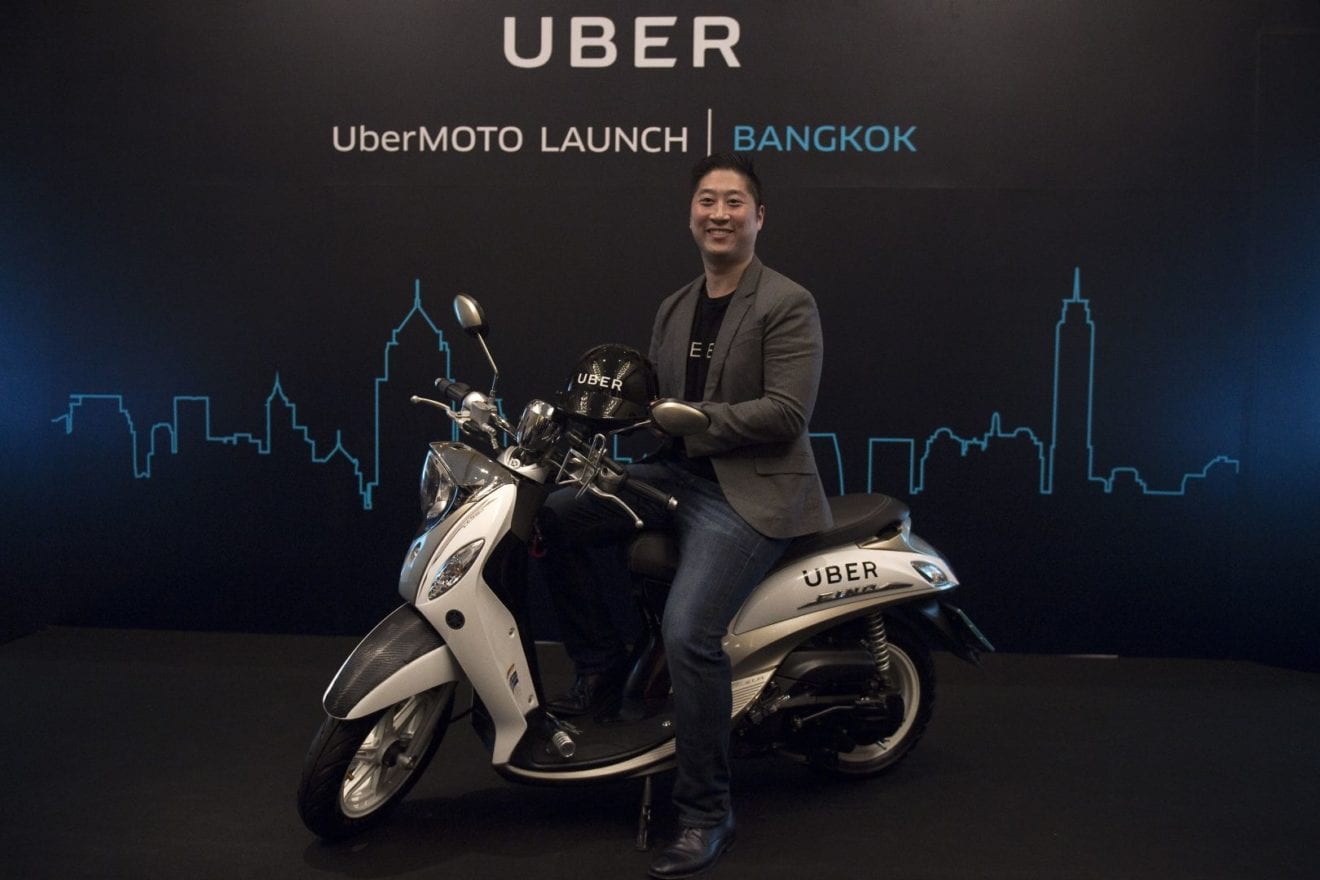
    Ride-hailing app Uber on Wednesday launched a motorbike taxi service in the Indonesian capital where Southeast Asian rivals Go-Jek and Grab are already battling for dominance.

    Jakarta is one of the world’s most congested cities and motorbike taxis ordered from a smartphone app have exploded in popularity in the past 18 months as a way to beat snarled traffic.Uber said that its “UberMotor” service would provide cheap and reliable transportation for hundreds of thousands of people.The company used a local social media and YouTube star Arief Muhammad to launch its service, saying he was the first person in Jakarta to use an Uber motorcycle taxi.

    Both Go-Jek, an Indonesian startup, and Grab, which operates in several Southeast Asian countries, claim to be the biggest provider of motorbike taxi rides in Indonesia.The popularity of motorbikes and regular taxis ordered from a smartphone has provoked a backlash in the taxi industry.Thousands of taxi drivers caused traffic chaos in Jakarta last month in a violent protest against what they believe is unfair competition.

    Drivers say the apps, which are using funding from venture capitalists to offer heavily discounted fares, have severely reduced their income. The app companies say the transport industry should adapt to new technology.The Indonesian government is drawing up new regulations to govern transport apps but has so far resisted calls to ban Uber and similar services.Officials estimate Jakarta’s traffic jams cause economic losses of about $3 billion a year.

  • IDX Expresses Optimism in Economic Growth

    IDX Expresses Optimism in Economic Growth

    The Indonesian Stock Exchange (IDX) expressed optimism that the companies listed on the IDX would provide positive results as the national economy was predicted to grow by above 5 percent.

    “In 2015, more than 75 percent of stock issuers at the IDX booked profits. Indeed, some of them in the commodity sector recorded somewhat significant drop. Meanwhile in 2016, we believe that the economic growth will be above 5 percent,” IDX president director Tito Sulistio said in Jakarta on Wednesday, April 13, 2016. Tito added that the Bank Indonesia (BI) rate cut to 6.75 percent and the potential of capital inflow following tax amnesty policy were among the factors that would support the national economic growth.

    “Hopefully, the tax amnesty [policy] will work. Therefore, it is expected that Indonesia will see a capital inflow of about Rp 3,000 trillion (US$220.6 billion) to build infrastructures that are important for the economy. The fund could also be invested in the capital market,” Tito explained.

    He promised that he would encourage domestic companies to obtain funds for expansion by, for instance, holding IPOs. Tito added that the IDX would call on state-owned companies to conduct privatization through the IPO mechanism.

    Earlier, IDX director of corporation assessment Samsul Hidayat said that a number of regional development banks planned to hold IPO in order to increase their capital and distribute credit to wider consumers. In addition to banks, Samsul revealed that a number of state-owned construction subsidiary companies, such as PT Waskita Beton Precast, mulled to hold an IPO.

  • Jakarta Convention Center to hold biggest marine tourism expo

    Jakarta Convention Center to hold biggest marine tourism expo

    The Tourism Ministry supports the countries biggest marine adventure tourism exhibition, “Deep & Extreme Indonesia 2016”, which will be held at the Jakarta Convention Center, from March 31 to April 3, 2016.

    “The Tourism Ministry supports the organizing of the event. Lets explore the beauty of Indonesias underwater world,” Tourism Destination Development Deputy of the Tourism Ministry Dadang Rizki said here on Sunday.

    Organized since ten years ago, the exhibition is the biggest and most complete of its kind held in the country. It explores marine tourism markets in various regions to be developed into world best diving tourist destinations.

    It is admitted that Indonesia is best for its beautiful undersea world with various diving destinations such as Raja Ampat in West Papua; Bunaken in Manado (North Sulawesi); Lembeh Bitung in Lombok (West Nusa Tenggara/NTB); Labuan Bajo in East Nusa Tenggara (NTT); Wangi-Wangi, Kaledupa, Tomia and Binongko in Wakatobi (Southeast Sulawesi); and Morotai as well as Halmahera in Ambon (Maluku).

    Indonesia has thousands of places of this kind that are scattered across the country from Sabang in Aceh Province to Marauke in Papua Province, he said.

    Dadang explained that the Indonesian underwater world is host to various coral reefs which serve as habitat for more than 2,000 fish species and various sea biota.

    Different fish species such as wrasse, dansel, trigger, sweetlip and unicorn are all can be found there. There are also various big fish species such as tuna, marlin, hammer head sharks, sailfish, yellowfin tuna, barracuda, dolphin and whales.

    Different tourism operators and diving organizers, government organizations, tourism promotion boards and travel bureaus will take part in the exhibition.

    The operators and diving organizers will display diving operator ship and various diving accessories, and other water sport devices. They will also exhibit underwater photography equipment.

  • BNI Set to Penetrate ASEAN Market

    BNI Set to Penetrate ASEAN Market

    Bank Negara Indonesia (BNI) president director Achmad Baiquni said that state-owned lender BNI would expand its business in other Southeast Asian countries, in addition to Myanmar.

    “There are some countries targeted by BNI, but we can’t reveal them yet, because it’s too early,” Baiquni told us during a tree-planting event at kilometer 59 of the Jakarta-Cikampek toll road on Saturday, March 26, 2016.

    Baiquni added that the expansion plan would be executed based on existing business potentials. Myanmar was selected since other state-owned companies were expanding their business in the country.

    “We have to follow our customers,” Baiquini explained.

    Baiquni admitted that BNI had looked into the business potential in Myanmar. He also expected that the expansion plan would be realized this year.

    BNI and Bank Mandiri are preparing to expand their businesses in the ASEAN market prior to Financial Services Authority’s agreement signings with Central Bank of Myanmar and Bank Negara Malaysia.

  • All eyes on Indonesia’s e-commerce pie

    All eyes on Indonesia’s e-commerce pie

    Squinting at the electronic tablet screen, shopkeeper Maihar tapped the colourful icons to top up her customer’s mobile phone credit.

    “Today I sell phone credits. Tomorrow I will run an online grocery store from my bed,” the 59- year-old told The Sunday Times from her small provision shop in Jakarta, which she has been running for the past 20 years.

    “I used to be ‘gaptek’. I knew only how to switch the computer on and off,” she said, using the Indonesian slang “gagap teknologi”, which refers to people who are technologically backward. “But the Internet is changing the way we do business so I am learning to use it.”

    Madam Maihar made the plunge into cyberspace four months ago when she was introduced to Kudo, a local tech start-up which allows “agents” like her to sell clothes and concert tickets from its 10-odd merchant partners through a shopping application installed on its tablets.

    So far, she has used it to pay utilities and phone bills for her customers. In return, she gets shopping discounts from Kudo.

    GETTING ON THE DIGITAL BANDWAGON

    I used to be ‘gaptek’. I knew only how to switch the computer on and off. But the Internet is changing the way we do business so I am learning to use it.

    MADAM MAIHAR, an Indonesian shopkeeper, using the Indonesian slang “gagap teknologi” to refer to people who are technologically backward.

    Small-time entrepreneurs like Madam Maihar as well as big capital owners and tech start-ups like Kudo and others, including from Singapore, are all eager for a piece of Indonesia’s e-commerce pie, valued at US$12 billion (S$16 billion) in 2014 and US$18 billion last year.

    Billed as the next frontier in e-commerce after China and India, Indonesia’s market is expected to swell to US$130 billion in 2020, with an annual growth of 50 per cent, Information and Communications Technology Ministry spokesman Ismail Cawidu told The Sunday Times.

    The government wants e-commerce to become “Indonesia’s backbone in digital economy so we can become the biggest in Southeast Asia in 2020”, he said. It will soon roll out a road map for the industry that will provide clear guidelines on logistics services, financing for start-ups, consumer protection, taxes and cyber security.

    Recognising Indonesia’s digital potential, Singapore’s Foreign Minister Vivian Balakrishnan during a visit to Jakarta in January proposed a new partnership between the two neighbours.

    “We believe Indonesian universities and technical institutes will produce many graduates with digital skills and we are thinking of launching a scheme in which Singapore companies which are looking for talent will be able to recruit talent here, deploy them here and provide services for the rest of the world,” Dr Balakrishnan said.

    With nearly a third of its 250 million population able to access the Internet, seven in 10 of whom do so on their smartphones, Indonesia has a ready captive market.

    This, coupled with low labour costs and growing affluence, is a big draw for budding tech firms.

    Mr Ivan Tan, IE Singapore’s group director of South-east Asia Group, which has helped 50 Singapore firms to collaborate with Indonesian players, said: “The increased spending power of the middle class and the rapid adoption of new technology will drive e-commerce growth in this country.”

    While traditional on-demand transport, food and shopping services such as Go-Jek motorcycle-hailing service and Tokopedia online marketplace continue to dominate the industry, new ventures such as UangTeman, which provides short-term micro loans online, and HaloDiana, a private virtual assistant, have sprung up.

    Low Internet penetration rates and service gaps such as poor infrastructure which drive up logistical costs, patchy mobile connectivity and limited banking facilities have spawned a new breed of innovative businesses.

    For instance, Kudo, whose investors include two from Singapore, targets the “have-nots” by recruiting agents in rural locations to shop on behalf of their less technologically savvy communities.

    Bareksa, an investment portal start-up, allows people to start mutual funds online with only $10 without stepping into a bank.

    Singapore firms also are jumping on the bandwagon, despite challenges such as language barrier, few business connections, foreign investment restrictions, bureaucracy and online payment problems.

    SingPost said it has “a special arrangement with Pos Indonesia” with full online tracking and work sharing at a discounted price that helps to lower logistic costs and cut delivery times for Chinese e-commerce giant Alibaba merchants selling to the Indonesian market.

    Mr Henry Chan, business development head at ShopBack, which returns a portion of cash to shoppers who buy through the website, said while China has high demand, its “competitiveness is also very, very high”.

    “Indonesia is closer to home and something we can relate to a lot more on a cultural basis,” he said.

    Despite an “imperfect ecosystem”, from unclear government regulations to Indonesians’ love for haggling, it is only a matter of time before the country completely embraces the idea of e-commerce, technology experts say.

    Said Indonesian Internet Service Providers Association chairman Jamalul Izza: “There’s no way but up. When we are lazy to go out or get stuck in a traffic jam, what else is there to do but shop or buy food online?”

  • Lippo Group Launches Web-Based E-Procurement Service Mbiz.co.id

    Lippo Group Launches Web-Based E-Procurement Service Mbiz.co.id

    Mbiz.co.id offers an integrated and web-based e-commerce experience. It offers an electronic catalog of thousands of products in  various categories, ranging from IT products, stationary and industrial tools to groceries, provided by a number of certified vendors in Indonesia.

    “The value of sales from online retail in Indonesia is less than 1 percent of the total [bricks-and-mortar] retail sales,” said Andrew Mawikere, co-founder of Mbiz.co.id, describing the growth potential in the sector.

    Christopher Hartono, head of general services at Bank Nobu, a bank owned by the Lippo Group, said ever since the lender cooperated with Mbiz.co.id since October last year, the company was able to easily acquire any goods it needed.

    “Transactions became more transparent and convenient,” he said.

  • Everything you need to know about payments, ecommerce, and venture capital in Indonesia

    Everything you need to know about payments, ecommerce, and venture capital in Indonesia

    Macquarie’s annual conference in Jakarta on telecoms, technology, and ecommerce is one you shouldn’t miss. Last week, it brought together top decision makers in Indonesia’s digital economy.

    Macquarie Group’s corporate advisory branch Macquarie Capital gained relevance in Asia’s tech industry through advising startups and tech companies on capital raising, IPOs, as well as mergers and acquisitions. It’s, for example, responsible for advising aCommerce and PropertyGuru on their recent fundraises.

    Speakers at the event included Indonesia’s tech minister Rudiantara; executives of the three major telcos Telkom, Indosat, and XL; CEOs of retail giants; venture capitalists; and founders and CFOs of Indonesia’ most talked-about startups.

    Here are two days of back-to-back panels, distilled into digestible insights.

    1. A new ‘light touch’ approach to internet regulations

    Indonesia produced its share of confusing headlines about internet policies. Suddenly it wants to regulate everything: ecommerce, transportation, foreign investments.

    The new mantra is a “light touch approach” – allow change to happen and regulate where necessary.

    While opaque announcements caused concern, it’s obvious the current administration sees the digital economy as a key factor defining Indonesia’s future. It’s willing to go great lengths to support its growth.

    If you listen to tech minister Rudiantara or trade minister Thomas Lembong speak on the subject, you’ll hear their new mantra is a “light touch approach” – allow change to happen and regulate where necessary.

    It may still take some time for the administration to adopt the new mantra, but Rudiantara demonstrated he walks the talk when he refused transportation minister Jonan’s request to block access to app-based transportation services Grab and Uber. The Macquarie event coincided with a day of massive street protests organized by the taxi industry.

    Indonesia’s information and communications technology minister Rudiantara.

    Indonesia’s information and communications technology minister Rudiantara at a Tech in Asia event.

    2. Retail’s inevitable shift to ecommerce is on the way

    Similar to the changes in the transportation industry, a shift to ecommerce from offline retail is inevitable, Lippo Group director John Riady said. Consumers would eventually demand the higher convenience and product variety made possible by ecommerce.

    Lippo Group was an early mover last year when it launched its ecommerce endeavor Matahari Mall. This year, most of the big traditional retailers in the archipelago are getting on board with ecommerce plans of their own. Luxury brand retailer Mitra Adiperkasa is one of them, launching Map Emall in February.

    Lippo and Mitra Adiperkasa have taken different paths to achieving this shift to digital. Lippo’s strategy was to assemble a team of ecommerce professionals to start Matahari Mall from scratch as a separate corporation. Mitra Adiperkasa prefers to keep things close to home and manages its ecommerce site from within.

    Both John Riady and Ravi Kumar, COO at Mitra Adiperkasa, agreed that logistics and payments are still challenges to overcome. Indonesian shoppers lack trust in online payments.

    Facebook’s Head of ASEAN Kenneth Bishop offered advice on how to encourage customers to build trust: ecommerce applications should consider adding social features that let buyers ask questions before making a purchase.

    vp-sharma-map-emall-

    Mitra Adiperkasa’s VP Sharma launches Map Emall.

    3. A mobile world means engaging with customers around the clock

    The challenges of creating online services for a mobile-first market cropped up often in the discussions. Large parts of Indonesia’s young generation are coming online for the first time with smartphones, and don’t have access to desktop computers.

    Anthony Fung, the CEO of Zalora, and Fajrin Rasyid, CFO at Bukalapak, both observed that visits and transactions from mobile devices had overtaken those from desktop computers.

    Along with the shift to mobile comes a shift to new shopping behaviours. Whereas most online shopping used to occur during work hours, that pattern is starting to fade. Potential customers can now be engaged throughout the day, and even late in the evening.

    This requires brands to build even stronger emotional bonds with their customers. Zalora for example does this by focusing not only on selling products, but having a sense of fashion of its own. “If we want to be a fashion player, we need to be fashionable, know the trends, or even create them” said Anthony.

    4. More Youtube stars and on-demand video portals

    A more robust mobile infrastructure and Indonesia’s shift to 4G means streaming video on mobile devices is easier than ever.

    mobile-messaging-indonesia-BBM

    Mobile phones are part of everyone’s lives.

    This will likely lead to a digital video explosion this year. On one side that’s going to be user-generated content created by Indonesian millennials on platforms like YouTube, where social media stars like comedian Raditya Dika are already raking in millions of views on popular videos.

    There will be an explosion of digital video content this year.

    On the other are video streaming portals like iFlix, that offer quality international and regional video content for a subscription fee. iFlix will come to Indonesia in a tie-up with one of the local telcos, iFlix special advisor David Goldstein said at the Macquarie event.

    It must have learned from US-based competitor Netflix’ mistakes. Netflix got blocked by Indonesia’s state telco Telkom and its mobile operator subsidiary Telkomsel after it launched here last month.

    Video streaming is a sensitive issue in Indonesia for two reasons – first, content provided by on-demand portals will have to undergo the scrutiny of the local censorship body, and second, it eats up a lot of bandwidth, which is a challenge for the telcos.

    Regional players who understand Indonesia’s cultural sensitivities and partner with telcos could have the upper hand in the archipelago – that’s clearly the path Malaysia’s iFlix intends to take.

    5. Southeast Asia grows closer through startup mergers and acquisitions

    Tech startups growing into regional enterprises in Southeast Asia is an ongoing trend.

    Adrian Vanzyl, co-founder and CEO of Thailand-based Ardent Capital just went through a major merger with one of Ardent’s portfolio companies, Moxy. The women-focused ecommerce portal merged with Indonesia’s Bilna, forming Orami.

    “Mergers and acquisitions are a really good way to expand into markets with speed and efficiency,” Adrian said.

    After an initial phase of bringing together the teams and creating a new company culture, an effective merger or acquisition can be cost saving compared with trying to conquer a new market alone. “You’re in a new league of traction numbers and you can talk to a new league of investors,” Adrian explained, which is why he’s confident that we’ll see more merger and acquisitions in Southeast Asia’s tech sector this year.

    Orami-launch-event-team

    Moxy and Bilna rebrand as Orami after a completing one of the biggest ecommerce mergers Southeast Asia has seen so far.

    6. Profitability can wait

    The potential in Indonesia’s digital economy is so good that startups should focus on growth and brand building, not immediate profitability.

    Startups should focus on growth and brand building, not immediate profitability.

    Most of the players in Indonesia’s startup ecosystem, whether big ecommerce companies like Matahari Mall or on-demand services like Go-Jek, are not profitable yet.

    But that’s not the issue, John Riady said. “Focus on long-term value, not immediate profitability, make sure you can withstand trends and fluctuations,” he suggested.

    What’s necessary is a clear path toward profitability. Bukalapak’s Fajrin Rasyid said ideally, a startup should be able to switch between a profitability mode and growth mode at will. However, the panel agreed, there are also market forces at play which may force a startup to spend more to stay in the race.

    7. Waiting for a breakthrough in online payments

    What’s needed to catapult Indonesia’s digital economy to the next level is an online payments system that is widely accepted, works smoothly on mobile devices, and makes it easy and safe for customers to pay for things online.

    So far, there’s no such solution. Online payments are fragmented and complicated, which leads to many customers abandoning transactions.

    “Ecommerce payment methods have changed little in the past year,” said Chris Eyles from Fusion Payments who moderated the fintech panel at the Macquarie Event. “Over 50 percent of ecommerce transactions are still paid for via asynchronous offline payments such as cash on delivery and bank transfers which is limiting ecommerce growth and costing online retailers a lot of lost orders,” he added.

    startups-lending-money-poor-indonesia

    Payments are best done offline in Indonesia.

    One problem is that banks are still on the fence about their strategy in dealing with online transactions, which is holding back the entire ecosystem.

    Indonesian banks, for now, seem to prefer mobile wallet systems, but it has led to a situation where each bank offers its own ewallet version.

    Telcos also each have their own ewallets, but are planning closer collaboration in the future, which could possibly lead to the merger of the wallets of the three major telcos – a silver lining in Indonesia’s siloed payments landscape.

    Chris also observed that Indonesia’s fintech ecosystem lacks funding. “Why has Indonesia yet to see any major investments in the fintech space despite hundreds of millions being invested in the local ecommerce industry?” he asked.

    It could be due to unclear regulations, the dominance of banks, economic uncertainty, or a lack of suitable companies to invest in – most likely a mixture of all four factors.

    What became obvious is that Indonesia needs a breakthrough in online payments for its digital economy to make a leap. If there’s no local solution, it could fall into the hands of a global player to fill that gap.

    8. Investors continue to find value in Indonesia’s tech sector but are getting pickier

    Indonesia-landscape

    Anupam Garg, who leads Macquarie Capital’s telcos, media, and technology investments advisory in Asia, observed that the investing community still shows a great deal of optimism on the Indonesian technology space, despite there now being a higher focus on unit economics when assessing the value of individual businesses.

    “We expect tech fundraising to continue to thrive in Indonesia with some potential pickup in M&A activities,” he said.

    The general outlook was optimistic on a panel with VCs from some of the most active funds in Southeast Asia. The advice was to pick investments wisely, and to avoid certain verticals..

    Steven Venada form CyberAgent Ventures said that there already are three big winners in the ecommerce space: classified, retailers, marketplace. He doesn’t see many more opportunities for startups in this space, “unless you can outgrow them by 10x,” he warned.

    Better chances, according to him, are now in different verticals and niche markets.

    Stefan Jung from Venturra Capital explained his own caution about investing in fintech. “Should I wait until the regulation in this space becomes more clear?” he asked. “But then maybe I’m too late. Fintech is one of the most outstanding opportunities on a global level.”
  • Indonesia Asks Ride-Hailing Apps Like Uber, Grab To Register Cars By May

    Indonesia Asks Ride-Hailing Apps Like Uber, Grab To Register Cars By May

    Indonesia asked ride-hailing apps such as Grab and Uber to partner with a transport business and register their cars by the end of May if they want to continue to operate in the country, Indonesia’s Transportation Minister Ignasius Jonan.

    “Uber, Grab are app companies. If they want (to operate), they have to partner with a transportation business entity, like a car rental company,” Jonan told reporters.

    Traffic in the capital Jakarta came to a complete halt Tuesday as taxi drivers caused traffic jams by blocking off several main roads to protest in response to the Indonesian government’s apparent refusal to regulate or outright ban ride-hailing services.

    Local news footage as well as videos posted on social media sites reportedly showed enraged taxi drivers pulling fellow drivers who were not part of the protest out of their vehicles and assaulting them on Tuesday.

    Similar protests have erupted against ride-hailing apps such as Uber in London, Paris, the U.S. and parts of Brazil among other places as the apps have ushered in cheap taxis and threatened the business model of traditional taxi drivers.

    “Even before the demonstration, we had started the process to help our drivers form a cooperative unit and meet the requirements,” Ridzki Kramadibrata, managing director of Grab Indonesia.

    Donny Sutadi, Uber Indonesia’s commissioner, reportedly said that they would partner with a car rental company.

  • Equinix expands Jakarta data center

    Equinix expands Jakarta data center

    Equinix has expanded its JK1 data center in Jakarta, through its partnership with DCI Indonesia (DCI).

    Coupled with its alliance with DCI and a premium connection with the Indonesian Internet Exchange (IIX), the second phase of development at JK1 is an indicator of Equinix’s continued commitment to the region, the company said.

    JK1 phase two will add approximately 400 cabinets to the data center, doubling available capacity to a total net size of 800 cabinets. The expansion is scheduled to be completed by the end of the month.

    Through the DCI and Indonesian Internet Service Provider Association (APJII) collaboration, JK1 enables direct peering connection to the IIX. Companies can also access Equinix’s highly interconnected International Business Exchange (IBX) data centers across strategic global markets via existing major network providers.

    JK1 is located at Cibitung, approximately 30 km from the Sudirman Central Business District (SCBD), and offers a range of colocation, interconnection and support services.

    The carrier-neutral facility will be bringing more carriers into the data center to enrich network density by partnering with Indonesian Internet Service Provider Association (APJII) to provide more options for direct peering connection to the IIX.

    The expansion is in line with the steady growth of the company’s global interconnection platform, in which Equinix has invested more than $7.5 billion over the last 17 years.

  • Governement Prepare Regulation for Foreign OTT Companies

    Governement Prepare Regulation for Foreign OTT Companies

    Communication and Informatics (Kominfo) Ministry is reported to have been preparing a regulation on foreign over the top (OTT) content provider companies operating in Indonesia. The regulation is expected to be issued at the end of March 2016. One of the articles in the regulation will oblige foreign OTT companies to form establish a legal entity in Indonesia. Bambang Heru Tjahjono,

    Director General of Informatics Application of the Kominfo, confirmed the plan. “Yes, [the regulation will be issued] at the end of March,” Bambang told us on Sunday, March 20, 2016.

    Bambang however, dismissed reports saying that the Kominfo would ban foreign OTTs who failed to establish a business entity in Indonesia.

    In an attempt to response to emerging foreign OTTs, Bambang said that the government will offer win-win solutions. “We will not necessarily ban foreign OTTs. The most important thing for Kominfo is [to focus on] customer service and consumer protection issues,” Bambang said.

    According to Nonot Harsono, Chairman of the Indonesian Telematics Society, regulation on foreign OTTs, particularly related to the obligation to establish a business entity in Indonesia, is required to maintain Indonesia’s sovereignty.

    Nonot explained that the presence of foreign OTTs in Indonesia without permanent business entity is comparable to vendors selling their merchandises inside a house without permission. The lack of license and business entity, Nonot added, could be considered as unethical conduct and ignoring the government’s sovereignty.

  • Indonesians share memorable Twitter moments to mark 10th anniversary

    Indonesians share memorable Twitter moments to mark 10th anniversary

    The Twitter logo appears on an updated phone post on the floor of the New York Stock Exchange. The social media site famous for its 140-character “tweet” limit turned 10 years old on Monday, having evolved from what was originally billed as a microblogging site into one of the internet’s most influential means of communication.

    Online social networking service Twitter on Monday celebrated its 10th anniversary, gathering many tweeters in Jakarta, including some of the nation’s most prominent figures.

    During the celebration, they shared their most memorable experiences with the microblogging site using the hashtag #KarenaTwitter (because of Twitter).

    Religious Affairs Minister Lukman Hakim Saifuddin, who spoke at the event on Monday evening, said Twitter had allowed him to express himself freely and to talk people who he might never have had an opportunity to meet with otherwise.

    Lukman said he signed up to the microblogging site in 2009 and admitted it was his most favorite social media platform.

    “After some comparison, Twitter is more enjoyable because of its short word count of only 140 characters and you can have a dialogue and unlimited communication,” he said.

    The minister added that the social media platform had exposed him to a wealth of information on a daily basis and prompted him to continue to learn new things, be more engaged and enrich his general knowledge.

    “Because of Twitter I feel stupid. There are many things I didn’t know about. The more people I meet on Twitter, the more I realize that I don’t know so many things,” Lukman said.

    Despite having almost 200,000 followers, the minister said his account was not yet verified.

    Singer Andien, who performed at the event, said Twitter had enabled her to get to know her now husband, Irfan Wahyudi. “This is a true story – without Twitter I may not have married my husband,” she said.

    Andien said she met her husband in 2002 but they did not become close until 2009, after she joined the social media platform. Andien explained that when she lost her cell phone that year, she messaged all her friends on Twitter with her new phone number. Among them was Irfan. After that, she and Irfan started to communicate more often and eventually grew closer. The couple married in May last year.

    Twitter Indonesia’s business head Roy Simangunsong thanked the Indonesian Twitter community for their continued enthusiasm. He said 77 percent of Twitter users in Indonesia were active daily tweeters. Of that amount, over half send out two tweets per day on average.

    Twitter had been witness to many historical moments in Indonesia, Roy said. Today, the wide range of interests and public sentiments can also be seen in the various hashtags that are used, he added.

    “From simple things like how they find a mate to gaining the confidence to be able to do business and become part of the everyday world using Twitter, we can see how Twitter has become an important element of Indonesian society,” Roy said.

  • Jakarta taxi drivers protest against Uber and Grab

    Jakarta taxi drivers protest against Uber and Grab

    Thousands of Indonesian taxi drivers have brought parts of the capital, Jakarta, to a standstill in a protest against transport apps.

    The drivers say ride-hailing apps, such as Uber and Grab, have severely reduced their salaries.

    Footage from Jakarta showed some protesters attacking vehicles and apparently threatening taxi drivers not taking part in the strike.

    The drivers have been joined by bus and “bajaj” motorbike drivers.

    Mobile apps like Grab and Uber have disrupted the transportation industry across Asia, and other parts of the world.

    Taxi drivers say they’ve been disadvantaged because the apps do not face the same costs and regulations as they do.

    ‘They are destroying us!

    The protest is far bigger than similar action taken last week. She said it was impossible to get a taxi in the city centre.

    The protesters have blocked roads outside the parliament, the city administration offices and the ministry of communication, causing massive traffic jams across the already heavily congested city.

    Commuters have expressed frustration at the demonstrations, which also saw tires set on fire.

    “This protest is so terrible. They really are rude and overbearing. I was very hurt,” Dewi Gayatri, who missed her flight for a business trip, told the Associated Press.

    “I still like Uber, and hope the government protects Uber, because it’s so easy to order and cheaper,” she said.

    But for the drivers, many of whom moved to Jakarta to work, the price wars have eroded their ability to support their families,

    “They are destroying us,” Salahuddin, who uses one name like many Indonesians, told the BBC. “We pay tax but because Uber uses private cars they don’t. I am fighting for my survival.”

    Ahmad Rahoyo who operates a bajaj taxi said he used to earn up to 100,000 rupiah ($10; £7) a day, “but since the apps entered Indonesia just covering my costs is hard”

    One man, Hans, said he saw drivers blocking a bus lane.

    “When they saw a taxi driver accepting a passenger they straight away ran over to the vehicle and told the passengers to get out of the taxi,” he said.

    “They threatened them with rocks. I didn’t see them hit anyone but they destroyed the rear vision mirrors of one taxi.”

    Indonesia’s government has appeared divided over the issue.

    The transport ministry has said it is in favour of a ban on ride-hailing apps, since the online and mobile app-based services are not registered as public transport.

    However the communications ministry, which oversees such companies, has said they are legitimately allowed to operate.

    President Joko Widodo has said new technology should be embraced and not banned.

    Global resistance

    Uber, which has sparked conflict with regulators and traditional taxi companies in many US and European cities as well, has expanded aggressively in recent years.

    Its success has led to a slew of localised transport-app companies with similar business models.

    This includes Malaysia-based Grab, which claims to be Southeast Asia’s largest, and Indonesian startup Go-Jek which specialises in motorcycle taxis.

    To try and claim market share, Grab for example, has offered commuters 20 free rides on their motorcycle taxi service.

  • Freelancer.com eyes Indonesia

    Freelancer.com eyes Indonesia

    Online jobs listing platform Freelancer.com is set to expand its presence in Indonesia, with company CEO Matt Barrie praising the country’s efforts to drive innovation and investment in technology.

    Mr Barrie’s comments came as he and his team, including senior vice president of growth, Indonesian-born Willix Halim, played host to a delegation of Indonesian officials in Freelancer’s Sydney offices.

    The delegation, headed by the Indonesian minister of trade Thomas Lembong, discussed a number of topics with Freelancer’s management, with a particular focus on touting the efforts of the Indonesian government to create a more welcoming environment for local and foreign start-ups in the country.

    Mr Lembong said he was committed to making investment leaner, faster and friendlier in Indonesia. Under initiatives signed off by Indonesian president Joko Widodo, the country is looking to potentially reduce start-up capital costs and time for foreign companies to establish themselves in Indonesia.

    The country recently unveiled its e-commerce platform that’s designed to reduce the bureaucratic burden for entrepreneurs

    Mr Lembong also hinted at the prospect of Australian universities given the chance to establish campuses in Indonesia. Both Singapore and Malaysia have had similar policies regarding foreign universities for almost two decades and while the trend of Australian universities branching out geographically is on the wane the move signals the Indonesian government’s desire to boost its local innovation ecosystem.

    Indonesia is an important market for Freelancer, with 1 million of its 18 million users globally hailing from the country.

    Mr Barrie said that he was impressed by the level of activity in Indonesia.

    “I am very impressed with how many people in Indonesia’s cabinet are from the private sector with domain experience directly in the sector of their portfolio,” he said.

    “Why can’t we do this in Australia? It would take how Australia is governed into the 21st century and away from petty politics that is the mainstay of career politicians.”

    “I thoroughly enjoyed discussing the challenges and rapid progress that Indonesia has made and will make through technology-enabled reform and “breaking taboos to get things done” with the minister,” he added.

  • Telkom Books Rp102tn in Revenues

    Telkom Books Rp102tn in Revenues

    State telecom company PT Telekomunikasi Indonesia Tbk. (IDX: TLKM)—also known as Telkom—booked Rp102.47 trillion in revenues last year. The figure represents a 14.24-percent annual growth from 2014’s Rp89.70 trillion.

    “Telkom’s revenue growth to Rp102.47 trillion was mainly supported by a surge of income in the data, internet and IT services business lines,” Telkom President director Alex J Sinaga said in a press release in Jakarta, Monday, March 7

    Telkom’s 2015 revenue increase led to a net profit growth of 7.0 percent to Rp15.49 trillion.

    According to Alex, data, internet and IT segments contributed Rp32.69 trillion to the company’s revenue. This is a 37.5 percent increase from the year before.

    Telkom also noted an increase in the number of fixed broadband customers last year to 3.98 million subscribers, a 17.2 percent annual increase. This increase is attributable to the company’s newest service, IndiHome, which in 2015 pooled in more than a million new customers.

    In the cellular business, Telkom remains as the country’s market leader with 152.64 million subscribers

    The company’s earnings before interest, taxes, depreciation and amortization (EBITDA) in 2015 amounted to Rp51.42 trillion, a 12.6-percent year-on-year growth.

    Meanwhile, the company recorded an operating cost increase of 15.8 percent to Rp70.05 trillion. The rise in expense is mostly due to the company’s aggressive activities in building and modernizing its infrastructure, especially broadband facilities.