Tag: jakarta

  • Jakarta taxi drivers protest against Uber and Grab

    Jakarta taxi drivers protest against Uber and Grab

    Thousands of Indonesian taxi drivers have brought parts of the capital, Jakarta, to a standstill in a protest against transport apps.

    The drivers say ride-hailing apps, such as Uber and Grab, have severely reduced their salaries.

    Footage from Jakarta showed some protesters attacking vehicles and apparently threatening taxi drivers not taking part in the strike.

    The drivers have been joined by bus and “bajaj” motorbike drivers.

    Mobile apps like Grab and Uber have disrupted the transportation industry across Asia, and other parts of the world.

    Taxi drivers say they’ve been disadvantaged because the apps do not face the same costs and regulations as they do.

    ‘They are destroying us!

    The protest is far bigger than similar action taken last week. She said it was impossible to get a taxi in the city centre.

    The protesters have blocked roads outside the parliament, the city administration offices and the ministry of communication, causing massive traffic jams across the already heavily congested city.

    Commuters have expressed frustration at the demonstrations, which also saw tires set on fire.

    “This protest is so terrible. They really are rude and overbearing. I was very hurt,” Dewi Gayatri, who missed her flight for a business trip, told the Associated Press.

    “I still like Uber, and hope the government protects Uber, because it’s so easy to order and cheaper,” she said.

    But for the drivers, many of whom moved to Jakarta to work, the price wars have eroded their ability to support their families,

    “They are destroying us,” Salahuddin, who uses one name like many Indonesians, told the BBC. “We pay tax but because Uber uses private cars they don’t. I am fighting for my survival.”

    Ahmad Rahoyo who operates a bajaj taxi said he used to earn up to 100,000 rupiah ($10; £7) a day, “but since the apps entered Indonesia just covering my costs is hard”

    One man, Hans, said he saw drivers blocking a bus lane.

    “When they saw a taxi driver accepting a passenger they straight away ran over to the vehicle and told the passengers to get out of the taxi,” he said.

    “They threatened them with rocks. I didn’t see them hit anyone but they destroyed the rear vision mirrors of one taxi.”

    Indonesia’s government has appeared divided over the issue.

    The transport ministry has said it is in favour of a ban on ride-hailing apps, since the online and mobile app-based services are not registered as public transport.

    However the communications ministry, which oversees such companies, has said they are legitimately allowed to operate.

    President Joko Widodo has said new technology should be embraced and not banned.

    Global resistance

    Uber, which has sparked conflict with regulators and traditional taxi companies in many US and European cities as well, has expanded aggressively in recent years.

    Its success has led to a slew of localised transport-app companies with similar business models.

    This includes Malaysia-based Grab, which claims to be Southeast Asia’s largest, and Indonesian startup Go-Jek which specialises in motorcycle taxis.

    To try and claim market share, Grab for example, has offered commuters 20 free rides on their motorcycle taxi service.

  • Freelancer.com eyes Indonesia

    Freelancer.com eyes Indonesia

    Online jobs listing platform Freelancer.com is set to expand its presence in Indonesia, with company CEO Matt Barrie praising the country’s efforts to drive innovation and investment in technology.

    Mr Barrie’s comments came as he and his team, including senior vice president of growth, Indonesian-born Willix Halim, played host to a delegation of Indonesian officials in Freelancer’s Sydney offices.

    The delegation, headed by the Indonesian minister of trade Thomas Lembong, discussed a number of topics with Freelancer’s management, with a particular focus on touting the efforts of the Indonesian government to create a more welcoming environment for local and foreign start-ups in the country.

    Mr Lembong said he was committed to making investment leaner, faster and friendlier in Indonesia. Under initiatives signed off by Indonesian president Joko Widodo, the country is looking to potentially reduce start-up capital costs and time for foreign companies to establish themselves in Indonesia.

    The country recently unveiled its e-commerce platform that’s designed to reduce the bureaucratic burden for entrepreneurs

    Mr Lembong also hinted at the prospect of Australian universities given the chance to establish campuses in Indonesia. Both Singapore and Malaysia have had similar policies regarding foreign universities for almost two decades and while the trend of Australian universities branching out geographically is on the wane the move signals the Indonesian government’s desire to boost its local innovation ecosystem.

    Indonesia is an important market for Freelancer, with 1 million of its 18 million users globally hailing from the country.

    Mr Barrie said that he was impressed by the level of activity in Indonesia.

    “I am very impressed with how many people in Indonesia’s cabinet are from the private sector with domain experience directly in the sector of their portfolio,” he said.

    “Why can’t we do this in Australia? It would take how Australia is governed into the 21st century and away from petty politics that is the mainstay of career politicians.”

    “I thoroughly enjoyed discussing the challenges and rapid progress that Indonesia has made and will make through technology-enabled reform and “breaking taboos to get things done” with the minister,” he added.

  • Telkom Books Rp102tn in Revenues

    Telkom Books Rp102tn in Revenues

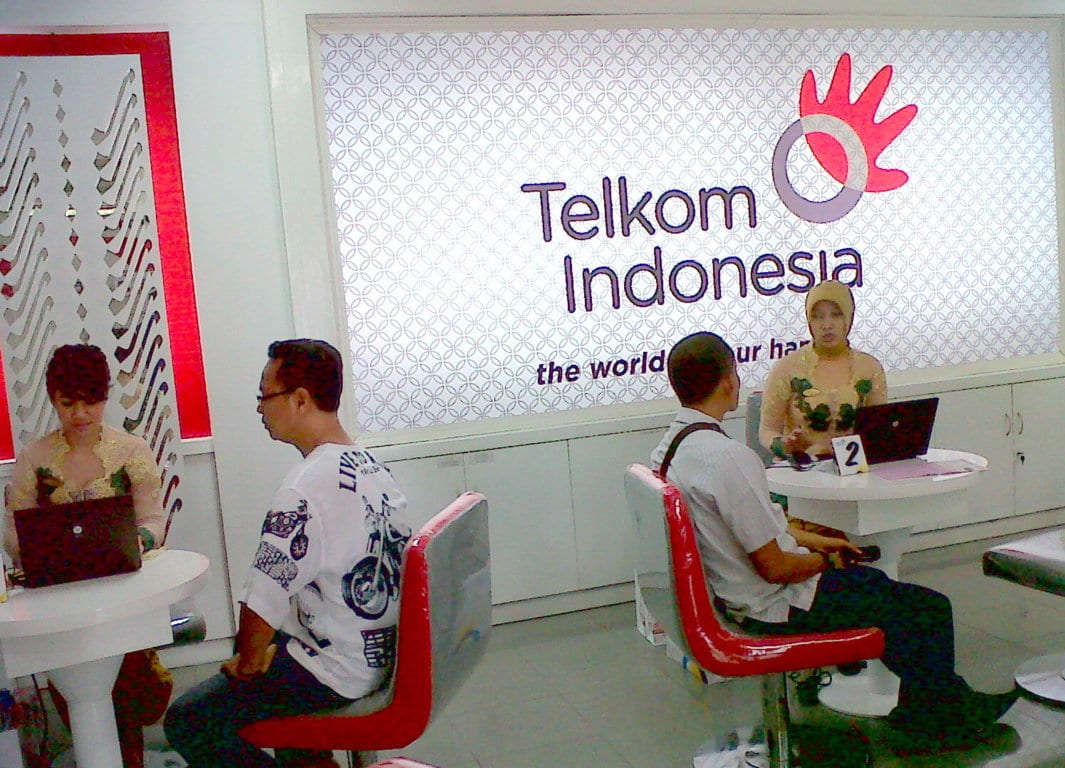
    State telecom company PT Telekomunikasi Indonesia Tbk. (IDX: TLKM)—also known as Telkom—booked Rp102.47 trillion in revenues last year. The figure represents a 14.24-percent annual growth from 2014’s Rp89.70 trillion.

    “Telkom’s revenue growth to Rp102.47 trillion was mainly supported by a surge of income in the data, internet and IT services business lines,” Telkom President director Alex J Sinaga said in a press release in Jakarta, Monday, March 7

    Telkom’s 2015 revenue increase led to a net profit growth of 7.0 percent to Rp15.49 trillion.

    According to Alex, data, internet and IT segments contributed Rp32.69 trillion to the company’s revenue. This is a 37.5 percent increase from the year before.

    Telkom also noted an increase in the number of fixed broadband customers last year to 3.98 million subscribers, a 17.2 percent annual increase. This increase is attributable to the company’s newest service, IndiHome, which in 2015 pooled in more than a million new customers.

    In the cellular business, Telkom remains as the country’s market leader with 152.64 million subscribers

    The company’s earnings before interest, taxes, depreciation and amortization (EBITDA) in 2015 amounted to Rp51.42 trillion, a 12.6-percent year-on-year growth.

    Meanwhile, the company recorded an operating cost increase of 15.8 percent to Rp70.05 trillion. The rise in expense is mostly due to the company’s aggressive activities in building and modernizing its infrastructure, especially broadband facilities.

  • NH Financial Group to Expand into Indonesia

    NH Financial Group to Expand into Indonesia

    NH Financial Group signed a memorandum of understanding (MOU) with Indonesia’s largest bank Bank Mandiri at Mandiri’s main office in Jakarta, Indonesia, on March 1 to cooperate in developing rural areas in the Southeast Asian country.

    Mandiri is the largest lender in Indonesia by assets, capital, loan and deposit balance, and the state-run bank with a 60 percent stake. It also has 2,300 branches and 15,000 automated teller machines nationwide.

    Under the agreement, the two groups will share their financial knowhow and business networks in agriculture, cooperating in a wide range of financial services from banking and insurance to leasing and micro financing in order to develop rural areas in Indonesia.

    In order to do so, NH will offer the group’s knowhow and skills in agricultural finances, such as loans, credit guarantees and insurance for farmers, to Bank Mandiri, boosting financial services in Indonesian agriculture.

    Moreover, Bank Mandiri is aware of the fact that the expansion of NH Financial Group into Indonesia will help developing Indonesian agriculture and has decided to actively cooperate in various sectors.

  • Indonesia International Furniture Expo Targets US$350 Million

    Indonesia International Furniture Expo Targets US$350 Million

    The Indonesian Rattan Furniture and Craft Association (AMKRI) has set a target for the 2016 Indonesia International Furniture Expo (Ifex), held in Jakarta on April 11-14, 2016 with a theme of “The Essence of Infinite Innovation”, to attract 10,000 visitors with a total transaction value of US$350 million.

    “We also set a target to achieve a follow up transaction value of US$1 billion,” AMKRI chairman Rudi Halim told us on Saturday, March 12, 2016.

    Last year, the international furniture expo managed to attract 8,595 visitors with an on-the-spot transaction value of US$270 million and a follow up transaction value of US$700 million.

    The furniture industry has an important role for the national economic growth, since the transaction value of this sector is quite significant. In 2015, Indonesia recorded US$1.902 billion in furniture exports, increasing by 1.3 percent when compared to the previous year.

    Rudi explained that the Indonesia has a huge opportunity to expand its furniture and handicraft market.

    “The global furniture market is currently valued at US$141 billion. Indonesia’s contribution to the global market value stands at US$2 billion, while Vietnam’s stands at US$6.8 billion,” Rudi added.

    The Industry Ministry recorded an increase in the value of wooden and rattan furniture exports. In 2012, the value stood at US$1.4 billion and increased to US$1.8 billion in 2013. The figure continued to rise to US$2.2 billion in 2014. The positive trend reflects optimism that the furniture export value over the next five years will worth US$5 billion.

  • Plaza Indonesia Fashion Week Celebrates New Generation of Indonesia Designers

    Plaza Indonesia Fashion Week Celebrates New Generation of Indonesia Designers

    As the theme for the mall’s anniversary celebration suggests, the fashion week will reflect the so-called “now generation” by putting emerging local designers under the spotlight.

    On Tuesday evening, young designer Yosep Sinudarsono will present his space-inspired spring-summer 2016 collection, continued with Rama Dauhan, whose streetwear designs will be infused by Morrocan and Spanish influences.

    Nikicio, a label whose name has reached cult-like status among the local fashion set, will represent the multi-label store The Goods Dept in its show on Wednesday night. Other show highlights include Opi Bachtiar and Ardistia New York on Thursday as well as Hunting Fields on Sunday.

    A slew of traditional textile-oriented designers will also participate in the fashion week, such as Didiet Maulana of Ikat Indonesia as well as batik brands like Iwan Tirta Private Collection.

    Meanwhile, some notable international labels that will show its collections during the event include Carven and Karen Millen.

    “I’m very excited to be part of Plaza Indonesia Fashion Week,” said Patrick Owen, one of Indonesia’s rising fashion stars whose show on Saturday night will mark the end of the fashion week.

    Patrick will present his latest spring collection, entitled “Jalanan” (“Streets”), which represents “my wildest imagination of how Indonesian streets could be,” he said.

    Known for his exacting tailored pieces and bold artistic prints, the designer will also collaborate with acclaimed illustrator Emte in the show.

    “We’re going to be working together on something backstage during the show, and we will give the audience a surprise by the end,” Patrick hinted.

    But that is not Emte’s only job at the fashion week — he just recently finished a 150-meter-long mural artwork that adorns the hall in which the shows will be held.

    “It is the first time I’ve ever created a work that big,” he said with a laugh.

  • Indonesia exports instant noodle to Palestine

    Indonesia exports instant noodle to Palestine

    Indonesia has opened an opportunity to export instant noodles to Palestine after it has successfully shipped 15 containers to West Bank.

    Foreign Minister Retno LP Marsudi said at the presidential palace compound here on Tuesday following the official opening of the Indonesian Honorary Consulate in Ramallah, economic cooperation between the two countries should increase.

    “The honorary consul is tasked with increasing the economic cooperation. Although it is still very small our trade with Palestine has shown an increasing trend,” she said.

    From 2012 to 2015 the volume of trade between the two countries have jumped remarkably by 300 percent.

    “Yesterday I talked with an importer of eastern noodle to Palestine. Indonesia has shipped 15 containers of instant noodle to the West Bank,” she said.

    Retno said the volume of trade between the two countries has continued to increase and so the presence of the honorary consulate is needed very much to develop the potential.

    “Madam Abu (Maha Abu Shusheh, the Indonesian consul in Ramallah), is a business person who represents a good working network and has been successful not only in Palestine but also in other Arab countries,” she said.

    Minister Retno said she also saw that empowering must be done so that the honorary consulate in Ramallah could also send business men from Palestine to Indonesia.

  • Kadin Allows Uber and Grab Taxi to Operate in Indonesia

    Kadin Allows Uber and Grab Taxi to Operate in Indonesia

    The Indonesian Chamber of Commerce and Industry (Kadin) has approved the operation of online-based transportation services, such as Grab Car and Uber. However, Kadin had put out several requirements that must be fulfilled by online-based transportation services before they can operate in Indonesia.

    “We, [the members of] Kadin appreciates technology that can facilitate and promote [a business]. However, its implementation must comply with the same rules,” said Adrianto Djokosoetono, Chairman of the Committee on Land Transportation of Kadin on Tuesday, March 15, 2016.

    Adrianto stated that currently, there is no clear and binding regulation on transportation industry, especially to regulate companies from overseas like Uber and Grab Car. Therefore, Kadin requested the government to issue a regulation that applies to both online and offline transportation services.

    In addition, said Adrianto, Kadin also requested the government to establish a clear tax system for foreign transportation companies.

  • Philippines online grocery service launched

    Philippines online grocery service launched

    Jakarta-based HappyFresh is bringing its operations to the Philippine market by the second quarter of 2016.

    Manila is the online grocer’s fifth market in Asia, following  Indonesia, Malaysia, Thailand and Taiwan. Isabel ‘Pao’ Barientos, former chief operating officer of online marketplace theshop.ph, will lead the Manila office as MD. Barientos has also previously worked for deal sites Ensogo and the Lazada Group.

    The Philippines online grocery shopping app will target the growing urban workforce, especially working mothers, who are in need of personal shoppers to deliver goods amid the city’s notorious traffic congestion.

    “The Philippines is an exciting market because the population’s wealth is expanding and consumer spending growth will accelerate through to 2030,” said HappyFresh CEO and co-founder Markus Bihler in a statement.

    In Bangkok, HappyFresh competes with supermarket chain Tesco Lotus, which has been offering a delivery service for several years already. In Jakarta, the competitor is startup Back Garlic, a meal-kit delivery service sends pre-packaged, portioned and labeled groceries in a box.

    Bihler said the market for online grocery shopping in Asian countries could see double-digit growth in market turnover by 2020 to reach S$19 billion (US$13 billion) by 2020. He said the rise of a young, working-class population in urban areas is driving the market.

    Working mothers outnumber all other HappyFresh customers, with dairy products such as milk and eggs among the top purchases. They are followed by young professionals and expatriates who mainly buy tomatoes, spaghetti and chicken breast.

    Securing $12 million in funding as a start-up last year, led by Singapore’s Vertex Venture and Sinar Mas Digital Venture, HappyFresh partners with supermarket retailers, “particularly small and medium-sized enterprises that do not have the capacity or ability to invest in technology and reach out to new set of customers,” said Bihler.

  • LG Claims No Layoff Plan in Indonesia

    LG Claims No Layoff Plan in Indonesia

    President Director of PT LG Electronics Indonesia Jaeyoung Lee has confirmed that there is no plan for layoff (PHK) at its two factories in Indonesia. “The economy is stabilizing and has shown signs of improvements and we will survive,” he said on Tuesday evening during the 2016 LG InnoFest Asia, at Grand Hyatt Hotel, Seoul.

    Lee’s statement was made in response to the decision of two Japanese electronic manufacturers, Panasonic and Toshiba who recently have been restructuring and merging their factories in Indonesia. “We have other strategies, one of them is by strengthening our brand and entering non-conventional markets, such as ultra premium market.”

    Lee is also optimistic that, to date, the company is still dominating the domestic market of electronic sales. “LG Indonesia’s contribution to global market is around 4-5 percent. It’s substantial,” he said.

    In Indonesia, LG produced refrigerators, washing machines, air conditioner, televisions and audio-video devices as well as monitors. “Products from the factory are exported,” Lee noted.

    Toto, one of the sales representatives of LG products in Medan, is optimistic that the phenomena occurred in Panasonic and Toshiba would not happen in LG. “See, we can hold an event [LG InnoFest] of this magnitude,” he said to Tempo.

    Toto added that, LG’s step to make innovation by launching new products which targets ultra premium consumers also shows that the company’s performance is good. “The logic is that layoffs would not happen if the company is still performing.”

  • Inflight Sales Group captures Garuda Indonesia concession

    Inflight Sales Group captures Garuda Indonesia concession

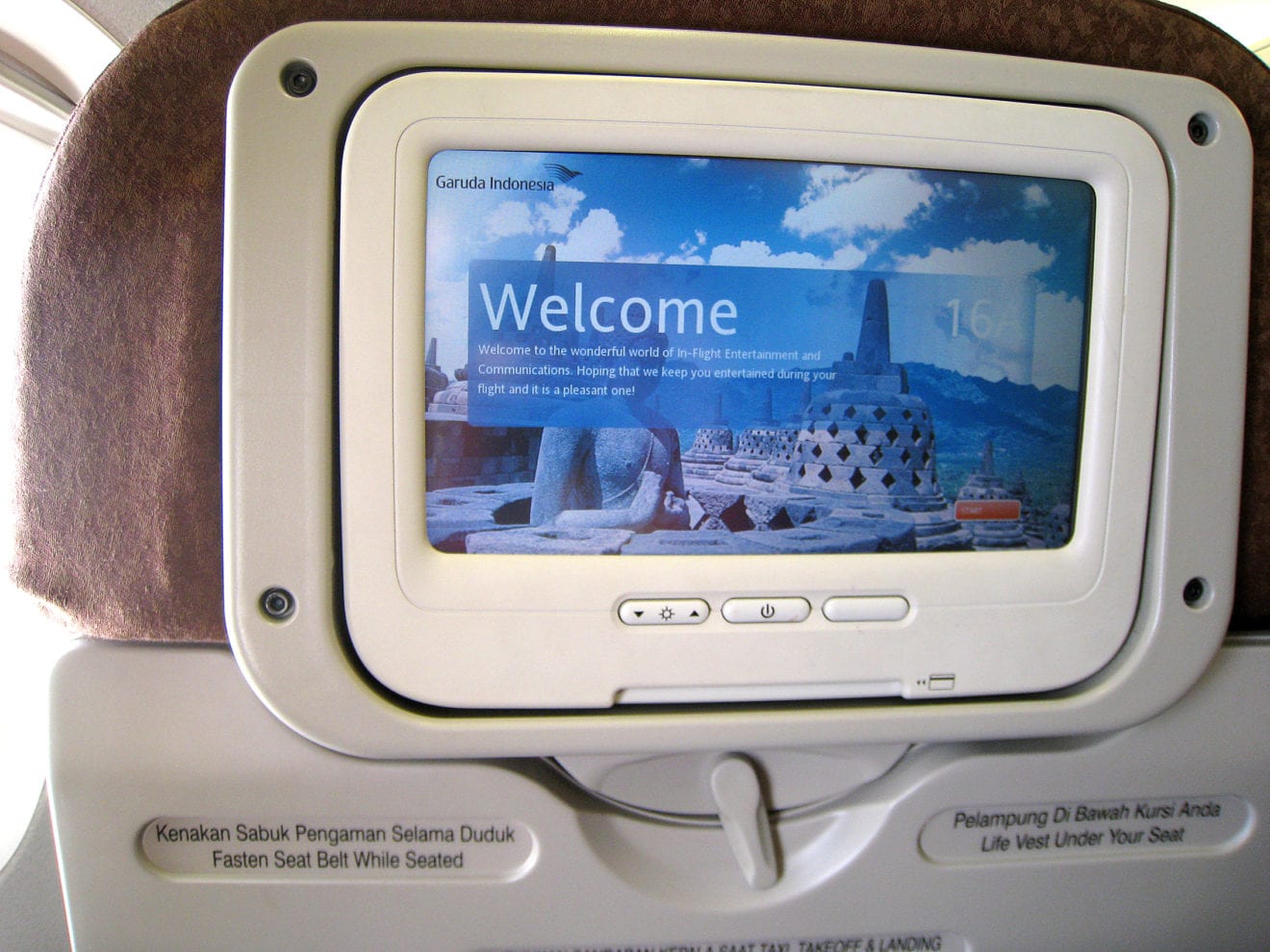
    Inflight Sales Group (ISG) has reinforced its position in Asia with the addition of the inflight duty-free and duty-paid concession onboard Garuda Indonesia airline.

    The new programme will be launched April 1 under a partnership with parent company PT Garuda Indonesia (Persero) Tbk.

    Together with the current contract with Citilink, a low-cost subsidiary of the same group, ISG has strengthened its footprint in Indonesia and the agreement continues the growth momentum within ISG, said the inflight concessionaire.

    ISG executive director Vimal Rai said: “Winning a competitive partner selection process is always delightful! ISG now stands ready to deliver an exciting and dynamic inflight retail programme for Garuda. We are confident to take it to the next level, commensurate with Garuda’s five-star status as an airline. We, together with the PT Rodamas Wirasakti team in Indonesia, have had a long history of retail partnership with Garuda already, and after a short break, we are happy to be bringing new insights and innovations to the airline’s inflight retail offering.

    ISG managing director Tony Detter added: “While we are expanding in the European market, we continue to see great potential in the Asian market. With the extensive network that Garuda is flying and its forecasted growth, we foresee that there is an opportunity to further expand ancillary revenues through inflight sales.”

  • Tweetwars: the social challenge in Twitter ‘capital’, Indonesia

    Tweetwars: the social challenge in Twitter ‘capital’, Indonesia

    Indonesia has long been the Twitter capital of the world, but rival apps and rancorous political debate are driving users away, illustrating the challenges the microblogging service faces even in markets once considered strongholds.

    While Twitter doesn’t break down country figures, Global Web Index data shows Indonesia remains joint first with Mexico in active users among the 34 countries the UK-based metrics company monitors – and significantly ahead in terms of penetration, at 74 per cent of all Internet users.

    But that masks a deeper shift, analysts and users say, as changing tastes, culture and politics push Indonesians to rival services.

    The proportion of active Twitter users in Indonesia has dipped 10 percentage points in the past two years, to about one third of Internet users, the Global Web Index data show.

    “Unless Twitter makes changes or there’s some new exciting things on Twitter that can’t be found on other platforms then I don’t think people are coming back to Twitter,” said Enda Nasution, a blogger and entrepreneur who has nearly 200,000 followers on his Twitter account.

    A Twitter spokesman declined to comment on the data, saying he had not seen it, but said younger people in major markets like Indonesia and India were eager users. He said the company was expanding in Indonesia and working with airlines, banks and celebrities to add services and content.

    He noted Indonesia was one of the top markets for Facebook’s recent acquisition Periscope, which allows users to stream live video.

    Twitter on Wednesday reported its first quarter since going public with no growth in users, and announced changes to its global service.

    Among younger users – active Twitter users in the 16-24 year age range – Indonesia lags Spain, Mexico and the UK. JakPat, an Indonesian survey company, found last month that teenagers were less likely to use Twitter regularly than those aged 26 and above, and were switching to other apps such as Facebook and its photosharing sibling Instagram.

    But there’s also a push factor: Indonesians are leery of Twitter’s core appeal; its default public feed, where everything a user posts is visible to everyone on the network. What was once an attraction in Indonesia’s sociable culture became a liability in 2014’s fractious presidential election.

    FISTICUFFS

    As politicians saw the power of Twitter to mobilise support, the network was flooded by digital armies of volunteers and automated accounts, or bots, spawning what Shafiq Pontoh, chief strategic officer at Jakarta-based social media consultancy Provetic, described as a “tsunami” of “black campaigns, hoaxes, prejudice, racism, spam, harassment, anonymous accounts and political action to frame topics, issues (and) spin doctoring.” “Twitter,” he said, “became an uncomfortable place to be.”

    This antagonism hit rock bottom when two Twitter users took a dispute over government car-making policies offline and slugged it out near a sports stadium. Cellphone footage of their fist-fight was broadcast on TV. “After that it felt like that if you don’t want to get into trouble, people would retreat and find a more comfortable space online,” said Nasution, the entrepreneur.

    Those online spaces include Facebook’s WhatsApp and Messenger apps, South Korean Kakao’s Path, Japan’s Naver Corp’s LINE and BlackBerry’s Messenger.

    Mr Nasution said students he has spoken to use WhatsApp to communicate with their lecturer, and LINE to chat with each other. Or Facebook and Path, says student Jeremiah Mandey, who joined Twitter in 2010. “I used Twitter to interact with friends, but now I use it to get news,” he said.

    MISSING A CULTURAL BEAT

    Government departments, companies and even President Joko Widodo have embraced Twitter as a public announcement service. The Jakarta police traffic feed, alerting commuters to jams, accidents, potholes and protests, has over 5 million followers.

    This provides a service, but is too passive for younger people, says Aulia Masna, an editor. “People are on social media to have fun and be entertained,” he says. “Twitter in Indonesia is better known as the place for news, debate and politics. So it attracts the more serious, older crowd.”

    The company spokesman said Twitter opened a Jakarta office last year and added staff, in part to expand its user base beyond the capital. The recruits included a government relations expert. It was also working with local bank BNI to allow customers to transact via Twitter. “We see great potential in Indonesia, it’s one of the top markets,” he said, adding Mr Joko was due to visit Twitter’s headquarters in San Francisco next week.

    Simon Kemp, regional managing partner of social media marketing agency We Are Social, said Twitter should focus more on understanding how people in places like Indonesia use their service before tweaking things.

    “People are still looking at these things as a technology base,” he said, “while it’s the cultural driver that determines what you use and when you use it.”

  • Indonesia warns messaging apps to drop same-sex emoticons

    Indonesia warns messaging apps to drop same-sex emoticons

    Indonesia’s government has demanded that instant messaging apps remove stickers featuring same-sex couples, in the latest high-profile attempt to discourage visible homosexuality in the socially conservative country.

    The government move comes after a social media backlash against the popular smartphone messaging app Line for having stickers, which are an elaborate type of emoticon, with gay themes in its online store.

    Information and Communication Ministry spokesman Ismail Cawidu said Thursday that social media and messaging platforms should drop stickers expressing support for the LGBT community, a common abbreviation for lesbian, gay, bisexual and transgender.

    “Social media must respect the culture and local wisdom of the country where they have large numbers of users,” he said.

    Homosexuality is not illegal in Indonesia, but is a sensitive issue in the Muslim-majority nation of more than 250 million people. At the same time, most of Indonesian society, which follows a moderate form of Islam, is tolerant, with gay and transsexual entertainers often appearing on television shows.

    Line on Tuesday said it had removed all LGBT-related stickers from its local store after receiving complaints from Indonesian users. Twitter and Facebook had exploded with criticism of Line and its competitor WhatsApp for containing gay content.

    Ismail said the government would tell WhatsApp to do the same as Line.

    Last month, Research, Technology and Higher Education Minister Muhammad Nasir said openly gay students should be banned from the University of Indonesia’s campuses. His statements followed controversy over news a sexuality research center planned to offer counselling services for students.

    Nasir’s statement sparked public controversy in Indonesia for weeks, with objections from human rights groups but support from the Indonesian Ulema Council, an influential board of Muslims clerics.

    Gay rights advocate King Oey urged the government to respect international treaties signed by Indonesia protecting the rights of minorities and women.

    “Gays and lesbians are not illegal in Indonesia,” Oey said. “We urge people who are concerned with human rights to not sit by silently.”

    In 2014, lawmakers in Aceh, a conservative Indonesian province, passed a law that punishes gay sex by public caning and subjects non-Muslims to the region’s strict interpretation of Islamic sharia law.

  • Indonesia to host 30th IAPH World Ports Conference 2017

    Indonesia to host 30th IAPH World Ports Conference 2017

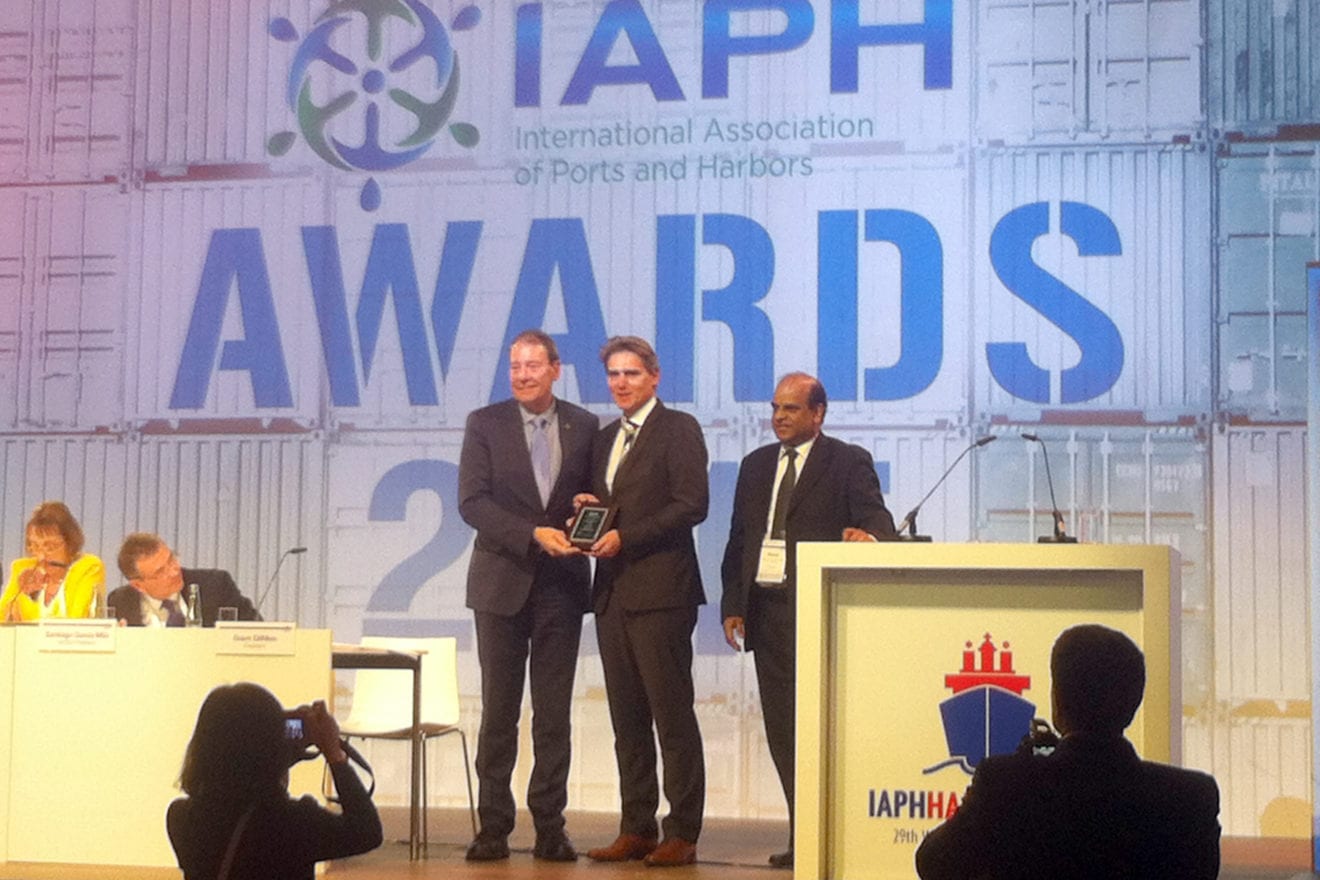
    Indonesia will host the 30th World Ports Conference of the International Association of Ports and Harbors (IAPH) in 2017, the spokesperson of the state port operator PT Pelabuhan Indonesia (Pelindo) III Edi Prayitno noted here on Friday.

    “In 2017, Pelindo I, II, III, and IV will be active IAPH members to host and hold the biannual conference that will take place at the Bali Nusa Dua Convention Center on May 7-12, 2017,” Edi stated.

    The conference would serve as a platform to share experiences and common interests on certain issues faced by port officials globally.

    Currently, Pelindo I, II, and III are holding a preparation meeting in Bali, which is being attended by more than 1.5 thousand members and delegations from around the world.

    iaph-press-05-06

    “Pelindo, a state-owned enterprise involved in the management of Indonesian ports, must actively play an important role in local and global port activities, one of which is by participating in the IAPH,” he pointed out.

    The conference is considered as one of the measures to deepen business relations with other port officials in the world in addition to improving and updating their knowledge.

    “This conference is expected to be a potential forum for Indonesian seaport businesspersons to mutually promote ideas and products along with serving as a means of promotion and learning about port management in the country,” affirmed Edi.

    The IAPH, established in 1955, represents more than 200 ports in 90 countries, with total cargo being serviced reaching 60 percent of the global trade by sea, as well as nearly 80 percent of the flow of containers around the world.

    In addition, individuals and organizations that are interested or are involved in a variety of port and maritime businesses in this organization are the associate members.

    “The IAPH is a non-profit and non-governmental organization that is headquartered in Tokyo, Japan,” Edi added.

  • Wyndham Hotel Group Introduces Days Inn brand to Indonesia

    Wyndham Hotel Group Introduces Days Inn brand to Indonesia

    Continuing its robust expansion in South East Asia, Wyndham Hotel Group today announced the opening of its first Days Inn® hotel in Indonesia, the 119-room Days Hotel & Suites Jakarta Airport.

    Located in the capital of Jakarta at the site of the former Padjadjaran Suites, the hotel is the eighth property to open under the Days Inn® brand flag in South East Asia and the Pacific Rim region. It is owned by PT Graha Bandung Sentosa, an affiliate of the Sun Motor Group, and managed by PT Wyndham Hotel Management, an Indonesian subsidiary of Wyndham Hotel Group. The hotel is the second to be opened by Sun Motor Group and Wyndham in Indonesia in just over a month, the first being the 271-room Ramada Bali Sunset Road Kuta.

    Said Barry Robinson, President and Managing Director of Wyndham Hotel Group South East Asia and Pacific Rim, “We are looking to introduce more affordable business hotels in prime locations across the region and Days Hotel & Suites Jakarta Airport will be a valuable addition to our portfolio in Indonesia targeting business travellers and leisure makers on transit. Indonesia represents a tremendous opportunity for Wyndham, with its growing middle class who have demonstrated an increased demand for globally-known and value-driven brands such as Days Inn.”

    Situated just 5.3km from Soekarno-Hatta Intl Airport in the Cenkarang district of West Jakarta, the Days Hotel & Suites Jakarta Airport is a full service property catering to business and leisure travellers. The hotel will undergo light renovations to offer tastefully designed guestrooms and suites complemented with an all-day dining restaurant, a lobby lounge and bar, as well as eight meeting rooms with banqueting services.

    Additional facilities include a rooftop pool, a spa and wellness centre, high speed Wi-Fi access throughout the hotel and complimentary airport shuttle bus transfers.

    Hartono Hosea, Director at the Sun Motor Group commented “Wyndham Hotel Group’s extensive global distribution, flexibility and management expertise will definitely help to solidify our position as a market leader in Indonesia. The hotel will greatly complement our Bali property and will set the standard for hospitality in Asia.”

    Days Inn® is a globally recognised brand with nearly 1,800 economy to upper-midscale hotels located around the world. Most offer free Wi-Fi, complimentary DayBreak® continental breakfast, meeting rooms, banquet facilities, copy and fax services, fitness centres and more. All Days Inn hotels in Indonesia participate in Wyndham Rewards®, the simple-to-use, revolutionary loyalty program from Wyndham Hotel Group that offers members a generous points earning structure along with a flat, free-night redemption rate.