Tag: Korea

  • LG U+ expected to acquire CJ Hello this week

    LG U+ expected to acquire CJ Hello this week

    LG U+’s plan to acquire cable TV company CJ Hello could be finalized as early as this week. Progress with the deal has been slow since Korea’s smallest mobile carrier first began considering the acquisition early last year. Industry sources said Monday that the deal is mostly finalized and, with a board meeting scheduled on Thursday, is likely to be concluded this week.

    With the acquisition, LG U+ will become the second-largest player in the domestic paid TV market. KT, with both an internet protocol TV (IPTV) service and satellite subsidiary KT Skylife, is currently the market leader.

    Paid TV services in Korea include cable TV, satellite TV and IPTV.

    LG U+ will likely acquire a 53.92 percent stake in CJ Hello from CJ’s entertainment arm CJ ENM. The cost is expected to be around a trillion won ($888.6 million).

    The acquisition would give the mobile carrier more negotiating power when acquiring or producing content. The carrier could also be in a strong position to lure CJ Hello’s 4.16 million subscribers, as of the first half of 2018, to its mobile service by offering favorable rates.

    LG U+ is already using its partnership with Netflix to attract more customers to its mobile and IPTV service.

    Once the mobile carrier decides to go ahead with the deal, it then needs to be approved by the Fair Trade Commission (FTC), the Ministry of Science and ICT and the Korea Communications Commission. In 2016 when SK Telecom tried to acquire CJ Hello, then CJ HelloVision, the deal fell through as the antitrust body disapproved on the grounds that the acquisition could hurt fair market competition.

    This time, though, FTC head Kim Sang-jo hinted during a recent interview that the commission would take a more positive stance regarding the deal considering the rapid changes in the media market. Kim questioned whether broadcasting and telecommunications can be considered completely separate in a quickly changing market.

    It is still to be seen whether LG U+ will more explicitly announce its intent to acquire CJ Hello and expand its paid TV services. The carrier is holding a press briefing for the launch of a new IPTV service targeting senior citizens in Seoul. Many questions are expected to focus on the acquisition deal and future IPTV strategy.

    Competitors KT and SK Telecom are also considering acquiring cable broadcasting companies to counter LG U+’s move. KT is reportedly interested in acquiring cable broadcasting company D’Live, which has a 6.45 percent share of the Korean paid TV market as of the first half of 2018. KT and KT Skylife control more than 30 percent of the market while CJ Hello owns 13 percent and LG U+ has 11.41 percent.

  • Samsung to pay its biggest tax bill ever as profits rise

    Samsung to pay its biggest tax bill ever as profits rise

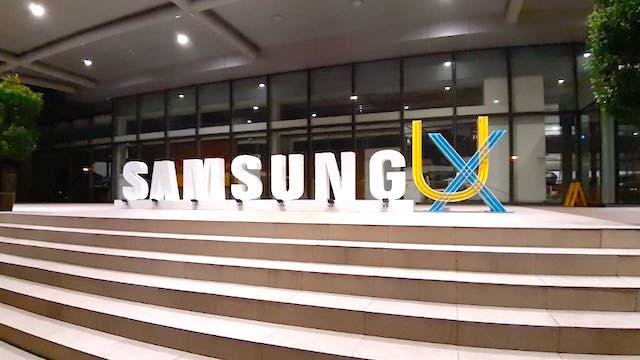
    Samsung Electronics is expected to pay 16.8 trillion won ($15 billion) in corporate taxes this year, up 20.1 percent from a year earlier, due to its record earnings, its regulatory briefing showed Monday. It is expected to cough up 28.6 percent of its operating profits, which reached an all-time high of 58.9 trillion won in 2018, according to its consolidated financial statement.

    The estimated tax amount is the highest amount ever for the company, 2.4 times the number from 2015 and over 14 times from 2009, its past reports showed.

  • The Shilla Duty Free partners with comics strip artists

    The Shilla Duty Free partners with comics strip artists

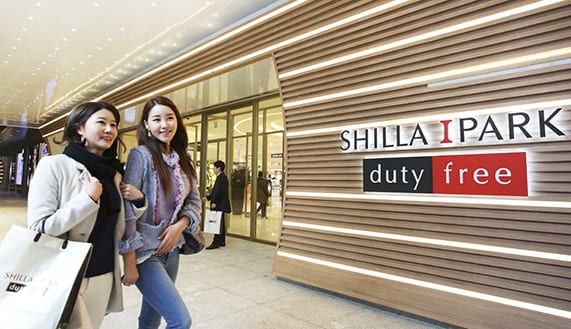
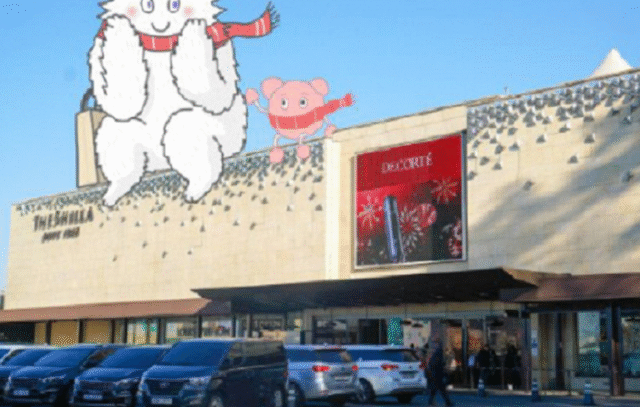
    The Shilla Duty Free is partnering with popular Chinese webtoon artists to boost its appeal to travelling Chinese shoppers. The travel retailer said that this is the first marketing partnership of its kind in the Korean duty free industry. Webtoons have become an increasingly influential media tool to connect closely with consumers, Shilla noted. “Unlike traditional advertisements, webtoons use storytelling that is easily relatable while utilising artists’ existing fandom.”

    The partnership with two webtoon artists, Niu Hong Hong (牛轰轰) and Ruo Guan (弱冠), specifically targets Chinese women in their 20s to 30s – The Shilla Duty Free’s main customer base (as the charts below show, visitors between 21 and 40 made up 57.3 percent of Chinese arrivals in South Korea last year and those between 21 and 30 almost 31 percent).

    Shilla’s stores are being featured in webtoons and the contents promoted through each artist’s social media platforms.

    Real-time comments such as “I would like to shop there”; “I should visit there during my next visit to Korea”; and “I like the store interior” appear on the webtoons.

    Besides introducing The Shilla Duty Free shops, the webtoons also highlight nine local eateries near the retailer’s flagship Seoul Store, showcasing the surrounding area as a local attraction. Since 2016, The Shilla Duty Free has promoted its local communities by introducing nearby restaurants through various channels such as The Shilla Online Duty Free in Chinese and its official Weibo account.

    A spokesperson said, “The partnership with Chinese webtoon artists is a first in the industry. We expect to be able to connect better with Chinese customers. Creative marketing like this will be continued during the peak seasons such as Chinese Lunar New Year, the Mid-Autumn Festival and the National Day of China, to broaden the communication with our customers.”

  • Samsung dreams of a future filled with 8K TVs

    Samsung dreams of a future filled with 8K TVs

    Samsung Electronics will expand its lineup of 8K televisions this year, hoping to launch the premium products in 60 countries around the world. 8K televisions have four times more pixels than 4K, which until recently was the most cutting-edge screen a high-end television could have. When compared to a 4K TV, 8K screens are brighter with more color contrast and sharper edges. Samsung released its first 8K television last year.

    Han Jong-hee, Samsung’s president in charge of the visual display business, said in a press conference Friday that he expects 2019 to mark the start of a new era where 8K becomes the new norm in the high-end television market.

    “4K grew to take up 60 percent [of all Samsung TV sales] in five years – I expect 8K to show a similar level of performance, maybe faster considering how tech develops so fast these days in all sectors including content and displays,” he said at the event held in Samsung’s Suwon complex in Gyeonggi.

    The company’s 2019 goal for 8K TVs is to reach a double-digit year-on-year growth rate for market share in the local high-end TV sector. Han says the goal is “reachable,” adding that half of the large Samsung televisions sold in the country after November were 8K. That month, Samsung started local sales of the product.

    Regarding its global business, the QLED 8K started selling in Europe, Korea, the United States and Russia last year. Tomorrow, the company will unveil new models for 2019 at the Samsung Forum, a showcase event for clients that simultaneously takes place in various regions around the world.

    This year’s plan is to launch sales in 60 countries.

    Whereas last year the QLED 8K lineup came with four size variations with the largest at 85 inches, this year there will be six variations with the largest at 98 inches. The new sizes are in line with Samsung’s strategy to continue strengthening its lineup of massive TVs to keep a competitive edge in the high-end price sector.

    It remains to be seen whether Han’s optimistic views on 8K television will come to fruition as quickly as he projects. Even if 8K TVs exist, the higher definition and the high price it comes at won’t be of much use if video content remains at the 4K level.

    “5G networks will spread this year and the demand for 8K content will go up as well,” responded Han when asked about the problem. Han particularly expressed anticipation for the 2020 Tokyo Olympics. Japan’s national broadcaster NHK plans to live stream the games worldwide in 8K.

  • Korea automobile production falls for 3rd year in 2018

    Korea automobile production falls for 3rd year in 2018

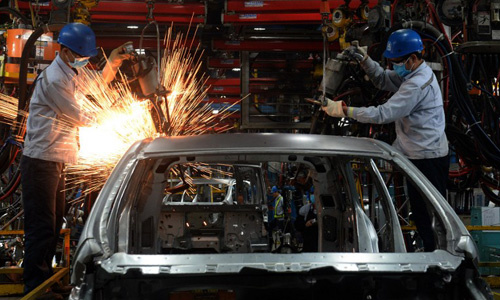
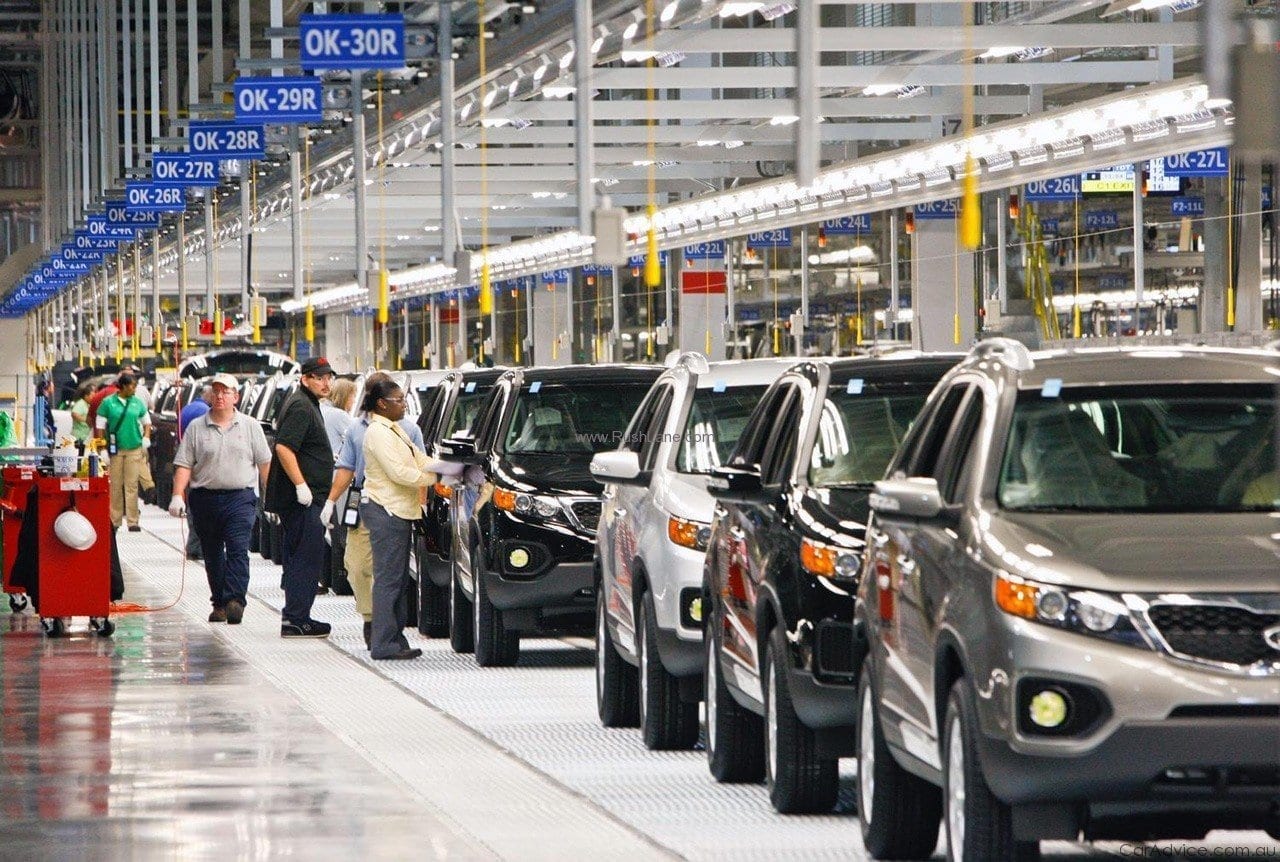
    Korea’s auto production tumbled for a third consecutive year in 2018 amid weaker domestic and global demand, data showed Sunday. According to the data by the Korea Automobile Manufacturers Association (KAMA), Korea produced 4.03 million vehicles last year, down 2.1 percent from the previous year. The figure has been decreasing over the past three years from 4.56 million in 2015 to 4.23 million in 2016 and 4.12 in 2017.

    The 2018 figure put Korea as the seventh-largest car manufacturing country in the world, down one notch from the previous year, according to the association.

    Korea became the world’s fifth-largest maker of cars in 2005 and retained the ranking until 2015. But India edged out Korea to stand at the world’s sixth in 2016 and 2017. Last year, Korea fell behind Mexico.

    China was found to produce the largest number of vehicles in 2018, with 27.81 million followed by the United States, Japan, Germany and India.

    Korea’s total car exports also fell to 2.45 million vehicles last year from the previous year’s 2.53 million, the KAMA said, adding that the country accounted for 4.1 percent of the world’s car production in 2018, down 0.1 percentage point from a year earlier.

    “Contentious labor-management relations, as well as stiff labor market conditions, among others, appear to negatively affect local carmakers’ competitiveness,” the association said in a release, calling for state support and business innovation.

  • Report urges auto industry to go electric

    Report urges auto industry to go electric

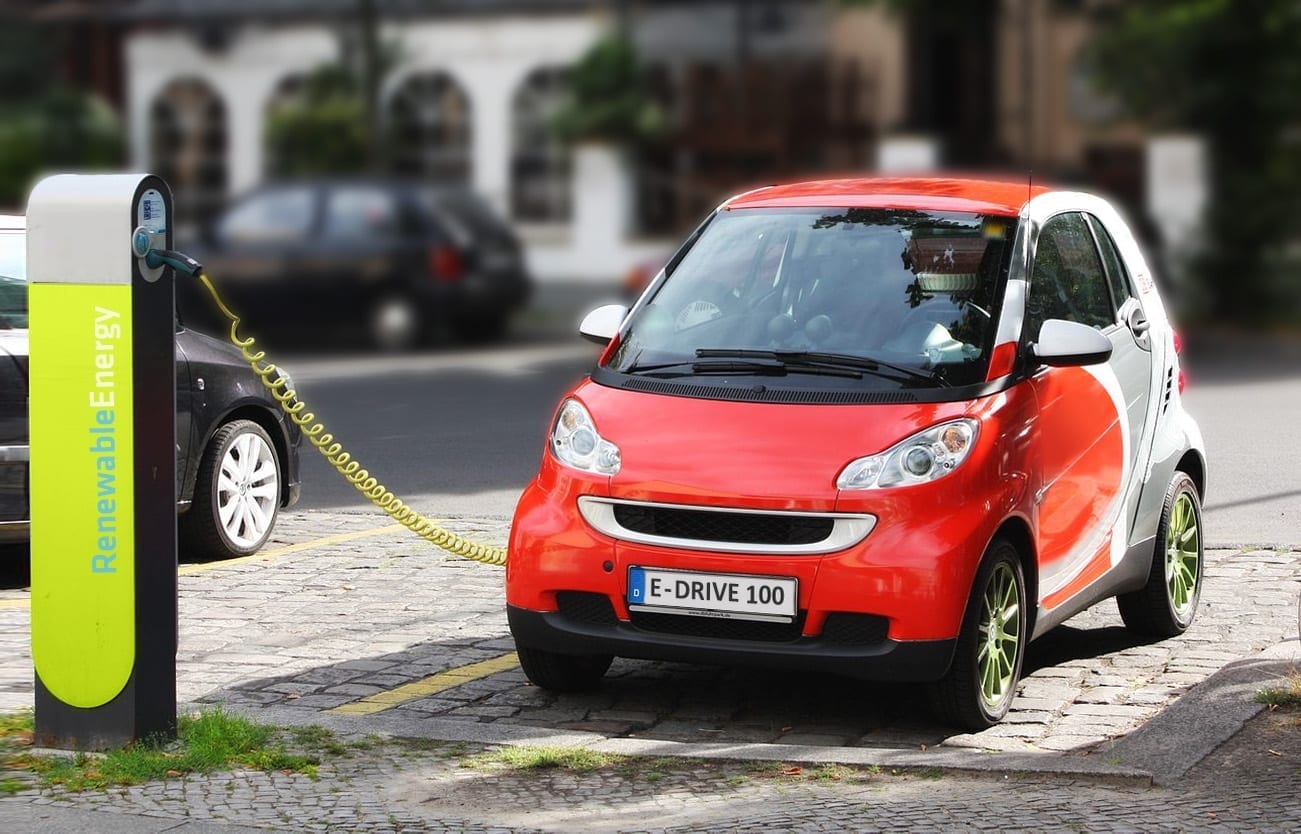
    Korea needs to give equal emphasis to the development of battery electric vehicles and fuel cell cars, considering the estimated future demand and the country’s competitiveness, a report said Thursday. “It’s a well-known fact that our car manufacturers have the mass-production technology for fuel cell automobiles,” the report from the Korea Institute for Industrial Economics & Trade (KIET) said. “However, the accumulated sales of fuel cell electric vehicles (FCEVs) worldwide stopped at 10,000 as of the end of 2018. The demand for fuel cell vehicles in 2030 will be less than 2 percent of the global sales of new automobiles.”

    In comparison, sales of battery electric vehicles (EVs) are estimated to exceed the demand for hybrids this year, 10 years since their commercialization, and show fast-paced growth, the report argued. Global rivals are due to market more than 100 different EV models by 2022, it noted.

    Korea’s high competitiveness in EV batteries is another reason why the government should not neglect investment in electric cars, the report said, warning that the relative weaknesses in the availability of charging stations and other networks could drag down the industry, despite efforts by local automakers to diversify their EV models. The report responded skeptically to the government announcement in December to give 2 trillion won ($1.79 billion) in assistance to reform the car parts industry.

    “If the auto industry, the recipient, is unable to fully accommodate, it could be difficult for the assistance to have the desired effect,” it said.

    The same report predicted hard times ahead for local auto companies, affected by the global slump in the car industry.

  • The cartoon cafe opens in South Korea

    The cartoon cafe opens in South Korea

    The interior of Cafe Yeonnam-dong 239-20 in Seoul, South Korea makes customers feel as though they’ have stepped into a cartoon world. Most cafe owners know it takes more than just great coffee to create a successful business. From an Instagram-worthy Wes Anderson-esque cafe in the Philippines to a coffee shop shaped like a Rolleiflex camera in South Korea, a space’s design is key to drawing in customers.

    One cafe to have recently received hype for its novelty interior is Cafe Yeonnam-dong 239-20 in Seoul. The eatery created an incredible space that makes customers feel as though they’ve stepped into a cartoon world.

    The artistic, monochrome design was inspired by Korea’s hit TV show, W by Lee Jong-suk and Han Hyo-joo, in which the characters clash between “two worlds”—the real world and a fantasy world inside a webtoon.

    The design of Cafe Yeonnam-dong 239-20 creates a 2D optical illusion, which makes customers feel as though they’ve crossed dimensions into a comic book illustration.

    When visitors step through the door, they’re greeted with black and white comic strip furniture, walls, and floors. Even the mugs, dishes, and cutlery look like flat line drawings.

    It helps that the owners have created a welcoming environment.

    If you want to experience this cafe for yourself, you can find it in the popular Yeonman-dong district in Seoul. If you can’t make it to South Korea, you can still feed your wanderlust by checking out the cafe’s Instagram.

  • Sales of imported vehicles in Korea fell 10 percent in January

    Sales of imported vehicles in Korea fell 10 percent in January

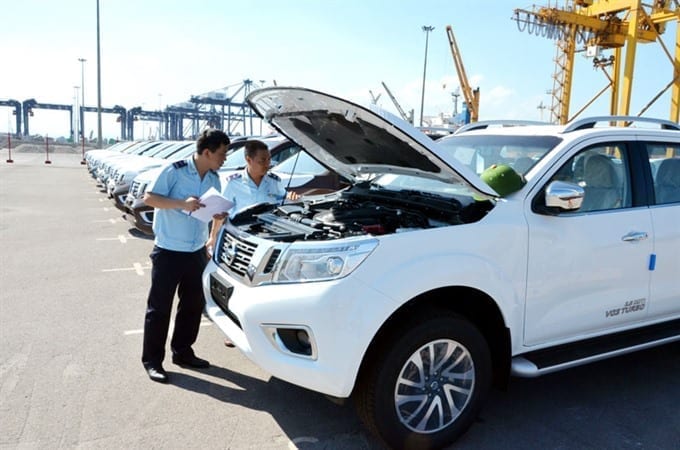
    Sales of imported vehicles in Korea declined by more than 10 percent in January from a year earlier due to typically low seasonal demand and supply shortage of some brands, industry data showed on Friday. The number of foreign cars sold last month reached 18,198 units, down 13.7 percent from a year earlier, according to the data compiled by the Korea Automobile Importers & Distributors Association (Kaida).

    The tally also marks an 11 percent drop from a month earlier, the data showed. In 2018, sales of foreign cars continued to rise, helped by firm demand for foreign brands and the resumption of sales of Audi Volkswagen.

    The number of newly registered foreign vehicles reached 260,705, up 11.8 percent from 2017.

    Foreign passenger cars made up 16.7 percent of all vehicles that were registered in the country last year, shattering the previous record high of 15.5 percent in 2015.

  • Unit price of exported automobiles in Korea up on SUV sales

    Unit price of exported automobiles in Korea up on SUV sales

    The average unit price for exported automobiles last year reached a record high of $15,400, pushed up by the strong performance of sport-utility vehicles (SUVs), according to industry statistics Thursday. Monthly data from the Korea Automobile Manufacturers Association (KAMA) put total exports by five local carmakers last year at 2,447,903, down 3.2 percent from the previous year. The monetary sum from the shipments came to $37.68 billion, 1.6 percent less than the year before.

    Despite decreases in both, the unit price of each exported vehicle remained strong thanks to exports of relatively more expensive SUVs, the data indicated, increasing 1.6 percent from 2017.

    Local manufacturers shipped 1,386,539 SUVs last year, up 6.7 percent compared with the year before, setting a new record.

    “The export volume for vehicles shrank from dulled demand in the global market, but it’s fortunate that the export-unit price rose from increased shipments of high value-added cars,” a KAMA official said.

    By manufacturer, Renault Samsung Motors had the highest unit price, at $17,100.

    It was followed by SsangYong Motor, at $17,000. The unit price was $16,200 for Hyundai Motor, $14,900 for Kia Motors and $13,400 for GM Korea.

    Records showed that the unit price rose up to the mid-2010s, rising from $12,000 in 2010 to $14,800 in 2014.

    It pivoted down to $14,200 in 2015 and stayed in a lull in 2016 at the same level before going back up to $15,000 in 2017.

    In terms of export volume, the numbers have been going down since peaking at 3,166,000 in 2012.

  • South Korea’s Hyundai bet big on hydrogen technology

    South Korea’s Hyundai bet big on hydrogen technology

    South Korea’s largest carmaker Hyundai Motor is hoping to revive its flagging fortunes by building more hydrogen-powered cars, as part of the country’s bid to become a leader in hydrogen technology by 2040. Last October in the United States, the company launched Nexo, an SUV that goes 609km on a single charge, has no battery, and puts out nothing but water vapour from its exhaust. And in December, it announced it would spend US$6.7 billion from now till 2030 on hydrogen technology.

    But its commitment to hydrogen fuel cell-powered cars is confounding some experts even though they agree the carmaker, the fifth-largest in the world by sales but struggling in the Chinese and American markets, needs to keep innovating.

    Namuh Rhee, former managing director of Merrill Lynch and now a professor at Yonsei University in Seoul, said the focus on hydrogen cars was “questionable” because of the huge costs involved, while “virtually all other global car makers” had made big plans to produce battery-powered electric vehicles (EVs). The country also has a shortage of refilling stations for hydrogen vehicles in comparison to the growing number of charging stations for EVs.

    Figures in the car industry, such as Tesla CEO Elon Musk, had previously called hydrogen cars “mind-bogglingly stupid”, pointing out that developers were looking too far ahead at untested technology, even though the battery-powered solution to cleaner vehicles already existed.

    Hyundai’s plan, though, is aligned with President Moon Jae-in’s strategy to boost the local hydrogen economy. In a speech on January 17, he noted that a major part of the plan would involve ramping up the production of hydrogen fuel cell electric vehicles, which currently trail battery-powered electric vehicles in popularity.

    Moon promised laws would be modified to allow hydrogen production to thrive, while there would be subsidies to encourage demand for hydrogen-powered vehicles.

    He said the country had produced 1,824 hydrogen cars as of end-2018, with more than half being exported. This year, the number would rise to 4,000, with a goal of 1.8 million cars by 2030.

    The advantages of domestic hydrogen production and distribution, he said, was that it would ease South Korea’s heavy dependence on energy imports – which currently provide 95 per cent of the country’s energy needs.

    “If the country is able to be relatively energy self-sufficient through the hydrogen economy, it will be possible to steer our economic growth more [in a more stable way] and safeguard our energy security more steadfastly,” he said.

    Hyundai, a pillar of the South Korean economy and partially owned by the family that founded it, still needs to prove that hydrogen is the technology of the future, and that it is capable of reinventing itself.

    Last month, the carmaker’s executive vice-chairman Chung Euisun – who is the apparent heir to his father, the company chairman Chung Mong-koo – joined a coalition of CEOs lobbying for hydrogen to be a bigger part of the global energy mix.

    Chung Eui-sun, 48, is now a co-chair of the Hydrogen Council, which counts Chinese oil and gas enterprise Sinopec, American multinational 3M and German automotive firm Daimler among its members.

    At the same time, Hyundai, which commands only 4 per cent of the Chinese and American car markets – down from almost 10 per cent in both a decade earlier – is also building electric vehicles. The company had previously announced it would release 44 models of electric vehicles (EV) by 2025, and last month, the Indonesian government announced the carmaker would set up its first Southeast Asian factory there to build electric cars for both export and domestic use.

    Rhee pointed out Hyundai had been slow to make the transition to EVs and autonomous driving, while other analysts said the company was at least three years behind competitors like Volkswagen, which is set to make electric versions of all its vehicles by 2030, and General Motors, which will have 20 EV models out by 2020.

    To show its commitment to innovation though, the company recently got two vice-chairmen in charge of research and development, both aged 64, to step down in December. It then appointed Albert Biermann, who formerly headed BMW’s M division and created several iconic cars, to head R&D efforts. Other engineers from BMW have also crossed over to join Biermann.

    Seoul-based capital markets analyst Steve Chung, of investment group CLSA, said Hyundai had undergone “massive management reshuffling” with younger people taking control of major functions in the company.

    “Maybe it’s a bit late, but I say better late than never. That’s why the share price has been rebounding,” said Steve Chung, who is not related to the family that founded Hyundai. In 2018, Hyundai Motor’s stock nosedived from its high of over 260,000 Korean won in 2013, to below 95,000 won (US$85) last November. It is now at 129,500 won.

    Ghim Hyunjoon, a company representative, said Hyundai was making great strides in its “cooperation with various start-ups, academics [and the like] to lead the future mobility market”. The carmaker also owns a minority stake in the country’s second-largest car company, Kia Motors.

    Last month, Hyundai took home two top awards from the Detroit Auto Show for best car and best SUV. It also unveiled in Las Vegas the world’s first holographic navigation system, which projects images on to the windscreen to guide drivers through turns and alert them to dangers. The system was born out of a collaboration with Swiss-headquartered augmented reality company WayRay, suggesting the infamously closed-door carmaker is starting to embrace start-ups as it looks to the future.

    Despite its recent wins, the outlook for Hyundai is still challenging, as the younger Chung acknowledged in a New Year’s speech to staff last month. He is expected to soon formally succeed his father, who is 80 years old.

    Analysts suggest the global car market is shrinking. Ageing baby boomers in the US are making fewer new vehicle purchases, while ride-hailing is expected to reduce car ownership overall, according to an industry report from consulting firm Bain & Company.

  • Korea’s industrial output growth slowest in near 20 years

    Korea’s industrial output growth slowest in near 20 years

    Industrial output is growing at the slowest rate in nearly 20 years, while facility investment dropped the most in a decade.  Other signs that the economy is in trouble include seven straight month of declines in the coincident and leading indexes. According to Statistics Korea and the Ministry of Strategy and Finance Thursday, last year industrial output grew 1 percent compared to 2017. This is the slowest annual growth rate since 2000.

    Manufacturing industry output was only able to rise 0.3 percent, while the construction industry, which is an important contributor to the domestic economy, fell 5.1 percent, with a particularly weak second half.

    Facility investment was down 4.2 percent, the sharpest drop since 2009, when the number declined 9.6 percent. The government said the decline in facility investment was largely due to weakening in the semiconductor sector.

    Consumption statistics were relatively strong, on the rising sales of both durable and nondurable goods. When compared to the previous year, consumption rose 4.2 percent, the sharpest increase in seven years. In 2011 consumption went up 4.6 percent.

    Strength was noted at duty-free shops and online.

    While traditional retail store sales were down, including those of discount marts like Emart and Lotte Mart, falling 2.8 percent, as well as those at smaller supermarkets and miscellaneous stores, falling 0.7 percent, sales of online stores were up 14.2 percent and duty-free sales surged 31.5 percent. Chinese tourists returned to the country in great numbers as a result of easing tensions over the introduction of a U.S. missile defense system.

    Convenience store sales were up 8.5 percent, a trend that has been seen in recent years as the number of people living alone has been rising.

    December figures weren’t comforting.

    When compared to the previous year, overall output grew 0.3 percent, which is half of the 0.6 percent reported in November. When compared to the previous month, December output fell for the second consecutive month at 0.6 percent.

    Manufacturing and mining output improved compared to the previous month. It also rose 1.6 percent compared to the same month the previous year, compared to November’s 1.1 percent.

    December output fell 1.4 percent month-on-month, the second consecutive month of decline.

    While the fall in output of automobiles was one of the major factors, down 5.9 percent compared to November, semiconductor output was also another contributing factor, as it fell 4.5 percent.

    The ministry said automobile production continued to fall as exports have shrunk. Overseas and domestic demands have been weak.

    Semiconductors, which have long been a positive force, started to become a drag, with production at some companies falling on weak demand.

    Investment in December alone fell sharply, declining 14.5 percent year-on-year, the sharpest fall since September 2018, when it tumbled 19.2 percent. Even when compared to the previous month, it dipped 0.4 percent.

    The coincident index, which shows the current economic situation when compared to the previous month, fell 0.2 points, down for nine consecutive months.

    It is the longest losing streak since falling for 11 months starting September 1997, when Korea was hit by the first financial crisis.

    The leading economic index fell 0.2 points compared to November, declining for seven consecutive months.

    In a statement, the ministry said it will swiftly move on “big projects” so investment sentiment will improve.

    “The government, if possible, is trying spend a quarter of the budget as early as possible,” Finance Minister Hong Nam-ki said Thursday.

    He denied he is looking into the possibility of a supplementary budget to boost the economy.

    “We’re only in January,” Hong said. “A supplementary budget is not under consideration.”

    The minister said the government will be announcing export measures, mostly focusing on financial aid to SMEs.

    “While finding new markets [for exports] is important, currently the most difficult issue is [SME] exporters struggling to get financial aid,” Hong said.

  • Korean export decline picks up speed in January

    Korean export decline picks up speed in January

    Exports have continued to fall for a second month, but at a steeper rate, confirming concerns raised by Finance Minister Hong Nam-ki earlier this week. Although Korea succeeded in posting a trade surplus for the 84th consecutive month, a new record, exports in January fell 5.8 percent, sharper than the 1.2 percent drop recorded in December.

    This is the first time since September and October 2016, when exports fell for two consecutive months.

    According to the Ministry of Trade, Industry and Energy on Friday, Korea’s exports in January amounted to $46.4 billion.

    Imports also retreated, losing 1.7 percent to $45 billion. As a result, Korea’s trade surplus in January was $1.3 billion, which is one-third of the $3.4 billion surplus reported a year ago.

    The ministry, however, said the decline of Korea’s exports wasn’t exclusive to Korea as other countries have also been falling as well.

    In December, China’s exports retreated 4.5 percent while Japan was down 3.2 percent, Taiwan lost 3 percent and Singapore fell 4.1 percent.

    The ministry said the decline was largely the result of external factors including the trade dispute between the United States and China, uncertainties resulting from Brexit, falling prices of semiconductors and crude and the slowing growth of the Chinese economy.

    Semiconductors, which were the largest contributor to last year’s thriving exports, played the biggest role in pulling down the number in January and December. Exports fell 23 percent compared to a year ago to $7.42 billion. Semiconductors account for roughly 20 percent of all Korean exports. Semiconductor exports have been shrinking after reaching a high of $12.4 billion in September 2018. The figure fell below $10 billion in December for the first time since April last year.

    The ministry blamed the falling price of semiconductors as global IT companies have been delaying additional purchases since the second half of last year. The price of an 8 gigabyte DRAM chip nosedived 36.5 percent from $9.60 a year ago to $6.10. The price of a 128 gigabyte NAND memory has fallen 22.4 percent from $6.7 to $5.2.

    Falling crude prices was another factor that drove down exports. Petroleum product exports fell 4.8 percent to $3.47 billion, while petrochemical goods slipped 5.3 percent to $3.98 billion. International oil prices have been falling since October last year. Last month, the price of a barrel of oil was down 10.7 percent on year.

    But these weren’t the only export items that struggled.

    Mobile telecommunication goods exports, including smartphones, have fallen 29.9 percent while computers exports are down 28.2 percent. Exports of ships fell 17.8 percent and displays were down 7.5 percent.

    Mobile telecommunication exports to the United States fell 9.7 percent, while the figure for member countries of the Association of Southeast Asian Nations (Asean) saw a steeper drop of 21.9 percent.

    On the contrary, automotive exports, which struggled throughout 2018, appeared to recover, growing almost at the same rate as a year ago.

    Automobile exports in January were up 13.4 percent to $3.67 billion, largely thanks to growing demand in the United States, Europe and the Commonwealth of Independent States (CIS). Exports to the United States in the first 20 days of January were up 43.4 percent to $820 million, Europe grew 20.7 percent to $350 million and the CIS surged 104.1 percent to $150 million.

    Thanks to positive growth in automotive exports, automobile parts exports grew as well, increasing 12.8 percent.

    Steel was another export good that saw an increase thanks to rising prices. When compared to a year ago, it grew 3.3 percent to $2.8 billion.

    By country, China, which is Korea’s No. 1 export market, tumbled 19.1 percent. China, as of last year, accounts for 26.8 percent of Korea’s exports.

    While the majority of the goods exported to China all fell last month, semiconductors, petroleum and petrochemical goods were hit especially hard. Semiconductor exports plummeted 40 percent in the first 20 days of last month to $1.61 billion, while petroleum exports fell 36.4 percent. Petrochemical exports lost 13.7 percent. The three products account for 44 percent of exports to China.

    Exports to the United States rose 20.4 percent to $6.21 billion, largely thanks to import of Korean automobiles, particularly SUVs, which saw an uptick of 43.4 percent.

    EU exports also grew in the double digits at 11.9 percent to $5 billion.

    The ministry said the situation will likely turn around in the second half when semiconductors and crude prices go up. The ministry said that when excluding semiconductors, petroleum and petrochemical goods, Korea’s exports in January only dipped 0.7 percent to $31.5 billion.

    The ministry also noted that new growth engine products like rechargeable batteries are doing well.

    It said that rechargeable battery exports have been rising over the last three years and are now expected to surpass exports of electronic consumer goods, which amount to $7.22 billion.

    Last year, secondary battery exports amounted to $7.23 billion, up 21.5 percent.

    Last month, it grew 14.5 percent year on year to $660 million.

    Biohealth exports have been growing in double-digits for four consecutive years. Last year, they reached a record of $8.15 billion, up 13 percent. Last month, however, biohealth exports fell 1.6 percent to $560 million. The ministry said that it still expects exports of biohealth goods to rise over the course of the year.

    OLED panels and electric vehicles are also seeing an increase in exports. OLED panels last month grew 12.8 percent to $800 million, while electric cars saw a surge of 184.7 percent to $280 million.

    The finance minister said the government will be coming up with measures to help small- and medium-sized exporters that may struggle from the recent turnaround, while Trade, Industry and Energy Minister Sung Yun-mo on Friday emphasized that the government will do its best to revitalize all exports.

    “Our plan will not be concentrated on short-term measures, but committed to all 365 days so that we can achieve $600 billion of exports by the end of this year,” Sung said.

    Korea, last year, reached a new milestone with exports exceeding $600 billion. However, with the global economy expected to shrink, there have been concerns that, this year, Korea’s exports may fall back below that threshold.

    “In a Jan. 21 export strategy meeting, we initiated a pan-government and a private-government joint support system, and since Jan. 30, we started a program of consulting on export difficulties in 15 cities starting with Changwon in South Gyeongsang,” the minister added.
  • Rolls-Royce to bring limited-edition model to Korea

    Rolls-Royce to bring limited-edition model to Korea

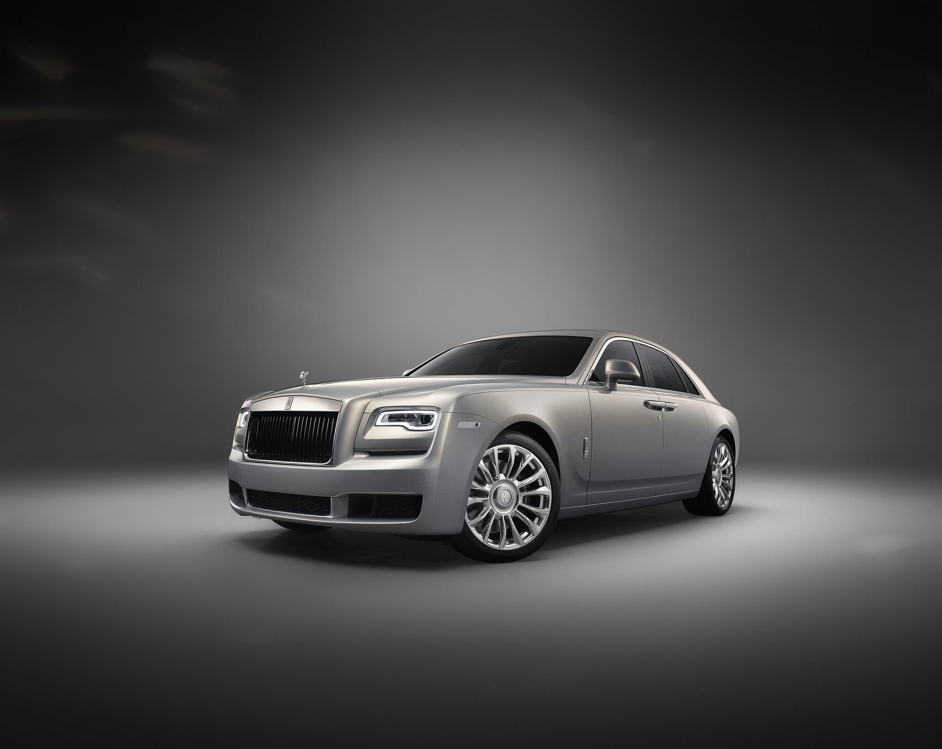
    Rolls-Royce Motor Cars, the luxury car brand under the BMW Group, said Wednesday it will introduce one of its 35 limited-edition Silver Ghost Collection models in South Korea this month. Rolls-Royce made the limited edition cars to pay homage to the original Silver Ghost from the early 1990s. The car makes use of real silver accents in its interior and exterior to set it apart.

    The forest green-colored limited version to be sold in Seoul carries the phrases “Silver Ghost Since 1907” and “Silver Ghost Collection – One of Thirty-Five” in the car’s interior, the company said in a statement.

    Rolls-Royce began selling its vehicles in Korea 15 years ago. Its current lineup includes the Phantom, Ghost, Wraith, Dawn and Cullinan.

    In 2018, the carmaker sold 123 Rolls-Royce vehicles in Korea, up 43 percent from 86 a year earlier, according to the Korea Automobile Importers and Distributors Association.

    Prices and other details were not provided for the limited-edition model.

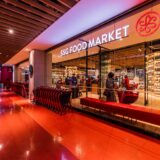
  • Featured store : SSG Food Market by Emart in Seoul, Korea

    Featured store : SSG Food Market by Emart in Seoul, Korea

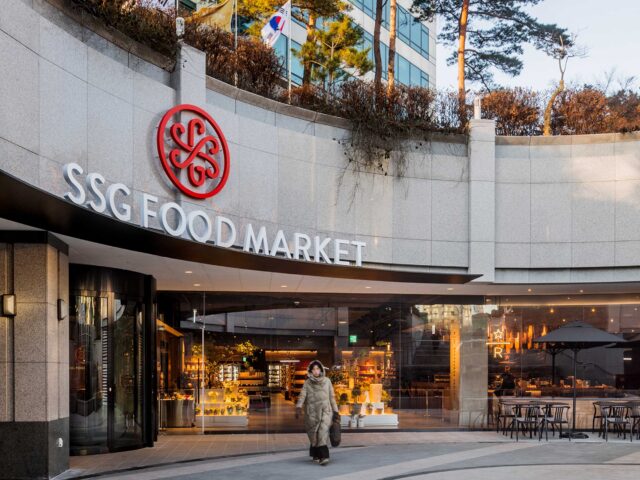
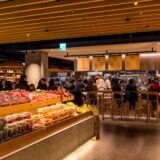
    Nestled in the upmarket suburb of Dogok, Seoul, sits the newly opened reinvention of Emart’s “Star Super”: “the SSG Food Market”, designed by Landini Associates. Emart is the leading business of the Shinsegae group, the largest retailer in South Korea, operating multiple brands including department stores, discount to premium supermarkets, and the mighty Emart hypermarkets.

    The brief was to create a world class premium supermarket and food hall fusion, and Landini Associates were entrusted to redesign every detail of the new store experience. This included: the built environment, naming and identity, furniture and fixtures, signage and communications, ticketing, menus, POS, advertising style guides, packaging and uniforms. In fact every customer touchpoint.

    The result is a modern market, a convenient and accessible food lover’s heaven, where locals can do a daily or weekly shop, or dine in with friends at one of the many in-store restaurants and cafes. Attracting a newer younger audience, whilst rewarding its existing, the SSG Food Market is a community epicentre to meet, eat and shop in, throughout the day.

    The offer

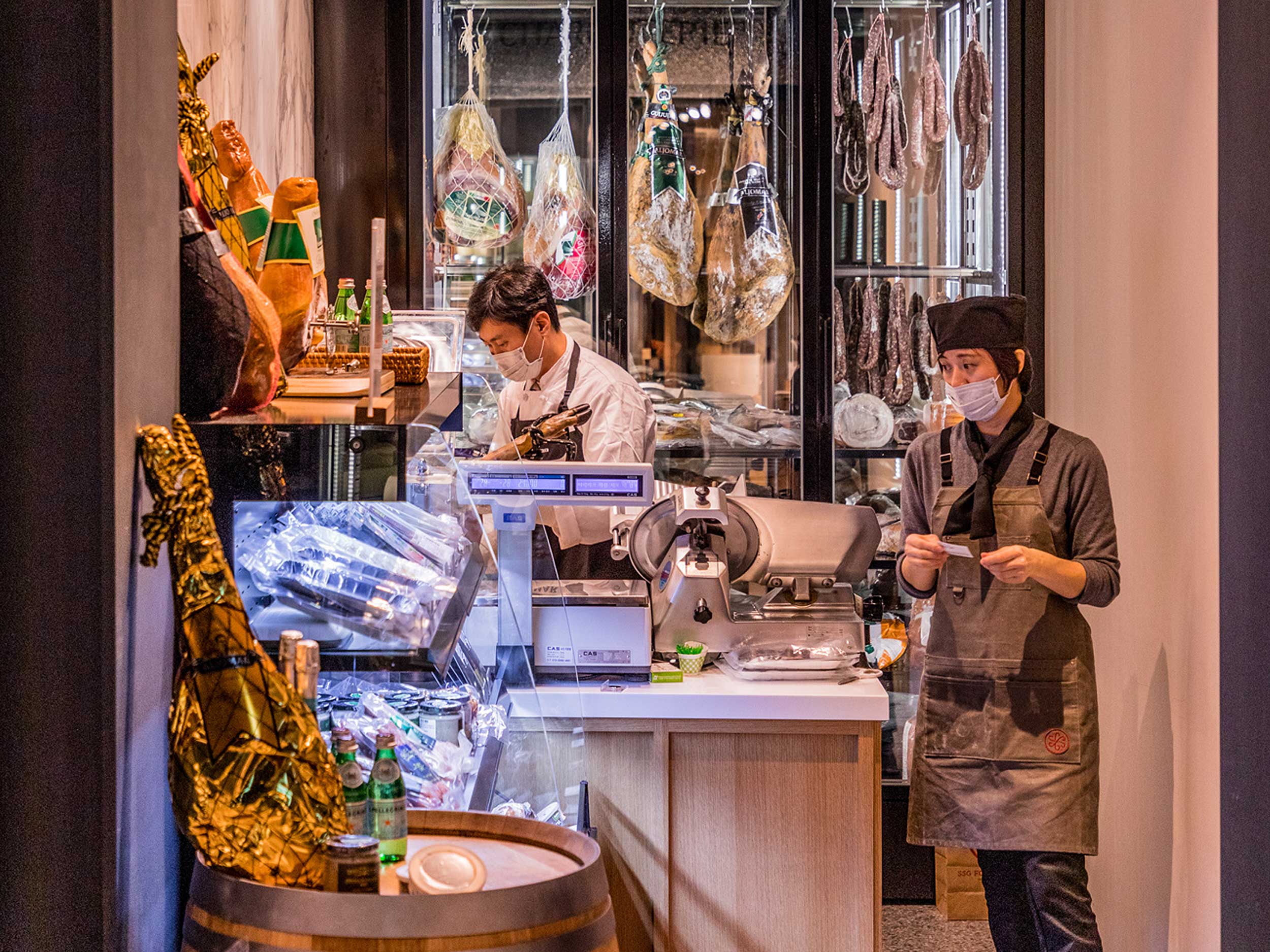
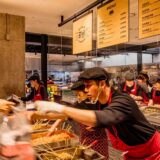
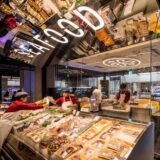
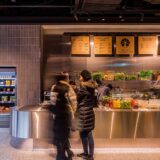
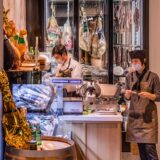
    The reinvention enriched and upscaled the existing food and beverage offer to include an extensive fresh department, vegie butcher serving house-made salads and juices, take home meals, Korean deli, bakery (run by hip San Francisco brand Tartine), fishmonger, butcher, Korean traditional street food, café, 200 seater restaurant, sushi restaurant, specialist cheesemaker, western charcuterie, wine and beer department, coffee roastery, dry goods, florist and homewares.

    The result is a curated selection of quality products, and a onestop-shop supermarket and refined specialist items. In addition the market is a wonderful meeting place to dine with friends and family, further enriching the retail and community experience.

    The design

    The offer is made up of both SSG run departments, franchises (such as Starbucks, a premium brand in Korea), and third-party retailers. Ensuring that these were all presented as a tangible whole required the design team to be sensitive to multiple design briefs, whilst ensuring that the customer had a seamless experience.

    Additionally, the site has a low ceiling which created some challenges for the reticulation of services, and multiple entrances, including a pre-trading public access to a subway station through the heart of the store; a gift to residents from Shinsegae.

    Landini’s solution creates a space of intrigue, transparency and exploration by celebrating the food, the people who make it, and its preparation.
    Specialist departments are visible across the restaurant’s open kitchen and include: Korean Traditional Street Food, Korean/ Chinese Noodles and a grill. All the production is exposed, and chefs work in glazed pavilions serviced by counters showcasing this theatre whilst you order. There are also take home meals in the Korean deli prepared daily in its kitchen, or fresh fish and meat cooked to order at the Grill, to take home, or eat in.
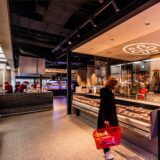
    As always, and especially because the market is in a basement, the lighting plays a key role in Landini’s design. Chiaroscuro, the contrast between light and shade, creates areas of interest and calm, gently guiding customers on a journey of discovery throughout the store. Perimeter departments use pavement lights to create space, and give sense of the world above.

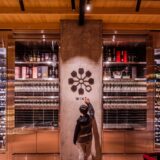
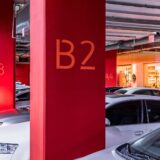
    In the main market hall the interior is paired back, functional yet classic. This “bare bones beauty” of exposed steel beams and concrete bulkheads contrasts with fine marbles, glass and blackened steel, and is balanced by timber fixtures and details. This subtle, considered and classic material palette allows the food to be the hero, and merchandising plays a major role. Long-life departments such as wine and dry-goods have a warmer, more earthy and textural palette, utilising brick and added timber. In the carpark, red floors and walls add vibrancy to the market experience before customers even get out of their car.
    The basement site is located below two high-end residential apartment buildings. Visitors can enter from the sunken courtyard on street level, or via the red carpark inside. SSG has created a residents pre opening pedestrian route through the store, a shortcut to the train station to save locals from the blistering cold in winter. Landini designed a set of messaging icons for this route, also.

    The graphics

    Landini Associates established a tone of voice for the brand to reflect their new food experience. This influenced all store communications including: naming and identity, signage and communications, ticketing, menus, advertising style guides, packaging and uniforms.
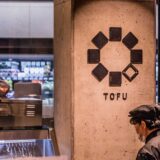
    The entire site required an ownable, easy to understand signage and graphic messaging system to reflect the brand’s new established tone of voice. The Landini design team evolved the existing SSG logo mark, developing an adaptation on communications applications to collateral and signage.
    The design is simple, contemporary yet classic; impacting not overwhelming. The palette is one of debossed concrete, timber, black and whites, and complimentary hits of the brand’s colour, red.


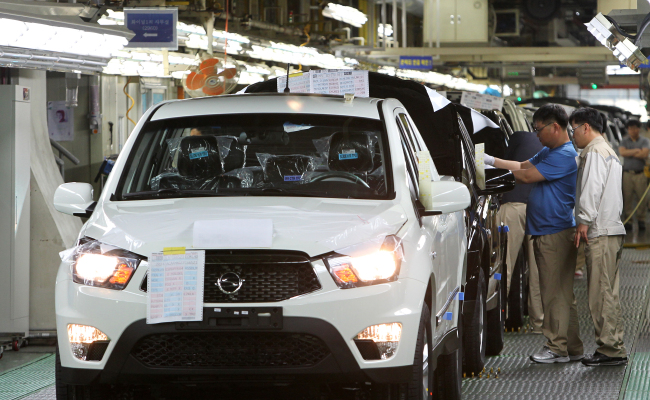
  • SsangYong Motor narrows loss in last quarter of 2018

    SsangYong Motor narrows loss in last quarter of 2018

    SsangYong Motor, the Korean unit of Indian carmaker Mahindra & Mahindra, said Thursday its net losses narrowed for the October-December period from a year earlier on a strengthened lineup. Net losses reached 3.99 billion won ($3.59 million) in the fourth quarter from 30.25 billion won a year ago, the company said in a statement. Robust sales of the Rexton Sports sport-utility vehicle (SUV) and the Tivoli SUV helped improve the bottom line, it said.

    Operating losses stood at 3.48 billion won in the final quarter from 2.57 billion won a year ago. Sales rose 17 percent to 1.053 trillion won from 902.16 billion won during the same period.

    For 2018, net losses slightly improved to 61.84 billion won from 65.82 billion won the previous year. Operating losses remained almost unchanged at 64.18 billion won compared with 65.28 billion won.