Tag: Korea

  • Air purifier sales shoot up as fine dust worries shoppers

    Air purifier sales shoot up as fine dust worries shoppers

    Korea’s air purifier market has tripled since 2016 thanks to worsening fine-dust pollution levels and growing health concerns. Last year, Koreans bought 1.8 million air purifiers worth around 760 billion won ($676 million), according to market researcher GfK. In 2016, Koreans only purchased 698,000 purifiers for 220 billion won. The research company noted that, unlike previous years, consumers began buying purifiers year-round from 2018.

    The demand for purifiers was highest in March and April last year, when 260,000 and 290,000 appliances were sold. Spring is traditionally the high season for purifiers when pollution from fine dust and yellow dust – dust carried from the deserts of Mongolia and China – is at its worst.

    Throughout the rest of the year excluding August to October, over 180,000 purifiers were bought every month in 2018. In the late summer months, when air quality is usually better, around 50,000 purifiers were still purchased every month. In 2016 by contrast, purifier sales only exceeded 100,000 in April. Sales were considerably lower in other months, with August seeing only 15,000 sales.

    The average purifier price has also increased as consumers are willing to pay more for products that not only do the job, but do it well.

    Various factors like operation method, filter capacity and noise levels played a big role in purifier purchasing. The appliance’s coverage was also an important concern as consumers looked for purifiers that can clean the air in all corners of the home.

    Given the growing popularity of high-end purifiers with advanced functions and technology, the average price of a purifier came to 420,000 won last year, 30 percent higher than the 310,000 won average in 2016, according to GfK.

    The strong demand for purifiers in Korea has made the domestic market very attractive to foreign makers as well. While Korean manufacturers like Samsung and LG Electronics have traditionally been the most popular, overseas brands that offer innovative designs and advanced technology are now making gains.

    Sweden’s Electrolux and Japan’s Balmuda both chose to premier their newest purifiers in Korea last week.

    Electrolux, known for its cordless and robotic vacuum cleaners, launched the “Pure A9,” marketing the product as tested and designed to suit the needs of Korean consumers. The purifier, starting from 749,000 won, has wheels and a handle for improved mobility and is capable of removing 99.98 percent of particles one-eighth the size of ultra fine dust.

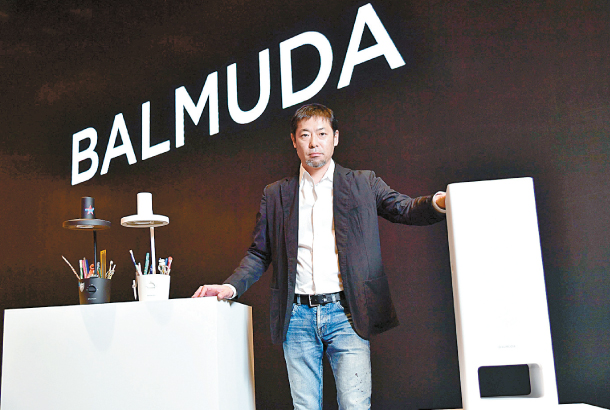
    Balmuda CEO Gen Terao introduced his company’s “The Pure” air purifier himself at a press briefing in Seoul last week, calling the Korean purifier market 10 times larger than Japan’s. The Pure, priced at 749,000 won, allows users to see how much dust is being sucked in at the mouth of the product.

  • 2018 sales of EV doubled in Korea

    2018 sales of EV doubled in Korea

    Hyundai Motor Executive Vice Chairman Chung Eui-sun laid out a plan to develop 44 electric vehicle models (EVs) and sell 1.67 million of the cars by 2025 during his New Year’s message held at the beginning of this year. The goal was a dramatic increase on the 38 models he planned to have by 2025 at the start of 2018. The revised goal is rooted in the fact that EVs are growing at an unprecedented pace in the global auto industry.

    According to U.S. market research firm S&P Global Platts, the number of electric cars sold worldwide exceeded 2 million in 2018 including plug-in hybrids, double the 1 million sold in 2017.

    This achievement came seven years after Tesla rolled out its Model S, opening the era of EVs, and more than two decades since Toyota released the world’s first hybrid, the Prius.

    Among the total number of EV cars sold, battery-electric vehicles sold 1.45 million units last year, followed by plug-in hybrids at 550,000 units.

    The most popular model was Tesla’s Model 3, which started mass production last year. Unlike the Model S and X, which cost over 100 million won ($88,850), the Model 3 was released as a more affordable model with a price tag around 50 to 60 million won. It sold 146,846 units, taking the top spot.

    Four Chinese companies ranked high in the top 10. The EC Series from Beijing Automotive Group ranked second. BYD’s eco-friendly plug-in hybrid, the e5, and JAC Motor’s iEV E/S were also on the list. Among Japanese cars, Nissan’s Leaf placed third while Toyota’s Prius Prime was ninth and Mitsubishi Outlander plug-in hybrid placed 10th.

    Hyundai and Kia both made it to the top 10 list of automakers for the first time. Combined, the two sold 90,860 units last year, taking the eighth spot.

    Tesla sold the most cars, at 245,240, followed by China’s BYD at 229,338. German brands, traditionally strong players in the vehicle market, had BMW at fifth and Volkswagen at ninth.

    Industry analysts project the market for electric cars will expand at an even faster speed. Deloitte, a global consulting firm, expects 4 million EVs to be sold in 2020 and 14 million in 2025. By 2030 it expects EV sales to hit 21 million.

    Considering that 98 million cars are sold worldwide annually, within 20 years one of every five cars purchased will be an EV.

    Experts say that while the United States and China have led the growth of the EV market, that is likely to change in the future.

    Deloitte forecast that cost reductions from technology development will pull down the price of EVs to be on a par with diesel cars by 2022. This means the product sector will gain price competitiveness, no longer relying on government subsidies.

    The market will also get more competitive. Toyota and Volkswagen are both planning to release new electric cars in the near future, with Volkswagen aiming to make 25 percent of the cars it produces EVs by 2025. Its investment in electric cars is already worth 20 billion euros ($2.25 billion).

    According to consulting firm AlixPartners, Volkswagen Group is planning to release 55 EV models by 2022. This accounts for half of all EV models slated for release by then.

    “Government subsidies played a big role in enabling Chinese firms to sell large numbers of EVs, but its finances have hit the limit,” said Kwon Yong-ju, a professor from Kookmin University’s department of automotive & transportation design.

    “With European companies having accumulated technology and capital while waiting for the commercialization of EVs, the future could be quite different from now.”

    “Major countries, like the United States and Europe, have tightened regulations toward environmental pollution more than before,” said Koh Tae-bong, head of research center at Hi Investment & Securities. “For car companies, it is inevitable that they will expand the amount of electric cars they make.”

  • Coupang, HP Korea sign MOU to strengthen sales

    Coupang, HP Korea sign MOU to strengthen sales

    E-commerce company Coupang said Thursday it signed a memorandum of understanding (MOU) with HP Korea Wednesday to strengthen sales channels for the technology company’s products. Through the agreement, Coupang will directly acquire HP products from the company, providing customers with better deals. HP Korea will also ensure faster delivery times and improve product services. The two companies plan to cooperate on online marketing and advertisements.

    James Lee, Coupang’s senior director, said, “By establishing long-term partnerships, [Coupang] will work harder to expand cooperative businesses.”

    Coupang currently offers a range of HP products, such as its gaming PCs and printers through its fast “rocket delivery” service.

  • AS Watson to start selling Amorepacific

    AS Watson to start selling Amorepacific

    South Korean beauty group Amorepacific and AS Watson have expanded their partnership to cover Asia and Europe. The partnership will enable Amorepacific to increase its product presence through Watsons-owned stores and online. Before this, the two had already partnered to launch Amorepacific’s botanical skincare brand Mamonde, haircare brands RYO and Mise-En-Scene across Asia.

    “AS Watson and Amorepacific are both leading players in serving beauty customers. Our customers love Korean beauty products that bring not only innovation but also quality. This is what Amorepacific can provide,” said Malina Ngai, AS Watson Group COO.

    “Through this partnership, we are both passionate and committed to combining our knowledge and capabilities to bring the best products and shopping experience to our customers.”

    Saehong Ahn, president of Amorepacific Corporation and Malina Ngai, group COO of AS Watson Group sign the strategic partnership.

    President of Amorepacific Saehong Ahn said the group “looks forward to developing concrete plans that create synergy and is a win for both companies”.

    “Amorepacific will continue our efforts to expand accessibility for customers globally, and create novel experience for customers this year.”

    AS Watson Group has a store network of more than 14,900 stores under 12 retail brands in 25 markets. Included in that are about 6800 Watsons health and beauty stores in 12 markets in Asia and Europe.

    Core customer groups are relatively young, and K-beauty is experiencing 56 per cent compound sales growth since 2015, and gaining traction in Europe with last year’s growth at 122 per cent.

    Amorepacific is the leading beauty company in South Korea, with more than 70 years of experience in beauty and a wide brand portfolio.

  • Cola, sugar prices shoot up 10% in Korea

    Cola, sugar prices shoot up 10% in Korea

    Processed food prices rose in January, with soybean paste, sugar and cola all jumping up around 10 percent compared to a year earlier. The Korea Consumer Agency (KCA) said Monday that 18 of 26 major processed foods measured both in 2018 and 2019 cost more in January than the previous year. The highest price hikes on year included sugar at 11 percent, soybean paste at 9.8 percent and cola at 9.7 percent. Among processed grain foods, instant rice products rose the most, by 5.6 percent. Prices for cup ramyeon noodles, one of the country’s favorite snacks, rose 3.4 percent.

    The KCA releases prices for a basket of around 30 major processed food categories every month. The basket price data serves as a separate indicator of real price changes for consumers. Other tracked products include beer, coffee mix and curry.

    Compared to the previous month, the average basket price for January rose 0.2 percent to 122,686 won ($109) from 122,491 won. Soybean paste prices rose on month by 4.7 percent and curry by 1.4 percent. Average cola prices rose 6.0 percent from December. The soft drink’s price rose last month after two months of declines.

    The KCA reported that the basket’s price was most affordable from large retail stores compared to traditional markets, department stores and large-size supermarkets.

    Meanwhile, products that declined in price on year included cooking oil at minus 6.1 percent, orange juice at minus 5.3 percent and red pepper paste at minus 4.9 percent.

    The data comes as consumer prices for January rose by 0.8 percent from 2018, according to Statistics Korea. The consumer price index for “living necessity food” rose 2.6 percent last month from the previous year.

  • LG Electronics to debut dual display phones

    LG Electronics to debut dual display phones

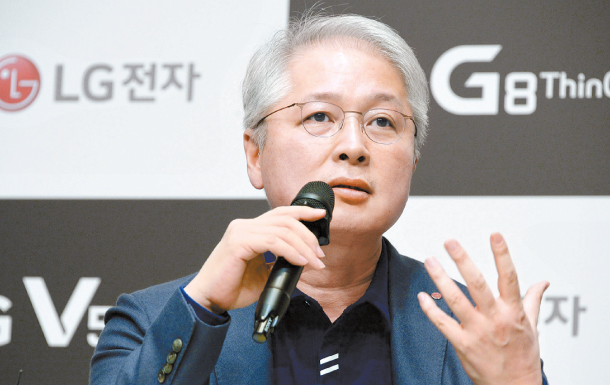
    LG Electronics’ major release of the year will be dual display smartphones, which the company hopes will recover its reputation as consumers flock to next-generation 5G smartphones. “There were internal discussions on releasing foldable phones at the same time but we concluded not to apply the form to early 5G models,” said LG Electronics President Brian Kwon during a press conference at LG Science Park in Magok, western Seoul, Friday.

    The event was the first time since he was appointed to head the smartphone business in November that Kwon shared future strategies for mobile business in front of the local press.

    “Our direction will allow consumers to enjoy 5G network content through dual displays to be showcased at the Mobile World Congress (MWC).”

    “Speaking of displays for early 5G phones, a major question to ask is whether we really need them, is there enough user content that requires such screens? In that perspective, I believe it’s too early to present [foldable phones,]” he added. “In terms of technology, we’re already prepared to make foldable and rollable screens.”

    Changes in form, especially screens, will be a major attraction point at this year’s MWC, the world’s largest trade show for phones. Samsung Electronics and Huawei will be rolling out foldable phones that come with two screens overlapping one another.

    LG’s dual display phone is rumored to come with a separate second screen that can be attached to the back or beside the main screen, although the company did not confirm the details. Its price remains undecided but Kwon said internal discussions were ongoing over whether to set it above or below $1,000.

    The form-factor competition comes in line with the commercialization of 5G networks expected to be realized this year. 5G will transfer data at an extremely high speed, enabling smartphone users to enjoy movies and games at unmatched quality and speed. Phone makers are eyeing the opportunity to win over consumers as they upgrade their phones to models that support 5G.

    LG’s strategy for this generation shift is “two track,” Kwon said Friday. Apart from the dual display phones, the V50 ThinQ 5G and the G8 ThinQ will also be showcased at the MWC. They are the latest models from the company’s high-end V and G lineups. V50 will support 5G networks, while the G8 will remain a premium phone for 4G, or LTE, network users.

    Underlying the two-track strategy is an uncertainty about how fast it will actually take for 5G infrastructure and related services to expand and how many consumers will jump from 4G to 5G.

    “Our plan for the year’s first half is to release the V50 to tackle the 5G market but our direction for the second half will depends on the 5G market,” said Kwon. “If it expands quickly we’ll look into developing a lower priced model that supports the network; if it doesn’t we’ll still have the 4G lineup.”

    LG’s smartphone business has been in the red for 15 consecutive quarters as of last year. Kwon was successfully heading the company’s television business when he was appointed to additionally take charge of the mobile division three months ago.

    “It’s true that industry insiders are hoping the 5G era will push growth of the smartphone market but as there also conservative projections, our goal for the year is not to make a drastic turnaround in the business but to see sales grow and restore our reputation in the smartphone market,” said Kwon.

  • Samsung US stores opens door

    Samsung US stores opens door

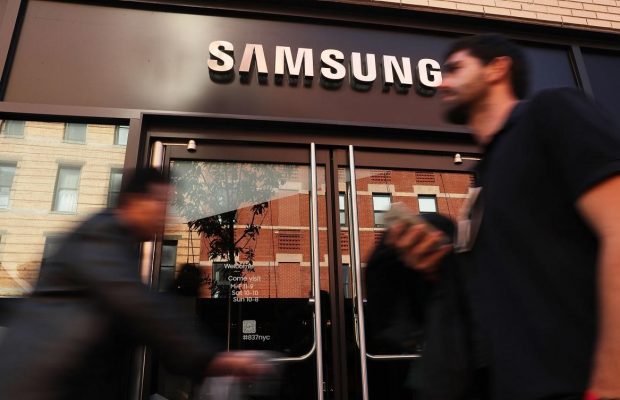
    South Korea’s Samsung will launch the first three of a planned network of North American stores this coming week, timed to coincide with the expected release of its next-generation Galaxy smartphone. The smartphone-focused Samsung US stores will open in the Roosevelt Field mall in Garden City; the Americana at Brand in Los Angeles; and Galleria in Houston. The openings have been interpreted as a branding exercise more than a sales driver by some industry experts, given the predominance of Apple iPhones in America. Samsung currently has 24 per cent of the US market, as opposed to Apple’s 44 per cent, with both manufacturers selling most of their handsets through carrier-operated stores.

    “Our new Samsung Experience Stores are spaces to experience and see Samsung technology brought to life, to empower people to do what they never thought was possible before”, said president and CEO of Samsung Electronics America YH Eom.

    “We want to build a ‘playground’ for Samsung fans – a place to learn about and try out all of the amazing new products we have to offer.”

    The Samsung US stores will encourage visitors to linger in-store while experimenting with the brand’s 4D VR and immersive 4K gaming products.

    Samsung’s Galaxy Unpacked 2019 presentation, scheduled for San Francisco on Wednesday, is widely rumoured to serve as a launchpad for a new foldable phone.

  • Taubman Sells Shares of Three Asian Shopping Centers

    Taubman Sells Shares of Three Asian Shopping Centers

    US retail property specialist Taubman Centers is to sell a 50 per cent stake in three of its shopping centres in China and Korea to funds managed by private equity company Blackstone Group. The deal, worth US$480-million, is expected to be settled later this year and will net Taubman about $315 million according to financial news reports. The company will maintain a share of up to 25 per cent in each property.

    Post settlement, Taubman will be contracted for the ongoing management of the centres.

    The centres are South Korea’s Starfield Hanam, and China’s CityOn Xi’an and CityOn Zhengzhou.

    Taubman manages a 26 regional, super-regional and outlet shopping centres in the US and Asia, and has another property under development. CEO Robert S Taubman said the sale was part of a strategy of recycling capital for growth.

  • KITA opens office in Dubai to assist Korean start-ups

    KITA opens office in Dubai to assist Korean start-ups

    The Korea International Trade Association (KITA) said Tuesday it has set up an office in Dubai to help local start-ups advance into the Middle Eastern market. Under an agreement with Dubai Future Foundation, the Korea Office will be set up at Emirates Towers in one of the key cities of the United Arab Emirates (UAE). The office will provide working space for local start-ups and assist entrepreneurs in establishing their businesses in the burgeoning Middle Eastern market, KITA said.

    “It will be a great opportunity for local start-ups as Dubai institutions are pushing forward various projects under the support and attention of the prince of Dubai,” Kim Ki-hyeon, a KITA official, said.

    Dubai Future Foundation was set up with an aim to shape the future of the strategic sectors in cooperation with the government and private sectors.

  • SoftBank Ventures invests in Trevari, a Korean book club

    SoftBank Ventures invests in Trevari, a Korean book club

    SoftBank Ventures announced Tuesday it invested 4.5 billion won ($4 million) in Trevari, a Korean book club operator. Fast Investment, another venture capitalist firm, invested an additional 500 million won in Trevari’s first publicly-announced funding round.

    “While adults today are reading less and less, the Trevari team has proven the success of its business model through quality book clubs,” said a spokesperson from SoftBank Ventures.

    Founded in 2015, Trevari operates paid membership-based book clubs. Members can sign up to join Trevari’s 300-plus book clubs located around Seoul and meet up with fellow members every month to discuss books on topics of their preference.

    Some of the book clubs are headed by special experts in the field, including former Naver CEO Kim Sang-hun.

    As of last August, over 13,600 individuals have participated in Trevari’s book clubs.

    A four-month membership costs between 190,000 won and 290,000 won.

  • SKT brings 5G workplace to life

    SKT brings 5G workplace to life

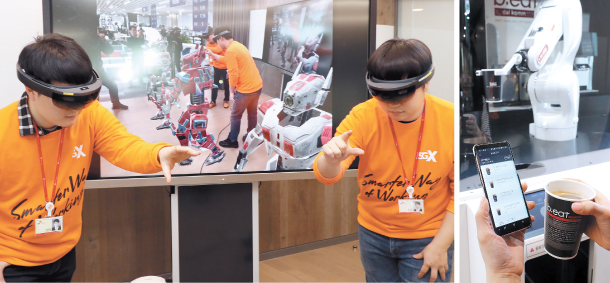
    ID cards, laptops and business trips will no longer be necessary, according to SK Telecom, when the 5G network-based smart office environment becomes an industry norm. The mobile carrier showcased its smart office technology test bed in Jongno District, central Seoul, Wednesday. Currently, about 300 SK Telecom employees are working at the space set up roughly a month ago by renting out three floors in the Centropolis building.

    At the entrance to the office, SK Telecom has facial recognition technology manning the security desk. Due to privacy issues, only employees who have agreed to register their biometric information can pass through the gate without an ID card.

    Inside the office, a display panel shows seat reservations. The screen shows all available seats inside the office, similar to the systems seen in university libraries and also shows who is in which seat. When designing the smart office, SK Telecom made it into an open space so employees can freely move around. The display even shows how many toilet cubicles are available for immediate use, although in this case employee names aren’t shown.

    The carrier said it used roughly 2,300 sensors, including on the ceilings, CCTV and even doorknobs in the bathrooms that track relevant data on employees’ work patterns inside the office. The data collected will be used to develop smart office solutions packages for enterprise customers.

    The desks in the office come with desktop computers connected to mobile routers that convert 5G signals into super-fast Wi-Fi. Beside the computer monitor is a docking station for smartphones. The so-called virtual desktop infrastructure enables employees to bring up what they were working on with their personal computers on the desktop computer using the cloud. Unlike simply mirroring a smartphone display, the phones become an authorization medium that allow the computer to verify which work files are downloaded from the cloud.

    At one side of the office is a space for so-called telemeetings that could cut down the need for frequent business trips. SK Telecom said it used its “T real telepresence” technology to invite multiple users into a virtual space where participants can have meetings while watching videos or 3-D designs of game characters and buildings together.

    After donning Microsoft’s HoloLens, this reporter was invited to a telemeeting to discuss the design of a game character.

    Within the virtual meeting, attendees were able to see and walk around a moving 3-D game character while interacting with the avatars of other people in the meeting.

    The experience wasn’t perfect – the field of view was small and constantly looking around was necessary in order to follow everything that was going on, but the potential of the technology to greatly reduce the need for business trips was evident.

    Other technologies already being used in the office included a barista robot and artificial intelligence-based autonomous vending machine, which can track employee purchases with camera sensors.

    Would any of these innovations be possible without 5G network?

    According to SK Telecom, yes. But, while all of these technologies are possible on the existing 4G LTE network, the new high-speed network, touted to be 20 times faster when fully commercialized, offers faster and more stable internet connection even when a million devices are connected at once.

    In essence, 5G ensures that all these systems work seamlessly without their huge data usage interrupting networks or slowing down work.

    “Dependency on landline internet will be reduced and high-capacity data will be delivered fast enough for real-time telemeetings with 5G,” said Shin Seung-ho, a manager from SK Telecom’s media lab under ICT center.

  • Renault Korea still at odds with union

    Renault Korea still at odds with union

    Renault Samsung Motors and its labor union once again failed to reach a consensus on 2018 wages after negotiations fell through for a 14th time on Tuesday. Renault Samsung is the only domestic automaker that has still not clinched a wage deal for last year. A source from the automaker said the Tuesday talks lasted for about an hour and a half after the meeting began at 2 p.m. at Renault Samsung’s Busan factory, but ended in vain.

    The major issue of disagreement is over whether to raise the base pay.

    The labor union has been requesting a 100,667 won ($89.51) raise in base pay. The company has refused, citing bad timing, and offered incentives if the base pay is maintained instead.

    The wage deal is very important for both the company and the labor union, as it comes at a crucial time.

    While Renault Samsung’s Busan factory has been producing Nissan’s Rogue compact crossover on consignment, the contract ends in September.

    The Korean unit of Renault needs to negotiate with the French headquarters to win follow-up models to produce in Busan. As Rogue production accounts for nearly half the workload at the Busan factory, it could be seriously harmed if the deal falls through and may even end up following in the footsteps of GM Korea’s Gunsan factory in North Jeolla, which closed last year.

    The company claims raising the base pay at this time would negatively affect negotiations with the headquarters.

    The labor union, however, responded to the company with partial strikes. From October last year through last month, the labor union has gone on strike 28 times at the Busan factory. The labor union claims it deserves a base pay raise considering its wage is about 85 percent that of workers at Hyundai Motor factories and its productivity has been high.

    In response to the strikes, Jose Vicente de Los Mozos Obispo, Deputy Alliance Executive Vice President, Manufacturing & Supply Chain at Renault, sent a video message to employees at the Korean unit earlier this month, warning the Renault-Nissan-Mitsubishi Alliance cannot assign new models to the factory if the strikes continue. Renault considers labor cost, production cost and supply stability when allocating new models to factories.

    The two parties have yet to hammer out their differences in the negotiations that began in June last year.

    The company and the labor union will have another round of negotiations soon, though the exact date was not released Tuesday.

    Renault Samsung is in a hurry to finalize the deal as it is running out of time to win new models for the Busan factory before September. The factory needs several months of preparation to adjust production lines to produce a new model.

  • All about Generation Z

    All about Generation Z

    People born in the year 2000 will turn 19 this year, entering university or finding jobs in a society struggling with slowing economic growth and a rapidly declining population. But as Korea adapts to a difficult economic environment, how will this new generation that prioritizes personal experiences and online communities fit in? The generation, known as Generation Z, follows the millennial generation, Generation Y, and refers to those born in the late ’90s and early 2000s.

    David Stillman, an expert and author on Generation Z, has named it as the first real global age group that has interacted with the world through mobile devices throughout their lives. He also said they are used to fierce competition after experiencing the realities of the global recession in the late 2000s.

    Korea’s Generation Z is unique in that it is the first to experience both low economic growth and a declining population.

    According to Statistics Korea, the number of births in the country decreased from 1 million in 1970 to 492,000 in 2002. The figure for last year is expected to be around 325,000.

    Economic growth has experienced a similar trajectory. While Korea recorded 8.9 percent in gross domestic product growth rate in 2000, the figure for 2018 was at 2.7 percent.

    The changing demographic toward smaller families, the shifting economic landscape and the availability of personalized technology have led Generation Z to place emphasis on personal standards and develop spending habits for products personalized for them.

    “They have a strong sense of individuality compared to past generations,” said Oh Jun-beom, a researcher at Hyundai Research Institute. “It is highly likely that they will become consumers with a lot of different needs.”

    A truly mobile generation

    Generation Z was raised with access to technology that connected them to the world. “If millennials are ‘digital natives’ of computers, Generation Z are ‘mobile natives’ used to smartphones,” said Hong Joo-eun, CEO of Ginger T Project, a consulting company specializing on non-profits.

    The technology allowed Generation Z to become more easily exposed to new and foreign cultures compared to previous generations. “Millennials were exposed to American TV shows by their experiences studying abroad,” said Hong. “Generation Z can watch YouTube videos from wherever they are.”

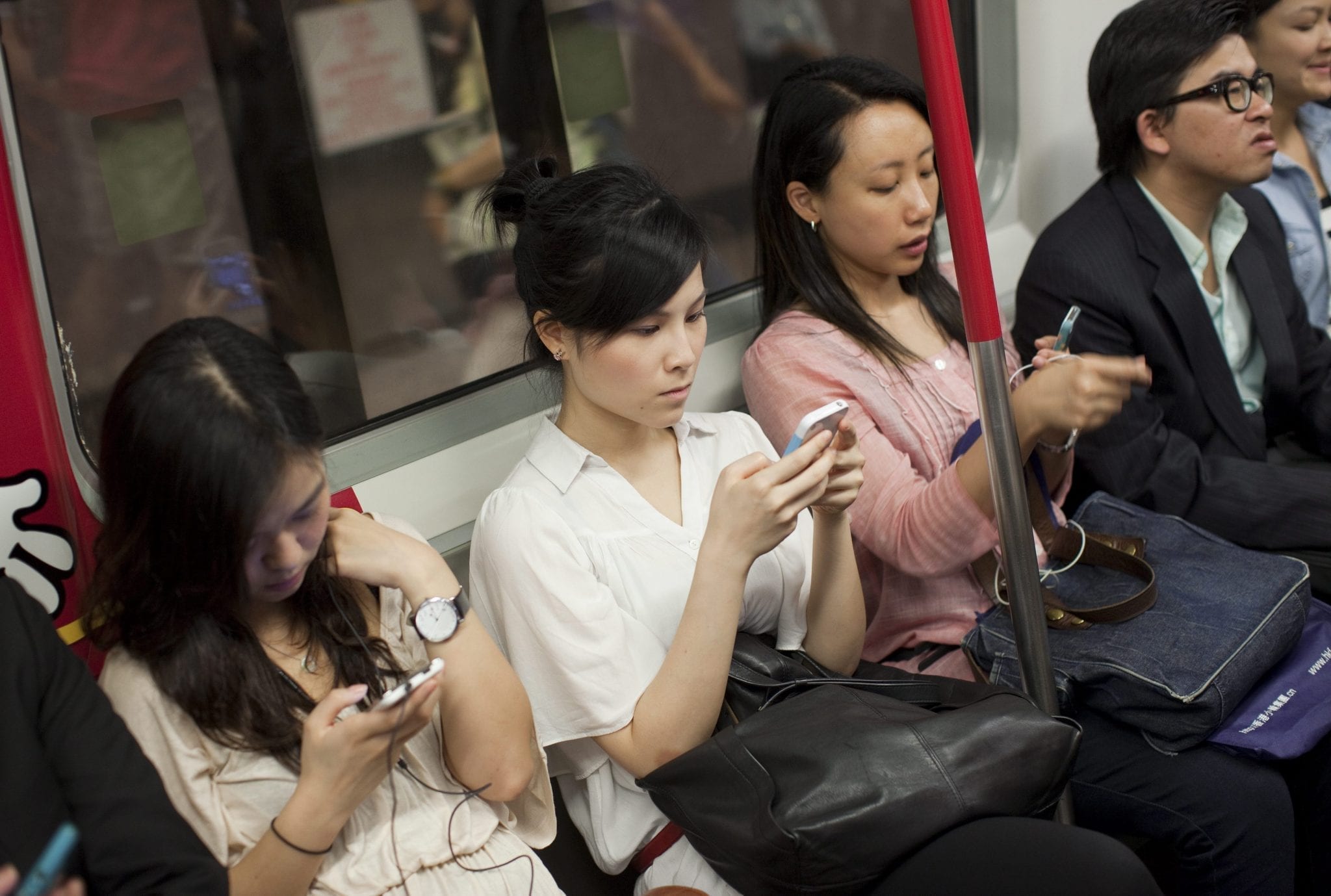
    According to the IBM Institute for Business Value’s survey on Generation Z, 74 percent of respondents said they spend their free time online, compared to 44 percent who said they spend time with their friends.

    The generation’s most preferred mobile device was the smartphone, at 75 percent. The preference for smartphones has led to a tendency to focus on personalized experiences.

    “Computers, largely used by previous generations, have a strong sense of co-ownership,” explained Shin Cheol-ho, CEO of mobile start-up OGQ. “On the other hand, smartphones have a sense of individualism.”

    Smartphones come with numerous apps and social media services, which Shin said allows users to create a completely individual experience, reflecting the generation’s preference for uniqueness.

    Korea’s Generation Z is different from Korea’s Generation Y, known for following trends en masse. Millennials played a leading role in the bench coat craze during their student years, with students wearing identical jackets as if they were uniforms advertised by famous celebrities.

    The new generation is different in that they are more accustomed to social media platforms and trust YouTube stars for product recommendations rather than advertisements by celebrities.

    With the rise of social media and content, the new generation also places importance on visual images.

    In a report by Park Hye-sook, a professor of design at Pyeongtaek University, the average concentration period of the new generation is eight seconds. It is more familiar with using emoticons and images rather than text. The study emphasized incorporating images in marketing to target young consumers.

    Very important babies

    Despite the slowing economy, Generation Z was brought up in an environment where their parents and grandparents went all out to invest in their upbringing. As they grew older, child-related industries in Korea developed a premium strategy to suit new demands.

    There are beauty parlors and skin care establishments that exclusively cater to children in the posh neighborhoods of Gangnam District in southern Seoul.

    Pharmaceutical company Yuhan even launched a premium skin care brand targeting young children in 2017.

    For baby products, imported goods have taken a market share of 64 percent in 2015 from around 20 percent in 2002.

    Expensive foreign children’s brands such as Rachel Riley, used by the British royal family, and Bonpoint, a premium French brand, have been widely popular in Korea.

    Meanwhile, local brands that have focused on mid-to-low range products have struggled.

    Agabang & Company, Korea’s first baby brand, was once the market leader, but its sales have decreased dramatically since the 2000s.

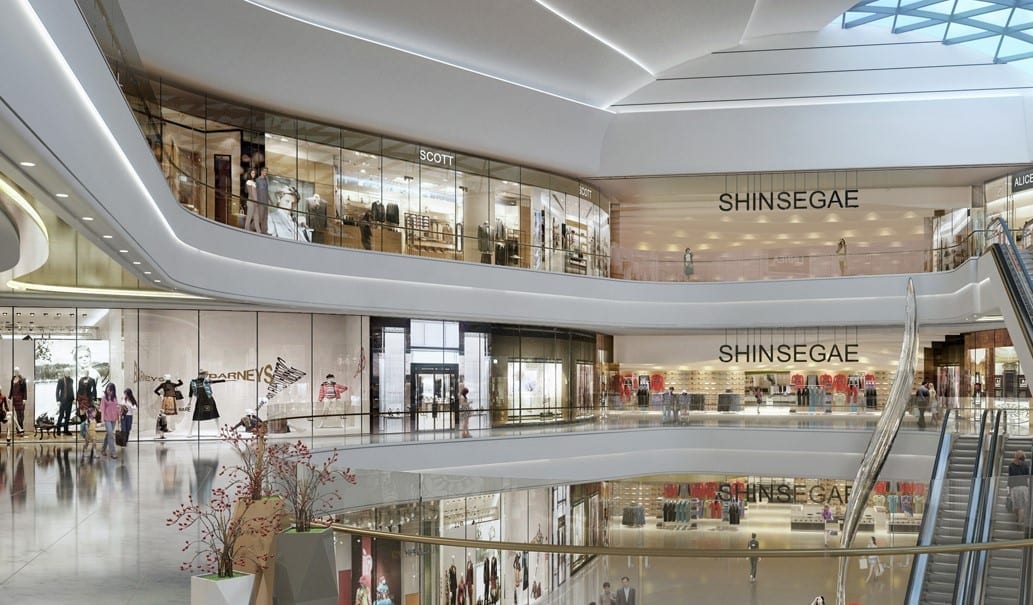
    “As more children are well cared for, almost like princes or princesses, sales for premium brands are on the rise each year,” explained Son Moon-guk, the head of the products division at Shinsegae Department Store.

    “There is a trend to emphasize distinction through premium or specialized services for younger children,” explained Hong. “The private education market will continue to grow separate from the government’s efforts to expand early childhood public education programs.”

    Through their upbringing, the Generation Z displays a strong sense of self-awareness and individualism, which reflects in their spending preferences.

    “Teenagers these days change their smartphone background image if someone else uses the same image, even if they really like it,” explained one mobile start-up executive.

    Living in the now

    Generation Z is different from previous generations as they place more importance on the present or the near future rather than long-term goals.

    Experts say the tendency to place importance on the present is based on the overall economic environment.

    “The 1997 Asian Financial Crisis changed the lives of Generation X [the parents of Generation Z],” said Shin Kwan-yeong, a professor of sociology at Chung-Ang University. “Generation Z seems to have come to the conclusion that it is meaningless to plan or save up for an uncertain future.”

    With the explosion of mobile technology and social media, Generation Z is familiar with the variety of apps and services that require effort to manage. This has led to a tendency to be strict in time management and prioritizing certain activities over others for the sake of efficiency.

    This trend is most noticeable in how the Generation Z does not spend much time on meals yet avoids fast food. Companies have picked up on the trend and Korea Yakult launched its meal kit business in 2017, targeting the younger generation with small, packaged dishes that were popular when they were children.

    With this focus on experience, Generation Z also avoids group tours.

    Airbnb launched its trip service, where the host provides local tours for visitors in 2016 and has found popularity among younger users.

    “It was neither a commercial nor generic trip,” said Kim Ye-seul, who used the service for a trip to Jeju in December. “It was very unique.”

    The retail industry is currently offering products that target Generation Z. Although they do not yet have purchasing power, younger consumers have a strong influence on their parents’ purchases based on their ability to get access to information on a wide variety of products for the best price.

    In December last year, the Ansan branch of the Lotte Department Store made a drastic change to its layout, placing a bar selling alcohol and drinks on the first floor instead of the usual cosmetics stores. The establishment installed a Muji store, which specializes in households goods with a no-logo policy, on the same floor and is popular with younger shoppers.

    “Retail companies can no longer ignore the preference of Generation Z on lifestyle and real experiences,” said Lee Seung-yun, a business professor at Konkuk University.
  • Positive result from anti-plastic campaigns by Starbucks, 7-Eleven

    Positive result from anti-plastic campaigns by Starbucks, 7-Eleven

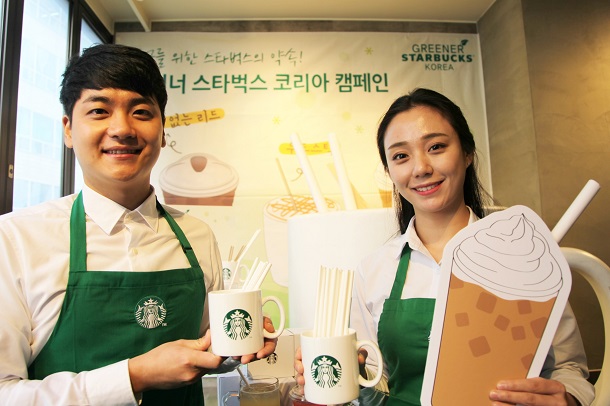
    Starbucks Korea and 7-Eleven Thailand have announced positive results for their respective anti-plastic campaigns. A report revealed that the local Starbucks subsidiary has seen consumption of single-use straws cut by half in the months since introducing strawless lids on drinks without whipped cream or that do not need stirring. The initiative, introduced last November, has resulted in the monthly average of 15 million straws used across its coffee chain stores drop to 7.5 million per month. The company now only provides straws to customers who request them.

    Aiming to further reduce straw usage by up to 70 per cent, Starbucks Korea is planning an online event to offer rewards to customers who upload pictures of drinks taken without using straws. It has also introduced paper straws for usage in some beverages.

    7-Eleven saves 169 million bags

    Meanwhile, in Thailand, more than 169 million plastic bags have remained unused over the past two months at 7-Eleven stores, according to a report in local news site The Thaiger, the result of a management initiative to phase out their use. The move, which has been supported by local celebrities, encourages shoppers to refuse plastic bags or bring reusable bags to the store.

    The reductions are reported to have saved the chain more than 33 million baht, which operator CP All Public Company will donate to a local hospital.

    All about perception?

    Despite these reports, there have been growing concerns among critics in the media regarding the perceived environmental benefits of similar plastics initiatives worldwide.

    The sippy cup lid adopted in Korea is identical to the design used in North American stores, which was shown in a Reason magazine report last year to use more plastic than the previous lid design and straw put together.

    Plastic shopping bag initiatives similar to the one adopted by 7-Eleven have provoked skepticism among observers who point out that of all single-use plastic packaging used throughout supermarkets and convenience stores, the shopping bag is the only item that tends to be reused in the home.

    A 2017 report in Australia’s journalism hub The Conversation called getting rid of plastic bags a windfall for supermarkets without much perceptible benefit to the environment. It reasoned that most alternatives that were recyclable ended up in landfills anyway.

  • New air purifier from Japan debuts in Korea

    New air purifier from Japan debuts in Korea

    Balmuda, a Japanese high-end home appliance maker, is introducing a new air purifier in Korea today ahead of the rollout in Japan, where the launch date has not been set. Balmuda CEO Gen Terao emphasized the importance of the Korean market during the company’s first press conference in Korea Tuesday as he unveiled The Pure air purifiers.

    “We chose to unveil our air purifiers in Korea in light of the fine-dust problem and Balmuda’s growing brand awareness here,” Terao said at the conference in Yongsan District, central Seoul.

    “While Japan’s air purifier market is decreasing every year, it’s been growing in Korea. We sell 10 times more air purifiers here.”

    Several new features make it an upgrade from the AirEngine, the company’s older 2013 model.

    One of the key innovations is that The Pure allows users to see how much dust the machine sucks in. The purifier has a rectangular hole cut out in the bottom installed with lighting, making it easy for users to see the dust and particles that go up into the filter above the hole.

    The Pure’s HEPA filters can trap 99.97 percent of particles as small as 0.3 microns and eliminate odors. The machine releases up to 7,000 liters (1,850 gallons) of cleaned air per minute.

    The Pure will be available at department stores and online and offline electronic retailers from today. They are priced at 749,000 won ($666).

    Terao also discussed Balmuda’s The Light, a desk lamp for children launched last December.

    Addressing the growing problem of short-sightedness among children, Terao said he developed advanced light technology together with medical surgery light manufacturers.

    Terao called out Xiaomi’s air purifiers for copying Balmuda’s AirEngine design.

    “When I saw this [Xiaomi] product, I wondered when we had built it because it had the same size, silhouette and structure as the AirEngine,” Terao said. “But the fact that others are copying us is proof that our products are good.”

    Balmuda, founded in 2003, posted over 10 billion yen ($90 million) in annual sales last year. The company currently generates around 30 percent of its total revenue in Korea.