Retail News CRM

Tag: Lazada

  • Gmarket Joins Forces With Lazada For Southeast Asian Expansion: A Strategic Alliance To Ease Global Trade

    Gmarket Joins Forces With Lazada For Southeast Asian Expansion: A Strategic Alliance To Ease Global Trade

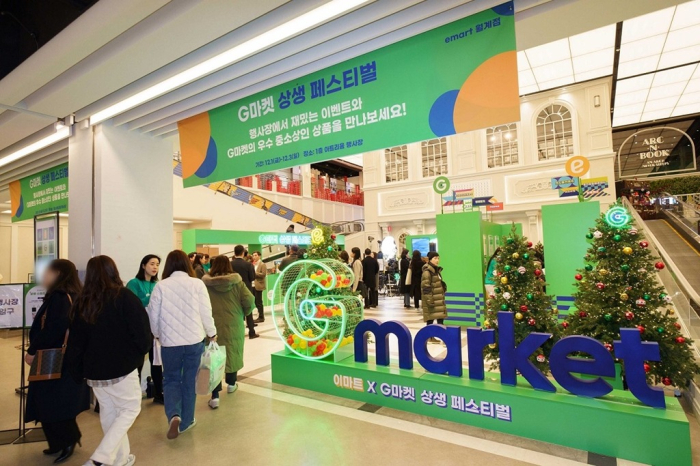
    Gmarket, an e-commerce platform owned by Shinsegae, has entered into a strategic alliance with Lazada, a leading online marketplace in Southeast Asia, to facilitate its expansion on the international front.

    Expanding Horizons

    The partnership allows sellers using Gmarket to add over 20 million items directly to Lazada’s platform. This will potentially reach about 160 million users all over Singapore, Malaysia, Vietnam, Thailand, and the Philippines. This signifies Gmarket’s inaugural foray into the Southeast Asian market using a local platform.

    Smooth Integration

    The integration, which is designed for ease and convenience, allows Korean sellers to participate via Gmarket’s ESM Plus system. This system enables synchronized product information, order processing, and logistics on both platforms.

    Sellers only need to ship their products to Lazada’s warehouse in Incheon as product listings are automatically translated into local languages. Both Gmarket and Lazada will jointly manage international shipping and customer support.

    Commitment to Sellers

    A representative from Gmarket emphasized that the cooperation with Lazada aims to assist domestic sellers in their efforts to enter foreign markets in a more stable and straightforward way. They further stressed the platform’s commitment to support its high-quality sellers in tapping opportunities to increase sales in overseas markets.

    Future Expansion

    In addition to its Southeast Asian initiative, Gmarket is planning to expand to Europe, South Asia, Latin America, and the US. The ultimate goal is to reach more than 200 countries and regions within Alibaba’s global network.

    Questions & Answers

    What does the strategic partnership between Gmarket and Lazada entail?
    The partnership enables Gmarket’s sellers to list their products directly on Lazada, reaching its approximately 160 million users across Southeast Asia.

    How will the integration of the two platforms work?
    Gmarket sellers can opt in via the ESM Plus system for synchronized product data, order processing, and logistics across both platforms. Listings are automatically translated, and the products are shipped to Lazada’s Incheon warehouse.

    What are Gmarket’s future expansion plans?
    Gmarket aims to broaden its reach to Europe, South Asia, Latin America, and the US, with the ultimate goal of targeting more than 200 countries and regions within Alibaba’s global network.

  • POP MART Connects with Southeast Asia’s Toy Collectors Through Lazada

    POP MART Connects with Southeast Asia’s Toy Collectors Through Lazada

    Southeast Asia’s blind box obsession is now mainstream, and POP MART is at the heart of it, fuelling demand with exclusive IPs, sought-after collectibles and even real-life fan events. The global designer toy brand, best known for turning characters like MOLLY, DIMOO, and SKULLPANDA into household names, is tapping on Lazada’s LazMall to connect with millions of fans across the region through surprise drops, unboxings, and community events.

    With LazMall, POP MART is now reaching fans in a more direct and hyper-personalised way. Since joining the platform in 2023, it has grown over fivefold to become one of LazMall’s fastest-growing toy brands, a testament to the region’s deep love for collectibles and character storytelling.

    From live-streamed unboxings to data-backed product launches, POP MART’s success reflects how digital discovery and fandom go hand-in-hand. The global blind box collectibles market is set to hit USD 38.4 billion by 203, a boom fuelled by Gen Z and millennial collectors seeking rarity, emotional connection, and a bit of playful nostalgia.

    “Whether it’s the thrill of the mystery or the joy of finding your favourite character, our collectors are looking for more than just toys — they’re seeking stories,” said a POP MART spokesperson. “With Lazada, we’re able to deliver those stories in a more seamless way.”

    Global Exclusives Launching in June

    This month, POP MART will release two globally limited figures — MOLLY and Zsiga, and also unveil the second-generation SKULLPANDA plush toys, adding a soft and huggable twist to its cult-favourite character lineup.

    These products will be available on Lazada’s LazMall from June 2025 onwards. POP MART will also increase its stock levels and scale up visibility on its LazMall storefront to meet fan demand.

    Where Community Meets Commerce

    On Lazada, POP MART fans don’t just shop, they discover and experience. Using AI-powered recommendations and region-specific insights, the brand curates its releases based on what collectors love most in each market. SKULLPANDA, for instance, has become a breakout favourite in Thailand, while DIMOO charms fans in Malaysia.

    Collectors also benefit from prompt deliveries, with 85% of orders in all key Southeast Asian cities like Bangkok and Manila guaranteed to arrive within 48 hours upon order confirmation. Collectibles are also delivered in custom shock-proof packaging to ensure they arrive in pristine, collector-worthy conditions, and the parcel can be tracked in real time on the Lazada app.

    POP MART collectibles are not just toys, they are a lifestyle and the epitome of luxury and exclusivity that has been fuelled by the energy of its fans and creators. More than one-third (34%) of its sales on Lazada now come from affiliate creators in Southeast Asia — livestreamers, toy reviewers, and content creators who bring the world of POP MART to life through their own lens. Their curated content, character deep-dives, and unboxing videos don’t just sell toys — they build community and elevate collecting into a shared lifestyle.

    Taking the Experience Offline

    Fans in Singapore can look forward to experiencing the magic in-person next month. On 27 July, Lazada X POP MART 5KM run will be happening in Singapore. Designed to be a vibrant, community-driven event that blends fitness, music, and fandom, POP MART will be hosting an exclusive booth at the event, creating a playground for pop culture lovers to meet iconic characters, explore exclusive new drops, and immerse themselves in the joyful surprise of the trend culture and brand stories.

    IRL experiences like this are part of POP MART’s strategy to connect more deeply with its community – both online and offline.

    “POP MART’s world is built on creativity and connection,” said Kaya Qin, Chief Business Officer at Lazada Group. “Through Lazada’s platform, brands like POP MART are able to inspire and engage a new generation of collectors with stories that extend beyond the digital channels.”

  • Popular Vietnamese eCommerce site Lingo.vn closed down

    Popular Vietnamese eCommerce site Lingo.vn closed down

    Vietnamese eCommerce site Lingo.vn closed suddenly yesterday, without a word of goodbye to its legion of Vietnamese fans.

    The closing of Lingo.vn was clearly a sudden decision, especially as it had been running a promotion on its Facebook page, which was supposed to last until today, (August 3).

    According to an inside source, the company will permanently close the brand and site, and axe 160 of its 190 staff, leaving just 30 to work on another eCommerce site called Topmot.vn.

    The B2C site Lingo.vn was established in August 2011 by VMG Media  after the Japanese company NTT Docomo invested in the company. In 2014, Lingo.vn was separated into Lingo eCommerce, and received funds from Yellow Star Investment, with the expectation it would become the largest eCommerce website in Vietnam.


    However, after two years of trying, it seemed Lingo.vn could not achieve commercial viability.

    The exit of Lingo.vn illustrates the cut-throat nature of Vietnam’s eCommerce market. Last year saw the withdrawals of big names such as Deca.vn, mum and kids Beyeu.vn, with the same reason of “not enough investment”. Other sites were sold to foreign corporations: Lazada was sold to Alibaba, Zalora to Thailand’s Central Group, Foodpanda.vn was acquired by local rival Vietnammm.

    lingo

    From another perspective, it seems the investors of Lingo.vn were wise to stop pouring more and more money and resources into a failing business model.

    Meanwhile, Central Group and Lotte Mart have announced they will ramp up their eCommerce projects in Vietnam, hopefully overcoming the barriers that have trapped smaller players.

  • Lazada Unveils Ambitious $100 Million Annual Investment to Boost Affiliate Program

    Lazada Unveils Ambitious $100 Million Annual Investment to Boost Affiliate Program

    Lazada is ramping up its efforts in the affiliate marketing sphere, announcing a bold $100 million annual investment into its Lazada Affiliate Programme. This move aims to further establish affiliate marketing as a pivotal growth engine across Southeast Asia’s rapidly evolving eCommerce landscape.

    In 2024, a remarkable 82% of consumers in Southeast Asia are expected to base their purchasing decisions on influencer recommendations, marking a 3% rise from the previous year. This trend underscores the rising significance of affiliate marketing as a key sales driver, contributing about 20% to the region’s online sales—roughly translating to a staggering US$15 billion in Net Merchandise Value.

    The influx of funds is poised to empower both brands and creators by transforming recommendations into tangible revenue. To enhance the user experience and overall performance of the LazAffiliate Programme, Lazada is rolling out an array of updates. These include a revamped affiliate interface, customized storefronts showcasing curated products, and seasonal campaign boosters that offer not just higher commissions but also gamified challenges and attractive bonuses.

    As excitement builds for the upcoming 6.6 sale, affiliates are in for a treat—earning up to 36% commission when promoting brands through store vouchers. A curated list of high-commission products, along with a real-time performance dashboard, will help affiliates hone their strategies and focus on what sells best.

    Lazada is not stopping there; it plans to implement co-developed, performance-based strategies designed to maximize the impact of influencer marketing, turning it into scalable sales. This strategy includes Lazada-funded vouchers and access to an expansive network of influencers, content creators, and key opinion consumers (KOCs).

    Kicking off with the highly anticipated 6.6 Mega Sale, the affiliate programme will feature gamified challenges and a rewarding pool of $100,000 for the top 10 affiliates in the region. Over 80 brands, particularly those in the fashion and beauty sectors, are set to join in on the action.

    Jared Chan, head of regional affiliate at Lazada Group, emphasized that this investment is about unlocking new income opportunities for creators and forging stronger, localized connections between brands and consumers. Notably, the LazAffiliate Programme is open to all, welcoming participants without any minimum follower requirements.

    Questions & Answers

    What is the significance of Lazada’s $100 million investment?
    This investment is aimed at enhancing Lazada’s affiliate marketing program, turning it into a performance-driven growth channel across Southeast Asia, which is crucial for eCommerce success in the region.

    How does Lazada support its affiliates?
    Lazada provides affiliates with a redesigned interface, customized storefronts, and tools like a performance dashboard to help them optimize their strategies. They also offer opportunities for higher commissions and bonuses during promotional campaigns.

    Is there a minimum follower requirement to join the LazAffiliate Programme?
    No, the LazAffiliate Programme is open to everyone, allowing individuals with any follower count to participate and benefit from the growing field of affiliate marketing.

  • Alibaba injects US$634 million into Lazada

    Alibaba injects US$634 million into Lazada

    Chinese technology giant Alibaba Group Holding has invested another US$634 million in its e-commerce subsidiary Lazada amid intensifying competition.

    The injection – the group’s third this year – takes its investment in Lazada to more than $1.8 billion.

    Since taking the controlling stake in 2016, Alibaba has poured about $7.4 million into the Singapore-based e-commerce unit.

    This latest move reflects the increasingly fierce competition from major rivals TikTok and Shopee in the Southeast Asian market.

    TikTok, owned by Chinese tech group ByteDance, has announced it would acquire a 75 percent share in Tokopedia, an e-commerce unit of Indonesia’s tech firm GoTo. This will allow it to re-enter the country’s online shopping market following the ban of e-commerce transactions on social media.

    Singaporean tech group Sea, which operates Shopee, has also announced plans to increase investment in its live commerce business, according to Nikkei.

  • Lazada Group and Seoul Business Agency sign strategic partnership

    Lazada Group and Seoul Business Agency sign strategic partnership

    Lazada Group and the Seoul Business Agency (SBA) have signed a Memorandum of Understanding to allow South Korean SMEs to expand into the Southeast Asia market.

    The SBA will take the lead in promoting Lazada as a prominent Southeast Asian e-commerce marketplace destination among SMEs in Seoul under the terms of this partnership. The collaboration will begin in Singapore, where the SBA and Lazada will collaborate to onboard and nurture chosen new cross-border sellers from Seoul onto the Lazada Singapore platform.

    “This collaboration not only strengthens our commitment to offering buyers an extensive variety of products but also reinforces our dedication to fostering cross-border shopping and welcoming brands and sellers from across the globe to our e-commerce ecosystem,” said Jason Chen, chief business officer, Lazada Group and CEO, Lazada Singapore

    “South Korean SMEs have much to offer, and together with Seoul Business Agency, we aim to unlock their potential in Southeast Asia.”

    This agreement intends to expand chances for South Korean businesses and empower them to grow the Southeast Asian digital commerce arena by utilising Lazada’s technology, resources, and solutions. This will also broaden the selection of items and brand alternatives available to Lazada customers.

    According to Bloomberg, e-commerce behemoth Alibaba Group Holding spent an additional US$845 million on its Southeast Asia affiliate Lazada in July, despite the region’s tough competition.

  • Sandeep Raj, Senior Vice President, Affiliate Marketing, Lazada (Alibaba) answering questions from Retail News

    Sandeep Raj, Senior Vice President, Affiliate Marketing, Lazada (Alibaba) answering questions from Retail News

    As a Senior Vice President for the Affiliate business for Lazada Southeast Asia, I look after the channels user growth and revenues. I was fascinated by the potential of e-commerce in Asia as I was fortunate to be part of the International expansion team for Amazon. Over the past 10 years I have been part of early launch and scaling teams in e-commerce industry.

    Could you give us a short introduction about yourself and what you do at Lazada? As the Senior Vice President for Affiliate business for Lazada Southeast Asia, I look after the channels user growth and revenues. I was fascinated by the potential of e-commerce in Asia when I was part of the International expansion team at Amazon. Over the past 10 years, I have been part of early launch and scaling teams in the e-commerce industry.

    What recommendations do you have for product owners to successfully promote a product to stay on top of consumers mind?

    Product owners should think of the end to end customer journey and how to wow them at      every touch point. Since digital touch points are a significant portion of the customer journey       these days, product owners should measure impact and carefully assess the RoI in each step.

    How does Alibaba tap on affiliate marketing to drive customers to their website? By nurturing and growing high quality channels present in the Southeast Asian market, we work very closely on expanding all types of partners in the eco-system from programmatic partners, advertising networks, news, gaming and utility portals, KOLs to micro and nano influencers.

    What are some ways retailers can grow their affiliate programmes?

    We work with many retailers and help them onboard as affiliate partners. We are creating       a win-win model with the brands and sellers, helping them tap on their loyal customers who shop on the Lazada platform and stand out from their competitors. We also give them the       access to tools that takes them from x to y very fast.

    How do you measure the success of Lazada’s affiliate marketing program?

    The  number one method to measure the success is if you’re able to create a win-win model between sellers, retailers, and brands as one entity, the affiliate partners as the second entity and the customers as the third entity.  Firstly, you would want to make sure that the retailers are gaining additional traffic and additional sales by working with our affiliate partners. Secondly, the affiliate partners should be getting the best Roi in terms of diverting or channeling traffic and their customers to Lazada’s portal. Last but not the least, the customers need to find the best value by engaging with our platform. They should be able to find the products that they want, reach them on time etc.

    Can you talk us through the approaches used to grow your Affiliate Program?

    I think affiliate marketing is still in early stages in Southeast Asia compared to other developed markets. We want to grow content creators in Southeast Asia, making sure that we’re able to tap into the best and high-quality content creators, making sure that they work with us.

    We give them the right support and incentives so that they continue to work with us. We want to ensure that we tap into different communities in the SEA markets for credible sources of passive income or income opportunities.  We work with YouTubers, Instagram influencers, influencers on Twitter or KOLs on different social media platforms, young students, fresh graduates and different communities of women from different parts of SEA. We really want to double down on that segment and then grow those segments for our partners and at the same time, we’re also quite conscious that there are many frauds, fraudulent partners surfacing in the market and then calling themselves as affiliate programs. We are conscious that this exists and we want to spread the message that all our content creators come directly through Zeta’s Portal and sign up. We never work with any third-party agencies that are promoting through SMS and other mechanisms.

    How has eCommerce Affiliate Marketing changed over the years and what are some new things we will see in 2022 and beyond?

    The three points I summarized earlier is testament to what has really changed in the past few years. A couple of changes took place. Number one, the top e-commerce companies came up with the affiliate program that that kickstarted the affiliate marketing revolution then a lot of new players in the market attempted affiliate marketing. Most of whom were primarily blogs and then a couple of other advertising tech companies which were trying to do affiliate marketing in the recent past, especially after COVID, since they realized that affiliate marketing is a credible way to make revenue. We had a lot of new segments of partners that came into the ecosystem. Yes, number one, we see that it’s going to be a rapid proliferation of the influencers and the key opinion leaders and content creators, which is in line with the creative economy boom that is happening across the world.

    How effective is affiliate marketing in recruiting new customers?

    Affiliate marketing is a great channel for new customers of eCommerce or someone who’s not familiar with an eCommerce model to try online shopping for the first time Primarily, because this is a channel which works on building trust with partners. Second is price – we also work with a lot of cashback sites in SEA, which takes away the inhibition of making that first purchase. We also work with a lot of fintech companies, payment companies and banks which gives good vouchers and incentives for new buyers.

    In the hopes of supporting your staff and moving them forward decisively and productively, what are the key characteristics for being an effective leader? How has this proven successful for you?

    Having had the good fortune of working in big tech companies like Amazon and running my own startups, I’ve seen how employees or the current generation of the workforce that is coming into the companies are thinking about work and what work means to them. Also, how they look at leaders – I think number one is they definitely look for authenticity. And second, they want to see that they are learning, that value being added to them to their day to day lives. Thirdly, they’re the kind that values two-way connection.  I feel a leader should be conscious of these three items before they go and recruit or build their team.

    How do you evaluate where to prioritize digitalisation across different areas of the business?

    As a retailer or a B2C brand, the first area that they should really prioritize digitalization is their is their supply chain. We see a lot of retailers kind of missing that out, which of course can add a huge value because that’s the first part in the overall supply chain or overall chain of selling their products or goods. I would say the second area to digitize would be the customer acquisition or the marketing trend, making sure that they’re using the right tools to track the customers and their behavior and ensuring that the buyers are getting the best value for the money that they are spending.

    What is your vision for the future of Lazada and which verticals do you foresee the most growth?

    Think for Lazada, it’s still very early stage not just for Lazada but all all e-commerce companies   in SEA.  Unlike the developed economies where e-commerce accounts for easily 25% to 30% of   the total retail in a specific market, e-commerce is still in single digits in SEA which I would say is possible to grow in the coming few years. In fact, a Google report predicts that the e-commerce economy will be worth $1,000,000,000,000 by 2030 which is quite a significant achievement. $1,000,000,000,000 would probably be the top in economy of top ten countries in the world by  GDP. Lazada is doing the right things for the partners and for the customers so that they can also enjoy the fruits of the good opportunities available in the e-commerce market.


  • Lazada appoints new group CEO

    Lazada appoints new group CEO

    Alibaba’s Southeast Asian e-commerce arm, Lazada, has named James Dong as its new group CEO as the region’s Shopee-dominated competition steps up.

    In his new role, Dong wil oversee Lazada’s expansion plan into Euroupe. The 42-year-old CEO will succeed Chun Li, who will continue serve as adviser to the group’s chairman Jiang Fan and member of Lazada’s board of directors.

    Formerly with McKinsey & Co, Dong was head of globalisation strategy and corporate development role at Alibaba Group before joining Lazada as CEO of Lazada Thailand and Vietnam in 2018.

    He has subsequently handed up the leadership of Vietnam unit to Kaya Qin, who has been chief operating officer of Lazada Vietnam since 2018, while remaining in his role as CEO of Thailand.

  • Thailand urges care over content as Lazada promotion angers royalists

    Thailand urges care over content as Lazada promotion angers royalists

    Thailand on Saturday warned against the creation of online content that risked insulting the country’s monarchy, after a video by a social media influencer promoting e-commerce platform Lazada incensed royalists, who said it was mocking the palace.

    Thai law prescribes punishments of up to 15 years in jail for each offence if found guilty of defaming, insulting or threatening King Maha Vajiralongkorn and his closest family.

    The video, which has since been taken down, was promoting Lazada’s May 5 sale and featured a woman dressed in a traditional Thai costume sitting in a wheelchair and playing the role of an influencer’s mother.

    Royalists complained the woman in the wheelchair was a veiled reference to a royal family member. The video did not use the language used by the royal family, nor mention any of its members.

    In videos posted on Facebook, the influencer, Aniwat “Nara” Prathumthin, said the clip was a parody of a famous Thai soap opera and told critics the perceived royal insult was “all in your imagination”.

    Lazada, the Southeast Asian arm of Alibaba Group Holding, in a statement apologised for the “emotional damage” the video had caused and said it should have been more careful.

    Government spokesman Thanakorn Wangboonkongchana said such content risked damaging the reputation of brands.

    “Let us warn marketers, influencers and content creators to be careful about presenting content or promotions that reference appearances or individuals of the institution that all Thais worship and love,” Thanakorn said in a statement.

    “This is inappropriate, and will not only upset every Thai in the country, but also destroy the image and reputation of the brand. It could also be against the law.”

    The incident follows an April Fool’s prank tweeted by a staff member at budget airline Thai Vietjet Air, an offshoot of Vietnam’s Vietjet Aviation JSC, about a new route to Munich that stirred anger among royalists, who said it was a hidden joke about the Thai king spending time in Germany. The airline apologised.

  • Alibaba tipped to take Lazada to Europe

    Alibaba tipped to take Lazada to Europe

    Chinese tech giant Alibaba is taking Lazada to Europe as part of its strategy to drive growth in overseas countries.  It was reported that the plan to expand Lazada to Europe was due to Alibaba’s slowing opportunities in China.

    The company’s latest interim report published in December 2021 unveiled that its revenue from its China commerce retail business for the six months ended on 30 September 2021 was US$40.8 billion, an increase of 33% compared to US$29.7 billion for the same period of 2020. However, revenue from international commerce retail business for the same period last year was US$3.29 billion, a year-on-year increase of 43% compared to US$2.23 billion for the same period of 2020.

    When it comes to wholesale business, revenue in China for the six months ended on 30 September 2021 was US$1.26 billion, an increase of 14% compared to the same period of 2020. The increment was better in its international business, as the revenue was US$1.42 billion, an increase of 36% compared to the same period of 2020. Reuters’ report said that Lazada will target European vendors, while Lazada Thailand CEO James Dong will help spearhead the initiative. The destination of the expansion is still unknown at the moment. Moreover, Alibaba’s international digital commerce Jiang Fan visited Singapore in April to discuss the plan too.

    The potential expansion plan is Alibaba’s another step to tap into opportunities in Europe. Its logistic arm Cainiao opened a hub in Belgium last November which, reportedly, was the largest of its kind in Europe and a key part of the agreement between the Alibaba Group and the Belgian government concluded in 2018 to join the global Electronic World Trade Platform initiative.  Alibaba’s present in Europe also includes AliExpress, targets consumers looking for goods such as fashion, accessories, computer electronics, toys and tools from Chinese manufacturers.

    Last year, Alibaba reorganised its international and domestic commerce platforms into two units to better drive synergies, including international digital commerce and China digital commerce. International digital commerce brings together Alibaba’s overseas consumer-facing and wholesale businesses under the leadership of Jiang. It will include AliExpress, Alibaba.com, and Lazada. According to Alibaba, these businesses propel its globalisation strategy and the newly-created unit is in line with Alibaba’s goal of serving two billion consumers globally. In its last quarterly earnings, the company said it had reached 285 million annual active consumers overseas.

    Meanwhile, Lazada competitor Shopee also decided to pull out of France, after its foray into Europe. Shopee said that following a short-term, preliminary pilot, the company has decided not to continue the Shopee service in France. It added that other markets are unaffected, and Shopee will continue to adopt an “open-minded and disciplined approach to exploring new markets”.

    Last year, Shopee said that it is looking to grow its presence in Spain with the launch of a new Instagram page. At that point, the expansion into Europe is still in the early stages and that Shopee was understood still testing the waters. Shopee’s strategy to enter the Spanish market came shortly after it announced its expansion plans into Poland.

  • Lazada to highlight 5000 eco-friendly products in LazEarth campaign

    Lazada to highlight 5000 eco-friendly products in LazEarth campaign

    E-commerce platform Lazada has grouped 5000 products with sustainability credentials in a new section of its LazMall to encourage shoppers to buy items that are friendly to the planet.

    The goods, from some 70 brands, mainly span the fashion and FMCG categories and are made, packed, or shipped with reduced plastics, or materials better for Earth.

    Unveiling its LazEarth campaign, Lazada says it wants to encourage a reduction in plastic waste in both products and packaging, given Southeast Asia consumes an estimated 31 million tonnes or more of plastic waste each year. Recognising that consumers in the region are becoming concerned about plastic waste, Lazada believes the campaign will make it easier for people to identify and source environmentally friendly products.

    Lazada will also work with LazMall brands and partners to expand their offer of eco-friendly products.

    “As digital commerce continues to be one of the key growth drivers in Southeast Asia, it is crucial for companies to place sustainability at the core of their strategies to build stronger and greener economies,” said Magnus Ekbom, chief strategy officer at Lazada Group.

    “The LazEarth campaign is part of Lazada’s ongoing efforts to address plastic waste and help our buyers make informed decisions about sustainable products.”

    Lazada has offered greener packaging through its Fulfilment by Lazada (FBL) service for the partnering brands since 2011. The brand also partners and makes social initiatives to build a sustainable digital commerce ecosystem in Southeast Asia.

    “As part of our commitment to build a lasting digital commerce business in Southeast Asia, we recognise that sustainability and value creation will become increasingly important to our long-term success,” said James Chang, chief business officer of Lazada Group

    “With the launch of LazEarth, we look forward to forging more collaborative partnerships and green initiatives that will empower our brands, partners and consumers to collectively create responsible and sustainable shopping and consumption habits.”

  • Central Retail becomes Reebok’s sole Thai distributor

    Central Retail becomes Reebok’s sole Thai distributor

    Sports brand Reebok has appointed CRC Sports, a subsidiary of Central Retail, as its sole distributor in Thailand.

    According to CRC Sports, it will take responsibility for e-commerce operations and the wholesale distribution of Reebok, pushing growth opportunities and aims to make Reebok one of the top five sports brands in Thailand.

    CRC Sports plans to expand Reebok’s network to more than 100 locations this year and enhance Reebok’s online presence through websites and e-commerce marketplaces like Lazada, Shopee and Central.

    “The heritage and potential of Reebok and its product portfolio support our efforts to offer even more of the best sporting trends to the new generation,” said Tony Morton, president of CRC Sports Company.

    “To have a world-renowned sports brand like Reebok in our portfolio helps to solidify our position as the go-to destination for sports apparel, shoes and sports equipment.”

    Other channels such as Click & Collect, Personal Shoppers, Call & Shop, Line Chat & Shop, and Facebook Live events are used to offer retail experiences for Reebok’s customers in Thailand.

  • Behind e-commerce giant Lazada’s success in pandemic-hit year

    Behind e-commerce giant Lazada’s success in pandemic-hit year

    In light of its proud achievements in 2021, Lazada Vietnam expects more breakthroughs in 2022 to bring more value for their customers and partners.
    Lazada hit impressive milestones in 2021, with remarkable profits, site traffic and record number of orders and new sellers on the platform, and step-by-step attracted consumers and partners across the country.

    Looking back on a breakthrough year, Lazada Vietnam’s leaders shared their experiences in surviving the pandemic, thereby continuously creating more value for customers, users as well as business partners.

    An amazing digital migration

    The pandemic has posed many challenges, but it has also pushed businesses to adapt the digital transformation. Ladaza Vietnam’s CEO described this amazing “digital migration” of Vietnamese businesses as an “astonishing wave”.

    Since October 2021, the number of new sellers joining the platform has increased by about 30 percent per month. According to the recent report: “E-commerce in 2021: Adapting and quickly overcoming obstacles from Covid-19”, in the first 11 months of the year, sellers from non-urban areas accounted for 40 percent of all new merchants on Lazada.

    The percentage of new sellers from Hanoi and Ho Chi Minh City also increased by 29 percent and 31 percent, respectively. Fast-moving consumer goods (FMCG) recorded the highest increase, followed by fashion, home furniture and electronics. James Dong, CEO of Lazada Vietnam and Thailand, believes this is a good sign for Vietnam’s fastest growing momentum.

    James Dong, general director of Lazada Vietnam and Thailand. Photo by Lazada Vietnam
    James Dong, CEO of Lazada Vietnam and Thailand. Photo by Lazada Vietnam

    To support sellers, Lazada has shortened the listing process, and integrated business management solutions with real-time charts. The platform has also implemented marketing, promoting transportation process, ensuring on-time, non-contact, non-cash delivery to reduce risks of Covid-19 contamination for buyers and sellers.

    During the peak of the pandemic in HCMC, Lazada shortened the sales registration process to three hours for fresh food suppliers, and reduced the delivery time. These solutions helped reduce the risk of spreading infections, stabilizing food prices, and meeting urgent consumption needs.

    Moreover, Lazada’s “three Easy” (3Es) strategy including “Easy to buy – Easy to sell – Easy to deliver” has yielded achievements. “The benefit and safety of customers and business partners are always the top priority of the platform,” according to the CEO.

    “The practical test” for the supply chain

    Vu Duc Thinh, Chief Logistics Officer of Lazada Vietnam, described the supply chain situation during the epidemic as “terrible”. For more than four months, transportation, sales, and trading activities were almost frozen. The flow of raw materials, goods production, distribution and transportation were all interrupted.

    “Without goods, sellers fail to conduct business. Without duct tape, sellers can’t pack their goods. Even after tackling those difficulties, if shipping units shut down, buyers won’t receive the goods,” Thinh explained.

    Overcoming obstacles, Thinh and the Lazada Vietnam logistics team made several efforts to adapt in order to maintain operations and maintain item flow. Epidemic-prevention solutions at working sites were quickly deployed to ensure the safety of employees and customers.

    Vu Duc Thinh, logistics director of Lazada Vietnam,
    Vu Duc Thinh, Chief Logistics Officer of Lazada Vietnam. Photo by Lazada Vietnam

    “We all work from 5 a.m. to 11 p.m. every day. At the end of the day, we usually evaluated the effectiveness of our work and make adjustment for the next day,” said Thinh.

    Looking back at 2021, Thinh is proud that Lazada is one of the few e-Commerce platforms in Vietnam to maintain its supply chain during the pandemic. The logistics system completed the target from the beginning of the year. Some indicators exceeded expectations. Efforts to ensure smooth operations not only helped business remain stable, but also meet the increasing demand of consumers. That contributed to maintaining growth for Lazada, ensuring jobs and stable income for all staff.

    “The ability to adapt with a long-term vision for sustainable development is Lazada’s strength. Lazada has focused on technology and logistics since the early days of development and the importance of this strategy is proved,” Thinh stated.

    Besides logistics, Lazada has carried out many marketing activities to help the community overcome the challenges in the past year.

    Nguyen Thi Thuy Hang, Chief Marketing Officer of Lazada Vietnam, said the marketing team always set their KPIs as the peace of mind, optimism and comfort of users and the community. Lazada has flexibly approached and interacted with customers via many activities.

    By offering discount vouchers, Lazada has encouraged shopping. For loyal customers, the platform has provided the “Voucher club” package with many benefits like collecting vouchers with a total value of up to VND850,000 and VND50,000 a month.

    Nguyen Thi Thuy Hang, marketing director of Lazada Vietnam
    Nguyen Thi Thuy Hang, Chief Marketing Officer of Lazada Vietnam. Photo by Lazada Vietnam

    “Incentives can solve cost-related problems, but it needs more factors to really share with the community,” said Hang. That is why in 2021, Lazada’s shoppertainment (shopping and entertainment) activities were heavily invested. Hundreds of livestream episodes were performed every day with diverse content, meeting entertainment needs via LazCook, LazMusic, LazGetfit, LazLearn, LazHome, LazPlay…

    According to statistics from Lazada Vietnam, during the peak days of its Shopping Festivals, the platform created more than 400 livestream episodes per day, attracting a 5-6 times increase in viewership compared to weekdays. SuperShow, a music festival, also reached tens of millions of views on its platforms.

    Total orders during the Nov. 11 shopping festival nearly doubled. Customer numbers increased 1.5 times over the same period last year. On the 12.12 Super sale day, sales from LazLive increased seven times. The SuperShow hit 26 million views, contributing to a 20-fold increase in sales.

    “Technology is expected to be the key to enhancing the user experience. This year, we will apply more modern technologies, accompanying users in the shopping experience on the Lazada platform,” Hang shared.

    “The best person is not necessarily the most suitable one”

    In terms of recruitment and training human resources, Van Thi Hong Hanh, Chief People Officer of Lazada Vietnam, said the success of Lazada last year was thanks to its young, adaptive, proactive and creative staff.

    This platform set out a competency framework consisting of seven criteria as the foundation for personnel, recruitment, training and career development decisions and plans. The criteria include problem-solving ability; creativity and improvisation; communication – coordination; business knowledge; management capacity – group leadership; corporate culture creation; awareness – change management.

    Van Thi Hong Hanh, human resources director of Lazada Vietnam
    Van Thi Hong Hanh, Chief People Officer of Lazada Vietnam. Photo by Lazada Vietnam

    During the pandemic, Lazada has implemented the “Covid Care 2.0” program, ensuring the health of both employees and the community. Working from home, getting fully vaccinated, providing protection kits, and supporting Covid-19 infected employees were quickly implemented. Many programs were also implemented to motivate, connect and honor outstanding individuals and groups.

    In 2021, Lazada’s workforce rose by 20 percent in comparison to 2020. According to HR Asia magazine, Lazada was named “Asia’s Best Place to Work” for three years in a row due to a range of policies and initiatives with a people-centric strategy. In addition, at Best Choice Awards 2021, the platform was named “eCommerce platform of the year”.

    “What makes Lazada so outstanding is that we don’t get distracted by short-term financial goals or transient statistics. Instead, we always strive for long-term, more sustainable growth by constantly improving the customer experience and extending our brand partners and sellers,” James Dong emphasizes.

  • E-commerce sites report jump in 11/11 sales

    E-commerce sites report jump in 11/11 sales

    E-commerce platforms reported a surge in sales on Singles’ Day on Nov. 11, an annual shopping event, with the most popular items being masks and healthcare products. Tiki said revenues were up nine times from last year, and the number of buyers was double that on normal days.

    Face masks, products for babies and mothers, and fast-moving consumer goods were the top sellers, it said.

    It also sold some 10,000 mobile phones, including 500 iPhones, 2,000 electric motorbikes and bicycles, and 6,000 cans and bottles of beer.

    Shopee sold 1.8 million decorative items, including some 100,000 decals and stickers, 1.6 million healthcare products, one million earphones, and 150,000 mobile phone covers.

    Lazada said revenues doubled and the number of customers was up by half. Healthcare and beauty products were its best-sellers, and electronics sales almost doubled, with laptop and desktop sales nearly tripling.

    Sendo said revenues were 40 percent higher than during other promotions such as Sept. 9 and Oct. 10, with fashion, household, and beauty items seeing sales double.

    According to a report called ‘e-Conomy SEA 2021’ released this week by Google, Temasek and Bain & Co., Vietnam’s e-commerce market will increase to $13 billion this year, up 53 percent from last year, and triple by 2025.

  • Singaporean logistics unicorn eyes Vietnam as key expansion market

    Singaporean logistics unicorn eyes Vietnam as key expansion market

    Ninja Van, a Singaporean logistics startup and new ASEAN unicorn, is set to drive a broad strategy in Vietnam to benefit from the country’s strong e-logistics market growth.

    After successfully raising $578 million in Series E funding, Ninja Van has officially become an ASEAN “unicorn,”.Dzung Phan, president of Ninja Van, said while revealing the startup’s expansion plans for Vietnam and his assessment of its e-logistics market.

    Why did Ninja Van choose Vietnam as a key investment market?

    We believe Vietnam is ready for a new phase of growth in e-logistics. According to Agility, Vietnam ranks 8th among the top world’s fastest-growing logistics markets and 3rd among ASEAN in 2021. Vietnam E-commerce Association (VECOM) also stated the number of postal parcels sent through express delivery services shot up by 47 percent last year.

    Also, e-logistics is strongly driven by the rapid growth of e-commerce. Vietnam’s e-commerce market expanded an average of 30 percent per annum during the period 2016-2019, from $4 billion (2015) to $11.5 billion (2019). According to VECOM, the market will grow at 29 percent annually in 2020-2025, to reach $52 billion (2025).

    The strong potential of Vietnam’s e-logistics market is a good foundation for our ambitious plan. A market with 600,000 sellers and 49.3 million buyers across e-commerce platforms and social networks will generate significant demand for logistics.

    Leading a new unicorn in the e-logistics industry, how do you assess its competitive advantage in Vietnam?

    The domestic e-logistics market is competitive with several “deep pocket” players. The market comprises three main segments: local shipping companies, international shipping companies, and e-commerce platforms with their own in-house shipping ecosystems.

    Domestic enterprises only account for 20 percent of the logistics market share; the remaining 80 percent belongs to international firms with strengths in capital, technology, and experience. Local firms may be backed by international groups, including GHTK by Kerry and AhaMove by Temasek.

    Although the e-logistics market is vibrant, its growth potential is not fully invested in. A survey showed that 60 percent of sellers and 80 percent of buyers are not satisfied with the current quality of express delivery services. Buyers are frustrated by late delivery or the inability to track the flow, while sellers expect more parcels to be delivered.

    Is pricing a major competitive edge in the current e-logistics market?

    Except for the inhouse shipping units of e-commerce platforms, domestic and international players are using price competitiveness to acquire customers quickly. Whenever there is a “newcomer”, delivery costs will drop significantly to maintain the market share and retain customers. Notable discounts were given at the entry of J&T in 2018 and Best in 2020.

    The average shipping price in the Vietnam market fell continuously by 15-20 percent per year from 2017 to 2020. The trend has a negative impact on smaller domestic players, for example, GNN in 2017 suffered a sharp drop in revenue that led to its liquidation. Even international players without strong financial support cannot survive this market, with DHL e-commerce ceasing operations in Vietnam during 2021.

    How does Ninja Van improve the customer experience? Ninja Van focuses on providing a quality and authentic service experience to customers, rather than on pricing alone. Parcel tracking and recovery services for lost or damaged parcels need to be improved.

    Given a tech-enabled personalization of the customer experience, Ninja Van’s nationwide personal delivery service on the Grab app has stepped up during the Covid-19 pandemic. Additionally, we are strengthening our partnership with e-commerce giants including Shopee, Lazada, Tiki, and Sendo.

    With more than 300,000 orders per day, Ninja Van is among the top three partners on all major platforms in Vietnam. These collaborations brought Ninja Van into the top growth 15 companies in the Asia-Pacific region in 2021 as reported by Financial Times.

    To gain trust, we do all possible to help our customers succeed, such as ensuring timely pickup, prompt delivery without loss. In addition, we understand that our partners are working at a large scale, so we do our utmost to optimize our cost structure and provide an attractive rate.

    As a result, we became the most active provider by offering various value-added services, such as return pickup to Lazada, bulky and super bulky delivery for Tiki, or installation services for Shopee.

    With an additional $578 million in Series E, what is the level of ambition in terms of your expansion strategy?

    – Ninja Van is committed to driving a broad strategy in Vietnam in particular and in ASEAN in general. This strategy will cover all three sectors: operations, technical systems, ecosystems for small and retail customers.

    Specifically, Ninja Van will increase its coverage in 63 cities and provinces to reach 100 percent of the Vietnamese population. We will also prepare an automatic sorting system with a capacity of two million packages at five major cities to increase delivery speed.

    We will build and improve web and mobile application platforms to enhance customer experience. We seek to enable both sellers and buyers to track parcels and make inquiries in real-time.

    Notably, we will broaden our cross-border delivery with two new services: Ninja Direct, which helps Vietnamese sellers look for better sourcing with better rates in multiple countries; and Ninja Crossborder, which helps Vietnamese manufacturers reach out to buyers all over the world.

    Moreover, we will complete business activities for the fourth quarter of 2021. For example, based on our big data analytics, we have opened training courses to detect anomalies and outliers to provide timely resolutions for all customers. In 2020, we created 40 different training modules for our shippers and warehouse staff to avoid recalcitrant buyer behavior on COD free delivery services.

    Ninja Van will launch a promotional campaign in Vietnam “Giao thong suot, Nhan ven nguyen” (Smooth delivery, Parcel intact) to support sellers in the fourth quarter. With all staff vaccinated against Covid-19, Ninja Van will maintain its service delivery price during the pandemic to support hard-hit customers.