Tag: lifestyle

  • Nam Air to lure millennials with boutique airline

    Nam Air to lure millennials with boutique airline

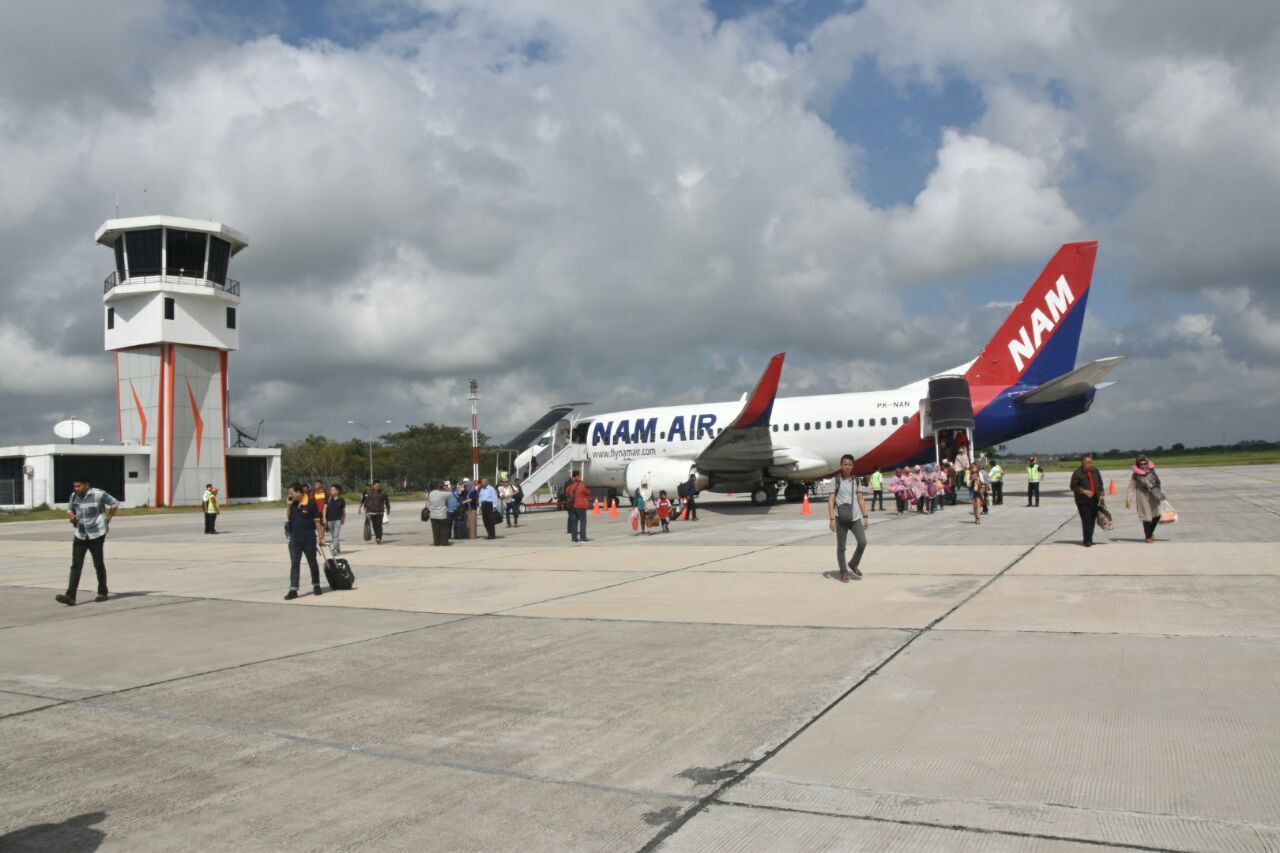
    Nam Air, a subsidiary of Sriwijaya Group, has announced a plan to apply the boutique airline concept, which mainly focuses on lifestyle branding.

    The carrier aims to make itself more appealing for customers of the millennial generation by delivering what it refers to as a “unique concept that is more masculine”.

    Nam Air director Asa Perkasa said passengers would experience the new concept even prior to their departure, and it would continue until their arrival at an airport. “There will be a number of changes, starting from our style to our products,” said Asa in an official statement. “But it will still have an Indonesian touch.”

    Asa described millennials as a promising target group, as they made up a large portion of the market and medium-service airlines were challenged to cater to their needs.

    Entering its fifth year of operation, Nam Air plans to change its internal operations as well. “We plan to apply the millennial lifestyle to our internal work pattern, from our outfits and offices to our business processes,” said Asa. “We’ll provide training for all of our employees to keep up with market trends.”

  • AirAsia prepares to fly to Japan starting in July

    AirAsia prepares to fly to Japan starting in July

    Budget carrier AirAsia Philippines is launching its first flights to Japan on July 1 this year. The carrier, a unit of Malaysia’s AirAsia Berhad, said in a statement over the weekend that it would link its Manila hub to Osaka, paving the way for direct flights to Japan.

    “The launch of direct flights between the Philippines and Japan is a milestone occasion, and we’re excited to connect our capital, Manila, with Osaka,” said AirAsia Philippines President and CEO Dexter Comendador.

    “We are also excited to welcome guests from Osaka and its neighboring regions to the Philippines. This international route will contribute to the government’s target of 8.2 million visitors this year,” he added.

    Similar to the launch of other new routes, the budget airline said it would offer promotional fares at P1,990 for a one way ticket.

    For the whole of 2018, AirAsia Philippines carried 6.87 million passengers, a gain of 30 percent.

    Capacity for the year also rose 34 percent as it increased its fleet of Airbus A320s to 22 planes in 2018 versus 17 aircraft the previous year.

    AirAsia Philippines was established in 2012 with a fleet of two A320s operating out of Clark International Airport.

    Since then, it has opened new hubs, including Manila’s Ninoy Aquino International Airport and Mactan Cebu International Airport.

    At present, it flies to 13 international destinations from Manila in the Philippines, including Kuala Lumpur, Kota Kinabalu, Bangkok, Bali, Seoul, Taipei, Kaohsiung, Shanghai, Guangzhou, Shenzhen, Hong Kong, Macau and Ho Chi Minh City.


  • How founder’s distaste for buying drove AirAsia’s growth

    How founder’s distaste for buying drove AirAsia’s growth

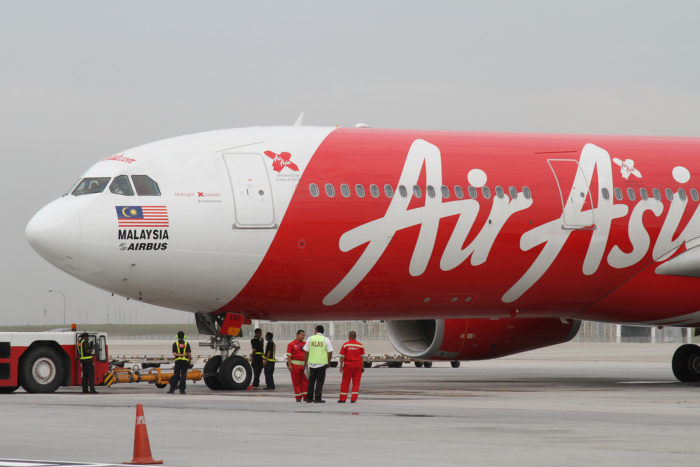
    AirAsia, the region’s biggest budget airline, said it prefers to pursue organic growth instead of expansion through acquisitions, partly explaining why it declined to buy Hong Kong’s sole low-cost carrier Hong Kong Express Airways (HK Express). Cathay Pacific Airways, Hong Kong’s flagship premium carrier, this week offered HK$4.93 billion (S$850 million) to buy its budget competitor from the indebted HNA Group. AirAsia looked at the proposal to buy HK Express and its full-service sibling Hong Kong Airlines, declining to acquire either, said founder Tony Fernandes.

    “My philosophy has been organic growth,” Fernandes said in an interview with South China Morning Post during Credit Suisse’s Asia Investment Conference in Hong Kong. “I generally don’t believe in acquisition because it comes with a lot of inherent issues. When you import through acquisition, it comes at a risk, so it’s not my preference.

    Fernandes’ approach illustrates how he turned the Kuala Lumpur-based airline from a near-bankrupt company into Asia’s largest budget carrier in less than two decades, with more than 140 destinations and flying on 320 routes at the lowest unit cost in the global aviation industry.

    Fernandes, who worked for Warner Music Group before striking out on his own, bought AirAsia in December 2001 for a token 1 ringgit, taking on the carrier’s 40 million ringgit (S$15 million at the time) of debt. Within a year, the carrier reported a profit, qualifying for a listing on the Kuala Lumpur Stock Exchange two years later.

    AirAsia’s 2018 revenue rose 9 per cent to 10.6 billion ringgit (US$2.5 billion), while pre-tax profit rose by the same quantum to a record 1.7 billion ringgit. Low-cost, long-haul AirAsia X notched revenue of 4.5 billion ringgit, flat year-on-year, but the 2017’s profit performance turned into a loss of 312 million ringgit.

    The airline and its affiliates flew 73 million passengers last year, a figure that beat even full-service flag carriers in Southeast Asia. AirAsia had made a single acquisition in 18 years, when it bought 49 per cent of Zest Airways for an undisclosed sum to secure a landing slot in the Philippines in 2013. Elsewhere in the region, AirAsia expands its network through joint ventures in seven countries, including Japan, India and Thailand.

    The airline, operating with 21,000 employees with no union representation, wants to steer clear of importing “inherent issues” and excess baggage from taking on another airline, Fernandes said.

    Now AirAsia has a chance to help revive Malaysia Airlines, the very competitor that the low-cost carrier had beaten into the ground. Malaysia’s Premier Mahathir Mohamad broached the idea of either selling or shutting the nation’s flag carrier two weeks ago.

    Malaysia Airlines, now under the ward of the country’s sovereign wealth fund Khazanah Nasional after a 6 billion ringgit capital infusion, “can definitely be turned around,” Fernandes said.

    Still, AirAsia is in no hurry to revive its 2011 share swap plan with the flag carrier, which was vetoed by the government of then-premier Najib Razak.

    “Many people will say that [AirAsia’s] expertise could be used to hurt Malaysia Airlines and benefit AirAsia. There is a genuine interest to help but in this day and age, not everyone will see it that way, ” Fernandes said. “It’s best that we do our own thing, and we’ve got a lot on out plate.”

    Worldwide aviation is booming, where 8.2 billion passengers could take to the sky by 2037, according to a 20-year forecast made in October by the International Air Transport Association (IATA), with the Asia-Pacific region driving the biggest growth.

    Still, not everything is hale and rosy in the region, as intense competition in a price-sensitive travelling weighed on airlines’ bottom lines. Only six of the 20 publicly traded airlines or affiliates in Southeast Asia were in the black, with 19 of them reporting declines in third-quarter profitability compared with a year earlier, according to CAPA Centre for Aviation.

    AirAsia had been approached for help. It has already evaluated and declined buying a stake in Bangkok-based NokAir. AirAsia’s Indonesia unit was also linked to – and denied – the possible purchase of Citilink, the low-cost brand of Indonesia’s flag carrier Garuda.

    “I never say no to any M&A, but it has to be a sexy opportunity to go down that route,” Fernandes said.

    Turning to India, and the troubles associated with Jet Airways, which was saved from near-bankruptcy at the last minute, the Malaysian-owned budget carrier said it was positioning itself for the opportunity to grow if runways slots relinquished come up for sale.

    “India is a prize, but just like with prizes, nothing comes easy. It’s been a lot of hard work,” Fernandes said.

    Expecting runway slots to be freed up, the AirAsia chief added. “We want to [buy] it in the right way. We’re not vultures. There will be a few airlines hoping Jet goes bust and we don’t want anyone to lose their jobs, we want every airline to survive and grow, but if an opportunity arises to take those slots, then for sure.”
  • Vardenchi To Open New Lifestyle Garage Store In Mumbai

    Vardenchi To Open New Lifestyle Garage Store In Mumbai

    Motorcycle design company, Vardenchi, is all set to open its first ‘Lifestyle Garage’ in Goregaon, Mumbai. The flagship space will offer a wide range of bespoke motorcycle upgrade solutions and crafted biker products. Biker Products will include a range of fashion motorcycle helmets, lifestyle riding gear, a collection of apparel like t shirts hoodies and shoes. Motorcycle Upgrade products will include accessories for Safety, Utility and Style such as lights, seats, guards, luggage and more.

    A lot of motorcycle parts and materials have inspired the design of the Lifestyle Garage. Akshai Varde, MD/Founder, Vardenchi said, “The Vardenchi Lifestyle Garage is a culmination of our long standing vision of offering ‘everything motorcycle.’ The market and the timing are very well positioned for a concept like this and we are extremely excited to kick off the first of an entire network of franchise stores”

  • Paragon mall adds more Retail brands On Level 3

    Paragon mall adds more Retail brands On Level 3

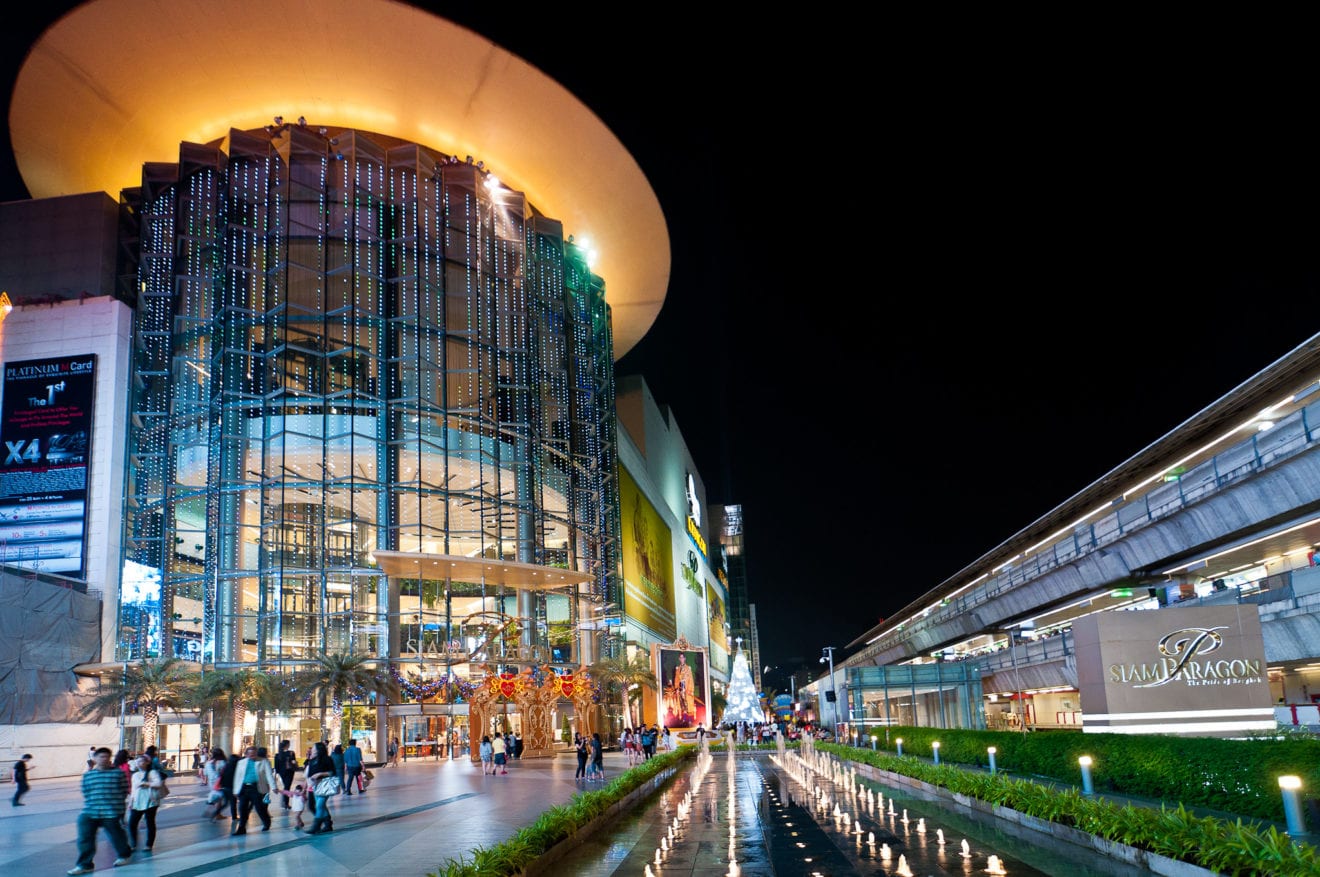
    Paragon mall has added a new retail and lifestyle concept on level 3, bringing together curated fashion brands.

    Launched in phases from last June, the refreshed 15,000sqft concept offers new names from fashion, beauty, bags and accessories, dining and lifestyle brands.

    In fashion, there are French-based women fashion Anne Fontaine, Indonsia label D2-i, European-made shoes Hue, European fabric Moiselle, Asia’s esteemed multi-brand fashion Pois, home-grown fashion designer Sabrinagoh, first concept store for ladies by Samsonite Samsonite for Her, Norwegian fashionable shoe brand with a bold personality Swims, and bespoke collection of jewelry Sulin Serio.

    For skincare and fragrances, there are Scandinavia’s leading cosmetic brand Make Up Store, beauty products from Escentials, and home scenting Flaming Queen, niche fragrances boutique Amaris.

    Western-meets-Sichuan café style dining Halcyon & Crane adds to dining options.

  • AirAsia to launch Phuket-Phnom Penh direct flights

    AirAsia to launch Phuket-Phnom Penh direct flights

    Thai AirAsia CEO Santisuk Klongchaiya said the airline has devoted great importance to adding routes to its regional flight bases, looking to build a strong network of destinations that provide the opportunity to add even further routes, providing ever greater convenience to travellers who will no longer need to stop over in Bangkok, said a release today (April 1) announcing the new flights.

    “Phuket is a very important strategic flight base for AirAsia that has grown steadily along with the addition of direct flights to CLMV (Cambodia, Laos, Myanmar, Vietnam) cities such as Siem Reap.

    “With the positive response we have received from international travellers, we decided to add Phuket-Phnom Penh, connecting the resort town to Cambodia’s capital. The route should well serve tourists as well as members of the business community of both countries,” Mr Santisuk added.

    The flights will operate on Monday, Tuesday, Friday and Saturday.

    Thai AirAsia operates nine international routes out of Phuket: Phuket-Wuhan, Phuket-Kunming, Phuket-Hong Kong, Phuket-Macau, Phuket-Siem Reap, Phuket-Singapore, Phuket-Kuala Lumpur (Code AK), Phuket-Penang (Code AK) and the latest addition Phuket-Phnom Penh starting June 1.

  • Global Sportswear brand Lotto to accelerate omnichannel presence in India

    Global Sportswear brand Lotto to accelerate omnichannel presence in India

    With the aim towards consolidating its presence in India’s growing athleisure market, Global Sportswear brand Lotto’s Indian association, SSIPL Lifestyle Pvt. Ltd. has partnered with Ace Turtle, Asia’s leading omnichannel platform company. Ace Turtle’s omnichannel technology platform will play a pivotal role in accelerating Lotto’s digital presence in India. Along with expanding its physical presence in India through exclusive stores, Lotto is aggressively looking to be truly omnichannel by expanding its digital presence.

    In India, Lotto has an exclusive license agreement with SSIPL, one of the leading companies in the footwear manufacturing and retailing industry. Its portfolio includes renowned sportswear brands like Nike, Asics, Adidas, Reebok, Puma, Converse to name a few. Speaking on the partnership, Amit Pahuja, BRAND HEAD, LOTTO said “The athleisure market is poised to grow 15-20 percent year on year in India. Seeing the immense scope in the category going ahead, Lotto aims to scale its omnichannel presence to expand its reach to customers who do not have access to our physical stores. Ace Turtle, in the last few years has grown rapidly to become market leader in omnichannel enablement, and we are confident that their technology platform will play a significant role in accelerating our omnichannel strategy”.

    The flourishing online retail market is a catalyst that has been successful in bolstering the growth of sportswear market in India. Ecommerce has especially been instrumental in aiding brands reach smaller cities and towns where they are not physically present of yet. Speaking on the partnership, Nitin Chhabra, CEO, Ace Turtle said “With customers increasingly switching between various sales channels (offline and online), it only makes sense for brands to adopt a robust omnichannel strategy. This will go a long way in increasing the reach of the brand and in building a strong customer base. Our omnichannel platform plays a pivotal role in helping brands build a truly omnichannel presence. We are excited to partner with Lotto, who have witnessed tremendous growth over the last few years. Our platform would play a critical role in enabling a unified brand experience for Lotto’s customers across various channels”.

    Lotto has around 40 stores and plans to add another 60 stores every year. The brand has created a niche in the Indian sportswear market targeting value segment customers. It has grown significantly over the last two or three years at a healthy CAGR of 50 per cent. Over the years, it has invested significantly in strengthening its in-house design capability and operational processes.


  • BMW And MINI Lifestyle Collection Now Will Be Available On Amazon

    BMW And MINI Lifestyle Collection Now Will Be Available On Amazon

    In a bid to make its original lifestyle collection more accessible to automotive enthusiasts in India, BMW India today announced launching the latest range of BMW and MINI branded products on Amazon India. Customer now have access to a wide range of original BMW and MINI branded clothing, accessories, luggage, and many other types of merchandise, which can now be purchased online.

    Customers now have access to wide range of original clothing, accessories, luggage, and more

    Hans-Christian Baertels, President, BMW Group India said, “The fascinating BMW and MINI Lifestyle Collection is created to add a touch of style, sophistication and inspiration to everyday life. We are thrilled to introduce the unique BMW and MINI Lifestyle Collection for our customers on Amazon India. This will enhance the reach and accessibility of our authentic and aspirational range of lifestyle products beyond the existing retail area in our showrooms. Be it golf equipment, bags, wallets, watches, t-shirts, jackets or even miniature cars, there is always something for everyone.”

    The collection will include products themed after the multiple branches within the BMW family like – BMW M Collection, BMW Motorsport Heritage Collection, BMW i Collection, Montblanc for BMW Special Edition, the BMW Iconic Collection and BMW Miniature Collection. A similar collection of MINI-branded clothing and bags to luggage, accessories and mobility items will also be on offer.

  • American Eagle expands Aerie lingerie brand

    American Eagle expands Aerie lingerie brand

    Global apparel retailer American Eagle is boosting its Aerie lingerie brand, with plans to open 60 to 75 stores this year.

    The strategy, which coincides with rival brand Victoria’s Secret’s declining sales and series of store closures, involves both standalone locations and side-by-sides with American Eagle, predominantly in Texas and California. The company currently operates 1055 stores.

    “Aerie is a game changer by staying at the forefront of body positivity and women’s empowerment,” said Aerie’s global brand president Jennifer Foyle. “Our new cast of role models are even more inspirational. They embrace the Aerie lifestyle and were chosen for their influential voices, unique stories and commitment to increase the power and empowering our community.”

    The firm reported US$431 million in earnings for the last financial quarter, a 1 per cent rise over the previous year’s figures. Its total net sales also rose 1 per cent to $1.24 billion.

    “Strong execution by the teams drove a record fourth quarter and fiscal 2018, as we reached a milestone of $4 billion in annual revenue with increased operating profit,” said American Eagle’s CEO and chairman Jay Schottenstein.

    “Eagle and Aerie continued to deliver consistent performance by combining product innovation and great merchandise with an improved customer experience across channels. As we head into 2019, we will continue to leverage the strength of our brands, selling channels and the team’s commitment to continually raising the bar for our customers. The strength of our balance sheet and free cash flow enables us to make important investments in our business to fuel market share gains, future growth and returns to our shareholders.”

  • Reebonz teams up with Japan’s Komehyo

    Reebonz teams up with Japan’s Komehyo

    Singapore’s e-commerce platform Reebonz has partnered with Japanese offline pre-owned luxury product boutique Komehyo.

    Reebonz is expected to make Komehyo’s products available to an estimated 5.5 million members on its platform, supporting both companies’ missions to bring authentic pre-owned luxury to consumers around the world.

    “The next step for us is to continuously support their growth in sales across Asia Pacific,” commented Nupur Sadiwala, Reebonz CFO.

    “Furthermore, with the growing demand for authentic pre-owned luxury complemented by growing demand for new luxury products, we believe that this partnership will allow us to further deepen our ecosystem strategy of offering the broadest selection of quality new and pre-owned luxury products.”

    “In addition to the opportunity for us to amplify our brand awareness, we believe that by working with Reebonz, we will be able to further improve our consistency in delivering authentic high quality products to aspiring consumers across the region,” added Shinji Kai, Komehyo’s IT department assistant GM.

    Established in 1979, Komehyo currently has 40 retail stores across Japan and an online platform, selling bags, jewellery, leather goods and accessories, to watches, shoes and apparel.

  • Islamic clothing market growing to US$88bn by 2025

    Islamic clothing market growing to US$88bn by 2025

    The global Islamic clothing market is expected to reach US$88.35 billion by 2025, according to a new report by US marketing and consulting firm Grand View Research. Increasing expenditure by Islamic populations on lifestyle and apparels, especially among the wealthy, elite, and traditional Middle Eastern populations, is expected to propel demand.

    In 2017, ethnic wear accounted for 70.9 per cent market share, in terms of revenue, owing to rising demand for abayas, hijabs, thobes and jubbas in countries with a high Islamic population. The burkha and naqaab segment is expected to expand at a CAGR of 5.4 per cent from 2017 to 2025, owing to increasing demand from Middle Eastern countries – including Saudi Arabia, the UAE, and Iraq.

    Sustainable fashion is expected to register a CAGR of 4.9 per cent over the forecast period on account of the shifting focus of leading fashion brands towards the development of innovative clothing options for the younger population. The Asia-Pacific region accounted for 31.3 per cent of revenue in 2017, with more than 63 per cent of the world’s Muslim population located in Indonesia, Pakistan, India, Bangladesh, Myanmar and Morocco.

    Key players operating in the Islamic clothing market include House of Fraser, Marks & Spencer, Aab, H&M, and Mango, which are catering to the rising demand for diverse options from different parts of the world.

    Major countries outside the Western fashion industry contributing to a significant share include Malaysia, Turkey, and Indonesia, where the industry is highly lucrative.

    However the research says controversies around losing the ethnic value of Muslim clothing due to its shift towards mainstream fashion industry may hamper market growth. Initiation of various marketing campaigns by industry players in line with maintaining the core of the Muslim precepts – Sharia, or the Islamic law – is projected to propel growth of the Islamic clothing market.

    In addition, increasing demand for modest-yet-fashionable clothing, especially from the younger generation with high purchasing power, is likely to complement market growth.

    Increasing reservations regarding over-commercialisation of what is primarily meant to be a rigorous religious mandate can pose a challenge to market players. In addition, involvement of multinational fashion brands is projected to restrain growth of the small Islamic clothing companies.

  • Sogo department stores see strong sales growth

    Sogo department stores see strong sales growth

    Sogo department stores parent Lifestyle International has reported a 50 per cent drop in net profit for last year, despite increased sales.

    While turnover rose 16 per cent to HK$4.36 billion (US$555 million), net profit fell to $1.69 billion ($215 million).

    However, the company explained the fall was largely due to comparison with 2017 when the company received a one-off gain from the sale of a majority stake in its subsidiary, netting $420.8 million. On a trading basis, the department stores it operates posted solid results.

    Sales at its Sogo Causeway Bay flagship store rose by 10.5 per cent last year, and mainland tourists underpinned a 30.3 per cent increase in sales at the Sogo Tsim Sha Tsui store.

    CFO Terry Poon Fuk-chuen said the improved turnover was due to the company enhancing the shopping experience at its stores.

    Lifestyle International executive director Kam Shim Lau predicts this year will be challenging for retail as declining wage growth and weakening asset values may dent consumer sentiment.

    “Looking ahead, the group predicts a single digit growth in the first half of 2019 and adopts a cautious approach for 2019,” he said.

  • Canada Goose revenues surge more than 50%

    Canada Goose revenues surge more than 50%

    Canada Goose Holdings announced its financial results for the third quarter, highlighting a surge in revenues after new store openings both physical and online. For the quarter ended December 31, 2018, the North American outdoorwear company said total revenues increased by 50.2% to $399.3m from $265.9m, or 49% in constant currencies.

    Direct-to-consumer sales totalled $253.3m from $131.7m last year, driven by the strong online and in-store sales. Canada Goose said it opened five new stores during the quarter and an online store.

    Wholesale revenue increased to $164m from $134.2m, on the back of higher order values from existing partners, coupled with earlier shipment timing relative to last year.

    The Toronto-based company reported net income came in at $103.4m, or $0.93 per diluted share, compared to $63m, or $0.56 per diluted share. The 64% increase was due to higher operating income and a lower effective tax rate, said Canada Goose.

    Adjusted EBITDA was $151.1m, compared to $94.7m.

    “Fiscal 2019 is shaping up to be another year of impressive results. In our peak selling season we continued to deliver when and where it matters most, while also strengthening our foundation for future success on the global stage,” said Dani Reiss, Canada Goose President & CEO.

    “We have successfully entered new markets, introduced new product, and increased capacity to meet growing demand in both channels. We remain deeply confident in the long runway we have ahead.”

    Looking ahead for 2019, annual revenue growth is projected to be in the mid-to-high thirties on a percentage basis, compared to at least 30%.

    Annual growth in adjusted net income per diluted share is now predicted to be in the mid-to-high forties on a percentage basis.

    Founded in 1957, Canada Goose is today one of the world’s leading makers of performance luxury apparel. The Made-In-Canada advocate employs more than 3,400 people worldwide.

    In Asia, the Canadian brand has flagships in Tokyo, Beijing and Hong Kong.

  • Coty sales, profit best estimates despite supply chain woes

    Coty sales, profit best estimates despite supply chain woes

    Coty Inc announced  its second-quarter results for fiscal 2019, confirming it expects to make in a net profit for the period, despite overall sales taking a dive and supply chain issues. The New York-based cosmetic and luxury fragrance company said net revenues for the second quarter came in at $2,511.2 million, for a decrease of 4.8%, while like-for-like revenues grew 0.7%.

    The company said it was helped by higher sales in its luxury segment, with strong holiday demand for the Gucci, Marc Jacobs and Burberry brands.

    That said, the maker of luxury perfumes recorded a net loss of $960.6 million compared to $109.2 million in the prior-year.

    Adjusted net income was $181.9 million, a decline of 23%, “driven by the lower adjusted operating income and the $41.8 million positive foreign tax settlement in the prior year,” said Coty in press release.

    Excluding certain items, the company earned 24 cents per share, topping expectations of 22 cents, and sending its shares up 20%

    “I must stress that while we are confident that we can return Coty to a path of sustainable growth, we are also realistic that it will take time to achieve this outcome,” Coty’s recently appointed Chief Executive Officer Pierre Laubies, said in a statement.

    Revenues in Asia, Latin American, the Middle East and Africa (ALMEA) totalled $567.4 million, to make up 23% of total revenues. Coty said the region showed solid growth despite impacts from supply chain disruptions. Revenues decreased 5% as reported, but grew 4% LFL, fuelled by strong growth in Luxury and Professional Beauty.

    However, Coty’s consumer beauty Max Factor declined in China.

    North America revenues were unchanged at $742.2 million, or approximately 29% of total net revenues, while Europe remained Coty’s largest market, accounting for close to half of company revenues at $1,201.6 million, down just 1% on last year.

  • 7-Eleven Malaysia predicts improved trading conditions

    7-Eleven Malaysia predicts improved trading conditions

    7-Eleven Malaysia CEO Colin Harvey believes the company can do ever better this year after a modest improvement in sales last financial year. The company’s revenue crept up 1.3 per cent last year to RM2.22 billion (US$546 million), with after-tax profit up 2.4 per cent to RM51.3 million ($12.6 million). Harvey says sales growth was driven by new stores and an improvement in same-store sales and consumer-promotion activity.

    “We continue to see opportunity for improvement. We are confident that our strategy roadmap focussed on strengthening the key areas of assortment, supply chain, operational excellence, store base, and digitally enabling the organisation will bear fruit in terms of financial performance, and overall customer shopping experience.”

    7-Eleven Malaysia’s board believes the trading conditions for the next quarter will improve,  driven by domestic demand and anticipated heighted consumer sentiment. The group plans to “continue to refresh the 7-Eleven brand in the mind of the customer” through innovative promotions, products and pricing.