Retail News CRM

Tag: lifestyle

  • Tokyo Lifestyle Sees Sales Surge Thanks To Global Expansion: Eyes Middle East, Vietnam, Australia Next

    Tokyo Lifestyle Sees Sales Surge Thanks To Global Expansion: Eyes Middle East, Vietnam, Australia Next

    Tokyo Lifestyle, a retailer listed in the US but with its roots in Japan, has seen a boost in sales over the past fiscal year due to its steady growth in all markets. The company reported a revenue increase of 7.4 per cent during the year that ended on March 31, reaching a total of US$210.1 million.

    Growth Through Expansion

    The company’s management team has credited this surge in growth to the expansion of its existing network and branching out into new territories. Throughout the relevant year, Tokyo Lifestyle launched five new directly operated stores in the US, Canada, and Hong Kong. Additionally, the company added three franchise stores and 54 wholesale partners to its network, contributing significantly to its growth.

    Revenue derived from directly operated physical stores showed an impressive increase of 14.4 per cent, while sales from franchise stores and wholesale customers rose by 9.1 per cent.

    Despite this, Tokyo Lifestyle’s bottom line didn’t fare as well. The gross profit rose by 2.3 per cent, reaching $23.9 million, but net income fell from $7.5 million to $6.6 million, primarily due to losses from foreign currency exchange and changes in the fair value of warrants.

    Ambitious Expansion Strategy

    Mei Kanayama, the principal executive officer of Tokyo Lifestyle, expressed confidence in the company’s potential for long-term growth. She attributed this optimism to their ambitious yet thoroughly planned expansion strategy. She further stated, “We believe that our profitability will continue to improve steadily as our global footprint becomes more established with the addition of more distribution points.”

    On its expansion journey, the company revealed it has established a new subsidiary in Australia and has plans to launch stores in Vietnam, Australia, and the Middle East.

    Tokyo Lifestyle currently offers an array of Japanese products including beauty and health items, sundries, luxury items, electronic products, collectible cards, and trendy toys in Hong Kong, Japan, North America, Thailand, and the UK.

    Questions & Answers

    What contributed to Tokyo Lifestyle’s growth in the past fiscal year?
    The company attributes its growth to the expansion of its existing network and entry into new markets.

    What is Tokyo Lifestyle’s future expansion plan?
    Tokyo Lifestyle plans to establish more distribution points globally, with a particular focus on Vietnam, Australia, and the Middle East.

    What range of products does Tokyo Lifestyle offer?
    Tokyo Lifestyle offers a diverse range of Japanese products, encompassing beauty and health items, sundries, luxury items, electronic products, popular toys, and collectible cards.

  • Singapore Overtakes Japan as Asia’s Richest Market

    Singapore Overtakes Japan as Asia’s Richest Market

    While Singapore’s net financial assets per capital grew 4.4 percent year-on-year, global economic instability and trade wars are weighing heavily on the global middle class, according to Allianz’s new Global Wealth Report.

    With net financial assets per capita of €100,370 ($110,201), Singapore has taken the crown from Japan as the richest country/region in Asia, ranking third globally after the United States and Switzerland, according to the 10th edition of the «Global Wealth Report,» published last week by German financial services company Allianz.

    Financial assets in both industrial and emerging economies both fell together for the first time in 2018, while the gross financial assets of Asian households (ex-Japan) fell 0.9 percent during the year – the first decline since the global financial crisis a decade ago, the report, which looks at the asset and debt situation of households in more than 50 countries and regions, said.

    Global equity prices fell by 12 percent in 2018, which directly affected asset growth – the global gross financial assets of private households fell by 0.1 percent, to €172.5 trillion. The publication attributed this decline to increasing geopolitical tensions and a slowdown in international trade.

    The dismantling of the rule-based global economic order is poisonous for wealth accumulation. The numbers for asset growth also make it evident: Trade is a no zero-sum game. Either all are on the winning side – as in the past – or all are on the losing side – as happened last year, Michael Heise, chief economist of Allianz Group, said.

    The size of the global middle class, at 1,040 million people, remained relatively similar to the year before. This is the first time in over a decade that this demographic did not grow, Allianz said, attributing it to shrinking assets in China.

    However, report co-author Arne Holzhausen, Allianz head of insurance and wealth markets, said «There are still plenty of opportunities for global prosperity,» noting that if countries with large populations like Brazil, Russia and India had better wealth distribution, the global middle class could grow by 350 million

  • Indian lingerie Clovia eyes international expansion over 5 years

    Indian lingerie Clovia eyes international expansion over 5 years

    Founder and Director, Neha Kant, says that apart from the 10 EBOs in Delhi, the brand has 2 EBOs in Gujarat and 1 in West Bengal. The average size of a Clovia store is between 275 and 400 sq. ft. “Aside from this, we are also present in 50+ shop-in-shops in these three states in India.” “We have also introduced a new distribution model – Clovia Partnership Program. Under this program, we invite women around the country to educate other women about sizing and fits and run their enterprise by selling Clovia products from the comfort of their home. At present, we have around 3,000 members on board,” she adds.

    Operating Model

    The lingerie brand sells through direct sales channels including exclusive brand e-store, partner websites like Myntra, Jabong, Flipkart and Amazon among others and also through offline retail outlets.

    “As a brand we want to be present at every customer touch point and offline was a natural progression for us. The intent was to make product touch-points that can be brand builders and self-sustaining at the same time. While online continues to grow profitably, offline helped us capture a completely complementary user base, while continuing to build the brand,” asserts Kant.
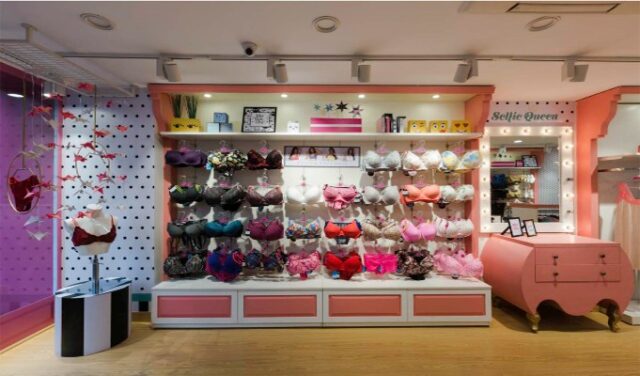
    “Our Noida office is also the central design hub. Designs and raw materials are shipped out to exclusive third party manufacturing units which have been incubated by us and work exclusively with us. Our skillful use of technology helps us ensure the industry’s most efficient mind-to-market and extremely tight inventory management. On the online front, we’ve innovated to deliver some of the best sales conversion rates. These innovations have ensured the company is operationally profitable since inception,” she adds.

    TG & Product Portfolio

    The brand’s target audience includes working women between the ages of 25-35 years and young girls aged between 18 to 24 who are either in college or have just entered the workforce.

    The brand designs, manufactures and sells premium fashion lingerie, innerwear, nightwear and shapewear. Tier II and III contribute to over 60 percent of Clovia’s orders.

    “Clovia has redefined the lingerie market by going beyond standard fits, colours and sizes. We offer customers a wide variety of choices in ‘everyday essentials’, along with ‘fashion solutions’ keeping up with customer’s evolving wardrobes,” says Kant.

    “As a brand which lives on feedback, and iterates its entire portfolio basis that, we are focused on a few major categories for now and have been slowly expanding our category focus. Clovia, started predominantly as a ‘bra & brief’ brand which extended into nightwear, shapewear and loungewear with time and demand. Within the categories, we’ve identified a lot of verticals for example: in bras, we have ranges for beginners and nursing mothers, as well as sizes till 44F. We launch 200+ new options including colours and prints per month across women’s bras, briefs, nightwear, shapewear, lounge wear, resort wear, swim wear, leisure wear and active wear categories,” she explains.

    The brand, which produces all its products in India, offers 2,000+ plus styles across categories.

    Supply Chain & Production Capacity

    Clovia is a full stack lingerie brand that controls every part of its supply chain from mind-to-wardrobe.

    “We procure raw material, design in-house, manufacture in third-party facilities working exclusively for us, ensure our own 4-level quality control and sell through a host of direct sale channels. Every product we create is first made in small quantities, monitored via state-of-the-art backend technology, which predicts future sales (based on sales patterns and customer feedback) and recommends what further quantities should be produced,” states Kant.

    At the moment, the brand is manufacturing almost a million units per month and ship close to 2 million units in a quarter.

    “We deliver pan India across 970 cities and to over 13,000 pin codes,” she says, adding, “Clovia has an established operating infrastructure with a 30,000 sq. ft. capacity warehouse and a wide distribution network with logistic partners pan India.”

    A Technology Forward Company

    Clovia uses smart technology and big data analytics for smart management of inventory ensuring that they have a highly consumer-relevant range all times with high sell-through rates resulting in industry best inventory holding.

    “We have set up a unique distribution system (both online and offline) which is based on direct interaction with customers, getting their direct feedback and using the same in planning the next product range. Big data played a big role here and this led to an extremely strong connect with our customers, leading to creation of a brand on the back of experience and not pure-play marketing,” she says.

    “We use smart technology and big data analytics to plan consumptions and purchase patterns. We stock the maximum number of SKUs in the industry with minimum inventory holding. Also, using technology for geographical understanding of tastes, we’re bringing structure to a traditionally unorganised market,” she further states.

    Future Plans

    The lingerie brand is expanding both in the online and the offline space with equal vigour. The brand is putting in the effort to understand audiences and nuances of each channel to ensure a true Omnichannel experience for customers and sellers. This is the key focus for Clovia over the next five to six quarters.

    “We have been operationally profitable,” she says.

    The brand currently generates around 15 percent of its revenue from offline channels and expects the revenue to witness a 50 percent growth in the current financial year.

    “Clovia gets over 55 percent of its total online sales through its own website which will maintain its share. The rest comes from online marketplaces such as Amazon,” Kant concludes.

  • Louis Vuitton India sales and profits surge

    Louis Vuitton India sales and profits surge

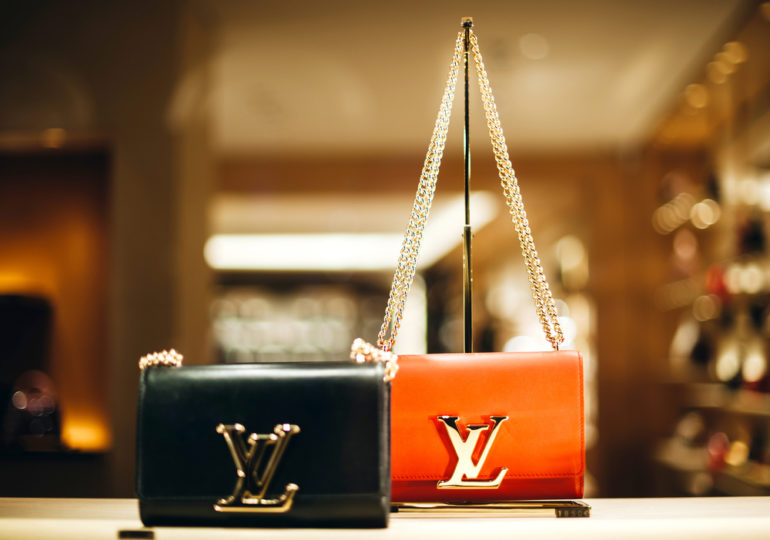
    Louis Vuitton India has reported a 24.5-per-cent increase in profit year on year, representing a doubling of income since 2017.

    Sales have grown by 41 percent since 2017 with the luxury retailer now operating three stores in the country, at Delhi, Mumbai and Bengaluru.

    The growth reflects a strengthening Indian luxury-goods market estimated to be worth about US$8 billion now and growing at a rate as high as 18 percent through to 2023.

    Louis Vuitton India’s net profit for the 2019 financial year was ₹16.17 crore (US$2.25 million), over ₹12.98 crores ($1.8 million) for the previous year, according to local regulatory filings.

    Globally, the company, LVMH recorded revenue of €53.7 billion last year, up 15 percent year on year.

    Meanwhile, LVMH India’s country manager Sunaina Kwatra has announced her intention to resign from the firm’s board.

  • Don’t Yell At Me starts selling in Hong Kong

    Don’t Yell At Me starts selling in Hong Kong

    Operations director Tony Wang said: “When people visit Don’t Yell At Me, we hope that they are not here just for our teas, but here for our message and the positivity. We hope that through our daily teas will inspire our customers so that they can carry this attitude forward no matter what they are facing.”

  • Lululemon and employer branding

    Lululemon and employer branding

    Lululemon Athletica Inc. is beefing up benefits to attract and retain workers, offering full-time employees from three to six months of paid parental leave. The gender-neutral benefit awards three months of paid leave to full-time workers who have been at the yogawear company for two years. Employees with five or more years at the firm qualify for six paid months off. At Lululemon, workers are considered full-time if they work 24 hours a week.

    “When you think about an investment, there’s also all of those areas where it’s really hard to quantify because of the contribution and the return,” said Susan Gelinas, senior vice president for people and culture at Vancouver-based Lululemon. “We just see this as something that’s right to do for our people.”

    In the U.S., without any federal requirement for paid parental leave, it’s up to individual companies to offer a benefit, and about 35 percent do, according to a survey from the Society for Human Resource Management. Still, 84 percent of workers in the U.S. don’t have access to paid family leave, according to data from the Bureau of Labor Statistics.

    The majority of Lululemon’s full-time staffers in the U.S. have been with the company for two or more years, while one-fifth have worked there five or more years. As of January 2018, about 60 percent of Lululemon’s 13,400 workers were based in the U.S. The company declined to say how much the new policy would cost.

    Employees working in Canada already receive some paid parental leave, a portion of which comes from the government’s unemployment insurance program. That compensation is partial, and Lululemon’s offer there is a “paid top-up,” Gelinas said in an interview.

  • Luk Fook sales drop 10 per cent in latest quarter

    Luk Fook sales drop 10 per cent in latest quarter

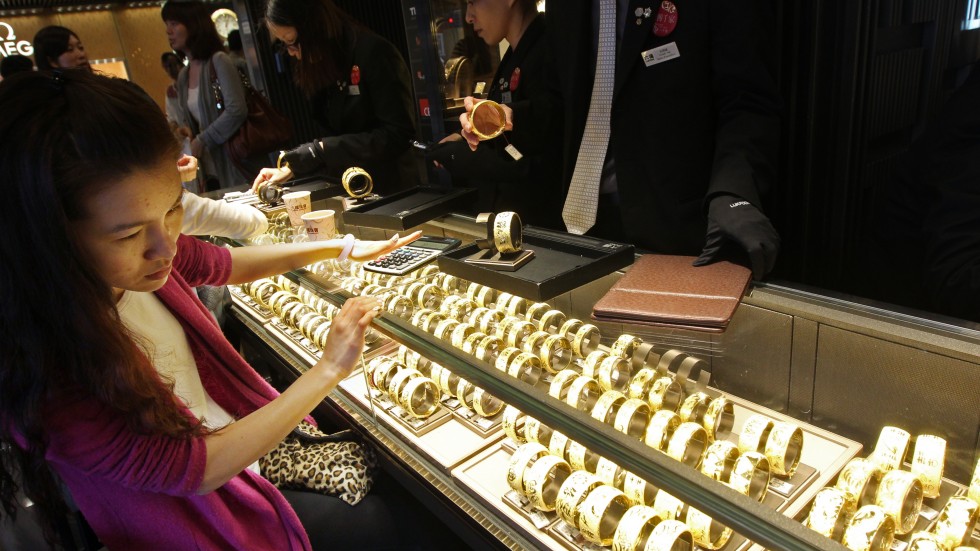
    Luk Fook sales in the third quarter fell 10 per cent on a same-store basis. “Recent market sentiment has been adversely impacted by the US-China trade war, the depreciation of Renminbi, and downward pressure in the stock and property markets,” said chairman Wai Sheung Wong ina  stock exchange filing. Luk Fook says same-store sales of gold products fell by 9 per cent and of gem-set jewellery by 8 per cent.

    The company’s disappointing figures come in the same week as rival jeweller Chow Tai Fook reported an 11 per cent decline in sales across Mainland China, Hong Kong and Macau.

    Wong said the Renminbi’s depreciation led to higher tendency for customers to purchase lower-value items, resulting in a double-digit drop in the average selling price of gem-set jewellery products.

    Same-store Luk Fook sales in Mainland China fell by 14 per cent, with gold products down 16 per cent and gem-set jewellery down 5 per cent.

    As at December 31 the company operated 221 of its own Lukfook stores, including 150 on the mainland, 49 in Hong Kong, 11 in Macau and 11 overseas. It supplied 1573 licensed shops on the mainland, one in Cambodia and one in the Philippines, making a total of 1796 worldwide.

  • agnès b. brings art to Hong Kong

    agnès b. brings art to Hong Kong

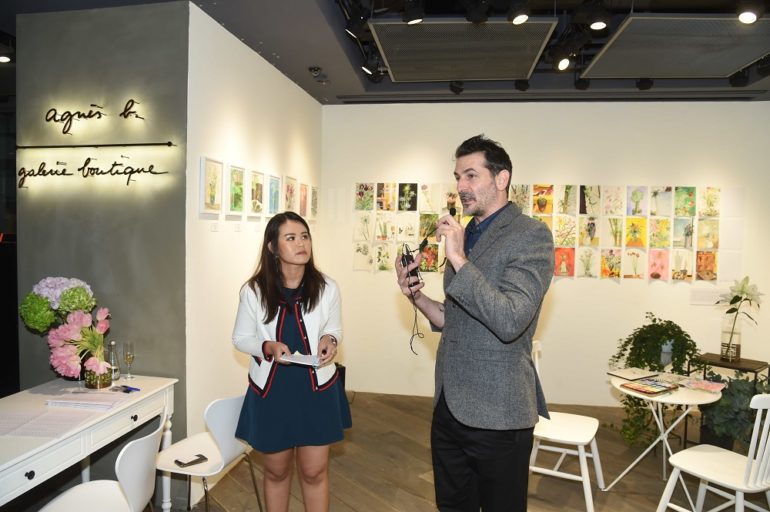
    agnès b. Galerie Boutique has always brought beautiful and artistic works to Hong Kong. In January, agnès b. Galerie Boutique was pleased to welcome renowned, published Belgian cartoonist turned artist, François Olislaeger, who has participated in exhibitions at the Contemporary Art biennal in Le Havre in France, at the Cité de l’Architecture and at the Gaité Lyrique.

    In Hong Kong for the first time, François exhibits his Une Fleur Par Jour (A flower a day) project inspired by his obsession with heavenly flowers.

    In 2016, François Olislaeger turned himself into a florist crafting an incredible herbarium of Cacti, Bougainvillea, Lysis, Daisies and Tulips with the utmost care and attention to detail. It is here that he honed in on his craft using gentle, pastel watercolours to depict “simply” feeling the power of flowers and paint.

    Through each flower’s lifecycle François focused on the emerging blossoms, changes of colour palettes, the variation of gestures and movement from each unique bloom, he then reinterpreted it through soft watercolours onto canvases with a sense of artistic freedom and playfulness.

    François Olislaeger’s flowers don’t have the precision of botanic boards – it is not his vocation. They don’t have the radicalness of those of Ellsworth Kelly yet. The creativity is somewhere else, in the context, in the setting, some details more or less noticeable – a colour, an incongruous presence, and petals hanging. François Olislaeger’s flowers are innocent. For the moment, they talk mainly about love – of art, of life, of a father for his young daughter Lila – and about the transformation of a very talented cartoonist becoming a painter.

    agnès b. Galerie Boutique is showcasing more than 80 pieces of François’s collection in this exhibition, some of the artworks were previously exhibited in agnès b. Galerie du jour in Paris, however for the majority of his collection – this is their first showcase and the exhibition is now open to public until 30 June 2019.

    agnès b. Galerie boutique was delighted to welcome François Olislaeger to the vernissage of his exhibition at the agnès b. Galerie Boutique on the night of 31 January 2019.

    Media and KOL friends were treated to a personal recollection of what inspired him to create his artwork as well as witness François live paint the Lily and two other artworks exclusively for the Hong Kong exhibition. agnes b. Galerie Boutique also designed 7 styles of temporary tattoo stickers that guests were about to take home a memory of his art.

  • Grab, Vinasun to negotiate $1.8 million compensation dispute

    Grab, Vinasun to negotiate $1.8 million compensation dispute

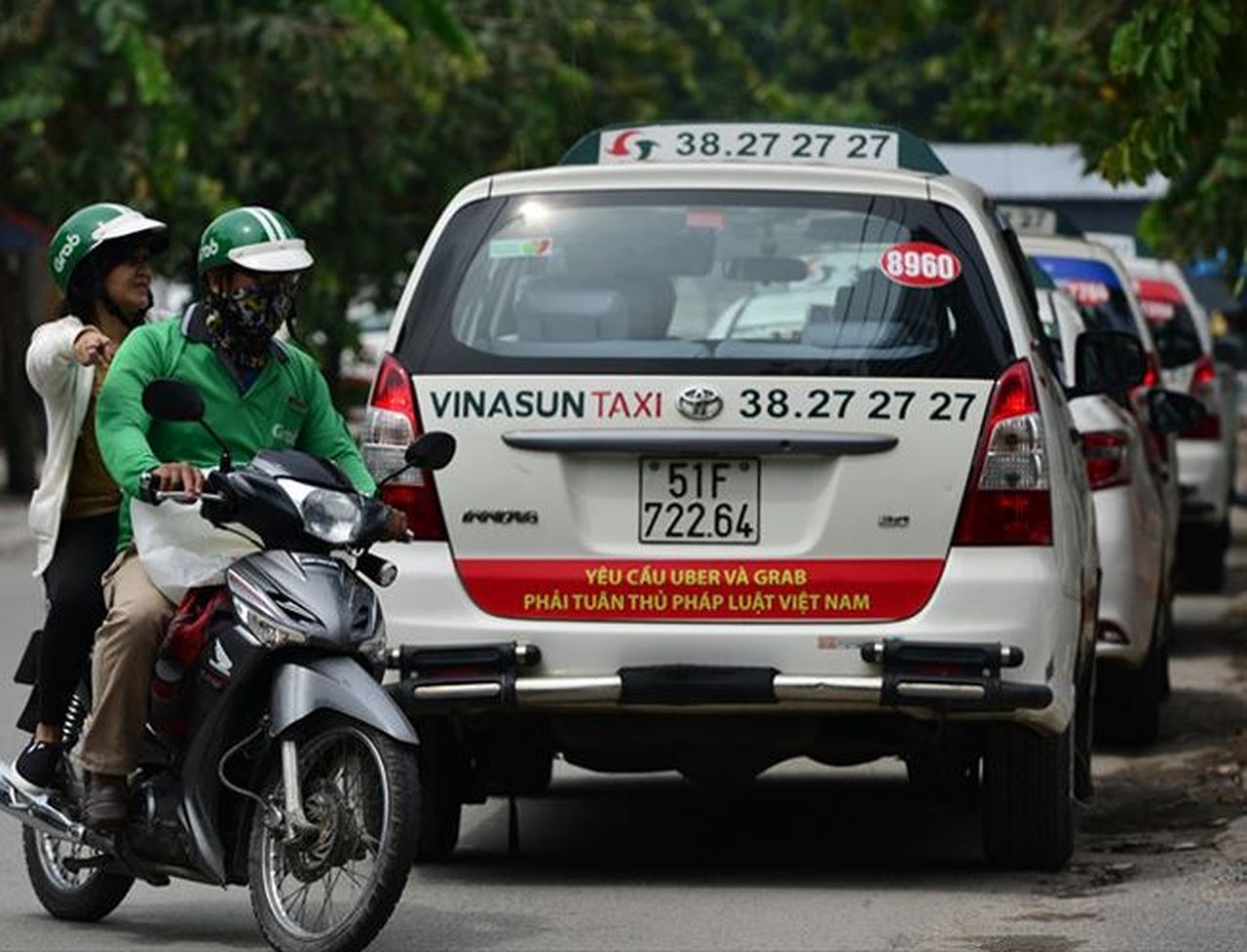
    Top taxi firm Vinasun and ride hailing firm Grab have told the court that they’ll negotiate a compensation dispute. The People’s Court of Ho Chi Minh City on Friday approved the litigants’ wish to ‘sit together,’ and temporarily suspended the trial. The suspension of trial is for no longer than a month, and the reopening date will be announced later, the court said.

    “The lawsuit has dragged on for over a year, but the claimant was not able to prove the damage, as well as the causal relationship with Grab’s influence. The defendant is also very worn out wasting time defending a wrong it did not commit,” said Luu Tien Dung, Grab’s lawyer.

    “This is one of the reasons why both sides have decided to negotiate,” he added.

    Vinasun filed the suit against Grab in June last year, accusing the Malaysia-based firm of abusing the Ministry of Transport’s pilot scheme and committing violations.

    It said Grab’s illegal activities were responsible for nearly VND42 billion (nearly $1.8 million) of the VND76 billion ($3.25 million) in losses that it suffered in 2016 and the first half of 2017.

    The trial began last February, but was adjourned a month later to allow for more evidence to be gathered. Grab protested the valuation of Vinasun’s losses.

    Last October, prosecutors asked the court to accept Vinasun’s petition for compensation of nearly VND42 billion (nearly $1.8 million) in one payment, dismissing Grab’s claim that it was a tech firm and not a taxi company.

    Grab responded by sending a letter to Prime Minister Nguyen Xuan Phuc, saying that identifying Grab as a taxi firm would be “a step backwards from Industry 4.0.”

    Under the latest draft of a decree prepared by the Transport Ministry, transport firms offering services with under 9-seater cars should be registered as taxi firms before they can apply ride-hailing technologies.

    This means that Grab and other ride-hailing firms would have to register their services again as taxi businesses and comply with corresponding legal responsibilities regarding their operating licenses, drivers’ profiles and tax duties.

  • Dior opens reinvented Galaxy Macau boutique

    Dior opens reinvented Galaxy Macau boutique

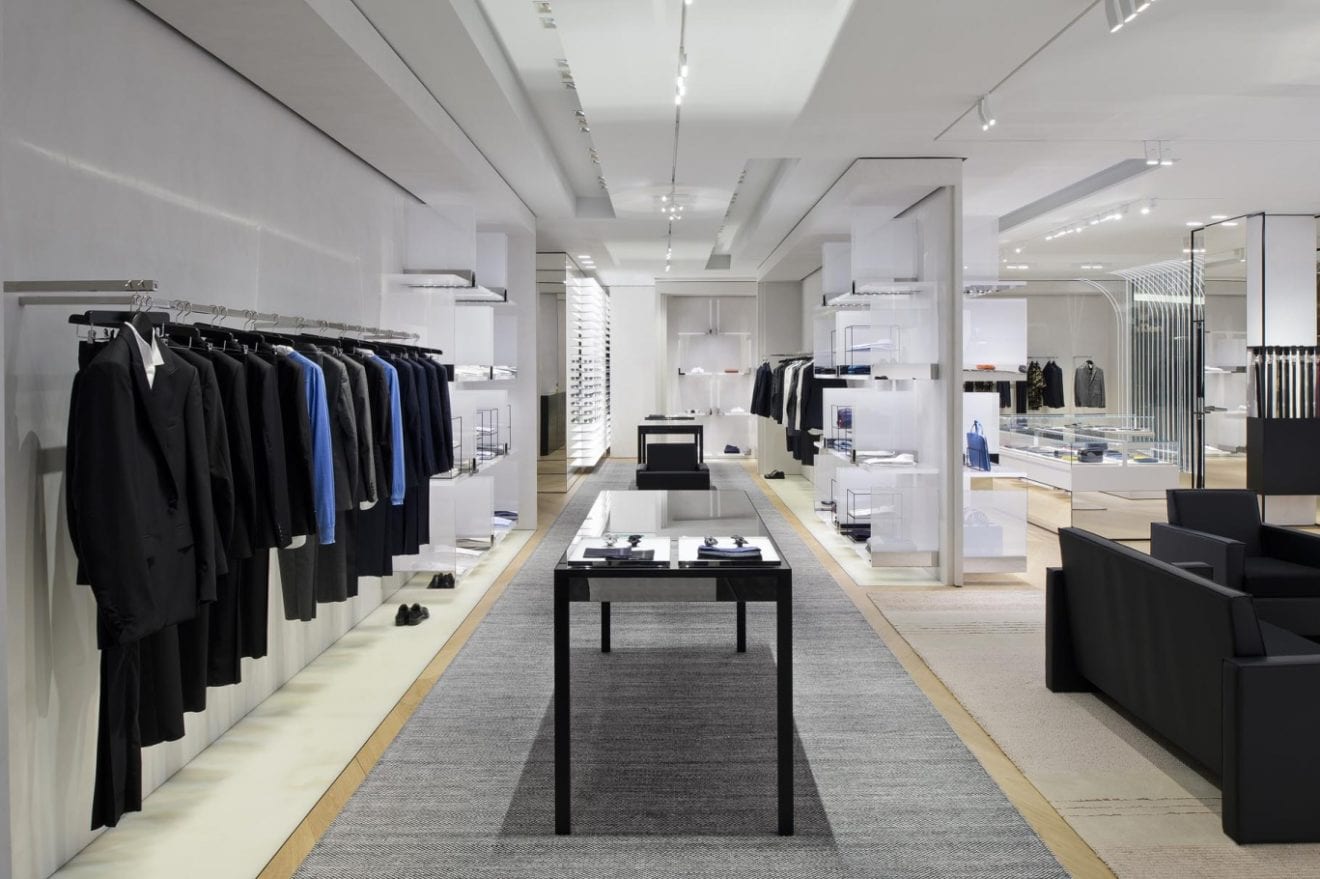
    Luxury fashion house Dior has launched its revamped Galaxy Macau boutique, offering more exclusive shopping experiences.

    The store, located at one of the finest shopping locations, Galaxy Promenade, has two floors and offers a varied range of items such as ready-to-wear and accessories designed by Maria Grazia Chiuri and Kim Jones, as well as watches and jewellery.

    The venue also features the My Dior fine jewellery line, the Dior autumn-winter 2024-2025 ready-to-wear collection with 30 Montaigne models, and Victoire de Castellane’s Rose des Vents and My Dior designs.

    The second store features men’s clothes from the Dior Winter 2024-2025 collection, as well as the Lifestyle Capsule, which focuses on board sports.

    In addition, the boutique offers VIP private shopping spaces.

  • Laos raises minimum wage for workers

    Laos raises minimum wage for workers

    The Lao Government has decided to raise the monthly minimum wage from LAK1.2 million (nearly US$70) to LAK1.3 million starting May 1 to ease workers’ difficulties amid soaring inflation and economic uncertainties.

    The decision was made at the Lao Government’s meeting held on April 25 – 26 under the chair of Prime Minister Sonexay Siphandone.

    In 2022, as workers’ lives were hit hard by soaring inflation, the Lao Federation of Trade Unions Central Committee proposed increasing the monthly minimum wage to 1.5 million LAK.

    However, the Lao National Chamber of Commerce and Industry opposed it, saying that the wage hike would negatively impact enterprises that were also struggling with difficulties.

    Aside from the minimum wage rise, PM Sonexay Siphandone told the Ministry of Labour and Social Welfare to work with related sectors to consider how the increase is relevant to the current economic situation.

    He also asked ministries and sectors to conduct an in-depth study on wage hikes and report results to the Government in the third quarter of this year.

  • Japanese retailer Yoshitsu buys Tokyo Lifestyle

    Japanese retailer Yoshitsu buys Tokyo Lifestyle

    Yoshitsu Co., Ltd (“Yoshitsu” or the “Company”) (Nasdaq: TKLF), a retailer and wholesaler of Japanese beauty and health products, as well as other products in Japan, today announced that on July 20, 2022, the Company entered into a definitive agreement (the “Agreement”) with All Seas Global Limited to acquire 100% equity interests in Tokyo Lifestyle Limited (“TL”), a company principally engaged in the import and retail of Japanese beauty and cosmetic products in Hong Kong and engaged in the live e-commerce business through its wholly-owned subsidiary, Shenzhen Qingzhiliangpin Network Technology Co., Ltd. (“SQNT”). This acquisition is a critical initiative of the Company’s business strategy to boost the Company’s business expansion in the Southeast Asia market and advance the digital transformation of live streaming e-commerce in its retail business.

    Pursuant to the Agreement, Yoshitsu agrees to acquire 100% of the equity interests in TL in consideration of the sum of JPY392,000,000 in cash (approximately US$2,805,192), subject to certain terms. The transaction contemplated by the Agreement was approved by the Company’s board of directors at a meeting on June 27, 2022, with the closing expected to occur by the end of July 2022.

    Mr. Mei Kanayama, the Principal Executive Officer of Yoshitsu, commented, “We are extremely pleased to take another initiative in Yoshitsu’s global business expansion. The capabilities of TL and SQNT and our expansion and digital transformation strategy are well matched. With the acquisition of TL, we expect to improve our operational efficiency and establish a solid foundation in Hong Kong to develop the Southeast Asian market further and strengthen our brand awareness in the region. SQNT is dedicated to cultivating key opinion leaders (“KOLs”), who are frequently approached by brands in the hopes that these KOLs will actively promote their products via online channels. The foregoing strategy is expected to improve our customers’ shopping experience and meet new market demands. We expect the acquisition of TL to strengthen our position in the marketplace and deliver higher value to our shareholders.”

  • Rents for Hanoi serviced apartments plunge to three-year low

    Rents for Hanoi serviced apartments plunge to three-year low

    Hanoi serviced apartment rents fell by 3 percent to a three-year low of VND547,000 (US$24.16) per square meter per month last quarter, according to Savills Vietnam.

    Compared to a year earlier the average rents for grades A-C apartments decreased by 4 percent to VND705,000, and 11 percent to VND233,000.

    The average occupancy remained unchanged from the third quarter at 69 percent but increased by 2 percent year-on-year.

    Nam Tu Liem District saw the highest rate of 83 percent, followed by Hai Ba Trung with 79 percent and Long Bien with 78 percent.

    Ten grade A and B projects has an occupancy of more than 90 percent.

    Post-Covid-19 tenants have higher requirements of the place they live in, prioritizing a good healthcare system, air quality and green space, according to a global survey done last year. Branded serviced apartments that collaborate with epidemiologists to improve their healthcare and safety quality are thus favored by tenants now.

    Savills said investors are opting to build serviced apartments on a smaller scale, and studio and one-bedroom apartments account for 49 percent of the market now.

    Apartments with two and three bedrooms account for 35 percent and 14 percent.

    The four projects that came into the market last year have small units with an area of 15-56 square meters accounting for some 65 percent.

    The revenue per square meter from small apartments is 4-15 percent higher than from larger ones.

    Studio and one-bedroom serviced apartments are becoming flexible, offering dual keys and both long-term and short-term lease.

    Savills said thanks to having double the space (kitchen, living room and office), dual-key apartments serve tenants’ demand for working remotely.

  • LaLaport to make Southeast Asian debut in Malaysia

    LaLaport to make Southeast Asian debut in Malaysia

    Japanese lifestyle shopping mall, Lalaport, is set to open its first Southeast Asian location in Malaysia next month at Bukit Bintang City Centre (BBCC).

    The Mitsui Fudosan-owned shopping mall is set to open its doors to the public on January 20, featuring a tenant mix of about 400 stores from global and Japanese brands, including those making their first appearance in Malaysia such as Nitori and Nojima.

    LaLaport BBCC marks the chain’s second international location after Mitsui Shopping Park LaLaport Shanghai Jinqiao, and will also be one of Lalaport’s largest commercial facilities in the world with more than 82,600sqm of floor space.

    Inspired by ‘modern simplicity’ and ‘Japanese flavor’ design concepts, LaLaport BBCC brings to life a “stylish appearance befitting city center locations complemented by a warm interior design conducive for shoppers to spend the entire day in comfort”.

    The complex features five floors above ground and five floors below including four floors of basement parking. LaLaport BBCC also presents a 1700sqm rooftop garden equipped with a roofed step stage and surrounded by greenery and trees.

    A large F&B floor houses supermarkets, ‘Depachika Marche’ for take-away foods, and a cafeteria. Meanwhile, the ‘Gourmet Street’ offers a fresh al fresco dining experience for shoppers while the large ‘Garden Dining’ food court on Level 4 boasts a 1400-seating capacity. There is also an event space dubbed ‘Wow Plaza’ located at the center of Gourmet Street.

  • Treasury Wines warns performance is still lagging in key markets

    Treasury Wines warns performance is still lagging in key markets

    Major winemaker Treasury Wine Estates has warned investors its performance in markets heavily impacted by the pandemic is running behind expectations as lockdowns and soaring case numbers continue to hinder sales.

    Treasury, which makes wine brands such as Penfolds and 19 Crimes, held its annual general meeting on Friday. In a speech, chief executive Tim Ford told shareholders while overall performance through the first quarter of fiscal 2022 was solid, parts of the business were not performing as well as hoped.

    Mr. Ford pointed to the company’s key luxury channels in America, Australia, and Asia where the COVID-19 pandemic is still causing delays in the recovery of wine consumption in bars, pubs, and restaurants.

    He said this issue was particularly prevalent in the US, where re-openings were continuing at a “gradual pace”, slower than the company had anticipated.

    “In Australia extended lockdowns in Sydney and Melbourne have resulted in the closure of the on-premise channel, delaying our execution plans outside of the large retailers, particularly for Penfolds,” he said.

    “While the momentum in these channels is slightly behind, we remain confident that as vaccination programs gain momentum and restrictions ease across these key premium and luxury wine sales channels that we are well-placed to execute our plans to deliver growth.”

    In lieu of these channels being open, online and e-commerce sales have somewhat filled the gap, he said, but noted that growth rates were down last year.

    Shares fell 5.4 percent to $11.63 on the back of the warning. Shareholders had previously been impressed by Treasury’s resilience through both the pandemic and shock Chinese tariffs on its wine. Analysts at UBS recently put a ‘buy’ rating on the stock, saying it was well-placed to benefit from COVID reopenings.

    Treasury has also seen, like many other retailers, significant disruption to its supply chain and logistics systems due to the pandemic. Mr. Ford said shipping delays and container availability issues were becoming “more pronounced” and that he expected the challenges would be ongoing.

    However, the company’s underlying performance in its key regions was solid for the first quarter, with sales in Asia, excluding China, growing 18 percent for the three months to the end of August. Sales at the company’s US divisions grew 3 percent for the three months to September 19 against a broader industry decline of 5 percent.

    “Globally, our underlying business is performing in line with expectations, however, the pandemic-related factors will continue to have a bearing on our performance in the short term,” Mr. Ford said.

    Sales of its premium Penfolds range have also remained consistent, with Mr. Ford saying the company had successfully reallocated all the sales it lost after China, Treasury’s largest market, unexpectedly slapped tariffs of up to 200 percent on Australian wine.

    In his address to shareholders, chairman Paul Rayner said the company remained committed to the Chinese market in the long term despite its “effective closure” in 2019, and appeared to call on the Australian government to do more to repair its frayed relationship with the country.

    “Trust is critical to building relationships and brands and is therefore essential to our long-term success,” he said. “I think this will be particularly important in the post-COVID world, as governments consider how they stimulate domestic economic recovery and the role of international trade relationships in driving economic growth.