Tag: Logistics

  • DHL Express to invest €131m in Incheon hub expansion

    DHL Express to invest €131m in Incheon hub expansion

    DHL Express will invest €131m in expanding its hub at Incheon International Airport to meet expected growth in online sales in the Asia Pacific region.

    The investment will see DHL expand its Incheon Gateway facility to a gross floor area of 58,700 sq m from the current 20,000 sq m – an increase of almost 200% – with work expected to be completed in the second quarter of 2022.

    It will also be equipped with the “latest technology for faster, more secure and efficient delivery handling processes”.

    The multi-year investment is expected to support demand growth up to 2032.

    The investment also covers technical upgrades including fully-automated X-ray inspection machines, a 4 km conveyor belt, automated sorters, magnetic speed controllers and full CCTV coverage.

    The new technology will increase the Incheon Gateway’s total handling volume of parcels and documents by over 150%

    Ken Lee, chief executive, DHL Express Asia Pacific, said: “Our Incheon Gateway occupies a vital strategic position along key routes between South Korea and countries like Singapore, Taiwan, Hong Kong and China – all of which are amongst our top ten inbound and outbound markets by express delivery volume.

    “With online retail sales in Asia Pacific expected to reach $2.5trn by 2023, our latest investments in the Incheon Gateway will align our infrastructure to what Asia’s e-commerce generation needs for now and tomorrow.”

    Since the opening of its Gateway in 2008, DHL Express has seen a growth of over 45% in shipment volume, indicative of the growing role which the Gateway plays in global and intra-regional trade.

    John Pearson, chief executive, DHL Express, added: “Our quality and speed are crucial for our customers and the main pillars of our growth around the world.

    “Our new investment, the largest one for South Korea so far, helps to connect the world even more and to further improve transit time of global trade and on the trade lanes to Asia.”

    The expanded facility is also aligned to Deutsche Post DHL Group’s mission of net zero logistics-related carbon emissions by 2050.

    It will incorporate a range of ‘green’ features such as the use of solar power and energy-efficient lighting systems to achieve CO2 reduction of up to 1,500 tons per year.

    When completed in second quarter 2022, the Incheon Gateway will be DHL Express’s largest gateway in Asia Pacific.

  • DHL Global Forwarding expands multimodal service to Indonesia

    DHL Global Forwarding expands multimodal service to Indonesia

    International freight service provider DHL Global Forwarding has launched a delivery service to tap into growing shipments from Indonesia to other parts of Asia.

    The service, called Asiaconnect+, officially launched in Jakarta on Tuesday, enabling regional shipments from Indonesia to Singapore, Malaysia, Thailand, or vice versa, using multimodal services combining air and road freight, instead of only air freight or ocean freight.

    “Asiaconnect has been connecting Malaysia, Singapore, Thailand, Vietnam, and China through a cross border network. Today, Indonesia is joining the network,“ said Bruno Selmoni, DHL’s head of road freight and multimodal ASEAN and South Asia during the launch of the new service.

    DHL first introduced the Asiaconnect network in 2011, which at that time connected Singapore, Malaysia, and Thailand through road freight.

    With Indonesia included in the network, shipping from many cities in Indonesia, such as Bandung, Balikpapan, Semarang and Lampung to Singapore, Malaysia, or Thailand will be pooled in Jakarta by air or truck freight first. Then, the goods will be transported to Singapore using air freight before they are transported by truck to a destination such as Kuala Lumpur, Penang, and Bangkok.

    “From Jakarta to Bangkok using DHL Asiaconnect+, for example, will take six days or two days slower [compared to when using air freight]. However, on the other side it comes with a lower price,” said Bruno.

    DHLBruno said with Asiaconnect+,  service for Jakarta – Bangkok shipments could cut logistics costs by 35 percent. Meanwhile, Jakarta to Kuala Lumpur will take four days using Asiacconect+,  one day slower than using air freight but is 32 percent cheaper than using air freight.

    DHL Forwarding Indonesia president director Vincent KC Yong said DHL’s decision to provide Asiaconnect+ was because the logistics company had seen demand for innovative logistics service with competitive costs for regional shipment. Especially since Indonesia’s focus is pushing exports and its biggest market for export in Asia.

  • GreyOrange deploys advanced 12000 per hour Sorter for QuadX

    GreyOrange deploys advanced 12000 per hour Sorter for QuadX

    GreyOrange, a global company that delivers an advanced software and Maximum Life robotics platform, leveraging AI and machine learning to orchestrate supply chains for companies worldwide, today announced the deployment of its 12,000 picks per hour Sorter. The new sorter is a first-of-its kind automated solution by GreyOrange for QuadX, Philippines. Established in 2015, QuadX Inc., headquartered in Manila, is one of the fastest-growing names in the Philippines specializing in cross-border digital logistics and e-commerce payment processing. GreyOrange, with its multiregional presence and multi-industry expertise, currently operates over 42 Sorter sites across India and APAC.

    The GreyOrange Flexible Automation system has been deployed to provide an enhanced and seamless shopping experience for customers, along with the ease of payment and delivery. The 12,000 per hour Sorter, is a combination of two 6,000 per hour sorters, each having 11 arms and capable of sorting up to 480 and 240 unique destinations with and without pre-sorting respectively. It can sort up to 150,000 packages within 12 hours of operation. Pasig City, Metro Manila, Philippines is GreyOrange’s first site in the country and QuadX’s first-ever installation of an automated sorting facility system.

    Speaking about the partnership, Vivekanand, Country Manager, India & APAC, Grey Orange said, “GreyOrange technology will help QuadX realize their vision of re-inventing the shopping experience for customers by optimizing operations and throughput. By effectively sorting packages for the company’s hubs across Manila and the Philippines, this solution will help QuadX meet customers’ order delivery timelines more efficiently and complete orders with less manpower than before.”

    “QuadX believes in transforming shopping experiences for customers by taking the anxiety out of payment and delivery and making online shopping a hassle-free experience. That way, merchants can focus on selling and buyers can have a seamless checkout process in their online journey,” said Ms. Patricia Jacinto, Director of Operations, QuadX. “We are delighted to partner with GreyOrange and we hope that through this partnership, we will be able to leverage the company’s niche expertise to master the growing complexities of customer needs and optimize fulfillment performance while also controlling costs.”

    the logistics sector is expected to reach over PHP 970 billion by the year 2023, suggesting good news for GreyOrange – and for all companies interested in modernizing logistics. Due to this growth, fulfillment centers are turning to technology and robotics to increase efficiency, accuracy and overall productivity.

    GreyOrange is the only Fulfillment Orchestration Platform that combines Always-Solving Intelligence™ and Maximum-Life Robotics™ to optimize fulfillment decisions in real time so customers can keep promises while lowering costs and capturing more revenue. Our always-solving application platform, GreyMatter, orchestrates robots, people, promises, inventory and data to continuously adapt and accelerate accurate fulfillment in distribution centers and warehouses.

  • Tigers continues global growth with new mega hub facility in Rotterdam

    Tigers continues global growth with new mega hub facility in Rotterdam

    Tigers is building a new mega-hub facility in Rotterdam, the Netherlands, as global customer demand and the e-commerce sector continue to grow.

    The multi-million-Euro mega-hub is currently under construction and is scheduled to be officially opened in April 2020, providing another flagship location for Tigers in Europe.

    “Rotterdam is the biggest port in Europe and a key gateway to the continent for the supply chain, which is why Tigers has been based there for the past 20 years,” said Shahar Ayash, Managing Director – UK and Europe, Tigers.

    “The mega hub will be an advanced omnichannel fulfillment center and Tigers’ biggest single operation in Europe, which is being built with longevity and sustainability in mind.

    “E-commerce has also been a huge factor in this development with 70 percent of orders processed in Rotterdam related to the e-commerce sector, which is set for even further future growth.”

    The new mega-hub will replace Tigers’ existing Rotterdam facility and will be more than 550,000 sqft, have 60,000 pallet positions, and 550,000 bin locations.

    The hub is also being built with solar panels on the roof to create a sustainable structure and will be equipped with Tigers’ Cloud-based SmartHub:Connect technology.

    “The new facility will be just 10km from the Port of Rotterdam with close proximity to major road and rail networks, making it strategically located for both first and final mile,” said Ryan Balic, Regional Director Sales, Europe, Tigers.

    “The mega hub will allow our customers to accommodate organic growth and benefit from state-of-the-art facilities, including enhanced security features, multiple storages and picking processes, dedicated B2C returns and VAS processing areas, and an increased number of conveyor scan-pack stations.”

    The Rotterdam mega-hub is part of an ongoing global expansion plan for Hong Kong-headquartered Tigers, and the facility is being constructed by a real estate developer, DHG.

  • Express delivery market gathers speed

    Express delivery market gathers speed

    Ride-hailing giant Grab has followed Russian delivery firm Dostavista and local ride-hailing app Be to invest in express delivery services. The Singapore-based ride-hailing firm announced last week that it plans to invest $500 million in Vietnam over the next five years to expand its transport, food and payment networks. The money will also go towards developing fintech, mobility solutions and logistics, it said.

    In the beginning of August, Grab signed a strategic partnership agreement with budget carrier Vietjet Air, tech-based courier Swift247 to launch an integrated express digital platform that provides delivery solutions by ground and air in Southeast Asia.

    The new service would allow goods to be delivered between Hanoi and HCMC in as little as five hours, Vietjet had said in a statement.

    In mid-August, Dostavista, a “crowd-sourced” same-day delivery startup founded in Russia, raised $15 million in its series B round to invest in Southeast Asia. Dostavista owns express delivery app MrSpeedy Vietnam, which was launched in June 2018 and now has 6,000 partner drivers and 2,000 supplier clients in Vietnam.

    With competition from foreign firms heating up, domestic enterprises have also been boosting their operations in this industry. On August 6, ride-hailing service Be Group launched the beExpress delivery service in Vietnam, focusing on e-commerce deliveries and aiming for 30 percent of Vietnam’s express delivery market by next year.

    In July, logistics startup Giao Hang Nhanh JSC (GHN) also opened a fully automated warehouse in Hanoi to support its quick delivery services. It will open a second in Ho Chi Minh City before November, and is currently building a third with an area of 50,000 square meters in Hanoi, GHN said.

    With competition heating up, delivery firms are trying to differentiate themselves by racing to offer increasingly fast shipping services.

    E-commerce platform Tiki has a shipping policy that offers delivery of over 100,000 products within two hours. Shopee, the biggest e-commerce player in terms of users, offers delivery of certain products in four hours, Sendo in three hours, South Korea’s Lotte, one hour, and electronics retailer giant Mobile World has committed to ship some items in as little as 30 minutes.

    This is a particularly fierce period for the express delivery market, and the advantage falls to large enterprises or those who can raise large amounts of capital from investment funds, Do Hoa, CEO of business consultancy IME Vietnam, told local media.

    “Speed is the most important factor in delivery. In this competitive stage, large apps with many services will have an edge because they can cross-subsidize express delivery with profits from other segments, allowing them to hang on for longer.

    “This is a long-term game, requiring large investments, partners and warehouse networks. Smaller businesses with fewer financial resources will be easily eliminated,” Hoa said.

    Growth in Vietnam’s e-commerce industry will drive demand for express delivery services, especially in the business-to-consumer segment, Ken Research said. The e-commerce industry itself is also recording robust growth, with online sales rising by 30 percent last year to over $8 billion, according to the Ministry of Industry and Trade.

    Vietnam’s express logistics market is expected to reach over $1.4 billion by 2022, growing at an average CAGR of 22.8 percent per year, according to market research firm Ken Research.

  • Rakuten and Seiyu launch Japan’s first autonomous delivery robots

    Rakuten and Seiyu launch Japan’s first autonomous delivery robots

    Rakuten has partnered with Seiyu to launch Japan’s first autonomous delivery robots service with JD in Umikaze Park.

    Using the Rakuten Drone app, Umikaze Park visitors can place their orders from the Seiyu Livin Yokosuka Store and receive the products delivered by the Rakuten UGV (unmanned ground vehicle).

    “JD develops unmanned technologies to provide customers a superior experience, and we highly value the partnership with Rakuten,” said Qi Kong, head of autonomous driving at JD Logistics. “This is a demonstration of how we are opening up our solutions to customers beyond JD.”

    The autonomous delivery robots service will be available only from September 21 to October 27.

    Earlier this year, JD and Rakuten signed a partnership to develop unmanned delivery solutions, one of which was drone-delivery service on Sarushima Island in Tokyo Bay.

  • DHL Express to cut vans from roads as it develops Cubicyle

    DHL Express to cut vans from roads as it develops Cubicyle

    DHL Express has finally bypassed a problem that held back the roll out of its Cubicycle system in the US. 

    Already operating in The Netherlands, the Cubicycle is quad–cycle capable of carrying up to 125kg of shipments, with most cycle couriers using it covering 50km a day. 

    Chief executive of DHL Express Americas, Mike Parra, said it would be ideal for DHL’s operations in Manhattan. 

    However, a quirk of New York State law does not recognise the four-wheeled cycle as a bike, instead designating it as a car, preventing it from use in cycle lanes, and incurring car taxes.  

    Mr Parra said that DHL had finally found a solution and an altered version of the bike would be on NYC roads by the middle of next year. 

    “Our development team has dropped one of the wheels to make it a three-wheeler, which NYC authorities would allow to operate in designated bike lanes,” Mr Parra said. 

    “So next year we will be rolling it out not only in New York but also in San Francisco and South Florida, allowing us to cut emissions and remove further vans from the road.” 

    In total, Mr Parra said he expected somewhere between five and seven vans to be pulled out of operation as a result of the new bikes hitting Manhattan roads. 

    It is not only the environment that has welcomed the Cubicycle; the bike is a big hit among couriers, as it offers better visibility and therefore better protection on busy roads.  

    While the Cubicycle is the most visual symbol of DHL’s green ambitions, the company has also added significant numbers of electric vehicles onto the world’s roads. 

    More than 11,000 trucks and vans are operating under alternative fuel sources – meaning electric, hybrid or propane engines – of which more than 10,000 are electric. 

    The bulk of these has come from its in–house development, the Street Scooter, with more than 9,000 operating across Germany, Belgium, the Netherlands and Poland.  

    This month it was also announced that an MoU had been signed between Germany and China that would boost production to 100,000 Street Scooters per year through a joint venture.  

    Much like the Cubicycle, however, the company is struggling to land regulatory approval for the Street Scooter in the US, but Mr Parra said he was “keen” to get this sorted.  

  • DHL Supply Chain appoints industry veteran to lead automotive business in Thailand

    DHL Supply Chain appoints industry veteran to lead automotive business in Thailand

    DHL Supply Chain, the global market leader for contract logistics solutions, has appointed logistics veteran, Toshihiro Koyama to take on the role of Senior Director, Automotive for DHL Supply Chain Thailand, effective September 1st, 2019.

    In this role, Koyama will oversee and drive the growth and expansion of DHL Supply Chain’s automotive business in Thailand, with a particular focus on delivering highly-customized contract logistics solutions. With close to 30 years of experience in this field, he has also honed his expertise in several large markets including the United States, China and Philippines. His familiarity with the culture of Thailand is a result of spending the past 15 years building up an extensive network within the automotive industry, particularly with Japanese automakers who have built a dominant position and presence in the market.

    “It is important that we invest in the right resources and expertise to ensure that we can support our customers’ evolving logistics needs in the automotive industry. I am convinced that Koyama’s expertise and experience will be instrumental as we ramp up momentum in this growing sector. Our customers can continue to count on us to provide the most innovative solutions to meet their supply chain needs,” said Kevin Burrell, CEO DHL Supply Chain, Thailand Cluster (Thailand, Vietnam, Cambodia and Myanmar).

    In recent years, Thailand has emerged as one of the largest commercial vehicle manufacturers in the world, and the largest in Southeast Asia – contributing to about 12 per cent of the country’s economic growth and employing more than half a million people. With the impending completion of the Eastern Economic Corridor (EEC) by 2021, the government has committed to transform Thailand into a more integral hub for manufacturing, with a particular focus on incentivizing companies to develop a comprehensive and robust electric vehicle (EV) ecosystem.

    “DHL Supply Chain’s global network and local expertise will bode especially well at a time when the automotive sector has been identified as one of the key growth engines of the Thai economy.  I am honored to be given the reins to steer our capabilities toward greater customization as automakers look to further invest in their manufacturing and assembly hubs, and am eager to collaborate with our team and customers to bring our automotive business to the next level,” said Toshihiro Koyama, Senior Director, Automotive for DHL Supply Chain Thailand.

    An expert in logistics transportation, Koyama started out his career with a Japanese transportation service company, where he spent more than a decade working across different teams globally. Prior to joining DHL Supply Chain, Koyama was based in Thailand with another global logistics company, spearheading its automotive national and cross-border trucking services.

  • Kerry Logistics’ online tool gives UK customerseasy access to Authorised Economic Operator status

    Kerry Logistics’ online tool gives UK customerseasy access to Authorised Economic Operator status

    Kerry Logistics Network Limited (‘Kerry Logistics’; Stock Code 0636.HK) is supporting customers gain Authorised Economic Operator (AEO) status, which gives access to Customs benefits, including inland clearance of goods, rather than at the border, with an online tool.

    AEO accredited companies are subject to fewer physical inspections and document checks by Customs, and have priority status in times of heightened security, or in case of a strike, or any other disturbance, with benefits extending to tax and Value Added Tax (VAT) payments.

    “As and when tariffs for European Union (EU) trade are introduced, then having fast-tracked Inward and Outwards Processing Relief (IPR/OPR) authority will be important to avoid duty payments,” said Emma Rowlands, Strategic Sales Director, Kerry Logistics UK.

    “AEO is now advocated by the World Customs Organisation (WCO), EU, and the UK as the standard route for access to Customs benefits.

    “These benefits could be vital in whatever Customs arrangements develop out of Brexit.”

    The AEO “Trusted Trader” accreditation will be strongly beneficial for all EU businesses by 2022.

    AEO creates competitive advantage by enabling a company to answer tenders from international companies with an AEO specification and gives effective management of, and reduction in, the risk of theft, counterfeiting, contamination, or grey market shipments.

    “It represents the most meaningful solution, in that goods could be cleared at secure warehouses in NI and Ireland rather than at the border, ensuring a smooth transition,” said Rowlands.

    AEO accreditation involves a potentially lengthy application process depending on the complexity of the organization.

    Kerry Logistics customers can use an online tool to simplify the process so that the AEO questionnaire can be completed in a structured manner, with guidance notes, which are accessed through a series of “pop-ups” that appear with each question.

    Upon completion, customers instantly receive an Executive Summary with a Red, Amber, Green (RAG) rating, highlighting potential areas of non-compliance prior to submission.

    Following the summary customers also receive a detailed report highlighting the RAG rating for each answer and giving guidance on how to improve performance and increase the chances of being compliant.

    Once the risk areas have been mitigated, the C117 and C118 forms can be automatically populated at the press of a button and submitted in an electronic format to the United Kingdom’s HM Revenue & Customs (HMRC).

  • Kerry Logistics appoints John Parkes

    Kerry Logistics appoints John Parkes

    Kerry Logistics Network Limited ‘Kerry Logistics’ has appointed John Parkes as its Managing Director – Integrated Logistics, with effect immediately. Based in Hong Kong, Parkes will oversee the overall management of Kerry Logistics’ global integrated logistics (‘IL’) business

    An industry veteran, Parkes has over 35 years of experience in the transportation and logistics industry. With a specific focus on the Asia Pacific region, he has held operational leadership positions in major logistics businesses, specializing in multi-country business development and management, M&A and global account management. Prior to joining Kerry Logistics, he was the Executive Director – Head of Hong Kong/Taiwan and Global Business Development of LF Logistics.

    Commenting on Parkes’s appointment, William Ma, Group Managing Director of Kerry Logistics, said, “We are delighted to have John on board to lead our IL division, which forms a major part of our business. John’s in-depth knowledge and on-the-ground experience in the logistics industry and global supply chains make him an excellent captain to steer our course in these challenging times of accelerated supply chain shifts. With his insights and expertise, we can make great strides in our global IL business.”

    Parkes said, “I am honoured to have the opportunity to lead such an effective and multifaceted team to build on existing relationships and explore new horizons. As the logistics industry undergoes rapid change in the face of new demands and technological advances, I look forward to giving my best to reinforce Kerry Logistics’ position and grow its business through formulating sustainable strategies and devising innovative solutions that cater to our customers’ needs and accommodate emerging trends.”

  • Kerry Logistics Records a 194% Surge in Profit

    Kerry Logistics Records a 194% Surge in Profit

    Kerry Logistics Network Limited (‘Kerry Logistics’ or together with its subsidiaries, the ‘Group’ today announced the Group’s interim results for the six months ended 30 June 2019.

    The Group’s Financial Highlights

    ·      Turnover increased by 13% to HK$19,810 million (2018 1H: HK$17,461 million)

    ·      Core operating profit increased by 9% to HK$1,330 million (2018 1H: HK$1,216 million)

    ·      Core net profit dropped slightly by 4% to HK$669 million (2018 1H: HK$700 million)

    ·      Profit attributable to the Shareholders, including the gain from disposal of two warehouses in Hong Kong of HK$1,958 million, increased by 194% to HK$2,790 million (2018 1H: HK$948 million)

    ·      Integrated Logistics (‘IL’) business recorded a segment profit of HK$1,162 million (2018 1H: HK$1,107 million) and International Freight Forwarding (‘IFF’) business recorded HK$288 million (2018 1H: HK$235 million), which represent an increase of 5% and 22%, respectively

    ·      Special dividend of 35 HK cents per Share was paid on Tuesday, 23 July 2019. Interim dividend of 9 HK cents per Share, to be payable on Friday, 27 September 2019

    William MA, Group Managing Director of Kerry Logistics, said, “Global economic growth has markedly slowed down in 2019 1H, with weakened trade and manufacturing. The ongoing international trade disputes and unresolved negotiations have created further adverse conditions and accelerated changes in the global supply chains. Rising political and social turmoil in Hong Kong added pressure to the already softening economy. In view of the slower world economy, the Group continued its efforts in strengthening its service capabilities, expanding its network coverage and building its business scale in order to give itself a competitive advantage in adapting to the changing global logistics landscape.”

    IL Profit Rose

    Buoyed by the positive performance of its Hong Kong business and continued expansion in Taiwan, coupled with the steady growth of its operation in Asia, the Group’s IL division recorded a moderate increase in segment profit, which accounted for 80% of the Group’s total segment profit in 2019 1H

    In Hong Kong, supported by new customer wins across various industries and business growth of some of the key accounts in the fashion and food and beverage industries, the segment profit of the logistics operations remained in an upward trend by rising 18% in 2019 1H.

    In Mainland China, benefitting from shifting the focus to multiple higher-growth verticals including pharmaceutical, imported food and beverage, and automotive parts to minimize impact from global trade volatility, the segment profit of the Group’s IL business turned around in 2019 1H.

    In Taiwan, driven by Kerry Pharma and the newly acquired Science Park Logistics, the IL profit grew by 11% in 2019 1H. Kerry Pharma, as the sole certified pharmaceutical logistics provider in Taiwan, has continued to expand in the niche market. The acquisition of Science Park Logistics in January 2019 strengthened the Group’s capability in serving high-tech customers.

    In Asia, the growth momentum of the Group’s business moderated in 2019 1H. While Kerry Express Thailand continued to expand its service coverage and business scale across Thailand, the profit growth was slower. The performance of the Thailand operation remained robust. Kerry Express Thailand’s daily delivery quantity has grown to more than 1 million parcels, and the number of service points has doubled (compared to 2018 Q4) to 10,000 locations. Segment profit in Asia increased by 7% during the period. The increment was only moderate as the Group is still financing the Kerry Express operations in Malaysia, Vietnam and Indonesia, which incurred an aggregated loss of approximately HK$40 million during the period.

    IFF Volume Swelled

    Riding on the increased trade from Mainland China to other Southeast Asian countries and within Asia, the IFF division achieved a 22% growth in segment profit, which contributed 20% to the Group’s total segment profit in 2019 1H.

    Facility Portfolio Enhanced

    In Mainland China, the logistics centre in Wuhan was completed in 2019 Q2. In Taiwan, the 154,000-sq-ft transit hub in Xinshi District commenced operation in 2019 Q2, and the 430,000-sq-ft logistics centre in Guanyin is expected to complete in 2019 Q4. In Thailand, construction of Phase three of the Kerry Bangna Logistics Centre began in 2018 Q4, and is expected to complete in 2020 Q1.

    Asset Monetised

    In June 2019, the disposal of the Group’s warehouses in Chai Wan and Shatin to a subsidiary of Kerry Properties Limited was completed. The total gain of the disposal was approximately HK$2 billion. The Group will continue to actively consider opportunities to unlock the value of its assets on the balance sheet, which will provide capital for strategic investments and ongoing expansion, and crystallise value for its shareholders.

    Softening Asia Growth

    Recent events in Hong Kong are creating unfavourable conditions for the Group’s business in 2019 2H. However, the Group believes that the stronger results elsewhere in Asia should be able to offset the weak performance in Hong Kong. In particular, Taiwan will remain one of the growth drivers in Asia in 2019 2H.

    Enriching Business Mix

    Following the extension of its business into new verticals such as coffee trading and distribution, and the expansion of its service in pharmaceutical and food-related cold chain to tap into emerging business segments, the Group will keep on diversifying its business capabilities in local markets to position itself for growth opportunities in various sectors.

    Seizing E-Commerce Growth

    E-commerce has increasingly gained prevalence as a mode of consumption. In view of the strong growth impetus in cross-border e-commerce, in particular the exports from Mainland China and the intra-Asia e-commerce trade, the Group will pursue further strategic setups that will optimally deploy its resources to seize the e-commerce growth potential in the region.

    Pursuing Asset-Lighter Model

    Taking into account the positive profit growth and expansion potential in the IFF division, the Group will continue to focus on expanding its less asset-heavy IFF business both organically and through mergers and acquisitions.

    William Ma concluded, “Global economic growth is expected to remain weak in 2020, as policy uncertainties and geopolitical tensions continue to cloud the trade environment. The current political and social disquiet in Hong Kong, which is the Group’s key market, is expected to adversely impact the Group’s performance in 2019 2H. Nevertheless, the Group is in a resilient position to withstand difficult market conditions, sustained by its expanding global network and diverse range of businesses. Taking into consideration the challenging market outlook, the Group will remain watchful and keep reinforcing its foundation through enhancing its service capabilities, expanding its network presence and enlarging its business scale.”
  • Korea’s largest retailers forced to think about delivery services

    Korea’s largest retailers forced to think about delivery services

    South Korea’s largest retailers are having to invest in logistics to cope with rising online spending and personalized delivery services.

    South Korean online shopping malls Coupang and Market Kurly have led the paradigm shift in the delivery industry after introducing the early morning delivery service, which has led many to adjust to the new and more convenient ways to purchase goods.

    Large brick-and-mortar retailers can no longer wait for the customers to visit their store.

    Homeplus, a South Korean hypermarket chain operator, said this week it has opened two fulfillment centers, located in Anyang and Suwon, Gyeonggi Province to provide better online delivery services.

    In a 6600sqm logistics center, pickers collect products in a tray to ship them for online orders. A Digital Picking System informs the picker on which tray to use, where the product is located, and the final results of the picking process.

    Homeplus plans to improve 140 stores across the country with enhanced capabilities for online shopping and delivery by 2021.

    SSG.com, Shinsegae Group’s online marketplace, currently runs NE.O, logistics centers for online shopping located in Yongin and Gimpo. NE.O will open its third center in Gimpo later this year.

    SSG.com is also in charge of receiving orders at E-mart’s picking and packing centers as part of a two-track strategy.

    Lotte Mart plans to expand its logistics centers for online shopping to meet the rising demand from the online community.

    Lotte’s signature delivery service is same-day nighttime delivery service. If a customer places an order before 8pm, the product will be delivered before midnight on the same day.

    As such, large offline retailers are now in competition over expanding logistics centers for online shopping, which may turn out to be the only way to outlive the ‘delivery war.’

    But for South Korea’s largest retailers, building separate logistics centers for online shopping may also provide stores with a wider leeway since offline malls are subject to various restrictions, including mandatory business holidays.

  • Hermes launches app to enhance delivery experience

    Hermes launches app to enhance delivery experience

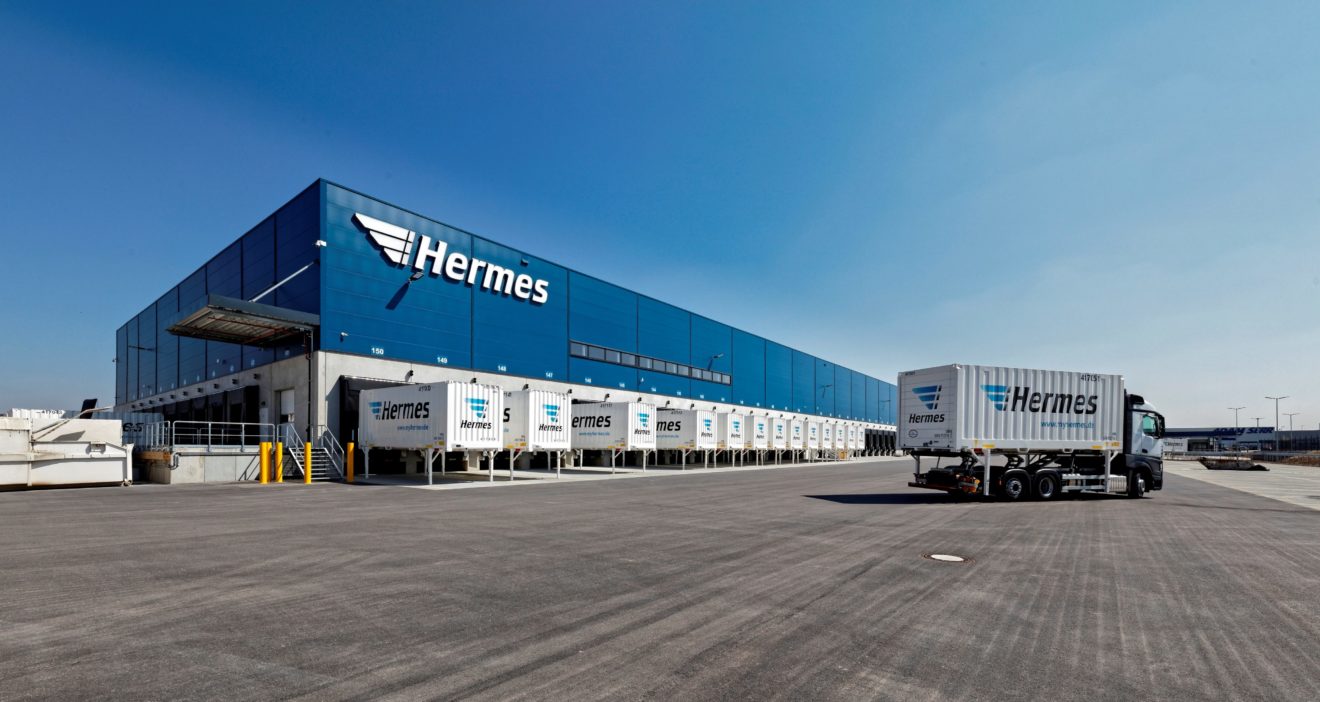
    Hermes has rolled out a new app, which, according to the delivery company, enables retailers to deliver an enhanced experience to its customers. The app provides online shoppers with increased visibility over their shipments, as well as more choice and control over how they receive their parcels.

    The Hermes app, which is available on both iOS and Android platforms, allows users to track and/or divert their parcels in real time via their smartphones, as well as receive notifications on the current progress of their deliveries.

    Currently, consumers have the option to re-route their deliveries to a neighbor or a safe place while the parcel is in transit. Further options, such as diverting mail to a ParcelShop or a locker, are set to be added later in 2019.

    Returns can also be carried out more conveniently using the app. Users can book a return via the app and then a relevant QR code and order number is sent to them.

    The app will also be vital to the roll-out of Hermes Play later this year, which enables the sender of a parcel to connect with its recipient through a personal video message.

    The sender will be able to record and upload a file via the app, which can be accessed by scanning a 2D barcode upon delivery.

    Meanwhile, SMEs and consumers looking to send parcels will be able to use the app to book deliveries. Users can navigate the menus to pick a recipient from their address book, and generate the shipping labels, before arranging a courier collection or dropping off at a ParcelShop.

    Chris Ashworth, CIO at Hermes, said, “Our dedicated team of innovators and specialist developers are continuing to shape the future of home deliveries by creating a wave of new and exciting products. This app provides a foundation for many of these new features, which are designed to drive a greater customer experience for our retail clients.”

  • DHL Supply Chain introduces first digital twin of warehouse in Asia for Tetra Pak

    DHL Supply Chain introduces first digital twin of warehouse in Asia for Tetra Pak

    The market leader in contract logistics, DHL Supply Chain, is introducing its first digital twin of a warehouse in the Asia-Pacific region for Tetra Pak with one goal in mind: optimised, agile and cost-efficient supply chains.

    The warehouse is one of the biggest Tetra Pak warehouses worldwide and remains the first smart warehouse for DHL in the Asia-Pacific region that exists as a digital twin.

    Having launched an integrated supply chain for Tetra Pak in Singapore, the digital twin is supplied with real-time data on a consistent basis from the physical warehouse in Singapore and makes changes consistently in real-time.

    “The joint implementation of such a digital solution to improve Tetra Pak’s warehousing and transport activities is an excellent example of the smart warehouses of the future,” said Jerome Gillet, CEO, DHL Supply Chain Singapore, Malaysia, Philippines. “This enables agile, cost-effective and scalable supply chain operations.”

    DHL Supply Chain is focusing on technologies and processes such as physical objects like industrial trucks kitted out with IoT technology. The DHL Control Tower tracks incoming and outgoing goods to ensure all goods are stored in the correct way within 30 minutes of receipt.

    Tetra Pak has developed a smart storage solution that tracks and simulates the physical condition and individual stock levels in real-time, allows smooth non-stop coordination of operations, makes faults visible as well as improves safety and productivity in the warehouse.

    DHL Supply Chain Singapore has in-depth expertise in the region in achieving individual customer needs, the firm provides Third-Party Logistics (3PL) solutions in which customers can outsource their logistics management and operations.

    “We expect the partnership with DHL Supply Chain to further increase our productivity and maintain high standards in our supply chains,” commented Devraj Kumar, Director, Integrated Logistics, South Asia, East Asia & Oceania, Tetra Pak.

  • Tigers South Africa opens dedicated e-commerce centre as demand soars

    Tigers South Africa opens dedicated e-commerce centre as demand soars

    Tigers South Africa has officially opened a dedicated e-commerce center at its Johannesburg, South Africa, warehouse facility, as the online retail market continues to grow globally.

    The center is equipped with the Tigers-developed ScanPak App that allows staff to conduct scan checks while packing shipments and create waybills for packages to ensure efficient handling of goods.

    “The new e-commerce facility will take Tigers South Africa to the next level, as the online retail market continues to be a key focus for us,” said Paul Lawrence, Managing Director, Tigers South Africa.

    “With the ongoing e-commerce revolution and digital technology transforming the way consumers shop, we find ourselves in a very good strategic position to further enhance and grow this vertical for Tigers.

    “As with most Tigers solutions, ScanPak is replicable, and we will roll out the same solution in Cape Town by the end of August.”

    The e-commerce center is the first of its kind for Tigers in South Africa, and the move coincides with the recent announcement about freight rate quote engine Doozee being rolled-out across Tigers’ global internal network.

    “E-commerce is a key market for Tigers, particularly as digital technology and online retail continues to drive innovation in the logistics and supply chain sector,” said Andrew Jillings, Chief Executive Officer, Tigers.

    “The new dedicated e-commerce center in South Africa is an important investment for the future direction of Tigers and is a testament to the hard work of the team in South Africa in developing the new facility.”