Tag: Logistics

  • JD increases stake in Tiki Vietnam

    JD increases stake in Tiki Vietnam

    Chinese online giant JD has become the largest shareholder in e-commerce platform Tiki Vietnam.

    JD has bought a 25.65-per-cent stake in the business, taking its shareholding past that of previous leading investor VNG Corporation, which holds 24.4-per-cent ownership in the platform. VNG has invested US$22.4 million in Tiki over the past two years.

    Tiki Vietnam has grown from an online bookstore to Vietnam’s second-largest e-commerce provider in terms of traffic, after rival Shopee.

    The firm is reportedly seeking a $100 million investment in its next funding round in order to boost its competitive edge.

  • UPS invests in Asian express operations

    UPS invests in Asian express operations

    Express firm UPS has revealed a series of investments in Asia that it claimed would increase its service footprint and expedite delivery times.

    The company said that in the first half of the year it had invested in the following:

    • Shenzhen Asia Pacific Air Hub upgrades that increased the hub’s processing capacity by nearly 50% in preparation for volume gains in the coming three years.

    • Transit times reduction across 2,300 trade lanes: Intercontinental transit times reduction by up to four days, while shipments with destinations in Asia see transit times improved by up to two days.

    • Improved geographic reach of UPS Worldwide Express services, offering international shipping with time-definite deliveries in Australia, Hong Kong, Japan, Singapore, and South           Korea; Customers in Xi An, China and new provinces in Vietnam can now access UPS Worldwide Express Freight, guaranteed door-to-door service for palletized shipments over 70kg.

    • Extended pick-up times by up to five hours for export shipments from China, Japan, Taiwan, and South Korea, widening production windows and giving businesses additional time to fulfill customer orders.

    UPS’s Shenzhen Hub serves as a transfer point for shipments moving within the region, and the enhancements improve both reliability and quality of service provided to UPS customers in Asia.

    “At the root of the investments in our Smart Logistics Network is a simple desire to make global commerce easier for Asian businesses—because when they grow, we grow too,” said Ross McCullough, President, UPS Asia Pacific Region.

    “More UPS customers in the region will now be able to have their shipments sent and received in less time; they’ll be able to find us easily in more cities and towns, and they’ll be able to send shipments later in the day than before—all of which will open new opportunities for businesses in the region to trade more efficiently with the rest of the world.”

    Wilfredo Ramos, Vice President of Strategy, UPS Asia Pacific Region, added: “We’re seeing new realities in this region that demand not only inventive solutions but also higher levels of service.

    “Businesses have come to rely on UPS’s extensive experience to help them navigate the volatile highways of trade today. Together with our brokerage capabilities, upgrades like the one at our Shenzhen Hub will give UPS the flexibility to support increases in intra-Asia trade volumes in the coming years.”

  • DHL Global Forwarding supports Decathlon’s international supply chain

    DHL Global Forwarding supports Decathlon’s international supply chain

    DHL Global Forwarding, the leading international provider of air, sea and road freight services, partners Decathlon, the French sporting goods giant to provide comprehensive services for its international supply chain operation. At the DHL Fashion and Retail Conference held in Ho Chi Minh, both companies shared what it takes to successfully operate a multi-national supply chain, enabling Decathlon stores to stock over 22,400 items covering more than 85 different types of sports.

    Marc Meier, SVP, Global Head of International Supply Chain, DHL Global Forwarding said, “DHL Global Forwarding runs a dedicated DHL control tower which provides a single point of contact in Vietnam and Taiwan for Decathlon’s operations. Providing full visibility for Decathlon’s logistics teams, our control tower services oversee Decathlon’s air, sea and road shipments from factories in Vietnam and Taiwan to the world, including Brazil, Canada, China, Colombia, Europe, India, Malaysia, Morocco and Singapore.”

    Global businesses that source from multiple locations and ship to numerous destinations face a particularly complex supply chain that demands greater visibility and control to optimize operations and reduce costs. With more than 1,000 supply chain experts across 82 offices in 46 countries worldwide, DHL’s International Supply Chain services offer comprehensive solution design and project management backed by a global governance structure that guarantees consistency across operations.

    “Decathlon prioritizes the quality of our products and the entire customer experience to ensure we secure our positioning as the go-to retailer of affordable sports apparel, accessories, and equipment. While we ramp up on our offline and online presence for the convenience of our customers, we are working hard behind-the-scenes to make sure that our manufacturing and logistics processes can efficiently cater to the demand of our discerning customers,” said Thao Nguyen, Head of Procurement and Logistics, Decathlon Vietnam.

    In Vietnam, Decathlon launched two retail stores in Hanoi and Ho Chi Min City in 2019, spanning 4,300sqm and 2,600sqm respectively, and introduced 70 sports brands. The company collaborates with six business partners across Vietnam to keep prices and lead time competitive for the local market and to reduce carbon footprint. As a full-fledged logistics partner, DHL Global Forwarding also provides road freight solutions for the brand to transport goods from Vietnam to Cambodia.

    Vietnam’s attractiveness as a manufacturing hub for the world lies in its geostrategic location, youthful demographics, and abundance of affordable land and labor. Coupled with easy access to multiple markets via free trade agreements, the country’s textile and retail industry is primed for growth as Vietnamese spending power increases and more international brands seek to establish their presence here.

    “Today’s retailers require agile and innovative supply chains to cater to a new generation of customers who demand instant gratification and tap opportunities in emerging markets. With our extensive range of logistics services and expertise in the retail sector, DHL Global Forwarding is well-positioned to support the growth of businesses here,” said Archer Fu, VP, Head of Business Development, DHL Global Forwarding Asia Pacific

    50 Years DHL

    In 2019 DHL is celebrating 50 years since the company’s founding by three entrepreneurs in San Francisco in 1969. DHL began as a disruptor to the traditional delivery industry, circumventing bureaucracy with innovative new service to deliver documents by air overnight. Since then, DHL has grown into a globe-spanning family of DHL companies with about 380,000 employees in over 220 countries and territories that cover the entire spectrum of logistics and supply chain services. DHL’s customer-centricity and can-do culture have fueled five decades of innovation — from the DHL 1000, one of the first word processing computers in the world, to using the purpose-built StreetScooter, an environmentally friendly delivery vehicle powered by an electric drive and developed by Deutsche Post DHL Group. With the Mission 2050 commitment to reach zero group-wide emissions by 2050, DHL is continuing to be a trailblazer in the logistics industry.

  • Amazon in talks over Reliance Retail

    Amazon in talks over Reliance Retail

    Amazon is in talks with Reliance Industries Ltd’s retail unit to buy a stake in India’s biggest brick-and-mortar retailer, two sources with knowledge of the talks told Reuters.

    Amazon’s massive online presence could help bolster Reliance’s consumer and private labels business. More importantly, a partnership would help the duo counter Walmart, which last year invested US$16 billion in India’s Flipkart, in the battle for a bigger share of India’s fast-growing e-commerce market.

    In late December, India modified rules around foreign direct investment (FDI) in e-commerce, creating additional hurdles for companies such as Amazon and Flipkart, and giving companies such as Reliance an edge.

    Amazon had made the proposal to Reliance – controlled by Mukesh Ambani, India’s richest man – for the partnership, but it was not clear whether a deal would materialize, said one of the sources.

    The second source said Amazon had been pondering a proposal to purchase an up to 26 percent stake in the Reliance unit since at least February.

    “For Amazon, it is about neutralizing a major rival and allowing itself to grow,” said the second source, who added the company envisions helping Reliance’s roughly 40 brands and grocery products go online.

    Further details of the possible deal, first reported by India’s Economic Times newspaper last week, were not immediately clear.

    Amazon did not immediately respond to request for comment while Reliance said it would make any disclosures to stock exchanges as and when necessary.

    Reliance could potentially leverage Amazon’s global experience in technology, supply chain and logistics as it aims to connect grocery stores across the country digitally through its Jio telecoms network – the biggest in India by subscribers.

    For Amazon, picking up a stake in a Reliance unit could mean getting access to the Jio telecoms platform and its vast retail footprint of more than 10,600 stores across India. It might also add more firepower to their lobbying efforts, as the Ambani family is viewed as being well-connected politically.

    Seattle-based Amazon is keen to get a bigger share of India’s e-commerce market, which Deloitte expects to more than treble to $84 billion between 2017 and 2021.

    Reliance was previously in talks with China’s Alibaba to sell a stake in Reliance Retail, but a deal could not be sealed due to differences in valuation, according to a person familiar with the matter.

  • DHL Supply Chain partners with Tetra Pak to implement its first digital twin warehouse in Asia-Pacific

    DHL Supply Chain partners with Tetra Pak to implement its first digital twin warehouse in Asia-Pacific

    DHL Supply Chain has successfully implemented an integrated supply chain solution for Tetra Pak’s warehouse in Singapore. This is the first smart warehouse for DHL in Asia-Pacific to deploy the digital twin technology, which involves using digital models to better understand and manage physical assets.

    “Tetra Pak is the world’s leading food processing and packaging solutions company serving the needs of hundreds of millions of people in more than 160 countries, and we are proud to play a part in their vision to make food safe and available everywhere,” said Jerome Gillet, CEO of DHL Supply Chain Singapore, Malaysia, Philippines. “By jointly implementing a digital solution to support Tetra Pak’s warehousing and transport operations, this collaboration is a great example for smart warehouses of the future to deliver agile, cost-effective and scalable supply chain operations.”

    Combining the Internet of Things (IoT) technology with data analytics, DHL Supply Chain created a smart warehouse solution for Tetra Pak by bridging its physical warehouse with a unique virtual representation that monitors and simulates both the physical state and behavior of the warehouse assets in real-time. With this digital twin solution, Tetra Pak can maintain 24/7 coordination of its operations to resolve issues as they occur, particularly those that involve safety and productivity.

    Warehouse supervisors can use real-time operational data to make informed decisions to reduce congestion, improve resource planning and allocate workload. Using IoT and proximity sensors on materials handling equipment (MHE), spatial awareness is enhanced, thus reducing potential collision risks. Controlled areas with restricted access are also monitored with management alerts.

    A DHL control tower monitors the flow of inbound and outbound goods to maintain time efficiency, ensuring goods are correctly shelved within 30 minutes of receipt, and delivery-bound goods are ready for shipment within 95 minutes.

    To reduce operational risks and improve safety, DHL Supply Chain has implemented a container storage management solution that minimizes the need for employees to handle heavy containers. All employees are also trained to work within newly introduced safety measures.

    “Innovation has always been at the heart of what we do at Tetra Pak,” said Devraj Kumar, director of Integrated Logistics, South Asia, East Asia & Oceania, Tetra Pak. “To keep the cogs of our operations turning seamlessly, it is vital that we have complementary warehousing and supply chain solutions that can meet the high demands of our customers. We are pleased with the successful implementation of this smart warehouse, and look forward to partnering with DHL Supply Chain to further enhance our productivity and maintain our high safety standards in our supply chain operations.”

  • AirAsia enters logistics JV for Thailand

    AirAsia enters logistics JV for Thailand

    Airasia indirect wholly-owned subsidiary Teleport Everywhere Pte Ltd has proposed a joint venture with Triple i Logistics Public Company Ltd to provide logistics services to Thai AirAsia Co Ltd (TAA) and Thai AirAsia X

    AirAsia said in a filing with the stock exchange that a memorandum of understanding was signed between the four parties, whereby Teleport and Triple I would establish a partnership in Thailand as a general cargo sales agent for the airlines.

    According to the statement, Teleport is a cargo and logistics services provider while Triple i is a total logistics integrator with 27 years of experience in the international forwarding and logistics industry

    “The MOU aligns with Teleport’s mission to move goods and e-commerce seamlessly throughout Southeast Asia, taking full advantage of AirAsia Group’s network of more than 100 cities and 10,000 weekly flights across Asia Pacific.

    “In particular, it allows Teleport to integrate the rights to the cargo capacity in Thailand for TAA and TAX with the wider AirAsia Group’s network,” it said.

  • Asendia selects Tigers for B2C fulfilment in Australia to support newOceania product

    Asendia selects Tigers for B2C fulfilment in Australia to support newOceania product

    Tigers has been selected as the local logistics partner to support the launch of Asendia Oceania and provide a regional footprint for B2C and omnichannel fulfilment solutions in Australia.

    Hong Kong-based Tigers has an extensive warehousing network across Australia in Perth, Adelaide, Melbourne, and Sydney, with a focus on B2C vertical markets.

    Headquarted in Bern, Switzerland, Asendia is specialised in e-commerce and mail solutions, and is expanding across Australia and New Zealand with the launch of the Asendia Oceania subsidiary.

    “E-commerce fulfilment and international cross-border products continue to be a major focus for Tigers across the Asia-Pacific region, and builds on our cooperation across the USA into Europe, Russia, and Asia,” said Andrew Jillings, Chief Executive Officer, Tigers.

    “Partnering with Asendia as it launches Asendia Oceania across Australia and New Zealand is an exciting moment that reflects Tigers’ ongoing global growth, and our support for the logistics and supply chain industry as it evolves through digitisation and e-commerce.”

    Asendia is rolling out a global expansion plan and offers a range of digital, logistics, and delivery services as the market for B2C cross-border e-commerce services continues to grow.

    “The launch of Asendia Oceania is an exciting new milestone for Asendia in the Asia-Pacific region,” said Lionel Berthe, Head of Asia-Pacific, Asendia.

    “It’s another sign of our commitment to growth in the region, and partnering with a global logistics player with strong capacities and experience in Australia such as Tigers is a key differentiator for cross border end-to-end services.“

    Tigers and Asendia are planning further supply chain optimisation in the coming months by utilising their global network of offices and facilities in China, Hong Kong, Malaysia, Singapore, and the UK.

    Tigers recently joined Asendia Oceania at the Online Retailer Conference and Expo in Sydney.

  • Uber Freight Launches In Germany

    Uber Freight Launches In Germany

    U.S. ride-hailing company Uber is launching a freight platform in Germany, taking on local technology startups in a race to grab a share of Europe’s $500 billion trucking market.

    Germany will be Uber Freight’s second European market to go live after the Netherlands, an executive told Reuters, adding that the firm would consider expanding elsewhere in Europe once the new German operations were running smoothly.

    In the United States, Uber Freight connects 48 states and generates more than $125 million in quarterly revenues.

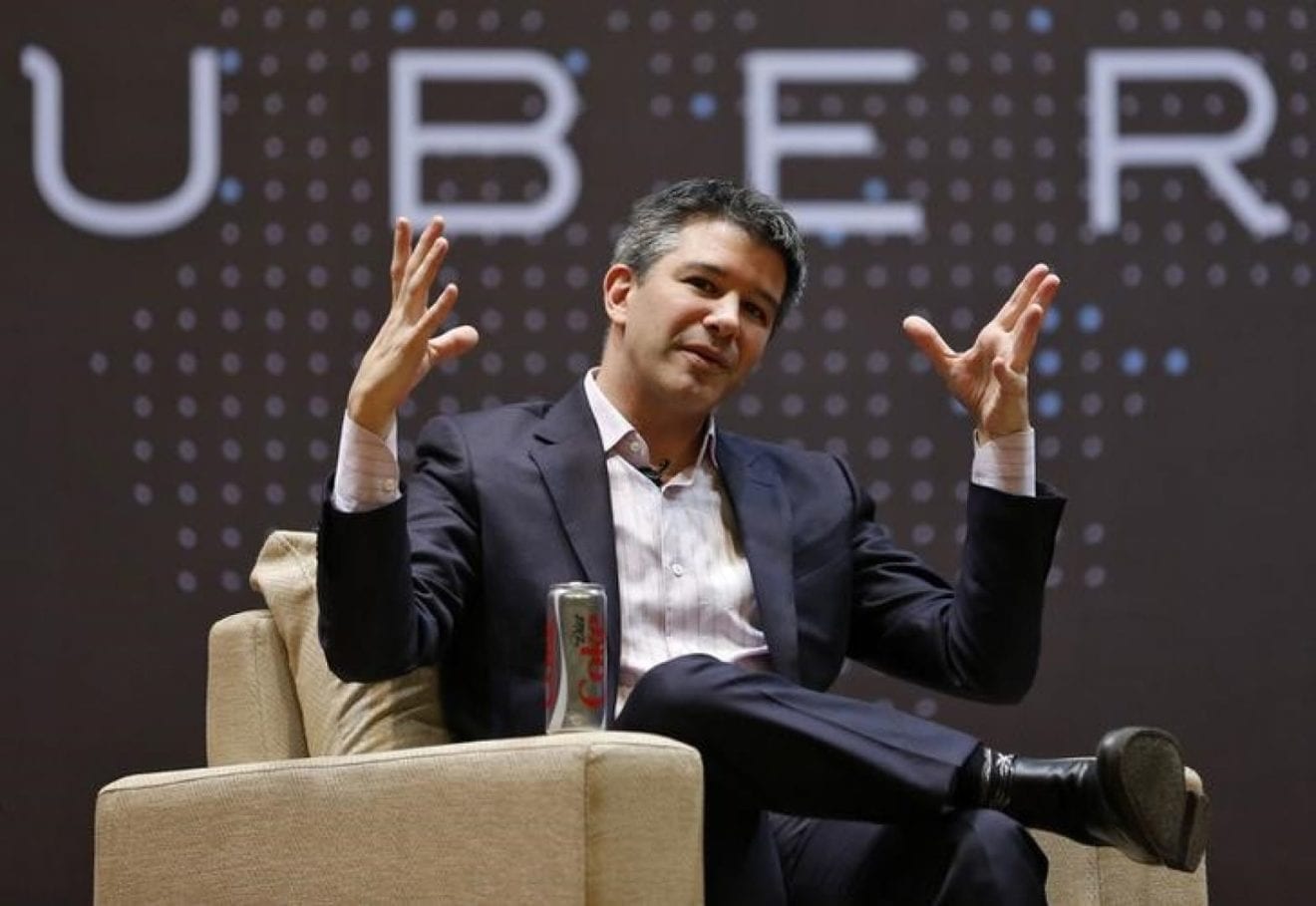
    Uber’s bid, under its founder Travis Kalanick, to establish its ride-hailing services in Germany met intractable opposition from taxi companies, politicians and the courts.

    Under Kalanick’s successor, Dara Khosrowshawi, Uber has consulted German officials and industry to win support for its freight business, said Daniel Buczkowski, Uber Freight’s head of European expansion.

    “After the change in leadership, we really engaged in doing the right thing,” Buczkowski, who is German, told Reuters.

    Uber will compete with local players, including Berlin-based startup sennder, which has raised $70 million from private equity house Lakestar and other investors, and which already has a wider presence in Europe.

    Uber and sennder aim to digitalize an industry dominated by firms running 10 or fewer trucks and to improve efficiency – trucks are empty for 21% of the distance they travel. Real-time tracking of consignments and payment automation will make life easier for shippers and hauliers, tech platforms say.

    “The key to getting a lot of value out of this industry is understanding how to use those empty kilometers,” said Nicolaus Schefenacker, a co-founder of sennder, which was set up in 2016.

    He told Reuters that, as its network expanded, it was easier to model and forecast traffic flows to ensure consignments found the right truck at the right price.

    Unlike Uber’s ride-hailing app or its food-delivery service, Uber Freight will operate as a middle-man in a market with an established pricing structure.

    It will make money from the margin between the price paid by the shipper and the amount it pays on to the trucker, insulating it from the type of complaints made by many ride-hailing drivers who say they struggle to earn a decent income.

    Given the fragmented nature of the freight forwarding market, a single player was unlikely to dominate but regional players might emerge, said one investor who backed sennder.

    Uber, with a stock market capitalization of $74 billion, aims to adapt its model used in the United States, where many truck drivers are sole operators, to Europe, where small, family-run firms dominate.

    The apps still face challenges, ranging from environmental issues confronting an industry that runs on diesel to ensuring drivers are not overworked with long hours on the road.

    The industry also needs new recruits, with the World Bank estimating two-thirds of German drivers will retire over the next decade, threatening a shortage in capacity for an industry that handles more than 70% of freight.

    “The problem that we see today is that we are not using the assets that we have efficiently,” Buczkowski said, adding this was what apps like Uber Freight would seek to address in Germany, and in other European nations in future.
  • Walmart China to invest US$1.2 billion in supply chain logistics

    Walmart China to invest US$1.2 billion in supply chain logistics

    Walmart China plans to increase investment in its supply-chain logistics by about US$1.2 billion, building or upgrading more than 10 logistics distribution centres over the next 10 to 20 years.

    In March, Walmart completed its first customised perishable-food distribution centre, the South China Fresh Food Distribution Center, serving more than 100 stores in Guangdong and Guangxi, with daily distributing capacity of up to 165,000 cases of products. That centre cost RMB 700 million (US$101.6 million) to complete.

    This is Walmart China’s first distribution centre specially designed and built according to leading international standards – it was the first facility in Mainland China to pass the Brand Reputation through Compliance (BRCGS) Warehousing and Distribution Global Standard Certification. At 33,700sqm, it is the largest, multi-temperature perishable distribution centre in the domestic retail industry, capable of storing and processing more than 4000 kinds of temperature-regulated, refrigerated or frozen goods simultaneously.

    Ryan McDaniel, senior VP of Walmart China Supply Chain, says opening the South China Fresh Food Distribution Center increased the cold-chain storage area serving Guangdong and Guangxi to meet the ever-growing customer demand for fresh goods.

    Other innovations include a scattered-sorting solution that provides the flexible distribution needed by community stores, and streamlining processes to reduce inventory during trial operations, saving about 50 per cent of space and improving efficiency by nearly 300 per cent.

    The new centre is configured with advanced temperature-control hardware. The cold storage in the reservoir area is designed to control temperature variables in the receiving and delivery area by using a combination of highly sealed doors, and saves more than 330,000 kilowatt-hours per year.

    In the transportation stage of the cold chain, Walmart requires that goods be cooled before they are loaded into temperature-regulated trucks. The pre-cooling temperature is then checked by a “transportation monitoring system” and the container is only loaded once the temperature meets the set level. All shipping vehicles that serve Walmart have devices onboard that monitor the temperature in the vehicle along the delivery route to ensure that the fresh produce is protected and arrives at the store on time.

    Walmart says it also allocates quality inspection personnel at the distribution centre to increase compliance and safeguard the quality and safety of food products. A quality testing laboratory has been set up in the distribution centre to conduct front-line inspections on issues like food legal and regulatory compliance and agricultural pesticide residues. The data from these tests is shared with all stores nationwide.

    Last year, Walmart China’s dry warehouses and fresh-food distribution centres dispatched more than 300,000 vehicles to its stores, chalking up more than 80 million kilometres of driving distance and delivering more than 1 million boxes of goods per day.

  • Singapore’s Temasek Takes Stake in LF Logistics

    Singapore’s Temasek Takes Stake in LF Logistics

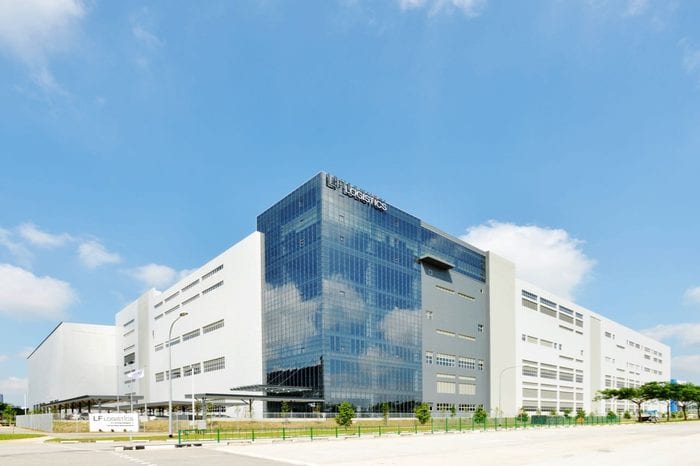
    Temasek Holdings has invested US$300 million (S$406.1 million) for a a 21.7 per cent stake in Hong Kong-based global supply chain giant Li & Fung’s logistics business.

    The injection from Singapore’s state investment company wil value the business, LF Logistics, at approximately US$1.4 billion.

    Li & Fung said that as a result of Temasek’s investment, it will postpone a previous proposed spin-off initial public offering for LF Logistics. It will remain a controlling shareholder of LF Logistics with a 78.3 per cent stake.

    Proceeds from the investment will be used to fund LF Logistics’ future capital expenditures, business growth initiatives and to repay its existing bank loans.

    LF Logistics has achieved multiple-year double-digit organic growth, and is rapidly growing in Asean and expanding into new geographies including Japan, Korea and India, said Li & Fung.

    Temasek’s investment comes after an overall slower pace of global investments in the past year for the firm.

    “The investment from Temasek will allow us to unlock the value of LF Logistics and accelerate its business growth. It will also enhance Li & Fung’s capital structure and financial flexibility,” said Spencer Fung, Group CEO, Li & Fung.

    “Our strong operating cash flow and solid balance sheet provides us with ample liquidity to fund future growth and complete our transformation efforts, as we execute our three-year plan goal of creating the supply chain of the future.”

    Shares of Li & Fung, which suspended trade on Friday morning, jumped as much as 18.8 per cent to HK$1.45, the highest since April 23, on Friday afternoon in Hong Kong trading.

  • DB Schenker Awarded CEIV Pharma Certification in  Korea

    DB Schenker Awarded CEIV Pharma Certification in Korea

     In early June 2019, Schenker Korea received its CEIV Pharma Certification at the IATA Annual General Meeting and World Air Transport Summit in Seoul. The award ceremony on 3rd June, 2019 was organized by IATA Korea, and the certificate was presented by Mr. Alexandre de Juniac, Director General and CEO of IATA, to Schenker Korea CEO Dirk Lukat.

    The Center of Excellence for Independent Validators in Pharmaceutical Logistics, or CEIV Pharma, is an IATA program designed to address the pharmaceutical industry’s need for increased safety, security, compliance and efficiency, through the creation of a globally consistent pharmaceutical product-handling certification. The accreditation officially recognizes Schenker Korea – already an established leader in the transportation of pharmaceuticals and healthcare equipment – for its commitment to ensuring product integrity and the safety of healthcare products via air freight.

    In response to the growing demand for increased quality standards in the healthcare sector, Schenker Korea has taken a proactive stance in promoting the standardization of safety, security and compliance for pharmaceutical goods over the past year and a half.

    In January 2018, the Incheon Airport CEIV Pharma Committee was formed through the initiative of Schenker Korea by the Incheon International Airport Corporation (IIAC), with the objective of verifying end-to-end logistics processes, from the point of arrival of goods, up until the final delivery. This partnership required a strong collaboration between IIAC, Korean Airlines, Asiana Airlines, and DB Schenker. In July 2018, IATA conducted a two-week CEIV Pharma training with more than 30 representatives from the 4 participating organizations. The training was followed by a preliminary assessment in August 2018 held by IATA validators. From there, further preparation and validation ensued until the successful audit in May 2019.

    Hanmin Kim, Head of Air Freight Schenker Korea, proudly commented that the certification is an official recognition of Schenker Korea’s pharmaceutical transportation and operational capabilities. Schenker Korea will continue to actively engage in multiple services for the healthcare industry by providing the highest standards of service quality through its competent network of experts, contributing to the overall growth of the healthcare industry, globally and in Korea.

  • DB Schenker Awarded Best Logistics Service Provider for Road Freight in Asia Pacific

    DB Schenker Awarded Best Logistics Service Provider for Road Freight in Asia Pacific

    DB Schenker has been awarded Best Logistics Service Provider – Road at the 2019 Asian Freight, Logistics and Supply Chain (AFLAS) Awards at the Asia Society Hong Kong Center on June 17th, 2019.

    The awards this year involves thousands of industry leaders participating in the voting process.

    “A record number of shippers and other customers have voted for the 2019 AFLAS winners, making these awards a true reflection of industry expertise,” said Asia Cargo News publisher Darren Barton.

    The awards are designed to honor the respective winning organizations for demonstrating leadership as well as consistency in service quality, innovation, customer-relationship management and reliability. This is the fourth consecutive year that DB Schenker has received this distinction.

    “Land Transport is a critical part of our suite of supply chain solutions, which enables a higher level of efficiency and effectiveness to our esteemed customers.  It plays an increasingly important role in the Asia Pacific and is accompanied by strong infrastructural developments and improvements,” said Elaine Chen, Vice President of Land Transport, DB Schenker Asia Pacific.

    Ditlev Blicher, CEO of DB Schenker Asia Pacific, added, “We are humbled and thankful for the recognition from the industry and customers. This inspires us continuously to strive and offer our customers an unmatched suite of award-winning solutions for their supply chains.”

    DB Schenker is one of the leading providers of multimodal transportation services worldwide, and its Asia LANDbridge solution is one of the most extensive cross border road transportation services available, with access throughout Singapore, Malaysia, Thailand, Cambodia, Laos, Vietnam, Myanmar and China. The global freight forwarder also offers customized land transport solutions catering to various domestic and international market needs, such as its inLAND and EurAsia product offerings.

  • Li & Fung announces investment of US$300 million by Temasek in LF Logistics

    Li & Fung announces investment of US$300 million by Temasek in LF Logistics

    Li & Fung Limited (“Li & Fung,” “the Group,” or “the Company;” SEHK: 494), the world’s leading supply chain solutions partner for consumer brands and retailers, today announced it has entered into a Subscription Agreement with Temasek, the Singapore-headquartered investment company  (“Temasek”), for a cash consideration of US$300 million for approximately 21.7% stake of its Logistics business (“LF Logistics”).

    The investment values LF Logistics at approximately US$1.4 billion on a post-money equity valuation basis. Upon completion, Li & Fung will remain a controlling shareholder of LF Logistics, which at a 78.3% stake equates to approximately HK$1 of the Company’s current share price. Proceeds from the investment will be used to fund future capital expenditures, repay existing bank facilities and accelerate business growth initiatives at LF Logistics. As a result of this investment, the proposed spin-off IPO will be postponed until further notice.

    LF Logistics has achieved multiple-year double-digit organic growth and it maintains strong momentum from multiple growth drivers, including robust growth in China, the e-logistics boom, accelerated development in ASEAN across all of its services, and its rapid expansion into new geographies including Japan, Korea and India.

    Josep Phi, Group President, Li & Fung said, “We expect the strong growth of LF Logistics to continue. With operations in all of Asia’s fastest growing cities, we are well positioned to capitalize on rising middle-class consumption and our early investment in e-logistics allows us to enjoy first-mover advantage. Our logistics strength combined with Li & Fung’s sourcing and new digital supply chain solutions represents a unique end-to-end offering that encompasses the entire value chain.”

    Spencer Fung, Group CEO, Li & Fung added, “The investment from Temasek will allow us to unlock the value of LF Logistics and accelerate its business growth. It will also enhance Li & Fung’s capital structure and financial flexibility. Our strong operating cash flow and solid balance sheet provides us with ample liquidity to fund future growth and complete our transformation efforts, as we execute our Three-Year Plan goal of creating the Supply Chain of the Future.”

  • The Battle is on for fastest shipping worth fighting?

    The Battle is on for fastest shipping worth fighting?

    Consultancy firm AlixPartners has challenged whether the battle to deliver the fastest shipping is worth fighting, following Amazon’s move to free one-day shipping for Prime members from the two-day norm.

    The firm’s Home Delivery Shopping Survey this year found that US customers are willing to wait up to 4.3 days to receive an item if they get it shipped for free.

    AlixPartner’s research notes that while faster shipping translates to a higher perceived value for the customer, sustainability and social responsibility are also important to consumers. The implications of transportation and other shipping logistics on carbon emissions are substantial – some estimates say home deliveries add millions of metric tons of carbon to the atmosphere every year. There are also safety concerns for warehouse workers. Labour unions have questioned whether Amazon’s fulfillment centers can safely accommodate faster deliveries given that they manage 200–300 orders per hour over 12-hour shifts with two-day shipping.

    Then there is the tremendous burden of added expenses. Amazon has spent more than 20 years and an estimated US$150 billion globally to build out its capabilities. It is improbable many other retailers would be able to invest at the same level.

    Competitors have scrambled to follow Amazon’s lead. Most notable was Walmart, which announced that its own next-day shipping program – to be test launched in a handful of cities – would not even require an annual membership fee. Target also appears poised to become similarly competitive in its shipping offerings.

    “Instead of blindly matching Amazon, you may be better placed ascertaining what your customers actually want and expect from you around service and experience and creating strategies to deliver on those expectations,” read an editorial released by the firm.

    “Retailers must mine data insights to understand what’s being purchased in each specific store location as well as what customers expect from shipping options.”

    In-store pickup

    The survey found that more than 60 percent of US shoppers have taken advantage of an in-store pickup program, and one in two are expecting to use such options more often.

    Consumers were shown to sometimes prefer to receive access to all items in their order in one go or prize incentives such as discounts or store credits.

    About 76 percent of respondents said retailers who use more mobile technology provide a faster shopping experience. The best way to harness stores is through a real-time inventory management system, which means having a precise view of what is available in the store and when, including for returns. Target’s Drive Up service, for example, allows online consumers to order items from a local location, pull up to the store’s parking lot about an hour or two later, and then have an employee deliver merchandise directly to their car within two minutes.

    The pressures of maintaining an e-commerce edge have become harder, but trying to jump into battle on every single front can turn out to be counterproductive and, with something like ultra-fast shipping, potentially an expensive mistake. Consumers today have strong opinions and won’t shy away from conveying exactly what they need or expect.

  • DB Schenker goes LIVE in Bangladesh

    DB Schenker goes LIVE in Bangladesh

    Schenker (Asia Pacific) Pte Ltd, subsidiary of DB Schenker, the transport and logistics division of the Deutsche Bahn Group, has expanded its presence in the Indian subcontinent with the launch of a new entity in Bangladesh.

    With effect from 26th June 2019, Schenker Logistics (Bangladesh) Limited is  fully operational as a local entity under the global freight forwarder’s India cluster organization.

    Bangladesh is recognized as one of the fastest growing economies in the world with a consistent nominal GDP growth. It is also the world’s second largest exporter of apparels after China, and plays a pivotal role in strengthening DB Schenker’s position as a leader in the global textile market, especially since Bangladesh has duty-free access for garment exports to certain countries.

    The new Bangladesh organization will be led by Chester Hodgson who has over 20 years of experience in the Freight and Logistics industry in South Asia and is no stranger to Bangladesh. “Our greatest pride is our customers and that our success is measured by how we can use our network to facilitate the progress of your business, the fruition of our vision to strategy implementation to become PRIMUS,” says Mr. Hodgson.

    Ditlev Blicher, CEO Asia Pacific, DB Schenker, described establishing an owned entity as an “important step for the organization that comes after many years of careful planning and preparation, which will greatly enhance DB Schenker’s service portfolio and footprint in the Indian subcontinent.”  The new entity will have two offices, in Dhaka and Chattagram, with over 150 experienced employees across the core product offering (Air Freight, Ocean Freight, Contract Logistics, Land & Cross-Border Transportation, Global Projects and Fairs & Exhibitions), spread across six vertical markets namely Aerospace, Electronics & Solar Semiconductor, Automotive, Retail & Consumer, Healthcare and Industrial & Chemical.

    DB Schenker works closely with locally trained experts and partners in order to deliver the best service to customers on the ground. Through such partnerships, the organization also recognizes its role in creating more job opportunities and upskill trainings for the local talent market, while at the same time strengthening its logistics capabilities in Bangladesh.

    “Bangladesh is one of the priority markets for our Indian subcontinent and will help shape a new growth trajectory in the years to come. We are well prepared to expand aggressively in the country so as to better serve our customers,” said Vishal Sharma, Chief Executive Officer, Cluster India and Indian subcontinent, Schenker India Private Limited.