Tag: Logistics

  • Google delivery drones cleared for Australian Airspace

    Google delivery drones cleared for Australian Airspace

    A sister company of Google has been given the green light to launch drone delivery in Australia after years of test flights.

    The drone company Wing, owned by Google’s parent company Alphabet, was given permission this week to deliver takeaway food and drinks and over-the-counter medicines by drone to about 100 homes in Canberra.

    Wing, which has been trialing deliveries for the last 18 months, began testing its drones in Australia in 2014, but faced initial opposition from residents who complained about the noise.

    Although the drones were below legal noise limits, Wing developed a new, quieter model and said the feedback obtained during its trials had been “valuable” and it hoped to “continue the dialogue”.

    “We will continue to engage with the local community and stakeholders as we expand our service and are hosting community information stalls and delivery demonstrations in the serviceable areas over the next few weeks,” the company said in a statement.

    According to Wing, the delivery service will initially be available to a limited set of eligible homes in the suburbs of Crace, Palmerston and Franklin.

    “We expect to gradually expand to more customers in Harrison and Gungahlin in the coming weeks and months.”

    Australia’s Civil Aviation Safety Authority gave Wing permission to launch a commercial service after examining its safety record and operational plans.

    The drones will only be allowed to fly 11-12 hours a day and must be piloted, rather than fully automated.

    Wing’s initial launch partners include Kickstart Espresso, Capital Chemist, Pure Gelato, Jasper + Myrtle, Bakers Delight, Guzman Y Gomez and Drummond Golf.

    “We’re excited to connect with more local businesses in the Gungahlin area about how we can help them reach more customers faster, safer and more sustainably and encourage any local merchants who are interested in learning more to get in touch with us.”

    Wing had said that drone deliveries reduce traffic and pollution and can deliver goods in six to 10 minutes.

  • DHL Express named Best Workplace in Asia for 2019

    DHL Express named Best Workplace in Asia for 2019

    DHL Express, the world’s leading international express service provider, has been named the Best Workplace in Asia for 2019 by Great Place to Work (GPTW), the global people analytics and consulting firm known for its annual Best Workplaces list.

    “We are extremely honored to be recognized as the leading employer and best-practice workplace in Asia Pacific,” said Ken Lee, CEO, DHL Express, Asia Pacific. “It is important that our employees are always motivated and engaged because they determine the success of our company. We treat our employees the way we would like them to treat our customers, by fostering a culture of authenticity, responsibility, dignity, performance and results. This award is testament to the passion and energy that each one of us brings with us to work every day to make DHL a special place to be.”

    DHL Express received GPTW’s prestigious award for the fourth time since 2016, naming it the Best Workplace in Asia in 2016 and 2017 as well as the runner-up in the same category in 2018. This year’s honor came amid positive recognition of its workplace culture across 15 countries and territories in Asia Pacific. DHL Express garnered commendable scores on both the Trust Index and the Culture Audit, which canvassed direct feedback from employees to determine workplace levels of fairness and equity, diversity, and talent development.

    “DHL’s success as an organization hinges on the unique background, experiences, and perspectives that each of our employees brings. Our strength in respecting and empowering the individual ensures everyone works together as a tightly-integrated whole to strive for exceptional performance,” said Mateen Thiruselvaam, Senior Vice President, Human Resources, DHL Express, Asia Pacific. “Feedback mechanisms like the annual Employee Opinion Survey make sure that everyone is heard, and enable us to assess and fine-tune our culture so that we constantly reach toward and extend beyond our full potential.”

    In 2018, DHL won a total of 50 awards for its workplace culture, bringing the total number of awards won since 2014 to 192.

  • Industries Senior exec resignations show eLogistics Challenges

    Industries Senior exec resignations show eLogistics Challenges

    Ride hailing firm Go-Viet confirmed last week that general director Nguyen Vu Duc and deputy general director Nguyen Bao Linh have quit their positions. Two days after Go-Viet’s announcement, Nguyen Xuan Truong, CEO of local delivery service Ahamove, resigned from the position he had held for 3.5 years. His departure came after Tran Duc Huy, marketing director of the company, quit in March.

    Industry insiders say that senior leaders of eLogistics firms have to leave if they are not able to satisfy drivers, customers and investors happy at the same time, which means maintaining growth in a highly competitive market.

    A senior official of an eLogistic company who asked not to be named said that Vietnamese managers face difficulties in this industry because it is new to most of them.

    These leaders need to overcome challenges in technology application, the country’s transport infrastructure and the legal framework. Besides, it becomes increasingly difficult to maintain growth when the number of partner drivers increases.

    “Drivers are called partners because they do not technically work for the company, that’s why the company needs to make both partners and customers happy while making the company grow at the same time,” the official told.

    The leaders who resigned might have done so because of the internal challenges they faced when their startups’ scale expanded, experts say. Nguyen Phuong Mai, managing director of online recruitment firm Navigos Search, said that some leaders want to have the same freedom they had when they founded the company with a group of friends, which is difficult in the later stages when they have to compromise with investors’ demands.

    Strong competitors in the market are another possible reason for the executives quitting, although they do not publicly admit this.

    eLogistics companies have to compete with each other in “burning” money to attract drivers and customers. When asked the biggest challenge an eLogistics company CEO faces, Nguyen Huu Tuat, CEO of FastGo, answered: “Money.”

    At Go-Viet, Duc and Linh’s resignations came at a time when the company was stagnating in all its services – ride-sharing, food delivery and package delivery. Since the start of this month, the company has cut its drivers’ revenue to 20 percent, prompting many drivers to consider switching to another ride-sharing service.

    Meanwhile, its main competitor, Grab, has been expanding its food delivery service and its cashless payment service GrabPay by Moca, which now has new features allowing users to pay their electricity, water and phone bills.

    Tuat said: “An eLogistic startup might have glory today and die tomorrow because the larger the company is, the more money you have to burn.”

    A report by Google and Singaporean investment firm Temasek valued Vietnam’s online and food delivery market at $500 million last year; and forecast that it would reach $2 billion in 2025.

  • SF Express Logistics shuts SF Best retail network

    SF Express Logistics shuts SF Best retail network

    Chinese logistics firm SF Express is reportedly closing its network of SF Best offline retail stores in major Chinese cities.

    The move, which has seen the shuttering of the firm’s e-commerce and retail business SF Best, has been prompted by a slowing economy and thin margins in the sector. The brand was formally considered at the head of China’s e-commerce wave.

    Just two years ago, SF Best announced plans to open 10,000 outlets within three years. Its aggressive offline expansion plans, however, saw heavy retail losses and a high turnover in management that sent the firm into a dive.

    A spokesperson for the firm announced that it is currently undergoing restructuring and plans to ramp up operations in Beijing and southern China before further expansion. It is also working to strengthen its online brand.

  • DHL Express Helps Out on Circle K’s e-commerce deliveries in Hong Kong

    DHL Express Helps Out on Circle K’s e-commerce deliveries in Hong Kong

    DHL Express has extended its On Demand Delivery service to more than 300 Circle K stores across Hong Kong.

    Customers will be able to visit Circle K stores to pick up their overseas merchandise, “whenever and wherever it is convenient,” said a DHL spokesperson.

    Receivers are notified via email or short-messaging system (SMS) about a shipment’s progress.

    A mobile-optimized website allows them to choose from a selection of delivery options including redirecting the delivery to a DHL service point or nearby convenience store.

    Added the spokesperson: “DHL Express couriers will be notified of these delivery preferences in real-time, ensuring shipments are delivered at the right time, to the right place and at the utmost convenience to the customer.”

    The addition of the Circle K stores, customers can now choose from more than 600 convenient locations in Hong Kong.

    DHL Express has added a new feature – Courier Time Window – which will send an SMS reminder to receivers on the day of delivery to alert them to a specific timeframe when they can expect their delivery. Receivers could request for changes in delivery time and location to avoid a missed delivery if they are on the move.

    Herbert Vongpusanachai, senior vice president, managing director, DHL Express Hong Kong and Macau, said: “The growth of online shopping has fuelled the need for greater delivery offering. On Demand Delivery provides an intuitive and flexible delivery option that customers can be in control of.”

    Krystie Tang, general manager, marketing & purchasing at Circle K, said: “This new partnership with DHL Express allows us to serve our customers better by offering them the chance to be in control of the last mile fulfilment service of their online shopping experience.”

    On Demand Delivery is now available in more than 160 countries and territories and in 45 languages globally.

  • Bolloré Logistics’ Osaka Office Certified CEIV Pharma by IATA at Kansai Int’l Airport

    Bolloré Logistics’ Osaka Office Certified CEIV Pharma by IATA at Kansai Int’l Airport

    On March 31st, 2019, Bolloré Logistics Japan was successfully certified by the International Air Transport Association (IATA) as Center of Excellence for Independent Validators in Pharmaceutical Logistics (CEIV Pharma) at its platform located in the Kansai International Airport (KIX), in Osaka. The certification is a globally recognized and standardized certification for healthcare airfreight shipments. Bolloré Logistics Japan began the certification process according to the IATA CEIV Pharma standards in the second quarter of 2017. The CEIV Pharma certification will allow Bolloré Logistics Japan to have a strategic advantage in the healthcare logistics market with a stronger, more competitive and enhanced air cargo service.

    “Earning the CEIV Pharma certification demonstrates our ability to successfully build and deploy a team of experts who are fully capable to offer end-to-end logistics solution for the pharmaceutical related temperature sensitive products through the Kansai International Airport (KIX). In the near future, we are also keen to acquire the same certification in Haneda Airport (Tokyo) in order for us to expand the expertise nationwide,” said Goro UMEZAWA, Sales Manager at Bolloré Logistics Japan.

    This new success shows our commitment to achieve the highest international quality standard in the global pharmaceutical supply chain for its customers, by continually improving our processes and infrastructures to be compliant with IATA CEIV Pharma standards. With Australia, Singapore, South Korea, China and now Japan certified, the aim of Bolloré Logistics is to deploy this action throughout its global network with on-going certifications on other sites in the Asia-Pacific region
    such as China Hong Kong.

    In Europe, Bolloré Logistics has already received the IATA CEIV Pharma certification for its Paris Roissy CDG platform (France) as well as its sites in Brussels (Belgium), Frankfurt (Germany) and Lisbon (Portugal). The International Air Transport Association (IATA) created Center of Excellence for Independent Validators in Pharmaceutical Logistics (CEIV Pharma) in 2014. It aims to set the industrial standard for air cargo supply chain in pharmaceutical handling excellence. It addresses industry’s need for more safety, security, compliance and efficiency, by the creation of a globally consistent and recognized pharmaceutical product handling certification. CEIV Pharma encompasses, or even supersedes, many of the existing pharmaceutical standards and guidelines, such as IATA Temperature Control Regulations (TCR), European Union Good Distribution Practices (EU GDP), World Health Organization Annex 5, United States Pharmacopeia Standards.

  • DHL To Drive the Growth fro Abu Dhabi

    DHL To Drive the Growth fro Abu Dhabi

    DHL Global Forwarding has signed a deal with KIZAD – Abu Dhabi’s industrial hub and a subsidiary of Abu Dhabi Ports, to establish a distribution centre to serve the needs of its customers.

    Under the agreement, DHL Global Forwarding will set up warehouses in KIZAD to provide end-to-end logistics and supply chain services to its customers, who seek to leverage the optimal geographical location of KIZAD to propel their growth trajectory. The warehouses will be used for storage and consolidation of all shipments, equipped with high-volume racking, as well as fully-managed kitting, packing and dispatching process to support customers’ growing capacity requirements.

    KIZAD’s strategic location, which offers easy access to all the major transportation hubs in the UAE, will enable DHL Global Forwarding to minimise customers’ shipment times along their global supply chains. With the new Abu Dhabi warehousing facility, DHL Global Forwarding is strengthening its network of global hubs for overseas distribution. With a view to further benefit from KIZAD’s unique proposition and recognising KIZAD as its preferred location for warehousing and distribution in Abu Dhabi, DHL Global Forwarding is working closely with the authorities to expand the size of its KIZAD distribution centre by April 2019.

    Amadou Diallo, CEO, DHL Global Forwarding, Middle East and Africa said: “We are looking forward to connecting KIZAD to our extensive global network, to further propel the growth potential of Abu Dhabi as a gateway to the rest of the world. Beyond the immediate needs of our customers who currently operate out of KIZAD, we are also looking to invest more resources on expanding our presence here, so we can serve more customers. The emphasis on infrastructural investment by the government is also set to rejuvenate the logistics sector, and we are committed to enabling more trade flows to and from this part of the world.”

    Samir Chaturvedi, CEO of KIZAD, said: “We are pleased to welcome DHL Global Forwarding to KIZAD, which is rapidly becoming the location of choice in the UAE for local and international logistics companies. We look forward to supporting DHL Global Forwarding in continuing to provide world-class logistics capabilities and are proud to help strengthen its global freight network and warehousing infrastructure. By hosting DHL Global Forwarding, KIZAD will be advancing key sectors such as the aerospace industry, which is an important component of Abu Dhabi’s economic diversification strategy.”

  • Tigers is launch customer for new instant freight rate quote enginepowered by tech start-up Doozee

    Tigers is launch customer for new instant freight rate quote enginepowered by tech start-up Doozee

    Tigers is the launch customer for a new instant freight rate quote engine developed by tech start up Doozee, as Tigers continues to embrace the digital revolution in logistics. The new tool will be available to Tigers’ extensive international agent network and will be hosted on the Tigers SmartHub:Connect portal following the release of future versions of Doozee.

    Doozee will then allow customers to access live quotes between all Tigers locations globally, and to customise the service they receive through SmartHub:Connect.

    “This is a significant step in the digitalisation process for Tigers,” said Mark Gatenby, Chief Information Officer, Tigers.

    “Doozee is a free of charge, agnostic ‘plug-in and play’ for everybody, and it is unique because it allows for community and collaboration between a company and its agents.”

    The current version of the Doozee Cloud-based engine will enable Tigers agents to send customers full quotes in seconds via email or as an online link, with customers able to respond with the click of a button.

    In the future, Tigers’ customers will be able to see instant quotes on SmartHub:Connect by inputting details of their consignment and route on their dashboard.

    USA-based start-up Doozee will further develop the engine’s functionality to include links to postal operators, supporting Tigers’ e-commerce customers.

    Doozee was founded by tech pioneer Dr Scott Deerwester who co-invented Latent Semantic Analysis (LSA) technology, which has become a commonly used tool in search engine optimisation (SEO).

    “Tigers is a forward-thinking global company, and, as a technologist, I share their commitment to embracing digitalisation, which makes SmartHub:Connect the perfect platform to launch Doozee,” said Deerwester.

    “Doozee has been designed in a way that is appropriately transparent and the business rules are clear, so that it is easy to use.”


    Doozee is available in 12 different languages and contains an algorithm for ranking freight forwarders by transit times, reliability, price, and online ratings.

  • Two-hour on-demand delivery platform has Arrived in Australia

    Two-hour on-demand delivery platform has Arrived in Australia

    Think two-hour delivery is years away for Australian retailers? Wrong. It’s already on offer and customers are ready and willing to pay extra for the service.

    Despite some reports suggesting the service won’t be widely available for another decade, eDelivery just launched its on-demand two-hour delivery platform this year, using cutting-edge technology and Uber-style crowdsourcing.

    “The technology is a world-first. It’s super fast, it costs under $8 an order and from the moment the customer places the order online, it takes two hours to have it delivered to them with our 24/7 delivery service,” says eDelivery CEO Carl Popovic.

    Here’s how it works

    1. Customer makes an order online.
    2. The order is directed to the closest location to be picked, packed and labelled within 45 minutes.
    3. Once the order is ready for delivery, it’s directed to eDelivery for collection through its IT platform that is integrated with the retailer’s.
    4. The order is then directed to the private driver network, a crowdsourced network of self-employed drivers who are fully compliant and trained.
    5. The app technology selects the most suitable delivery vehicle of the order. Orders are batched for delivery every 15 or 30 minutes, depending on their size.
    6. A notification is issued to the closest driver. Driver accepts the order via the app and is directed to the store, where he/she scans each parcel and confirms delivery.
    7. With delivery underway, drivers are given the most direct and quickest path for multiple collections and deliveries.
    8. Customers are given a 10-minute advance SMS delivery notice.
    9. At each delivery point, the driver obtains proof of delivery signature, then goes onto the next delivery.

    What customers want

    Even in the past couple of years, consumer expectations have skyrocketed, particularly in terms of delivery, according to PwC’s 2018 Global Consumer Insights Survey. Nearly a quarter of respondents said they would be influenced to buy from a particular retailer if they offered fast or reliable delivery. More than 40 per cent of online shoppers said they would pay extra for same day delivery or for the option to receive their packages within a one or two-hour window of their choosing.

    “When retailers are up against the likes of Amazon who have excellent delivery services, it’s essential that they can compete with a similar offering,” Popovic says. “Customers don’t want to wait for their purchases for a week or two anymore. It’s just not good enough.”

    Two-hour delivery is particularly useful for retailers in the liquor, chemist, grocery, office supplies, hardware, telco or fast fashion categories. Shoppers who go online to fulfil a prescription don’t want to wait for antibiotics in two or three days’ time, neither do those planning to stock up on bubbly for a party they’re hosting tonight.

    At the moment, eDelivery is in talks with department stores, major electronics retailers and chemists to roll out the service.

    “In today’s world, it’s extremely important to be able to use a crowdsourced environment to complete the delivery process. It’s on-demand, it’s cost-effective, it’s efficient, it’s compliant – it basically ticks all the boxes in order for us to fulfil a two-hour delivery service,” says Popovic.

    “It’s time that Aussie retailers step up their game and give customers what they want.”

  • Nike global warehouses goes carbon neutral

    Nike global warehouses goes carbon neutral

    A Nike warehouse in Melbourne’s Altona North suburb has become the first facility in Australia to receive a ‘whole-of-building’ carbon-neutral certification from the National Carbon Offset Standard.

    The certification is the latest recognition for the site, which has also received a Green Star Performance rating and was named the ‘Best Industrial Project’ at the National Energy Efficiency Awards in 2017.

    The 18,000sqm warehouse, which is owned by the Stockland property group and was custom-built for Nike by Toll, was designed with environmental efficiency in mind.

    Some of the site’s unique features include translucent roof sheeting to maximise daylight so warehouse lighting can be switched off when ambient light is sufficient, roof insulation to assist with temperature control and an optimised conveyor system, which was rewired and reprogrammed to operate in relation to product volumes, eliminating unnecessary movement.

    The retrofitting of 1300 light fixtures with high-efficiency LEDs also helped the site to halve its total electricity consumption, exceeding the greenhouse reductions required by NCOS.

    Toll and Nike offset the remaining greenhouse emissions generated by the building by investing in forest conservation projects in Tasmania as well as in an energy recovery waste water treatment plant in Thailand. These projects protect local biodiversity and native species support jobs in local communities and reduce greenhouse gas emissions, according to a statement from the comp

    Nike’s operations director Marie Varrasso said the success of the facility reflects its commitment to reducing its carbon footprint whilst delivering efficient solutions and savings which can be passed on to its customers directly.

    “Through this collaboration, continuous improvements have been introduced into the supply chain, which ultimately benefits Nike’s footwear, apparel and equipment customers. It’s a unique relationship, with innovation at the heart of everything we do,” she said.

    Stockland’s general manager of logistics and business parks Tony D’Addona said the project has has been a worthwhile education process for the property group’s warehousing and logistics business and helped to improve its management approach to sustainability.

  • Dubai now as important as Singapore for DHL

    Dubai now as important as Singapore for DHL

    Brexit, trade wars, an economic slowdown in China and humanitarian crises on the regional doorstep – despite these headwinds, Amadou Diallo, DHL Global Forwarding CEO for the Middle East & Africa, isn’t worried. The outlook for the logistics sector in the UAE for 2019 is upbeat, DHL’s recent Global Connectedness Index put the country at number five among the most connected countries in the world in terms of logistics, and Emirates NBD’s Dubai Economy Tracker Index shows that the wholesale and retail sectors (major drivers of demand for 3PL services) are at their strongest outlook since the post-2008 years.

    There is light on the horizon, then. But, despite this, the major players in the market are worried. At the World Government Summit in Dubai, DP World chairman and CEO Sultan Ahmed Bin Sulayem hit out at the UK government over its handling of the Brexit process.

    “Our problem is the indecisiveness of the government,” he said. “We don’t care as businessmen whether they have Brexit, or Brexit with an agreement, or Brexit with a good agreement, or Brexit with a bad agreement,” he said. “Once they decide, as businessmen, we are capable of running our business once all this basically indecisive environment disappears.”

    The statement was unprecedented from one of the most mild-mannered (and most powerful) figures in the Middle East logistics industry. But, he was venting a frustration expressed privately by many executives this magazine has interviewed during the last year. The world’s sixth-largest economy is at risk of crashing out of the world’s largest trading bloc without a contingency plan in place for trade and logistics.

    As the award-winning journalist James Ball wrote in a recent CNN piece, “The world needs to start panicking about Brexit”. The UK’s crisis was therefore a natural starting point for our wide-ranging interview with Amadou Diallo, DHL Global Forwarding CEO for the Middle East & Africa – but unlike many industry commentators, he insisted there was no need for concern in this region.

    Brexit is one of a handful of challenges we’re currently facing“Brexit is one of a handful of challenges we’re currently facing,” he says. “DHL’s Logistics Trends Radar has highlighted Brexit as a potential headwind, among evolving trade tensions between the US and China, and China’s own domestic economic slowdown, that will likely impact trade volumes transhipping through the Arabian Gulf.”

    “This is an evolving and dynamic market. It’s always changing.”

    According to Diallo, DHL’s history and sheer size (DHL Group is the largest courier in the world), gives it the stability and resources to mitigate these challenges. “DHL has been around for more than 24 years and we’ve seen our fair share of market shifts,” he says. “Because we’re present in more than 220 countries around the world, we’re sustainable and dynamic enough to find new solutions and opportunities amid these global dynamics.”

    For this reason, he doesn’t see DHL Global Forwarding’s regional operations being unduly hampered by Brexit, whether it be hard or soft. In fact, he suggested the process might have a positive effect on the Middle East and African markets.

    “The UK trades with many markets, our region covers anything that goes to or from Afghanistan, Turkey, the Middle East and Africa, and many countries in this region have a solid trading relationship with the United Kingdom,” he says. “So, any enterprises and people in the UK who find themselves suffering due to Brexit may look to their existing trade relationships in other parts of the world to find some measure of mitigation and stimulate these trade flows. If people are inward-oriented, trade flows are the first thing to suffer.”

    For DHL Global Forwarding itself, the uncertainty and shifting nature of supply chains will likely drive demand for its services, he added. “DHL Global Forwarding is a sizeable organisation in the United Kingdom and we’re market leaders worldwide when it comes to logistics. We do supply chain services, customs brokerage, and other services that are going to be in high demand from UK companies if a hard Brexit occurs,” he says.

    And while Brexit remains a question mark looming large over the industry, what Diallo feels is a certainty of support to the market is the EXPO 2020 Dubai, which the government is spending US $9-billion to host, as part of a wider series of infrastructure investments amounting to US $3.2-billion in 2019 alone for the UAE Vision 2021 and Vision 2030 initiatives to diversify the economy.

    Dubai EXPO 2020 is definitely an opportunity for us, for growth“Dubai EXPO 2020 is definitely an opportunity for us, for growth,” he says. For a company like DHL Global Forwarding, providing air and ocean freight forwarding services and major logistics projects under the brand name DHL Industrial Projects, the opportunity is two-fold. “We had this experience in Milan and in China and we shouldered the burden of getting all the goods into the country for the expo itself for countries wanting to come and promote their cultures and countries, but also for the immense infrastructure development that comes with events of this kind,” says Diallo.

    “And then once the EXPO is over, there’s a lot of material that needs to be shipped by air or sea back to the point of origin, or donated, which is often the case, to other countries,” he says. “These are operations that need to be completely flawless and it’s something that we have become very good at.”

    DHL Global Forwarding is working closely with key partners in the run-up to the event, such as Emirates SkyCargo. “Emirates SkyCargo is helping us ensure that we provide a seamless service to foreign and domestic clients ahead of EXPO 2020. They’re a key provider of air freight solutions for DHL Global Forwarding,” he said. “We operate in all the same markets as the airline and work very closely with Nabil Sultan, the head of cargo for Emirates.”

    Emirates SkyCargo, like Emirates itself and DP World’s Jebel Ali Port, has turned Dubai into a major global logistics hub, and because of this DHL is significantly expanding its operations in the city. The DHL Group at the beginning of February established its first Global Competence Centre for Humanitarian Logistics in Dubai.

    “The centre is a cross-business unit involving the entire DHL Group to help logistics companies and NGOs respond to the various disasters and humanitarian crises occurring in the region,” says Diallo.

    “The competence centre will support the work of the International Humanitarian City. We see that many NGOs and aid organisation have offices and DCs here, and so this is the ideal city to use as a logistics hub for humanitarian relief.”

    Dubai is one of three global humanitarian logistics hubs for DHL’s disaster relief teams, and this, along with the Competence Centre, underscores the city’s significance within the wider DHL network.

    “This is the largest hub we have in the Middle East and Africa region,” says Diallo. “It’s up there with Singapore, Shenzhen, Germany and the United States.”

    DHL Global Forwarding has around 300,000sqm of warehousing space in the Middle East, with 260,000sqm of that located in Dubai. It’s also in Dubai that it has the AOG competence centre for all the airlines carrying air cargo into and out of the region, and a dedicated team of 75 people working in Dubai on its infrastructure logistics solutions through DHL Industrial Projects. “With a lot of energy plants and oil & gas projects in the region, and immense infrastructure developments in Saudi Arabia and other GCC countries and in Africa, and Dubai’s global connectedness, it makes sense to concentrate a lot of these tools here in Dubai,” says Diallo.

    When it comes to infrastructure and development projects in Saudi Arabia, as part of the massive Saudi Vision 2030 plan, Diallo says this represents another major logistics opportunity. When asked whether initiatives such as the development of King Abdullah Port and King Abdullah Economic City could challenge the UAE’s logistics dominance via Jebel Ali Port, he’s more hesitant.

    “There is a long lag time between deciding on a goal and achieving it,” he says. And while the ultimate impact for the UAE may be so way away, he also doesn’t feel that the redevelopment of Saudi Arabia’s logistics industry is intended to challenge the UAE’s dominance.

    “We are actively participating in, and working on, the Logistics 2030 strategy of Saudi Arabia, which is part of the Vision 2030 initiative. I’m part of the advisory board in that effort, so we know the ambitions and goals that are being worked on,” he says.

    “The UAE has been a major driver of logistics development in Saudi Arabia organically, so many of its imports and exports still transit through Dubai and I don’t think that will change any time soon. And when it does, it won’t be a zero-sum game,” he adds.

    According to Diallo, it’s not dissimilar to the rise of Singapore and China as major economic and logistics powerhouses. “Singapore was the first major logistics hub in the region, before China was the economic giant it is now,” he explains. “China is a logistics leader now, but that doesn’t mean that Singapore has suffered or been displaced as a regional and global logistics hub. I think the same will apply here in the region.”

    In Saudi Arabia, the investments being made are aimed at supporting the domestic economy, and the Kingdom’s ability to diversify and grow. “These changes are related firstly to growing the economy to satisfy the needs of a growing population. Saudi Arabia is the largest economy in the GCC and there’s liberalisation, industrialisation, and diversification taking place,” he says.

    These changes require an evolution in the country’s supply chains and logistics networks. “It’s logistically more economically feasible to have cars assembled in Saudi Arabia than shipped via roro in a turn-key state from Japan, South Korea, and Mexico. The same goes for other consumer goods. This creates more job opportunities, and therefore more personal wealth, and therefore more demand for goods.”

    The goal then is to enable the economy to be more diverse, more self-sustaining and more stable. The changes taking place in Saudi Arabia’s logistics sector are going to boost the country’s ability to meet these targets, to become a larger, more diversified economy, says Diallo. “But it won’t take traffic or logistics capabilities away from Dubai.”

  • DHL Express Opens €93 Million Hub in Spain

    DHL Express Opens €93 Million Hub in Spain

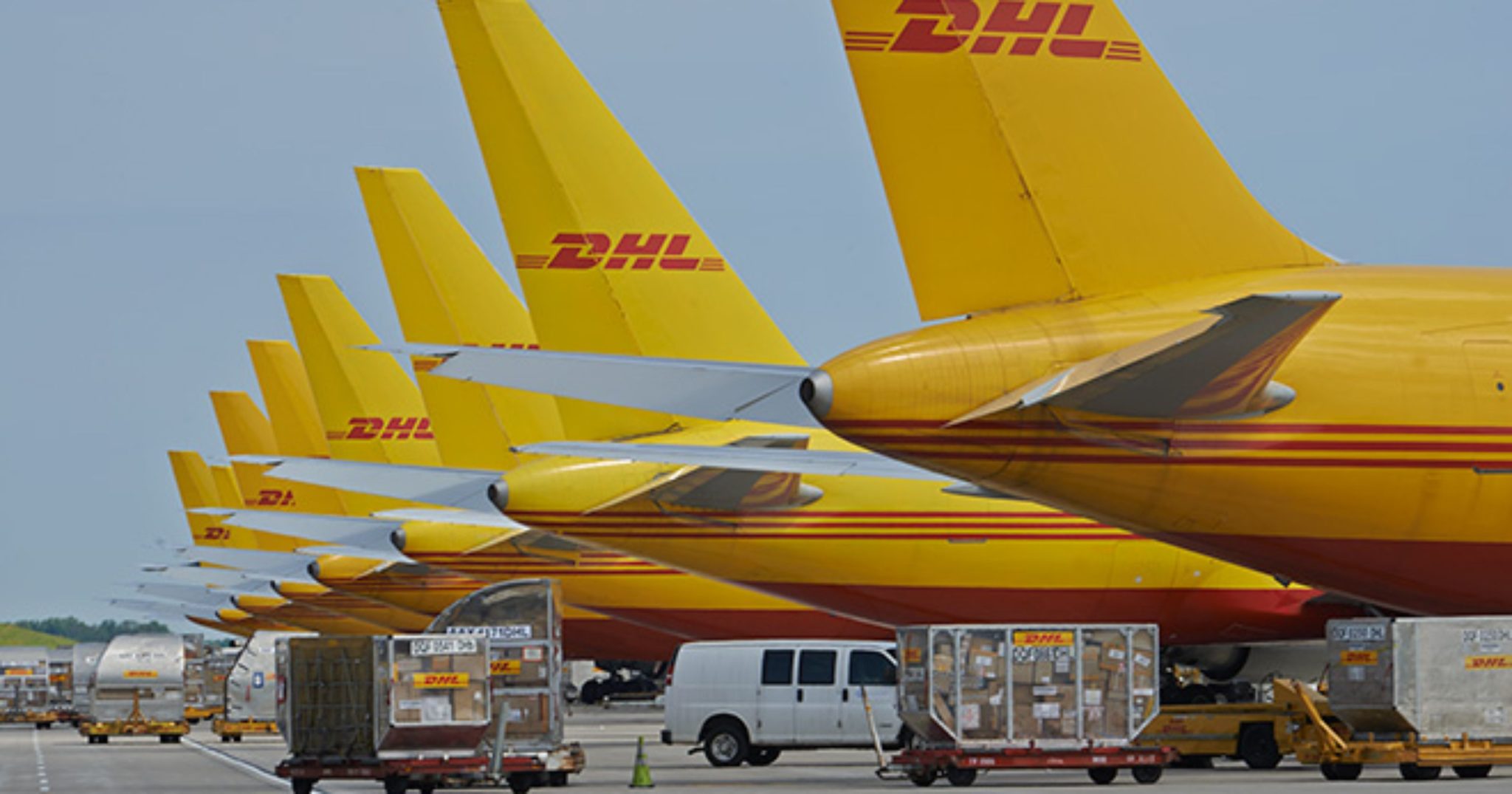
    DHL Express has opened a new hub at Barajas Adolfo Suarez Airport in Madrid, creating 200 new jobs and strengthening the position of Madrid as a hub for international commerce, particularly between Europe and Latin America.

    By investing in high-quality infrastructure and the newest technologies, DHL Express will quadruple its capacity in Madrid. The 14,500 m2 building, which includes offices, will facilitate the sorting of 24,500 packages per hour.

    John Pearson, CEO of DHL Express said:  “With this latest investment in our infrastructure, we are further expanding the capabilities of our European and global network, enabling continued growth supported by a platform of quality. Customers from our traditional sectors as well as e-commerce customers in both private b2c as well as businesses who are driving their own b2b growth agendas through e-commerce will benefit from the investment. With this new hub in Madrid, we are connecting sellers and consumers around the world with even greater speed and efficiency.”

    The new hub has a total of 176 loading docks enabling 160 road movements each day, as well as 10 daily flights operated by DHL’s own aircraft, and 30 daily commercial flights servicing 20 international destinations, mostly in Latin America.

    “We are investing in infrastructures to increase efficiency and to improve our delivery capability. This will allow us to provide an even better service to our customers,” adds Miguel Borrás, Managing Director, DHL Express Spain and Portugal. “This new hub is a critical nexus between Europe and the LatAm countries. Thanks to this, we could connect businesses from all industries and private consumers alike, and enable them to leverage from the increasingly growing e-commerce worldwide”.

    In accordance with DHL’s GoGreen Program the new hub will help to reduce the company’s carbon footprint thanks to the use of new and more efficient sorting technology, improved building insulation, and more efficient energy systems to manage the consumption of electricity, water and cooling systems.

  • Meet Scout, Amazon’s new delivery robot

    Meet Scout, Amazon’s new delivery robot

    Amazon is field testing a new delivery robot called Scout, which the company describes as a “fully-electric delivery system” designed to safely get packages to customers using autonomous delivery devices.

    Six robots are initially being tested in a Snohomish County neighbourhood in the U.S. state of Washington, where they’ll be delivering packages Monday through Friday during daylight hours. The devices will autonomously follow their delivery route but are initially being accompanied by an Amazon employee.

    Customers in Snohomish County order just as they normally would and their Amazon packages will be delivered either by one of Amazon’s partner carriers or by Amazon Scout.

    The robots, which are the size of a small cooler box, were created at Amazon’s research and development lab in Seattle. They’re designed to roll along sidewalks at a walking pace and safely navigate around pets, pedestrians and anything else in their path.

  • DHL Global Forwarding appoints Fabian Rybka to head Bangladesh and Sri Lanka

    DHL Global Forwarding appoints Fabian Rybka to head Bangladesh and Sri Lanka

    DHL Global Forwarding, the leading international provider of air, sea and road freight services, has appointed Fabian Rybka as Cluster Head for DHL Global Forwarding’s operations in Bangladesh and Sri Lanka, along with partner operations in Bhutan, Nepal and the Maldives.

    Rybka brings to the role more than 10 years of experience at DHL Global Forwarding in both Asia and Europe, serving most recently as Head of Business Strategy and Development for DHL Global Forwarding ASEAN and South Asia, where he spearheaded successful growth initiatives in Bangladesh and Sri Lanka amongst other markets. Previous roles saw him specialize in designing and executing growth plans for DHL Global Forwarding’s high-potential markets including Italy, India, Singapore, Bangladesh, Indonesia and the Philippines, as well as key operations in European markets.

    “Fabian has built up a formidable track record for turning even the most challenging business situations into environments of high growth and customer satisfaction,” said Thomas Tieber, CEO, DHL Global Forwarding ASEAN and South Asia. “He has already proven that ability in guiding our teams in Bangladesh and Sri Lanka to significant results while understanding the nuances of the local market operations. I can think of no better individual to lead these growth markets and further build on our strong market position.”

    In the new role, Rybka will apply his extensive business development expertise to further boost productivity and expand DHL Global Forwarding’s range of services in the markets under his leadership, focusing particularly on developing key products in ocean freight and value-added services like customs and integrated warehousing. He also continues to lend his business turnaround skills to projects throughout the broader South Asia and Asia Pacific regions.

    “I firmly believe Bangladesh, Sri Lanka and the surrounding markets of Bhutan, Maldives and Nepal hold opportunity for substantial growth. We have a role to play to connect these economies to the rest of the world, supporting foreign businesses to invest in these markets, and also encouraging exports from local businesses overseas,” Rybka said. “Bangladesh’s GDP is growing faster than almost anywhere else in Asia at 7.3% per annum, while Sri Lanka continues to see steady increases in both imports and exports[2] that point to its growing connectedness and market opportunity within the global economy. As business optimism grows, my goal is to ensure we make our world-class logistics services as accessible and reliable as possible to enterprises of all sizes throughout the cluster.”

    Rybka holds an MBA from the University of Cooperative Education in Stuttgart, Germany, as well as a Global DHL CEO Award for his work in CSR and sustainability. Formerly one of Germany’s top junior football coaches, he also organizes and hosts youth football competitions — including one of the world’s largest, in Switzerland — to support the community work of SOS Children’s Village, a DHL GoTeach partner organization with whom he has volunteered for more than 10 years.

    Read more at https://vietnamnews.vn/media-outreach/505358/dhl-global-forwarding-appoints-fabian-rybka-to-head-bangladesh-and-sri-lanka-operations.html#qzaaIQjDkqMUVr8X.99

  • Indonesian airline Garuda talking with Go-Jek to provide logistics support

    Indonesian airline Garuda talking with Go-Jek to provide logistics support

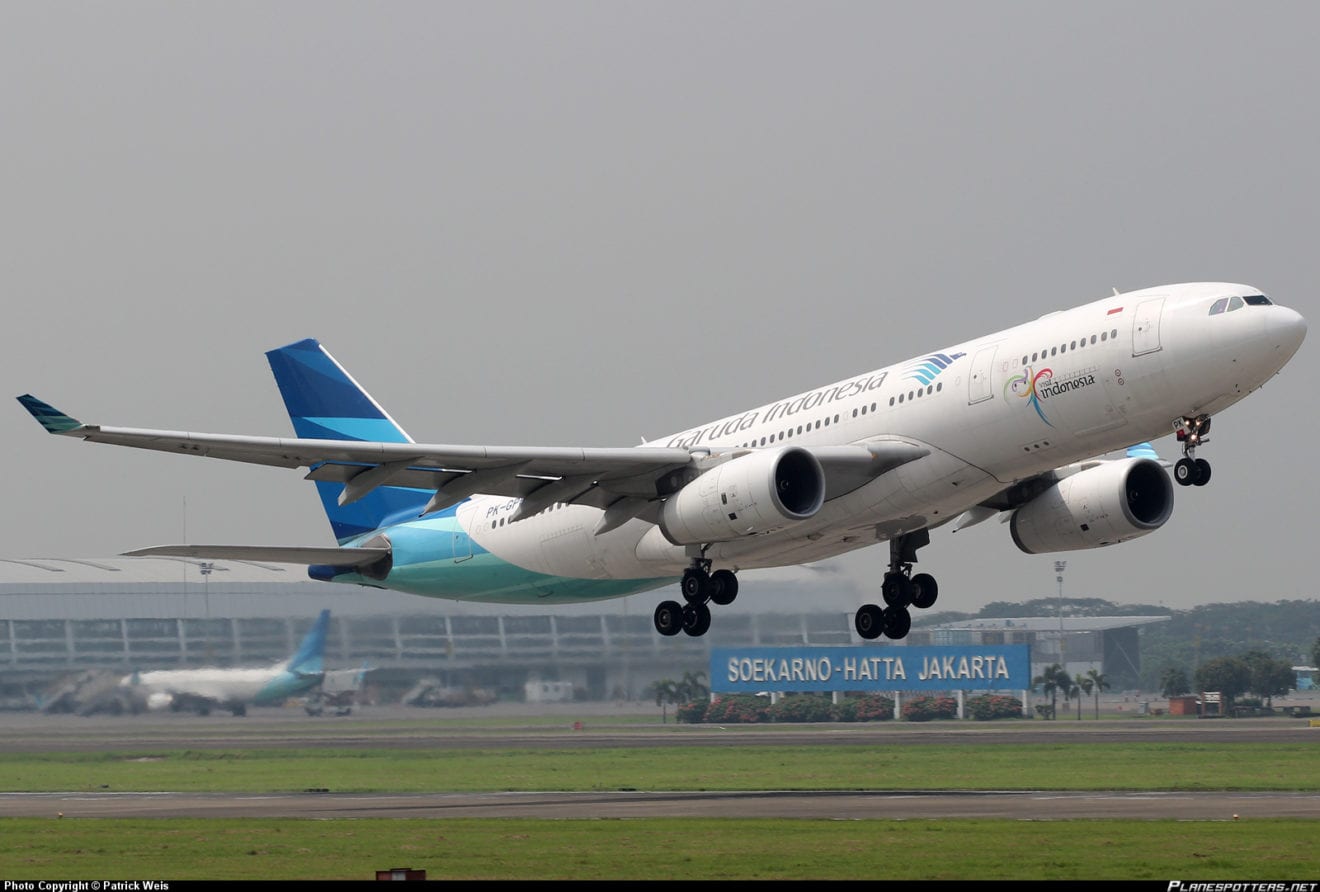
    Indonesia’s national carrier Garuda and Go-Jek are in talks for a partnership that will make it easier for the ride-hailing and e-commerce app to move goods to customers within the 17,000 islands of the sprawling Southeast Asian archipelago. Garuda chief executive Ari Askhara told Reuters the talks are in an advanced stage and an agreement is expected to be finalised by the two companies in the next few months. Askhara said Garuda was developing a new technology relating to e-commerce and logistics. The partnership would enable goods ordered via Go-Jek’s app in one city in Indonesia to be delivered in another using Garuda’s fleet, he said. The CEO did not provide more details.

    Started in 2011 in Jakarta, Go-Jek has evolved from a ride-hailing service to a one-stop app through which its customers can make online payments and order everything from food, groceries to e-commerce goods.

    Go-Jek, which is valued at between US$9 billion and US$10 billion according to sources, declined to comment.

    E-commerce has been growing rapidly in Southeast Asia’s biggest economy, but one of the main obstacles is logistics as the islands are sprinkled across an area bigger than the European Union.

    Go-Jek recently raised over US$1 billion in a funding round as it challenges Singapore-based rival Grab for a larger share of the region, sources told Reuters.

    The Go-Jek proposal is one of several being explored by Garuda to cut its dependence on passenger traffic as the airline tries to grow its profits after a bumpy 2018.

    The airline has been battling for market share against local market leader Lion Air, which in October suffered a crash of a Boeing Co 737 MAX jet, killing all 189 people on board.